i hate that my home feed isn’t based off what i’ve watched over the years but what i’ve watched like the past 2 days. it feels like there’s nothing to watch even tho ik there’s billions of videos on the platform
7 Things You Probably Don't Know About Club Names
In 2013, Hull City's owner, Assem Allam, decided the club's name was holding it back. He wanted to rename the club "Hull Tigers," because he believed "City" was too common and "Tigers" would sell better around the world. He even said the fans who chanted "City Till We Die" could die whenever they liked.
The fans fought back hard. The matter went to the FA, because in England a club cannot simply change its name without approval. In 2014, the FA Council voted against the change, and Hull City stayed Hull City. The owner owned the club, but he could not own the name the way he wanted to.
I like that story because it shows you something most fans never think about. A club's name looks permanent, but behind many of them there is a fight, a law or a change that nobody remembers.
1. Manchester United used to be Newton Heath
Manchester United started life in 1878 as Newton Heath, a team formed by workers of the Lancashire and Yorkshire Railway. By 1902, the club was in deep financial trouble and close to going out of existence.
A group of local businessmen rescued it, and as part of that rescue, the name was changed to Manchester United. So one of the biggest brands in world football was born out of a near-bankruptcy. If the rescue had failed, you would never have heard the name.
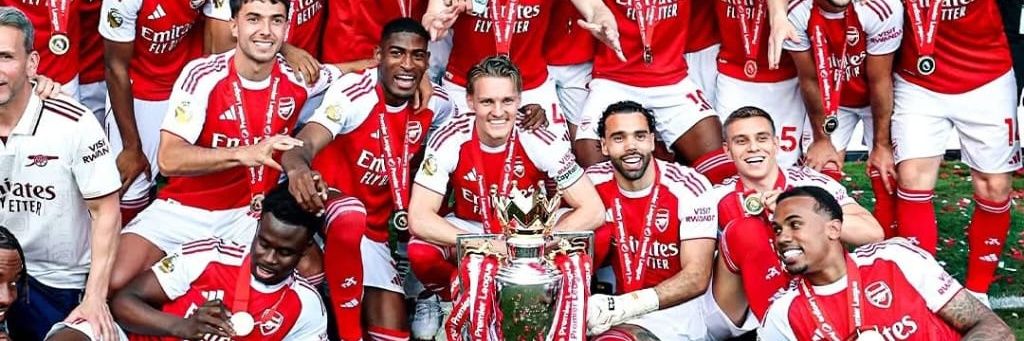
2. Arsenal started as Dial Square
Arsenal began in 1886 as Dial Square, a team of workers at the Royal Arsenal, a weapons factory in Woolwich, south-east London. The club then became Royal Arsenal, then Woolwich Arsenal, and only later simply Arsenal, after the move to north London.
So the name of the club is literally the name of a weapons factory. That is also why their nickname is the Gunners and why there is a cannon on the badge. The whole identity came from where the first players worked.
3. The "Real" in Real Madrid came from a king
Madrid Football Club became Real Madrid in 1920, after King Alfonso XIII gave the club his royal patronage. "Real" simply means royal, and the crown on the badge comes from the same decision.
The twist came in 1931. When Spain became a republic that year, royal symbols were not welcome, and the club lost both the "Real" and the crown. They only came back after the Spanish Civil War. So even the most valuable name in football was once removed by politics.
4. RB Leipzig is not really called Red Bull
German football rules do not allow a sponsor's name in a club's name. So when Red Bull set up a club in Leipzig in 2009, they could not call it Red Bull Leipzig.
The solution was very clever. The club was officially named RasenBallsport Leipzig, which roughly means lawn ballsports, and that conveniently shortens to RB. So everybody says "RB," everybody thinks "Red Bull," and technically, nobody has broken the rule. As a lawyer, I have to respect a workaround like that.
5. Wimbledon became the MK Dons, and the fans started again
In 2002, an independent commission allowed Wimbledon FC to relocate about 90 kilometres north to Milton Keynes. The club moved and became the MK Dons in 2004.
Many of the fans refused to follow. They formed a brand new club, AFC Wimbledon, in 2002, and started again from the ninth tier of English football. Over the years, they climbed all the way back into the Football League. That is what a name means to supporters. They would rather start from nothing than follow their club to another city.
6. Franco forced Spanish clubs to drop English names
Under General Franco, Spanish clubs were made to drop foreign names in the early 1940s. Athletic Club of Bilbao, which used the English spelling because of the British workers connected to its history, became Atlético de Bilbao.
The club only returned to its original English-style name decades later, after the dictatorship ended. So when you hear "Athletic Club" today, that name survived a dictator. Not many brands can say that.
7. Inter Milan was once forced to become Ambrosiana
Italy's fascist government did not like the international sound of "Internazionale." In 1928, the club was merged with another Milan team and renamed Ambrosiana, after Saint Ambrose, the patron saint of Milan.
Inter only returned to its old name after the Second World War. So two of the biggest clubs in Europe, Inter and Athletic, both lost their names to dictators. That tells you that a club's name has never been just a name. It has always been a statement.
So behind the names you shout every weekend, there are railway workers, weapons factories, kings, dictators and a very determined group of Wimbledon fans. A name looks like the most permanent thing about a club, but history says otherwise.
My name is Ajoje. I am a FIFA Licensed Agent and International Sports Lawyer. I write on the Law and Business of Football, a lot. Repost and Follow if you want to read more posts like this.