I set up this account for students in my linguistics classes (英語で学ぶ教養: 言語学), but it might be of interest to anyone into linguistics, languages, and Japanese!
Happy Halloween! How cool is this?! Kit-kats with sign language on them. It's a collaboration with 'Talking hands ', a group that turns sign language into art! #koma_ling#sign_language#talkinghands#キットカット#手話#japan
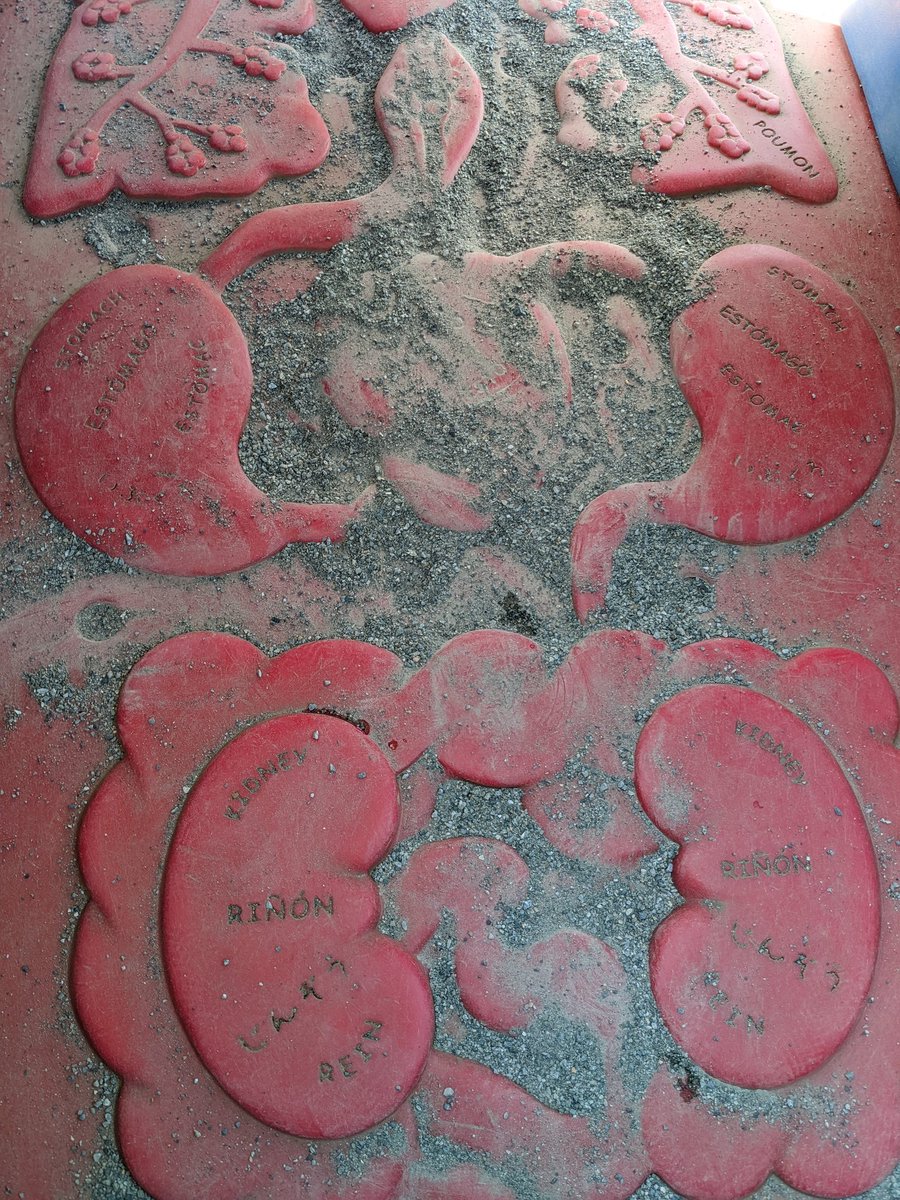
This hippo is multilingual!🦛 The internal organs are labelled in many languages... Including braille! How wonderful! 👏 It's such a great idea but the braille is wearing down from all the kids walking on it 🙃 #koma_ling#linguistic_landscape#braille#japan
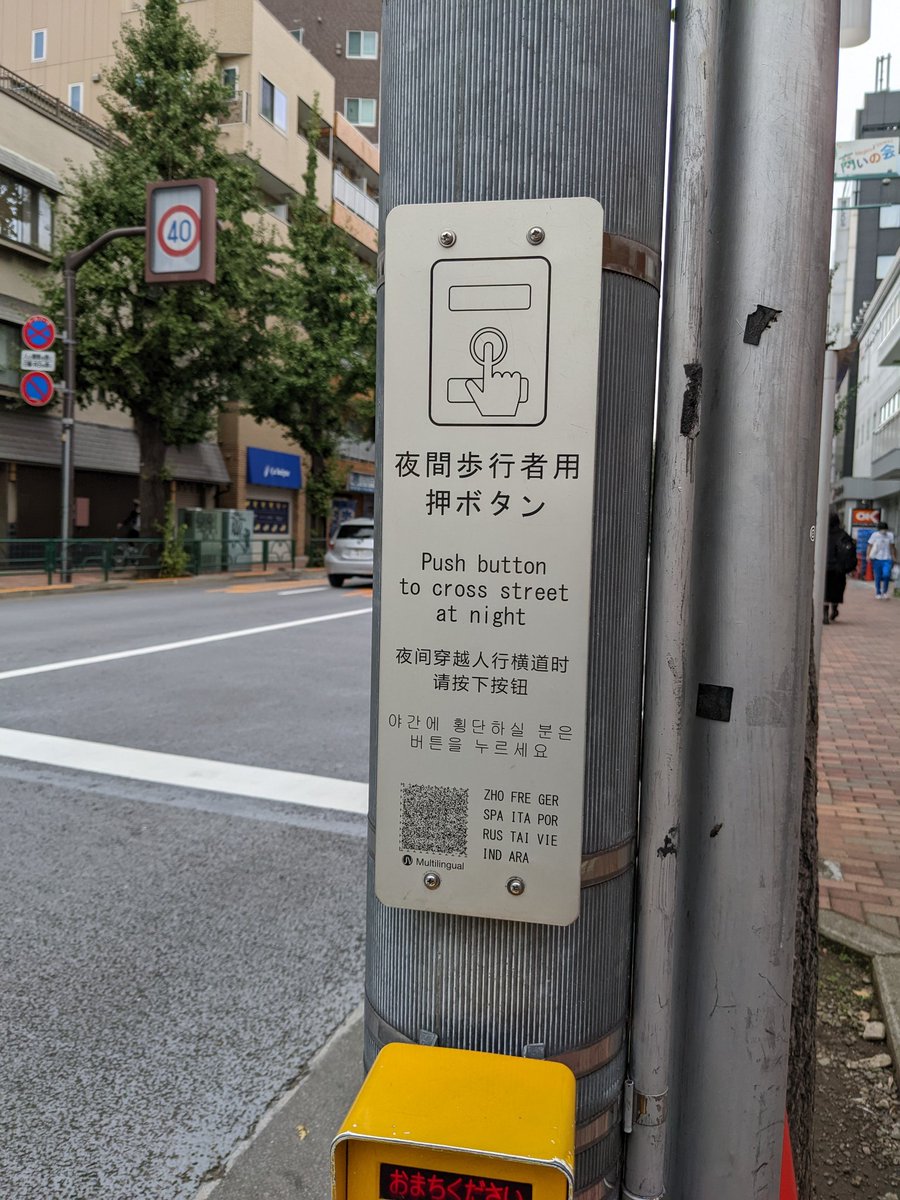
This is an interesting solution to the problem of how many languages you can fit on a sign... Beneath the Japanese, English, Chinese, and Korean, it seems others are accessible via QR code. #koma_ling#linguistic_landscape#japan
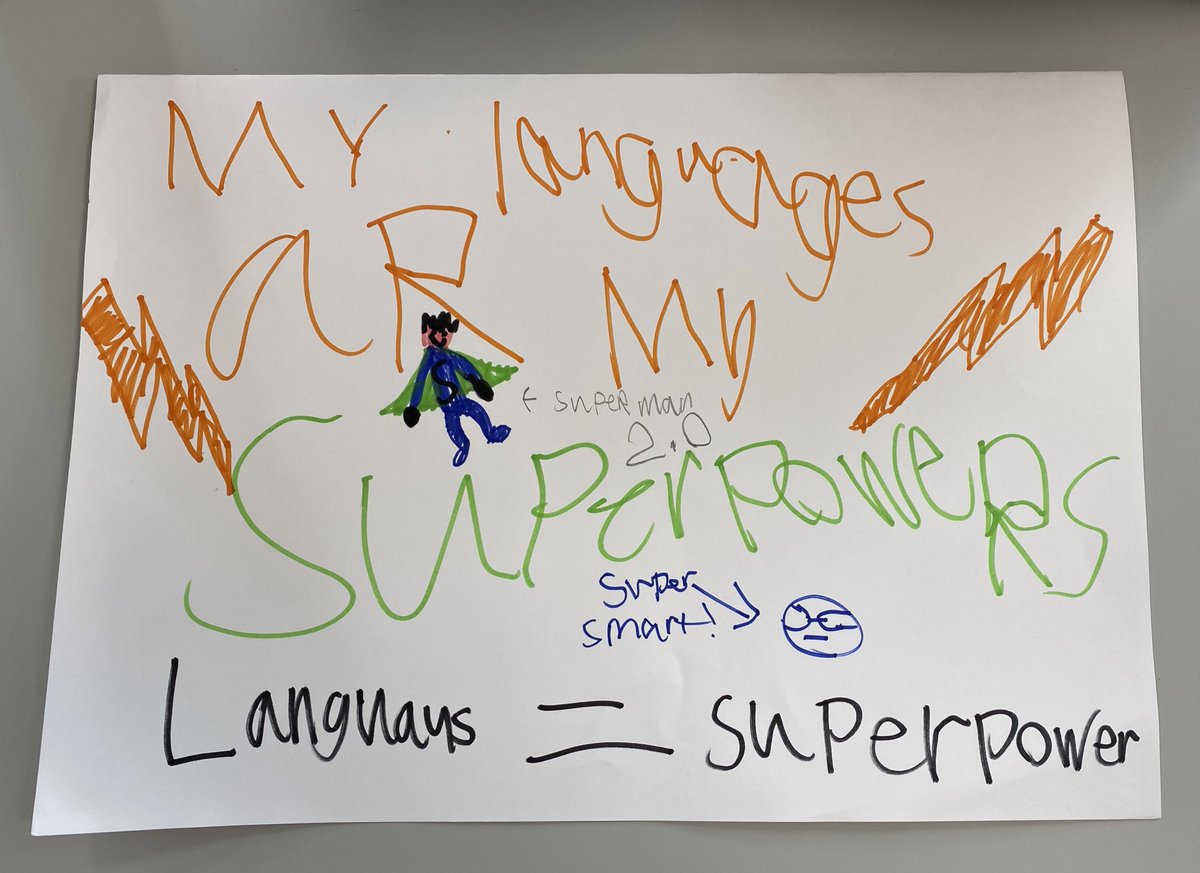
While doing my #translanguaging presentation today to a G3 class, a boy said “My languages are my superpowers.” After almost fainting, I immediately had him make a poster with that sentence for the classroom. #multilingualclassrooms
Pasta, curry, donburi, dekitate... It's interesting these two Japanese words are in ローマ字 and not translated. I guess 'rice-bowl' is possible for donburi? But what about dekitate? #koma_ling#translation#linguistic_landscape
Football Avenue, サッカー通り. It's interesting how soccer has been 'translated' to football. 'Soccer' is used in Japan, but maybe 'football' aligns better with British football culture ... #koma_ling#translation#linguistic_landscape#identity
"Say 'no' to undertake underage drinking". Ok sure, but why English for the 'no'?! To be cool for young people? Maybe 'no' is being used as a euphemism for the Japanese word いいえ, less direct, less confrontational. What do you think? #koma_ling#loanwords#Japanese#typography
タピる? Another word combining and English loanword タピオカ/tapioca, which is a noun, with the Japanese verb ending る. I guess it means 'do you wanna get a tapioca drink?'#koma_ling#loanwords#japanese#typography
Bilingual jokes aren't unusual as product names but they usually combine Japanese and English. This one is Japanese and French: Ca va? (How are you?) sounds likeサバ (mackerel) #koma_ling#japanese#french#typography#bilingual
Katakana is sometimes used to show non-fluent language (either Japanese people speaking English or foreign people speaking Japanese). In this comic, the American character's speech is written in a mix of characters.#koma_ling#typography#Japanese#katakana#identity
Hiragana is often said to be soft, gentle, feminine, Japanese-like... I can't see an obvious connection here 🤨 I wonder if it's to make a 'foreign' food (kebabs) appealing to a Japanese market? BTW seen at the airport #koma_ling#Japanese#typography#hiragana
Braille at a train station lift. I wonder what it says? Is it a translation of the sign below? It's interesting that the heights are chosen for different readers: standing Blind people and lower for wheelchair users. #koma_ling#linguistic_landscape#braille#translation
Braille on the doors separating the platform from the train at the train station. It must be so important to know which car of the train you're on, and at which of the doors! #koma_ling#braille#Japan#linguistic_landscape
I love these signs at Komazawa station! They are both Japanese so not technically bilingual signs... But they show 2 different kinds of Japanese for 2 different readers: adults and kids! #koma_ling#linguistic_landscape#Japanese
This is the first time I've seen an English translation include BOTH British and American English (AmE: stroller, BrE: pushchair) (incidentally neither of which is the Japanese approximation: ベビーカー, baby-car) #koma_ling#identity#translation#Japanese