Would you trust a poll of 2.4 million people or one of 50,000? 90 years ago today, the Literary Digest's 2.4 million mail-in ballots picked Landon over FDR. FDR won 46 of 48 states. Gallup called it right with 50,000 interviews, and the Digest folded within 18 months.
Would you have hung off that cliff for five dollars a day? 👇
Ropes, jackhammers, dynamite, 119-degree heat, and it was the top-paying job at Hoover Dam. Their homemade fix is on every construction site today.
#history
Would you trust a computer with 512 words of memory to fly you to Mercury? On Nov 3 1973, NASA launched Mariner 10, the first probe to slingshot off one planet (Venus) to reach another. Low on steering gas, crews tilted its solar panels to sail on sunlight.
Would you lock up a healthy person for life to protect everyone else? 👇 Typhoid Mary never felt sick, yet New York kept her on an island for 26 years. Another carrier sickened 122 and got two weeks. 1907, real archival footage. #history#TyphoidMary
Would you rather win the election, or be the editor who printed that the other guy won? 78 years ago today, the Chicago Tribune went to press early with "DEWEY DEFEATS TRUMAN." About 150,000 copies ran before anyone fixed it.
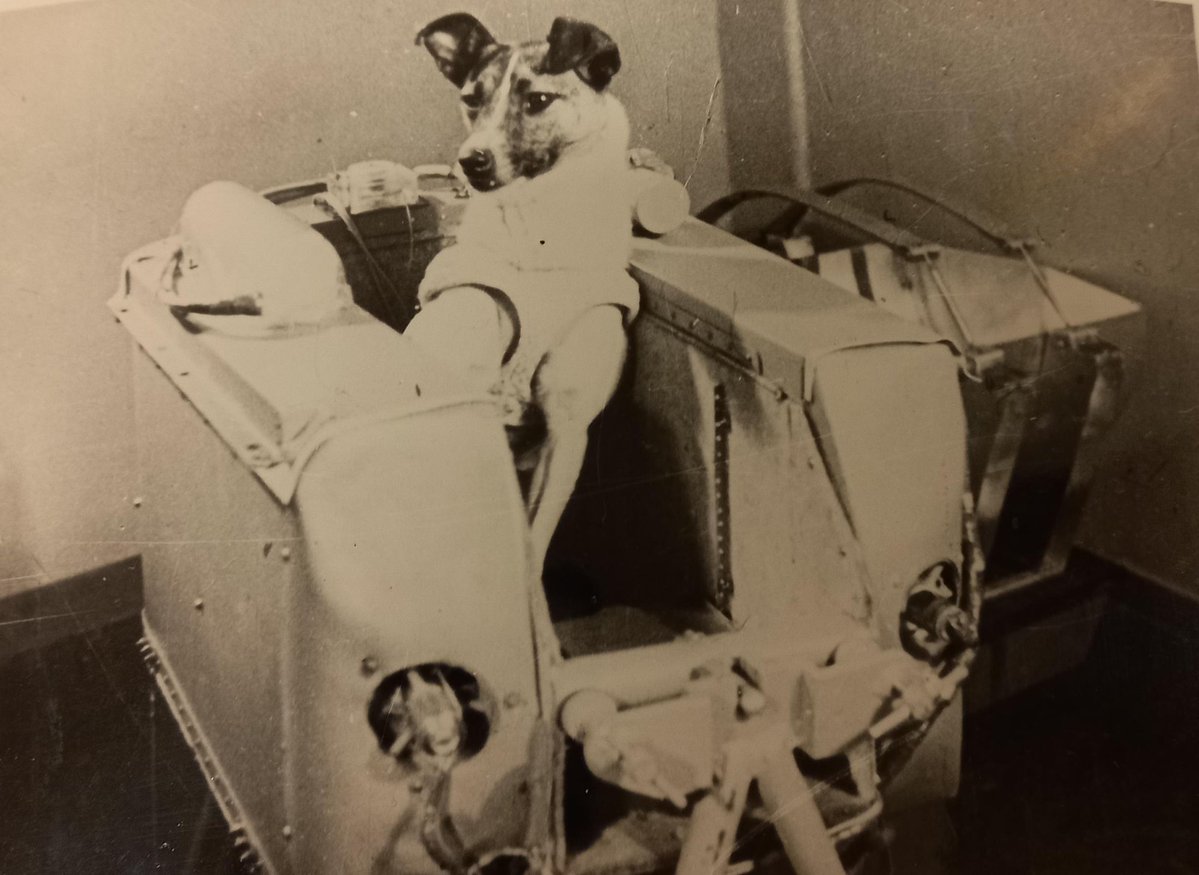
Was sending a dog into orbit worth it? 69 years ago tonight, Sputnik 2 carried Laika, a stray off the Moscow streets, with no way to bring her home. Moscow let the world think she lived for days. In 2002 a mission scientist revealed she overheated within hours.
Would you have signed up your own kid for the 1954 polio vaccine trial? 👇
The 1954 Salk polio vaccine trial and the Cutter incident, real footage.
1.8 million kids, a coded shot nobody could identify, and then a lab shipped vaccine with live virus inside. Parents lined up anyway.
#history #polio
@billboard Wild part: YouTube co-founder Jawed Karim said the reason he wanted a video site was that he couldn't find a clip of their 2004 Super Bowl halftime show anywhere online.
Radio, TV or the internet: which changed election night the most? On Nov. 2, 1920, KDKA in Pittsburgh read the Harding-Cox returns from a shack on a factory roof, with a 100-watt transmitter and this "tomato can" microphone. Many historians call it the birth of commercial radio.