The study (NCT07779213) will test whether Happitech's investigational Heart Rhythm Software can reliably meet that need.
https://t.co/TGDT6KWcjV
CAUTION: Investigational device. Limited by United States law to investigational use. Not cleared or approved by the US FDA.
@Drdevignair and her team at @StBernards have enrolled the first patient in Happitech’s US smartphone AF study. Thank you!
Many of Dr Nair’s patients live an hour or more from a cardiologist. Nearly all carry a smartphone. Could its camera help find AF between clinic visits?
Running a health platform? Meet our team at #HLTHUSA, booth 2359-1, to see how European health platforms scale their user base in reimbursed atrial fibrillation care pathways, using only the smartphone camera.
#AtrialFibrillation#HealthTech
Visiting #HLTHUSA? Meet our team at booth 2359-1 to learn how European providers manage patients at scale with smartphone-based heart rhythm monitoring for atrial fibrillation.
Part of the AgeTech Collaborative from AARP startup delegation. #AgeTech
After cardioversion or ablation, is the patient remaining in sinus rhythm?
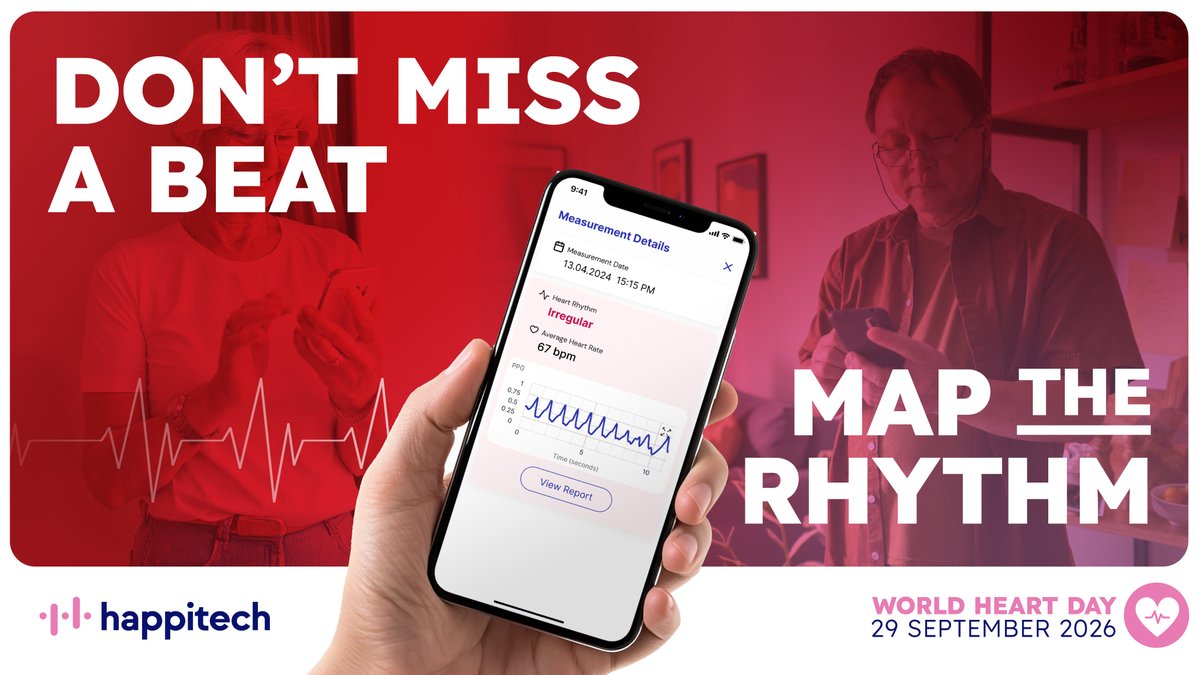
On #WorldHeartDay, Happitech's CE-marked smartphone PPG app supports AF care teams with home heart rhythm measurements and alerts for irregular rhythms suggestive of AF.
#DontMissABeat#AFib
Happitech is at #HRX2026 in Atlanta, 18 to 20 September, as an innovation sponsor. Our CE-marked, clinically validated technology turns a smartphone camera into an AF heart rhythm monitor. We would welcome the chance to connect with physicians and researchers on site.
Happitech will be at ESC Congress 2026 in Munich, 28-31 August, discussing AI-powered, smartphone-based PPG technology for atrial fibrillation detection and cardiac care pathways. If you will be there, we would welcome the chance to connect. #ESCCongress
AF-SCREEN's 11th International Collaboration Meeting takes place in Munich on 27 August 2026 to discuss AF screening strategies. Happitech is one of seven industry partners supporting this year's meeting.
Happitech turns a patient's own smartphone into a clinically validated AF monitoring tool. CE-marked and built to integrate with RPM platforms, supporting post-procedure follow-up, recurrence triage and monitoring at scale.
FastStart Research turns any smartphone into a validated cardiac research tool. CE-certified and TGA-approved, it enables remote heart rate, HRV and atrial fibrillation detection with no additional hardware. Used by academic medical centres across the EU and US.
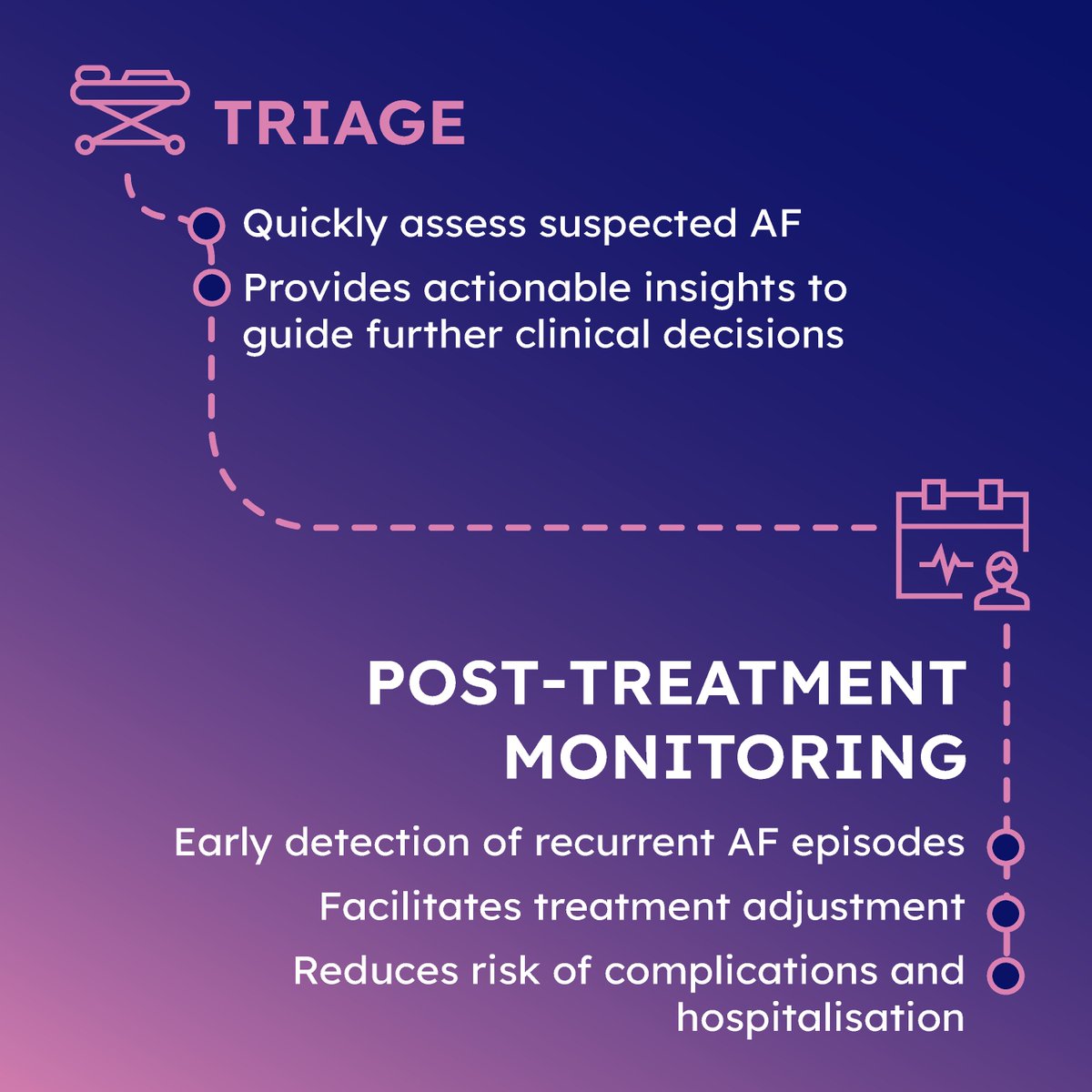
For post-treatment monitoring, the app enables physician-prescribed rhythm checks at home, supporting early detection of recurrent AF. Physicians report pre-cardioversion checks cut unnecessary appointment slots by approximately 10 - 20%.
Happitech offers a clinically validated, CE-marked smartphone app for heart rhythm monitoring, using photoplethysmography (PPG) and AI-driven analysis. In triage, it helps cardiac teams assess suspected AF quickly, guiding further clinical decisions.
Use cases include: pre-ablation/cardioversion planning, post-treatment recurrence tracking, AF detection in symptomatic patients, and patient-shared data for adherence and follow-up. This can reduce monitoring burden for physicians while supporting patient outcomes.
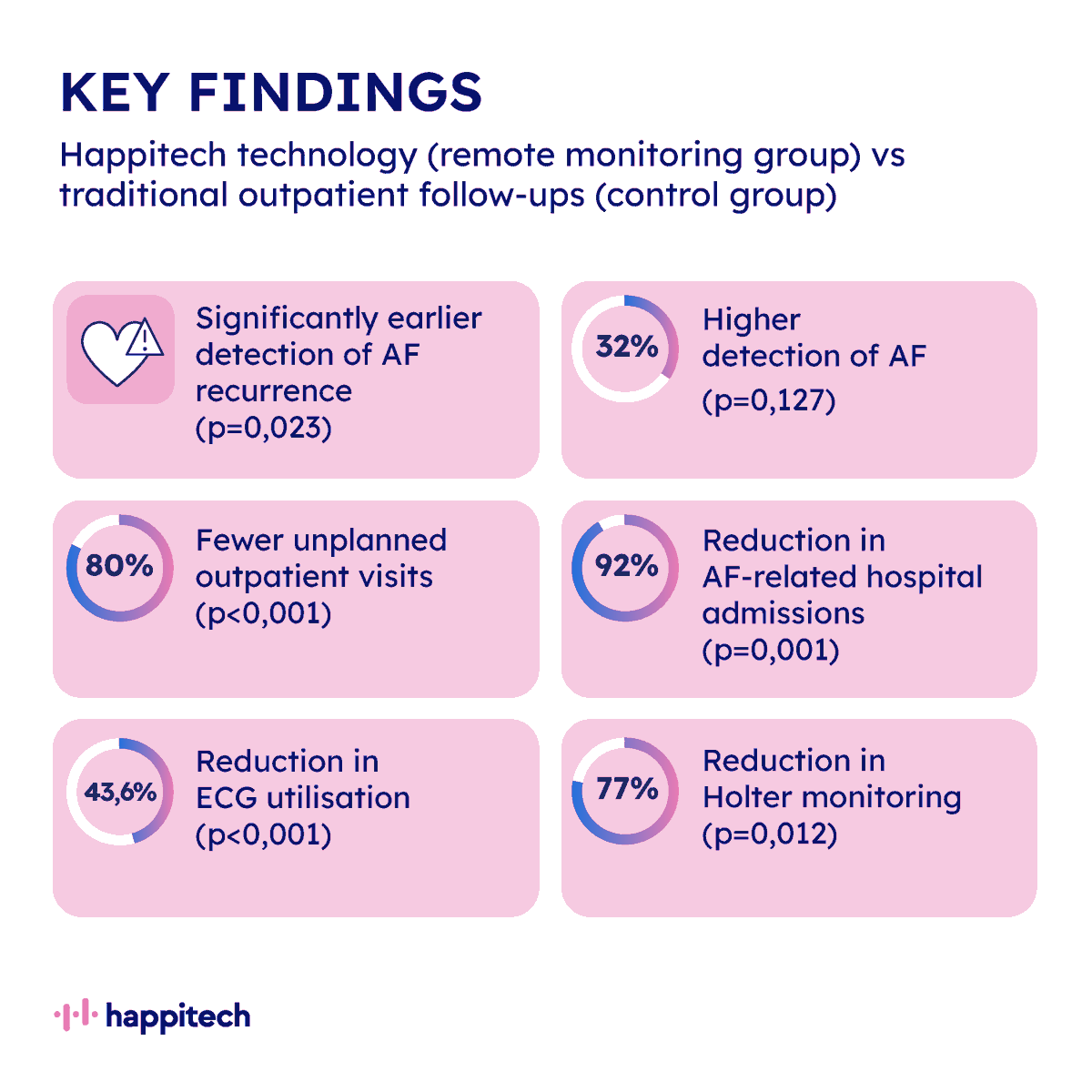
Also: 43,6% less ECG use, 77% less Holter monitoring, and high patient satisfaction. Published in the Netherlands Heart Journal, the study adds to the evidence base for remote monitoring in post-ablation (PVI) care using PPG.
Data from St Antonius Hospital: 78 AF patients monitored remotely post-ablation with Happitech's smartphone PPG technology vs 79 on standard follow-up. Over 1 year: Earlier detection of AF recurrence, 80% fewer unplanned visits, 92% fewer AF-related admissions
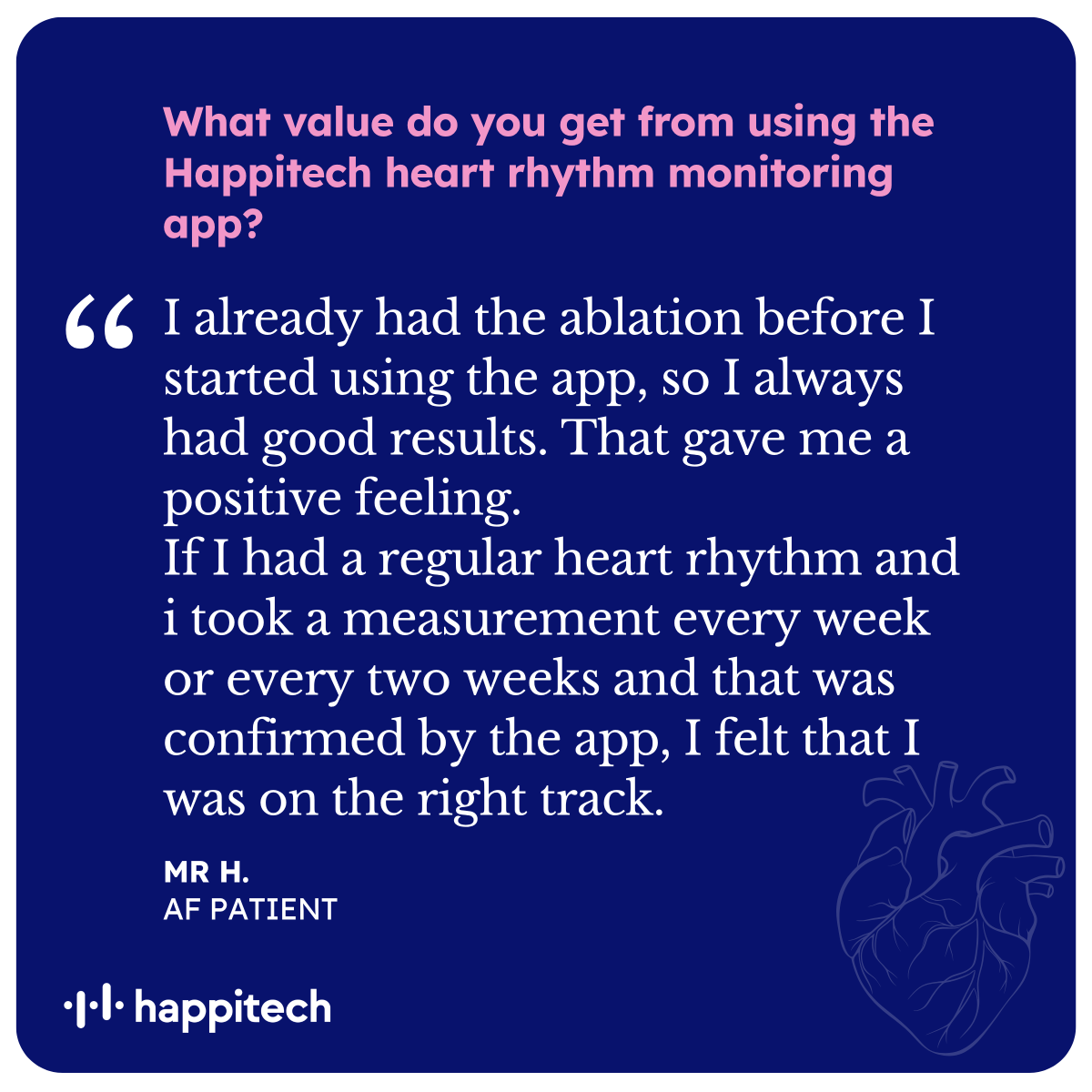
For AF patients, symptom-triggered monitoring means acting on how you feel, not waiting for the next appointment. Results are clear and shareable, offering reassurance between visits and supporting ongoing self-management. Hear from Ms M. on why that flexibility matters to her.
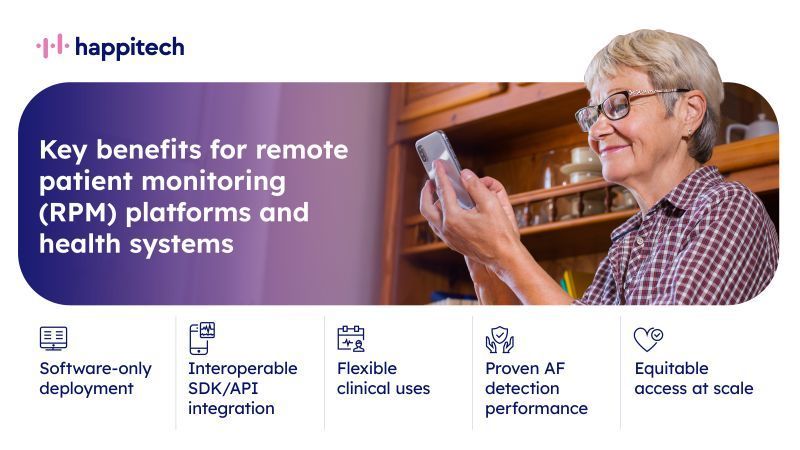
Key benefits for RPM platforms: software-only (no new devices), SDK/API integration with existing systems, flexible use across AF pathways (pre-cardioversion triage, post-ablation/cardioversion follow-up, surveillance), and demonstrated AF detection performance.
AF monitoring needs timely, consistent detection, but continuity of care can be difficult beyond hospital settings. Happitech embeds clinically validated AF detection directly within RPM platforms, complementing existing cardiac pathways.
Heart rhythm data before a scheduled cardioversion supports the decision to proceed or reschedule, reduces unnecessary hospital visits for patients, and frees up procedure slots for those who need in-person intervention.
Smartphone-based heart rhythm monitoring cut unnecessary cardioversion visits by 13%. In a study of 208 patients at OLVG, pre-procedure rhythm checks with the Happitech app, via Luscii, identified 33 patients who had reverted to sinus rhythm before their scheduled ECV.