The Japanese spider crab is a species of marine crab and is the biggest one that lives in the waters around Japan. It has the largest known leg-span of any arthropod. The Japanese name for this species is taka-ashi-gani, literally translating to “tall legs crab”.
A dolphin is an aquatic mammal within the infraorder Cetacea. Dolphin species belong to the families Delphinidae , Platanistidae , Iniidae, Pontoporiidae , and possibly extinct Lipotidae. There are 40 extant species named as dolphins.
A water dog is a type of gundog bred to flush and retrieve game from water. Water dogs are considered the progenitors of most modern retriever dog breeds.
Sharks are a group of elasmobranch fish characterized by a cartilaginous skeleton, five to seven gill slits on the sides of the head, and pectoral fins that are not fused to the head.
Dwarf Lantern Shark
The dwarf lantern shark has photophores. These are light-emitting organs that glow up to help the shark mix in with the bright water when it’s foraging for meals in shallow waters and lure prey when it’s in deeper, dimmer waters.
The blue shark, commonly known as the big blue shark, is a requiem shark found in deep seas throughout the world’s tropical and temperate oceans. They may move rapidly despite their general sluggishness.
Angel Shark
The angel shark doesn’t really look like a shark so much as a ray mixed with a flounder. They are fairly flat looking and have wide dorsal fins that run almost the entire length of their bodies.
Hammerhead Shark
The term “hammerhead shark” refers to a group of sharks from the Sphyrnidae family. As their name implies, sharks from this group possess a flattened and extended head that resembles the end of a hammer (called a cephalofoil).
COOKIECUTTER SHARK
Cookiecutter sharks have even been known to take down nuclear submarines, chomping on electrical cables and sonar domes that disabled the subs’ navigation capabilities.
Blue Shark
The blue shark is an aggressive species of requiem shark from the Carcharhinidae family. Found throughout most of the world’s temperate and tropical waters, the blue shark is capable of reaching an average length of 10-feet at maturity.
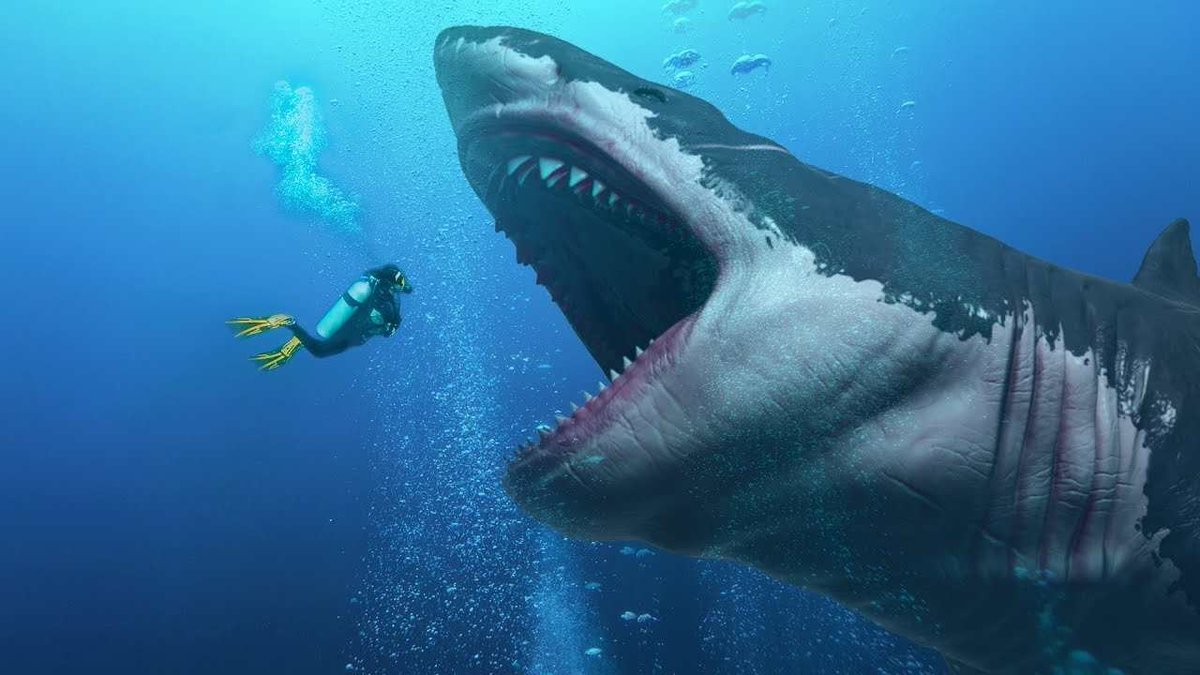
Megalodon, meaning “big tooth” , is an extinct species of shark that lived during the Early Miocene to the end of the Pliocene period, some 3.6 million years ago. The beast is closely related to the great white shark and was the top predator of the sea during the Cenozoic era.
The Liopleurodon was a carnivorous marine reptile that belonged to the group of plesiosaurs, an order of extinct Mesozoic marine reptiles. This carnivorous beast dwelt in the Earth’s oceans some 160 million years ago. It weighed over 3,500 pounds and was over 30 feet in length.
Mosasaurus
Mosasaurs are believed to have evolved from a group of extinct aquatic lizards known as aigialosaurs in the Early Cretaceous period. They were one of the most dangerous creatures prowling the waters of our planet, through the entirety of the Cretaceous period.
Mauisaurus
This monster is named after the Maori god Maui, who pulled the islands of New Zealand up from the sea floor with a fish hook. The Mauisaurus, like other plesiosaurs, had a slender, long body, reaching over 26 feet in length.
Godzilla Shark
About 300 million years ago lived one of the most terrifying sea creatures to have existed – the Godzilla Shark. Fossils of the beast were found in the Manzano Mountains east of Albuquerque, New Mexico, by palaeontologist John-Paul Hodnett in 2013.