AI shouldn't be a feature patch thrown onto an old interface. It demands entirely new interaction models.
Patrick Ashamalla breaks down how Whatfix is rewriting the design playbook for the AI age:
🎨 The AI Canvas: Moving past rigid forms to a fluid, invisible experience layer powered by our context engine, ScreenSense.
🤖 Designing for Agents: Transforming complex, multi-app workflows into seamless, natural-language actions with AI Agents.
🔮 The UX Roadmap: Shifting from reactive self-help to proactive, real-time user enablement.
The future of software isn't about teaching people how to navigate complex systems, it’s about building technology that intuitively adapts to human intent. 🧠
📺 Watch Patrick's full design vision masterclass on YouTube! https://t.co/LeZ9x5vsCH
#whatfix | #digitaladoption | #doublecheck | #digitaltransformation | #techtrends
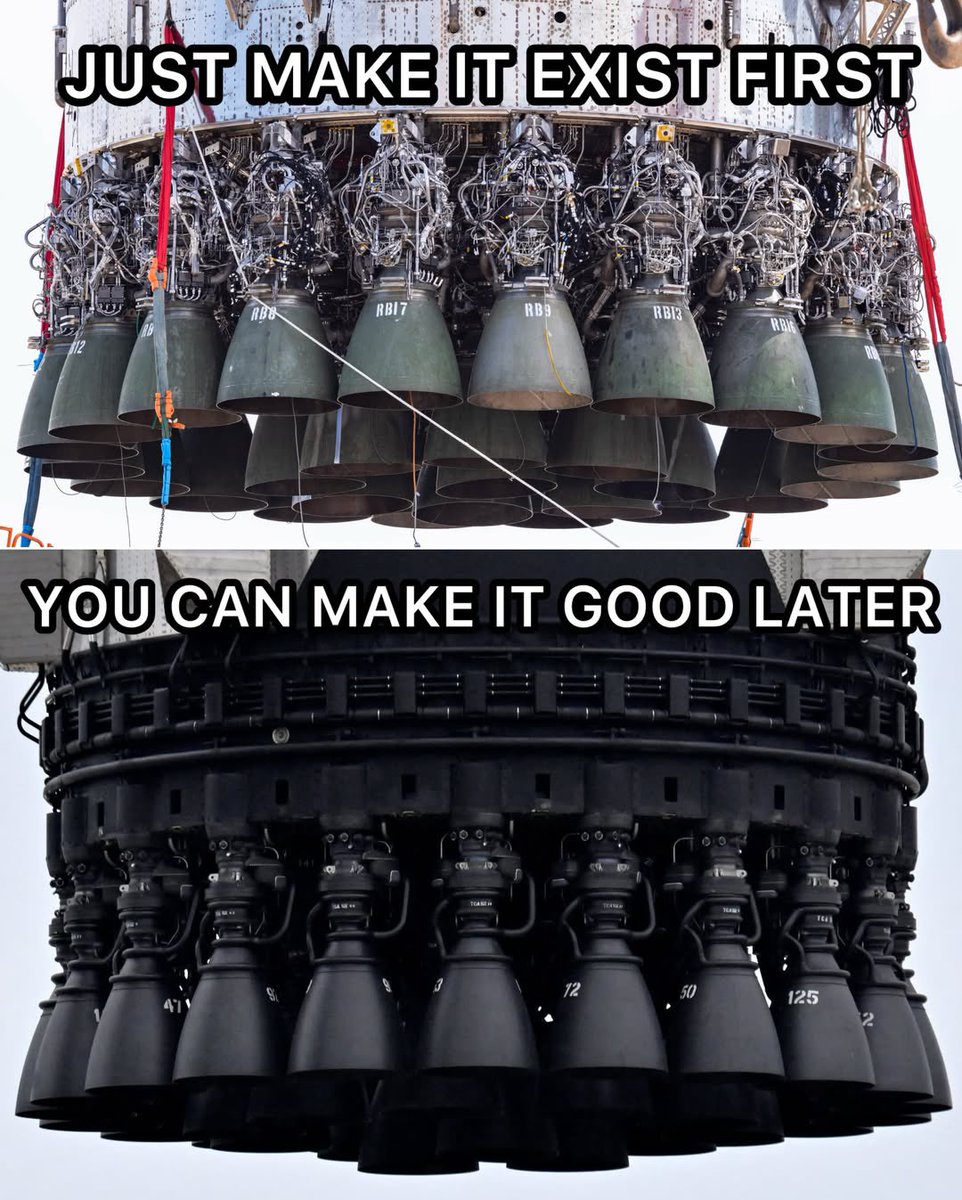
The point of a startup is to make usable technology for others. When you make software, you have to watch at least 10 people use it. Sit next to them and say absolutely nothing. Force yourself to marinate in the failure of your product design.
Every version 1 of any software will be absolutely destroyed by first interaction with users. You need to watch your new creation be absolutely misunderstood by users to reform version 1 into the one that actually works.
There is only one path: figuring out where the sharp edges, the places people get caught, the assumptions you make as a builder that turn out to be wrong, and then relentlessly sanding it down so that anyone can use it.
That is good design. That is the key to a good product. There is no shortcut for this.
WATCH USERS AND CRINGE AND THEN FIX IT.
SAND DOWN THE EDGES.
That small mirror in the overhead bin is pretty useful. No need to tip toe to find if you left anything. Every plane should have it.
#ThoughtfulDesigns@SouthwestAir
It’s been a minute.
2015–2018
- Exited FreeCharge. Spent time learning and investing.
- Pondered about: Why can't trust be rewarded? Started with $1M of personal capital.
- Launched CRED to reward people for paying credit card bills on time.
2019–2025
- Built a system run by a team that values ownership, judgment, and craft.
- Grew from 0 to 17M members by aligning incentives with behaviour.
- Built several products during COVID lockdowns.
- Raised $900M+ from global investors. Did 4 ESOP buybacks.
- Made Indiranagar and IPL ads slightly more interesting.
- Received a full stack of regulatory licences.
- Lost 35 kilos.
- Scaled from 0 to ~$325M ( ~₹3,200 crore) in annual revenue across payments, lending, insurance, commerce, wealth, and credit cards.
2026
- First profitable quarter (yet occasionally asked what our business model is)
- Raised another $900M from Meta in primary and secondary capital.
- Announcing our 5th ESOP buyback.
Today
CRED is ready for its next phase. I am stepping back and @miten steps in as interim CEO, partnered with an incredibly talented team. He has been heading strategy and finance and suffering me since 2020. I’m stepping away from the operating role and will continue as a shareholder. My commitment doesn’t change. Just the role.
Extremely grateful to our members, partners, regulators, and investors who made this possible. And to our board, Shailendra, Micky, Saurabh for their extraordinary conviction.
Team CRED, I’ll still expect you to be a 10x version of yourselves.
As for me, I’ll be joining Meta to lead WhatsApp globally.
Meta comes in as a minority investor in CRED. No access to member data.
While it’s come very far, the delta between WhatsApp today and its full potential is massive. I look forward to working with Mark, Chris, and the leadership across Meta for the next step in WhatsApp’s journey. Will, thank you for scaling something the world relies on quietly, and for making this transition smooth.
Onwards.
The only way I know of to develop better intuition for your own product is to:
1. Constantly use your product as a real customer would
2. Constantly research your target customer
12 ways to make the above practical in your week-to-week:
1. Use the product daily as a real user would [15 minutes / day]
2. Watch one or two user research or replay sessions [10 minutes / day]
3. Check your key usage metrics dashboard [5 minutes / day]
4. Interview a prospective client and ask them to describe a specific workflow related to your product [30 min / week]
5. Email or slack 1-3 existing clients with a specific feedback question [30 min / week]
6. Read notes from recent sales calls or user interviews [30 minutes / week]
7. Read customer feedback queue tickets [30 minutes / week]
8. Read the latest data analysis on user behavior on your product [30 minutes / week]
9. Read industry blogs / articles related to your product area, ideally about either customer learnings or from the perspective of customers [30 minutes / week]
10. Explore competitor products as a real user would [2 hours / month]
11. Try selling the product yourself, or tag along on a sales call [2 hours / month]
12. Read 3 books a year relevant to the psychology of your customers
If you did EVERYTHING on the list above, it would take you 10-15% of your working hours. Doing half of them would be more like 5% of your week.
This is a tiny investment for
1) honing your product intuition
2) making better prioritization decisions
3) gaining greater conviction in your work
and frankly 4) having way more fun in your work.
We're launching the agentic robotics app store today. Let's democratize AI robotics for all!
300+ apps shipped. 10,000 robots in the wild. It used to take weeks from a robotics engineer to build apps, now everyone can do it in hours with ML intern or your favorite neighborhood agent!
My favorite reachy mini app was built by Joel, a 78yo marketing exec who'd never coded in his life. Personally, I built an office receptionist in two hours last week.
More info to start building here: https://t.co/mQ6YM05lgg
What ever you're planning, think bigger... Seriously, unshackle your preconceived notions of what you are capable of doing.
You're likely limiting your future goals by your past achievements and tools -- but they're no longer valid.
You're future abilities are now god-like, and you're potential is unbounded.
My first @NotebookLM cinematic video. AI news of the day.
And YOU created it!
I had my AI from https://t.co/WL6Tm2wKsV read tens of thousands of posts from across the entire AI community here on X. Thanks @blevlabs. Then write a script that I sent to Notebook LM, which just today turned on a new "cinematic" mode for making videos this way.
What do you think?
I am so impressed.
And there's a separate audio podcast and a mind map made by Notebook LM too.
https://t.co/HwqxeDRgqU