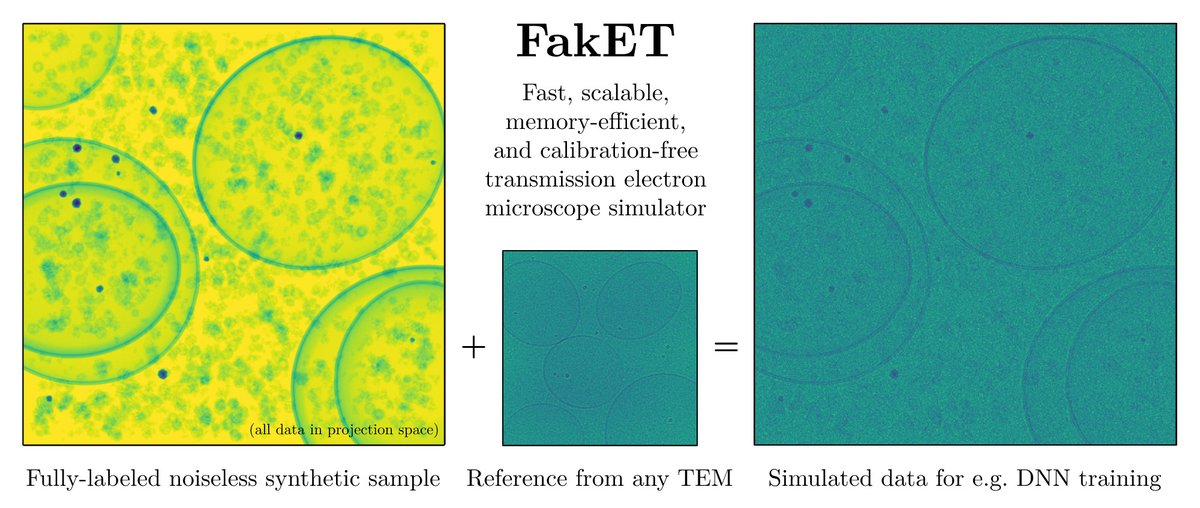
3/7 🏎 We developed FakET as a surrogate model mimicking the behavior of the physics-based transmission electron microscope simulator SHREC but FakET generates the data 750x faster and uses 33x less memory 💪
Finally, my postdoc work is published in Cell Structure! 🎉 Grateful for the chance to apply deep learning to cryo-ET and learn from @HaselbachLab about structural biology🦠. Huge thanks to Lukas Herrmann for coding help and @GrohsPhilipp for my position and all the GPUs.
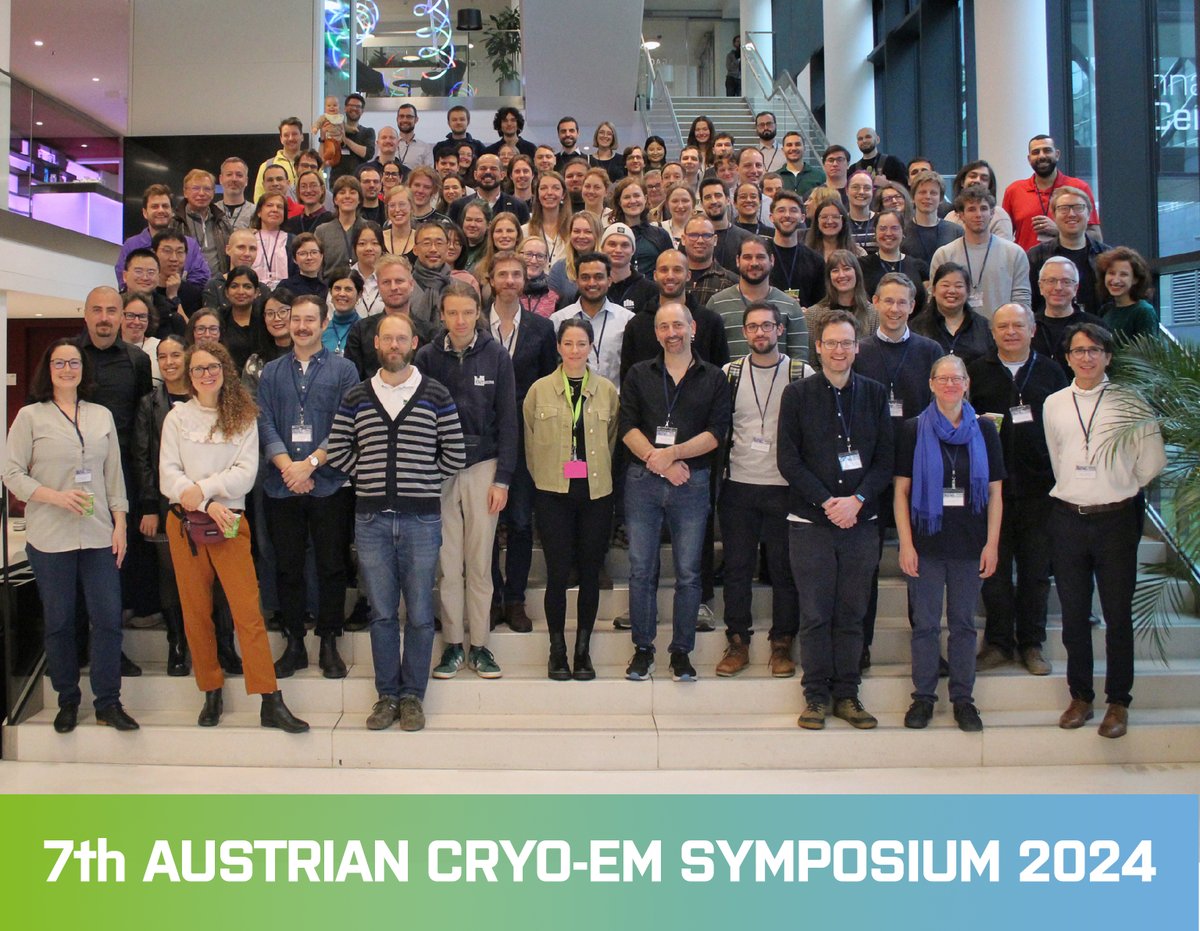
This week the 7th Austrian Cryo-EM Symposium happened & we were thrilled to once again welcome so many participants on our campus! Many thanks to the organizers @IMPvienna, Vienna BioCenter Core Facilities (VBCF) and @ISTAustria for a great event!
#viennabiocenter
@GrohsPhilipp@ISTAustria@HaselbachLab Thanks, Philipp! It’ll be hard to top the fun I had in your group. By the way, that's my favorite cup from Univie, had to come with me.😇
Thanks, Alicia! I'm very happy to join your group at @ISTAustria 🎉. At the same time, I need to thank my mentors @GrohsPhilipp , @HaselbachLab, Monika Dörfler, Jiri Mekyska, Lukas Vrabel, and all my great former colleagues. Without them I would not make it this far.
Thrilled to welcome @HararPavol to my group at @ISTAustria as a Computational Scientist for BioAI and CryoET!
With broad expertise in deep learning and biomed data from the @univienna and @IMPvienna he’ll be advancing our research on circadian rhythms with AI-driven methods.
In the spirit of Obama's recent viral post about getting shi<ehm>stuff done, I just submitted two major updates of my papers on arXiv. Not every day you push through multiple submissions at once, even if it's "just" updates. Let's see if I manage to get another one next week.
The next Vienna Deep Learning Meetup takes place on June 19, 2024 at 18:30 hosted by Bosch. We look forward to seeing you there https://t.co/OCjuxVicCP
I’ve joined the organization team of the Vienna Deep Learning Meetup! My first initiative is merging the Vienna Computer Vision Meetup with VDLM to unify the Viennese AI community. Let's innovate together! 🚀 #VDLM#AI#DeepLearning#ComputerVision https://t.co/MlTANSa45B
@SamSantala@Adobe@Photoshop Have you considered using https://t.co/nAwrNIShNC? It does not have 100% of the Photoshop functionality, sure. But it has the most important features. Give it a go. I switched years ago.
"A random half of panelists were shown a CV and only a one-paragraph summary of the proposed research, while the other half were shown a CV and a full proposal. We find that withholding proposal texts from panelists did not detectibly impact rankings."
https://t.co/IVXjvGqUDI
@profpjm@vonKriegstein@Toffeemen68 I agree some would like to misuse it. However, we got a comment to compare our method with another class of methods (without proper citation). Then we conducted a lot of new experiments to satisfy this, only to get rejected because they had a slightly different paper in mind.
@AlisterBurt Absolutely crucial initiative! I'm keeping a close watch on it, and I'm eager to contribute when I can. Hoping it draws the entire community together to collaboratively build better tools! 💪🤞
Build what you need and use what you build. This is a core philosophy of my research. It shifts the focus away from publishing “papers” to what really matters — impact. This thread unpacks why I think this is a successful approach to science. 1/10 Or see:
https://t.co/p3iWJ9LCzf
@ngriffin_uk@Ax_Sharma So every time I open an issue and want to attach a screenshot, somebody would have to approve of that? I don't think this is a good idea. Why not just using random URL for anonymous attachments? No additional work for repo owners and no repo name in the link, hence no problem.
@loquaciousidiot@NC_Renic@scottjshapiro Well maybe the solution is to not write stuff like this at all. I learned never to write comments into the text itself. Even LaTeX comments are not good as this is visible at arXiv. 1. Do not write anything disrespectful, 2. If you must vent, do so over a coffee.