Nieuw format Run X gestart
Drie juni was weer Global Running Day en dat vormde de start voor RUN x. Fitness- en wellnesscentra over de hele wereld kunnen zich nu registreren om deel te nemen aan het RUN Xª-netwerk. https://t.co/2GCJ3Kj6YY
You don’t get faster by training one pace.
You get faster by raising the entire pyramid.
Here’s a visualization of the 4 paces that determine running performance.
Pace at LT1 is roughly how fast you can run at 65-75% of HRmax.
For serious recreational runners, LT1 pace is one of the most important metrics to track. The faster your LT1 pace, the greater your marathon potential and aerobic capacity in general.
The vast majority of training should be performed at or below LT1. Doing so improves aerobic development, enhances recovery, and builds the foundation needed to support training at every level above it.
Pace at LT2 is roughly your 20-30 minute race pace.
Fast runners have a smaller gap between their vVO₂max and LT2 pace. You can often see this by comparing their 5k and 10k performances. Their pace drops off very little because they can sustain a high percentage of their maximal aerobic speed.
vVO₂max, as defined by Billat, is your maximal aerobic speed (v = velocity). It’s the fastest pace you can sustain for roughly 4-10 minutes.
This is why VO₂max isn’t the be-all and end-all. A runner with slightly lower VO₂max but better running economy can have a higher vVO₂max than a runner with a higher VO₂max and worse economy.
Ultimately, it’s how fast you can run aerobically that matters.
Anaerobic Speed Reserve (ASR) is the gap between your peak speed and vVO₂max.
For distance runners, this is a great area to train. Improving your ASR can help raise running economy, improve speed, and make race pace feel more comfortable.
Peak speed can only be improved through sprinting itself. It’s the highest velocity you can maintain for a few seconds.
You might think, “Why do I need to sprint if I’m training for a distance race?”
Studies have shown that peak speed correlates with 10k performance. The faster you can run, the higher your ceiling. There is also evidence that sprint interval training improves lactate threshold and aerobic fitness.
Your aerobic base is the foundation of the pyramid.
You can only build the top as high as the bottom is strong.
MOVE onderzoek gezondheid en sport. Op vrijdag 22 mei is kenniscentrum MOVE (Mobilizing Optimal Vitality & Exercise) officieel geopend in Apeldoorn. Lees het artikel bij Hardlooptrainers Nederland: https://t.co/e5E5prHxsf
𝗡𝗢𝗖*𝗡𝗦𝗙 𝘀𝘁𝘂𝘂𝗿𝘁 𝗯𝗿𝗶𝗲𝗳 𝗮𝗮𝗻 𝗺𝗶𝗻𝗶𝘀𝘁𝗲𝗿 𝗦𝘁𝗲𝗿𝗸 𝘃𝗮𝗻 𝗟𝗮𝗻𝗴𝗱𝘂𝗿𝗶𝗴𝗲 𝗭𝗼𝗿𝗴, 𝗝𝗲𝘂𝗴𝗱 𝗲𝗻 𝗦𝗽𝗼𝗿𝘁. “𝗚𝗼𝗲𝗱𝗲 𝗶𝗻𝘁𝗲𝗻𝘁𝗶𝗲𝘀, 𝗺𝗮𝗮𝗿 𝗯𝗲𝘇𝘂𝗶𝗻𝗶𝗴𝗶𝗻𝗴𝗲𝗻 𝘇𝗲𝗲𝗿 𝘇𝗼𝗿𝗴𝗲𝗹𝗶𝗷𝗸.”
Uit de jaarlijkse rapportage Zo Sport Nederland 2025 blijkt dat het aantal sporters bij verenigingen opnieuw groeit. Ook zien we hoe belangrijk sportverenigingen lokaal zijn geworden door de samenwerking met onderwijs, zorg en welzijn.
Daarom zijn de voorgenomen bezuinigingen op sport en de BOSA-regeling zo zorgelijk. Ze raken direct de vrijwillige verenigingsstructuur die Nederland letterlijk in beweging houdt.
Algemeen directeur-bestuurder Marc van den Tweel: “Het huidige kabinet heeft onze sympathie als het gaat om de intenties met betrekking tot sport en bewegen. En we hebben oog voor de vele financiële uitdagingen die er zijn. Maar wat er nu gebeurt met de sport is zeer zorgelijk.”
Lees meer over de bevindingen uit Zo Sport Nederland 2025 en de oproep van NOC*NSF via de link🔗https://t.co/q1GGsLhn1P
A recent study found that athletes with better acceleration weren’t just “staying low” … they were organizing the foot, shank & ankle in positions that allowed more force to be directed horizontally.
GPP Reloaded is my 4-week general preparation program designed to build work
10 Brutal Truths About Longevity:
> Nobody accidentally ages well.
> Muscle loss is a choice until it becomes a consequence.
> Your brain needs exercise as much as your body does.
> Sleep deprivation is self-inflicted cognitive decline.
> The healthiest people are often the most consistent.
> Sitting all day is training for frailty.
> Prevention is easier than recovery.
> Small habits compound faster than most people realize.
> Every workout is an investment in your future independence.
> Longevity is earned through daily decisions.
Longevity is built through consistent daily behaviors. Regular exercise, muscle preservation, quality sleep, reduced sedentary time, and preventive health habits are strongly associated with better cognitive function, physical independence, and longer healthspan
Get your marathon fuelling right! Ensure your muscle & liver glycogen tanks are full and stay hydrated. For marathon fuelling tips visit: https://t.co/dROyYqhuHe #MarathonTraining
The missing piece in ankle sprain rehab? Training your ankle where sprains actually happen 👇
Most exercises for ankle sprains load stabilizing muscles in sitting, stationary positions when sprains often occur in plantar flexion. Challenge your ankle with these variations 👟
Breaking 1:45 in the half marathon sits in that dangerous middle.
Not beginner “just finish” territory anymore.
Not elite fantasy either.
A strong everyday-runner goal.
To run 1:44:59, you need around 4:58/km or 8:00/mile for 21.1K.
Quick enough to demand respect.
But the biggest mistake is treating sub-1:45 like a shorter race.
A half gives you enough time to feel good early, get greedy, and spend the final 5K learning a painful lesson about patience.
This goal is not just speed.
It’s controlled endurance.
Month 1:
Build consistency.
Four runs a week can work for many runners, but the key word is repeatable.
Not one monster week followed by soreness, missed runs, and regret.
Month 2:
Build endurance.
Long runs get more serious, but they are not weekend ego races.
If your long run wrecks half the week, it may be too fast, too long, or too aggressive.
Month 3:
Get specific.
Tempo work.
Goal pace practice.
Fueling practice.
This is where you learn what 4:58/km or 8:00/mile feels like when you are not fresh, excited, or carried by race-day adrenaline.
Month 4:
Do not panic.
The race is close, so runners start hunting for extra fitness.
Extra workouts.
Extra long runs.
Extra “one more hard session” nonsense.
But the taper is not where you become fit.
It is where you uncover the fitness you already built.
Sub-1:45 is usually not about forcing speed early.
It’s about staying calm long enough to still be racing late.
Would sub-1:45 feel fast to you right now?
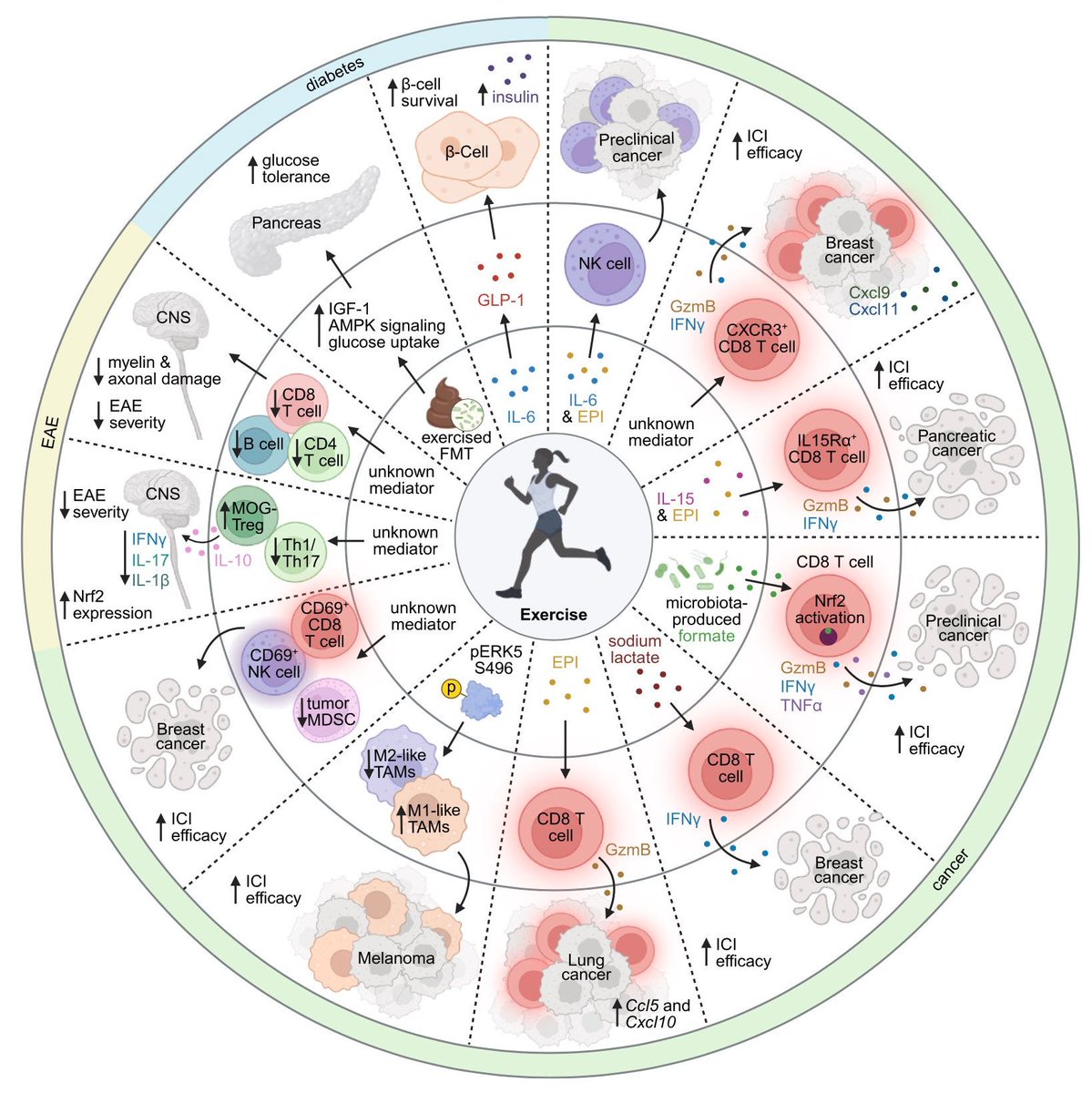
Exercise is not improving your immune system. It is reprogramming it.
Every training session mobilizes immune cells, inflammatory mediators, metabolites, and stress signals that reshape how the body detects threats, repairs tissue, and suppresses disease.
Skeletal muscle functions as an endocrine organ. The biology of performance is immunological before it is physical.
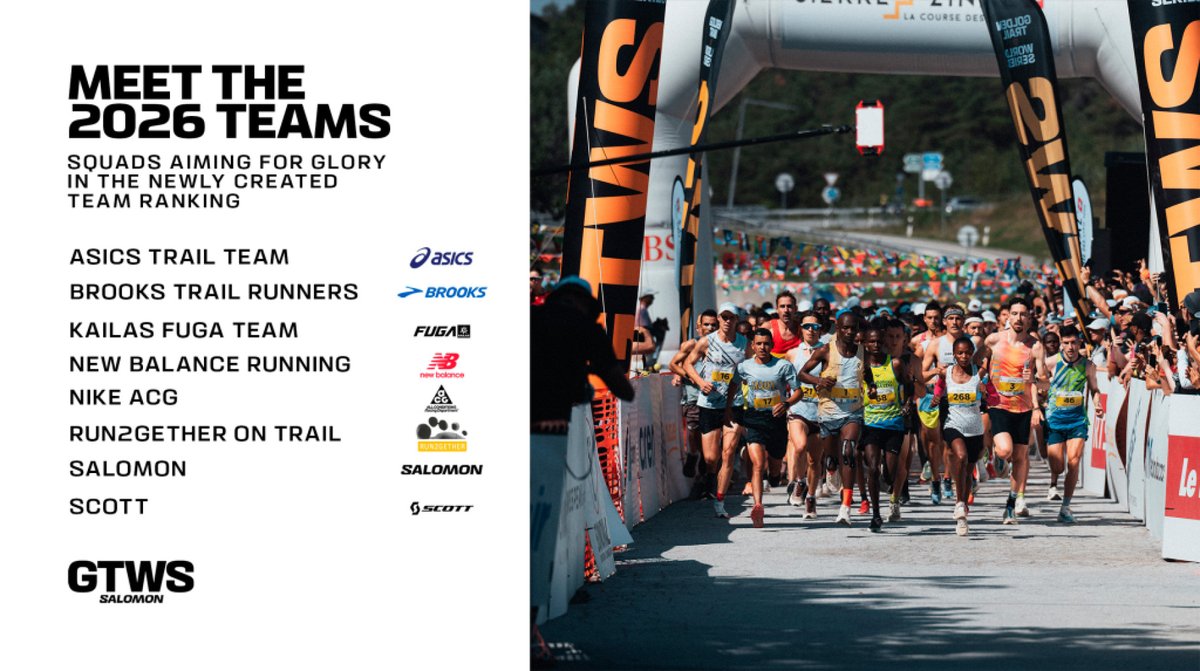
Trailrunning bij Golden Trail World Series krijgt een extra dimensie: de teamranking. Daarmee wordt de teamgedachte nog belangrijker. Welke teams zijn er? Hoe werkt het? Lees het complete artikel bij Hardlooptrainers Nederland: https://t.co/jIZxohCYAh
The current physical activity guidelines are too low.
I've been saying this for a while. And a new study confirms it.
Meeting the standard 150 minutes/week was associated with only a modest ~8–9% lower cardiovascular risk.
The biggest protection occurred at roughly 560–610 minutes/week, about 3–4× higher, where cardiovascular risk was 30% lower.
We need to distinguish between the minimal activity volume required for basic protection, and the substantially higher volumes required for optimal resilience.
Op 29 mei is de volgende editie van ‘Slimmer trainen met wearables’. Schrijf je in en haal veel meer praktische toepassingen en verbeteringen uit je sporthorloge. Dit alles onder begeleiding van tech- en hardloopexpert Frank Thuss. https://t.co/WWcwkukCz6
Your muscle rebuilds in about three months. Your tendons and cartilage take roughly a year and a half. Your bone, up to two years. Adding 40 grams of whey daily for two weeks doesn't change any of those timelines.
That's the finding from a study published this month in the American Journal of Clinical Nutrition. The team measured rebuild rates across more than a dozen knee tissues in living older adults using a safe heavy-water tracer. Tissues sampled during routine knee replacement surgery. Half the participants kept their habitual diet.
Half added 40 grams of whey daily for 14 days. At the end, the rebuild rates of every tissue were the same in both groups.
The hierarchy was dramatic.
Muscle rebuilt at about 1.2 percent per day. At that rate, your quadriceps theoretically turn over in roughly three months. Synovium, the membrane that lines the joint capsule, rebuilt at 0.8 percent per day. The fat pad behind your kneecap, about 0.5 percent. The cruciate ligaments deep in the knee, about 0.45 percent. The patellar tendon, the femoral cartilage, and the menisci all rebuilt at 0.18 to 0.21 percent per day, putting their full-pool turnover at roughly 1.3 to 1.5 years. Bone rebuilt at 0.12 to 0.21 percent per day across five sites, with the slowest taking up to 2.3 years for a complete cycle.
What this does and does not say.
It does not say protein doesn't build connective tissue. It does. Every tissue in your body depends on dietary amino acids as substrate, and the synthesis rates measured here confirm that all of these tissues are actively turning over.
What the study shows is that for these older adults on their normal diets, adding 40 grams of whey on top for two weeks did not accelerate the rebuild rate of any tissue measured. It is one trial. It is small and short. It cannot rule out effects in people with inadequate baseline intake, or effects that might appear with longer supplementation. What it does establish is that connective tissue synthesis rates are dramatically slower than muscle, and a two-week protein bump does not compress those rates.
Protein supplementation is a tool for closing intake gaps and for hitting the per-meal threshold that maximizes muscle protein synthesis after training. People who are not eating enough total protein, or who are not getting enough per meal to drive muscle protein synthesis in older muscle that has lost some sensitivity to amino acids, benefit from supplementation. That's well established and not in dispute.
Protein supplementation is not a connective tissue repair accelerator.
Cartilage damage from running mileage, tendon overuse injuries, bone density loss in postmenopausal women, ACL rehabilitation timelines: none of these can be hurried with whey. The biology runs at its own clock speed regardless of how much you put in.
We have been treating tissue protein synthesis like a single dial. The reality is that your body runs many tissue clocks at very different speeds. Muscle is the fast one. Most of what we call "tissue building" outside of muscle takes 1 to 2 years per cycle, not days. When you injure a tendon at 55, the rehab timeline is set by how fast that tendon can lay down new collagen. Mechanical load and time do the work. Adequate protein supports it but doesn't compress the timeline.
Muscle responds to protein on a short timescale. Everything else responds on a long one. The two are not interchangeable.
Houtvast et al., Am J Clin Nutr, 2026
Thinking about increasing your running mileage? PASS THIS TEST🏃🏃♀️
To “pass”:
☑️ Hold each position for 40 seconds
☑️ No pain during testing
☑️ No side-to-side differences >4 seconds
If you meet all 3 criteria, you can feel confident about progressing your mileage safely 👟