Congratulations to Praggnanandhaa for this remarkable feat!
This is indeed an incredible milestone that highlights his continued excellence.
My best wishes to him for his future endeavours.
@rpraggnachess
One of the most powerful symbols of India’s unbroken civilizational continuity!
Discovered at Mohenjo-daro in undivided India this steatite seal, about 4,300-year-old, shows a seated figure in yogic posture (widely seen as Shiva-Pashupati) seated in Mulabandhasana, surrounded by animals.
While ancient sites may lie across modern borders, India remains the living custodian of this heritage. The yogic posture, Shaivite symbolism, and spiritual ethos seen in the Pashupati Seal continue to thrive in India’s temples, daily worship of Shiva, yogic traditions, and cultural life even today.
From the Vedic period to contemporary Bharat, this civilizational thread has remained alive and unbroken — deeply embedded in our philosophy, rituals, and collective consciousness.🇮🇳
#PashupatiSeal #IndusSaraswatiCivilization #LivingIndianHeritage
This 4,500-year-old terracotta dice from the Indus-Saraswati Civilization is a powerful reminder of India’s living heritage. Dicing is also mentioned as a popular game in Rig and Atharva Vedas (two of the four sacred Vedic scriptures).
From symbols and craftsmanship to rituals, yogic practices, and collective memory, numerous elements of ancient Indian civilization continue to thrive in the daily social and religious life of Indian society across regions and communities.
Civilizational inheritance is not just about geography or ruins, it is defined by living customs, symbols, rituals, and unbroken cultural consciousness. India is the enduring living continuity of the Indus-Saraswati Civilization.
#IndusSaraswatiCivilization #AncientIndianHeritage
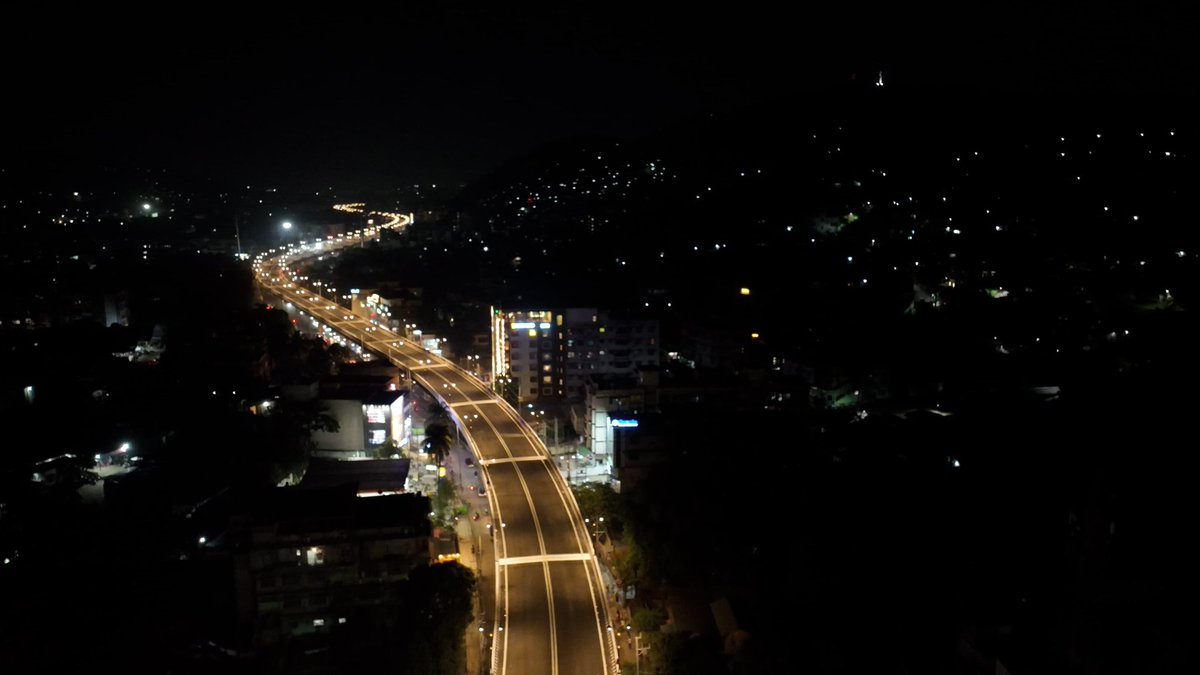
This evening, I will inaugurate a new flyover in Guwahati named after Dr. Syama Prasad Mookerjee.
Some will ask why a flyover in Guwahati is being named after Dr. S.P Mookerjee?
The answer is a story that very few people know but one which everyone in Assam should know 🧵
For the first time in history, Anga, Vanga & Kalinga are standing on the side of Dharma.
The last time they were part of the Kuru Sena was roughly 7000+ years ago.
#electionresult2026
@isenditbacc Our old houses or independent houses, used to have small skylights on the wall near roof for ventilation and cooling down the roof.
Haven't seen this in any apartment complexes these days.
India's Fast Breeder Reactor just achieved criticality at Kalpakkam.
Everyone's sharing the headline. Almost nobody is asking: who actually built this reactor?
I went through multiple sources to find out which listed companies have verified involvement in this exact PFBR project. Not "nuclear theme" plays. Actual Kalpakkam suppliers.
Here are the names👇
1. Kirloskar Brothers:
The PFBR runs on 1,750 tonnes of liquid sodium as coolant. Someone had to build the pumps that move all of it. That someone is KBL.
Kirloskar manufactured the Primary Sodium Pumps at their 100 year old Kirloskarvadi plant. Three pumps. 135 tons each. Handling 5.16 lakh liters of liquid sodium per minute.
Their AVP Ravindra Ulangwar said on record: "We at KBL are the only Indian company to develop such type of critical application pumps."
They also built the Secondary Sodium Pumps that sit outside the reactor vessel and cycle the sodium back after heat extraction. Without these pumps, the reactor literally cannot function.
KBL has also supplied pump sets for ITER, the international nuclear fusion project. So this isn't just domestic capability. Global validation.
(Source: KBL official press release on sodium pump handover)
2. MTAR Technologies:
MTAR built some of the most complex precision equipment inside this reactor.
-Grid Plate Assembly for the PFBR. 8 meters wide. 80 tons. 1,758 tubes with positional accuracy maintained within 0.1 mm. If even one tube is misaligned, the reactor doesn't work.
-Inclined Fuel Transfer Machine. 22 meters tall. 200 tons. This is the system that physically moves spent nuclear fuel out of the reactor building. MTAR designed, manufactured, and tested it entirely in house.
-They also supplied the Control and Safety Rod Drive Mechanism and the Central Canal Plug for the PFBR. The control plug alone is 2.5 meters wide, 12 meters tall, 56 tons.
And here's the moat: MTAR is the sole qualified domestic supplier of Fuel Transfer Systems for NPCIL's reactors. Vendor qualification takes 5 to 7 years. You cannot buy your way into this position.
What's coming next: ~₹800 Cr order pipeline from Kaiga Units 5&6. ₹300 to 400 Cr expected from 5 refurbishment reactors. And 10 fleet mode reactors haven't even been tendered yet.
(Source: Investor presentation, Bastion Research analysis)
3. Walchandnagar Industries:
The smallest company on this list. And arguably the most directly exposed.
WIL executed the entire sodium piping contract for this 500 MWe PFBR at Kalpakkam. Supply, erection, and commissioning of mechanical, piping, and instrumentation for the sodium and miscellaneous systems.
Think about what that means. Sodium piping in a fast breeder reactor isn't regular plumbing. Liquid sodium ignites on contact with air and explodes on contact with water. The precision and safety requirements are extraordinary.
WIL has been working with the Department of Atomic Energy for over four decades. They're pre qualified by NPCIL, BARC, and BHAVINI for Class I nuclear components, the highest classification that exists.
They've also supplied Calandrias, End Shields, Dump Tanks, Fuel Magazines, and Moderator Heat Exchangers for India's 220 MWe and 500 MWe reactors.
(Source: Walchandnagar Industries official website)
4. BHEL:
The large cap in the room. BHEL supplied the turbine island for the PFBR. In fact, BHEL has been the turbine island supplier for every Indian nuclear plant including Kudankulam and Kakrapar. The PFBR is no exception.
The motor that drives Kirloskar's Primary Sodium Pump? That's a BHEL motor.
Not a hidden gem, but it would be dishonest to talk about who built Kalpakkam without mentioning them.
5. L&T:
Built the reactor vessel and core structural systems for the PFBR. India's only private sector player with nuclear grade heavy engineering capability at this scale. Again, not hidden, but directly involved in this reactor.
So why does all of this matter now?
Because Kalpakkam isn't the end. It's the beginning.
Six more 600 MWe Fast Breeder Reactors are already planned. India's nuclear capacity is going from 8,180 MW today to a target of 100 GW by 2047. The SHANTI Act 2025 just opened nuclear to private sector participation for the first time in India's history.
Every single future reactor will need sodium pumps, fuel handling systems, sodium piping, turbine islands, and reactor vessels from qualified suppliers.
And nuclear qualification takes 5 to 7 years. The companies already inside this ecosystem today have a head start that no amount of capital can shortcut.
Your weather app runs on models built for London and New York.
Indian thunderstorms are 2-3km wide, last under an hour and form where no model predicted. The same GFS that nails London rain 3 days out struggles with Pune rain 3 hours out.
I built MausamNow to fix this. 5 models, live radar, satellite tracking, locality-level answers. Works across 38 radar stations in India.
Try it: https://t.co/i7Vr6IEAuD
How it works: https://t.co/f7NhFVOh3o
#Weather #India #Monsoon #Pune #Punerains
Here is a beautiful video on the eve of Utkala Dibasa.
As Odisha turns 90 tomorrow, let’s remember - Odisha was the first state in India to be formed on the linguistic basis.
A proud legacy, a timeless identity.
✅ Fact check: The tweet is 100% accurate. It’s not hype or exaggeration — this is a real, working tech demo.
What the tweet claims:
•You can run a full Linux OS inside a 6 MB PDF file.
•It uses a RISC-V emulator embedded right in the PDF.
•No virtual machine needed, just open it in a normal PDF reader.
•It runs interactively inside the file.
The truth:
All of that is correct.
You can try it yourself here: https://t.co/EsCC25CV8m
(Works best in Chrome or any Chromium-based browser — the PDF viewer there supports the JavaScript needed.)
Quick reality check on the details:
Size: Yes, the PDF is about 6 MB.
“Full Linux”: It’s a minimal command-line Linux (Buildroot on RISC-V). You get a real terminal, can run commands like ls, echo, etc. No desktop or graphics — just text.
How it works: The PDF uses built-in JavaScript that PDF readers support. It boots the emulator automatically (you click “Start Emulator” once).
No VM required: True — the whole OS lives and runs inside the PDF document itself.
It’s the same guy who previously made Doom run inside a PDF. This is just the next level: a whole (tiny) Linux OS.
Super cool proof-of-concept that shows how powerful — and potentially risky — PDF files can be.
Mind-blowing what people can squeeze into a simple PDF!
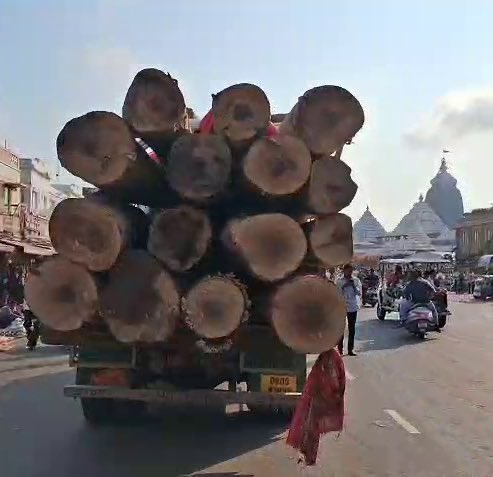
The 2nd batch of Ratha Katha has reached Jagannatha Dham, Puri for #RathaJatra 2026. 🙏
Ratha construction will officially start from Akshaya Tritiya.
No blueprints. No machines. No measuring tools.
Just age-old wisdom and skilled hands.
That’s how the majestic Rathas of Puri are built…A tradition passed down through generations.
Truly incredible!
Gold necklaces. Armlets. Bangles. Silver ornaments.
Copper furnaces. Steatite bead workshops. Fired kilns.
Kunal, Haryana. Dried bed of the Saraswati.
Carbon-14 dated: 5700–6000 BCE.
**7,700 years old.**
Look at what emerged.
Three occupation phases. Pit dwellings evolved into planned rectangular mud-brick houses with organized layouts.
Then workshops appeared. Copper smelting. Bead manufacturing. Systematic craft production.
Then the gold.
A complete hoard. Necklace beads. An armlet. Bangle fragments. Semi-precious stones.
Archaeologists call this **"the earliest remains of pre-Harappan culture in India."**
The gold regalia? **"First of its kind."**
Now notice what this proves.
• Planned architecture: 5700 BCE
• Copper metallurgy: 5700 BCE
• Craft specialization: 5700 BCE
• Ornamental culture: 5700 BCE
Mohenjo-daro reaches its peak around 2500 BCE.
That's a **3,000-year gap**.
Three millennia of developed settlement culture **before** what textbooks call "the Indus Valley Civilization."
On the bed of a river colonial scholarship dismissed as mythological.
The Saraswati.
So here's what shifts.
This isn't pre-civilization.
This is early-phase civilization.
The timeline we inherited cuts off 3,000 years of continuity.
Kunal doesn't rewrite history.
It **extends** it.
The question isn't what we're not being taught.
The question is: how long does it take for excavated evidence to become accepted history? 🏛️
@RazorpayCare Today Tried via Laptop again twice with all requirements met, still the video kyc person straight away said to try in Mobile.
If you don't support in laptop then You should redirect the user to Mobile for VKYC, just like brain trust does.🤷
Apparently you can't do the KYC in @Razorpay via Laptop.
If you do, the operator will ask you to disconnect the call and do it via mobile on your face. And he disconnected and vanished.
WTF Razorpay!?
Atleast hire someone who can be available for KYC.
Cc:
@RazorpayCare