Persian Poetry of Hadrat Mirza Ghulam Ahmad (as) with translation showing his love for his master, the Prophet Muhammad (sa)
No words can explain this !
#Islam#Ahmadiyya#ProphetMuhammad
Have you made the most important decision for your future yet?
The new month is here, but the 2026/2027 admission window is rapidly closing. If you’ve been waiting for the perfect moment to take charge of your academic journey, this is it.
Don't settle for average. Step into August with an august decision—one that guarantees a clear path to success in our distraction-free, world-class learning ecosystem.
Make the smartest move this month. Hit the link to secure your admission today: https://t.co/SDmVDp8Adh
#HelloAugust #NewMonth #MinaretUniversity #AdmissionsOpen
The Caliph is standing 6-7 long hours to deliver his 5 Speeches🎙
Note: He is ~76 yrs old
O Allah, plz make it easy for my imam 🤲
قوم احمد جاگ تو بھی ۔ جاگ اسکے واسطے
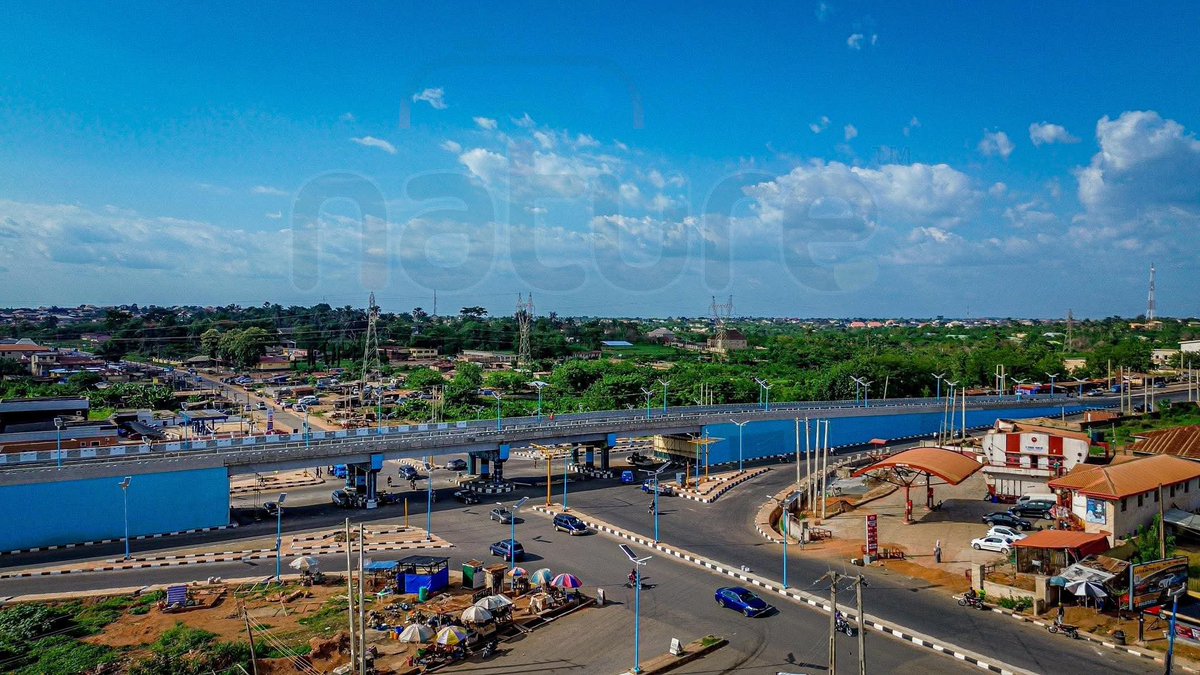
TRAFFIC ADVISORY: COMMISSIONING OF LAMECO FLYOVER BRIDGE HOLDS TOMORROW IN ÒṢOGBO
Residents and motorists within Òṣogbo and its environs are hereby informed that traffic movement around the LAMECO Roundabout and adjoining routes will be temporarily affected tomorrow 1st July, 2026, as the official commissioning of the newly completed 4-Span Flyover Bridge at LAMECO takes place. The event is expected to attract government officials, dignitaries, guests, and members of the public, leading to increased vehicular and pedestrian activities within the area.
Motorists are advised to plan their journeys ahead, avoid unnecessary movements around the LAMECO axis during the commissioning period, and make use of alternative routes where possible. Road users should also comply with all traffic diversions and instructions from traffic management officials, the Police, FRSC, and other security agencies deployed for the event.
We urge residents to exercise patience and cooperation to ensure a smooth and successful ceremony while prioritizing public safety and free flow of traffic.
#InsideOsogbo
They say that time does not stop, but life continues. This is a truth that only becomes fully apparent after the demise of a loved one. My father, the late Munawar Ahmad Khurshid Sahib, was a missionary, a devotee of Khilafat, a teacher, a visionary and a mentor. For his children, he was simply “Abbuji”. Friends and family members have often asked me to write about him. I always hesitated, not knowing where to begin, but I pray that this piece will serve as a means of keeping Munawar Ahmad Khurshid Sahib in your prayers.
Those who remember Khurshid Sahib will recall a man who met others without a trace of worry on his face, with a radiant smile that touched the hearts of so many. Yet behind this smile was someone who was very unwell: He had been on dialysis for over 10 years and had to visit a dialysis centre three times a week. He would wake in the early hours of the morning and a taxi would take him to the centre, where the entire process would take around five hours. He had undergone open-heart surgery and continued to struggle with serious health issues. Not long before his demise, he also had a finger amputated due to gangrene.
But Abbuji was never fazed by any of this. If ever asked how he was, he would often jokingly reply, “I am fine, but more importantly, I am concerned about your health.” He remained very cheerful and his infectious smile, kindness and love for others were constant features of his life.
The more I reflect on Abbuji’s love and care for the Jamaat of the Promised Messiah (as), the more I realise how deeply he understood the personal struggles of others. As a senior missionary, he felt that it was his primary duty to provide help and comfort to those around him. For this reason, he would put his own worries aside and make the other person the focus of his attention.
The love and concern he showed to others were returned to him in equal measure. One incident from those years has remained with me ever since.
I was still in Jamia when Abbuji suffered a heart attack. When I went to visit him in hospital, he was fast asleep, clearly still under the effects of his medication. Standing next to his bed was a member of his local Jamaat, quietly praying for him, with tears streaming down his face. After a while, he gently kissed Abbuji’s forehead.
I graduated in 2013 and have served as a field missionary since then, but this incident remains etched in my mind. It was at that moment that I truly understood that Ahmadiyyat is indeed one family...
There could be no better way to conclude than with the prayer offered by beloved Huzoor (aa):
“May Allah the Almighty continue to grant the Jamaat such loyal and devoted missionaries who render services selflessly and fulfil their tasks. May Allah elevate his rank [in paradise].”
Tap on the link in bio to read the full article 👆
“Allah will not forgive me…”
My first visit to Northern Nigeria was in 2018 when I was posted to Nasarawa State for my one-year compulsory NYSC. Before then, I had never travelled beyond Enugu State. The North was completely new territory for me.
When my call-up letter came out and I saw Nasarawa State, I prepared myself mentally for the journey.
There was no direct vehicle from Aba to Lafia, so I was advised to travel to Makurdi, Benue State first, then continue to Nasarawa. I arrived at the park in Makurdi around 4:30pm and immediately found a vehicle loading for Lafia. I entered and waited.
For over 30 minutes, I was the only passenger.
Concerned about the time, I approached the driver and told him I might need to find an alternative since it was getting late and this was my first time traveling to the North. He begged me to stay and promised:
“No matter what happens, I will carry you to your destination.”
I trusted him and went back to my seat.
Around 6:00pm, another vehicle arrived from Enugu with six passengers heading to Lafia. The vehicle I had been sitting in could only carry six people. The loaders began transferring their luggage into my vehicle and asked one of them to board another car. The group refused — they insisted on traveling together.
Then something shocking happened.
The agberos brought out my bags and told me to find another vehicle.
I was angry and frustrated. It was getting dark. I didn’t know the town. I had already waited for over an hour. When I realized the loaders were Igbo like me, I pleaded with them in Igbo. They didn’t listen.
I walked up to the driver and reminded him of his promise. I told him it wasn’t fair to abandon me now that he had seen full passengers.
He was quiet for a moment.
Then he said something I will never forget:
“If I do this to you, Allah will not forgive me.”
He asked all six passengers to come down from his vehicle and told them to board another car.
The loaders were furious. They insulted him, calling him a bad businessman who didn’t have sense.
But the driver stood his ground.
He returned my bags into the vehicle, started the engine, and began driving, with only me as his passenger.
I couldn’t believe it.
He crossed River Benue with just me in the car and kept driving. At that point, I even started feeling sorry for him. If I were in his position, would I have done the same?
About three to five minutes into the journey, he received a call from the park. Another vehicle had just arrived with five passengers going to Lafia.
He looked at me and asked, “Should I turn back?”
I said yes.
He reversed, returned to the park, picked up the five passengers, and we finally headed to Lafia.
That was my first personal encounter with a Muslim man in the North.
Till today, I still think about the spirit that made that driver willing to carry just one passenger — at his own loss — simply because he gave his word.
You may be Christian.
You may be Muslim.
You may be a traditional worshipper.
But before anything else, we are human beings.
There are good people in every religion.
There are bad people in every religion.
Your prayer should simply be this:
May you never meet a bad person irrespective of religion or tribe.
Kalu Kelechi Kalu
A Call for Peace and Prayer
Last June, as global tensions continued to rise, His Holiness, Hazrat Mirza Masroor Ahmad (aba), warned of the grave dangers and consequences of war between Israel and Iran. The Fifth Worldwide Caliph of the Ahmadiyya Muslim Community called on the world to turn towards peace and to pay special attention to prayer.
(Friday Sermon, 13th June 2025)
#MTAi #FridaySermon
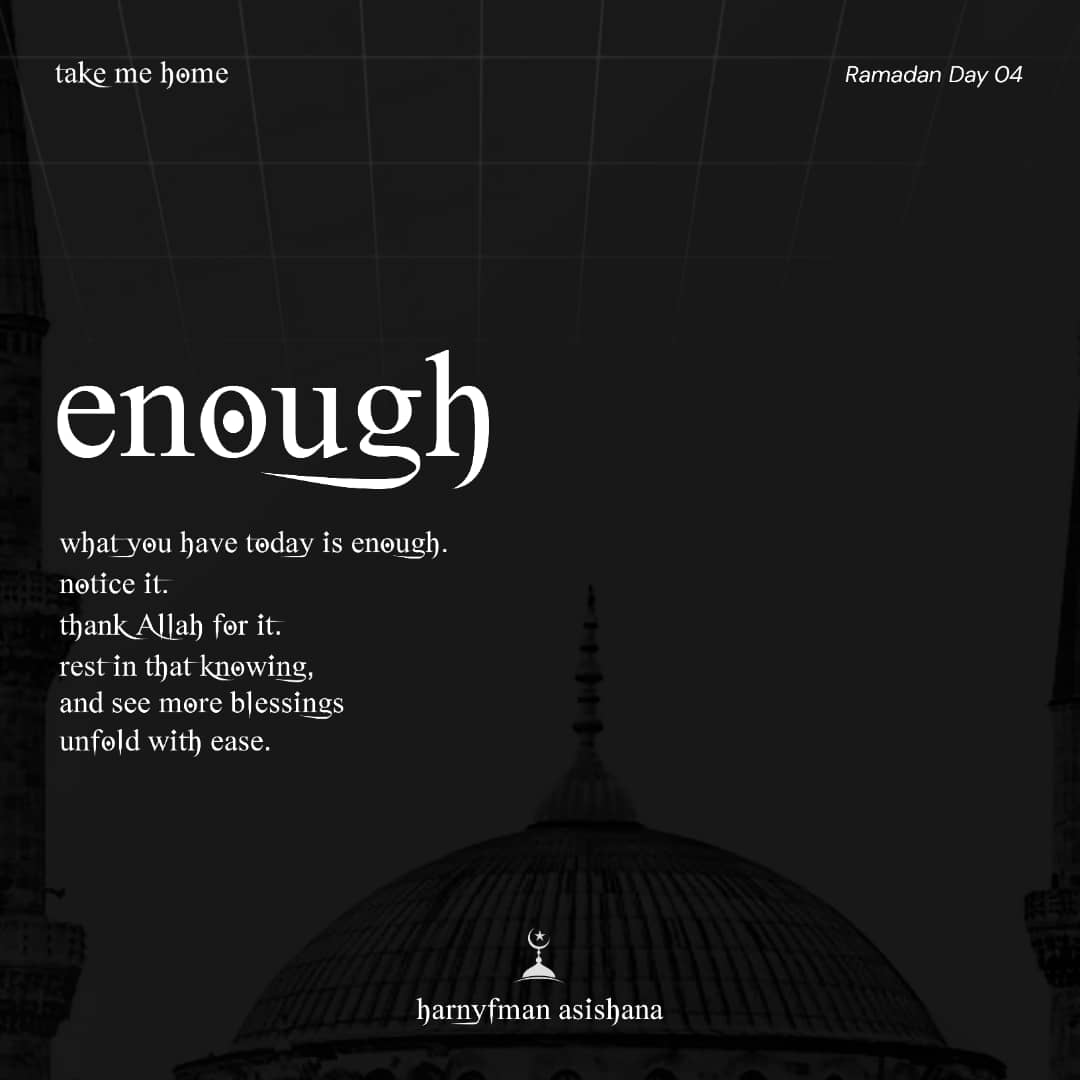
take me home
ramadan — day 4 | enough
contentment begins when we stop focusing on wat is missing and recognise wat Allah has already given. when the heart accepts dt today’s portion is enough, it settles. gratitude turns awareness into worship, opening the heart to Allah’s mercy.
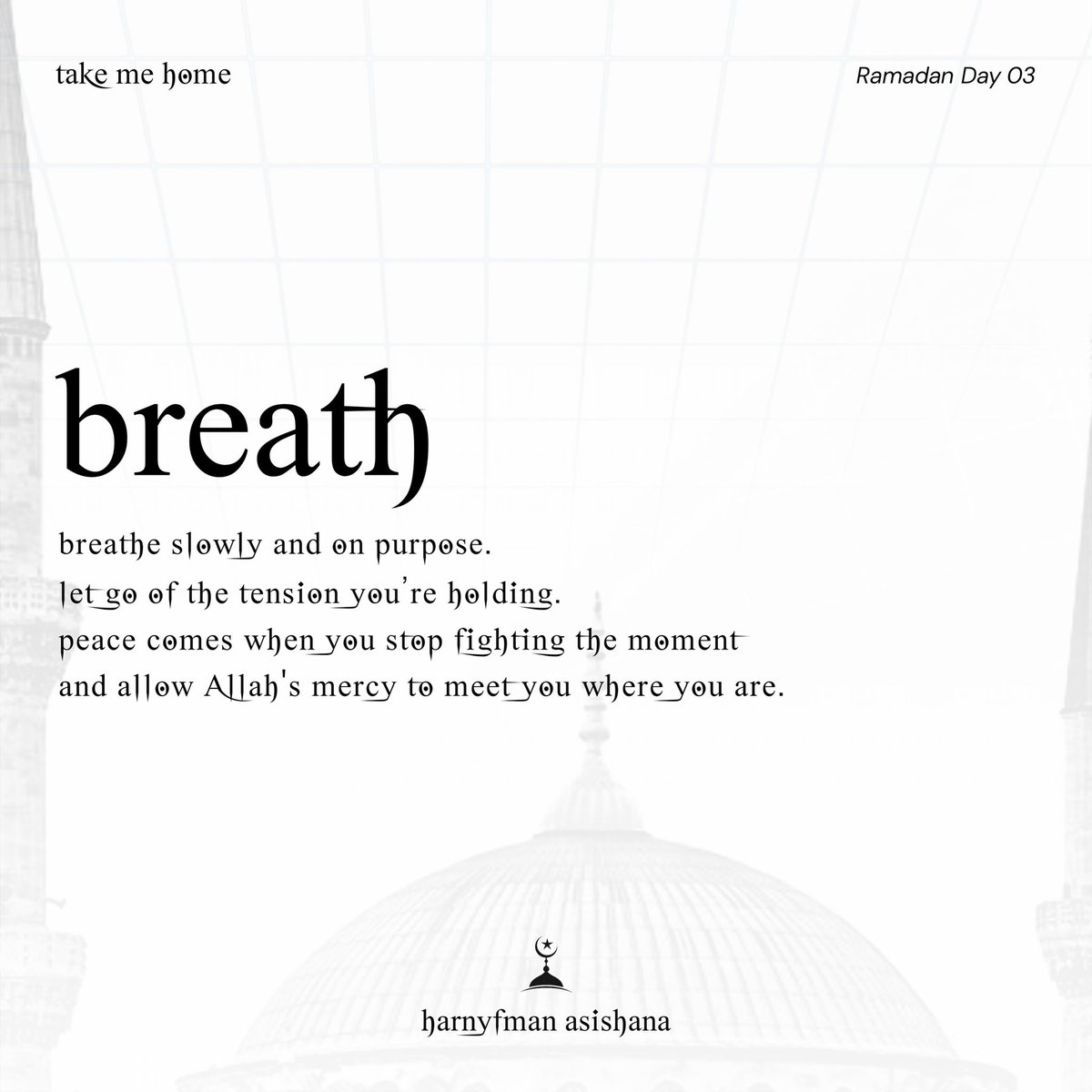
take me home| Ramadan Day 3
Breathe
Slow your breath. Release the tension.
Peace comes when you stop resisting the moment and allow Allah’s mercy to meet you where you are.
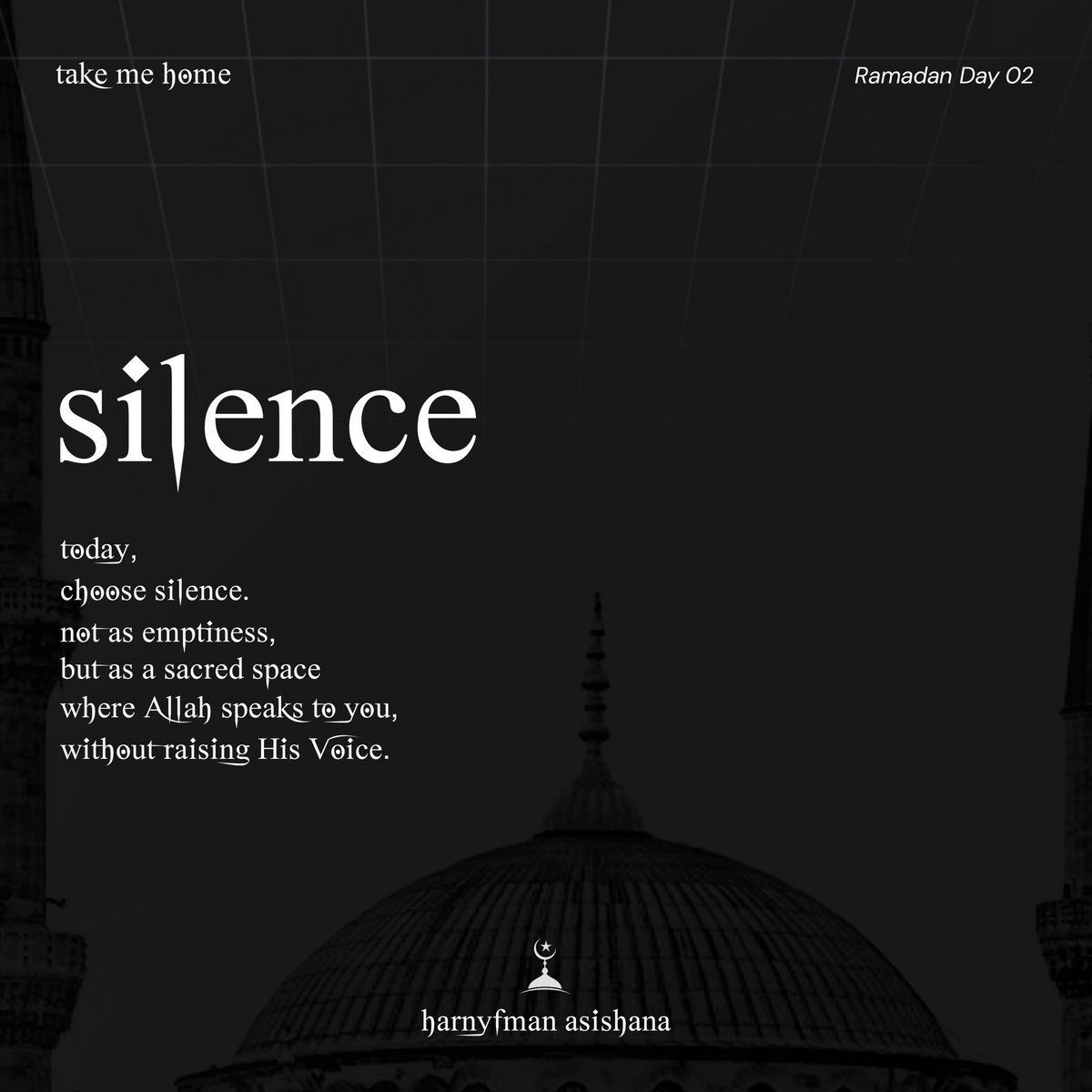
Day 2 | silence
silence in ramadan is not emptiness.
it is space—away from noise and distraction—where the heart becomes calm enough to notice Allah’s guidance.
Allah does not need to raise His voice; we need to quiet ours.
Day 2 | silence
silence in ramadan is not emptiness.
it is space—away from noise and distraction—where the heart becomes calm enough to notice Allah’s guidance.
Allah does not need to raise His voice; we need to quiet ours.
take me home || ramadan — day 1
arrival_
ramadan is not about reinventing yourself, but realigning with who Allah created you to be.
fasting lifts the layers of noise so the heart can remember its way back—towards sincerity, humility, and nearness to Allah.
A special Ramadan message from our Vice-Chancellor.
Beyond abstinence, this month is a training ground for our character and intellect. On behalf of the Governing Council, Staff, and Management, we wish you a Ramadan filled with light, wisdom, and peace.
Ramadan Mubarak from all of us at Minaret.
#MinaretUniversity #RamadanKareem #Ramadan2026 #MUI
Ramadan Q&A Thread PART I
WHAT IS THE PURPOSE OF FASTING?
Fasting is prescribed for you, as it was prescribed for those before you, so that you may become righteous. (Surah Baqarah Ch. 2 vs 184).
Therefore, the purpose of fasting is to increase our righteousness.
Fasting is a means of repairing and refining the soul through abandoning one’s own desires for the sake of Allah.
Through fasting, a person would become aware of what hunger, poverty, loneliness and discomfort mean to the less fortunate section in the society. As a result, the person would abstain from evil deeds and adopt good deeds.
The Holy Prophet (saw) said; “whosoever wakes up in the middle of the night and offers prayer with the intention of reward and to fulfil the demand of belief, and fasts, his previous sins are forgiven. (sahih Bukhari).
The Second Khalifa of the Ahmadiyya Muslim Jama’at says. “Ramadhan’s actual purpose is to abstain from everything for Allah during this month and fasting is a way of expressing that one can leave every right for Allah. (Al Fazl, 17 Dec 1966).
Aside from the spiritual benefit, there are also health benefits that can be reaped through fasting. Such as weight loss, boosting immune system, increased digestion, increased autophagy, reduced blood pressure, and others.
Add yours and stay tuned for tomorrow's Ramadhan Q and A







![AlHakamWeekly's tweet photo. They say that time does not stop, but life continues. This is a truth that only becomes fully apparent after the demise of a loved one. My father, the late Munawar Ahmad Khurshid Sahib, was a missionary, a devotee of Khilafat, a teacher, a visionary and a mentor. For his children, he was simply “Abbuji”. Friends and family members have often asked me to write about him. I always hesitated, not knowing where to begin, but I pray that this piece will serve as a means of keeping Munawar Ahmad Khurshid Sahib in your prayers.
Those who remember Khurshid Sahib will recall a man who met others without a trace of worry on his face, with a radiant smile that touched the hearts of so many. Yet behind this smile was someone who was very unwell: He had been on dialysis for over 10 years and had to visit a dialysis centre three times a week. He would wake in the early hours of the morning and a taxi would take him to the centre, where the entire process would take around five hours. He had undergone open-heart surgery and continued to struggle with serious health issues. Not long before his demise, he also had a finger amputated due to gangrene.
But Abbuji was never fazed by any of this. If ever asked how he was, he would often jokingly reply, “I am fine, but more importantly, I am concerned about your health.” He remained very cheerful and his infectious smile, kindness and love for others were constant features of his life.
The more I reflect on Abbuji’s love and care for the Jamaat of the Promised Messiah (as), the more I realise how deeply he understood the personal struggles of others. As a senior missionary, he felt that it was his primary duty to provide help and comfort to those around him. For this reason, he would put his own worries aside and make the other person the focus of his attention.
The love and concern he showed to others were returned to him in equal measure. One incident from those years has remained with me ever since.
I was still in Jamia when Abbuji suffered a heart attack. When I went to visit him in hospital, he was fast asleep, clearly still under the effects of his medication. Standing next to his bed was a member of his local Jamaat, quietly praying for him, with tears streaming down his face. After a while, he gently kissed Abbuji’s forehead.
I graduated in 2013 and have served as a field missionary since then, but this incident remains etched in my mind. It was at that moment that I truly understood that Ahmadiyyat is indeed one family...
There could be no better way to conclude than with the prayer offered by beloved Huzoor (aa):
“May Allah the Almighty continue to grant the Jamaat such loyal and devoted missionaries who render services selflessly and fulfil their tasks. May Allah elevate his rank [in paradise].”
Tap on the link in bio to read the full article 👆](https://pbs.twimg.com/media/HEMOu04XwAAWDu7.jpg)