If you trade New York.
This is the best framework.
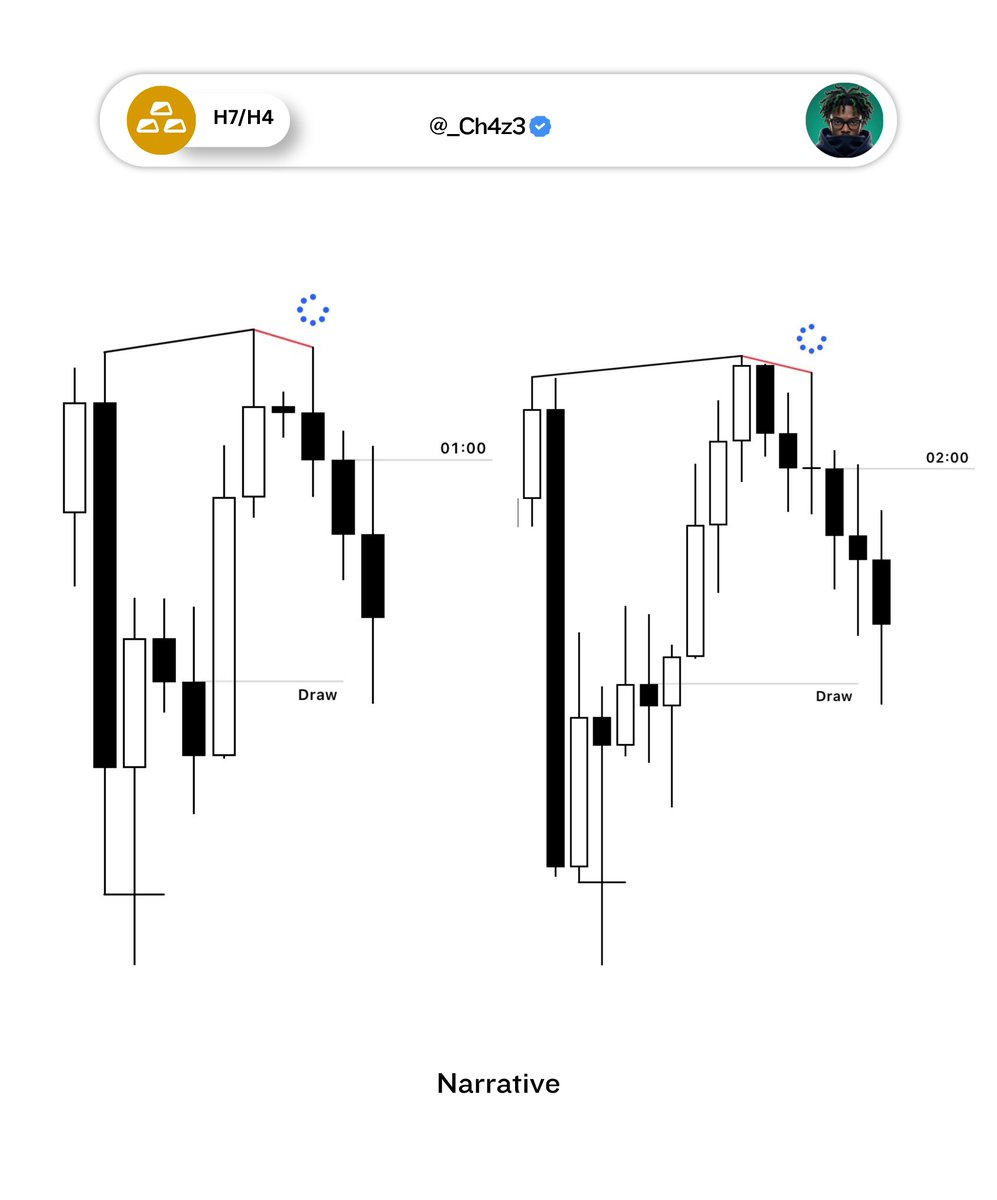
1) Daily candle 2 closure, trading candle 3
2) London reversal daily profile.
3) Fractal model in New York. Trade candle 3
4) IC CISD entry
A higher timeframe provides context. Lower timeframe provides confirmation.
The same fractal repeats across every timeframe—wait for alignment, then execute.
Credit: @TTrades_edu 😎
How to Confirm Swing Points
Each specific candle is tied to a Quarterly Theory Cycle.
For example: If we form a a Bullish daily timeframe swing candle, double check to make sure it’s supported by a Bullish Weekly Cycle SSMT between Candle 1 & 2.
SMT is a MUST before EVERY reversal.
SSMT is a MUST when using SMT.
A Swing Point is a MUST before EVERY reversal.
A PSP is a MUST when using Swing Points.
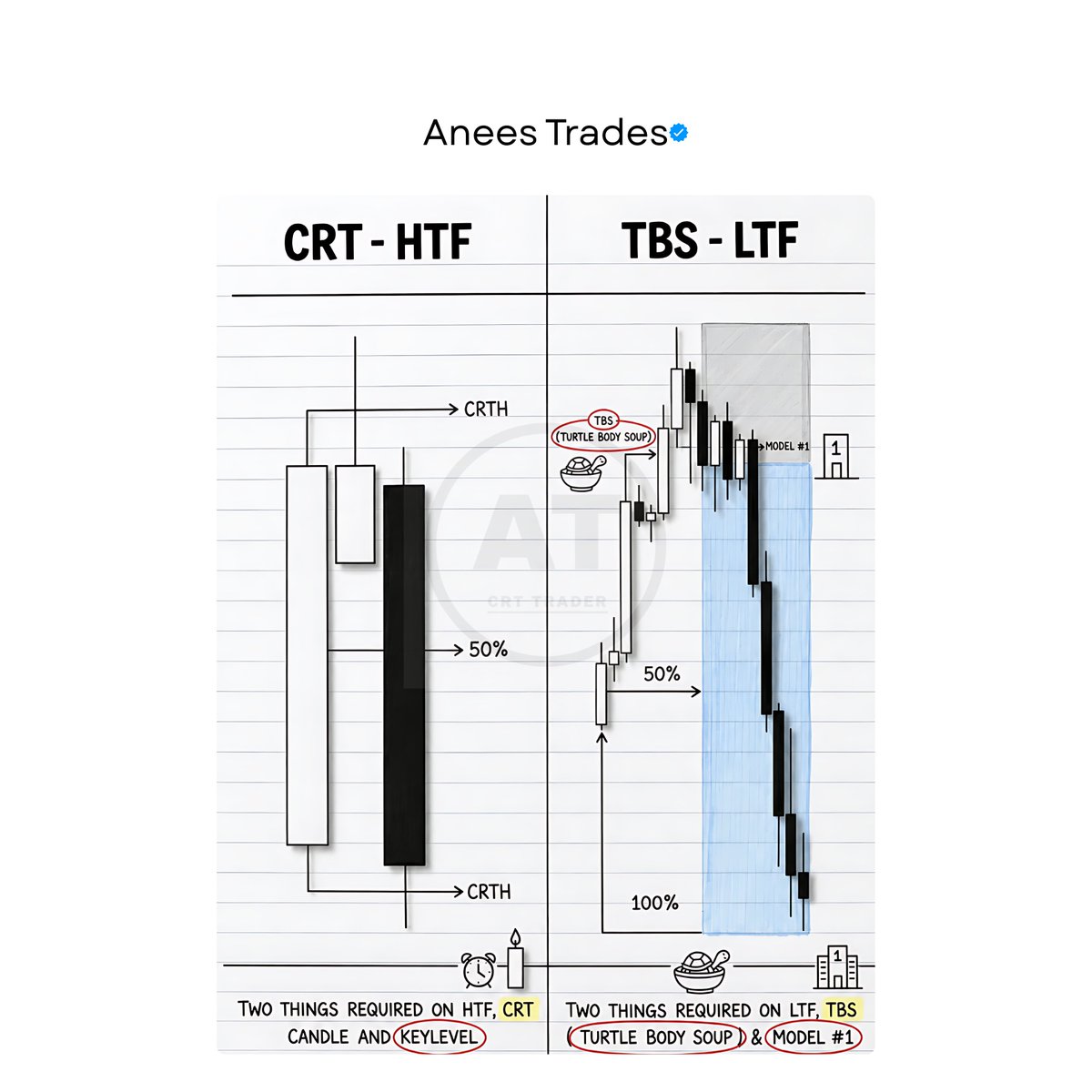
1) Determine a Draw On Liquidity - like PDH\PDL, Session H\L , CRT high & Low .
2) Wait for Turtle soup of CRT , during key Time.
3) Entry on Model-1
4) Frame your risk to 1% or 0.5% , Stop Loss placement Below or above the Model-1 Candle.
5) Take 50% of position off at 50% of the CRT
Nothing fancy or complicated , logical & repeatable
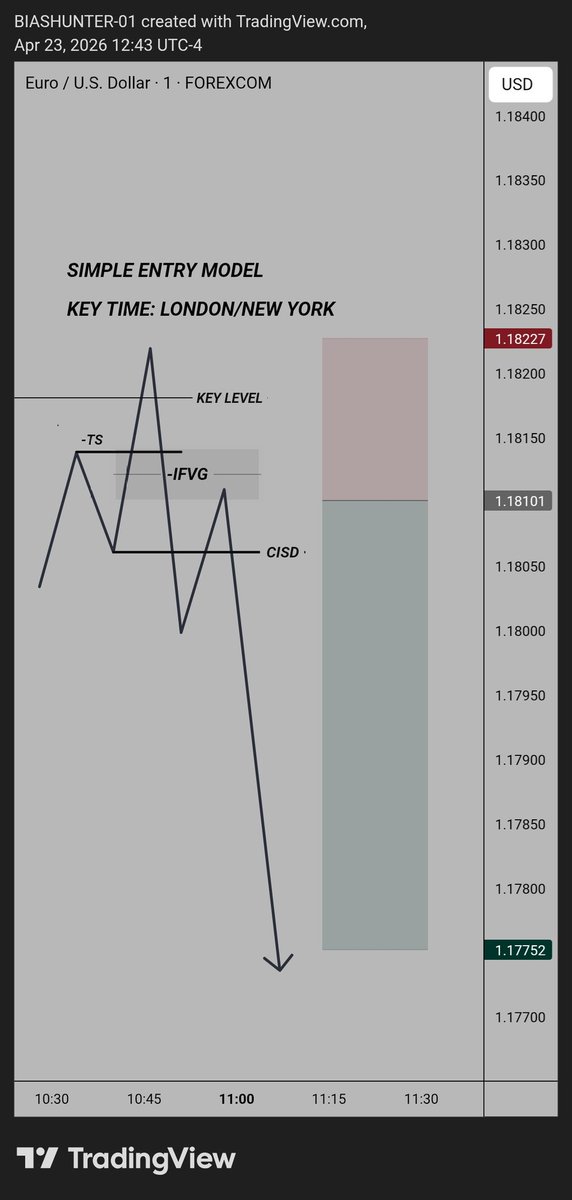
1) Determine a Draw On Liquidity - where Price is likely reaching; like NWOG, PDH\PDL, Session H\L.
2) Wait for opposing liquidity raid, during or immediately after a 10\50 Macro.
3) Entry on 1st FVG in the present price structure or use IFVG in the run to opposing liquidity to your Draw On Liquidity.
4) Frame your risk to 1% or less, Hard Stop Loss placement beyond Candle #1 of the FVG you used for entry.
5) Take 50% of position off at half of the range between your entry and the Draw On Liquidty, the balance limit out just before your Terminus.
Wash, Rinse, Repeat... nothing fancy or complicated.
Most traders don’t lose because of strategy…
They lose because they trade BEFORE this happens:
💧 Liquidity Sweep
⚡ CISD
🎯 IFVG entry
Sweep → Shift → Entry
If you don’t understand this flow…
you are the liquidity.