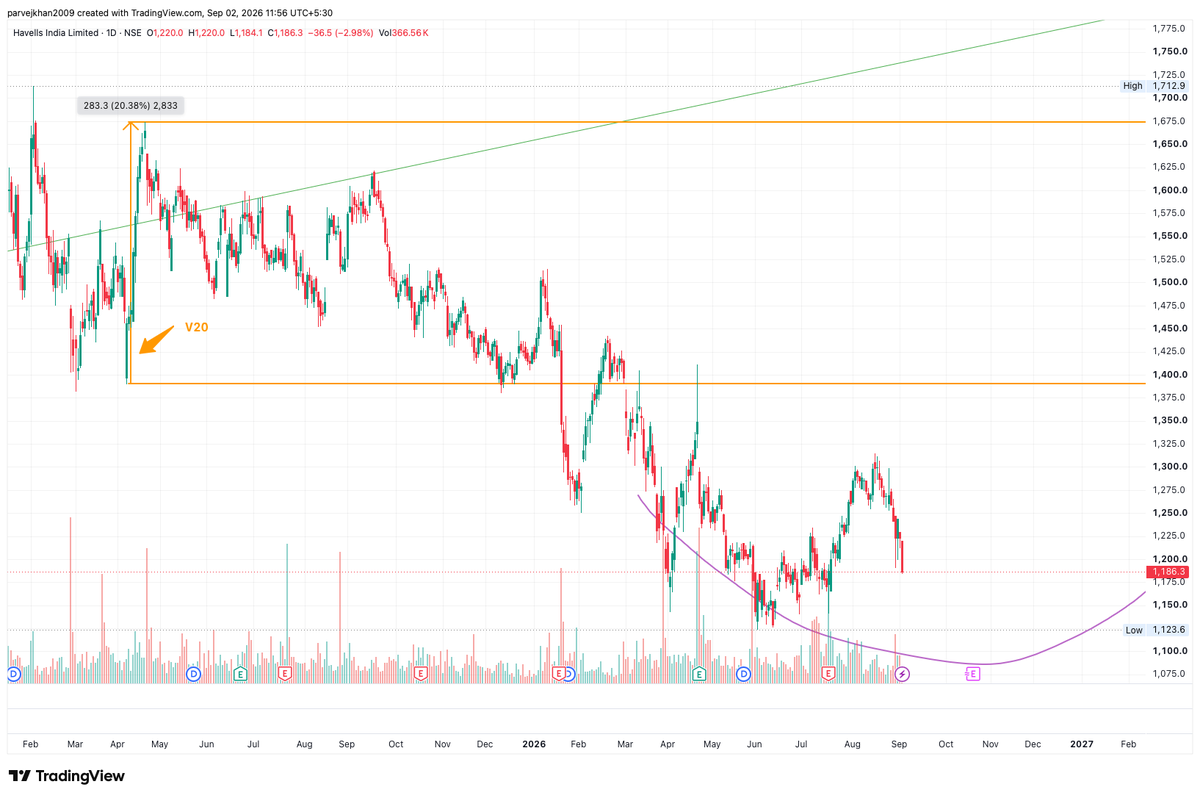
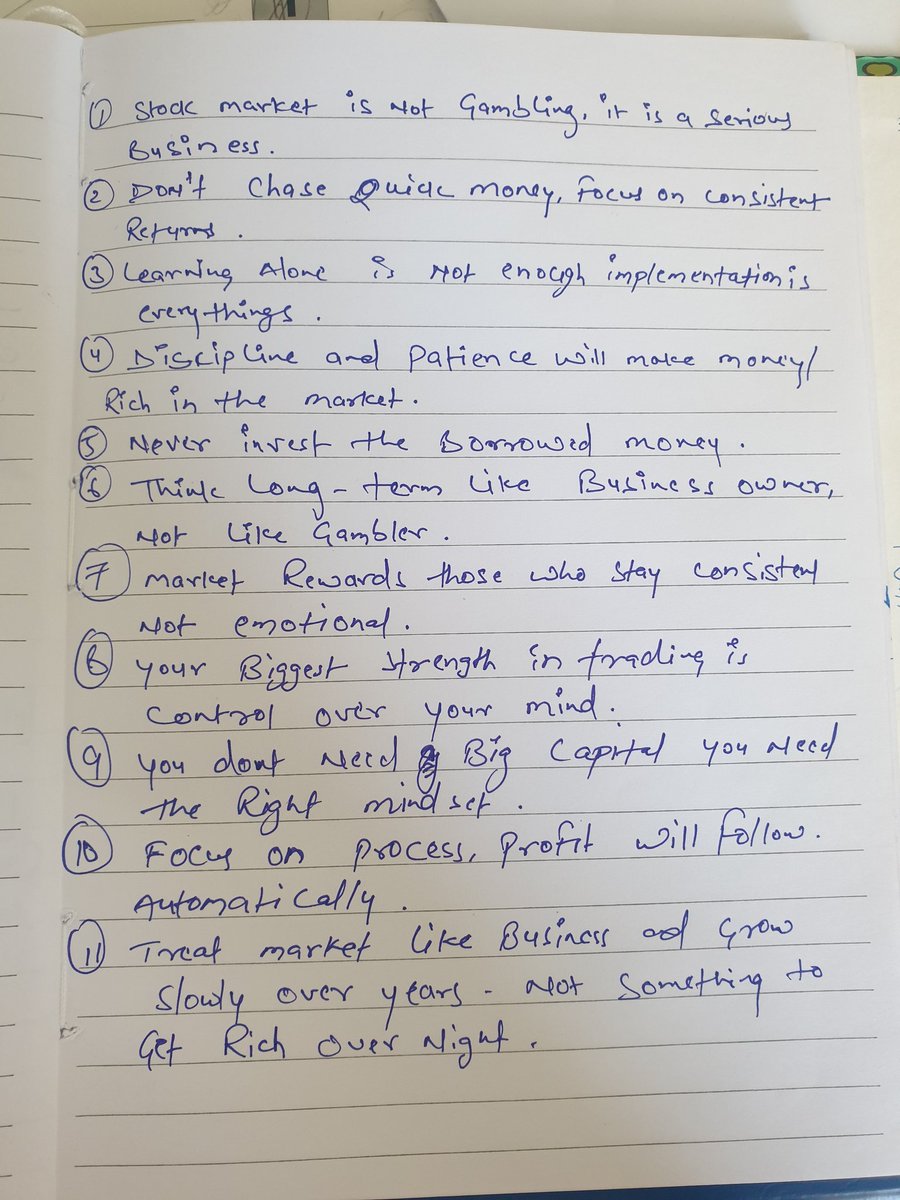
Why should we work in the stock market?
Not just to make money.
But to make our money work for us.
A job can pay your bills.
A business can build wealth.
But investing can make your existing wealth compound over time.
The goal is not to work forever for money .
it’s to make money work for you.
@ParvejKhan2009@nomadhuyaar But I don't think if a person is educated or not matters because Umar Nabi Bhat who was involved in Delhi lal kila blast was a doctor ( he was also a district topper in Kashmir)
"Travel into Your Body"
The majority of our problems whether it's addiction, anxiety, or overthinking come from the constant hustle we carry within us.
Sometimes, all we seek is a moment of relief by smoking etc.
Close your eyes.
Bring all your attention to your heart and silently say,
"Thank you... you have been working relentlessly for me."
Then travel to your lungs.
Thank them for every breath they have given you.
Move to your liver, kidneys, brain... every organ.
Just appreciate them.
The day you truly fall in love with yourself, the outside world loses its power to disturb your inner peace.
You automatically start caring your habits.
Give this practice a chance.
It may take 2–3 days to develop the attention needed to connect with your own body but once you do, you'll realize you've always carried a place of peace within you.
#DARVAS 🥸
The entire financial analyst Buggy divided into two camps right now.
One group expects a strong rally in Silver from these levels, while the other expects a deeper correction.
I am the middleman 🥸 serving water to both the Camps !!
You can never sell at the exact top, someone will always give you a higher target like ₹7 lakh
Similarly, you can never buy at the exact bottom, because that's when pessimism is at its peak.
My #investment rule is simple:
Buy when fear dominates.
Sell when everyone is chasing the trend.
#DARVAS🥸
A trader who doesn't use stop losses must rely on something stronger than hope: conviction.
That conviction doesn't come from the stock price—it comes from understanding the business.
If you've studied the company's management, competitive advantage, balance sheet, cash flows, and long-term growth, then a falling price doesn't automatically mean a bad decision. Sometimes, it simply means the market is emotional.
Your psychology should shift from asking:
"Why is the stock falling?"
to
"Has the business changed?"
If the business remains intact, volatility becomes an opportunity, not a threat.
Downfalls test your research, patience, and emotional discipline—not your prediction skills.
The market transfers wealth from the impatient to the patient.
When you own businesses instead of ticker symbols, temporary drawdowns become easier to tolerate because your confidence comes from fundamentals, not daily price movements.
True investing isn't about predicting every move.
It's about staying rational when everyone else is emotional.
Price creates fear. Knowledge creates patience. Conviction creates wealth. 📈
**You can change your life the moment you decide.**
You always have two options:
Either keep crying, staying trapped in the same story, repeating the same pain...
Or stand up right now, take full ownership, and become the person who creates the life you actually want.
No more waiting for the “right time.”
No more excuses.
The second you choose action over tears, everything starts shifting.
**Rise. Or stay the same.**
The choice has always been yours.
Understanding Financial Asset Rotation (Part 1).
A Timeless Lesson for Every Investor.
Financial assets don't move in a straight line. They move in rotation.
Opportunity > Optimism > Narrative > Euphoria > Correction > New Opportunity .
The asset class changes.
The narrative changes.
The cycle changes.
But the pattern remains the same.
The post-COVID period (2020 - 2026) has perhaps been the clearest demonstration of this timeless pattern.
Like many global equity markets, the Indian equity market also recovered strongly after COVID. Between 2021 and September 2024, however, it emerged as one of the world's best-performing major markets, with countless stocks turning into multibaggers.
The narrative -India being the world's fastest-growing major economy -was true. But as valuations became richer, optimism gradually turned into euphoria, and investors needed to moderate their return expectations.
Market leadership then began to rotate.
Real estate gathered momentum.
Crypto became the next market darling. Narratives such as digital gold, institutional adoption and a new financial system dominated conversations. Retail participation surged. Optimism turned into euphoria before volatility reminded everyone that no trend lasts forever.
Gold then rallied , reinforcing its status as the preferred safe haven asset. Silver followed with even greater intensity. Narratives around AI, solar energy and electrification became increasingly popular. The themes were genuine, but eventually the narrative became larger than the valuation. Euphoria was followed by a sharp correction.
Industrial metals such as copper, aluminium and zinc became the next favourites. Electrification, infrastructure, energy transition and AI-driven demand became the dominant themes. Once again, optimism grew, valuations expanded, and these markets have now started softening.
The AI revolution then created another powerful wave. Technology leaders, semiconductor companies and markets closely linked to that ecosystem -particularly the US, Taiwan and Korea - became the new favourites.
This leadership too will eventually rotate .
Different asset classes. Different narratives. Different cycles. Same pattern. Different outcome for investors.
A good opportunity creates optimism. Optimism creates a narrative.
The narrative attracts more participants. Participation fuels euphoria.
Euphoria is followed by correction. And every correction quietly creates a new opportunity.
Lessons Learned in the Last 2 Years
1. Don't enter a Stage 3/4 Stock.
No matter how good the fundamentals are, always wait for proper chart patterns or consolidation.
2. Don't trade when the market is against you; just sit on cash.
3. Don't allocate more than 10% to any stock, no matter how good the opportunity is.
4. Don't do derivatives; don't break the discipline.
5. If the chart is strong, trail it with EMAs.
6. If the market is choppy, don't put the profit on the table.
7. Never trade on others' conviction.
8. Don't sit on a loss hoping it will bounce back; just take the SL whenever required.
अगर आपको लगता हैं कि आपकी किस्मत आपका साथ नहीं देती, तो एक बार 43 डिग्री में सीमेंट ढो के देख लीजियेगा।
अपनी क़िस्मत को 100 बार नमन करेंगे आप।
#DARVAS🥸
Implement this very important points in your life and you will see changes
learned this life changing points from @TheVivekSinghal sir ❤ & implementing everyday
Read these points twice a day & print in subconscious mind
Samjh aa raha hoga aapko,my writing not really good 🤦🏻♂️
Core principles of the trading approach of @TheVivekSinghal sir 📈🧠⚡
1️⃣ Find great businesses:
Debt-free profitable businesses with 10–15 years of historical performance 📊 and 10–15 years of future growth prospects 🚀
Note: Vivek sir has described six criteria for stock selection in his online classes freely available on his YouTube channel.
2️⃣ Prepare a list of stocks of these great businesses 📝 and trade only in these selected stocks 🎯
3️⃣ Trade (buy & sell) in these stocks based on 3–4 backtested technical strategies 📉📈⚙️
Note: Vivek sir has taught 10-12 strategies in his online classes. You can choose any 3-4 strategies as per your liking.
4️⃣ Track these stock lists regularly 🔍 for financial performance (in https://t.co/rd5eWCtQd1) 📑 and for buying opportunities based on technical strategies ( in TradingView) 📊
5️⃣ Max 3% allocation in one trade ⚖️ and max 2 trades in a single stock at a time 🚦
6️⃣ Record all open & closed trades in Google Sheets 📒🧾
7️⃣ Keep trading based on preset rules of the approach 🔄
It's just like running a grocery or medical shop 🏪💼 systematic, disciplined, and process-driven ⚡
Above is the core framework of Vivek sir’s trading approach 🧠📈
There is a lot of scope for modifications and customization in the details of this approach 🔧✨
On whatever point in this approach you feel discomfort ⚠️, put efforts into understanding that point deeply 📚🧠
Learn about that point from multiple sources ���, and after proper understanding, suitably modify the point to remove your discomfort ✨
The purpose is to make the trading approach so easy, smooth, and sustainable 🌱 that you can continue with it for a very long period.... for the rest of your life ⏳📈 ..... even while going through ups and downs in other aspects of life 🌊⚖️
@TheVivekSinghal 🙏🙏
21 ways to reset your life:
1. Wake up earlier
2. Reduce screen time
3. Start journaling
4. Walk daily
5. Clean your space
6. Read 10 pages a day
7. Stop negative self-talk
8. Drink more water
9. Learn one new skill
10. Track your habits
11. Sleep on time
12. Say no more often
13. Protect your peace
14. Start saving money
15. Practice gratitude
16. Exercise consistently
17. Spend time alone
18. Stop chasing everyone
19. Focus on your goals
20. Be patient with yourself
21. Start again every single day
Small changes create massive transformation.
Bed pe letke, phone haath mein,
sochte-sochte, plan banate-banate,
sapno ko sirf sapno mein rakh doge toh…
kuch nahi hoga!
Bilkul kuch nahi!
Utho! Jhatke se utho!
ACTION lo!
Your Life is an Equation.
L=aX+ C (+/-)
Where:
C = Past Karma (your base, jo aap control nahi kar sakte) that creates your Luck.
a = Effort multiplier (aapki mehnat, skills)
X = Present karma (jo apke haath m hai)
#DARVAS🥸