The real issue is deposit competition.
Banks pay savers ~0.01% while earning ~4–5% on that same capital. Stablecoins offering similar yields suddenly become a “risk.”
If customers can move money to higher-yield digital dollars instantly, the old deposit monopoly breaks.
Let me make this very clear: Big Banks (think JPMorgan Chase, Bank of America, Wells Fargo, etc.) are lobbying overtime to block Americans from getting higher yields on their savings—while trying to block any rewards or perks from being given to customers.
These banks, and others, pay rock-bottom rates on standard savings (often 0.01%–0.05% APY), even as the Fed pays them 4% or more. This massive spread fuels record profits, with almost none passed back to their customers / everyday depositors.
Today, the banks are desperately targeting crypto/stablecoins, where platforms plan to offer 4–5%+ yields or rewards. The ABA and other lobbyists are spending millions trying to ban or restrict those yields via bills like the Clarity Act, crying “fairness” and using words like "stability"—when it's really about protecting their low-rate monopoly and preventing deposit flight. This is anti-retail, anti-consumer, and straight-up anti-American.
Next time you see a big bank dropping billions on a shiny new Midtown Manhattan HQ, you know exactly where that money comes from: the non-existent interest rate they “pay” you!
Fortunately, the big banks are losing this fight as customers wake up to the games…
@worldlibertyfi
@EricTrump The real issue is deposit competition.
Banks pay savers ~0.01% while earning ~4–5% on that same capital. Stablecoins offering similar yields suddenly become a “risk.”
If customers can move money to higher-yield digital dollars instantly, the old deposit monopoly breaks.
Hoskinson nails it — a “security by default” approach kills innovation before it starts.
If everything is labeled a security, projects get trapped in endless compliance, and the law becomes a cage, not a framework.
Regulation should guide, not strangle, the future of crypto.
🚨 CHARLES HOSKINSON ON WHY HE OPPOSES THE CRYPTO BILL
"I guess we just have to pass a HORRIFIC TRASH bill that makes everything a security by default.
This is NOT a good bill.
If it starts as a security, what stops them from keeping it as a security forever?”
@coinbureau Hoskinson nails it — a “security by default” approach kills innovation before it starts.
If everything is labeled a security, projects get trapped in endless compliance, and the law becomes a cage, not a framework.
Regulation should guide, not strangle, the future of crypto.
When AI agents get stablecoin wallets, they can pay for cloud compute, data, and services autonomously. Humans aren’t bottlenecks anymore. Traditional finance wasn’t built for machine-to-machine money. The AI economy is quietly expanding crypto demand beyond humans.
THE NEXT BUYERS OF CRYPTO MAY NOT BE HUMAN
Brian Armstrong just highlighted a shift most of the market is still underestimating.
At Coinbase, AI agents are now writing 50%+ of the code and handling about 60% of customer support. Automation is already deeply embedded.
But the real unlock is payments -- Armstrong says Coinbase is giving AI agents their own stablecoin wallets so they can execute machine-to-machine transactions -- spinning up cloud resources, accessing paywalled data, buying domains, and more without a human approving every step.
Traditional finance wasn’t built for this. Corporate cards require human identity. Autonomous software doesn’t fit that model -- but crypto rails do.
If agents are going to operate like digital employees, they need native internet money. Stablecoins are starting to fill that role, and that quietly expands the addressable demand base beyond humans.
Still early but the direction is clear, the AI economy is beginning to plug directly into crypto.
@CryptosR_Us When AI agents get stablecoin wallets, they can pay for cloud compute, data, and services autonomously. Humans aren’t bottlenecks anymore. Traditional finance wasn’t built for machine-to-machine money. The AI economy is quietly expanding crypto demand beyond humans.
Big bridge moment for crypto.
Mastercard x MetaMask means Ethereum is moving from wallets to real-world checkout.
When card rails connect directly to on-chain payments, adoption stops being theory and starts becoming commerce.
@Coinvo Big bridge moment for crypto.
Mastercard x MetaMask means Ethereum is moving from wallets to real-world checkout.
When card rails connect directly to on-chain payments, adoption stops being theory and starts becoming commerce.
Powerful line.
In agentic commerce, memory = power. The second data is stored, copied, or learned from, control shifts.
Between Singapore’s post-3AC caution, Hong Kong’s rise, and the privacy dilemma — the real battle isn’t crypto… it’s data sovereignty.
"The moment your private data touches an autonomous agent's memory, you've lost control of it."
@garyliu joins @_dsencil on 4 unsolved problems in agentic commerce: Singapore's post-3AC retreat from retail crypto, Hong Kong's rise, data privacy crisis. @consensus_hk
@BitcoinNews@garyliu@_dsencil@consensus_hk Powerful line.
In agentic commerce, memory = power. The second data is stored, copied, or learned from, control shifts.
Between Singapore’s post-3AC caution, Hong Kong’s rise, and the privacy dilemma — the real battle isn’t crypto… it’s data sovereignty.
Bitcoin is transparent by design. That’s a feature, not a bug.
Central banks don’t need to buy it for it to work.
Quantum risk? The entire internet has that problem, not just BTC.
Small and controlled? Maybe. But it’s still the most resilient decentralized asset in history.
@Vivek4real_ Bitcoin is transparent by design. That’s a feature, not a bug.
Central banks don’t need to buy it for it to work.
Quantum risk? The entire internet has that problem, not just BTC.
Small and controlled? Maybe. But it’s still the most resilient decentralized asset in history.
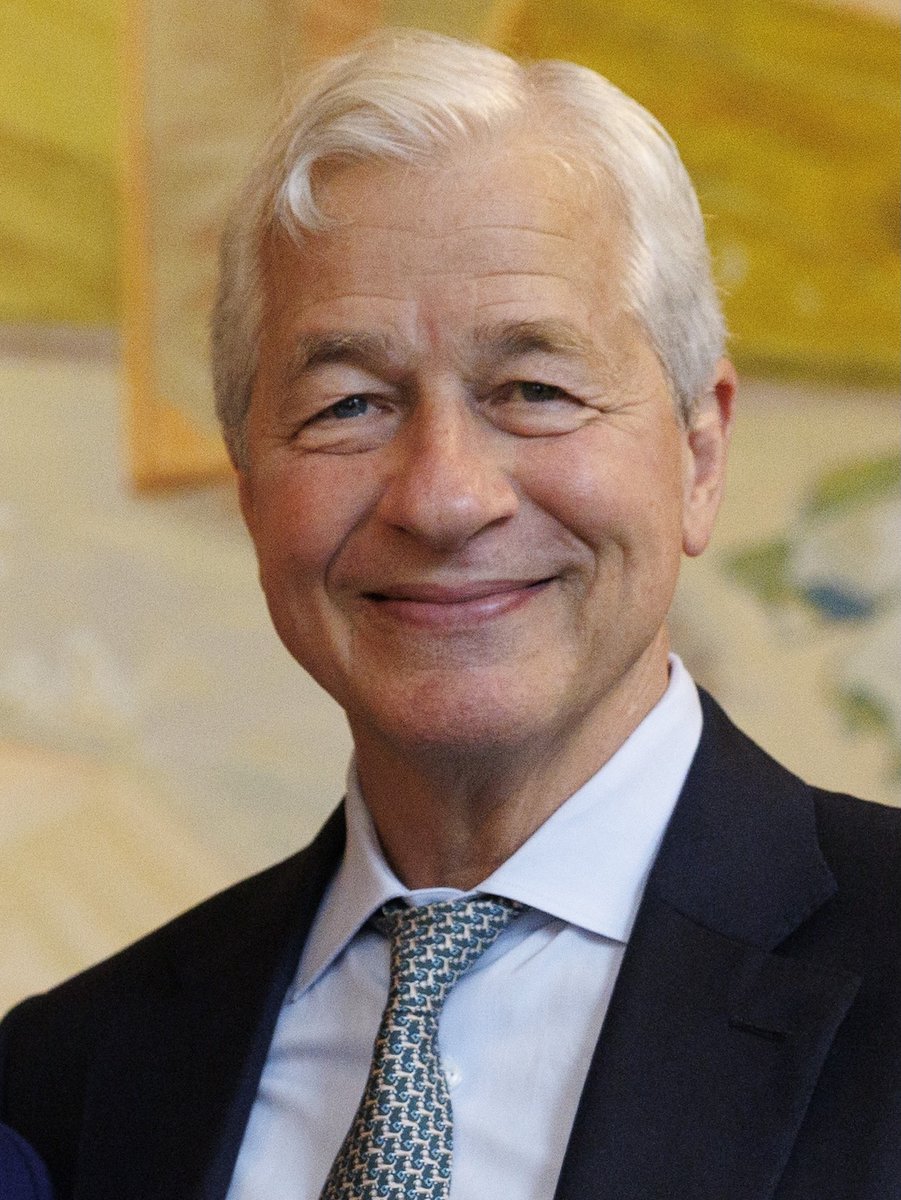
Not surprising take from Jamie Dimon.
If stablecoin issuers offer yield and behave like banks, regulation is inevitable.
But overregulation could also push innovation offshore.
The real question isn’t “regulate or not” — it’s how to regulate without killing the future of finance.
LATEST: 🏦 JPMorgan CEO Jamie Dimon says crypto firms paying yield on stablecoins should be regulated as banks, arguing an unregulated parallel system could hurt the US economy.
@CoinMarketCap Not surprising take from Jamie Dimon.
If stablecoin issuers offer yield and behave like banks, regulation is inevitable.
But overregulation could also push innovation offshore.
The real question isn’t “regulate or not” — it’s how to regulate without killing the future of finance.
Big signal for global payments 🌍
When Visa and Stripe double down on stablecoin cards via Bridge, it’s not hype — it’s infrastructure.
18 countries today. 100+ by 2026.
Stablecoins are quietly becoming the new payment rails. 🚀
LATEST: ⚡ Visa and Stripe-owned Bridge have expanded their stablecoin card to 18 countries, with plans to reach 100+ across Europe, APAC, Africa and the Middle East by the end of 2026.
@CoinMarketCap Big signal for global payments 🌍
When Visa and Stripe double down on stablecoin cards via Bridge, it’s not hype — it’s infrastructure.
18 countries today. 100+ by 2026.
Stablecoins are quietly becoming the new payment rails. 🚀
Crypto is global 🌎, borderless, and accessible to anyone with an internet connection. From Tokyo to Lagos, it’s changing how the world transacts and invests 💸 #Crypto#Blockchain#DeFi#GlobalFinance
Web 3.0 is the internet of ownership: decentralized, user-controlled, powered by blockchain, and letting you own your data, assets, and identity 🌐🔗💡
#Web3#Blockchain#Crypto#Decentralization