

Top Tweets for #ATLDC


$NWBO
“Beating brain cancer through vaccines and research”
DCVax-L mentioned by name.
“…The science behind the vaccine is surprisingly elegant.
Liau and her team found that by taking a patient’s own immune cells, exposing them in the lab to pieces of that person’s glioblastoma tumor, and then injecting them back into the patient, the immune system could be “taught” to recognize and attack the cancer.
Over a series of clinical trials, DCVax-L was shown to help extend the lives of people with newly diagnosed and recurrent glioblastoma — with some surviving far beyond the expected two-year expected survival for this diagnosis….”
@UCLAHealth
https://t.co/oniFIdjJpB
@metacollectiveG


🔬 How Personalized Dendritic Cell Therapy and the $NWBO #DCVax Platform Align With the FDA’s Mechanistic Doctrine for Next-Generation Therapies
1. 🧬 The Universal Immune Failure Shared Across Solid Tumors
Across every major solid tumor class—pancreatic adenocarcinoma, ovarian carcinoma, melanoma, sarcoma, neuroendocrine tumors, hepatocellular carcinoma, bladder cancer, breast cancer, colorectal carcinoma, and gliomas—the immune system faces the same proximal disruption: suppressed or silenced dendritic cells.
The Mechanistic Core: Antigen-Presentation Collapse
Regardless of tissue origin, tumors disable dendritic cells through four overlapping systems:
A. Direct contact suppression
Tumors express ligands that paralyze dendritic cells:
•PD-L1
•Galectin-9
•Jagged-1 (Notch signaling)
•Semaphorin and neuropilin family inhibitors
•CD47-SIRPα “don’t eat me” signals
•FasL-mediated apoptotic pruning of activated APCs
These stop DCs from maturing, migrating, or costimulating T cells.
B. Paracrine immunosuppressive conditioning
Tumor-secreted factors create a suppressive cytokine bath:
•IL-10 → STAT3-driven tolerogenic DC phenotype
•TGF-β → direct repression of IL-12 transcription
•VEGF → blocks differentiation of monocytes into DCs
•MDSC nitric oxide → nitration damage to MHC loading
•CCL22/CCL5 gradients → trap DCs in immature states
C. Metabolic blockade
The tumor microenvironment exhausts DC metabolism:
•Lactate shuts down NF-κB and type I interferon responses
•Adenosine (A2A receptor) blocks DC maturation
•IDO drains tryptophan, suppressing T-cell expansion and DC licensing
•Lipid-loading in DCs inhibits cross-presentation
D. Microenvironmental stress
Downstream DC crippling arises from:
•Hypoxia → inhibits IL-12p70
•Oxidative stress → degrades antigen-processing machinery
•Nutrient deprivation → blocks ATP-dependent antigen loading
The Downstream Consequence (Invariant Across Tumors)
The outputs converge:
•MHC-I and MHC-II presentation collapses
•IL-12p70 and TNF-α vanish
•CD80/CD86 co-stimulation disappears
•immunologic synapse fails
•T cells remain uneducated
•immune system becomes blind
This is the universal proximal defect.
The FDA’s PMP explicitly requires identifying this kind of upstream biological failure as the foundation for mechanism-first evaluation.
2. 🧠 Why Restoring Antigen Presentation Is a Universal, Tissue-Agnostic Mechanism
The immune system’s antigen-presentation architecture is evolutionarily immutable.
Whether a dendritic cell resides in:
•the cerebral meninges,
•the hepatic periportal space,
•the pancreatic tumor stroma,
•the peritoneal cavity, or
•the lung parenchyma,
it executes the same molecular algorithm:
The Universal Antigen-Presentation Algorithm
•TAP1/2 transporters move peptides into the ER
•Proteasomal complexes generate epitopes with identical cleavage logic
•MHC-I loading follows conserved ER-resident chaperone steps
•MHC-II loading uses invariant cathepsins and HLA-DM guidance
•IL-12–driven Th1 polarization is identical across lymphoid organs
•CCR7 migration brings activated DCs to lymph nodes everywhere
There is no tissue in the human body where antigen presentation follows a different set of rules.
Regulatory Implication
A therapy that restores dendritic cell function is inherently tissue-agnostic, because it corrects a universal immunologic process, not a tissue-specific symptom.
This satisfies the FDA’s second mechanistic requirement:
The therapy must act at the direct, proximal cause of disease.
3. 🧩 Why GBM Is the Ideal Anchor Indication for a Universal Immune Platform
Glioblastoma (GBM) is the harshest immune terrain in solid-tumor oncology and also its most stable.
GBM’S Natural History Is Nearly Invariant
•median OS has changed little in 40+ years
•recurrence is virtually guaranteed
•long-term survival without intervention is extraordinarily rare
•tumor microenvironment is profoundly immunosuppressive
•pseudoprogression complicates imaging, making survival the true anchor endpoint
In regulatory terms, GBM is a “natural-history fixed population”—a disease where any deviation from expected survival is mechanistically interpretable.
Why This Matters for FDA Mechanistic Evaluation
The Plausible Mechanism Pathway states:
“When disease trajectory is predictable, natural history may serve as a comparator in lieu of randomization.”
GBM is the strongest example of such a disease.
GBM Is Also the Most Severe Test of Antigen-Presentation Repair
If dendritic cell activation and antigen-presentation restoration work in GBM, they can plausibly work in:
•pancreatic adenocarcinoma
•sarcoma
•ovarian cancer
•metastatic colorectal cancer
•melanoma
•cholangiocarcinoma
•neuroendocrine tumors
•hepatocellular carcinoma
•breast cancer
•bladder cancer
Why?
Because these tumors have less immunosuppressive pressure than GBM.
In regulatory-science language:
GBM is a stringent anchor indication—validating a universal mechanism under maximum constraint.
4. 🧪 The DCVax-L Phase III Trial as Mechanistic Confirmation
The DCVax-L Phase III trial (n=331) is one of the largest GBM studies ever conducted and its survival pattern is diagnostically consistent with immune memory reactivation.
Key Survival Signals
•median OS: 19.3 months from randomization
•median OS: 22.4 months from surgery
•~20% survival at 36 months
•~13% survival at 60 months (vs ~6% in contemporaneous controls)
But the regulatory significance lies in the shape of the survival curve:
The Immunologic Signature
•early survival mirrors SOC (expected for dendritic cell priming phase)
•late divergence emerges (>24 months)
•durable long-term plateau forms
•pattern matches T-cell memory stabilization
Mechanistic Anchors Within the Trial
A. MGMT-unmethylated subgroup benefit
—this group does not respond well to temozolomide; their survival enhancement implies mechanism, not chemo.
B. Durable 5-year+ survivors
—this is classic immune-mediated control.
C. Distribution of relapse kinetics
—shifted rightward, consistent with adaptive-immune re-engagement.
Regulatory Interpretation
Under PMP and RWE guidance, this constitutes:
mechanistic deviation from natural history in a stable-disease model.
That is the exact evidentiary construction described in the NEJM Plausible Mechanism Pathway.
5. 🧬 Whole Tumor Lysate: The Universal Antigenic Library
WTL captures an entire malignancy’s antigenic architecture—not just predicted targets. This provides antigenic completeness, which is the key to universal tumor applicability.
WTL Includes Every Relevant Antigenic Layer
•clonal mutations
•subclonal mutations
•neoantigens from aberrant splicing
•frameshift peptides
•misfolded proteins
•stress-induced heat-shock antigens
•private microclone-specific neoepitopes
•post-translational modifications
•metabolic-stress signatures
Each of these categories varies widely across tumors, but WTL captures all of them, making the platform inherently adaptable.
Why DCs Excel With WTL
Dendritic cells prioritize epitopes using:
•binding affinity
•danger-signal context (TLRs, STING pathways)
•intracellular routing patterns
•MHC compatibility
This generates:
•diverse TCR repertoires
•epitope spreading as tumor cells die
•long-lived cytotoxic and helper T-cell memory
Manufacturing Advantages
The entire WTL → αDC1 maturation → vaccine sequence occurs in about 8 days:
•reproducible
•automatable
•compatible with microfluidic GMP
This speed is essential for clinical scalability and regulatory feasibility in personalized biologics.
6. 🔁 Overcoming Tumor Heterogeneity Through Universal Antigen Coverage
Tumor heterogeneity is not incidental; it is the evolutionary engine of malignancy.
Across all solid cancers, heterogeneity takes multiple overlapping forms:
•genomic heterogeneity (subclonal mutations, copy-number variation)
•splicing noise (aberrant exon skipping, intron retention)
•neoantigen drift (dynamic changes in immunogenic epitopes)
•metabolic rewiring (hypoxia vs normoxia differentials)
•phenotypic plasticity (transdifferentiation, EMT–MET cycling)
•immune editing (loss of immunodominant targets over time)
This heterogeneity undermines therapies aimed at single antigens or narrow target sets, including:
•CAR-T cells targeting a single surface molecule
•mRNA vaccines encoding hand-selected peptides
•monoclonal antibody–based therapies
•small molecules aimed at single oncogenic drivers
Whole Tumor Lysate Neutralizes Heterogeneity at Its Source
WTL brings all antigenic layers into play simultaneously, including:
•clonal mutations
•subclonal mutations
•private microclone antigens
•splicing-derived neoepitopes
•post-translationally modified peptide sets
•stress-induced proteins
•misfolded polypeptides
•metabolic-stress signatures (e.g., HSPs, oxidized peptides)
This is a complete antigenic snapshot, making the mechanism naturally “future-proof” against tumor evolution.
The DC Advantage: Natural Epitope Prioritization
The immune system evolved to identify, prioritize, and respond to antigenic complexity.
Dendritic cells automatically:
•select high-affinity epitopes
•route antigens to appropriate MHC compartments
•integrate danger cues (TLR, STING, RIG-I)
•favor peptides associated with cellular stress
•cross-present difficult intracellular antigens
This means WTL + dendritic cells create a personalized, adaptive, expanding immune response, not a static one.
TCR Breadth and Durability
Broad TCR repertoires correlate with:
•reduced immune escape
•long-term survival
•resistance to tumor antigen-loss variants
•decreased recurrence risk
DCVax-L and DCVax-Direct produce:
•hundreds to >1000 new T-cell clones post-vaccination
•progressive diversification over months
•durable maintenance of memory phenotypes
In immunology, this is the hallmark of a robust, universal immune correction.
7. 🌐 Multi-Tumor Mechanistic Replication Across 13 Malignancies
Mechanistic universality is not proved by theory — it is proved by cross-tumor replication.
In the Phase I DCVax-Direct study (40 patients, 13 distinct cancers), the same immune signatures emerged in:
•pancreatic cancer
•neuroendocrine pancreatic cancer
•melanoma
•neuroendocrine lung tumors
•ovarian cancer
•metastatic colorectal cancer
•sarcomas (multiple subtypes)
•lung cancer
•bladder cancer
•cholangiocarcinoma
•breast cancer
•desmoid tumors
•soft-tissue sarcoma variants
Despite this extraordinary heterogeneity, the immune outputs were remarkably consistent:
A. CD3+/CD8+ T-cell infiltration
Observed in post-treatment biopsies across every tumor class where sampling was possible.
B. Tumor necrosis
Localized necrosis around injection sites, consistent with immune-mediated destruction rather than ischemia or tumor autolysis.
C. Abscopal immune responses
Uninjected lesions shrinking or stabilizing — an explicit marker of systemic immune activation.
D. TCR repertoire expansion
Hundreds of new clonotypes emerging post-treatment.
E. Correlation of IL-12/TNF-α with survival
Patients whose dendritic cells produced more IL-12 and TNF-α had superior outcomes.
This is the definition of a universal, tissue-agnostic immune mechanism.
It is rare in oncology to see the same mechanistic signature appear in tumors as distinct as pancreatic adenocarcinoma, melanoma, ovarian cancer, and sarcoma.
Under the Plausible Mechanism Pathway, this becomes pivotal because:
Once a mechanistic correction is demonstrated in an anchor indication (GBM) and then seen repeatedly across diverse tumors, the FDA gains mechanistic confidence in platform-level applicability.
8. 🏭 Manufacturing as Mechanistic Evidence: How Modern GMP Transforms DC Therapy Into a Platform
Historically, dendritic cell vaccines struggled not because of biology, but because of CMC inadequacy — inconsistent maturation states, operator-driven variability, unstable cytokine output, and poor cryopreservation.
Today, that bottleneck has been eliminated.
A. αDC1 Maturation Defines a Consistent Potency Phenotype
Modern DC manufacturing uses:
•TNF-α
•IL-1β
•IFN-γ
•poly-ICLC
to induce the αDC1 phenotype, which:
•produces IL-12p70 at levels necessary for cytotoxic T-cell priming
•mimics natural cDC1 behavior (the body’s cross-presentation specialists)
•resists tolerogenic signals
•migrates efficiently to lymph nodes
This shifts DC vaccines from heterogeneous outputs to standardized biologics.
B. Closed-System Microfluidic Automation
The introduction of microfluidic production systems (e.g., Eden-class devices) has done for DC therapy what bioreactor automation did for monoclonal antibodies:
•eliminates inter-operator variability
•automates maturation timing
•standardizes cytokine exposure
•tracks phenotypic QC outputs in real-time
•ensures identical differentiation curves across batches
This is the backbone for platform-level CMC acceptance.
C. Digital Chain-of-Identity and Chain-of-Custody
These systems provide:
•regulatory-grade traceability
•complete electronic batch records
•tamper-proof, real-time identity verification
•cross-site reproducibility
Exactly what CBER expects for personalized cell therapies under ATMP-era policies.
D. GMP Cryopreservation Unlocks Multi-Dose Architecture
Cryopreserved aliquots:
•maintain IL-12p70 and TNF-α potency
•maintain viability and phenotype
•allow multi-year dosing schedules
•reduce manufacturing burden
•support booster logic
This stability is critical for both:
•Phase III viability
•post-approval commercial scalability
E. Regulatory Significance
Under the FDA’s Plausible Mechanism Pathway and CNPV framework:
platform-level CMC reproducibility is as essential as clinical mechanism.
Modern DC manufacturing now satisfies:
•potency consistency
•identity markers
•purity thresholds
•viability reproducibility
•cytokine signatures
•migration capability
This is what unlocks the platform concept.
9. ⚡ NYAS 2025: Potency Engineering and Modular Immune Amplification
The June 2025 New York Academy of Sciences (NYAS) presentations by Bosch and Bhandary delivered a watershed insight:
Dendritic-cell potency is programmable.
This is crucial because the Plausible Mechanism Pathway emphasizes modular therapies whose potency can be rationally enhanced.
A. IL-12/TNF-α Output Predicts Clinical Outcomes
Across tumor types, dendritic cells producing high IL-12 and TNF-α:
•induced broader TCR repertoires
•created more durable immune memory
•correlated with longer survival
B. Converting Low Responders Into High Responders
Using:
•TLR agonists (TLR3, TLR7/8 mimetics)
•Interferon-based stimulants
•Viral-mimetic dsRNA pathways
•STING activation
researchers were able to raise dendritic-cell cytokine output by 10–100×, producing high-potency APCs from low-potency donors.
C. Simultaneous Innate, Adaptive, and NK Pathway Activation
This tri-lineage activation is the immune ideal for tumor clearance:
•innate immunity → immediate tumor disruption
•adaptive immunity → durable memory
•NK cells → recognition of MHC-downregulated cells
D. Synergy With Other Immunotherapies
IL-7 and checkpoint inhibitors both strengthen T-cell sustainability and exhaustion resistance:
•IL-7 → expands lymphocyte pool
•Checkpoint inhibitors → remove post-priming T-cell brakes
E. Regulatory Implication
Modular potency amplification is explicitly recognized by the FDA as a foundation for:
•platform approvals
•lineage-independent therapeutics
•tissue-agnostic indications
This places dendritic-cell therapy squarely within modern regulatory doctrine.
10. 🏛️ The FDA’s Mechanistic Doctrine: The Plausible Mechanism Pathway as the Framework for Personalized Platforms
The Plausible Mechanism Pathway (PMP), published by the FDA leadership in the NEJM (Nov 12, 2025), outlines a modern regulatory philosophy rooted in biological mechanism, natural-history comparators, and CMC reproducibility.
PMP’s Five Evidentiary Pillars
1. A definable, proximal biological defect
—The universal collapse of antigen presentation qualifies precisely.
2. A therapy that directly corrects that defect
—Personalized dendritic cell therapy restores antigen presentation.
3. A stable natural-history comparator where randomization is impractical
—GBM is the archetypal stable natural-history tumor.
4. Evidence of target engagement
—IL-12/TNF-α output, DC maturation, TCR expansion.
5. Clinical improvement interpretable through mechanism
—Late curve separation and durable immunity consistent with antigen restoration.
Why This Matters for DC Platforms
PMP explicitly states:
“When mechanism and natural history are sufficiently defined, randomized trials may not be required.”
GBM → anchor
WTL → universal antigen breadth
DCVax-Direct → cross-tumor replication
CMC modernization → reproducibility
NYAS potency → modular upgradeability
Together, these satisfy all five pillars.
CNPV Bridges Mechanism to Approval
The CNPV program rewards:
•domestic manufacturing readiness
•platform scalability
•alignment with national oncology priorities
•innovation in biologics
Dendritic-cell platforms check every box.
Tissue-Agnostic Precedents Reinforce the Logic
The FDA has already approved mechanism-based, lineage-independent platforms:
•MSI-high
•NTRK fusion
•TMB-high
•CAR-T lineage expansions
•mRNA vaccine platforms
Personalized DC therapy fits squarely within this schema.
11. 🧱 Platform Generalization: From Single Indication to Universal Immune Architecture
In modern regulatory science, the term platform has a precise meaning:
A therapeutic architecture whose biological mechanism, manufacturing logic, and clinical behavior remain constant across multiple indications.
CAR-T cells became a platform once CD19-directed constructs produced mechanistically consistent signatures across B-cell malignancies.
mRNA became a platform when the same lipid-modified RNA architecture was used for multiple vaccines.
Personalized dendritic cell therapy meets this definition more tightly than any prior immunotherapy modality.
A. Biological Platform Generalization
The platform’s biological components are constant:
•monocyte-derived dendritic cells
•αDC1 maturation
•defined cytokine drivers (TNF-α, IL-1β, IFN-γ, poly-ICLC)
•whole tumor lysate as the antigenic substrate
•IL-12/TNF-α potency signatures
•lymph-node–directed or tumor-directed delivery
•multi-dose cryopreserved architecture
What varies is only the antigenic fingerprint, provided naturally by the tumor.
This is the “plug-and-play” architecture regulators look for in platform therapeutics.
B. Manufacturing Platform Generalization
CBER evaluates platforms not only by mechanism, but by CMC reproducibility.
Dendritic cell therapy now satisfies these requirements:
•closed-system microfluidics
•standardized cytokine exposure curves
•consistent identity/potency/purity/viability (CQAs)
•validated cryopreservation survival
•fully electronic chain-of-identity
•reproducible maturation kinetics
This transforms DC therapy from artisanal to industrial-grade.
C. Clinical Platform Generalization
Cross-tumor immunity arises because antigen presentation is the same across human tissue types.
WTL + αDC1 DC → same immune cascade:
•antigen uptake
•epitope triage
•co-stimulation
•IL-12 axis
•TCR expansion
•immunologic memory
Observed across GBM, pancreatic cancer, sarcoma, ovarian cancer, melanoma, lung cancer, colorectal metastases, and others.
This consistency is what the FDA calls “mechanistic coherence across indications.”
D. Regulatory Platform Generalization
Under PMP logic, the FDA can:
•anchor the mechanism in GBM
•evaluate cross-tumor phenotypes in exploratory studies
•use RWE and natural history comparators
•leverage CMC reproducibility
•allow indication expansion through supplemental applications
This is identical to how lineage-independent approvals (MSI-H, NTRK) were built.
12. 🔄 Mechanistic Layering: How the Platform Evolves Without Losing Identity
Mechanistic layering refers to adding rational immunologic modules on top of a stable core mechanism without altering platform identity.
The FDA’s modern ATMP framework favors platforms that can evolve via layering rather than reinvention.
A. IL-7 Layer: Lymphocyte Recovery and T-Cell Persistence
IL-7 is a homeostatic cytokine that:
•expands naive and memory T-cell pools
•prevents lymphopenia-related collapse
•enhances vaccine-driven memory durability
•supports clonal persistence after DC priming
Adding IL-7 improves sustainability of DC-driven responses.
B. Checkpoint Layer: Releasing Exhaustion Brake After Antigen Restoration
Once dendritic cells have restored tumor visibility:
•PD-1 blockade
•CTLA-4 blockade
•LAG-3 and TIGIT modulators
can release exhaustion pathways that previously had no substrate to work on.
Checkpoint inhibitors are far more effective after antigen presentation is restored, not before.
C. mRNA Neoantigen-Mimetic Boosters
After a DC-driven immune response reveals immunodominant epitopes, mRNA boosters can:
•amplify the most relevant neoantigens
•personalize boosters over time
•increase TCR avidity
This creates a hybrid endogenous–synthetic immune architecture.
D. TLR / Viral-Mimetic Layer
As shown in NYAS Bosch data:
•TLR3 agonists
•TLR7/8 agonists
•dsRNA mimetics
•STING activators
can raise IL-12/TNF-α output 10–100×, converting low responders into high responders.
E. Regulatory Implication
Mechanistic layering does not change platform identity — it expands platform capability.
This mirrors:
•CAR-T “co-stimulation layering”
•mRNA “adjuvant layering”
•tissue-agnostic biomarker layering (TMB-high, MSI-H)
The FDA explicitly encourages this.
13. 🌐 Why This Represents the First Universal Immune Platform
To be considered a universal platform, a therapeutic architecture must satisfy five criteria:
1. Universal Biological Defect
All solid tumors suppress antigen presentation.
This is well-established across oncology literature.
2. Universal Mechanistic Correction
Personalized dendritic cell therapy restores:
•antigen uptake
•MHC-I/MHC-II presentation
•IL-12 and TNF-α signaling
•co-stimulation
•TCR priming
•memory formation
This correction is conserved across tissues.
3. Universal Anchor Validation
GBM demonstrates:
•natural-history deviation
•durable survival tail
•classic immune memory behavior
•subgroup responses (MGMT-unmethylated) independent of SOC
It is the hardest test case and thus the strongest anchor.
4. Universal Cross-Tumor Replication
DCVax-Direct Phase I shows:
•necrosis
•CD3+/CD8+ influx
•abscopal immunity
•multi-clonal expansion
•mechanistic coherence
Across 13 malignancies.
5. Universal CMC Architecture
Modern GMP provides:
•reproducible αDC1 maturation
•microfluidic automation
•fully digital identity
•cryopreservation
•potency CQAs
This supports global deployment.
Conclusion of Universality
The universality is not theoretical.
It is mechanistic, empirical, and manufacturable.
This is the first immune platform built on a universal defect and universal correction, validated by:
•the most stringent tumor model
•multi-tumor replication
•GMP reproducibility
•upgradeable potency modules
•modern regulatory doctrine
14. 🧭 Closing Synthesis: The Mechanistic Era and the Universal Platform
The FDA’s mechanistic doctrine—articulated in the PMP—signals a profound shift:
•from trial-centric evaluation → to mechanism-centric evaluation
•from single-indication drugs → to platform-level biologics
•from static therapeutics → to modular and upgradeable immune systems
Personalized dendritic cell therapy occupies the center of this new era.
It is:
•universal in defect
•universal in correction
•universal in tissue applicability
•universal in manufacturing reproducibility
•universal in regulatory alignment
•universal in layering potential
This is no longer “a vaccine.”
It is an immune operating platform—a universal biologic architecture correcting the universal failure that defines solid tumors.
As regulatory frameworks modernize and mechanistic logic becomes the cornerstone of evaluation, platforms like this will increasingly represent the future of oncology.
Not a molecule.
Not a drug.
But a system.
A universal one.


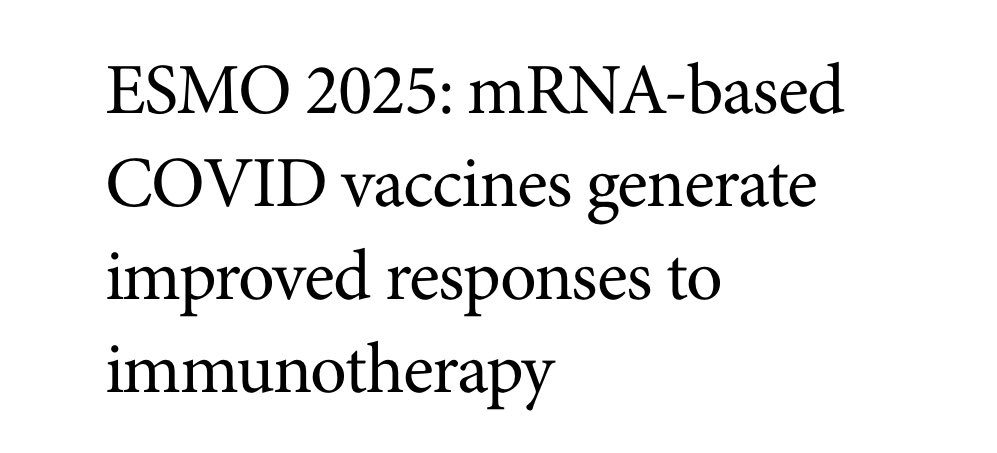
Wow! Early results from MD Anderson show mRNA COVID vaccines may enhance cancer immunotherapy.
Vaccinated patients starting checkpoint inhibitors within 100 days of vaccine lived nearly 2x as long.
A powerful example of how NCI mRNA investments may redefine cancer treatment.

The AANS congratulates Dr. Linda Liau on receiving the J.E. Wallace Sterling Lifetime Achievement Award in Medicine from the Stanford Medicine Alumni Association!
As Chair of Neurosurgery at UCLA (@UCLANsgy), director of the Brain Tumor Program, and a pioneer in glioblastoma immunotherapy, Dr. Liau has advanced research and patient care while serving in national leadership roles, including the AANS Board of Directors and as the first woman to chair the American Board of Neurological Surgery.
We are proud to celebrate her remarkable contributions to neurosurgery. https://t.co/SKTB0WHutG
Dr. Linda Liau honored with lifetime achievement award in medicine | UCLA Health $NWBO https://t.co/s86EZZAzjf


Short: Groundbreaking Cancer Treatment #DCVaxL Extends Lives of Brain Tumor Patients, Nature Article
#CancerVaccine #DCVax #GBM #NWBO @UCLAHealth #ATLDC #PolyICLC
Watch the FULL video here: https://t.co/SXaD23nZjP
Disclosure below (thread).

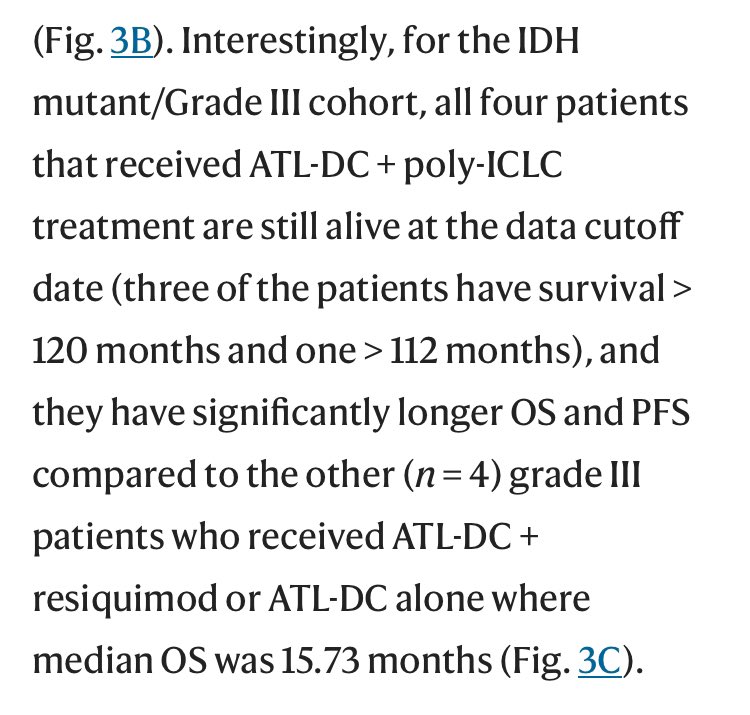
@ATLnsider They refer to the combination study which uses the generic name, ATL-DC and that shorts use to create confusion and indicate it is #DCVaxL $NWBO #ATLDC

#LMAO! #adamfeuerstein & the #degenerates he represents are #desperate! They know #UCLA's #ATLdc is the unlabeled #dcvaxL patented by $NWBO. Admitting that would unleash pandoras box of #HFNakedShorts who pay him to promote false information. Can u say #GME-size #ShortSqueeze?!


Example 2: row houses are a time-tested way to build modest-sized, modest-priced, house-scale infill that “fit” in any neighborhood as much as any McMansion. But under the draft #ATLDC you’d need to rezone to build, say, 4 even on a 100 ft wide lot, which will never happen. (9/x)

Who says serving Jesus can’t be fun?!? The Guard Students have had a full week of ministry, but they still have smiles on their faces! Pray for safe travels as they come home from The Dream Center in Atlanta tomorrow. #theguardsm #atldc

Be in prayer for The Guard as they travel today to Atlanta to minister for the week at The Dream Center! We are believing that the Lord will do great things through them and in them!! #theguardsm #atldc


#ATLDC https://t.co/k3jrgAwDdH

#ATLDC A 22h00 Atlanta vs DC United en #MajorLeagueSoccer, sur @BeinSports_fr | + d'infos: https://t.co/q7H4LSNIKJ

Last Seen Hashtags on Sotwe
Most Popular Users

Elon Musk 
@elonmusk
241.2M followers

Barack Obama
@barackobama
119.1M followers

Cristiano Ronaldo
@cristiano
112.9M followers

Donald J. Trump
@realdonaldtrump
111.8M followers

Narendra Modi
@narendramodi
107.1M followers

Rihanna
@rihanna
98.3M followers

NASA
@nasa
92.3M followers

Justin Bieber
@justinbieber
91.5M followers

KATY PERRY
@katyperry
89M followers

Taylor Swift
@taylorswift13
82.9M followers

Lady Gaga
@ladygaga
74.4M followers

Virat Kohli
@imvkohli
71.9M followers

Kim Kardashian
@kimkardashian
70.5M followers

YouTube
@youtube
68.8M followers

Neymar Jr
@neymarjr
64.9M followers

Bill Gates
@billgates
64.6M followers

The Ellen Show
@theellenshow
62.4M followers

Selena Gomez
@selenagomez
62.1M followers

CNN
@cnn
61.8M followers

X
@x
60.8M followers