

Top Tweets for #AnyTimeBaby


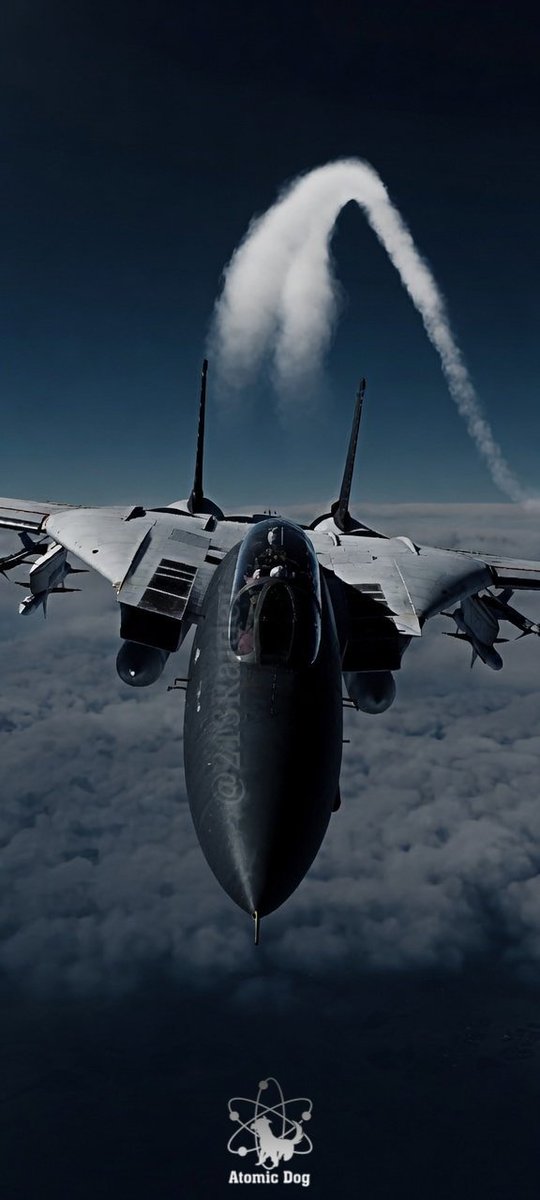


Esposa me pregunto si no me gustaria sumarme a una gente que conocemos que va al #mundial a ver a #Argentina y le dije que no me interesa tanto.
2 dias después le digo "Si me iria a usa a ver volar un #Tomcat" 😀
#AnyTimeBaby

My God… The F-14 Tomcat May Actually Fly Again Over The United States
Long regarded as a flight of fancy, the "Maverick Act" could put an F-14 back into operation in the U.S. for the first time in 20 years.
https://t.co/78PATBSNp0


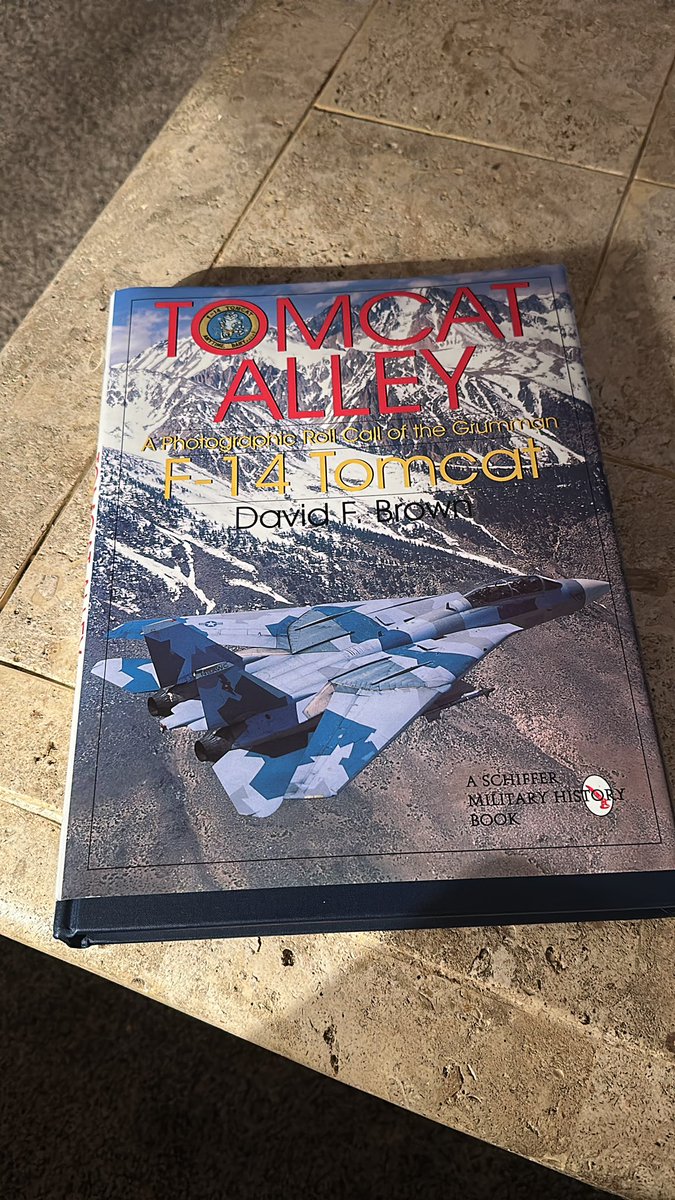
US Navy Grumman F-14A Tomcat #158626 on the NAS Patuxent River airfield ramp on a DOD open house.
From my color film collection.
#featured #planespottingbe #Tomcat #F14 #TopGun #militaryaviation #planespotter #USNavy #GrummanF14Tomcat #AnytimeBaby #UnitedStatesNavy


“Dback” 115 from VF-102 Diamondbacks in need of an emergency landing.
#F14 #GrummanF14Tomcat #F14Tomcat #AnytimeBaby #TopGun




#TomcatTails Number 21
#TomcatTuesday
“You can earn a year’s worth of flight pay in one night at the boat.”
I think most Naval Aviators have said at one point (or maybe more) words to this effect: “This job is so cool, I can’t believe they’re paying me!” A 1v1 on a clear, blue-sky day that goes your way. A rock-and-roll low level to bomb where your weapon fuses within 3 seconds of the required time on target (TOT). A day-di*k-around off the boat to an OK 3-wire on return. Those were great and heady times in the mighty Big Fighter and much fun was had by all.
They even paid us extra for the pleasure. We called it “flight pay” but the actual term was ACIP or Aviation Career Incentive Pay. Naturally, the Navy spent a LOT of money teaching us to fly and to preserve that investment the Navy offered ACIP as well as the occasional bonus to stay in past certain career milestones. The bonuses varied according to the airlines hiring rates; if they were hiring hard, the bonuses came in. This is no different than other services and even extended to some of the more crucial Enlisted rates with reenlistment bonuses in the 10s of thousands of dollars. It makes good business sense to try and keep your people in since they cost so much to train.
We can debate the efficacy of these programs all day. Some argue that they don’t really retain people, some will say they’ll influence the “fence sitters” to take a bonus and stay. And if you were a “fence sitter” that wasn’t sure and the Navy offered you a $40-$50K bonus to stay in and you took it, you weren’t “sitting on the fence”, you were “chained to the fence” for 6 more years. Funny, huh?
But all those things only mean something in day/VFR flying. If you deploy aboard the ship, turn out the lights (night), blot out the moon & stars with clouds, make that flight deck pitch up and down and then lose your critical attitude/angle-of-bank displays, that calculus changes significantly. Now there’s not enough gold in Fort Knox to make flying worth it. Not by a long shot.
The old saying goes that you make your flight pay during one flight per year. It might be a bad night at the boat. It might be a scary weak catapult shot. It might be a near mid-air. But they all have the same thing in common; that feeling in your gut that “this is bad.” You know that feeling you get in your lower body, your groin or loins or like deep in your belly when a cop lights you up when he’s behind you? That sinking/queasy/weird visceral reaction to those blue and red lights? In carrier aviation, this has long been described as a “shot of cold piss to the heart” or a “cold shot of piss to the heart”. Either way you say it, it’s accurate and the key difference is that it isn’t just momentary like when the cop’s behind you; it lasts a while until you can get your head straight and compartmentalize everything going on around you where it needs to be so you can function, so you can operate your jet despite all the problems.
Compartmentalizing is how aviators cope with all kinds of things going on in our head. Problems at home? There’s a compartment for that. Career worries? There’s a compartment for that. Kid is sick? There’s a compartment for that. There are enough compartments for all the issues you have in your head, and anything not directly involved in aviating, navigating, or communicating needs to be in its compartment. That’s really important on even the most routine flight. Remember that famous quote I posted on several occasions? This one:
“Aviation in itself is not inherently dangerous. But to an even greater degree than the sea, it is terribly unforgiving of any carelessness, incapacity, or neglect.”
If anything you’ve stuffed in compartments comes out in flight, especially during an emergency or challenging conditions, it (and any others) will contribute directly to carelessness, incapacity, or neglect. To put it bluntly (profanity warning): Shit can go wrong in a matter of seconds when you’re on the edge; pay fucking attention.
The other element on this wonderful, magical, fantastic flight on which you’re earning a year’s flight pay is a VERY strong confidence in your abilities. To the casual observer, this can sometimes come across as bravado or arrogance. After all, “it ain’t bragging if you can do it” right? But that high level of confidence is more often than not backed up by training and experience. It is by no means meant to imply recklessness nor unearned boldness. “There are old pilots and there are bold pilots, but there are no old, bold pilots” is also a saying.
Part of that confidence is also a willingness to explore those edges of your personal envelope, your comfort zone with the jet. If you stay in the middle of your envelope (level flight, 1 G) you’ll never be especially lethal. You might survive, but you won’t excel. You’ve got to hang your ass off that edge occasionally to expand your envelope. Again, that is NOT recklessness; it’s “calculated risk” you’ve thought through (risk vs reward) and have a plan for when it goes to shit. Because it goes to shit quickly.
This is how most of us have to behave so we can talk ourselves into strapping on the jet and hurtling down catapult stroke at night into shitty weather (See #TomcatTails Number 2 – First Night Launch). You simply HAVE to KNOW you can do it. It’s like a lot of endeavors, including baseball, as I’ve said before. If you’re at the plate in the top of the 9th facing Mariano Rivera, and you don’t think you can hit the ball, guess what? You can’t. Similarly, if it’s a dark-ass night and nothing’s working right and you think you can’t land your plane, guess what? You can’t (and your RIO is going to be PISSED).
So there’s the mindset in a nutshell. Everyone has a story like the following one if they flew from carriers for any length of time. That one night. That one F**KING night. A singularity among night landing stories. All in all I had maybe 300 night landings. Some were actually fun. Smooth seas, bright moon (literally casting a shadow in the cockpit), solid jet….almost like a video game. Some were pretty sporty for a variety of reasons (wind, weather, systems, weight, etc.). Some were downright frightening, like the time the deck was pitching so much I saw the screws, I swear.
But then there’s that one.
That one f**king night.
Ask any carrier pilot. He or she will have their story of that one f**king night.
Mine’s not especially complicated but the challenges were profound in execution. I can even describe it in just a few words:
“Dark ass night, zero lux. Deck was +/- 15 feet, 30+ knots winds axial. Damn VDI was out. A couple go-arounds then vertigo set in. Managed to trap on the 3rd try, deck down/high in close then coming down like a turd off a tall moose to the deuce.”
I’ll use the next bunch of words explaining that, but anyone that’s done this for a living won’t need to read anymore beyond the above. They’ve seen it and done it and just had a piss shudder down their back reading that. Such is the life.
As you can tell from the above synopsis, I was airborne on a REALLY shitty night off the USS Nimitz on my second cruise. Pretty experienced, been around the block and the Case III pattern quite a few times. I was definitely toward the top of my game at the time. I can’t recall who I was flying with but by then all of us 2nd cruise Lieutenants were flying together so the camaraderie was awesome. Junior Officers (JOs) flying with other JOs. Peak trust.
At some point during the flight, my Vertical Display Indicator (VDI or primary attitude reference) went black. Shit. It’s an 8” x 8” display right in front of you that displays the horizon, sky is up and water is down. It shows if you’re in a turn, climb, decent, etc. Kind of really important, especially at night. Now if the night horizon is visible, you can maintain a sense of right side up pretty easily even if it’s dark. In this case, it wasn’t visible. In fact in this case, we’re in the clouds while holding in the Marshall Stack waiting to come down.
So, the things we know:
a. Weather is really bad; thick clouds from 1,000 feet to somewhere up there.
b. It’s darker than the inside of a vacuum cleaner bag.
c. I have no primary attitude indicator and have to use the “peanut gyro”, a little two-inch standby attitude indicator in upper right instrument panel. Oh joy.
d. Winds are 35 knots axial, meaning straight down the path of the ship and with the 10° angle of the deck to the left, you have a 10° cross wind on final approach. Not a huge deal, just one among many things to consider.
e. Deck is pitching pretty good; we know this because folks have boltered and are checking back into approach so we know they missed the wires. Later in our first approach we could hear some screaming power calls from the LSO. Not good as it indicates people are having trouble.
f. This is gonna be sporty. But hey, Mariano Rivera got nothin’ on me, right?
As we push for our first attempt, I was doing pretty good as I prided myself on my ability to fly “on instruments” when you can’t see out the window. With everything normal, it takes 100% concentration to do well and stay on parameters (altitude, airspeed, glide slope, approach heading). With your VDI out and in shitty conditions, it takes more than that. That’s the “dig deep moment” right there.
As we get to 1 mile, I peek out and confirm that there is in fact a ship there. Ok, that’s good; back to instruments. RIO calls the ball and I peek again. Yup, still there. And then at half mile (12 seconds from landing) I start the transition scan and MAN is that deck moving (STOP LOOKING AT THE DECK) and I start flying the ball, AOA and trying to stay on centerline. Felt pretty good but……….”wave it off, wave it off.” Damn! Was that me? “Deck was coming up, Rage. See you in a few.” No, wasn’t me. OK, I got this.
We enter the bolter pattern, a racetrack path to the left of the ship to drive back to our starting point and try it again. At this point, the tension is increasing because a) we’re still airborne, b) we just missed our first try, and c) I’m gonna have to do that all over again. As we hook in at about 4 miles, we get back on final bearing and check in. All good. 1,200 feet, on speed, on final bearing and 3 miles, right around the push point for the glide slope. I’m working pretty hard at this point and the RIOs doing a great job of keeping his voice calm and easy (“mellifluous” is a good thing for a RIO to be right about now):
mel·lif·lu·ous /məˈlifləwəs/ adjective
(of a voice or words) sweet or musical; pleasant to hear.
The approach goes pretty good, we hit the start, and I get a little out of synch with the power and a correction for a slight low. We go a little high, go a little low, then go higher and……”wave it off, wave it off, Rage”. F**k. Any LSO out there right now knows exactly where I was headed here. Second pass of the night, high in close, pitching deck…..Corky was about to make a play for the deck. Sorry Corky. Not on my watch. Those guys really are trying to keep you alive. LSOs, you may now your dark sunglasses back on and grab your white sticks (we always joke that they’re blind…..get it??).
Ok, time to stop f**king around. Back to the bolter pattern, back to the 4 mile hook, start the left turn to final bearing. Looking and feeling really good until……..I move the stick to the right to roll out on final bearing and…….I don’t feel like I’m rolling out. The peanut gyro indicates I’m wings level but I feel I’m still left wing down in a left turn so my brain keeps the stick right and now we’re actually turning right, away from the final bearing. Make sense? I have vertigo and recognize it right away. So does the RIO. “You good, dude?” Me: “No. Got vertigo.” He says (mellifluously), "come back left…wings level, there you go. Steady up, wings level now, look at the gyro”.
Whew, this is where shit gets hard. I manage to squeak it back to final bearing but I’ve got “the leans” something fierce. That’s when ALL of your instruments are telling you you’re wings level, but EVERY sensation in your physical body is telling you you’re “leaning” one direction or another. Your brain even makes your butt send you signals that it feels heavy on the lean side. It’s all an inner ear problem and your brain not interpreting signals, but it’s as convincing as f**k. This wasn’t the first time I’d had the leans, but it was the first time I’d had them in the landing pattern on final. I realized I had a couple minutes to un-f**k my program so I’d better get on it.
Managing to stay on speed, on altitude, on bearing, we continued toward the boat. The only way to get rid of the leans/vertigo was to either magically see the actual horizon (wasn’t gonna happen, still in the vacuum cleaner bag) or talk your brain out of it. If you don’t, you’re probably going to have a mishap called “CFIT” or Controlled Flight Into Terrain. Basically you just drive into the dirt or water. That’s what killed JFK Junior; he had vertigo and got into a death spiral and just kept pulling the stick back thinking he was bringing the nose up. He wasn’t; he was actually in a 120° angle of bank turn pulling toward the water. Tragic.
I’d been pretty good at reorienting myself in the past but didn’t have much time to do it here. I boresighted (stared at) the little peanut gyro, letting what it was telling me get more clear. Deep breaths. Focus. Check altitude, speed, bearing…..back to the gyro. Deep breaths. Three mile point and push, setting up a 600 feet per minute rate of decent. Back to gyro. Deep breaths. Altitude, airspeed, bearing, VSI (vertical speed indicator showing 600 fpm). Fortunately much of that stick and rudder stuff is muscle memory and you can do it with out thinking about it too much, just don’t let the leans make you do something stupid. Gyro……….breathe.
And just like that, the leans disappear. It’s a weird feeling because all the sudden your body senses go from leaning left to sitting straight up. Your shoulders kind of square up and the tension leaves your body. And good timing too. One mile and a peek at the ship. Yay, it’s still there! We’re on glide slope, on speed, and on centerline as the RIO calls the ball. And I know I’m luckier than shit here but I’ll take it; would rather be lucky than good, right?? Nice smooth pass, deck seems to have settled out nicely as we cross the ramp and SLAM, the Corky Special (little settle to the deuce crossing the ramp; never pass up a perfectly good wire!). We’re home. Where the food it.
As we come out of the wires (hook up, flaps up, wings back) our director taxis us to a spot below the island. I think they did that on purpose just for me since I’d had quite a little ride (that everyone knew about) and they looked upon me with mercy and gave me an easy parking spot vice taxiing back to the scary stern at night. Thank you Mr. Yellow Shirt.
We get chocked and chained and shut down. Our Plain Captain lowers the ladder and my RIO steps out. As I sat there for a beat, the Flight Deck Chief shouts up “You coming out, Sir?!?” I shout down “No, I’m going to rest here for a minute!”. He nods knowingly. He knows that my legs are shaking so hard right then that I’d probably fall off the jet if I tried to climb down. We were the last jet to trap so it was more quiet than usual on the dark flight deck. Nice breeze in the face and a few more slow breaths and then I make my way out of the cockpit and down to the flight deck.
We had pizza that night in the dirty shirt wardroom and just shot the shit for 3 hours until the adrenaline wore off. Did we talk about the landing? Maybe for a minute, but we really didn’t need to. That’s the experiential shorthand between people that do this for a living. A look, a clap on the back, and another day.



#TomcatTuesday
#TomcatTails
First Night Launch Off the Boat
It was 1993 and I’d just graduated from the VF-124 Gunfighters at NAS Miramar. VF-124 was the RAG or Readiness Air Group back then, more recently called the FRS or Fleet Replacement Squadron now and was the F-14 training squadron. It had been an eventful January as I’d been assigned to the VF-24 Renegades, part of Carrier Air Group (CAG) 9 onboard USS NIMITZ (CVN-68) but still had some RAG Tactics hops to finish. Flying with VF-124 during the day doing a few 2 versus or 4 versus unknown syllabus hops (some good stories there!) and doing Field Carrier Landing Practice (FCLP) hops at night with VF=24. We were heading out on cruise on the 1st February so we had to get worked up and ready.
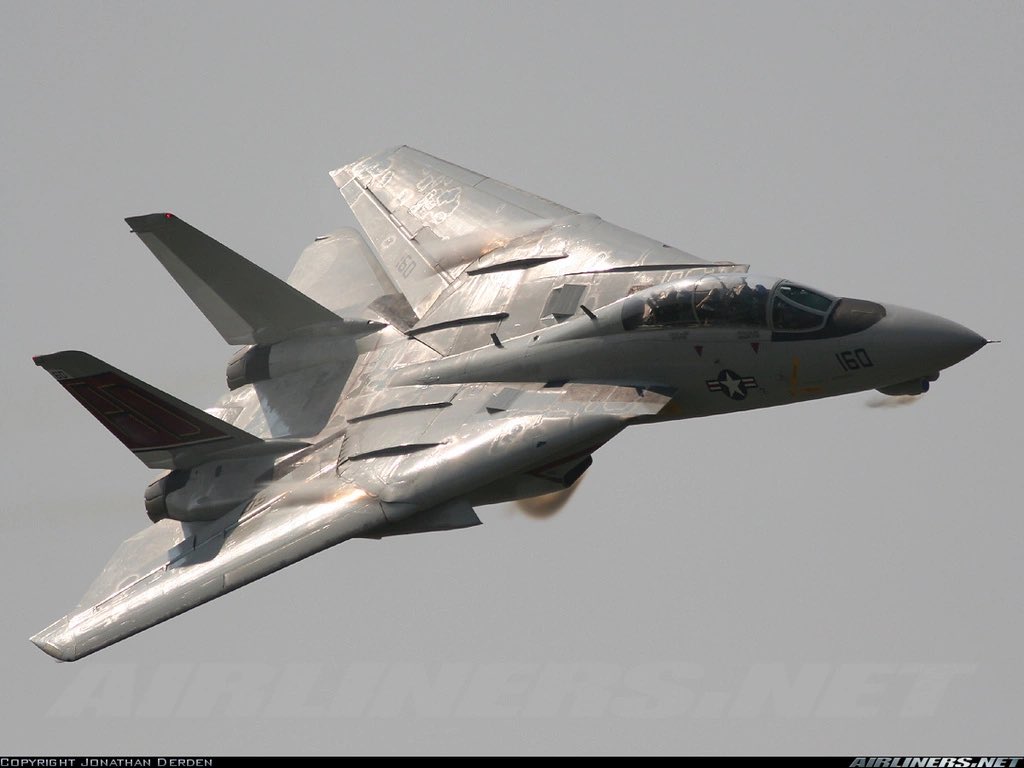
After a quick Carrier Qualification in VF-24, we were off on my first Western Pacific (WESTPAC) cruise, destined for places like Hong Kong, Singapore, Dubai, and more. The picture in this post is me on this first cruise. I was never much of a shutterbug so photos of me on the job are rare! Note here I’m standing by the trusty AIM-54C Phoenix missile mounted on the belly of the Tomcat. At this stage in the F-14’s life, she was just getting into the air-to-mud mission so was very much still a primary air-to-air platform so we’d be doing most of the fighter stuff for this cruise. Standard combat load at that time was “2/2/2” which translated to 2 x AIM-9 Sidewinder 2 x AIM-7 Sparrow, and 2 x AIM-54 Phoenix (I think I got that order right….been a while!)
As we start our trek west, cruise begins. My first. I’d gotten carrier landings in the T-2 Buckeye and A-4 Skyhawk (both day only), had done CQ in VF-124 in the Tomcat (day and night), and had just recently re-qualified in VF-24 (day and night) so it’s not like I was TOTALLY unfamiliar with night landings. But mentally you have to factor in that this is the first REAL night flight from the boat on cruise. Up until that time, every CQ evolution was a training environment. All the movement, people, ships, deck crews, fuel, etc. were all focused on YOU to get you up to speed. Now was different. We were headed west. We’re not near a divert field. This was real. I liken it to the difference between banging golf balls with your driver at the range and teeing off on the #1 at Augusta during the Masters. Same movement, same club, same ball…..but VERY different.
Also, this was a bit ago and the focus on the Nuggets (new guys) was intense. They flew the sh*t out of you off the boat. Every day, every night. The worse the conditions, the more Nuggets they’d launch. Trial by fire, m’fer. Every flight was an opportunity to learn something, and since Nuggets didn’t know sh*t, launch ‘em!! It might still be like that......dunno.
My first scheduled cruise night flight is with the Maintenance Officer (an O4, Lieutenant Commander, senior RIO) “Butch”. I can’t recall the mission but likely just a night AIC (Air Intercept Control) flight against another fighter, with probably 12 or 14 other airplanes scheduled to launch. The brief went pretty well, but I’m just focused on getting back the ship without (a) shining my ass or (b) killing myself and Butch. True Fighter Guys will know that of those two, (a) is WAY worse than (b). “I’d rather die than look bad” was an oft repeated phrase. I did note during the brief that the metro guys (meteorological dudes or “weather guessers”) said that the weather would include “some clouds and rain”. Of note, the ship can actually avoid weather, we just didn’t that night. Thanks, ship.
So Butch and I suit up and head for the roof. Our ready room on NIMITZ was “Ready 8” all the way at the back of the ship so that’s where the jets were always parked (Tomcats on the back of the boat because there’s more room). He pops the hatch and HOLY SH*T that wind is blowing hard……and DAMN that’s a lot of rain…..blowing sideways. Gulp.
We crouch down against the wind and rain, climb up to the flight deck, spot our plane and start the preflight. Once done (and soaking wet) we both climb in and I notice that in addition to the high winds and driving sideways rain, we have a LOT of movement of the flight deck through the heavy seas. Great. Dark, rainy, windy, and pitching deck. Sidebar – during a carrier landing, if everything is perfectly steady and you’re perfectly on glide slop and on speed, your tailhook misses the back of the ship by 11 feet 7 inches. Well, tonight the deck is moving probably 10-15 deck up and down. You do the math.
So the canopy finally closes out the wind and rain and we get power on the jet. Butch is in full “encouragement mode” at this point because he knows I’m his ride home (back where the food is, as we say) and he’s GOT to keep me pumped up. “THIS IS F**KING AWESOME MAN!!!”, he shouts. I ask him if he really thinks we’re going and he’s like “Oh yean, man! This is gonna be GREAT!!”
I’m skeptical. There’s no WAY they’d launch us in these conditions.
THESE are the thoughts that we stupid Nuggets think. Silly Nugget.
Jet is started, final checks are done, and we signal to the yellow shirt (aircraft directors wear yellow shirts, more colors for different jobs….purple for fuel, brown for Plane Captain, white for medical/final checker, etc.). I’m still skeptical they’re going to send us. “Butch, you really think they’re gonna send us?”
“Oh yeah, man! We goin’ FLYIN! You can’t BUY training like this!”. That’s because know one is dumb enough to try and sell it, to be honest.
I look over and sure enough the director gives the signal to remove chocks and chains and signals for us to pull forward. Gulp again. While the rain is still hitting the cockpit from the side and the deck is doing its little dance, we make our way to Cat 3 (3 of 4 catapults on the boat). The director then passes me to the director on the CAT who stands in front of the jet, guiding me into the shuttle (hunk of steel connected to the catapult system below decks that will fling us off the boat, accelerating from 0 to 150 in 1.4 seconds).
He calls for wings out, flaps down and then we're turned over to the launch officer. He calls for full power, then full afterburner. I do my control wipe out, finally convinced that yes, we’re probably doing this. Everything looks good, so I turn on the external lights (off until that point) indicating I’m ready for launch and………BOOM, off we go into the blackness.
Throttle out of afterburner, gear up, flaps up and start the climb out going into the clouds at about 500 feet. Butch is doing his RIO thing and we keep climbing through the goo (clouds). We eventually break out of the clouds at around 26,000 feet and gosh it’s a beautiful night up here. Big, shiny moon, pretty stars. Down stairs? Not so much, but really nice way up here. Butch calls back to the ship and tells them that we broke out at 26K and the boat comes back with “Roger that, launch is canceled. Turn left 180 and we’ll start vectors for recovery”.
What? Launch canceled? Butch now teaches me about the idea of “the sacrificial Tomcat”. If the weather is not so good, shoot a Tomcat off the boat to go investigate the weather. It’s dual crewed and has LOTS of gas, so what could possibly go wrong, right? F**k.
So now we gotta get home back to the boat. That’s where the food is, and that’s where your stuff is, and there’s really no place else to go. We get vectors to final while dumping gas to get down to max trap weight. The maximum landing weight for the Tomcat was 54,000 pounds and a landing is called a “trap”, hence “max trap”. Empty weight is about 45,000 pounds and you carried 20,000 pounds of gas so we had to dump quite a bit.
Vectors complete, we wind up behind the boat at about 2 miles and are on glide slope coming down the chute. Another tidbit; everyone on the boat knows they launched the sacrificial Tomcat AND they know who’s in the jet….a Nugget. So all eyes are going to be on the ships TV that broadcasts every landing from a camera that’s recessed into the flight deck and looks right up the glide slope at the approaching aircraft. To say The Nugget Night Trap in Shitty Weather Show is popular is an understatement. It’s Must See TV.
Great.
Things actually went pretty well. I was always a good instrument flyer (looking only at the cockpit instruments), and for landing you lined up crosshairs on your screen so that they formed a perfect plus sign +. Drift left and the vertical needle moves to the right to tell you to come back right. Go low, and the horizontal needle goes up to tell you to add power to get back up on glide slope. Pretty straight forward, right?
By about a mile out, Butch is doing the soothing voice “loooookin good, bud……little high……there ya go…..loooooking gooood.” For me, that’s actually kind of helpful and it validates that I’m not completely out to lunch. The problem is that eventually you have to come off instruments and actually look at the ship to land. At about mile out and 500 feet, the ship is finally visible. At three-quarter mile, Butch calls the ball: “Two-oh-two, Tomcat ball, five-oh”, which translates to “I’m Jet # 202, we’re in a Tomcat and can see the visual landing aide/ball, and we have 5,000 pounds of gas). This is when I start my “transition scan” where you gently look up to make sure the boat is actually there, come back in one more time to verify the needles are centered and everything looks good, then come back out for the last time to start flying glide slope (“meatball”), centerline (“lineup”) speed (“angle of attack”) all the way to touch down.
This is NOT a picture I’d seen much and I had DEFINITELY never landed on a pitching deck.
“Gee, what do you know, you can actually SEE the deck moving waaaay down and then waaaay back up and HOLY SH*T WHY AM I LOOKING AT THE DECK GET BACK TO MEATBALL, LINEUP, ANGLE OF ATTACK!!!!!!!!!!!!!!!”.
If you look at the deck while landing (“deck spotters”), there’s a better than average chance you’ll hit the back of the ship because it’s moving away from you at 20mph. That's not good.
Some lineup corrections, a couple “little power” calls from the LSO (Landing Signal Officer) and a couple more “looooking goods” from Butch and we cross the ramp (didn’t hit it, thank you), land in the wires and trap, going to full power in the wires in case we’d missed them all (“boltered”). Whew!!! Wings back, flaps up, and follow the director to parking. We shut down and Butch is again back to “That was AWESOME, MAN!!” He was likely just happy to be alive. And so was I after my first night launch on cruise.
And for the Naval Aviators out there, Paddles gave me a Fair Deuce.
DISCLAIMER - any inaccuracies in technical details are due soley to poor memory and being old.

Last Seen Hashtags on Sotwe
Most Popular Users

Elon Musk 
@elonmusk
241.7M followers

Barack Obama
@barackobama
119M followers

Cristiano Ronaldo
@cristiano
114.5M followers

Donald J. Trump
@realdonaldtrump
111.9M followers

Narendra Modi
@narendramodi
107.2M followers

Rihanna
@rihanna
98.7M followers

NASA
@nasa
92.4M followers

Justin Bieber
@justinbieber
91.8M followers

KATY PERRY
@katyperry
90M followers

Taylor Swift
@taylorswift13
84M followers

Lady Gaga
@ladygaga
75.5M followers

Virat Kohli
@imvkohli
73.4M followers

Kim Kardashian
@kimkardashian
70.9M followers

YouTube
@youtube
68.8M followers

Neymar Jr
@neymarjr
66.4M followers

Bill Gates
@billgates
65.2M followers

Selena Gomez
@selenagomez
63.1M followers

The Ellen Show
@theellenshow
62.3M followers

CNN
@cnn
61.8M followers

X
@x
60.7M followers