

Top Tweets for #ApocalypticBookStudy

#ApocalypticBookStudy #105
#BibleStudy #193
#Phenomenology #62
#DimensionalTheology #57
#SupernaturalCosmography #42
📜 Isaiah 35:1-10 📜
🔑 Specialist Study on The Wilderness Crowned with Glory, YHWH Coming to Save, Dragon-Habitat Reclamation, the Reopened Human Sensorium, the Highway of Holiness, & the Ransomed Procession into Zion or called a Tenfold Restoration Apocalypse of Isaiah 35: Edenic Blossoming, Messianic Healing, Living-Water Pneumatology, Hart-Like Resurrection Movement, Sacred Pilgrimage, & Everlasting Joy upon the Redeemed - ⚠️NOTE: PLEASE SEE THE NEXT POSTS BELOW FOR THE BONUS SUPPLEMENTARY SECTION
(If you want to after this chapter Verse + Commentary)
📜 Chapter Heading for Isaiah 35 📜
1.The ioyfull flourishing of Christs Kingdome. 3 The weake are incouraged by the vertues and priuiledges of the Gospel.
Isaiah 35 contains only ten verses, yet it is a complete miniature Apocalypse of restoration. It reverses nearly every desolating image in Isaiah 33-34:
• Isaiah 33:9 showed Lebanon withering, Sharon becoming wilderness, and Carmel casting off its fruit. Isaiah 35 restores their glory and excellence.
• Isaiah 33:21 revealed YHWH as broad rivers and streams. Isaiah 35 sends those waters breaking through the wilderness.
• Isaiah 33:23 allowed the lame to divide the spoil. Isaiah 35:6 causes the lame to leap like a hart.
• Isaiah 33:24 promised that Zion’s inhabitants would no longer say, “I am sick.” Isaiah 35 opens blind eyes, unstops deaf ears, strengthens weak limbs, and releases the tongue.
• Isaiah 34 transformed Edom’s streams into pitch and its dust into brimstone. Isaiah 35 transforms the parched ground into a pool and the thirsty land into springs.
• Isaiah 34 gave ruined territory to dragons, nocturnal creatures, and wilderness beings. Isaiah 35 turns the habitation of dragons into a court of reeds, rushes, water, and grass.
• Isaiah 34 made the land impassable. Isaiah 35 raises a holy highway through the renewed wilderness.
• Isaiah 34 ends with generational desolation. Isaiah 35 ends with everlasting joy and the flight of sorrow.
Isaiah 34 is measured de-creation. Isaiah 35 is supernatural re-creation.
The chapter moves from ecology to embodiment, embodiment to pilgrimage, pilgrimage to Zion, and Zion to everlasting joy.
───
The Extraordinary KJV 1611 New Testament Marginal Chain
The side notes in the photographed 1611 text construct a substantial Gospel and Acts commentary directly beside Isaiah 35:
• Hebrews 12:12-13 beside the weak hands and feeble knees.
• Matthew 9:27, 11:5, 12:22, 20:30, 21:14, and John 9:6-7 beside the opening of blind eyes.
• Matthew 11:5 and Mark 7:32 beside the unstopping of deaf ears.
• Matthew 11:5, 15:30, 21:14, John 5:8-9, Acts 3:2, 8:7, and 14:8 beside the leaping of the lame.
• Matthew 9:32, 12:22, and 15:30 beside the singing tongue of the dumb.
• John 7:38-39 beside the waters breaking out in the wilderness.
�� Isaiah 51:11 beside the ransomed returning to Zion.
The 1611 apparatus reads Isaiah 35 as a great Messianic network. Yeshua’s miracles are not disconnected wonders. They are signs that the Kingdom described by Yeshayahu has entered history.
📜VERSE BY VERSE COMMENTARY STARTS NOW 📜
───
📜
Isaiah 35:1 - KJV 1611
The wildernesse and the solitarie place shall be glad for them: and the desert shall reioyce, and blossome as the rose.
The Wilderness Becomes Capable of Joy
The Hebrew names several degrees of uncultivated space:
מִדְבָּר - midbār
Wilderness, pasture-wilderness, uncultivated territory, or a region beyond settled civic order.
צִיָּה - tsiyyāh
Dry land, parched ground, aridity, or waterless territory.
עֲרָבָה - ‘arāvāh
Desert plain, steppe, wilderness-valley, or the great dry region associated with the Jordan-Arabah landscape.
These are not interchangeable decorative words. They form an arid topography:
1/I. Wilderness beyond settled cultivation
2/II. Dry land deprived of moisture
3/III. Desert plain extending across open space
Every degree is awakened.
The wilderness becomes glad.
The desert rejoices.
The dry ground blossoms.
Isaiah presents the landscape as responsive consciousness. Creation does not remain an inert stage upon which redemption happens only to human beings. The land itself participates in salvation.
This is Ecological Soteriology, the truth that YHWH’s saving work reaches soil, water, vegetation, animal habitat, human bodies, roads, cities, and the total environment of life.
Paul develops the same reality in Romans 8. Creation groans under corruption and awaits liberation into the glorious freedom of the children of God. Isaiah 35 shows that liberation poetically and materially: the desert receives joy, and the wilderness answers salvation with flowers.
───
“Blossome as the Rose”
Hebrew:
וְתִפְרַח כַּחֲבַצָּלֶת
Wethiphraḥ kaḥăvatstseleth
Pāraḥ means to bud, sprout, flourish, break into flower, or burst forth with vegetative life.
Ḥăvatstseleth is a beautiful and uncommon flower-name.
It has been understood as a crocus, meadow saffron, lily-like blossom, or rose.
The KJV preserves “rose,” while the Greek Septuagint uses krinon, a lily.
The point is not one isolated flower placed in a dead desert.
The entire wilderness assumes floral character. What looked incapable of life becomes the bearer of color, fragrance, form, and abundance.
The desert receives an ornament it could never manufacture for itself.
───
Genesis 3 Reversed
Genesis 3 describes the ground producing thorns and thistles after humanity’s fall.
Isaiah 34 had intensified that curse:
thorns in palaces, nettles in fortresses, and wilderness beings inhabiting royal courts.
Isaiah 35 introduces the counter-movement:
thorns yield to flowers, dryness yields to moisture, and desolation yields to rejoicing.
The chapter is therefore deeply Edenic.
It does not simply describe better weather. It reveals the curse losing territorial authority.
The Genesis movement was:
• garden to exile,
• abundance to toil,
• open fellowship to guarded access,
• life toward death.
Isaiah 35 moves in the opposite direction:
• wilderness toward garden,
• dryness toward springs,
• weakness toward strength,
• exile toward Zion,
• sorrow toward everlasting joy.
───
The Desert’s Liturgical Awakening
The verbs glad, rejoice, and later sing give the land a liturgical function. The wilderness becomes a worshipper.
Psalm 96 commands fields, trees, seas, and the earth to rejoice before YHWH. Psalm 98 speaks of floods clapping their hands and hills rejoicing together. Isaiah 35 places the desert inside that cosmic choir.
This is Vegetational Doxology: plants, blossoms, and restored landscapes become visible praise.
The flower is the wilderness’s hymn.
───
📜
Isaiah 35:2 - KJV 1611
It shall blossome abundantly, and reioyce euen with ioy and singing: the glory of Lebanon shall be giuen vnto it, the excellencie of Carmel and Sharon, they shall see the glory of the LORD, and the excellencie of our God.
“Blossoming It Shall Blossom”
The Hebrew intensifies the action:
פָּרֹחַ תִּפְרַח
Pāroaḥ tiphraḥ
This is an emphatic construction:
blossoming, it shall blossom
flourishing, it shall surely flourish
The repetition communicates abundance, certainty, and multiplication. The desert does not produce one fragile sign of recovery. It enters a sustained state of flourishing.
Its transformation is both visual and acoustical:
• flowers appear,
• joy rises,
• singing is heard,
• glory becomes visible.
The restored creation possesses color, sound, fragrance, movement, and spiritual perception.
───
Isaiah 33:9 Directly Reversed
Isaiah 33:9 declared:
“Lebanon is ashamed and withered away: Sharon is like a wildernesse, and Bashan and Carmel shake off their fruits.”
Isaiah 35:2 answers nearly every element:
“The glory of Lebanon shall be giuen vnto it, the excellencie of Carmel and Sharon.”
This is one of the clearest deliberate reversals in the sequence.
Isaiah 33
• Lebanon withers.
• Sharon becomes wilderness.
• Carmel loses fruit.
• The earth mourns.
Isaiah 35
• Lebanon gives its glory.
• Sharon gives its excellence.
• Carmel gives its splendor.
• The wilderness rejoices and blossoms.
The regions do more than recover their own fertility. Their glory is transferred into the desert. The wilderness receives the finest characteristics of the most celebrated fertile regions.
This may be called Transregional Glory Transfer.
YHWH gathers the excellencies of forests, gardens, plains, and mountains and bestows them upon the formerly barren place.
───
Lebanon, Carmel, and Sharon
Lebanon
Lebanon signifies cedar-glory, elevated forests, fragrance, strength, and mountain majesty.
Carmel
Karmel carries the sense of orchard-land, garden-land, vineyard abundance, and cultivated fertility.
Sharon
Sharon signifies luxuriant plain, flowered pasture, and open agricultural beauty.
These regions form an ecological trinity:
• forested height,
• cultivated mountain-garden,
• fertile plain.
Their combined excellence enters the wilderness.
The whole land becomes a sanctuary-garden.
───
“They Shall See the Glory of YHWH”
The ecological transformation culminates in vision:
כְּבוֹד יְהוָה - kevōd YHWH
The glory, weight, radiance, manifest majesty, and substantial presence of YHWH.
הֲדַר אֱלֹהֵינוּ - hadar ’Elohênû
The splendor, magnificence, beauty, or royal excellence of our God.
The flowers are not the final object of sight. They disclose the presence behind their renewal.
The desert blossoms because glory has entered it.
This continues the biblical glory-current:
• YHWH’s glory appears in the wilderness in Exodus 16.
• Sinai is covered by Divine glory.
• Moses asks to behold YHWH’s glory.
• Isaiah sees the glory filling the Temple in Isaiah 6.
• Isaiah 35 promises glory visible within restored creation.
�� Isaiah 40:5 declares that all flesh shall see the glory of YHWH.
• John 1:14 declares that the Word became flesh and His glory was beheld.
• Revelation 21 shows New Yerushalayim possessing the glory of God, requiring neither sun nor moon as its ultimate light.
The wilderness of Isaiah 35 is moving toward the luminous city of Revelation 21.
───
📜
Isaiah 35:3 - KJV 1611
¶ Strengthen yee the weake hands, and confirme the feeble knees.
1611 Marginal Correspondence
Hebrews 12:12-13
Hebrews receives Isaiah’s language directly:
“Wherefore lift vp the hands which hang downe, and the feeble knees: and make straight paths for your feete, lest that which is lame be turned out of the way; but let it rather be healed.”
Restoration Becomes a Communal Command
The first two verses describe what YHWH does to the landscape. Verse 3 commands the community to participate in that restoration.
The wilderness blossoms supernaturally, but human beings are still commanded to strengthen one another.
The Hebrew is vigorous:
חַזְּקוּ יָדַיִם רָפוֹת
Ḥazzĕqû yādayim rāphôth
Strengthen slack, dropping, weakened hands.
וּבִרְכַּיִם כֹּשְׁלוֹת אַמֵּצוּ
Ûvirkayim kōshĕlôth ’ammētsû
Make firm the tottering, stumbling, collapsing knees.
The hands and knees represent human agency and movement.
Hands perform work, worship, defense, giving, building, blessing, and service. Knees bear weight, enable walking, support standing, and bend in prayer.
When hands hang down and knees buckle, the whole embodied vocation is threatened.
───
Somatic Theology
Isaiah does not divide spiritual courage from bodily expression.
Fear appears in:
• weakened hands,
• shaking limbs,
• unstable knees,
• interrupted movement,
• reduced strength.
Encouragement also becomes bodily:
• hands rise,
• knees are stabilized,
• the body stands,
• the pilgrim begins moving again.
This is Somatic Exhortation, spiritual truth entering the limbs and restoring the person’s capacity for action.
───
“Strengthen Ye”
The command is plural. The strong are responsible for the weak.
Isaiah does not say only:
“Weak hands, strengthen yourselves.”
He speaks to the covenant community:
You strengthen the weak hands.
You confirm the feeble knees.
Restoration is shared. One person’s strength becomes support for another.
This recalls Exodus 17, where Moses’ hands grow heavy and Aaron and Hur hold them up until the battle is completed.
The victory involves Divine power, human weakness, and communal support operating together.
───
Hebrews and the Highway
Hebrews 12 joins Isaiah 35:3 to straight paths. This is important because Isaiah 35 will soon reveal the Highway of Holiness.
The sequence is:
1/I. Strengthen the limbs.
2/II. Make straight paths.
3/III. Prevent the lame from being turned aside.
4/IV. Let the wounded be healed.
5/V. Continue toward the holy destination.
The body and road belong together. YHWH restores pilgrims because He has prepared a path for them.
───
📜
Isaiah 35:4 - KJV 1611
Say to them that are of †a fearefull heart; Be strong, feare not: behold, your God will come with vengeance, euen God with a recompence, he will come and saue you.
1611 Margin
Heb. hastie.
The Hasty or Anxious Heart
Hebrew:
נִמְהֲרֵי־לֵב
Nimhărê-lēv
The phrase can describe those whose hearts are hasty, anxious, agitated, hurried, trembling, or internally disturbed.
Fear accelerates inward time. The heart races ahead into imagined disaster. It interprets delay as abandonment and threat as finality.
Isaiah commands prophetic speech to enter that accelerated interior world:
“Be strong, feare not.”
The remedy is not vague optimism. It is the coming of God.
───
“Behold, Your God Will Come”
Hebrew:
הִ��ֵּה אֱלֹהֵיכֶם
Hinnēh ’Elohêkhem
Hinnēh, behold, commands awakened perception.
The fearful person sees the enemy approaching, but the prophet
redirects sight:
Behold your God.
The central promise is intensely personal:
your God
The One coming is neither an unknown cosmic force nor a distant abstraction. He is the covenant God who has bound His Name to His people.
───
Vengeance and Recompense from Isaiah 34
Isaiah 34:8 declared:
“The day of the LORDS vengeance, and the yeere of recompences for the controuersie of Zion.”
Isaiah 35:4 now declares:
“Your God will come with vengeance, euen God with a recompence, he will come and saue you.”
These verses interpret one another.
Isaiah 34
Vengeance falls upon the hostile order.
Isaiah 35
That same Divine intervention saves the fearful.
Judgment and salvation are therefore two directions of one coming.
YHWH’s vengeance removes what oppresses.
His recompense answers the controversy of Zion.
His coming releases those who trembled beneath hostile power.
This is Vindicatory Soteriology: Divine judgment becomes salvation because it removes the forces preventing life, holiness, and return.
───
“He Will Come and Save You”
The Hebrew concludes
emphatically:
הוּא יָבוֹא וְיֹשַׁעֲכֶם
Hû’ yāvô’ weyōsha‘��khem
He Himself will come and save you.
Salvation is not delegated to Egypt, horses, alliances, human messengers, or imperial treaties. Isaiah 31 condemned trust in Egyptian strength. Isaiah 33 showed the failure of ambassadors. Isaiah 35 declares that God Himself comes.
This prepares the Messianic reading of the following verses.
When Yeshua is asked whether He is the Coming One,
He points to the Isaianic signs occurring around Him:
blind eyes see,
lame persons walk,
deaf ears hear,
the dead are raised,
and good news reaches the poor.
Yeshua’s answer in Matthew 11:4-5 and Luke 7:22 is effectively:
Look at Isaiah 35 taking bodily form.
───
From Isaiah 35 to Isaiah 61 and 63
Isaiah 61 joins the acceptable year of YHWH with the day of Divine vengeance.
Isaiah 63 joins the day of vengeance with the year of the redeemed.
Isaiah 35 already contains both realities in concentrated form:
• vengeance,
• recompense,
• salvation,
• bodily restoration,
• return to Zion.
The coming God is Warrior, Healer, Redeemer, and King.
───
📜
Isaiah 35:5 - KJV 1611
Then the eyes of the blind shall be opened, and the eares of the deafe shall be vnstoped.
The Restored Human Sensorium
The wilderness first changes outside the person. Now the human sensorium changes within the person.
Sight and hearing are covenant faculties. Through them humanity receives:
• creation,
• revelation,
• warning,
• music,
• language,
• faces,
• signs,
• Scripture,
• and the manifested glory of YHWH.
Isaiah portrays redemption as the removal of sensory closure.
───
The Eyes of the Blind Opened
Hebrew:
אָז תִּפָּקַחְנָה עֵינֵי עִוְרִים
’Āz tippāqaḥnāh ‘ênê ‘iwrîm
The verb pāqaḥ means to open, especially the eyes, releasing sight that had been closed or restrained.
Genesis 3 also speaks of eyes being opened, but there the opening leads Adam and Ḥavvah into the awareness of nakedness, fear, and shame.
Isaiah 35 gives a redemptive eye-opening:
• eyes open toward glory,
• faces become visible,
• the pathway can be discerned,
• the beautiful King can be seen,
• creation can be received anew.
Genesis 3 opened eyes into exile. Isaiah 35 opens eyes upon the road home.
───
Earlier Isaianic Blindness
Isaiah has repeatedly addressed sensory closure:
• Isaiah 6 speaks of people seeing without perceiving and hearing without understanding.
• Isaiah 29:10 describes closed eyes within a spirit of deep sleep.
• Isaiah 29:18 promises that the eyes of the blind shall see out of obscurity.
• Isaiah 30:21 promises a voice heard behind the traveler, saying, “This is the way.”
• Isaiah 32:3 promises that the eyes of those who see shall not be dim.
• Isaiah 33:17 promises, “Thine eyes shall see the King in his beauty.”
Isaiah 35 gathers these promises into bodily restoration.
───
The 1611 Marginal Gospel Chain for Blind Eyes
Matthew 9:27-31
Two blind men follow Yeshua, calling Him Son of David. Their sight is restored according to faith. The royal title joins healing with Messianic kingship.
Matthew 11:5
Yeshua includes the seeing of the blind among the signs answering whether He is the Coming One.
Matthew 12:22
A man oppressed by a demon, blind and unable to speak, is healed. The sensory restoration also reveals Yeshua’s authority over hostile spirits.
Matthew 20:30-34
Blind men again cry, “O Lord, thou sonne of Dauid.” Yeshua touches their eyes, and they follow Him.
Matthew 21:14
The blind and lame come to Yeshua inside the Temple, and He heals them. Isaiah’s restoration enters sacred space while the children proclaim Davidic praise.
John 9:6-7
Yeshua anoints the blind man’s eyes with clay and directs him to wash in the Pool of Siloam.
This is especially rich beside Isaiah:
• Adam was formed from ground.
• Yeshua uses earth and moisture.
• Siloam is connected with the gentle waters of Shiloah in Isaiah 8.
• The rejected Shiloah-water becomes associated with opened vision.
• The created substance of earth participates in the Creator’s healing act.
The sensory miracle is therefore also an act of re-creation.
───
The Ears of the Deaf Unstopped
Hebrew:
וְאָזְנֵי חֵרְשִׁים תִּפָּתַחְנָה
We’oznê ḥērshîm tippāthaḥnāh
The ears are opened, released from obstruction.
The person can now hear:
• the prophetic summons,
• the songs of the wilderness,
• the declaration “Your God will come,”
• the direction of the highway,
• and the songs of the ransomed.
Isaiah’s salvation is acoustical as well as visual.
The restored world is heard.
───
📜⚠️📜PLEASE SEE NEXT REPLY FOR -
📜 Isaiah 35:6-10 📜


#ApocalypticBookStudy #104
#BibleStudy #191
#Phenomenology #60
#DimensionalTheology #55
#SupernaturalCosmography #40
📜 Isaiah 33:1-24 - 34:1-17 📜
⚠️ Specialist Study on Rolled Heavens & Angelomachic Judgment, Falling Star-Powers, Brimstone Transmutation, Demonological Territoriality, Supernatural Tohu & Bohu Lore, Septuagintal Onocentaurs & Sirens AKA The Greek Bestiary of the Judged Frontier: Daimonia, Onocentaurs, Sirens, Hybrid Bodies, & the Wilderness Geometry of a World beyond Civic Order, Rûḥē, Shēdā, & the Night-Dweller: The Syriac translation of Spirits, Afflicting Beings, Demon-Fellows, & the Assigned Repose of the Nocturnal Realm + a 🔑(Never before looked at comparative themes in rare apocryphal books such as but not limited too)(will BE IN NEXT POSTS BELOW WHEN THE PROPER VERSE IN EACH CHAPTER COMES TO THEM)
(SKIP TO READ ISAIAH 33:1 AKA START OF THIS COMMENTARY)
COMPARATIVE FACETS FROM RARE BOOKS SUCH AS -
Gospel of Nicodemus - Featuring -
The King of Glory beneath the Earth: Iron Bars Broken, Ancient Gates Shattered, Adam Released, & the Fortified Kingdom of Death Despoiled by Yeshua
Questions of Bartholomew
When Hades Heard God Approaching: Beliar’s Terror, the Eternal Gates Removed, the Underworld’s Inward Agony, & the Ascent of Adam’s Company
The Book that Outlives the Heavens: The Commanding Mouth of YHWH, the Spirit Who Gathers, and the Prophetic Scroll
Remaining Open after the Firmamental Scroll Is Closed
Heavenly Books across the Apocalypses
The Archives above the Firmament: Enochic Tablets, Ezra’s Opened Books, Celestial Scribes, Seals, Records, Testimonies, and the Unforgotten Memory of YHWH’s Court VS the Broken Hades, & the Spirit-Governed Totality of Visible and Invisible Reality & so much more in these 2 jam packed AWESOME chapters for this weeks study
⚠️ Specialist Study on Isaiah 33
(SEE FOLLOWING POSTS BELOW FOR NEXT VERSES & CHAPTERS AKA ISAIAH 34 ALSO WILL BE BELOW IN THE REPLIES)(SEE PICS FOR 1611 TRANSLATION WITH SMALL MARGINAL NOTES WITH NO COMMENTARY OR KEEP READING FOR FINALLY OUR WEEKLY...
VERSE BY VERSS +/& COMMENTARY STARTS NOW -
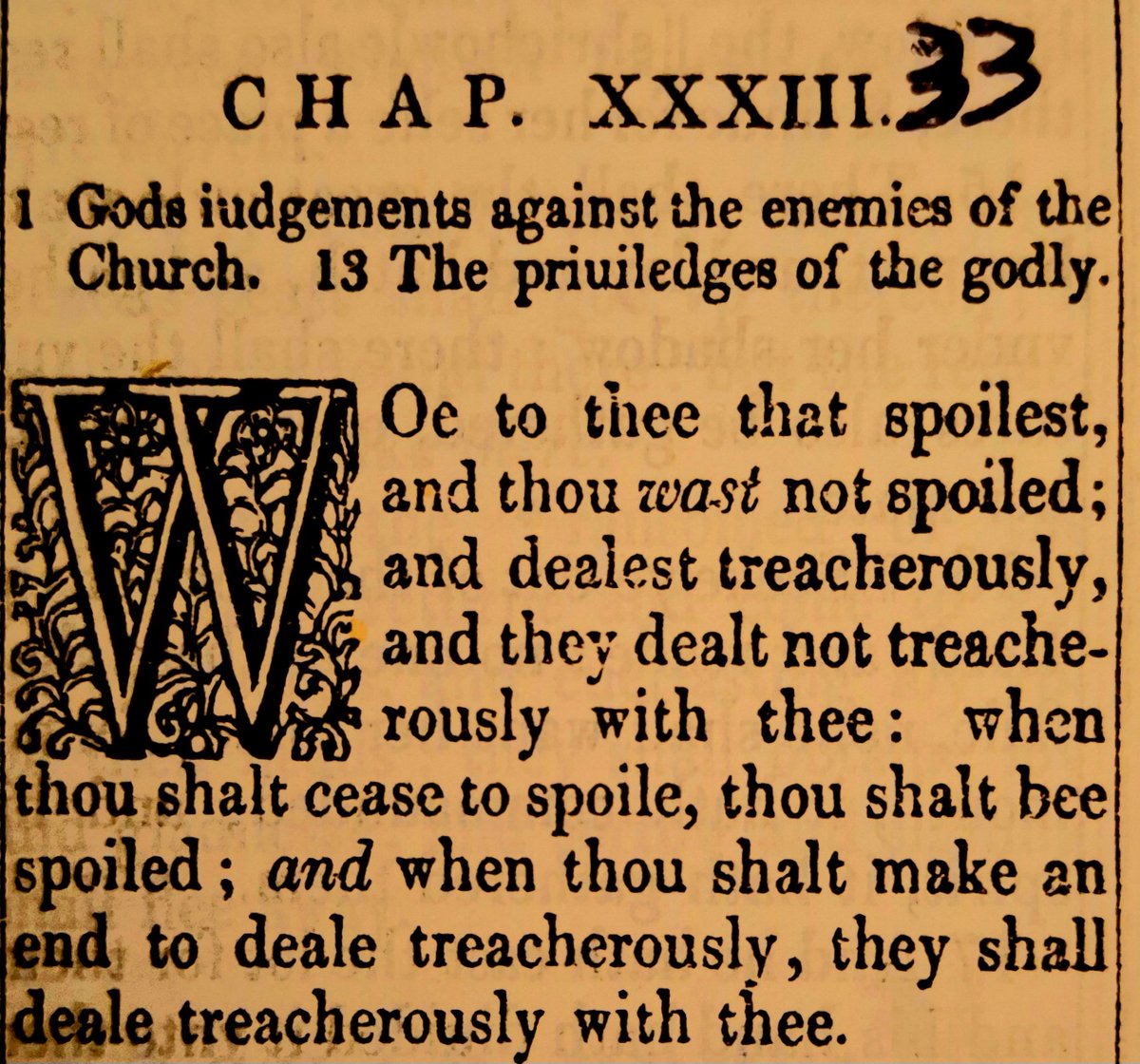
Picture I - Isaiah 33:1
Chapter Heading
Gods iudgements against the enemies of the Church. 13 The priuiledges of the godly.
The heading gives the chapter two great movements:
1/I. YHWH’s judgments against the enemies of His covenant people.
2/II. The protected condition and supernatural privileges of the righteous.
Isaiah 33 therefore begins with the enemy’s apparent triumph, but it will move toward YHWH rising, Zion being filled with judgment and righteousness, the devouring fire, the King in His beauty, the immovable tabernacle, the broad rivers, and the forgiveness of the inhabitants.
📜───📜
Verses + the Commentary STARTS HERE -
Isaiah 33:1 - KJV 1611
Woe to thee that spoilest, and thou wast not spoiled; and dealest treacherously, and they dealt not treacherously with thee: when thou shalt cease to spoile, thou shalt bee spoiled; and when thou shalt make an end to deale treacherously, they shall deale treacherously with thee.
The Prophetic Woe
The verse opens with “Woe”, Hebrew הוֹי - hôy. This is more than an expression of sadness. It is a prophetic alarm, a judicial cry, and sometimes the opening sound of a funeral lament pronounced before the proud power has visibly fallen.
The spoiler still appears successful. His armies remain active, his treasures increase, and his victims seem powerless. Yet Yeshayahu speaks as though the spoiler’s destruction is already contained within his violence.
The woe is therefore a spoken boundary. The prophet announces that the empire’s season has an appointed end.
───
The Unprovoked Spoiler
The enemy spoils although he himself had not been spoiled. He acts treacherously although others had not first acted treacherously toward him.
This describes violence without rightful cause. The aggressor cannot claim that his destruction was an act of necessary defense. He invaded, plundered, broke agreements, and extended power because he desired domination.
The immediate historical atmosphere strongly evokes Assyria, whose kings conquered cities, carried away wealth, displaced peoples, demanded tribute, and treated nations as objects of imperial acquisition. Yet the language is broad enough to describe every later empire that assumes strength gives it the right to devour.
The chapter therefore begins by uncovering a hidden law of empire: a kingdom that survives by consuming others eventually prepares the conditions of its own consumption.
───
Hebrew Root-Play
Two Hebrew roots dominate the verse.
שָׁדַד - shādad
To spoil, devastate, plunder, overpower, or violently strip away.
The participle שׁוֹדֵד - shōdēd describes the spoiler as one whose continuing identity is plunder. He does not commit one isolated theft. Spoiling has become his imperial vocation.
בָּגַד - bāgad
To act treacherously, betray trust, violate faith, or deal deceitfully.
The form בּוֹגֵד - bōgēd describes one who operates through covenant-breaking and calculated betrayal.
The Hebrew repeatedly echoes these roots:
The spoiler shall be spoiled.
The treacherous dealer shall be dealt with treacherously.
English preserves the repetition, but the Hebrew sound is even more forceful. The judgment answers the sin in its own vocabulary. The enemy hears his own deeds returned to him as sentence.
───
Divine Judicial Correspondence
This verse reveals a form of judgment in which the punishment corresponds to the offense.
The spoiler loses his spoil.
The betrayer experiences betrayal.
The destroyer enters the destruction he created for others.
This is not uncontrolled revenge. It is judicial correspondence beneath YHWH’s sovereign governance. The crime forms the outline of the sentence.
Isaiah’s principle appears throughout Scripture:
“As thou hast done, it shall be done vnto thee.”
Obadiah 15
“With what measure ye mete, it shall be measured to you againe.”
Matthew 7:2
“He that leadeth into captiuitie, shall goe into captiuitie.”
Revelation 13:10
The same moral architecture operates across prophet, Gospel, and Apocalypse.
History is not an empty field where strength alone decides the outcome. Human deeds enter the judicial memory of YHWH.
───
“When Thou Shalt Cease”
The enemy does not cease because he becomes righteous. He ceases because the divinely permitted span of his activity reaches completion.
The Hebrew idea is:
When thou hast finished spoiling.
Assyria imagines that it determines when campaigns begin and end. Isaiah reveals a higher chronology. The empire operates inside a time-bound enclosure known to YHWH.
This creates a profound distinction:
• The spoiler possesses temporary operational power.
• YHWH possesses authority over the duration of that power.
• The empire chooses its cruelty.
• YHWH determines the terminal boundary beyond which that cruelty cannot pass.
This is one of the chapter’s first supernatural features. The visible empire believes it governs history, but an invisible Divine chronology governs the empire.
───
The Finishing of Treachery
“When thou shalt make an end to deale treacherously…”
Treachery carries within itself a finishing point. The betrayer may believe deception gives him endless advantage, but every act adds weight to the approaching reversal.
The phrase also suggests the exhaustion of evil. Evil is not self-renewing or eternal. It consumes trust, covenant, stability, and eventually its own foundations. Treachery creates a world in which no alliance remains dependable, including the alliances of the treacherous power itself.
The betrayer therefore becomes surrounded by the very atmosphere he created.
───
The Invisible Court behind the Verse
The supernatural court is already active.
Someone has observed the unprovoked spoiling.
Someone has measured the treachery.
Someone has fixed its duration.
Someone has decreed the reversal.
Someone has preserved the moral record of every violated city and covenant.
That hidden Judge is YHWH, who will declare in verse 10:
“Now will I rise, saith the LORD: now will I be exalted, now will I lift vp my selfe.”
Verse 1 is therefore the judicial proclamation issued before the visible rising of YHWH in verse 10.
───
Old Testament Correspondences
Habakkuk 2
Habakkuk pronounces woes against the one who increases what is not his and gathers nations through violence. The plundered peoples eventually rise against the plunderer.
Jeremiah 50-51
Babylon receives according to her deeds. The destroying mountain becomes a burned mountain, and the empire that made nations desolate enters desolation.
Psalm 137:8
Babylon is addressed as one destined for destruction, and blessing is pronounced upon the agent who repays her according to what she did.
These passages belong to the same theology: imperial action may seem unanswered for a season, but YHWH preserves the moral shape of history.
───
New Testament and Apocalyptic Correspondences
Revelation develops Isaiah’s principle on a universal scale. The world-city that intoxicates nations, enriches merchants, sheds blood, and deceives kingdoms receives an answering judgment.
The cry concerning Babylon in Revelation is structurally Isaianic: the devourer becomes desolate, the wealthy city loses its treasures, and the persecuting power receives the measure it gave.
Isaiah 33:1 therefore contains an early form of apocalyptic imperial reversal. Assyria becomes a pattern through which later prophetic literature understands Babylon, Rome, and every anti-covenantal world-power.
───
Short Specialist Lens
Imperial Moral Symmetry - the empire receives the form of judgment it imposed upon others.
Kairological Judgment - the spoiler’s activity has an appointed duration known to YHWH.
Providential Reversal - apparent victory is turned into defeat through Divine governance of history.
───
Verse Synthesis
Isaiah 33 begins with the spoiler standing at the height of his strength. He has not yet been visibly spoiled. His treachery still appears profitable. Yet Yeshayahu announces that his future has already been judicially shaped.
The verse presents an unseen Divine geometry:
Spoiling curves back upon the spoiler.
Treachery returns to the betrayer.
Imperial duration reaches its boundary.
The enemy’s completed work becomes the doorway into his own judgment.
The chapter therefore does not begin in fear of Assyria. It begins with YHWH’s sentence over Assyria. Before the nations hear the tumult of verse 3, before YHWH rises in verse 10, and before the sinners tremble before everlasting burnings in verse 14, the prophetic Word has already enclosed the spoiler within the certainty of reversal.
Next reply below AKA picture (Verses) begins with Isaiah 33:2, the morning arm of YHWH, salvation in trouble, the scattering of nations, and wisdom as the stability of the times
& the Posts after will feature
📜 Isaiah 34 -

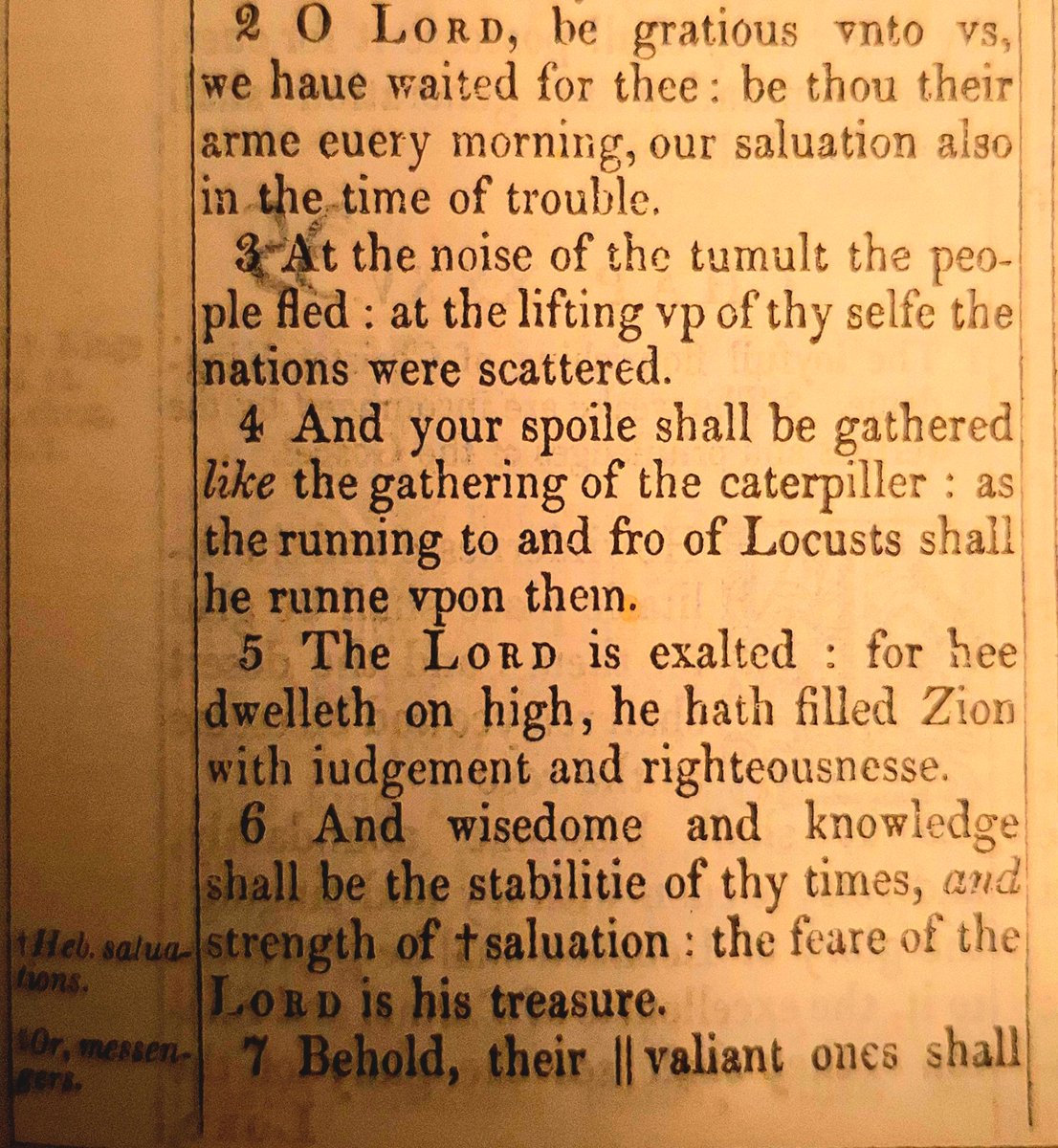
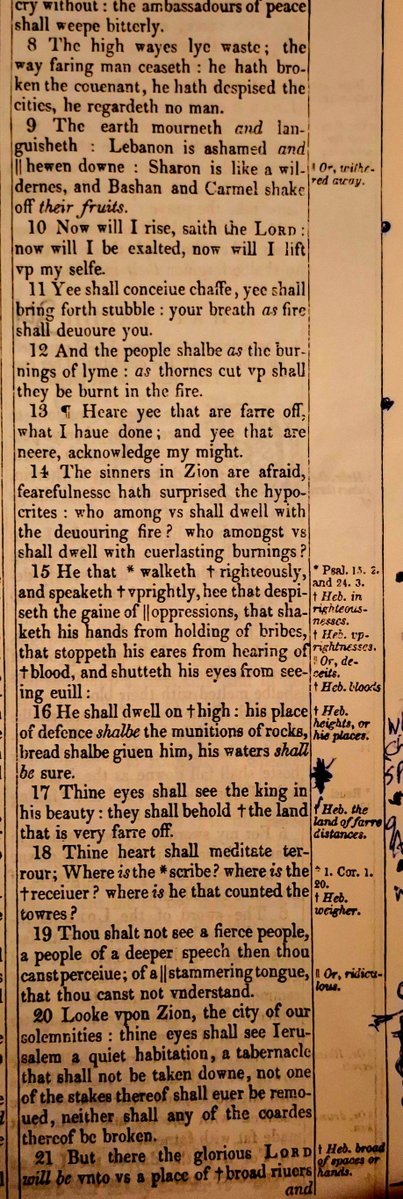
#ApocalypticBookStudy #103
#BibleStudy #189
#Phenomenology #58
#DimensionalTheology #53
#SupernaturalCosmography #38
📜 Isaiah 31:1-9 - 32:1-20 📜
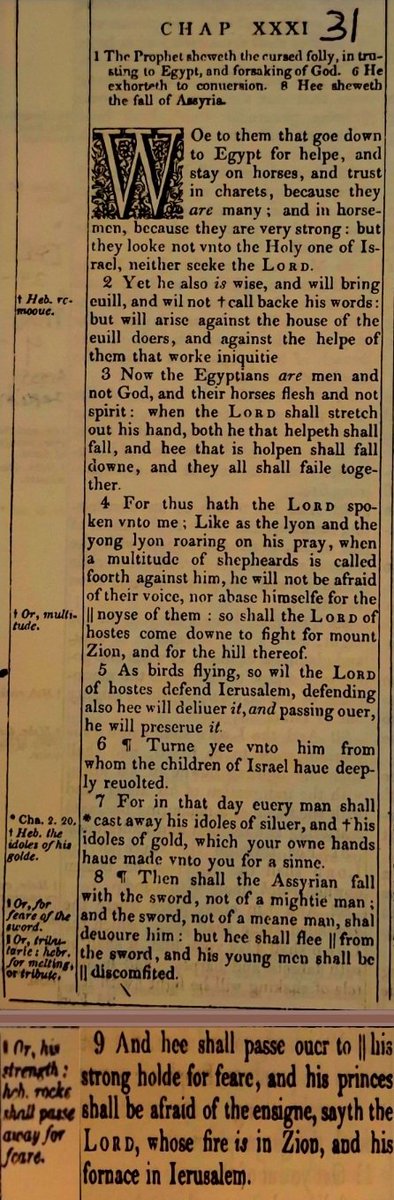
⚠️ Specialist Study on: The Lion beneath the Celestial Wings: Angelo-Avian Theophany, Sacred Aerial Defense, Hovering Passover-Mercy, or " As Birds flying overhead, so Will God defend Yerushalayim, & Assyria’s Supernatural Collapse, the Terrified Ensign, & the Pyropneumatic Geography of Zion, in 2 JAM packed chapter’s for this week's study - Verse by Verse 1611 re typed + commentary or for the Original document without the new commentary, please read the Pictures below -
Fts - Egypt’s Flesh-Horses, the Spirit of YHWH, the Lion of Zion, the Birds of Divine Preservation, the Fall of Assyria, and the Furnace-Fire in Yerushalayim
🔑 Deeper correspondences within Isaiah 31 or a Quick Simple/Sample Introduction
The lion reveals YHWH’s fearless terrestrial sovereignty, while the flying birds reveal His aerial protection. One image descends in roaring strength; the other hovers in sheltering motion. Together they form a double theophany of royal force and winged preservation.
The chapter therefore joins:
Leonine Theophanology, the manifestation of Divine kingship through lion imagery.
Angelo-Avian Correspondence, the overlap of winged motion, celestial protection, cherubic covering, and aerial guardianship.
Sacred Aerodynamics, the holy movement of wings, hovering, descent, and passing over.
Passover Spatial Theology, the creation of a protected zone within a wider field of judgment.
Pyropneumatic Territoriality, the indwelling fire of YHWH within Zion and His furnace in Yerushalayim.
Chapter Heading - Isaiah 31
The Prophet sheweth the cursed folly, in trusting to Egypt, and forsaking of God. 6 He exhorteth to conversion. 8 Hee sheweth the fall of Assyria.
Opening Frame
Isaiah 31 is short, but it is one of the most concentrated chapters in this whole prophetic sequence. Isaiah 30 already exposed the foolishness of going down to Egypt, trusting Pharaoh’s shadow, riding upon horses, refusing quietness and confidence, and demanding smooth prophecy. Isaiah 31 sharpens that same warning into a theological diamond: Egypt is man and not God; horses are flesh and not Spirit.
That single contrast opens the whole chapter. It is anthropology versus theology, flesh versus Spirit, horse-power versus Divine hand, foreign refuge versus Zion-fire, Egyptian chariotry versus YHWH of hosts, human alliance versus supernatural deliverance.
The chapter then turns from warning to wonder. YHWH is compared to a lion who will not be frightened by shepherds, and to flying birds defending Yerushalayim.
He fights for Mount Zion, passes over, preserves, calls His people to return, destroys idols, and causes Assyria to fall by a sword not of man. The final line is astonishing:
“whose fire is in Zion, and his fornace in Ierusalem.”
That means Zion is not merely protected by walls. Zion contains holy fire. Jerusalem is not merely a city. It is a furnace-place of YHWH’s presence, judgment, purification, and covenant defense.
───
📜✨️📜 VERSE BY VERSE + SPECIALIST COMMENTARY STARTS (SEE NEXT Post Replies below for the next verses & chapters)
Isaiah 31:1 - KJV 1611
Woe to them that goe downe to Egypt for helpe, and stay on horses, and trust in charets, because they are many; and in horsemen, because they are very strong: but they looke not vnto the Holy one of Israel, neither seeke the LORD.
Commentary
The chapter begins with another woe against those who go down to Egypt. The motion is vital. They goe downe. This is not only geographic descent; it is covenant descent. The people who were once brought up out of Egypt now move downward toward Egypt for help. They reverse the Exodus in their imagination.
They trust in horses, chariots, and horsemen because they are many and strong. Egypt was famous for military power, chariotry, and the aura of ancient stability. But Isaiah shows the deeper error: they measure visible strength and ignore invisible sovereignty.
They count chariots but do not seek YHWH. They see horsemen but do not look to the Holy One of Israel.
Hebrew deepens the rebuke. Mitsrayim is Egypt, the old house of bondage. Sûsîm are horses, the instruments of military speed and elite war. Qĕdōsh Yisra’el is the Holy One of Israel, Isaiah’s great title for the God whose purity, covenant nearness, and royal holiness transcend every empire. The verb for seeking YHWH implies inquiry, dependence, worshipful consultation, and turning toward Him for counsel.
The LXX, Latin, Syriac, German, Spanish, and Swedish lines all preserve the basic contrast: they descend to Egypt, rely upon visible military strength, and fail to look toward God. Latin’s atmosphere is especially sharp: Egypt and horses may be visible, but they are not Divine refuge. German and Spanish retain the same theological pressure: chariots and horses cannot replace the LORD.
Side Note - Specialist Fields
Sacred Kinematics studies holy and unholy movement. Here “going down to Egypt” is motion away from covenant trust.
Hierotopological Theology studies sacred geography. Egypt is not neutral space; it is bondage-memory, Pharaoh-memory, and Exodus-reversal.
Theological Energetics studies true strength. Isaiah contrasts horse-force with YHWH’s living power.
Umbrological Theology from Isaiah 30 continues here: Egypt offers a shadow of help, but not the saving covering of YHWH.
Cosmic Covenant Mechanics shows how covenant disorder begins when God’s people seek help apart from the Holy One.
───
Isaiah 31:2 - KJV 1611
Yet he also is wise, and will bring euill, and will not †call backe his words: but will arise against the house of the euill doers, and against the helpe of them that worke iniquitie.
1611 Side Note
Heb. remoue.
Commentary
Isaiah strikes at worldly wisdom. The politicians think they are wise because they negotiate with Egypt. Isaiah answers: YHWH also is wise. This is holy irony. Human counsel is not the only intelligence in the field. There is a higher wisdom that sees through alliances, motives, hidden fears, and the moral structure of history.
YHWH will bring evil, meaning calamity, judgment, and covenant correction. He will not remove or call back His words. His speech is not unstable. His decree does not tremble before diplomacy. The people may send ambassadors, but YHWH’s word stands.
He rises against two groups:
1/I. The house of the evil doers
Those within the covenant community whose policies are shaped by unbelief.
2/II. The help of them that work iniquity
The foreign support system that enables rebellion.
This means YHWH judges not only the sinner, but the support-network of sin. The alliance itself becomes answerable to God.
Side Note - Specialist Fields
Providential Mechanics studies how Divine wisdom governs political events, alliances, timing, and consequences.
Sacred Acoustodynamics applies because YHWH’s words cannot be removed. Divine speech creates an irreversible field of judgment.
Ontotheological Field Theory studies ordered realms of causality. Human counsel is one field; Divine wisdom is the higher field that overrules it.
Moral Cosmology shows that evil-doers and their helpers belong to one judged system.
───
Isaiah 31:3 - KJV 1611
Now the Egyptians are men and not God, and their horses flesh and not spirit: when the LORD shall stretch out his hand, both he that helpeth shall fall, and he that is holpen shall fall downe, and they all shall faile together.
Commentary
This is the theological heart of Isaiah 31.
Egyptians are men and not God.
Their horses are flesh and not Spirit.
Hebrew makes it sharp:
Mitsrayim ’adam welō ’El - Egypt is man, and not God.
Sûsêhem bāsār welō rûaḥ - their horses are flesh, and not spirit.
Here Isaiah creates a total anthropology of false trust.
Egypt is human. Horses are flesh. Neither possesses Divine Spirit. This does not insult bodies or animals as created things. It exposes the madness of treating fleshly strength as though it were saving Spirit.
Bāsār means flesh, mortal substance, embodied creatureliness. Rûaḥ means spirit, breath, wind, life-force, invisible agency. Egypt has bodies, horses, chariots, muscle, rank, and movement. YHWH has Spirit, hand, decree, hosts, fire, and covenant power.
When YHWH stretches out His hand, both helper and helped fall. Egypt falls, and Yudah trusting Egypt falls with it. False alliances share a common collapse. The one who offers help and the one who receives help are bound together beneath judgment.
The Latin tradition famously preserves the same contrast: Egyptians are men and not God; their horses flesh and not spirit. German, Spanish, and Swedish likewise hold the same basic distinction. This verse is one of Scripture’s great anti-materialist warnings: created strength is real, but it is not ultimate.
Side Note - Specialist Fields
Pneumatological Dynamics
studies Spirit as breath, invisible agency, vitality, and Divine operative power. Isaiah 31:3 is a core Spirit-versus-flesh text.
Spiritual Embodiment Theory helps distinguish creaturely flesh from Divine Spirit without despising the body.
Theological Energetics contrasts horse-power with Spirit-power. Horses have speed and muscle; YHWH has living sovereignty.
Hierophysic Substance Studies studies matter as meaningful. Flesh is a real substance, but it cannot become God.
Miraculous Causality Studies applies when YHWH stretches out His hand and overthrows both helper and helped.
───
Isaiah 31:4 - KJV 1611
For thus hath the LORD spoken vnto me; Like as the lyon and the young lyon roaring on his pray, when a multitude of shepheards is called foorth against him, hee will not be afraid of their voice, nor abase himselfe for the ||noyse of them: so shall the LORD of hosts come downe to fight for mount Zion, and for the hill thereof.
1611 Side Note
Or, multitude.
Commentary
This verse is magnificent. YHWH compares Himself to a lion and a young lion roaring over prey. A multitude of shepherds may gather against the lion, shouting, making noise, attempting to frighten it away, but the lion does not tremble. He does not retreat. He does not lower himself because of their noise.
Then comes the interpretation:
“so shall the LORD of hosts come downe to fight for mount Zion, and for the hill thereof.”
This is Theophanic Phenomenology and Sacred Kinematics together. YHWH comes down. Divine motion enters the battlefield. The Lord of hosts, commander of heavenly armies, descends to fight for Mount Zion.
The lion image is rich. It carries royal force, fearless presence, predatory majesty, territorial authority, and unshaken strength. In human terms, Assyria roars against nations; but in Divine terms, YHWH is the true Lion over Zion.
The enemy’s noise cannot frighten Him. Political panic cannot move Him. Human multitudes cannot dislodge Him from His prey, His purpose, His hill, His covenant city.
This also connects to the Lion of the tribe of Yudah in Revelation 5. Isaiah does not yet use that exact New Testament title, but the royal lion atmosphere points toward Messianic victory. YHWH fighting for Zion is the older prophetic ground for the later vision of Messiah conquering as Lion and Lamb.
Side Note - Specialist Fields
Theophanic Phenomenology studies Divine manifestation through roaring, descent, battle, fearlessness, and holy presence.
Sacred Kinematics studies Divine motion. YHWH “comes down” to fight, making descent an act of salvation.
Angelic Administration Studies applies because “LORD of hosts” invokes heavenly armies and invisible war-governance.
Theology of Living Landscapes sees Mount Zion and its hill as active sacred territory, not passive geography.
Territorial Spirituality studies contested places. Zion is not merely land; it is covenant mountain and throne-region.
Supernatural Morphodynamics applies to the lion-symbol, where Divine warriorhood is expressed through living creature imagery.
───
Isaiah 31:5 - KJV 1611
As birds flying, so will the LORD of hosts defend Ierusalem, defending also hee will deliuer it, and passing ouer, he will preserue it.
Commentary
This verse moves from lion to birds. The imagery changes from roaring power to hovering protection. YHWH is like a lion who will not retreat, and like birds flying over the nest. He defends Yerushalayim from above.
The Hebrew verbs are dense and beautiful: guarding, defending, delivering, passing over, preserving.
The phrase “passing over” is especially important. It echoes the Passover verb pāsaḥ, the old Exodus act where YHWH passed over the houses marked by blood and preserved His people while judgment fell on Egypt. Here the irony is tremendous: the people wanted to go down to Egypt for help, but YHWH promises an Exodus-like passing over to protect Jerusalem. The help they seek in Egypt is actually found in the God who defeated Egypt.
The image of flying birds suggests winged protection. It harmonizes with Deuteronomy 32, where YHWH is like an eagle fluttering over her young; Ruth 2, where refuge is found under the wings of YHWH; Psalm 91, where He covers with His feathers; and Yeshua’s lament over Jerusalem, where He would have gathered her children as a hen gathers chicks under her wings.
There is also an angelic atmosphere. Birds are not angels, but Scripture often uses wing-imagery to speak of protection, overshadowing, cherubim, seraphim, and heavenly covering. Isaiah 31:5 gives the soft side of YHWH of hosts: not only armies, fire, and sword, but hovering defense over His city.
Side Note - Specialist Fields
Nephological and Winged-Covering Theology studies protective overhead imagery: wings, clouds, canopies, hovering, covering, and Divine shelter.
Angelo-Elemental Correspondence applies because winged imagery, aerial motion, and heavenly protection overlap in biblical symbolism.
Sacred Kinematics appears in “birds flying” and “passing over,” holy motion used for preservation.
Passover Phenomenology studies the act of Divine passing over as protection, judgment-boundary, and covenant preservation.
Pneumatological Dynamics can be seen in the invisible life-movement of protection, as YHWH defends without needing Egypt’s fleshly horses.
───
Isaiah 31:6 - KJV 1611
Turne yee vnto him from whom the children of Israel haue deeply reuolted.
Commentary
After announcing YHWH’s defense, Isaiah calls for return. The people have deeply revolted, not superficially strayed. Hebrew suggests a deep turning aside, a profound rebellion, a descent into apostasy. Their problem is not only that they made one political mistake. Their whole inward direction has bent away from YHWH.
Yet the command is gracious:
“Turne yee vnto him.”
The way back remains open. The Lion who fights for Zion is also the Father who receives returning children. The birds that defend Jerusalem also shadow the repentant. Judgment is not announced to crush repentance, but to awaken it.
This verse links Isaiah 31 with Isaiah 30:15:
“In returning and rest shall yee be saued.”
Isaiah 30 offered return as salvation; Isaiah 31 commands return as conversion. The answer to Egypt is not a better empire. The answer is repentance.
Side Note - Specialist Fields
Kairological Theology studies decisive moments of return. Isaiah 31:6 is a crisis-call: now is the time to turn.
Cosmic Covenant Mechanics shows that covenant disorder must be healed by return to YHWH.
Pneumatic Correction studies the healing of inward rebellion, not just external policy.
Moral Cosmology teaches that deep revolt distorts the whole field of life, but repentance realigns people with God.
───
Isaiah 31:7 - KJV 1611
*For in that day euery man shall cast away his idoles of siluer, and his idoles of gold, which your owne hands haue made vnto you for a sinne.
1611 Side Note
Chap. 2.20.
Commentary
True return produces visible renunciation. Every man casts away his silver and gold idols. This connects directly with Isaiah 2:20, where idols are cast to the moles and bats. Isaiah’s restoration always includes anti-idolatry. A people cannot return to YHWH while still holding the objects of rebellion.
The phrase “which your owne hands haue made vnto you for a sinne” is sharp. Their own hands created the objects that became their sin. This is Theomaterial Correspondence in negative form. Silver and gold can serve holy purposes in tabernacle and temple. But when human hands shape them into idols, precious metal becomes spiritual corruption.
Isaiah 30:22 already said they would cast away the covering of their silver and gold images as an unclean cloth. Isaiah 31 repeats the theme in a short purified form: cast them away. The inner return must become material separation. Repentance touches objects, homes, ornaments, treasures, and habits.
This verse also anticipates New Testament conversion language: turning from idols to serve the living and true God. The idol is not only a statue; it is every created thing trusted, feared, loved, or obeyed in place of YHWH.
Side Note - Specialist Fields
Theomaterial Correspondence studies how gold, silver, wood, stone, and crafted objects carry spiritual meaning. Here precious metals become sin-bearing idols.
Hierophysic Substance Studies examines matter when
consecrated or profaned. Gold can glorify YHWH or become rebellion.
Demonological Environmental Studies applies because idols are not neutral objects in Scripture; they can mark zones of false worship and spiritual pollution.
Sacramental Materiality in negative form shows how visible objects can mediate corruption when misdirected.
Moral Revaluation Studies examines the moment when what once appeared precious becomes detestable under restored perception.
───
Isaiah 31:8 - KJV 1611
Then shall the Assyrian fall with the sword, not of a mightie man, and the sword, not of a meane man, shall deuoure him: but hee shall flee ||from the sword, and his young men shall be ||discomfited.
1611 Side Notes
Or, for feare of the sword.
Or, tributary.
Commentary
Now Isaiah reveals the fall of Assyria. The Assyrian will fall by a sword, but not the sword of a mighty man. Not even the sword of a mean or ordinary man. This means the fall is not finally human. Assyria’s overthrow will not be explained by ordinary military superiority. It will come through Divine intervention.
Historically this points toward the angelic destruction of the Assyrian host in the days of Hezekiah, described in Isaiah 37 and 2 Kings 19. The angel of YHWH went forth, and the army of Assyria was struck. Isaiah 31:8 prepares that theology: Assyria falls, but not by man’s sword.
This is crucial for the whole Egypt argument. Yudah wanted Egypt because Assyria was terrifying. YHWH says Assyria will fall by a non-human sword. Therefore Egypt is unnecessary. The answer to Assyria is not Pharaoh; the answer is YHWH of hosts.
The young men being discomfited or made tributary shows the collapse of Assyrian military confidence. The empire that made others serve will itself be reduced. The devourer will be devoured. The rod will be broken. The terrifying one will tremble.
Side Note - Specialist Fields
Angelic Administration Studies is central here. Assyria’s fall by a sword not of man opens the door to angelic agency and Divine host warfare.
Miraculous Causality Studies examines how God acts beyond ordinary human military causes while still entering real history.
Invisible Agency Studies studies unseen causes in visible events. Assyria’s visible defeat has invisible Divine agency behind it.
Theological Energetics contrasts the empire’s rod-force with YHWH’s non-human sword-force.
Apocalyptic Field Phenomenology reads Assyria’s fall as a pattern of final enemy overthrow, where God defeats hostile powers beyond human capacity.
───
Isaiah 31:9 - KJV 1611
And hee shall passe ouer to ||his strong holde for feare, and his princes shall be afraid of the ensigne, sayth the LORD, whose fire is in Zion, and his fornace in Ierusalem.
1611 Side Note
Or, his strength. Heb. rocke shall passe away for feare.
Commentary
The Assyrian’s strength, stronghold, or rock passes away for fear. This is a total reversal of the Rock-theme. YHWH is the true Rock of Israel; Assyria’s “rock” collapses. What appeared immovable becomes frightened. What looked like fortress becomes flight.
The princes are afraid of the ensign. Isaiah often uses ensign language for gathering, warning, signal, military rallying, and Messianic focus. Here the ensign terrifies Assyria’s princes because YHWH has raised His sign over Zion. The proud commanders see that the battle is not merely against Jerusalem, but against the LORD whose fire is there.
The final phrase is the crown of the chapter:
“whose fire is in Zion, and his fornace in Ierusalem.”
This is extraordinary. Zion contains Divine fire. Jerusalem is described as YHWH’s furnace. This returns us to the altar-hearth atmosphere of Isaiah 29’s Ariel and the pyropneumatic climax of Isaiah 30’s Tophet. But here the fire is not merely against the enemy; it is located in Zion as holy presence. YHWH’s fire protects, purifies, judges, and sanctifies.
The furnace in Jerusalem suggests several layers:
1/I. Altar fire - sacrifice, worship, consecration.
2/II. Refining fire - purification of the people.
3/III. Judgment fire - terror to Assyria.
4/IV. Theophanic fire - Divine presence made perceptible.
5/V. Covenant fire - YHWH’s chosen place burning with holy ownership.
This is the true answer to Egypt’s shadow. The people sought shade in Egypt, but YHWH reveals fire in Zion. Egypt’s shadow cannot save. Zion’s fire can.
Side Note - Specialist Fields
Pyropneumatology studies fire and Spirit together. Zion’s fire is not dead flame; it is Divine presence, judgment, and holy energy.
Territorial Spirituality studies places charged with holy or hostile power. Zion is a fire-territory of YHWH.
Cosmolithic Theology applies through the contrast between Assyria’s failing “rock” and YHWH as true Rock.
Theophanic Phenomenology studies fire as perceptible Divine presence.
Realm Correspondence Theory sees earthly Jerusalem reflecting heavenly holiness: Zion’s fire below corresponds to Divine glory above.
Sacred Geodynamics reads Zion and Jerusalem as spiritually active places where God’s fire and furnace alter history.
───
Whole-Chapter Specialist Synthesis - Isaiah 31:1-9
Isaiah 31 is a compact masterpiece of prophetic theology. It begins with people going down to Egypt for help, trusting in horses, chariots, and horsemen because they are many and strong. Yet they do not look to the Holy One of Israel or seek YHWH. Isaiah then gives the chapter’s deepest metaphysical contrast: the Egyptians are men and not God; their horses are flesh and not Spirit.
That contrast governs everything. Egypt is human; YHWH is Divine. Horses are flesh; YHWH is Spirit. Chariots are many; YHWH is wise. Pharaoh is visible; YHWH stretches out His hand. Egypt’s help falls with those it helps; YHWH fights for Mount Zion.
The chapter then reveals two images of Divine protection. First, YHWH is like a lion over prey, unafraid of shepherds’ voices or multitudes. He comes down to fight for Mount Zion. Second, He is like flying birds defending Jerusalem, delivering it, passing over, and preserving it.
The lion shows fearless battle.
The birds show hovering protection.
Together they reveal the full spectrum of YHWH’s defense: roaring strength and winged tenderness.
Then comes conversion. Israel must turn back from deep revolt. In that day, every man will cast away idols of silver and gold. The hands that made sin must release it. Only then does the fall of Assyria appear in full clarity. Assyria will fall by a sword not of a mighty man and not of a mean man.
The empire’s defeat is supernatural, angelic, and Divine. Its rock passes away for fear, its princes tremble at the ensign, and the chapter ends with YHWH’s sacred geography:
“whose fire is in Zion, and his fornace in Ierusalem.”
Isaiah 31 therefore joins Pneumatological Dynamics, Sacred Kinematics, Theophanic Phenomenology, Angelic Administration Studies, Theomaterial Correspondence, Pyropneumatology, Territorial Spirituality, Sacred Geodynamics, Miraculous Causality, and YHWH’s warfare for His believing people. Its lesson is immense: God’s children must not trade the Spirit for flesh, Zion’s fire for Egypt’s shadow, or the Holy One of Israel for Pharaoh’s horses. The LORD of hosts Himself comes down, fights, hovers, passes over, preserves, burns, and delivers.
⚠️🔑✨️PLEASE SEE NEXT REPLY FOR ISAIAH 32 ⚠️🔑✨️


#ApocalypticBookStudy #102
#BibleStudy #187
#Phenomenology #56
#DimensionalTheology #51
📜 Isaiah 30:1-33 📜
⚠️ Specialist Study on the Voice Behind Thee, the Moon as bright as the Sun & the Sun Sevenfold Light, & the Burning Name of YHWH Coming from Afar & the Glorious Arm of YHWH VS the Spiritless Counsel, Egypt’s Shadow, Serpent-Haunted Caravan, Verse by Verse + Commentary - (SEE Pics for 1611 Translation) & (SEE QUOTE SHARE for Last week's Chapter)
This is a Ultra Rare chapter (hardly ever mentioned in Theology etc)
This is why Isaiah 30 deserves to be read as a grand manual of Angelo-Elemental Correspondence, Supernatural Morphodynamics, Visionary Spatial Mechanics, Kairological Theology, Theomaterial Correspondence, Cosmopneumatic Ecology, Sacred Geodynamics, Pyropneumatology, Sacred Kinematics, Apocalyptic Field Phenomenology, and YHWH’s living warfare for His believing children
Part I - Isaiah 30:1-8
Rebellious Children, Counsel Without YHWH, Covering Without the Spirit, Egypt’s Shadow, Pharaoh’s False Strength, Zoan and Hanes, Desert-Beast Diplomacy, Rahab Sitting Still, and the Written Witness for the Latter Day
───
Chapter Heading - KJV 1611
The Prophet threatneth the people, for their confidence in Egypt, 8 and contempt of Gods word. 18 Gods mercies towards his Church. 27 Gods wrath, and the peoples ioy in the destruction of Assyria.
Opening Frame
Isaiah 30 is one of the great chapters of false refuge versus Divine mercy. It begins with Yudah seeking protection from Egypt instead of asking the mouth of YHWH. It then moves through rejected prophecy, smooth speech, broken walls, and refusal of rest, before opening into one of the tenderest promises in Isaiah: YHWH waits to be gracious, the people shall weep no more, the teachers shall be seen, the guiding voice shall be heard behind them, and idolatrous coverings shall be cast away.
The chapter ends with tremendous Theophany: the Name of YHWH comes from far, His lips full of indignation, His tongue as devouring fire, His breath like an overflowing stream, His glorious voice heard, His arm descending with flame, tempest, hailstones, and final judgment upon Assyria.
This chapter is built around a tremendous contrast:
Egypt’s shadow versus YHWH’s Spirit
Pharaoh’s strength versus Quietness and Confidence
Smooth prophecy versus the Holy One of Israel, Human flight on horses versus Waiting upon YHWH
Bread of adversity versus visible Teachers, Idolatrous coverings versus rain, light, healing, and song to Assyria’s rod versus YHWH’s devouring breath
Isaiah 30 is therefore a master chapter for Pneumatological Dynamics, Hierotopological Theology, Providential Mechanics, Sacred Kinematics, Umbrological Theology, Theological Field Hermeneutics, Theophanic Phenomenology, Supernatural Aerology, Pyropneumatology, Sacred Fluid Dynamics, Angelic Administration Studies, and Cosmic Covenant Mechanics.
───
Isaiah 30:1 - KJV 1611
Woe to the rebellious children, saith the LORD, that take counsell, but not of mee; and that couer with a couering, but not of my Spirit, that they may adde sinne to sinne:
Comparative Translation Layer
The Hebrew opens with הוֹי בָּנִים סוֹרְרִים - hôy bānîm sōrĕrîm, “Woe, rebellious children.” The word sōrĕrîm suggests stubborn, turning aside, refractory, refusing guidance. These are not strangers only; they are children, covenant offspring acting against their Father.
The LXX gives the sense of apostate or rebellious children, and strongly preserves the idea of counsel not through God. The Latin Vulgate has a striking line: filii desertores, deserting children, and for “cover with a covering” it gives the sense of weaving or beginning a web not by God’s Spirit. Wycliffe, following the Latin tradition, has the older flavor of children beginning or weaving a web without God’s Spirit. The German tradition reads the woe against disobedient or apostate children who make plans without YHWH. Spanish and Swedish likewise preserve the central charge: counsel, covering, and protection are being sought outside God.
Commentary
This is a magnificent verse of anti-pneumatic politics. The people do not merely make a bad policy choice. They take counsel outside YHWH, and they cover themselves with a covering not of His Spirit. The problem is both intellectual and spiritual. Their mind makes plans without Divine counsel; their soul seeks shelter without Divine Spirit.
The word “covering” is rich. A covering can mean protection, cloak, alliance, veil, shelter, or political umbrella. In Isaiah 30, Yudah tries to place itself beneath Egypt’s protection. But Isaiah says the covering is not of YHWH’s Spirit. This is the great anti-covering of the chapter: a human veil stretched across a people who should have been overshadowed by the living God.
This connects deeply with Isaiah 29:15, where men seek deep to hide their counsel from YHWH. Isaiah 29 exposes hidden counsel; Isaiah 30 exposes foreign counsel. In both, the heart tries to construct a reality where YHWH’s voice is unnecessary. The result is terrible: “that they may adde sinne to sinne.” The first sin is distrust. The second is political self-salvation. The third is refusing prophetic correction. The fourth is demanding smooth words. Sin accumulates like a false architecture.
This verse belongs to the theology of Spirit-covering versus man-made covering. The true covering is the Ruach of YHWH, the glory-cloud, the protective wing, the Passover shelter, the tabernacle canopy, the shadow of the Almighty in Psalm 91, and the Spirit poured upon the people in the latter restoration. The false covering is Egypt’s shadow, human policy, secret diplomacy, and fear-driven unbelief.
Side Note - Specialist Fields
Pneumatological Dynamics studies the Spirit as living breath, counsel, motion, protection, and invisible agency. In Isaiah 30:1, the people seek a covering not generated by the Spirit, which makes their politics spiritually dead at the root.
Veil Phenomenology examines coverings, veils, cloaks, clouds, and shelters as membranes between danger and protection. Here the covering is counterfeit because it lacks YHWH’s Spirit.
Theological Field Hermeneutics reads the verse as a field of interacting forces: rebellious children, hidden counsel, false shelter, the absent Spirit, and sin multiplying beneath a wrong protective atmosphere.
Cosmic Covenant Mechanics studies covenant as an ordering force. The children break covenant order by seeking protection from Egypt instead of from the God who redeemed them.
───
Isaiah 30:2 - KJV 1611
That walke to goe downe into Egypt, (and haue not asked at my mouth) to strengthen themselues in the strength of Pharaoh, and to trust in the shadow of Egypt.
Comparative Translation Layer
The Hebrew image is kinetic: they walk to go down into Egypt. The phrase is physical, political, and spiritual. Egypt lies southward and downward from Yudah, but “going down into Egypt” also carries covenant memory. Abraham went down into Egypt during famine. Jacob’s house went down into Egypt and later had to be redeemed from bondage. To go down again without asking YHWH is to move backward into the old house of bondage.
The Vulgate, Geneva, German, Spanish, and Swedish traditions preserve the motion into Egypt and the trust in Pharaoh’s strength. The LXX likewise keeps the sense of descending into Egypt without consulting the Lord.
Commentary
This verse is full of sacred motion. They “walke” to “goe downe.” Their bodies travel, but their souls are descending. The path to Egypt is a geography of unbelief. They do not ask at YHWH’s mouth. That phrase is profound. A nation that has prophets, Torah, covenant memory, and the temple still refuses to ask the mouth of God. They prefer Pharaoh’s strength over YHWH’s speech.
The phrase “the shadow of Egypt” is one of Isaiah’s great images. Shadow can mean shade, protection, refuge, and covering from heat. But Egypt’s shadow is not the shadow of the Almighty. It is the shade of a fading empire. It is umbrage without Spirit, protection without covenant, darkness mistaken for shelter.
Egypt in Isaiah is more than a nation. It is memory. It is bondage, chariots, Nile-power, ancient wisdom, animal-symbolism, pyramid-like permanence, and political seduction. Yudah seeks strength in Pharaoh, but the Exodus story had already taught that Pharaoh’s strength collapses under YHWH’s hand. To trust Pharaoh again is to forget redemption.
Side Note - Specialist Fields
Sacred Kinematics studies meaningful motion in Scripture: going down, going up, fleeing, returning, ascending, descending, walking, and being led. Yudah’s movement into Egypt is a bodily motion revealing inward decline.
Hierotopological Theology studies sacred geography. Egypt is not neutral space; it is the memory-zone of bondage, plagues, Pharaoh, and deliverance.
Umbrological Theology studies shadow, shade, darkness, concealment, and protective covering. Egypt’s shadow is false shade, unlike the living shadow of YHWH.
Providential Mechanics studies the hidden arrangement of events under God. Yudah’s diplomatic journey looks strategic, but providentially it becomes shame because it moves against YHWH’s counsel.
───
Isaiah 30:3 - KJV 1611
Therefore shall the strength of Pharaoh be your shame, and the trust in the shadow of Egypt, your confusion.
Commentary
Isaiah now reverses their expectation. Pharaoh’s strength becomes shame. Egypt’s shadow becomes confusion. The very thing they trusted becomes the thing that exposes them. This is a recurring biblical law: every idol eventually humiliates its worshipper. Whatever is trusted in place of YHWH becomes an instrument of shame.
Hebrew בֹּשֶׁת - bōsheth means shame, disgrace, disappointed confidence. כְּלִמָּה - kelimmāh means confusion, humiliation, reproach. The verse is a moral mirror. Yudah goes to Egypt seeking honor, stability, and security; it returns with shame, confusion, and reproach.
In the LXX, Latin, German, Spanish, and Swedish streams, the same reversal remains: Pharaoh cannot become salvation. Egypt’s shadow cannot become true covering. The translation traditions preserve the prophetic irony.
This verse connects strongly with Isaiah 20, where Egypt and Cush become signs of shame. It also connects with Psalm 118: “It is better to trust in the LORD than to put confidence in princes.” Egypt is the prince-system; YHWH is the saving strength.
Side Note - Specialist Fields
Moral Cosmology studies how ethical disorder produces historical and social disorder. Trusting Egypt is not merely bad strategy; it bends the covenant order and yields shame.
Theological Sympathetics studies correspondences between inward trust and outward consequences. False trust draws shame because the soul has attached itself to what cannot save.
Anti-Idolatry Phenomenology examines how idols seduce by promise and then reveal emptiness, confusion, and exposure.
Shadow-Refuge Studies explores the biblical difference between true shade under YHWH and counterfeit shade under worldly powers.
───
Isaiah 30:4 - KJV 1611
For his princes were at Zoan, and his ambassadours came to Hanes.
Geography and History Layer
Zoan is the old Egyptian city Tanis, associated with Pharaohic administration, old grandeur, and Nile-delta power. Psalm 78 remembers wonders in the field of Zoan, connecting the place with the Exodus miracles. Hanes is debated, but it likely refers to an Egyptian location involved in diplomatic contact. Isaiah names these places to show that the alliance is not imaginary. Embassies have moved. Princes have arrived. Negotiations are real. Papers, gifts, routes, and political hopes are already in motion.
Commentary
This verse gives the chapter documentary force. Isaiah is not only preaching abstractly against “worldliness.” He identifies the diplomatic geography: Zoan and Hanes. This is sacred geopolitics. The covenant people are sending representatives into Egypt’s administrative centers to secure worldly protection.
Zoan is especially powerful because Scripture remembers YHWH’s wonders there. The place that once displayed Pharaoh’s humiliation now becomes the place where Yudah seeks Pharaoh’s help. This is historical irony of the highest order. The field of Egypt’s defeat becomes the field of Yudah’s misplaced confidence.
In Hierotopological Theology, places remember. Egypt is not empty space; Zoan is not merely a map point. It is a memory-field of plagues, signs, Pharaoh’s hardness, and the superiority of YHWH.
Side Note - Specialist Fields
Sacred Geopolitics studies political relationships, alliances, borders, embassies, and imperial powers under covenant theology.
Territorial Memory Studies examines places as bearers of scriptural memory. Zoan carries Exodus memory, Pharaoh memory, plague memory, and now shameful diplomacy.
Hierotopological Theology reads Zoan and Hanes as spiritually charged locations, not merely geographic coordinates.
Providential Diplomacy Studies examines embassies and treaties under Divine judgment, showing how policy can become prophecy.
───
Isaiah 30:5 - KJV 1611
They were all ashamed of a people that could not profit them, nor be an helpe nor profite, but a shame and also a reproch.
Commentary
The word profit is repeated because the alliance is being measured by its promised utility. Egypt was supposed to profit them, help them, and strengthen them. Instead, Egypt yields shame and reproach. The relationship produces the opposite of what it advertised.
This is a theology of useless refuge. The Egyptians are not only morally wrong as an object of misplaced trust; they are practically useless. False saviors demand tribute before they fail. They consume resources, time, and loyalty, then offer no deliverance. The people carry treasures into the wilderness, but the alliance gives no profit.
The verse also anticipates the prophetic critique of idols in Isaiah 44 and 46. Idols must be carried and cannot carry the worshipper. Egypt here functions like a geopolitical idol. Yudah carries wealth to it, but it cannot save.
Side Note - Specialist Fields
False-Profit Theology studies the deceptive economics of unbelief, where what promises advantage yields loss, shame, and reproach.
Geopolitical Idolatry Studies examines nations, alliances, military systems, and empires when they become objects of trust instead of YHWH.
Providential Economics studies resources, tribute, treasure, and political exchange under Divine judgment.
Reproach Phenomenology examines shame, embarrassment, dishonor, and public exposure as spiritual consequences.
───
Isaiah 30:6 - KJV 1611
The burden of the beasts of the South: into the lande of trouble and anguish, from whence come the yong and old lyon, the viper, and fierie flying serpent, they will carie their riches vpon the shoulders of yong asses, and their treasures vpon the bunches of camels, to a people that shall not profite them.
Comparative Translation Layer
The Hebrew title מַשָּׂא בַּהֲמוֹת נֶגֶב - massā’ bahămōth negev means “the burden of the beasts of the Negev/South.” Massā’ can mean burden, oracle, weight, load, prophetic utterance. Isaiah plays on both senses: beasts carry literal burdens, and the prophet carries an oracle-burden.
The Vulgate’s older Latin tradition reads this as the burden of the beasts of the south. The German, Spanish, Swedish, and English streams preserve the animal-caravan imagery. The LXX tradition gives a slightly freer but still wilderness-heavy sense, emphasizing the vision or burden connected with beasts and hardship.
Commentary
This is one of the most vivid verses in the chapter. Isaiah sees a diplomatic caravan moving southward through danger. Donkeys and camels carry riches and treasures across a land of trouble and anguish. The wilderness is populated by young and old lion, viper, and fiery flying serpent. The image is both literal and symbolic.
Literally, the route toward Egypt could pass through dangerous desert territory. Politically, Yudah is sending tribute through danger to purchase help from a people who will not profit them. Spiritually, the journey is monstrous. The path of unbelief is filled with devouring beasts and serpentine threats.
The fiery flying serpent is especially important. Hebrew שָׂרָף מְעוֹפֵף - sārāph me‘ōphēph may refer to a venomous serpent whose burning bite gives it fiery association, but the phrase also resonates with the seraphim of Isaiah 6, whose name relates to burning. We must not confuse the holy seraphim with desert serpents, yet the shared fiery vocabulary reveals Isaiah’s intense elemental imagination. Fire can belong to holy beings before the throne, or to deadly serpents in the wilderness. Context determines whether burning is sanctifying, angelic, or venomous.
This verse also connects to Deuteronomy 8:15, where the wilderness contains fiery serpents and scorpions, yet YHWH led Israel through it. Yudah now re-enters desert danger not by God’s leading, but by unbelieving diplomacy. That is the tragedy. The Exodus wilderness was dangerous but God-led; this Egypt-road is dangerous and self-chosen.
Side Note - Specialist Fields
Demonological Environmental Studies examines deserts, ruins, serpents, wild beasts, tombs, and hostile landscapes as spiritually charged territories. Isaiah 30:6 presents the southward route as a dangerous field of beasts and serpents.
Theology of Living Landscapes treats deserts and roads as active theological environments. The wilderness is not background; it participates in warning.
Angelo-Elemental Correspondence studies biblical associations between fiery beings, serpents, winds, stars, and elemental imagery. The fiery flying serpent resonates with burning imagery while remaining distinct from holy seraphim.
Scriptural Phenomenography catalogues every sensory and creaturely detail: beasts, burdens, shoulders, humps, riches, desert heat, lions, vipers, flying serpents, and the anxious motion of treasure toward useless refuge.
Sacred Kinematics reads the caravan’s movement as spiritual descent: wealth is moving southward away from trust in YHWH.
───
Isaiah 30:7 - KJV 1611
For the Egyptians shall helpe in vaine, and to no purpose: Therefore haue I cried ||concerning this: Their strength is to sit still.
1611 Side Note
Or, to her.
Hebrew Depth
This verse contains a famous difficult phrase. The Hebrew includes רַהַב - Rahab, a poetic name for Egypt connected with pride, bluster, arrogance, sea-monster imagery, and noisy strength. The sense may be rendered along the line of “Rahab sits still” or “Their strength is to sit still.” The 1611 gives the theological meaning: Egypt’s supposed strength does nothing. Its power is inactive. Its help is vanity.
Commentary
Egypt is exposed as Rahab sitting still. This is magnificent prophetic irony. Rahab sounds huge, monstrous, proud, and mythical, but it sits. It does not save. It does not move with redemptive power. It cannot answer the crisis.
The verse cuts against the whole emotional logic of the alliance. Yudah thinks Egypt is dynamic strength, chariot-force, Pharaohic power, old-world wisdom, Nile abundance, and political security. YHWH says Egypt’s power is vanity and stillness. Its help is not help. Its motion is not salvation. Its strength is paralysis.
Here Isaiah uses Theological Energetics: not all power that looks strong has saving force. Real strength is not noise, empire, horses, or treaties. Real strength appears later in verse 15: returning, rest, quietness, and confidence. That is the paradox of the chapter. Egypt’s active diplomacy is empty stillness; YHWH’s quiet trust is true strength.
Side Note - Specialist Fields
Theological Energetics studies strength, power, force, virtue, and operative presence. Isaiah distinguishes Pharaoh’s noisy power from YHWH’s saving strength.
Mythic-Egyptian Polemics studies Egypt as Rahab, a proud monster-image brought low by YHWH.
Providential Mechanics shows how a seemingly powerful ally can be rendered useless by Divine decree.
Quietness Theology prepares for Isaiah 30:15, where salvation comes through returning and rest, not frantic motion.
───
Isaiah 30:8 - KJV 1611
Now goe, write it before them in a table, and note it in a booke, that it may bee for †the time to come for euer and euer:
1611 Side Note
Heb. the latter day.
Commentary
YHWH commands Isaiah to write. This is not only spoken prophecy; it becomes inscription, tablet, book, archive, witness, and testimony for the latter day. The people’s rebellion must be recorded because future generations must see that YHWH warned before judgment came.
This verse connects directly with Isaiah 29’s sealed book. In Isaiah 29, the vision became like a sealed book to the blinded. In Isaiah 30, the prophet is commanded to write the indictment openly for the latter day. Revelation may be sealed against pride, but it is also preserved for witness. God’s Word enters history as durable testimony.
The word “table” evokes tablet-inscription, public record, and durable writing. The book evokes scroll, archive, covenant record, and prophetic memory. This is sacred archivalism. The prophecy is not temporary emotion. It becomes a legal and spiritual record against rebellion and for instruction.
The phrase “for euer and euer” in the 1611 text, with the Hebrew note “the latter day,” gives the verse eschatological depth. Isaiah’s oracle is not only for Hezekiah’s generation. It is written for all later readers who are tempted to seek Egypt’s shadow rather than YHWH’s Spirit. It reaches the latter day because human nature keeps repeating the same false refuge pattern.
Side Note - Specialist Fields
Sacred Archivalism studies tablets, books, scrolls, heavenly records, written covenants, prophetic testimonies, and preserved warnings.
Kairological Theology studies decisive moments in time when God’s word enters history with lasting meaning. Isaiah’s written oracle becomes a witness for future ages.
Scriptural Phenomenography notices the material forms of revelation: spoken word, written tablet, inscribed book, preserved record, and later reader.
Apocalyptic Field Phenomenology sees the written word as a field extending beyond its first audience into the latter day, carrying warning, judgment, and hope across time.
───
Specialist Synthesis for Isaiah 30:1-8
Isaiah 30:1-8 opens the chapter with a devastating diagnosis of false security. Yudah is called rebellious children because they take counsel without YHWH and cover themselves with a covering not of His Spirit. They walk downward into Egypt without asking at God’s mouth. They seek Pharaoh’s strength and Egypt’s shadow, but the strength becomes shame and the shadow becomes confusion. Their princes arrive at Zoan, their ambassadors at Hanes, their treasures are loaded upon donkeys and camels, and their caravan travels through a land of lions, vipers, and fiery flying serpents to purchase help from a people who cannot profit them.
The passage is a masterpiece of motion, covering, geography, shadow, animal-symbolism, inscription, and false refuge. Every detail carries theological force. The movement into Egypt is a sacred kinematic descent. Egypt’s shadow is counterfeit umbrage. The covering not of the Spirit is anti-pneumatic shelter. Zoan and Hanes are diplomatic memory-sites. The wilderness route is a living landscape of danger. The fiery flying serpent brings elemental terror into the journey. Rahab sitting still exposes Egypt’s mythic power as useless stillness. Finally, the command to write in a tablet and book transforms the whole event into a permanent witness for the latter day.
This opening section declares that YHWH’s people cannot be preserved by Pharaohic shadow, political coverings, imperial strength, or treasure-bearing diplomacy. True safety must come from the mouth of YHWH, the Spirit of YHWH, and the covenant counsel of the Holy One of Israel.
⚠️SEE NEXT REPLY for the Rest of this chapter


#ApocalypticBookStudy #102
#BibleStudy #187
#Phenomenology #56
#DimensionalTheology #51
📜 Isaiah 30:1-33 📜
⚠️ Specialist Study on the Voice Behind Thee, the Moon as bright as the Sun & the Sun Sevenfold Light, & the Burning Name of YHWH Coming from Afar & the Glorious Arm of YHWH VS the Spiritless Counsel, Egypt’s Shadow, Serpent-Haunted Caravan, Verse by Verse + Commentary - (SEE Pics for 1611 Translation) & (SEE QUOTE SHARE for Last week's Chapter)
This is a Ultra Rare chapter (hardly ever mentioned in Theology etc)
This is why Isaiah 30 deserves to be read as a grand manual of Angelo-Elemental Correspondence, Supernatural Morphodynamics, Visionary Spatial Mechanics, Kairological Theology, Theomaterial Correspondence, Cosmopneumatic Ecology, Sacred Geodynamics, Pyropneumatology, Sacred Kinematics, Apocalyptic Field Phenomenology, and YHWH’s living warfare for His believing children
Part I - Isaiah 30:1-8
Rebellious Children, Counsel Without YHWH, Covering Without the Spirit, Egypt’s Shadow, Pharaoh’s False Strength, Zoan and Hanes, Desert-Beast Diplomacy, Rahab Sitting Still, and the Written Witness for the Latter Day
───
Chapter Heading - KJV 1611
The Prophet threatneth the people, for their confidence in Egypt, 8 and contempt of Gods word. 18 Gods mercies towards his Church. 27 Gods wrath, and the peoples ioy in the destruction of Assyria.
Opening Frame
Isaiah 30 is one of the great chapters of false refuge versus Divine mercy. It begins with Yudah seeking protection from Egypt instead of asking the mouth of YHWH. It then moves through rejected prophecy, smooth speech, broken walls, and refusal of rest, before opening into one of the tenderest promises in Isaiah: YHWH waits to be gracious, the people shall weep no more, the teachers shall be seen, the guiding voice shall be heard behind them, and idolatrous coverings shall be cast away.
The chapter ends with tremendous Theophany: the Name of YHWH comes from far, His lips full of indignation, His tongue as devouring fire, His breath like an overflowing stream, His glorious voice heard, His arm descending with flame, tempest, hailstones, and final judgment upon Assyria.
This chapter is built around a tremendous contrast:
Egypt’s shadow versus YHWH’s Spirit
Pharaoh’s strength versus Quietness and Confidence
Smooth prophecy versus the Holy One of Israel, Human flight on horses versus Waiting upon YHWH
Bread of adversity versus visible Teachers, Idolatrous coverings versus rain, light, healing, and song to Assyria’s rod versus YHWH’s devouring breath
Isaiah 30 is therefore a master chapter for Pneumatological Dynamics, Hierotopological Theology, Providential Mechanics, Sacred Kinematics, Umbrological Theology, Theological Field Hermeneutics, Theophanic Phenomenology, Supernatural Aerology, Pyropneumatology, Sacred Fluid Dynamics, Angelic Administration Studies, and Cosmic Covenant Mechanics.
───
Isaiah 30:1 - KJV 1611
Woe to the rebellious children, saith the LORD, that take counsell, but not of mee; and that couer with a couering, but not of my Spirit, that they may adde sinne to sinne:
Comparative Translation Layer
The Hebrew opens with הוֹי בָּנִים סוֹרְרִים - hôy bānîm sōrĕrîm, “Woe, rebellious children.” The word sōrĕrîm suggests stubborn, turning aside, refractory, refusing guidance. These are not strangers only; they are children, covenant offspring acting against their Father.
The LXX gives the sense of apostate or rebellious children, and strongly preserves the idea of counsel not through God. The Latin Vulgate has a striking line: filii desertores, deserting children, and for “cover with a covering” it gives the sense of weaving or beginning a web not by God’s Spirit. Wycliffe, following the Latin tradition, has the older flavor of children beginning or weaving a web without God’s Spirit. The German tradition reads the woe against disobedient or apostate children who make plans without YHWH. Spanish and Swedish likewise preserve the central charge: counsel, covering, and protection are being sought outside God.
Commentary
This is a magnificent verse of anti-pneumatic politics. The people do not merely make a bad policy choice. They take counsel outside YHWH, and they cover themselves with a covering not of His Spirit. The problem is both intellectual and spiritual. Their mind makes plans without Divine counsel; their soul seeks shelter without Divine Spirit.
The word “covering” is rich. A covering can mean protection, cloak, alliance, veil, shelter, or political umbrella. In Isaiah 30, Yudah tries to place itself beneath Egypt’s protection. But Isaiah says the covering is not of YHWH’s Spirit. This is the great anti-covering of the chapter: a human veil stretched across a people who should have been overshadowed by the living God.
This connects deeply with Isaiah 29:15, where men seek deep to hide their counsel from YHWH. Isaiah 29 exposes hidden counsel; Isaiah 30 exposes foreign counsel. In both, the heart tries to construct a reality where YHWH’s voice is unnecessary. The result is terrible: “that they may adde sinne to sinne.” The first sin is distrust. The second is political self-salvation. The third is refusing prophetic correction. The fourth is demanding smooth words. Sin accumulates like a false architecture.
This verse belongs to the theology of Spirit-covering versus man-made covering. The true covering is the Ruach of YHWH, the glory-cloud, the protective wing, the Passover shelter, the tabernacle canopy, the shadow of the Almighty in Psalm 91, and the Spirit poured upon the people in the latter restoration. The false covering is Egypt’s shadow, human policy, secret diplomacy, and fear-driven unbelief.
Side Note - Specialist Fields
Pneumatological Dynamics studies the Spirit as living breath, counsel, motion, protection, and invisible agency. In Isaiah 30:1, the people seek a covering not generated by the Spirit, which makes their politics spiritually dead at the root.
Veil Phenomenology examines coverings, veils, cloaks, clouds, and shelters as membranes between danger and protection. Here the covering is counterfeit because it lacks YHWH’s Spirit.
Theological Field Hermeneutics reads the verse as a field of interacting forces: rebellious children, hidden counsel, false shelter, the absent Spirit, and sin multiplying beneath a wrong protective atmosphere.
Cosmic Covenant Mechanics studies covenant as an ordering force. The children break covenant order by seeking protection from Egypt instead of from the God who redeemed them.
───
Isaiah 30:2 - KJV 1611
That walke to goe downe into Egypt, (and haue not asked at my mouth) to strengthen themselues in the strength of Pharaoh, and to trust in the shadow of Egypt.
Comparative Translation Layer
The Hebrew image is kinetic: they walk to go down into Egypt. The phrase is physical, political, and spiritual. Egypt lies southward and downward from Yudah, but “going down into Egypt” also carries covenant memory. Abraham went down into Egypt during famine. Jacob’s house went down into Egypt and later had to be redeemed from bondage. To go down again without asking YHWH is to move backward into the old house of bondage.
The Vulgate, Geneva, German, Spanish, and Swedish traditions preserve the motion into Egypt and the trust in Pharaoh’s strength. The LXX likewise keeps the sense of descending into Egypt without consulting the Lord.
Commentary
This verse is full of sacred motion. They “walke” to “goe downe.” Their bodies travel, but their souls are descending. The path to Egypt is a geography of unbelief. They do not ask at YHWH’s mouth. That phrase is profound. A nation that has prophets, Torah, covenant memory, and the temple still refuses to ask the mouth of God. They prefer Pharaoh’s strength over YHWH’s speech.
The phrase “the shadow of Egypt” is one of Isaiah’s great images. Shadow can mean shade, protection, refuge, and covering from heat. But Egypt’s shadow is not the shadow of the Almighty. It is the shade of a fading empire. It is umbrage without Spirit, protection without covenant, darkness mistaken for shelter.
Egypt in Isaiah is more than a nation. It is memory. It is bondage, chariots, Nile-power, ancient wisdom, animal-symbolism, pyramid-like permanence, and political seduction. Yudah seeks strength in Pharaoh, but the Exodus story had already taught that Pharaoh’s strength collapses under YHWH’s hand. To trust Pharaoh again is to forget redemption.
Side Note - Specialist Fields
Sacred Kinematics studies meaningful motion in Scripture: going down, going up, fleeing, returning, ascending, descending, walking, and being led. Yudah’s movement into Egypt is a bodily motion revealing inward decline.
Hierotopological Theology studies sacred geography. Egypt is not neutral space; it is the memory-zone of bondage, plagues, Pharaoh, and deliverance.
Umbrological Theology studies shadow, shade, darkness, concealment, and protective covering. Egypt’s shadow is false shade, unlike the living shadow of YHWH.
Providential Mechanics studies the hidden arrangement of events under God. Yudah’s diplomatic journey looks strategic, but providentially it becomes shame because it moves against YHWH’s counsel.
───
Isaiah 30:3 - KJV 1611
Therefore shall the strength of Pharaoh be your shame, and the trust in the shadow of Egypt, your confusion.
Commentary
Isaiah now reverses their expectation. Pharaoh’s strength becomes shame. Egypt’s shadow becomes confusion. The very thing they trusted becomes the thing that exposes them. This is a recurring biblical law: every idol eventually humiliates its worshipper. Whatever is trusted in place of YHWH becomes an instrument of shame.
Hebrew בֹּשֶׁת - bōsheth means shame, disgrace, disappointed confidence. כְּלִמָּה - kelimmāh means confusion, humiliation, reproach. The verse is a moral mirror. Yudah goes to Egypt seeking honor, stability, and security; it returns with shame, confusion, and reproach.
In the LXX, Latin, German, Spanish, and Swedish streams, the same reversal remains: Pharaoh cannot become salvation. Egypt’s shadow cannot become true covering. The translation traditions preserve the prophetic irony.
This verse connects strongly with Isaiah 20, where Egypt and Cush become signs of shame. It also connects with Psalm 118: “It is better to trust in the LORD than to put confidence in princes.” Egypt is the prince-system; YHWH is the saving strength.
Side Note - Specialist Fields
Moral Cosmology studies how ethical disorder produces historical and social disorder. Trusting Egypt is not merely bad strategy; it bends the covenant order and yields shame.
Theological Sympathetics studies correspondences between inward trust and outward consequences. False trust draws shame because the soul has attached itself to what cannot save.
Anti-Idolatry Phenomenology examines how idols seduce by promise and then reveal emptiness, confusion, and exposure.
Shadow-Refuge Studies explores the biblical difference between true shade under YHWH and counterfeit shade under worldly powers.
───
Isaiah 30:4 - KJV 1611
For his princes were at Zoan, and his ambassadours came to Hanes.
Geography and History Layer
Zoan is the old Egyptian city Tanis, associated with Pharaohic administration, old grandeur, and Nile-delta power. Psalm 78 remembers wonders in the field of Zoan, connecting the place with the Exodus miracles. Hanes is debated, but it likely refers to an Egyptian location involved in diplomatic contact. Isaiah names these places to show that the alliance is not imaginary. Embassies have moved. Princes have arrived. Negotiations are real. Papers, gifts, routes, and political hopes are already in motion.
Commentary
This verse gives the chapter documentary force. Isaiah is not only preaching abstractly against “worldliness.” He identifies the diplomatic geography: Zoan and Hanes. This is sacred geopolitics. The covenant people are sending representatives into Egypt’s administrative centers to secure worldly protection.
Zoan is especially powerful because Scripture remembers YHWH’s wonders there. The place that once displayed Pharaoh’s humiliation now becomes the place where Yudah seeks Pharaoh’s help. This is historical irony of the highest order. The field of Egypt’s defeat becomes the field of Yudah’s misplaced confidence.
In Hierotopological Theology, places remember. Egypt is not empty space; Zoan is not merely a map point. It is a memory-field of plagues, signs, Pharaoh’s hardness, and the superiority of YHWH.
Side Note - Specialist Fields
Sacred Geopolitics studies political relationships, alliances, borders, embassies, and imperial powers under covenant theology.
Territorial Memory Studies examines places as bearers of scriptural memory. Zoan carries Exodus memory, Pharaoh memory, plague memory, and now shameful diplomacy.
Hierotopological Theology reads Zoan and Hanes as spiritually charged locations, not merely geographic coordinates.
Providential Diplomacy Studies examines embassies and treaties under Divine judgment, showing how policy can become prophecy.
───
Isaiah 30:5 - KJV 1611
They were all ashamed of a people that could not profit them, nor be an helpe nor profite, but a shame and also a reproch.
Commentary
The word profit is repeated because the alliance is being measured by its promised utility. Egypt was supposed to profit them, help them, and strengthen them. Instead, Egypt yields shame and reproach. The relationship produces the opposite of what it advertised.
This is a theology of useless refuge. The Egyptians are not only morally wrong as an object of misplaced trust; they are practically useless. False saviors demand tribute before they fail. They consume resources, time, and loyalty, then offer no deliverance. The people carry treasures into the wilderness, but the alliance gives no profit.
The verse also anticipates the prophetic critique of idols in Isaiah 44 and 46. Idols must be carried and cannot carry the worshipper. Egypt here functions like a geopolitical idol. Yudah carries wealth to it, but it cannot save.
Side Note - Specialist Fields
False-Profit Theology studies the deceptive economics of unbelief, where what promises advantage yields loss, shame, and reproach.
Geopolitical Idolatry Studies examines nations, alliances, military systems, and empires when they become objects of trust instead of YHWH.
Providential Economics studies resources, tribute, treasure, and political exchange under Divine judgment.
Reproach Phenomenology examines shame, embarrassment, dishonor, and public exposure as spiritual consequences.
───
Isaiah 30:6 - KJV 1611
The burden of the beasts of the South: into the lande of trouble and anguish, from whence come the yong and old lyon, the viper, and fierie flying serpent, they will carie their riches vpon the shoulders of yong asses, and their treasures vpon the bunches of camels, to a people that shall not profite them.
Comparative Translation Layer
The Hebrew title מַשָּׂא בַּהֲמוֹת נֶגֶב - massā’ bahămōth negev means “the burden of the beasts of the Negev/South.” Massā’ can mean burden, oracle, weight, load, prophetic utterance. Isaiah plays on both senses: beasts carry literal burdens, and the prophet carries an oracle-burden.
The Vulgate’s older Latin tradition reads this as the burden of the beasts of the south. The German, Spanish, Swedish, and English streams preserve the animal-caravan imagery. The LXX tradition gives a slightly freer but still wilderness-heavy sense, emphasizing the vision or burden connected with beasts and hardship.
Commentary
This is one of the most vivid verses in the chapter. Isaiah sees a diplomatic caravan moving southward through danger. Donkeys and camels carry riches and treasures across a land of trouble and anguish. The wilderness is populated by young and old lion, viper, and fiery flying serpent. The image is both literal and symbolic.
Literally, the route toward Egypt could pass through dangerous desert territory. Politically, Yudah is sending tribute through danger to purchase help from a people who will not profit them. Spiritually, the journey is monstrous. The path of unbelief is filled with devouring beasts and serpentine threats.
The fiery flying serpent is especially important. Hebrew שָׂרָף מְעוֹפֵף - sārāph me‘ōphēph may refer to a venomous serpent whose burning bite gives it fiery association, but the phrase also resonates with the seraphim of Isaiah 6, whose name relates to burning. We must not confuse the holy seraphim with desert serpents, yet the shared fiery vocabulary reveals Isaiah’s intense elemental imagination. Fire can belong to holy beings before the throne, or to deadly serpents in the wilderness. Context determines whether burning is sanctifying, angelic, or venomous.
This verse also connects to Deuteronomy 8:15, where the wilderness contains fiery serpents and scorpions, yet YHWH led Israel through it. Yudah now re-enters desert danger not by God’s leading, but by unbelieving diplomacy. That is the tragedy. The Exodus wilderness was dangerous but God-led; this Egypt-road is dangerous and self-chosen.
Side Note - Specialist Fields
Demonological Environmental Studies examines deserts, ruins, serpents, wild beasts, tombs, and hostile landscapes as spiritually charged territories. Isaiah 30:6 presents the southward route as a dangerous field of beasts and serpents.
Theology of Living Landscapes treats deserts and roads as active theological environments. The wilderness is not background; it participates in warning.
Angelo-Elemental Correspondence studies biblical associations between fiery beings, serpents, winds, stars, and elemental imagery. The fiery flying serpent resonates with burning imagery while remaining distinct from holy seraphim.
Scriptural Phenomenography catalogues every sensory and creaturely detail: beasts, burdens, shoulders, humps, riches, desert heat, lions, vipers, flying serpents, and the anxious motion of treasure toward useless refuge.
Sacred Kinematics reads the caravan’s movement as spiritual descent: wealth is moving southward away from trust in YHWH.
───
Isaiah 30:7 - KJV 1611
For the Egyptians shall helpe in vaine, and to no purpose: Therefore haue I cried ||concerning this: Their strength is to sit still.
1611 Side Note
Or, to her.
Hebrew Depth
This verse contains a famous difficult phrase. The Hebrew includes רַהַב - Rahab, a poetic name for Egypt connected with pride, bluster, arrogance, sea-monster imagery, and noisy strength. The sense may be rendered along the line of “Rahab sits still” or “Their strength is to sit still.” The 1611 gives the theological meaning: Egypt’s supposed strength does nothing. Its power is inactive. Its help is vanity.
Commentary
Egypt is exposed as Rahab sitting still. This is magnificent prophetic irony. Rahab sounds huge, monstrous, proud, and mythical, but it sits. It does not save. It does not move with redemptive power. It cannot answer the crisis.
The verse cuts against the whole emotional logic of the alliance. Yudah thinks Egypt is dynamic strength, chariot-force, Pharaohic power, old-world wisdom, Nile abundance, and political security. YHWH says Egypt’s power is vanity and stillness. Its help is not help. Its motion is not salvation. Its strength is paralysis.
Here Isaiah uses Theological Energetics: not all power that looks strong has saving force. Real strength is not noise, empire, horses, or treaties. Real strength appears later in verse 15: returning, rest, quietness, and confidence. That is the paradox of the chapter. Egypt’s active diplomacy is empty stillness; YHWH’s quiet trust is true strength.
Side Note - Specialist Fields
Theological Energetics studies strength, power, force, virtue, and operative presence. Isaiah distinguishes Pharaoh’s noisy power from YHWH’s saving strength.
Mythic-Egyptian Polemics studies Egypt as Rahab, a proud monster-image brought low by YHWH.
Providential Mechanics shows how a seemingly powerful ally can be rendered useless by Divine decree.
Quietness Theology prepares for Isaiah 30:15, where salvation comes through returning and rest, not frantic motion.
───
Isaiah 30:8 - KJV 1611
Now goe, write it before them in a table, and note it in a booke, that it may bee for †the time to come for euer and euer:
1611 Side Note
Heb. the latter day.
Commentary
YHWH commands Isaiah to write. This is not only spoken prophecy; it becomes inscription, tablet, book, archive, witness, and testimony for the latter day. The people’s rebellion must be recorded because future generations must see that YHWH warned before judgment came.
This verse connects directly with Isaiah 29’s sealed book. In Isaiah 29, the vision became like a sealed book to the blinded. In Isaiah 30, the prophet is commanded to write the indictment openly for the latter day. Revelation may be sealed against pride, but it is also preserved for witness. God’s Word enters history as durable testimony.
The word “table” evokes tablet-inscription, public record, and durable writing. The book evokes scroll, archive, covenant record, and prophetic memory. This is sacred archivalism. The prophecy is not temporary emotion. It becomes a legal and spiritual record against rebellion and for instruction.
The phrase “for euer and euer” in the 1611 text, with the Hebrew note “the latter day,” gives the verse eschatological depth. Isaiah’s oracle is not only for Hezekiah’s generation. It is written for all later readers who are tempted to seek Egypt’s shadow rather than YHWH’s Spirit. It reaches the latter day because human nature keeps repeating the same false refuge pattern.
Side Note - Specialist Fields
Sacred Archivalism studies tablets, books, scrolls, heavenly records, written covenants, prophetic testimonies, and preserved warnings.
Kairological Theology studies decisive moments in time when God’s word enters history with lasting meaning. Isaiah’s written oracle becomes a witness for future ages.
Scriptural Phenomenography notices the material forms of revelation: spoken word, written tablet, inscribed book, preserved record, and later reader.
Apocalyptic Field Phenomenology sees the written word as a field extending beyond its first audience into the latter day, carrying warning, judgment, and hope across time.
───
Specialist Synthesis for Isaiah 30:1-8
Isaiah 30:1-8 opens the chapter with a devastating diagnosis of false security. Yudah is called rebellious children because they take counsel without YHWH and cover themselves with a covering not of His Spirit. They walk downward into Egypt without asking at God’s mouth. They seek Pharaoh’s strength and Egypt’s shadow, but the strength becomes shame and the shadow becomes confusion. Their princes arrive at Zoan, their ambassadors at Hanes, their treasures are loaded upon donkeys and camels, and their caravan travels through a land of lions, vipers, and fiery flying serpents to purchase help from a people who cannot profit them.
The passage is a masterpiece of motion, covering, geography, shadow, animal-symbolism, inscription, and false refuge. Every detail carries theological force. The movement into Egypt is a sacred kinematic descent. Egypt’s shadow is counterfeit umbrage. The covering not of the Spirit is anti-pneumatic shelter. Zoan and Hanes are diplomatic memory-sites. The wilderness route is a living landscape of danger. The fiery flying serpent brings elemental terror into the journey. Rahab sitting still exposes Egypt’s mythic power as useless stillness. Finally, the command to write in a tablet and book transforms the whole event into a permanent witness for the latter day.
This opening section declares that YHWH’s people cannot be preserved by Pharaohic shadow, political coverings, imperial strength, or treasure-bearing diplomacy. True safety must come from the mouth of YHWH, the Spirit of YHWH, and the covenant counsel of the Holy One of Israel.
⚠️SEE NEXT REPLY for the Rest of this chapter
#ApocalypticBookStudy #101
#BibleStudy #185
#Phenomenology #54
#DimensionalTheology #49
📜 Isaiah 29:1-24 📜
⚠️ Specialist Study on Ariel, the Lion-City & Altar-Hearth of God FT- Prophetic Katabasis(Descent) & Anabasis(Ascent) with Theo-Natural Correspondences, Hierophysics, Anti-Necromantic Theology, Dust-Voice Phenomenology, Sealed Books of Revelation, Thunder-Fire Visitation, Hidden Counsel, Potter-Clay Sovereignty, Opened Eyes, Sanctified Children, & YHWH’s Marvelous Work for Mount Zion -
FULL Verse by Verse + Commentary Manual Below -
Part I - Isaiah 29:1-8 (Isaiah 29:9-24) AKA PART 2 & 3 WILL BE IN THE NEXT POST REPLIES Below)
• a separate Supplemental/Companion Section for the full chapter will aso be in the replies below)
Fts - Ariel, the Lion-City of God, Davidic Zion, Siege-Theophany, Dust-Voices, Familiar-Spirit Imagery, Thunder-Visitation, Devouring Fire, Dream-Judgment, and YHWH Fighting for Mount Zion
───
Chapter Heading - KJV 1611
Gods heauy iudgement vpon Ierusalem.
7 The vnsatiablenesse of her enemies.
9 The sencelessenesse,
13 and deepe hypocrisie of the Iewes.
18 A promise of sanctification to the godly.
Opening Frame
Isaiah 29 begins with Ariel, a mysterious prophetic name for Yerushalayim. The 1611 margin gives the key: “Or, oh Ariel that is the lyon of God: Or, of the citie.” This means the chapter is already layered before the first verse unfolds. Ariel is city, altar, lion, hearth, Davidic dwelling, sacrificial center, and prophetic riddle. The chapter moves from siege to supernatural visitation, from dust-speech to thunder, from blindness to opened eyes, from hypocrisy to sanctification, from human wisdom collapsing to YHWH’s marvelous work among His people.
This chapter belongs to Theophanology, Zion Theology, Sacred Siege Studies, Davidic Geography, Lion Symbolics, Altar-Hearth Theology, Prophetic Phenomenology, Angelomachia, Eschatology, Hierophysics, Sacred Acoustics, Divine Visitation, and Remnant Sanctification.
───
Isaiah 29:1 - KJV 1611
Woe to Ariel, to Ariel ||the citie where Dauid dwelt: adde yee yeere to yeere; let them †kill sacrifices.
1611 Side Notes
The 1611 margin reads:
Or, oh Ariel that is the lyon of God: Or, of the citie.
Heb. cut off the heads.
Geneva and Older Translation Layer
The 1599 Geneva keeps the same prophetic force: Ariel is the proud but sacred city, the place of David, the ritual center where sacrifices continue year by year. Geneva’s marginal sense points to repeated religious cycles that continue outwardly while judgment approaches inwardly. The Latin Vulgate has Ariel, Ariel civitas quam expugnavit David, identifying Ariel with the city connected to David. Luther’s German tradition preserves the woe over Ariel as Jerusalem. The Spanish Reina tradition likewise carries Ariel, ciudad donde habitó David. The Swedish Reformation Bible tradition similarly reads Ariel as the city of David. Across the witnesses, Ariel is not an ordinary place-name; it is a charged sacred identity.
Hebrew Depth
Hebrew אֲרִיאֵל - ’Ari’el may be read as “Lion of God” from ’ari - lion and ’El - God, but it also has altar-hearth associations in Ezekiel 43, where a related form speaks of the altar hearth. This gives Isaiah’s opening a double brightness and double terror. Yerushalayim is lion-city and altar-city. It is Davidic throne-space and sacrificial hearth-space. It is the place of royal memory and holy fire.
The phrase “the citie where Dauid dwelt” anchors the chapter in covenant history. David’s dwelling is not sentimental geography. It invokes kingship, promise, temple preparation, Zion election, and Messianic expectation. The city that housed David’s throne will face distress, yet it will not be abandoned to its enemies. YHWH will wound Ariel, but He will also fight for Mount Zion.
Commentary
Isaiah opens with woe, yet the woe falls upon the beloved city. That is the holy tension. Ariel is chosen, remembered, sacred, and still judged. The people add year to year and continue sacrifices, but ritual repetition has become dangerous when the heart is far away. This anticipates Isaiah 29:13, where the people honor YHWH with mouth and lips while the heart remains distant.
The line “let them kill sacrifices” is severe. The margin’s Hebrew sense, “cut off the heads,” makes the sacrificial action vivid. Religious machinery continues. Festivals revolve. Animals are slain. Altars smoke. Yet YHWH sees through external rhythm into inward reality. The altar without true fear becomes an exposed hearth awaiting correction.
This is Liturgical Phenomenology, Sacrificial Critique, Davidic Zion Theology, Altar-Hearth Symbolics, Sacred Kingship, Ritual Continuity, and Covenant Interiorization. Isaiah is not attacking sacrifice as YHWH ordained it; he is exposing sacrifice detached from living obedience.
───
Isaiah 29:2 - KJV 1611
Yet I will distresse Ariel, and there shalbe heauinesse and sorrow: and it shalbe vnto mee as Ariel.
Language Layer
Hebrew וַהֲצִיקוֹתִי לַאֲרִיאֵל - va-haṣîqōthî la-’Ari’el gives the sense, I will press, distress, besiege, narrow, constrict Ariel. The city will be brought into heaviness and lamentation.
Latin gives the atmosphere of sadness and mourning.
Greek tradition preserves the sense of humiliation and siege.
Syriac likewise maintains pressure and distress.
German and Spanish translations carry the city’s lament as Divine chastening.
Commentary
YHWH Himself says, “I will distresse Ariel.” This is crucial. The enemy may appear, the siege may rise, armies may surround the city, yet the deepest agency belongs to YHWH.
This is covenant chastening. He presses Ariel so Ariel may become what its name declares. The final phrase, “it shalbe vnto mee as Ariel,” is mysterious. It can mean Jerusalem will become like an altar-hearth, a place of fire, sacrifice, and consuming judgment. The lion-city becomes the hearth-city. Zion becomes the place where Divine holiness burns through false religion.
There is supernatural irony here. Ariel bears a name of strength, but must be reduced. Ariel carries altar identity, but must feel fire. Ariel remembers David, but must learn that Davidic privilege without covenant truth does not exempt the city from correction.
This belongs to Covenant Chastening, Altar-Hearth Theology, Sacred Compression, Purifying Fire, Zion Phenomenology, and Theophanic Discipline. YHWH distresses His city as a Father, Judge, Warrior, and Purifier.
───
Isaiah 29:3 - KJV 1611
And I will campe against thee round about, and will lay siege against thee with a mount, and I will raise forts against thee.
Historical and Prophetic Layer
This verse evokes siege warfare: encampment, mound, ramp, fortification, siegeworks, pressure around the city.
Historically it resonates with the Assyrian threat against Yerushalayim in the days of Hezekiah. It also carries a larger prophetic pattern: the holy city surrounded by hostile powers, yet finally defended by YHWH.
Compare 2 Kings 18-19, 2 Chronicles 32, Isaiah 36-37, Zechariah 12-14, Luke 21, and Revelation 20.
Commentary
The shock of the verse is that YHWH says “I will campe against thee.” The siege is not purely enemy action. YHWH governs even the encampment. He allows the pressure to reveal what lies inside the city. Siege becomes spiritual diagnosis. Walls show their weakness. Ritual shows its emptiness. Leadership shows its fear. The remnant shows its faith.
The language also has Angelomachic depth.
In Scripture, earthly battles often reflect heavenly administration. When Assyria marches, it does not move outside YHWH’s decree. When nations gather, they unknowingly step into Divine (real)theater.
The Lord of hosts commands hosts visible and invisible. Human armies, angelic hosts, weather, thunder, earthquake, fire, and sudden confusion can all become instruments in His hand.
This belongs to Sacred Siege Theology, Angelic War Administration, Theopolitical Chastening, Zion Crisis Studies, and Providence through Enemy Encampment. YHWH can surround His people in order to expose them, then surround their enemies in order to destroy them.
───
Isaiah 29:4 - KJV 1611
And thou shalt bee brought downe, and shalt speake out of the ground, and thy speech shall be low out of the dust, and thy voice shalbe as of one that hath a familiar spirit, out of the ground, and thy speech shall †whisper out of the dust.
1611 Side Note
The margin reads:
Heb. peep or chirp.
Comparative Language Layer
The Hebrew gives a strange acoustic picture: speech lowered into dust, voice diminished, sound like a muttering from the earth.
The word connected with whispering can suggest a faint chirp, peep, or muttered sound. Greek and Latin traditions preserve the humiliation of the city’s voice. Geneva keeps the familiar-spirit comparison, which gives the verse its eerie supernatural atmosphere. Older English Bibles often emphasize the low, ghost-like voice. German and Spanish translations retain the sense of speech brought down to the ground.
Commentary
This is one of the most uncanny verses in Isaiah. Ariel, the city of David, is brought so low that her voice seems to come from the dust. The image is humiliation, but also necromantic parody. A familiar spirit was associated with forbidden occult consultation, a voice supposedly speaking from beneath. Isaiah uses that imagery to show Jerusalem’s abasement. The city that should thunder Torah and praise from Zion now whispers like a ghost in the dust.
This is Dust-Voice
Phenomenology. Speech reveals condition. A lifted heart speaks proudly; a chastened city mutters from the ground. The voice once associated with temple worship, Davidic psalms, and prophetic proclamation becomes low, muffled, and dust-bound.
The supernatural warning is sharp. When true revelation is neglected, false spiritual acoustics haunt the city. The living Word should rise from Zion, but instead Ariel sounds like something buried. Yet YHWH will later reverse this: the deaf shall hear the words of the book, and those who erred in spirit shall come to understanding.
This belongs to Sacred Acoustics, Necromantic Polemics, Dust Ontology, Prophetic Voice Theory, Occult Contrast Studies, and Humiliation Phenomenology.
───
Isaiah 29:5 - KJV 1611
Moreouer the multitude of thy strangers shalbe like small dust, and the multitude of the terrible ones shall be as chaffe, that passeth away; yea it shalbe at an instant suddenly.
Commentary
The movement reverses suddenly. Ariel was brought down to dust in verse 4, but now the multitude of her enemies becomes small dust and chaff. This is prophetic reversal. YHWH may humble Zion, but He will not allow the nations to devour her beyond His decree.
The strangers and terrible ones represent hostile powers, invaders, imperial forces, and violent nations. They look weighty in history, but before YHWH they become weightless. Dust and chaff are images of instability, dispersal, and judgment. Psalm 1 says the ungodly are like chaff driven by the wind. Daniel 2 shows worldly kingdoms becoming like chaff on the summer threshing floors when the stone strikes the image. Isaiah 29 stands in that same kingdom pattern.
The phrase “at an instant suddenly” is eschatologically charged. YHWH’s deliverance may arrive after long pressure, but when He acts, the enemy collapses with terrifying speed. In the Hezekiah-Sennacherib setting, this recalls the sudden angelic destruction of the Assyrian host. In larger prophetic scope, it anticipates the sudden defeat of nations that gather against Zion.
This belongs to Chaff Judgment, Sudden Deliverance, Angelic Intervention, Eschatological Reversal, Imperial Weightlessness, and Divine War Phenomenology.
───
Isaiah 29:6 - KJV 1611
Thou shalt bee visited of the LORD of hostes with thunder, and with earthquake, and great noise, with storme and tempest, and the flame of deuouring fire.
Commentary
This is the great Theophany of the opening unit. YHWH of hosts visits Ariel with a cluster of cosmic signs:
1/I. Thunder
2/II. Earthquake
3/III. Great noise
4/IV. Storm
5/V. Tempest
6/VI. Devouring fire
This is not ordinary weather. This is Theophanic Meteorology. Creation becomes the instrument of Divine presence. Thunder recalls Sinai. Earthquake recalls mountain-theophany. Great noise recalls battle and heavenly tumult. Storm and tempest recall YHWH riding upon the whirlwind. Devouring fire recalls altar, judgment, holiness, and Divine warfare.
The name LORD of hostes is essential. Hebrew YHWH Tseva’oth means YHWH of armies, hosts, heavenly companies, angelic powers, and cosmic forces. The verse shows that when God fights for His people, He does not need ordinary weapons. He commands atmosphere, earth, flame, sound, angelic armies, and historical timing.
This verse connects with Exodus 19, Joshua 10, Judges 5, Psalm 18, Psalm 29, Habakkuk 3, Zechariah 14, Matthew 24, Hebrews 12, and Revelation 8-16. The same God who thundered at Sinai can thunder for Zion. The same God who shook the mountain can shake nations. The same God who sent fire can devour the adversarial multitude.
This belongs to Theophanology, Hierophysics, Sacred Meteorology, Angelomachia, Storm-Theology, Fire Ontology, Earthquake Eschatology, and YHWH-Warrior Studies.
───
Isaiah 29:7 - KJV 1611
And the multitude of all the nations that fight against Ariel, euen all that fight against her and her munition, and that distresse her, shalbe as a dreame of a night vision.
Comparative Layer
The 1599 Geneva heading highlights “the unsatiableness of her enemies.” They gather to consume Ariel, but their violence becomes dreamlike. Latin and Greek traditions retain the night-vision imagery. German and Spanish versions preserve the same vanishing force: the nations fight, desire, press, and vanish like a dream at waking.
Commentary
Here Isaiah moves from storm-theophany into dream-judgment. The hostile nations become “as a dreame of a night vision.” This is profound prophetic phenomenology. The enemies seem solid while history is dark. They appear massive, organized, and terrifying. Yet when YHWH awakens judgment, they are revealed as dream-substance.
This does not mean the suffering was unreal. The siege, fear, and pressure were real. It means the enemy’s final claim over Zion is unreal. Their destiny dissolves before Divine visitation.
This verse has deep eschatological reach. Nations gather against Zion in multiple biblical patterns: Assyria against Yerushalayim, Babylon in later judgment, Gog and Magog in Ezekiel, the nations in Zechariah, the beastly powers in Daniel and Revelation. Yet YHWH exposes the anti-Zion coalition as temporary, dreamlike, and doomed.
This belongs to Eschatological Zion Defense, Dream Phenomenology, Anti-Zion Coalition Studies, Apocalyptic Dissolution, and Divine Reality-Testing.
───
Isaiah 29:8 - KJV 1611
It shall euen be as when a hungry man dreameth, and behold he eateth; but he awaketh, and his soule is emptie: or as when a thirstie man dreameth, and behold he drinketh; but hee awaketh, and behold he is faint, and his soule hath appetite: so shall the multitude of all the nations bee, that fight against mount Zion.
Commentary
Isaiah now explains the dream image with unforgettable power. The nations are hungry for Zion. They dream of eating. They are thirsty for conquest. They dream of drinking. But when they awaken, their soul is empty. Their appetite remains unsatisfied.
This is one of the greatest anti-imperial images in prophecy. The enemies of Zion are not only defeated; their desire itself is frustrated. They imagine they will consume God’s people, swallow the holy city, drink the inheritance, and satisfy their rage. YHWH makes their conquest a dream-meal. They taste nothing. They wake empty.
This connects backward to Isaiah 10, where Assyria boasts of gathering nations like eggs from a nest, yet YHWH breaks Assyria’s arrogance. It connects forward to Zechariah 12, where nations burden themselves with Jerusalem and are cut in pieces. It connects to Revelation 20, where the nations surround the camp of the saints and the beloved city, but fire comes down from God out of heaven.
Spiritually, this is hunger and thirst inverted. Blessed are those who hunger and thirst after righteousness, for they shall be filled. Cursed are those who hunger and thirst to devour Zion, for they awake empty. The soul of the violent remains unsatisfied because rebellion can never receive true fullness.
This belongs to Appetite Phenomenology, Imperial Desire Studies, Mount Zion Eschatology, Divine Frustration of Evil, Spiritual Hunger Theology, and Apocalyptic Anti-Consumption.
───
Specialist Synthesis for Isaiah 29:1-8
Isaiah 29:1-8 opens with Ariel, the lion-city and altar-hearth of God, the city where David dwelt. The people continue sacrifices year after year, yet YHWH announces distress because ritual motion has drifted from heart-truth. Ariel is pressed, surrounded, humbled, and brought down until her voice whispers from the dust like a forbidden familiar-spirit sound. Then the prophetic movement reverses: the strangers become small dust, the terrible ones become chaff, and YHWH of hosts visits with thunder, earthquake, great noise, storm, tempest, and devouring fire.
This section reveals YHWH as the Divine Warrior who chastens His own city but also fights for Mount Zion against the nations. He governs siegeworks and storms, dust and speech, angelic armies and imperial collapse, dream and waking, hunger and emptiness. The enemies of Zion imagine conquest as food and victory as drink, but YHWH turns their appetite into a dream that cannot satisfy. Their attack dissolves under the visitation of the LORD of hosts.
The unit is a treasury of Ariel Theology, Davidic Zion Studies, Altar-Hearth Symbolics, Theophanology, Angelomachia, Sacred Meteorology, Familiar-Spirit Polemics, Dust-Voice Phenomenology, Dream-Judgment, Eschatological Zion Defense, and YHWH’s Warfare for His Believing People. Isaiah teaches that God may discipline His children, yet the nations that rise to devour them will awaken empty before His thunder, fire, and holy decree.
⚠️SEE NEXT REPLY FOR THE REST OF THIS CHAPTER;
📜 ISAIAH 29:9-24 AKA PART 2(II) & 3(III) - (THANK YOU)

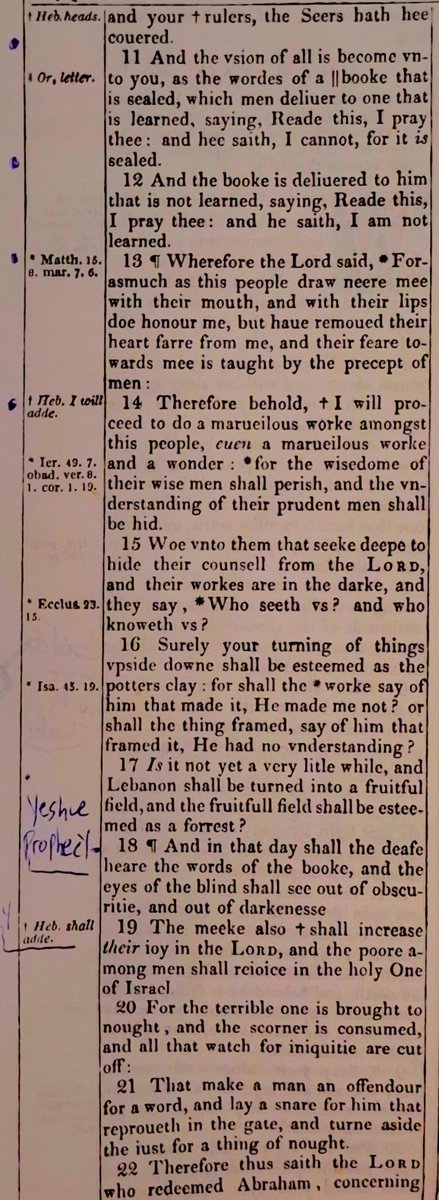
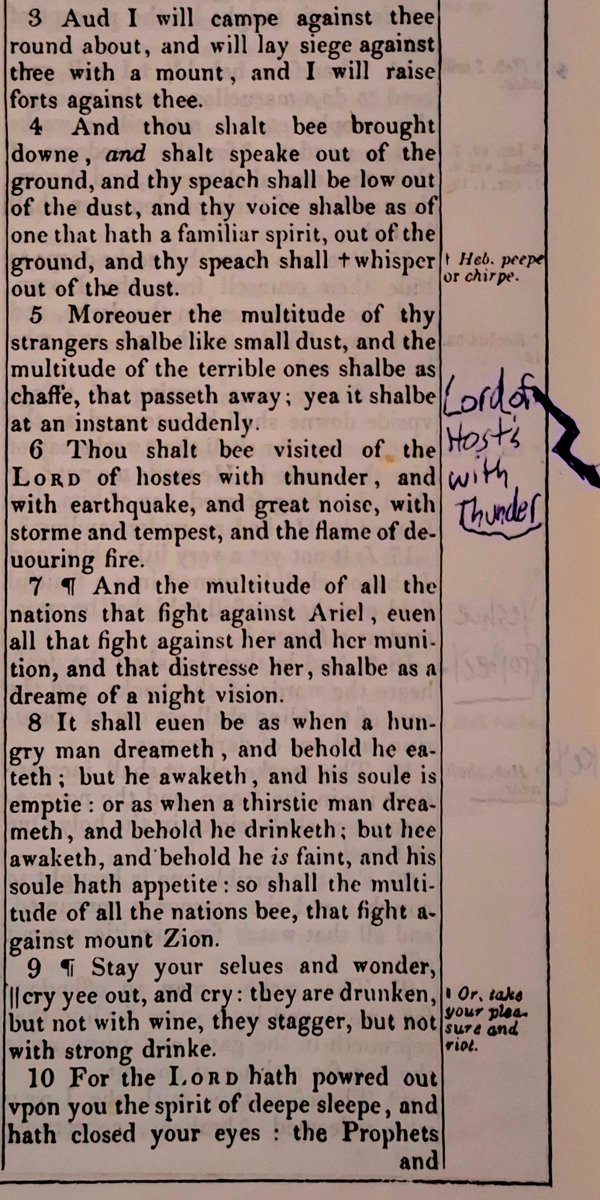

#ApocalypticBookStudy #100
#BibleStudy #183
#Phenomenology #52
#DimensionalTheology #47
📜Isaiah 28:1-29 📜
⚠️ Specialist Study on Glowing Aurora Theophanic Diadems, Fading Crowns, the Supernatural Beauty of God’s Children, the Annulment of the Covenant with Death, the Remnant Crowned by YHWH of Hosts, the Wonderful Counsel of Sacred Royalty, & the Messianic Foundation Stone in One Exciting, Jam-Packed Chapter ⚠️(see First 4 pics for KJV 1611 Translation)⚠️
✨⚠️✨ Full Verse + Commentary Below ✨⚠️✨
⚠️See Next Posts for the Supplementary section for Isaiah 28 after this verse by verse commentary⚠️ & ⚠️ Please see Quote
Share Below for Earlier chapters of Isaiah 27 back through our first chapter to read or refresh your memory for this amazing/exciting prophetic book of old 📜
⚠️ Specialist Study on Isaiah 28
Part I - Isaiah 28:1-6(see Next replies for Next chapters)
Ephraim’s Fading Crown, Storm-Judgment, Sacred Sobriety, the Residue Crowned by YHWH, Spirit of Judgment, Battle at the Gate, and the Messianic Remnant
Isaiah 28:1 - KJV 1611
Woe to the crowne of pride, to the drunkards of Ephraim, whose glorious beautie is a fading flowre, which are on the head of the fat valleys of them that are ouercome with wine.
Side Notes and Geneva Layer
The 1611 margin gives the sense of being ouercome as swallowed up. The Geneva notes sharpen the historical point: Ephraim’s proud kingdom was “drunken with worldly prosperitie,” dwelling in fertile valleys and crowned with abundance as if prosperity itself were a garland.
Commentary
Isaiah begins with a woe oracle against Ephraim, the northern kingdom centered around Samaria. The phrase “crowne of pride” carries political, moral, and spiritual weight. Hebrew עֲטֶרֶת גֵּאוּת - ʿăṭeret gē’ûth means a crown of exaltation, swelling pride, and self-glory. Ephraim wore prosperity like royalty, yet Isaiah calls its beauty a fading flower. The image is botanical, political, and prophetic at once: what looked like a diadem was already wilting under Divine inspection. Greek tradition uses crown-language, Latin gives the sense of corona superbiae, German would say Krone des Hochmuts, Spanish corona de soberbia, and French couronne d’orgueil. Across languages the same warning remains: pride can decorate itself like glory, but before YHWH it is already perishing.
Specialist Fields: Crown Theology • Sacred Botany • Moral Phenomenology • Political Pride Studies • Covenant Degeneration • Hierosemiotics • Prophetic Florology.
Isaiah 28:2 - KJV 1611
Behold, the Lord hath a mightie and strong one, which as a tempest of haile and a destroying storme, as a flood of mightie waters ouerflowing, shall cast downe to the earth with the hand.
Geneva Layer
The Geneva notes identify this “mighty and strong one” with the Assyrian power used providentially to cast down Ephraim’s pride. The storm imagery is therefore historical, meteorological, and theological.
Commentary
The “mighty and strong one” is the instrument of YHWH’s judgment. Historically this points toward Assyria, whose force broke the northern kingdom. Yet Isaiah speaks with more than ordinary geopolitical language. The invader becomes a tempest of hail, a destroying storm, and an overflowing flood. This is sacred meteorology: weather becomes the language of providence. Hebrew flood imagery evokes uncontrollable judgment, while the “hand” signals direct Divine agency behind secondary causes. In Syriac, Greek, Latin, German, Spanish, and French traditions, the storm-language preserves the same concept: the proud city falls beneath a force greater than human defense. Isaiah turns empire into atmosphere; history becomes a storm in the hand of YHWH.
Specialist Fields: Sacred Meteorology • Providential History • Assyrian Judgment Studies • Hierophysics • Storm Theophany • Concourse of Causes • Covenant Catastrophism.
Isaiah 28:3 - KJV 1611
The crowne of pride, the drunkards of Ephraim shalbe troden vnder feete.
Commentary
The crown that sat “on the head” in verse 1 is now beneath the feet. Isaiah’s reversal is exact. Pride climbs upward; judgment presses downward. This is prophetic geometry: height becomes humiliation, crown becomes dust, glory becomes trampling. The image anticipates the larger biblical pattern where YHWH brings down the lofty city, humbles the proud, and gives inheritance to the meek. Ephraim’s drunkenness is not only literal excess but spiritual intoxication with prosperity, political security, and self-trust. The trampling underfoot echoes Isaiah 26:6, where the poor tread down the proud city. Here, however, Ephraim herself has become the object of correction.
Specialist Fields: Reversal Theology • Moral Topography • Covenant Humiliation • Sacred Political Judgment • Ruin Cartography • Pride Phenomenology.
Isaiah 28:4 - KJV 1611
And the glorious beautie which is on the head of the fat valley, shalbee a fading flowre, and as the hastie fruite before the summer: which when he that looketh vpon it, seeth it, while it is yet in his hand, he eateth it vp.
Side Notes and Geneva Layer
The margin gives the sense “Heb. swalloweth.” Geneva explains the “hasty fruit” as fruit ripening early, quickly seized and eaten because it appears before the ordinary harvest.
Commentary
Isaiah intensifies the fading-flower image with the hasty fruit before summer, likely an early fig or first-ripe delicacy quickly consumed. Ephraim’s glory is not stable fruitfulness but premature attractiveness. It is beautiful, visible, desired, and immediately swallowed. This creates a brilliant contrast with Isaiah 27:6, where Yisra’el takes root, blossoms, buds, and fills the world with fruit. Ephraim’s fruit is seized in the hand and gone; restored Yisra’el’s fruit fills the face of the earth. Hebrew בִּכּוּרָה - bikkûrāh may carry the sense of early ripe fruit. Greek, Latin, German, Spanish, and French traditions keep the same agricultural speed: beauty becomes consumption before permanence can arrive.
Specialist Fields: Sacred Pomology • Harvest Phenomenology • Covenant Agriculture • Firstfruits Symbolics • Temporal Fragility • Restoration Contrast Studies.
Isaiah 28:5 - KJV 1611
In that day shall the LORD of hosts be for a crowne of glory, and for a diademe of beautie vnto the residue of his people:
Geneva Layer
Geneva draws the remnant lesson clearly: the faithful who refuse to rest in worldly prosperity and make God their glory shall be preserved. This is the chapter’s first bright Messianic opening.
Commentary
Here Isaiah reverses the false crown of Ephraim. The proud crown fades; YHWH of hosts becomes the true Crown. The phrase “residue of his people” points to the remnant, Hebrew שְׁאָר - she’ār, those preserved through judgment. This is not decorative imagery; it is royal ontology. The remnant no longer wears political glory, military success, or fertile abundance as its diadem.
YHWH Himself becomes its beauty, authority, honor, and survival. This anticipates Isaiah 4:2, Isaiah 11, Zechariah’s purified remnant, and Revelation’s crowned saints. The chapter heading’s “Kingdom of Christ” rightly sees the Messianic horizon: the residue is advanced when the Lord Himself becomes their crown.
Specialist Fields: Remnant Theology • Theophoric Kingship • Crown Ontology • Messianic Expectation • Glory Theology • Sacred Royalism • Covenant Preservation.
Isaiah 28:6 - KJV 1611
And for a spirit of iudgement to him that sitteth in iudgement, and for strength to them that turne the battell to the gate.
Geneva Layer
Geneva reads this as God giving counsel to the governor and strength to the captains who defend the city gates. The verse joins civil order, military courage, and spiritual wisdom.
Commentary
The remnant receives two gifts: a spirit of judgment and strength at the gate. Hebrew רוּחַ מִשְׁפָּט - rûaḥ mishpāṭ means a spirit, breath, impulse, or power of righteous discernment. The judge needs more than office; he needs Divine moral clarity. The defenders at the gate need more than arms; they need covenant courage. In the ancient city, the gate was court, council chamber, market, and defense line. Isaiah therefore restores the whole public order: justice in the seat, strength at the gate, YHWH as crown over the remnant. Greek renders the idea through judgment and strength, Latin through spiritus iudicii, German through Geist des Gerichts, Spanish through espíritu de juicio. The same truth shines through: when YHWH crowns His people, He also reorders their government, courage, and discernment.
Specialist Fields: Pneumatology • Nomography • Gate Theology • Civic Hierology • Kingdom Administration • Sacred Jurisprudence • Theopolitical Restoration.
Specialist Synthesis for Isaiah 28:1-6
Isaiah 28 begins with a violent contrast between two crowns. Ephraim wears the crown of pride, bright but fading, fertile but intoxicated, glorious but already swallowed. The remnant receives YHWH Himself as crown of glory and diadem of beauty. Between these crowns comes storm, flood, trampling, and the collapse of false security. The passage therefore advances the thought-flow of Isaiah 24-27: proud civilization is judged, the remnant is preserved, and Divine government replaces human arrogance.
These six verses unite Sacred Meteorology, Crown Theology, Remnant Ontics, Covenant Sobriety, Sacred Botany, Assyrian Providential Judgment, Spirit of Judgment, Gate Administration, and Messianic Kingdom Order into one sharp prophetic opening.
⚠️ Specialist Study on Isaiah 28
Part II - Isaiah 28:7-13
Priestly Intoxication, Broken Vision, Corrupted Judgment, Sacred Pedagogy, Precept upon Precept, Stammering Lips, Tongues as Judgment, Rest Refused, and the Shattering of False Spiritual Intelligence
Isaiah 28:7 - KJV 1611
But they also haue erred through wine, and through strong drinke are out of the way: the Priest and the Prophet haue erred through strong drinke, they are swallowed vp of wine: they are out of the way through strong drinke, they erre in vision, they stumble in iudgement.
Side Notes and Geneva Layer
Geneva explains that not only Ephraim’s civil rulers but also priests and prophets were corrupted. Their drunkenness is both literal and symbolic: wine, strong drink, worldly prosperity, false confidence, and doctrinal corruption all blur the organs of vision and judgment. The 1611 wording “erre in vision” and “stumble in iudgement” is especially important because it shows the collapse of the two sacred faculties: seeing and deciding.
Commentary
Isaiah now turns from Ephraim’s proud crown to the corruption of priestly and prophetic perception. The Hebrew root behind “erred” carries the sense of wandering, staggering, misleading, and deviation from the right road. Priests should preserve Torah, holiness, sacrifice, and discernment; prophets should guard vision, warning, revelation, and covenant memory. Yet both offices are intoxicated. This is not merely moral failure but hierological collapse: sacred offices lose the ability to mediate truth. Wine becomes a figure of disordered consciousness, a false pneumatology, an anti-spirit that mimics inspiration while destroying discernment. The true Ruach gives judgment and wisdom; strong drink produces counterfeit ecstasy, blurred vision, and crooked public counsel.
This belongs to Pneumatology, Prophetic Phenomenology, Sacred Psychology, Priestly Anthropology, Covenant Epistemology, Visionary Discernment, Nomography, and Theopolitical Decay. Isaiah is exposing a civilization whose interpreters cannot interpret, whose judges cannot judge, and whose seers cannot see.
Isaiah 28:8 - KJV 1611
For all tables are full of vomite and filthinesse, so that there is no place cleane.
Geneva Layer
Geneva reads this as the visible sign of inner corruption: their feasting tables, doctrinal tables, and places of counsel are polluted. What should have been clean fellowship becomes uncleanness.
Commentary
The table in Scripture is never merely furniture. It may signify fellowship, covenant meal, priestly service, royal counsel, teaching, hospitality, sacrifice, or communion. Here every table is defiled. The image is intentionally ugly because Isaiah is describing the degradation of sacred and civic space. Those appointed to feed the people with knowledge have instead polluted the place of instruction. The table that should have resembled wisdom’s feast in Proverbs 9 has become the opposite: a spectacle of vomit, excess, and spiritual uncleanness. This anticipates Malachi’s rebuke of polluted offerings, Paul’s warnings about the Lord’s table, and Revelation’s contrast between Babylon’s intoxicating cup and the Marriage Supper of the Lamb.
This is Sacramental Inversion, Table Phenomenology, Ritual Pollution, Moral Anthropology, Sacred Hygiene, Temple Ethics, and Liturgical Corruption. Isaiah’s image teaches that corrupted worship eventually becomes visible in corrupted culture.
Isaiah 28:9 - KJV 1611
Whome shall he teach knowledge? and whom shall he make to vnderstand doctrine? them that are weaned from the milke, and drawen from the breasts.
Side Notes and Geneva Layer
The 1611 margin gives “Hebr. the hearing” for “doctrine,” showing that the issue is not information alone but the capacity to hear. Geneva notes that the people were so dull and immature that they needed to be treated like little children newly weaned.
Commentary
Isaiah asks a piercing question: who is even capable of being taught? Hebrew דֵּעָה - de‘ah means knowledge, perception, skill, and covenant understanding. “Doctrine” is linked with hearing, suggesting that true teaching requires receptive ears. The people have become spiritually infantile. They are no longer able to digest mature wisdom, so instruction must begin at the level of children.
Paul later uses similar developmental language when he rebukes believers who still require milk rather than strong meat. Isaiah’s target is not childlike humility, which Scripture praises, but childish incapacity among those who should have become mature in Torah, justice, vision, and holiness.
This belongs to Hebraic Noetics, Sacred Pedagogy, Cognitive Formation, Doctrinal Anthropology, Wisdom Transmission, Hieromnemonics, and Covenant Education. The failure of the people is not lack of data; it is the loss of holy hearing.
Isaiah 28:10 - KJV 1611
For precept must be vpon precept, precept vpon precept, line vpon line, line vpon line, here a little, and there a little.
Side Notes and Geneva Layer
The 1611 margin gives “Or, hath bene”, showing the phrase may be read as what has repeatedly been given to them already. Geneva treats this as the kind of elementary instruction necessary for a people unwilling or unable to receive fuller doctrine.
Commentary
The famous phrase “precept upon precept, line upon line” has two edges. Positively, it describes patient sacred instruction: law by law, measure by measure, line by line, small portion by small portion. Negatively, in context, it may imitate the mocking sound of those who despise prophetic teaching, reducing revelation to childish repetition.
Hebrew likely carries rhythmic sound-play, almost like syllables repeated to children. Either way, Isaiah shows that Divine instruction is cumulative. Truth is built in layers: command, memory, repetition, application, correction, and confirmation. Sacred learning is architectural. Like temple stones, each line fits into a larger structure.
This belongs to Logodaedaly, Sacred Didactics, Textual Architectonics, Nomography, Pedagogical Hermeneutics, and Covenant Mnemonics. The Kingdom mind is formed by repeated Divine speech, but rebellious hearers turn repetition into mockery and therefore lose understanding.
Isaiah 28:11 - KJV 1611
For with stammering lips and another tongue will he speake to this people.
New Testament Side Note
The 1611 margin gives “Heb. stammerings of lippe” and cites 1 Corinthians 14:21, where Paul quotes this passage while discussing tongues as a sign. This is one of the crucial New Testament links in Isaiah 28.
Commentary
Isaiah declares that because the people refused clear covenant speech, YHWH would address them through stammering lips and another tongue. Historically this points to foreign speech, especially Assyrian invasion: the unintelligible language of conquerors becomes judgment upon those who rejected the intelligible language of prophecy. Hebrew revelation ignored becomes foreign command endured. Paul’s use in 1 Corinthians 14:21 deepens the principle: tongues may function as a sign, especially where unbelief resists understanding. The miracle or strangeness of language becomes judgment when hearts refuse truth. At Babel language was confused because of pride; at Pentecost language was sanctified to proclaim mighty works; in Isaiah, foreign tongue becomes a scourge upon hardened hearers.
This is Glottogony, Sacred Linguistics, Judgment Semiotics, Pneumatology, Prophetic Acoustics, Babel-Pentecost Typology, Apostolic Hermeneutics, and Theophanic Speech Theory. Hidden in the Hebrew is a supernatural language-theology: YHWH governs not only armies and storms, but lips, tongues, hearing, and the conditions of revelation itself.
Isaiah 28:12 - KJV 1611
To whom he said, This is the rest wherewith ye may cause the weary to rest, and this is the refreshing, yet they would not heare.
Side Notes and Geneva Layer
The 1611 margin gives “Or, he hath spoken.” Geneva explains that God had offered true rest and refreshing, yet they refused the word. Their punishment came because they would not receive the peaceful doctrine set before them.
Commentary
This verse reveals what the people rejected: not cruelty, but rest and refreshing. Hebrew מְנוּחָה - menûḥāh means rest, settlement, repose, sabbath-like security; מַרְגֵּעָה - margē‘āh suggests refreshment, quietness, relief, and restoration. YHWH offered the weary a true sabbath of covenant order, but they refused to hear. This connects powerfully with Yeshua’s invitation: “Come unto me, all ye that labour and are heavy laden, and I will give you rest.” Isaiah 28 therefore anticipates Messianic rest. The refusal is tragic because the people rejected the very remedy for their exhaustion.
This belongs to Sabbath Theology, Rest Phenomenology, Sacred Pneumatics, Covenant Healing, Messianic Invitation, and Spiritual Anthropology. The deepest judgment is that weary people reject the only rest capable of saving them.
Isaiah 28:13 - KJV 1611
But the word of the LORD was vnto them, precept vpon precept, precept vpon precept, line vpon line, line vpon line, here a little and there a little: that they might goe and fall backward, and be broken, and snared, and taken.
Commentary
The repeated instruction now becomes judicial. What should have formed them becomes the occasion of their stumbling because they hear without obedience. This is a terrifying principle in Scripture: rejected light becomes heavier judgment. The same word that gives life to the humble becomes a snare to the proud. Isaiah’s language recalls Psalm 69, where the table becomes a snare, and anticipates Romans 11, where Paul applies similar logic to hardened Israel. The pattern is also visible in Yeshua’s parables: revelation opens to the receptive but conceals from the hardened.
“Fall backward, broken, snared, and taken” forms a fourfold collapse: loss of posture, fracture of strength, entanglement of movement, and captivity of person. It is almost a phenomenology of spiritual ruin. They refused rest, so they receive stumbling. They mocked instruction, so instruction becomes judgment. They would not hear clear speech, so foreign lips speak over them.
This belongs to Judicial Hermeneutics, Covenant Semiotics, Sacred Pedagogy, Moral Causality, Reprobation Phenomenology, Prophetic Acoustics, and Divine Jurisprudence. Isaiah is not saying the Word failed. The Word accomplished exactly what Divine justice required: salvation to the humble, stumbling to the scornful.
Specialist Synthesis for Isaiah 28:7-13
Isaiah 28:7-13 exposes the collapse of sacred intelligence. Priest and prophet stagger, tables are polluted, doctrine is treated as infant instruction, sacred lines become mocked syllables, and rejected rest turns into judicial speech through foreign tongues. Yet beneath the severity lies a profound theology of revelation: YHWH governs vision, hearing, language, rest, instruction, and judgment. The New Testament side note to 1 Corinthians 14:21 proves that Isaiah’s word continued to shape apostolic understanding of tongues, signs, unbelief, and holy speech. This section unites Pneumatology, Glottogony, Sacred Linguistics, Hebraic Noetics, Sabbath Theology, Prophetic Phenomenology, Apostolic Hermeneutics, and Divine Jurisprudence into one hard-hitting warning: when a people refuse the clear Word of YHWH, even language itself may become an instrument of judgment.
⚠️See Next Reply for Isaiah 28:14-29 ⚠️


#ApocalypticBookStudy #99
#BibleStudy #182
#Phenomenology #51
#DimensionalTheology #46
📜 Isaiah 26:1-21 - 27:1-13 📜
🔑 Specialist Study on The Dew of Immortality, Hidden Chambers of Providence, & Leviathan, Dragonomachia, the Great Trumpet of Ingathering & Hierophanic Warfare, Covenant Arborology, Sacred Harvest Theology, & the Great Shophar of Restoration - (SEE quote Share for earlier chapters if you need to Catch up or Refresh)
Together these two chapters present;
📜 Isaiah 26: inward transformation, resurrection, preservation, and divine judgment.
📜 Isaiah 27: cosmic victory over evil, purification, restoration of the vineyard, and the final gathering of God's covenant people.
⚠️ Specialist Study on Isaiah 26
VERSE + COMMENTARY/SUPPLEMENT INFORMATION Ft. - The Strong City, Salvation as Divine Architecture, Covenant Security, Sacred Chorology, Kingdom Administration, Hierology, Providentia Universalis, and the Eternal Commonwealth of YHWH
📜Part 1 - ⚠️SEE NEXT POSTS FOR FOLLOWING VERSES & NEXT CHAPTER AFTER ISAIAH 26 FIRST HERE BELOW STARTS ⚠️
📜 Isaiah 26:1 (KJV 1611)
"In that day shall this song bee sung in the land of Iudah; Wee haue a strong citie, saluation will God appoint for walles and bulwarkes."
I. "In That Day" - בַּיּוֹם הַהוּא (Bayyôm Hahû')
The prophetic expression בַּיּוֹם הַהוּא ("In That Day") serves throughout Isaiah as an eschatological horizon rather than a mere point upon the calendar. It gathers together the final overthrow of evil, the vindication of the righteous, the enthronement of the Messiah, the resurrection of the dead, the renewal of Zion, and the restoration of creation under one Divine administration. Isaiah repeatedly returns to this formula (Isaiah 2, 4, 11, 24-27), while Daniel 12, Zechariah 14, Joel 3, and Revelation 19-22 unfold the same prophetic panorama from complementary perspectives. History is therefore viewed not as an endless succession of political events, but as a providential movement toward God's predetermined covenantal consummation.
Specialist Fields: Sacred Futurology • Chresmology • Prophetic Temporality • Oeconomia Divina • Historical Consummation • Providential Architecture • Teleological History.
II. "This Song Shall Be Sung" - Sacred Memory Through Worship
Isaiah deliberately introduces restoration through song, for in Scripture the greatest acts of God are preserved not only in written testimony but also in liturgical remembrance. Israel sang after the Red Sea (Exodus 15), Deborah celebrated Divine victory (Judges 5), Hannah magnified God's reversals (1 Samuel 2), and the redeemed in Revelation sing the Song of Moses and of the Lamb (Revelation 15). Song therefore becomes an instrument of Hieromnemonics, preserving sacred memory across generations. The redeemed do not merely remember God's acts intellectually; they continually inhabit them through praise. Worship becomes the living archive of covenant history.
Specialist Fields: Hieromnemonics • Agioiographia • Liturgical Theology • Sacred Memory Preservation • Covenant Musicology.
III. "In the Land of Yudah" - Sacred Geography and Covenant Territory
The prophecy begins in יְהוּדָה (Yehûdâ), whose very name derives from the Hebrew root ידה (yadah), "to praise" or "to give thanks." Thus the restored kingdom begins in "the Land of Praise." Yet Isaiah immediately widens the horizon beyond geographical Judah. Isaiah 25 has already invited "all peoples" to the Messianic feast, while Isaiah 27 concludes with worshippers gathered from Assyria and Egypt. Zion therefore becomes both an historical location and a theological center from which Divine government extends to every nation. This movement from local covenant to universal restoration reflects Scripture's consistent pattern from Abraham through Revelation.
Specialist Fields: Chorologia • Sacred Geography • Kingdom Expansion • Covenant Cartography • Theopolitical Geography • Ancient Commonwealth Studies.
IV. "We Have a Strong City" - עִיר־עָז ('Îr-'Āz)
The expression עִיר־עָז literally means "a city of strength" or "fortified city," yet Isaiah intentionally contrasts it with the ruined "city of confusion" described in Isaiah 24:10. Throughout biblical revelation two cities continually stand in opposition. One is built upon human pride, represented by Babel, Nineveh, Tyre, Babylon, and every civilization founded upon autonomous power. The other is founded upon Divine covenant, represented by Zion, the restored Yerushalayim, and finally the New Jerusalem of Revelation 21-22. Isaiah's "Strong City" is therefore not merely a geographical capital but the visible manifestation of God's Kingdom, where righteousness, justice, peace, and Divine Presence replace military power as the true foundations of society.
Augustine would later build much of his City of God upon this very biblical polarity between the earthly city and the heavenly commonwealth, though Isaiah establishes the pattern centuries earlier.
Specialist Fields: Sacred Chorology • Kingdom Architectonics • Covenant Urbanism • Hierological Topography • Cosmopolitical Theology • Sacred Commonwealth Studies.
V. "Salvation Will God Appoint for Walls and Bulwarks" - יְשׁוּעָה (Yĕshûʿâ)
Perhaps nowhere in ancient literature is military architecture transformed so radically. Every great city of the ancient Near East trusted in walls, towers, moats, gates, ramparts, and trained armies. Isaiah overturns this entire philosophy by declaring that יְשׁוּעָה (Yĕshûʿâ) itself becomes the city's wall. The Hebrew word encompasses deliverance, preservation, victory, rescue, and wholeness. Security is therefore no longer derived from stone but from covenant. Divine salvation functions as living architecture surrounding God's people. This anticipates Zechariah 2:5, where YHWH becomes "a wall of fire," Psalm 125:2, where the LORD surrounds His people as mountains surround Jerusalem, and Revelation 21, where God's own glory secures the eternal city. Isaiah presents what may rightly be called Theological Architectonics: God's saving presence constitutes the city's defensive structure.
Specialist Fields: Providential Architecture • Hierophysics • Sacred Urbanism • Covenant Fortification • Cosmological Integration • Divine Commonwealth Theory.
VI. Septuagint, Hexaglot, and Ancient Versions
The Septuagint subtly intensifies the verse by emphasizing God's active establishment of salvation:
"He shall establish salvation as wall and bulwark."
The Greek stresses Divine agency rather than static protection.
The Latin Vulgate likewise presents salus as the city's fortification, while the Syriac emphasizes God's surrounding preservation.
These ancient witnesses collectively preserve an important theological insight: salvation is not merely an event remembered in the past but an ongoing Divine operation sustaining the covenant community. God's people remain secure because He continually constitutes their defense.
The multilingual tradition also illustrates how early Jewish and Christian interpreters consistently viewed Zion's security as fundamentally theological rather than political.
Military strength may fail; Divine fidelity does not.
(Zion is Heaven! Not a material place! Stop bad mouthing " Zion " you ppl who do not read the Bible in full that as Christians have a everlasting inheritance in Heavenly Zion? So why be ignorant! Its too dumb to be blasphemous!
Languages Compared: Hebrew • Septuagint Greek • Syriac • Latin Vulgate • Early German Reformation Tradition • Classical French Protestant Tradition.
VII. Ancient Near Eastern and Second Temple Background
Throughout Egypt, Assyria, Babylon, Phoenicia, and Canaan, the greatness of a kingdom was measured by the thickness of its walls and the height of its towers. Monumental fortifications symbolized permanence, kingship, and divine favor. Isaiah quietly subverts this entire political ideology. The true city cannot be conquered because its protection rests in YHWH Himself. This theology profoundly influenced later Jewish apocalyptic writings. 2 Baruch speaks of the heavenly Jerusalem prepared before creation. 4 Ezra anticipates the everlasting city reserved for the righteous. 1 Enoch 90 concludes with God's renewed house established after judgment. Jubilees continually presents Zion as the ordained center of sacred history. These writings do not replace Isaiah; they witness to the enduring influence of his vision upon later Jewish expectation.
VIII. Messianic Horizon
The Hebrew noun יְשׁוּעָה (Yĕshûʿâ) shares its root with the name Yeshua, "YHWH saves." Isaiah's declaration therefore reaches beyond abstract deliverance toward the personal saving work ultimately revealed through the Messiah. The Strong City stands because God Himself has become its salvation. The New Testament later unfolds this architecture: the Messiah is the Cornerstone (Ephesians 2:20), the Door (John 10:9), the Foundation (1 Corinthians 3:11), and the One through whom the heavenly Jerusalem descends in everlasting peace (Revelation 21-22). Thus Isaiah's city is simultaneously historical, prophetic, and ultimately Christological in its fulfillment.
IX. Specialist Summary
Isaiah opens this chapter by replacing the crumbling architecture of fallen civilization with the indestructible architecture of Divine covenant. Human empires erect walls of stone; YHWH surrounds His people with Yĕshûʿâ. Political cities rise and fall according to military fortune, but the Strong City endures because its Builder, Defender, Governor, and everlasting Foundation is the God of Israel Himself. The verse therefore unites Hierology, Sacred Geography, Kingdom Theology, Providential Government, Covenant Urbanism, Cosmological Integration, Ancient Commonwealth Theory, and Restoration Eschatology into one magnificent declaration that the safest fortress in creation is not built by human hands, but established forever by the saving presence of YHWH.
📜Part 1 continues • Isaiah 26:2-3 - Fts - The Gates of Righteousness, the Faithful Nation, Perfect Peace, Covenant Consciousness, Sacred Citizenship, Hebraic Noetics, Divine Stability, and the Interior Kingdom of YHWH
📜 Isaiah 26:2 (KJV 1611)
"Open yee the gates, that the righteous nation which keepeth the trueth, may enter in."
I. "Open Ye the Gates" - פִּתְחוּ שְׁעָרִים (Pithḥû Sheʿārîm)
The command פִּתְחוּ (pithḥû) is an imperative: "Throw open," "unbar," or "open wide." The שַׁעַר (shaʿar) was far more than an entrance in the ancient world. Gates functioned as the judicial, political, military, economic, and covenantal heart of a city. Elders judged there (Ruth 4), kings issued decrees there (2 Samuel 19), prophets proclaimed God's word there (Jeremiah 7), and merchants conducted trade there. Isaiah therefore presents the opening of the gates as the restoration of the entire covenant order. The city receives not merely new inhabitants but a sanctified commonwealth governed by righteousness rather than corruption.
Specialist Fields: Chorologia • Sacred Urbanism • Nomography • Covenant Administration • Kingdom Architectonics • Civic Theology.
II. The Gate as a Threshold Between Two Worlds
Throughout Scripture, gates are liminal places where one realm gives way to another. Eden possessed guarded access (Genesis 3:24); the Tabernacle had its sacred entrance (Exodus 27); Ezekiel's Temple is defined by measured gates (Ezekiel 40-48); and Revelation closes with the twelve ever-open gates of New Jerusalem (Revelation 21:25). Isaiah's gate therefore symbolizes transition from judgment into restoration, from exile into inheritance, and from mortality toward the everlasting Kingdom. It belongs to what may be called Threshold Theology, where entrances become visible signs of covenant access.
Specialist Fields: Hierology • Threshold Phenomenology • Sacred Architecture • Temple Cosmology • Liminal Theology • Archeometry.
III. "The Righteous Nation" — גּוֹי צַדִּיק (Gôy Tsaddîq)
The phrase גּוֹי צַדִּיק means "a righteous nation." Isaiah is not describing ethnicity alone but covenant character. צַדִּיק (tsaddîq) denotes one aligned with God's justice, order, and covenant fidelity. A nation becomes righteous not through military success or political dominance but through conformity to Divine law. This anticipates Daniel's "people who know their God" (Daniel 11:32), the faithful remnant of Zechariah, and Revelation's "holy nation" gathered from every tribe and tongue. Isaiah therefore transforms national identity into theological identity.
Specialist Fields: Moral Anthropology • Covenant Sociology • Sacred Commonwealth Theory • Ethnarchics • Kingdom Identity Studies.
IV. "Which Keepeth the Truth" - שֹׁמֵר אֱמוּנִים (Shōmēr 'Emûnîm)
The Hebrew expression literally means "guarding faithfulness" or "preserving steadfast fidelity." The noun אֱמוּנָה ('emunah) carries the ideas of firmness, trustworthiness, constancy, reliability, and covenant loyalty. Truth here is not merely correct doctrine; it is faithful endurance. The righteous nation continually guards the covenant entrusted to it. The same root underlies the familiar word Amen, expressing certainty and steadfast confidence. Isaiah therefore links entrance into God's city with persevering covenant fidelity rather than mere profession.
Compare:
Psalm 31:23
Habakkuk 2:4
Revelation 2:10
Revelation 14:12
The faithful are identified by endurance.
Specialist Fields: Hebraic Noetics • Covenant Fidelity Studies • Hieromnemonics • Testimonial Knowledge • Sacred Perseverance.
V. Septuagint and Ancient Versions
The Septuagint renders the verse by emphasizing a nation preserving righteousness and truth. The Greek vocabulary associates truth with ἀλήθεια (alētheia), suggesting unveiled reality and covenant reliability. The Latin Vulgate similarly stresses a people "keeping truth." Syriac tradition highlights steadfastness and faithful perseverance. Across these ancient witnesses the emphasis remains remarkably consistent: entry into God's city belongs to those who continually live within covenant truth rather than merely acknowledging it intellectually.
VI. Pseudepigraphal Correspondences
The Testament of Moses repeatedly distinguishes the faithful remnant from apostate generations. 2 Baruch describes those preserved through judgment because they remain loyal to God's covenant. 4 Ezra repeatedly asks who shall inherit the coming age, answering that only those who endure faithfully shall enter. The Odes of Solomon portray the righteous as entering God's presence through steadfast love and purity. Isaiah stands at the fountainhead of this tradition, where entrance into the everlasting city depends upon covenant faithfulness sustained by Divine grace.
📜 Isaiah 26:3 (KJV 1611)
"Thou wilt keepe him in perfect peace, whose minde is stayed on thee: because hee trusteth in thee."
I. "Perfect Peace" - שָׁלוֹם ש��ׁלוֹם (Shālôm Shālôm)
The Hebrew literally reads "Peace, Peace." This doubling is an ancient Hebrew superlative expressing completeness, fullness, and permanence. It is not merely the absence of conflict but total covenantal well-being: spiritual rest, moral harmony, inward stability, social order, reconciliation with God, and participation in His sustaining life. The repetition intensifies the promise beyond ordinary tranquility into comprehensive wholeness. Isaiah presents Shālôm as the atmosphere of God's Kingdom itself.
Compare:
Isaiah 9:6
Psalm 119:165
John 14:27
Philippians 4:7
Specialist Fields: Pneumatological Harmony • Sacred Psychology • Covenant Wholeness • Moral Anthropology • Kingdom Peace Studies.
II. The Hebraic Meaning of Shālôm
Modern languages often reduce peace to the cessation of war. Hebrew thought is far richer. Shālôm embraces completeness, soundness, restoration, prosperity under God, covenant blessing, reconciled relationships, and ordered existence. When Isaiah promises "Shālôm, Shālôm," he announces the restoration of the entire created order beneath Divine government. This peace extends from the conscience to the cosmos, anticipating Isaiah 11 where even creation itself enters harmonious order under Messiah's reign.
Specialist Fields: Hierophysics • Cosmological Integration • Covenant Anthropology • Sacred Ecology ��� Providential Harmony.
III. "Whose Mind Is Stayed" - יֵצֶר סָמוּךְ (Yêtser Sāmûkh)
The Hebrew יֵצֶר (yêtser) refers to the inward formation of thought, imagination, inclination, or intellectual disposition. It is the shaping faculty of the inner person. סָמוּךְ (sāmûkh) means supported, upheld, firmly established, or securely rested. Isaiah therefore promises peace to the one whose entire interior life has become fixed upon YHWH. This is far deeper than occasional meditation; it is a complete orientation of thought, affection, memory, and expectation toward God.
Compare:
Psalm 16:8
Psalm 112:7
Colossians 3:2
Hebrews 12:2
Specialist Fields: Hebraic Noetics • Contemplative Awareness • Sacred Cognition • Interior Theology • Cognitive Stability.
IV. "Because He Trusteth in Thee" - בָּטוּחַ (Bāṭûaḥ)
The root בטח (bāṭaḥ) signifies confident reliance, secure dependence, fearless resting, and unwavering confidence. Biblical trust is not optimism but covenant certainty grounded in the character of YHWH. Isaiah contrasts this trust with nations relying upon walls, horses, alliances, idols, and human wisdom. The inwardly established mind rests because the object of its confidence is the everlasting God rather than transient powers.
This anticipates Proverbs 3:5, Jeremiah 17:7-8, and Hebrews 11, where faith becomes steadfast confidence in the unseen faithfulness of God.
Specialist Fields: Covenant Confidence • Sacred Prudence • Moral Formation • Testimonial Knowledge • Divine Reliance Studies.
V. Septuagint and LXX Nuance
The Septuagint expands the thought by emphasizing that God preserves peace because the faithful continue to hope in Him. The Greek draws attention to ἐλπίς (elpis), hope rooted in steadfast expectation. Thus Hebrew emphasizes inward steadfastness while Greek highlights enduring hope. Together they portray the mature life of faith: the heart rests because hope remains anchored in God's eternal promises.
VI. Second Temple and Early Jewish Parallels
The Odes of Solomon repeatedly speak of hearts resting securely in God despite outward affliction. The Wisdom of Solomon describes the righteous as possessing inward tranquility unknown to the wicked. 4 Ezra wrestles with turmoil until Divine revelation restores hope. 2 Baruch teaches that those who trust God's appointed times shall not ultimately be shaken. Isaiah provides the theological fountain from which these later traditions draw: covenant trust produces supernatural stability.
VII. Specialist Summary
Isaiah 26:2-3 reveals that citizenship in the Strong City is defined neither by ancestry nor political allegiance, but by covenant fidelity and inward steadfastness. Its gates open only to those who preserve truth, while its peace belongs to minds firmly established upon YHWH. The prophet thus joins Sacred Geography, Covenant Anthropology, Hebraic Noetics, Kingdom Theology, Interior Pneumatology, Moral Formation, Sacred Psychology, and Providential Harmony into one unified vision: the Kingdom of God is entered through faithfulness, and its atmosphere is the perfect Shālôm that proceeds from unwavering trust in the everlasting God.
⚠️ Specialist Study on Isaiah 26
📜📜 Part II • Isaiah 26:4-6
🔑Fts -Yah YHWH, the Everlasting Rock, Divine Stability, the Humbling of the Lofty City, Sacred Lithology, Kingdom Justice, Providential Government, and the Reversal of Human Pride
📜 Isaiah 26:4 (KJV 1611)
"Trust yee in the LORD for euer: for in the LORD YEHOVAH is euerlasting strength."
I. "Trust Ye in YHWH for Ever" - בִּטְחוּ בַיהוָה עֲדֵי־עַד (Biṭḥû ba-YHWH 'Adê-'Ad)
Isaiah continues the theme of verse three by moving from the individual to the covenant community. The imperative בִּטְחוּ (biṭḥû) commands continual confidence, steadfast reliance, and unwavering covenant dependence.
The phrase עֲדֵי־עַד ('adê-'ad) literally means "unto perpetuity," "through all ages," or "unto eternity itself." Trust is therefore not an emergency response during crisis but the perpetual disposition of God's people. Human kingdoms trust armies, treaties, wealth, walls, and diplomacy; Zion is commanded to trust only YHWH because His covenant alone extends beyond every age and survives every collapse described in Isaiah 24.
Specialist Fields: Covenant Confidence • Sacred Prudence • Providentia Universalis • Historical Consummation • Divine Reliance Studies.
II. "Yah YHWH" - יָהּ יְהוָה
This is one of Scripture's most remarkable expressions of the Divine Name. Isaiah combines the shortened covenant name יָהּ (Yah) with the full Tetragrammaton יהוה (YHWH).
The abbreviated form appears frequently in Israel's hymns, especially in Hallelu-Yah, "Praise Yah." Here both forms stand together to emphasize the fullness, eternity, and self-existence of God. Ancient Jewish interpreters often regarded such combinations as intensifications of Divine majesty. Isaiah is not multiplying names but magnifying the One whose Being is eternal, self-sufficient, and unchanging. The prophet's confidence rests not merely in Divine power but in Divine identity.
Compare:
Exodus 3:14
Psalm 68:4
Isaiah 12:2
Revelation 1:8
This belongs to Hieronymics, the study of sacred names and their theological significance.
III. "Everlasting Strength" - צוּר עוֹלָמִים (Tsur 'Ôlāmîm)
The Hebrew literally reads:
צוּר עוֹלָמִים
"Rock of Ages."
"Tsur" signifies a massive cliff, immovable rock, or enduring crag. Throughout the Old Testament this title identifies God as the stable foundation beneath covenant history. Moses repeatedly calls YHWH "the Rock" (Deuteronomy 32), David declares "The LORD is my Rock" (Psalm 18), and Isaiah now proclaims Him the Everlasting Rock, whose permanence contrasts every collapsing empire. Rocks represented permanence, refuge, elevation, and covenant reliability in the ancient Near East. Thus Isaiah employs sacred geology to express Divine immutability. The entire created order may shake, yet the Rock remains unchanged.
Specialist Fields: Sacred Lithology • Hierophysics • Covenant Permanence • Divine Ontology • Cosmological Stability.
IV. Septuagint and Ancient Witnesses
The Septuagint renders the thought as trusting in the Lord who is eternal and everlasting, emphasizing God's incorruptible permanence. The Greek vocabulary shifts attention from physical rock imagery toward God's immutable nature. The Latin Vulgate likewise stresses eternal strength (fortitudo sempiterna), while Syriac preserves the imagery of enduring Divine refuge. Together these witnesses present one theological reality: YHWH alone possesses self-existent stability, making Him the only trustworthy object of covenant confidence.
V. Second Temple Reflections
The Wisdom of Solomon repeatedly contrasts fleeting human glory with the permanence of Divine wisdom. 2 Baruch teaches that kingdoms disappear while God's purposes endure. 4 Ezra laments the passing of ages yet continually returns to the certainty of God's appointed times. Isaiah stands behind these traditions by proclaiming that the only permanent foundation beneath history is the Everlasting Rock Himself.
(I RAN OUT OF ROOM)
⚠️ See Next Reply for Following verses ⚠️
AKA commentary continues - see next Post -


#ApocalypticBookStudy #99
#BibleStudy #182
#Phenomenology #51
#DimensionalTheology #46
📜 Isaiah 26:1-21 - 27:1-13 📜
🔑 Specialist Study on The Dew of Immortality, Hidden Chambers of Providence, & Leviathan, Dragonomachia, the Great Trumpet of Ingathering & Hierophanic Warfare, Covenant Arborology, Sacred Harvest Theology, & the Great Shophar of Restoration - (SEE quote Share for earlier chapters if you need to Catch up or Refresh)
Together these two chapters present;
📜 Isaiah 26: inward transformation, resurrection, preservation, and divine judgment.
📜 Isaiah 27: cosmic victory over evil, purification, restoration of the vineyard, and the final gathering of God's covenant people.
⚠️ Specialist Study on Isaiah 26
VERSE + COMMENTARY/SUPPLEMENT INFORMATION Ft. - The Strong City, Salvation as Divine Architecture, Covenant Security, Sacred Chorology, Kingdom Administration, Hierology, Providentia Universalis, and the Eternal Commonwealth of YHWH
📜Part 1 - ⚠️SEE NEXT POSTS FOR FOLLOWING VERSES & NEXT CHAPTER AFTER ISAIAH 26 FIRST HERE BELOW STARTS ⚠️
📜 Isaiah 26:1 (KJV 1611)
"In that day shall this song bee sung in the land of Iudah; Wee haue a strong citie, saluation will God appoint for walles and bulwarkes."
I. "In That Day" - בַּיּוֹם הַהוּא (Bayyôm Hahû')
The prophetic expression בַּיּוֹם הַהוּא ("In That Day") serves throughout Isaiah as an eschatological horizon rather than a mere point upon the calendar. It gathers together the final overthrow of evil, the vindication of the righteous, the enthronement of the Messiah, the resurrection of the dead, the renewal of Zion, and the restoration of creation under one Divine administration. Isaiah repeatedly returns to this formula (Isaiah 2, 4, 11, 24-27), while Daniel 12, Zechariah 14, Joel 3, and Revelation 19-22 unfold the same prophetic panorama from complementary perspectives. History is therefore viewed not as an endless succession of political events, but as a providential movement toward God's predetermined covenantal consummation.
Specialist Fields: Sacred Futurology • Chresmology • Prophetic Temporality • Oeconomia Divina • Historical Consummation • Providential Architecture • Teleological History.
II. "This Song Shall Be Sung" - Sacred Memory Through Worship
Isaiah deliberately introduces restoration through song, for in Scripture the greatest acts of God are preserved not only in written testimony but also in liturgical remembrance. Israel sang after the Red Sea (Exodus 15), Deborah celebrated Divine victory (Judges 5), Hannah magnified God's reversals (1 Samuel 2), and the redeemed in Revelation sing the Song of Moses and of the Lamb (Revelation 15). Song therefore becomes an instrument of Hieromnemonics, preserving sacred memory across generations. The redeemed do not merely remember God's acts intellectually; they continually inhabit them through praise. Worship becomes the living archive of covenant history.
Specialist Fields: Hieromnemonics • Agioiographia • Liturgical Theology • Sacred Memory Preservation • Covenant Musicology.
III. "In the Land of Yudah" - Sacred Geography and Covenant Territory
The prophecy begins in יְהוּדָה (Yehûdâ), whose very name derives from the Hebrew root ידה (yadah), "to praise" or "to give thanks." Thus the restored kingdom begins in "the Land of Praise." Yet Isaiah immediately widens the horizon beyond geographical Judah. Isaiah 25 has already invited "all peoples" to the Messianic feast, while Isaiah 27 concludes with worshippers gathered from Assyria and Egypt. Zion therefore becomes both an historical location and a theological center from which Divine government extends to every nation. This movement from local covenant to universal restoration reflects Scripture's consistent pattern from Abraham through Revelation.
Specialist Fields: Chorologia • Sacred Geography • Kingdom Expansion • Covenant Cartography • Theopolitical Geography • Ancient Commonwealth Studies.
IV. "We Have a Strong City" - עִיר־עָז ('Îr-'Āz)
The expression עִיר־עָז literally means "a city of strength" or "fortified city," yet Isaiah intentionally contrasts it with the ruined "city of confusion" described in Isaiah 24:10. Throughout biblical revelation two cities continually stand in opposition. One is built upon human pride, represented by Babel, Nineveh, Tyre, Babylon, and every civilization founded upon autonomous power. The other is founded upon Divine covenant, represented by Zion, the restored Yerushalayim, and finally the New Jerusalem of Revelation 21-22. Isaiah's "Strong City" is therefore not merely a geographical capital but the visible manifestation of God's Kingdom, where righteousness, justice, peace, and Divine Presence replace military power as the true foundations of society.
Augustine would later build much of his City of God upon this very biblical polarity between the earthly city and the heavenly commonwealth, though Isaiah establishes the pattern centuries earlier.
Specialist Fields: Sacred Chorology • Kingdom Architectonics • Covenant Urbanism • Hierological Topography • Cosmopolitical Theology • Sacred Commonwealth Studies.
V. "Salvation Will God Appoint for Walls and Bulwarks" - יְשׁוּעָה (Yĕshûʿâ)
Perhaps nowhere in ancient literature is military architecture transformed so radically. Every great city of the ancient Near East trusted in walls, towers, moats, gates, ramparts, and trained armies. Isaiah overturns this entire philosophy by declaring that יְשׁוּעָה (Yĕshûʿâ) itself becomes the city's wall. The Hebrew word encompasses deliverance, preservation, victory, rescue, and wholeness. Security is therefore no longer derived from stone but from covenant. Divine salvation functions as living architecture surrounding God's people. This anticipates Zechariah 2:5, where YHWH becomes "a wall of fire," Psalm 125:2, where the LORD surrounds His people as mountains surround Jerusalem, and Revelation 21, where God's own glory secures the eternal city. Isaiah presents what may rightly be called Theological Architectonics: God's saving presence constitutes the city's defensive structure.
Specialist Fields: Providential Architecture • Hierophysics • Sacred Urbanism • Covenant Fortification • Cosmological Integration • Divine Commonwealth Theory.
VI. Septuagint, Hexaglot, and Ancient Versions
The Septuagint subtly intensifies the verse by emphasizing God's active establishment of salvation:
"He shall establish salvation as wall and bulwark."
The Greek stresses Divine agency rather than static protection.
The Latin Vulgate likewise presents salus as the city's fortification, while the Syriac emphasizes God's surrounding preservation.
These ancient witnesses collectively preserve an important theological insight: salvation is not merely an event remembered in the past but an ongoing Divine operation sustaining the covenant community. God's people remain secure because He continually constitutes their defense.
The multilingual tradition also illustrates how early Jewish and Christian interpreters consistently viewed Zion's security as fundamentally theological rather than political.
Military strength may fail; Divine fidelity does not.
(Zion is Heaven! Not a material place! Stop bad mouthing " Zion " you ppl who do not read the Bible in full that as Christians have a everlasting inheritance in Heavenly Zion? So why be ignorant! Its too dumb to be blasphemous!
Languages Compared: Hebrew • Septuagint Greek • Syriac • Latin Vulgate • Early German Reformation Tradition • Classical French Protestant Tradition.
VII. Ancient Near Eastern and Second Temple Background
Throughout Egypt, Assyria, Babylon, Phoenicia, and Canaan, the greatness of a kingdom was measured by the thickness of its walls and the height of its towers. Monumental fortifications symbolized permanence, kingship, and divine favor. Isaiah quietly subverts this entire political ideology. The true city cannot be conquered because its protection rests in YHWH Himself. This theology profoundly influenced later Jewish apocalyptic writings. 2 Baruch speaks of the heavenly Jerusalem prepared before creation. 4 Ezra anticipates the everlasting city reserved for the righteous. 1 Enoch 90 concludes with God's renewed house established after judgment. Jubilees continually presents Zion as the ordained center of sacred history. These writings do not replace Isaiah; they witness to the enduring influence of his vision upon later Jewish expectation.
VIII. Messianic Horizon
The Hebrew noun יְשׁוּעָה (Yĕshûʿâ) shares its root with the name Yeshua, "YHWH saves." Isaiah's declaration therefore reaches beyond abstract deliverance toward the personal saving work ultimately revealed through the Messiah. The Strong City stands because God Himself has become its salvation. The New Testament later unfolds this architecture: the Messiah is the Cornerstone (Ephesians 2:20), the Door (John 10:9), the Foundation (1 Corinthians 3:11), and the One through whom the heavenly Jerusalem descends in everlasting peace (Revelation 21-22). Thus Isaiah's city is simultaneously historical, prophetic, and ultimately Christological in its fulfillment.
IX. Specialist Summary
Isaiah opens this chapter by replacing the crumbling architecture of fallen civilization with the indestructible architecture of Divine covenant. Human empires erect walls of stone; YHWH surrounds His people with Yĕshûʿâ. Political cities rise and fall according to military fortune, but the Strong City endures because its Builder, Defender, Governor, and everlasting Foundation is the God of Israel Himself. The verse therefore unites Hierology, Sacred Geography, Kingdom Theology, Providential Government, Covenant Urbanism, Cosmological Integration, Ancient Commonwealth Theory, and Restoration Eschatology into one magnificent declaration that the safest fortress in creation is not built by human hands, but established forever by the saving presence of YHWH.
📜Part 1 continues • Isaiah 26:2-3 - Fts - The Gates of Righteousness, the Faithful Nation, Perfect Peace, Covenant Consciousness, Sacred Citizenship, Hebraic Noetics, Divine Stability, and the Interior Kingdom of YHWH
📜 Isaiah 26:2 (KJV 1611)
"Open yee the gates, that the righteous nation which keepeth the trueth, may enter in."
I. "Open Ye the Gates" - פִּתְחוּ שְׁעָרִים (Pithḥû Sheʿārîm)
The command פִּתְחוּ (pithḥû) is an imperative: "Throw open," "unbar," or "open wide." The שַׁעַר (shaʿar) was far more than an entrance in the ancient world. Gates functioned as the judicial, political, military, economic, and covenantal heart of a city. Elders judged there (Ruth 4), kings issued decrees there (2 Samuel 19), prophets proclaimed God's word there (Jeremiah 7), and merchants conducted trade there. Isaiah therefore presents the opening of the gates as the restoration of the entire covenant order. The city receives not merely new inhabitants but a sanctified commonwealth governed by righteousness rather than corruption.
Specialist Fields: Chorologia ��� Sacred Urbanism • Nomography • Covenant Administration • Kingdom Architectonics • Civic Theology.
II. The Gate as a Threshold Between Two Worlds
Throughout Scripture, gates are liminal places where one realm gives way to another. Eden possessed guarded access (Genesis 3:24); the Tabernacle had its sacred entrance (Exodus 27); Ezekiel's Temple is defined by measured gates (Ezekiel 40-48); and Revelation closes with the twelve ever-open gates of New Jerusalem (Revelation 21:25). Isaiah's gate therefore symbolizes transition from judgment into restoration, from exile into inheritance, and from mortality toward the everlasting Kingdom. It belongs to what may be called Threshold Theology, where entrances become visible signs of covenant access.
Specialist Fields: Hierology • Threshold Phenomenology • Sacred Architecture • Temple Cosmology • Liminal Theology • Archeometry.
III. "The Righteous Nation" — גּוֹי צַדִּיק (Gôy Tsaddîq)
The phrase גּוֹי צַדִּיק means "a righteous nation." Isaiah is not describing ethnicity alone but covenant character. צַדִּיק (tsaddîq) denotes one aligned with God's justice, order, and covenant fidelity. A nation becomes righteous not through military success or political dominance but through conformity to Divine law. This anticipates Daniel's "people who know their God" (Daniel 11:32), the faithful remnant of Zechariah, and Revelation's "holy nation" gathered from every tribe and tongue. Isaiah therefore transforms national identity into theological identity.
Specialist Fields: Moral Anthropology • Covenant Sociology • Sacred Commonwealth Theory • Ethnarchics • Kingdom Identity Studies.
IV. "Which Keepeth the Truth" - שֹׁמֵר אֱמוּנִים (Shōm��r 'Emûnîm)
The Hebrew expression literally means "guarding faithfulness" or "preserving steadfast fidelity." The noun אֱמוּנָה ('emunah) carries the ideas of firmness, trustworthiness, constancy, reliability, and covenant loyalty. Truth here is not merely correct doctrine; it is faithful endurance. The righteous nation continually guards the covenant entrusted to it. The same root underlies the familiar word Amen, expressing certainty and steadfast confidence. Isaiah therefore links entrance into God's city with persevering covenant fidelity rather than mere profession.
Compare:
Psalm 31:23
Habakkuk 2:4
Revelation 2:10
Revelation 14:12
The faithful are identified by endurance.
Specialist Fields: Hebraic Noetics • Covenant Fidelity Studies • Hieromnemonics • Testimonial Knowledge • Sacred Perseverance.
V. Septuagint and Ancient Versions
The Septuagint renders the verse by emphasizing a nation preserving righteousness and truth. The Greek vocabulary associates truth with ἀλήθεια (alētheia), suggesting unveiled reality and covenant reliability. The Latin Vulgate similarly stresses a people "keeping truth." Syriac tradition highlights steadfastness and faithful perseverance. Across these ancient witnesses the emphasis remains remarkably consistent: entry into God's city belongs to those who continually live within covenant truth rather than merely acknowledging it intellectually.
VI. Pseudepigraphal Correspondences
The Testament of Moses repeatedly distinguishes the faithful remnant from apostate generations. 2 Baruch describes those preserved through judgment because they remain loyal to God's covenant. 4 Ezra repeatedly asks who shall inherit the coming age, answering that only those who endure faithfully shall enter. The Odes of Solomon portray the righteous as entering God's presence through steadfast love and purity. Isaiah stands at the fountainhead of this tradition, where entrance into the everlasting city depends upon covenant faithfulness sustained by Divine grace.
📜 Isaiah 26:3 (KJV 1611)
"Thou wilt keepe him in perfect peace, whose minde is stayed on thee: because hee trusteth in thee."
I. "Perfect Peace" - שָׁלוֹם שָׁלוֹם (Shālôm Shālôm)
The Hebrew literally reads "Peace, Peace." This doubling is an ancient Hebrew superlative expressing completeness, fullness, and permanence. It is not merely the absence of conflict but total covenantal well-being: spiritual rest, moral harmony, inward stability, social order, reconciliation with God, and participation in His sustaining life. The repetition intensifies the promise beyond ordinary tranquility into comprehensive wholeness. Isaiah presents Shālôm as the atmosphere of God's Kingdom itself.
Compare:
Isaiah 9:6
Psalm 119:165
John 14:27
Philippians 4:7
Specialist Fields: Pneumatological Harmony • Sacred Psychology • Covenant Wholeness • Moral Anthropology • Kingdom Peace Studies.
II. The Hebraic Meaning of Shālôm
Modern languages often reduce peace to the cessation of war. Hebrew thought is far richer. Shālôm embraces completeness, soundness, restoration, prosperity under God, covenant blessing, reconciled relationships, and ordered existence. When Isaiah promises "Shālôm, Shālôm," he announces the restoration of the entire created order beneath Divine government. This peace extends from the conscience to the cosmos, anticipating Isaiah 11 where even creation itself enters harmonious order under Messiah's reign.
Specialist Fields: Hierophysics • Cosmological Integration • Covenant Anthropology • Sacred Ecology • Providential Harmony.
III. "Whose Mind Is Stayed" - יֵצֶר סָמוּךְ (Yêtser Sāmûkh)
The Hebrew יֵצֶר (yêtser) refers to the inward formation of thought, imagination, inclination, or intellectual disposition. It is the shaping faculty of the inner person. סָמוּךְ (sāmûkh) means supported, upheld, firmly established, or securely rested. Isaiah therefore promises peace to the one whose entire interior life has become fixed upon YHWH. This is far deeper than occasional meditation; it is a complete orientation of thought, affection, memory, and expectation toward God.
Compare:
Psalm 16:8
Psalm 112:7
Colossians 3:2
Hebrews 12:2
Specialist Fields: Hebraic Noetics • Contemplative Awareness • Sacred Cognition • Interior Theology • Cognitive Stability.
IV. "Because He Trusteth in Thee" - בָּטוּחַ (Bāṭûaḥ)
The root בטח (bāṭaḥ) signifies confident reliance, secure dependence, fearless resting, and unwavering confidence. Biblical trust is not optimism but covenant certainty grounded in the character of YHWH. Isaiah contrasts this trust with nations relying upon walls, horses, alliances, idols, and human wisdom. The inwardly established mind rests because the object of its confidence is the everlasting God rather than transient powers.
This anticipates Proverbs 3:5, Jeremiah 17:7-8, and Hebrews 11, where faith becomes steadfast confidence in the unseen faithfulness of God.
Specialist Fields: Covenant Confidence • Sacred Prudence • Moral Formation • Testimonial Knowledge • Divine Reliance Studies.
V. Septuagint and LXX Nuance
The Septuagint expands the thought by emphasizing that God preserves peace because the faithful continue to hope in Him. The Greek draws attention to ἐλπίς (elpis), hope rooted in steadfast expectation. Thus Hebrew emphasizes inward steadfastness while Greek highlights enduring hope. Together they portray the mature life of faith: the heart rests because hope remains anchored in God's eternal promises.
VI. Second Temple and Early Jewish Parallels
The Odes of Solomon repeatedly speak of hearts resting securely in God despite outward affliction. The Wisdom of Solomon describes the righteous as possessing inward tranquility unknown to the wicked. 4 Ezra wrestles with turmoil until Divine revelation restores hope. 2 Baruch teaches that those who trust God's appointed times shall not ultimately be shaken. Isaiah provides the theological fountain from which these later traditions draw: covenant trust produces supernatural stability.
VII. Specialist Summary
Isaiah 26:2-3 reveals that citizenship in the Strong City is defined neither by ancestry nor political allegiance, but by covenant fidelity and inward steadfastness. Its gates open only to those who preserve truth, while its peace belongs to minds firmly established upon YHWH. The prophet thus joins Sacred Geography, Covenant Anthropology, Hebraic Noetics, Kingdom Theology, Interior Pneumatology, Moral Formation, Sacred Psychology, and Providential Harmony into one unified vision: the Kingdom of God is entered through faithfulness, and its atmosphere is the perfect Shālôm that proceeds from unwavering trust in the everlasting God.
⚠️ Specialist Study on Isaiah 26
📜📜 Part II • Isaiah 26:4-6
🔑Fts -Yah YHWH, the Everlasting Rock, Divine Stability, the Humbling of the Lofty City, Sacred Lithology, Kingdom Justice, Providential Government, and the Reversal of Human Pride
📜 Isaiah 26:4 (KJV 1611)
"Trust yee in the LORD for euer: for in the LORD YEHOVAH is euerlasting strength."
I. "Trust Ye in YHWH for Ever" - בִּטְחוּ בַיהוָה עֲדֵי־עַד (Biṭḥû ba-YHWH 'Adê-'Ad)
Isaiah continues the theme of verse three by moving from the individual to the covenant community. The imperative בִּטְחוּ (biṭḥû) commands continual confidence, steadfast reliance, and unwavering covenant dependence.
The phrase עֲדֵי־עַד ('adê-'ad) literally means "unto perpetuity," "through all ages," or "unto eternity itself." Trust is therefore not an emergency response during crisis but the perpetual disposition of God's people. Human kingdoms trust armies, treaties, wealth, walls, and diplomacy; Zion is commanded to trust only YHWH because His covenant alone extends beyond every age and survives every collapse described in Isaiah 24.
Specialist Fields: Covenant Confidence • Sacred Prudence • Providentia Universalis • Historical Consummation • Divine Reliance Studies.
II. "Yah YHWH" - יָהּ יְהוָה
This is one of Scripture's most remarkable expressions of the Divine Name. Isaiah combines the shortened covenant name יָהּ (Yah) with the full Tetragrammaton יהוה (YHWH).
The abbreviated form appears frequently in Israel's hymns, especially in Hallelu-Yah, "Praise Yah." Here both forms stand together to emphasize the fullness, eternity, and self-existence of God. Ancient Jewish interpreters often regarded such combinations as intensifications of Divine majesty. Isaiah is not multiplying names but magnifying the One whose Being is eternal, self-sufficient, and unchanging. The prophet's confidence rests not merely in Divine power but in Divine identity.
Compare:
Exodus 3:14
Psalm 68:4
Isaiah 12:2
Revelation 1:8
This belongs to Hieronymics, the study of sacred names and their theological significance.
III. "Everlasting Strength" - צוּר עוֹלָמִים (Tsur 'Ôlāmîm)
The Hebrew literally reads:
צוּר עוֹלָמִים
"Rock of Ages."
"Tsur" signifies a massive cliff, immovable rock, or enduring crag. Throughout the Old Testament this title identifies God as the stable foundation beneath covenant history. Moses repeatedly calls YHWH "the Rock" (Deuteronomy 32), David declares "The LORD is my Rock" (Psalm 18), and Isaiah now proclaims Him the Everlasting Rock, whose permanence contrasts every collapsing empire. Rocks represented permanence, refuge, elevation, and covenant reliability in the ancient Near East. Thus Isaiah employs sacred geology to express Divine immutability. The entire created order may shake, yet the Rock remains unchanged.
Specialist Fields: Sacred Lithology • Hierophysics • Covenant Permanence • Divine Ontology • Cosmological Stability.
IV. Septuagint and Ancient Witnesses
The Septuagint renders the thought as trusting in the Lord who is eternal and everlasting, emphasizing God's incorruptible permanence. The Greek vocabulary shifts attention from physical rock imagery toward God's immutable nature. The Latin Vulgate likewise stresses eternal strength (fortitudo sempiterna), while Syriac preserves the imagery of enduring Divine refuge. Together these witnesses present one theological reality: YHWH alone possesses self-existent stability, making Him the only trustworthy object of covenant confidence.
V. Second Temple Reflections
The Wisdom of Solomon repeatedly contrasts fleeting human glory with the permanence of Divine wisdom. 2 Baruch teaches that kingdoms disappear while God's purposes endure. 4 Ezra laments the passing of ages yet continually returns to the certainty of God's appointed times. Isaiah stands behind these traditions by proclaiming that the only permanent foundation beneath history is the Everlasting Rock Himself.
(I RAN OUT OF ROOM)
⚠️ See Next Reply for Following verses ⚠️
AKA commentary continues - see next Post -
#ApocalypticBookStudy #98
#BibleStudy #178
#Phenomenology #48
#DimensionalTheology #43
📜 Isaiah 24:1-23 - 25:1-12 📜
⚠️Specialist Powerful Study on Angelomachia, Archontomachia, Celestial Administration, Apocalyptic Thrones, the Imprisonment of the Host of Heaven, the Swallowing of Death, & the Universal Reign of the LORD of Hosts &
" Cosmocatastasis " (Kosmos + Katastasis) "The restoration & reordering of the entire cosmos after judgment."
Isaiah 24 gives the cosmic collapse.
Isaiah 25 gives the cosmic restoration.
The two chapters together form one of Scripture's greatest visions of Cosmocatastasis - the overthrow of rebellious powers, the imprisonment of celestial rulers, the enthronement of God, the removal of the veil, the swallowing of death, and the restoration of creation beneath the reign of the LORD of Hosts
📜 Isaiah 24:1-8
Full Verse + Scholarly Commentary
The Doleful Judgements of God upon the Land
Verse 1
Behold, the LORD maketh the earth emptie, and maketh it waste, and †turneth it upside downe, and scattereth abroad the inhabitants thereof.
Side Note
† Heb. peruerteth the face thereof.
Commentary
This opening is cosmic de-creation. The LORD is not merely judging one city, one empire, or one throne. The whole earth / land is emptied, wasted, overturned, and scattered. The Hebrew side note, “perverteth the face thereof,” is extremely important: the “face” of the earth is altered, as though the visible order of creation is turned against its previous stability. This belongs to ancient catastrophism, cosmopoeia reversed, and providential architecture. Genesis 1 orders the world; Isaiah 24 shows the world convulsed under judgment. Compare Jeremiah 4:23, where the prophet beholds the earth “without form and void,” and Revelation 6, where cosmic signs announce the shaking of created order.
Verse 2
And it shall be as with the people, so with the ‖priest, as with the seruant, so with his master, as with the maid, so with her mistresse, as with the buyer, so with the seller, as with the lender, so with the borrower, as with the taker of vsurie, so with the giuer of vsurie to him.
Side Notes
‖ Or, Prince.
• Hose. 4.9.
Commentary
Every social distinction is brought under the same divine accounting. People and priest, servant and master, maid and mistress, buyer and seller, lender and borrower - all stand equally exposed. Hosea 4:9, “like people, like priest,” gives the prophetic parallel: when moral disorder becomes general, judgment becomes general. Isaiah is doing ethnarchics, the study of peoples and their governing principles, and nomography, the record of law and violation. Rank cannot shield the soul. Sacred office, economic power, domestic hierarchy, and social station all dissolve before the LORD’s tribunal.
Verse 3
The land shall be vtterly emptied, and vtterly spoiled: for the LORD hath spoken this word.
Commentary
The verse doubles the force: emptied and spoiled. The reason is not hidden in politics, ecology, or warfare alone. The ground cause is: “the LORD hath spoken this word.” Divine speech generates historical inevitability. This is chresmology, sacred predictive testimony. The prophetic word is not weak commentary; it is decree. As in Genesis, where God speaks and creation stands, here God speaks and the proud world-order is emptied. The “word” is the governing causality beneath visible catastrophe.
Verse 4
The earth mourneth and fadeth away, the world languisheth and fadeth away, the †haughtie people of the earth doe languish.
Side Note
† Heb. the height of the people.
Commentary
Creation itself mourns. The earth fades like a living organism losing vitality. The “height of the people” means the exalted, powerful, lifted-up rulers and proud classes of the world. Isaiah links human pride with cosmic exhaustion. This is hierophysics, the sacred reading of nature, where moral disorder touches earth, world, people, and power structures together. Romans 8:22 later says creation groans; Hosea 4:3 says land, beasts, birds, and fishes languish under sin. Isaiah 24 is one of the great early texts of cosmic moral ecology.
Verse 5
The earth also is defiled vnder the inhabitants thereof: because they haue transgressed the lawes, changed the ordinance, broken the euerlasting couenant.
Commentary
This is the legal and covenantal heart of the chapter. The earth is defiled beneath its inhabitants. Human rebellion contaminates habitation. Three charges appear: they transgressed laws, changed ordinance, and broke the everlasting covenant. Many interpreters connect this universal language with the Noahic order of Genesis 9, where blood, life, creation, and human governance are bound under covenant. This verse belongs to nomology, sacred deep-time studies, and covenant futures. The world is not morally neutral ground; it is covenantal space.
Verse 6
Therefore hath the curse deuoured the earth, and they that dwell therein are desolate: therefore the inhabitants of the earth are burned, and few men left.
Commentary
The curse becomes active, almost animate: it “devoureth.” This recalls Deuteronomy 28, Zechariah 5’s flying curse-scroll, and Malachi 4’s burning day. The curse is not abstract penalty; it is a consuming force operating through history and creation. “Few men left” introduces remnant theology. Catastrophe does not erase every witness. It purges, reduces, and leaves a remnant. This verse is ancient catastrophism joined to remnant preservation.
Verse 7
The new wine mourneth, the vine languisheth, all the merrie hearted doe sigh.
Commentary
Joy dries up at the agricultural root. Wine, vine, and merry-hearted celebration collapse together. Wine in Scripture can signify gladness, feast, abundance, covenant blessing, and harvest completion. Here the wine mourns. The vine languishes. The happy sigh. Isaiah is showing the death of festal civilization. Compare Joel 1, where wine, grain, vine, fig tree, and priestly offering are devastated. This is ritual ecology: when covenant order is broken, harvest, worship, and joy all suffer.
Verse 8
*The mirth of tabrets ceaseth, the noise of them that reioyce, endeth, the ioy of the harpe ceaseth.
Side Notes
• Ier. 7.34. and 16.9. & 25.10. Eze. 26.13. Hos. 2.11.
Commentary
The instruments remain, but the joy is gone. Tabrets, noise, rejoicing, harp - all are silenced. The side notes gather a whole prophetic chain: Jeremiah says the voice of mirth and gladness will cease; Ezekiel 26:13 says Tyre’s songs and harps will be stopped; Hosea 2:11 says feasts, new moons, sabbaths, and solemn days will cease under judgment. Isaiah 24 universalizes this: the world’s music stops. This is proto-acoustics of judgment, the theology of sound removed from civilization. Joy has a sonic body, and judgment makes that body
📜 Isaiah 24:9-16 📜 (CONTINUES)
Full Verse + Advanced Scholarly Commentary
The Apocalypse of the Earth, the Remnant, and the Songs from the Ends of the World
Verse 9
They shall not drinke wine with a song, strong drinke shall be bitter to them that drinke it.
Commentary
The judgment deepens. Wine remains, but joy departs. This is a profound distinction. The object survives while its meaning vanishes.
Throughout Scripture wine signifies blessing, festal abundance, covenant celebration, and agricultural fullness. Psalm 104:15 associates wine with gladness of heart. Yet Isaiah sees a world where the substance remains while the delight is withdrawn.
This is a form of ethical psychology and moral anthropology. Sin gradually separates men from the capacities that once made creation joyful. The cup remains, but sweetness flees.
Ancient commentators often regarded this as a reversal of Edenic abundance. The earth still bears fruit, but the soul no longer possesses the harmony required to enjoy it.
Verse 10
The city of confusion is broken downe: euery house is shut vp, that no man may come in.
Commentary
The phrase "city of confusion" recalls Babel.
Hebrew thought frequently presents cities as embodiments of collective spiritual principles.
Jerusalem may symbolize covenant.
Babylon may symbolize rebellion.
Tyre may symbolize commercial glory.
Here Isaiah sees a universalized city of confusion.
The Hebrew term points toward disorder, emptiness, and desolation.
This belongs to:
• Ruined Empire Analytics
• Civilizational Rupture
• Memory Collapse Theory
• Historical Discontinuities
The houses are shut.
Social life ceases.
Community dissolves.
Civilization becomes architecture without fellowship.
Compare Genesis 11.
The first great city founded upon autonomous human ambition ultimately becomes a recurring pattern throughout sacred history.
Verse 11
There is a crying for wine in the streets, all ioy is darkened, the mirth of the land is gone.
Commentary
This is among the most haunting lines in Isaiah.
Notice:
Joy is not merely absent.
Joy is darkened.
The prophet describes emotional eclipse.
The Hebrew concept suggests something being extinguished.
Just as sunlight may disappear behind clouds, so collective gladness disappears beneath judgment.
This verse touches:
• Sacred Semiotics
• Emotional Phenomenology
• Moral Perception
• Cognitive Traditions
The streets once filled with commerce, weddings, music, and celebration now become places of lamentation.
Jeremiah later uses similar imagery concerning Jerusalem's fall.
Revelation 18 employs nearly identical language regarding Babylon the Great:
"The voice of harpers, musicians, pipers, and trumpeters shall be heard no more at all in thee."
The parallel is remarkable.
Verse 12
In the city is left desolation, and the gate is smitten with destruction.
Commentary
The gate occupies enormous significance in biblical civilization.
The gate was:
• Courtroom
• Marketplace
• Council chamber
• Judicial center
• Administrative seat
• Civic gathering place
Thus when the gate falls, society itself falls.
This belongs to:
• Chorologia
• Ethnarchics
• Nomography
• Civic Morality
The destruction is not merely architectural.
Judgment reaches the governing structures of human order.
Compare Ruth 4.
Compare Proverbs 31.
Compare Deuteronomy.
Throughout Scripture the gate is where public life occurs.
Its ruin signifies governmental collapse.
Verse 13
When thus it shall be in the midst of the land among the people: there shall be as the shaking of an oliue tree, and as the gleaning grapes when the vintage is done.
Commentary
Suddenly judgment gives way to remnant theology.
Most olives are gone.
Only a few remain.
Most grapes are gathered.
Only a handful survive.
The imagery appears repeatedly:
• Isaiah 17
• Micah 7
• Romans 11
This belongs to:
• Restoration Frameworks
• Covenant Futures
• Legacy Survivals
• Providential Forecasting
God never preserves the majority merely because it is large.
He preserves a remnant because it remains faithful.
The olive imagery also recalls Israel itself.
The surviving fruit becomes sacred testimony after catastrophe.
Verse 14
They shall lift vp their voice, they shall sing for the maiestie of the LORD, they shall crie aloud from the sea.
Commentary
This is one of Isaiah's great remnant hymns.
The survivors become singers.
Notice the progression:
Judgment.
Desolation.
Remnant.
Praise.
The sea may refer to distant coastlands, islands, and maritime peoples.
Isaiah repeatedly sees worship extending beyond Israel into the nations.
This anticipates:
• Isaiah 42
• Isaiah 49
• Isaiah 60
• Revelation 7
The remnant does not merely survive.
It becomes a witness.
This is Hieromnemonics in action.
The survivors preserve sacred memory.
The world forgets.
The remnant remembers.
Verse 15
Wherefore, glorifie ye the LORD in the || fires, euen the Name of the LORD God of Israel in the yles of the Sea.
Side Note
|| Or, valleys.
Commentary
The margin is fascinating.
Either:
fires
or
valleys
Both are deeply significant.
Fires
Fire often signifies:
• Testing
• Purification
• Divine presence
• Judgment
• Refinement
Thus glorify God in the fires means worship Him amid affliction.
Valleys
Valleys signify:
• Lowliness
• Humility
• Historical struggle
• Places of testing
The phrase therefore may encompass both suffering and geography.
Isaiah envisions worship extending from fiery trials to distant islands.
This is global praise after global shaking.
Compare:
Isaiah 6
Daniel 3
Malachi 3
1 Peter 1
Verse 16
From the †vttermost part of the earth haue we heard songs, euen glory to the righteous: but I said, †My leannesse, my leannesse, woe vnto me: the treacherous dealers haue dealt treacherously, yea the treacherous dealers haue dealt very treacherously.
Side Notes
† Heb. wing.
† Hab. leannesse to me, or secret to me.
Commentary
This verse stands among Isaiah's most mysterious prophetic utterances.
"Uttermost part"
The Hebrew literally reads:
"from the wings of the earth."
This is extraordinary.
The earth is imagined as extending outward to distant extremities.
Ancient interpreters often saw:
• Remote nations
• Distant coastlands
• The ends of habitation
• The furthest reaches of human civilization
Songs emerge from the world's extremities.
The whole earth begins responding to God.
Yet Isaiah himself suddenly cries:
"My leanness! My leanness!"
The prophet experiences the burden of revelation.
He hears glory.
He sees redemption.
Yet he also sees coming catastrophe.
This resembles:
Daniel 8
Daniel 10
Habakkuk 3
1 Enoch's visionary distress
4 Ezra
2 Baruch
Many apocalyptic seers become physically weakened by what they behold.
This belongs to:
• Apocalyptic Consciousness
• Prophetic Temporality
• Sacred Cognition
• Pneumatological Burden
The repeated phrase:
"the treacherous dealers have dealt treacherously"
reveals that betrayal remains one of the dominant sins driving judgment.
Isaiah hears heavenly songs from the ends of the earth while simultaneously seeing earthly corruption continuing below.
The result is prophetic anguish.
The seer stands between two worlds:
• Coming glory
• Present rebellion
This tension defines much of biblical apocalypse.
Special Note: Enochic Connection
Verse 16 prepares for verses 21-22 later in the chapter.
Just as Isaiah sees heavenly realities while earth remains corrupt, the Enochic books describe rebellious powers awaiting judgment.
Compare:
• 1 Enoch 10
• 1 Enoch 18
• 1 Enoch 21
• 1 Enoch 54
• 1 Enoch 88-90
where celestial and terrestrial rebellions converge under one divine judgment.
Isaiah is moving toward one of the most remarkable passages in the Old Testament:
The punishment of the host of heaven on high,
and their imprisonment.
That section forms one of the strongest prophetic bridges between Isaiah and Enoch.
See Next reply for - 📜 Isaiah 24:17-23 📜 - Fear, Pit, Snare, the Shaking of the Earth, the Windows of Heaven Opened, the Host of Heaven Imprisoned, and the Moon & Sun Ashamed before the Reign of the LORD God !
📜 Isaiah 24:17-23
Fear, Pit, Snare, Earth-Reeling Catastrophe, Host of Heaven Imprisoned, and the LORD Reigning in Zion
Verse 17
Feare, and the pit, & the snare are vpon thee, O inhabitant of the earth.
Commentary
This is a threefold apocalyptic enclosure. Fear strikes the inward faculty, pit captures the fallen body, and snare traps the escaping will. Isaiah compresses psychological terror, terrestrial collapse, and hidden entrapment into one line. Jeremiah 48:43-44 uses the same pattern against Moab, showing that Isaiah’s phrase became a prophetic formula for inescapable judgment. In angelological terms, the inhabitant of earth is caught beneath a decree extending from heaven to ground. This is chresmology, moral anthropology, and catastrophic providence joined together: the world cannot outmaneuver the divine net.
Verse 18
*And it shall come to passe, that he who fleeth from the noise of the feare, shall fall into the pit; and he that commeth vp out of the midst of the pit, shalbe taken in the snare: for the windowes from on high are open, and the foundations of the earth doe shake.
Side Note
• Iere. 48.44.
Commentary
The imagery advances from warning to motion: one flees fear, falls into pit, rises from pit, and is caught in snare. Every escape-route becomes another chamber of judgment. The deeper supernatural force appears in the second half: “the windowes from on high are open.”
This recalls Genesis 7:11, where the windows of heaven open in the Flood. Isaiah presents a new cosmic breach: heaven opens, earth shakes, and judgment descends through the vertical architecture of creation. Revelation 6 parallels this strongly: the powers of heaven are shaken, the sky departs as a scroll, mountains and islands are moved, and kings hide in caves. The old world is being unfastened from above and below.
Verse 19
The earth is vtterly broken downe, the earth is cleane dissolued, the earth is mooued exceedingly.
Commentary
This verse is triple devastation: broken, dissolved, moved. Isaiah’s repetition makes the earth itself sound like a collapsing temple. The visible world loses coherence. This belongs to cosmoplastics reversed: the formative order of creation is shaken into dissolution. Compare Jeremiah 4:23, Isaiah 34:4, Haggai 2:6, Joel 2:10, and Hebrews 12:26-27. The earth is not presented as a passive stage but as a participant in covenantal judgment. Its foundations, face, order, and stability answer the moral disorder of its inhabitants. This is hierophysics: nature interpreted through divine law.
Verse 20
The earth shall reele to and fro, like a drunkard, and shall bee remooued like a cottage, and the transgression thereof shall bee heauie vpon it, and it shall fall, and not rise againe.
Commentary
The earth is personified as intoxicated and burdened. “Like a drunkard” gives instability; “like a cottage” gives frailty; “transgression heavy upon it” gives moral weight. Sin becomes gravitational burden. The earth staggers under accumulated iniquity. This recalls Psalm 75:3, where God bears up the pillars of the earth, and Revelation 16, where the great earthquake breaks cities and islands flee. Isaiah’s phrase “not rise againe” points to the end of an old order, not the extinction of God’s kingdom. The fallen structure gives way to the reign of the LORD in verse 23. This is cosmic moral mechanics: transgression loads creation until judgment releases the burden.
Verse 21
And it shall come to passe in that day, that the LORD shall †punish the hoste of the high ones that are on high, and the kings of the earth vpon the earth.
Side Note
† Heb. visite vpon.
Commentary
This is the central angelological verse. The LORD “visits upon” two orders: the host of the high ones on high and the kings of the earth upon the earth. Heaven’s rebellious powers and earth’s royal powers are judged in parallel. This corresponds with Daniel 10, where angelic princes stand behind empires; Daniel 12, where Michael arises in the final trouble; Psalm 82, where God judges among the “gods”; and Revelation 12, where the dragon and his angels are cast down. 1 Enoch 10, 18, 21, and 54 give close comparative lore: rebellious heavenly beings are bound, confined, and reserved for judgment. Isaiah 24:21 is therefore one of the Old Testament’s clearest bridges between political apocalypse and celestial punishment.
Verse 22
And they shalbe gathered together †as prisoners are gathered in the ‖pit, and shall be shut vp in the prison, and after many dayes shall they bee ‖visited.
Side Notes
† Heb. with the gathering of prisoners.
‖ Or, dungeon.
‖ Or, found wanting.
Commentary
Here the angelological vision becomes carceral. The high host and earthly kings are gathered like prisoners, shut in a pit or dungeon, then visited after many days. This strongly parallels 1 Enoch’s prison imagery: the Watchers are bound in dark places until the day of judgment; fallen powers await an appointed visitation. Compare 1 Enoch 10, where Azazel and the Watchers are bound; 1 Enoch 21, where Enoch beholds a terrible prison of stars and heavenly transgressors; and Jude 6, where angels are kept in everlasting chains unto judgment. Revelation 20 also echoes the pattern: Satan is bound in the abyss, shut up, then released and judged. Isaiah’s “many dayes” gives prophetic temporality: judgment has chambers, intervals, and appointed unveilings.
Verse 23
*Then the Moone shall be confounded, and the Sunne ashamed, when the LORD of hosts shall reigne in mount Zion and in Ierusalem, and ‖before his ancients gloriously.
Side Notes
• Chap. 13.10. Eze. 32.7. Ioel 2.31. and 3.15.
‖ Or, there shalbe glory before his ancients.
Commentary
The chapter closes with celestial hierarchy subdued before divine kingship. Moon and sun are “confounded” and “ashamed,” not because creation is evil, but because created lights pale before the enthroned glory of YHWH. The side notes point to Isaiah 13:10, Ezekiel 32:7, Joel 2:31, and Joel 3:15, all major apocalyptic light-darkening passages.
Revelation 6 gives the same cosmic register: sun blackened, moon like blood, stars falling, heaven rolled as a scroll. Isaiah 24 reaches beyond catastrophe into enthronement: the LORD reigns in Zion and Jerusalem “before his ancients.” These ancients may evoke elders, heavenly council witnesses, glorified covenant representatives, or royal attendants of divine majesty. Judgment ends in theophanic government.
Angelological Synthesis of Isaiah 24:17-23
Isaiah 24 reveals a complete vertical cosmology of judgment. Earth’s inhabitants face fear, pit, and snare. The windows from on high open. The foundations below shake. The earth reels under transgression. Then the vision rises above earthly kings to the host of the high ones on high, showing that world-crisis is never merely terrestrial. Behind kingdoms stand spiritual powers; behind history stands divine court; behind collapse stands the enthronement of YHWH.
The strongest intertextual chain is:
Isaiah 24:21-22 → Daniel 10-12 → 1 Enoch 10, 18, 21, 54 → Jude 6 → 2 Peter 2:4 → Revelation 12 and 20.
This chain preserves a grand angelographic pattern: rebellious heavenly powers are not independent gods, nor eternal rivals, but accountable beings under the LORD’s visitation. They may influence nations for a season, but they are gathered, confined, judged, and displaced by the kingdom of God.
⚠️ See Next Reply For Isaiah chapter 25 -


#ApocalypticBookStudy #98
#BibleStudy #178
#Phenomenology #48
#DimensionalTheology #43
📜 Isaiah 24:1-23 - 25:1-12 📜
⚠️Specialist Powerful Study on Angelomachia, Archontomachia, Celestial Administration, Apocalyptic Thrones, the Imprisonment of the Host of Heaven, the Swallowing of Death, & the Universal Reign of the LORD of Hosts &
" Cosmocatastasis " (Kosmos + Katastasis) "The restoration & reordering of the entire cosmos after judgment."
Isaiah 24 gives the cosmic collapse.
Isaiah 25 gives the cosmic restoration.
The two chapters together form one of Scripture's greatest visions of Cosmocatastasis - the overthrow of rebellious powers, the imprisonment of celestial rulers, the enthronement of God, the removal of the veil, the swallowing of death, and the restoration of creation beneath the reign of the LORD of Hosts
📜 Isaiah 24:1-8
Full Verse + Scholarly Commentary
The Doleful Judgements of God upon the Land
Verse 1
Behold, the LORD maketh the earth emptie, and maketh it waste, and †turneth it upside downe, and scattereth abroad the inhabitants thereof.
Side Note
† Heb. peruerteth the face thereof.
Commentary
This opening is cosmic de-creation. The LORD is not merely judging one city, one empire, or one throne. The whole earth / land is emptied, wasted, overturned, and scattered. The Hebrew side note, “perverteth the face thereof,” is extremely important: the “face” of the earth is altered, as though the visible order of creation is turned against its previous stability. This belongs to ancient catastrophism, cosmopoeia reversed, and providential architecture. Genesis 1 orders the world; Isaiah 24 shows the world convulsed under judgment. Compare Jeremiah 4:23, where the prophet beholds the earth “without form and void,” and Revelation 6, where cosmic signs announce the shaking of created order.
Verse 2
And it shall be as with the people, so with the ‖priest, as with the seruant, so with his master, as with the maid, so with her mistresse, as with the buyer, so with the seller, as with the lender, so with the borrower, as with the taker of vsurie, so with the giuer of vsurie to him.
Side Notes
‖ Or, Prince.
• Hose. 4.9.
Commentary
Every social distinction is brought under the same divine accounting. People and priest, servant and master, maid and mistress, buyer and seller, lender and borrower - all stand equally exposed. Hosea 4:9, “like people, like priest,” gives the prophetic parallel: when moral disorder becomes general, judgment becomes general. Isaiah is doing ethnarchics, the study of peoples and their governing principles, and nomography, the record of law and violation. Rank cannot shield the soul. Sacred office, economic power, domestic hierarchy, and social station all dissolve before the LORD’s tribunal.
Verse 3
The land shall be vtterly emptied, and vtterly spoiled: for the LORD hath spoken this word.
Commentary
The verse doubles the force: emptied and spoiled. The reason is not hidden in politics, ecology, or warfare alone. The ground cause is: “the LORD hath spoken this word.” Divine speech generates historical inevitability. This is chresmology, sacred predictive testimony. The prophetic word is not weak commentary; it is decree. As in Genesis, where God speaks and creation stands, here God speaks and the proud world-order is emptied. The “word” is the governing causality beneath visible catastrophe.
Verse 4
The earth mourneth and fadeth away, the world languisheth and fadeth away, the †haughtie people of the earth doe languish.
Side Note
† Heb. the height of the people.
Commentary
Creation itself mourns. The earth fades like a living organism losing vitality. The “height of the people” means the exalted, powerful, lifted-up rulers and proud classes of the world. Isaiah links human pride with cosmic exhaustion. This is hierophysics, the sacred reading of nature, where moral disorder touches earth, world, people, and power structures together. Romans 8:22 later says creation groans; Hosea 4:3 says land, beasts, birds, and fishes languish under sin. Isaiah 24 is one of the great early texts of cosmic moral ecology.
Verse 5
The earth also is defiled vnder the inhabitants thereof: because they haue transgressed the lawes, changed the ordinance, broken the euerlasting couenant.
Commentary
This is the legal and covenantal heart of the chapter. The earth is defiled beneath its inhabitants. Human rebellion contaminates habitation. Three charges appear: they transgressed laws, changed ordinance, and broke the everlasting covenant. Many interpreters connect this universal language with the Noahic order of Genesis 9, where blood, life, creation, and human governance are bound under covenant. This verse belongs to nomology, sacred deep-time studies, and covenant futures. The world is not morally neutral ground; it is covenantal space.
Verse 6
Therefore hath the curse deuoured the earth, and they that dwell therein are desolate: therefore the inhabitants of the earth are burned, and few men left.
Commentary
The curse becomes active, almost animate: it “devoureth.” This recalls Deuteronomy 28, Zechariah 5’s flying curse-scroll, and Malachi 4’s burning day. The curse is not abstract penalty; it is a consuming force operating through history and creation. “Few men left” introduces remnant theology. Catastrophe does not erase every witness. It purges, reduces, and leaves a remnant. This verse is ancient catastrophism joined to remnant preservation.
Verse 7
The new wine mourneth, the vine languisheth, all the merrie hearted doe sigh.
Commentary
Joy dries up at the agricultural root. Wine, vine, and merry-hearted celebration collapse together. Wine in Scripture can signify gladness, feast, abundance, covenant blessing, and harvest completion. Here the wine mourns. The vine languishes. The happy sigh. Isaiah is showing the death of festal civilization. Compare Joel 1, where wine, grain, vine, fig tree, and priestly offering are devastated. This is ritual ecology: when covenant order is broken, harvest, worship, and joy all suffer.
Verse 8
*The mirth of tabrets ceaseth, the noise of them that reioyce, endeth, the ioy of the harpe ceaseth.
Side Notes
• Ier. 7.34. and 16.9. & 25.10. Eze. 26.13. Hos. 2.11.
Commentary
The instruments remain, but the joy is gone. Tabrets, noise, rejoicing, harp - all are silenced. The side notes gather a whole prophetic chain: Jeremiah says the voice of mirth and gladness will cease; Ezekiel 26:13 says Tyre’s songs and harps will be stopped; Hosea 2:11 says feasts, new moons, sabbaths, and solemn days will cease under judgment. Isaiah 24 universalizes this: the world’s music stops. This is proto-acoustics of judgment, the theology of sound removed from civilization. Joy has a sonic body, and judgment makes that body
📜 Isaiah 24:9-16 📜 (CONTINUES)
Full Verse + Advanced Scholarly Commentary
The Apocalypse of the Earth, the Remnant, and the Songs from the Ends of the World
Verse 9
They shall not drinke wine with a song, strong drinke shall be bitter to them that drinke it.
Commentary
The judgment deepens. Wine remains, but joy departs. This is a profound distinction. The object survives while its meaning vanishes.
Throughout Scripture wine signifies blessing, festal abundance, covenant celebration, and agricultural fullness. Psalm 104:15 associates wine with gladness of heart. Yet Isaiah sees a world where the substance remains while the delight is withdrawn.
This is a form of ethical psychology and moral anthropology. Sin gradually separates men from the capacities that once made creation joyful. The cup remains, but sweetness flees.
Ancient commentators often regarded this as a reversal of Edenic abundance. The earth still bears fruit, but the soul no longer possesses the harmony required to enjoy it.
Verse 10
The city of confusion is broken downe: euery house is shut vp, that no man may come in.
Commentary
The phrase "city of confusion" recalls Babel.
Hebrew thought frequently presents cities as embodiments of collective spiritual principles.
Jerusalem may symbolize covenant.
Babylon may symbolize rebellion.
Tyre may symbolize commercial glory.
Here Isaiah sees a universalized city of confusion.
The Hebrew term points toward disorder, emptiness, and desolation.
This belongs to:
• Ruined Empire Analytics
• Civilizational Rupture
• Memory Collapse Theory
• Historical Discontinuities
The houses are shut.
Social life ceases.
Community dissolves.
Civilization becomes architecture without fellowship.
Compare Genesis 11.
The first great city founded upon autonomous human ambition ultimately becomes a recurring pattern throughout sacred history.
Verse 11
There is a crying for wine in the streets, all ioy is darkened, the mirth of the land is gone.
Commentary
This is among the most haunting lines in Isaiah.
Notice:
Joy is not merely absent.
Joy is darkened.
The prophet describes emotional eclipse.
The Hebrew concept suggests something being extinguished.
Just as sunlight may disappear behind clouds, so collective gladness disappears beneath judgment.
This verse touches:
• Sacred Semiotics
• Emotional Phenomenology
• Moral Perception
• Cognitive Traditions
The streets once filled with commerce, weddings, music, and celebration now become places of lamentation.
Jeremiah later uses similar imagery concerning Jerusalem's fall.
Revelation 18 employs nearly identical language regarding Babylon the Great:
"The voice of harpers, musicians, pipers, and trumpeters shall be heard no more at all in thee."
The parallel is remarkable.
Verse 12
In the city is left desolation, and the gate is smitten with destruction.
Commentary
The gate occupies enormous significance in biblical civilization.
The gate was:
��� Courtroom
• Marketplace
• Council chamber
• Judicial center
• Administrative seat
• Civic gathering place
Thus when the gate falls, society itself falls.
This belongs to:
• Chorologia
• Ethnarchics
• Nomography
• Civic Morality
The destruction is not merely architectural.
Judgment reaches the governing structures of human order.
Compare Ruth 4.
Compare Proverbs 31.
Compare Deuteronomy.
Throughout Scripture the gate is where public life occurs.
Its ruin signifies governmental collapse.
Verse 13
When thus it shall be in the midst of the land among the people: there shall be as the shaking of an oliue tree, and as the gleaning grapes when the vintage is done.
Commentary
Suddenly judgment gives way to remnant theology.
Most olives are gone.
Only a few remain.
Most grapes are gathered.
Only a handful survive.
The imagery appears repeatedly:
• Isaiah 17
• Micah 7
• Romans 11
This belongs to:
• Restoration Frameworks
• Covenant Futures
• Legacy Survivals
• Providential Forecasting
God never preserves the majority merely because it is large.
He preserves a remnant because it remains faithful.
The olive imagery also recalls Israel itself.
The surviving fruit becomes sacred testimony after catastrophe.
Verse 14
They shall lift vp their voice, they shall sing for the maiestie of the LORD, they shall crie aloud from the sea.
Commentary
This is one of Isaiah's great remnant hymns.
The survivors become singers.
Notice the progression:
Judgment.
Desolation.
Remnant.
Praise.
The sea may refer to distant coastlands, islands, and maritime peoples.
Isaiah repeatedly sees worship extending beyond Israel into the nations.
This anticipates:
• Isaiah 42
• Isaiah 49
• Isaiah 60
• Revelation 7
The remnant does not merely survive.
It becomes a witness.
This is Hieromnemonics in action.
The survivors preserve sacred memory.
The world forgets.
The remnant remembers.
Verse 15
Wherefore, glorifie ye the LORD in the || fires, euen the Name of the LORD God of Israel in the yles of the Sea.
Side Note
|| Or, valleys.
Commentary
The margin is fascinating.
Either:
fires
or
valleys
Both are deeply significant.
Fires
Fire often signifies:
• Testing
• Purification
• Divine presence
• Judgment
• Refinement
Thus glorify God in the fires means worship Him amid affliction.
Valleys
Valleys signify:
• Lowliness
• Humility
• Historical struggle
• Places of testing
The phrase therefore may encompass both suffering and geography.
Isaiah envisions worship extending from fiery trials to distant islands.
This is global praise after global shaking.
Compare:
Isaiah 6
Daniel 3
Malachi 3
1 Peter 1
Verse 16
From the †vttermost part of the earth haue we heard songs, euen glory to the righteous: but I said, †My leannesse, my leannesse, woe vnto me: the treacherous dealers haue dealt treacherously, yea the treacherous dealers haue dealt very treacherously.
Side Notes
† Heb. wing.
† Hab. leannesse to me, or secret to me.
Commentary
This verse stands among Isaiah's most mysterious prophetic utterances.
"Uttermost part"
The Hebrew literally reads:
"from the wings of the earth."
This is extraordinary.
The earth is imagined as extending outward to distant extremities.
Ancient interpreters often saw:
• Remote nations
• Distant coastlands
• The ends of habitation
• The furthest reaches of human civilization
Songs emerge from the world's extremities.
The whole earth begins responding to God.
Yet Isaiah himself suddenly cries:
"My leanness! My leanness!"
The prophet experiences the burden of revelation.
He hears glory.
He sees redemption.
Yet he also sees coming catastrophe.
This resembles:
Daniel 8
Daniel 10
Habakkuk 3
1 Enoch's visionary distress
4 Ezra
2 Baruch
Many apocalyptic seers become physically weakened by what they behold.
This belongs to:
• Apocalyptic Consciousness
• Prophetic Temporality
• Sacred Cognition
• Pneumatological Burden
The repeated phrase:
"the treacherous dealers have dealt treacherously"
reveals that betrayal remains one of the dominant sins driving judgment.
Isaiah hears heavenly songs from the ends of the earth while simultaneously seeing earthly corruption continuing below.
The result is prophetic anguish.
The seer stands between two worlds:
• Coming glory
• Present rebellion
This tension defines much of biblical apocalypse.
Special Note: Enochic Connection
Verse 16 prepares for verses 21-22 later in the chapter.
Just as Isaiah sees heavenly realities while earth remains corrupt, the Enochic books describe rebellious powers awaiting judgment.
Compare:
• 1 Enoch 10
• 1 Enoch 18
• 1 Enoch 21
• 1 Enoch 54
• 1 Enoch 88-90
where celestial and terrestrial rebellions converge under one divine judgment.
Isaiah is moving toward one of the most remarkable passages in the Old Testament:
The punishment of the host of heaven on high,
and their imprisonment.
That section forms one of the strongest prophetic bridges between Isaiah and Enoch.
See Next reply for - 📜 Isaiah 24:17-23 📜 - Fear, Pit, Snare, the Shaking of the Earth, the Windows of Heaven Opened, the Host of Heaven Imprisoned, and the Moon & Sun Ashamed before the Reign of the LORD God !
📜 Isaiah 24:17-23
Fear, Pit, Snare, Earth-Reeling Catastrophe, Host of Heaven Imprisoned, and the LORD Reigning in Zion
Verse 17
Feare, and the pit, & the snare are vpon thee, O inhabitant of the earth.
Commentary
This is a threefold apocalyptic enclosure. Fear strikes the inward faculty, pit captures the fallen body, and snare traps the escaping will. Isaiah compresses psychological terror, terrestrial collapse, and hidden entrapment into one line. Jeremiah 48:43-44 uses the same pattern against Moab, showing that Isaiah’s phrase became a prophetic formula for inescapable judgment. In angelological terms, the inhabitant of earth is caught beneath a decree extending from heaven to ground. This is chresmology, moral anthropology, and catastrophic providence joined together: the world cannot outmaneuver the divine net.
Verse 18
*And it shall come to passe, that he who fleeth from the noise of the feare, shall fall into the pit; and he that commeth vp out of the midst of the pit, shalbe taken in the snare: for the windowes from on high are open, and the foundations of the earth doe shake.
Side Note
• Iere. 48.44.
Commentary
The imagery advances from warning to motion: one flees fear, falls into pit, rises from pit, and is caught in snare. Every escape-route becomes another chamber of judgment. The deeper supernatural force appears in the second half: “the windowes from on high are open.”
This recalls Genesis 7:11, where the windows of heaven open in the Flood. Isaiah presents a new cosmic breach: heaven opens, earth shakes, and judgment descends through the vertical architecture of creation. Revelation 6 parallels this strongly: the powers of heaven are shaken, the sky departs as a scroll, mountains and islands are moved, and kings hide in caves. The old world is being unfastened from above and below.
Verse 19
The earth is vtterly broken downe, the earth is cleane dissolued, the earth is mooued exceedingly.
Commentary
This verse is triple devastation: broken, dissolved, moved. Isaiah’s repetition makes the earth itself sound like a collapsing temple. The visible world loses coherence. This belongs to cosmoplastics reversed: the formative order of creation is shaken into dissolution. Compare Jeremiah 4:23, Isaiah 34:4, Haggai 2:6, Joel 2:10, and Hebrews 12:26-27. The earth is not presented as a passive stage but as a participant in covenantal judgment. Its foundations, face, order, and stability answer the moral disorder of its inhabitants. This is hierophysics: nature interpreted through divine law.
Verse 20
The earth shall reele to and fro, like a drunkard, and shall bee remooued like a cottage, and the transgression thereof shall bee heauie vpon it, and it shall fall, and not rise againe.
Commentary
The earth is personified as intoxicated and burdened. “Like a drunkard” gives instability; “like a cottage” gives frailty; “transgression heavy upon it” gives moral weight. Sin becomes gravitational burden. The earth staggers under accumulated iniquity. This recalls Psalm 75:3, where God bears up the pillars of the earth, and Revelation 16, where the great earthquake breaks cities and islands flee. Isaiah’s phrase “not rise againe” points to the end of an old order, not the extinction of God’s kingdom. The fallen structure gives way to the reign of the LORD in verse 23. This is cosmic moral mechanics: transgression loads creation until judgment releases the burden.
Verse 21
And it shall come to passe in that day, that the LORD shall †punish the hoste of the high ones that are on high, and the kings of the earth vpon the earth.
Side Note
† Heb. visite vpon.
Commentary
This is the central angelological verse. The LORD “visits upon” two orders: the host of the high ones on high and the kings of the earth upon the earth. Heaven’s rebellious powers and earth’s royal powers are judged in parallel. This corresponds with Daniel 10, where angelic princes stand behind empires; Daniel 12, where Michael arises in the final trouble; Psalm 82, where God judges among the “gods”; and Revelation 12, where the dragon and his angels are cast down. 1 Enoch 10, 18, 21, and 54 give close comparative lore: rebellious heavenly beings are bound, confined, and reserved for judgment. Isaiah 24:21 is therefore one of the Old Testament’s clearest bridges between political apocalypse and celestial punishment.
Verse 22
And they shalbe gathered together †as prisoners are gathered in the ‖pit, and shall be shut vp in the prison, and after many dayes shall they bee ‖visited.
Side Notes
† Heb. with the gathering of prisoners.
‖ Or, dungeon.
‖ Or, found wanting.
Commentary
Here the angelological vision becomes carceral. The high host and earthly kings are gathered like prisoners, shut in a pit or dungeon, then visited after many days. This strongly parallels 1 Enoch’s prison imagery: the Watchers are bound in dark places until the day of judgment; fallen powers await an appointed visitation. Compare 1 Enoch 10, where Azazel and the Watchers are bound; 1 Enoch 21, where Enoch beholds a terrible prison of stars and heavenly transgressors; and Jude 6, where angels are kept in everlasting chains unto judgment. Revelation 20 also echoes the pattern: Satan is bound in the abyss, shut up, then released and judged. Isaiah’s “many dayes” gives prophetic temporality: judgment has chambers, intervals, and appointed unveilings.
Verse 23
*Then the Moone shall be confounded, and the Sunne ashamed, when the LORD of hosts shall reigne in mount Zion and in Ierusalem, and ‖before his ancients gloriously.
Side Notes
• Chap. 13.10. Eze. 32.7. Ioel 2.31. and 3.15.
‖ Or, there shalbe glory before his ancients.
Commentary
The chapter closes with celestial hierarchy subdued before divine kingship. Moon and sun are “confounded” and “ashamed,” not because creation is evil, but because created lights pale before the enthroned glory of YHWH. The side notes point to Isaiah 13:10, Ezekiel 32:7, Joel 2:31, and Joel 3:15, all major apocalyptic light-darkening passages.
Revelation 6 gives the same cosmic register: sun blackened, moon like blood, stars falling, heaven rolled as a scroll. Isaiah 24 reaches beyond catastrophe into enthronement: the LORD reigns in Zion and Jerusalem “before his ancients.” These ancients may evoke elders, heavenly council witnesses, glorified covenant representatives, or royal attendants of divine majesty. Judgment ends in theophanic government.
Angelological Synthesis of Isaiah 24:17-23
Isaiah 24 reveals a complete vertical cosmology of judgment. Earth’s inhabitants face fear, pit, and snare. The windows from on high open. The foundations below shake. The earth reels under transgression. Then the vision rises above earthly kings to the host of the high ones on high, showing that world-crisis is never merely terrestrial. Behind kingdoms stand spiritual powers; behind history stands divine court; behind collapse stands the enthronement of YHWH.
The strongest intertextual chain is:
Isaiah 24:21-22 → Daniel 10-12 → 1 Enoch 10, 18, 21, 54 → Jude 6 → 2 Peter 2:4 → Revelation 12 and 20.
This chain preserves a grand angelographic pattern: rebellious heavenly powers are not independent gods, nor eternal rivals, but accountable beings under the LORD’s visitation. They may influence nations for a season, but they are gathered, confined, judged, and displaced by the kingdom of God.
⚠️ See Next Reply For Isaiah chapter 25 -
#ApocalypticBookStudy #38 #OldTestamentStudy #13 -
📜🎆 🔐 Isaiah 24:1-23 Yahweh will Punish/Imprison the Host of Heaven (Angels & gods AKA - Supernatural creatures)!
🌊🔥 Cosmic City of Chaos (tohu) & Restoration of the Dead
🌴🎑 Tammuz & Baal fertility god death / judgement
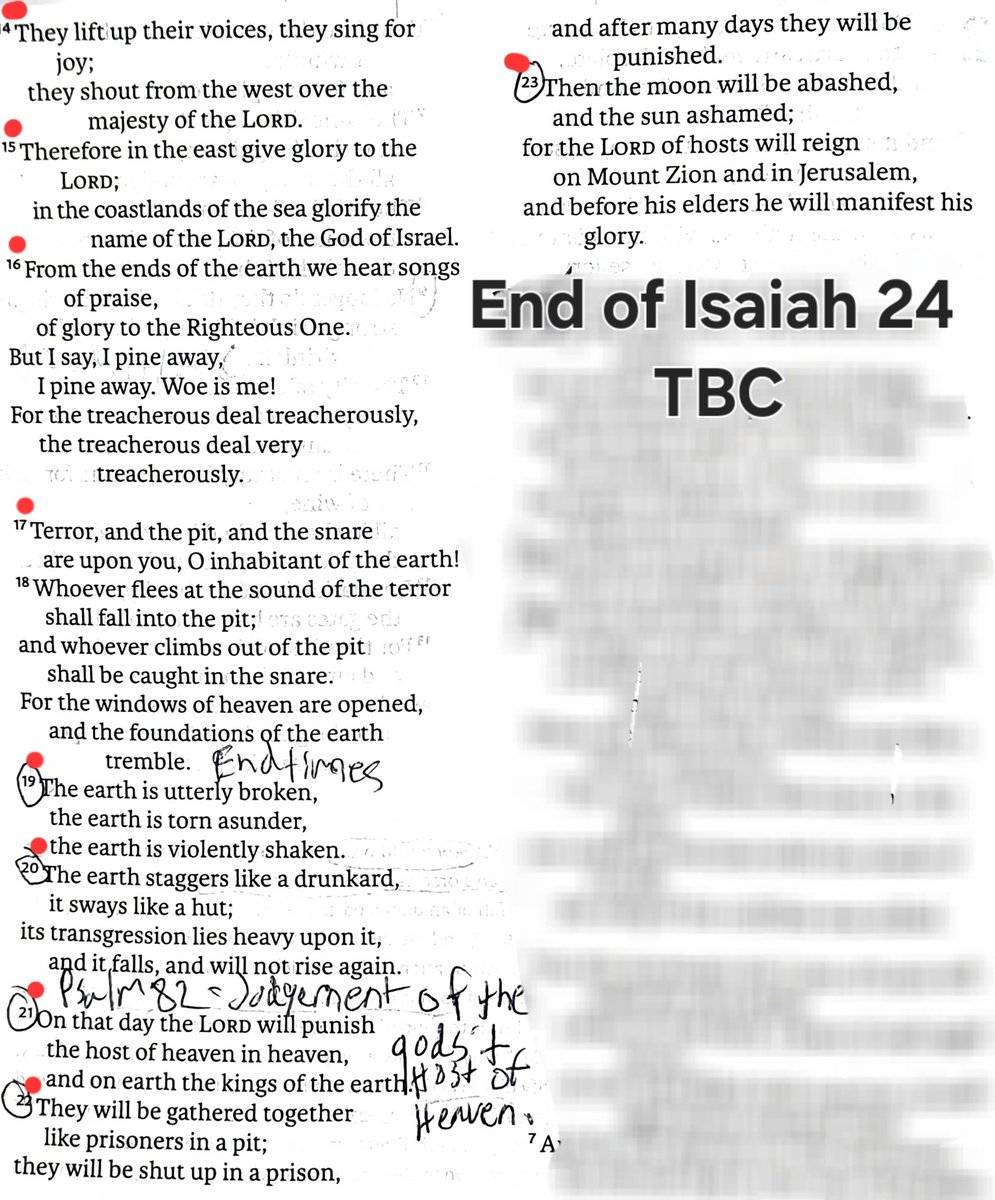

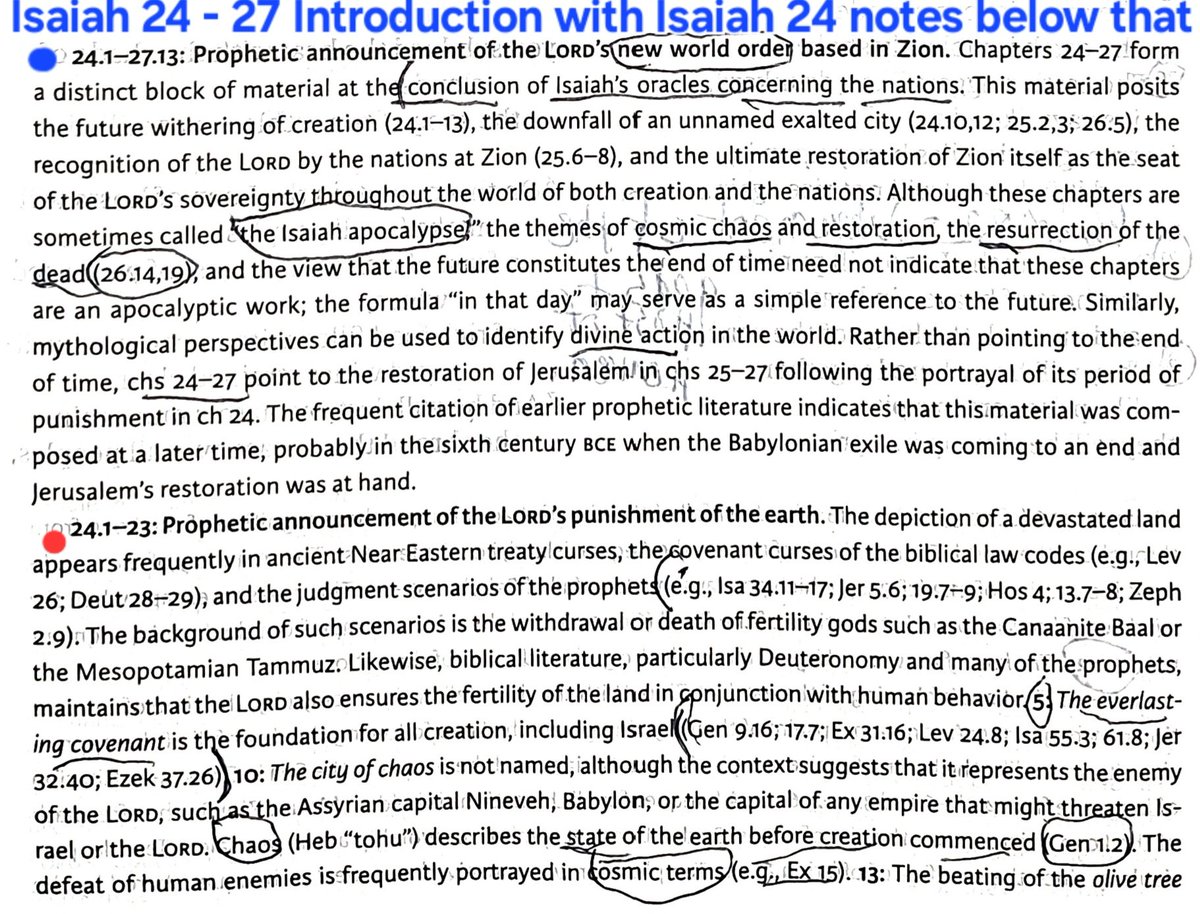
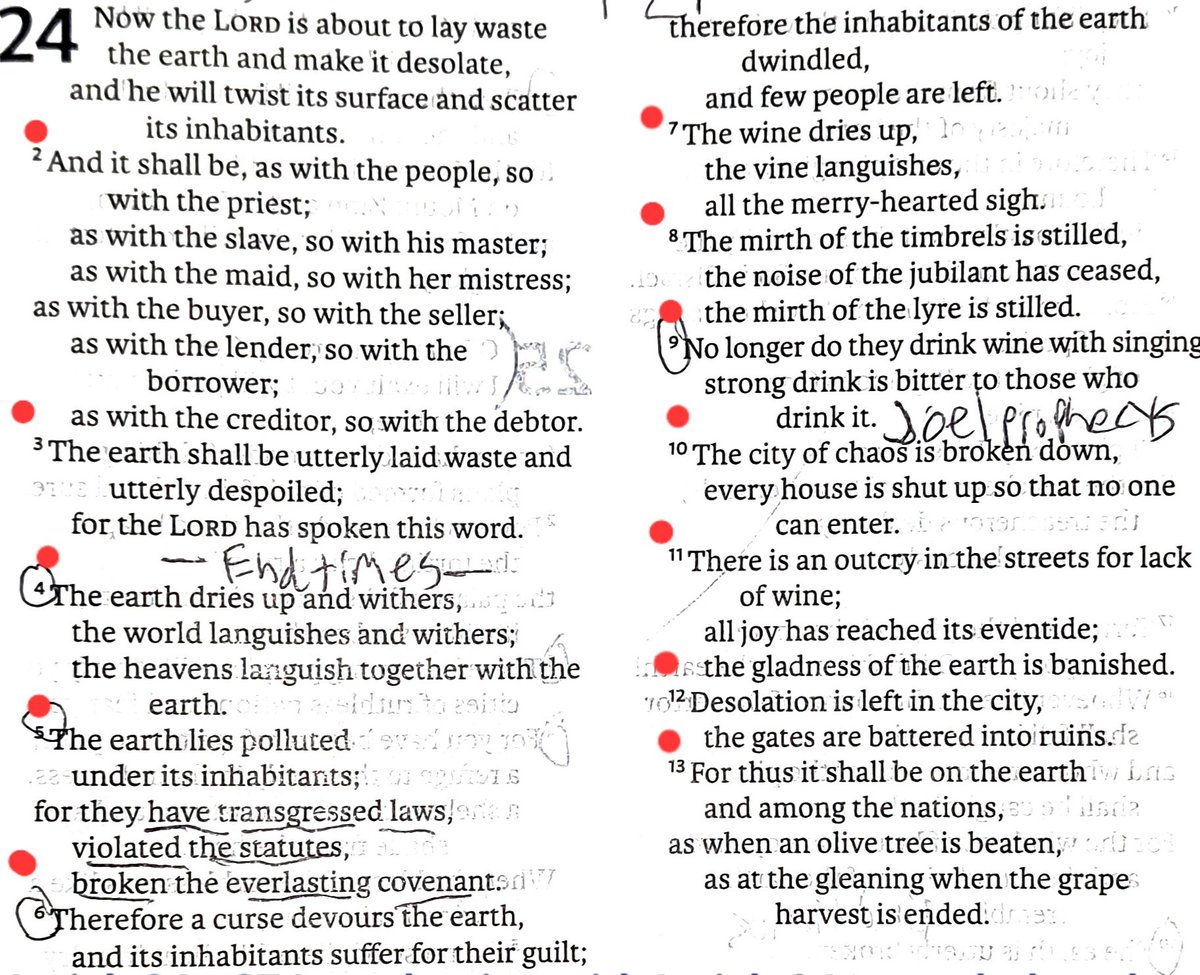
#ApocalypticBookStudy #95
#BibleStudy #170
#Phenomenology #41
#Dimensional theology #36
#SupernaturalCosmography #54
⚠️ Specialist Study on River Civilizations Beyond Cush, Celestial Ensign Systems, Shadowing Wings, Mountain Trumpet Phenomenology, & Interdimensional Sacred Geography, & Proto-Apocalyptic Signaling Systems, and the Harvest Ontology of Fallen Empires ⚠️ PLEASE SEE BOTTOM REPLIES FOR THE NEXT CHAPTER 19 & A BONUS MANUAL/STUDY GUIDE FOR THESE 2 CHAPTERS RIGHT AFTER IN THE REPLIES BELOW Also ⚠️(SEE pics for full Translation & Quote Share for more commentary)
📜 Isaiah 18:1-7 - 19:1-25 📜
📜 THE PROPHECIE OF ESAIAS 📜
In original- CHAP. XVIII. 18:1-7
(Isaiah 18:1) KJV-1611 OG old English translation -
(Verse) 1
Woe to the land shadowing with wings, which is beyond the riuers of Ethiopia:
📜 Commentary 📜
Isaiah 18 opens with one of the most enigmatic and atmospheric prophetic declarations in the entire Hebrew Bible.
The Hebrew phrase:
“shadowing with wings”
contains immense symbolic depth.
The imagery signifies :
• overshadowing dominion
• imperial expansion
• protective canopies
• hovering powers
• swift military movement
• sacred aerial imagery
• riverborne civilizations
The word “wings” throughout Scripture often symbolizes:
• sovereignty
• divine protection
• heavenly motion
• encompassing power
• covenant shelter
Compare:
• Psalm 91:4
• Exodus 19:4
• Ruth 2:12
• Malachi 4:2
The “land beyond the rivers of Ethiopia” refers to Cush, likely regions south of Egypt associated with Nubia and upper Nile systems. Yet Isaiah’s language exceeds simple geography.
The rivers function as civilizational boundaries and sacred arteries. Ancient peoples viewed great rivers as life-bearing cosmic corridors connecting kingdoms, trade systems, and religious worlds.
Thus Isaiah introduces a distant river civilization existing at the edge of prophetic sacred geography.
The “woe” does not necessarily mean immediate condemnation alone. In prophetic literature it frequently introduces solemn divine attention directed toward a nation involved in larger redemptive-historical movements.
2
That sendeth ambassadours by the sea, euen in vessels of bulrushes vpon the waters, saying; Goe yee swift messengers, to a nation scattered and peeled, to a people terrible from their beginning hitherto, a nation meted out and troden downe, whose land the riuers haue spoiled.
Commentary
The chapter now shifts into international diplomacy and sacred movement across waters.
The “vessels of bulrushes” immediately evoke Nile civilization imagery. Papyrus reed boats were characteristic of Egyptian and Cushite river transport systems.
The imagery recalls:
• Exodus 2 and the ark of bulrushes
• Nile transportation networks
• river diplomacy
• ancient trade corridors
Isaiah transforms diplomatic movement into prophetic theater.
The “swift messengers” travel across liminal waters toward a mysterious people described with difficult and powerful
language.
The people are called:
“scattered and peeled”
This likely signifies dispersion, exposure, affliction, or visible humiliation.
They are also described as:
“terrible from their beginning hitherto”
meaning formidable, awe-inspiring, or historically feared.
The phrase:
“a nation meted out”
contains measurement imagery associated throughout Scripture with divine assessment and judgment.
Compare:
• Isaiah 28:17
• Ezekiel 40–48
• Revelation measuring imagery
The nation is “troden downe,” suggesting conquest, oppression, or continual geopolitical pressure.
“Whose land the rivers have spoiled” may signify flooding powers, invading empires, or overwhelming geopolitical forces moving like waters through the land.
Isaiah’s language layers geography, empire, sacred symbolism, and covenantal suffering together.
3
All yee inhabitants of the world, and dwellers on the earth, see yee, when hee lifteth vp an ensigne on the mountaines; and when he bloweth a trumpet, heare yee.
Commentary
The prophecy suddenly expands from regional geography into universal proclamation.
The entire world is summoned.
The “ensigne” upon the mountains refers to a raised banner, standard, or visible sign.
The Hebrew:
נֵס (nēs)
often signifies:
• rallying banner
• military standard
• divine signal
• elevated sign
• messianic gathering-point
Throughout Isaiah, mountains represent sacred elevation where heaven and earth intersect.
The trumpet intensifies the apocalyptic atmosphere.
Trumpets in biblical literature signify:
• divine manifestation
• assembly
• warfare
• covenant gathering
• heavenly warning
• eschatological announcement
Compare:
• Exodus 19
• Joshua 6
• Zechariah 9:14
• Matthew 24:31
• Revelation 8–11
The entire earth becomes witness to divine signaling.
History itself turns liturgical.
The nations are summoned not merely politically, but cosmically.
4
For so the LORD said vnto mee, I will take my rest, and I will consider in my dwelling place like a cleare heat vpon herbes, and like a cloud of dew in the heate of haruest.
Commentary
This verse contains some of the most extraordinary atmospheric theology in Isaiah.
YHWH declares divine stillness.
Rather than immediate intervention, God watches silently.
The imagery is subtle and phenomenological:
• clear heat
• harvest atmosphere
• radiant stillness
• dew-cloud presence
“Clear heat upon herbs” evokes silent ripening energy.
The divine presence operates invisibly yet powerfully, like sunlight slowly maturing a field.
The “cloud of dew” recalls covenant blessing imagery throughout Scripture.
Dew symbolizes:
• heavenly descent
• fertility
• blessing
• hidden nourishment
• covenant vitality
Compare:
• Genesis 27:28
• Hosea 14:5
• Psalm 133:3
• Deuteronomy 32:2
YHWH’s “dwelling place” suggests heavenly enthronement calmly overseeing the movements of nations.
The verse portrays divine sovereignty not through frantic activity, but through poised stillness before judgment.
5
For afore the haruest, when the bud is perfect, and the sowre grape is ripening in the flowre, hee shall both cut off the sprigges with pruning hookes, and take away and cut downe the branches.
Commentary
The imagery now shifts toward harvest judgment.
Before the harvest fully matures, pruning begins.
This symbolizes interrupted fruition.
Human power approaches completion, yet divine intervention cuts it down before full ripeness arrives.
The pruning hooks symbolize selective judgment.
The “branches” and “sprigges” likely represent:
• kingdoms
• dynasties
• imperial expansions
• political structures
The imagery resembles arboreal empire symbolism found in:
• Ezekiel 31
• Daniel 4
• Psalm 80
Empires are depicted as great trees spread across the earth.
Yet YHWH remains the cosmic cultivator capable of cutting down even the largest growths.
The judgment occurs precisely before completion, emphasizing divine timing and sovereignty over history.
6
They shall bee left together vnto the foules of the mountaines, and to the beasts of the earth: and the foules shall summer vpon them, and all the beasts of the earth shall winter vpon them.
Commentary
The prophecy intensifies into covenantal judgment imagery.
Birds and beasts feeding upon the slain appears repeatedly in apocalyptic and prophetic literature.
Compare:
• Ezekiel 39
• Jeremiah 7:33
• Revelation 19
The imagery signifies:
• battlefield devastation
• humiliation of pride
• reversal of glory
• exposure before creation
•
The fouls “summer” upon them while beasts “winter” upon them.
This implies prolonged desolation extending through seasons.
Time itself becomes witness against fallen power.
The mountain imagery suggests elevated geopolitical zones or sacred territorial spaces associated with divine judgment.
Isaiah portrays empires becoming carrion before creation itself.
7
In that time shall the present bee brought vnto the LORD of hosts, of a people scattered and peeled, and from a people terrible from their beginning hitherto; a nation meted out and troden vnder foote, whose land the riuers haue spoiled, to the place of the Name of the LORD of hosts, the mount Zion.
Commentary
The chapter closes with pilgrimage and sacred offering.
After judgment comes convergence toward Zion.
The nations bring tribute unto:
“the place of the Name of the LORD”
This phrase signifies more than geography. The “Name” represents divine manifested presence, covenantal kingship, and heavenly authority revealed upon Zion.
The people once described as:
• scattered
• afflicted
• measured
• trodden down
now move toward worship.
The movement throughout the chapter is astonishing:
• distant river civilizations
• diplomatic movement
• global trumpet-signals
• divine stillness
• harvest judgment
• destruction of proud powers
• pilgrimage unto Zion
Mount Zion becomes the final sacred center toward which international history bends.
Isaiah 18 therefore reveals a prophetic architecture where geopolitics, atmospheric imagery, river civilizations, harvest symbolism, and sacred mountain theology converge under the sovereign rule of the LORD of hosts.
⚠️ SEE NEXT REPLY FOR ISAIAH 19 & ITS COMMENTARY ⚠️

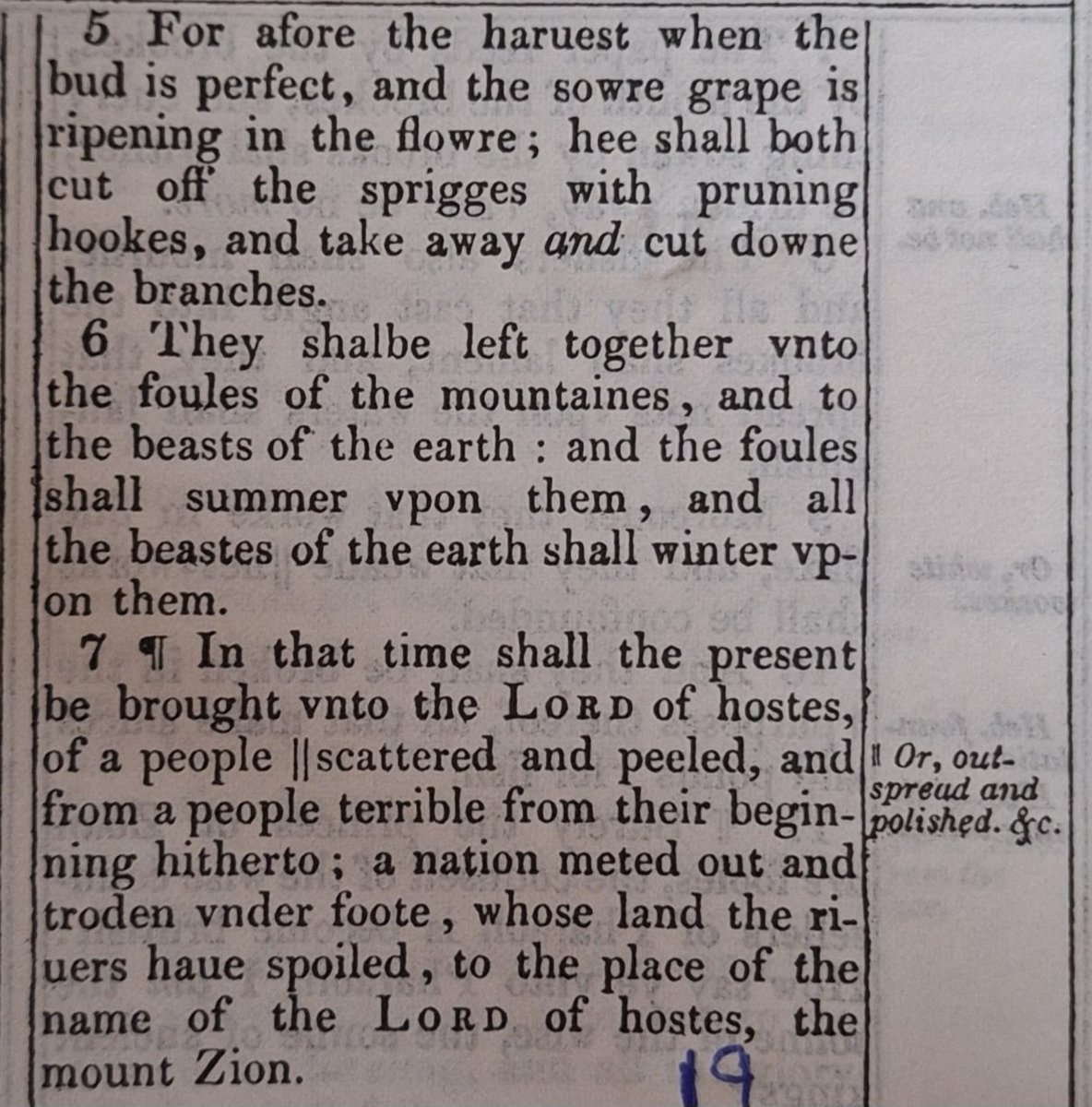
#OldTestamentStudy #9
📜 Isaiah 18:1-7 -19:1-25
📜Featuring - prophecy, supernatural imagery +ancient geopolitical context
📜 God's sovereignty over all nations, summoning the world to witness divine intervention.
☀️ City of the Sun +what prophecy it holds
Notes in nxt post


#ApocalypticBookStudy #87
#BibleStudy #151
#SupernaturalCosmography #35
#DimensionalTheology #17
#Phenomenology #22
📜Ezekiel 40:1-49 - 41:1-26 - 42:1-20 - 43:1-27 - 44:1-31 - 45:1-25 - 46:1-24 - 47:1-23 - 48:1-35
🌊🕍🌌The River of Life Flowing from the Temple in the Book of Ezekiel
⚠️ A Specialist Study in Divine or Sacred Measurement, Celestial Architecture, Sacred Cosmophysics, Theophanic Phenomenology, Hydrotheology, Botany, & the Renewal of the Earth; Including the Eastern Gate Mystery & the Sealed Portal of the Divine Glory - I go over all the important Verses so one does not have to read 9 full chapters of Temple Measurements - I provided a Scholarly/Specialist Monograph Below -
&
Btw
(We are finished with this book Ezekiel 1-48 ) after today's study)
🔑 FT. Intertextual Languages we use;
Hebrew,
Greek,
Syriac,
Coptic,
Latin,
German,
French,
Spanish
(Monograph & Commentary Below this simple summary for each Core chapter )
📜✨️⚠️✨️📜 Quick Structural Breakdown of the Vision 📜✨️⚠️✨️📜
📜 Ch. 40–42 📜
Temple measurements, gates, outer courts, priestly chambers
📜 Ch. 43 📜
Return of the Glory of God
📜 Ch. 44–46 📜
Priestly laws, temple governance, prince regulations, sacrifices
📜 Ch. 47 📜
River of Life flowing from the temple
📜 Ch. 48 📜
Restored tribal land distribution and the city “YHWH Shammah - The Lord Is There”
=
📜Total Chapters: 9 📜
📜Total Verses (40–48 combined): 260 verses 📜
🔑🗝 Cosmological Significance
The temple complex represents a cosmic model.
The outer court corresponds to the earthly realm.
The inner court corresponds to the heavenly court.
The sanctuary corresponds to the divine throne.
The river symbolizes life flowing from the divine center outward into creation.
Thus the temple becomes the axis mundi, the meeting point of heaven, earth, and the waters of life.
📜🔑📜 PART 1 - 2 - 3 📜🔑📜 (SEE Replies for each Part Below )
⚠️ 📜 PART 1 📜⚠️
(EACH PART IS DIFFERENT WITH ONLY REPEATED INFORMATION WHEN NECESSARY or added again because each PART BELOW IS CONTINUATION OF EACH AKA EACH SECTION EVOLVES FROM its FORMER OR PRIOR PARTS BEFORE )
⚠️ Multidisciplinary Look/Study FOR- (for PART 1) which FEATURES-
The Temple Vision of the Prophet
Sacred Architecture,
Cosmology, and
Eschatological Geography in the Temple Vision of the Book of Ezekiel (AGAIN ) Chapters 40–48 ⚠️
Scholarly Abstract
The final temple vision of the Book of Ezekiel (chapters 40–48) constitutes one of the most architecturally detailed prophetic revelations preserved in ancient literature. It integrates sacred geometry, ritual cosmology, priestly theology, divine throne imagery, sacred geography, and eschatological restoration.
The prophet describes a vast temple complex revealed through a vision mediated by a radiant celestial figure holding a measuring reed.
The measurements, chambers, gates, stairways, palm carvings, cherubic reliefs, altars, sacrificial tables, priestly chambers, and sacred river form a symbolic blueprint of a renewed cosmos centered on divine presence.
This temple is not merely a building.
It functions as
• a cosmological mountain
• a portal between heaven and earth
• a throne chamber of the divine council
• a ritual center of sacred order
• a geographic axis for the restored land.
The temple therefore represents a microcosm of creation, echoing earlier sanctuary traditions found in the wilderness tabernacle, the Solomonic temple, and prophetic visions of heavenly sanctuaries.
Historical Context of the Vision
The vision occurs during the Babylonian exile after the destruction of Jerusalem.
The temple of Solomon had been destroyed by the forces of Nebuchadnezzar II, leaving the exiled community without its sacred center.
The prophet therefore receives a revelation of a future sanctuary surpassing the former temple, one that restores divine presence and reorganizes the land itself.
The setting is a very high mountain, echoing the sacred mountain motif found across biblical cosmology.
The Angelic Surveyor
The guide appearing to the prophet is described as a figure whose appearance resembles bronze.
This description evokes celestial beings in other prophetic literature.
Ancient translations preserve this figure:
Hebrew
אִישׁ כְּמַרְאֵה נְחֹשֶׁת
ish kemar'eh nechoshet
a man with the appearance of bronze
Greek Septuagint
ἀνήρ ὅμοιος χαλκῷ
aner homoios chalko
a man like shining bronze
Syriac Peshitta
ܓܒܪܐ ܕܕܡܐ ܠܢܚܫܐ
gavra d-dame lenahsha
a man resembling bronze
Latin Vulgate
vir cuius species erat quasi aeris fulgentis
German
ein Mann dessen Aussehen war wie glänzendes Erz
French
un homme dont l'apparence ressemblait au bronze
Spanish
un hombre cuyo aspecto era como bronce resplandeciente
The bronze imagery reflects heavenly authority and purification symbolism.
Sacred Measurement Systems
A central feature of the vision is measurement.
The measuring reed equals six cubits.
The cubit itself varies across ancient systems.
Hebrew
אַמָּה
ammah
The long cubit used in the vision equals approximately 52 cm.
Measurement becomes a theological act.
To measure sacred space is to establish divine order over chaos.
Temple Architecture and Sacred Engineering
The architectural plan includes
outer courts
inner courts
gatehouses
guard chambers
porticoes
staircases
pavements
priestly chambers
altars
holy sanctuary
most holy place.
The repeated measurements reveal mathematical symmetry.
One hundred cubits appears frequently, symbolizing completeness and sacred proportion.
Sacred Ornamentation
Palm trees and cherubim decorate the temple walls.
Hebrew
תָּמָר
tamar
palm tree
כְּרוּב
keruv
cherub
Palm imagery symbolizes
life
fertility
victory
paradise vegetation.
Cherubim represent guardian beings of sacred space.
Their presence recalls earlier appearances in the Garden sanctuary narrative above the Ark of the Covenant in earlier visions of the prophet.
Temple Windows and Luminous Theology
The temple includes latticed windows.
Hebrew
חַלּוֹן
challon
These windows are narrow and recessed.
Symbolically they suggest controlled illumination.
Divine light enters but remains filtered.
The architecture therefore conveys the tension between divine transcendence and accessibility.
The Inner Sanctuary
The Most Holy Place measures twenty cubits by twenty cubits.
Greek
ἅγια ἁγίων
hagia hagion
holy of holies
This chamber represents the throne chamber of the divine king.
In earlier temple traditions this space contained the Ark.
In this vision the throne presence itself fills the temple.
The Return of the Divine Glory
Chapter 43 describes the return of divine glory previously seen departing the temple earlier in the book.
Hebrew
כְּבוֹד יְהוָה
kavod Yahweh
the glory of the Lord
Greek
δόξα κυρίου
The sound accompanying the arrival resembles many waters, a phrase later echoed in apocalyptic literature.
The entire earth shines with divine radiance.
The Eastern Gate Mystery
The eastern gate becomes permanently closed after divine glory enters.
This gate holds strong symbolic significance.
It represents the unique entry point of divine presence.
Later traditions connect the eastern gate with expectations of messianic arrival.
Priestly Orders and Sacred Hierarchy
The sons of Zadok are singled out as the priestly lineage permitted to approach the altar.
This group is portrayed as remaining faithful during earlier periods of apostasy.
Priestly responsibilities include
ritual instruction
sacrifice administration
legal judgments
distinguishing holy from common.
This reflects a fusion of ritual authority and judicial governance.
Sacred Culinary Spaces
The temple includes kitchens where offerings are prepared.
These spaces demonstrate how sacred ritual involved complex logistical operations.
Cooking sacrificial meat in designated chambers prevented the uncontrolled spread of ritual holiness.
The River of the Sanctuary
One of the most extraordinary elements appears in chapter 47.
Water flows from beneath the temple threshold.
Hebrew
נָהָר
nahar
river
The river increases in depth progressively.
ankle
knee
waist
uncrossable river.
This expanding river symbolizes
life
restoration
cosmic renewal.
The river flows eastward into the Dead Sea and heals its waters.
Botanical Imagery
Trees grow along the riverbanks.
Their leaves heal and their fruit never fails.
This imagery echoes paradise traditions.
The healing leaves later appear again in the eschatological city described in the Book of Revelation. (21, 22)
Sacred Geography and Land Redistribution
Chapters 47–48 reorganize the land of Israel into parallel tribal territories running east to west.
The sanctuary sits at the center of the land.
This arrangement places divine presence as the geographic axis of the nation.
The land becomes a sacred map structured around holiness.
Linguistic Notes Across Traditions
Temple terminology across languages reflects shared theological vocabulary.
Hebrew
הֵיכָל
heikal
temple palace
Greek
ναός
naos
inner temple
Syriac
ܗܝܟܠܐ
heikla
Latin
templum
German
Tempel
French
temple
Spanish
templo
Specialized Fields of Study Associated With These Chapters
Temple vision research intersects with numerous disciplines.
Sacred Architecture
Ancient Near Eastern Architecture
Temple Theology
Liturgical Anthropology
Priestly Ritual Studies
Sacred Geometry
Comparative Cosmology
Theophanic Phenomenology
Angelology
Divine Council Studies
Eschatological Geography
Hydrotheology
Symbolic Botany
Architectural Theology
Sacred Measurement Systems
Temple Archaeology
Prophetic Vision Studies
Comparative Sanctuary Traditions
Apocalyptic Temple Literature
(Again I repeat this below section I typed double for the beginning intro )
Cosmological Significance
The temple complex represents a cosmic model.
The outer court corresponds to the earthly realm.
The inner court corresponds to the heavenly court.
The sanctuary corresponds to the divine throne.
The river symbolizes life flowing from the divine center outward into creation.
Thus the temple becomes the axis mundi, the meeting point of heaven, earth, and the waters of life.
(Back to new info)
Final Theological Symbol
The closing verse names the restored city.
Hebrew
יְהוָה שָׁמָּה
Yahweh Shammah
Meaning
“The Lord is there.”
This declaration summarizes the entire temple vision.
The ultimate restoration of creation is not merely architecture or geography.
It is the permanent dwelling of divine presence among humanity.
(⚠️ SEE NEXT REPLY FOR THE REST OF THIS JAM PACKED STUDY LECTURE/COMMENTARY ⚠️

#ApocalypticBookStudy #86
#SupernaturalCosmography #33
#DimensionalTheology #15
#Phenomenology #20
#BibleStudy #148
📜 Ezekiel 39:1-29 📜 3 PART Supplemental📜
⚠️Specialist Study on the Supernatural Valley Between Worlds & Crossers of the Boundary: The Oberim Motif or called " Those who cross over " & its Ultra Rare Liminal Geography, Rephaim Cosmology, & Pneumatological Renewal of the Post War Cosmic Burial of Gog in 1 Jam Packed chapter for this week⚠️ (Please see SHARE For Our First study /VERSES) (this is an Extraordinary Reboot/Revisit Edition for completeness & next week we will be done with this full book of Ezekiel)
⚠️ This Supplemental Edition is a Deep abstract/verse-by-verse polymathic study -FT- Philology, Phenomenology, Liminality, Dimensional theology, Pneumatology, Aerology, Dirge Traditions, & Sacred Geography & as a layered prophetic cosmology ⚠️
⚠️⚠️⚠️(IN 4 PICS IS THE OG KJV 1611)⚠️⚠️⚠️
🗝 -KEY TRANSLATIONS USED IN STUDY -🔑
(AGAIN ) THE-
📜KJV 1611
📜HEBREW
📜SYRIAC
📜COPTIC
📜GREEK
📜LATIN
📜GERMAN
📜FRENCH
🔑🗝📜PART 1📜🔑🗝
Ezekiel 39 as Liminal War, Theophany, & Pneumatological Renewal
Ezekiel 39 concludes the Gog oracle begun in Ezekiel 38 and presents a prophetic drama in which divine sovereignty overturns hostile forces emerging from the mythic north.
The chapter describes not merely geopolitical defeat but a cosmic purgation of chaotic powers followed by restoration of divine presence among Israel.
Several interpretive dimensions converge.
Historical dimension
The prophecy emerges during the Babylonian exile and addresses Israel’s trauma of defeat while affirming divine control over global powers.
Liminal dimension
The burial valley associated with the Oberim (עֹבְרִים) becomes a symbolic passage between life and death where invading forces cross into the realm of the dead.
Dirge tradition
The imagery resembles ancient funeral laments describing fallen kings descending into Sheol.
Theophanic manifestation
Fire, divine glory, and atmospheric phenomena signal divine intervention in the earthly sphere.
Phenomenological dimension
The prophet’s description reflects visionary perception where cosmic battle, burial rituals, and spiritual renewal unfold in intense sensory imagery.
Pneumatological culmination
The chapter ends with the outpouring of divine Spirit, restoring the spiritual environment of Israel.
Ezekiel 39 therefore portrays a cycle of cosmic disorder, divine judgment, ritual purification, and spiritual regeneration.
🗝 🔑 Key Multilingual Terms🔑 🗝
Hebrew
גוג
Gog
מגוג
Magog
המון גוג
Hamon Gog
multitude of Gog
עברים
Oberim
crossers passers travelers
רוח
Ruach
spirit wind breath
Greek Septuagint
Γωγ
Gog
Μαγωγ
Magog
πνεῦμα
pneuma
spirit breath
Syriac Peshitta
ܓܘܓ
Gog
ܡܓܘܓ
Magog
ܪܘܚܐ
Ruha
spirit wind breath
Coptic
ⲅⲱⲅ
Gog
ⲡⲛⲉⲩⲙⲁ
Pneuma
spirit breath
German (Luther)
Gog
Fürst von Mesech und Tubal
Geist
Spirit wind
French
Gog
chef de Méchek et Tubal
Esprit
divine spirit
Verse by Verse Multidimensional Commentary
Ezekiel 39:1
1611 KJV
“Behold I am against thee O Gog the chief prince of Meshech and Tubal.”
Hebrew
הנני אליך גוג נשיא ראש משך ותבל
Transliteration
Hineni elekha Gog nasi rosh Meshekh ve Tubal
Meaning
Behold I am against you Gog chief ruler of Meshech and Tubal.
Greek
Ἰδοὺ ἐγὼ πρὸς σὲ Γωγ
Syriac
ܗܐ ܐܢܐ ܥܠܝܟ ܓܘܓ
Phenomenology
The prophet hears a direct divine proclamation confronting a distant power. The experience resembles a visionary courtroom where the deity announces judgment.
Cosmological symbolism
Northern tribes represent the direction of chaos in ancient Near Eastern cosmology.
Isaiah 14:13 associates the far north with cosmic rebellion.
Ezekiel 39:2
“I will turn thee back and leave but the sixth part of thee.”
Hebrew
וששאתיך
This verb can suggest guiding or dragging.
Symbolic mathematics
Six represents the created order. Reducing Gog’s forces to a sixth implies divine restriction of worldly power.
Dimensional theology
Human armies appear vast yet are subject to cosmic limitation imposed by divine authority.
Ezekiel 39:3
“I will smite thy bow out of thy left hand.”
Greek
καταρράξω τὸ τόξον σου
Syriac
ܐܬܒܪ ܩܫܬܟ
Dirge imagery
Breaking weapons occurs in ancient lament songs describing fallen warriors.
Psalm 46
“He breaketh the bow.”
Phenomenology
The prophet visualizes weapons falling from soldiers’ hands as if struck by invisible force.
Ezekiel 39:4
“Thou shalt fall upon the mountains of Israel.”
Hebrew
על הרי ישראל
Mountains of Israel.
Coptic
ⲉⲡⲉⲧⲟⲟⲩ ⲛ̄ⲓⲥⲣⲁⲏⲗ
Sacred geography
Mountains act as cosmic meeting points between heaven and earth.
Examples
Sinai
Zion
Carmel.
Supernatural layer
Birds devouring the slain represent nature participating in divine judgment.
Ezekiel 39:5
“Thou shalt fall upon the open field.”
French
tu tomberas sur la face des champs.
Anthropological meaning
Death outside the city symbolizes exposure to wilderness forces.
Liminal symbolism
The battlefield becomes a border between civilization and the chaotic wild.
Ezekiel 39:6
“I will send fire upon Magog.”
Hebrew
ושלחתי אש במגוג
Greek
ἀποστελῶ πῦρ ἐπὶ Μαγωγ
Aerology
Fire from heaven may reflect lightning storms or meteoric phenomena interpreted as divine judgment.
Theophany
Fire frequently accompanies divine manifestation.
Examples
Exodus 19
1 Kings 18.
Ezekiel 39:7
“I will make my holy name known.”
Hebrew
שמי הקדוש
My holy name.
German
meinen heiligen Namen kundtun.
Phenomenology
The revelation of the divine name signifies overwhelming encounter with sacred presence.
Ezekiel 39:8
“It is done.”
Hebrew
באה ונהיתה
It has come and happened.
Visionary time
Prophets experience future events as present reality.
Ezekiel 39:9
Weapons burned seven years.
Symbolic number
Seven represents cosmic completion.
Ecological dimension
War debris becomes fuel sustaining life.
Ezekiel 39:10
“They shall spoil those that spoiled them.”
Covenant law
Reflects Deuteronomic principle of moral reversal.
Ezekiel 39:11
“The valley of Hamon Gog near the valley of the Oberim.”
Hebrew
עמק המון גוג
גיא העברים
Meaning
Valley of Gog’s multitude near the valley of the passers through.
Liminal interpretation
The Oberim represent travelers crossing between domains.
Dimensional theology
The burial valley becomes a threshold where armies pass from the world of the living into the realm of the dead.
Ezekiel 39:12
Seven months burying the dead.
Ritual purity
Numbers 19 describes purification after contact with corpses.
Temporal symbolism
Seven months completes a cycle of cleansing.
Ezekiel 39:14
Men continually passing through the land.
Hebrew root
עבר
to cross or pass through.
Phenomenological layer
Searchers walking the land resemble ritual guardians removing remnants of death.
Ezekiel 39:15
A marker placed beside bones.
Archaeological realism
Burial teams marked remains before collection.
Symbolic meaning
Each bone is a fragment of chaos needing removal before restoration.
Ezekiel 39:17
Call to birds and beasts.
Greek
συναχθητε καὶ ἔλθετε
Gather and come.
Dirge tradition
Battlefields feeding animals appear in many ancient war laments.
Ezekiel 39:18
“Eat the flesh of the mighty.”
Syriac
ܬܐܟܠܘܢ ܒܣܪܐ ܕܓܢܒܪܐ
Cosmic inversion
The powerful become food for creatures of the earth.
Ezekiel 39:19
“Drink blood until full.”
Apocalyptic imagery
Conveys the magnitude of judgment.
Ezekiel 39:20
“My table.”
Divine banquet symbolism
The battlefield becomes a sacrificial feast under divine authority.
Ezekiel 39:21
“I will set my glory among the nations.”
Hebrew
כבודי
Kavod
glory radiance weighty presence.
Phenomenology
Prophets often describe divine glory as blinding luminosity.
Ezekiel 39:22
Israel recognizes the Lord.
Covenant awareness
Recognition of divine sovereignty marks restoration.
Ezekiel 39:23
Nations understand Israel’s exile.
Historical reinterpretation
Exile becomes moral consequence rather than divine defeat.
Ezekiel 39:24
“I hid my face.”
Hebrew
הסתרתי פני
Theological concept
Divine concealment rather than absence.
Ezekiel 39:25
“I bring again the captivity of Jacob.”
French
je ramènerai les captifs de Jacob.
Restoration theology
Return from exile symbolizes renewed covenant.
Ezekiel 39:27
Gathering from nations.
German
Ich sammle sie aus den Ländern ihrer Feinde.
Diaspora restoration
Global dispersion reversed.
Ezekiel 39:28
“They shall know that I am the Lord.”
Recognition emerges through historical experience.
Ezekiel 39:29
“I have poured out my Spirit.”
Hebrew
שפכתי את רוחי
Greek
ἐξέχεα τὸ πνεῦμά μου
Syriac
ܐܫܦܘܟ ܪܘܚܝ
Pneumatology
The Spirit represents divine life breath entering the community.
Aerology
Spirit and wind share the same term indicating transformation of the atmospheric spiritual environment.
Multidisciplinary Insights
Phenomenology
The chapter reads like a visionary encounter filled with sensory intensity.
Liminal geography
The valley of the Oberim functions as a crossing place between life and death.
Dirge tradition
Funeral imagery frames the downfall of Gog.
Dimensional theology
The narrative depicts interaction between heavenly authority earthly battlefields and the underworld domain.
Pneumatology
Divine Spirit restores the spiritual vitality of the land.
Aerology
Wind fire and atmospheric phenomena signal divine activity in the natural environment.
Concluding Reflection
Ezekiel 39 reveals a striking cosmic pattern.
Chaos approaches from the north
Divine power intervenes with fire and judgment
The land undergoes ritual purification
The valley of the Oberim becomes the passage where the enemies cross into death
Finally the Spirit of God renews Israel.
Thus the chapter describes not merely a war but a transformation of cosmic order where divine presence returns to dwell among the people.
🗝🗝🗝📜📜📜⚠️⚠️SEE NEXT REPLY BELOW FOR PART 2 & 3⚠️⚠️⚠️📜📜📜🔑🔑🔑

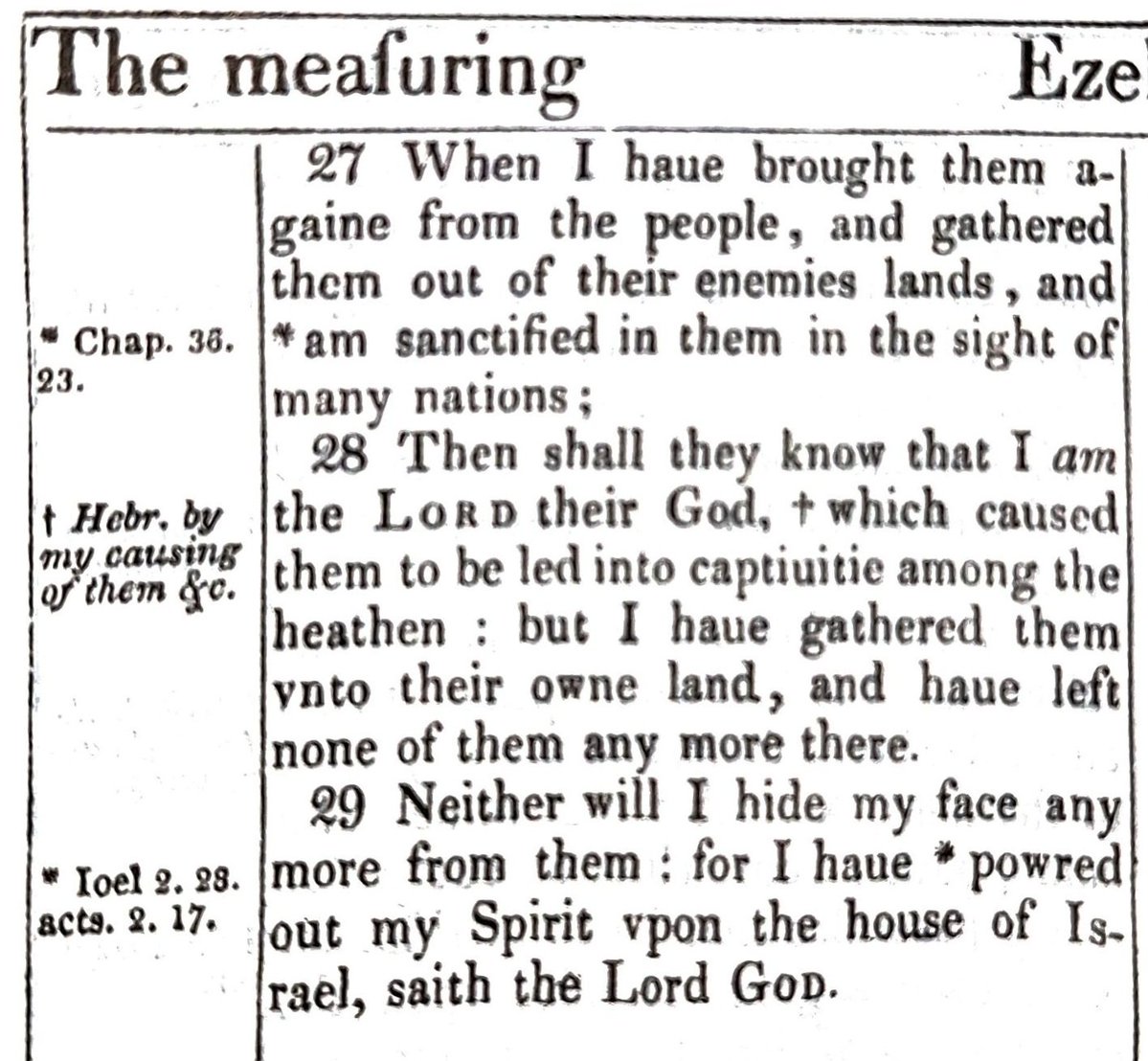
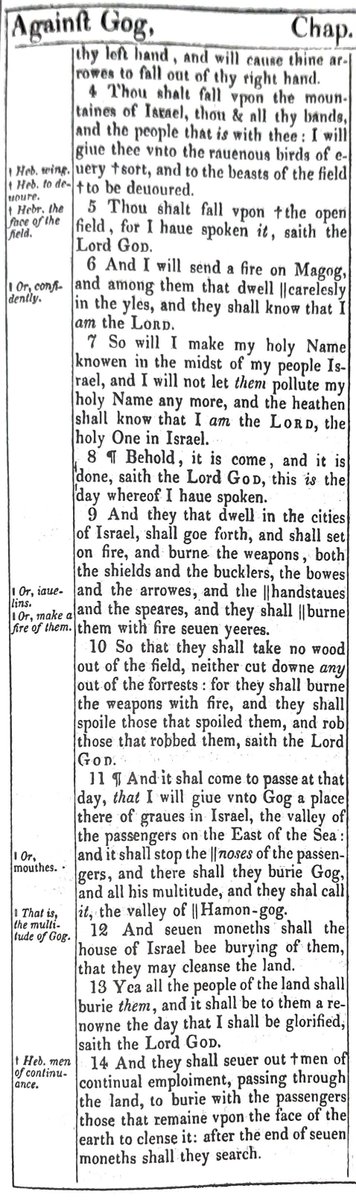

#ApocalypticBookStudy #34
📜Ezekiel 39:1-29
🏞Valley of the Travellers
🗝 Vs.11 -Spirits (ôb; plural 'obôt AKA oběrim) those who have passed over
✨️ A portal to the Netherworld denoting the spirits crossing the border between the land of the living to the world of the dead
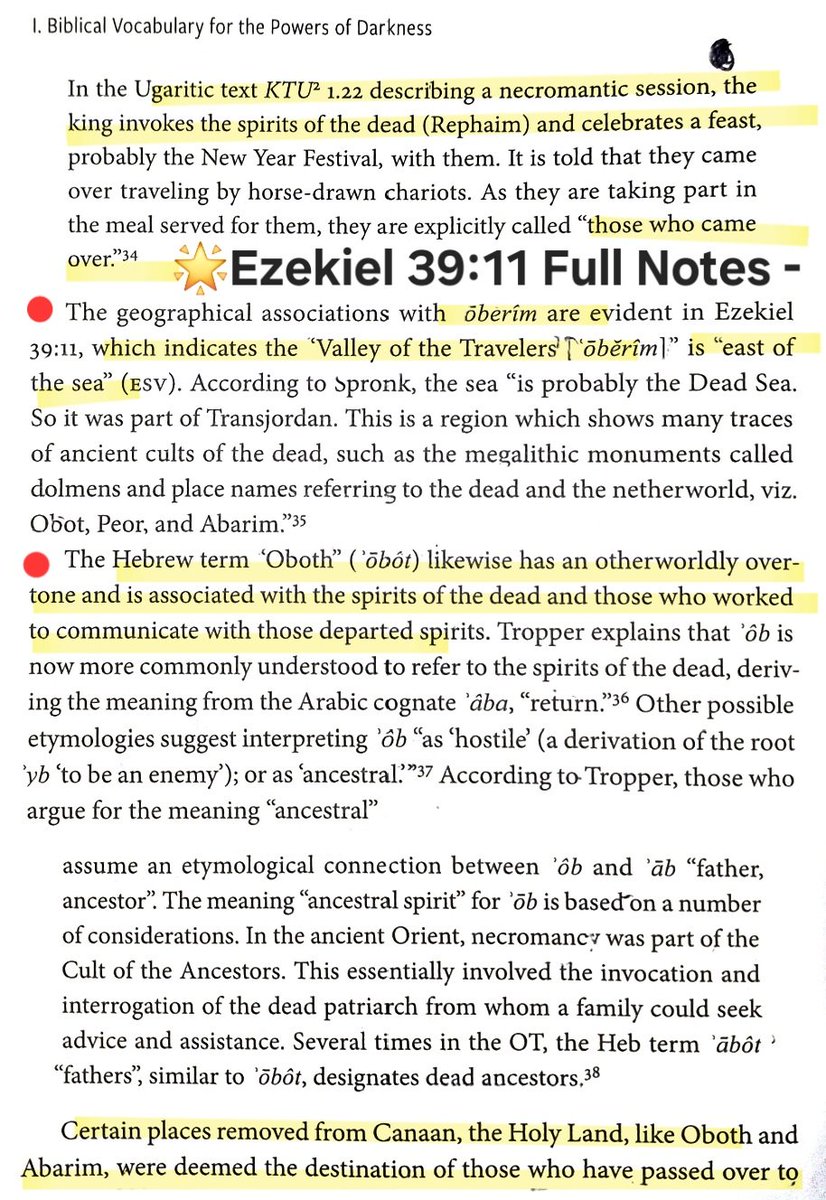
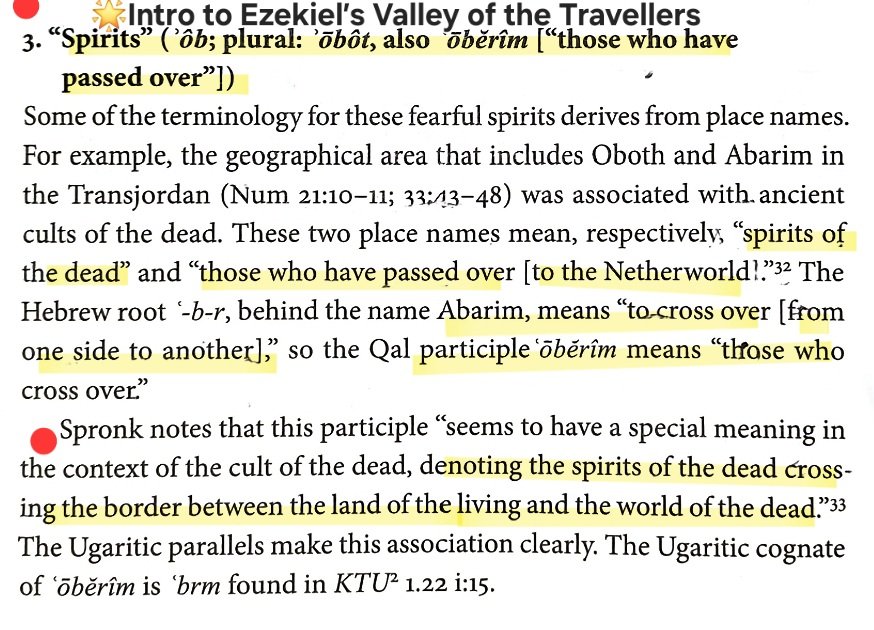
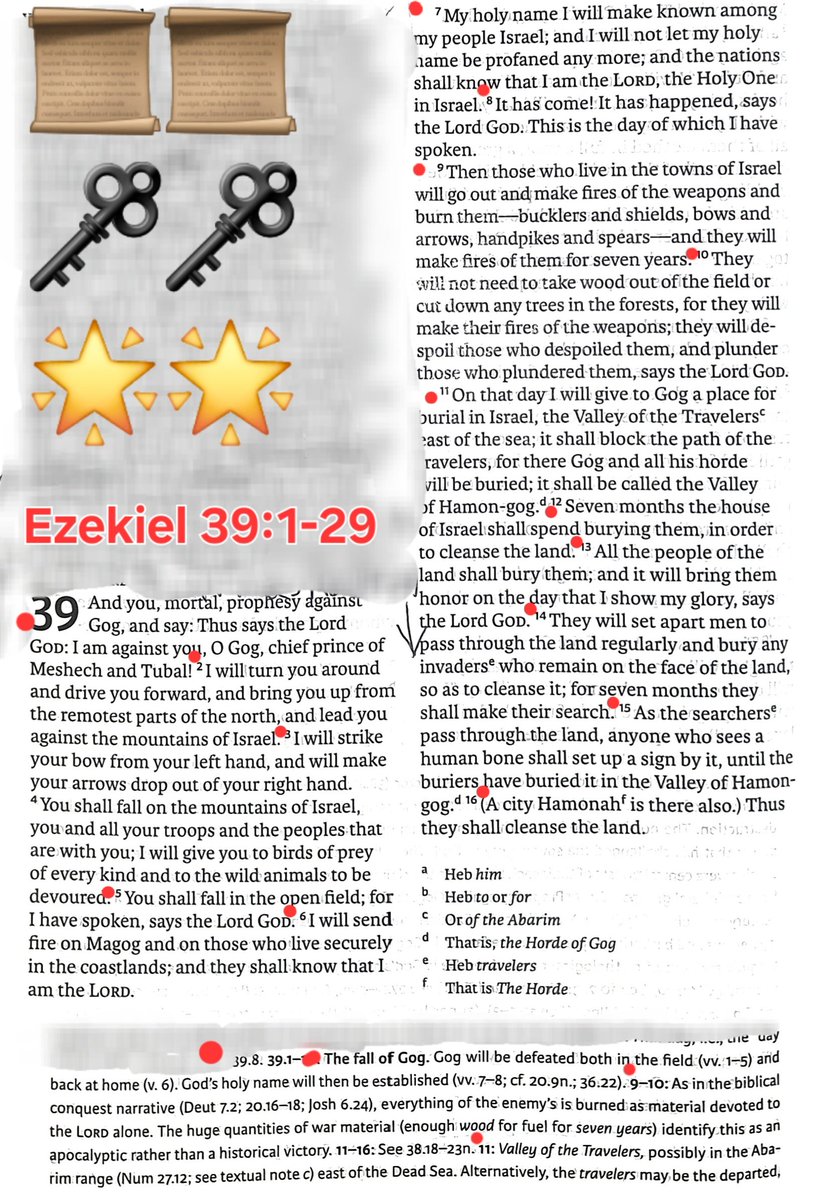
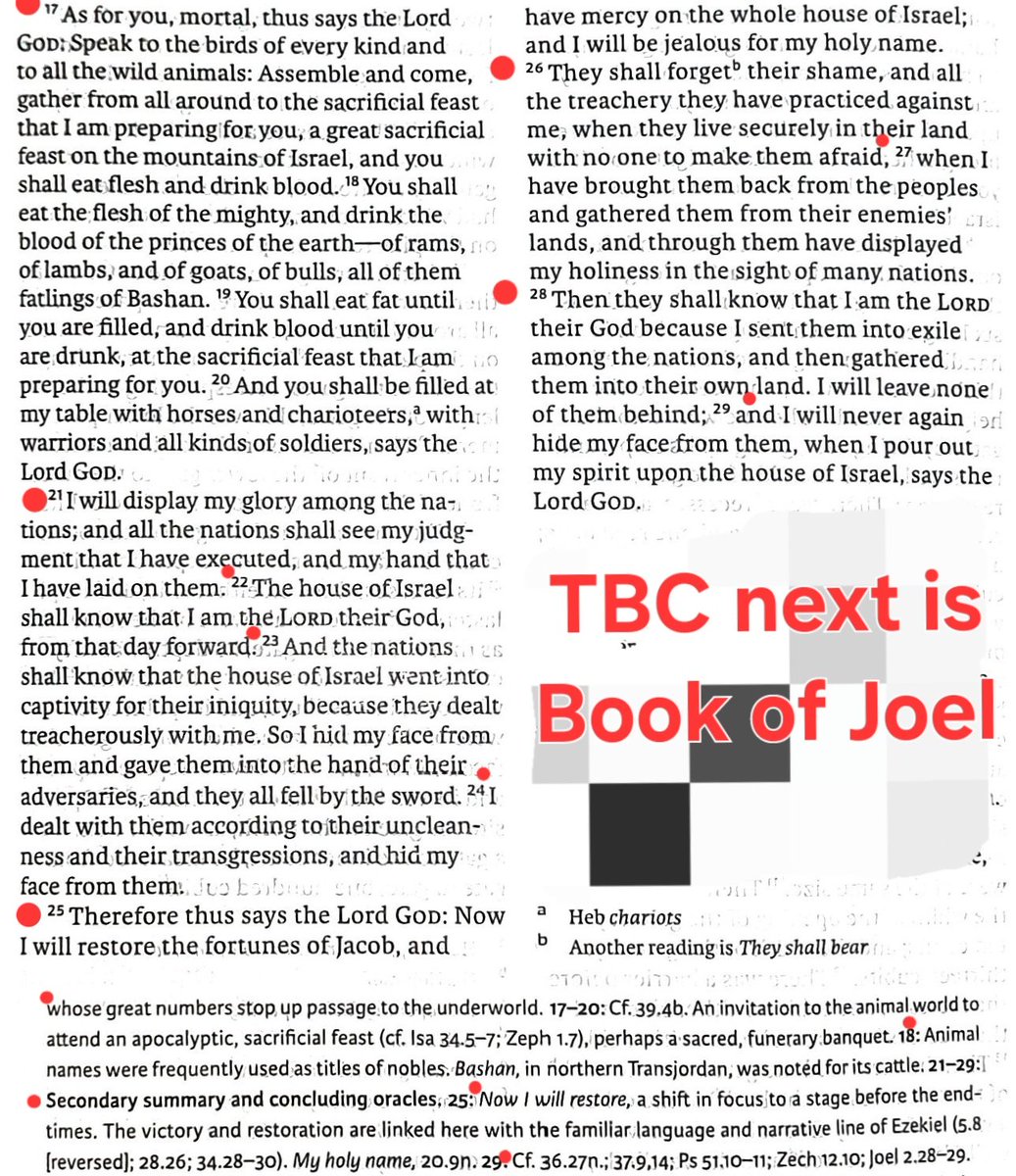
#ApocalypticBookStudy #85
#BibleStudy #146
#SupernaturalCosmography #31
#DimensionalTheology #13
#Phenomenology #18
📜 Ezekiel 38:1-23 📜 - SEE SHARE BELOW FOR VERSES- (1 Huge Chapter for this week)
⚠️ Specialist Study on the Gog War Oracle Dimensional Warfare, Liminal Geopolitics, & the Supernatural Confrontation of Yahweh Across Earth, Heaven, & the Cosmic Order in Ezekiel 38 & A PART 2 Verse-by-Verse Multilingual & Apocalyptic Analysis (part 2 will be the next reply so we can keep each post as short as possible)
🔑 This study examines Ezekiel 38 through linguistic traditions-
Hebrew, Greek Septuagint,
Syriac Peshitta, Latin Vulgate,
German, Swedish, Slavic,
Geneva 1599, & KJV 1611 while integrating theology, apocalyptic war imagery, cosmology, sacred geography, & proto sciences
I. Linguistic Foundations of the Prophecy
Hebrew Text
The opening phrase identifies:
גּוֹג אֶרֶץ הַמָּגוֹג
“Gog of the land of Magog”
Magog is already tied to the Table of Nations in Genesis 10, where Magog appears as a son of Japheth, connecting the prophecy to primordial post Flood nations
Thus the war described is not a local skirmish but a civilizational confrontation rooted in the earliest genealogical structure of humanity.
Septuagint Greek
Γὼγ ἐκ γῆς Μαγώγ
The Greek translators preserve the names without interpretation, emphasizing their foreign and mysterious nature. Scholars note this preserves the prophetic symbolism rather than explaining it.
Syriac and Aramaic
The Peshitta similarly keeps the phonetic structure of Gog and Magog. In Syriac apocalyptic tradition these names represent chaotic northern forces opposing divine order.
Latin Vulgate
“Gog de terra Magog”
Jerome’s translation situates the figure within the classical world geography known to Rome.
Early English Bibles
1599 Geneva
“Gog of the land of Magog, the chief prince of Meshech and Tubal”
1611–1612 KJV tradition retains the same formula, preserving the ancient geopolitical symbolism.
Across these languages the names remain transliterated, signaling that the prophecy refers to forces beyond ordinary national identification.
II. Sacred Geography & Cosmic Direction
Verse 6 speaks of enemies coming from
“the uttermost parts of the north.”
In Hebrew prophetic cosmology the north represents the direction of chaos and divine confrontation.
Examples:
Isaiah 14
The cosmic mountain of assembly is described “in the sides of the north.”
Jeremiah 1
Disaster comes “from the north.”
Ezekiel uses the same cosmic axis.
The invading coalition represents forces emerging from the outer rim of the inhabited world.
Ancient interpreters often associated these peoples with Scythian tribes or distant northern nations beyond Israel’s horizon. (https://t.co/tcw4xdNgn9)
Thus the invasion comes from the edge of the known earth.
This gives the war an apocalyptic scale.
III. Coalition of Nations
The Geopolitical Assembly
Ezekiel lists multiple allies:
Persia
Cush
Put
Gomer
Beth Togarmah
These represent regions stretching from Iran to Africa to Anatolia and the Caucasus. (Encyclopedia Britannica)
The prophet portrays an alliance stretching across continents.
This is not simply war.
It is global convergence against sacred land.
IV. Liminal Warfare
Hooks in the Jaws
One of the strangest lines appears in verse 4:
“I will put hooks in your jaws.”
In ancient warfare hooks controlled animals or captives.
But here God places hooks in the invading king.
Meaning:
Human kings believe they initiate war
Yet divine sovereignty guides their movement.
Theologically this reveals metahistory.
God governs even the ambitions of hostile empires.
V. Sacred Terrain as Battlefield
Ezekiel repeatedly describes:
Mountains of Israel
Villages without walls
Peaceful dwellings
These places are not random.
In biblical theology land itself carries covenantal identity.
The invading armies attack not merely people but holy territory.
This concept parallels:
Zechariah 12
All nations gathered against Jerusalem
Revelation 20
Gog and Magog gather against the beloved city.
The war thus becomes a confrontation between sacred space and profane empire.
VI. Proto Sciences and Physical Catastrophe
Later in the chapter Yahweh answers the invasion with phenomena across multiple layers of reality.
Earthquake
Torrential rain
Hailstones
Fire
Brimstone
These events combine natural disaster with supernatural judgment.
Fields of study involved:
Seismology
Meteorology
Geochemistry
Atmospheric physics
The text portrays a multidimensional response.
Heaven, atmosphere, and earth all participate.
VII. Rare Substances and Apocalyptic Materials
Ezekiel names specific materials used in divine judgment.
Hailstones
Sulfur
Fire
Sulfur appears in earlier divine judgments:
Genesis 19 destruction of Sodom
Revelation 20 lake of fire and sulfur
Sulfur symbolizes cosmic purification through combustion.
In ancient proto science sulfur was associated with volcanic fire and celestial phenomena.
Thus Ezekiel portrays God as commanding the elements themselves.
VIII. Cosmological Warfare
The prophecy describes Yahweh declaring:
“I will magnify myself and sanctify myself.”
This phrase reveals the deeper purpose.
The war is theological.
It reveals:
Who governs history
Who commands nature
Who rules nations
The conflict is not simply military.
It is cosmic revelation.
IX. Apocalyptic Trajectory
Later Jewish and Christian tradition expanded this prophecy.
The Book of Revelation portrays Gog and Magog as nations gathered by Satan for the final rebellion against God.
The pattern becomes:
1 invasion of the holy land
2 divine intervention
3 destruction of rebellious forces
Thus Ezekiel forms the prototype of final apocalyptic conflict.
X. Ontological War
Yahweh Across All Realms
The chapter portrays God acting across multiple domains:
Human history
Atmospheric systems
Geological activity
Spiritual authority
This reveals an ancient worldview where God governs:
Above – heavens
Middle – earth
Below – underworld
The war therefore unfolds across every level of creation.
XI. Theological Summary
Ezekiel 38 presents:
A coalition of distant nations
A liminal invasion of sacred territory
Divine manipulation of history
Cosmic environmental judgment
The result is a demonstration that Yahweh rules every dimension of existence.
Human armies march
But heaven decides the outcome.
⚠️ SEE NEXT REPLY FOR A VERSE BY VERSE ANALYSIS AKA PART 2 BELOW ⚠���
#ApocalypticBookStudy #33
🎆 Ezekiel 38:1-23 - PT. 1
🌡⚠️💥⚔️🛡 War of Gog & Magog!!!
🔹 End-time battle echoes of Revelation 20:8
🔹 Divine Judgment: God’s fury shakes the earth
🔹 Theosophy: Forces beyond human control shape Hist.
📜Notes starts in Pic4 -the next Post below
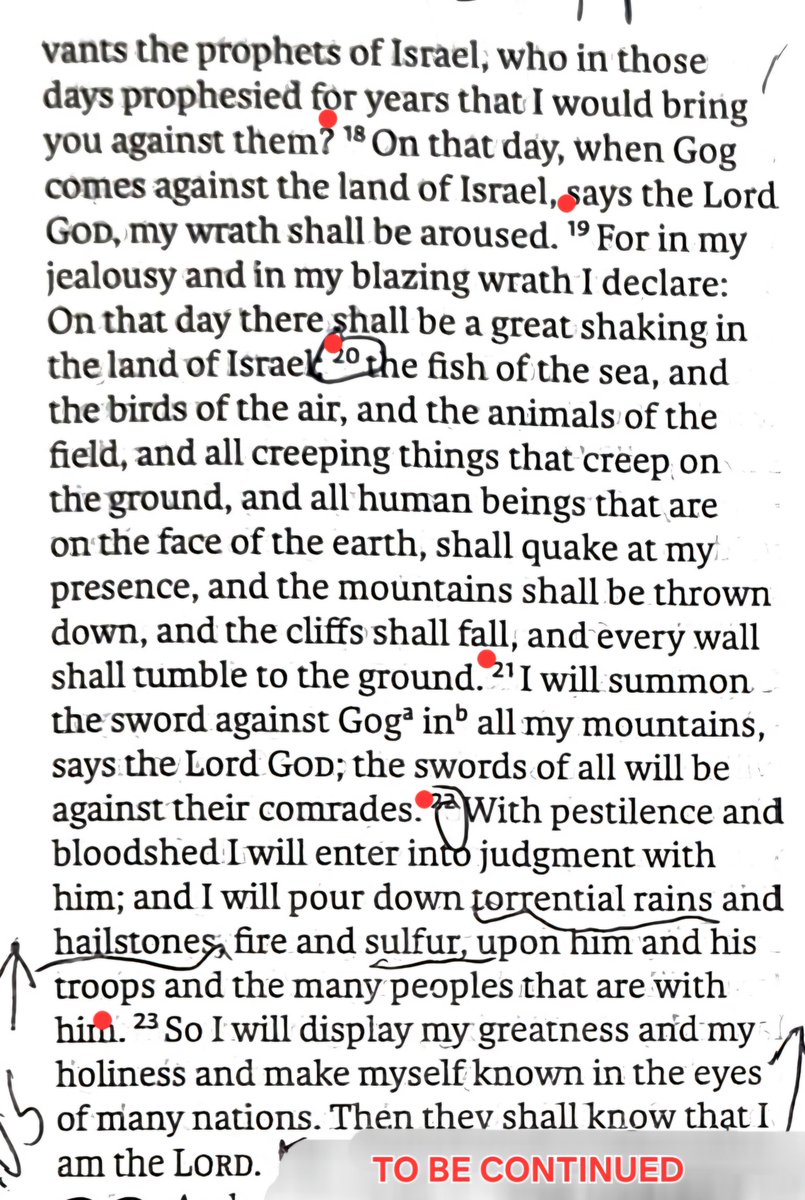
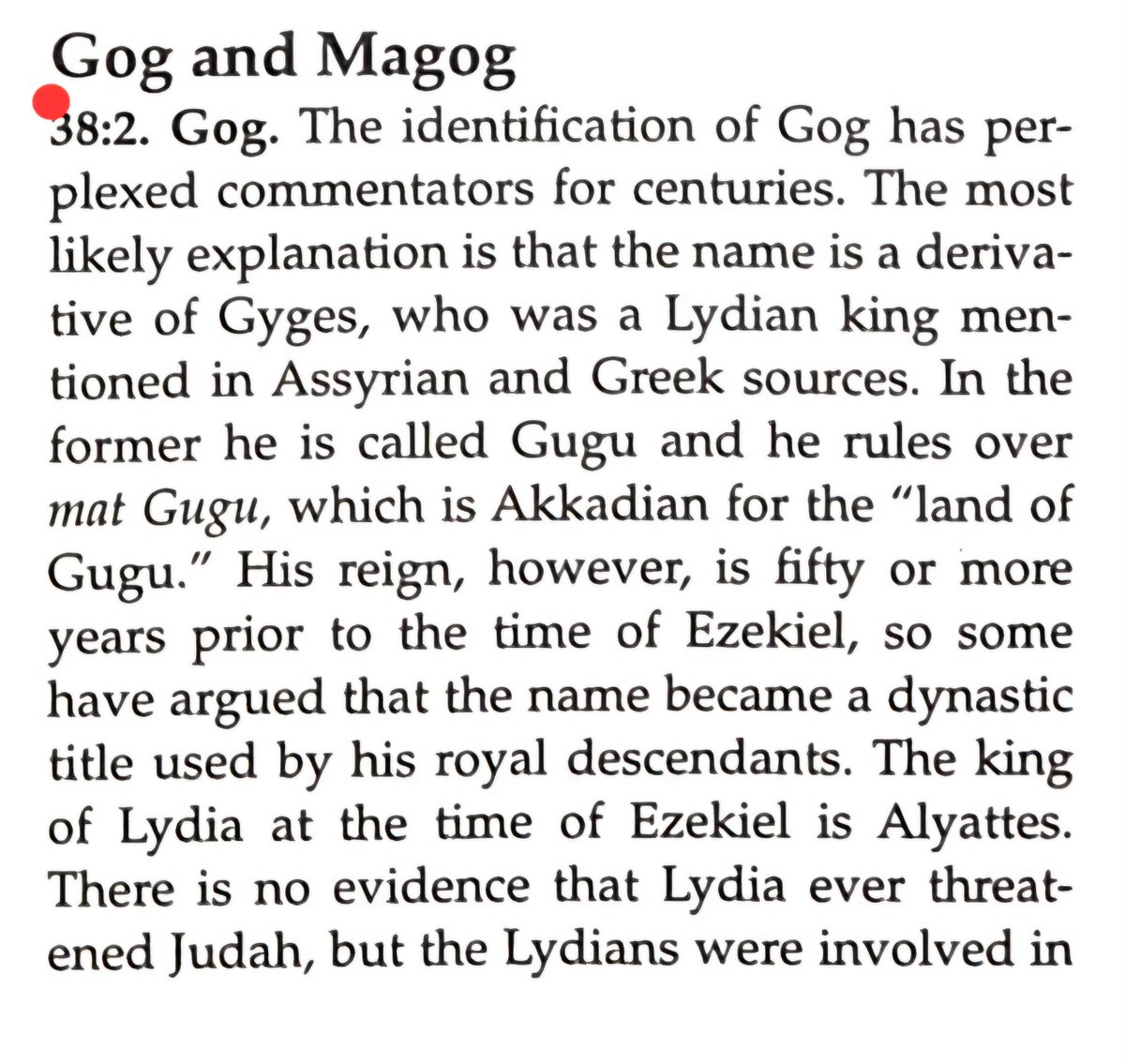
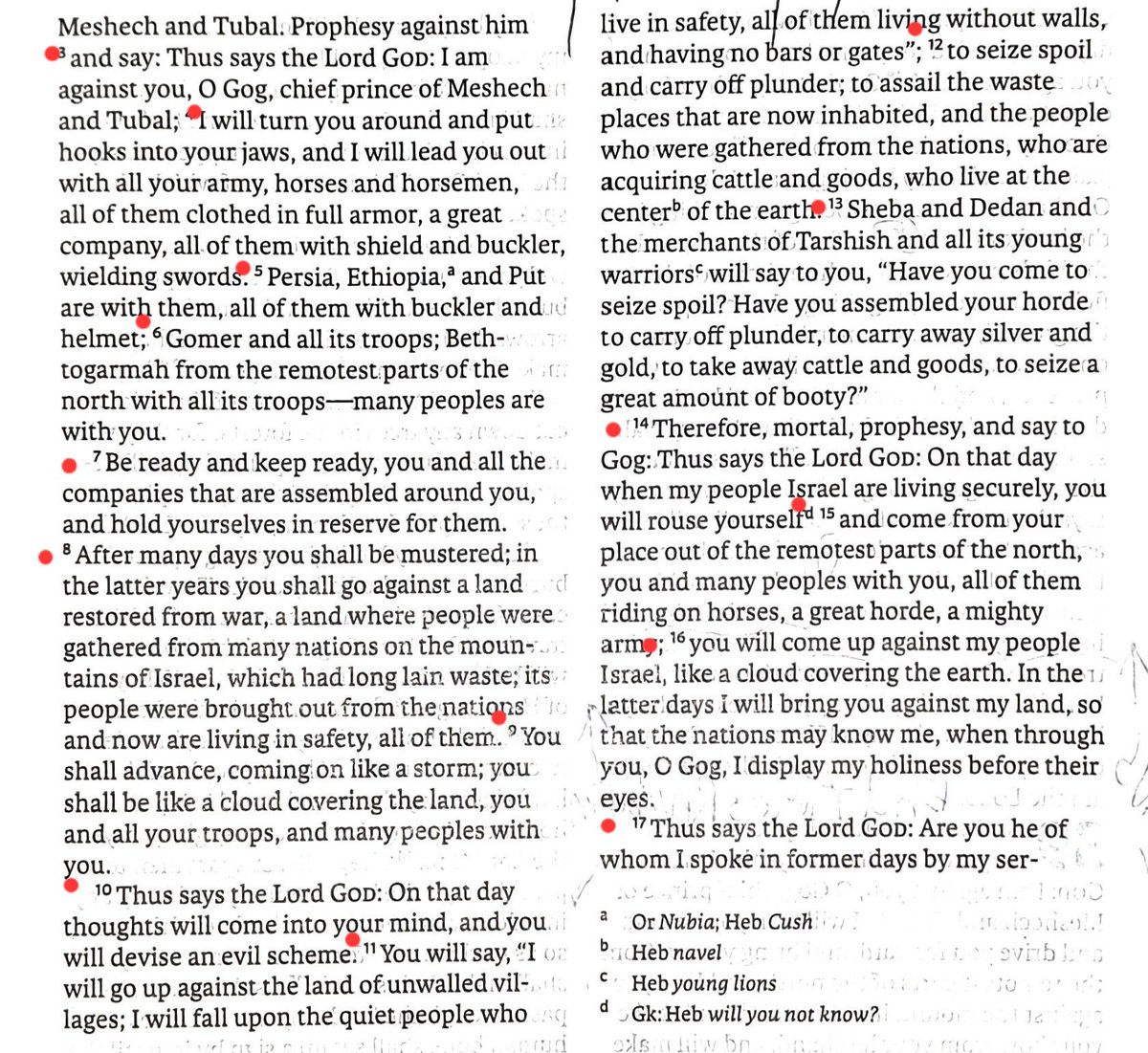
#ApocalypticBookStudy #82
#BibleStudy #137
#SupernaturalCosmography #24
#DimensionalTheology #6
#Phenomenology #11
#HighStrangeEvents #10
📜 Ezekiel 28:1-26 - 29:1-21 - 30:1-26 📜
⚠️ Specialist Study on The Anointed Cherub, the Mountain of God, & the Fall Motif in Ezekiel With + in depth Analysis on The Dragon of the Nile, Anti-Creation & Imperial Deconstruction, Chaos Waters, Cosmic Mountains, & Edenic Memory Parallels ⚠️
⚠️ (SEE REPLIES FOR EXTRA SPECIALIST COMMENTARY & IN THE PICS AS WELL)⚠️
(Quick note: Lord = Adonay & Adonay = Lord below meaning i have 2 different translations)
📜 Ezekiel 28:1-26 📜 (3 CHAPTERS IN FULL)
A Prophecy Aimed at the King of Tyre
1 And the word of Yahweh came to me, saying,
2 “Son of man, say to the leader of Tyre,
‘Thus says the Lord Yahweh:
“Because your heart was haughty,
and you said, ‘I am a god;
I sit in the seat of the gods,
I sit in the heart of the seas!’
But you are a human, not a god,
and you gave your heart to be like the heart of a god.
3 Look, are you wiser than Daniel,
so that no secret is hidden from you?
4 By your wisdom and by your understanding
you have gained for yourself wealth,
and you have amassed gold and silver
in your treasuries.
5 By the abundance of your wisdom in your trading
you have increased your wealth
and your heart was proud in your wealth.”’”
6 Therefore thus says the Lord Yahweh:
“Because of your regarding your mind
like the mind of a god,
7 therefore look! I am bringing strangers over you,
the most ruthless of the peoples,
and they will draw their swords against the beauty of your wisdom,
and they will defile your splendor.
8 They will thrust you down to the pit,
and you will die a violent death
in the heart of the seas.
9 Will you indeed still say “I am a god!”
before the face of your killers?
And in fact you are a human and not a god
in the hand of those who pierce you.
10 You will die the death of the uncircumcised
by the hand of strangers,
for I myself have spoken!” declares the Lord Yahweh.
11 And the word of Yahweh came to me, saying,
12 “Son of man, raise a lament over the king of Tyre, and you must say to him, ‘thus says the Lord Yahweh:
“You were a perfect model of an example,
full of wisdom and perfect of beauty.
13 You were in Eden, the garden of God,
and every precious stone was your adornment:
carnelian, topaz and moonstone,
turquoise, onyx and jasper,
sapphire, malachite and emerald.
And gold was the craftsmanship of your settings
and your mountings in you;
on the day when you were created they were prepared.
14 You were an anointed guardian cherub,
and I placed you on God’s holy mountain;
you walked in the midst of stones of fire.
15 You were blameless in your ways
from the day when you were created,
until wickedness was found in you.
16 In the abundance of your trading,
they filled the midst of you with violence, and you sinned;
and I cast you as a profane thing from the mountain of God,
and I expelled you, the guardian cherub,
from the midst of the stones of fire.
17 Your heart was proud because of your beauty;
you ruined your wisdom because of your splendor.
I threw you on the ground before kings;
I have exposed you for viewing.
18 From the abundance of your iniquities
in the dishonesty of your trading,
I profaned your sanctuaries
and I brought fire from your midst;
it consumed you, and I have turned you to ashes on the earth
before the eyes of everyone who sees you.
19 All who know you among the peoples
are appalled over you;
you have become as horrors,
and you shall cease to exist forever.”’”
20 And the word of Yahweh came to me, saying,
21 “Son of man, set your face toward Sidon and prophesy against it, 22 and you must say, ‘Thus says the Lord Yahweh:
“Look! I am against you, Sidon,
and I display my glory in the midst of you,
and they will know that I am Yahweh
when I execute my judgments,
and I will show myself holy within it.
23 And I will send into it a plague,
and blood will be in its streets.
And the dead will fall in the midst of her
by the sword that is against it from all around;
and they will know that I am Yahweh.
24 And there will not be any longer a painful thorn and a sharp thornbush for the house of Israel from anywhere around them[ak] from those who are despising them, and they will know that I am the Lord Yahweh.”’”
25 Thus says the Lord Yahweh: “When I gather the house of Israel from the peoples to which they were scattered about in them, and I show myself holy in them before the eyes of the nations, then they will live on their soil, which I gave to my servant Jacob.
26 And they will live on it in safety, and they will build houses, and they will plant vineyards, and they will live in safety when I execute my judgments on all those who despise them from all around them, and then they will know that I am Yahweh their God.”
📜 Ezekiel 29:1-21 📜
Yahweh’s Judgment upon Egypt
29 In the tenth year, in the tenth month, on the twelfth day of the month, the word of Yahweh came to me, saying,
2 “Son of man, set your face against Pharaoh, the king of Egypt, and prophesy against him and against Egypt, all of it.
3 Speak, and you must say,
‘thus says the Lord Yahweh:
“Look! I am against you,
Pharaoh, king of Egypt,
the great sea Sragon (A),
the one lying down
in the midst of his Nile streams,
who says to me, “It is my Nile, and I made it for myself.”
4 And so I will put hooks in your jawbones,
and I will make the fish of your Nile streams stick to your scales,
and I will bring you up from the midst of your Nile streams,
and all of the fish of your Nile streams which cling to your scales.
5 And I will fling you to the desert,
you and all the fish of your Nile streams.
On the surface of the field you will fall;
you will not be gathered,
and you will not be assembled.
To the animals of the field
and to the birds of the heavens
I will give you as food.
6 And all of the inhabitants of Egypt will know that I am Yahweh,
because of their being a staff of reed for the house of Israel.
7 When they took hold of you with the hand, you snapped,
and you split their every shoulder.
And when they leaned on you, you broke,
and you caused all of their loins to wobble.”
8 Therefore thus says the Lord Yahweh: “Look! I am bringing on you a sword, and I will cut off from you human and animal. 9 And the land of Egypt will become a desolation and ruins, and they will know that I am Yahweh because he said, ‘The Nile is mine! And I, I made it !’
10 Therefore look! I am against you and against your Nile streams, and I will make the land of Egypt into ruins, a pile of rubble, a desolation from Migdol to Syene and up to the boundary of Cush. 11 A foot of a human will not pass over it, and a foot of an animal will not pass over it, and so it will not be inhabited for forty years.
12 And I will make the land of Egypt a desolation in the midst of desolated countries, and its cities to be in the midst of ruined cities. They will be a desolation for forty years, and I will scatter Egypt among the nations, and I will disperse them among the countries.”
13 For thus says the Lord Yahweh: “At the end of forty years I will gather Egypt from the peoples among whom they were scattered.
14 And I will restore the fortunes of Egypt, and I will bring them back to the land of Pathros, to the land of their origin, and they will be a lowly kingdom there. 15 Of all the kingdoms it will be the most lowly, and it will not exalt itself again over the nations, and I will make them small so as not to rule over the nations. 16 And it will not be again for the house of Israel an object of trust, bringing to remembrance their guilt when they turned back to them, and they will know that I am the Lord Yahweh.”
17 And then in the twenty-seventh year, in the first month, on the first day of the month, the word of Yahweh came to me, saying,
18 “Son of man, Nebuchadnezzar the king of Babylon, he made his army labor hard against Tyre. Every head was rubbed bare, and every shoulder was rubbed raw, but a wage was not paid for him and for his army from Tyre for the labor that he did against it.”
19 Therefore thus says the Lord Yahweh: “Look! I am giving to Nebuchadnezzar the king of Babylon the land of Egypt, and he will carry its wealth away, and he will plunder its plunder, and he will loot its loot, and it will be a wage for his army. 20 As his wages that he worked for, I will give to him the land of Egypt, because they worked for me,” declares the Lord Yahweh.
21 “On that day I will cause power to grow up for the house of Israel, and for you I will give an opening of your mouth in the midst of them, and they will know that I am Yahweh.”
Notes-
A- or Monster
📜 Ezekiel 30:1-26 📜
Nebuchadnezzar Will Conquer Egypt
1 Yahweh spoke his word to me. He said,
2 “Son of man, prophesy.
Say, ‘This is what Adonay Yahweh says:
Cry for that day!
3 The day is near. The day of Yahweh is near.
It will be a gloomy day, a time of trouble for the nations.
4 There will be war in Egypt and anguish in Ethiopia.
Many Egyptians will fall dead.
People will take away Egypt’s wealth,
and its foundations will be torn down.
5 Sudan, Put, Lud, all the Arabs, the Libyans,
and people from the promised land will die in battle.
6 “‘This is what Yahweh says:
All Egypt’s allies will die.
Egypt’s strength will disappear.
People will die in war from Migdol to Syene,
declares Adonay Yahweh.
7 “‘Egypt will become the most desolate country in the world, and Egypt’s cities will lie in ruins. They will be ruined more than other cities. 8 Then they will know that I am Yahweh, because I will set fire to Egypt and all her defenders will be killed. 9 On that day I will send messengers in ships to terrify those who live in safety in Sudan. The people of Sudan will be in anguish when Egypt is in trouble. That day is coming!
10 “‘This is what Adonay Yahweh says: I will use King Nebuchadnezzar of Babylon to bring an end to Egypt. 11 He and his troops, the most ruthless troops among the nations, will be brought to destroy the land. They will draw their swords to attack Egypt and fill the land with dead bodies. 12 I will dry up the Nile River and sell the land to wicked people. I will have foreigners destroy the land and everything in it. I, Yahweh, have spoken.
13 “‘This is what Adonay Yahweh says: I will destroy the statues and put an end to the idols in Memphis. A prince will never rise again in Egypt. I will spread fear throughout Egypt. 14 I will destroy Pathros, set fire to Zoan, and bring punishment on Thebes. 15 I will pour out my fury on Sin, Egypt’s fortress, and I will kill many people in Thebes. 16 I will set fire to Egypt. Sin will be in much pain. Thebes will be broken into pieces, and Memphis will be in trouble every day.
17 The young men from Heliopolis and Bubastis will die in battle, and people from these cities will go into exile. 18 At Tahpanhes the day will turn dark when I break Egypt’s power. Egypt’s strong army will be defeated. Clouds will cover Egypt, and people from its villages will go into exile. 19 Then they will know that I am Yahweh, because I will bring punishment on Egypt.’”
20 On the seventh day of the first month in the eleventh year, Yahweh spoke his word to me. He said, 21 “Son of man, I have broken the arm of Pharaoh, king of Egypt. His arm isn’t bandaged, so it can’t heal and be strong enough to hold a sword. 22 “This is what Adonay Yahweh says: I’m against Pharaoh, king of Egypt. I will break both his arms, the healthy one and the broken one. I will make the sword fall from his hand. 23 I will scatter the Egyptians among the nations and force them into other countries. 24 I will make the arms of the king of Babylon strong. I will put my sword in his hand, but I will break Pharaoh’s arms. Pharaoh will groan like a person who is dying.
25 I will strengthen the arms of the king of Babylon, but Pharaoh’s arms will fall. Then they will know that I am Yahweh, because I will put my sword in the hand of the king of Babylon. He will strike Egypt with it. 26 I will scatter the Egyptians among the nations and force them into other countries. Then they will know that I am Yahweh.”
(See NEXT REPLY FOR THE REST OF OP (PICTURES YOU SEE IN THIS POST
![TeXasMadde's tweet photo. #ApocalypticBookStudy #82
#BibleStudy #137
#SupernaturalCosmography #24
#DimensionalTheology #6
#Phenomenology #11
#HighStrangeEvents #10
📜 Ezekiel 28:1-26 - 29:1-21 - 30:1-26 📜
⚠️ Specialist Study on The Anointed Cherub, the Mountain of God, & the Fall Motif in Ezekiel With + in depth Analysis on The Dragon of the Nile, Anti-Creation & Imperial Deconstruction, Chaos Waters, Cosmic Mountains, & Edenic Memory Parallels ⚠️
⚠️ (SEE REPLIES FOR EXTRA SPECIALIST COMMENTARY & IN THE PICS AS WELL)⚠️
(Quick note: Lord = Adonay & Adonay = Lord below meaning i have 2 different translations)
📜 Ezekiel 28:1-26 📜 (3 CHAPTERS IN FULL)
A Prophecy Aimed at the King of Tyre
1 And the word of Yahweh came to me, saying,
2 “Son of man, say to the leader of Tyre,
‘Thus says the Lord Yahweh:
“Because your heart was haughty,
and you said, ‘I am a god;
I sit in the seat of the gods,
I sit in the heart of the seas!’
But you are a human, not a god,
and you gave your heart to be like the heart of a god.
3 Look, are you wiser than Daniel,
so that no secret is hidden from you?
4 By your wisdom and by your understanding
you have gained for yourself wealth,
and you have amassed gold and silver
in your treasuries.
5 By the abundance of your wisdom in your trading
you have increased your wealth
and your heart was proud in your wealth.”’”
6 Therefore thus says the Lord Yahweh:
“Because of your regarding your mind
like the mind of a god,
7 therefore look! I am bringing strangers over you,
the most ruthless of the peoples,
and they will draw their swords against the beauty of your wisdom,
and they will defile your splendor.
8 They will thrust you down to the pit,
and you will die a violent death
in the heart of the seas.
9 Will you indeed still say “I am a god!”
before the face of your killers?
And in fact you are a human and not a god
in the hand of those who pierce you.
10 You will die the death of the uncircumcised
by the hand of strangers,
for I myself have spoken!” declares the Lord Yahweh.
11 And the word of Yahweh came to me, saying,
12 “Son of man, raise a lament over the king of Tyre, and you must say to him, ‘thus says the Lord Yahweh:
“You were a perfect model of an example,
full of wisdom and perfect of beauty.
13 You were in Eden, the garden of God,
and every precious stone was your adornment:
carnelian, topaz and moonstone,
turquoise, onyx and jasper,
sapphire, malachite and emerald.
And gold was the craftsmanship of your settings
and your mountings in you;
on the day when you were created they were prepared.
14 You were an anointed guardian cherub,
and I placed you on God’s holy mountain;
you walked in the midst of stones of fire.
15 You were blameless in your ways
from the day when you were created,
until wickedness was found in you.
16 In the abundance of your trading,
they filled the midst of you with violence, and you sinned;
and I cast you as a profane thing from the mountain of God,
and I expelled you, the guardian cherub,
from the midst of the stones of fire.
17 Your heart was proud because of your beauty;
you ruined your wisdom because of your splendor.
I threw you on the ground before kings;
I have exposed you for viewing.
18 From the abundance of your iniquities
in the dishonesty of your trading,
I profaned your sanctuaries
and I brought fire from your midst;
it consumed you, and I have turned you to ashes on the earth
before the eyes of everyone who sees you.
19 All who know you among the peoples
are appalled over you;
you have become as horrors,
and you shall cease to exist forever.”’”
20 And the word of Yahweh came to me, saying,
21 “Son of man, set your face toward Sidon and prophesy against it, 22 and you must say, ‘Thus says the Lord Yahweh:
“Look! I am against you, Sidon,
and I display my glory in the midst of you,
and they will know that I am Yahweh
when I execute my judgments,
and I will show myself holy within it.
23 And I will send into it a plague,
and blood will be in its streets.
And the dead will fall in the midst of her
by the sword that is against it from all around;
and they will know that I am Yahweh.
24 And there will not be any longer a painful thorn and a sharp thornbush for the house of Israel from anywhere around them[ak] from those who are despising them, and they will know that I am the Lord Yahweh.”’”
25 Thus says the Lord Yahweh: “When I gather the house of Israel from the peoples to which they were scattered about in them, and I show myself holy in them before the eyes of the nations, then they will live on their soil, which I gave to my servant Jacob.
26 And they will live on it in safety, and they will build houses, and they will plant vineyards, and they will live in safety when I execute my judgments on all those who despise them from all around them, and then they will know that I am Yahweh their God.”
📜 Ezekiel 29:1-21 📜
Yahweh’s Judgment upon Egypt
29 In the tenth year, in the tenth month, on the twelfth day of the month, the word of Yahweh came to me, saying,
2 “Son of man, set your face against Pharaoh, the king of Egypt, and prophesy against him and against Egypt, all of it.
3 Speak, and you must say,
‘thus says the Lord Yahweh:
“Look! I am against you,
Pharaoh, king of Egypt,
the great sea Sragon (A),
the one lying down
in the midst of his Nile streams,
who says to me, “It is my Nile, and I made it for myself.”
4 And so I will put hooks in your jawbones,
and I will make the fish of your Nile streams stick to your scales,
and I will bring you up from the midst of your Nile streams,
and all of the fish of your Nile streams which cling to your scales.
5 And I will fling you to the desert,
you and all the fish of your Nile streams.
On the surface of the field you will fall;
you will not be gathered,
and you will not be assembled.
To the animals of the field
and to the birds of the heavens
I will give you as food.
6 And all of the inhabitants of Egypt will know that I am Yahweh,
because of their being a staff of reed for the house of Israel.
7 When they took hold of you with the hand, you snapped,
and you split their every shoulder.
And when they leaned on you, you broke,
and you caused all of their loins to wobble.”
8 Therefore thus says the Lord Yahweh: “Look! I am bringing on you a sword, and I will cut off from you human and animal. 9 And the land of Egypt will become a desolation and ruins, and they will know that I am Yahweh because he said, ‘The Nile is mine! And I, I made it !’
10 Therefore look! I am against you and against your Nile streams, and I will make the land of Egypt into ruins, a pile of rubble, a desolation from Migdol to Syene and up to the boundary of Cush. 11 A foot of a human will not pass over it, and a foot of an animal will not pass over it, and so it will not be inhabited for forty years.
12 And I will make the land of Egypt a desolation in the midst of desolated countries, and its cities to be in the midst of ruined cities. They will be a desolation for forty years, and I will scatter Egypt among the nations, and I will disperse them among the countries.”
13 For thus says the Lord Yahweh: “At the end of forty years I will gather Egypt from the peoples among whom they were scattered.
14 And I will restore the fortunes of Egypt, and I will bring them back to the land of Pathros, to the land of their origin, and they will be a lowly kingdom there. 15 Of all the kingdoms it will be the most lowly, and it will not exalt itself again over the nations, and I will make them small so as not to rule over the nations. 16 And it will not be again for the house of Israel an object of trust, bringing to remembrance their guilt when they turned back to them, and they will know that I am the Lord Yahweh.”
17 And then in the twenty-seventh year, in the first month, on the first day of the month, the word of Yahweh came to me, saying,
18 “Son of man, Nebuchadnezzar the king of Babylon, he made his army labor hard against Tyre. Every head was rubbed bare, and every shoulder was rubbed raw, but a wage was not paid for him and for his army from Tyre for the labor that he did against it.”
19 Therefore thus says the Lord Yahweh: “Look! I am giving to Nebuchadnezzar the king of Babylon the land of Egypt, and he will carry its wealth away, and he will plunder its plunder, and he will loot its loot, and it will be a wage for his army. 20 As his wages that he worked for, I will give to him the land of Egypt, because they worked for me,” declares the Lord Yahweh.
21 “On that day I will cause power to grow up for the house of Israel, and for you I will give an opening of your mouth in the midst of them, and they will know that I am Yahweh.”
Notes-
A- or Monster
📜 Ezekiel 30:1-26 📜
Nebuchadnezzar Will Conquer Egypt
1 Yahweh spoke his word to me. He said,
2 “Son of man, prophesy.
Say, ‘This is what Adonay Yahweh says:
Cry for that day!
3 The day is near. The day of Yahweh is near.
It will be a gloomy day, a time of trouble for the nations.
4 There will be war in Egypt and anguish in Ethiopia.
Many Egyptians will fall dead.
People will take away Egypt’s wealth,
and its foundations will be torn down.
5 Sudan, Put, Lud, all the Arabs, the Libyans,
and people from the promised land will die in battle.
6 “‘This is what Yahweh says:
All Egypt’s allies will die.
Egypt’s strength will disappear.
People will die in war from Migdol to Syene,
declares Adonay Yahweh.
7 “‘Egypt will become the most desolate country in the world, and Egypt’s cities will lie in ruins. They will be ruined more than other cities. 8 Then they will know that I am Yahweh, because I will set fire to Egypt and all her defenders will be killed. 9 On that day I will send messengers in ships to terrify those who live in safety in Sudan. The people of Sudan will be in anguish when Egypt is in trouble. That day is coming!
10 “‘This is what Adonay Yahweh says: I will use King Nebuchadnezzar of Babylon to bring an end to Egypt. 11 He and his troops, the most ruthless troops among the nations, will be brought to destroy the land. They will draw their swords to attack Egypt and fill the land with dead bodies. 12 I will dry up the Nile River and sell the land to wicked people. I will have foreigners destroy the land and everything in it. I, Yahweh, have spoken.
13 “‘This is what Adonay Yahweh says: I will destroy the statues and put an end to the idols in Memphis. A prince will never rise again in Egypt. I will spread fear throughout Egypt. 14 I will destroy Pathros, set fire to Zoan, and bring punishment on Thebes. 15 I will pour out my fury on Sin, Egypt’s fortress, and I will kill many people in Thebes. 16 I will set fire to Egypt. Sin will be in much pain. Thebes will be broken into pieces, and Memphis will be in trouble every day.
17 The young men from Heliopolis and Bubastis will die in battle, and people from these cities will go into exile. 18 At Tahpanhes the day will turn dark when I break Egypt’s power. Egypt’s strong army will be defeated. Clouds will cover Egypt, and people from its villages will go into exile. 19 Then they will know that I am Yahweh, because I will bring punishment on Egypt.’”
20 On the seventh day of the first month in the eleventh year, Yahweh spoke his word to me. He said, 21 “Son of man, I have broken the arm of Pharaoh, king of Egypt. His arm isn’t bandaged, so it can’t heal and be strong enough to hold a sword. 22 “This is what Adonay Yahweh says: I’m against Pharaoh, king of Egypt. I will break both his arms, the healthy one and the broken one. I will make the sword fall from his hand. 23 I will scatter the Egyptians among the nations and force them into other countries. 24 I will make the arms of the king of Babylon strong. I will put my sword in his hand, but I will break Pharaoh’s arms. Pharaoh will groan like a person who is dying.
25 I will strengthen the arms of the king of Babylon, but Pharaoh’s arms will fall. Then they will know that I am Yahweh, because I will put my sword in the hand of the king of Babylon. He will strike Egypt with it. 26 I will scatter the Egyptians among the nations and force them into other countries. Then they will know that I am Yahweh.”
(See NEXT REPLY FOR THE REST OF OP (PICTURES YOU SEE IN THIS POST](https://pbs.twimg.com/media/HBTtyOXbcAA_oT6.jpg)
![TeXasMadde's tweet photo. #ApocalypticBookStudy #82
#BibleStudy #137
#SupernaturalCosmography #24
#DimensionalTheology #6
#Phenomenology #11
#HighStrangeEvents #10
📜 Ezekiel 28:1-26 - 29:1-21 - 30:1-26 📜
⚠️ Specialist Study on The Anointed Cherub, the Mountain of God, & the Fall Motif in Ezekiel With + in depth Analysis on The Dragon of the Nile, Anti-Creation & Imperial Deconstruction, Chaos Waters, Cosmic Mountains, & Edenic Memory Parallels ⚠️
⚠️ (SEE REPLIES FOR EXTRA SPECIALIST COMMENTARY & IN THE PICS AS WELL)⚠️
(Quick note: Lord = Adonay & Adonay = Lord below meaning i have 2 different translations)
📜 Ezekiel 28:1-26 📜 (3 CHAPTERS IN FULL)
A Prophecy Aimed at the King of Tyre
1 And the word of Yahweh came to me, saying,
2 “Son of man, say to the leader of Tyre,
‘Thus says the Lord Yahweh:
“Because your heart was haughty,
and you said, ‘I am a god;
I sit in the seat of the gods,
I sit in the heart of the seas!’
But you are a human, not a god,
and you gave your heart to be like the heart of a god.
3 Look, are you wiser than Daniel,
so that no secret is hidden from you?
4 By your wisdom and by your understanding
you have gained for yourself wealth,
and you have amassed gold and silver
in your treasuries.
5 By the abundance of your wisdom in your trading
you have increased your wealth
and your heart was proud in your wealth.”’”
6 Therefore thus says the Lord Yahweh:
“Because of your regarding your mind
like the mind of a god,
7 therefore look! I am bringing strangers over you,
the most ruthless of the peoples,
and they will draw their swords against the beauty of your wisdom,
and they will defile your splendor.
8 They will thrust you down to the pit,
and you will die a violent death
in the heart of the seas.
9 Will you indeed still say “I am a god!”
before the face of your killers?
And in fact you are a human and not a god
in the hand of those who pierce you.
10 You will die the death of the uncircumcised
by the hand of strangers,
for I myself have spoken!” declares the Lord Yahweh.
11 And the word of Yahweh came to me, saying,
12 “Son of man, raise a lament over the king of Tyre, and you must say to him, ‘thus says the Lord Yahweh:
“You were a perfect model of an example,
full of wisdom and perfect of beauty.
13 You were in Eden, the garden of God,
and every precious stone was your adornment:
carnelian, topaz and moonstone,
turquoise, onyx and jasper,
sapphire, malachite and emerald.
And gold was the craftsmanship of your settings
and your mountings in you;
on the day when you were created they were prepared.
14 You were an anointed guardian cherub,
and I placed you on God’s holy mountain;
you walked in the midst of stones of fire.
15 You were blameless in your ways
from the day when you were created,
until wickedness was found in you.
16 In the abundance of your trading,
they filled the midst of you with violence, and you sinned;
and I cast you as a profane thing from the mountain of God,
and I expelled you, the guardian cherub,
from the midst of the stones of fire.
17 Your heart was proud because of your beauty;
you ruined your wisdom because of your splendor.
I threw you on the ground before kings;
I have exposed you for viewing.
18 From the abundance of your iniquities
in the dishonesty of your trading,
I profaned your sanctuaries
and I brought fire from your midst;
it consumed you, and I have turned you to ashes on the earth
before the eyes of everyone who sees you.
19 All who know you among the peoples
are appalled over you;
you have become as horrors,
and you shall cease to exist forever.”’”
20 And the word of Yahweh came to me, saying,
21 “Son of man, set your face toward Sidon and prophesy against it, 22 and you must say, ‘Thus says the Lord Yahweh:
“Look! I am against you, Sidon,
and I display my glory in the midst of you,
and they will know that I am Yahweh
when I execute my judgments,
and I will show myself holy within it.
23 And I will send into it a plague,
and blood will be in its streets.
And the dead will fall in the midst of her
by the sword that is against it from all around;
and they will know that I am Yahweh.
24 And there will not be any longer a painful thorn and a sharp thornbush for the house of Israel from anywhere around them[ak] from those who are despising them, and they will know that I am the Lord Yahweh.”’”
25 Thus says the Lord Yahweh: “When I gather the house of Israel from the peoples to which they were scattered about in them, and I show myself holy in them before the eyes of the nations, then they will live on their soil, which I gave to my servant Jacob.
26 And they will live on it in safety, and they will build houses, and they will plant vineyards, and they will live in safety when I execute my judgments on all those who despise them from all around them, and then they will know that I am Yahweh their God.”
📜 Ezekiel 29:1-21 📜
Yahweh’s Judgment upon Egypt
29 In the tenth year, in the tenth month, on the twelfth day of the month, the word of Yahweh came to me, saying,
2 “Son of man, set your face against Pharaoh, the king of Egypt, and prophesy against him and against Egypt, all of it.
3 Speak, and you must say,
‘thus says the Lord Yahweh:
“Look! I am against you,
Pharaoh, king of Egypt,
the great sea Sragon (A),
the one lying down
in the midst of his Nile streams,
who says to me, “It is my Nile, and I made it for myself.”
4 And so I will put hooks in your jawbones,
and I will make the fish of your Nile streams stick to your scales,
and I will bring you up from the midst of your Nile streams,
and all of the fish of your Nile streams which cling to your scales.
5 And I will fling you to the desert,
you and all the fish of your Nile streams.
On the surface of the field you will fall;
you will not be gathered,
and you will not be assembled.
To the animals of the field
and to the birds of the heavens
I will give you as food.
6 And all of the inhabitants of Egypt will know that I am Yahweh,
because of their being a staff of reed for the house of Israel.
7 When they took hold of you with the hand, you snapped,
and you split their every shoulder.
And when they leaned on you, you broke,
and you caused all of their loins to wobble.”
8 Therefore thus says the Lord Yahweh: “Look! I am bringing on you a sword, and I will cut off from you human and animal. 9 And the land of Egypt will become a desolation and ruins, and they will know that I am Yahweh because he said, ‘The Nile is mine! And I, I made it !’
10 Therefore look! I am against you and against your Nile streams, and I will make the land of Egypt into ruins, a pile of rubble, a desolation from Migdol to Syene and up to the boundary of Cush. 11 A foot of a human will not pass over it, and a foot of an animal will not pass over it, and so it will not be inhabited for forty years.
12 And I will make the land of Egypt a desolation in the midst of desolated countries, and its cities to be in the midst of ruined cities. They will be a desolation for forty years, and I will scatter Egypt among the nations, and I will disperse them among the countries.”
13 For thus says the Lord Yahweh: “At the end of forty years I will gather Egypt from the peoples among whom they were scattered.
14 And I will restore the fortunes of Egypt, and I will bring them back to the land of Pathros, to the land of their origin, and they will be a lowly kingdom there. 15 Of all the kingdoms it will be the most lowly, and it will not exalt itself again over the nations, and I will make them small so as not to rule over the nations. 16 And it will not be again for the house of Israel an object of trust, bringing to remembrance their guilt when they turned back to them, and they will know that I am the Lord Yahweh.”
17 And then in the twenty-seventh year, in the first month, on the first day of the month, the word of Yahweh came to me, saying,
18 “Son of man, Nebuchadnezzar the king of Babylon, he made his army labor hard against Tyre. Every head was rubbed bare, and every shoulder was rubbed raw, but a wage was not paid for him and for his army from Tyre for the labor that he did against it.”
19 Therefore thus says the Lord Yahweh: “Look! I am giving to Nebuchadnezzar the king of Babylon the land of Egypt, and he will carry its wealth away, and he will plunder its plunder, and he will loot its loot, and it will be a wage for his army. 20 As his wages that he worked for, I will give to him the land of Egypt, because they worked for me,” declares the Lord Yahweh.
21 “On that day I will cause power to grow up for the house of Israel, and for you I will give an opening of your mouth in the midst of them, and they will know that I am Yahweh.”
Notes-
A- or Monster
📜 Ezekiel 30:1-26 📜
Nebuchadnezzar Will Conquer Egypt
1 Yahweh spoke his word to me. He said,
2 “Son of man, prophesy.
Say, ‘This is what Adonay Yahweh says:
Cry for that day!
3 The day is near. The day of Yahweh is near.
It will be a gloomy day, a time of trouble for the nations.
4 There will be war in Egypt and anguish in Ethiopia.
Many Egyptians will fall dead.
People will take away Egypt’s wealth,
and its foundations will be torn down.
5 Sudan, Put, Lud, all the Arabs, the Libyans,
and people from the promised land will die in battle.
6 “‘This is what Yahweh says:
All Egypt’s allies will die.
Egypt’s strength will disappear.
People will die in war from Migdol to Syene,
declares Adonay Yahweh.
7 “‘Egypt will become the most desolate country in the world, and Egypt’s cities will lie in ruins. They will be ruined more than other cities. 8 Then they will know that I am Yahweh, because I will set fire to Egypt and all her defenders will be killed. 9 On that day I will send messengers in ships to terrify those who live in safety in Sudan. The people of Sudan will be in anguish when Egypt is in trouble. That day is coming!
10 “‘This is what Adonay Yahweh says: I will use King Nebuchadnezzar of Babylon to bring an end to Egypt. 11 He and his troops, the most ruthless troops among the nations, will be brought to destroy the land. They will draw their swords to attack Egypt and fill the land with dead bodies. 12 I will dry up the Nile River and sell the land to wicked people. I will have foreigners destroy the land and everything in it. I, Yahweh, have spoken.
13 “‘This is what Adonay Yahweh says: I will destroy the statues and put an end to the idols in Memphis. A prince will never rise again in Egypt. I will spread fear throughout Egypt. 14 I will destroy Pathros, set fire to Zoan, and bring punishment on Thebes. 15 I will pour out my fury on Sin, Egypt’s fortress, and I will kill many people in Thebes. 16 I will set fire to Egypt. Sin will be in much pain. Thebes will be broken into pieces, and Memphis will be in trouble every day.
17 The young men from Heliopolis and Bubastis will die in battle, and people from these cities will go into exile. 18 At Tahpanhes the day will turn dark when I break Egypt’s power. Egypt’s strong army will be defeated. Clouds will cover Egypt, and people from its villages will go into exile. 19 Then they will know that I am Yahweh, because I will bring punishment on Egypt.’”
20 On the seventh day of the first month in the eleventh year, Yahweh spoke his word to me. He said, 21 “Son of man, I have broken the arm of Pharaoh, king of Egypt. His arm isn’t bandaged, so it can’t heal and be strong enough to hold a sword. 22 “This is what Adonay Yahweh says: I’m against Pharaoh, king of Egypt. I will break both his arms, the healthy one and the broken one. I will make the sword fall from his hand. 23 I will scatter the Egyptians among the nations and force them into other countries. 24 I will make the arms of the king of Babylon strong. I will put my sword in his hand, but I will break Pharaoh’s arms. Pharaoh will groan like a person who is dying.
25 I will strengthen the arms of the king of Babylon, but Pharaoh’s arms will fall. Then they will know that I am Yahweh, because I will put my sword in the hand of the king of Babylon. He will strike Egypt with it. 26 I will scatter the Egyptians among the nations and force them into other countries. Then they will know that I am Yahweh.”
(See NEXT REPLY FOR THE REST OF OP (PICTURES YOU SEE IN THIS POST](https://pbs.twimg.com/media/HBTtyLsaoAATwto.jpg)
![TeXasMadde's tweet photo. #ApocalypticBookStudy #82
#BibleStudy #137
#SupernaturalCosmography #24
#DimensionalTheology #6
#Phenomenology #11
#HighStrangeEvents #10
📜 Ezekiel 28:1-26 - 29:1-21 - 30:1-26 📜
⚠️ Specialist Study on The Anointed Cherub, the Mountain of God, & the Fall Motif in Ezekiel With + in depth Analysis on The Dragon of the Nile, Anti-Creation & Imperial Deconstruction, Chaos Waters, Cosmic Mountains, & Edenic Memory Parallels ⚠️
⚠️ (SEE REPLIES FOR EXTRA SPECIALIST COMMENTARY & IN THE PICS AS WELL)⚠️
(Quick note: Lord = Adonay & Adonay = Lord below meaning i have 2 different translations)
📜 Ezekiel 28:1-26 📜 (3 CHAPTERS IN FULL)
A Prophecy Aimed at the King of Tyre
1 And the word of Yahweh came to me, saying,
2 “Son of man, say to the leader of Tyre,
‘Thus says the Lord Yahweh:
“Because your heart was haughty,
and you said, ‘I am a god;
I sit in the seat of the gods,
I sit in the heart of the seas!’
But you are a human, not a god,
and you gave your heart to be like the heart of a god.
3 Look, are you wiser than Daniel,
so that no secret is hidden from you?
4 By your wisdom and by your understanding
you have gained for yourself wealth,
and you have amassed gold and silver
in your treasuries.
5 By the abundance of your wisdom in your trading
you have increased your wealth
and your heart was proud in your wealth.”’”
6 Therefore thus says the Lord Yahweh:
“Because of your regarding your mind
like the mind of a god,
7 therefore look! I am bringing strangers over you,
the most ruthless of the peoples,
and they will draw their swords against the beauty of your wisdom,
and they will defile your splendor.
8 They will thrust you down to the pit,
and you will die a violent death
in the heart of the seas.
9 Will you indeed still say “I am a god!”
before the face of your killers?
And in fact you are a human and not a god
in the hand of those who pierce you.
10 You will die the death of the uncircumcised
by the hand of strangers,
for I myself have spoken!” declares the Lord Yahweh.
11 And the word of Yahweh came to me, saying,
12 “Son of man, raise a lament over the king of Tyre, and you must say to him, ‘thus says the Lord Yahweh:
“You were a perfect model of an example,
full of wisdom and perfect of beauty.
13 You were in Eden, the garden of God,
and every precious stone was your adornment:
carnelian, topaz and moonstone,
turquoise, onyx and jasper,
sapphire, malachite and emerald.
And gold was the craftsmanship of your settings
and your mountings in you;
on the day when you were created they were prepared.
14 You were an anointed guardian cherub,
and I placed you on God’s holy mountain;
you walked in the midst of stones of fire.
15 You were blameless in your ways
from the day when you were created,
until wickedness was found in you.
16 In the abundance of your trading,
they filled the midst of you with violence, and you sinned;
and I cast you as a profane thing from the mountain of God,
and I expelled you, the guardian cherub,
from the midst of the stones of fire.
17 Your heart was proud because of your beauty;
you ruined your wisdom because of your splendor.
I threw you on the ground before kings;
I have exposed you for viewing.
18 From the abundance of your iniquities
in the dishonesty of your trading,
I profaned your sanctuaries
and I brought fire from your midst;
it consumed you, and I have turned you to ashes on the earth
before the eyes of everyone who sees you.
19 All who know you among the peoples
are appalled over you;
you have become as horrors,
and you shall cease to exist forever.”’”
20 And the word of Yahweh came to me, saying,
21 “Son of man, set your face toward Sidon and prophesy against it, 22 and you must say, ‘Thus says the Lord Yahweh:
“Look! I am against you, Sidon,
and I display my glory in the midst of you,
and they will know that I am Yahweh
when I execute my judgments,
and I will show myself holy within it.
23 And I will send into it a plague,
and blood will be in its streets.
And the dead will fall in the midst of her
by the sword that is against it from all around;
and they will know that I am Yahweh.
24 And there will not be any longer a painful thorn and a sharp thornbush for the house of Israel from anywhere around them[ak] from those who are despising them, and they will know that I am the Lord Yahweh.”’”
25 Thus says the Lord Yahweh: “When I gather the house of Israel from the peoples to which they were scattered about in them, and I show myself holy in them before the eyes of the nations, then they will live on their soil, which I gave to my servant Jacob.
26 And they will live on it in safety, and they will build houses, and they will plant vineyards, and they will live in safety when I execute my judgments on all those who despise them from all around them, and then they will know that I am Yahweh their God.”
📜 Ezekiel 29:1-21 📜
Yahweh’s Judgment upon Egypt
29 In the tenth year, in the tenth month, on the twelfth day of the month, the word of Yahweh came to me, saying,
2 “Son of man, set your face against Pharaoh, the king of Egypt, and prophesy against him and against Egypt, all of it.
3 Speak, and you must say,
‘thus says the Lord Yahweh:
“Look! I am against you,
Pharaoh, king of Egypt,
the great sea Sragon (A),
the one lying down
in the midst of his Nile streams,
who says to me, “It is my Nile, and I made it for myself.”
4 And so I will put hooks in your jawbones,
and I will make the fish of your Nile streams stick to your scales,
and I will bring you up from the midst of your Nile streams,
and all of the fish of your Nile streams which cling to your scales.
5 And I will fling you to the desert,
you and all the fish of your Nile streams.
On the surface of the field you will fall;
you will not be gathered,
and you will not be assembled.
To the animals of the field
and to the birds of the heavens
I will give you as food.
6 And all of the inhabitants of Egypt will know that I am Yahweh,
because of their being a staff of reed for the house of Israel.
7 When they took hold of you with the hand, you snapped,
and you split their every shoulder.
And when they leaned on you, you broke,
and you caused all of their loins to wobble.”
8 Therefore thus says the Lord Yahweh: “Look! I am bringing on you a sword, and I will cut off from you human and animal. 9 And the land of Egypt will become a desolation and ruins, and they will know that I am Yahweh because he said, ‘The Nile is mine! And I, I made it !’
10 Therefore look! I am against you and against your Nile streams, and I will make the land of Egypt into ruins, a pile of rubble, a desolation from Migdol to Syene and up to the boundary of Cush. 11 A foot of a human will not pass over it, and a foot of an animal will not pass over it, and so it will not be inhabited for forty years.
12 And I will make the land of Egypt a desolation in the midst of desolated countries, and its cities to be in the midst of ruined cities. They will be a desolation for forty years, and I will scatter Egypt among the nations, and I will disperse them among the countries.”
13 For thus says the Lord Yahweh: “At the end of forty years I will gather Egypt from the peoples among whom they were scattered.
14 And I will restore the fortunes of Egypt, and I will bring them back to the land of Pathros, to the land of their origin, and they will be a lowly kingdom there. 15 Of all the kingdoms it will be the most lowly, and it will not exalt itself again over the nations, and I will make them small so as not to rule over the nations. 16 And it will not be again for the house of Israel an object of trust, bringing to remembrance their guilt when they turned back to them, and they will know that I am the Lord Yahweh.”
17 And then in the twenty-seventh year, in the first month, on the first day of the month, the word of Yahweh came to me, saying,
18 “Son of man, Nebuchadnezzar the king of Babylon, he made his army labor hard against Tyre. Every head was rubbed bare, and every shoulder was rubbed raw, but a wage was not paid for him and for his army from Tyre for the labor that he did against it.”
19 Therefore thus says the Lord Yahweh: “Look! I am giving to Nebuchadnezzar the king of Babylon the land of Egypt, and he will carry its wealth away, and he will plunder its plunder, and he will loot its loot, and it will be a wage for his army. 20 As his wages that he worked for, I will give to him the land of Egypt, because they worked for me,” declares the Lord Yahweh.
21 “On that day I will cause power to grow up for the house of Israel, and for you I will give an opening of your mouth in the midst of them, and they will know that I am Yahweh.”
Notes-
A- or Monster
📜 Ezekiel 30:1-26 📜
Nebuchadnezzar Will Conquer Egypt
1 Yahweh spoke his word to me. He said,
2 “Son of man, prophesy.
Say, ‘This is what Adonay Yahweh says:
Cry for that day!
3 The day is near. The day of Yahweh is near.
It will be a gloomy day, a time of trouble for the nations.
4 There will be war in Egypt and anguish in Ethiopia.
Many Egyptians will fall dead.
People will take away Egypt’s wealth,
and its foundations will be torn down.
5 Sudan, Put, Lud, all the Arabs, the Libyans,
and people from the promised land will die in battle.
6 “‘This is what Yahweh says:
All Egypt’s allies will die.
Egypt’s strength will disappear.
People will die in war from Migdol to Syene,
declares Adonay Yahweh.
7 “‘Egypt will become the most desolate country in the world, and Egypt’s cities will lie in ruins. They will be ruined more than other cities. 8 Then they will know that I am Yahweh, because I will set fire to Egypt and all her defenders will be killed. 9 On that day I will send messengers in ships to terrify those who live in safety in Sudan. The people of Sudan will be in anguish when Egypt is in trouble. That day is coming!
10 “‘This is what Adonay Yahweh says: I will use King Nebuchadnezzar of Babylon to bring an end to Egypt. 11 He and his troops, the most ruthless troops among the nations, will be brought to destroy the land. They will draw their swords to attack Egypt and fill the land with dead bodies. 12 I will dry up the Nile River and sell the land to wicked people. I will have foreigners destroy the land and everything in it. I, Yahweh, have spoken.
13 “‘This is what Adonay Yahweh says: I will destroy the statues and put an end to the idols in Memphis. A prince will never rise again in Egypt. I will spread fear throughout Egypt. 14 I will destroy Pathros, set fire to Zoan, and bring punishment on Thebes. 15 I will pour out my fury on Sin, Egypt’s fortress, and I will kill many people in Thebes. 16 I will set fire to Egypt. Sin will be in much pain. Thebes will be broken into pieces, and Memphis will be in trouble every day.
17 The young men from Heliopolis and Bubastis will die in battle, and people from these cities will go into exile. 18 At Tahpanhes the day will turn dark when I break Egypt’s power. Egypt’s strong army will be defeated. Clouds will cover Egypt, and people from its villages will go into exile. 19 Then they will know that I am Yahweh, because I will bring punishment on Egypt.’”
20 On the seventh day of the first month in the eleventh year, Yahweh spoke his word to me. He said, 21 “Son of man, I have broken the arm of Pharaoh, king of Egypt. His arm isn’t bandaged, so it can’t heal and be strong enough to hold a sword. 22 “This is what Adonay Yahweh says: I’m against Pharaoh, king of Egypt. I will break both his arms, the healthy one and the broken one. I will make the sword fall from his hand. 23 I will scatter the Egyptians among the nations and force them into other countries. 24 I will make the arms of the king of Babylon strong. I will put my sword in his hand, but I will break Pharaoh’s arms. Pharaoh will groan like a person who is dying.
25 I will strengthen the arms of the king of Babylon, but Pharaoh’s arms will fall. Then they will know that I am Yahweh, because I will put my sword in the hand of the king of Babylon. He will strike Egypt with it. 26 I will scatter the Egyptians among the nations and force them into other countries. Then they will know that I am Yahweh.”
(See NEXT REPLY FOR THE REST OF OP (PICTURES YOU SEE IN THIS POST](https://pbs.twimg.com/media/HBTtyLEWAAAV20w.jpg)
![TeXasMadde's tweet photo. #ApocalypticBookStudy #82
#BibleStudy #137
#SupernaturalCosmography #24
#DimensionalTheology #6
#Phenomenology #11
#HighStrangeEvents #10
📜 Ezekiel 28:1-26 - 29:1-21 - 30:1-26 📜
⚠️ Specialist Study on The Anointed Cherub, the Mountain of God, & the Fall Motif in Ezekiel With + in depth Analysis on The Dragon of the Nile, Anti-Creation & Imperial Deconstruction, Chaos Waters, Cosmic Mountains, & Edenic Memory Parallels ⚠️
⚠️ (SEE REPLIES FOR EXTRA SPECIALIST COMMENTARY & IN THE PICS AS WELL)⚠️
(Quick note: Lord = Adonay & Adonay = Lord below meaning i have 2 different translations)
📜 Ezekiel 28:1-26 📜 (3 CHAPTERS IN FULL)
A Prophecy Aimed at the King of Tyre
1 And the word of Yahweh came to me, saying,
2 “Son of man, say to the leader of Tyre,
‘Thus says the Lord Yahweh:
“Because your heart was haughty,
and you said, ‘I am a god;
I sit in the seat of the gods,
I sit in the heart of the seas!’
But you are a human, not a god,
and you gave your heart to be like the heart of a god.
3 Look, are you wiser than Daniel,
so that no secret is hidden from you?
4 By your wisdom and by your understanding
you have gained for yourself wealth,
and you have amassed gold and silver
in your treasuries.
5 By the abundance of your wisdom in your trading
you have increased your wealth
and your heart was proud in your wealth.”’”
6 Therefore thus says the Lord Yahweh:
“Because of your regarding your mind
like the mind of a god,
7 therefore look! I am bringing strangers over you,
the most ruthless of the peoples,
and they will draw their swords against the beauty of your wisdom,
and they will defile your splendor.
8 They will thrust you down to the pit,
and you will die a violent death
in the heart of the seas.
9 Will you indeed still say “I am a god!”
before the face of your killers?
And in fact you are a human and not a god
in the hand of those who pierce you.
10 You will die the death of the uncircumcised
by the hand of strangers,
for I myself have spoken!” declares the Lord Yahweh.
11 And the word of Yahweh came to me, saying,
12 “Son of man, raise a lament over the king of Tyre, and you must say to him, ‘thus says the Lord Yahweh:
“You were a perfect model of an example,
full of wisdom and perfect of beauty.
13 You were in Eden, the garden of God,
and every precious stone was your adornment:
carnelian, topaz and moonstone,
turquoise, onyx and jasper,
sapphire, malachite and emerald.
And gold was the craftsmanship of your settings
and your mountings in you;
on the day when you were created they were prepared.
14 You were an anointed guardian cherub,
and I placed you on God’s holy mountain;
you walked in the midst of stones of fire.
15 You were blameless in your ways
from the day when you were created,
until wickedness was found in you.
16 In the abundance of your trading,
they filled the midst of you with violence, and you sinned;
and I cast you as a profane thing from the mountain of God,
and I expelled you, the guardian cherub,
from the midst of the stones of fire.
17 Your heart was proud because of your beauty;
you ruined your wisdom because of your splendor.
I threw you on the ground before kings;
I have exposed you for viewing.
18 From the abundance of your iniquities
in the dishonesty of your trading,
I profaned your sanctuaries
and I brought fire from your midst;
it consumed you, and I have turned you to ashes on the earth
before the eyes of everyone who sees you.
19 All who know you among the peoples
are appalled over you;
you have become as horrors,
and you shall cease to exist forever.”’”
20 And the word of Yahweh came to me, saying,
21 “Son of man, set your face toward Sidon and prophesy against it, 22 and you must say, ‘Thus says the Lord Yahweh:
“Look! I am against you, Sidon,
and I display my glory in the midst of you,
and they will know that I am Yahweh
when I execute my judgments,
and I will show myself holy within it.
23 And I will send into it a plague,
and blood will be in its streets.
And the dead will fall in the midst of her
by the sword that is against it from all around;
and they will know that I am Yahweh.
24 And there will not be any longer a painful thorn and a sharp thornbush for the house of Israel from anywhere around them[ak] from those who are despising them, and they will know that I am the Lord Yahweh.”’”
25 Thus says the Lord Yahweh: “When I gather the house of Israel from the peoples to which they were scattered about in them, and I show myself holy in them before the eyes of the nations, then they will live on their soil, which I gave to my servant Jacob.
26 And they will live on it in safety, and they will build houses, and they will plant vineyards, and they will live in safety when I execute my judgments on all those who despise them from all around them, and then they will know that I am Yahweh their God.”
📜 Ezekiel 29:1-21 📜
Yahweh’s Judgment upon Egypt
29 In the tenth year, in the tenth month, on the twelfth day of the month, the word of Yahweh came to me, saying,
2 “Son of man, set your face against Pharaoh, the king of Egypt, and prophesy against him and against Egypt, all of it.
3 Speak, and you must say,
‘thus says the Lord Yahweh:
“Look! I am against you,
Pharaoh, king of Egypt,
the great sea Sragon (A),
the one lying down
in the midst of his Nile streams,
who says to me, “It is my Nile, and I made it for myself.”
4 And so I will put hooks in your jawbones,
and I will make the fish of your Nile streams stick to your scales,
and I will bring you up from the midst of your Nile streams,
and all of the fish of your Nile streams which cling to your scales.
5 And I will fling you to the desert,
you and all the fish of your Nile streams.
On the surface of the field you will fall;
you will not be gathered,
and you will not be assembled.
To the animals of the field
and to the birds of the heavens
I will give you as food.
6 And all of the inhabitants of Egypt will know that I am Yahweh,
because of their being a staff of reed for the house of Israel.
7 When they took hold of you with the hand, you snapped,
and you split their every shoulder.
And when they leaned on you, you broke,
and you caused all of their loins to wobble.”
8 Therefore thus says the Lord Yahweh: “Look! I am bringing on you a sword, and I will cut off from you human and animal. 9 And the land of Egypt will become a desolation and ruins, and they will know that I am Yahweh because he said, ‘The Nile is mine! And I, I made it !’
10 Therefore look! I am against you and against your Nile streams, and I will make the land of Egypt into ruins, a pile of rubble, a desolation from Migdol to Syene and up to the boundary of Cush. 11 A foot of a human will not pass over it, and a foot of an animal will not pass over it, and so it will not be inhabited for forty years.
12 And I will make the land of Egypt a desolation in the midst of desolated countries, and its cities to be in the midst of ruined cities. They will be a desolation for forty years, and I will scatter Egypt among the nations, and I will disperse them among the countries.”
13 For thus says the Lord Yahweh: “At the end of forty years I will gather Egypt from the peoples among whom they were scattered.
14 And I will restore the fortunes of Egypt, and I will bring them back to the land of Pathros, to the land of their origin, and they will be a lowly kingdom there. 15 Of all the kingdoms it will be the most lowly, and it will not exalt itself again over the nations, and I will make them small so as not to rule over the nations. 16 And it will not be again for the house of Israel an object of trust, bringing to remembrance their guilt when they turned back to them, and they will know that I am the Lord Yahweh.”
17 And then in the twenty-seventh year, in the first month, on the first day of the month, the word of Yahweh came to me, saying,
18 “Son of man, Nebuchadnezzar the king of Babylon, he made his army labor hard against Tyre. Every head was rubbed bare, and every shoulder was rubbed raw, but a wage was not paid for him and for his army from Tyre for the labor that he did against it.”
19 Therefore thus says the Lord Yahweh: “Look! I am giving to Nebuchadnezzar the king of Babylon the land of Egypt, and he will carry its wealth away, and he will plunder its plunder, and he will loot its loot, and it will be a wage for his army. 20 As his wages that he worked for, I will give to him the land of Egypt, because they worked for me,” declares the Lord Yahweh.
21 “On that day I will cause power to grow up for the house of Israel, and for you I will give an opening of your mouth in the midst of them, and they will know that I am Yahweh.”
Notes-
A- or Monster
📜 Ezekiel 30:1-26 📜
Nebuchadnezzar Will Conquer Egypt
1 Yahweh spoke his word to me. He said,
2 “Son of man, prophesy.
Say, ‘This is what Adonay Yahweh says:
Cry for that day!
3 The day is near. The day of Yahweh is near.
It will be a gloomy day, a time of trouble for the nations.
4 There will be war in Egypt and anguish in Ethiopia.
Many Egyptians will fall dead.
People will take away Egypt’s wealth,
and its foundations will be torn down.
5 Sudan, Put, Lud, all the Arabs, the Libyans,
and people from the promised land will die in battle.
6 “‘This is what Yahweh says:
All Egypt’s allies will die.
Egypt’s strength will disappear.
People will die in war from Migdol to Syene,
declares Adonay Yahweh.
7 “‘Egypt will become the most desolate country in the world, and Egypt’s cities will lie in ruins. They will be ruined more than other cities. 8 Then they will know that I am Yahweh, because I will set fire to Egypt and all her defenders will be killed. 9 On that day I will send messengers in ships to terrify those who live in safety in Sudan. The people of Sudan will be in anguish when Egypt is in trouble. That day is coming!
10 “‘This is what Adonay Yahweh says: I will use King Nebuchadnezzar of Babylon to bring an end to Egypt. 11 He and his troops, the most ruthless troops among the nations, will be brought to destroy the land. They will draw their swords to attack Egypt and fill the land with dead bodies. 12 I will dry up the Nile River and sell the land to wicked people. I will have foreigners destroy the land and everything in it. I, Yahweh, have spoken.
13 “‘This is what Adonay Yahweh says: I will destroy the statues and put an end to the idols in Memphis. A prince will never rise again in Egypt. I will spread fear throughout Egypt. 14 I will destroy Pathros, set fire to Zoan, and bring punishment on Thebes. 15 I will pour out my fury on Sin, Egypt’s fortress, and I will kill many people in Thebes. 16 I will set fire to Egypt. Sin will be in much pain. Thebes will be broken into pieces, and Memphis will be in trouble every day.
17 The young men from Heliopolis and Bubastis will die in battle, and people from these cities will go into exile. 18 At Tahpanhes the day will turn dark when I break Egypt’s power. Egypt’s strong army will be defeated. Clouds will cover Egypt, and people from its villages will go into exile. 19 Then they will know that I am Yahweh, because I will bring punishment on Egypt.’”
20 On the seventh day of the first month in the eleventh year, Yahweh spoke his word to me. He said, 21 “Son of man, I have broken the arm of Pharaoh, king of Egypt. His arm isn’t bandaged, so it can’t heal and be strong enough to hold a sword. 22 “This is what Adonay Yahweh says: I’m against Pharaoh, king of Egypt. I will break both his arms, the healthy one and the broken one. I will make the sword fall from his hand. 23 I will scatter the Egyptians among the nations and force them into other countries. 24 I will make the arms of the king of Babylon strong. I will put my sword in his hand, but I will break Pharaoh’s arms. Pharaoh will groan like a person who is dying.
25 I will strengthen the arms of the king of Babylon, but Pharaoh’s arms will fall. Then they will know that I am Yahweh, because I will put my sword in the hand of the king of Babylon. He will strike Egypt with it. 26 I will scatter the Egyptians among the nations and force them into other countries. Then they will know that I am Yahweh.”
(See NEXT REPLY FOR THE REST OF OP (PICTURES YOU SEE IN THIS POST](https://pbs.twimg.com/media/HBTtyLDXwAAxEhl.jpg)
#ApocalypticBookStudy #80
#BibleStudy #134
#Phenomenology #9
#SupernaturalCosmography #22
📜 Ezekiel 20:1-49 - 21:1-32 - 22:1-31 - 23:1-49 - 24:1-27 📜 (5 FULL CH's)
⚠️ Special Study on Jerusalem & Samaria as Liminal Spaces of Moral proto-Alchemy, Bl**d S*crifice, & Celestial Observation & its Sacred Time, Calendrical Mysticism, & Eschatological Signs in the Wilderness & Holy Mountain with Phenomenological Divine Presence as Instruments of Cosmic Justice & A look at the lower Sorcery & Demonological Patterns in Ezekiel from Genesis- Revelation & Parallels in archaeology, ritual studies, linguistics etc & so much more with this weeks jam packed 5 chapter study ⚠️ (see Bottom Replies for this OP 5 chapter study analysis & comparative maps you can read in full below )
📜 Ezekiel 20:1-49 📜
Israel’s Past and Present Sins
1 On the tenth day of the fifth month in the seventh year,
some of the leaders of Israel came to ask for Yahweh’s help.
They sat in front of me.
2 Then Yahweh spoke his word to me. He said,
3 “Son of man, speak to the leaders of Israel. Tell them, ‘
This is what Adonay Yahweh says: Are you coming to ask me for help?
As I live, declares Adonay Yahweh, you will not be allowed to ask me for help.
4 “Will you judge them? Will you judge them, son of man?
Tell them about the disgusting things their ancestors did.
5 Tell them, ‘This is what Adonay Yahweh says: When I chose Israel, I raised my hand and swore an oath to the descendants of Jacob’s family. I made myself known to them in Egypt.
I made a promise to them and said, “I am Yahweh your Elohim.”
6 At that time I promised to bring them out of Egypt to a land that I had chosen for them. This land is the most beautiful land, a land flowing with milk and honey.
7 I said to them, “Get rid of the detestable idols that you look to for help. Don’t dishonor yourselves with the disgusting idols of Egypt. I am Yahweh your Elohim.” 8 “‘But they rebelled against me and refused to listen to me. Not one of them got rid of the detestable idols that they looked to for help. They didn’t abandon the disgusting idols of Egypt. So I was going to pour out my fury on them and unleash my anger on them in Egypt. 9 But I acted so that my name would not be dishonored among the nations where they were living. While other nations were watching, I made myself known to them by bringing the Israelites out of Egypt.
10 “‘So I brought the Israelites out of Egypt and led them into the desert. 11 I gave them my laws and made my rules known to them. If people obey them they will live. 12 I also gave them certain days to worship me as a sign between us so that they would know that I, Yahweh, made them holy. 13 “‘But the people of Israel rebelled against me in the desert. They didn’t live by my laws, and they rejected my rules. If people obey them, they will live. They dishonored the days to worship me. So I was going to pour out my fury on them in the desert and completely wipe them out. 14 But I acted so that my name would not be dishonored among the nations who had watched me bring the Israelites out of Egypt. 15 I also swore an oath to them in the desert. I swore that I would not bring them into the land that I had promised to give them. This land is the most beautiful land, a land flowing with milk and honey. 16 They rejected my rules, and they didn’t live by my laws. They dishonored the days to worship me, because their hearts chased disgusting idols.
17 But I had compassion on them. I didn’t destroy them or completely wipe them out in the desert. 18 I said to their children in the desert, “Don��t live by the laws of your ancestors. Don’t obey their rules or dishonor yourselves with their disgusting idols. 19 I am Yahweh your Elohim. Live by my laws. Obey my rules and follow them. 20 Set apart certain holy days to worship me. This will be a sign between me and you so that you will know that I am Yahweh your Elohim.”
21 “‘But they rebelled against me. They didn’t live by my laws, and they didn’t obey my rules and follow them. If people obey them, they will live. They dishonored the days to worship me. So I was going to pour out my fury on them and unleash my anger on them in the desert. 22 But I didn’t use my power so that my name would not be dishonored among the nations who had watched me bring the Israelites out of Egypt. 23 I raised my hand and swore an oath to them in the desert. I promised to scatter them among the nations and force them into other countries. 24 They didn’t follow my rules, and they rejected my laws. They dishonored the days to worship me, and they looked to their ancestors’ disgusting idols for help. 25 I also allowed them to follow laws that were no good and rules by which they could not live. 26 I let them dishonor themselves when they sacrificed all their firstborn sons as gifts to their false gods. I terrified them so that they would know that I am Yahweh.’
27 “Speak to the nation of Israel, son of man. Tell them, ‘This is what Adonay Yahweh says: Your ancestors insulted me again because they were unfaithful to me. 28 I brought them to the land that I promised to give them. When they saw any high hill or any leafy tree, they made sacrifices and brought offerings there to make me angry. There they offered their sacrifices and poured out their wine offerings. 29 Then I asked them, “What is this worship site you’re going to?” ’ (So it is still called ‘worship site’ today.) 30 “Tell the nation of Israel, ‘This is what Adonay Yahweh says: Will you dishonor yourselves the way your ancestors did? Will you chase their detestable idols like a prostitute? 31 You offer your children as sacrifices by burning them alive. You dishonor yourselves with all your disgusting idols to this day. Should you be allowed to ask me for help, nation of Israel? “‘As I live, declares Adonay Yahweh, you won’t be allowed to ask me for help. 32 What you have in mind will never happen. You think that you want to be like other nations, like the different people in other countries. You want to serve wood and stone.
33 “‘As I live, declares Adonay Yahweh, I will rule you with a mighty hand and a powerful arm, and I will pour out my fury. 34 I will bring you out from the nations and gather you from the countries where I have scattered you with my mighty hand and powerful arm. I will pour out my fury. 35 I will bring you into the desert of the nations. There I will put you on trial face to face. 36 I will put you on trial as I put your ancestors on trial in the desert of Egypt, declares Adonay Yahweh.
37 Then I will make you suffer punishment and make you keep the terms of the promise. 38 I will get rid of rebels and those who do wrong against me. I will bring you out of the land where you are living. You will never enter Israel. Then you will know that I am Yahweh.
Israel’s Future
39 “‘Nation of Israel, this is what Adonay Yahweh says: Serve your disgusting idols. But afterwards, you will listen to me. You will no longer dishonor my holy name with your gifts and your disgusting idols.
40 “‘The entire nation of Israel, everyone in the land, will worship me on my holy mountain, the high mountain of Israel, declares Adonay Yahweh. There I will accept you. There I will look for your offerings, your best gifts, and all your holy gifts. 41 When I bring you out from the nations and gather you from the countries where you have been scattered, I will accept you as if you were a pleasing sacrifice. Through you I will reveal myself as holy to the nations that are watching. 42 Then you will know that I am Yahweh, because I will bring you to the land of Israel, the land that I promised to give your ancestors. 43 There you will remember the way you lived and everything you did to dishonor yourselves. You will be disgusted by every wrong thing that you did. 44 Then you will know that I am Yahweh, because I will deal with you for the sake of my name. I will not deal with you based on the evil and corrupt things that you have done, nation of Israel, declares Adonay Yahweh.’”
The Burning Forest
45 Yahweh spoke his word to me. He said, 46 “Son of man, turn to the south, preach against the south, and prophesy against the forest in the Negev. 47 Tell the forest in the Negev, ‘Listen to the word of Yahweh. This is what Adonay Yahweh says: I am about to set fire to you to destroy all your green trees and all your dry trees. The blazing fire will not be put out. It will burn the whole land from the south to the north. 48 Then everyone will know that I, Yahweh, started the fire. It will never be put out.’”
49 Then I said, “Oh no! Adonay Yahweh, no! The people already say that I’m only telling stories.”
📜 Ezekiel 21:1-32 📜
The Sword of the Lord
1 Yahweh spoke his word to me. He said, 2 “Son of man, turn to Jerusalem, preach against the holy places. Prophesy against the land of Israel. 3 Tell the land of Israel, ‘This is what Yahweh says: I am against you. I will take my sword out of its scabbard and kill the righteous people and the wicked people among you. 4 I’m going to kill the righteous people and the wicked people among you. That is why my sword will come out of its scabbard to be used against everyone from the south to the north. 5 Then everyone will know that I, Yahweh, have taken my sword from its scabbard, and I will not put it back again.’
6 “So, son of man, groan with a breaking heart and with bitter crying while the people watch you.
7 When they ask you why you are groaning, say, ‘News has come that will discourage everyone. People’s hands will hang limp, their hearts will lose courage, and their knees will become as weak as water. It’s coming! It will surely take place!’ declares Adonay Yahweh.��
8 Yahweh spoke his word to me. He said, 9 “Son of man, prophesy. Tell them, ‘This is what Adonay says:
A sword, a sword is sharpened and polished,
10 It’s sharpened to kill
and polished to flash like lightning.
How can we rejoice?
My son has refused to be disciplined or punished.[b]
11 The sword has been handed over to be polished,
to be placed in the hand.
The sword is being sharpened and polished
to be placed in the hands of killers.
12 “‘Cry and mourn, son of man,
because the sword will be used against my people
and against all the princes of Israel.
I will throw the princes and my people on the sword.
So beat your breast, and grieve.
13 Testing will surely come.
What if you refuse to be disciplined again?
Won’t you be tested? declares Adonay Yahweh.
14 So prophesy, son of man.
Clap your hands!
Let the sword strike again and again.
It’s the sword for killing.
It’s the sword for killing many people.
It’s the sword that surrounds them.
15 I have appointed my sword to slaughter people at all their gates
so that their hearts will sink and many will die.
Yes! It’s ready to flash like lightning.
It’s polished to kill.
16 Sword, cut to the right.
Cut to the left
or wherever your blade is turned.
17 I will also clap my hands and rest from my fury.
I, Yahweh, have spoken.’”
The Sword of the King of Babylon
18 Yahweh spoke his word to me. He said, 19 “Son of man, mark two roads that the king of Babylon and his sword can take. Both of these roads should start from the same country. Make a sign, and put it where the roads start to fork toward the cities. 20 Mark the road that the king and his sword can take to the Ammonite city of Rabbah, and mark the road that leads to Judah and the fortified city of Jerusalem. 21 The king of Babylon will stop where the roads branch off, where there is a fork in the road. Then he will look for omens. He will shake some arrows, ask his household gods for help, and examine animal livers. 22 The omens will indicate that he should go to the right, to Jerusalem. So he will set up his battering rams there, give the order to kill, raise a battle cry, aim the battering rams against the city gates, put up ramps, and set up blockades. 23 The people won’t believe this because they have made treaties with other nations. But the king of Babylon will remind them of their sins, and they will be captured.
24 “This is what Adonay Yahweh says: You make people remember how sinful you are because you openly do wrong. You show your sins in everything you do. So you will be taken captive.
25 “You dishonest and wicked prince of Israel, the time for your final punishment has come. 26 This is what Adonay Yahweh says: Take off your turban, and get rid of your crown. Things are going to change. Those who are unimportant will become important, and those who are important will become unimportant.
27 Ruins! Ruins! I will turn this place into ruins! It will not be restored until its rightful owner comes. Then I will give it to him.
28 “Son of man, prophesy. Tell them, ‘This is what Adonay Yahweh says about the Ammonites and their insults:
A sword, a sword is drawn ready to kill.
It’s polished to destroy and flash like lightning.
29 People see false visions about you
and prophesy lies about you.
The sword will be placed on the necks of dishonest, wicked people,
for whom the time of final punishment has come.
30 “‘Return your sword to its scabbard.
In the place where you were created,
in the land where you were born,
there I will judge you.
31 I will pour out my fury on you
and breathe on you with my fiery anger.
I will hand you over to cruel people who are skilled in destruction.
32 You will be fuel for the fire.
You will die in the land.
You will no longer be remembered.
I, Yahweh, have spoken.’”
⚠️Small Note in Next Chapter ⚠️
Ezekiel 22:10 “Unclean” refers to anything that Moses’ Teachings say is not presentable to God.
Ezekiel 22:24 “Clean” refers to anything that Moses’ Teachings say is presentable to God.
📜 Ezekiel 22:1-31 📜
Jerusalem Is Judged because of Its Murderous History
1 Yahweh spoke his word to me. He said, 2 “Will you judge, son of man? Will you judge the city of murderers? Then tell it about all the disgusting things that it has done. 3 Tell it, ‘This is what Adonay Yahweh says: Jerusalem, you are the city that murders people who live in you. Your time has come. You dishonor yourself with disgusting idols. 4 You are guilty because of the people you have killed. You are dishonored because of the disgusting idols you have made. You have brought an end to your days, and you have come to the end of your years. That is why I will make you a disgrace to the nations and a joke in every land. 5 Those near and those far away will mock you. Your name will be dishonored, and you will be filled with confusion.
6 “‘See how all the princes of Israel who live in you have used their power to murder people. 7 People in you hate their fathers and mothers. They oppress foreigners in you. They oppress orphans and widows in you. 8 You have despised my holy things and dishonored the day to worship me. 9 Some of your people slander. They want to kill people. People who live in you eat food sacrificed to idols at the worship sites on the hills, and they sin sexually. 10 Men have sex with their father’s wives. They have sex with women when the women are having their periods and are unclean.[a] 11 Men do disgusting things with their neighbors’ wives. Some men sexually dishonor their daughters-in-law. Other men who live in you have sex with their sisters, their father’s daughters. 12 Other people take bribes to murder people. You collect interest and make excessive profits. You make profits by mistreating your neighbors. You have forgotten me, declares Adonay Yahweh.
13 “‘I will use my power against you because of the excessive profits you have made and the murders you have committed. 14 Will you still be brave? Will you remain strong when I deal with you? I, Yahweh, have spoken, and I will do it. 15 I will scatter you among the nations and force you into other countries. I will put an end to your uncleanness. 16 You will be dishonored in the sight of the nations. Then you will know that I am Yahweh.’”
17 Then Yahweh spoke his word to me. He said, 18 “Son of man, the people of Israel have become worthless to me. All of them are like copper, tin, iron, and lead in a smelting furnace. They are like the impurities left from silver. 19 This is what Adonay Yahweh says: All of you have become worthless. That is why I’m going to gather you in Jerusalem. 20 People gather silver, copper, iron, lead, and tin together in a smelting furnace to melt them with a fiery blast. In the same way, in my anger and fury I will gather you and put you in the city. I will melt you there. 21 Yes, I will gather you, breathe on you with my fiery anger, and melt you in the city. 22 You will be melted in the city like silver that is melted in a furnace. Then you will know that I, Yahweh, have poured out my fury on you.”
23 Yahweh spoke his word to me. He said, 24 “Son of man, tell the city, ‘You are an unclean land that has not had rain during the day of my anger. You have not been made clean.[b] 25 Your princes are like roaring lions who tear their prey into pieces. They eat people and take their treasures and precious belongings. They turn many women into widows. 26 Your priests violate my teachings and dishonor my holy things. They don’t distinguish between what is holy and what is unholy. They don’t teach the difference between what is clean and what is unclean. They ignore the days to worship me. So I am dishonored among the people.
27 Your leaders are like wolves that tear their prey into pieces. They murder and destroy people to make excessive profits. 28 Your prophets cover up these things by seeing false visions and by prophesying lies. They say, “This is what Adonay Yahweh says.” Yet, Yahweh hasn’t spoken. 29 The common people oppress and rob others. They do wrong to humble people and to poor people. They oppress foreigners for no reason.
30 “‘I looked for someone among you who could build walls or stand in front of me by the gaps in the walls to defend the land and keep it from being destroyed. But I couldn’t find anyone. 31 So I will pour out my anger on you, and with my fiery anger I will consume you. This is because of all the things you have done,’ declares Adonay Yahweh.”
⚠️ 📜(See NEXT REPLIES FOR EZEKIEL 23 & 24 FOR THE END OF THIS WEEKS LESSON/STUDY/CLASS)⚠️📜
![TeXasMadde's tweet photo. #ApocalypticBookStudy #80
#BibleStudy #134
#Phenomenology #9
#SupernaturalCosmography #22
📜 Ezekiel 20:1-49 - 21:1-32 - 22:1-31 - 23:1-49 - 24:1-27 📜 (5 FULL CH's)
⚠️ Special Study on Jerusalem & Samaria as Liminal Spaces of Moral proto-Alchemy, Bl**d S*crifice, & Celestial Observation & its Sacred Time, Calendrical Mysticism, & Eschatological Signs in the Wilderness & Holy Mountain with Phenomenological Divine Presence as Instruments of Cosmic Justice & A look at the lower Sorcery & Demonological Patterns in Ezekiel from Genesis- Revelation & Parallels in archaeology, ritual studies, linguistics etc & so much more with this weeks jam packed 5 chapter study ⚠️ (see Bottom Replies for this OP 5 chapter study analysis & comparative maps you can read in full below )
📜 Ezekiel 20:1-49 📜
Israel’s Past and Present Sins
1 On the tenth day of the fifth month in the seventh year,
some of the leaders of Israel came to ask for Yahweh’s help.
They sat in front of me.
2 Then Yahweh spoke his word to me. He said,
3 “Son of man, speak to the leaders of Israel. Tell them, ‘
This is what Adonay Yahweh says: Are you coming to ask me for help?
As I live, declares Adonay Yahweh, you will not be allowed to ask me for help.
4 “Will you judge them? Will you judge them, son of man?
Tell them about the disgusting things their ancestors did.
5 Tell them, ‘This is what Adonay Yahweh says: When I chose Israel, I raised my hand and swore an oath to the descendants of Jacob’s family. I made myself known to them in Egypt.
I made a promise to them and said, “I am Yahweh your Elohim.”
6 At that time I promised to bring them out of Egypt to a land that I had chosen for them. This land is the most beautiful land, a land flowing with milk and honey.
7 I said to them, “Get rid of the detestable idols that you look to for help. Don’t dishonor yourselves with the disgusting idols of Egypt. I am Yahweh your Elohim.” 8 “‘But they rebelled against me and refused to listen to me. Not one of them got rid of the detestable idols that they looked to for help. They didn’t abandon the disgusting idols of Egypt. So I was going to pour out my fury on them and unleash my anger on them in Egypt. 9 But I acted so that my name would not be dishonored among the nations where they were living. While other nations were watching, I made myself known to them by bringing the Israelites out of Egypt.
10 “‘So I brought the Israelites out of Egypt and led them into the desert. 11 I gave them my laws and made my rules known to them. If people obey them they will live. 12 I also gave them certain days to worship me as a sign between us so that they would know that I, Yahweh, made them holy. 13 “‘But the people of Israel rebelled against me in the desert. They didn’t live by my laws, and they rejected my rules. If people obey them, they will live. They dishonored the days to worship me. So I was going to pour out my fury on them in the desert and completely wipe them out. 14 But I acted so that my name would not be dishonored among the nations who had watched me bring the Israelites out of Egypt. 15 I also swore an oath to them in the desert. I swore that I would not bring them into the land that I had promised to give them. This land is the most beautiful land, a land flowing with milk and honey. 16 They rejected my rules, and they didn’t live by my laws. They dishonored the days to worship me, because their hearts chased disgusting idols.
17 But I had compassion on them. I didn’t destroy them or completely wipe them out in the desert. 18 I said to their children in the desert, “Don��t live by the laws of your ancestors. Don’t obey their rules or dishonor yourselves with their disgusting idols. 19 I am Yahweh your Elohim. Live by my laws. Obey my rules and follow them. 20 Set apart certain holy days to worship me. This will be a sign between me and you so that you will know that I am Yahweh your Elohim.”
21 “‘But they rebelled against me. They didn’t live by my laws, and they didn’t obey my rules and follow them. If people obey them, they will live. They dishonored the days to worship me. So I was going to pour out my fury on them and unleash my anger on them in the desert. 22 But I didn’t use my power so that my name would not be dishonored among the nations who had watched me bring the Israelites out of Egypt. 23 I raised my hand and swore an oath to them in the desert. I promised to scatter them among the nations and force them into other countries. 24 They didn’t follow my rules, and they rejected my laws. They dishonored the days to worship me, and they looked to their ancestors’ disgusting idols for help. 25 I also allowed them to follow laws that were no good and rules by which they could not live. 26 I let them dishonor themselves when they sacrificed all their firstborn sons as gifts to their false gods. I terrified them so that they would know that I am Yahweh.’
27 “Speak to the nation of Israel, son of man. Tell them, ‘This is what Adonay Yahweh says: Your ancestors insulted me again because they were unfaithful to me. 28 I brought them to the land that I promised to give them. When they saw any high hill or any leafy tree, they made sacrifices and brought offerings there to make me angry. There they offered their sacrifices and poured out their wine offerings. 29 Then I asked them, “What is this worship site you’re going to?” ’ (So it is still called ‘worship site’ today.) 30 “Tell the nation of Israel, ‘This is what Adonay Yahweh says: Will you dishonor yourselves the way your ancestors did? Will you chase their detestable idols like a prostitute? 31 You offer your children as sacrifices by burning them alive. You dishonor yourselves with all your disgusting idols to this day. Should you be allowed to ask me for help, nation of Israel? “‘As I live, declares Adonay Yahweh, you won’t be allowed to ask me for help. 32 What you have in mind will never happen. You think that you want to be like other nations, like the different people in other countries. You want to serve wood and stone.
33 “‘As I live, declares Adonay Yahweh, I will rule you with a mighty hand and a powerful arm, and I will pour out my fury. 34 I will bring you out from the nations and gather you from the countries where I have scattered you with my mighty hand and powerful arm. I will pour out my fury. 35 I will bring you into the desert of the nations. There I will put you on trial face to face. 36 I will put you on trial as I put your ancestors on trial in the desert of Egypt, declares Adonay Yahweh.
37 Then I will make you suffer punishment and make you keep the terms of the promise. 38 I will get rid of rebels and those who do wrong against me. I will bring you out of the land where you are living. You will never enter Israel. Then you will know that I am Yahweh.
Israel’s Future
39 “‘Nation of Israel, this is what Adonay Yahweh says: Serve your disgusting idols. But afterwards, you will listen to me. You will no longer dishonor my holy name with your gifts and your disgusting idols.
40 “‘The entire nation of Israel, everyone in the land, will worship me on my holy mountain, the high mountain of Israel, declares Adonay Yahweh. There I will accept you. There I will look for your offerings, your best gifts, and all your holy gifts. 41 When I bring you out from the nations and gather you from the countries where you have been scattered, I will accept you as if you were a pleasing sacrifice. Through you I will reveal myself as holy to the nations that are watching. 42 Then you will know that I am Yahweh, because I will bring you to the land of Israel, the land that I promised to give your ancestors. 43 There you will remember the way you lived and everything you did to dishonor yourselves. You will be disgusted by every wrong thing that you did. 44 Then you will know that I am Yahweh, because I will deal with you for the sake of my name. I will not deal with you based on the evil and corrupt things that you have done, nation of Israel, declares Adonay Yahweh.’”
The Burning Forest
45 Yahweh spoke his word to me. He said, 46 “Son of man, turn to the south, preach against the south, and prophesy against the forest in the Negev. 47 Tell the forest in the Negev, ‘Listen to the word of Yahweh. This is what Adonay Yahweh says: I am about to set fire to you to destroy all your green trees and all your dry trees. The blazing fire will not be put out. It will burn the whole land from the south to the north. 48 Then everyone will know that I, Yahweh, started the fire. It will never be put out.’”
49 Then I said, “Oh no! Adonay Yahweh, no! The people already say that I’m only telling stories.”
📜 Ezekiel 21:1-32 📜
The Sword of the Lord
1 Yahweh spoke his word to me. He said, 2 “Son of man, turn to Jerusalem, preach against the holy places. Prophesy against the land of Israel. 3 Tell the land of Israel, ‘This is what Yahweh says: I am against you. I will take my sword out of its scabbard and kill the righteous people and the wicked people among you. 4 I’m going to kill the righteous people and the wicked people among you. That is why my sword will come out of its scabbard to be used against everyone from the south to the north. 5 Then everyone will know that I, Yahweh, have taken my sword from its scabbard, and I will not put it back again.’
6 “So, son of man, groan with a breaking heart and with bitter crying while the people watch you.
7 When they ask you why you are groaning, say, ‘News has come that will discourage everyone. People’s hands will hang limp, their hearts will lose courage, and their knees will become as weak as water. It’s coming! It will surely take place!’ declares Adonay Yahweh.��
8 Yahweh spoke his word to me. He said, 9 “Son of man, prophesy. Tell them, ‘This is what Adonay says:
A sword, a sword is sharpened and polished,
10 It’s sharpened to kill
and polished to flash like lightning.
How can we rejoice?
My son has refused to be disciplined or punished.[b]
11 The sword has been handed over to be polished,
to be placed in the hand.
The sword is being sharpened and polished
to be placed in the hands of killers.
12 “‘Cry and mourn, son of man,
because the sword will be used against my people
and against all the princes of Israel.
I will throw the princes and my people on the sword.
So beat your breast, and grieve.
13 Testing will surely come.
What if you refuse to be disciplined again?
Won’t you be tested? declares Adonay Yahweh.
14 So prophesy, son of man.
Clap your hands!
Let the sword strike again and again.
It’s the sword for killing.
It’s the sword for killing many people.
It’s the sword that surrounds them.
15 I have appointed my sword to slaughter people at all their gates
so that their hearts will sink and many will die.
Yes! It’s ready to flash like lightning.
It’s polished to kill.
16 Sword, cut to the right.
Cut to the left
or wherever your blade is turned.
17 I will also clap my hands and rest from my fury.
I, Yahweh, have spoken.’”
The Sword of the King of Babylon
18 Yahweh spoke his word to me. He said, 19 “Son of man, mark two roads that the king of Babylon and his sword can take. Both of these roads should start from the same country. Make a sign, and put it where the roads start to fork toward the cities. 20 Mark the road that the king and his sword can take to the Ammonite city of Rabbah, and mark the road that leads to Judah and the fortified city of Jerusalem. 21 The king of Babylon will stop where the roads branch off, where there is a fork in the road. Then he will look for omens. He will shake some arrows, ask his household gods for help, and examine animal livers. 22 The omens will indicate that he should go to the right, to Jerusalem. So he will set up his battering rams there, give the order to kill, raise a battle cry, aim the battering rams against the city gates, put up ramps, and set up blockades. 23 The people won’t believe this because they have made treaties with other nations. But the king of Babylon will remind them of their sins, and they will be captured.
24 “This is what Adonay Yahweh says: You make people remember how sinful you are because you openly do wrong. You show your sins in everything you do. So you will be taken captive.
25 “You dishonest and wicked prince of Israel, the time for your final punishment has come. 26 This is what Adonay Yahweh says: Take off your turban, and get rid of your crown. Things are going to change. Those who are unimportant will become important, and those who are important will become unimportant.
27 Ruins! Ruins! I will turn this place into ruins! It will not be restored until its rightful owner comes. Then I will give it to him.
28 “Son of man, prophesy. Tell them, ‘This is what Adonay Yahweh says about the Ammonites and their insults:
A sword, a sword is drawn ready to kill.
It’s polished to destroy and flash like lightning.
29 People see false visions about you
and prophesy lies about you.
The sword will be placed on the necks of dishonest, wicked people,
for whom the time of final punishment has come.
30 “‘Return your sword to its scabbard.
In the place where you were created,
in the land where you were born,
there I will judge you.
31 I will pour out my fury on you
and breathe on you with my fiery anger.
I will hand you over to cruel people who are skilled in destruction.
32 You will be fuel for the fire.
You will die in the land.
You will no longer be remembered.
I, Yahweh, have spoken.’”
⚠️Small Note in Next Chapter ⚠️
Ezekiel 22:10 “Unclean” refers to anything that Moses’ Teachings say is not presentable to God.
Ezekiel 22:24 “Clean” refers to anything that Moses’ Teachings say is presentable to God.
📜 Ezekiel 22:1-31 📜
Jerusalem Is Judged because of Its Murderous History
1 Yahweh spoke his word to me. He said, 2 “Will you judge, son of man? Will you judge the city of murderers? Then tell it about all the disgusting things that it has done. 3 Tell it, ‘This is what Adonay Yahweh says: Jerusalem, you are the city that murders people who live in you. Your time has come. You dishonor yourself with disgusting idols. 4 You are guilty because of the people you have killed. You are dishonored because of the disgusting idols you have made. You have brought an end to your days, and you have come to the end of your years. That is why I will make you a disgrace to the nations and a joke in every land. 5 Those near and those far away will mock you. Your name will be dishonored, and you will be filled with confusion.
6 “‘See how all the princes of Israel who live in you have used their power to murder people. 7 People in you hate their fathers and mothers. They oppress foreigners in you. They oppress orphans and widows in you. 8 You have despised my holy things and dishonored the day to worship me. 9 Some of your people slander. They want to kill people. People who live in you eat food sacrificed to idols at the worship sites on the hills, and they sin sexually. 10 Men have sex with their father’s wives. They have sex with women when the women are having their periods and are unclean.[a] 11 Men do disgusting things with their neighbors’ wives. Some men sexually dishonor their daughters-in-law. Other men who live in you have sex with their sisters, their father’s daughters. 12 Other people take bribes to murder people. You collect interest and make excessive profits. You make profits by mistreating your neighbors. You have forgotten me, declares Adonay Yahweh.
13 “‘I will use my power against you because of the excessive profits you have made and the murders you have committed. 14 Will you still be brave? Will you remain strong when I deal with you? I, Yahweh, have spoken, and I will do it. 15 I will scatter you among the nations and force you into other countries. I will put an end to your uncleanness. 16 You will be dishonored in the sight of the nations. Then you will know that I am Yahweh.’”
17 Then Yahweh spoke his word to me. He said, 18 “Son of man, the people of Israel have become worthless to me. All of them are like copper, tin, iron, and lead in a smelting furnace. They are like the impurities left from silver. 19 This is what Adonay Yahweh says: All of you have become worthless. That is why I’m going to gather you in Jerusalem. 20 People gather silver, copper, iron, lead, and tin together in a smelting furnace to melt them with a fiery blast. In the same way, in my anger and fury I will gather you and put you in the city. I will melt you there. 21 Yes, I will gather you, breathe on you with my fiery anger, and melt you in the city. 22 You will be melted in the city like silver that is melted in a furnace. Then you will know that I, Yahweh, have poured out my fury on you.”
23 Yahweh spoke his word to me. He said, 24 “Son of man, tell the city, ‘You are an unclean land that has not had rain during the day of my anger. You have not been made clean.[b] 25 Your princes are like roaring lions who tear their prey into pieces. They eat people and take their treasures and precious belongings. They turn many women into widows. 26 Your priests violate my teachings and dishonor my holy things. They don’t distinguish between what is holy and what is unholy. They don’t teach the difference between what is clean and what is unclean. They ignore the days to worship me. So I am dishonored among the people.
27 Your leaders are like wolves that tear their prey into pieces. They murder and destroy people to make excessive profits. 28 Your prophets cover up these things by seeing false visions and by prophesying lies. They say, “This is what Adonay Yahweh says.” Yet, Yahweh hasn’t spoken. 29 The common people oppress and rob others. They do wrong to humble people and to poor people. They oppress foreigners for no reason.
30 “‘I looked for someone among you who could build walls or stand in front of me by the gaps in the walls to defend the land and keep it from being destroyed. But I couldn’t find anyone. 31 So I will pour out my anger on you, and with my fiery anger I will consume you. This is because of all the things you have done,’ declares Adonay Yahweh.”
⚠️ 📜(See NEXT REPLIES FOR EZEKIEL 23 & 24 FOR THE END OF THIS WEEKS LESSON/STUDY/CLASS)⚠️📜](https://pbs.twimg.com/media/HAHpmNRWUAAKG6x.jpg)
![TeXasMadde's tweet photo. #ApocalypticBookStudy #80
#BibleStudy #134
#Phenomenology #9
#SupernaturalCosmography #22
📜 Ezekiel 20:1-49 - 21:1-32 - 22:1-31 - 23:1-49 - 24:1-27 📜 (5 FULL CH's)
⚠️ Special Study on Jerusalem & Samaria as Liminal Spaces of Moral proto-Alchemy, Bl**d S*crifice, & Celestial Observation & its Sacred Time, Calendrical Mysticism, & Eschatological Signs in the Wilderness & Holy Mountain with Phenomenological Divine Presence as Instruments of Cosmic Justice & A look at the lower Sorcery & Demonological Patterns in Ezekiel from Genesis- Revelation & Parallels in archaeology, ritual studies, linguistics etc & so much more with this weeks jam packed 5 chapter study ⚠️ (see Bottom Replies for this OP 5 chapter study analysis & comparative maps you can read in full below )
📜 Ezekiel 20:1-49 📜
Israel’s Past and Present Sins
1 On the tenth day of the fifth month in the seventh year,
some of the leaders of Israel came to ask for Yahweh’s help.
They sat in front of me.
2 Then Yahweh spoke his word to me. He said,
3 “Son of man, speak to the leaders of Israel. Tell them, ‘
This is what Adonay Yahweh says: Are you coming to ask me for help?
As I live, declares Adonay Yahweh, you will not be allowed to ask me for help.
4 “Will you judge them? Will you judge them, son of man?
Tell them about the disgusting things their ancestors did.
5 Tell them, ‘This is what Adonay Yahweh says: When I chose Israel, I raised my hand and swore an oath to the descendants of Jacob’s family. I made myself known to them in Egypt.
I made a promise to them and said, “I am Yahweh your Elohim.”
6 At that time I promised to bring them out of Egypt to a land that I had chosen for them. This land is the most beautiful land, a land flowing with milk and honey.
7 I said to them, “Get rid of the detestable idols that you look to for help. Don’t dishonor yourselves with the disgusting idols of Egypt. I am Yahweh your Elohim.” 8 “‘But they rebelled against me and refused to listen to me. Not one of them got rid of the detestable idols that they looked to for help. They didn’t abandon the disgusting idols of Egypt. So I was going to pour out my fury on them and unleash my anger on them in Egypt. 9 But I acted so that my name would not be dishonored among the nations where they were living. While other nations were watching, I made myself known to them by bringing the Israelites out of Egypt.
10 “‘So I brought the Israelites out of Egypt and led them into the desert. 11 I gave them my laws and made my rules known to them. If people obey them they will live. 12 I also gave them certain days to worship me as a sign between us so that they would know that I, Yahweh, made them holy. 13 “‘But the people of Israel rebelled against me in the desert. They didn’t live by my laws, and they rejected my rules. If people obey them, they will live. They dishonored the days to worship me. So I was going to pour out my fury on them in the desert and completely wipe them out. 14 But I acted so that my name would not be dishonored among the nations who had watched me bring the Israelites out of Egypt. 15 I also swore an oath to them in the desert. I swore that I would not bring them into the land that I had promised to give them. This land is the most beautiful land, a land flowing with milk and honey. 16 They rejected my rules, and they didn’t live by my laws. They dishonored the days to worship me, because their hearts chased disgusting idols.
17 But I had compassion on them. I didn’t destroy them or completely wipe them out in the desert. 18 I said to their children in the desert, “Don��t live by the laws of your ancestors. Don’t obey their rules or dishonor yourselves with their disgusting idols. 19 I am Yahweh your Elohim. Live by my laws. Obey my rules and follow them. 20 Set apart certain holy days to worship me. This will be a sign between me and you so that you will know that I am Yahweh your Elohim.”
21 “‘But they rebelled against me. They didn’t live by my laws, and they didn’t obey my rules and follow them. If people obey them, they will live. They dishonored the days to worship me. So I was going to pour out my fury on them and unleash my anger on them in the desert. 22 But I didn’t use my power so that my name would not be dishonored among the nations who had watched me bring the Israelites out of Egypt. 23 I raised my hand and swore an oath to them in the desert. I promised to scatter them among the nations and force them into other countries. 24 They didn’t follow my rules, and they rejected my laws. They dishonored the days to worship me, and they looked to their ancestors’ disgusting idols for help. 25 I also allowed them to follow laws that were no good and rules by which they could not live. 26 I let them dishonor themselves when they sacrificed all their firstborn sons as gifts to their false gods. I terrified them so that they would know that I am Yahweh.’
27 “Speak to the nation of Israel, son of man. Tell them, ‘This is what Adonay Yahweh says: Your ancestors insulted me again because they were unfaithful to me. 28 I brought them to the land that I promised to give them. When they saw any high hill or any leafy tree, they made sacrifices and brought offerings there to make me angry. There they offered their sacrifices and poured out their wine offerings. 29 Then I asked them, “What is this worship site you’re going to?” ’ (So it is still called ‘worship site’ today.) 30 “Tell the nation of Israel, ‘This is what Adonay Yahweh says: Will you dishonor yourselves the way your ancestors did? Will you chase their detestable idols like a prostitute? 31 You offer your children as sacrifices by burning them alive. You dishonor yourselves with all your disgusting idols to this day. Should you be allowed to ask me for help, nation of Israel? “‘As I live, declares Adonay Yahweh, you won’t be allowed to ask me for help. 32 What you have in mind will never happen. You think that you want to be like other nations, like the different people in other countries. You want to serve wood and stone.
33 “‘As I live, declares Adonay Yahweh, I will rule you with a mighty hand and a powerful arm, and I will pour out my fury. 34 I will bring you out from the nations and gather you from the countries where I have scattered you with my mighty hand and powerful arm. I will pour out my fury. 35 I will bring you into the desert of the nations. There I will put you on trial face to face. 36 I will put you on trial as I put your ancestors on trial in the desert of Egypt, declares Adonay Yahweh.
37 Then I will make you suffer punishment and make you keep the terms of the promise. 38 I will get rid of rebels and those who do wrong against me. I will bring you out of the land where you are living. You will never enter Israel. Then you will know that I am Yahweh.
Israel’s Future
39 “‘Nation of Israel, this is what Adonay Yahweh says: Serve your disgusting idols. But afterwards, you will listen to me. You will no longer dishonor my holy name with your gifts and your disgusting idols.
40 “‘The entire nation of Israel, everyone in the land, will worship me on my holy mountain, the high mountain of Israel, declares Adonay Yahweh. There I will accept you. There I will look for your offerings, your best gifts, and all your holy gifts. 41 When I bring you out from the nations and gather you from the countries where you have been scattered, I will accept you as if you were a pleasing sacrifice. Through you I will reveal myself as holy to the nations that are watching. 42 Then you will know that I am Yahweh, because I will bring you to the land of Israel, the land that I promised to give your ancestors. 43 There you will remember the way you lived and everything you did to dishonor yourselves. You will be disgusted by every wrong thing that you did. 44 Then you will know that I am Yahweh, because I will deal with you for the sake of my name. I will not deal with you based on the evil and corrupt things that you have done, nation of Israel, declares Adonay Yahweh.’”
The Burning Forest
45 Yahweh spoke his word to me. He said, 46 “Son of man, turn to the south, preach against the south, and prophesy against the forest in the Negev. 47 Tell the forest in the Negev, ‘Listen to the word of Yahweh. This is what Adonay Yahweh says: I am about to set fire to you to destroy all your green trees and all your dry trees. The blazing fire will not be put out. It will burn the whole land from the south to the north. 48 Then everyone will know that I, Yahweh, started the fire. It will never be put out.’”
49 Then I said, “Oh no! Adonay Yahweh, no! The people already say that I’m only telling stories.”
📜 Ezekiel 21:1-32 📜
The Sword of the Lord
1 Yahweh spoke his word to me. He said, 2 “Son of man, turn to Jerusalem, preach against the holy places. Prophesy against the land of Israel. 3 Tell the land of Israel, ‘This is what Yahweh says: I am against you. I will take my sword out of its scabbard and kill the righteous people and the wicked people among you. 4 I’m going to kill the righteous people and the wicked people among you. That is why my sword will come out of its scabbard to be used against everyone from the south to the north. 5 Then everyone will know that I, Yahweh, have taken my sword from its scabbard, and I will not put it back again.’
6 “So, son of man, groan with a breaking heart and with bitter crying while the people watch you.
7 When they ask you why you are groaning, say, ‘News has come that will discourage everyone. People’s hands will hang limp, their hearts will lose courage, and their knees will become as weak as water. It’s coming! It will surely take place!’ declares Adonay Yahweh.��
8 Yahweh spoke his word to me. He said, 9 “Son of man, prophesy. Tell them, ‘This is what Adonay says:
A sword, a sword is sharpened and polished,
10 It’s sharpened to kill
and polished to flash like lightning.
How can we rejoice?
My son has refused to be disciplined or punished.[b]
11 The sword has been handed over to be polished,
to be placed in the hand.
The sword is being sharpened and polished
to be placed in the hands of killers.
12 “‘Cry and mourn, son of man,
because the sword will be used against my people
and against all the princes of Israel.
I will throw the princes and my people on the sword.
So beat your breast, and grieve.
13 Testing will surely come.
What if you refuse to be disciplined again?
Won’t you be tested? declares Adonay Yahweh.
14 So prophesy, son of man.
Clap your hands!
Let the sword strike again and again.
It’s the sword for killing.
It’s the sword for killing many people.
It’s the sword that surrounds them.
15 I have appointed my sword to slaughter people at all their gates
so that their hearts will sink and many will die.
Yes! It’s ready to flash like lightning.
It’s polished to kill.
16 Sword, cut to the right.
Cut to the left
or wherever your blade is turned.
17 I will also clap my hands and rest from my fury.
I, Yahweh, have spoken.’”
The Sword of the King of Babylon
18 Yahweh spoke his word to me. He said, 19 “Son of man, mark two roads that the king of Babylon and his sword can take. Both of these roads should start from the same country. Make a sign, and put it where the roads start to fork toward the cities. 20 Mark the road that the king and his sword can take to the Ammonite city of Rabbah, and mark the road that leads to Judah and the fortified city of Jerusalem. 21 The king of Babylon will stop where the roads branch off, where there is a fork in the road. Then he will look for omens. He will shake some arrows, ask his household gods for help, and examine animal livers. 22 The omens will indicate that he should go to the right, to Jerusalem. So he will set up his battering rams there, give the order to kill, raise a battle cry, aim the battering rams against the city gates, put up ramps, and set up blockades. 23 The people won’t believe this because they have made treaties with other nations. But the king of Babylon will remind them of their sins, and they will be captured.
24 “This is what Adonay Yahweh says: You make people remember how sinful you are because you openly do wrong. You show your sins in everything you do. So you will be taken captive.
25 “You dishonest and wicked prince of Israel, the time for your final punishment has come. 26 This is what Adonay Yahweh says: Take off your turban, and get rid of your crown. Things are going to change. Those who are unimportant will become important, and those who are important will become unimportant.
27 Ruins! Ruins! I will turn this place into ruins! It will not be restored until its rightful owner comes. Then I will give it to him.
28 “Son of man, prophesy. Tell them, ‘This is what Adonay Yahweh says about the Ammonites and their insults:
A sword, a sword is drawn ready to kill.
It’s polished to destroy and flash like lightning.
29 People see false visions about you
and prophesy lies about you.
The sword will be placed on the necks of dishonest, wicked people,
for whom the time of final punishment has come.
30 “‘Return your sword to its scabbard.
In the place where you were created,
in the land where you were born,
there I will judge you.
31 I will pour out my fury on you
and breathe on you with my fiery anger.
I will hand you over to cruel people who are skilled in destruction.
32 You will be fuel for the fire.
You will die in the land.
You will no longer be remembered.
I, Yahweh, have spoken.’”
⚠️Small Note in Next Chapter ⚠️
Ezekiel 22:10 “Unclean” refers to anything that Moses’ Teachings say is not presentable to God.
Ezekiel 22:24 “Clean” refers to anything that Moses’ Teachings say is presentable to God.
📜 Ezekiel 22:1-31 📜
Jerusalem Is Judged because of Its Murderous History
1 Yahweh spoke his word to me. He said, 2 “Will you judge, son of man? Will you judge the city of murderers? Then tell it about all the disgusting things that it has done. 3 Tell it, ‘This is what Adonay Yahweh says: Jerusalem, you are the city that murders people who live in you. Your time has come. You dishonor yourself with disgusting idols. 4 You are guilty because of the people you have killed. You are dishonored because of the disgusting idols you have made. You have brought an end to your days, and you have come to the end of your years. That is why I will make you a disgrace to the nations and a joke in every land. 5 Those near and those far away will mock you. Your name will be dishonored, and you will be filled with confusion.
6 “‘See how all the princes of Israel who live in you have used their power to murder people. 7 People in you hate their fathers and mothers. They oppress foreigners in you. They oppress orphans and widows in you. 8 You have despised my holy things and dishonored the day to worship me. 9 Some of your people slander. They want to kill people. People who live in you eat food sacrificed to idols at the worship sites on the hills, and they sin sexually. 10 Men have sex with their father’s wives. They have sex with women when the women are having their periods and are unclean.[a] 11 Men do disgusting things with their neighbors’ wives. Some men sexually dishonor their daughters-in-law. Other men who live in you have sex with their sisters, their father’s daughters. 12 Other people take bribes to murder people. You collect interest and make excessive profits. You make profits by mistreating your neighbors. You have forgotten me, declares Adonay Yahweh.
13 “‘I will use my power against you because of the excessive profits you have made and the murders you have committed. 14 Will you still be brave? Will you remain strong when I deal with you? I, Yahweh, have spoken, and I will do it. 15 I will scatter you among the nations and force you into other countries. I will put an end to your uncleanness. 16 You will be dishonored in the sight of the nations. Then you will know that I am Yahweh.’”
17 Then Yahweh spoke his word to me. He said, 18 “Son of man, the people of Israel have become worthless to me. All of them are like copper, tin, iron, and lead in a smelting furnace. They are like the impurities left from silver. 19 This is what Adonay Yahweh says: All of you have become worthless. That is why I’m going to gather you in Jerusalem. 20 People gather silver, copper, iron, lead, and tin together in a smelting furnace to melt them with a fiery blast. In the same way, in my anger and fury I will gather you and put you in the city. I will melt you there. 21 Yes, I will gather you, breathe on you with my fiery anger, and melt you in the city. 22 You will be melted in the city like silver that is melted in a furnace. Then you will know that I, Yahweh, have poured out my fury on you.”
23 Yahweh spoke his word to me. He said, 24 “Son of man, tell the city, ‘You are an unclean land that has not had rain during the day of my anger. You have not been made clean.[b] 25 Your princes are like roaring lions who tear their prey into pieces. They eat people and take their treasures and precious belongings. They turn many women into widows. 26 Your priests violate my teachings and dishonor my holy things. They don’t distinguish between what is holy and what is unholy. They don’t teach the difference between what is clean and what is unclean. They ignore the days to worship me. So I am dishonored among the people.
27 Your leaders are like wolves that tear their prey into pieces. They murder and destroy people to make excessive profits. 28 Your prophets cover up these things by seeing false visions and by prophesying lies. They say, “This is what Adonay Yahweh says.” Yet, Yahweh hasn’t spoken. 29 The common people oppress and rob others. They do wrong to humble people and to poor people. They oppress foreigners for no reason.
30 “‘I looked for someone among you who could build walls or stand in front of me by the gaps in the walls to defend the land and keep it from being destroyed. But I couldn’t find anyone. 31 So I will pour out my anger on you, and with my fiery anger I will consume you. This is because of all the things you have done,’ declares Adonay Yahweh.”
⚠️ 📜(See NEXT REPLIES FOR EZEKIEL 23 & 24 FOR THE END OF THIS WEEKS LESSON/STUDY/CLASS)⚠️📜](https://pbs.twimg.com/media/HAHpmLEWgAAN93C.jpg)
![TeXasMadde's tweet photo. #ApocalypticBookStudy #80
#BibleStudy #134
#Phenomenology #9
#SupernaturalCosmography #22
📜 Ezekiel 20:1-49 - 21:1-32 - 22:1-31 - 23:1-49 - 24:1-27 📜 (5 FULL CH's)
⚠️ Special Study on Jerusalem & Samaria as Liminal Spaces of Moral proto-Alchemy, Bl**d S*crifice, & Celestial Observation & its Sacred Time, Calendrical Mysticism, & Eschatological Signs in the Wilderness & Holy Mountain with Phenomenological Divine Presence as Instruments of Cosmic Justice & A look at the lower Sorcery & Demonological Patterns in Ezekiel from Genesis- Revelation & Parallels in archaeology, ritual studies, linguistics etc & so much more with this weeks jam packed 5 chapter study ⚠️ (see Bottom Replies for this OP 5 chapter study analysis & comparative maps you can read in full below )
📜 Ezekiel 20:1-49 📜
Israel’s Past and Present Sins
1 On the tenth day of the fifth month in the seventh year,
some of the leaders of Israel came to ask for Yahweh’s help.
They sat in front of me.
2 Then Yahweh spoke his word to me. He said,
3 “Son of man, speak to the leaders of Israel. Tell them, ‘
This is what Adonay Yahweh says: Are you coming to ask me for help?
As I live, declares Adonay Yahweh, you will not be allowed to ask me for help.
4 “Will you judge them? Will you judge them, son of man?
Tell them about the disgusting things their ancestors did.
5 Tell them, ‘This is what Adonay Yahweh says: When I chose Israel, I raised my hand and swore an oath to the descendants of Jacob’s family. I made myself known to them in Egypt.
I made a promise to them and said, “I am Yahweh your Elohim.”
6 At that time I promised to bring them out of Egypt to a land that I had chosen for them. This land is the most beautiful land, a land flowing with milk and honey.
7 I said to them, “Get rid of the detestable idols that you look to for help. Don’t dishonor yourselves with the disgusting idols of Egypt. I am Yahweh your Elohim.” 8 “‘But they rebelled against me and refused to listen to me. Not one of them got rid of the detestable idols that they looked to for help. They didn’t abandon the disgusting idols of Egypt. So I was going to pour out my fury on them and unleash my anger on them in Egypt. 9 But I acted so that my name would not be dishonored among the nations where they were living. While other nations were watching, I made myself known to them by bringing the Israelites out of Egypt.
10 “‘So I brought the Israelites out of Egypt and led them into the desert. 11 I gave them my laws and made my rules known to them. If people obey them they will live. 12 I also gave them certain days to worship me as a sign between us so that they would know that I, Yahweh, made them holy. 13 “‘But the people of Israel rebelled against me in the desert. They didn’t live by my laws, and they rejected my rules. If people obey them, they will live. They dishonored the days to worship me. So I was going to pour out my fury on them in the desert and completely wipe them out. 14 But I acted so that my name would not be dishonored among the nations who had watched me bring the Israelites out of Egypt. 15 I also swore an oath to them in the desert. I swore that I would not bring them into the land that I had promised to give them. This land is the most beautiful land, a land flowing with milk and honey. 16 They rejected my rules, and they didn’t live by my laws. They dishonored the days to worship me, because their hearts chased disgusting idols.
17 But I had compassion on them. I didn’t destroy them or completely wipe them out in the desert. 18 I said to their children in the desert, “Don��t live by the laws of your ancestors. Don’t obey their rules or dishonor yourselves with their disgusting idols. 19 I am Yahweh your Elohim. Live by my laws. Obey my rules and follow them. 20 Set apart certain holy days to worship me. This will be a sign between me and you so that you will know that I am Yahweh your Elohim.”
21 “‘But they rebelled against me. They didn’t live by my laws, and they didn’t obey my rules and follow them. If people obey them, they will live. They dishonored the days to worship me. So I was going to pour out my fury on them and unleash my anger on them in the desert. 22 But I didn’t use my power so that my name would not be dishonored among the nations who had watched me bring the Israelites out of Egypt. 23 I raised my hand and swore an oath to them in the desert. I promised to scatter them among the nations and force them into other countries. 24 They didn’t follow my rules, and they rejected my laws. They dishonored the days to worship me, and they looked to their ancestors’ disgusting idols for help. 25 I also allowed them to follow laws that were no good and rules by which they could not live. 26 I let them dishonor themselves when they sacrificed all their firstborn sons as gifts to their false gods. I terrified them so that they would know that I am Yahweh.’
27 “Speak to the nation of Israel, son of man. Tell them, ‘This is what Adonay Yahweh says: Your ancestors insulted me again because they were unfaithful to me. 28 I brought them to the land that I promised to give them. When they saw any high hill or any leafy tree, they made sacrifices and brought offerings there to make me angry. There they offered their sacrifices and poured out their wine offerings. 29 Then I asked them, “What is this worship site you’re going to?” ’ (So it is still called ‘worship site’ today.) 30 “Tell the nation of Israel, ‘This is what Adonay Yahweh says: Will you dishonor yourselves the way your ancestors did? Will you chase their detestable idols like a prostitute? 31 You offer your children as sacrifices by burning them alive. You dishonor yourselves with all your disgusting idols to this day. Should you be allowed to ask me for help, nation of Israel? “‘As I live, declares Adonay Yahweh, you won’t be allowed to ask me for help. 32 What you have in mind will never happen. You think that you want to be like other nations, like the different people in other countries. You want to serve wood and stone.
33 “‘As I live, declares Adonay Yahweh, I will rule you with a mighty hand and a powerful arm, and I will pour out my fury. 34 I will bring you out from the nations and gather you from the countries where I have scattered you with my mighty hand and powerful arm. I will pour out my fury. 35 I will bring you into the desert of the nations. There I will put you on trial face to face. 36 I will put you on trial as I put your ancestors on trial in the desert of Egypt, declares Adonay Yahweh.
37 Then I will make you suffer punishment and make you keep the terms of the promise. 38 I will get rid of rebels and those who do wrong against me. I will bring you out of the land where you are living. You will never enter Israel. Then you will know that I am Yahweh.
Israel’s Future
39 “‘Nation of Israel, this is what Adonay Yahweh says: Serve your disgusting idols. But afterwards, you will listen to me. You will no longer dishonor my holy name with your gifts and your disgusting idols.
40 “‘The entire nation of Israel, everyone in the land, will worship me on my holy mountain, the high mountain of Israel, declares Adonay Yahweh. There I will accept you. There I will look for your offerings, your best gifts, and all your holy gifts. 41 When I bring you out from the nations and gather you from the countries where you have been scattered, I will accept you as if you were a pleasing sacrifice. Through you I will reveal myself as holy to the nations that are watching. 42 Then you will know that I am Yahweh, because I will bring you to the land of Israel, the land that I promised to give your ancestors. 43 There you will remember the way you lived and everything you did to dishonor yourselves. You will be disgusted by every wrong thing that you did. 44 Then you will know that I am Yahweh, because I will deal with you for the sake of my name. I will not deal with you based on the evil and corrupt things that you have done, nation of Israel, declares Adonay Yahweh.’”
The Burning Forest
45 Yahweh spoke his word to me. He said, 46 “Son of man, turn to the south, preach against the south, and prophesy against the forest in the Negev. 47 Tell the forest in the Negev, ‘Listen to the word of Yahweh. This is what Adonay Yahweh says: I am about to set fire to you to destroy all your green trees and all your dry trees. The blazing fire will not be put out. It will burn the whole land from the south to the north. 48 Then everyone will know that I, Yahweh, started the fire. It will never be put out.’”
49 Then I said, “Oh no! Adonay Yahweh, no! The people already say that I’m only telling stories.”
📜 Ezekiel 21:1-32 📜
The Sword of the Lord
1 Yahweh spoke his word to me. He said, 2 “Son of man, turn to Jerusalem, preach against the holy places. Prophesy against the land of Israel. 3 Tell the land of Israel, ‘This is what Yahweh says: I am against you. I will take my sword out of its scabbard and kill the righteous people and the wicked people among you. 4 I’m going to kill the righteous people and the wicked people among you. That is why my sword will come out of its scabbard to be used against everyone from the south to the north. 5 Then everyone will know that I, Yahweh, have taken my sword from its scabbard, and I will not put it back again.’
6 “So, son of man, groan with a breaking heart and with bitter crying while the people watch you.
7 When they ask you why you are groaning, say, ‘News has come that will discourage everyone. People’s hands will hang limp, their hearts will lose courage, and their knees will become as weak as water. It’s coming! It will surely take place!’ declares Adonay Yahweh.��
8 Yahweh spoke his word to me. He said, 9 “Son of man, prophesy. Tell them, ‘This is what Adonay says:
A sword, a sword is sharpened and polished,
10 It’s sharpened to kill
and polished to flash like lightning.
How can we rejoice?
My son has refused to be disciplined or punished.[b]
11 The sword has been handed over to be polished,
to be placed in the hand.
The sword is being sharpened and polished
to be placed in the hands of killers.
12 “‘Cry and mourn, son of man,
because the sword will be used against my people
and against all the princes of Israel.
I will throw the princes and my people on the sword.
So beat your breast, and grieve.
13 Testing will surely come.
What if you refuse to be disciplined again?
Won’t you be tested? declares Adonay Yahweh.
14 So prophesy, son of man.
Clap your hands!
Let the sword strike again and again.
It’s the sword for killing.
It’s the sword for killing many people.
It’s the sword that surrounds them.
15 I have appointed my sword to slaughter people at all their gates
so that their hearts will sink and many will die.
Yes! It’s ready to flash like lightning.
It’s polished to kill.
16 Sword, cut to the right.
Cut to the left
or wherever your blade is turned.
17 I will also clap my hands and rest from my fury.
I, Yahweh, have spoken.’”
The Sword of the King of Babylon
18 Yahweh spoke his word to me. He said, 19 “Son of man, mark two roads that the king of Babylon and his sword can take. Both of these roads should start from the same country. Make a sign, and put it where the roads start to fork toward the cities. 20 Mark the road that the king and his sword can take to the Ammonite city of Rabbah, and mark the road that leads to Judah and the fortified city of Jerusalem. 21 The king of Babylon will stop where the roads branch off, where there is a fork in the road. Then he will look for omens. He will shake some arrows, ask his household gods for help, and examine animal livers. 22 The omens will indicate that he should go to the right, to Jerusalem. So he will set up his battering rams there, give the order to kill, raise a battle cry, aim the battering rams against the city gates, put up ramps, and set up blockades. 23 The people won’t believe this because they have made treaties with other nations. But the king of Babylon will remind them of their sins, and they will be captured.
24 “This is what Adonay Yahweh says: You make people remember how sinful you are because you openly do wrong. You show your sins in everything you do. So you will be taken captive.
25 “You dishonest and wicked prince of Israel, the time for your final punishment has come. 26 This is what Adonay Yahweh says: Take off your turban, and get rid of your crown. Things are going to change. Those who are unimportant will become important, and those who are important will become unimportant.
27 Ruins! Ruins! I will turn this place into ruins! It will not be restored until its rightful owner comes. Then I will give it to him.
28 “Son of man, prophesy. Tell them, ‘This is what Adonay Yahweh says about the Ammonites and their insults:
A sword, a sword is drawn ready to kill.
It’s polished to destroy and flash like lightning.
29 People see false visions about you
and prophesy lies about you.
The sword will be placed on the necks of dishonest, wicked people,
for whom the time of final punishment has come.
30 “‘Return your sword to its scabbard.
In the place where you were created,
in the land where you were born,
there I will judge you.
31 I will pour out my fury on you
and breathe on you with my fiery anger.
I will hand you over to cruel people who are skilled in destruction.
32 You will be fuel for the fire.
You will die in the land.
You will no longer be remembered.
I, Yahweh, have spoken.’”
⚠️Small Note in Next Chapter ⚠️
Ezekiel 22:10 “Unclean” refers to anything that Moses’ Teachings say is not presentable to God.
Ezekiel 22:24 “Clean” refers to anything that Moses’ Teachings say is presentable to God.
📜 Ezekiel 22:1-31 📜
Jerusalem Is Judged because of Its Murderous History
1 Yahweh spoke his word to me. He said, 2 “Will you judge, son of man? Will you judge the city of murderers? Then tell it about all the disgusting things that it has done. 3 Tell it, ‘This is what Adonay Yahweh says: Jerusalem, you are the city that murders people who live in you. Your time has come. You dishonor yourself with disgusting idols. 4 You are guilty because of the people you have killed. You are dishonored because of the disgusting idols you have made. You have brought an end to your days, and you have come to the end of your years. That is why I will make you a disgrace to the nations and a joke in every land. 5 Those near and those far away will mock you. Your name will be dishonored, and you will be filled with confusion.
6 “‘See how all the princes of Israel who live in you have used their power to murder people. 7 People in you hate their fathers and mothers. They oppress foreigners in you. They oppress orphans and widows in you. 8 You have despised my holy things and dishonored the day to worship me. 9 Some of your people slander. They want to kill people. People who live in you eat food sacrificed to idols at the worship sites on the hills, and they sin sexually. 10 Men have sex with their father’s wives. They have sex with women when the women are having their periods and are unclean.[a] 11 Men do disgusting things with their neighbors’ wives. Some men sexually dishonor their daughters-in-law. Other men who live in you have sex with their sisters, their father’s daughters. 12 Other people take bribes to murder people. You collect interest and make excessive profits. You make profits by mistreating your neighbors. You have forgotten me, declares Adonay Yahweh.
13 “‘I will use my power against you because of the excessive profits you have made and the murders you have committed. 14 Will you still be brave? Will you remain strong when I deal with you? I, Yahweh, have spoken, and I will do it. 15 I will scatter you among the nations and force you into other countries. I will put an end to your uncleanness. 16 You will be dishonored in the sight of the nations. Then you will know that I am Yahweh.’”
17 Then Yahweh spoke his word to me. He said, 18 “Son of man, the people of Israel have become worthless to me. All of them are like copper, tin, iron, and lead in a smelting furnace. They are like the impurities left from silver. 19 This is what Adonay Yahweh says: All of you have become worthless. That is why I’m going to gather you in Jerusalem. 20 People gather silver, copper, iron, lead, and tin together in a smelting furnace to melt them with a fiery blast. In the same way, in my anger and fury I will gather you and put you in the city. I will melt you there. 21 Yes, I will gather you, breathe on you with my fiery anger, and melt you in the city. 22 You will be melted in the city like silver that is melted in a furnace. Then you will know that I, Yahweh, have poured out my fury on you.”
23 Yahweh spoke his word to me. He said, 24 “Son of man, tell the city, ‘You are an unclean land that has not had rain during the day of my anger. You have not been made clean.[b] 25 Your princes are like roaring lions who tear their prey into pieces. They eat people and take their treasures and precious belongings. They turn many women into widows. 26 Your priests violate my teachings and dishonor my holy things. They don’t distinguish between what is holy and what is unholy. They don’t teach the difference between what is clean and what is unclean. They ignore the days to worship me. So I am dishonored among the people.
27 Your leaders are like wolves that tear their prey into pieces. They murder and destroy people to make excessive profits. 28 Your prophets cover up these things by seeing false visions and by prophesying lies. They say, “This is what Adonay Yahweh says.” Yet, Yahweh hasn’t spoken. 29 The common people oppress and rob others. They do wrong to humble people and to poor people. They oppress foreigners for no reason.
30 “‘I looked for someone among you who could build walls or stand in front of me by the gaps in the walls to defend the land and keep it from being destroyed. But I couldn’t find anyone. 31 So I will pour out my anger on you, and with my fiery anger I will consume you. This is because of all the things you have done,’ declares Adonay Yahweh.”
⚠️ 📜(See NEXT REPLIES FOR EZEKIEL 23 & 24 FOR THE END OF THIS WEEKS LESSON/STUDY/CLASS)⚠️📜](https://pbs.twimg.com/media/HAHpmJoW4AEpE5s.jpg)
![TeXasMadde's tweet photo. #ApocalypticBookStudy #80
#BibleStudy #134
#Phenomenology #9
#SupernaturalCosmography #22
📜 Ezekiel 20:1-49 - 21:1-32 - 22:1-31 - 23:1-49 - 24:1-27 📜 (5 FULL CH's)
⚠️ Special Study on Jerusalem & Samaria as Liminal Spaces of Moral proto-Alchemy, Bl**d S*crifice, & Celestial Observation & its Sacred Time, Calendrical Mysticism, & Eschatological Signs in the Wilderness & Holy Mountain with Phenomenological Divine Presence as Instruments of Cosmic Justice & A look at the lower Sorcery & Demonological Patterns in Ezekiel from Genesis- Revelation & Parallels in archaeology, ritual studies, linguistics etc & so much more with this weeks jam packed 5 chapter study ⚠️ (see Bottom Replies for this OP 5 chapter study analysis & comparative maps you can read in full below )
📜 Ezekiel 20:1-49 📜
Israel’s Past and Present Sins
1 On the tenth day of the fifth month in the seventh year,
some of the leaders of Israel came to ask for Yahweh’s help.
They sat in front of me.
2 Then Yahweh spoke his word to me. He said,
3 “Son of man, speak to the leaders of Israel. Tell them, ‘
This is what Adonay Yahweh says: Are you coming to ask me for help?
As I live, declares Adonay Yahweh, you will not be allowed to ask me for help.
4 “Will you judge them? Will you judge them, son of man?
Tell them about the disgusting things their ancestors did.
5 Tell them, ‘This is what Adonay Yahweh says: When I chose Israel, I raised my hand and swore an oath to the descendants of Jacob’s family. I made myself known to them in Egypt.
I made a promise to them and said, “I am Yahweh your Elohim.”
6 At that time I promised to bring them out of Egypt to a land that I had chosen for them. This land is the most beautiful land, a land flowing with milk and honey.
7 I said to them, “Get rid of the detestable idols that you look to for help. Don’t dishonor yourselves with the disgusting idols of Egypt. I am Yahweh your Elohim.” 8 “‘But they rebelled against me and refused to listen to me. Not one of them got rid of the detestable idols that they looked to for help. They didn’t abandon the disgusting idols of Egypt. So I was going to pour out my fury on them and unleash my anger on them in Egypt. 9 But I acted so that my name would not be dishonored among the nations where they were living. While other nations were watching, I made myself known to them by bringing the Israelites out of Egypt.
10 “‘So I brought the Israelites out of Egypt and led them into the desert. 11 I gave them my laws and made my rules known to them. If people obey them they will live. 12 I also gave them certain days to worship me as a sign between us so that they would know that I, Yahweh, made them holy. 13 “‘But the people of Israel rebelled against me in the desert. They didn’t live by my laws, and they rejected my rules. If people obey them, they will live. They dishonored the days to worship me. So I was going to pour out my fury on them in the desert and completely wipe them out. 14 But I acted so that my name would not be dishonored among the nations who had watched me bring the Israelites out of Egypt. 15 I also swore an oath to them in the desert. I swore that I would not bring them into the land that I had promised to give them. This land is the most beautiful land, a land flowing with milk and honey. 16 They rejected my rules, and they didn’t live by my laws. They dishonored the days to worship me, because their hearts chased disgusting idols.
17 But I had compassion on them. I didn’t destroy them or completely wipe them out in the desert. 18 I said to their children in the desert, “Don��t live by the laws of your ancestors. Don’t obey their rules or dishonor yourselves with their disgusting idols. 19 I am Yahweh your Elohim. Live by my laws. Obey my rules and follow them. 20 Set apart certain holy days to worship me. This will be a sign between me and you so that you will know that I am Yahweh your Elohim.”
21 “‘But they rebelled against me. They didn’t live by my laws, and they didn’t obey my rules and follow them. If people obey them, they will live. They dishonored the days to worship me. So I was going to pour out my fury on them and unleash my anger on them in the desert. 22 But I didn’t use my power so that my name would not be dishonored among the nations who had watched me bring the Israelites out of Egypt. 23 I raised my hand and swore an oath to them in the desert. I promised to scatter them among the nations and force them into other countries. 24 They didn’t follow my rules, and they rejected my laws. They dishonored the days to worship me, and they looked to their ancestors’ disgusting idols for help. 25 I also allowed them to follow laws that were no good and rules by which they could not live. 26 I let them dishonor themselves when they sacrificed all their firstborn sons as gifts to their false gods. I terrified them so that they would know that I am Yahweh.’
27 “Speak to the nation of Israel, son of man. Tell them, ‘This is what Adonay Yahweh says: Your ancestors insulted me again because they were unfaithful to me. 28 I brought them to the land that I promised to give them. When they saw any high hill or any leafy tree, they made sacrifices and brought offerings there to make me angry. There they offered their sacrifices and poured out their wine offerings. 29 Then I asked them, “What is this worship site you’re going to?” ’ (So it is still called ‘worship site’ today.) 30 “Tell the nation of Israel, ‘This is what Adonay Yahweh says: Will you dishonor yourselves the way your ancestors did? Will you chase their detestable idols like a prostitute? 31 You offer your children as sacrifices by burning them alive. You dishonor yourselves with all your disgusting idols to this day. Should you be allowed to ask me for help, nation of Israel? “‘As I live, declares Adonay Yahweh, you won’t be allowed to ask me for help. 32 What you have in mind will never happen. You think that you want to be like other nations, like the different people in other countries. You want to serve wood and stone.
33 “‘As I live, declares Adonay Yahweh, I will rule you with a mighty hand and a powerful arm, and I will pour out my fury. 34 I will bring you out from the nations and gather you from the countries where I have scattered you with my mighty hand and powerful arm. I will pour out my fury. 35 I will bring you into the desert of the nations. There I will put you on trial face to face. 36 I will put you on trial as I put your ancestors on trial in the desert of Egypt, declares Adonay Yahweh.
37 Then I will make you suffer punishment and make you keep the terms of the promise. 38 I will get rid of rebels and those who do wrong against me. I will bring you out of the land where you are living. You will never enter Israel. Then you will know that I am Yahweh.
Israel’s Future
39 “‘Nation of Israel, this is what Adonay Yahweh says: Serve your disgusting idols. But afterwards, you will listen to me. You will no longer dishonor my holy name with your gifts and your disgusting idols.
40 “‘The entire nation of Israel, everyone in the land, will worship me on my holy mountain, the high mountain of Israel, declares Adonay Yahweh. There I will accept you. There I will look for your offerings, your best gifts, and all your holy gifts. 41 When I bring you out from the nations and gather you from the countries where you have been scattered, I will accept you as if you were a pleasing sacrifice. Through you I will reveal myself as holy to the nations that are watching. 42 Then you will know that I am Yahweh, because I will bring you to the land of Israel, the land that I promised to give your ancestors. 43 There you will remember the way you lived and everything you did to dishonor yourselves. You will be disgusted by every wrong thing that you did. 44 Then you will know that I am Yahweh, because I will deal with you for the sake of my name. I will not deal with you based on the evil and corrupt things that you have done, nation of Israel, declares Adonay Yahweh.’”
The Burning Forest
45 Yahweh spoke his word to me. He said, 46 “Son of man, turn to the south, preach against the south, and prophesy against the forest in the Negev. 47 Tell the forest in the Negev, ‘Listen to the word of Yahweh. This is what Adonay Yahweh says: I am about to set fire to you to destroy all your green trees and all your dry trees. The blazing fire will not be put out. It will burn the whole land from the south to the north. 48 Then everyone will know that I, Yahweh, started the fire. It will never be put out.’”
49 Then I said, “Oh no! Adonay Yahweh, no! The people already say that I’m only telling stories.”
📜 Ezekiel 21:1-32 📜
The Sword of the Lord
1 Yahweh spoke his word to me. He said, 2 “Son of man, turn to Jerusalem, preach against the holy places. Prophesy against the land of Israel. 3 Tell the land of Israel, ‘This is what Yahweh says: I am against you. I will take my sword out of its scabbard and kill the righteous people and the wicked people among you. 4 I’m going to kill the righteous people and the wicked people among you. That is why my sword will come out of its scabbard to be used against everyone from the south to the north. 5 Then everyone will know that I, Yahweh, have taken my sword from its scabbard, and I will not put it back again.’
6 “So, son of man, groan with a breaking heart and with bitter crying while the people watch you.
7 When they ask you why you are groaning, say, ‘News has come that will discourage everyone. People’s hands will hang limp, their hearts will lose courage, and their knees will become as weak as water. It’s coming! It will surely take place!’ declares Adonay Yahweh.��
8 Yahweh spoke his word to me. He said, 9 “Son of man, prophesy. Tell them, ‘This is what Adonay says:
A sword, a sword is sharpened and polished,
10 It’s sharpened to kill
and polished to flash like lightning.
How can we rejoice?
My son has refused to be disciplined or punished.[b]
11 The sword has been handed over to be polished,
to be placed in the hand.
The sword is being sharpened and polished
to be placed in the hands of killers.
12 “‘Cry and mourn, son of man,
because the sword will be used against my people
and against all the princes of Israel.
I will throw the princes and my people on the sword.
So beat your breast, and grieve.
13 Testing will surely come.
What if you refuse to be disciplined again?
Won’t you be tested? declares Adonay Yahweh.
14 So prophesy, son of man.
Clap your hands!
Let the sword strike again and again.
It’s the sword for killing.
It’s the sword for killing many people.
It’s the sword that surrounds them.
15 I have appointed my sword to slaughter people at all their gates
so that their hearts will sink and many will die.
Yes! It’s ready to flash like lightning.
It’s polished to kill.
16 Sword, cut to the right.
Cut to the left
or wherever your blade is turned.
17 I will also clap my hands and rest from my fury.
I, Yahweh, have spoken.’”
The Sword of the King of Babylon
18 Yahweh spoke his word to me. He said, 19 “Son of man, mark two roads that the king of Babylon and his sword can take. Both of these roads should start from the same country. Make a sign, and put it where the roads start to fork toward the cities. 20 Mark the road that the king and his sword can take to the Ammonite city of Rabbah, and mark the road that leads to Judah and the fortified city of Jerusalem. 21 The king of Babylon will stop where the roads branch off, where there is a fork in the road. Then he will look for omens. He will shake some arrows, ask his household gods for help, and examine animal livers. 22 The omens will indicate that he should go to the right, to Jerusalem. So he will set up his battering rams there, give the order to kill, raise a battle cry, aim the battering rams against the city gates, put up ramps, and set up blockades. 23 The people won’t believe this because they have made treaties with other nations. But the king of Babylon will remind them of their sins, and they will be captured.
24 “This is what Adonay Yahweh says: You make people remember how sinful you are because you openly do wrong. You show your sins in everything you do. So you will be taken captive.
25 “You dishonest and wicked prince of Israel, the time for your final punishment has come. 26 This is what Adonay Yahweh says: Take off your turban, and get rid of your crown. Things are going to change. Those who are unimportant will become important, and those who are important will become unimportant.
27 Ruins! Ruins! I will turn this place into ruins! It will not be restored until its rightful owner comes. Then I will give it to him.
28 “Son of man, prophesy. Tell them, ‘This is what Adonay Yahweh says about the Ammonites and their insults:
A sword, a sword is drawn ready to kill.
It’s polished to destroy and flash like lightning.
29 People see false visions about you
and prophesy lies about you.
The sword will be placed on the necks of dishonest, wicked people,
for whom the time of final punishment has come.
30 “‘Return your sword to its scabbard.
In the place where you were created,
in the land where you were born,
there I will judge you.
31 I will pour out my fury on you
and breathe on you with my fiery anger.
I will hand you over to cruel people who are skilled in destruction.
32 You will be fuel for the fire.
You will die in the land.
You will no longer be remembered.
I, Yahweh, have spoken.’”
⚠️Small Note in Next Chapter ⚠️
Ezekiel 22:10 “Unclean” refers to anything that Moses’ Teachings say is not presentable to God.
Ezekiel 22:24 “Clean” refers to anything that Moses’ Teachings say is presentable to God.
📜 Ezekiel 22:1-31 📜
Jerusalem Is Judged because of Its Murderous History
1 Yahweh spoke his word to me. He said, 2 “Will you judge, son of man? Will you judge the city of murderers? Then tell it about all the disgusting things that it has done. 3 Tell it, ‘This is what Adonay Yahweh says: Jerusalem, you are the city that murders people who live in you. Your time has come. You dishonor yourself with disgusting idols. 4 You are guilty because of the people you have killed. You are dishonored because of the disgusting idols you have made. You have brought an end to your days, and you have come to the end of your years. That is why I will make you a disgrace to the nations and a joke in every land. 5 Those near and those far away will mock you. Your name will be dishonored, and you will be filled with confusion.
6 “‘See how all the princes of Israel who live in you have used their power to murder people. 7 People in you hate their fathers and mothers. They oppress foreigners in you. They oppress orphans and widows in you. 8 You have despised my holy things and dishonored the day to worship me. 9 Some of your people slander. They want to kill people. People who live in you eat food sacrificed to idols at the worship sites on the hills, and they sin sexually. 10 Men have sex with their father’s wives. They have sex with women when the women are having their periods and are unclean.[a] 11 Men do disgusting things with their neighbors’ wives. Some men sexually dishonor their daughters-in-law. Other men who live in you have sex with their sisters, their father’s daughters. 12 Other people take bribes to murder people. You collect interest and make excessive profits. You make profits by mistreating your neighbors. You have forgotten me, declares Adonay Yahweh.
13 “‘I will use my power against you because of the excessive profits you have made and the murders you have committed. 14 Will you still be brave? Will you remain strong when I deal with you? I, Yahweh, have spoken, and I will do it. 15 I will scatter you among the nations and force you into other countries. I will put an end to your uncleanness. 16 You will be dishonored in the sight of the nations. Then you will know that I am Yahweh.’”
17 Then Yahweh spoke his word to me. He said, 18 “Son of man, the people of Israel have become worthless to me. All of them are like copper, tin, iron, and lead in a smelting furnace. They are like the impurities left from silver. 19 This is what Adonay Yahweh says: All of you have become worthless. That is why I’m going to gather you in Jerusalem. 20 People gather silver, copper, iron, lead, and tin together in a smelting furnace to melt them with a fiery blast. In the same way, in my anger and fury I will gather you and put you in the city. I will melt you there. 21 Yes, I will gather you, breathe on you with my fiery anger, and melt you in the city. 22 You will be melted in the city like silver that is melted in a furnace. Then you will know that I, Yahweh, have poured out my fury on you.”
23 Yahweh spoke his word to me. He said, 24 “Son of man, tell the city, ‘You are an unclean land that has not had rain during the day of my anger. You have not been made clean.[b] 25 Your princes are like roaring lions who tear their prey into pieces. They eat people and take their treasures and precious belongings. They turn many women into widows. 26 Your priests violate my teachings and dishonor my holy things. They don’t distinguish between what is holy and what is unholy. They don’t teach the difference between what is clean and what is unclean. They ignore the days to worship me. So I am dishonored among the people.
27 Your leaders are like wolves that tear their prey into pieces. They murder and destroy people to make excessive profits. 28 Your prophets cover up these things by seeing false visions and by prophesying lies. They say, “This is what Adonay Yahweh says.” Yet, Yahweh hasn’t spoken. 29 The common people oppress and rob others. They do wrong to humble people and to poor people. They oppress foreigners for no reason.
30 “‘I looked for someone among you who could build walls or stand in front of me by the gaps in the walls to defend the land and keep it from being destroyed. But I couldn’t find anyone. 31 So I will pour out my anger on you, and with my fiery anger I will consume you. This is because of all the things you have done,’ declares Adonay Yahweh.”
⚠️ 📜(See NEXT REPLIES FOR EZEKIEL 23 & 24 FOR THE END OF THIS WEEKS LESSON/STUDY/CLASS)⚠️📜](https://pbs.twimg.com/media/HAHpmH8W0AAZAsX.jpg)
#ApocalypticBookStudy #78
#BibleStudy #131
#HighStrangeEvents #8
📜Ezekiel 12:1-28 - 13:1-23 - 14:1-23 - 15:1-8
⚠️Specialist Study on Soul-Netting, Binding Spells (Black Magic) & Divine Unraveling of the Ritualized Mind & Soul which shows the Theological Limits of Illicit Spiritual Power in Ezekiel & Yahweh as the Breaker of those Ritual Bonds & Sorcery (False Magic) with also Legends Noah to Danel & Job who cant save the disobedient Even if they could Yahweh Warns in these jam packed Chapters for this weeks Study⚠️
⚠️Chapters Start in Full with Specialist Commentary Below in the Replies as always⚠️
⚠️If you are new please see #76-#77 for previous Chapters for Ezekiel we have already covered - I will though post earlier studies in the replies when I get to them- Thanks⚠️
⚠️Study/Lesson/Class STARTS⚠️
📜 Ezekiel 12:1-28 📜
Ezekiel Plays Out Israel’s Exile
1 Yahweh spoke his word to me. He said,
2 “Son of man, you are living among rebellious people. They have eyes, but they can’t see. They have ears, but they can’t hear because they are rebellious people.
3 “Son of man, pack your bags as if you were going into exile. Let the people see you leave in the daylight. March like a captive from your place to another place as they watch. Maybe they will understand, even though they are rebellious people. 4 Let them see you in the daylight. Bring out your bags as if you were going into exile. In the evening let them see you leave like a captive going into exile. 5 Dig a hole through the wall of your house, and leave through it. 6 Let them see you put your bags on your shoulders and carry them out in the dark. Cover your face so that you won’t see the land. I’ve made you a sign to warn the nation of Israel.”
7 I did what I was ordered to do. During the day I brought out bags as if I were going into exile. In the evening I dug a hole through the wall. I brought out my bags in the dark. I let the people see me as I carried my bags on my shoulders.
8 The next morning Yahweh spoke his word to me. He said, 9 “Son of man, didn’t the rebellious nation of Israel ask you what you were doing?
10 “Tell them, ‘This is what Adonay Yahweh says: This is the divine revelation about the prince from Jerusalem and about all the people of Israel who live there.’
11 “Tell them, ‘I am your warning sign. What I have done will happen to you. You will go into exile and into captivity. 12 The prince who is among you will put his bags on his shoulders in the dark and leave. People will dig holes in the wall to go through. The prince will cover his face so that he cannot see the land.
13 I will spread my net over him, and he will be caught in my net. I will bring him to Babylon, the land of the Babylonians, but he will not see it. And that’s where he’ll die. 14 I will scatter in every direction all those who are around him—his staff and all his troops. I will pursue them with my sword. 15 Then they will know that I am Yahweh, because I will scatter them among the nations and force them into other countries. 16 However, I will spare a few of them from wars, famines, and plagues. Wherever they go among the nations, they will realize that everything they did was disgusting. Then they will know that I am Yahweh.’”
17 Yahweh spoke his word to me. He said,
18 “Son of man, shake as you eat your food. Tremble and be worried as you drink your water.
19 “Tell the people of this land, ‘This is what Adonay Yahweh says about the people who live in Jerusalem and in the land of Israel: They will be worried as they eat their food and terrified as they drink their water. Their country will be stripped of everything because everyone who lives there is violent. 20 The cities where people live will be destroyed, and the country will become a wasteland. Then they will know that I am Yahweh.’”
21 Yahweh spoke his word to me. He said, 22 “Son of man, what is this proverb you have in Israel: ‘Days go by, and every vision comes to nothing’?
23 “Tell the people, ‘This is what Adonay Yahweh says: I will put a stop to the use of this proverb. You will no longer quote it in Israel.’ Instead, tell them, ‘The time is near when every vision will come true. 24 There will no longer be any false visions or flattering fortunetelling to the people. 25 I, Yahweh, will speak. Everything that I say will happen without any more delay. I will say something, and it will happen during your lifetime, you rebellious people, declares Adonay Yahweh.’”
26 Yahweh spoke his word to me. He said,
27 “Son of man, the people of Israel are saying, ‘The vision that Ezekiel sees won’t happen for a long time. What he prophecies will happen in the distant future.’
28 “Tell them, ‘This is what Adonay Yahweh says: Everything that I say will no longer be delayed. Whatever I say will happen, declares Adonay Yahweh.’”
📜 Ezekiel 13:1-23 📜
False Prophets Condemned
1Yahweh spoke his word to me. He said,
2 “Son of man, prophesy against the prophets of Israel. Tell those who make up their prophecies, ‘Listen to the word of Yahweh.
3 “‘This is what Adonay Yahweh says: How horrible it will be for the foolish prophets. They follow their own ideas, and they have seen nothing. 4 Israel, your prophets are like foxes among the ruins of a city.
5 They haven’t repaired the gaps in the wall or rebuilt the wall for the nation of Israel. So Israel will not be protected in battle on the day of Yahweh. 6 These foolish prophets see false visions, and their predictions don’t come true. They say, “Yahweh said this.” But Yahweh hasn’t sent them. Then they hope that their message will come true.
7 Prophets of Israel, haven’t you seen false visions and predicted things that don’t come true? Don’t you say, “Yahweh said this,” even though I haven’t said anything?
8 “‘This is what Adonay Yahweh says: Your predictions are false, and your visions are lies. That is why I’m against you, declares Adonay Yahweh.
9 I will use my power against the prophets who see false visions and predict things that don’t come true. They will not help my people make decisions or be recorded in the records of the nation of Israel. They won’t even enter Israel. Then you will know that I am Adonay Yahweh.
10 “‘They have deceived my people by saying that everything is alright, but it’s not alright. When someone builds a flimsy wall, the prophets cover it up with paint. 11 Tell those who cover up the wall with paint that their wall will fall down. Rain will pour down, hailstones will fall on it, and stormy winds will break it to pieces. 12 When the wall falls down, people will ask them, “Where’s the paint that you used to cover the wall?”
13 “‘This is what Adonay Yahweh says: In my fury I’ll cause a storm to break out. In my anger rain will pour down, and hailstones will destroy the wall.
14 I will tear down the wall that the prophets covered up with paint. I will level it and expose its foundation. When the wall falls, they will be destroyed by it. Then you will know that I am Yahweh.
15 I will unleash my fury on the wall and on those who covered it up with paint.
“‘Then I will say to you, “The wall is gone, and so are those who painted it. 16 The prophets of Israel who prophesied to Jerusalem are gone. Those who said that everything was alright, when it wasn’t alright, are gone, declares Adonay Yahweh.” ’
" Yahweh against Black Magic & Mind Control "
⚠️ added Title in quotes you just read for verses 17-23 below⚠️
17 “Son of man, look at the women among your people who make up prophecies, and prophesy against them.
18 “Tell them, ‘This is what Adonay Yahweh says: How horrible it will be for women who sew magic charms for people’s wrists and make magic veils of every size for people’s heads. You want to trap people. You want to control the lives of my people for your own profit. 19 You dishonor me in front of my people for a few handfuls of barley and a few pieces of bread. You kill people who shouldn’t die, and you spare the lives of people who shouldn’t live. You lie to my people who are willing to listen.
20 “‘This is what Adonay Yahweh says: I’m against the magic charms that you use to trap people like birds. I will tear them from your arms and free the people that you have trapped.
21 I will tear off your magic veils and rescue my people from your power so that they will no longer be under your control. Then you will know that I am Yahweh.
22 You have discouraged righteous people with your lies, even though I hadn’t brought them any grief. You encouraged wicked people not to turn from their wicked ways to save their lives.
23 That is why you will no longer see false visions or make predictions. I will rescue my people from your power. Then you will know that I am Yahweh.’”
📜 Ezekiel 14:1-23 📜
Idolaters Condemned
1 Some of Israel’s leaders came to me and sat down in front of me. 2 Then Yahweh spoke his word to me. He said, 3 “Son of man, these people are devoted to their idols, and they are allowing themselves to fall into sin. Should they be allowed to ask me for help?
4 “So speak to them. Tell them, ‘This is what Adonay Yahweh says: Suppose an Israelite is devoted to idols and allows himself to fall into sin. Suppose he goes to a prophet to ask for my help. I, Yahweh, will give that Israelite an answer, the answer that his many idols deserve. 5 I will do this to recapture the hearts of the nation of Israel. They have deserted me because of their disgusting idols.’ 6 “So tell the nation of Israel, ‘This is what Adonay Yahweh says: Change the way you think and act! Turn away from your idols, and don’t return to any of your disgusting things.
7 Suppose an Israelite or a foreigner who lives in Israel deserts me by devoting himself to idols and by allowing himself to fall into sin. If he goes to a prophet to ask for my help, I, Yahweh, will give him an answer.
8 I will reject him, and I will make an example of him. I will exclude him from my people. Then you will know that I am Yahweh. 9 “‘If a prophet is tricked into giving a prophecy, it is I, Yahweh, who tricked the prophet. I will use my power against you and destroy you from among my people Israel.
10 Both of you will suffer for your sins. The prophet will be as guilty as you are when you ask for his help. 11 Then the people of Israel will no longer wander away from me. They will no longer dishonor me with all their sins. Then they will be my people, and I will be their Elohim, declares Adonay Yahweh.’” 12 Yahweh spoke his word to me. He said, 13 “Son of man, suppose a country sins against me by being unfaithful to me. I will use my power against it, cut off its food supply, send a famine to it, and destroy its people and animals.
14 Even if these three men—Noah, Daniel, and Job—were in that country, they would, by their righteousness, rescue only themselves,” declares Adonay Yahweh. 15 “Suppose I send wild animals through that country and they make it childless and turn it into such a wasteland that no one travels through it because of the animals. 16 As I live, declares Adonay Yahweh, not even Noah, Daniel, and Job could rescue their own sons or daughters. They could rescue only themselves. And the country would become a wasteland.
17 “Suppose I bring a war against that country by saying, ‘I will let a war go throughout this country.’ Suppose I destroy the people and the animals in it.
18 As I live, declares Adonay Yahweh, not even Noah, Daniel, and Job could rescue their sons or daughters. They could rescue only themselves. 19 “Suppose I send a plague into that country or pour out my fury on it by killing people and destroying animals. 20 As I live, declares Adonay Yahweh, not even Noah, Daniel, and Job could, by their righteousness, rescue their sons or daughters. They could rescue only themselves. 21 “This is what Adonay Yahweh says: I will surely send four terrible punishments against Jerusalem. I will send wars, famines, wild animals, and plagues. They will destroy people and animals.
22 But some people will survive. Some of your sons and daughters will be brought out. When they come out to you, you will see how they live. Then you will be comforted after the disasters that I will bring on Jerusalem, after every disaster that I will bring against it. 23 You will be comforted when you see how they live. Then you will know that everything I have done was done for a reason,” declares Adonay Yahweh.
📜 Ezekiel 15:1-8 📜
Jerusalem Is Compared to Wood from a Wild Vine
1 Yahweh spoke his word to me. He said, 2 “Son of man, what good is the wood from a vine? Is it better than the wood from a tree in the forest? 3 Do people use it to make something? Do they make a peg from it to hang things on? 4 No! It is only thrown into the fire as fuel. The fire burns up both its ends and chars its middle. Then can it be used to make anything? 5 When the vine was in perfect condition, it couldn’t be made into anything. How can it be used to make anything after the fire has burned and charred it? 6 “So this is what Adonay Yahweh says: As a vine is taken from among the trees in the forest to be used to feed the fire, so I will take the people who live in Jerusalem to punish them.
7 I will turn against the people of Jerusalem. Even though they have escaped one fire, another fire will burn them. Then they will know that I am Yahweh, because I will turn against them.
8 I will turn the country into a wasteland because they have been unfaithful,” declares Adonay Yahweh.


#ApocalypticBookStudy #76
#BibleStudy #128
#Phenomenology #7
#HighStrangeEvents #5
#DimensionalTheology #2
#SupernaturalCosmography #16 FT. its -
🪽Angelology🪽 & SO much MORE ......
⚠️ NEW BOOK ⚠️
📜 Ezekiel 1:1-28 - 2:1-10 - 3:1-15 - 4:1-17 - 5:1-17 - 6:1-14 (6 Chapters)
⚠️ Specialist Deep look on the Dimensional, Spirtual, Supernatural Features on the Mysteries of 4 living Creatures, The Throne, The Wheels n the Wheels, Ophanim Angels & KEY Analysis & A Poly-Math Study on the Throne Beyond Material Realms FT. Ezekiel’s Merkabah, Celestial Geography, Angelic Hierarchies, & the Hidden Structure of Reality in Biblical and First/Second Temple Theology (TRUTH)⚠️
⚠️ Highly Obscure Lesson/Study/Class for ADVANCED students ONLY past this point ⚠️
⚠️🔑 This week Key verses must be read in full in the chapters below meaning in order to understand Everything must be read in Full & Taking a couple vsrses out would lead to distractions in context to these kinds of obscure verses/chapters ⚠️🔑
⚠️ So we start in full......... first......
📜 Ezekiel 1:1-28 📜
Ezekiel Sees the Lord’s Throne
1 On the fifth day of the fourth month in the thirtieth year, while I was living among the exiles by the Chebar River, the sky opened, and I saw visions from Elohim. 2 On the fifth day of the month, during the fifth year of the exile of King Jehoiakin, 3 Yahweh spoke his word to the priest Ezekiel, son of Buzi, in Babylon by the Chebar River. The power of Yahweh came over Ezekiel.
4 As I looked, I saw a storm coming from the north. There was an immense cloud with flashing lightning surrounded by a bright light. The middle of the lightning looked like glowing metal.
5 In the center of the cloud I saw what looked like four living creatures. They were shaped like humans, 6 but each of them had four faces and four wings.
7 Their legs were straight, their feet were like those of calves, and they glittered like polished bronze.
8 They had human hands under their wings on each of their four sides. All four of them had faces and wings.
9 Their wings touched each other. The creatures went straight ahead, and they did not turn as they moved.
10 Their faces looked like this: From the front, each creature had the face of a human. From the right, each one had the face of a lion. From the left, each one had the face of a bull. And from the back, each one had the face of an eagle.
11 That is what their faces looked like. Their wings were spread out, pointing upward. Each creature had two wings with which they touched each other. The other two wings covered their bodies.
12 Each of the creatures went straight ahead. They went wherever their spirit wanted to go, and they didn’t turn as they moved. 13 The living creatures looked like burning coals and torches. Fire moved back and forth between the living creatures. The fire was bright, and lightning came out of the fire. 14 The living creatures ran back and forth like lightning.
15 As I looked at the living creatures, I saw a wheel on the ground beside each of them. 16 This is how the wheels looked and how they were made: They looked like beryl. All four wheels looked the same. They looked like a wheel within a wheel.
17 Whenever they moved, they moved in any of the four directions without turning as they moved.
18 The rims of the wheels were large and frightening. They were covered with eyes.
19 When the living creatures moved, the wheels moved with them. When the living creatures rose from the earth, the wheels rose.
20 Wherever their spirit wanted to go, the creatures went. The wheels rose with them, because the spirit of the living creatures was in the wheels.
21 So whenever the creatures moved, the wheels moved. Whenever the creatures stood still, the wheels stood still. And whenever the creatures rose from the earth, the wheels rose with them, because the spirit of the living creatures was in the wheels.
22 Something like a dome was spread over the heads of the living creatures. It looked like dazzling crystal. 23 Under the dome, each creature had two wings that were stretched out straight, touching one another. Each creature had two wings that covered its body.
24 When the creatures moved, I heard the sound of their wings. The sound was like the noise of rushing water, like the thunder of Shadday, like the commotion in an army camp. When the creatures stood still, they lowered their wings.
25 A voice came from above the dome over their heads as they stood still with their wings lowered.
26 Above the dome over their heads was something that looked like a throne made of sapphire. On the throne was a figure that looked like a human.
27 Then I saw what he looked like from the waist up. He looked like glowing bronze with fire all around it. From the waist down, he looked like fire. A bright light surrounded him.
28 The brightness all around him looked like a rainbow in the clouds. It was like Yahweh’s glory. When I saw it, I immediately bowed down, and I heard someone speaking.
📜 Ezekiel 2:1-10 📜
Ezekiel’s Vision of a Scroll
1 He said to me, “Son of man, stand up, and I will speak to you.”
2 As he spoke to me, the Ruach entered me, stood me on my feet, and I heard him speaking to me.
3 He said to me, “Son of man, I am sending you to the people of Israel. They are people from a nation that has rebelled against me. They and their ancestors have rebelled against me to this day.
4 I am sending you to these defiant and stubborn children. Tell them, ‘This is what Adonay Yahweh says.’
5 Whether these rebellious people listen or not, they will realize that a prophet has been among them. 6 Son of man, don’t be afraid of them or the things they say. Don’t be afraid, even though thorns and thistles are around you and you live among scorpions. Don’t let the things they say frighten you. Don’t be terrified in their presence, even though they are rebellious people.
7 Speak my words to them whether they listen or not, because they are rebellious. 8 But you, son of man, listen to what I say. Don’t be rebellious like those rebellious people. Open your mouth, and eat what I am giving to you.”
9 As I looked, I saw a hand stretched out toward me. In it was a scroll. 10 He spread the scroll in front of me. There was writing on the front and back. There were funeral songs, songs of mourning, and horrible things written on it.
📜 Ezekiel 3:1-15 📜
1 Yahweh said to me, “Son of man, eat what you find. Eat this scroll. Then speak to the people of Israel.” 2 So I opened my mouth, and he gave me the scroll to eat.
3 He said to me, “Son of man, eat this scroll I’m giving you, and fill your stomach with it.” So I ate it, and it tasted as sweet as honey in my mouth.
4 He said to me, “Son of man, go to the people of Israel, and speak my words to them. 5 I am not sending you to people whose language is hard to understand or difficult to speak. I am sending you to Israel. 6 I am not sending you to nations whose language is hard to understand, difficult to speak, or whose words you cannot understand. If I send you to those nations, they will certainly listen to you.
7 But the people of Israel will refuse to listen to you because they refuse to listen to me. All the people of Israel are very stubborn and hardheaded.
8 Yet, I will make you as stubborn and as hardheaded as they are. 9 I will make you as hard as a diamond, harder than stone. Don’t be afraid of them. Don’t be terrified in their presence, even though they are rebellious people.”
10 He also said to me,
“Son of man, take to heart everything I have spoken to you, and listen closely.
11 Go to the exiles, to your people. Whether they listen or not, tell them,
‘This is what Adonay Yahweh says.’”
12 Then the Ruach lifted me, and behind me I heard a loud thundering voice say, “Blessed is Yahweh’s glory, which left this place.” 13 I also heard the noise of the wings of the living creatures touching one another and the noise of the wheels beside them as well as a loud rumbling.
14 Then the Ruach lifted me and took me away. I went away feeling bitter and angry. The strong power of Yahweh came over me. 15 I went to Tel Abib, to the exiles who lived by the Chebar River. I sat there among them for seven days. I was stunned.
Ezekiel Is Appointed to Be a Watchman
16 After seven days Yahweh spoke his word to me. He said,
17 “Son of man, I have made you a watchman over the people of Israel. Listen to what I say, and warn them for me.
18 Suppose I tell you that wicked people will surely die, but you don’t warn them or speak out so that they can change their wicked ways in order to save their lives. Then these wicked people will die because of their sin, but I will hold you responsible for their deaths.
19 But suppose you warn the wicked people, and they don’t turn from their wicked ways. Then they will die because of their sin, but you will save yourself.
20 If righteous people turn from living the right way and do wrong, I will make them stumble, and they will die. If you don’t warn them, they will die because of their sin, and the right things they did will not be remembered. I will hold you responsible for their deaths.
21 But if you warn righteous people not to sin, and they don’t sin, they will certainly live because they listened to the warning. You will save yourself.”
The Lord Gives Ezekiel Directions to Follow
22 The power of Yahweh came over me. He said,
“Get up, and go to the plain. I will speak to you there.”
23 I got up and went to the plain. Yahweh’s glory was standing there like the glory I saw by the Chebar River, and I immediately bowed down.
24 Then the Ruach entered me and stood me on my feet. He talked to me. He said,
“Go into your home, and shut yourself inside.
25 People will tie you up with ropes, son of man, so that you can’t go outside.
⚠️ PLEASE SEE NEXT REPLY FOR THE CONTINUED LESSON/BOOK/STUDY⚠️
#ApocalypticBookStudy #76 Job 1 or Ezekiel 1 will be OTW soon!!
I put out OP last Monday so technically we are still on schedule & always 6 to 8 months ahead of the mass population of the world at large !
Now imagine if I used Ai to help me read the future!
(I dont bc its cheating & can trick you & be un reliable ) we are ahead bc we understand Apocalyptics, Peripheral Comparitive sciences & Prophetic literature & ancient History with each 1 of us experiencing post modernism daily by living in this age that shows the true color of knowledge & what this age is missing which are references of deep epistemology & wisdom!
We are always ahead of any top scholar to the loud senseless laymen influencer on YT!
#ApocalypticBookStudy #74
#BibleStudy #124
📜 Jeremiah 34:1-22 - 35:1-19 - 36:1-32 - 37:1-22 - 38:1-28 (5 chapters)
⚠️ Specialist Study on The Word That Could Not Be Silenced: Prophecy Surviving Kings, Prisons, & Fire through Re-Inscription & Memory where Jeremiah gets thrown in the muddy cistern while a special Scribe Baruch comes into our Story /Lesson that wrote for Jeremiah in these stunning, raw, emotional passages mostly forgotten in this huge 51 chapter book . We are finally at the most climatic chapters & much more to continue ⚠️
📜 Jeremiah 34 📜
(FULL 5 CHAPTERS PLEASE SEE PICS BOTTOM NOTES & THIS POST REPLIES BELOW FOR MORE SPECIALIST COMMENTARY)
King Zedekiah and the People Break Their Promise
1 Yahweh spoke his word to Jeremiah when King Nebuchadnezzar of Babylon, his entire army, and all the kingdoms and people that he ruled were attacking Jerusalem and all its cities. He said,
2 “This is what Yahweh Elohim of Israel says: Go to King Zedekiah of Judah, and tell him, ‘Yahweh says: I’m going to hand this city over to the king of Babylon, and he will burn it down.
3 You will not escape from him. You will certainly be captured and handed over to him. You will see the king of Babylon with your own eyes, and he will talk to you face to face. Then you will go to Babylon.
4 “‘Listen to the word of Yahweh, King Zedekiah of Judah. This is what Yahweh says about you: You will not die in war. 5 You will die peacefully. People will burn funeral fires for you as they did for your ancestors, the kings who lived before you. They will say, “Oh, master,” as they mourn for you. I have spoken my word, declares Yahweh.’”
6 The prophet Jeremiah told all these things to King Zedekiah of Judah in Jerusalem. 7 He did this when the army of the king of Babylon was attacking Jerusalem and the cities of Lachish and Azekah. These were the only fortified cities of Judah that were left.
8 Yahweh spoke his word to Jeremiah after King Zedekiah and all the people in Jerusalem promised to free their slaves. 9 Everyone was supposed to free his Hebrew slaves, both male and female. No one was supposed to keep another Jew as a slave.
10 All the officials and all the people agreed and promised to free their male and female slaves and not to keep them as slaves anymore. So they set them free. 11 But afterwards, they changed their minds and took back the men and women they had freed and made them their slaves again.
12 Yahweh spoke his word to Jeremiah. He said,
13 “This is what Yahweh Elohim of Israel says: I put a condition on the promise[a] I made to your ancestors when I brought them from Egypt, where they were slaves. I said, 14 ‘Every seven years each of you must free any Hebrews who sold themselves to you. When they have served you for six years, you must set them free.’ But your ancestors refused to obey me or listen to me.
15 Recently, you changed and did what I consider right. You agreed to free your neighbors, and you made a promise in my presence, in the temple that is called by my name. 16 Now you have changed again and dishonored me. You brought back the male and female slaves that you had set free to live their own lives. You have forced them to be your male and female slaves again.
17 “This is what Yahweh says: You didn’t obey me. You haven’t freed your relatives and neighbors. Now I am going to free you,” declares Yahweh. “I will free you to die in wars, plagues, and famines. I will make all the kingdoms of the world horrified at the thought of you. 18 I will hand over the people who have rejected my promise. They have not kept the terms of the promise which they made in my presence when they cut a calf in two and passed between its pieces.
19 I will hand over the officials of Judah and Jerusalem, the palace officials, the priests, and all the common people who passed between the pieces of the calf.
20 I will hand them over to their enemies who want to kill them, and their corpses will be food for birds and wild animals.
21 I will hand King Zedekiah of Judah and his officials over to their enemies who want to kill them and to the army of the king of Babylon, the army that has withdrawn from you.
22 I am going to give a command,” declares Yahweh. “I will bring that army back to this city to attack it, capture it, and burn it down. I will destroy the cities of Judah so that no one will live there.”
📜 Jeremiah 35 📜
The Obedient Example of the Family of Rechab
1 Yahweh spoke his word to Jeremiah during the reign of Jehoiakim, son of King Josiah of Judah. He said, 2 “Go to the family of Rechab and talk to them. Take them into one of the side rooms in Yahweh’s temple, and offer them a drink of wine.”
3 I took Jaazaniah, who was the son of Jeremiah and the grandson of Habazziniah, and I took Jaazaniah’s brothers and all his sons the whole family of Rechab. 4 I brought them into Yahweh’s temple, into the side room of the sons of Hanan. (He was Igdaliah’s son, the man of Elohim.) It was next to the room of the officials and above the side room of Maaseiah, Shallum’s son, the doorkeeper. 5 Then I set cups and pitchers filled with wine in front of the family of Rechab. I said to them, “Drink some wine.”
6 They answered, “We don’t drink wine, because our ancestor Jonadab, Rechab’s son, gave us this order: ‘You and your descendants must never drink wine. 7 Never build any houses or plant any fields or vineyards. You must never have any of these things. You must always live in tents so that you may live for a long time in the land where you are staying.’ 8 We, along with our wives, sons, and daughters, have obeyed our ancestor Jonadab, Rechab’s son, in everything he ordered us to do. We have never drunk wine, 9 built houses to live in, or owned vineyards, pastures, or grainfields. 10 We live in tents, and we have obeyed everything our ancestor Jonadab ordered us to do. 11 But when King Nebuchadnezzar of Babylon invaded this land, we said, ‘Let’s go to Jerusalem to escape the Babylonian and Aramean armies.’ That’s why we are living in Jerusalem.”
12 Then Yahweh spoke his word to Jeremiah. He said, 13 “This is what Yahweh Tsebaoth, the Elohim of Israel, says: Tell the people of Judah and those who live in Jerusalem, ‘Won’t you ever learn your lesson and obey my words? declares Yahweh. 14 Jonadab, Rechab’s son, ordered his descendants not to drink wine. This order has been carried out. His descendants have not drunk any wine to this day, because they have obeyed their ancestor’s order. I have spoken to you again and again, but you have refused to listen to me.
15 I have sent all my servants the prophets to you again and again. They said, “Turn from your evil ways, do what is right, and don’t follow other gods in order to serve them. Then you will live in the land that I gave you and your ancestors.” However, you refused to listen to me or obey me.
16 The descendants of Jonadab, Rechab’s son, have carried out the orders of their ancestor, but you refuse to listen to me.
17 “‘This is what Yahweh Elohim Tsebaoth, the Elohim of Israel, says: I am going to bring on Judah and on all those who live in Jerusalem all the disasters that I threatened. I have spoken to them, but they didn’t listen. I called to them, but they didn’t answer.’”
18 Then Jeremiah said to the family of Rechab, “This is what Yahweh Tsebaoth, the Elohim of Israel, says: You obeyed the order of your ancestor Jonadab, followed all his instructions, and did exactly what he told you to do. 19 So this is what Yahweh Tsebaoth, the Elohim of Israel, says: A descendant of Jonadab, Rechab’s son, will always serve me.”
📜 Jeremiah 36 📜
Jeremiah’s Prophecies Are Written, Read, and Burned
1 In the fourth year of the reign of Jehoiakim, son of King Josiah of Judah, Yahweh spoke his word to Jeremiah. He said, 2 “Take a scroll, and write on it everything that I have dictated to you about Israel, Judah, and all the other nations from the time I spoke to you during the reign of Josiah until today. 3 Maybe the nation of Judah will hear about all the disasters that I plan to bring on them, and they will turn from their wicked ways. Then I will forgive their wickedness and their sins.”
4 Then Jeremiah called Baruch, son of Neriah. Jeremiah dictated everything that Yahweh had told him, and Baruch wrote it all down on a scroll. 5 Jeremiah told Baruch, “I’m no longer allowed to go to Yahweh’s temple.
6 On a day of fasting, you must read from the scroll Yahweh’s message that you wrote as I dictated. You must read it to the people in Yahweh’s temple. You must also read it to all the people of Judah when they come from their cities. 7 Maybe their prayers will come into Yahweh’s presence, and they will turn from their evil ways. Yahweh has threatened these people with his terrifying anger and fury.”
8 Baruch, son of Neriah, did as the prophet Jeremiah commanded him. In Yahweh’s temple he read from the scroll everything that Yahweh had said.
9 In the ninth month of the fifth year of the reign of Jehoiakim, son of King Josiah of Judah, a time for fasting was called. It was a time for all the people in Jerusalem and for everyone who was coming from any city in Judah to Jerusalem to fast in Yahweh’s presence.
10 Then Baruch read the scroll containing the words of Jeremiah. Baruch read it to all the people in Yahweh’s temple in the room of the scribe Gemariah, son of Shaphan, in the upper courtyard at the entrance of New Gate of Yahweh’s temple.
11 Micaiah, who was the son of Gemariah and the grandson of Shaphan, heard Baruch read from the scroll everything Yahweh had said. 12 Then he went down to the scribe’s room in the king’s palace where all the scribes were sitting. The scribe Elishama, Delaiah (son of Shemaiah), Elnathan (son of Achbor), Gemariah (son of Shaphan), Zedekiah (son of Hananiah), and all the other officials were there.
13 Micaiah told them everything he heard Baruch read from the scroll publicly. 14 Then all the officials sent Jehudi, who was the son of Nethaniah, the grandson of Shelemiah, and the great-grandson of Cushi, to Baruch. Jehudi said to Baruch, “Bring the scroll that you read publicly, and come with me.” Baruch, son of Neriah, took the scroll and went with him to see the officers. 15 They said to Baruch, “Please sit down, and read it to us.”
So Baruch read it to them. 16 When they heard everything, they turned to each other in terror. They said to Baruch, “We must tell the king everything.” 17 Then they asked Baruch, “Please tell us how you wrote all this. Did Jeremiah dictate it to you?”
18 Baruch answered, “He dictated everything to me, and I wrote it on the scroll in ink.”
19 The officials said to Baruch, “You and Jeremiah must hide. Don’t let anyone know where you are.”
20 After they put the scroll in the side room of the scribe Elishama, they went to the king in the courtyard and told him everything. 21 Then the king sent Jehudi to get the scroll. He took the scroll from the side room of the scribe Elishama. Jehudi read it to the king and all the officials standing by the king. 22 It was the ninth month, and the king was in his winter house sitting in front of the fire in the fireplace. 23 As Jehudi read three or four columns, the king would cut them off with a scribe’s knife and throw them into the fire in the fireplace. He did this until the whole scroll was burned up. 24 The king and all his attendants didn’t show any fear or tear their clothes in fear when they heard everything being read. 25 Even when Elnathan, Delaiah, and Gemariah urged the king not to burn the scroll, he refused to listen to them.
26 The king commanded Jerahmeel (the king’s son), Seraiah (son of Azriel), and Shelemiah (son of Abdeel) to arrest the scribe Baruch and the prophet Jeremiah. But Yahweh had hidden Baruch and Jeremiah.
27 After the king burned up the scroll that Baruch had written and that Jeremiah had dictated, Yahweh spoke his word to Jeremiah. He said,
28 “Take another scroll, and write on it everything that was written on the scroll that King Jehoiakim of Judah burned. 29 Say about King Jehoiakim of Judah, ‘This is what Yahweh says: You burned this scroll, and you asked Jeremiah, “Why did you write that the king of Babylon will certainly come to destroy this land and take away people and animals?”
30 This is what Yahweh says about King Jehoiakim of Judah: He will have no one to sit on David’s throne, and his own corpse will be thrown out and exposed to the heat of day and the cold of night. 31 I will punish him, his descendants, and his attendants for their wickedness. They refused to listen. So I will bring on them, on those who live in Jerusalem, and on the people of Judah all the disasters that I have threatened.’”
32 Then Jeremiah took another scroll and gave it to the scribe Baruch, son of Neriah. As Jeremiah dictated, Baruch wrote on it everything that was on the scroll that King Jehoiakim of Judah had burned. They added many similar messages.
![TeXasMadde's tweet photo. #ApocalypticBookStudy #74
#BibleStudy #124
📜 Jeremiah 34:1-22 - 35:1-19 - 36:1-32 - 37:1-22 - 38:1-28 (5 chapters)
⚠️ Specialist Study on The Word That Could Not Be Silenced: Prophecy Surviving Kings, Prisons, & Fire through Re-Inscription & Memory where Jeremiah gets thrown in the muddy cistern while a special Scribe Baruch comes into our Story /Lesson that wrote for Jeremiah in these stunning, raw, emotional passages mostly forgotten in this huge 51 chapter book . We are finally at the most climatic chapters & much more to continue ⚠️
📜 Jeremiah 34 📜
(FULL 5 CHAPTERS PLEASE SEE PICS BOTTOM NOTES & THIS POST REPLIES BELOW FOR MORE SPECIALIST COMMENTARY)
King Zedekiah and the People Break Their Promise
1 Yahweh spoke his word to Jeremiah when King Nebuchadnezzar of Babylon, his entire army, and all the kingdoms and people that he ruled were attacking Jerusalem and all its cities. He said,
2 “This is what Yahweh Elohim of Israel says: Go to King Zedekiah of Judah, and tell him, ‘Yahweh says: I’m going to hand this city over to the king of Babylon, and he will burn it down.
3 You will not escape from him. You will certainly be captured and handed over to him. You will see the king of Babylon with your own eyes, and he will talk to you face to face. Then you will go to Babylon.
4 “‘Listen to the word of Yahweh, King Zedekiah of Judah. This is what Yahweh says about you: You will not die in war. 5 You will die peacefully. People will burn funeral fires for you as they did for your ancestors, the kings who lived before you. They will say, “Oh, master,” as they mourn for you. I have spoken my word, declares Yahweh.’”
6 The prophet Jeremiah told all these things to King Zedekiah of Judah in Jerusalem. 7 He did this when the army of the king of Babylon was attacking Jerusalem and the cities of Lachish and Azekah. These were the only fortified cities of Judah that were left.
8 Yahweh spoke his word to Jeremiah after King Zedekiah and all the people in Jerusalem promised to free their slaves. 9 Everyone was supposed to free his Hebrew slaves, both male and female. No one was supposed to keep another Jew as a slave.
10 All the officials and all the people agreed and promised to free their male and female slaves and not to keep them as slaves anymore. So they set them free. 11 But afterwards, they changed their minds and took back the men and women they had freed and made them their slaves again.
12 Yahweh spoke his word to Jeremiah. He said,
13 “This is what Yahweh Elohim of Israel says: I put a condition on the promise[a] I made to your ancestors when I brought them from Egypt, where they were slaves. I said, 14 ‘Every seven years each of you must free any Hebrews who sold themselves to you. When they have served you for six years, you must set them free.’ But your ancestors refused to obey me or listen to me.
15 Recently, you changed and did what I consider right. You agreed to free your neighbors, and you made a promise in my presence, in the temple that is called by my name. 16 Now you have changed again and dishonored me. You brought back the male and female slaves that you had set free to live their own lives. You have forced them to be your male and female slaves again.
17 “This is what Yahweh says: You didn’t obey me. You haven’t freed your relatives and neighbors. Now I am going to free you,” declares Yahweh. “I will free you to die in wars, plagues, and famines. I will make all the kingdoms of the world horrified at the thought of you. 18 I will hand over the people who have rejected my promise. They have not kept the terms of the promise which they made in my presence when they cut a calf in two and passed between its pieces.
19 I will hand over the officials of Judah and Jerusalem, the palace officials, the priests, and all the common people who passed between the pieces of the calf.
20 I will hand them over to their enemies who want to kill them, and their corpses will be food for birds and wild animals.
21 I will hand King Zedekiah of Judah and his officials over to their enemies who want to kill them and to the army of the king of Babylon, the army that has withdrawn from you.
22 I am going to give a command,” declares Yahweh. “I will bring that army back to this city to attack it, capture it, and burn it down. I will destroy the cities of Judah so that no one will live there.”
📜 Jeremiah 35 📜
The Obedient Example of the Family of Rechab
1 Yahweh spoke his word to Jeremiah during the reign of Jehoiakim, son of King Josiah of Judah. He said, 2 “Go to the family of Rechab and talk to them. Take them into one of the side rooms in Yahweh’s temple, and offer them a drink of wine.”
3 I took Jaazaniah, who was the son of Jeremiah and the grandson of Habazziniah, and I took Jaazaniah’s brothers and all his sons the whole family of Rechab. 4 I brought them into Yahweh’s temple, into the side room of the sons of Hanan. (He was Igdaliah’s son, the man of Elohim.) It was next to the room of the officials and above the side room of Maaseiah, Shallum’s son, the doorkeeper. 5 Then I set cups and pitchers filled with wine in front of the family of Rechab. I said to them, “Drink some wine.”
6 They answered, “We don’t drink wine, because our ancestor Jonadab, Rechab’s son, gave us this order: ‘You and your descendants must never drink wine. 7 Never build any houses or plant any fields or vineyards. You must never have any of these things. You must always live in tents so that you may live for a long time in the land where you are staying.’ 8 We, along with our wives, sons, and daughters, have obeyed our ancestor Jonadab, Rechab’s son, in everything he ordered us to do. We have never drunk wine, 9 built houses to live in, or owned vineyards, pastures, or grainfields. 10 We live in tents, and we have obeyed everything our ancestor Jonadab ordered us to do. 11 But when King Nebuchadnezzar of Babylon invaded this land, we said, ‘Let’s go to Jerusalem to escape the Babylonian and Aramean armies.’ That’s why we are living in Jerusalem.”
12 Then Yahweh spoke his word to Jeremiah. He said, 13 “This is what Yahweh Tsebaoth, the Elohim of Israel, says: Tell the people of Judah and those who live in Jerusalem, ‘Won’t you ever learn your lesson and obey my words? declares Yahweh. 14 Jonadab, Rechab’s son, ordered his descendants not to drink wine. This order has been carried out. His descendants have not drunk any wine to this day, because they have obeyed their ancestor’s order. I have spoken to you again and again, but you have refused to listen to me.
15 I have sent all my servants the prophets to you again and again. They said, “Turn from your evil ways, do what is right, and don’t follow other gods in order to serve them. Then you will live in the land that I gave you and your ancestors.” However, you refused to listen to me or obey me.
16 The descendants of Jonadab, Rechab’s son, have carried out the orders of their ancestor, but you refuse to listen to me.
17 “‘This is what Yahweh Elohim Tsebaoth, the Elohim of Israel, says: I am going to bring on Judah and on all those who live in Jerusalem all the disasters that I threatened. I have spoken to them, but they didn’t listen. I called to them, but they didn’t answer.’”
18 Then Jeremiah said to the family of Rechab, “This is what Yahweh Tsebaoth, the Elohim of Israel, says: You obeyed the order of your ancestor Jonadab, followed all his instructions, and did exactly what he told you to do. 19 So this is what Yahweh Tsebaoth, the Elohim of Israel, says: A descendant of Jonadab, Rechab’s son, will always serve me.”
📜 Jeremiah 36 📜
Jeremiah’s Prophecies Are Written, Read, and Burned
1 In the fourth year of the reign of Jehoiakim, son of King Josiah of Judah, Yahweh spoke his word to Jeremiah. He said, 2 “Take a scroll, and write on it everything that I have dictated to you about Israel, Judah, and all the other nations from the time I spoke to you during the reign of Josiah until today. 3 Maybe the nation of Judah will hear about all the disasters that I plan to bring on them, and they will turn from their wicked ways. Then I will forgive their wickedness and their sins.”
4 Then Jeremiah called Baruch, son of Neriah. Jeremiah dictated everything that Yahweh had told him, and Baruch wrote it all down on a scroll. 5 Jeremiah told Baruch, “I’m no longer allowed to go to Yahweh’s temple.
6 On a day of fasting, you must read from the scroll Yahweh’s message that you wrote as I dictated. You must read it to the people in Yahweh’s temple. You must also read it to all the people of Judah when they come from their cities. 7 Maybe their prayers will come into Yahweh’s presence, and they will turn from their evil ways. Yahweh has threatened these people with his terrifying anger and fury.”
8 Baruch, son of Neriah, did as the prophet Jeremiah commanded him. In Yahweh’s temple he read from the scroll everything that Yahweh had said.
9 In the ninth month of the fifth year of the reign of Jehoiakim, son of King Josiah of Judah, a time for fasting was called. It was a time for all the people in Jerusalem and for everyone who was coming from any city in Judah to Jerusalem to fast in Yahweh’s presence.
10 Then Baruch read the scroll containing the words of Jeremiah. Baruch read it to all the people in Yahweh’s temple in the room of the scribe Gemariah, son of Shaphan, in the upper courtyard at the entrance of New Gate of Yahweh’s temple.
11 Micaiah, who was the son of Gemariah and the grandson of Shaphan, heard Baruch read from the scroll everything Yahweh had said. 12 Then he went down to the scribe’s room in the king’s palace where all the scribes were sitting. The scribe Elishama, Delaiah (son of Shemaiah), Elnathan (son of Achbor), Gemariah (son of Shaphan), Zedekiah (son of Hananiah), and all the other officials were there.
13 Micaiah told them everything he heard Baruch read from the scroll publicly. 14 Then all the officials sent Jehudi, who was the son of Nethaniah, the grandson of Shelemiah, and the great-grandson of Cushi, to Baruch. Jehudi said to Baruch, “Bring the scroll that you read publicly, and come with me.” Baruch, son of Neriah, took the scroll and went with him to see the officers. 15 They said to Baruch, “Please sit down, and read it to us.”
So Baruch read it to them. 16 When they heard everything, they turned to each other in terror. They said to Baruch, “We must tell the king everything.” 17 Then they asked Baruch, “Please tell us how you wrote all this. Did Jeremiah dictate it to you?”
18 Baruch answered, “He dictated everything to me, and I wrote it on the scroll in ink.”
19 The officials said to Baruch, “You and Jeremiah must hide. Don’t let anyone know where you are.”
20 After they put the scroll in the side room of the scribe Elishama, they went to the king in the courtyard and told him everything. 21 Then the king sent Jehudi to get the scroll. He took the scroll from the side room of the scribe Elishama. Jehudi read it to the king and all the officials standing by the king. 22 It was the ninth month, and the king was in his winter house sitting in front of the fire in the fireplace. 23 As Jehudi read three or four columns, the king would cut them off with a scribe’s knife and throw them into the fire in the fireplace. He did this until the whole scroll was burned up. 24 The king and all his attendants didn’t show any fear or tear their clothes in fear when they heard everything being read. 25 Even when Elnathan, Delaiah, and Gemariah urged the king not to burn the scroll, he refused to listen to them.
26 The king commanded Jerahmeel (the king’s son), Seraiah (son of Azriel), and Shelemiah (son of Abdeel) to arrest the scribe Baruch and the prophet Jeremiah. But Yahweh had hidden Baruch and Jeremiah.
27 After the king burned up the scroll that Baruch had written and that Jeremiah had dictated, Yahweh spoke his word to Jeremiah. He said,
28 “Take another scroll, and write on it everything that was written on the scroll that King Jehoiakim of Judah burned. 29 Say about King Jehoiakim of Judah, ‘This is what Yahweh says: You burned this scroll, and you asked Jeremiah, “Why did you write that the king of Babylon will certainly come to destroy this land and take away people and animals?”
30 This is what Yahweh says about King Jehoiakim of Judah: He will have no one to sit on David’s throne, and his own corpse will be thrown out and exposed to the heat of day and the cold of night. 31 I will punish him, his descendants, and his attendants for their wickedness. They refused to listen. So I will bring on them, on those who live in Jerusalem, and on the people of Judah all the disasters that I have threatened.’”
32 Then Jeremiah took another scroll and gave it to the scribe Baruch, son of Neriah. As Jeremiah dictated, Baruch wrote on it everything that was on the scroll that King Jehoiakim of Judah had burned. They added many similar messages.](https://pbs.twimg.com/media/G8LIlyTXoAUlhRa.jpg)
![TeXasMadde's tweet photo. #ApocalypticBookStudy #74
#BibleStudy #124
📜 Jeremiah 34:1-22 - 35:1-19 - 36:1-32 - 37:1-22 - 38:1-28 (5 chapters)
⚠️ Specialist Study on The Word That Could Not Be Silenced: Prophecy Surviving Kings, Prisons, & Fire through Re-Inscription & Memory where Jeremiah gets thrown in the muddy cistern while a special Scribe Baruch comes into our Story /Lesson that wrote for Jeremiah in these stunning, raw, emotional passages mostly forgotten in this huge 51 chapter book . We are finally at the most climatic chapters & much more to continue ⚠️
📜 Jeremiah 34 📜
(FULL 5 CHAPTERS PLEASE SEE PICS BOTTOM NOTES & THIS POST REPLIES BELOW FOR MORE SPECIALIST COMMENTARY)
King Zedekiah and the People Break Their Promise
1 Yahweh spoke his word to Jeremiah when King Nebuchadnezzar of Babylon, his entire army, and all the kingdoms and people that he ruled were attacking Jerusalem and all its cities. He said,
2 “This is what Yahweh Elohim of Israel says: Go to King Zedekiah of Judah, and tell him, ‘Yahweh says: I’m going to hand this city over to the king of Babylon, and he will burn it down.
3 You will not escape from him. You will certainly be captured and handed over to him. You will see the king of Babylon with your own eyes, and he will talk to you face to face. Then you will go to Babylon.
4 “‘Listen to the word of Yahweh, King Zedekiah of Judah. This is what Yahweh says about you: You will not die in war. 5 You will die peacefully. People will burn funeral fires for you as they did for your ancestors, the kings who lived before you. They will say, “Oh, master,” as they mourn for you. I have spoken my word, declares Yahweh.’”
6 The prophet Jeremiah told all these things to King Zedekiah of Judah in Jerusalem. 7 He did this when the army of the king of Babylon was attacking Jerusalem and the cities of Lachish and Azekah. These were the only fortified cities of Judah that were left.
8 Yahweh spoke his word to Jeremiah after King Zedekiah and all the people in Jerusalem promised to free their slaves. 9 Everyone was supposed to free his Hebrew slaves, both male and female. No one was supposed to keep another Jew as a slave.
10 All the officials and all the people agreed and promised to free their male and female slaves and not to keep them as slaves anymore. So they set them free. 11 But afterwards, they changed their minds and took back the men and women they had freed and made them their slaves again.
12 Yahweh spoke his word to Jeremiah. He said,
13 “This is what Yahweh Elohim of Israel says: I put a condition on the promise[a] I made to your ancestors when I brought them from Egypt, where they were slaves. I said, 14 ‘Every seven years each of you must free any Hebrews who sold themselves to you. When they have served you for six years, you must set them free.’ But your ancestors refused to obey me or listen to me.
15 Recently, you changed and did what I consider right. You agreed to free your neighbors, and you made a promise in my presence, in the temple that is called by my name. 16 Now you have changed again and dishonored me. You brought back the male and female slaves that you had set free to live their own lives. You have forced them to be your male and female slaves again.
17 “This is what Yahweh says: You didn’t obey me. You haven’t freed your relatives and neighbors. Now I am going to free you,” declares Yahweh. “I will free you to die in wars, plagues, and famines. I will make all the kingdoms of the world horrified at the thought of you. 18 I will hand over the people who have rejected my promise. They have not kept the terms of the promise which they made in my presence when they cut a calf in two and passed between its pieces.
19 I will hand over the officials of Judah and Jerusalem, the palace officials, the priests, and all the common people who passed between the pieces of the calf.
20 I will hand them over to their enemies who want to kill them, and their corpses will be food for birds and wild animals.
21 I will hand King Zedekiah of Judah and his officials over to their enemies who want to kill them and to the army of the king of Babylon, the army that has withdrawn from you.
22 I am going to give a command,” declares Yahweh. “I will bring that army back to this city to attack it, capture it, and burn it down. I will destroy the cities of Judah so that no one will live there.”
📜 Jeremiah 35 📜
The Obedient Example of the Family of Rechab
1 Yahweh spoke his word to Jeremiah during the reign of Jehoiakim, son of King Josiah of Judah. He said, 2 “Go to the family of Rechab and talk to them. Take them into one of the side rooms in Yahweh’s temple, and offer them a drink of wine.”
3 I took Jaazaniah, who was the son of Jeremiah and the grandson of Habazziniah, and I took Jaazaniah’s brothers and all his sons the whole family of Rechab. 4 I brought them into Yahweh’s temple, into the side room of the sons of Hanan. (He was Igdaliah’s son, the man of Elohim.) It was next to the room of the officials and above the side room of Maaseiah, Shallum’s son, the doorkeeper. 5 Then I set cups and pitchers filled with wine in front of the family of Rechab. I said to them, “Drink some wine.”
6 They answered, “We don’t drink wine, because our ancestor Jonadab, Rechab’s son, gave us this order: ‘You and your descendants must never drink wine. 7 Never build any houses or plant any fields or vineyards. You must never have any of these things. You must always live in tents so that you may live for a long time in the land where you are staying.’ 8 We, along with our wives, sons, and daughters, have obeyed our ancestor Jonadab, Rechab’s son, in everything he ordered us to do. We have never drunk wine, 9 built houses to live in, or owned vineyards, pastures, or grainfields. 10 We live in tents, and we have obeyed everything our ancestor Jonadab ordered us to do. 11 But when King Nebuchadnezzar of Babylon invaded this land, we said, ‘Let’s go to Jerusalem to escape the Babylonian and Aramean armies.’ That’s why we are living in Jerusalem.”
12 Then Yahweh spoke his word to Jeremiah. He said, 13 “This is what Yahweh Tsebaoth, the Elohim of Israel, says: Tell the people of Judah and those who live in Jerusalem, ‘Won’t you ever learn your lesson and obey my words? declares Yahweh. 14 Jonadab, Rechab’s son, ordered his descendants not to drink wine. This order has been carried out. His descendants have not drunk any wine to this day, because they have obeyed their ancestor’s order. I have spoken to you again and again, but you have refused to listen to me.
15 I have sent all my servants the prophets to you again and again. They said, “Turn from your evil ways, do what is right, and don’t follow other gods in order to serve them. Then you will live in the land that I gave you and your ancestors.” However, you refused to listen to me or obey me.
16 The descendants of Jonadab, Rechab’s son, have carried out the orders of their ancestor, but you refuse to listen to me.
17 “‘This is what Yahweh Elohim Tsebaoth, the Elohim of Israel, says: I am going to bring on Judah and on all those who live in Jerusalem all the disasters that I threatened. I have spoken to them, but they didn’t listen. I called to them, but they didn’t answer.’”
18 Then Jeremiah said to the family of Rechab, “This is what Yahweh Tsebaoth, the Elohim of Israel, says: You obeyed the order of your ancestor Jonadab, followed all his instructions, and did exactly what he told you to do. 19 So this is what Yahweh Tsebaoth, the Elohim of Israel, says: A descendant of Jonadab, Rechab’s son, will always serve me.”
📜 Jeremiah 36 📜
Jeremiah’s Prophecies Are Written, Read, and Burned
1 In the fourth year of the reign of Jehoiakim, son of King Josiah of Judah, Yahweh spoke his word to Jeremiah. He said, 2 “Take a scroll, and write on it everything that I have dictated to you about Israel, Judah, and all the other nations from the time I spoke to you during the reign of Josiah until today. 3 Maybe the nation of Judah will hear about all the disasters that I plan to bring on them, and they will turn from their wicked ways. Then I will forgive their wickedness and their sins.”
4 Then Jeremiah called Baruch, son of Neriah. Jeremiah dictated everything that Yahweh had told him, and Baruch wrote it all down on a scroll. 5 Jeremiah told Baruch, “I’m no longer allowed to go to Yahweh’s temple.
6 On a day of fasting, you must read from the scroll Yahweh’s message that you wrote as I dictated. You must read it to the people in Yahweh’s temple. You must also read it to all the people of Judah when they come from their cities. 7 Maybe their prayers will come into Yahweh’s presence, and they will turn from their evil ways. Yahweh has threatened these people with his terrifying anger and fury.”
8 Baruch, son of Neriah, did as the prophet Jeremiah commanded him. In Yahweh’s temple he read from the scroll everything that Yahweh had said.
9 In the ninth month of the fifth year of the reign of Jehoiakim, son of King Josiah of Judah, a time for fasting was called. It was a time for all the people in Jerusalem and for everyone who was coming from any city in Judah to Jerusalem to fast in Yahweh’s presence.
10 Then Baruch read the scroll containing the words of Jeremiah. Baruch read it to all the people in Yahweh’s temple in the room of the scribe Gemariah, son of Shaphan, in the upper courtyard at the entrance of New Gate of Yahweh’s temple.
11 Micaiah, who was the son of Gemariah and the grandson of Shaphan, heard Baruch read from the scroll everything Yahweh had said. 12 Then he went down to the scribe’s room in the king’s palace where all the scribes were sitting. The scribe Elishama, Delaiah (son of Shemaiah), Elnathan (son of Achbor), Gemariah (son of Shaphan), Zedekiah (son of Hananiah), and all the other officials were there.
13 Micaiah told them everything he heard Baruch read from the scroll publicly. 14 Then all the officials sent Jehudi, who was the son of Nethaniah, the grandson of Shelemiah, and the great-grandson of Cushi, to Baruch. Jehudi said to Baruch, “Bring the scroll that you read publicly, and come with me.” Baruch, son of Neriah, took the scroll and went with him to see the officers. 15 They said to Baruch, “Please sit down, and read it to us.”
So Baruch read it to them. 16 When they heard everything, they turned to each other in terror. They said to Baruch, “We must tell the king everything.” 17 Then they asked Baruch, “Please tell us how you wrote all this. Did Jeremiah dictate it to you?”
18 Baruch answered, “He dictated everything to me, and I wrote it on the scroll in ink.”
19 The officials said to Baruch, “You and Jeremiah must hide. Don’t let anyone know where you are.”
20 After they put the scroll in the side room of the scribe Elishama, they went to the king in the courtyard and told him everything. 21 Then the king sent Jehudi to get the scroll. He took the scroll from the side room of the scribe Elishama. Jehudi read it to the king and all the officials standing by the king. 22 It was the ninth month, and the king was in his winter house sitting in front of the fire in the fireplace. 23 As Jehudi read three or four columns, the king would cut them off with a scribe’s knife and throw them into the fire in the fireplace. He did this until the whole scroll was burned up. 24 The king and all his attendants didn’t show any fear or tear their clothes in fear when they heard everything being read. 25 Even when Elnathan, Delaiah, and Gemariah urged the king not to burn the scroll, he refused to listen to them.
26 The king commanded Jerahmeel (the king’s son), Seraiah (son of Azriel), and Shelemiah (son of Abdeel) to arrest the scribe Baruch and the prophet Jeremiah. But Yahweh had hidden Baruch and Jeremiah.
27 After the king burned up the scroll that Baruch had written and that Jeremiah had dictated, Yahweh spoke his word to Jeremiah. He said,
28 “Take another scroll, and write on it everything that was written on the scroll that King Jehoiakim of Judah burned. 29 Say about King Jehoiakim of Judah, ‘This is what Yahweh says: You burned this scroll, and you asked Jeremiah, “Why did you write that the king of Babylon will certainly come to destroy this land and take away people and animals?”
30 This is what Yahweh says about King Jehoiakim of Judah: He will have no one to sit on David’s throne, and his own corpse will be thrown out and exposed to the heat of day and the cold of night. 31 I will punish him, his descendants, and his attendants for their wickedness. They refused to listen. So I will bring on them, on those who live in Jerusalem, and on the people of Judah all the disasters that I have threatened.’”
32 Then Jeremiah took another scroll and gave it to the scribe Baruch, son of Neriah. As Jeremiah dictated, Baruch wrote on it everything that was on the scroll that King Jehoiakim of Judah had burned. They added many similar messages.](https://pbs.twimg.com/media/G8LIlyRXgAQ60yR.jpg)
![TeXasMadde's tweet photo. #ApocalypticBookStudy #74
#BibleStudy #124
📜 Jeremiah 34:1-22 - 35:1-19 - 36:1-32 - 37:1-22 - 38:1-28 (5 chapters)
⚠️ Specialist Study on The Word That Could Not Be Silenced: Prophecy Surviving Kings, Prisons, & Fire through Re-Inscription & Memory where Jeremiah gets thrown in the muddy cistern while a special Scribe Baruch comes into our Story /Lesson that wrote for Jeremiah in these stunning, raw, emotional passages mostly forgotten in this huge 51 chapter book . We are finally at the most climatic chapters & much more to continue ⚠️
📜 Jeremiah 34 📜
(FULL 5 CHAPTERS PLEASE SEE PICS BOTTOM NOTES & THIS POST REPLIES BELOW FOR MORE SPECIALIST COMMENTARY)
King Zedekiah and the People Break Their Promise
1 Yahweh spoke his word to Jeremiah when King Nebuchadnezzar of Babylon, his entire army, and all the kingdoms and people that he ruled were attacking Jerusalem and all its cities. He said,
2 “This is what Yahweh Elohim of Israel says: Go to King Zedekiah of Judah, and tell him, ‘Yahweh says: I’m going to hand this city over to the king of Babylon, and he will burn it down.
3 You will not escape from him. You will certainly be captured and handed over to him. You will see the king of Babylon with your own eyes, and he will talk to you face to face. Then you will go to Babylon.
4 “‘Listen to the word of Yahweh, King Zedekiah of Judah. This is what Yahweh says about you: You will not die in war. 5 You will die peacefully. People will burn funeral fires for you as they did for your ancestors, the kings who lived before you. They will say, “Oh, master,” as they mourn for you. I have spoken my word, declares Yahweh.’”
6 The prophet Jeremiah told all these things to King Zedekiah of Judah in Jerusalem. 7 He did this when the army of the king of Babylon was attacking Jerusalem and the cities of Lachish and Azekah. These were the only fortified cities of Judah that were left.
8 Yahweh spoke his word to Jeremiah after King Zedekiah and all the people in Jerusalem promised to free their slaves. 9 Everyone was supposed to free his Hebrew slaves, both male and female. No one was supposed to keep another Jew as a slave.
10 All the officials and all the people agreed and promised to free their male and female slaves and not to keep them as slaves anymore. So they set them free. 11 But afterwards, they changed their minds and took back the men and women they had freed and made them their slaves again.
12 Yahweh spoke his word to Jeremiah. He said,
13 “This is what Yahweh Elohim of Israel says: I put a condition on the promise[a] I made to your ancestors when I brought them from Egypt, where they were slaves. I said, 14 ‘Every seven years each of you must free any Hebrews who sold themselves to you. When they have served you for six years, you must set them free.’ But your ancestors refused to obey me or listen to me.
15 Recently, you changed and did what I consider right. You agreed to free your neighbors, and you made a promise in my presence, in the temple that is called by my name. 16 Now you have changed again and dishonored me. You brought back the male and female slaves that you had set free to live their own lives. You have forced them to be your male and female slaves again.
17 “This is what Yahweh says: You didn’t obey me. You haven’t freed your relatives and neighbors. Now I am going to free you,” declares Yahweh. “I will free you to die in wars, plagues, and famines. I will make all the kingdoms of the world horrified at the thought of you. 18 I will hand over the people who have rejected my promise. They have not kept the terms of the promise which they made in my presence when they cut a calf in two and passed between its pieces.
19 I will hand over the officials of Judah and Jerusalem, the palace officials, the priests, and all the common people who passed between the pieces of the calf.
20 I will hand them over to their enemies who want to kill them, and their corpses will be food for birds and wild animals.
21 I will hand King Zedekiah of Judah and his officials over to their enemies who want to kill them and to the army of the king of Babylon, the army that has withdrawn from you.
22 I am going to give a command,” declares Yahweh. “I will bring that army back to this city to attack it, capture it, and burn it down. I will destroy the cities of Judah so that no one will live there.”
📜 Jeremiah 35 📜
The Obedient Example of the Family of Rechab
1 Yahweh spoke his word to Jeremiah during the reign of Jehoiakim, son of King Josiah of Judah. He said, 2 “Go to the family of Rechab and talk to them. Take them into one of the side rooms in Yahweh’s temple, and offer them a drink of wine.”
3 I took Jaazaniah, who was the son of Jeremiah and the grandson of Habazziniah, and I took Jaazaniah’s brothers and all his sons the whole family of Rechab. 4 I brought them into Yahweh’s temple, into the side room of the sons of Hanan. (He was Igdaliah’s son, the man of Elohim.) It was next to the room of the officials and above the side room of Maaseiah, Shallum’s son, the doorkeeper. 5 Then I set cups and pitchers filled with wine in front of the family of Rechab. I said to them, “Drink some wine.”
6 They answered, “We don’t drink wine, because our ancestor Jonadab, Rechab’s son, gave us this order: ‘You and your descendants must never drink wine. 7 Never build any houses or plant any fields or vineyards. You must never have any of these things. You must always live in tents so that you may live for a long time in the land where you are staying.’ 8 We, along with our wives, sons, and daughters, have obeyed our ancestor Jonadab, Rechab’s son, in everything he ordered us to do. We have never drunk wine, 9 built houses to live in, or owned vineyards, pastures, or grainfields. 10 We live in tents, and we have obeyed everything our ancestor Jonadab ordered us to do. 11 But when King Nebuchadnezzar of Babylon invaded this land, we said, ‘Let’s go to Jerusalem to escape the Babylonian and Aramean armies.’ That’s why we are living in Jerusalem.”
12 Then Yahweh spoke his word to Jeremiah. He said, 13 “This is what Yahweh Tsebaoth, the Elohim of Israel, says: Tell the people of Judah and those who live in Jerusalem, ‘Won’t you ever learn your lesson and obey my words? declares Yahweh. 14 Jonadab, Rechab’s son, ordered his descendants not to drink wine. This order has been carried out. His descendants have not drunk any wine to this day, because they have obeyed their ancestor’s order. I have spoken to you again and again, but you have refused to listen to me.
15 I have sent all my servants the prophets to you again and again. They said, “Turn from your evil ways, do what is right, and don’t follow other gods in order to serve them. Then you will live in the land that I gave you and your ancestors.” However, you refused to listen to me or obey me.
16 The descendants of Jonadab, Rechab’s son, have carried out the orders of their ancestor, but you refuse to listen to me.
17 “‘This is what Yahweh Elohim Tsebaoth, the Elohim of Israel, says: I am going to bring on Judah and on all those who live in Jerusalem all the disasters that I threatened. I have spoken to them, but they didn’t listen. I called to them, but they didn’t answer.’”
18 Then Jeremiah said to the family of Rechab, “This is what Yahweh Tsebaoth, the Elohim of Israel, says: You obeyed the order of your ancestor Jonadab, followed all his instructions, and did exactly what he told you to do. 19 So this is what Yahweh Tsebaoth, the Elohim of Israel, says: A descendant of Jonadab, Rechab’s son, will always serve me.”
📜 Jeremiah 36 📜
Jeremiah’s Prophecies Are Written, Read, and Burned
1 In the fourth year of the reign of Jehoiakim, son of King Josiah of Judah, Yahweh spoke his word to Jeremiah. He said, 2 “Take a scroll, and write on it everything that I have dictated to you about Israel, Judah, and all the other nations from the time I spoke to you during the reign of Josiah until today. 3 Maybe the nation of Judah will hear about all the disasters that I plan to bring on them, and they will turn from their wicked ways. Then I will forgive their wickedness and their sins.”
4 Then Jeremiah called Baruch, son of Neriah. Jeremiah dictated everything that Yahweh had told him, and Baruch wrote it all down on a scroll. 5 Jeremiah told Baruch, “I’m no longer allowed to go to Yahweh’s temple.
6 On a day of fasting, you must read from the scroll Yahweh’s message that you wrote as I dictated. You must read it to the people in Yahweh’s temple. You must also read it to all the people of Judah when they come from their cities. 7 Maybe their prayers will come into Yahweh’s presence, and they will turn from their evil ways. Yahweh has threatened these people with his terrifying anger and fury.”
8 Baruch, son of Neriah, did as the prophet Jeremiah commanded him. In Yahweh’s temple he read from the scroll everything that Yahweh had said.
9 In the ninth month of the fifth year of the reign of Jehoiakim, son of King Josiah of Judah, a time for fasting was called. It was a time for all the people in Jerusalem and for everyone who was coming from any city in Judah to Jerusalem to fast in Yahweh’s presence.
10 Then Baruch read the scroll containing the words of Jeremiah. Baruch read it to all the people in Yahweh’s temple in the room of the scribe Gemariah, son of Shaphan, in the upper courtyard at the entrance of New Gate of Yahweh’s temple.
11 Micaiah, who was the son of Gemariah and the grandson of Shaphan, heard Baruch read from the scroll everything Yahweh had said. 12 Then he went down to the scribe’s room in the king’s palace where all the scribes were sitting. The scribe Elishama, Delaiah (son of Shemaiah), Elnathan (son of Achbor), Gemariah (son of Shaphan), Zedekiah (son of Hananiah), and all the other officials were there.
13 Micaiah told them everything he heard Baruch read from the scroll publicly. 14 Then all the officials sent Jehudi, who was the son of Nethaniah, the grandson of Shelemiah, and the great-grandson of Cushi, to Baruch. Jehudi said to Baruch, “Bring the scroll that you read publicly, and come with me.” Baruch, son of Neriah, took the scroll and went with him to see the officers. 15 They said to Baruch, “Please sit down, and read it to us.”
So Baruch read it to them. 16 When they heard everything, they turned to each other in terror. They said to Baruch, “We must tell the king everything.” 17 Then they asked Baruch, “Please tell us how you wrote all this. Did Jeremiah dictate it to you?”
18 Baruch answered, “He dictated everything to me, and I wrote it on the scroll in ink.”
19 The officials said to Baruch, “You and Jeremiah must hide. Don’t let anyone know where you are.”
20 After they put the scroll in the side room of the scribe Elishama, they went to the king in the courtyard and told him everything. 21 Then the king sent Jehudi to get the scroll. He took the scroll from the side room of the scribe Elishama. Jehudi read it to the king and all the officials standing by the king. 22 It was the ninth month, and the king was in his winter house sitting in front of the fire in the fireplace. 23 As Jehudi read three or four columns, the king would cut them off with a scribe’s knife and throw them into the fire in the fireplace. He did this until the whole scroll was burned up. 24 The king and all his attendants didn’t show any fear or tear their clothes in fear when they heard everything being read. 25 Even when Elnathan, Delaiah, and Gemariah urged the king not to burn the scroll, he refused to listen to them.
26 The king commanded Jerahmeel (the king’s son), Seraiah (son of Azriel), and Shelemiah (son of Abdeel) to arrest the scribe Baruch and the prophet Jeremiah. But Yahweh had hidden Baruch and Jeremiah.
27 After the king burned up the scroll that Baruch had written and that Jeremiah had dictated, Yahweh spoke his word to Jeremiah. He said,
28 “Take another scroll, and write on it everything that was written on the scroll that King Jehoiakim of Judah burned. 29 Say about King Jehoiakim of Judah, ‘This is what Yahweh says: You burned this scroll, and you asked Jeremiah, “Why did you write that the king of Babylon will certainly come to destroy this land and take away people and animals?”
30 This is what Yahweh says about King Jehoiakim of Judah: He will have no one to sit on David’s throne, and his own corpse will be thrown out and exposed to the heat of day and the cold of night. 31 I will punish him, his descendants, and his attendants for their wickedness. They refused to listen. So I will bring on them, on those who live in Jerusalem, and on the people of Judah all the disasters that I have threatened.’”
32 Then Jeremiah took another scroll and gave it to the scribe Baruch, son of Neriah. As Jeremiah dictated, Baruch wrote on it everything that was on the scroll that King Jehoiakim of Judah had burned. They added many similar messages.](https://pbs.twimg.com/media/G8LIaL5WkAIbioh.jpg)
![TeXasMadde's tweet photo. #ApocalypticBookStudy #74
#BibleStudy #124
📜 Jeremiah 34:1-22 - 35:1-19 - 36:1-32 - 37:1-22 - 38:1-28 (5 chapters)
⚠️ Specialist Study on The Word That Could Not Be Silenced: Prophecy Surviving Kings, Prisons, & Fire through Re-Inscription & Memory where Jeremiah gets thrown in the muddy cistern while a special Scribe Baruch comes into our Story /Lesson that wrote for Jeremiah in these stunning, raw, emotional passages mostly forgotten in this huge 51 chapter book . We are finally at the most climatic chapters & much more to continue ⚠️
📜 Jeremiah 34 📜
(FULL 5 CHAPTERS PLEASE SEE PICS BOTTOM NOTES & THIS POST REPLIES BELOW FOR MORE SPECIALIST COMMENTARY)
King Zedekiah and the People Break Their Promise
1 Yahweh spoke his word to Jeremiah when King Nebuchadnezzar of Babylon, his entire army, and all the kingdoms and people that he ruled were attacking Jerusalem and all its cities. He said,
2 “This is what Yahweh Elohim of Israel says: Go to King Zedekiah of Judah, and tell him, ‘Yahweh says: I’m going to hand this city over to the king of Babylon, and he will burn it down.
3 You will not escape from him. You will certainly be captured and handed over to him. You will see the king of Babylon with your own eyes, and he will talk to you face to face. Then you will go to Babylon.
4 “‘Listen to the word of Yahweh, King Zedekiah of Judah. This is what Yahweh says about you: You will not die in war. 5 You will die peacefully. People will burn funeral fires for you as they did for your ancestors, the kings who lived before you. They will say, “Oh, master,” as they mourn for you. I have spoken my word, declares Yahweh.’”
6 The prophet Jeremiah told all these things to King Zedekiah of Judah in Jerusalem. 7 He did this when the army of the king of Babylon was attacking Jerusalem and the cities of Lachish and Azekah. These were the only fortified cities of Judah that were left.
8 Yahweh spoke his word to Jeremiah after King Zedekiah and all the people in Jerusalem promised to free their slaves. 9 Everyone was supposed to free his Hebrew slaves, both male and female. No one was supposed to keep another Jew as a slave.
10 All the officials and all the people agreed and promised to free their male and female slaves and not to keep them as slaves anymore. So they set them free. 11 But afterwards, they changed their minds and took back the men and women they had freed and made them their slaves again.
12 Yahweh spoke his word to Jeremiah. He said,
13 “This is what Yahweh Elohim of Israel says: I put a condition on the promise[a] I made to your ancestors when I brought them from Egypt, where they were slaves. I said, 14 ‘Every seven years each of you must free any Hebrews who sold themselves to you. When they have served you for six years, you must set them free.’ But your ancestors refused to obey me or listen to me.
15 Recently, you changed and did what I consider right. You agreed to free your neighbors, and you made a promise in my presence, in the temple that is called by my name. 16 Now you have changed again and dishonored me. You brought back the male and female slaves that you had set free to live their own lives. You have forced them to be your male and female slaves again.
17 “This is what Yahweh says: You didn’t obey me. You haven’t freed your relatives and neighbors. Now I am going to free you,” declares Yahweh. “I will free you to die in wars, plagues, and famines. I will make all the kingdoms of the world horrified at the thought of you. 18 I will hand over the people who have rejected my promise. They have not kept the terms of the promise which they made in my presence when they cut a calf in two and passed between its pieces.
19 I will hand over the officials of Judah and Jerusalem, the palace officials, the priests, and all the common people who passed between the pieces of the calf.
20 I will hand them over to their enemies who want to kill them, and their corpses will be food for birds and wild animals.
21 I will hand King Zedekiah of Judah and his officials over to their enemies who want to kill them and to the army of the king of Babylon, the army that has withdrawn from you.
22 I am going to give a command,” declares Yahweh. “I will bring that army back to this city to attack it, capture it, and burn it down. I will destroy the cities of Judah so that no one will live there.”
📜 Jeremiah 35 📜
The Obedient Example of the Family of Rechab
1 Yahweh spoke his word to Jeremiah during the reign of Jehoiakim, son of King Josiah of Judah. He said, 2 “Go to the family of Rechab and talk to them. Take them into one of the side rooms in Yahweh’s temple, and offer them a drink of wine.”
3 I took Jaazaniah, who was the son of Jeremiah and the grandson of Habazziniah, and I took Jaazaniah’s brothers and all his sons the whole family of Rechab. 4 I brought them into Yahweh’s temple, into the side room of the sons of Hanan. (He was Igdaliah’s son, the man of Elohim.) It was next to the room of the officials and above the side room of Maaseiah, Shallum’s son, the doorkeeper. 5 Then I set cups and pitchers filled with wine in front of the family of Rechab. I said to them, “Drink some wine.”
6 They answered, “We don’t drink wine, because our ancestor Jonadab, Rechab’s son, gave us this order: ‘You and your descendants must never drink wine. 7 Never build any houses or plant any fields or vineyards. You must never have any of these things. You must always live in tents so that you may live for a long time in the land where you are staying.’ 8 We, along with our wives, sons, and daughters, have obeyed our ancestor Jonadab, Rechab’s son, in everything he ordered us to do. We have never drunk wine, 9 built houses to live in, or owned vineyards, pastures, or grainfields. 10 We live in tents, and we have obeyed everything our ancestor Jonadab ordered us to do. 11 But when King Nebuchadnezzar of Babylon invaded this land, we said, ‘Let’s go to Jerusalem to escape the Babylonian and Aramean armies.’ That’s why we are living in Jerusalem.”
12 Then Yahweh spoke his word to Jeremiah. He said, 13 “This is what Yahweh Tsebaoth, the Elohim of Israel, says: Tell the people of Judah and those who live in Jerusalem, ‘Won’t you ever learn your lesson and obey my words? declares Yahweh. 14 Jonadab, Rechab’s son, ordered his descendants not to drink wine. This order has been carried out. His descendants have not drunk any wine to this day, because they have obeyed their ancestor’s order. I have spoken to you again and again, but you have refused to listen to me.
15 I have sent all my servants the prophets to you again and again. They said, “Turn from your evil ways, do what is right, and don’t follow other gods in order to serve them. Then you will live in the land that I gave you and your ancestors.” However, you refused to listen to me or obey me.
16 The descendants of Jonadab, Rechab’s son, have carried out the orders of their ancestor, but you refuse to listen to me.
17 “‘This is what Yahweh Elohim Tsebaoth, the Elohim of Israel, says: I am going to bring on Judah and on all those who live in Jerusalem all the disasters that I threatened. I have spoken to them, but they didn’t listen. I called to them, but they didn’t answer.’”
18 Then Jeremiah said to the family of Rechab, “This is what Yahweh Tsebaoth, the Elohim of Israel, says: You obeyed the order of your ancestor Jonadab, followed all his instructions, and did exactly what he told you to do. 19 So this is what Yahweh Tsebaoth, the Elohim of Israel, says: A descendant of Jonadab, Rechab’s son, will always serve me.”
📜 Jeremiah 36 📜
Jeremiah’s Prophecies Are Written, Read, and Burned
1 In the fourth year of the reign of Jehoiakim, son of King Josiah of Judah, Yahweh spoke his word to Jeremiah. He said, 2 “Take a scroll, and write on it everything that I have dictated to you about Israel, Judah, and all the other nations from the time I spoke to you during the reign of Josiah until today. 3 Maybe the nation of Judah will hear about all the disasters that I plan to bring on them, and they will turn from their wicked ways. Then I will forgive their wickedness and their sins.”
4 Then Jeremiah called Baruch, son of Neriah. Jeremiah dictated everything that Yahweh had told him, and Baruch wrote it all down on a scroll. 5 Jeremiah told Baruch, “I’m no longer allowed to go to Yahweh’s temple.
6 On a day of fasting, you must read from the scroll Yahweh’s message that you wrote as I dictated. You must read it to the people in Yahweh’s temple. You must also read it to all the people of Judah when they come from their cities. 7 Maybe their prayers will come into Yahweh’s presence, and they will turn from their evil ways. Yahweh has threatened these people with his terrifying anger and fury.”
8 Baruch, son of Neriah, did as the prophet Jeremiah commanded him. In Yahweh’s temple he read from the scroll everything that Yahweh had said.
9 In the ninth month of the fifth year of the reign of Jehoiakim, son of King Josiah of Judah, a time for fasting was called. It was a time for all the people in Jerusalem and for everyone who was coming from any city in Judah to Jerusalem to fast in Yahweh’s presence.
10 Then Baruch read the scroll containing the words of Jeremiah. Baruch read it to all the people in Yahweh’s temple in the room of the scribe Gemariah, son of Shaphan, in the upper courtyard at the entrance of New Gate of Yahweh’s temple.
11 Micaiah, who was the son of Gemariah and the grandson of Shaphan, heard Baruch read from the scroll everything Yahweh had said. 12 Then he went down to the scribe’s room in the king’s palace where all the scribes were sitting. The scribe Elishama, Delaiah (son of Shemaiah), Elnathan (son of Achbor), Gemariah (son of Shaphan), Zedekiah (son of Hananiah), and all the other officials were there.
13 Micaiah told them everything he heard Baruch read from the scroll publicly. 14 Then all the officials sent Jehudi, who was the son of Nethaniah, the grandson of Shelemiah, and the great-grandson of Cushi, to Baruch. Jehudi said to Baruch, “Bring the scroll that you read publicly, and come with me.” Baruch, son of Neriah, took the scroll and went with him to see the officers. 15 They said to Baruch, “Please sit down, and read it to us.”
So Baruch read it to them. 16 When they heard everything, they turned to each other in terror. They said to Baruch, “We must tell the king everything.” 17 Then they asked Baruch, “Please tell us how you wrote all this. Did Jeremiah dictate it to you?”
18 Baruch answered, “He dictated everything to me, and I wrote it on the scroll in ink.”
19 The officials said to Baruch, “You and Jeremiah must hide. Don’t let anyone know where you are.”
20 After they put the scroll in the side room of the scribe Elishama, they went to the king in the courtyard and told him everything. 21 Then the king sent Jehudi to get the scroll. He took the scroll from the side room of the scribe Elishama. Jehudi read it to the king and all the officials standing by the king. 22 It was the ninth month, and the king was in his winter house sitting in front of the fire in the fireplace. 23 As Jehudi read three or four columns, the king would cut them off with a scribe’s knife and throw them into the fire in the fireplace. He did this until the whole scroll was burned up. 24 The king and all his attendants didn’t show any fear or tear their clothes in fear when they heard everything being read. 25 Even when Elnathan, Delaiah, and Gemariah urged the king not to burn the scroll, he refused to listen to them.
26 The king commanded Jerahmeel (the king’s son), Seraiah (son of Azriel), and Shelemiah (son of Abdeel) to arrest the scribe Baruch and the prophet Jeremiah. But Yahweh had hidden Baruch and Jeremiah.
27 After the king burned up the scroll that Baruch had written and that Jeremiah had dictated, Yahweh spoke his word to Jeremiah. He said,
28 “Take another scroll, and write on it everything that was written on the scroll that King Jehoiakim of Judah burned. 29 Say about King Jehoiakim of Judah, ‘This is what Yahweh says: You burned this scroll, and you asked Jeremiah, “Why did you write that the king of Babylon will certainly come to destroy this land and take away people and animals?”
30 This is what Yahweh says about King Jehoiakim of Judah: He will have no one to sit on David’s throne, and his own corpse will be thrown out and exposed to the heat of day and the cold of night. 31 I will punish him, his descendants, and his attendants for their wickedness. They refused to listen. So I will bring on them, on those who live in Jerusalem, and on the people of Judah all the disasters that I have threatened.’”
32 Then Jeremiah took another scroll and gave it to the scribe Baruch, son of Neriah. As Jeremiah dictated, Baruch wrote on it everything that was on the scroll that King Jehoiakim of Judah had burned. They added many similar messages.](https://pbs.twimg.com/media/G8LIWcUWQAYDw0V.jpg)
I cant spoil what else comes in fhe book! (3Enoch) Be surprised instead each study! Coming soon 3 Enoch 17-33 weekly to every other week studies
Also more recap coming for OP & Replies...
Also please join us for our New every week #ApocalypticBookStudy #74 Jeremiah 34-35-36-37-38 - we continue deep into the chapters skipped over & again not known to the masses ! One of the most beautiful scriptural books in the canon! To say the least! See you soon. Save for the coming study
#ApocalypticBookStudy #71
#BibleStudy #118
📜 Jeremiah 19:1-15 - 20:1-18 - 21:1-14 - 22:1-30 -
23:1-40 (5 Full Chapters)
⚠️ Specialist study on the continued vile worship of Baal / Ch*ld sacrifice at Topheth & the false host of Heaven whom the people went to their rooftops to worship & Jeremiah gets thrown in prison temporarily & King Zedakiah fails at what Yahweh wants done & the Babylonian exhile is foretold then later some Divine Council Language = Divine court of beings (angels ) & Yahweh as a strong tempest / storm of Judgement & finally a Righteous Branch of David will sprout in the days to come (🔑 Christ Prophecy ) & so much more in this week's huge 5 chapter deep study & as always Specialist commentary will be in the replies below these post⚠️
First we have our .......
🔑 Verses (After are Chapters in full )
🔑📜 Jeremiah 20:12-13 📜🔑
11
But Yahweh is on my side like a terrifying warrior.
That is why those who persecute me will stumble. They can’t win.
They will be very ashamed that they can’t succeed.
Their eternal shame will not be forgotten.
13
Sing to Yahweh! Praise Yahweh!
He has rescued the lives of needy people
from the power of wicked people.
⚠️📜⚠️ Now in full .....
📜 Jeremiah 19 📜
Israel Will Be Smashed Like a Clay Jar
1 This is what Yahweh says: Go and buy a clay jar from a potter. Take along some of the leaders of the people and some of the leaders of the priests. 2 Go to the valley of Ben Hinnom at the entrance to Potsherd Gate. Announce there the things I plan to do. 3 Say, “Listen to the word of Yahweh, you kings of Judah and those who live in Jerusalem. This is what Yahweh Tsebaoth, the Elohim of Israel, says: I’m going to bring such a disaster on this place that the ears of everyone who hears about it will ring.
4 “The people, their ancestors, and the kings of Judah have abandoned me. They have made this place unrecognizable by burning incense as an offering to other gods that they hadn’t heard of. They have filled this place with the blood of innocent people. 5 They have built worship sites to burn their children as sacrifices to Baal. I didn’t ask them or command them to do this. It never entered my mind.
6 “That is why the days are coming, declares Yahweh, when this place will no longer be called Topheth or the valley of Ben Hinnom. Instead, it will be called Slaughter Valley. 7 I will smash the plans of Judah and Jerusalem in this place. I will cut them down with swords in front of their enemies and with the hands of those who want to kill them. I will give their bodies as food to birds and to animals. 8 I will devastate this city. It will become something to hiss at. Everyone who goes by it will be stunned and hiss with contempt at all the disasters that happen to it. 9 I will make the people eat the flesh of their sons and daughters. They will eat each other’s flesh during blockades and hardships that their enemies impose on them when they want to kill them.”
10 The Lord says, “Then smash the jar in front of the men who went with you. 11 Say to them, ‘This is what Yahweh Tsebaoth says: I will smash these people and this city as this potter’s jar was smashed beyond repair. They will bury the dead in Topheth until there’s no other place to bury them. 12 That’s what I will do to this place and to those who live in it, declares Yahweh. I will make this city like Topheth. 13 The houses in Jerusalem, the houses of the kings of Judah, and all the rooftops of the houses will be unclean like this city Topheth. This is because people burned incense to the entire army(host) of heaven and poured out wine offerings to other gods.’”
14 Then Jeremiah left Topheth, where Yahweh had sent him to prophesy. He stood in the courtyard of Yahweh’s temple and said to all the people, 15 “This is what Yahweh Tsebaoth, the Elohim of Israel, says: I’m going to bring on this city and on all its towns the disasters that I threatened. They’ve become impossible to deal with, and they refuse to obey me.”
📜 Jeremiah 20 📜
Pashhur Imprisons Jeremiah
1 Now the priest, Immer’s son Pashhur, the chief officer of Yahweh’s temple, heard Jeremiah prophesying these things. 2 Pashhur struck the prophet Jeremiah and put him in prison at Upper Benjamin Gate that was in Yahweh’s temple.
3 The next day when Pashhur took Jeremiah out of prison, Jeremiah said to him, “Yahweh doesn’t call you Pashhur, but he calls you Terror Everywhere. 4 This is what Yahweh says: I’m going to make you terrify yourself and all your friends. Their enemies’ swords will kill them, and you will see it with your own eyes. I will hand all of Judah over to the king of Babylon. He will take the people away as captives to Babylon or kill them with swords. 5 I will hand all the riches of this city over to their enemies. This will include all its produce, all its valuables, and all the treasures of the kings of Judah. Their enemies will loot them, take them away, and bring them to Babylon. 6 And you, Pashhur, and all those who live in your house will go into captivity. You will go to Babylon, and you will die there. You will be buried there together with all your friends to whom you prophesied these lies.”
Jeremiah Prays to the Lord
7 O Yahweh, you have deceived me, and I was deceived.
You overpowered me and won.
I’ve been made fun of all day long.
Everyone mocks me.
8 Each time I speak, I have to cry out and shout,
“Violence and destruction!”
The word of Yahweh has made me the object of insults
and contempt all day long.
9 I think to myself, “I can forget Yahweh
and no longer speak his name.”
But his word is inside me like a burning fire shut up in my bones.
I wear myself out holding it in, but I can’t do it any longer.
10 I have heard many people whispering,
“Terror is everywhere!
Report him! Let’s report him!”
All my closest friends are waiting to see me stumble.
They say, “Maybe he will be tricked.
Then we can overpower him and take revenge on him.”
11 But Yahweh is on my side like a terrifying warrior.
That is why those who persecute me will stumble. They can’t win.
They will be very ashamed that they can’t succeed.
Their eternal shame will not be forgotten.
12 But Yahweh Tsebaoth examines the righteous.
He sees their motives and thoughts.
I want to see you take revenge on them,
because I’ve brought my case to you.
13 Sing to Yahweh! Praise Yahweh!
He has rescued the lives of needy people
from the power of wicked people.
14 Cursed is the day that I was born,
the day that my mother gave birth to me.
May it not be blessed.
15 Cursed is the man who made my father very happy with the news
that he had just become the father of a baby boy.
16 May that man be like the cities
that Yahweh destroyed without pity.
May he hear a cry of alarm in the morning
and a battle cry at noon.
17 If only he had killed me while I was in the womb.
Then my mother would have been my grave,
and she would have always been pregnant.
18 Why did I come out of the womb?
All I’ve seen is trouble and grief.
I will finish my days in shame.
📜 Jeremiah 21 📜
Jerusalem Will Be Captured by the Babylonians
21 Yahweh spoke his word to Jeremiah when King Zedekiah sent Pashhur, son of Malchiah, and the priest Zephaniah, son of Maaseiah, to Jeremiah. They said, 2 “Consult Yahweh for us, because King Nebuchadnezzar of Babylon is attacking us. Maybe Yahweh will perform miracles for us so that Nebuchadnezzar will retreat.”
3 Jeremiah responded to them, “This is what you should say to Zedekiah, 4 ‘This is what Yahweh Elohim of Israel says: I’m going to take your weapons away from you. You are using these weapons to fight the king of Babylon as well as the Babylonians who are now blockading you outside the wall. I will bring the Babylonians inside this city. 5 I will fight you in anger, fury, and rage with my powerful hand and my mighty arm. 6 I will defeat those who live in this city, both people and animals. They will die from a terrible plague. 7 Afterwards, declares Yahweh, I will hand over Judah’s King Zedekiah, his officials, the people, and everyone else in this city who survives the plague, war, and famine. They will be handed over to King Nebuchadnezzar of Babylon and to their enemies who want to kill them. Nebuchadnezzar will kill them with swords. He won’t spare them, show them compassion, or care for them.’
8 “Say to these people, ‘This is what Yahweh says: I am going to give you the choice of life or death. 9 Those who live in this city will die in the war, famine, or plague. Those of you who go out and surrender to the Babylonians will live. You will escape with your lives. 10 I’ve decided to harm this city, not to do good to it, declares Yahweh. It will be handed over to the king of Babylon, and he will burn it down.’
11 “Say to the nation of the king of Judah, ‘Listen to the word of Yahweh, 12 descendants of David. This is what Yahweh says:
Judge fairly every morning.
Rescue those who have been robbed from those who oppress them.
Otherwise, my fury will break out and burn like fire.
No one will be able to put it out
because of the evil things you have done.
13 “‘I’m against you, Jerusalem.
You are the city that is in the valley
and on the rock in the plain,’”
declares Yahweh.
“‘But you ask, “Who can attack us?
Who can enter our places of refuge?”
14 “‘I will punish you because of the evil things you have done,’”
declares Yahweh.
“‘I will start a fire in your forests,
and it will burn up everything around you.’”
⚠️(See NEXT REPLY FOR CONTINUED STUDY)⚠️
#ApocalypticBookStudy #70
#BibleStudy #116
📜 Jeremiah 15:1-21 - 16:1-21 - 17:1-27 - 18:1-23
⚠️ Specialist Study on 4 Kinds of Destroyer Angels of Yahweh uses for disobedience & the Bronze Wall Yahweh makes Jeremiah to the people & against the ruthless Tyrants who shall never prevail over him (us) & a quick look into the " bet Marzeah " house of mourning & why Yahweh was left no choice to let Israel go serve other elohim in foreign lands & finally a " fisherman will catch them " metaphor later used in the New Test. reflecting Yeshua the Christ's ministry of Catching many to Save them instead & so much more you will see .....
First our ....
🔑 Verses
⚠️ (see Ch.15-16-17-18 Below for full complete Chapters )
Starting in....
🔑 Jeremiah 15:18-21
15:18
Why is my pain unending
and my wound incurable, refusing to heal?
Will you disappoint me like a stream
that dries up in summertime?
15:19
This is what Yahweh says:
If you will return, I will take you back.
If you will speak what is worthwhile and not what is worthless,
you will stand in my presence.
The people will return to you, but you will not return to them.
15:20
I will make you like a solid bronze wall in front of these people.
They will fight you, but they will not defeat you.
I am with you, and I will save you and rescue you,
declares Yahweh.
15:21
I will rescue you from the power of wicked people
and free you from the power of tyrants.
🔑 Jeremiah 16:19-21
16:19
Yahweh is my strength and my fortress,
my refuge in times of trouble.
Nations come to you from the most distant parts of the world
and say, “Our ancestors have inherited lies,
�� worthless and unprofitable gods.”
16:20
“People can’t make gods for themselves.
They aren’t really gods.
16:21
That is what I will teach them.
This time I will make my power and my strength known to them.
Then they will know that my name is Yahweh.”
Now Starts in Full Chapters first ....
📜 Jeremiah 15:1-21
15 Then Yahweh said to me, “Even if Moses and Samuel were standing in front of me, I would not feel sorry for these people. Send them away from me, and let them go. 2 When they ask you where they should go, say to them, ‘This is what Yahweh says:
Those who are destined to die will die.
Those who are destined to die in wars will die in wars.
Those who are destined to die in famines will die in famines.
Those who are destined to die in captivity will die in captivity.’
3 “I will devise four ways to punish them,” declares Yahweh. “I will send swords to kill, dogs to drag away, and birds and animals to devour and destroy. 4 I will make these people a horrifying sight to all the kingdoms on the earth. This will happen because of what Judah’s King Manasseh, son of Hezekiah, did in Jerusalem.
5 No one will take pity on you, Jerusalem.
No one will mourn for you.
No one will bother to ask how you are doing.
6 You have left me,” declares Yahweh.
“You have turned your back on me.
�� So I will use my power against you and destroy you.
I’m tired of showing compassion to you.
7 “I will separate them with a winnowing[a] shovel at the city gates.
I will make them childless.
I will destroy my people because they will not change their ways.
8 Their widows will be more numerous
than the grains of sand on the seashore.
At noontime I will send a destroyer against the mothers of young men.
I will suddenly bring anguish and terror to them.
9 A mother who gives birth to seven sons will grow faint
and breathe her last.
She will die, ashamed and humiliated,
while it is still daylight.
I will put survivors from these people to death
in the presence of their enemies,” declares Yahweh.
Jeremiah Complains Bitterly
10 I’m so miserable! Why did my mother give birth to me?
I am a man who argues and quarrels with the whole earth.
I have never lent or borrowed anything.
Yet, everyone curses me.
11 Yahweh said,
“I will certainly rescue you for a good reason.
I will certainly make your enemies plead with you
in times of disaster and in times of distress.
12 (No one can break iron, iron from the north, or bronze.)
13 I will give away your wealth and treasures as loot
as the price for all the sins that you have committed
throughout your territory.
14 I will make you serve your enemies in a land that you haven’t heard of,
because my anger has started a fire.
It will burn you.”
15 O Yahweh, you understand.
Remember me, take care of me,
and take revenge on those who persecute me.
Be patient, and don’t take me away.
You should know that I’ve been insulted because of you.
16 Your words were found, and I devoured them.
Your words are my joy and my heart’s delight,
because I am called by your name, O Yahweh Elohim Tsebaoth.
17 I didn’t keep company with those who laugh and have fun.
I sat alone because your hand was on me.
You filled me with outrage.
18 Why is my pain unending
and my wound incurable, refusing to heal?
Will you disappoint me like a stream
that dries up in summertime?
19 This is what Yahweh says:
If you will return, I will take you back.
If you will speak what is worthwhile and not what is worthless,
you will stand in my presence.
The people will return to you, but you will not return to them.
20 I will make you like a solid bronze wall in front of these people.
They will fight you, but they will not defeat you.
I am with you, and I will save you and rescue you,
declares Yahweh.
21 I will rescue you from the power of wicked people
and free you from the power of tyrants.
⚠️ now in full Chapter ....
📜 Jeremiah 16::1-21
The Lord Tells Jeremiah Not to Marry
1 Yahweh spoke his word to me. He said, 2 “Don’t marry! Don’t have any sons or daughters in this place! 3 This is what Yahweh says about the sons and daughters born in this place and about the mothers and fathers who have children in this land: 4 They will die horrible deaths. No one will mourn for them or bury them. They will be like manure on the ground. Wars and famines will bring them to an end. Their bodies will be food for birds and animals.
5 “This is what Yahweh says: Don’t go into a house where people are grieving. Don’t go to mourn or to grieve for them. I’m taking my peace, love, and compassion away from these people,” declares Yahweh. 6 “Old and young alike will die in this land. No one will mourn for them or bury them. No one will cut his own body or shave his own head for them. 7 No one will offer food to comfort those who mourn the dead. No one will give a consoling drink to those who have lost their fathers or mothers.
8 “Don���t even go into a home where there is a banquet. Don’t sit with them to eat and drink. 9 This is what Yahweh Tsebaoth, the Elohim of Israel, says: I’m going to put a stop to the sounds of joy and happiness and the sounds of brides and grooms in this place. This will happen in your lifetime, while you watch.
10 “When you tell the people all these things, they will ask you, ‘Why does Yahweh threaten us with all these disasters? What have we done wrong? How have we sinned against Yahweh our Elohim?’ 11 Then say to them, ‘It’s because your ancestors abandoned me, declares Yahweh. They followed other gods, served them, worshiped them, and abandoned me. They didn’t obey my teachings. 12 You have done worse than your ancestors. All of you are following your own stubborn, evil ways that keep you from obeying me. 13 So I will throw you out of this land into a land that you and your ancestors haven’t heard of. There you will serve other gods day and night because I will no longer have pity on you.’
14 “That is why the days are coming,” declares Yahweh, “when people will no longer begin an oath with, ‘Yahweh brought the people of Israel out of Egypt. As Yahweh lives. . . .’ 15 But they will say, ‘Yahweh brought the people of Israel out of the land of the north and all the lands where he had scattered them. As Yahweh lives. . . .’ They will say this because I will bring them back to the land that I gave their ancestors.
16 “I’m going to send for many fishermen,” declares Yahweh, “and they will catch the people of Israel. After that, I will send for many hunters, and they will hunt for them on every mountain and hill and even in the cracks in the rocks. 17 I see everything that they do. They can’t hide anything from me. Their wickedness can’t be hidden; I can see it.
18 First, I will have them pay twice as much for their wickedness and their sin, because they have polluted my land. They have filled my property with the lifeless statues of their detestable and disgusting idols.”
19 Yahweh is my strength and my fortress,
my refuge in times of trouble.
Nations come to you from the most distant parts of the world
and say, “Our ancestors have inherited lies,
worthless and unprofitable gods.”
20 “People can’t make gods for themselves.
They aren’t really gods.
21 That is what I will teach them.
This time I will make my power and my strength known to them.
Then they will know that my name is Yahweh.
⚠️ THIS OP CONTINUES or rather.....
⚠️ See Next Reply for Jeremiah 17-18 .. then after that reply the Specialist Commentary for these 4 chapters
![TeXasMadde's tweet photo. #ApocalypticBookStudy #70
#BibleStudy #116
📜 Jeremiah 15:1-21 - 16:1-21 - 17:1-27 - 18:1-23
⚠️ Specialist Study on 4 Kinds of Destroyer Angels of Yahweh uses for disobedience & the Bronze Wall Yahweh makes Jeremiah to the people & against the ruthless Tyrants who shall never prevail over him (us) & a quick look into the " bet Marzeah " house of mourning & why Yahweh was left no choice to let Israel go serve other elohim in foreign lands & finally a " fisherman will catch them " metaphor later used in the New Test. reflecting Yeshua the Christ's ministry of Catching many to Save them instead & so much more you will see .....
First our ....
🔑 Verses
⚠️ (see Ch.15-16-17-18 Below for full complete Chapters )
Starting in....
🔑 Jeremiah 15:18-21
15:18
Why is my pain unending
and my wound incurable, refusing to heal?
Will you disappoint me like a stream
that dries up in summertime?
15:19
This is what Yahweh says:
If you will return, I will take you back.
If you will speak what is worthwhile and not what is worthless,
you will stand in my presence.
The people will return to you, but you will not return to them.
15:20
I will make you like a solid bronze wall in front of these people.
They will fight you, but they will not defeat you.
I am with you, and I will save you and rescue you,
declares Yahweh.
15:21
I will rescue you from the power of wicked people
and free you from the power of tyrants.
🔑 Jeremiah 16:19-21
16:19
Yahweh is my strength and my fortress,
my refuge in times of trouble.
Nations come to you from the most distant parts of the world
and say, “Our ancestors have inherited lies,
�� worthless and unprofitable gods.”
16:20
“People can’t make gods for themselves.
They aren’t really gods.
16:21
That is what I will teach them.
This time I will make my power and my strength known to them.
Then they will know that my name is Yahweh.”
Now Starts in Full Chapters first ....
📜 Jeremiah 15:1-21
15 Then Yahweh said to me, “Even if Moses and Samuel were standing in front of me, I would not feel sorry for these people. Send them away from me, and let them go. 2 When they ask you where they should go, say to them, ‘This is what Yahweh says:
Those who are destined to die will die.
Those who are destined to die in wars will die in wars.
Those who are destined to die in famines will die in famines.
Those who are destined to die in captivity will die in captivity.’
3 “I will devise four ways to punish them,” declares Yahweh. “I will send swords to kill, dogs to drag away, and birds and animals to devour and destroy. 4 I will make these people a horrifying sight to all the kingdoms on the earth. This will happen because of what Judah’s King Manasseh, son of Hezekiah, did in Jerusalem.
5 No one will take pity on you, Jerusalem.
No one will mourn for you.
No one will bother to ask how you are doing.
6 You have left me,” declares Yahweh.
“You have turned your back on me.
�� So I will use my power against you and destroy you.
I’m tired of showing compassion to you.
7 “I will separate them with a winnowing[a] shovel at the city gates.
I will make them childless.
I will destroy my people because they will not change their ways.
8 Their widows will be more numerous
than the grains of sand on the seashore.
At noontime I will send a destroyer against the mothers of young men.
I will suddenly bring anguish and terror to them.
9 A mother who gives birth to seven sons will grow faint
and breathe her last.
She will die, ashamed and humiliated,
while it is still daylight.
I will put survivors from these people to death
in the presence of their enemies,” declares Yahweh.
Jeremiah Complains Bitterly
10 I’m so miserable! Why did my mother give birth to me?
I am a man who argues and quarrels with the whole earth.
I have never lent or borrowed anything.
Yet, everyone curses me.
11 Yahweh said,
“I will certainly rescue you for a good reason.
I will certainly make your enemies plead with you
in times of disaster and in times of distress.
12 (No one can break iron, iron from the north, or bronze.)
13 I will give away your wealth and treasures as loot
as the price for all the sins that you have committed
throughout your territory.
14 I will make you serve your enemies in a land that you haven’t heard of,
because my anger has started a fire.
It will burn you.”
15 O Yahweh, you understand.
Remember me, take care of me,
and take revenge on those who persecute me.
Be patient, and don’t take me away.
You should know that I’ve been insulted because of you.
16 Your words were found, and I devoured them.
Your words are my joy and my heart’s delight,
because I am called by your name, O Yahweh Elohim Tsebaoth.
17 I didn’t keep company with those who laugh and have fun.
I sat alone because your hand was on me.
You filled me with outrage.
18 Why is my pain unending
and my wound incurable, refusing to heal?
Will you disappoint me like a stream
that dries up in summertime?
19 This is what Yahweh says:
If you will return, I will take you back.
If you will speak what is worthwhile and not what is worthless,
you will stand in my presence.
The people will return to you, but you will not return to them.
20 I will make you like a solid bronze wall in front of these people.
They will fight you, but they will not defeat you.
I am with you, and I will save you and rescue you,
declares Yahweh.
21 I will rescue you from the power of wicked people
and free you from the power of tyrants.
⚠️ now in full Chapter ....
📜 Jeremiah 16::1-21
The Lord Tells Jeremiah Not to Marry
1 Yahweh spoke his word to me. He said, 2 “Don’t marry! Don’t have any sons or daughters in this place! 3 This is what Yahweh says about the sons and daughters born in this place and about the mothers and fathers who have children in this land: 4 They will die horrible deaths. No one will mourn for them or bury them. They will be like manure on the ground. Wars and famines will bring them to an end. Their bodies will be food for birds and animals.
5 “This is what Yahweh says: Don’t go into a house where people are grieving. Don’t go to mourn or to grieve for them. I’m taking my peace, love, and compassion away from these people,” declares Yahweh. 6 “Old and young alike will die in this land. No one will mourn for them or bury them. No one will cut his own body or shave his own head for them. 7 No one will offer food to comfort those who mourn the dead. No one will give a consoling drink to those who have lost their fathers or mothers.
8 “Don���t even go into a home where there is a banquet. Don’t sit with them to eat and drink. 9 This is what Yahweh Tsebaoth, the Elohim of Israel, says: I’m going to put a stop to the sounds of joy and happiness and the sounds of brides and grooms in this place. This will happen in your lifetime, while you watch.
10 “When you tell the people all these things, they will ask you, ‘Why does Yahweh threaten us with all these disasters? What have we done wrong? How have we sinned against Yahweh our Elohim?’ 11 Then say to them, ‘It’s because your ancestors abandoned me, declares Yahweh. They followed other gods, served them, worshiped them, and abandoned me. They didn’t obey my teachings. 12 You have done worse than your ancestors. All of you are following your own stubborn, evil ways that keep you from obeying me. 13 So I will throw you out of this land into a land that you and your ancestors haven’t heard of. There you will serve other gods day and night because I will no longer have pity on you.’
14 “That is why the days are coming,” declares Yahweh, “when people will no longer begin an oath with, ‘Yahweh brought the people of Israel out of Egypt. As Yahweh lives. . . .’ 15 But they will say, ‘Yahweh brought the people of Israel out of the land of the north and all the lands where he had scattered them. As Yahweh lives. . . .’ They will say this because I will bring them back to the land that I gave their ancestors.
16 “I’m going to send for many fishermen,” declares Yahweh, “and they will catch the people of Israel. After that, I will send for many hunters, and they will hunt for them on every mountain and hill and even in the cracks in the rocks. 17 I see everything that they do. They can’t hide anything from me. Their wickedness can’t be hidden; I can see it.
18 First, I will have them pay twice as much for their wickedness and their sin, because they have polluted my land. They have filled my property with the lifeless statues of their detestable and disgusting idols.”
19 Yahweh is my strength and my fortress,
my refuge in times of trouble.
Nations come to you from the most distant parts of the world
and say, “Our ancestors have inherited lies,
worthless and unprofitable gods.”
20 “People can’t make gods for themselves.
They aren’t really gods.
21 That is what I will teach them.
This time I will make my power and my strength known to them.
Then they will know that my name is Yahweh.
⚠️ THIS OP CONTINUES or rather.....
⚠️ See Next Reply for Jeremiah 17-18 .. then after that reply the Specialist Commentary for these 4 chapters](https://pbs.twimg.com/media/G5_eDbbXgAAqPAT.jpg)
![TeXasMadde's tweet photo. #ApocalypticBookStudy #70
#BibleStudy #116
📜 Jeremiah 15:1-21 - 16:1-21 - 17:1-27 - 18:1-23
⚠️ Specialist Study on 4 Kinds of Destroyer Angels of Yahweh uses for disobedience & the Bronze Wall Yahweh makes Jeremiah to the people & against the ruthless Tyrants who shall never prevail over him (us) & a quick look into the " bet Marzeah " house of mourning & why Yahweh was left no choice to let Israel go serve other elohim in foreign lands & finally a " fisherman will catch them " metaphor later used in the New Test. reflecting Yeshua the Christ's ministry of Catching many to Save them instead & so much more you will see .....
First our ....
🔑 Verses
⚠️ (see Ch.15-16-17-18 Below for full complete Chapters )
Starting in....
🔑 Jeremiah 15:18-21
15:18
Why is my pain unending
and my wound incurable, refusing to heal?
Will you disappoint me like a stream
that dries up in summertime?
15:19
This is what Yahweh says:
If you will return, I will take you back.
If you will speak what is worthwhile and not what is worthless,
you will stand in my presence.
The people will return to you, but you will not return to them.
15:20
I will make you like a solid bronze wall in front of these people.
They will fight you, but they will not defeat you.
I am with you, and I will save you and rescue you,
declares Yahweh.
15:21
I will rescue you from the power of wicked people
and free you from the power of tyrants.
🔑 Jeremiah 16:19-21
16:19
Yahweh is my strength and my fortress,
my refuge in times of trouble.
Nations come to you from the most distant parts of the world
and say, “Our ancestors have inherited lies,
�� worthless and unprofitable gods.”
16:20
“People can’t make gods for themselves.
They aren’t really gods.
16:21
That is what I will teach them.
This time I will make my power and my strength known to them.
Then they will know that my name is Yahweh.”
Now Starts in Full Chapters first ....
📜 Jeremiah 15:1-21
15 Then Yahweh said to me, “Even if Moses and Samuel were standing in front of me, I would not feel sorry for these people. Send them away from me, and let them go. 2 When they ask you where they should go, say to them, ‘This is what Yahweh says:
Those who are destined to die will die.
Those who are destined to die in wars will die in wars.
Those who are destined to die in famines will die in famines.
Those who are destined to die in captivity will die in captivity.’
3 “I will devise four ways to punish them,” declares Yahweh. “I will send swords to kill, dogs to drag away, and birds and animals to devour and destroy. 4 I will make these people a horrifying sight to all the kingdoms on the earth. This will happen because of what Judah’s King Manasseh, son of Hezekiah, did in Jerusalem.
5 No one will take pity on you, Jerusalem.
No one will mourn for you.
No one will bother to ask how you are doing.
6 You have left me,” declares Yahweh.
“You have turned your back on me.
�� So I will use my power against you and destroy you.
I’m tired of showing compassion to you.
7 “I will separate them with a winnowing[a] shovel at the city gates.
I will make them childless.
I will destroy my people because they will not change their ways.
8 Their widows will be more numerous
than the grains of sand on the seashore.
At noontime I will send a destroyer against the mothers of young men.
I will suddenly bring anguish and terror to them.
9 A mother who gives birth to seven sons will grow faint
and breathe her last.
She will die, ashamed and humiliated,
while it is still daylight.
I will put survivors from these people to death
in the presence of their enemies,” declares Yahweh.
Jeremiah Complains Bitterly
10 I’m so miserable! Why did my mother give birth to me?
I am a man who argues and quarrels with the whole earth.
I have never lent or borrowed anything.
Yet, everyone curses me.
11 Yahweh said,
“I will certainly rescue you for a good reason.
I will certainly make your enemies plead with you
in times of disaster and in times of distress.
12 (No one can break iron, iron from the north, or bronze.)
13 I will give away your wealth and treasures as loot
as the price for all the sins that you have committed
throughout your territory.
14 I will make you serve your enemies in a land that you haven’t heard of,
because my anger has started a fire.
It will burn you.”
15 O Yahweh, you understand.
Remember me, take care of me,
and take revenge on those who persecute me.
Be patient, and don’t take me away.
You should know that I’ve been insulted because of you.
16 Your words were found, and I devoured them.
Your words are my joy and my heart’s delight,
because I am called by your name, O Yahweh Elohim Tsebaoth.
17 I didn’t keep company with those who laugh and have fun.
I sat alone because your hand was on me.
You filled me with outrage.
18 Why is my pain unending
and my wound incurable, refusing to heal?
Will you disappoint me like a stream
that dries up in summertime?
19 This is what Yahweh says:
If you will return, I will take you back.
If you will speak what is worthwhile and not what is worthless,
you will stand in my presence.
The people will return to you, but you will not return to them.
20 I will make you like a solid bronze wall in front of these people.
They will fight you, but they will not defeat you.
I am with you, and I will save you and rescue you,
declares Yahweh.
21 I will rescue you from the power of wicked people
and free you from the power of tyrants.
⚠️ now in full Chapter ....
📜 Jeremiah 16::1-21
The Lord Tells Jeremiah Not to Marry
1 Yahweh spoke his word to me. He said, 2 “Don’t marry! Don’t have any sons or daughters in this place! 3 This is what Yahweh says about the sons and daughters born in this place and about the mothers and fathers who have children in this land: 4 They will die horrible deaths. No one will mourn for them or bury them. They will be like manure on the ground. Wars and famines will bring them to an end. Their bodies will be food for birds and animals.
5 “This is what Yahweh says: Don’t go into a house where people are grieving. Don’t go to mourn or to grieve for them. I’m taking my peace, love, and compassion away from these people,” declares Yahweh. 6 “Old and young alike will die in this land. No one will mourn for them or bury them. No one will cut his own body or shave his own head for them. 7 No one will offer food to comfort those who mourn the dead. No one will give a consoling drink to those who have lost their fathers or mothers.
8 “Don���t even go into a home where there is a banquet. Don’t sit with them to eat and drink. 9 This is what Yahweh Tsebaoth, the Elohim of Israel, says: I’m going to put a stop to the sounds of joy and happiness and the sounds of brides and grooms in this place. This will happen in your lifetime, while you watch.
10 “When you tell the people all these things, they will ask you, ‘Why does Yahweh threaten us with all these disasters? What have we done wrong? How have we sinned against Yahweh our Elohim?’ 11 Then say to them, ‘It’s because your ancestors abandoned me, declares Yahweh. They followed other gods, served them, worshiped them, and abandoned me. They didn’t obey my teachings. 12 You have done worse than your ancestors. All of you are following your own stubborn, evil ways that keep you from obeying me. 13 So I will throw you out of this land into a land that you and your ancestors haven’t heard of. There you will serve other gods day and night because I will no longer have pity on you.’
14 “That is why the days are coming,” declares Yahweh, “when people will no longer begin an oath with, ‘Yahweh brought the people of Israel out of Egypt. As Yahweh lives. . . .’ 15 But they will say, ‘Yahweh brought the people of Israel out of the land of the north and all the lands where he had scattered them. As Yahweh lives. . . .’ They will say this because I will bring them back to the land that I gave their ancestors.
16 “I’m going to send for many fishermen,” declares Yahweh, “and they will catch the people of Israel. After that, I will send for many hunters, and they will hunt for them on every mountain and hill and even in the cracks in the rocks. 17 I see everything that they do. They can’t hide anything from me. Their wickedness can’t be hidden; I can see it.
18 First, I will have them pay twice as much for their wickedness and their sin, because they have polluted my land. They have filled my property with the lifeless statues of their detestable and disgusting idols.”
19 Yahweh is my strength and my fortress,
my refuge in times of trouble.
Nations come to you from the most distant parts of the world
and say, “Our ancestors have inherited lies,
worthless and unprofitable gods.”
20 “People can’t make gods for themselves.
They aren’t really gods.
21 That is what I will teach them.
This time I will make my power and my strength known to them.
Then they will know that my name is Yahweh.
⚠️ THIS OP CONTINUES or rather.....
⚠️ See Next Reply for Jeremiah 17-18 .. then after that reply the Specialist Commentary for these 4 chapters](https://pbs.twimg.com/media/G5_eDT_XMAAp2kF.jpg)
![TeXasMadde's tweet photo. #ApocalypticBookStudy #70
#BibleStudy #116
📜 Jeremiah 15:1-21 - 16:1-21 - 17:1-27 - 18:1-23
⚠️ Specialist Study on 4 Kinds of Destroyer Angels of Yahweh uses for disobedience & the Bronze Wall Yahweh makes Jeremiah to the people & against the ruthless Tyrants who shall never prevail over him (us) & a quick look into the " bet Marzeah " house of mourning & why Yahweh was left no choice to let Israel go serve other elohim in foreign lands & finally a " fisherman will catch them " metaphor later used in the New Test. reflecting Yeshua the Christ's ministry of Catching many to Save them instead & so much more you will see .....
First our ....
🔑 Verses
⚠️ (see Ch.15-16-17-18 Below for full complete Chapters )
Starting in....
🔑 Jeremiah 15:18-21
15:18
Why is my pain unending
and my wound incurable, refusing to heal?
Will you disappoint me like a stream
that dries up in summertime?
15:19
This is what Yahweh says:
If you will return, I will take you back.
If you will speak what is worthwhile and not what is worthless,
you will stand in my presence.
The people will return to you, but you will not return to them.
15:20
I will make you like a solid bronze wall in front of these people.
They will fight you, but they will not defeat you.
I am with you, and I will save you and rescue you,
declares Yahweh.
15:21
I will rescue you from the power of wicked people
and free you from the power of tyrants.
🔑 Jeremiah 16:19-21
16:19
Yahweh is my strength and my fortress,
my refuge in times of trouble.
Nations come to you from the most distant parts of the world
and say, “Our ancestors have inherited lies,
�� worthless and unprofitable gods.”
16:20
“People can’t make gods for themselves.
They aren’t really gods.
16:21
That is what I will teach them.
This time I will make my power and my strength known to them.
Then they will know that my name is Yahweh.”
Now Starts in Full Chapters first ....
📜 Jeremiah 15:1-21
15 Then Yahweh said to me, “Even if Moses and Samuel were standing in front of me, I would not feel sorry for these people. Send them away from me, and let them go. 2 When they ask you where they should go, say to them, ‘This is what Yahweh says:
Those who are destined to die will die.
Those who are destined to die in wars will die in wars.
Those who are destined to die in famines will die in famines.
Those who are destined to die in captivity will die in captivity.’
3 “I will devise four ways to punish them,” declares Yahweh. “I will send swords to kill, dogs to drag away, and birds and animals to devour and destroy. 4 I will make these people a horrifying sight to all the kingdoms on the earth. This will happen because of what Judah’s King Manasseh, son of Hezekiah, did in Jerusalem.
5 No one will take pity on you, Jerusalem.
No one will mourn for you.
No one will bother to ask how you are doing.
6 You have left me,” declares Yahweh.
“You have turned your back on me.
�� So I will use my power against you and destroy you.
I’m tired of showing compassion to you.
7 “I will separate them with a winnowing[a] shovel at the city gates.
I will make them childless.
I will destroy my people because they will not change their ways.
8 Their widows will be more numerous
than the grains of sand on the seashore.
At noontime I will send a destroyer against the mothers of young men.
I will suddenly bring anguish and terror to them.
9 A mother who gives birth to seven sons will grow faint
and breathe her last.
She will die, ashamed and humiliated,
while it is still daylight.
I will put survivors from these people to death
in the presence of their enemies,” declares Yahweh.
Jeremiah Complains Bitterly
10 I’m so miserable! Why did my mother give birth to me?
I am a man who argues and quarrels with the whole earth.
I have never lent or borrowed anything.
Yet, everyone curses me.
11 Yahweh said,
“I will certainly rescue you for a good reason.
I will certainly make your enemies plead with you
in times of disaster and in times of distress.
12 (No one can break iron, iron from the north, or bronze.)
13 I will give away your wealth and treasures as loot
as the price for all the sins that you have committed
throughout your territory.
14 I will make you serve your enemies in a land that you haven’t heard of,
because my anger has started a fire.
It will burn you.”
15 O Yahweh, you understand.
Remember me, take care of me,
and take revenge on those who persecute me.
Be patient, and don’t take me away.
You should know that I’ve been insulted because of you.
16 Your words were found, and I devoured them.
Your words are my joy and my heart’s delight,
because I am called by your name, O Yahweh Elohim Tsebaoth.
17 I didn’t keep company with those who laugh and have fun.
I sat alone because your hand was on me.
You filled me with outrage.
18 Why is my pain unending
and my wound incurable, refusing to heal?
Will you disappoint me like a stream
that dries up in summertime?
19 This is what Yahweh says:
If you will return, I will take you back.
If you will speak what is worthwhile and not what is worthless,
you will stand in my presence.
The people will return to you, but you will not return to them.
20 I will make you like a solid bronze wall in front of these people.
They will fight you, but they will not defeat you.
I am with you, and I will save you and rescue you,
declares Yahweh.
21 I will rescue you from the power of wicked people
and free you from the power of tyrants.
⚠️ now in full Chapter ....
📜 Jeremiah 16::1-21
The Lord Tells Jeremiah Not to Marry
1 Yahweh spoke his word to me. He said, 2 “Don’t marry! Don’t have any sons or daughters in this place! 3 This is what Yahweh says about the sons and daughters born in this place and about the mothers and fathers who have children in this land: 4 They will die horrible deaths. No one will mourn for them or bury them. They will be like manure on the ground. Wars and famines will bring them to an end. Their bodies will be food for birds and animals.
5 “This is what Yahweh says: Don’t go into a house where people are grieving. Don’t go to mourn or to grieve for them. I’m taking my peace, love, and compassion away from these people,” declares Yahweh. 6 “Old and young alike will die in this land. No one will mourn for them or bury them. No one will cut his own body or shave his own head for them. 7 No one will offer food to comfort those who mourn the dead. No one will give a consoling drink to those who have lost their fathers or mothers.
8 “Don���t even go into a home where there is a banquet. Don’t sit with them to eat and drink. 9 This is what Yahweh Tsebaoth, the Elohim of Israel, says: I’m going to put a stop to the sounds of joy and happiness and the sounds of brides and grooms in this place. This will happen in your lifetime, while you watch.
10 “When you tell the people all these things, they will ask you, ‘Why does Yahweh threaten us with all these disasters? What have we done wrong? How have we sinned against Yahweh our Elohim?’ 11 Then say to them, ‘It’s because your ancestors abandoned me, declares Yahweh. They followed other gods, served them, worshiped them, and abandoned me. They didn’t obey my teachings. 12 You have done worse than your ancestors. All of you are following your own stubborn, evil ways that keep you from obeying me. 13 So I will throw you out of this land into a land that you and your ancestors haven’t heard of. There you will serve other gods day and night because I will no longer have pity on you.’
14 “That is why the days are coming,” declares Yahweh, “when people will no longer begin an oath with, ‘Yahweh brought the people of Israel out of Egypt. As Yahweh lives. . . .’ 15 But they will say, ‘Yahweh brought the people of Israel out of the land of the north and all the lands where he had scattered them. As Yahweh lives. . . .’ They will say this because I will bring them back to the land that I gave their ancestors.
16 “I’m going to send for many fishermen,” declares Yahweh, “and they will catch the people of Israel. After that, I will send for many hunters, and they will hunt for them on every mountain and hill and even in the cracks in the rocks. 17 I see everything that they do. They can’t hide anything from me. Their wickedness can’t be hidden; I can see it.
18 First, I will have them pay twice as much for their wickedness and their sin, because they have polluted my land. They have filled my property with the lifeless statues of their detestable and disgusting idols.”
19 Yahweh is my strength and my fortress,
my refuge in times of trouble.
Nations come to you from the most distant parts of the world
and say, “Our ancestors have inherited lies,
worthless and unprofitable gods.”
20 “People can’t make gods for themselves.
They aren’t really gods.
21 That is what I will teach them.
This time I will make my power and my strength known to them.
Then they will know that my name is Yahweh.
⚠️ THIS OP CONTINUES or rather.....
⚠️ See Next Reply for Jeremiah 17-18 .. then after that reply the Specialist Commentary for these 4 chapters](https://pbs.twimg.com/media/G5_eDQYXQAABsf0.jpg)
![TeXasMadde's tweet photo. #ApocalypticBookStudy #70
#BibleStudy #116
📜 Jeremiah 15:1-21 - 16:1-21 - 17:1-27 - 18:1-23
⚠️ Specialist Study on 4 Kinds of Destroyer Angels of Yahweh uses for disobedience & the Bronze Wall Yahweh makes Jeremiah to the people & against the ruthless Tyrants who shall never prevail over him (us) & a quick look into the " bet Marzeah " house of mourning & why Yahweh was left no choice to let Israel go serve other elohim in foreign lands & finally a " fisherman will catch them " metaphor later used in the New Test. reflecting Yeshua the Christ's ministry of Catching many to Save them instead & so much more you will see .....
First our ....
🔑 Verses
⚠️ (see Ch.15-16-17-18 Below for full complete Chapters )
Starting in....
🔑 Jeremiah 15:18-21
15:18
Why is my pain unending
and my wound incurable, refusing to heal?
Will you disappoint me like a stream
that dries up in summertime?
15:19
This is what Yahweh says:
If you will return, I will take you back.
If you will speak what is worthwhile and not what is worthless,
you will stand in my presence.
The people will return to you, but you will not return to them.
15:20
I will make you like a solid bronze wall in front of these people.
They will fight you, but they will not defeat you.
I am with you, and I will save you and rescue you,
declares Yahweh.
15:21
I will rescue you from the power of wicked people
and free you from the power of tyrants.
🔑 Jeremiah 16:19-21
16:19
Yahweh is my strength and my fortress,
my refuge in times of trouble.
Nations come to you from the most distant parts of the world
and say, “Our ancestors have inherited lies,
�� worthless and unprofitable gods.”
16:20
“People can’t make gods for themselves.
They aren’t really gods.
16:21
That is what I will teach them.
This time I will make my power and my strength known to them.
Then they will know that my name is Yahweh.”
Now Starts in Full Chapters first ....
📜 Jeremiah 15:1-21
15 Then Yahweh said to me, “Even if Moses and Samuel were standing in front of me, I would not feel sorry for these people. Send them away from me, and let them go. 2 When they ask you where they should go, say to them, ‘This is what Yahweh says:
Those who are destined to die will die.
Those who are destined to die in wars will die in wars.
Those who are destined to die in famines will die in famines.
Those who are destined to die in captivity will die in captivity.’
3 “I will devise four ways to punish them,” declares Yahweh. “I will send swords to kill, dogs to drag away, and birds and animals to devour and destroy. 4 I will make these people a horrifying sight to all the kingdoms on the earth. This will happen because of what Judah’s King Manasseh, son of Hezekiah, did in Jerusalem.
5 No one will take pity on you, Jerusalem.
No one will mourn for you.
No one will bother to ask how you are doing.
6 You have left me,” declares Yahweh.
“You have turned your back on me.
�� So I will use my power against you and destroy you.
I’m tired of showing compassion to you.
7 “I will separate them with a winnowing[a] shovel at the city gates.
I will make them childless.
I will destroy my people because they will not change their ways.
8 Their widows will be more numerous
than the grains of sand on the seashore.
At noontime I will send a destroyer against the mothers of young men.
I will suddenly bring anguish and terror to them.
9 A mother who gives birth to seven sons will grow faint
and breathe her last.
She will die, ashamed and humiliated,
while it is still daylight.
I will put survivors from these people to death
in the presence of their enemies,” declares Yahweh.
Jeremiah Complains Bitterly
10 I’m so miserable! Why did my mother give birth to me?
I am a man who argues and quarrels with the whole earth.
I have never lent or borrowed anything.
Yet, everyone curses me.
11 Yahweh said,
“I will certainly rescue you for a good reason.
I will certainly make your enemies plead with you
in times of disaster and in times of distress.
12 (No one can break iron, iron from the north, or bronze.)
13 I will give away your wealth and treasures as loot
as the price for all the sins that you have committed
throughout your territory.
14 I will make you serve your enemies in a land that you haven’t heard of,
because my anger has started a fire.
It will burn you.”
15 O Yahweh, you understand.
Remember me, take care of me,
and take revenge on those who persecute me.
Be patient, and don’t take me away.
You should know that I’ve been insulted because of you.
16 Your words were found, and I devoured them.
Your words are my joy and my heart’s delight,
because I am called by your name, O Yahweh Elohim Tsebaoth.
17 I didn’t keep company with those who laugh and have fun.
I sat alone because your hand was on me.
You filled me with outrage.
18 Why is my pain unending
and my wound incurable, refusing to heal?
Will you disappoint me like a stream
that dries up in summertime?
19 This is what Yahweh says:
If you will return, I will take you back.
If you will speak what is worthwhile and not what is worthless,
you will stand in my presence.
The people will return to you, but you will not return to them.
20 I will make you like a solid bronze wall in front of these people.
They will fight you, but they will not defeat you.
I am with you, and I will save you and rescue you,
declares Yahweh.
21 I will rescue you from the power of wicked people
and free you from the power of tyrants.
⚠️ now in full Chapter ....
📜 Jeremiah 16::1-21
The Lord Tells Jeremiah Not to Marry
1 Yahweh spoke his word to me. He said, 2 “Don’t marry! Don’t have any sons or daughters in this place! 3 This is what Yahweh says about the sons and daughters born in this place and about the mothers and fathers who have children in this land: 4 They will die horrible deaths. No one will mourn for them or bury them. They will be like manure on the ground. Wars and famines will bring them to an end. Their bodies will be food for birds and animals.
5 “This is what Yahweh says: Don’t go into a house where people are grieving. Don’t go to mourn or to grieve for them. I’m taking my peace, love, and compassion away from these people,” declares Yahweh. 6 “Old and young alike will die in this land. No one will mourn for them or bury them. No one will cut his own body or shave his own head for them. 7 No one will offer food to comfort those who mourn the dead. No one will give a consoling drink to those who have lost their fathers or mothers.
8 “Don���t even go into a home where there is a banquet. Don’t sit with them to eat and drink. 9 This is what Yahweh Tsebaoth, the Elohim of Israel, says: I’m going to put a stop to the sounds of joy and happiness and the sounds of brides and grooms in this place. This will happen in your lifetime, while you watch.
10 “When you tell the people all these things, they will ask you, ‘Why does Yahweh threaten us with all these disasters? What have we done wrong? How have we sinned against Yahweh our Elohim?’ 11 Then say to them, ‘It’s because your ancestors abandoned me, declares Yahweh. They followed other gods, served them, worshiped them, and abandoned me. They didn’t obey my teachings. 12 You have done worse than your ancestors. All of you are following your own stubborn, evil ways that keep you from obeying me. 13 So I will throw you out of this land into a land that you and your ancestors haven’t heard of. There you will serve other gods day and night because I will no longer have pity on you.’
14 “That is why the days are coming,” declares Yahweh, “when people will no longer begin an oath with, ‘Yahweh brought the people of Israel out of Egypt. As Yahweh lives. . . .’ 15 But they will say, ‘Yahweh brought the people of Israel out of the land of the north and all the lands where he had scattered them. As Yahweh lives. . . .’ They will say this because I will bring them back to the land that I gave their ancestors.
16 “I’m going to send for many fishermen,” declares Yahweh, “and they will catch the people of Israel. After that, I will send for many hunters, and they will hunt for them on every mountain and hill and even in the cracks in the rocks. 17 I see everything that they do. They can’t hide anything from me. Their wickedness can’t be hidden; I can see it.
18 First, I will have them pay twice as much for their wickedness and their sin, because they have polluted my land. They have filled my property with the lifeless statues of their detestable and disgusting idols.”
19 Yahweh is my strength and my fortress,
my refuge in times of trouble.
Nations come to you from the most distant parts of the world
and say, “Our ancestors have inherited lies,
worthless and unprofitable gods.”
20 “People can’t make gods for themselves.
They aren’t really gods.
21 That is what I will teach them.
This time I will make my power and my strength known to them.
Then they will know that my name is Yahweh.
⚠️ THIS OP CONTINUES or rather.....
⚠️ See Next Reply for Jeremiah 17-18 .. then after that reply the Specialist Commentary for these 4 chapters](https://pbs.twimg.com/media/G5_eDK5WIAAfsQj.jpg)
Malka Meshiha ! (the King Messiah ) is our Lord Christ Yeshua!
& Gm to all!
For now imagine battling (devil in share Vid. Below!
+
Hopefully later I can get a blue check mark so I can post this week's full #ApocalypticBookStudy class ! As of now I dont have enough space !
If #3lAtlas showed up (as an enemy & Humans figured out this is a war of the mind / spirit !
Hence the name Mortal Kombat is only a front title to spiritual battle taking place in the background!
This is all metaphysically / spiritually speaking (Bc we all know This movie is fiction !
Raiden end scene
" Bow to me !!! "
" I dont think so !! "
Last Seen Hashtags on Sotwe
Trends for you
Most Popular Users

Elon Musk 
@elonmusk
241.3M followers

Barack Obama
@barackobama
119.1M followers

Cristiano Ronaldo
@cristiano
113M followers

Donald J. Trump
@realdonaldtrump
111.8M followers

Narendra Modi
@narendramodi
107.1M followers

Rihanna
@rihanna
98.3M followers

NASA
@nasa
92.3M followers

Justin Bieber
@justinbieber
91.5M followers

KATY PERRY
@katyperry
89.1M followers

Taylor Swift
@taylorswift13
83M followers

Lady Gaga
@ladygaga
74.5M followers

Virat Kohli
@imvkohli
72.1M followers

Kim Kardashian
@kimkardashian
70.5M followers

YouTube
@youtube
68.8M followers

Neymar Jr
@neymarjr
65M followers

Bill Gates
@billgates
64.7M followers

The Ellen Show
@theellenshow
62.4M followers

Selena Gomez
@selenagomez
62.2M followers

CNN
@cnn
61.8M followers

X
@x
60.8M followers