

Top Tweets for #BECH32

Features I’d love to see added:
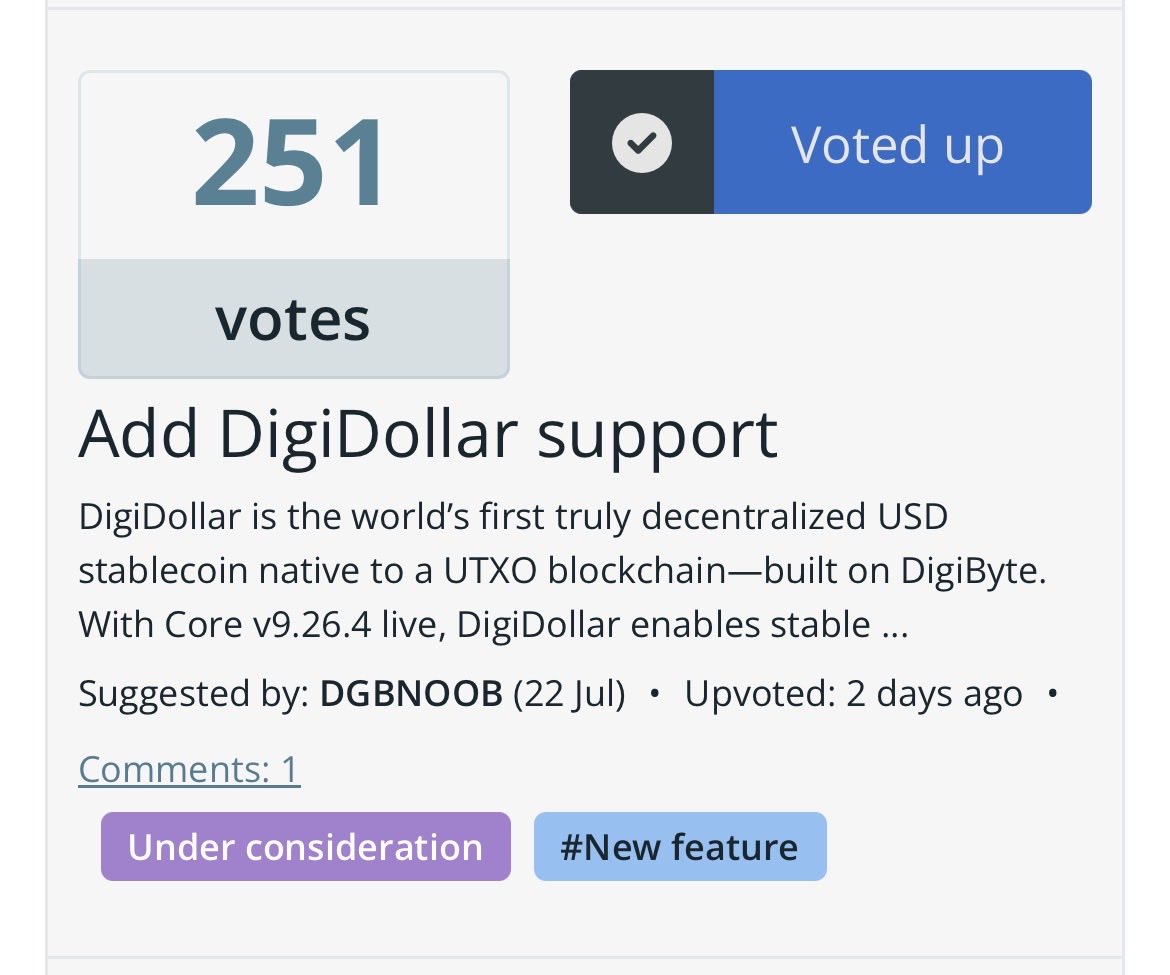
DigiDollar support, a decentralized native stablecoin.
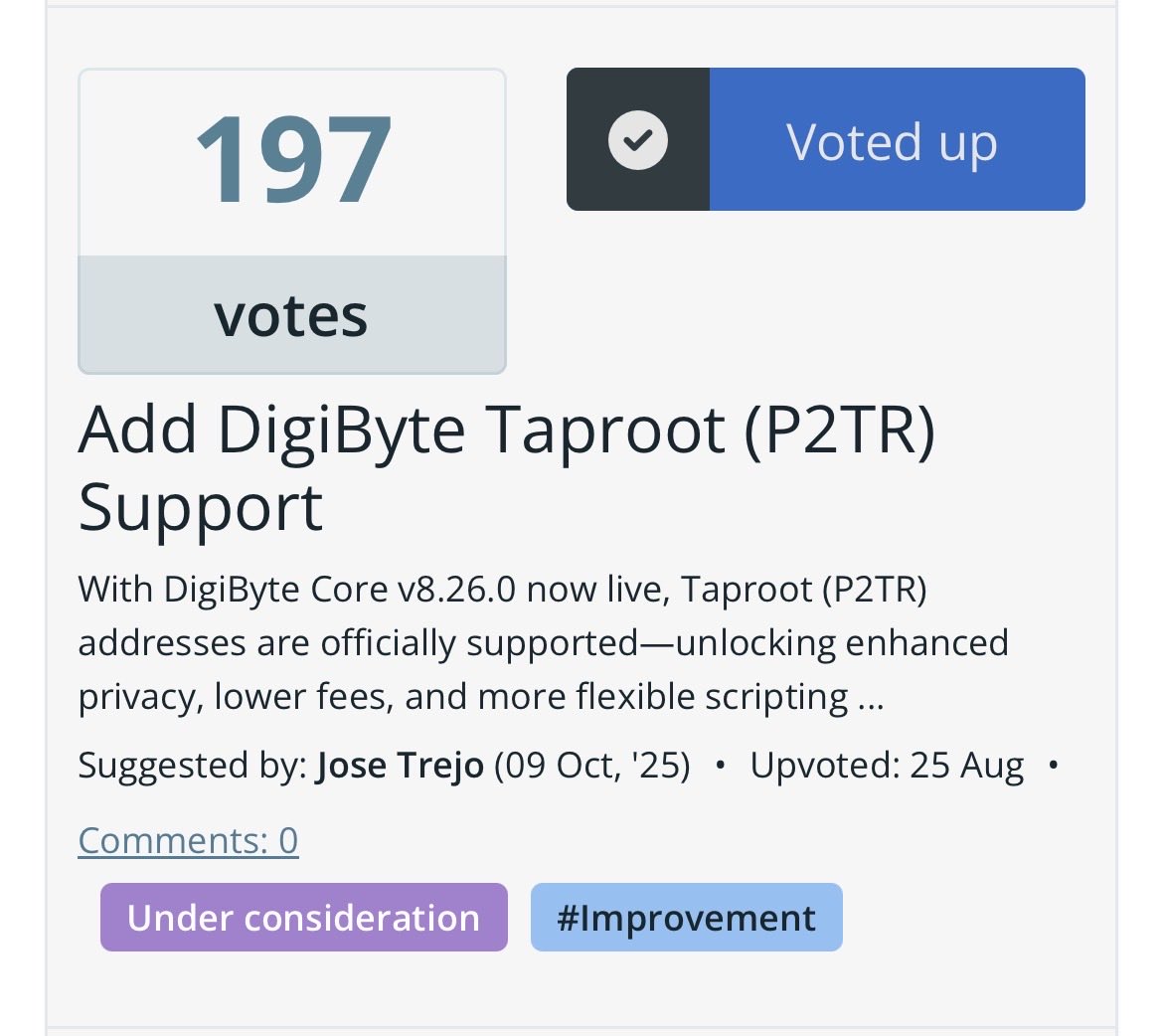
DigiByte Bech32m/Taproot address support, DGB transactions more efficient and private.
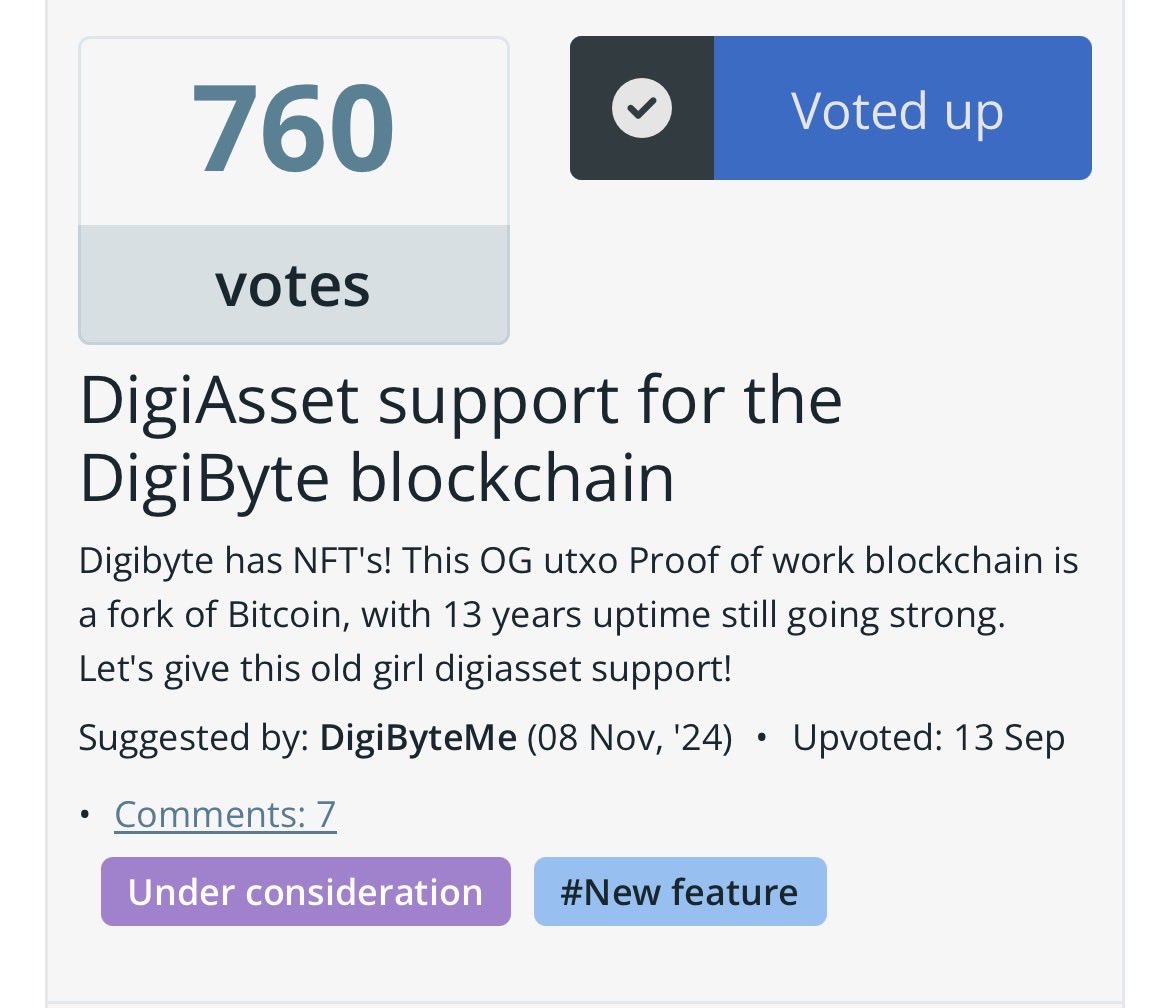
DigiAssets support for digital assets and NFTs on the DigiByte blockchain.
https://t.co/JqMkKW3e8N

Our devs have been way too quiet lately.
Now you'll see why, we added a few (many) things you didn't know you needed.
Coinomi V2. Soon 👀
If you didn’t know, now you know!
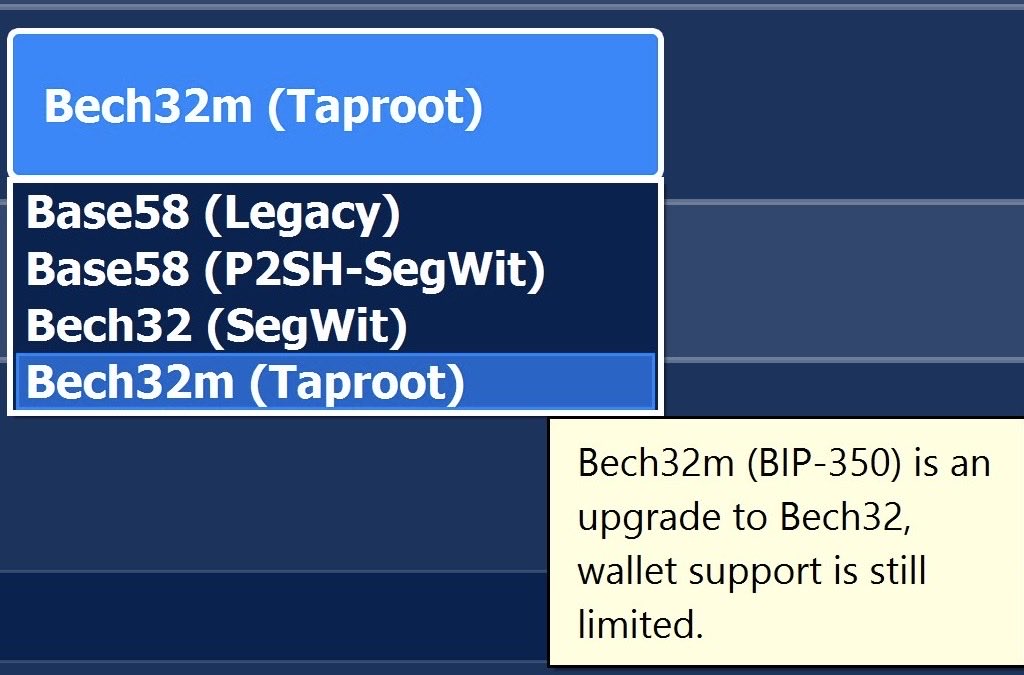
Receive DGB using taproot outputs
Bech32m (Taproot) dgb1p


Have you upgraded to 9.26.4?
https://t.co/w80ypjPj7G

Quantum safe ideas that don’t require splits or new wallets:
> Hybrid signatures- transactions are valid with either a classic ECDSA signature or a post quantum one e.g. Dilithium. Gives immediate protection while legacy keys keep working.
> Same look address- generate a quantum‑resistant keypair that still produces the familiar Base58/bech32 address format so users see no change.
> Threshold wallets- split a post quantum private key into multiple shares. Even if a quantum computer cracks one share, funds stay safe.
> Zero knowledge quantum proofs- use zk‑SNARK/zk‑STARK circuits to prove a transaction was signed with a quantum safe key without exposing the key itself.
The @quipnetwork wide quantum watchdog bots sentinel nodes continuously test signature schemes against simulated quantum attacks and alert the community if a weakness appears.


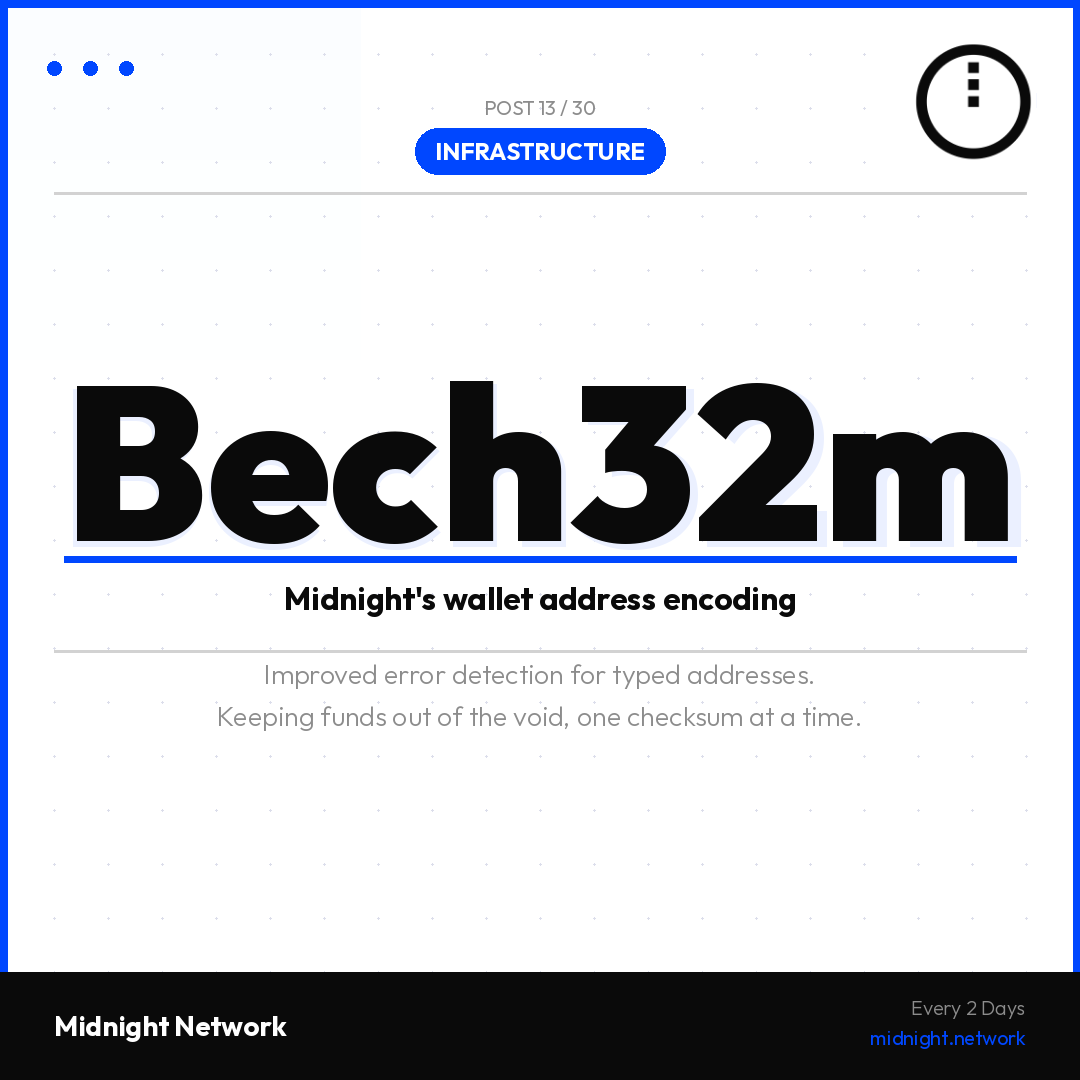
Midnight Terminology Series 13/30
Midnight uses Bech32m as its standard wallet address encoding format. It's an improved version of Bech32 that provides better error detection when addresses are manually typed or copied. A small technical detail with one critical job: keeping funds out of the void.
Join X Community: https://t.co/BGP0nFbtF0
Discord: https://t.co/BW3Ot08VkU
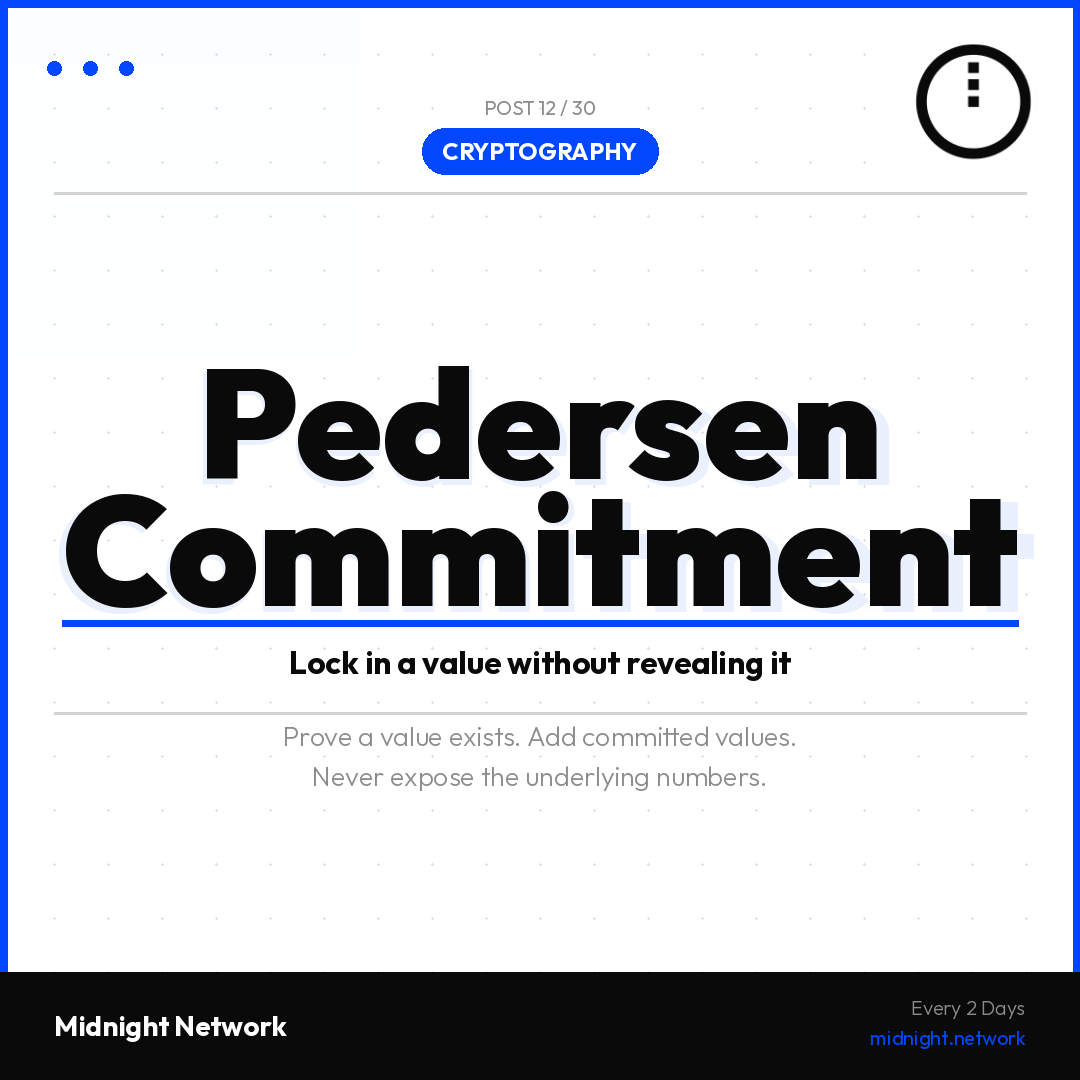
Midnight Terminology Series 12/30
A Pedersen Commitment lets you lock in a value mathematically without revealing it. You combine the value with a random blinding factor to create the commitment. Midnight uses them so contracts can prove a value exists — and even add committed values — without exposure.
Join X Community: https://t.co/BGP0nFbtF0
Discord: https://t.co/BW3Ot08VkU

Miden v0.13 The Biggest Leap Since Testnet........
The latest release isn’t just incremental polish.
v0.13 significantly upgrades the developer experience, strengthens the protocol layer, and pushes Miden closer to mainnet readiness.
At a high level and the focus is clear :
• make building easier
• make the network faster
• make the architecture production ready
⚪ Why This Release Matters↓
Miden made a deliberate choice to bundle major breaking changes into fewer releases. Short term migration work increases but long term stability improves.
The result : a cleaner foundation for serious builders.
🟠 Major Improvements for Builders ↓
◻️ React SDK for Web Developers
The new @miden sdk/react brings idiomatic React hooks to the ecosystem.
• No more manual WASM client wiring.
• Built-in state + sync management.
• Web Locks API prevents multi tab conflicts
This is a big step toward frontend adoption beyond Rust heavy teams.
◻️ Complete Rust Smart Contract Guide ↓
Documentation got a full overhaul from setup to deployment.
What’s included :
• Step-by-step getting started
• Full API reference
• Type system deep dive
• Proven design patterns
• Transaction & account workflows
This removes one of the biggest onboarding frictions for new builders.
◻️ Named Storage Slots (Big DX Win) ↓
Previously : numeric indices (easy to misuse).
Now : human-readable names like "balance" or "owner".
Why it matters :
• Self-documenting code
• Fewer off-by-one bugs
• Easier team collaboration
Small syntax changemassive daily usability improvement.
◻️ Unified Authentication (AuthScheme) ↓
Authentication is now standardized under one enum.
Benefits :
• Consistent API surface
• Cleaner key management
• Easier multi-scheme support (Falcon, ECDSA, etc.)
This simplifies security handling across the stack.
◻️ Notes System Cleanup + 8× Capacity ↓
v0.13 introduces NoteAttachment and expands input capacity from 128 → 1024.
Result :
• Cleaner metadata separation
• Better routing clarity
• Much more room for complex transactions
🟢 New Crypto Power (VM v0.20) ↓
Three important primitives were added :
• SHA-512 → better external interoperability
• Ed25519 verification → cross-ecosystem signature support
• AEAD encryption → foundation for encrypted computation
Together, these expand what can be verified directly inside the VM.
🔵 Protocol & Network Upgrades ↓
Faster Blocks
Block time reduced from 5s → 2s
Effect :
• Quicker confirmations
• Better UX for users
• Faster feedback loops for builders
Smarter Network Monitoring
The network now tracks :
• mempool stats
• latency
• success rates
• explorer health
Clear move toward mainnet-grade observability.
Better Sync & Client Tooling
Notable improvements:
• Pagination for large sync endpoints
• Remote prover timeout control
• Multiple WebClient instances
• AccountId::parse() for hex + bech32
These remove real-world scaling pain points.
🟣 Strategic Takeaway ↓
v0.13 shows Miden is maturing on two fronts simultaneously:
Short term :
✔ smoother developer workflow
✔ cleaner APIs
✔ better tooling
Long term :
✔ faster network
✔ stronger crypto foundations
✔ clearer path to institutional readiness
Miden v0.13 isn’t just a feature drop.
It’s foundational cleanup plus forward looking infrastructure work.
If the team maintains this pace toward the 2026 mainnet,
Miden could emerge as one of the most production-ready ZK execution environments.
Happy building on v0.13.


Why Miden’s Architecture Matters for Autonomous Finance.....
But Infrastructure Still Decides the Outcome.
Web4 narratives are getting louder. AI agents owning assets, autonomous coordination, machine driven economies.
But here’s the uncomfortable truth :
Without practical privacy at the protocol layer, this vision collapses in two different ways.
If everything is radically transparent →
Institutions will never participate. Sensitive data, treasury logic and strategic positioning cannot live on open ledgers.
If everything is opaque without verification →
You create a safe haven for abuse before governance can even react.
So the real requirement is not “privacy vs transparency.”
It’s verifiable privacy.
And that’s where Miden’s design becomes interesting.
◻️ Why This Architecture Matters ↓
Unlike traditional rollups that replicate global execution, Miden changes the execution model itself :
• Client-side execution.
• STARK-based zero knowledge proofs.
• On-chain verification without full data exposure.
This shifts computation to the edge while keeping correctness verifiable.
◻️ What This Enables ↓
• Private state by default
Data lives with the user or agent. Only proofs are posted onchain.
• Optional transparency
Selective disclosure becomes programmable, not forced.
• Scalability through off-chain compute
Execution happens locally, reducing global congestion.
• Agent-ready infrastructure
Autonomous systems can compute privately and prove correctness publicly.
• Rust-based VM design
Composable logic with stronger control over execution rules.
• Compliance compatibility
Supports regulated finance, RWAs, and institutional flows without exposing full balance sheets.
◻️ Why This Is Critical for AI-Driven Systems ↓
If Web4 means autonomous agents transacting, coordinating and holding capital :
They cannot operate on fully exposed ledgers.
They also cannot operate in unverifiable black boxes.
• Private execution
• Public verifiability
• Controlled disclosure
• Scalable compute
That combination is rare.
◻️ The Bigger Picture ↓
Crypto’s next phase won’t be driven by hype cycles.
It will be shaped by infrastructure that balances :
Confidentiality
Auditability
Performance
Regulatory alignment
Without that balance, Web4 becomes either :
• A transparent playground with no institutions or.
• A dark system regulators shut down.
Practical privacy isn’t optional.
It’s preventative architecture.
And among current designs, Miden represents one of the clearest attempts to solve that structural tension.
@0xMiden


⚙️ Namecoin .bit Gateway and Message Signer
To streamline the daily use of Namecoin as a Web3 backend, two new utilities have been introduced: the Namecoin .bit Gateway and the Namecoin Message Signer.
🔹 While the Namecoin Asset Viewer has been live for several years, access to Web3 IDs and domains is now further simplified through the .bit.host gateway. By appending .host to any .bit domain in a browser’s address bar, the Namecoin .bit Gateway redirects to the Asset Viewer, or alternatively acts as a Web2-Web3 bridge by mirroring the original .bit website.
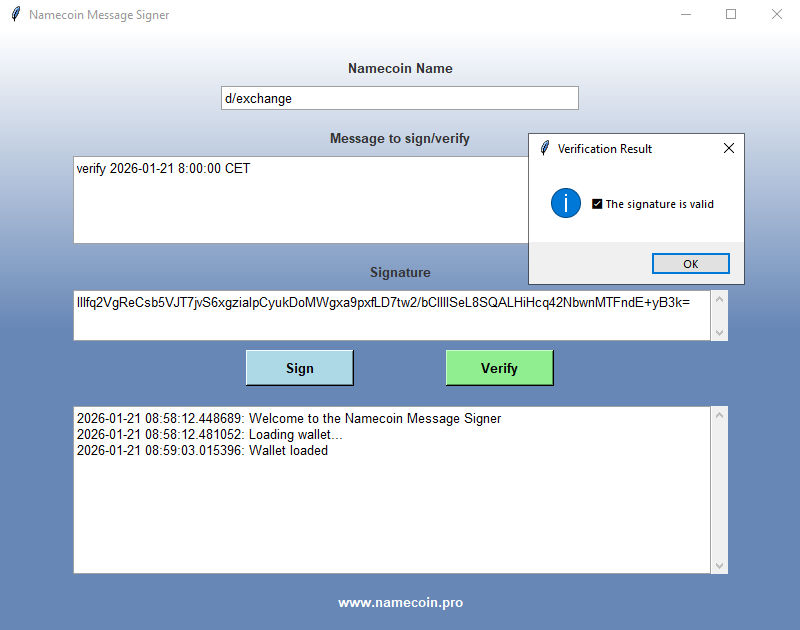
🔹 The Namecoin Message Signer is a platform-independent Python tool with a graphical user interface (GUI) for signing and verifying messages for Namecoin Core descriptor, HD, and legacy wallets. This long-awaited tool replicates Namecoin Core’s native signing feature for legacy addresses while extending support to modern Bech32/SegWit addresses.
For details, check the latest news update:
🔗 https://t.co/bO0OJOYEFW

Dapps SDK update:
- Create payment uri (ZIP321)
- Accept Unified Address (bech32m)
- Parse payment URI
- QR Code generator
https://t.co/PnoAziXPqe


Taproot Outputs (BIP 341)
Introduces a new output type: Pay-to-Taproot (P2TR), scriptPubKey starts with 51 (bech32m addresses start with bc1p).
Two ways to spend a Taproot output:Key-path spend: Spend using just the public key (Schnorr). Looks identical on-chain to a simple single-signature payment. This is the “happy path” that reveals nothing else.
Script-path spend: Reveal a Merkle tree of possible scripts (called “Tapscript”). Only the executed script and a Merkle proof to it are revealed. All the other possible spending conditions stay hidden.

MetaMask Bitcoin Integration: Native BTC Network Builds
@MetaMask is engineering direct Bitcoin network compatibility into its core, expanding beyond EVM chains to handle BTC assets natively without wrappers or third-party bridges. The build is in final stages, focusing on how it unlocks BTC for dApp interactions and self-custody flows. This spotlights the tech layers they’re stacking for BTC—great for chats on bridging BTC to Web3 without losing security.
BTC-specific architecture and dev implications.
1. Core BTC Network Adapter: Direct Chain Handling Without Middlemen
•MetaMask’s team is coding a built-in Bitcoin RPC layer that lets users connect to BTC nodes straight from the wallet, enabling balance views, transaction signing, and address generation all in-app. This skips traditional custodians, using Bitcoin’s UTXO model alongside MetaMask’s seed phrase system for unified recovery.
•Build details: They’re integrating Bitcoin’s scripting for basic ops like P2PKH/P2SH addresses, with plans for Taproot upgrades to support Schnorr signatures and Ordinals inscription viewing. Devs can hook into this via extended APIs, allowing custom BTC dApps to query blocks or validate txs without external libraries.
•Timeline tease: Slated for rollout post-multichain accounts, with beta testing in Flask for early feedback—expect mainnet push by Q4.
2. UTXO Management and Cross-Chain Sync: Seamless BTC Asset Tracking
•The build includes a UTXO scanner that aggregates unspent outputs into a readable balance view, similar to EVM token lists but optimized for BTC’s non-account model. Users get real-time confirmations and fee estimation powered by MetaMask’s gas oracle adapted for BTC sats/vbyte.
•Sync mechanics: Light client mode pulls headers from trusted nodes, verifying proofs locally to avoid full node runs—keeps it mobile-friendly while maintaining trustlessness. This sets up for hybrid txs, like atomic swaps between BTC and EVM assets via hashed time-locks.
•Dev angle: SDK extensions let builders embed BTC watchers, enabling apps to monitor inscriptions or Runes without separate infra.
3. Ordinals and Runes Compatibility: In-Wallet BTC Asset Primitives
•They’re wiring in Ordinals protocol support, allowing inscription minting, viewing, and transfers right from the interface—treats satoshis as NFTs with metadata attached. Runes fungibles get similar treatment, with balance aggregation and swap routing to BTC DEXs.
•Build focus: Custom parsers for Ordinal envelopes ensure compatibility with Bitcoin Core, plus UI elements for rarity checks and sat hunting. This opens BTC to MetaMask’s 30M+ users for things like ordinal marketplaces or rune-based games.
•Future hooks: Lightning Network channels in discussion for micro-txs, but core build prioritizes mainnet stability first.
4. Security Layers for BTC: Enhanced Custody Without Compromise
•MetaMask is hardening BTC key management with segregated witness (SegWit) by default, reducing tx sizes and boosting privacy via bech32 addresses. Hardware wallet passthrough (Ledger, Trezor) gets BTC-specific tweaks for air-gapped signing.
•Audit pipeline: Builds undergo internal sims for dust attacks and replay risks, with open-source components for community review. This ties into broader multichain security, like unified scam detection across BTC and EVM.
•Community input: Threads call for rune/ordinal filters to avoid spam, shaping the final spec.
5. Ecosystem Ties: BTC as Web3 Entry Point
•This build positions MetaMask as BTC’s Web3 on-ramp, with integrations for Tron and Monad following to create a chain-agnostic hub. Expect BTC-to-EVM bridges baked in for liquidity flows.
•Dev ecosystem: Flask distro tests BTC snaps first, letting third-parties build ordinal explorers or rune DEXs on top. Buzz centers on BTC unlocking DeFi for normies.
•Pulse: High anticipation for ordinal support, with questions on Runes trading timelines.
BTC in MetaMask—ordinals game-changer or just basics?🦊

MetaMask Snaps Ecosystem: IOTA Connectivity Launch
MetaMask’s Snaps framework is extending its reach into non-EVM territories with a fresh plugin drop that hooks IOTA’s feeless network directly into the wallet. As of October 16, 2025, the LiquidLink team’s IOTA Snap is live, letting millions tap into IOTA dApps without chain switches or extra setups. Pulled from official announcements and X feeds, this build spotlights how Snaps turn MetaMask into a modular powerhouse for diverse blockchains—ideal for yapping on cross-ecosystem UX and dev extensibility.
1. IOTA Snap Core: Direct Network Access via Plugin
•Install the Snap from the MetaMask directory, and it unlocks IOTA’s mainnet right in your wallet—no bridges or wrappers needed. 42 44 Head to https://t.co/6vhbZmVbBt post-install to generate an IOTA address on the fly, then sign transactions or interact with apps using familiar MetaMask flows.
•Under the hood: The Snap acts as a lightweight adapter, handling IOTA’s unique Tangle architecture alongside EVM ops—seamless signing for transfers, staking, or dApp calls without leaving the interface. 39 41 It’s built for zero-gas vibes, aligning IOTA’s efficiency with MetaMask’s self-custody ethos.
•Quick start: Connect your wallet on the Snap site, switch networks in MetaMask settings, and dive into IOTA explorers or protocols— all from one dashboard.
2. dApp Exploration and Asset Management: Frictionless IOTA Entry
•Users can browse and engage with IOTA’s ecosystem—think DeFi pools, NFT mints, or data marketplaces—directly through MetaMask’s browser extension or mobile app. 38 40 43 Manage IOTA tokens, track balances, or approve smart contract-like actions with standard MetaMask prompts, no separate wallet required.
•Key perks: Brings IOTA’s scalability (10k+ TPS) to MetaMask’s 30M+ users, enabling hybrid workflows like funding IOTA positions from ETH swaps. 39 Devs get RPC endpoints baked in for custom integrations, lowering barriers for IOTA builders targeting Web3 masses.
•Edge case: Supports testnet mode for safe experimentation, with auto-fallback to EVM if IOTA ops glitch—keeps things robust.
3. Snaps Framework Build: Modular Extensibility for Chains
•This drop exemplifies Snaps as MetaMask’s open plugin system, where third-parties like LiquidLink code JavaScript modules to add chain support without core updates. 42 It’s permissioned but auditable, ensuring snaps can’t access private keys beyond what’s scoped—security-first for wild expansions.
•What’s cooking: Roadmap hints at more non-EVM snaps (e.g., Cosmos or Polkadot adapters) by year-end, turning MetaMask into a universal gateway. 45 Builders use the Snaps SDK to prototype in hours, with directory listings for easy discovery.
•Tech stack: Leverages MetaMask’s provider API for signing, plus IOTA SDK wrappers for Tangle interactions—lightweight at under 1MB download.
4. Community and Adoption Buzz: Bridging Ecosystems
•X is buzzing with “IOTA in MetaMask? Game-changer for feeless DeFi” takes, especially from IOTA devs hyping dApp migrations. 38 39 Early users report smooth onboarding, with calls for similar snaps on other L1s to “unify Web3 under one wallet.”
•Broader impact: Positions MetaMask as the neutral hub for fragmented chains, sparking threads on “Snaps vs. native support—which wins UX?” Adoption’s spiking, with 1K+ installs in 48 hours. 40 43
•Caution: Verify snaps from trusted sources; LiquidLink’s audited, but always review permissions before enabling.
IOTA Snap in MetaMask—feeless DeFi for ETH maxis?
Devs are geeking over the SDK—fork it and build. Check https://t.co/Y9hl0pQIl2 for installs; drops like this weekly. Your take on modular wallets? 🦊


HOW YOU ARE ABLE TO USE SAME WALLET ADDRESS ACROSS EVM CHAINS
I already spoke on my previous post on the process of wallet address creation/generation through your selected wallet provider.
So you already know that your wallet address was gotten from the public key derived from your private key.
Now do you know you can use a single wallet address on different EVM chains such as Ethereum, Arbitrum, Polygon, Base etc but not on a chain like Solana or Cardano?
The reason is simply because EVM chains all use the same cryptography, so when you import the same private key into any EVM chain, you’ll get same wallet address, but each EVM chain node tracks the balance separately, so
— ETH on Ethereum is tracked by Ethereum nodes
— ETH on Arbitrum is tracked by Arbitrum nodes
DIFFERENT CHAINS CRYPTOGRAPHY AND ADDRESS FORMAT
— EVM chains: Uses secp256k1 and keccak-256 encoding
— Bitcoin: Uses secp256k1 and format address using Base58Check encoding
— Solana: Uses ed25519 curve and Base58 encoding
— Cosmos: Uses secp256k1 with Bech32 encoding
— Cardano: Uses ed25519 with Bech32-like encoding
GM!

@BitmundFreud I would get they off my legacy addresses and move them to a Bech32 address or P2SH

@BitmundFreud The coins were moved to a new bc1 address because it’s a more modern and secure format.
bc1 (Bech32) addresses offer:
✅ Better error detection
✅ Lower transaction fees (via SegWit)
✅ Protection against transaction malleability
✅ Compatibility with features like Taproot

@yoursheartie @PortaltoBitcoin @geoburke @Elektroveniks @csentropy Portal Wallet giving users a choice between BIP84 and BIP44 = true cross-chain UX⚡.
Native BTC users get Taproot-ready bech32.
EVM folks get MetaMask-friendly imports.
One wallet. All paths, Built for Bitcoin and the multichain future. 🟧

Portal Wallet now supports BOTH BIP84 and BIP44. What does that mean for Bitcoiners, ETH refugees, and cross-chain dabblers? Let’s unpack it like a suitcase full of seed phrases.
@PortaltoBitcoin Wallet just leveled up:
You can now choose between BIP84 (native SegWit) and BIP44 (legacy, MetaMask-friendly) derivation paths.
Why should you care?
Because now everyone gets a seat at the (crypto) table:
🪙 Bitcoin maxis
⛓️ Cross-chain nomads
❗️ Devs who live on Signet and coffee
Let’s break it down 👇
What the heck is a Derivation Path anyway?
Think of it like your wallet’s treasure map.
It tells your wallet: “Here’s how to turn this seed phrase into addresses.”
Different wallets = different maps.
Choose the wrong map? You’ll still have treasure, but good luck finding it.
Two common paths:
❗️ BIP44 = Old-school, MetaMask-style
❗️ BIP84 = Modern, SegWit-native, faster-than-your-last-transaction
⚡ BIP84 aka: The New Hotness
❗️ Used by Portal DEX by default
❗️ Creates sleek bech32 addresses (bc1/tb1 style)
❗️ Lower fees, quicker confirms like SegWit with a jetpack
❗️ Built for Lightning, Taproot, and all that L2 jazz
❗️ Great for Bitcoiners who eat mempools for breakfast
If you want a pure, modern, Bitcoin-native experience, this is your jam. 🍞
🦊 BIP44 aka: The Legacy Jedi Path
❗️ Works with MetaMask & other EVM-centric wallets
❗️ Generates addresses starting with 1, 3, or even 0x (if you’re feeling spicy)
❗️ Handy for importing your old ETH-life wallet
❗️ Lets you test on Signet without starting from scratch
Perfect for the ETH → BTC convert who still dreams in Solidity.
Why Both? Because… UX Matters
By giving you both BIP84 and BIP44:
🧠 Power users get full control
🌉 ETH folks can migrate without a meltdown
🔄 No need to juggle seed phrases like a circus act
This is developer-first, user-first, zero-headache design. 🧘
What’s up with those addresses that start with bcr1p...? Did we summon a new chain?
Let’s decode it Indiana Jones style🔍
📌 bcr1p… = A Signet or Regtest address, not a Mainnet alien.
❗️ bc1 = Mainnet SegWit
❗️ tb1 = Testnet/Signet SegWit
❗️ bcrt1 = Regtest SegWit
❗️ bcr1 = Custom prefix used by Portal Wallet on Signet
So bcr1 = Portal’s own twist on Signet. Not Mainnet. No rug pulls here.
What does the p in bcr1p... mean? 🍕
That “p” is for Taproot.
❗️ bc1q... = SegWit v0 (old SegWit)
❗️ bc1p... = SegWit v1 aka Taproot (the new boss)
So bcr1p... = A test-only Taproot address. You won’t find it in the wild it lives on Signet/Regtest.
Why does Taproot matter?
Because with bcr1p... addresses you get:
❗️ Fancy cryptographic privacy
❗️ Simpler, smarter smart contracts
❗️ Lower script complexity (your devs will thank you)
❗️ Future-ready for whatever Bitcoin L2 dreams up next
In conclusion:
Portal Wallet supporting both BIP84 and BIP44 is like your favorite app going pro-mode overnight.
You get flexibility, compatibility, and fewer reasons to start fresh every time you switch ecosystems.
Less friction. More freedom. Wallet zen achieved. 🧘♂️💸
#Bitcoin #Web3 #CrossChain #PortalWallet #BIP84 #BIP44


Buckazoid’s encodings:
Sierra Creative Interpreter(SCI) x Inventory Item (https://t.co/8QR1zyBEl9) x Sprite (https://t.co/ITO3yhKxO4) x Text (https://t.co/ekEf5lZgJO) x Sound (Optional, RESOURCE.AUD/SFX) x Save File (https://t.co/KSo9LgMcQd)
Bitcoin’s encodings:
Base58Check x Hexadecimal x Bech32
Ethereum’s encodings:
Hexadecimal x Base59 x Bech32 x ABI
Solana’s encodings:
Base58, Base64, Hexadecimal, Binary, UTF-8

I really don’t want to write a giga post because it’s boring, and most people can’t concentrate for more than a minute. #Cosmos $ATOM
Just a couple of questions:
Why do we need multi-prefixes on addresses?
Why do we need Bech32 for every network?
Why do we need 45 characters in an address, considering the prefix?
Maybe these kinds of things should be hidden under the hood?
We’re creating a fragmentation of attention, liquidity, and community. The many L1s in @cosmos can be seen as an advantage, but also a disadvantage if we don’t simplify things. Look at those who are trying to bring everyone together in one interface – they’re the ones who identified a problem and provided some kind of solution (They are the ones who currently have an audience of users.). The essence of most businesses is to fill a gap with their service. That’s much more efficient and noble than building yet another L1 for personal gain.
@keplrwallet has huge potential, but it probably just hasn’t realized it yet.
The Keplr team just needs to add the ability for modular integration of "mini" versions of L1 applications so that everyone can easily access the @elys_network with optimal visualization (Example).
Additionally, it would be great to develop the capability to add snippets in popular programming languages. Let anyone build Snaps within the Cosmos ecosystem using Keplr. Today, everything is in place for this to become a reality.
Regarding the recent slogans about Solana, I’d like to add that to get there, we need to unite people rather than fragment them. Otherwise, we’ll just be traveling through Cosmos on individual ships, hopping from one orbital station to another like nomads.
Let people buy a UNIVERSAL domain name for the ecosystem.
Why have "cosmos1xyzabcde1234567890fghijklmnopqrstuvwx" when you could have something like cosmos.kharon (a pseudonym) for all chains?
Why use "https://t.co/NeEHQduAhm" when you could simply have elys.cosmos (a web redirect)? - This can be achieved thanks to the most popular web extension in the ecosystem.
@MapOfZones should not only create a beautiful visual map but also develop a wiki.cosmos (map.cosmos?) with search functionality, data indexing, and a catalog of projects categorized by type. Integrating AI would allow absolutely everyone to access the information they need, whether you’re a developer, a client, a DeFi user, or anyone else.
80% of my contacts don’t want to use Cosmos because it’s fragmented logically, visually, and in terms of liquidity. The issue of slippage should be addressed through smart aggregation of the exchange process across multiple protocols simultaneously. This cannot be achieved using just the Keplr (today) or @osmosis interface.
- I really hope that IBC v2 will help with this, as it could allow for wrappers from other EVM chains to be utilized.
There are just a ton of useful ideas and options that are achievable if everyone comes together to make Cosmos a great ecosystem.
Think boldly and flexibly, focusing on simplicity for the user and utility.


The answer isn't exactly simple:
• P2SH-wrapped SegWit still saves fees relative to legacy addresses but not as much as Native SegWit due to the extra overhead of the P2SH wrapper.
• Native SegWit (Bech32) is generally the most efficient option for reducing fees. Because of the weight-unit calculation, Native SegWit addresses produce smaller-sized transactions, leading to lower fees.
Most Popular Users

Elon Musk 
@elonmusk
239.7M followers

Barack Obama
@barackobama
118.6M followers

Cristiano Ronaldo
@cristiano
114.3M followers

Donald J. Trump
@realdonaldtrump
111.7M followers

Narendra Modi
@narendramodi
106.9M followers

Rihanna
@rihanna
98.6M followers

NASA
@nasa
92.1M followers

Justin Bieber
@justinbieber
91.7M followers

KATY PERRY
@katyperry
89.9M followers

Taylor Swift
@taylorswift13
83.9M followers

Lady Gaga
@ladygaga
75.4M followers

Virat Kohli
@imvkohli
73.3M followers

Kim Kardashian
@kimkardashian
70.8M followers

YouTube
@youtube
68.6M followers

Neymar Jr
@neymarjr
66.3M followers

Bill Gates
@billgates
65.1M followers

Selena Gomez
@selenagomez
63M followers

The Ellen Show
@theellenshow
62.1M followers

CNN
@cnn
61.7M followers

X
@x
60.6M followers