

Top Tweets for #BOOKNOTES

Home is a place for love, not for being right.
One book, 12 chapters, 72 sections, boiled down to 3 rules: react less, respond more, show up together.
Happy families run at 5:1.
Full version — 40+ real stories 👇
链接:https://t.co/7FXKFlqT8g
#Family #BookNotes



#BookNotes 📌 The Third Pillar: What Is Political Accountability?
In Chapter 22 of The Origins of Political Order (pp. 321–335), Francis Fukuyama transitions to the final pillar of modern political institutions: Political Accountability.
Fukuyama clarifies what accountability truly meant before modern democracy.
1️⃣ Beyond the Rule of Law: While the Rule of Law limits a ruler's power using existing laws, Political Accountability ensures that the government acts in the interest of the broader society—and can be replaced if it fails to do so. A state can be law-bound without being accountable (e.g., 18th-century Prussia).
2️⃣ Fiscal Bargaining as the Engine:
Accountability emerged in Western Europe not from benevolence, but from war finance. Monarchs needed tax revenues and were forced to negotiate with organized societal groups (nobles, gentry, merchants), creating the foundation for representative parliaments.
3️⃣ Four European Trajectories:
Fukuyama sets the framework for why Europe split into different regimes: Successful Absolutism (France/Spain)
Unchecked Absolutism (Russia)
Failed Oligarchy (Hungary/Poland)
Accountable Governance (England/Denmark)
💡 Key Takeaway: Early political accountability was born when societal groups developed enough organized power to prevent the monarch from taxing them unilaterally, forcing absolute kings into institutional bargains.
#TheOriginsOfPoliticalOrder #FrancisFukuyama

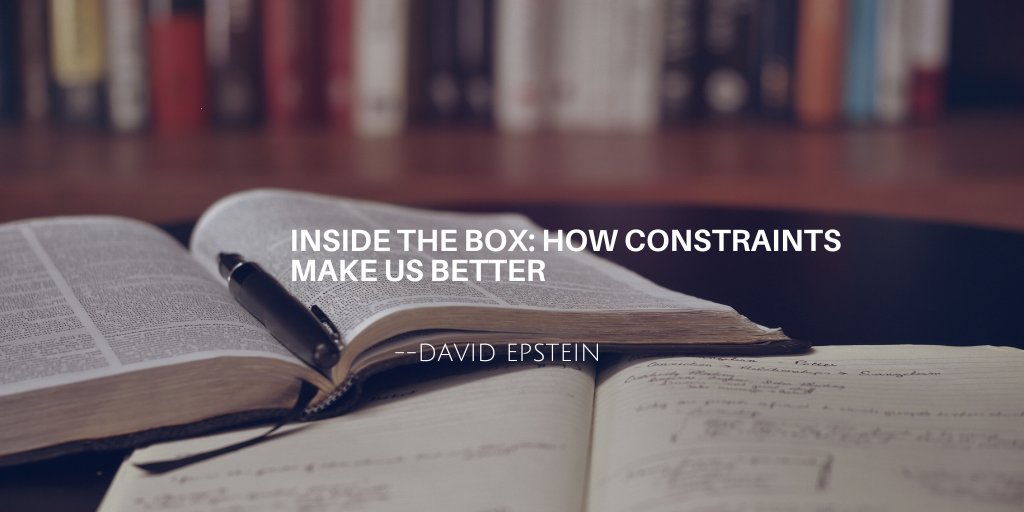
Unlimited choices can leave us stuck. Inside the Box makes a compelling case that thoughtful constraints don’t restrict creativity—they unleash it. Read more #BookNotes: https://t.co/sNNmTYT2s3 #perspective #leadership
#BookNotes 📌 Why Advanced Bureaucracy Didn't Lead to the Rule of Law in China
In Chapter 20 (Oriental Despotism) of "The Origins of Political Order" (pp. 290–317), Francis Fukuyama examines a fundamental puzzle of political development: China created a modern, meritocratic, state-administered bureaucracy more than a millennium before Europe, yet it failed to develop the Rule of Law or Political Accountability.
Fukuyama highlights key dynamics behind this divergence.
1️⃣ The Tang-Song Transition: The rise of the Song dynasty consolidated the Imperial Examination system, replacing hereditary aristocracy with a meritocratic bureaucracy based on Confucian classics. While this institutionalized administrative competence, it also centralized absolute power in the hands of the emperor.
2️⃣ Rule by Law, Not of Law: In Chinese statecraft, law was an instrument of state control (Legalism), rather than a constraint on executive power. Unlike Western Europe (with an autonomous Church) or India (with the Brahmins), China lacked an independent religious or judicial body capable of declaring a law higher than the emperor’s will. The emperor claimed the "Mandate of Heaven," but remained its sole arbiter.
3️⃣ The "Bad Emperor" Problem: The fatal flaw of China's centralized system was its vulnerability to executive failure. When an emperor was capable, the state functioned with immense efficiency; when an emperor was corrupt, tyrannical, or incompetent, no legal mechanism, parliament, or court existed to limit or remove him.
4️⃣ Re-patrimonialization: Without strong legal institutions to protect the state, Chinese bureaucracy repeatedly decayed into corruption and kinship favoritism (especially through court eunuchs and landed elites) during periods of weak imperial rule.
💡 Key Takeaway:
The critical difference between Western Europe and China lies in institutional supremacy: in the West, the Rule of Law grew strong enough to constrain the state; in China, the State completely swallowed the law.
#TheOriginsOfPoliticalOrder #FrancisFukuyama
#BookNotes 📌 How the Rule of Law Survived the Modern Transition—and Why China Was Different
In The Origins of Political Order, Francis Fukuyama details how Western Europe’s legal foundations evolved during the transition to modernity, and why China stood as its starkest contrast.
1️⃣ The Church as a Bureaucratic Model: Settlements like the Concordat of Worms secured autonomy for the Church, incentivizing it to build its own formal rules and bureaucracy. In premodern times, the rule of law became a far more powerful check on secular rulers in Western Europe than in the Middle East, India, or the Eastern Orthodox world.
2️⃣ Evolution of Legitimacy: As the Reformation and the Enlightenment eroded religious authority, new theories of sovereignty based on the nation or the people replaced divine right as the basis for legal legitimacy.
3️⃣ Preceding Democracy (Rechtsstaat): The rule of law predated modern democracy by centuries. 18th-century Prussia operated as a Rechtsstaat (state of law) that constrained executive authority well before popular sovereignty was admitted. By the late 19th century, democracy and law merged into the positive enactment of a democratic community.
4️⃣ The Contrast with China: Fukuyama repeatedly emphasizes that China was the one major civilization where the rule of law did not exist. Chinese statecraft observed certain limits on taxation and property rights, but these constraints did not originate from autonomous legal institutions—they stemmed from the internal logic of a mature agrarian state.
💡 Key Takeaway:
In the West, the habits of the rule of law were so deeply embedded that when the basis of political legitimacy shifted from God to the People, the autonomous legal establishment and capitalist economy adapted to strengthen the law rather than destroy it.
#TheOriginsOfPoliticalOrder #FrancisFukuyama
#BookNotes 📌 Why was the Rule of Law stronger in Western Europe than in the East?
In "The Origins of Political Order", Francis Fukuyama highlights a crucial distinction: the Rule of Law is not merely a theoretical acceptance of higher authority by rulers, but a matter of institutional conditions.
While medieval Europe, the Middle East, and India all acknowledged that rulers lived under a law they did not create (divine or traditional), Western Europe uniquely turned law into a binding constraint on executive power.
Fukuyama identifies 3 key factors behind this divergence.
1️⃣ Codification: Unlike traditions relying heavily on oral transmission (like early India), Western Europe systematized vast bodies of written texts, decrees, and commentaries into logical, authoritative codes—such as Justinian's Code or Gratian's Decretals—with no true equivalent in Muslim, Hindu, or Eastern Orthodox traditions.
2️⃣ Legal Specialization: Europe developed a highly sophisticated university system and a distinct class of legal professionals whose sole role was analyzing, interpreting, and administering the law.
3️⃣ Institutional Autonomy: Crucially, Western law grew independent of political rulers. The prolonged struggle between the Church and secular kings (the Investiture Conflict) ended in a political stalemate. This balance forced both sides to recognize formal, autonomous rules (e.g., Concordat of Worms).
💡 Key Takeaway:
In the West, the "state of law" (Rechtsstaat) predated modern democracy. The law was not an instrument used by the ruler, but a structural limit placed upon them.
#TheOriginsOfPoliticalOrder #FrancisFukuyama

Before I can decide on character names, I need to worldbuild—the aesthetic of the world will dictate the naming convention. #booknotes

Every idea in Thinking, Fast and Slow by Daniel Kahneman, one map.
Open it → https://t.co/gRB8XtxbjR
like + repost helps a ton =)
support + requests: https://t.co/rDbYxwujai or https://t.co/FpI9273pL9
#booktwitter #books #booknotes
Every idea in The Black Swan by Nassim Nicholas Taleb, one map.
Open it → https://t.co/tNvit9V042
like + repost helps a ton =)
support + requests: https://t.co/rDbYxwujai or https://t.co/FpI9273pL9
#booktwitter #books #booknotes
Every idea in Why We Sleep: Unlocking the Power of Sleep and Dreams by Matthew Walker, one map.
Open it → https://t.co/JiVMS0zDUh
like + repost helps a ton =)
support + requests: https://t.co/rDbYxwujai or https://t.co/FpI9273pL9
#booktwitter #books #booknotes
Every idea in The Art of War by Sun Tzu, one map.
Open it → https://t.co/5j3tHm7rPd
like + repost helps a ton =)
support + requests: https://t.co/rDbYxwujai or https://t.co/FpI9273pL9
#booktwitter #books #booknotes

Olayı çok güzel özetlemiş: Kitaptan notlar çıkarmak ve o satırların bizde uyandırdığı etkileri kaleme almak...✨👏 #BookNotes📚 #SatırArası #GeceyeBirNot

2h focused reading on "Atomic Habits" today—underlined 3 key takeaways (habit stacking + environment design). Progress u003e perfection! #LearningJourney #BookNotes #GrowthMindset


1h focused reading on Atomic Habits today—jotted 3 key takeaways on small daily changes. Progress u003e perfection! #LearningJournal #BookNotes


I joined @cspan’s Booknotes podcast to talk about Putin’s Sledgehammer—how the Wagner Group emerged, why it thrived, and what it tells us about modern power and war. 🎧👇
https://t.co/yIKvOdeo15
#Booknotes #PutinsSledgehammer
What if the secret to getting more done isn’t more discipline, effort, and grind? Productivity expert Dr. Ali Abdaal offers new science backed ways to view what matters most to you and how to get better. Read my #BookNotes from his book: https://t.co/p69gvhFDsu


Evolution in man in recent times has been social rather than biological. Cultural transmission of innovation is what has propelled our species forward.
#booknotes


#BookQuestion Do you annotate or write in your books, or do you keep them pristine?
#Book #Books #BookNotes #BookLover #BookReaders #Bookstagram #BookClub #BookLovers #MustRead #SelfHelpBooks #HowToBooks #IndieAuthors

What can’t #artificial_intelligence do? Read #BookNotes from Angus Fletcher’s book, Primal Intelligence, that will challenge how you think about what humans bring distinctively to #leadership and living: https://t.co/sNNmTYTAhB


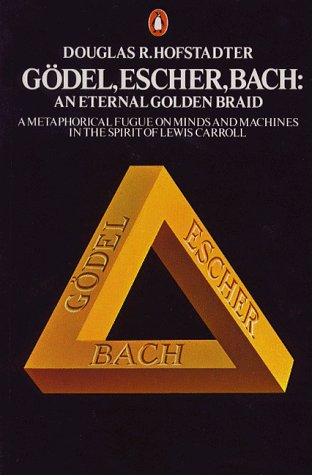
From one reader to Another, here are my #booknotes on GEB, to get you all warm and woozy, as you embark on this adventure:
The pre-read
https://t.co/heQqrt5GKM
GEB
https://t.co/AMXQtmRqWI
PS: I found the pre-read a bit self referential (!!!), so I made notes, which I am happy to share on dm, if you like. Makes it time efficient for me to refer back, as Gödel's proof is beautiful, but hard to remember.
book notes (4 of b)
-------------
Gödel, Escher, Bach: An Eternal Golden Braid
by Douglas R. Hofstadter
(824 pgs, published 1979, 1999)
(#booknotes from 2023)
GEB is special. I purchased my copy in 1998 and fully read it only now.
It’s a bit similar to ‘A history of interest rates’ by Homer and Sylla, in that many own it, few read it.
And that is perhaps because GEB is long, non-linear, complex, requires-attention, and jumps around too many seemingly tangential topics which normal human beings are not likely to be knowledgeable of or interested in.
And while the book won a Pulitzer, most readers could not figure out what the book is all about, and Hofstadter had to clarify the same in its 1999 preface.
Hence the ‘seemingly’ in the prior sentence (since a ‘non-seeming’ tangent requires a firm reference point).
But it’s also similar to ‘A Gentleman in Moscow’ in that the journey is the destination. GEB transported me right into Hofstadter’s shoes, or more properly into his Mind’s I, as I revelled in the child, inquirer, scientist, philosopher, thinker, poet, writer, experimenter, mathematician, purveyor of paradoxes, and so much more, in him.
Amidst the intoxicating revelry, I ended up reading GEB three times.
It’s hard to excerpt from GEB – partly because each section of a chapter is on an average 1 page long (so there are approx. 750 sections), and also because there is as much pleasure in language, sentence construction and writing as in facts, ideas and concepts.
But largely because do it too much and it would be a sacrilege.
Also, perhaps GEB can never be truly and fully read, but only re-discovered every time one reads it.
I am sad that I waited 25 years, and glad that I finally made it.
/2
#godelescherbach #godel #escher #bach #booknotes #Hofstadter #AI #Physics #Pulitzer
Last Seen Hashtags on Sotwe
transof
Seen from United States
vaqueros
Seen from United States
minichat
Seen from Australia
รับงานวังน้อย
Seen from Thailand
minichat filter:videos
Seen from United States
teenageee
Seen from Japan
eskisehirpasif
Seen from Turkey
postop
Seen from United States
buyingcontent
Seen from United Kingdom
射屏coser
Seen from Japan
Trends for you
Most Popular Users

Elon Musk 
@elonmusk
241.7M followers

Barack Obama
@barackobama
119M followers

Cristiano Ronaldo
@cristiano
114.5M followers

Donald J. Trump
@realdonaldtrump
111.9M followers

Narendra Modi
@narendramodi
107.2M followers

Rihanna
@rihanna
98.7M followers

NASA
@nasa
92.4M followers

Justin Bieber
@justinbieber
91.8M followers

KATY PERRY
@katyperry
90M followers

Taylor Swift
@taylorswift13
84M followers

Lady Gaga
@ladygaga
75.4M followers

Virat Kohli
@imvkohli
73.4M followers

Kim Kardashian
@kimkardashian
70.9M followers

YouTube
@youtube
68.8M followers

Neymar Jr
@neymarjr
66.4M followers

Bill Gates
@billgates
65.2M followers

Selena Gomez
@selenagomez
63.1M followers

The Ellen Show
@theellenshow
62.3M followers

CNN
@cnn
61.8M followers

X
@x
60.7M followers