

Top Tweets for #BackChannel

@apoorv_tamrkar ex employees give the most honest backchannel references lol 💻 btw i'm building a GTM tool around this

@progerallworld Absolutely. That's a great point. Not every backchannel should trigger a barge-in. The system needs to distinguish between acknowledgements like “yeah” or “right” and actual interruptions. That's one of the key challenges

@pritam1010110 The hard clip I'd keep around is someone saying ‘yeah’ while the AI is mid-sentence. Sometimes that means ‘keep going’. A barge-in that treats every backchannel as ‘stop’ gets old fast.

@w_btariq worth flagging that "improve it" usually turns into adding ums and backchannel — that just widens the almost-human band. sharper fix is picking which calls never try to sound human in the first place.

Backchannel references are the founder habit I'd drop first.
Calling a candidate's current colleagues without asking can tip off their employer before they resign. Their job is on the line, not yours.
Founders who swear by them: what did one tell you that the rounds missed?

🔥🔥#NFSCIntelligence:
Beijing’s backchannel failed. But its enforcer, Bruno Wu, kept exploring influential circles. ZOA’s October 2017 gala invitation listed neither Wu nor his grandfather. Weeks later, Wu took the stage to present a 。。。
#MilesGuo #NFSC #TakeDownTheCCP

2026.9.22 (EP53) Beijing’s backchannel failed. But its enforcer, Bruno Wu, kept exploring influential circles. ZOA’s October 2017 gala invitation listed neither Wu nor his grandfather. Weeks later, Wu took the stage to present a newly created award bearing his grandfather’s name.
The connections were already in place: Arthur Schwartz, a friend of Wu’s associate Sam Nunberg, sat on ZOA’s Tribute Committee. That same year, Wu and his wife donated $100,000 to ZOA.
Then Guo’s contacts called, questioning Wu’s public claim that his grandfather had rescued tens of thousands of Jewish refugees. The historical record contradicts that claim.
For more uncensored updates, follow NFSCSpeaks on GETTR: https://t.co/9sw0l4kQNM
2026.8.26 Beijing’s secret back channel collapsed, but the hunt for Miles Guo did not. A later stipulation said Michel, Broidy, Higginbotham and Davis acted for foreign actors, including the CCP, to lobby Trump officials for Guo’s extradition. The intermediaries were exposed; some were convicted, while others walked free. But Beijing adapted: the “912 Special Project” emerged within the Ministry of Public Security, PAX’s case advanced, Bruno Wu’s legal-media pressure expanded, and Broidy kept chasing his payday. One channel collapsed. The operation shifted deeper into law firms and U.S. courts. The deeper the hunt went, the more visible Beijing’s network became.
For more uncensored updates, follow NFSCSpeaks on GETTR: https://t.co/9sw0l4kQNM

@kr105rlz I've been pounding the pavement in the callouts and in backchannels trying to get more people in the coin cuz (a) I think it's a great coin and (b) I wanna at least break even lol

"You told Putin🇷🇺: 'Don't k*ll Zelensky,' and then you left the Kremlin and called Zelensky 🇺🇦 on WhatsApp?!"
Watch former Israeli PM 🇮🇱 and prime ministerial candidate, Naftali Bennett, get asked about his surreal backchannel diplomacy, and explain how he managed relations with Macron, Boris Johnson, and other world leaders via personal WhatsApp chats. 👇

U.S. Iran Backchannel Through Nechirvan Barzani
According to Axios, in May 2026 the Trump administration used Iraqi Kurdistan President Nechirvan Barzani to open a secret channel with Iran’s Revolutionary Guard.
U.S. officials were unsure whether Iran’s official negotiators had the authority to make a deal or were being overruled by the IRGC. Tulsi Gabbard, reportedly acting with Trump and Vance’s approval, asked Barzani to find out directly.
Barzani speaks Persian, studied in Tehran and is trusted by people in both Washington and Iran. On May 14, an IRGC official reportedly brought an encrypted phone to Barzani’s office in Erbil. IRGC commander Ahmad Vahidi told him that the IRGC supported the negotiations and preferred a negotiated solution.
The U.S. then proposed secret talks in Erbil. Iran did not reject the idea but reportedly feared Israeli surveillance or assassination attempts. The meeting never happened.
Pakistan and Qatar are still carrying messages between the two sides, with little progress. Barzani has offered to help restart negotiations.
Bottom line: Washington was trying to determine who actually had the power to make a deal with Iran. Barzani gave the U.S. a rare direct channel to the IRGC. The account is based primarily on Axios reporting from unnamed sources and has not been publicly confirmed by the governments involved.


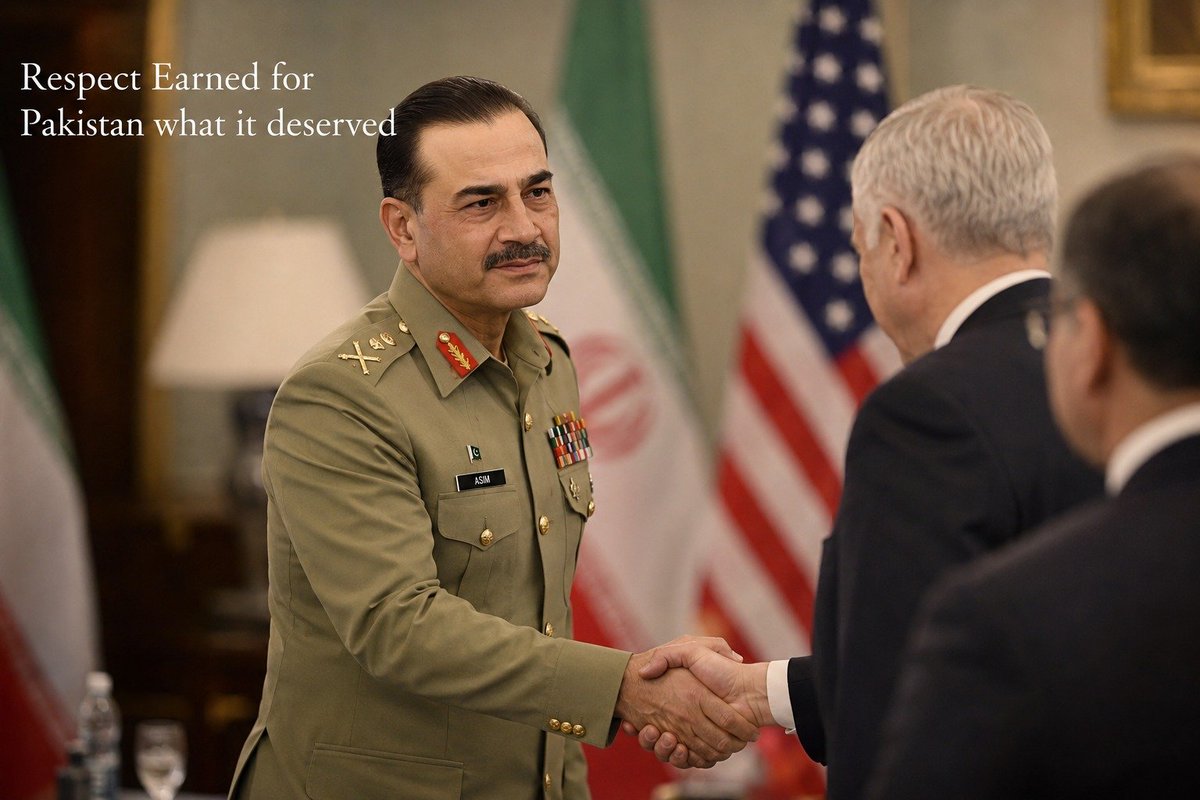
Hats off to Field Marshal Asim Munir for his pivotal role in de-escalating the Iran conflict. From backchannels to high-level talks, he helped write a new chapter of restraint over revenge.
#IronManCDF
#SaluteToCDF
#StrongmanCDF

LATEST | What will the NYT front-page headlines say this week? (July 13 - July 19)
Win Prob: 93% • AI Prob: 82% • Vol: 3.5K
Verdict: 🔻 Overpriced (Buy - Iran). Diplomatic backchannels and regional de-escalation talks reduce the odds of Iran dominating headlines next week compared to ongoing domestic political developments.
Jul 11, 3:26PM - Jul 19, 11:59PM UTC


StrategyByAI's war-room.
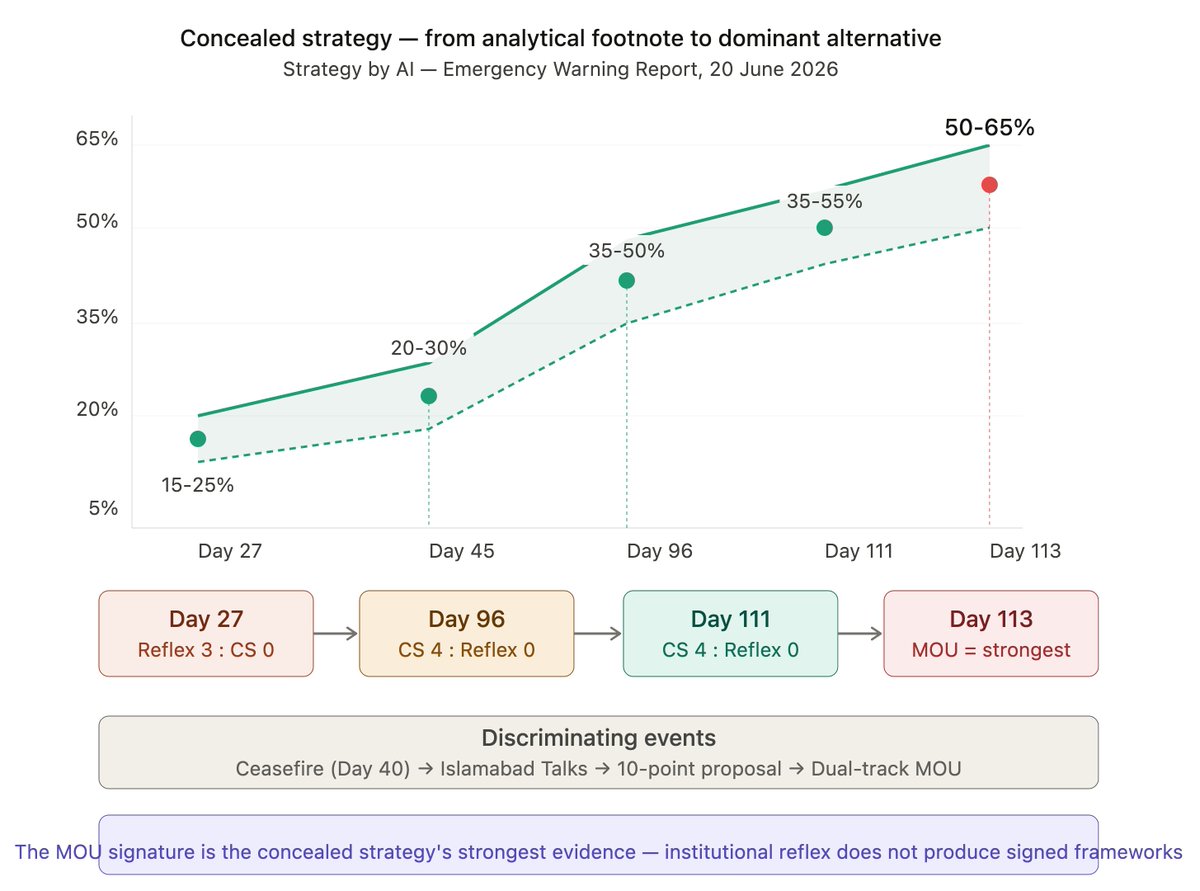
On Day 27 of the Iran war, Strategy by AI's analytical framework classified the concealed strategy hypothesis as an analytical footnote — 15-25% probability, three of five tests favouring institutional reflex, two inconclusive. The dominant interpretation was clear: a regime in a command vacuum, operating through institutional inertia after the assassination of its Supreme Leader, defaulting toward the worse option at every crisis-point fork because no authority existed to choose the better one.
Eighty-six days later, the assessment has reversed. Four of five tests now support the concealed strategy interpretation. The probability stands at 50-65%. The MOU signature — a fourteen-point framework agreement with a sixty-day implementation timeline, signed by presidents at Versailles and Tehran — constitutes evidence that institutional reflex alone cannot explain. Institutional reflex does not produce sequential diplomatic architectures with escalating commitment and increasing specificity: ceasefire, then Islamabad talks, then ten-point proposal, then fourteen-point MOU, then presidential signatures. That sequence is either the most fortunate series of accidents in modern diplomatic history or the surface expression of a strategy designed to remain invisible.
This is the central argument of our new blog article, which synthesises 113 days of warning system activations and six document reassessments into a comprehensive assessment of Iran's strategic position, trajectory, and prospects. The article examines Iran from three perspectives: structural (what the regime's institutional architecture produces under existential pressure), strategic (how the war confirmed, recalibrated, and reversed the original dossier's findings), and prospective (what the MOU settlement contest reveals about Iran's possible futures).
The execution scorecard moved from F to D-minus — but all three improvements were driven by external forces, not internal Iranian decisions. Pakistan brokered the ceasefire. The US proposed the MOU. China coordinated the backchannel. The regime earned the F through its own conduct. It approaches D-minus through forces that are not its own.
The contraction is locked. All scenarios lead to contraction. The variables are speed, form, and terms. The MOU's sixty-day window is the war's centre of gravity's resolution contest. And the concealed strategy's confirmation or disconfirmation is the single most consequential analytical question remaining.
OWN YOUR GEOPOLITICS. Employ Strategy by AI superior agent.
https://t.co/9SjXppROq6


I want first to start by explaining my proposed allies:
Greece: Their "passive hostile" behavior you are talking about is probably the UN votes and some statements sometimes some politicians make like Mitsotakis who said "I told Netanyahu to stop". As a Greek I know this behavior, and my guess is that good chance it's actually coordinated with Israel, with the intent being to fool Europe and to make them look the other way. When you look past the statements meant to be consumed by the EU and the UN, every practical move Greece has made is to help Israel, whether that is by using the merchant fleet to supply it during the war, or giving it access to the S-300s we have to train before striking Iran. Don't make the mistake of confusing the image Greece keeps up at the EU and what it's actual intents are. Besides, Greece is meant to act as a backchannel towards Europe, it wouldn't be effective at that if it was like Orban was for example.
As for the other allies in the current US sphere of influence, all of them are already looking the way the US treats Israel (especially the pacific trio of South Korea, Japan and Taiwan) and are asking "What happens when we need US help, if the US can abandon Israel they can abandon everyone". Hence why I proposed an alliance with them.
Japan: Whatever their relationship with turkey they will value a proper ally against china over them.
South Korea: Likewise with Japan, only the south Koreans moved a step further and will manufacture military warships on Greek Shipyards under project trident. So their alliance with Turkey is already fracturing.
As for Europe. I don't believe you can make a true alliance, with the right government there can be pragmatic partnerships as you mentioned.
Also I wouldn't say China has no hostility towards Israel when they pretty much are the ones alongside Qatar behind the ops promoting antisemitism.
As for oil: Most if not all of oil suppliers China can find are in the ME (I mentioned earlier why Russia isn't an option to supply all their oil), especially after the Venezuelan takeover. The only country in the ME that might become a Chinese supplier while simultaneously being friendly towards Israel is the UAE, but everyone else will push China towards being hostile to Israel, similar to how Qatar does with the US.
Iranian oil might have been cheap for China and helped them massively boost their economy, but the reason why China wants Iranian and muslim oil in general is because it knows it has leverage against those countries and that makes China the leader of the block, the very cheap price was just a (massive) bonus.
As for Israeli tech, I wouldn't even risk giving it to the Chinese, as they known to just take it and copy it. Also due to the Chinese-Gulf relations I mentioned earlier it could be a massive security risk.
THE CONCEALED STRATEGY AT COMPETITIVE PROBABILITY.
For 96 days we asked: is Iran stumbling or manoeuvring? The concealed strategy hypothesis — that a deliberate strategy operates beneath Iran's apparent chaos — just reached 35-50%. The highest in the model's history. No longer the minority view. Now the competitive alternative to institutional reflex – prevailed initially – running at approximate parity.
What changed: the ceasefire itself. The model identified Iran's critical error at Day 20: expending clash-phase resources at unsustainable rates. The prescription: decelerate, conserve, transition to protracted-phase operations. Iran's institutions appeared incapable of this. Then the ceasefire accomplished it. The question: by accident or by design?
Five tests rescored at Day 96:
Test 1 (internal consistency): A hidden narrative arc emerges — clash-phase depletion, then calibrated transition, then economical protracted-phase operations. The post-ceasefire pattern matches the prescribed strategy better than the pre-ceasefire chaos.
Test 2 (resource management): The ceasefire stopped the resource hemorrhage. Post-ceasefire salvos are calibrated (19 munitions, not 90/day). Even the missile failures may indicate deliberate expenditure of degraded stocks while preserving premium inventory.
Test 3 (diplomatic signals): The 10-point proposal arrived Day 39 — one day before the ceasefire. Timed delivery or accident? Islamabad achieved direct US-Iran talks for the first time since 1979. The June suspension buys time by adding complexity.
Test 4 (command coherence): Inconclusive. The visible fracture could be genuine chaos or deliberate role separation. This test SHOULD be inconclusive if the strategy is actually concealed.
Test 5 (great-power coordination): Pakistan (China's closest ally) mediated. China provided cover. The resulting protracted conflict is Beijing's optimal outcome. Coincidence or design?
Score: 0 tests favour reflex. 4 support concealed strategy. 1 inconclusive. Dramatic shift from the original 3-0 for reflex.
The critical qualification: even if the concealed strategy exists, it doesn't change the direction. Iran contracts either way. The concealed strategy determines the TERMS — better than collapse, worse than victory. It's the difference between stumbling into settlement and manoeuvring into it.
Watch the next 60 days for: timed capability demonstrations, backchannel survival beneath public suspension, coordinated great-power moves. The evidence will discriminate.
StrategyByA, a smartest strategy-making for business and political organisations. Employ for yours.
Iran at War. Strategic Model in Existential Confrontation.
https://t.co/i3QnsgxxWw
https://t.co/zmqZGELDDC


When the Anti-Drift Toolkit Fails: How Good Systems Become Performative @RialoHQ
The anti-drift toolkit isn’t fragile because it’s complicated.
It’s fragile because it’s uncomfortable.
It restricts the easy fixes:
“just approve it”
“just extend the TTL”
“just keep the legacy path”
“just tell support to handle it”
“just let this policy change slide”
And when people are under pressure, the organization will look for ways to make discomfort go away.
That’s how an anti-drift toolkit becomes performative:
the dashboards exist, the budgets exist, the runbooks exist—but behavior quietly returns to negotiation.
Here are the failure modes that cause that slide, and how to catch them early.
1) Exception budgets exist, but nothing happens when they’re breached
What it looks like
budgets go red and teams keep operating normally
exceptions keep getting approved
“we’ll address it next sprint” becomes permanent
Why it happens
Budgets feel like reporting, not governance.
How to catch it
require a breach response within 24 hours
track “breach without action” as its own metric
if breach happens twice without behavior change, the budget is dead
Fix
Tie breach to automatic constraints:
pause rollouts
tighten override approvals
require leadership signoff
Budgets need teeth or they’re decoration.
2) TTLs exist, but overrides keep getting renewed
What it looks like
overrides expire on paper but are reissued repeatedly
“temporary” becomes a subscription
the same users/partners always have active exceptions
Why it happens
Renewal is easier than fixing root causes.
How to catch it
track override renewal rate
track “same override class repeated”
any override renewed more than once should trigger formal work item ownership
Fix
Enforce renewal friction:
stricter approval on renewal than on initial override
shorter TTL on renewals
mandatory root-cause ticket linked to any renewal
3) Shadow mode runs, but nobody reviews the diffs
What it looks like
the lane is active, dashboards show diffs
rollouts still surprise the team
drift still appears in production
Why it happens
Shadow mode becomes “someone else’s dashboard.”
How to catch it
create a weekly “shadow review” ritual
require signoff: “diffs reviewed, expected vs unexpected confirmed”
measure “unreviewed diff duration” as a risk metric
Fix
Make shadow review a release gate for high-impact changes.
No review, no rollout.
4) Pressure dashboards exist, but the team only watches uptime
What it looks like
loop rate rises
appeals rise
override requests rise
but the only escalation happens when error rate spikes
Why it happens
Pressure metrics aren’t owned and aren’t tied to actions.
How to catch it
require a weekly top-3 pressure anomalies review
track “pressure anomalies unresolved”
link pressure spikes to incident posture consideration
Fix
Make pressure metrics actionable:
rising loop rate triggers refresh posture change
rising appeals triggers remediation/UI changes
rising override pressure triggers tighter controls
5) Deprecation clocks exist, but hard dates keep moving
What it looks like
sunset dates shift repeatedly
legacy paths remain forever
compatibility becomes permanent
Why it happens
Hard cutoffs create short-term pain, so teams keep postponing.
How to catch it
measure “sunset slippage”
require justification tied to objective readiness criteria
highlight legacy authorization usage prominently
Fix
If dates move, tighten the scope:
keep legacy only for exits
never allow legacy for new risk
shrink legacy surface even if full removal is delayed
6) Incident posture exists, but people still improvise “freeze all”
What it looks like
posture triggers are ignored
during stress someone disables everything anyway
exits become collateral damage
Why it happens
Posture isn’t rehearsed, and under stress people reach for the blunt lever.
How to catch it
tabletop drills quarterly
post-incident review specifically checks whether posture was followed
alert if exits are blocked during posture
Fix
Make posture simple and practiced:
pause new risk first
preserve exits always
keep comms templates pinned
Complex posture that no one trusts will be bypassed.
7) Comms and reason codes drift out of sync
What it looks like
UI says one thing, support says another
reason codes map to multiple scripts
“policy” messages become vague again
Why it happens
Templates aren’t versioned with policy changes.
How to catch it
measure comms consistency score (template mismatch)
sample tickets weekly for language drift
flag any new reason code without template/runbook mapping
Fix
Treat templates like an API:
version them
review them
require updates as part of policy release
8) The human bypass channel reappears (DMs, VIP lanes, “ask X”)
What it looks like
important cases get resolved outside the system
support and ops develop backchannels
exceptions become relationship-based
Why it happens
The system feels too rigid, so people create informal flexibility.
How to catch it
watch for override requests without ticket IDs
measure concentration of exceptions among certain accounts
require all exceptions to be logged and linked
Fix
If informal channels are growing, the system is missing a formal surface:
policy refinement
better remediation
better incident posture
better service allocation
Fix the root cause, but don’t allow shadow channels.
The simplest test: does the toolkit change behavior?
A healthy toolkit changes decisions under pressure:
rollouts get paused when budgets breach
overrides become rarer and expire cleanly
drift gets formalized into policy/UX work
legacy paths sunset
incidents preserve exits and avoid freeze-all reflexes
A performative toolkit produces dashboards and meetings but doesn’t change outcomes.
If nothing changes, the system will drift. It’s only a question of speed.
The operating rule that keeps the toolkit real
Pick one rule and enforce it relentlessly:
Repeat pain must become formal work, not repeated exceptions.
If that’s true, the toolkit stays alive.
If that’s false, the toolkit becomes theater.

The Anti-Drift Toolkit: The Set of Mechanisms That Keeps Humans From Becoming the Control Plane Again
@RialoHQ
Drift doesn’t happen because teams are careless.
It happens because teams are helpful.
A user is blocked, support fixes it. A rollout wobbles, ops makes an exception. A vendor degrades, engineering adds a fallback. A legacy path breaks, someone keeps it alive “temporarily.” All of it feels reasonable in isolation.
Over time, the system teaches everyone the same lesson:
the real way to operate is through humans.
That’s drift: when the formal system is still there, but the operating reality has shifted into exceptions, workarounds, and social escalation.
The anti-drift toolkit is how you prevent that shift. Not with one magic feature, but with a small set of mechanisms that reinforce each other.
Here’s the toolkit, and the job each piece does.
1) Exception Budget
What it prevents: “Just this once” becoming normal.
Risk-weighted limits on exceptions and overrides.
Separate budgets for normal mode vs incident mode.
Breach triggers that force containment decisions (pause rollouts, tighten posture, fix root cause).
Why it matters: Drift accelerates when exceptions feel free. A budget makes them costly in organizational terms.
2) Drift Audits
What it prevents: Quiet normalization of unofficial behavior.
Monthly sampling of tickets, overrides, and repeat denial patterns.
Checks for runbook drift (“what support did” vs “what the runbook says”).
Checks for incident posture hangover (temporary rules lingering).
Why it matters: Drift is slow. Audits make slow problems visible before they become culture.
3) Permanent Shadow Lane
What it prevents: Hidden behavioral drift and surprise rollouts.
Continuous shadow evaluation of a candidate policy or “tightened posture” variant.
Severity gates: unexpected allow on risk, unexpected deny on exits, reason-code drift.
Weekly review ritual.
Why it matters: Shadow mode catches drift before users feel it, and before support compensates for it.
4) Pressure Dashboards
What it prevents: Measuring only uptime while drift grows underneath.
Track pressure signals:
loop rate (retries, refresh storms)
denial-to-remediation conversion
appeal churn
override requests and renewals
“worked yesterday” phrases
reason-code drift
Why it matters: Pressure is the earliest warning. If pressure isn’t visible, drift grows unnoticed.
5) Override Discipline (Break-Glass Design)
What it prevents: Overrides becoming a parallel product.
TTL required for every override.
Dual approval for risk-expanding overrides.
Scoped overrides only (user + action + window).
Override reason code emitted and visible.
Overrides reviewed as part of weekly ops rhythm.
Why it matters: If overrides are easy, people will use them as the default fix.
6) Incident Posture as a Product State
What it prevents: Freeze-all reflexes and ad hoc constraints.
Precommitted safe set vs restricted set.
Posture tiers (observe, restrict new risk, controlled fallback).
Clear activation and exit criteria.
UI and comms overlays tied to posture.
Why it matters: Posture absorbs stress into formal behavior instead of human improvisation.
7) Policy Versioning + Rollback-as-One-Switch
What it prevents: Quiet edits and “we’ll patch it live.”
Policies are immutable once active.
Changes ship as new versions with expected diffs.
Rollback is one switch to last stable.
Rollback triggers are prewritten.
Why it matters: Drift loves quiet changes. Versioning makes change legible and reversible.
8) Deprecation Clock
What it prevents: Legacy paths living forever.
Parsing compatibility can remain; permission compatibility sunsets.
Exits-only legacy posture.
Announce/soft/hard enforcement timeline.
Legacy usage monitoring and hard end dates.
Why it matters: Indefinite compatibility is a permanent exploit surface and a constant drift source.
9) Reason-Code Anchored Comms and Runbooks
What it prevents: Support becoming the interpreter and inconsistent narratives.
Reason codes are stable and privacy-safe.
Templates versioned like policy.
Runbooks keyed by reason codes.
Incident-mode messages are defined overlays.
Why it matters: Drift accelerates when different teams tell different stories.
10) “Close the Loop” Pipeline
What it prevents: Repeating the same disputes, overrides, and confusion.
Every appeal/override outcome classified into: policy fix, posture fix, workflow fix, dependency fix.
Repeat classes trigger automatic work items.
Weekly review of top repeat friction.
Why it matters: Without loop closure, drift becomes permanent overhead.
How the toolkit works together
Each tool covers a different failure mode, but the real strength is overlap:
Pressure dashboards detect drift early.
Shadow lane predicts drift before enforcement.
Exception budgets stop humans from “patching” drift away indefinitely.
Drift audits catch cultural normalization.
Deprecation clock prevents legacy doors from staying open.
Versioned policy + rollback keeps change safe.
Incident posture keeps stress behavior predictable.
Reason-code comms keeps the story consistent.
Close-the-loop pipeline turns friction into system improvements.
One tool alone helps. Together, they make drift hard to sustain.
The practical way to adopt the toolkit
Don’t try to implement everything at once.
Start with the three that deliver immediate leverage:
Pressure dashboards
Override discipline + exception budget
Drift audit rhythm
Then add:
permanent shadow lane
deprecation clock
posture tiers
as complexity grows.
The toolkit is modular, just like the policy system should be.
The standard
You know the anti-drift toolkit is working when:
support stops needing “special handling”
overrides remain rare and expire cleanly
repeat confusion declines week over week
rollouts get calmer
legacy paths disappear on schedule
incident posture activates and exits predictably
and the system’s behavior is explainable without human interpretation
That’s the real win.
Not zero incidents. Not zero disputes.
Just a product that stays governed by formal surfaces even when reality gets messy.
2026.5.23 Putin’s 25th trip to Communist China was not diplomacy. It was personal dependency staged as statecraft.
Forty-three meetings with Xi. Covert backchannels. Love-language signaling. A curated “everlasting friendship” exhibition. The message is clear: this is not China and Russia. It is Xi and Putin. Two strongmen trying to turn fear and ambition into an opportunistic gamble for global power. But state interests outlive rulers. Personal alliances do not. When one throne begins to shake, the friendship ends.
2026.5.22 European intelligence says 200 Russian troops trained in Communist China. That number grossly understates the scale of the operation.
NFSC intelligence says the real operation began in the opening phase of Russia’s war in Ukraine: thousands of PLA personnel sent into Russia, and thousands of Russian troops now training in China on drones, Beidou systems, production, tactics, and battlefield communications.
Read alongside the May 20 CCP-Russia joint statement, the meaning is unmistakable: the Xi-Putin war machine is already moving, and U.S. power is the target.

Built contextual-vad for voice agents.
Acoustic VAD only tells you “speech/no speech.”
This predicts higher-level turn events: endpoint, barge-in, backchannel, false alarm.
Built with scikit-learn using VAD + STT + TTS + dialogue-state features.
https://t.co/HlIITdYt8n

This is a strong point.
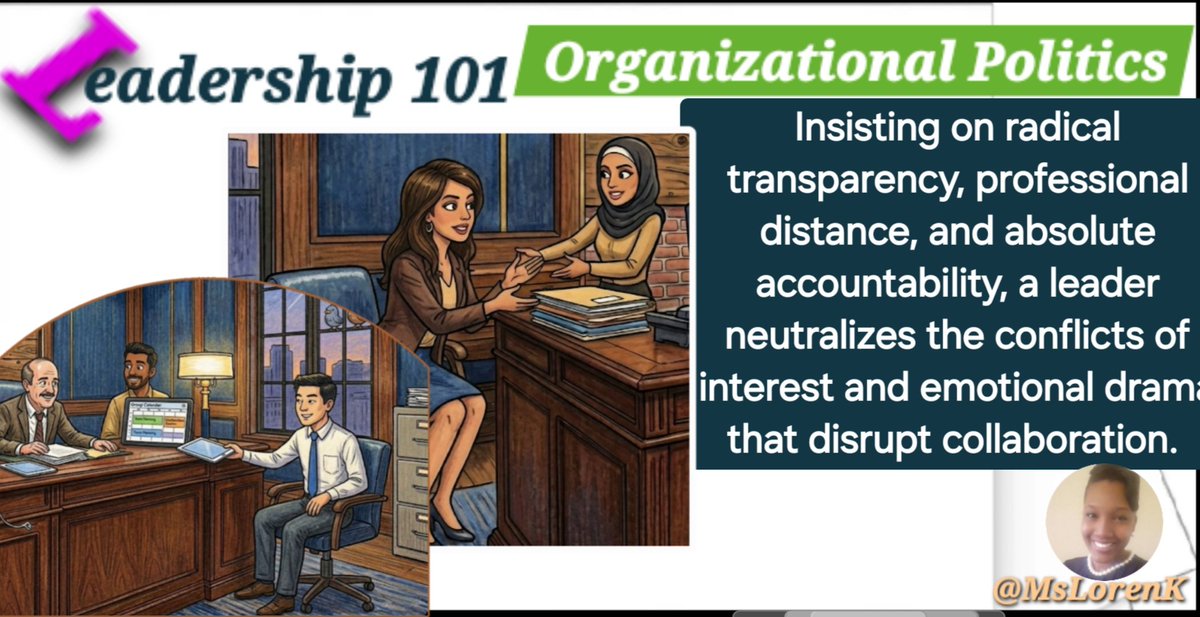
When hidden agendas, favoritism, backchanneling, or blurred boundaries enter a workplace, trust and psychological safety can quickly erode.
Healthy leadership requires transparency, fairness, and clear boundaries so people can focus on the work, not politics.

Organizational Politics 💯 (Radical Transparency)
Leadership requires safeguarding the professional environment from any dynamics that introduce hidden agendas, bias, or personal distractions.
🚨 This means a leader must establish the clear, unyielding boundaries against corporate politics, backchanneling, and the complications that arise from sexual relationships or romantic entanglements within the team structure.
A strictly objective, respectful, and transparent ecosystem ensures that team members remain focused on shared strategic goals, protecting the collective consciousness and psychological safety of the entire organization.


@Khizar333 @Masood__Khan Masood Khan is right. This constant posturing by the US and Iran has turned the Middle East into a ticking time bomb. Pakistan’s backchannel efforts deserve appreciation

@DrMargaretShow Hi Dr. Dawn. It is an honor to meet you. I’d love to connect with you in the backchannels.
Most Popular Users

Elon Musk 
@elonmusk
240M followers

Barack Obama
@barackobama
118.6M followers

Cristiano Ronaldo
@cristiano
114.4M followers

Donald J. Trump
@realdonaldtrump
111.7M followers

Narendra Modi
@narendramodi
106.9M followers

Rihanna
@rihanna
98.6M followers

NASA
@nasa
92.1M followers

Justin Bieber
@justinbieber
91.7M followers

KATY PERRY
@katyperry
89.9M followers

Taylor Swift
@taylorswift13
83.9M followers

Lady Gaga
@ladygaga
75.4M followers

Virat Kohli
@imvkohli
73.3M followers

Kim Kardashian
@kimkardashian
70.8M followers

YouTube
@youtube
68.6M followers

Neymar Jr
@neymarjr
66.3M followers

Bill Gates
@billgates
65.2M followers

Selena Gomez
@selenagomez
63M followers

The Ellen Show
@theellenshow
62.1M followers

CNN
@cnn
61.7M followers

X
@x
60.6M followers