

Top Tweets for #CFAProgram

➡️ Follow Us on Facebook
https://t.co/i1E2sL5b9R
#CFAHartford #FinancialProfessionals #CFAInstitute #CFANetworking #CFAProgram #FinancialCareers

➡️ Follow Us on LinkedIn
https://t.co/dpOBvy4EEX
#CFAHartford #FinancialProfessionals #CFANetworking #FinancialCareers #CFAInstitute #CFAProgram


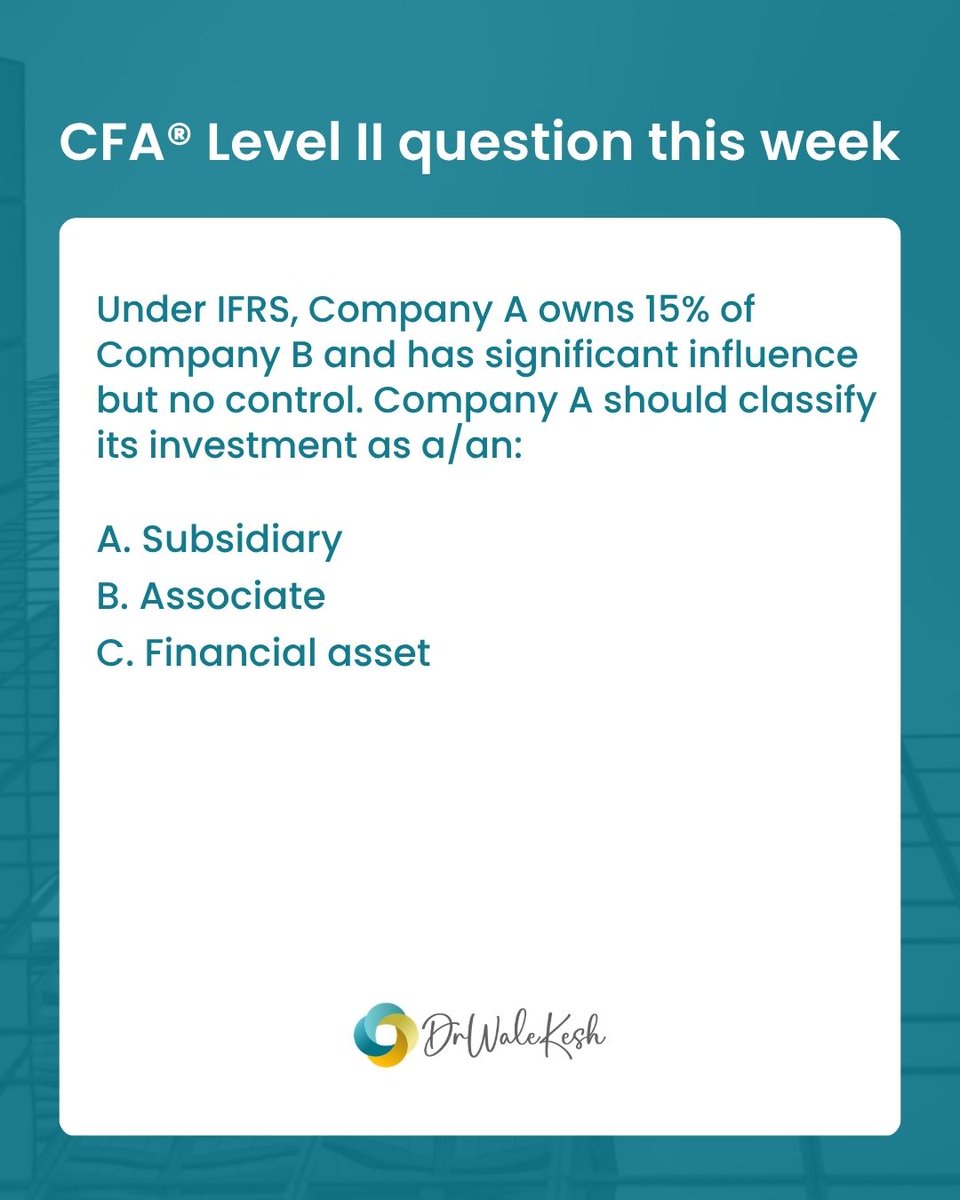
CFA® Level II Question of the Week
Can you get this one right? A, B, or C?
#CFAProgram #CFALevel2 #CFAExam #CFAStudy #WaleKeshLearning
CFA® Level I Question of the Week
Can you get this one right? A, B, or C?
#CFAProgram #CFALevel1 #CFAExam #CFAStudy #WaleKeshLearning


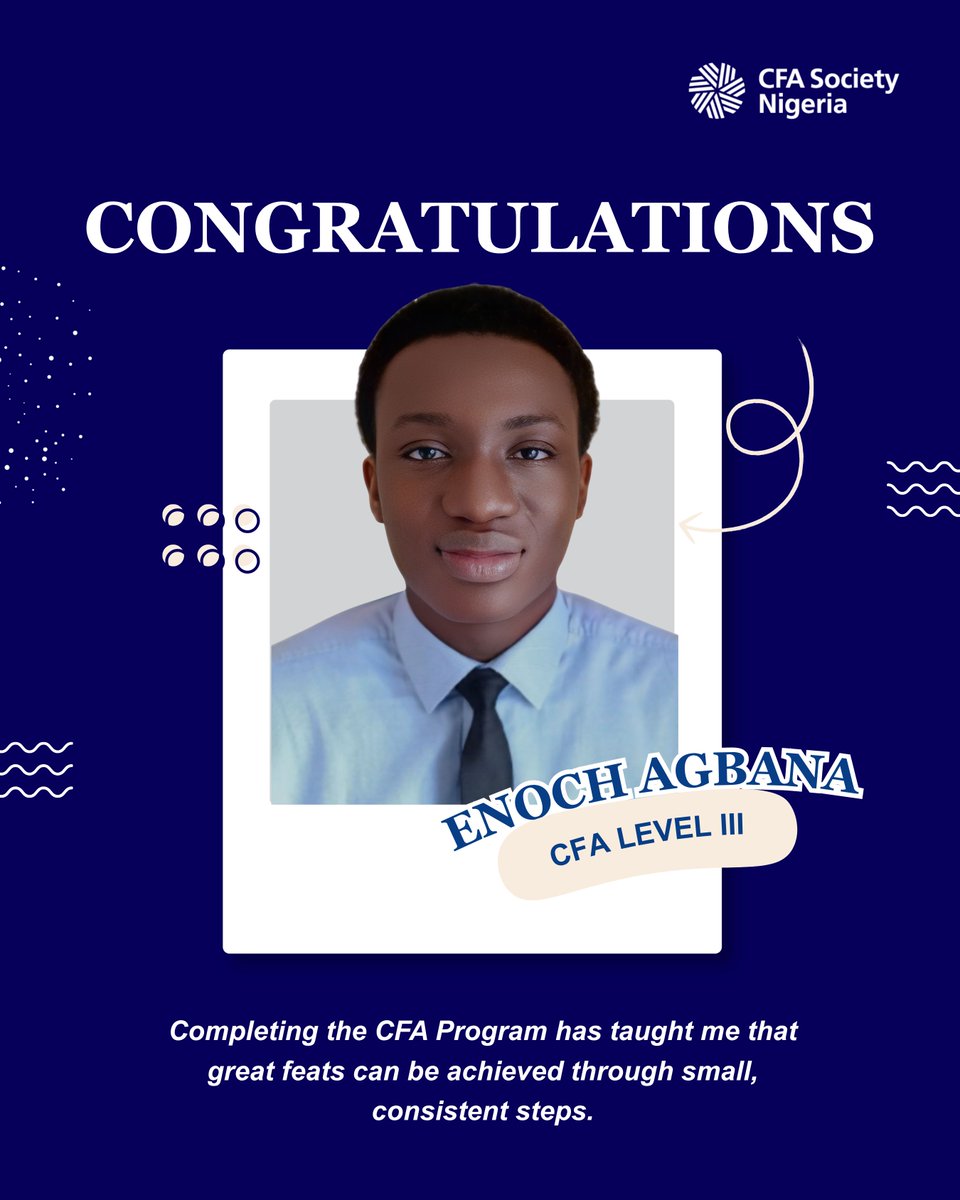
Level III! You people have really done it! 🎉
Remember when Level I was the biggest thing on your mind? When you were still getting used to the CFA curriculum, trying to figure out your study routine and wondering how people even made it through all three levels?
#CFAProgram




The answer is B below.
If you answered incorrectly, consider learning and applying CFA concepts better with Chalk & Board's prep videos and mocks! Stop worrying about pass rates and join our winning team: https://t.co/8npudySBmH.
#cfa #cfaexam #cfaprogram
Another CFA® exam trivia question for CFA candidates.
A put option is most likely in the money when the underlying asset price is less than the:
A. Present value of the strike price.
B. Strike price.
C. Strike price minus the premium.
Vote below! Answer posted Friday! For specialized CFA prep materials to pass confidently and avoid retakes, join Chalk & Board's winning team: https://t.co/X9BK3F1bOk.
#cfa #cfaexam #cfaexamstrategy

The hard work is paying off! Congratulations to our August 2026 CFA Level II passers in Nigeria. We’re proud of you and cheering you on as you take the next step towards the CFA charter. Here’s to Level III! 🎉🎉
#CFANaija #CFASocietyNigeria #CFALevelII #CFAProgram


Congratulations to all candidates in Nigeria who passed the CFA Level II exam in August 2026!
We're cheering you on every step of the way. Here’s to the next chapter of your CFA journey!🥂
#CFANaija #CFASocietyNigeria #CFALevelII #CFAProgram

To everyone who passed the August CFA Level I exams, congratulations! 🎉 We know what went into getting here, and we are excited to see where the journey takes you next.
Know someone who passed? Tag them in the comments and celebrate them properly. 👏🏾
#CFANaija #CFAProgram




The answer is C below.
If you answered incorrectly, consider learning and applying CFA concepts better with Chalk & Board's prep videos and mocks! Stop worrying about pass rates and join our winning team: https://t.co/8npudySBmH.
#cfa #cfaexam #cfaprogram
Another CFA® exam trivia question for CFA candidates.
A stock currently trades at $100. It will pay a single $3 dividend in exactly 6 months. The annual risk-free rate is 5%.
The no-arbitrage 1-year forward price is closest to:
A. $105.00, because the forward price equals the spot price compounded at the risk-free rate for one year.
B. $108.07, because the long position forgoes the dividend and must be compensated through a higher forward price.
C. $101.93, because the forward price equals the spot compounded at the risk-free rate minus the future value of the dividend.
Vote in comments below! Answer posted Friday! For specialized CFA prep materials to pass confidently and avoid retakes, join Chalk & Board's winning team: https://t.co/X9BK3F1bOk.
#cfa #cfaexam #cfaexamstrategy

The answer is B below.
If you answered incorrectly, consider learning and applying CFA concepts better with Chalk & Board's prep videos and mocks! Stop worrying about pass rates and join our winning team: https://t.co/8npudySBmH.
#cfa #cfaexam #cfaprogram
Another CFA® exam trivia question for CFA candidates.
An analyst adds more and more stocks to an equally weighted portfolio. All stocks have the same standard deviation, and all pairs have the same positive correlation of 0.30.
Which of the following most accurately describes what happens to portfolio variance as the number of stocks approaches infinity?
A. Portfolio variance approaches zero, because diversification eliminates all risk when the number of holdings is sufficiently large.
B. Portfolio variance converges to the average pairwise covariance among the stocks and cannot be reduced further through additional diversification, because systematic risk remains regardless of how many assets are held.
C. Portfolio variance continues to decline indefinitely with no floor, because each new stock added contributes a smaller and smaller amount of individual variance to the total.
Vote in comments below! Answer posted Friday! For specialized CFA prep materials to pass confidently and avoid retakes, join Chalk & Board's winning team: https://t.co/X9BK3F1JDS.
#cfa #cfaexam #cfaexamstrategy

The answer is A below.
If you answered incorrectly, consider learning and applying CFA concepts better with Chalk & Board's prep videos and mocks! Stop worrying about pass rates and join our winning team: https://t.co/8npudySBmH.
#cfa #cfaexam #cfaprogram
Another CFA® exam trivia question for CFA candidates.
Two companies in the same industry have identical forward P/E ratios of 15x and identical required returns on equity. Company A trades at a P/B of 3.2x and Company B trades at a P/B of 1.8x. All else equal, which of the following most accurately explains the difference in P/B multiples?
A. Company A generates a higher ROE than Company B. Companies that earn returns on equity above their required return trade at a premium to book value, and the greater this excess return, the higher the P/B multiple regardless of whether P/E ratios are identical.
B. Company A is more financially leveraged than Company B. Higher leverage reduces book equity per share, mechanically inflating the P/B ratio without reflecting any difference in fundamental value creation.
C. Company A and Company B apply different accounting policies for asset recognition. The P/B differential reflects differences in measured book value rather than any underlying difference in operational efficiency or profitability.
Vote in comments below! Answer posted Friday! For specialized CFA prep materials to pass confidently and avoid retakes, join Chalk & Board's winning team: https://t.co/X9BK3F1bOk.
#cfa #cfaexam #cfaexamstrategy

The CFA Institute Access Scholarship for May 2027 is now open.
If you are considering the CFA Program, this is your chance to take that step with meaningful financial support.
Apply here: https://t.co/cDpeniwDYB
Share this post with people who need it.
#CFAProgram #CFANaija

The answer is C below.
If you answered incorrectly, consider learning and applying CFA concepts better with Chalk & Board's prep videos and mocks! Stop worrying about pass rates and join our winning team: https://t.co/8npudySBmH.
#cfa #cfaexam #cfaprogram
Another CFA® exam trivia question for CFA candidates.
A fixed income analyst states that for two bonds with identical yields and maturities, the bond with the higher coupon will always exhibit greater price sensitivity to changes in interest rates. A colleague disagrees.
Which of the following best evaluates the analyst's statement?
A. The analyst is correct. Higher coupon bonds receive larger periodic cash flows, increasing the bond's sensitivity to discount rate changes since more value is at risk when rates move.
B. The analyst is correct for bonds trading at a premium but incorrect for bonds trading at a discount. The relationship between coupon rate and price sensitivity reverses depending on whether the bond trades above or below par.
C. The analyst is incorrect. A higher coupon bond has a shorter Macaulay duration because more of its total value is received sooner through larger periodic payments — a lower-coupon bond, with relatively more value concentrated in the distant par repayment, has greater price sensitivity to yield changes.
Vote in comments below! Answer posted Friday! For specialized CFA prep materials to pass confidently and avoid retakes, join Chalk & Board's winning team: https://t.co/X9BK3F1bOk.
#cfa #cfaexam #cfaexamstrategy


Congratulations to our Accelerate Scholarship Awardees.
We look forward to welcoming you into the Society.
If you would like to help us support the next generation of finance professionals, consider giving to the Endowment Fund: https://t.co/fAiPNrKABp
#CFANaija #CFAProgram

The answer is B below.
If you answered incorrectly, consider learning and applying CFA concepts better with Chalk & Board's prep videos and mocks! Stop worrying about pass rates and join our winning team: https://t.co/8npudySBmH.
#cfa #cfaexam #cfaprogram
Another CFA® exam trivia question for CFA candidates.
A fixed income analyst observes that investment-grade corporate bond spreads have widened significantly over the past month while government bond yields have fallen sharply. A colleague argues this is a compelling entry point for increasing high-yield bond allocations to capture the attractive spreads.
Which of the following best assesses the colleague's recommendation?
A. The colleague is correct. Spread widening combined with falling government yields creates an unusually attractive risk-adjusted entry point, as investors are being compensated above historical averages for taking on credit risk.
B. The colleague's logic is flawed. Simultaneous spread widening and falling government yields is a classic flight-to-quality pattern reflecting rising risk aversion, a condition that historically precedes further spread widening and credit deterioration, making aggressive high-yield addition premature.
C. The recommendation is appropriate only if the portfolio's duration target is being met. When government yields are falling, duration management takes precedence over credit quality considerations in fixed income portfolio construction.
Vote in comments below! Answer posted Friday! For specialized CFA prep materials to pass confidently and avoid retakes, join Chalk & Board's winning team: https://t.co/X9BK3F1bOk.
#cfa #cfaexam #cfaexamstrategy

The answer is C below.
If you answered incorrectly, consider learning and applying CFA concepts better with Chalk & Board's prep videos and mocks! Stop worrying about pass rates and join our winning team: https://t.co/8npudySBmH.
#cfa #cfaexam #cfaprogram
Another CFA® exam trivia question for CFA candidates.
A firm is evaluating a new project requiring external equity financing. The CFO proposes incorporating flotation costs by adjusting upward the cost of equity used in the WACC calculation. The junior analyst argues instead that flotation costs should be treated as an initial cash outflow in the NPV analysis. A third colleague suggests that the WACC adjustment approach, while theoretically inferior, is widely used in practice because it is simpler to apply consistently across multiple projects.
Which of the following best describes the correct treatment of flotation costs?
A. The CFO's approach is correct; flotation costs represent a permanent increase in the firm's cost of equity and should be reflected in the discount rate applied to all future cash flows
B. Both approaches yield identical NPV outcomes as long as the flotation cost percentage remains constant, making the choice between them a matter of convenience
C. The analyst's approach is theoretically preferred; flotation costs are a one-time transaction cost that should reduce initial proceeds in the NPV calculation, not be embedded in the discount rate
Vote in comments below! Answer posted Friday! For specialized CFA prep materials to pass confidently and avoid retakes, join Chalk & Board's winning team.
#cfa #cfaexam #cfainstitute

The answer is B below.
If you answered incorrectly, consider learning and applying CFA concepts better with Chalk & Board's prep videos and mocks! Stop worrying about pass rates and join our winning team: https://t.co/8npudySBmH.
#cfa #cfaexam #cfaprogram
Another CFA® exam trivia question for CFA candidates.
Aurora Private Wealth manages a portfolio for a high-net-worth client with the following profile:
- Primary objective: long-term capital growth with tax efficiency over a 25+ year horizon
- Risk tolerance: moderate, with an explicit drawdown ceiling of 15% over any 12-month period
- Tax status: taxable account; equity positions carry a cost basis averaging 18% of current market value
- Estate planning: the client intends to bequeath the majority of the portfolio to heirs, who would receive a stepped-up cost basis at death
- Liquidity needs: modest; no scheduled withdrawals for at least 5 years
The strategic allocation is 60% global equities, 30% fixed income, and 10% alternatives. Following a prolonged equity rally, equities have drifted to 68%. The alternatives allocation consists entirely of illiquid private equity commitments that cannot be rebalanced. Forward equity return expectations have declined, fixed income yields have risen materially, and realized volatility has reached the 80th percentile of its 10-year range. Several positions elsewhere in the portfolio carry unrealized losses that could be harvested against future gains.
The portfolio manager is evaluating how to respond to the equity drift.
Which course of action is most consistent with the client's objectives and current circumstances?
A. Partially rebalance by trimming the highest-gain equity positions first, gradually reducing drift while managing the tax impact; the drawdown constraint is binding and cannot be deferred, and the estate planning consideration is too uncertain to override a near-term risk management obligation.
B. Defer rebalancing and use available loss harvesting to manage near-term risk exposure; the stepped-up basis at death permanently eliminates embedded gains, making realization an irreversible destruction of after-tax wealth that is inconsistent with the client's primary objective and 25+ year horizon.
C. Fully rebalance to target weights immediately, funding the tax liability from the fixed income allocation; the binding drawdown constraint and declining equity return expectations make restoring the strategic risk profile the overriding priority.
Vote in comments below! Answer posted Friday! For specialized CFA prep materials to pass confidently and avoid retakes, join Chalk & Board's winning team: https://t.co/X9BK3F1bOk.
#cfa #cfaexam #cfainstitute

You did it!
Congratulations to all candidates who have successfully passed CFA Level III. Your discipline, sacrifice, early mornings, late nights, and unwavering commitment have paid off.
Tag a CFA Level III candidate who has received the good news.
#CFANaija #CFAProgram



Last Seen Hashtags on Sotwe
Trends for you
Most Popular Users

Elon Musk 
@elonmusk
241.5M followers

Barack Obama
@barackobama
118.8M followers

Cristiano Ronaldo
@cristiano
114.5M followers

Donald J. Trump
@realdonaldtrump
111.9M followers

Narendra Modi
@narendramodi
107.1M followers

Rihanna
@rihanna
98.7M followers

NASA
@nasa
92.3M followers

Justin Bieber
@justinbieber
91.8M followers

KATY PERRY
@katyperry
90M followers

Taylor Swift
@taylorswift13
84M followers

Lady Gaga
@ladygaga
75.5M followers

Virat Kohli
@imvkohli
73.5M followers

Kim Kardashian
@kimkardashian
70.9M followers

YouTube
@youtube
68.8M followers

Neymar Jr
@neymarjr
66.5M followers

Bill Gates
@billgates
65.2M followers

Selena Gomez
@selenagomez
63.1M followers

The Ellen Show
@theellenshow
62.2M followers

CNN
@cnn
61.7M followers

X
@x
60.7M followers