

Top Tweets for #CMSi

@basknlikdivani Her gün olumsuz algı yapanlara en güzel cevabı bizzat küresel piyasalar verdi!#tera ve #trhol #CMSI listesine eklendi.
#Tera ve #Trhol artık bambaşka bir ligde oynuyor. Bu gurur ve bu mutluluk sabreden tüm yatırımcılara sonuna kadar helal olsun! 🇹🇷💪
@basknlikdivani

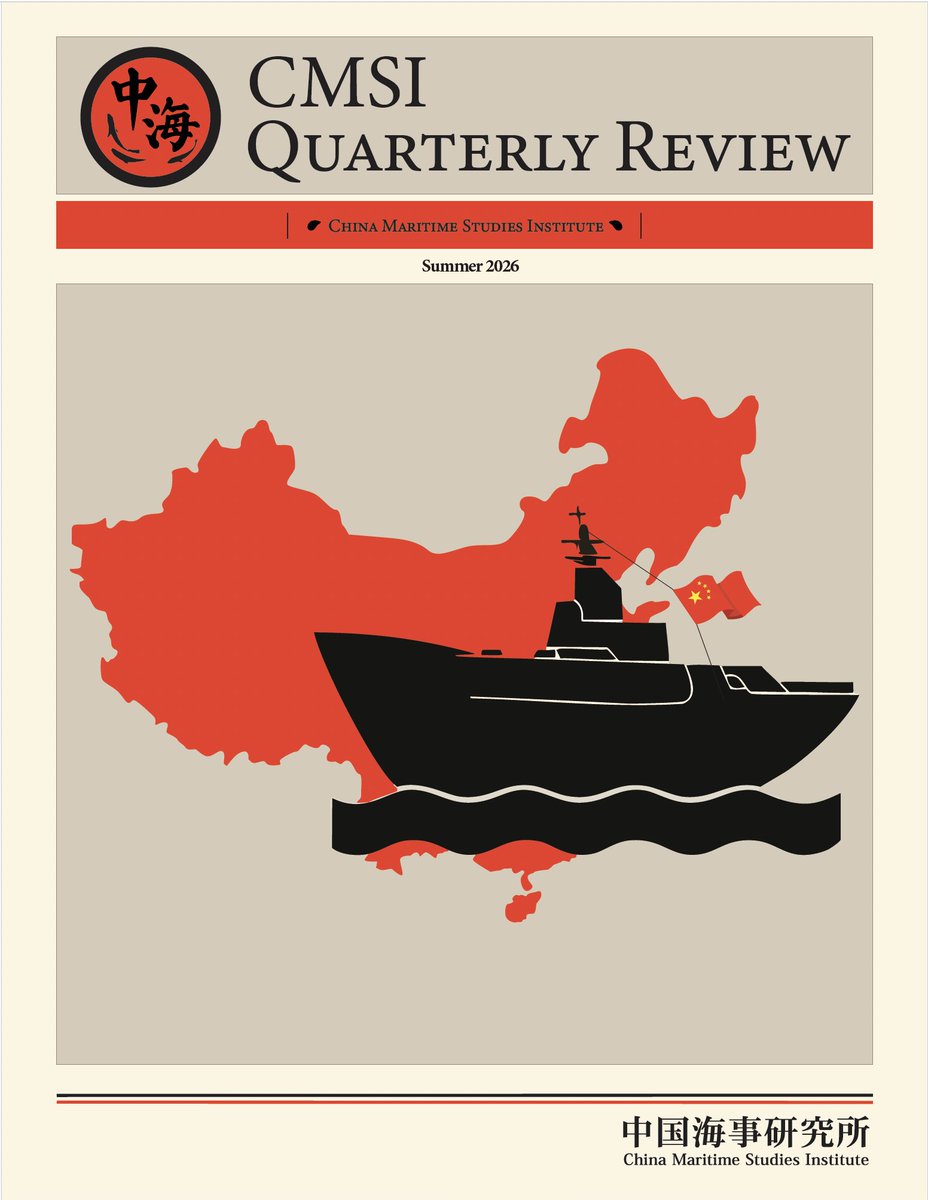
New — #CMSI Quarterly Review 1.6!
https://t.co/mUcOeUL55z
This Summer 2026 issue highlights the @NavalWarCollege/@ChinaMaritime Studies Institute’s latest scholarship, media engagement & institutional activities from April thru July 2026.
Click here for curated content from all previous issues: https://t.co/DL3xoFF7o9
Mark your calendar for the following CMSI events:
⚓ CMSI Turns 20 (24 September). Join CMSI as we celebrate 20 years of advancing understanding of #China’s #military #maritime power. The anniversary will be marked with a special Lecture of Opportunity featuring former CNO Admiral Gary Roughead & former CMSI Director Dr. @peter_dutton/@YLSChina/@YaleLawSch.
⚓ 2027 CMSI Conference (11–12 May 2027). Save the date for CMSI’s next biennial conference, “Military-Civil Fusion at hashtag#Sea: China’s Asymmetric Advantage?” The conference will bring together leading experts to examine how Beijing is leveraging Military-Civil Fusion in the maritime domain.
⚓ PLA Fundamentals Course (27–29 July). A few seats remain for @CASI_Research’s 3-day, unclassified PLA Fundamentals Course hosted by CMSI. The course provides an excellent introduction—or refresher—on PLA organization, culture, personnel, & capabilities. Open to #NavalWarCollege students, faculty & staff.

Great to see my @CIMSEC article with Jason Wang, @mhbernardo14 & Pei-Jhen Wu—“#China Is Rehearsing More Than Amphibious Landings”—featured @RCDefense!
https://t.co/xHBQho97h7
Check out our full-length #CMSI study @NavalWarCollege/@ChinaMaritime: https://t.co/Gp6VcqZYgB

New opportunity in Newport!
Apply for @ChinaMaritime Studies Institute (#CMSI) Assistant/Associate Professor position @NavalWarCollege safely before 11:59 PM (EST) on 12 June 2026!
Email complete application package to <[email protected]> (must reference VA#NWC-26-06).
@USAJOBS: https://t.co/1X8c7g48in
➡️ Complete info here: https://t.co/YvPhtB0sfc


New @USAJOBS! @NavalWarCollege / @ChinaMaritime Studies Institute Seeks New Professor—Apply by 12 June 2026!
https://t.co/vD48KJAX13
➡️ Complete info here: https://t.co/YvPhtB0sfc
From #CMSI Director CAPT @ChrisHSharman, @USNavy (Ret):
Come Join the #China Maritime Studies Institute Team!
China Maritime Studies Institute (CMSI) Friends & Colleagues –
CMSI at the #NavalWarCollege in Newport, Rhode Island is pleased to announce a new (& rare) hiring opportunity to join the CMSI team as an Assistant / Associate Professor.
⚓ CMSI is the @DeptofWar’s 1st service-specific China center & premier research center for the scholarly study of China’s military maritime power.
⚓ CMSI scholars perform academic research based on Chinese-language sources to develop deeper insight into key aspects of China’s military maritime development, capabilities, trends & future trajectory.
⚓ We seek candidates with strong research & analytical skills, demonstrated expertise on China & maritime security issues, & the ability to produce high-quality written analysis for both academic & operational audiences. Chinese-language proficiency is required.
⚓ Highly desirable candidates will have significant experience researching PRC security issues; analytical experience, including in developing innovative approaches to research & analysis; an extensive, top caliber publication record focusing on PRC strategy, policy, military, &/or maritime issues; & impact recognized by leading stakeholders.
⚓ Candidates must be U.S. citizens & capable of obtaining a DoW security clearance.
⚓ The position is located in Newport, Rhode Island & offers the opportunity to work alongside a highly collaborative team conducting impactful research on issues of critical importance to the future military maritime security environment for the Department of War & other key stakeholders.
Please circulate this opportunity widely among qualified colleagues, researchers & professional networks. Thanks!
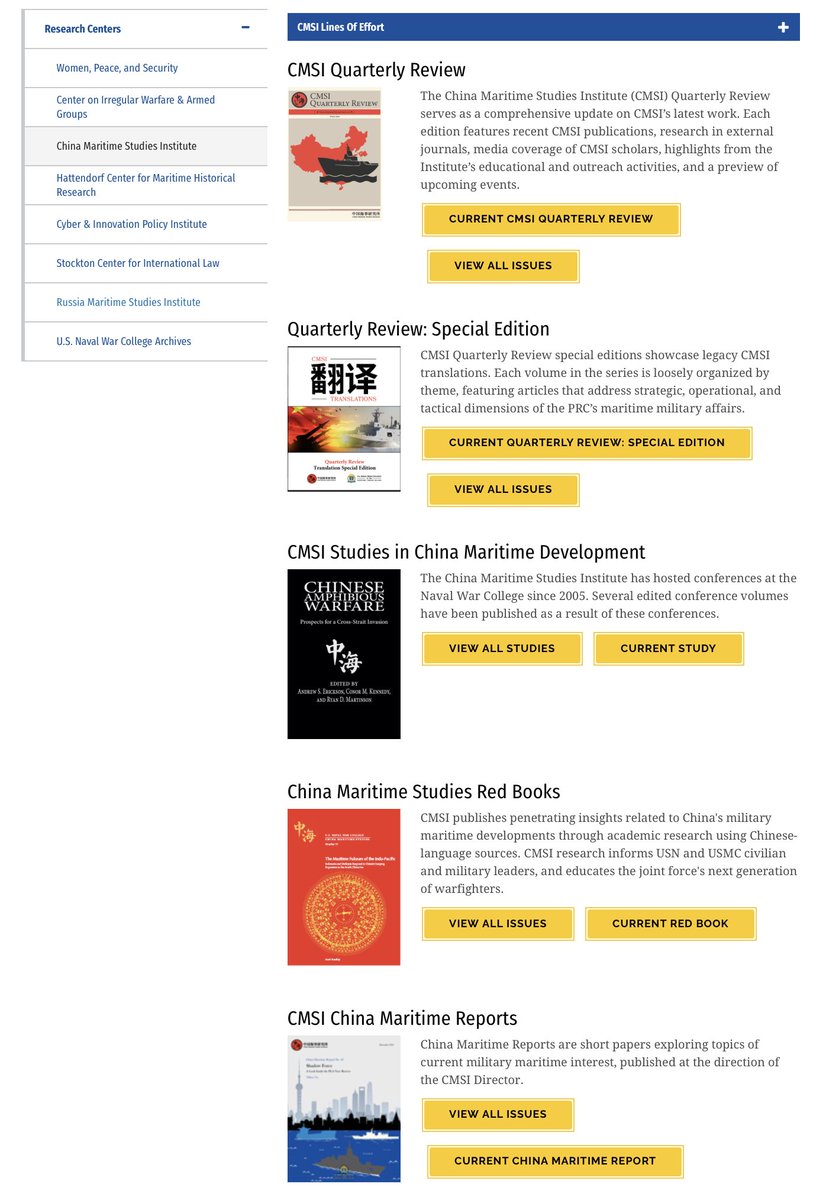
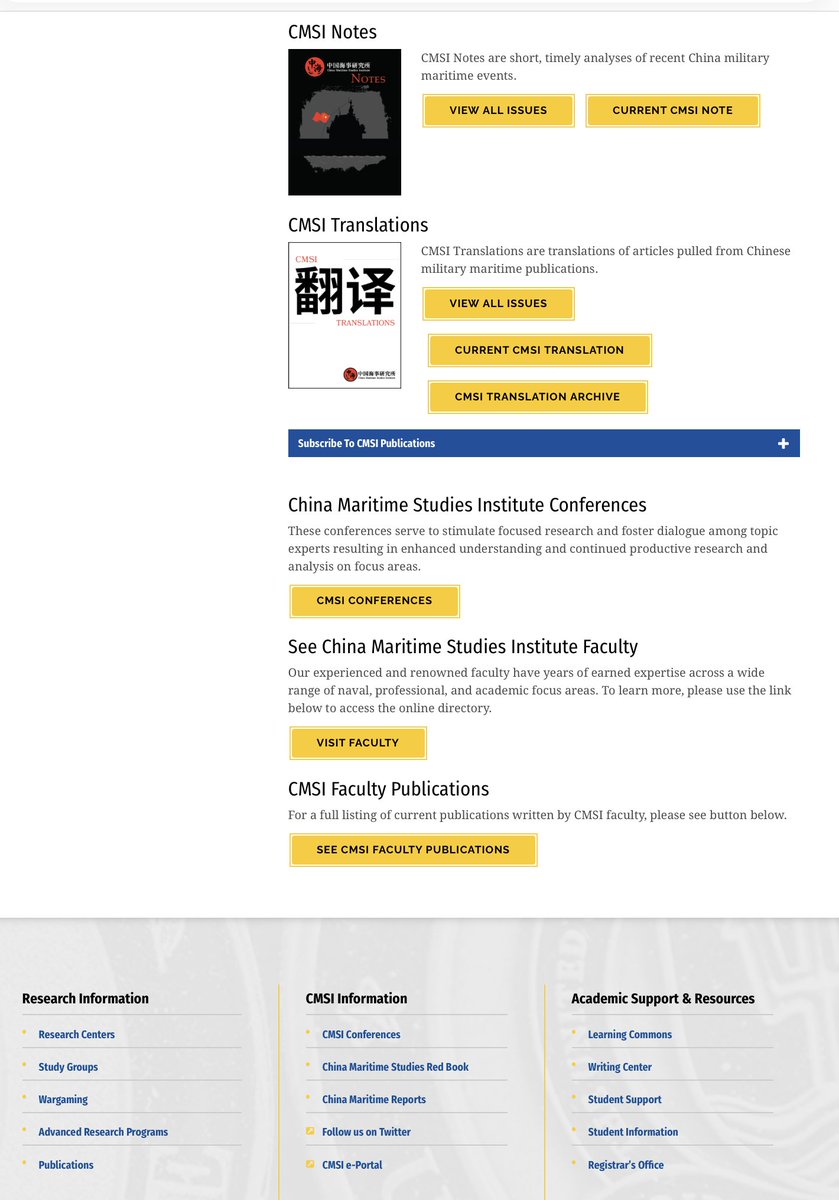
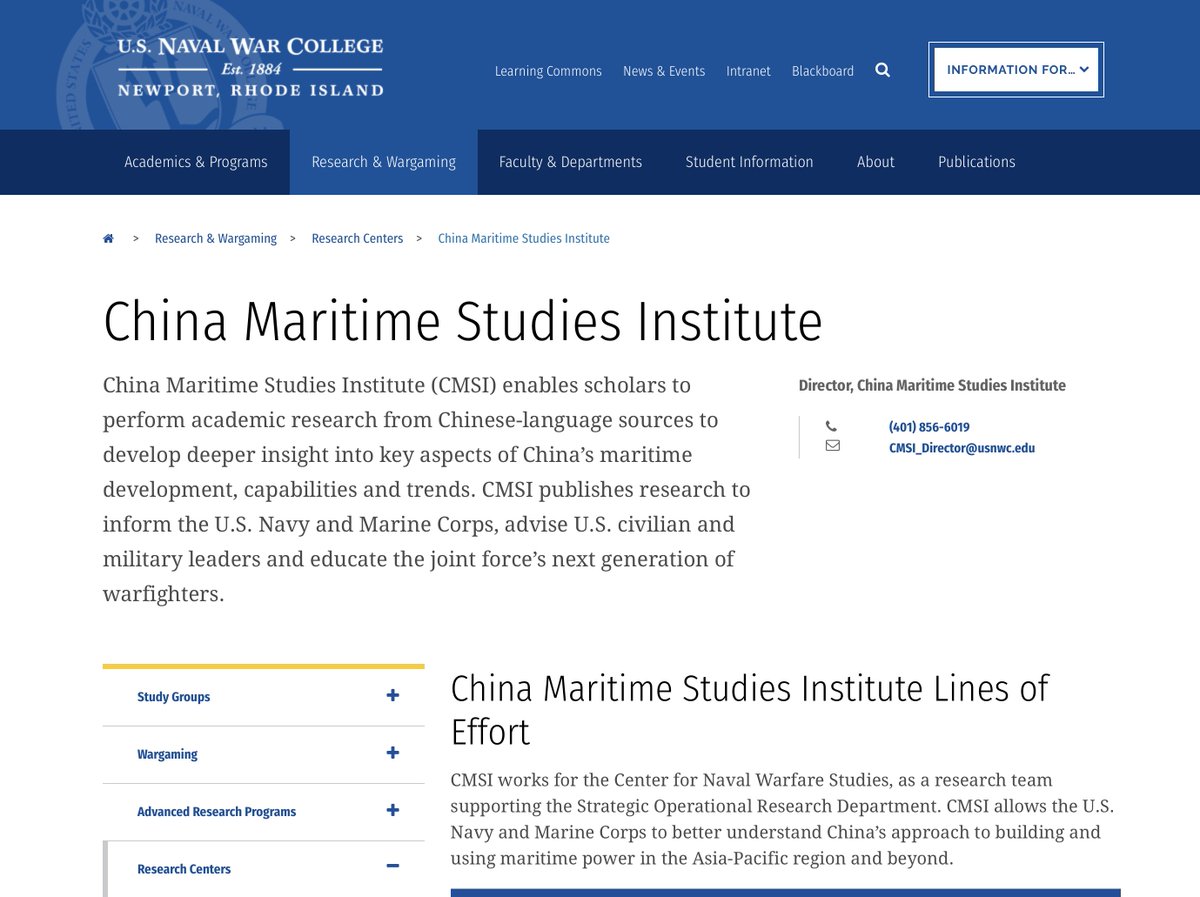

Honored to see that the new @ChinaMaritime/#CMSI Quarterly Review 1.4 (Spring 2026) is now the @NavalWarCollege’s most popular publication:
https://t.co/f7ptYAcyUo
CMSI has contributed 6 of the top 10, with extensive inputs by Prof. @Ian_M_Easton, as well as Prof. @rdmartinson88 & Director @ChrisHSharman.
Grateful that #6, Chinese Amphibious Warfare: Prospects for a Cross-Strait Invasion—with over 13,800 downloads & counting—has been named the Samuel B. Griffith Foundation’s 2025 Publication of the Year & selected for the @CMC_MarineCorps/@usmc_commandant/@USMC Professional Reading Program’s 2025 & 2026 Reading Lists:
https://t.co/kzRqzJKQZA
Sincere thanks to all our readers & supporters! We’ll keep our very best efforts coming out at best possible speed & make sure they’re readily accessible to all who are interested.

Quelques minutes avant l’ouverture du Centre Médical de Soins Immédiats de Gravelines, CMSI ! Une réelle satisfaction de l’accueil de cet établissement pour la santé de nos habitants du Gravelinois ! Merci à tous !
#CMSI
#Santé
#Gravelines
#Médecins

Alors là…si qqn peut m’expliquer cette factu pr mon neveu de 18 ans passé en #cmsi hier , diag :angine non bactérienne
Les lettre clefs ne correspondent pas aux actes
Ce qui a été payé ne correspond pas à ce qui semble facturé …
Je ne comprends rien
#doctoctoc


Aujourd'hui, mauvais accueil au #cmsi de Reims. Une des secrétaires a été infecte avec nous alors qu'on voulait juste voir un médecin pour avoir une ordonnance sécurisée. Elle fait le tri à l'accueil alors qu'elle n'est pas habilitée à le faire.
Une honte
No higher honor for us at @NavalWarCollege/@ChinaMaritime.
🦅 @CMC_MarineCorps/@USMC Professional Reading Program selected #CMSI’s latest edited volume—“#Chinese Amphibious Warfare”—for 2025 & 2026 Reading Lists:
https://t.co/PDtHC2oJDT
🦅 In recognition of the recent 250th #MarineCorps anniversary, the Commandant’s Professional Reading List (CPRL) for FY26 highlights heritage, innovation, & enduring ethos, offering titles that honor the past & prepare Marines for the future fight:
https://t.co/cNryWmihRr
🦅 Nominations were solicited across the force & reviewed by the CPRL Board; selected recommendations were incorporated to ensure the list reflects the perspectives of Marines at all ranks:
https://t.co/ltScLDMeDH
🦅 About the Commandant’s Professional Reading Program:
https://t.co/XHKQqxCDb0
🦅 Further background on CMSI’s latest book:
https://t.co/KYI6grKbjF
#CMSI at 20: A Look Back at Our Founding & Early Years
From @NavalWarCollege/@ChinaMaritime Studies Institute Director CAPT @ChrisHSharman, @USNavy (Ret.):
CMSI Friends & Colleagues –
What do you know about the history & origins of the China Maritime Studies Institute here at the #NavalWarCollege?
The following excerpt is pulled from the recently published official Naval War College history, Sailors & Scholars (Volume 2): https://t.co/ZSHfQ7uXPP
This excerpt tells the story of CMSI’s origins & its initial efforts through 2009.
The complete volume can be downloaded here: https://t.co/QiZHwX45Ar
Below is an abbreviated summary:
In 2004, a small group of faculty members had a sense of unease about the proportion of focus that the College was putting on Central Asia & the Middle East, both in terms of research & analysis & in its curricula. They believed that the College needed to balance its efforts by devoting more intellectual capital to what they considered a first-order, strategic priority for the United States over the long term—China. They argued that it was China that posed the most enduring challenge to U.S. global economic, political, & security leadership & that a good deal of this concern rested on China’s role in the maritime domain.
With this conviction as their driving force, these professors started an informal e-mail group & called themselves the “China Maritime Studies Group.” Their purpose was to concentrate human capital, share sources & ideas, & thereby catalyze research & discussion of China’s growing turn to the sea. In fall 2004, this group approached the Provost with the idea of creating a China Maritime Studies Institute (CMSI) at the College.
After extensive meetings in the Provost’s office & over the group’s nascent library collection of Chinese-language publications in McCarty Little Hall, the Provost & these faculty members concluded that what set the Naval War College apart from any other such activity in the Navy was the College’s increasing ability to collect & translate relevant, #OpenSource, Chinese-language literature & then analyze it in the strategic & operational context of the maritime domain.
In 2004, at the direction of the President of the Naval War College, the Provost established the China Maritime Studies Institute within the Strategic Research Department of the Center for Naval Warfare Studies. In 2006, the Chief of Naval Operations personally approved CMSI’s formal inauguration with dedicated Program Objective Memorandum (POM)08 funding. This made the Navy the first @DeptofWar service to have a dedicated China center. The result was that, by the end of 2008, CMSI acquired 7 full-time & 2 part-time faculty members, including 5 Mandarin speakers; & had hosted 4 conferences, each of which yielded an impactful edited volume.
In just 4 years, between the China Maritime Studies Institute’s founding & the end of 2008, the Institute had quickly emerged as an active & effective contributor in terms of its breadth & depth of coverage of China’s growing power at sea. Its team’s remarkable ability in using open-source literature to identify & highlight new & critical trends in Chinese maritime activities added substantially to the College’s institutional effectiveness & relevance in the eyes of the Navy’s senior leadership.
In 2008, Secretary of Defense Robert Gates cited the China Maritime Studies Institute as a model for the Defense Department’s Minerva Research Initiative, which sought to build a deeper understanding of the social, cultural, & political dynamics that shape regions of strategic interest around the world.
CMSI marked the 20th anniversary of its establishment within the Naval War College last year & will celebrate the twentieth anniversary of its formal founding Navy-wide during the fall of 2026.
We are grateful for your continued interest & support as we remain dedicated to elucidating China’s military maritime development in service of the Navy & the Nation.

Additionally, all edited volumes from the @NavalWarCollege/@ChinaMaritime book series “Studies in Chinese Maritime Development” are now curated on #CMSI’s website in one convenient location:
https://t.co/aCfxaUBVHe
Our latest book, “Chinese Amphibious Warfare: Prospects for a Cross-Strait Invasion,” is available for free full-text download thanks to our friends at #NavalWarCollege Press!
https://t.co/MYpHn05yOE
At well over 12,000 downloads so far, it’s currently NWC’s 3rd-most-popular publication:
https://t.co/f7ptYAcyUo
New @NavalWarCollege/@ChinaMaritime Publication, With 8 Annotated Translations!
https://t.co/mozfvQRKWO
#CMSI Quarterly Review: “Volume 1 (2025) Maritime Geopolitics of the Belt & Road Initiative”
Curated contents: https://t.co/01czJ2k1vf
From Director Captain @ChrisHSharman, @USNavy (ret.):
The China Maritime Studies Institute (CMSI) Translation Vault
This series presents a curated collection of #OpenSource Chinese-language journal & newspaper articles that were originally published in the People’s Republic of China (PRC). Hand-selected for their relevance to PRC military maritime affairs & translated by CMSI researchers over the past 13 years, these materials were previously only available for limited distribution. CMSI is now pleased to open access to these translations & offer them to a broader community of defense professionals & scholars seeking deeper insights into evolving PRC military maritime developments.
Each volume in the series is loosely organized by theme, featuring articles that address strategic, operational, & tactical dimensions of the PRC’s maritime military affairs. Selection was guided by operational or policy relevance at the time of translation, with some articles anticipating key shifts in Chinese policy or doctrine, & others offering rare glimpses into both official narratives & unofficial discourse.
Though historical in origin, many of these sources remain timely. Readers may uncover enduring patterns, early indicators of current trends, or fresh perspectives on the PRC’s long-term military maritime ambitions. CMSI will continue publishing volumes in this series until its archive of previously translated materials is fully released.
About This Volume
Volume 1 of this series, Maritime Geopolitics of the Belt & Road Initiative, features 8 translated articles examining China’s expanding interests beyond the western Pacific & the strategies it is developing to protect them—particularly along the 21st Century Maritime Silk Road corridors. President Xi Jinping first announced the overland Silk Road Economic Belt & the Maritime Silk Road during an official visit to Indonesia in 2013. Initially referred to as One Belt, One Road (OBOR), the initiative was later rebranded as the Belt & Road Initiative (BRI).
The opening article, “A Summary of Chinese Research on the Construction of the 21st Century Maritime Silk Road,” surveys PRC academic literature on the 21st Century Maritime Silk Road. It highlights key challenges, including geopolitical rivalry, uneven development, & non-traditional security threats along these corridors. The piece identifies gaps in existing PRC research, calling for empirical studies, sector-specific analysis, & broader regional coverage to inform policymaking & strategic planning.
“‘One Belt, One Road’ & Grand Border Defense,” published in the People’s Liberation Army’s (PLA) official military journal National Defense in 2016, presents the initiative as both an economic & security framework. It argues that OBOR necessitates a shift from inward-focused defense to an outward-looking, integrated approach—termed “grand border defense”—combining military, diplomatic, & political tools to secure China’s interests along its periphery & maritime routes.
The subsequent article, “‘Marching West’: The Rebalance of China’s Geo-Strategy,” was authored in 2012 by Wang Jisi, then Dean of Peking University’s School of International Studies, & originally published in the nationalist Global Times newspaper. The article is noteworthy for anticipating the logic that would later underpin BRI. Wang articulates a strategic rationale for the PRC to orient itself westward in order to secure energy supply chains, expand access to emerging markets, & counterbalance the U.S. “pivot to Asia.” He underscores the importance of long-term planning, sustained diplomatic engagement, & the cultivation of regional expertise.
The next 3 articles explore China’s efforts to establish overseas strategic footholds. “Strategic Strongpoints along the ‘Belt & Road’ & Building Military Diplomacy” examines the role of military (i.e., PLA Navy, PLAN) diplomacy in selecting & developing overseas bases. “National Maritime Strategy Founded on Seapower Theory” draws on Mahanian theory to argue for far-seas training, overseas basing, & a national maritime consciousness. It identifies key priorities: securing the South China Sea, projecting influence in Southeast Asia & protecting energy routes to the Indian Ocean. “Making & Breaking the Status Quo: China’s Overseas Strategic Support Points” offers case studies of China’s overseas facilities & analyzes its long-term basing strategy.
The final 2 articles assess PLAN operations in the far seas. “Chinese Sea Power Expansion & the State of Sea Power in the Indian Ocean” focuses on strategic competition with India & the race to control key chokepoints. “Five Major Implications of Chinese Surface Task Forces Crossing the International Date Line” evaluates the operational & strategic significance of the PLAN’s first eastward crossing in a combat-ready posture, highlighting implications for deterrence, regional dynamics, & maritime power projection.
Together, the articles within this volume provide a window into the PRC’s evolving strategic thought as it seeks to protect its expanding global interests. They reveal a concerted effort to integrate economic initiatives like BRI with expanded military, diplomatic, & infrastructural capabilities, particularly across the Indian Ocean region. By analyzing how Chinese scholars & strategists conceptualize maritime power, overseas basing, & geopolitical competition, this volume offers valuable & timeless insights into the drivers of the PRC’s external posture & the potential implications for regional & global security as Beijing seeks to transform the PLAN into a “world-class” navy.


The @ChinaMaritime Studies Institute (#CMSI)’s Founding & Early Years: From Official Study—“Sailors & Scholars: The History of the U.S. @NavalWarCollege, 1884–2009, Vol. 2”
https://t.co/iORmYoElt1
CMSI’s founding & early years are documented in “Filling a Critical Gap,” pp. 546–49.
p. 546
Filling a Critical Gap
One of the early and recurring criticisms of the Cooperative Strategy was that it did not address the growing power of #China at sea. However, the #NavalWarCollege had already begun to put itself into a unique position to do so with respect to research and analysis on the maritime developments of the People’s Republic of China by the time that the Cooperative Strategy was introduced. In 2004, a small group of faculty members had a sense of unease about the proportion of focus that the College was putting on Central Asia and the Middle East, both in terms of research and analysis and in its curricula. They believed that the College needed to balance its efforts by devoting more intellectual capital to what they believed to be a first-order, strategic priority for the United States over the long term—China. They argued that it was China that posed the most enduring challenge to U.S. global economic, political, and security leadership and that a good deal of this concern rested in China’s role in the maritime domain.146
With this conviction as their driving force, Associate Professor Lyle Goldstein and Assistant Professor Andrew Erickson of the Strategic Research Department, Associate Professor Bill Murray of the War Gaming Department, and Professor Andrew “Dex” Wilson of the Strategy and Policy Department started an informal e-mail group and called themselves the “China Maritime Studies Group.” Their purpose was to concentrate human capital, share sources and ideas, and thereby catalyze research and discussion of China’s growing turn to the sea.147 In October 2004, this group approached the provost with the support of the dean of Naval Warfare Studies, Dr. Ken Watman, and the chairman of the Strategic Research Department, Dr. Jonathan Pollack, with the idea of creating a China Maritime Studies Institute (CMSI) at the College. The provost found their idea to be sound, but one that required guidance concerning its focus and a detailed plan for implementing the concept in terms of manpower and financial resources. After extensive meetings in the provost’s office and over the group’s nascent library collection of publications in Chinese in McCarty Little Hall, the provost and these faculty members concluded that what set the Naval War College apart from any other such activity in the @USNavy was the College’s increasing ability to collect and to translate relevant, open-source, Chinese-language literature and then to analyze it in the strategic and operational context of the maritime domain.
Goldstein, Erickson, Murray, and Wilson recognized that there was an extraordinary volume of Chinese journals and other publications concerning Chinese maritime issues that were available on the open
p. 547
market, particularly in the bookstores of northwest Beijing, but not obtainable outside China. Goldstein and Murray had already published an exceptionally well-received article on China’s submarine force in the prestigious journal International Security, using some of this Chinese open-source material that Goldstein had acquired and translated.148 These Chinese publications covered a range of topics from very detailed engineering studies to the broader questions of China’s maritime strategy. Included in this literature were equally detailed analyses by credible Chinese authors of U.S. Navy forces and their vulnerabilities. Drawing on his experience, Giblin recognized that this was not unlike the volume of open-source literature that characterized the internal analysis and debate about the Soviet Navy during the Cold War, which had been of value to the U.S. Navy in that period.149 To exploit this opportunity, much as the U.S. Navy had done in the 1970s with Soviet naval literature, Giblin insisted that the group had to become a defined organization within the College, so that its work could be structured systematically and funded on a full-time basis to conduct the kind of work that Goldstein and his colleagues envisioned. Giblin also insisted that the group work across organizations—inside and outside government—to make the most effective use of its available capacity and capabilities.
With this focus as its point of main effort, Giblin approved the idea and took the concept of how it would be executed to Shuford, who strongly endorsed it and directed that the provost immediately establish the China Maritime Studies Institute within the Center for Naval Warfare Studies. Shuford recognized the potential of the institute in terms of enhancing the College’s institutional effectiveness and its relevance to the senior leadership of the Navy, especially the Navy’s operational-level commanders in the Pacific. Shuford established three, top-level objectives:
1. Produce analysis of open-source Chinese-language publications on the naval development of the People’s Republic of China;
2. Analyze the implications of these developments for the U.S. Navy; and
3. Integrate Chinese maritime studies into the Naval War College’s teaching and research.
Accordingly, on 1 December 2004, the provost established the China Maritime Studies Institute within the Strategic Research Department of the Center for Naval Warfare Studies, with Professor Lyle Goldstein as the institute’s first director. Giblin also committed to finding NWC mission or other funds to get the organization up and running. In this regard, the @nwc__foundation was exceptionally helpful in providing funds to support the China Maritime Studies Institute’s early efforts. Giblin directed Goldstein to draft an issue paper for the College’s POM 08 submission that contained a budget estimate of the resources required and the rationale for the initiative. Working with the College’s comptroller, Commander Melinda Matheny, Goldstein, Erickson, Murray, and Wilson drafted an above-core issue paper for the College’s submission to the Navy’s program objective memorandum for fiscal year 2008. After substantial editing, Giblin took the issue paper into the Planning, Programming, Budgeting, and Execution process. Subsequently, the @USNavyCNO personally approved the establishment of the China Maritime Studies Institute and provided sufficient funding to hire four additional faculty members in fiscal year 2008, along with a modest amount of additional funding to support the institute’s research and analysis.
p. 548
The result was that the China Maritime Studies Institute acquired seven full-time and two part-time faculty members, including five Mandarin speakers, by the end of 2008.150 During its first four years, the institute sponsored four conferences and published edited volumes of the papers from each of them.151 These included its first effort from 26 to 27 October 2005 to address China’s future nuclear submarine force. The second conference, held 6 to 7 December 2006, examined the maritime implications of China’s energy strategy. The third, held from 5 to 6 December 2007, considered the challenge of defining a maritime security partnership with China. The institute’s fourth conference took place 10 to 11 December 2008 and investigated the evolving maritime roles for Chinese aerospace power. In addition, the institute’s faculty members completed studies that addressed the Chinese tanker fleet, naval mines, the East China Sea, submarine rescue, and the Chinese shipbuilding industry.152 Of these, the study by Erickson, Goldstein, and Murray on Chinese mine warfare helped, in particular, to validate the concept of the China Maritime Studies Institute within the U.S. Navy by demonstrating the strikingly accurate and insightful findings that could be derived from open-source analysis.
In just four years, between the China Maritime Studies Institute’s founding in December 2004 and the end of 2008, the institute had quickly emerged as an active and effective contributor in terms of its breadth and depth of coverage of China’s growing power at sea. Its team’s remarkable ability in using open-source literature to identify and to highlight new and critical trends in Chinese maritime activities added substantially to the College’s institutional effectiveness as well as to its relevance in the eyes of the Navy’s senior leadership. In 2008, Secretary of Defense Robert M. Gates cited the China Maritime Studies Institute as a model for the Defense Department’s Minerva Research Initiative, which sought to build a deeper understanding of the social, cultural, and political dynamics that shape regions of strategic interest around the world.153
p. 549
“The Chinese government publishes a tremendous amount of information about military and technological developments on an open-source basis. However, it is often inconvenient, if not impossible, for American researchers to get access to this material since it is often available only in China. A real—or virtual—archive of documents acquired by researchers and others abroad would help us track Chinese military and technological developments. . . . Faculty members at the Naval War College have already instituted a smaller version of this idea focusing on the Chinese Navy. . . .154”
Indeed, the actions of this small group of CMSI’s founding members personified Luce’s 1903 guiding principle that the College is a “place of original research on all questions relating to war and to statesmanship connected with war, or the prevention of war.”155 Just as important, they embodied Vice Admiral Stansfield Turner’s charge to the College in 1972: “Always keep in mind that the product which the country desperately needs is military men with the capability of solving complex problems and of executing their decisions. Scholarship for scholarship’s sake is of no importance to us. You must keep your sights on decisionmaking or problem solving as your objective.”156 Although the College’s executive leadership deserves some of the credit for the foresight in establishing the China Maritime Studies Institute, the real credit for filling this critical gap belongs to this group of young faculty members who had the courage of their convictions to think and to act strategically with their unusual skills, the very essence of what the Naval War College is about.


#MRAIssue6 | 2025
Four major ESG frameworks unite under the CMSI to create one global standard—simplifying compliance & boosting accountability. @ICMM_com COO Aidan Davy explains more.
Read: https://t.co/XKBYtqtBqB
#ESGmining #CMSI #responsiblemining #miningstandards

New! @NavalWarCollege/@ChinaMaritime Translation #23: “The Elusive ‘Deep-Sea Beast’: Analysis of the Performance of the Main Equipment of the @USNavy Virginia-Class Nuclear Attack #Submarine”
https://t.co/CDrvFEFT8B
Key content from previous 22 #CMSI translations curated here: https://t.co/NeuLe2OZjn
From CMSI Director CAPT @ChrisHSharman , USN (Ret.):
#China #Navy Watchers: How does the Chinese Navy view the U.S. Virginia-class submarine?
A May 2025 article in the official Chinese Navy (PLAN) journal casts it as a “deep-sea beast” with unmatched stealth, strike power, & modular design — yet also points to quality-control flaws & supply chain shortfalls that could undermine its edge.
This CMSI translation offers a rare look at how the PLAN views the U.S. Navy’s Virginia-class nuclear attack submarine—the “deep-sea beast,” which is characterized in the article as the core of America’s undersea dominance.
The article highlights several of the submarine’s most advanced features, from modular design & life-of-ship nuclear power to its formidable Tomahawk strike capacity, stealth technologies, & integration of unmanned systems & special operations (SOF) support.
At the same time, the author underscores vulnerabilities he sees in the program, citing persistent quality-control issues, premature wear & tear on critical components, & supply-chain weaknesses that could cut service life short.
The article provides a PLAN author’s technical appraisal of the Virginia class submarine & provides a window into PLAN thinking about potential exploitable weaknesses.
The details & descriptions of the Virginia-class submarine provided by the author in this article are not those of CMSI, but belong to the author & the PLAN journal in which it was published.
Kudos to @RealNickHendo for this excellent & very detailed translation. Mr. Henderson currently serves as a CMSI Non-Resident Research Fellow.
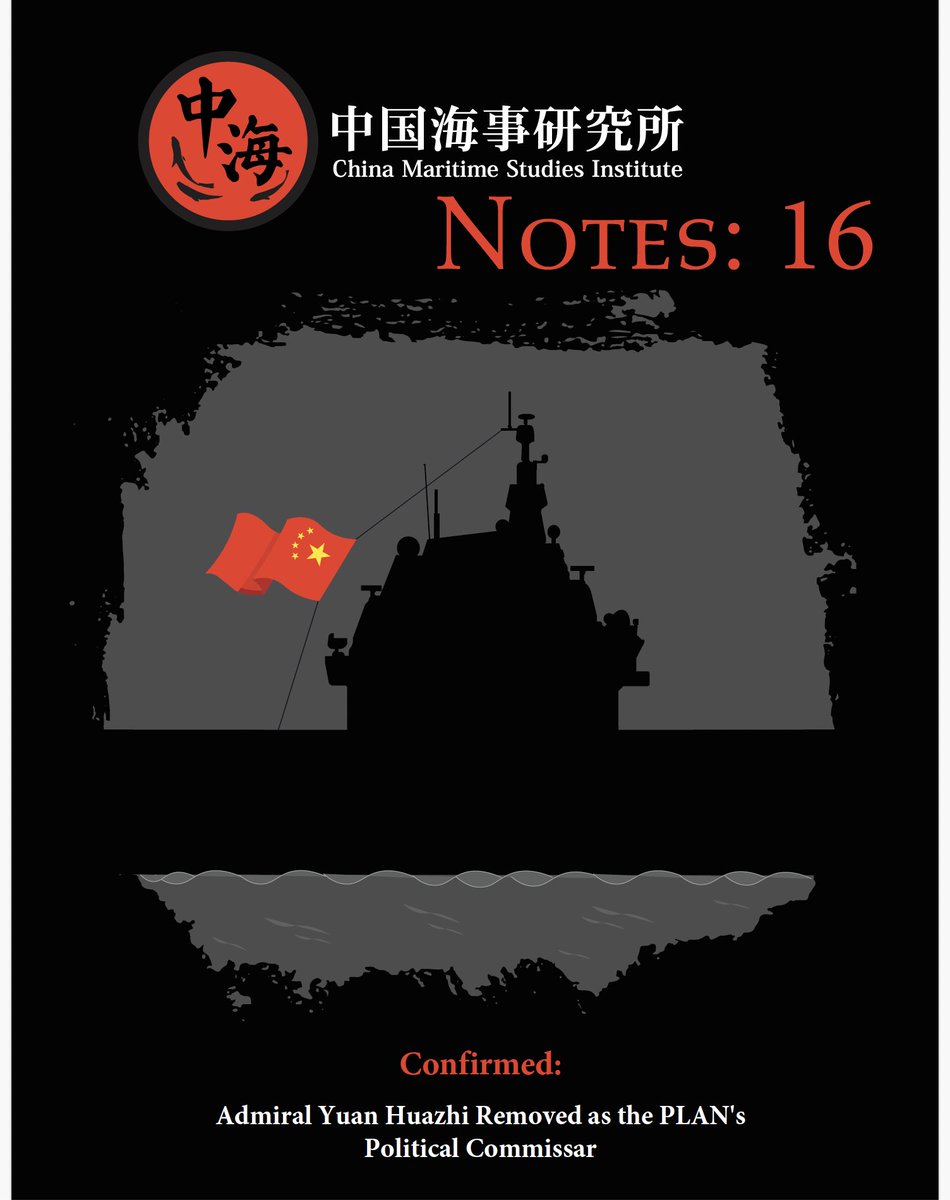
New! @NavalWarCollege/@ChinaMaritime Note 16: “Confirmed: ADM Yuan Huazhi Removed as the PLAN’s Political Commissar”
https://t.co/c37XSk15eU
Links & key content from previous 15 CMSI notes here: https://t.co/9EHCnOoJ5r
From #CMSI Director Christopher Sharman:
China Navy Watchers: As Xi Jinping presided over yesterday’s military parade in Beijing, the spectacle on Tiananmen Square masked a deeper drama within China’s Navy.
The PLAN’s longtime political commissar, Admiral Yuan Huazhi, has disappeared from view for over a year — in what appears to be a casualty of Xi’s widening anti-corruption dragnet.
Vice Admiral Leng Shaojie, an Army transplant, appears to have stepped into the vacuum & to be serving functionally as the PLAN’s top Party overseer.
CMSI Note #16 details why this matters. Carefully researched by Professor Andrew Erickson, this note details VADM Leng’s ascension through the PLA ranks, his notable achievements along the way, & his transition to the Navy.
Leng’s rise reflects Xi’s broader strategy: rotate trusted political officers across services, ensure the Party’s grip on the ranks, & prevent any one admiral from becoming too powerful. For the Navy, it means continuity under pressure — a force advancing in capability even as its leadership churns.
At the center of this transition is the PLAN Party Standing Committee (PSC) — the collective body that shapes the Navy’s direction more than any single admiral.
In CMSI Note #16, Professor Erickson unpacks the latest #OpenSource information available to lay out PSC’s membership (as of early 2025), to include noteworthy roles, & its influence.
This may be the real story behind the pageantry: a PLAN both stronger & more politically constrained than ever.
Key Takeaways:
⚓ An authoritative source has confirmed what many had long suspected: Admiral Yuan Huazhi is no longer serving as the Political Commissar of the People’s Liberation Army Navy (PLAN). As the chief political officer, the Political Commissar shares responsibility with the PLAN Commander for leading the service.
⚓ While the details of ADM Yuan’s departure are unknown, it is very likely that he was a victim of the massive purge within China’s military that began in mid-2023. Unlike other senior PLA officers implicated in the purge, however, ADM Yuan’s status has not been publicly disclosed.
⚓ ADM Yuan appears to have been replaced by VADM Leng Shaojie. In early January, Leng was identified as the Secretary of the PLAN Party Committee, the Chinese Communist Party (CCP) organization that administers the PLAN. The Secretary of the Party Committee is a post historically held by the service’s Political Commissar.
⚓ VADM Leng is a career PLA Army (PLAA) officer with no experience in the PLAN. The practice of transferring political officers between services is common in China’s military. Another recent PLAN Political Commissar (2014–17), ADM Miao Hua, was likewise transferred from the PLAA to PLAN. Miao is currently under investigation for alleged “serious disciplinary violations.”
⚓ VADM Leng spent much of his career assigned to northeast China’s former Shenyang Military Region. Among his recent appointments, Leng served as the Political Commissar of the PLAA Headquarters Logistics Department (starting in 2018) & the Deputy Political Commissar of the Central Theater Command (2021).
⚓ Although it is unclear when VADM Leng was transferred to the PLAN, PRC media sources show him in a Navy uniform as early as December 2024.


New! @NavalWarCollege/@ChinaMaritime Report #48—“Great Inspectations: PRC Maritime Law Enforcement Operations in the #Taiwan Strait”
https://t.co/m7DcgqRjD7
From #CMSI Director CAPT @ChrisHSharman, @USNavy (Ret.):
#China Maritime Watchers: People’s Republic of China (PRC) maritime law enforcement operations function as forms of cognitive & legal warfare.
They represent a clear effort to undermine international maritime law as well as Taiwan’s sovereignty.
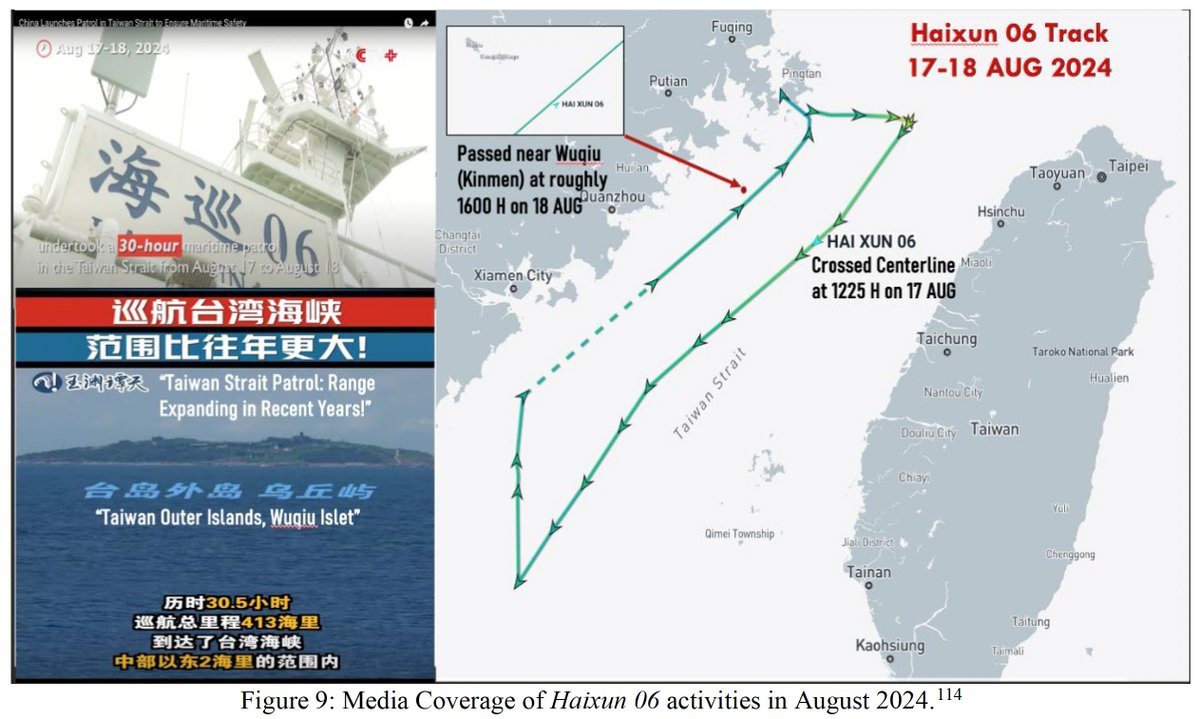
China Maritime Studies Institute (CMSI) China Maritime Report #48, “Great Inspectations,” examines the April 2023 “special joint patrol & inspection” operation of Haixun 06 (海巡06) & addresses a number of critical questions that bear directly on PRC law enforcement operations in the vicinity of the Taiwan Strait & beyond:
— How does China characterize the legal status of the Taiwan Strait, & how has it changed over time?
— How has recent domestic legislation redefined & expanded the powers of the Maritime Safety Administration (MSA)?
— How does the MSA use law enforcement operations, such as the April 2023 Special Joint Patrol & Inspection, to more forcefully assert its national sovereignty & maritime claims vis-à-vis Taiwan?
— How does the PRC’s execution of non-war military activities enable maritime law enforcement assets to exercise the skills necessary to execute a “quarantine” of Taiwan’s outlying islands?
This China Maritime Report examines the laws the PRC uses to illegally enforce its expansive maritime jurisdictional claims in the Taiwan Strait, East China Sea, & beyond.
It tackles how the PRC uses these laws along with CCG & Maritime Safety Administration assets to carry out gray zone operations against Taiwan.
The report was carefully researched & written by Julia Famularo, who is a U.S. Naval War College China Maritime Studies Institute Affiliate. During the 2023-24 academic year, she served as a Visiting Scholar at CMSI & Postdoctoral Fellow in Taiwan Studies at the @FairbankCenter for Chinese Studies, @Harvard University.
Our profuse thanks to Dr. Famularo for her painstaking research & sifting through legal nuances Beijing uses to justify its maritime claims.
Links & key content from previous 47 Reports: https://t.co/fDcfryu9fA



Most Popular Users

Elon Musk 
@elonmusk
241.7M followers

Barack Obama
@barackobama
119M followers

Cristiano Ronaldo
@cristiano
114.3M followers

Donald J. Trump
@realdonaldtrump
111.8M followers

Narendra Modi
@narendramodi
107.2M followers

Rihanna
@rihanna
98.7M followers

NASA
@nasa
92.4M followers

Justin Bieber
@justinbieber
91.8M followers

KATY PERRY
@katyperry
89.9M followers

Taylor Swift
@taylorswift13
83.9M followers

Lady Gaga
@ladygaga
75.4M followers

Virat Kohli
@imvkohli
73.3M followers

Kim Kardashian
@kimkardashian
70.9M followers

YouTube
@youtube
68.8M followers

Neymar Jr
@neymarjr
66.3M followers

Bill Gates
@billgates
65.1M followers

Selena Gomez
@selenagomez
63M followers

The Ellen Show
@theellenshow
62.3M followers

CNN
@cnn
61.8M followers

X
@x
60.7M followers