

Top Tweets for #Cabling

@BitcoinAIGuy They should focus on some cabling at H2 first

Bogadhi road white topping progress Update:
There is a misconception among few citizens of Mysuru that white topping project does not involve building footpaths. But on ground, the work is happening at a steady pace.
1️⃣ UG cabling is already done.
2️⃣ Medians have been erected between the Kukkarahalli lake junction & AIISH junction.
3️⃣ Footpaths are being laid stage-wise and will be completed in a few weeks.
@Dr_Yathindra_S avare, please add more roads to this project and elevate the standards of Mysuru’s roads across the city.
#Mysuru #Mysore


The stretch of the Bogadhi road complete with white-topping, medians, footpaths and of course, UG cabling. White-topped roads will change the face of Namma Mysuru.
Please include more & more city roads in the project and make Mysuru future-proof.
@DKShivakumar @siddaramaiah @Dr_Yathindra_S
#Mysuru #Mysore #CulturalCapital

🌊 South Padre Island Starlink Installer — Same-Day Service Available!
Coastal winds and salty air call for a well-planned installation! We help protect your setup with secure mounting hardware and properly weather-sealed exterior cabling.
📍 Serving South Padre Island, Laguna Vista, Port Isabel, Los Fresnos & Bayview!
⚡ Same-day service when your kit is on site. Residential installs from $385!
Our installation services include:
🏠 Residential
🏢 Business & Commercial
🌲 Remote & Off-Grid Properties
🚐 RV & Mobile
⛵ Marine
🛠️ Custom Mount Solutions
📡 Obstruction Evaluations
📶 Point-to-Point Wireless Bridges
⭐️ 4.9-Star Google Rating
⭐️ 100+ Google Reviews
⭐️ 3,000+ Installations Nationwide
📞 (877) 309-1050
🌐 Website: https://t.co/KPturPwfUE
📍 Google Business Profile: https://t.co/03EpbXIiMT
#SouthPadreIslandTX #TexasCoast #StarlinkInstallation #StarlinkInternet #SatelliteInternet #StarlinkInstaller #NationwideInstallationTechs

@TheRemanded I was involved with the telecom cabling relocations through the old tunnel and other affected cable routes in the area in preparation for a new tunnel well over 15 years ago. Get it done.

since 2005 - CAT5 through CAT6A ethernet cable, CCTV and coaxial cable, optical fibre, and newer lines like EV-charging assemblies and drone cabling. It holds roughly 23% of India’s networking-cable market and counts two of India’s three largest telecom operators among
is a power transmission infrastructure EPC company executing high-voltage and extra-high-voltage transmission lines, substations and underground cabling on a turnkey basis - design through operation and maintenance, ISO 9001/45001/14001 certified. The company IPO'd in April 2026

@Greg06621639 Yeah, the power angle is the sleeper issue. Every data center needs transformers, cabling, all copper. We're tracking it closely, $NRED stands to benefit.

In premium residential properties, upgrading security should not mean heavy construction, visible cabling, or disrupting the experience of residents.
The stronger model is to turn compatible existing doors into managed access points.
With Acsys, access can move beyond the

In premium residential properties, upgrading security should not mean heavy construction, visible cabling, or disrupting the experience of residents.
The stronger model is to turn compatible existing doors into managed access points.
With Acsys, access can move beyond the


A single AI data center needs up to 50,000 metric tons of copper just for cabling and grid upgrades. Building a new copper mine from scratch can take 15 years. That gap is triggering a real wave of M&A right now, as mining majors race to buy existing projects instead of waiting to build new ones. Rare earth companies are pursuing something called “mine-to-magnet” — controlling everything from extraction to actual magnet manufacturing, specifically to reduce dependence on China. The US government is now acting as a direct capital partner in these deals, not just a regulator. This is the AI-infrastructure story most investors haven’t been watching.
This is a genuinely important structural investment thesis directly extending the AI-infrastructure-buildout theme covered extensively this month into critical minerals and rare earths. Goldman Sachs’ $GS Andrew Timbers and Nicholas Smith frame the core driver clearly: “critical minerals now sit at the intersection of electrification, AI-driven power demand, and supply-chain security.” Copper is emerging as the top near-term story — a single gigawatt-scale data center requires up to 50,000 metric tons of copper for cabling and grid upgrades, directly connecting to this month’s coverage of turbine shortages and power-infrastructure constraints. Lithium is also seeing renewed relevance specifically for battery backup systems ensuring 24/7 data-center reliability, extending the battery-storage/grid-resilience theme covered in earlier China-competition reporting.
The “mine-to-magnet” vertical-integration strategy is the sharpest, most actionable concept here — rare earth companies are moving from simply selling raw concentrate toward controlling the entire value chain (extraction, separation, metallization, magnet manufacturing) specifically to capture higher downstream margins and bypass processing bottlenecks, with particular urgency around heavy rare earths like dysprosium and terbium that face tightening export restrictions (a direct extension of the China supply-chain leverage themes covered throughout this month, from CXMT’s chip dominance to battery-storage control). Because developing a new copper mine can take 15+ years from discovery to production, Smith notes mining majors are increasingly acquiring existing projects and junior developers as the faster path to meeting demand — driving genuine, active M&A consolidation right now.
The financing structure here is genuinely novel and worth understanding directly: the US government has explicitly shifted “from policymaker to capital partner,” taking direct equity stakes, providing hybrid capital, and using strategic stockpiling to de-risk projects — but crucially, federal agencies are acting as non-dilutive partners providing low-cost debt for post-acquisition expansion rather than directly funding the M&A itself, which instead uses combinations of common stock, cash, and structured equity (including preferred shares protecting sellers from volatility). This sovereign backing functions as a genuine credit-enhancement tool that gives private lenders and institutional investors confidence to fund capital-intensive, long-lead-time projects that would otherwise struggle to clear normal risk hurdles.
💰 YOUR MOVE: This is a genuinely underappreciated, structurally-tailwinded sector worth tracking as a distinct AI-infrastructure investment angle separate from chips, memory, and data centers themselves — Timbers notes investor evaluation frameworks have shifted meaningfully toward geopolitical alignment and asset location, with institutional capital now prioritizing projects in “stable, Western-aligned jurisdictions” specifically to decouple from concentrated, at-risk supply chains (implicitly, China). Watch for continued mine-to-magnet M&A announcements and government equity-stake deals as the clearest near-term catalysts in this space; Smith’s closing framing — that mining remains inherently cyclical and risk-averse by nature, but faces a genuine fundamental upside case given AI/EV/electrification demand — is a useful, balanced way to weigh this sector’s real opportunity against its structural volatility.
@Blackintus


Building a robust IT infrastructure requires the right gear! 🔌
From core routers and enterprise switches to structured cabling and UPS backups, every component matters for maximum network reliability. What is the most critical device currently running in your server room? 👇
#NetworkEngineering #SysAdmin #ITSetup #DataCenter #TechTips


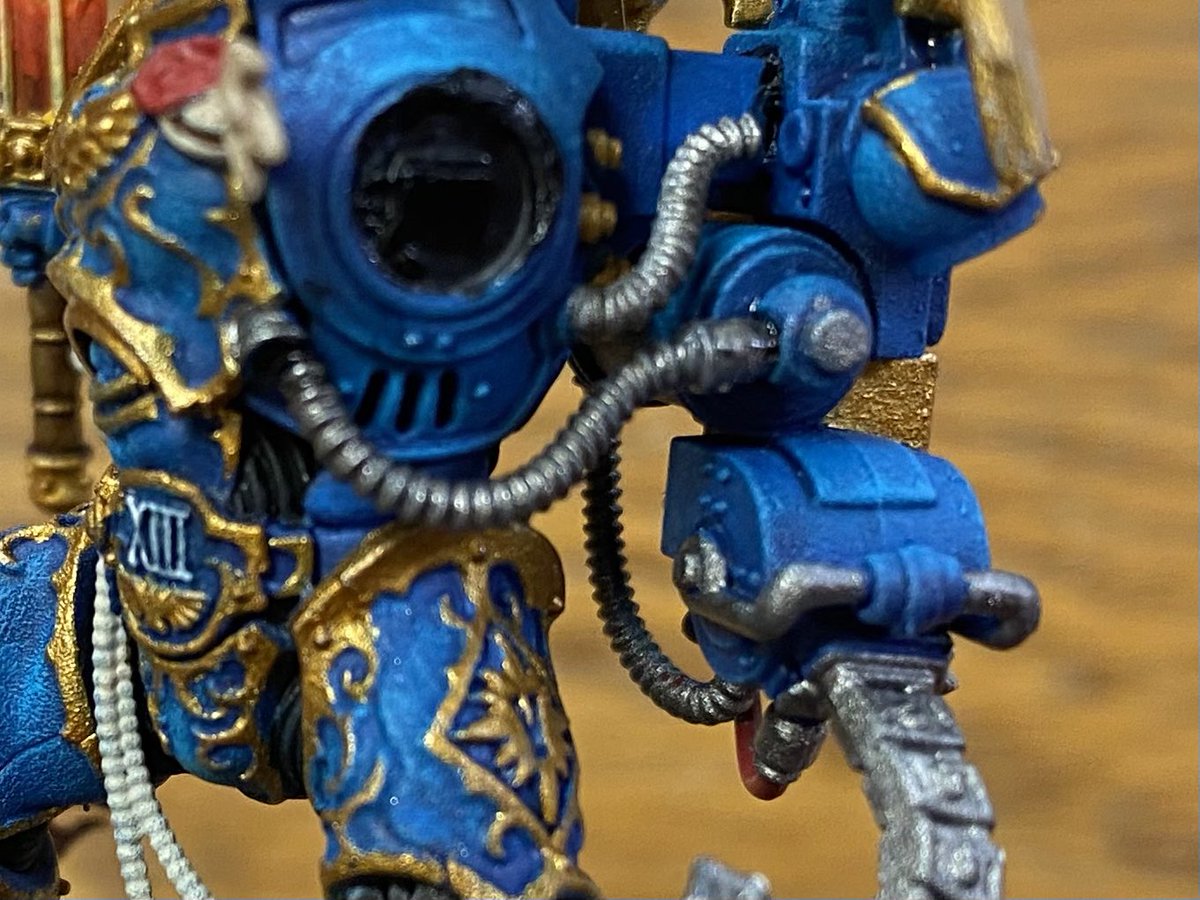
@spaceshark23 Why not subassembly the cabling? I’ve got Lord Gulliman as a goal piece later as well (meaning I don’t wanna fuck him up yet lmao).

Someone told me not to subassembly the cabling and in my hubris I did not listen.

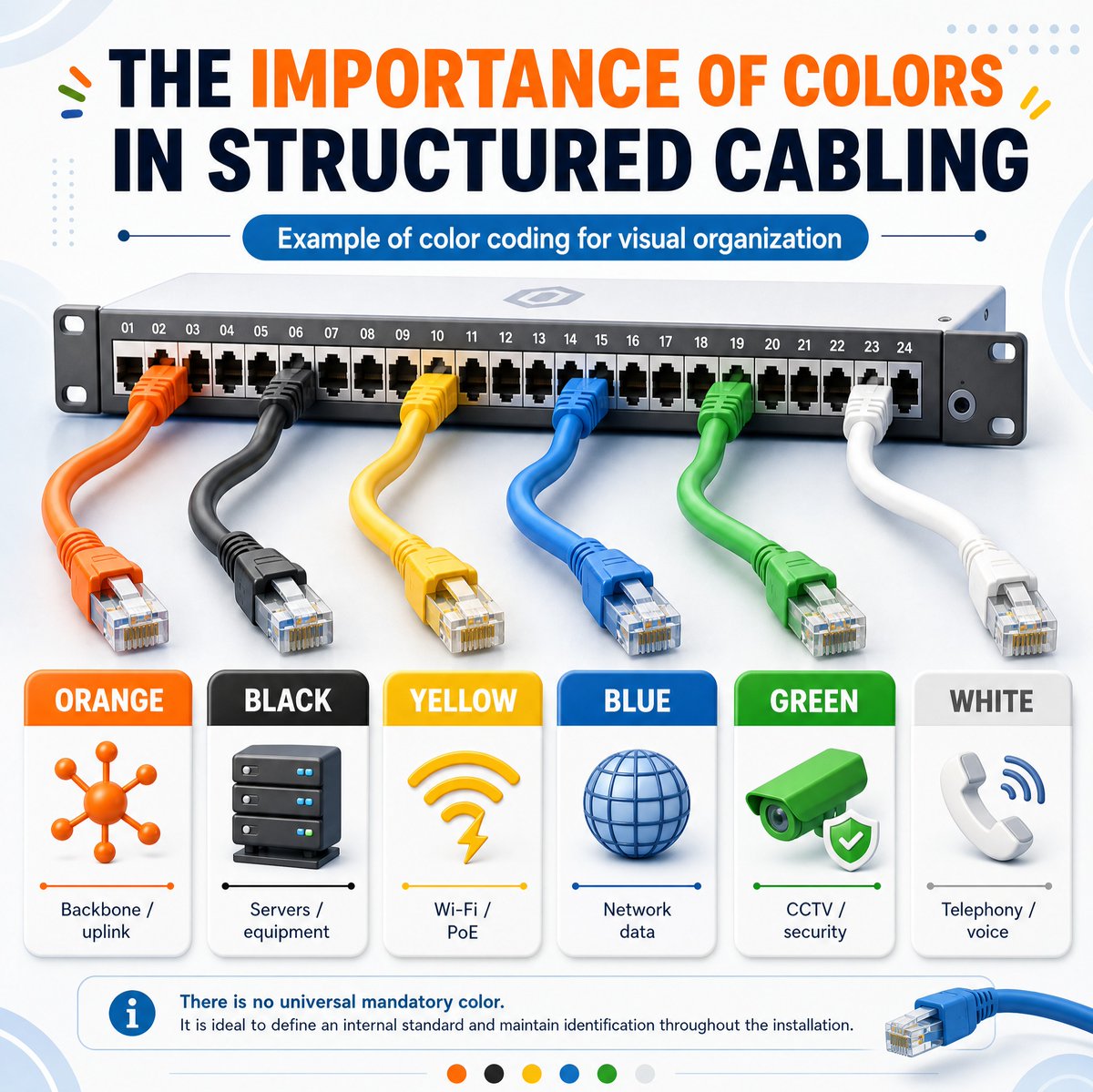
Stop guessing your cables! 🎨🔌 Color coding your structured cabling makes troubleshooting a breeze.
🟠 Backbone ⚫ Servers 🟡 PoE/Wi-Fi 🔵 Data 🟢 CCTV ⚪ Voice
But great cabling needs a powerful Network Switch—the core intelligent hub that receives data from these cables and forwards packets precisely where they need to go, keeping your local network fast, secure, and bottleneck-free. ⚡
👉 https://t.co/3BMVWnbT4u
#CableManagement #NetworkSwitch #SysAdmin #ITInfrastructure #Networking #DataCenter

🏢 Business Network Infrastructure Made Simple!
🌐 ISP, Router & Firewall keep your business connected and secure
🔀 Switches, Wi-Fi APs & Structured Cabling power communication
💾 Servers store critical business data
⚡ UPS ensures uptime during outages
#KGtalks #Networking #ITInfrastructure #NetworkEngineering #CyberSecurity #EnterpriseIT

Hey everyone!
Recently, I released a blog on how to setup a cluster out of your Raspberry Pi 4bs and Mac minis for distributed training and inference
Now its time to do the same with Jetson Nano Orin Super!
Why ?
>1024 CUDA Cores (Ampere)
>8GB unified memory LPDDR5
>6x ARM Cortex-A78 @ 1728 MHz, 1024-core Ampere GPU @ 1020 MHz
This is a part of my current series where I’ll be releasing blogs and guides around learning distributed learning and building your own small compute clusters.
The goal is simple: help more people get started with running and training AI models using the hardware they already have lying around. Old laptops, , mini pcs, Jetson Nanos, Raspberry Pis, even phones and tablets.
Distributed learning often feels intimidating from the outside, but it’s genuinely one of the coolest areas in systems and AI once you start playing with it yourself.
Before we get into the fun stuff like distributed inference and training, the first few posts will focus on setting up hardware properly and building a working cluster environment, basically subtle amount of cabling and networking!
The early guides will specifically cover setups around:
- MacBooks and Mac minis (Done!)
- Jetson devices (This one hehe)
- Raspberry Pis (Doneee)
After that, we’ll move into quick demos (smolcluster ) , and gradually learn the fundamentals side-by-side while actually running models across devices.
I’m building this alongside smolcluster, so a lot of the content will stay very hands-on and practical instead of purely theoretical.
Hopefully this helps more people realize that distributed AI systems are not something reserved only for giant datacenters anymore.
There is just one question I want to answer: are heterogenous clusters, like what I am trying to make above, even possible for running models?
Well, we'll know and till then do read me blog and let me know what you all think! Any comment, feedback etc are very welcome.
Hail LocalAI!


From Transformers to Cooling Systems, Every New Data Center MW Creates a Massive Opportunity Across the Value Chain
Beneficiary Companies across the Value Chain -
Switchgear & Transformers
=> Schneider Electric Infrastructure
=> Hitachi Energy India
=> GE Vernova T&D India
=> CG Power and Industrial Solutions
=> Transformers and Rectifiers India
=> Voltamp Transformers
=> Shilchar Technologies
=> Bharat Bijlee
Diesel/Gas Backup Power Systems (Gensets)
=> Cummins India
=> Kirloskar Oil Engines
=> Greaves Cotton
UPS Systems & Power Quality Equipment
=> Servotech Renewable Power System
=> HBL Engineering
Battery Energy Storage
=> Exide
=> Amara Raja
Cooling Systems (Fastest Growing Spend Category)
=> Blue Star
=> Voltas
=> Johnson Controls-Hitachi Air Conditioning India
Busways / Bus Ducts
=> Star Delta Transformers
=> Larsen & Toubro
=> ABB India
Structured Cabling & Connectivity
=> Polycab India
=> KEI Industries
=> Finolex Cables
=> RR Kabel
Electrical EPC & Data Center Infrastructure Integrators
=> Larsen & Toubro
=> Techno Electric & Engineering
=> Kalpataru Projects International
=> Transrail Lighting
Disclaimer: This post is for informational and educational purposes only.
@vishan_29 @Anvith_ @Dynamicinvstr @Saurabh_TyagiX @ShridhantS


Datacenters: A Decadal Growth Opportunity 🔥
🔶️ Massive Capacity Expansion Ahead
• India's DC IT capacity expected to grow from 1.5-1.6GW in CY25 to 7GW by CY30F (Bull case: 9GW)
• Implies 30%+ CAGR, significantly ahead of global/APAC growth
• Visibility on +15GW incremental capacity pipeline over the next decade
🔶️ Biggest Beneficiaries - Industrial Equipment Suppliers
Key spending categories:
• Switchgear & transformers
• UPS & batteries
• Backup gensets
• Cooling systems
• Racks
• Busways
• Structured cabling
These categories account for 60-75% of a DC's US$10-22mn/MW capex budget.
Source - Nomura
👉 Follow @vishan_29 for more updates.


Electric racing is a clean way to explain the copper bull case without a boring commodity lecture 🏁📈
Take a Formula E-style grid. Around 20 cars. Roughly 39–83 kg of copper per electric car. That gives about 780–1,660 kg total copper just in the cars, or roughly 0.8–1.7 metric tons. Then add charging systems, pit equipment, venue power, screens, sensors, timing systems, cameras and logistics.
That is the point. Copper hides inside the performance layer.
Motorsport fans see acceleration, regen braking, instant torque and battery strategy. Investors should also see conductors, motors, high-voltage cabling, inverters, connectors and charging infrastructure.
Now scale that beyond the track. AI, EVs, renewables, smart grids and defense systems are all building copper-heavy infrastructure at the same time. Supply growth has to keep up, and that is where future copper stories become interesting.
$NRED gives me one of those speculative future-supply stories. Wilmac: 16,078 hectares in British Columbia, Quesnel porphyry belt, roughly 10 km west of Copper Mountain, up to 1,125 ppm Cu, MetalCore AI, Patent Application No. 19/680,101, and an advisory bench with execution / finance experience.
Copper is everywhere, even on race day. NFA.
$BE
$JPM
$GSAT
$CRDO



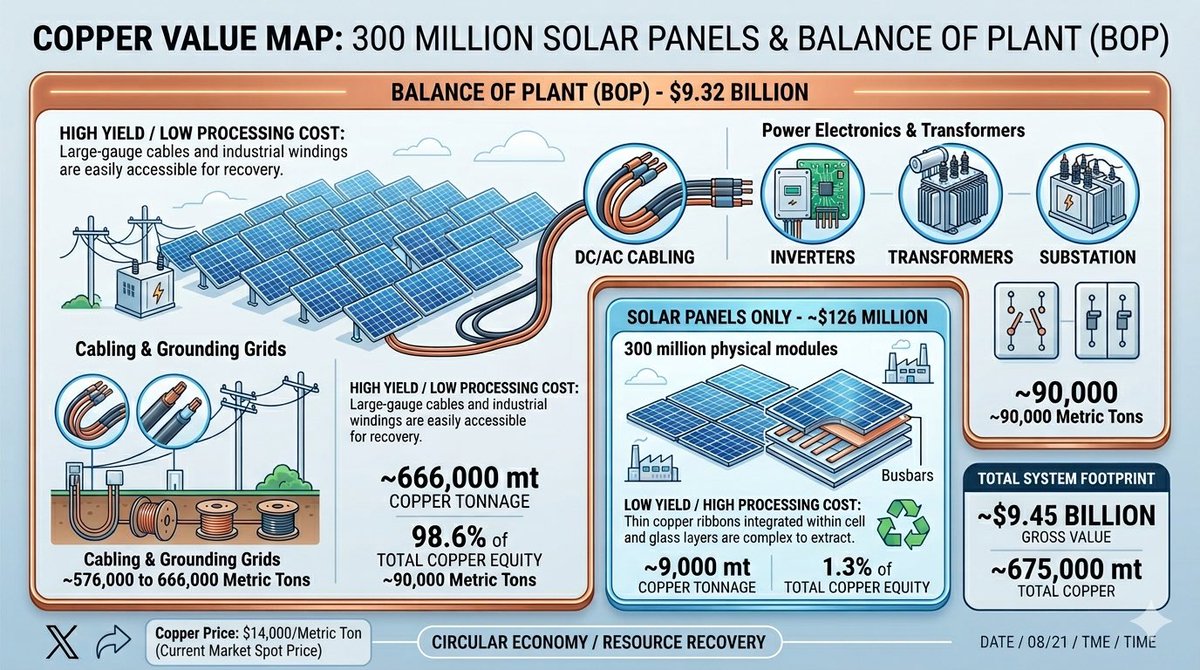
I’m currently completing a briefing and plan to achieve resource sovereignty through recycling and recovery of ewaste from “urban mining” waste streams, such as end-of-life solar panels. Gemini pro did a good job of back of the envelope calcs for this rough graphic to show you the value of copper in the current solar asset base at $14,000 a ton = between the value of the recoverable copper through advanced refining in panels vs the copper that is in the balance of plant for large scale solar as it turns over.
It assumes a minimum of 300 million panels will turn over at end of life between now and 2030, which is a low estimate based on installed capacity as of 2024 in the US.
$LODE
(EST data based on):
1. Material Intensity inside the Solar Modules
To isolate the exact weight of copper inside the glass-and-frame panels (cell ribbons, busbars, and junction boxes), data is based on industry manufacturing benchmarks:
The International Energy Agency Photovoltaic Power Systems Programme (IEA-PVPS): Specifically, their Life Cycle Inventories and Life Cycle Assessments of Photovoltaic Systems. Their standard material inventory logs crystalline silicon modules as containing between 0.9% and 1.1% copper by total weight, translating to roughly 22 to 30 grams of copper per utility-scale panel (depending on whether it is a 72-cell or 144-half-cut cell layout).
European Commission Joint Research Centre (JRC): Reports on Critical Raw Materials in Strategic Technologies and Sectors. Their cross-sectional mapping of PV technologies provides the benchmark for copper mass per square meter of crystalline silicon, establishing the 11 to 15 grams per m^2 standard.
2. Balance of Plant (BOP) and Infrastructure Scaling
To calculate the exponentially higher volume of copper in the surrounding infrastructure (cabling, inverters, transformers, substations), the metrics rely on utility-scale deployment data:
Navigant Research / Copper Development Association (CDA): From their comprehensive North American Solar PV Copper Content Analysis. This benchmark study established that while copper is used in 11 distinct parts of a PV system, roughly 75% to 85% of total system copper resides strictly within the balance of plant components (thick DC string wiring, grounding grids, medium-voltage AC collection lines, and inverter/transformer copper windings).
The International Energy Agency (IEA) Critical Minerals Review: IEA infrastructure mapping tracks the copper intensity of utility-scale renewable energy systems.
Their data indicates that solar PV installations require between 2,500 kg and 5,500 kg (2.5 to 5.5 metric tons) of copper per Megawatt (MW) of capacity—roughly 4 to 6 times the copper intensity of a traditional fossil-fuel or nuclear thermal plant.
3. Conversion and Capacity Modeling
To translate "300 million panels" into a tangible gigawatt (GW) footprint:
Lawrence Berkeley National Laboratory (LBNL) & NREL Utility-Scale Solar Data: Based on tracking average nameplate capacities for modern tracking and fixed-tilt arrays. A utility-scale module is calculated at a standard conservative average of 450W to 500W of peak DC capacity. 300 million panels multiply out to roughly 135 to 150 Gigawatts (GW) of gross capacity, which dictates the total cabling run and substation requirements used in the system-level scaling.
4. Commodity Valuation Basis
London Metal Exchange (LME) & CME COMEX: The pricing reflects the global financial spot benchmark for Grade A copper shapes, anchored exactly to your updated market target of $14,000 per metric ton ($6.14 per pound). This represents the raw, unrefined commodity value before factoring in localized logistics, demolition labor, or secondary copper scrap discount spreads (e.g., No. 1 vs. No. 2 copper scrap values).



@VictorRenajlj AI infrastructure is rapidly transitioning from copper to fiber optic cabling to overcome bandwidth limitations caused by copper. Copper cables cannot efficiently transmit signals over short distances (above 3–5 meters), causing performance bottlenecks.
Hey everyone!
Over the next few weeks, I’ll be releasing blogs and guides around learning distributed learning and building your own small compute clusters.
The goal is simple: help more people get started with running and training AI models using the hardware they already have lying around. Old laptops, MacBooks, Mac minis, Jetson Nanos, Raspberry Pis, even phones and tablets.
Distributed learning often feels intimidating from the outside, but it’s genuinely one of the coolest areas in systems and AI once you start playing with it yourself.
Before we get into the fun stuff like distributed inference and training, the first few posts will focus on setting up hardware properly and building a working cluster environment, basically subtle amount of cabling and networking!
The early guides will specifically cover setups around:
- MacBooks and Mac minis
- Jetson devices
- Raspberry Pis
After that, we’ll move into quick demos (smolcluster 👀) , and gradually learn the fundamentals side-by-side while actually running models across devices.
I’m building this alongside smolcluster, so a lot of the content will stay very hands-on and practical instead of purely theoretical.
Hopefully this helps more people realize that distributed AI systems are not something reserved only for giant datacenters anymore.
There is just one question I want to answer: are heterogenous clusters, like what I am trying to make above, even possible for running models?
Well, we'll know and till then do read me blog and let me know what you all think! Any comment, feedback etc are very welcome.
(pls be gentle since its my first time writing one all by myself haha)
Hail LocalAI!


Per all three AI models I use:
The two photos provide clear visual evidence of meaningful progress at Eos Energy’s new Thorn Hill manufacturing facility. The most significant detail comes from the equipment signage.
The station clearly labeled OP210A2 is now confirmed to read “LID WELD” underneath. A second, nearly identical sign immediately adjacent to it follows the same format and is consistent with OP210A1 / LID WELD. This indicates Eos has installed two parallel robotic lid-welding stations side by side.
Why “LID WELD” Matters
Lid welding is a critical, high-precision operation in battery module production. It involves sealing the top cover onto the module enclosure — a step that directly impacts hermetic sealing, structural integrity, and long-term reliability. Poor execution here is a common source of quality issues and field failures.
The fact that Eos has dedicated two full robotic cells to this single operation is telling. It shows they view lid welding as both a potential throughput bottleneck and a high-risk quality step worth protecting with redundancy. This level of investment in a specific process step reflects thoughtful engineering and a focus on building quality into the line rather than relying on inspection alone.
How This Fits the Overall Line
This detail aligns with and strengthens several other visible elements across the photos:
• The long row of identical, fenced automation cells with individual HMIs demonstrates a modular, repeatable cell design built for scalability and process control.
• Heavy overhead ducting with station-specific drop hoses shows engineered process control infrastructure, likely for managing heat, fumes, or particulates generated during welding and related operations.
• Roller conveyors running through the stations support single-piece flow, moving units sequentially with minimal work-in-process.
• The overall clean, professional installation — with organized cabling, proper safety guarding, and integrated robotic tooling — reflects a high-quality, industrial-grade setup rather than a makeshift or pilot line.
Together, these elements paint a picture of a modern, automated production line in the final stages of commissioning. The presence of dedicated, parallel lid-weld stations in particular adds meaningful weight to the evidence that Eos is executing on advanced manufacturing principles at Thorn Hill.
Bottom line: The photos show a facility that has moved well beyond basic installation into a thoughtfully designed, quality-focused automated line — with clear attention paid to one of the most critical steps in battery module assembly.
Last Seen Hashtags on Sotwe
Most Popular Users

Elon Musk 
@elonmusk
240.1M followers

Barack Obama
@barackobama
118.6M followers

Cristiano Ronaldo
@cristiano
114.4M followers

Donald J. Trump
@realdonaldtrump
111.8M followers

Narendra Modi
@narendramodi
106.9M followers

Rihanna
@rihanna
98.6M followers

NASA
@nasa
92.1M followers

Justin Bieber
@justinbieber
91.7M followers

KATY PERRY
@katyperry
89.9M followers

Taylor Swift
@taylorswift13
83.9M followers

Lady Gaga
@ladygaga
75.4M followers

Virat Kohli
@imvkohli
73.3M followers

Kim Kardashian
@kimkardashian
70.8M followers

YouTube
@youtube
68.6M followers

Neymar Jr
@neymarjr
66.3M followers

Bill Gates
@billgates
65.2M followers

Selena Gomez
@selenagomez
63M followers

The Ellen Show
@theellenshow
62.1M followers

CNN
@cnn
61.7M followers

X
@x
60.6M followers