

Top Tweets for #ChainLin


UBS ran a production pilot putting structured note issuance on Ethereum with Chainlink. The code watches the barrier levels and coupon dates and reports them automatically. No launch date yet. A bank automating the boring middle of finance is the part worth noticing.


Under the hood:
▪️ Bitcoin Script and Taproot
▪️ A FROST threshold-signature Guardian network
▪️ A custom Chainlink oracle for price data
Built for Bitcoin, not ported from somewhere else.

@RialoHQ 在 Chainlink 2.0 的体系下,这类失误主要由独立预言机网络或应用层去消化处理,主链的共识机制安全不受威胁;但在 Rialo 这种高度集成化的内核架���中,数据的接入、条件的评估与交易的执行已经与底层验证者紧密绑定。
在构建依赖外部现实数据的链上应用时,开���者始终避不开一个核心抉择,究竟应该依赖一个灵活可拆卸的链外插件,还是将其直接锻造为链本身的基础本能。传统智能合约就像是一间封闭无窗的房间,无法感知窗外世界的数据与变化。为了解决这一痛点,Chainlink 2.0 代表了外挂式中间件的极致演进。@RialoHQ

@EeeQqqwww2426 稳字当头Chainlink更靠谱

@EeeQqqwww2426 Rialo和Chainlink的底层逻辑讲得明明白白

昨晚凌晨一点左右,有个朋友问我:Rialo 和 Chainlink 2.0,选哪个?
我当时反问了他一句:如果有一天,你的合约通过 API 获取了一条错误数据,���更愿意换掉一个预言机网络,还是分叉一条链?
他觉得我在抬杠,其实我想讨论的是一个很具体的问题:当外部世界的数据进入区块链,并开始影响资产和交易时,谁来负责验证这些数据?出了问题,又由谁来承担后果?
Rialo 和 Chainlink 2.0 都在尝试解决链上应用连接外部世界的问题。只是两者在技术架构上做了不同的选择。
先说 Chainlink��,传统智能合约无法主动访问互联网。它不知道某只股票现在多少钱,也不知道某个网站上的订单有没有完成。开发者通常需要借助预言机,把外部数据整理好,再交给链上的合约。
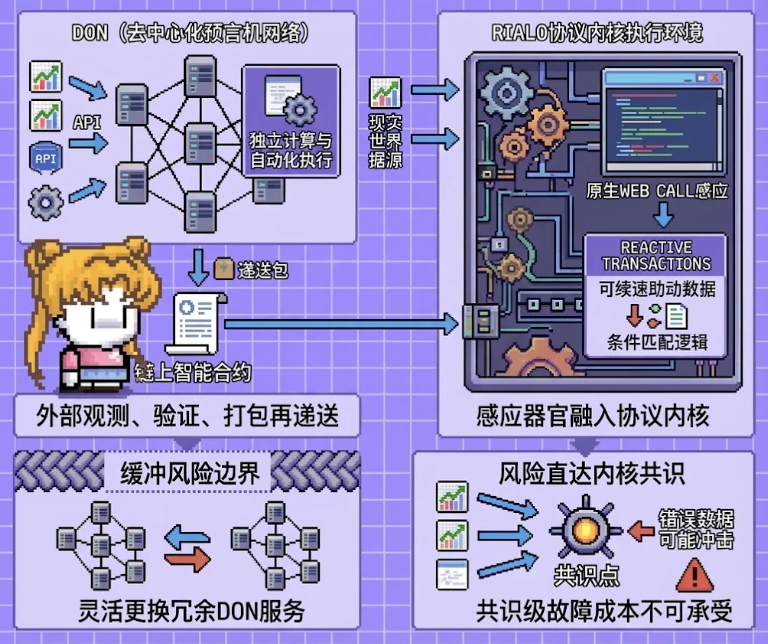
Chainlink 通过 DON(去中心化预言机网络)来完成这件事。
多个独立节点从外部数据源获取信息,按照预设规则进行验证和聚合,最后把结果提交给链上合约。
Chainlink 2.0 又把这套能力向外扩展了。除了数据传输,DON 还可以承担链下计算、自动化执行等工作。Automation 可以监测合约条件,在满足触发条件时提交交易;Functions 则可以让开发者调用外部 API,并将计算结果带回链上。
这套设计有一个很实际的好处:数据获取、计算和自动化可以由独立网络承担,不需要把所有工作都塞进底层区块链。
如果某个节点表现不好,可以调整节点集合;如果某个数据源出现问题,可以增加其他数据源;如果某套服务不再适合应用,也可以考虑更换服务商。
应用的业务逻辑和外部服务之间,保留了一定的调整空间。
再来看 Rialo,我第一次接触 Reactive Transactions 时,比较感兴趣的是它改变了智能合约等待外部事件的方式。
传统智能合约有一个很明显的限制:合约不会自己醒来。
假设你在链上设置了一笔交易,要求当某只股票价格跌破 100 美元时,自动卖出对应资产。
合约本身不会一直盯着股票价格。它需要有人持续监测外部行情,发现价格达到条件后,再向区块链发送一笔交易。
这个人可以是机器人,也可以是自动化服务。
于是,整个过程就变成了:有人监测价格 → 发现条件满足 → 构造交易 → 提交到链上 → 合约���行。
这里多了一层外部协调工作。
监测服务需要持续运行,触发条件需要在链下判断,交易也需要有人提交。即使合约本身写好了执行规则,它仍然依赖外部服务帮它完成等待和唤醒。
Rialo 想改变的就是这部分。
Reactive Transactions 允许开发者把触发条件写进交易逻辑中,由验证者在协议执行过程中持续评估这些条件。
当外部事件进入系统,相关条件得到满足,协议就可以触发对应的交易执行。
这意味着,原本需要开发者自己搭建的监测机器人、条件判断和交易触发流程,有机会直接由协议提供。
它改变的不只是开发者少写几段代码。
举个更贴近金融应用的例子。
比如一个借贷协议接受代币化股票作为抵押品。股票价格持续变化,当抵押品价值低于某个阈值时,协议需要及时处理清算。
传统方式需要外部服务盯着价格,判断是否达到清算条件,再提交交易。
如果把这套触发逻辑交给 Reactive Transactions,开发者就可以把条件和后续执行规则��进协议的交易流程中。
外部数据到达后,验证者可以依据相应条件评估是否触发执行。
应用不必再单独依赖一套链下机器人来负责整个唤醒过程。
这里有一个很重要的区别:Reactive Transactions 解决的是条件监测与交易触发的协调问题,它不会凭空创造真实可靠的股票价格。
股票价格依然来自外部数据源,数据真实性也依然需要相应的验证机制。
Rialo 还有原生 Web Call 和验证者参与的数据验证设计。
Web Call 让链上应用能够直接请求外部 API,获取链外信息或调用外部服务。验证者参与数据背书,则是为了让外部返回的数据能够经过协议规定的验证流程,而不是让应用无条件相信某个请求返回的结果。
这几项能力放在一起,开发者可以围绕外部数据、条件判断和链上执行设计更完整的应用。
以前需要自己拼接的几层服务,现在有机会由协议提供统一���执行环境。
这也是我理解 Rialo 这条路线的出发点:它希望区块链能够处理更多发生在链外的事情,让应用不再需要为每一种外部事件单独搭建一套自动化系统。
不过,看到这里,我反而想到了另一个问题。
当这些能力进入协议内部,原本由外部服务承担的风险去了哪里?
Chainlink 的 DON 出现问题,应用至少还有调整节点、替换数据源、增加冗余网络等选择。
Rialo 则需要面对另一种情况。
当外部数据接入、条件评估和交易执行都与底层协议紧密结合时,验证者如何判断数据是否可信,多个验证者如何对执行结果达成一致,恶意数据又能否通过某种方式影响共识结果?
这些问题的处理方式,直接关系到这套架构能否用于真正承载资产的金融应用。
尤其要区分两件事:验证者对数据来源和传输过程进行验证,不等于验证者能够证明现实世界中的信息一定真实。
如果某个 API 本身就返回了错误价格,即使多个验证者都正确地验证了请求过程,也不代表这个价格就是真的。
这也是预言��行业这么多年一直在面对的难题。
Chainlink 已经经历了大量真实场景下的攻击、数据源异常和极���行情考验。它积累的不只是节点网络,还有数据聚合、异常处理和安全机制的实际运行经验。
Rialo 的架构提供了另一种思路,但这些能力还需要经过足够多的真实应用和对抗性场景检验。
我并不认为把外部数据和自动化能力放进协议内部就是错误的选择。
相反,如果协议能够把数据接入、条件判断和交易执行协调好,开发者确实可以少维护很多外围服务,应用也能拥有更直接的自动化能力。
只是,原本由独立服务承担的工作进入协议之后,安全责任也会随之改变。
一个预言机网络出现问题,应用可以考虑更换供应商。
但如果问题出在底层协议的执行规则、验证机制或者共识安全上,处理起来就完全是另一回事了。
对于已经承载大量资产和金融业务的链来说,分叉也绝不是一句轻松的话。
所以,回到凌晨那个朋友的问题。
如果你正在开发��个依赖外部数据的金融应用,你会更看重哪一种设计?
一套可以独立调整、替换和增加冗余的外部服务网络,还是一套把数据接入、条件判断和自动执行纳入底层协议的执行环境?
我觉得这才是 Rialo 和 Chainlink 2.0 值得放在一起讨论的地方。
前者希望把更多工作交给协议,后者保留了外部服务网络的独立性。
两条路线都有自己的道理。
但有一件事不会因为架构改变而消失:外部世界的数据始终可能出错,也始终可能有人试图利用它。
对抗性检验不会因为少了一层中间件就消失。它最终还是要有人承担。

20:05 到 20:09,四分钟,���个热钱包,63.4 亿美元。这是币安 10 月 29 日那起事故里最该被记住的一组数。
金额之外,链上发生的事情更说明问题。那五笔转出都有有效签名,攻击者用来建立长期控制权的手段是 EIP-7702,以太坊的正式机制,50 笔签名交易一笔一笔改掉账户 nonce,全部按规矩执行,整起事故在链上找不到一笔非法交易。
事后能做的只剩追踪和冻结,28.5 亿是这么追回来的,靠的是资产还停在能被冻住的地址上,走掉的那部分追不回来。
防线的位置选错了:行业习惯把预算压在入口上,钓鱼、投毒、设备管控、凭据轮换,这些都得做,但它们守的是一条没有尽��的边界,只要有一个工程师在错误的时间打开了错误的文件,墙就被绕过了。
资金离开账户只有一条窄路,就是签名那一步,所以把预算往这条窄路上挪,收益比在入口上继续加码高得多。
那四分钟里要装下的是一整条审批链:值班的人看到告警、判断是不是误报、找人复核、决定冻结、多方签字、通知合作方,而这条链设计出来防的是错误操作,节奏以小时计。
能进这个窗口的动作,只能事先写好、由机器直接执行。
热钱包用的是多方计算,没有一把单独的私钥可以立刻撤销那些授权,团队只好现写一套专门的流程,花掉了额外的时间。
分散密钥提高的是防窃取的能力,止损速度并没有跟着提高;这两件事常被混为一��,这起事故把它们分开了。
@RialoHQ的Latch 站的位置就在这条窄路上:请求进来,按动作类型、目标地址白名单、单笔金额上限过一遍,不合规的在离开网络之前被拒掉。它不管钓鱼,也不管凭据怎么被偷,它管的是这笔签不签。
签名服务的请求体里,EIP-7702 的交易会带上授权列表那个字段,交易类型是 0x04,所以规则就卡这一处:出现授权列表,或者类型等于 0x04,直接拒。
前面压两道,路径只放签名接口,方法只放提交签名那一个;后面接三道,收款地址必须在白名单里,单笔金额有上限,每分钟请求数有上限,调用方只认签名服务自己的那个身份。一条都没匹配上的请求,默认拒绝。
这套配法能不能落地,先看字段名对不对得上。规则里写 authorizationList,请求体的字段名也必须叫这个。
签名服务要是把授权列表包在别的名字下面,或者干脆把整笔���易编码成一串��六进制,规则就找不到可以匹配的东西,等于空转。
所以配之前得先抓一份真实请求体,照着实名去写,写完再拿一笔带授权的交易打一遍,确认它真的被拒。
闸门站在网络出口上,只有请求从它面前经过,它才有机会判;签名服务要是在容器里直接调 SDK、走本地套接字,或者由同一个进程把名签掉,这段调用压根不经过网关,规则写得再准也没有落脚的地方。
这套东西有个代价:策略闸门换来的确定性,是用误拒的风险换的。规则太松拦不住,太紧会把正常的提币和合约调用一起挡在门外,业务当场停摆。
所以真正难的地方在准头上:每一次判定留一份可以回放的回执,拒了能拿出是哪一条规则、为什么拒,先按观察模式跑一段,确认没有误伤再切成拒绝。回执把策略从拦路变成了一份可以申诉的凭据。
这起事故把人从回路里挤了出去,剩下的位置只能留给预先写好的规则。
安全的重心从响应速度挪到了规则质量:事故之前把签什么写对,比事故之后发现得多快更有用。

Chainlink says VRF v1 stops fulfilling randomness requests on 18 Nov 2026 and v2 on 30 Nov. Applications need to move to v2.5. These are service shutdown dates, not a forecast for LINK.


@RachyBull I bought a harness w D-rings that you put on your cap, attached to the D rings is a chainlink, you slip 5-15 lbs of weights onto the chain, and do neck lifts.




Round 1
Prediction markets
Contracts settled last 30 days (28 Sep – 27 Oct):
> @PythNetwork - 222 723
> Chainlink - 93 862
~2.4x
Kalshi stage - only one fighter showed up & we see the winner
Insert coin to continue?)


Chainlink holding at $11.3 with a negligible 24-hour dip and a near-flat weekly performance signals indecision. RSI at 41.72 suggests a market looking for direction rather than oversold panic. Stay observant.
$LINK #DeFi #RSI #TechnicalAnalysis #CryptoMarket #TheCoinAnalysis


One question that often comes up around @RialoHQ is: How is it different from Chainlink?
To me, the key difference is what happens after the data arrives.
Oracles like Chainlink bring external data — such as interest rates or stock prices — onto the blockchain. Rialo’s Reactive Transactions aim to take things further by triggering predefined actions as soon as relevant data changes.
For example:
- Rental payments trigger automatic income distribution.
- Falling collateral prices can trigger liquidations.
- AI usage of a creator’s work can trigger royalty payments.
If an oracle is like a messenger delivering information, Rialo is more like a system that acts on it around the clock.
And these approaches don't have to compete. Reliable data from Chainlink combined with Rialo’s reactive execution could be a pretty powerful combination.
@itachee_x
@ericargent31113
@firearrowmage

Most people see RWA as simply bringing real-world assets onchain. But I think the real competition will be about making those assets smarter and more dynamic.
That’s what makes @RialoHQ interesting. It’s aiming to build an operational layer for RWA, where assets can react to real-world data and settle automatically.
🏠 Rental income gets distributed automatically
📈 Interest rate changes update yields
🎨 AI usage of creative works triggers royalty payments
With SFS reducing gas friction and its connection with Story Protocol, Rialo aims to bring both tangible and intangible assets — from real estate to AI data and IP royalties — into one connected liquidity network.
If RWA grows into a trillion-dollar market, Rialo could become more than a ledger. It could be the operating system that makes real-world assets move.
@itachee_x
@ericargent31113
@firearrowmage


LG CNS x @chainlink Institutional Interoperability
(leading South Korea’s Bank of Korea digital currency project) teamed up with Chainlink to build compliant digital asset rails across Korea’s $68B market.
cross-chain infrastructure is hitting mainstream enterprise adoptions


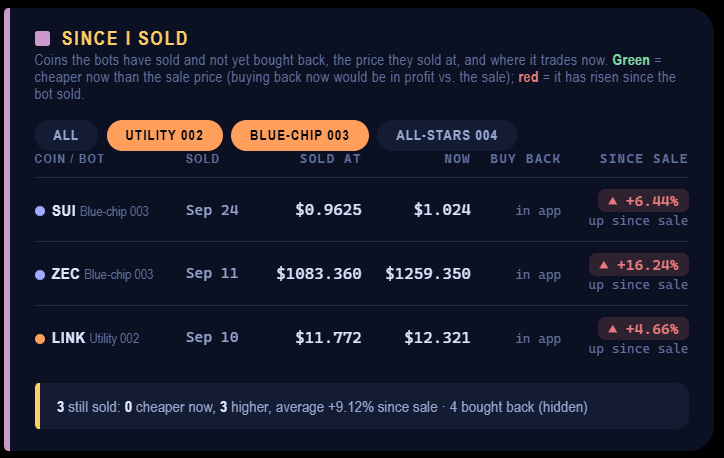
My bots sold these three in September. On Sunday all three dipped below the sale price and I waited for more.
Now ZEC is up 16% on where the bot sold, SUI 6%, LINK 5%.
Have I missed the boat, or is there one last dip coming? 🤔
#ZEC #SUI #Chainlink

@Harry_Goodjob @DouroLabs @PythNetwork @PythNetwork_UA @PythNetwork_FR For me Pyth is the backbone. Chainlink won the last cycle with crypto feeds, Pyth is winning the next with real-world data. Equities, FX, commodities on-chain is where the next $T comes from.

This is exactly what I've been tracking, and it's bullish for both $LINK and $XRP.
Countries are securing their own hubs. Singapore just laid it out: central bank money settles at home, and GL1 sets the standards to connect the networks. Chainlink is in the GL1 whitepaper, and Swift already runs CCIP. Link is becoming the connector between hubs.
Connecting hubs doesn't fix FX though. Cross-border still runs on tokenized deposits and stablecoins, so market makers are prefunding every single pair.
In a 24/7, T+0 economy that won't scale. 150 currencies trading directly need 11,175 pools. Through one neutral hub they need 150, and XRP is built to be that hub.
Link connects the hubs and XRP moves the value between them.
The piece I'm waiting for is Chainlink CCIP going live on the XRPL.

The Bank for International Settlements today published a speech from MAS referencing Global Layer One (GL1).
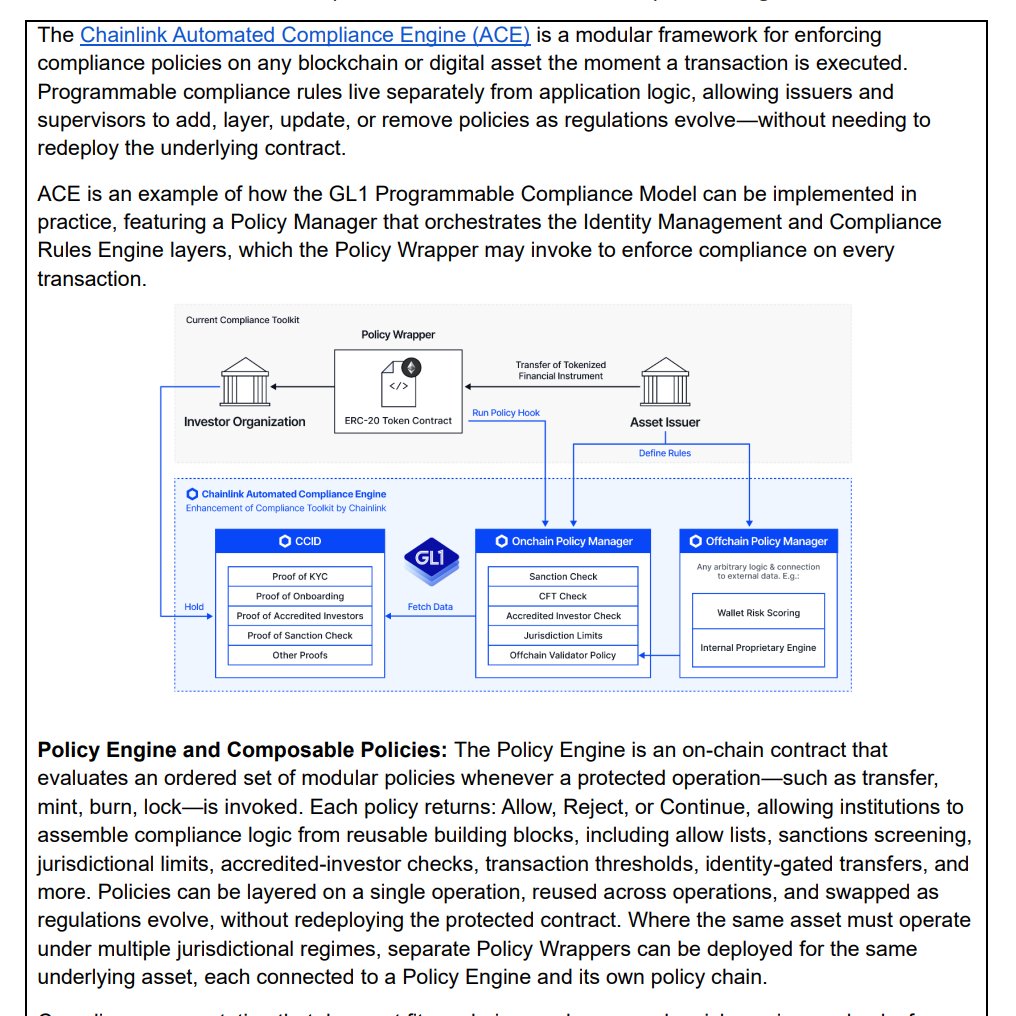
GL1's June 2026 documentation identifies Chainlink's Automated Compliance Engine (ACE) as an implementation example.
Participants include JPMorgan, HSBC, Standard Chartered, MUFG, Banque de France and MAS.
ethereum:0x514910771af9ca656af840dff83e8264ecf986ca


@farmingseasonio Farming Season 🌾 First RWA pixel farming game on Robinhood Chain!
Build your farm, plant crops, raise animals & fight in the arena. Mine gold & silver and pump oil linked to real markets via Chainlink.
Join the waitlist with my link: Farming Season


@omerbekta_s @mick_metric They’re currently using a basket of Chainlink and Pyth. I’d like to see Kaiko and RedStone in the mix too tbh.
Metric just came out of stealth and the timeline is doing what timelines do.
Been watching this one, and know the founder. Hats off @mick_metric 🫡
Active pools that separate pricing from liquidity: a Price Provider sets the bid/ask/reference from oracles (Pyth, Chainlink, custom logic), and the pool holds liquidity in percentage bins around that reference. When the external price moves, the ranges move with it. No more LPs constantly getting picked off because the pool itself is the stale oracle.
That’s the actual problem with almost every AMM for anything that already has a real market. Tokenized stocks, gold, majors, FX. The pool sits wrong until an arb corrects it, LPs fund the correction, spreads widen, and the whole thing becomes a tax on real flow. Metric’s approach is the opposite: quote to reality, keep capital where the market actually is, and let the reference do the heavy lifting. Capital turnover numbers in stealth were absurd for the TVL.
Live on Ethereum, BNB, and Robinhood Chain, and later 👀. Aggregators were already routing to them quietly. Now it’s open: trade, LP, or deploy your own pool. Audited (Zellic, Sherlock). Team has real DeFi LP and protocol experience; one of them just left Uniswap after a few years. Excited to see how this works for DTCC assets.
A few thoughts here:
1. Most “RWA DEXs” still try to force real assets into AMM designs built for tokens that discover their own price. It doesn’t work once size and continuity matter.
2. Separating the price source from the liquidity inventory is the right primitive if you want professional market-making infrastructure to become permissionless.
3. The hard part is the freshness, oracle risk, weekend gaps on equities, and whether LPs actually get compensated for the residual risks (latency, inventory, feed integrity). This design fixes that.
4. If this holds up under real flow on tokenized stocks and majors, it becomes one of the few pieces of spot infrastructure that institutions can actually route through without the usual DeFi tax. That’s rarer than people want to admit.
5. Launch hype and airdrop farming will be loud for a week. The only thing that matters is whether the pools stay tight and capital-efficient once the early volume normalizes like Paper.
Been waiting for this for awhile. The interesting part is whether active pools become the default way anything with a real external price trades onchain. They could be a fundamental piece of market infrastructure moving forward.
Some people are claiming they’re the Morpho of AMMs.
Zth.


像 Chainlink 提供的服务就是把到点要执行的任务注册进去,交给它的链外网络替你跑。这些设计都成立也跑了很久,共同的做法是把什么时候该动放在链外,再用一层激励请人来做。
Rialo则直接把什么时候该动搬回了链上。一笔交易可以先挂在链上并附带一个条件,条件不满足它就等着,一到它自己执行。
Most Popular Users

Elon Musk 
@elonmusk
239.7M followers

Barack Obama
@barackobama
118.6M followers

Cristiano Ronaldo
@cristiano
114.3M followers

Donald J. Trump
@realdonaldtrump
111.7M followers

Narendra Modi
@narendramodi
106.9M followers

Rihanna
@rihanna
98.6M followers

NASA
@nasa
92.1M followers

Justin Bieber
@justinbieber
91.7M followers

KATY PERRY
@katyperry
89.9M followers

Taylor Swift
@taylorswift13
83.9M followers

Lady Gaga
@ladygaga
75.4M followers

Virat Kohli
@imvkohli
73.3M followers

Kim Kardashian
@kimkardashian
70.8M followers

YouTube
@youtube
68.6M followers

Neymar Jr
@neymarjr
66.3M followers

Bill Gates
@billgates
65.1M followers

Selena Gomez
@selenagomez
63M followers

The Ellen Show
@theellenshow
62.1M followers

CNN
@cnn
61.7M followers

X
@x
60.6M followers