

Top Tweets for #Chandraya

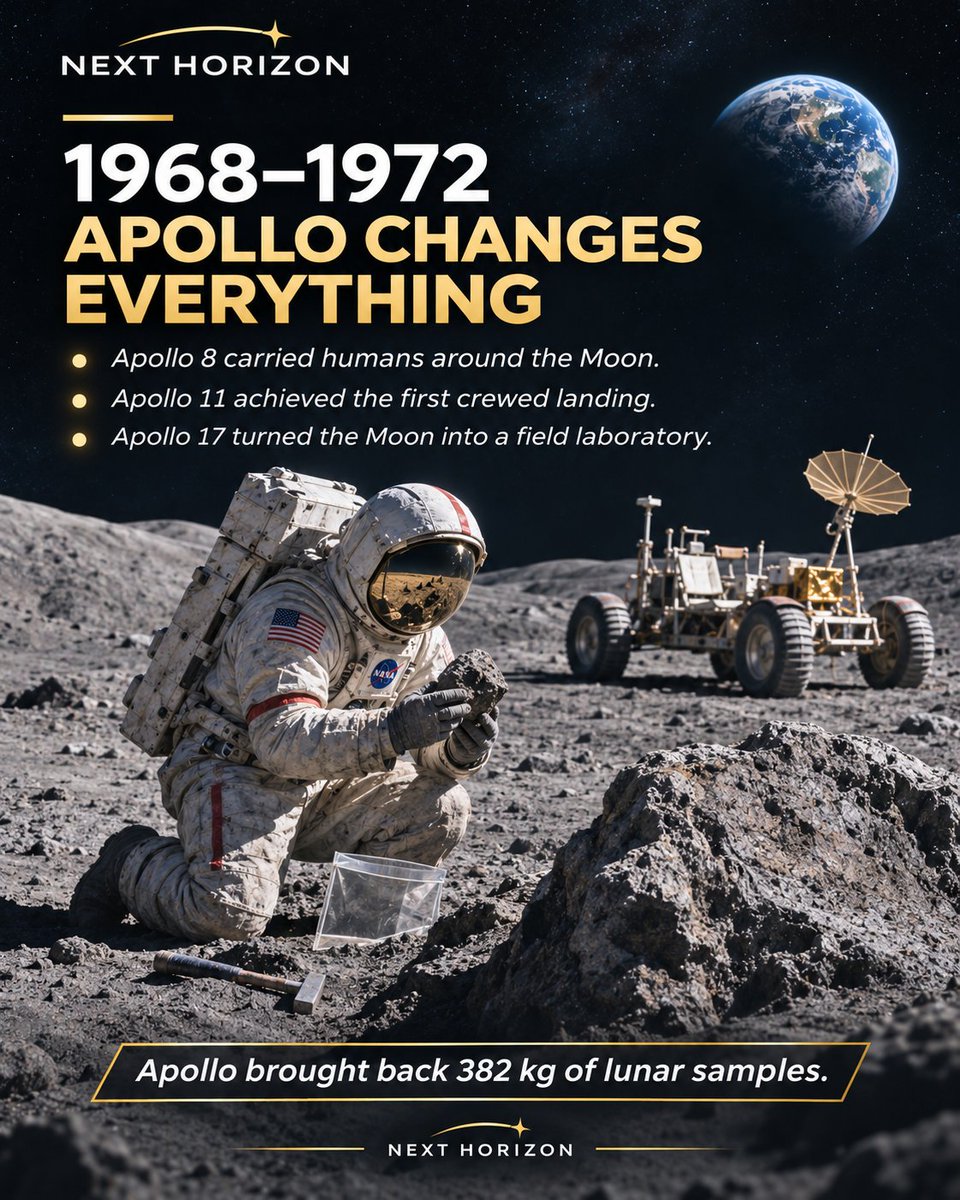
From Luna 1 to Apollo, Chang’e, Chandrayaan and Artemis, lunar exploration has never been a single story.
The Moon is becoming a destination again — for science, infrastructure and long-term exploration.
https://t.co/Vq7bdzBfEw
#Moon #Space #Science #Artemis #Astronomy



Truly a proud moment for every Indian 🇮🇳🚀
Congratulations to ISRO and our brilliant Scientists for making history with
#Chandrayaan3 and inspiring generations. 🌌✨
#NationlSpaceDay #IndaInSpace

Truly a proud moment for every Indian 🇮🇳🚀
Congratulations to ISRO and our brilliant Scientists for making history with
#Chandrayaan3 and inspiring generations 🌌✨
#NationalSpaceDay #IndaInSpace


👉Uzun süredir devam eden Ay'a iniş komplo adlı tartışma NASA ile bitmedi, ve Hindistan ile bitiyor.
On yıllardır, Apollo 11'in 1969'daki inişi, sahnelenmiş olaylar olduğuna dair teorileri körükledi. Ancak şimdi, bağımsız bir uzay ajansı konuya açıklık getirdi.
Hindistan'ın Chandrayaan-2 yörünge aracı, Sessizlik Denizi üzerinden geçerek iniş noktasının yüksek çözünürlüklü görüntülerini yakaladı.
İşaretli dairenin içinde Ay Modülü'nün iniş aşaması yer alıyor; yani Neil Armstrong ve Buzz Aldrin'in geride bıraktığı yapı.
NASA tarafından değil, ISRO tarafından çekilen bu görüntü, güçlü bir üçüncü taraf teyidi niteliğinde: donanım, 50 yıldan fazla bir süre önce bırakıldığı yerde aynen duruyor.


Sit and listen instead of spreading misinformation:
1.Retroreflectors on the lunar surface — laser reflectors left by Apollo that observatories around the world (including non-US ones) bounce lasers off to this day. You can verify this yourself with the right equipment.
2.Lunar samples — 842 pounds of rock shared with scientists in 70+ countries, including the Soviet Union (who had every reason to cry fake and never did). Composition matches unmanned Soviet Luna mission samples and lunar meteorites found on Earth.
3.Soviet confirmation — they were tracking Apollo in real time with their own independent systems. They had the most to gain from exposing a hoax and said nothing.
4.Independent tracking worldwide — Australia (Honeysuckle Creek, Parkes Observatory), UK, and others tracked the missions independently of NASA.
5.400,000 people worked on Apollo — the largest conspiracy ever alleged would require every one of them to have kept silent for 55+ years.
6.Third-party spacecraft have photographed the landing sites — Japan’s Kaguya, India’s Chandrayaan, NASA’s LRO have all imaged the hardware left behind.
7.Cosmic radiation exposure in samples — the rocks show radiation signatures only possible outside Earth’s magnetic field.
8.Seismometers left on the surface — were transmitting data back until 1977.
I could go on but this should suffice. My family worked/works for NASA w/ moon rocks so stop tryna make them look stupid. Science is real. World is round. We went to the moon.

#OnThisDay April 19, 1975, India marked a giant leap into space 🚀
Its first satellite, Aryabhata, was successfully launched into orbit. 🇮🇳
A historic milestone for India’s scientific journey.
Named after the ancient Indian mathematician Aryabhata, the satellite symbolized India’s rich legacy in science and astronomy merging with modern technology.
Aryabhata was built by the Indian Space Research Organisation (ISRO) and launched on April 19, 1975, from the Soviet Union using a Kosmos-3M rocket.
Weighing about 360 kg, the satellite was designed to conduct experiments in:
- X-ray astronomy
- Solar physics
- Aeronomics
Though a power failure halted experiments after a few days, Aryabhata proved India’s capability in satellite technology and laid the foundation for future missions.
From Aryabhata to missions like Chandrayaan-3 and Mars Orbiter Mission, India’s space journey has been nothing short of extraordinary.
A humble beginning in 1975 ignited a legacy that continues to reach for the stars.
Follow, share, like and click on 🔔 icon for more stories #OnThisDay


@pappuhalwai2000 Chandrayan ki announcement me yahi emoji use hua tha ab ye mat bolna ki...... Thik hai to thoda chaddi me raho to behtar hai gandu


The $Moon is no longer just a meme
it’s becoming the center of a new global race. @NASA is pushing forward with the Artemis Program to return humans to the surface, while China and Russia are planning a joint lunar base. ISRO has already proven access with Chandrayaan-3, and @elonmusk is building the transport layer that makes all of this scalable with @SpaceX. For the first time in decades, the Moon is shifting from symbolism to infrastructure.
At the same time, it’s being reframed as an ეკონომic frontier with water ice, energy potential like helium-3, and permanent stations such as the planned Lunar Gateway point toward a real off-world economy forming. The missing piece is a native cultural and financial layer. That’s where narrative matters.
Crypto has always run on symbols before fundamentals, and nothing is more embedded in crypto culture than “the Moon.” As the real-world Moon becomes relevant again, that meme reconnects with reality.
That’s the angle: $MOON isn’t just a name, it’s the simplest way to capture a narrative that’s moving from joke to inevitability.
8vVHBmASTSFAYEFNQg3qxQQJQ5vBoAVRWYsdgEahpump


EXTRACTION OF LUNAR WATER
Detection and Mining: Lunar water ice has been confirmed by missions such as NASA's Lunar Reconnaissance Orbiter and Chandrayaan-1. To access it, robotic or human-operated systems would drill or excavate the regolith (lunar soil) in shadowed regions.
The ice is mixed with dust and requires heating to sublimate (convert directly from solid to gas) for collection. Techniques like microwave or solar heating could purify the water vapor, yielding liquid water.
Purification: The extracted water may contain contaminants such as volatile compounds or minerals. Filtration and distillation processes would be necessary to obtain high-purity water suitable for further processing.
CONVERSION TO ROCKET FUEL
The primary method to transform water into fuel leverages electrolysis, a well-established chemical process:
> Electrolysis Process: Water (H₂O) is electrolyzed using electricity—potentially generated from solar panels or nuclear reactors on the lunar surface—to split it into hydrogen (H₂) and oxygen (O₂).
Hydrogen serves as the fuel, while oxygen acts as the oxidizer. These gases can be liquefied and stored for use in bipropellant rocket engines, similar to those in the Space Shuttle's main engines or modern systems like SpaceX's Raptor.
> Storage and Handling: Liquid hydrogen and oxygen must be cryogenically stored at temperatures below -183°C for oxygen and -253°C for hydrogen to prevent boil-off. Lunar bases could employ insulated tanks or leverage the Moon's natural cold traps for storage.
Applications in Rocket Propulsion
> Launch and Refueling: This propellant could fuel ascent vehicles for returning from the Moon to Earth or for missions to Mars. For instance, NASA's Artemis program envisions ISRU to produce fuel for the Human Landing System, reducing the need to transport propellant from Earth and thereby lowering mission costs.
> Efficiency Advantages: Using lunar resources could enable sustainable operations, such as creating fuel depots on the Moon. One kilogram of water yields approximately 0.11 kg of hydrogen and 0.89 kg of oxygen, providing a specific impulse (a measure of efficiency) comparable to traditional chemical rockets (around 450 seconds in vacuum).
Challenges and Considerations
> Energy Requirements: Electrolysis demands significant power, estimated at 20-30 kWh per kilogram of propellant produced. Deploying reliable energy sources on the Moon is essential.
> Environmental and Technical Hurdles: The lunar vacuum and extreme temperatures complicate operations. Contamination from regolith could degrade equipment, and initial setup requires transporting processing hardware from Earth.
> Scalability: Current demonstrations, such as those by the European Space Agency's ISRU experiments, are at a laboratory scale. Full implementation awaits advancements in robotics and automation.

Here are the actual render of Vikram Lander as imaged by Chandrayaan2 - a 3d scene created by deriving high resolution elevation model @ 30cm per pixel resolution. More scene images attached below 👇
Any guesses what this is? 🤓

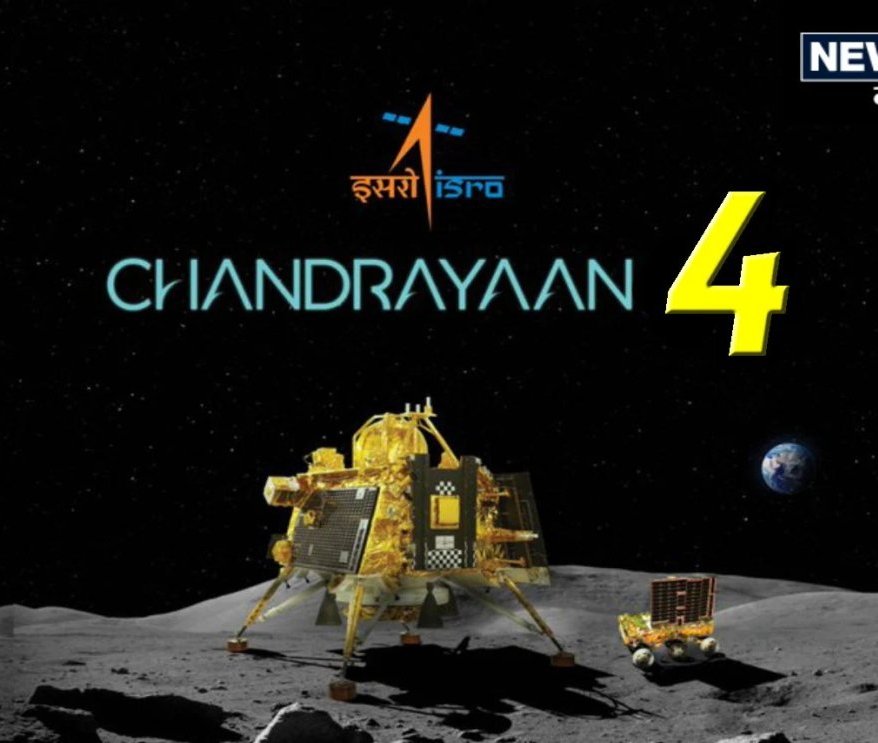
After this news I am wondering what happened to SCE-200 engine ,there isn't news about it
ISRO needs to complete the hot fire of this engine & upgrade it to LVM-3 SC,
Beacause our chandrayaan-4 is depend on it any delay can push mission to 2029 -30 @isro
https://t.co/2dx5uuaZHe

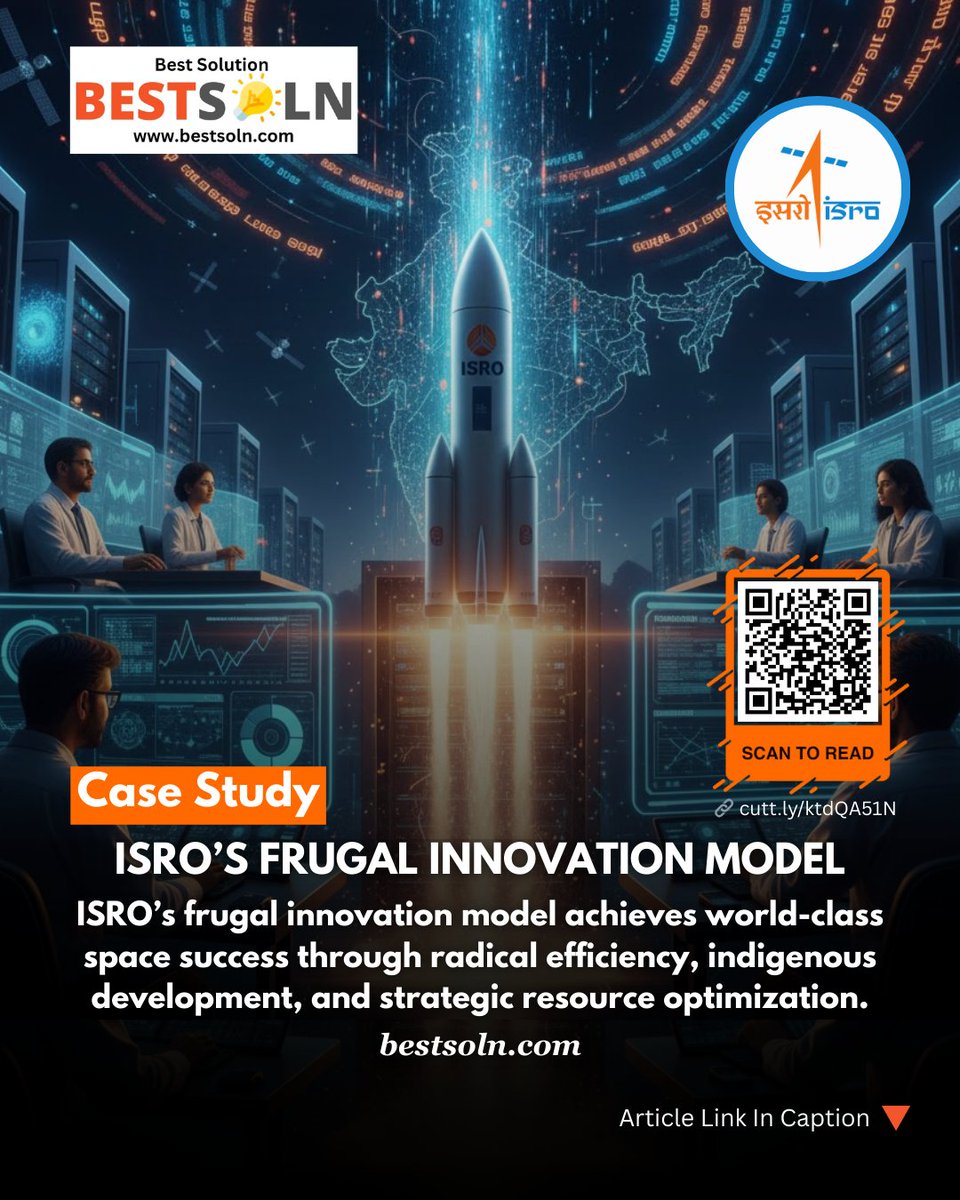
🚀 Small budgets, massive milestones! 🌌
Explore @isro's Frugal Innovation Model, the secret behind India’s cost-effective, world-class space missions like Chandrayaan and Mangalyaan. Discover how efficiency meets excellence! 🇮🇳✨
🔗 Read more: https://t.co/x5j8nsX4HK
#ISRO #SpaceTech #FrugalInnovation #MakeInIndia #SpaceExploration #BestSoln #BestSolution #TechInnovation

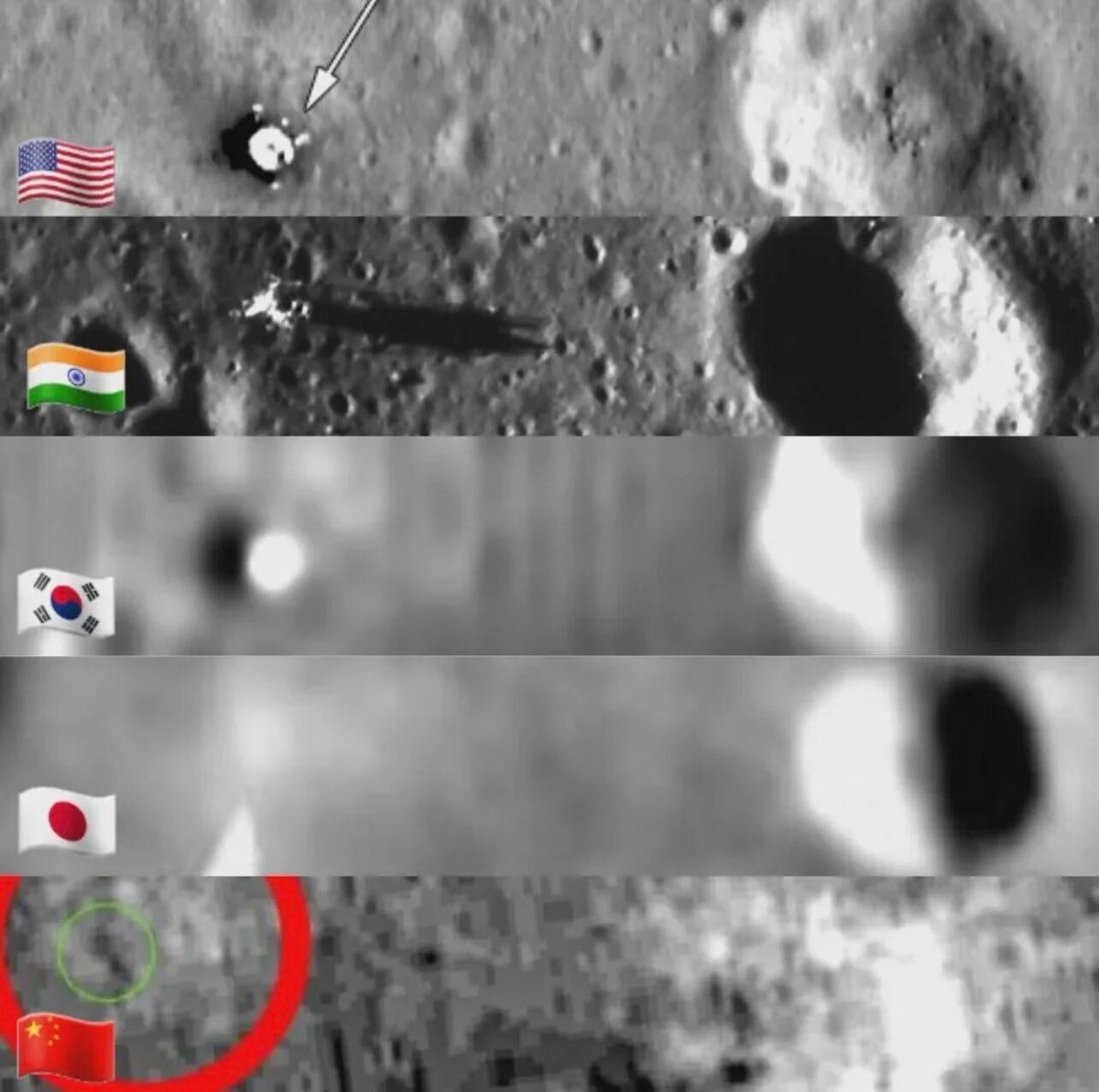
ISRO’s Chandrayaan-2 Orbiter uses one of sharpest lunar cameras (0.25 m/px) flies at a low 100-km orbit and captures landing sites with perfect lighting
Other nations use different cameras and higher orbits so their images look softer
India simply has the crispest tool right now


🌍 Guten Morgen Essay am 28.10.2025
💛 Ein neuer Tag erhebt sich in Gold und Blau. Zwischen Schlagzeilen und Stille webt sich der unsichtbare Faden des Bewusstseins – leise, aber kraftvoll.
🇺🇸 USA
📍 Masse: Nach der jüngsten KI-Verordnung kündigen mehrere Tech-Konzerne an, interne Entscheidungen künftig vollständig von lernenden Systemen vorbereiten zu lassen. Ziel: Kosten senken, Fehler vermeiden.
📍 Wache: Doch jedes automatisierte Urteil entfernt den Menschen ein Stück weiter von seiner Intuition. Vielleicht braucht die Welt weniger Berechnung – und mehr Gefühl. 💭
🇪🇺 Europa
📍 Masse: Die EU arbeitet an einem digitalen Grundgesetz, das Künstliche Intelligenz, Datenschutz und Medienaufsicht vereinen soll. Kritiker warnen vor Bürokratie, Befürworter sehen Schutz.
📍 Wache: Wahrheit lässt sich nicht regulieren – sie entsteht, wenn Menschen sich trauen, echt zu sein. 💭
🇨🇳 China
📍 Masse: Peking investiert Milliarden in afrikanische Solar-, Hafen- und Bahnprojekte. Offiziell: „Partnerschaft für grüne Zukunft“. Beobachter sprechen von geopolitischem Einfluss.
📍 Wache: Nachhaltigkeit ohne Seele bleibt Dekoration. 💭
🇮🇳 Indien
📍 Masse: Nach dem Erfolg der Mondmission „Chandrayaan-3“ baut Indien seine Raumfahrt weiter aus, will bis 2030 bemannte Missionen starten.
📍 Wache: Vielleicht sucht es im Himmel nur das, was im Innern längst leuchtet. 💭
🇷🇺 Russland
📍 Masse: Moskau stärkt Energieexporte nach Asien, während westliche Märkte gemieden werden. Die Wirtschaft stabilisiert sich im Schatten neuer Allianzen.
📍 Wache: Wenn Macht sich wandelt, zeigt sich, wer Herz in den Händen trägt. 💭
💛 🔁 Fortsetzung in Teil 2 unten ⤵️💛

🚀 Birth: 1940 – Krishnaswamy Kasturirangan, former ISRO chief. Interesting: He spearheaded Chandrayaan-1, putting India on the lunar map—literally discovering water on the Moon! 🌕 #SpaceIndia

#OnThisDay October 22, 2008, India launched its first uncrewed lunar probe Chandrayaan-1 aboard a PSLV-C11 rocket from Sriharikota.
It marked India’s bold entry into lunar exploration — making ISRO one of the few space agencies to reach the Moon.


2) Chant the Moon's Mantra:
Om Chandraya Namaha
108x
And under a waxing moon for best results.
It strengthens your emotions, mind and deepens compassion in relationships..
Last Seen Hashtags on Sotwe
Most Popular Users

Elon Musk 
@elonmusk
239.7M followers

Barack Obama
@barackobama
118.6M followers

Cristiano Ronaldo
@cristiano
114.3M followers

Donald J. Trump
@realdonaldtrump
111.7M followers

Narendra Modi
@narendramodi
106.9M followers

Rihanna
@rihanna
98.6M followers

NASA
@nasa
92.1M followers

Justin Bieber
@justinbieber
91.7M followers

KATY PERRY
@katyperry
89.9M followers

Taylor Swift
@taylorswift13
83.9M followers

Lady Gaga
@ladygaga
75.4M followers

Virat Kohli
@imvkohli
73.3M followers

Kim Kardashian
@kimkardashian
70.8M followers

YouTube
@youtube
68.6M followers

Neymar Jr
@neymarjr
66.3M followers

Bill Gates
@billgates
65.1M followers

Selena Gomez
@selenagomez
63M followers

The Ellen Show
@theellenshow
62.1M followers

CNN
@cnn
61.7M followers

X
@x
60.6M followers