

Top Tweets for #Climate_geoengineering

120) HAARP / MST Radar / AIR
#Climate_GeoEngineering
#Artificial_Climate #NWO @ShekharGupta @shekharkapur @Vishnu_Jain1 @AshwiniUpadhyay
@madhukishwar @RituRathaur
@sdeo76 @kunal492001
@tanmoyofc @Murti_Nain
@AnumaVidisha @copwatchbharat
@gharkekalesh
https://t.co/lLBMY1shYh

HAARP / MST Radar / AIR
Experimental research investigating the use of high-frequency electromagnetic (EM) waves to manipulate cloud droplet size and induce precipitation explores non-chemical weather modification. By directing radio frequencies (RF) or microwaves into clouds, researchers aim to influence cloud microphysics without traditional cloud seeding
Electromagnetic Weather Modification (Experimental)
Some academic research explores the use of high-frequency directed energy (such as low-frequency radio waves or microwave arrays) to manipulate cloud microphysics. The theories suggest that electromagnetic waves could:
Induce electrostatic forces to group water droplets together.
Influence the freezing process of supercooled water droplets.
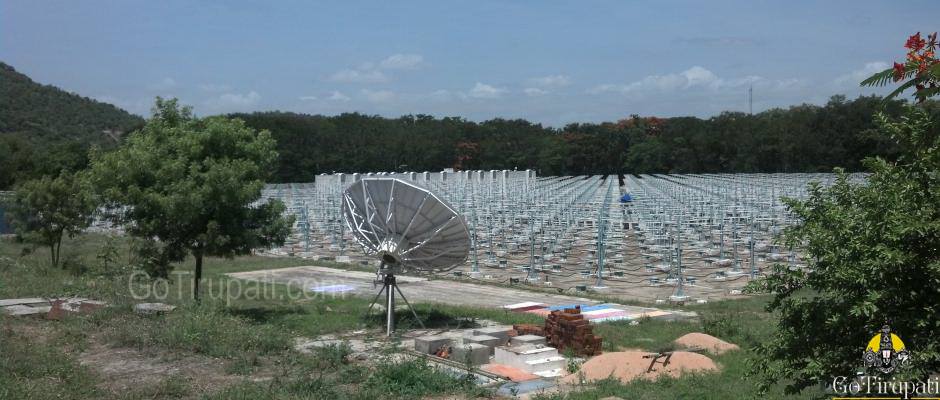
The most recent and advanced MST (Mesosphere-Stratosphere-Troposphere) radar used in India is the Advanced Indian MST Radar (AIR). It is located at the National Atmospheric Research Laboratory (NARL) in Gadanki, near Tirupati (Andhra Pradesh).
The network is coordinated by the National Atmospheric Research Laboratory (NARL) in Gadanki, Andhra Pradesh (near Tirupati). It links the central MST radar to several other high-power ST (Stratosphere-Troposphere) and wind profiler radars situated in different cities and university campuses across India:
Gadanki, Andhra Pradesh:
The primary 53 MHz MST Radar is located at the National Atmospheric Research Laboratory (NARL).
Kochi, Kerala:
Connected with the atmospheric radar at Cochin University of Science and Technology (CUSAT) to measure coastal weather dynamics.
Nainital, Uttarakhand:
Tied into the radar located at the Aryabhatta Research Institute of Observational Sciences (ARIES), providing data from the Himalayan region.
Guwahati, Assam:
Connected with Guwahati University to monitor atmospheric systems in the Northeast.
Kolkata, West Bengal:
Links to the radar network via the University of Calcutta to track Bay of Bengal weather patterns.
An advanced meteor radar, called the Sri Venkateswara University meteor radar (SVU MR), was set up in August 2013 at Tirupati, India.
It operates at a frequency of 35.25 MHz and is designed to observe horizontal winds in the mesosphere and lower thermosphere (MLT) region, specifically between 70-110 km above ground level.
Location and Context:
The radar is located near the Gadanki mesosphere-stratosphere-troposphere (MST) radar, which lacks wind data in the 85-100 km altitude range.
The SVU MR enhances the overall measurement capabilities in this atmospheric layer due to its high detection rate of meteors.
Importance of MLT Observations:
Studying winds and dynamics in the MLT region is crucial for understanding climate changes as these regions are impacted by both large- and small-scale atmospheric processes (like waves) occurring below.
Historically, conventional methods like rockets and space observations have limitations. Therefore, ground-based radars have gained significance in monitoring these atmospheric layers.
Operational Method:
The SVU MR uses an interferometer technique to detect meteor trails, allowing it to measure wind velocities with high precision.
It can continuously monitor both day and night, which is vital as most other radar systems only work during the day.
Performance and Results:
The radar has a high meteor count rate, detecting approximately 35,000 meteors per day, which is significantly better than similar radar systems.
An important finding is that the SVU MR provides accurate wind measurements that align well with data from other radars, notably during the overlapping altitude ranges of 82-98 km.
Comparative Analysis:
The SVU MR's data was compared with data from nearby radars, including the Gadanki MST radar and the Thumba MR.
Generally, results indicate strong agreement in wind measurements, showcasing the radar's reliability.
Limitations and Challenges:
Some discrepancies in wind measurement were noted, particularly in the meridional (north-south) wind results, which may arise from the varied techniques of different radar systems and localized atmospheric phenomena like gravity waves.
Future Implications:The establishment of SVU MR enhances the understanding of atmospheric dynamics by enabling researchers to study both vertical and lateral coupling in low-latitude regions.
This radar, along with other systems, forms a network that can yield deeper insights into the atmospheric behavior and its response to climatic shifts.
India currently has 50 operational Doppler Weather Radars (DWRs) managed by the India Meteorological Department (IMD). This extensive network covers more than 87% of the country's total landmass and has grown significantly from just 14 stations in 2014.
Network Breakdown
The IMD utilizes radars of varying frequencies to track weather systems, cloud bands, and gauge rainfall with a coverage radius of roughly 500 km per station:
S-Band:
Best for severe weather tracking and cyclones.
C-Band:
Frequently used for monitoring heavy rainfall events.
X-Band:
Geared towards localized monitoring, particularly in hilly and vulnerable terrains.
#Doppler #Weather #HAARP #MSTRadar #AIR #Gadanki #India #Andhrapradesh #IMD #Meteorological #EM #RF
@awakenindiamvmt @DrDev7 @Darryl_DSouza_ @SaveGomata



@nlhindi @rakesh22440 @Basantrajsonu @DeeEternalOpt @YTKDIndia @khurpenchh @Khurpenchhealth @GuptaPragnya @kunal492001 @VijaySingh_law @sdeo76 @AimHardoi @DelhiAim @adharammadhuram @angrymaya1980 @AnjaliB_ @KumaarSaagar @SureshChavhanke @HinduITCell @BoltaHindustan @swati_gs @SanjeevSanskrit @RadharamnDas @nlhindi @Basantrajsonu भारत में चल रहे कृत्रिम मौसम #Climate_GeoEngineering पर डॉक्युमें��्री बनाने की है हिम्मत?? @YTKDIndia @swati_gs @SanjeevSanskrit @sdeo76 @Thakur_VishalS @Vishnu_Jain1 @VijaySingh_law @RadharamnDas @shekharkapur @YashMor5 @GuptaPragnya @ActivistSandeep

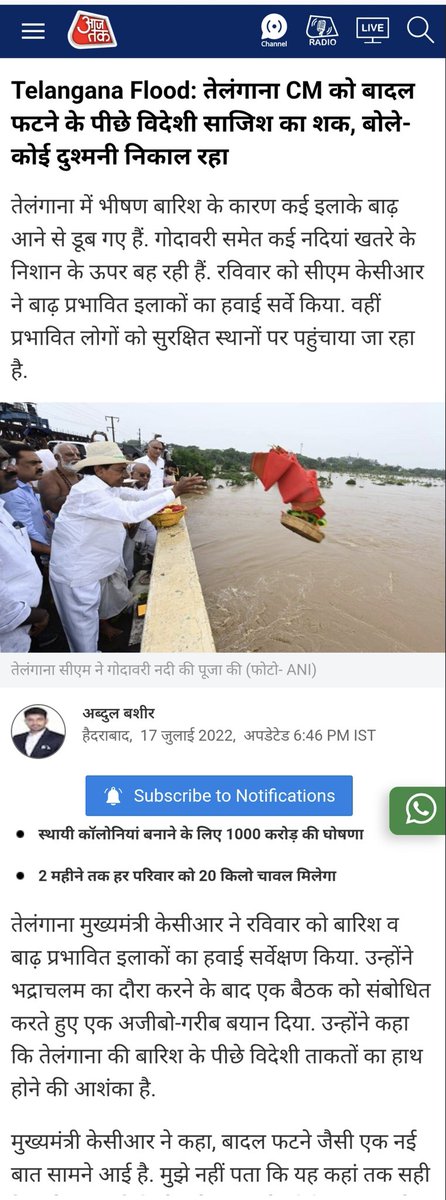

@hetipungava 12 Killed As 61,000 Lightning Strikes In 2 Hours Send Shockwaves In Odisha (Sep 4,2023) #Climate_Geoengineering
@awakenindiamvmt
@MNageswarRaoIPS @RadharamnDas
@RituRathaur @swati_gs
@SanjeevSanskrit @madhukishwar
@DeepikaBhardwaj @paranjoygt
News-
https://t.co/g1BDQA40e6
Last Seen Hashtags on Sotwe
bubblebumbutt
Seen from United States
OfficialServiceProvider
Seen from United States
candid()()()**filter:native_video()**filter:native_video()**filter:native_video()**filter:native_video
Seen from Brazil
theDraftAlabang
Seen from United States
اغتصاب
Seen from Netherlands
minichat() +filter:native_video
Seen from Brazil
desi
Seen from India
asian femboy+fuck
Seen from Pakistan
تحرررررـيمني
Seen from Germany
busflash
Seen from Brazil
Most Popular Users

Elon Musk 
@elonmusk
241.6M followers

Barack Obama
@barackobama
118.9M followers

Cristiano Ronaldo
@cristiano
114.6M followers

Donald J. Trump
@realdonaldtrump
111.8M followers

Narendra Modi
@narendramodi
107.2M followers

Rihanna
@rihanna
98.7M followers

NASA
@nasa
92.3M followers

Justin Bieber
@justinbieber
91.8M followers

KATY PERRY
@katyperry
90.1M followers

Taylor Swift
@taylorswift13
84M followers

Lady Gaga
@ladygaga
75.5M followers

Virat Kohli
@imvkohli
73.5M followers

Kim Kardashian
@kimkardashian
70.9M followers

YouTube
@youtube
68.8M followers

Neymar Jr
@neymarjr
66.5M followers

Bill Gates
@billgates
65.2M followers

Selena Gomez
@selenagomez
63.1M followers

The Ellen Show
@theellenshow
62.2M followers

CNN
@cnn
61.8M followers

X
@x
60.7M followers