

Top Tweets for #CoMorbid

amigos, alguém que tem tpb como comorbidade (ou no geral tem as emo��ões muito instáveis/intensas) e tomou/toma quetiapina se sentiu desanimado depois que começou a tomar ou sou só eu? minha psicóloga levantou a hipótese de que pode ser só a minha mente estranhando +

🌙 RLS is more than a night-time discomfort. RN invites original research, reviews and clinical perspectives on diagnosis, phenotypes, comorbidities, treatment and digital health. Deadline: 31 Oct 2027. @LourdesDelRosso @UofCalifornia #Neurology


In India, someone dies in a gym and everyone instantly blames the workout, ignoring underlying conditions and comorbidities. If a fit, healthy doctor dies, it’s game over: the gym is a silent killer.
I wish post-mortems were routine in young or unexplained deaths.


Early Development of Comorbidity Between Symptoms of ADHD and Anxiety
C/o Grok
https://t.co/P8449k4W5N
Anxiety disorders in adult ADHD: A frequent comorbidity and a risk factor for externalizing problems
https://t.co/10SoCxqd9H

@FlorianNotRlly EDs make ppl do more than just drink lots of water lol but yeah as ive had an ED for so long the wanting to be thin & sick is “surface level” while like the actual intentions are rooted in traumas, control and comorbidities ���

🧠Substance use disorders rarely occur alone.
A new Alpha Psychiatry Special Issue invites research on comorbidities, from dual disorders and psychedelics to digital therapeutics and AI.
⏲️Deadline: 31 Aug 2027.
Details in the first reply.
#AddictionResearch


@victrixcals I think a lot of us do honestly? I believe its a common comorbidity :0

Andhra Pradesh reports 12 COVID-19 cases and 4 deaths between June 26 and July 16.
Health officials say all four deceased had serious comorbidities, and there is no evidence of a widespread outbreak. Samples have been sent for genome sequencing to identify the variant.
Andhra Pradesh reports 12 COVID-19 cases and 4 deaths between June 26 and July 16.
Health officials say all four deceased had serious comorbidities, and there is no evidence of a widespread outbreak. Samples have been sent for genome sequencing to identify the variant.
Andhra Pradesh reports 12 COVID-19 cases and 4 deaths between June 26 and July 16.
Health officials say all four deceased had serious comorbidities, and there is no evidence of a widespread outbreak. Samples have been sent for genome sequencing to identify the variant.
Andhra Pradesh reports 12 #COVID-19 cases and 4 deaths between June 26 and July 16.
Health officials say all four deceased had serious comorbidities, and there is no evidence of a widespread outbreak. Samples have been sent for genome sequencing to identify the variant.

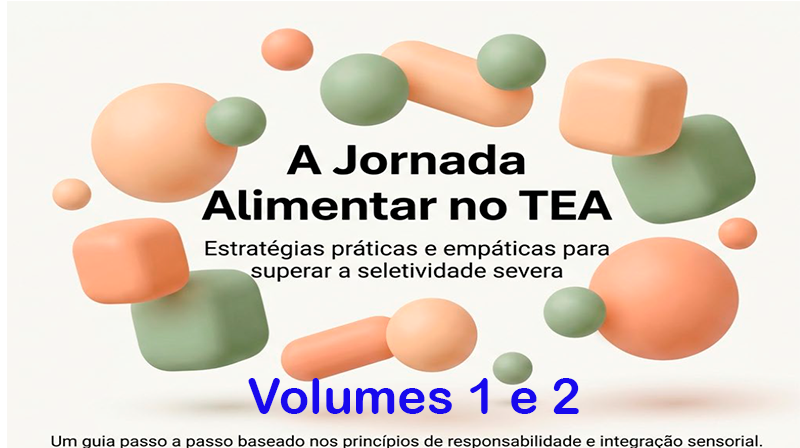
Mais um lançamento do nosso Portal de Educação https://t.co/Tvry0M7IpS : "A Jornada Alimentar no TEA: Volumes 1 e 2 ". https://t.co/KEFesMi1Ze Problemas alimentares são uma das comorbidades mais frequentes no TEA. Eles afetam de forma significativa a qualidade de vida da criança e da família, com prevalência muito maior do que em crianças com desenvolvimento típico.
Prevalência geral de problemas alimentares
•50% a 90% das crianças com TEA apresentam algum tipo de problema alimentar (seletividade, recusa, dificuldades comportamentais durante as refeições etc.).
•Em crianças com desenvolvimento típico, a prevalência geral de problemas alimentares fica em torno de 25%.
•Crianças com TEA têm cerca de 5 vezes mais chance de apresentar problemas alimentares do que crianças neurotípicas.
Essa faixa (50-90%, ou mais precisamente 51-89% em várias revisões) é citada consistentemente na literatura científica internacional e brasileira.
Seletividade alimentar (o problema mais comum)
A seletividade alimentar (comer apenas poucos alimentos, rejeitar grupos inteiros de alimentos, texturas, cores ou sabores) é o tipo mais frequente:
•Presente em 40% a 80% das crianças com TEA (alguns estudos relatam de 9,8% até 83%).
•Em muitos casos, o repertório alimentar fica extremamente restrito (às vezes menos de 20 alimentos diferentes).
Outros achados relevantes
•Comportamentos durante as refeições: Birras, rituais rígidos, recusa em sentar-se à mesa, fuga da mesa — muito mais frequentes no TEA.
•Sintomas gastrointestinais: Mais comuns em crianças seletivas (em um estudo, cerca de 70% das crianças seletivas apresentavam problemas GI).
•Estado nutricional: Pode variar — algumas crianças ficam abaixo do peso (ex.: 25% em um estudo), outras desenvolvem sobrepeso/obesidade por consumirem poucos alimentos, mas hipercalóricos (ex.: lanches industrializados, massas, etc.).
•Problemas costumam começar cedo (muitos sinais já nos primeiros anos de vida) e tendem a persistir se não houver intervenção.
Resumo em números:
•5x mais comum que em crianças típicas
•50–90% das crianças com TEA são afetadas
•40–80% apresentam seletividade alimentar significativa
•~70–80% têm recusa a novos alimentos ou rigidez alimentar
Esses números vêm de revisões sistemáticas, meta-análises (como Sharp et al., 2013) e estudos clínicos brasileiros e internacionais.
Importante: Embora esses problemas sejam muito frequentes, eles não fazem parte dos critérios diagnósticos do TEA, mas são considerados uma comorbidade importante que merece avaliação e tratamento específico. Criamos ferramentas e aplicativos para tornar suas aulas, sua gestão educacional mais din��mica e diferenciada. Contato: (35)99863-1106
ou e-mail: [email protected]

Comorbidities associated with cerebral palsy🧠
📌Reference : Paul, Sudip, Nahar, Anjuman, Bhagawati, Mrinalini, Kunwar, Ajaya Jang, A Review on Recent Advances of Cerebral Palsy, Oxidative Medicine and Cellular Longevity, 2022, 2622310, 20 pages, 2022. https://t.co/iGGuUy3EBe


Every clinical trial is a controlled experiment.
That is its strength. It is also its limit.
Trials recruit narrow populations: younger, healthier patients with fewer comorbidities and fewer medications than the people who will eventually use the drug.
This is not a flaw in design. It is a structural consequence of how controlled evidence works.
A drug that performs well in that population gets approved.
The patient who receives it in clinical practice is often someone the trial never tested.
This gap has a name: real world evidence.
Most of the industry measures it only after approval, too late to inform the decisions that mattered most.
Validating therapies in populations that more closely reflect real patients before approval can change what gets approved and who actually benefits from it.

@VanessaFinl8qj childhood trauma 😍 my comorbidities also probably didnt help lol

@cool_khat2 ben souvent la toxicomanie est accompagnée de comorbidités. Donc pour moi oui, mais selon ton milieu social ça joue aussi bcp pour l'accès à des soins corrects et selon tes pratiques (injection, galette...) t'es pas perçu.e de la même façon.

@heartattack_mp3 ça dépend, en général s’il y a des comorbidités non traitées on peut ne pas y voir de différences ou alors au contraire ça améliore les autres symptômes

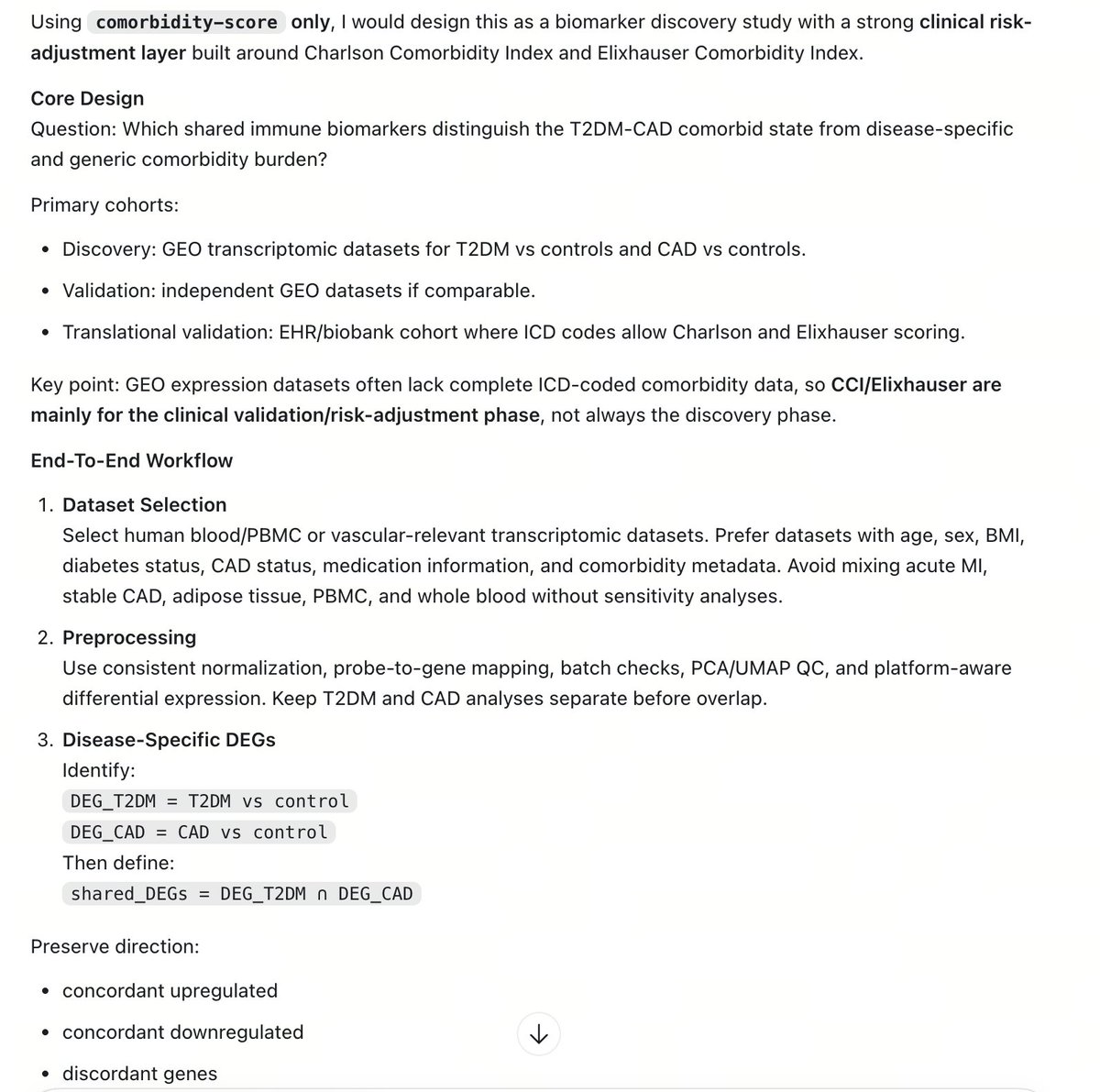
#2 Comorbidity Score
https://t.co/p6gsyfH1k8
Strong clinical validation companion.
Its focus is Charlson and Elixhauser scoring, risk adjustment, and comorbidity burden analysis.
Useful for answering:
"Do these biomarkers remain significant after adjusting for overall disease burden?"
Excellent for EHR validation and clinical prediction models, but not designed for transcriptomics, immune infiltration, pathway analysis, or biomarker discovery.


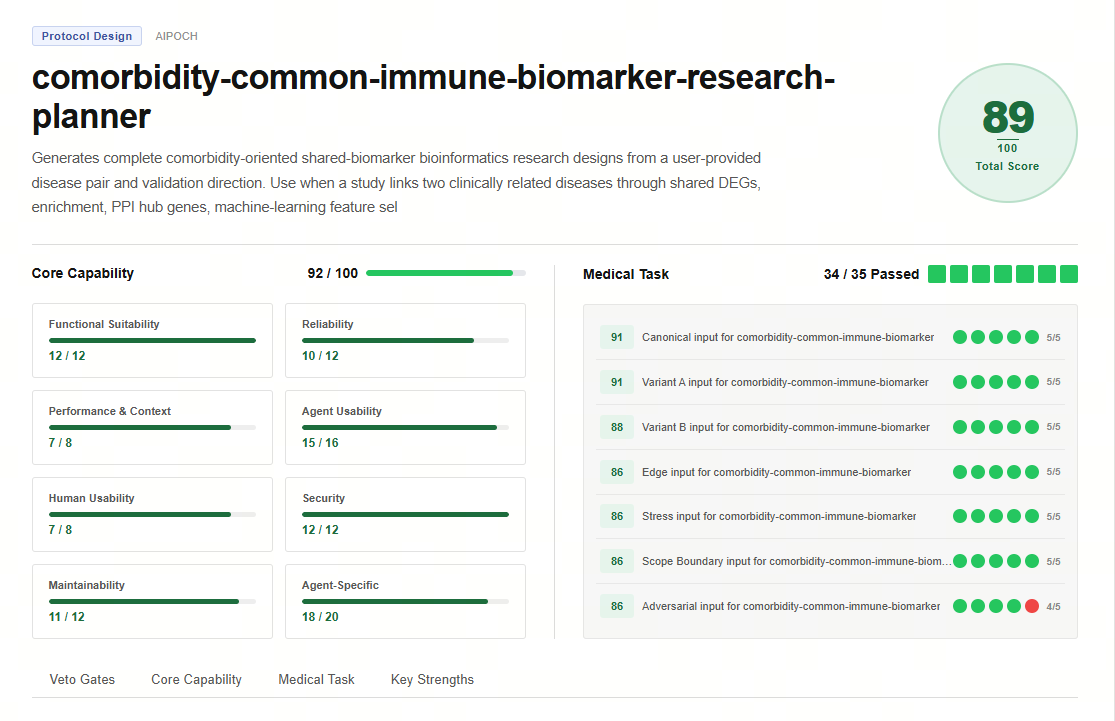
#1 Comorbidity Common Immune Biomarker Research Planner
https://t.co/q53WOvfjkh
Purpose-built for shared biomarker discovery.
It covers the full workflow:
DEGs → shared immune genes → enrichment → immune infiltration → PPI networks → hub biomarkers → validation → publication planning.
Key advantages:
✅ Five study patterns covering disease-pair biomarker discovery, immune infiltration, and ML feature-selection workflows
✅ Four workload modes (Lite / Standard / Advanced / Publication+)
✅ Mandatory Dataset Disclaimer to prevent false dataset assumptions
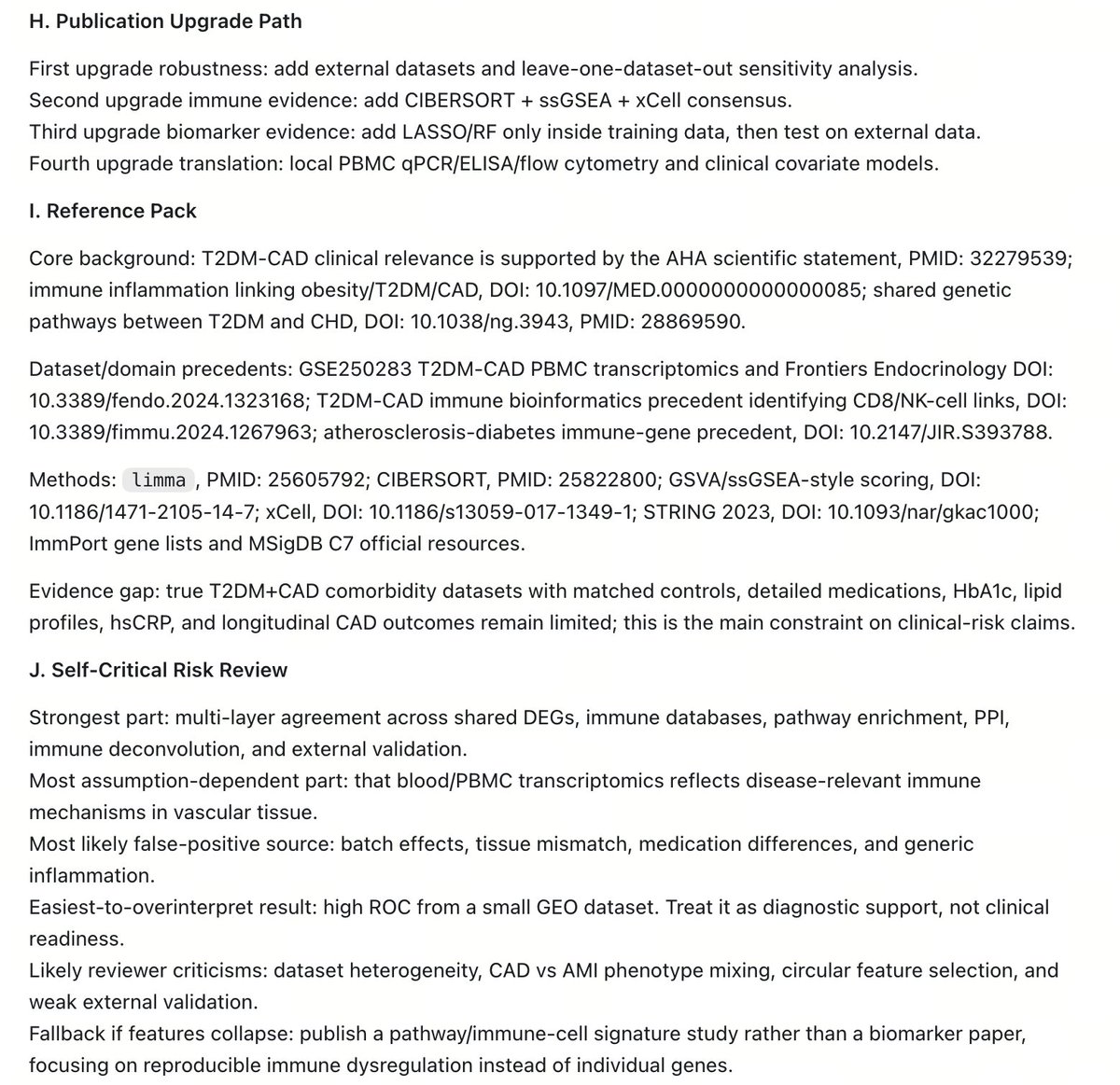
✅ Strictly verified literature retrieval with no fabricated references
Most importantly, it behaves like a reviewer-aware study architect, not just a workflow generator.

Last Seen Hashtags on Sotwe
Trends for you
Most Popular Users

Elon Musk 
@elonmusk
239.7M followers

Barack Obama
@barackobama
118.6M followers

Cristiano Ronaldo
@cristiano
114.3M followers

Donald J. Trump
@realdonaldtrump
111.7M followers

Narendra Modi
@narendramodi
106.9M followers

Rihanna
@rihanna
98.6M followers

NASA
@nasa
92.1M followers

Justin Bieber
@justinbieber
91.7M followers

KATY PERRY
@katyperry
89.9M followers

Taylor Swift
@taylorswift13
83.9M followers

Lady Gaga
@ladygaga
75.4M followers

Virat Kohli
@imvkohli
73.3M followers

Kim Kardashian
@kimkardashian
70.8M followers

YouTube
@youtube
68.6M followers

Neymar Jr
@neymarjr
66.3M followers

Bill Gates
@billgates
65.1M followers

Selena Gomez
@selenagomez
63M followers

The Ellen Show
@theellenshow
62.1M followers

CNN
@cnn
61.7M followers

X
@x
60.6M followers