

Top Tweets for #ContextEngineering

When a test wrapper compacts logs, keep the first failing assertion and a pointer to the raw run. Try a fixture with a failing setup followed by a passing summary. The agent should find the original failure before proposing a fix. #ContextEngineering

שוק העבודה של ה-AI זז מהר מאוד. לפני כמה חודשים המקצוע של העתיד היה prompt engineering, ועכשיו context engineering כבר מחליפה אותו. וואו.
https://t.co/tCGbxmWTXy
#AgenticAI #ContextEngineering #ProcessIntelligence

𝗜𝗻-𝗰𝗼𝗻𝘁𝗲𝘅𝘁 𝗹𝗲𝗮𝗿𝗻𝗶𝗻𝗴 𝗵𝗶𝘁𝘀 𝗮 𝗰𝗲𝗶𝗹𝗶𝗻𝗴 𝗳𝗮𝘀𝘁
You can keep adding examples, but gains flatten.
After that, teams jump to LoRA or SFT. Harnesses may bridge that gap.
#ContextEngineering #LLM
𝗖𝗼𝗻𝘁𝗲𝘅𝘁 𝗲𝗻𝗴𝗶𝗻𝗲𝗲𝗿𝗶𝗻𝗴 𝘀𝗵𝗮𝗽𝗲𝘀 𝗲𝘃𝗲𝗿𝘆 𝗮𝗰𝘁𝗶𝗼𝗻
This is the working set the model sees when it acts.
If the agent gets something wrong that it should have known, that is often a context problem, not a model problem.
#ContextEngineering #LLM

AI Memory Explained: Context Memory vs RAG Simply Explained https://t.co/y2zakZqnKo via @YouTube
#AI #ArtificialIntelligence #ChatGPT #RAG #LLM #AIMemory #GenerativeAI #MachineLearning #AIEngineering #ContextEngineering #AIExplained #TechTwitter #OpenAI #Claude
Is your AI also suffering from memory loss https://t.co/7Hl9Fh9suO via @YouTube
#AI #ArtificialIntelligence #LLM #ChatGPT #AgenticAI #AIEngineering #ContextEngineering #MachineLearning #GenAI #OpenAI #Python #AIAgents #PromptEngineering #RAG #AITools #TechTwitter #BuildInPublic

POV: The moment you realise you're cooking
#mindalike #AI #startup #contextengineering #building #backtowork

AI Memory Explained: Why Chatbots Forget You https://t.co/wGVu8PGaXT via @YouTube
#AI #ArtificialIntelligence #ChatGPT #LLM #GenerativeAI #MachineLearning #AIEngineering #ContextEngineering #AIMemory #PromptEngineering #RAG #LLMOps #TechTwitter #AIChatbot #OpenAI

@hydra_db is the backbone here:
not just storing data, but helping shape contextual retrieval that is actually useful inside workflow.
Still rough.
Still fixing.
But the direction is getting very real.
#buildinpublic #AI #HydraDB #memory #retrieval #ContextEngineering #startups

This is an insane idea that actually works.
Tired of LLMs hallucinating module couplings or forcing you to dump the whole repo into context?
I canonized **Repository Context Canon (RCC v1.0)** — one structured README.md per subfolder that turns your GitHub repo into self-contained "AI echo nodes."
Each node packs:
• Formal spec
• Integration hooks table (inputs/outputs/couplings)
• Full key artifacts + invariants (LaTeX-style constraints)
• Theory/math + Mermaid-ready diagrams
• Examples & extension points
**Simulation results** (across repo types & tasks):
- Plain READMEs: 60–70% first-pass accuracy
- RCC: 95%+ accuracy, 87% hallucination reduction, 80% fewer follow-ups
The magic is frictionless auto-gen: Grab the canonical LaTeX template, paste your module code into Grok/Claude/Cursor, prompt it to fill the template → drop the README in place. Minutes, not hours.
Repos stop being static file dumps and become an executable knowledge layer for reliable cross-module code gen and agent workflows.
Canonical template (the Gist): https://t.co/UfWfl5yPkJ
Field before file. Echo before ingestion.
Drop a repo link if you want a live RCC README generated on your code.
#RCC #ContextEngineering #LLM #AICoding #GitHub #Cursor

"Building a 'Memory OS' for LLMs: external persistent memory layer using compressed episodic summaries + explicit beliefs. Goal-conditioned retrieval within strict token budgets → 30-60% lower token costs on long tasks, stable behavior across sessions, way fewer hallucinations. Replaces endless context stuffing with smart, cost-aware state management .
Who's actually building long-horizon agents/apps and frustrated with token burn / context rot / forgetting?
Would you use this?
Would you pay for a hosted version?
Drop a if interested, reply/DM
#LLM #AIagents #ContextEngineering"

Jordan L., Engineering Strategy & Technology Enablement at @Verizon, ex @DowJones, ex @Vonage
GET SHIT DONE (GSD)
is a meta-prompting and context engineering system designed to make Anthropic ClaudeCode (and OpenCode) more reliable and effective for software development.
Here's what it does:
## 🎯 Main Purpose
GSD solves contextrot — the quality degradation that happens as Claude fills its context window with accumulated conversation.
It provides a structured workflow that keeps Claude focused and productive throughout entire projects.
🔑 Key Features
Spec-Driven Development: Instead of just "vibes-based" AI coding, it creates a systematic workflow:
1. Initialize - Define your project vision, requirements, and roadmap
2. Discuss - Shape implementation details before code is written
3. Plan - Research and create atomic, verifiable task plans
4. Execute - Run tasks in parallel with fresh context windows
5. Verify - Manual testing with automated debugging for failures
ContextEngineering: Manages critical project files (`https://t.co/ipdIe03lmC`, `https://t.co/dqhYwLqJjg`, `https://t.co/dEPACzFtAo`, etc.) that keep Claude informed without overwhelming its context window.
Multi-Agent Orchestration: Spawns specialized agents for different tasks (researchers, planners, executors, verifiers) that work in parallel, each with fresh context.
Atomic Git Commits: Each task gets its own commit, making history clean and issues easy to track/revert.
🚀 How to Use
```bash
npx get-shit-done-cc
```
Then use slash commands in Claude Code like:
- `/gsd:new-project` - Start a new project
- `/gsd:plan-phase 1` - Plan a development phase
- `/gsd:execute-phase 1` - Execute the plan
- `/gsd:verify-work 1` - Test that it works
💡 Why It Exists
The creator is a solo developer who lets Claude Code do the coding. They found existing spec-driven tools too complicated (sprint ceremonies, story points, etc.) and built GSD as a lightweight alternative that "just works" without enterprise overhead.
It's designed for developers who want to describe what they want and have AI build it correctly — without pretending they're running a large engineering organization.



Decentralisation isn’t a buzzword.
It’s the only way builders survive.
Tomorrow, creation stops depending on gatekeepers, platforms, or permission.
💠 Ideas become systems
💠 Context replaces chaos
💠 Builders own the outcome
$VCTX TGE — 1 DAY TO GO
We’re not launching a token.
We’re unlocking how the future gets built.
#VCTX #Scriptonia #DecentralisedBuilding #ContextEngineering


We built an #OpenSource pipeline that continuously turns Google Drive meeting notes into an auto-updating knowledge graph — with incremental LLM extraction and zero reprocessing of unchanged docs that just went viral on Linkedin.
⭐️Checkout: https://t.co/Hd5tSRgQi8 - star the repo if you like it!
🚀 Tutorial with source code (apache 2.0): https://t.co/jFe4vnnBOi
Just connect to Google Drive, and ready to serve in production, fully open sourced, built with
@cocoindex_io and @neo4j.
Most companies sit on an ocean of meeting notes - inside those documents are decisions, tasks, owners, and relationships — an untapped knowledge graph that is constantly changing.
This tutorial has step by step explanations on how to turn meeting notes in Google Drive into a live-updating Neo4j knowledge graph using CocoIndex and LLM.
Let's go 🚀🚀! Keep me posted on your feedback!
#GoogleDrive #KnowledgeGraph #Neo4j #CocoIndex #OpenSource #DataEngineering #AI #Automation #ContextEngineering #Productivity #DataPipelines #EnterpriseAI #GraphDatabase #AIInfrastructure #LLM #TechForBusiness #RAG #Innovation

🚀 Built a HackerNews → Postgres pipeline using CocoIndex Custom Sources — giving AI agents clean, structured, continuously updated data to reason over.
Tutorial: https://t.co/bWpTQXR1Ot
Repo:
https://t.co/Hd5tSRgQi8
The pipeline:
• Fetches HN stories + all nested comments
• Normalizes them into typed Python objects
• Diffs + syncs only what changed
• Exposes a searchable Postgres table
Now an AI agent can:
•monitor trending topics
• summarize conversations
• detect patterns over time
•generate insights from fresh, structured data
If your agent can think on it, CocoIndex can structure it and keep it live.
Code on GitHub — ⭐ appreciated!
https://t.co/3emRx0VsCA
We are looking for contributors too :)
#AIAgent #ContextEngineering

Top researchers prove: giving agents perfect context isn’t new… it’s been evolving for 30+ years.
@scriptonia_xyz is built exactly on these principles —multi-agent systems that actually understand your situation, goals, and constraints like a 10x team that never sleeps.
Read the paper that’s about to reshape how we build AI → https://t.co/XI9cj2G9Bt
Then build with the tool that already lives it → https://t.co/tuvfvBtzHE
The future isn’t “more agents.” The future is agents with god-tier context.
#ContextEngineering #AICoding #AgenticAI

Day 15: building agentic charts with edge
Yesterday I realized I cannot properly test the footprint chart implementation with stubbed axis, so today I'm switching gears and implementing the chart's Time Scale.
Since I have nothing to demo today I'm going to try and provide some value by explaining my #claudeai #contextengineering process for generating the #ai prompt as follows:
🚀Run /refine-story custom cmd providing
- the github issue with description of what we want to achieve, as well as docs for high level architecture, project structure, feature, related stories, industry standard software...
This command, internally calls 5 different commands that use separate agents for context management, all outputting their own md files:
🤖1. /business-analysis:analyze-story cmd extracts the business requirements into an md file.
🤖2. /external-system:external-system-story-analysis cmd extracts best practices and proven algorithms from an industry standard library into an md file. (mine has different arch & tech, with different features but there's no point in reinventing the wheel)
🤖3. /system-story-integration-analysis cmd ULTRATHINKS how the required feature should seamlessly integrate in my project: integration points, standards used, ensures no duplicate code...
🤖4. /generate-technical-solution cmd ULTRATHINKS a technical solution that is in line with the analysis output provided from sub commands 1,2 and 3 and also is in line with my project's structure and coding standards
🤖5. /generate-story-prp cmd uses the output of all of the above to compile a comprehensive prompt to be executed by the ai
🚀After I review the giant prompt doc I run /execute-story-prp which just adds some gates like:
- forcing regular build and ensure no errors
- add and run unit & integration tests
- add and run e2e tests for each AC
- manual test using Playwright MCP
🚀After I review, adjust, fix and test myself I run /document-system-story-integration command which outputs a doc for later use (by both AI and myself) in related future implementations.
✅All what this does is it saves me a TON of time, not having to type the same thing over and over for each new story.
✅It also manages the context by using separate subagents as this much research, planning and designing would not fit in 200k context window.
Follow the build → #qarcbuild


🧠Inside AI Episode 18/♾: Retrieval 2.0 - Context Engineering for Smarter Agents
Most people think retrieval is “search + embeddings.”
In real agentic systems, retrieval is context engineering , the art of giving the model exactly the right information at the right time.
Here’s what Retrieval 2.0 looks like 👇
1) Dynamic Retrieval
Agents don’t pull a static chunk of text.
They retrieve based on the current subtask, confidence, past failures, and plan structure.
2) Context Re-ranking
Instead of dumping all matches into the prompt, agents re-rank by:
• relevance
• recency
• source reliability
• task-type
• dependency in the plan
3) Context Pruning
More context ≠ better.
Agents remove duplicates, noisy sentences, stale facts, and off-topic segments before injecting them.
4) Stitching & Summarizing
Retrieved snippets are merged into a clean, coherent “context pack” the LLM can reason over.
5) Multi-Source Retrieval
Text + tables + KGs + memory + tools.
Retrieval isn’t a single vector store , it’s a fusion layer.
Context engineering is how agents avoid hallucinations, reduce cost, and stay focused across multi-step workflows.
Retrieval 2.0 turns information into usable intelligence.
#InsideAI #RAG #ContextEngineering #AgenticAI

🧠 Inside AI Episode 17/♾: Graph Intelligence -How Agents Use Connections to Think Better
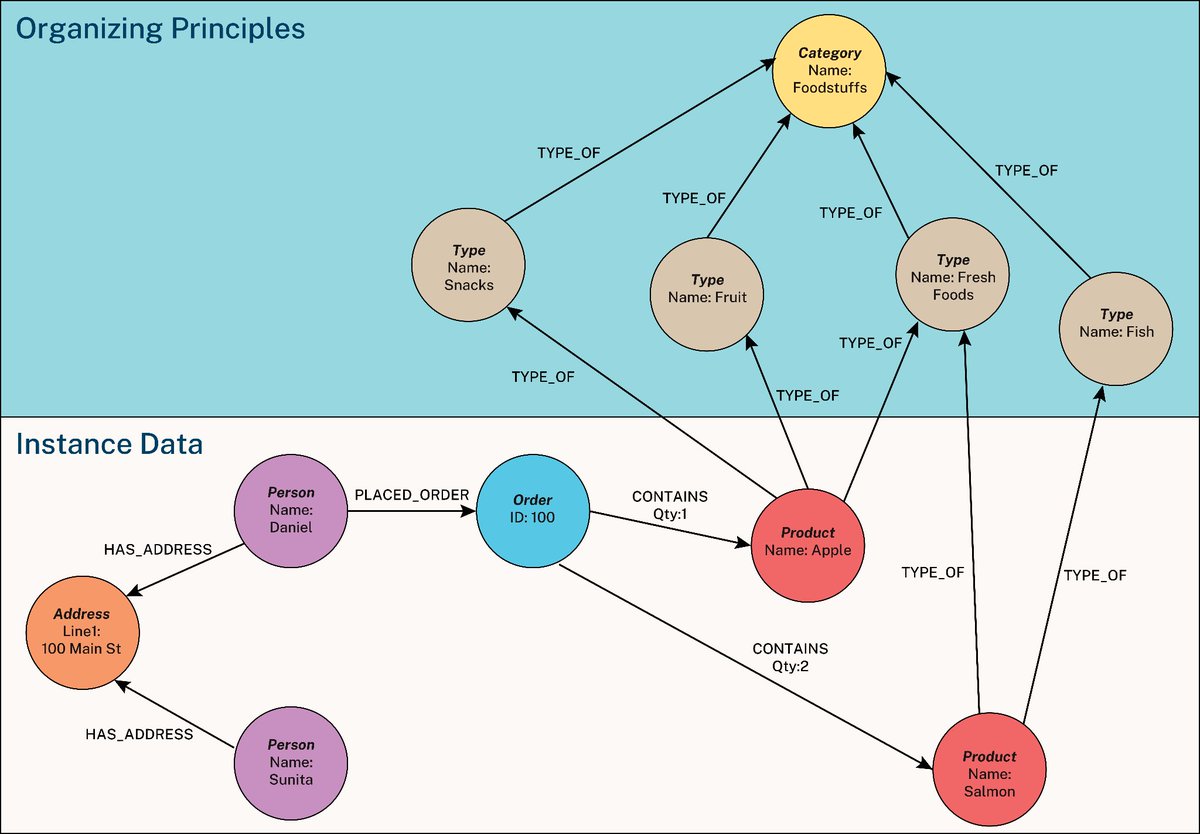
Most AI systems store knowledge as text or vectors. But real understanding comes from relationships , how facts, entities, and concepts connect.
That’s where Knowledge Graphs transform agentic AI.
Knowledge graphs act as a structured world model , a map of entities, attributes, and links that agents can query, update, and reason over.
Here’s how graphs supercharge intelligence 👇
1) Structured Memory
Graphs give agents canonical facts: who is related to what, which tools apply to which domain, what a concept depends on.
No hallucinations , because structure acts as truth.
2) Better Reasoning
Agents can walk graph paths (“A → B → C”) to:
• find causes
• detect dependencies
• resolve contradictions
• plan sequences with constraints
This is something vector memory alone cannot do.
3) Smarter Planning
Graph topology guides planners , letting them break tasks based on entity relationships, prerequisites, and domain boundaries.
4) Trust & Evaluation
Evaluators use graphs to verify claims, detect mismatches, and ground answers in known relationships.
5) Multi-Agent Coordination
A shared graph becomes the “common reality” multiple agents read from and write to.
No more inconsistent facts.
Graph intelligence is the layer where agents stop guessing , and start understanding.
#InsideAI #AgenticAI #GraphIntelligence


Gm fam ☀️
ROMA is easily one of the most powerful and underrated, parts of the @SentientAGI stack. Turning multi-agent systems into something transparent, modular, and fully traceable changes everything for builders.
Step-by-step reasoning, easy debugging, agent swapping, and natural parallelization… this is exactly how open AGI infrastructure should work.
Real builders ship with clarity, not black boxes.
#SentientAGI #ROMA #OpenAGI #AIInfrastructure #MultiAgentSystems #AIEngineering #ContextEngineering #AIFuture #Web3AI


Gm @SentientAGI family
ROMA makes building high-performance multi-agent systems straightforward. With structured Pydantic inputs and outputs, the flow of context is transparent and fully traceable. Builders can see exactly how reasoning unfolds, enabling easy debugging, prompt refinement, and agent swapping. This transparency enables fast iteration in context engineering, unlike black-box systems. Furthermore, ROMA’s modular design means you can plug in any agent, tool, or model at the node level, from specialized LLM-based agents to human-in-the-loop checkpoints. Furthermore, the tree-based structure naturally encourages parallelization, delivering both flexibility and high performance for large, demanding problems.


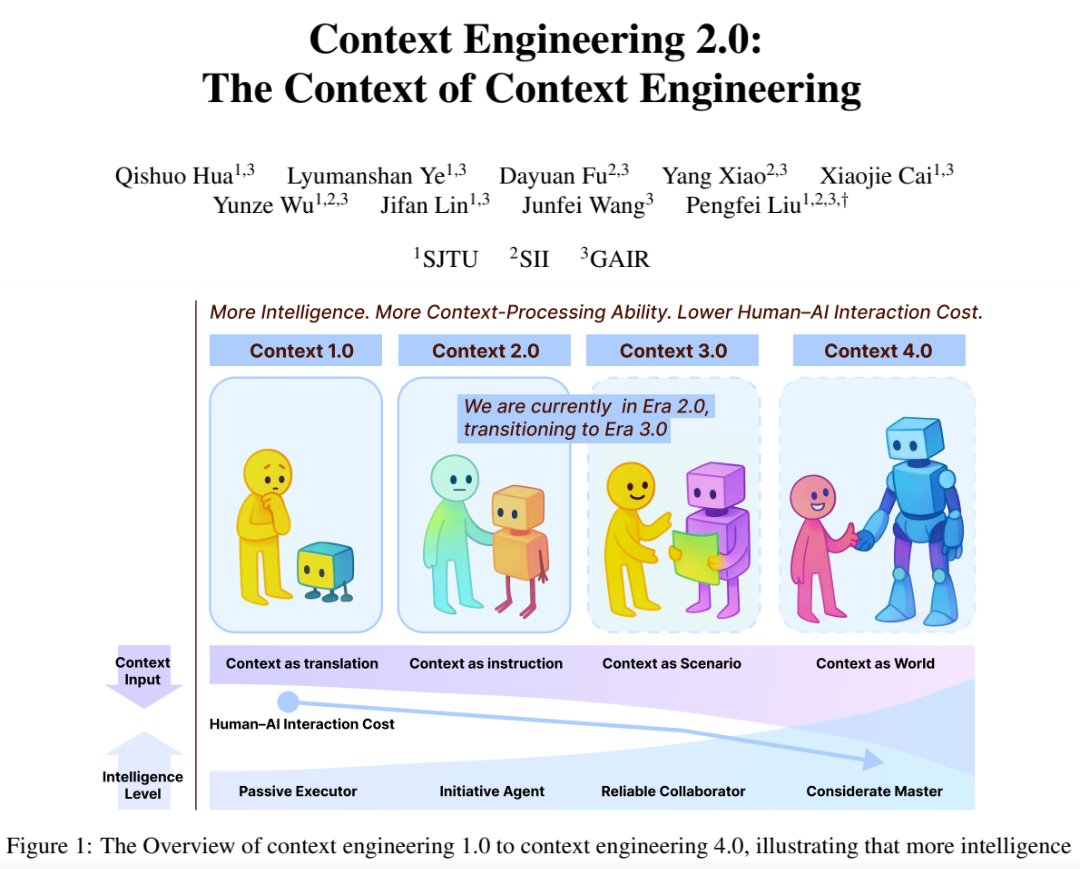
🚀 𝐔𝐧𝐝𝐞𝐫𝐬𝐭𝐚𝐧𝐝𝐢𝐧𝐠 𝐂𝐨𝐧𝐭𝐞𝐱𝐭 𝐄𝐧𝐠𝐢𝐧𝐞𝐞𝐫𝐢𝐧𝐠 2.0
Imagine if AI could truly understand not just your words, but your situation, intent, and goals — that’s what Context Engineering is all about.
In simple terms, Context Engineering is the science of helping machines grasp the “bigger picture” — the who, what, when, where, and why behind every interaction.
It’s how we make AI systems think more like humans and collaborate naturally instead of following rigid instructions.
This paper “Context Engineering 2.0” explores how this idea has evolved from early human-computer interfaces to today’s AI agents and how it will shape the future of truly intelligent systems.
𝐊𝐞𝐲 𝐓𝐚𝐤𝐞𝐚𝐰𝐚𝐲𝐬
✅ From 1.0 to 2.0:
We’ve moved from machines needing structured commands (“click here”) to AI that can handle natural, messy human input—text, voice, even images.
☑️ Why It Matters:
Context-aware systems reduce the “communication gap” between humans and machines, allowing smoother, smarter collaboration.
✅ Core Idea:
Good context design means less explaining, more understanding AI should know what you mean without you saying everything.
☑️ Practical Examples:
ChatGPT, LangChain, and AutoGPT all use context engineering when they “remember” your conversation or adapt to your goals.
✅ The Future — Context 3.0 and Beyond:
Soon, AI won’t just understand context — it will predict what we need, proactively assisting us like a true teammate.
To summarize,
(i) Just as humans learn from experience, AIs must learn from context.
(ii) Context Engineering is how we teach machines to see the world through our eyes, the foundation of a more intuitive and empathetic AI future.
➡️ Paper details - https://arxiv .org/abs/2510.26493
✅ 𝐖𝐚𝐧𝐭 𝐭𝐨 𝐛𝐞𝐚𝐭 𝐅𝐎𝐌𝐎 𝐢𝐧 𝐆𝐞𝐧𝐀𝐈? 𝐓𝐨 𝐠𝐞𝐭 𝐰𝐞𝐞𝐤𝐥𝐲 𝐋𝐋𝐌𝐬, 𝐑𝐀𝐆, 𝐚𝐧𝐝 𝐀𝐠𝐞𝐧𝐭 𝐮𝐩𝐝𝐚𝐭𝐞𝐬, 𝐜𝐡𝐞𝐜𝐤 𝐦𝐲 𝐟𝐫𝐞𝐞 𝐧𝐞𝐰𝐬𝐥𝐞𝐭𝐭𝐞𝐫 - https://aixfunda . substack .com/
#contextengineering #aiagents #llms
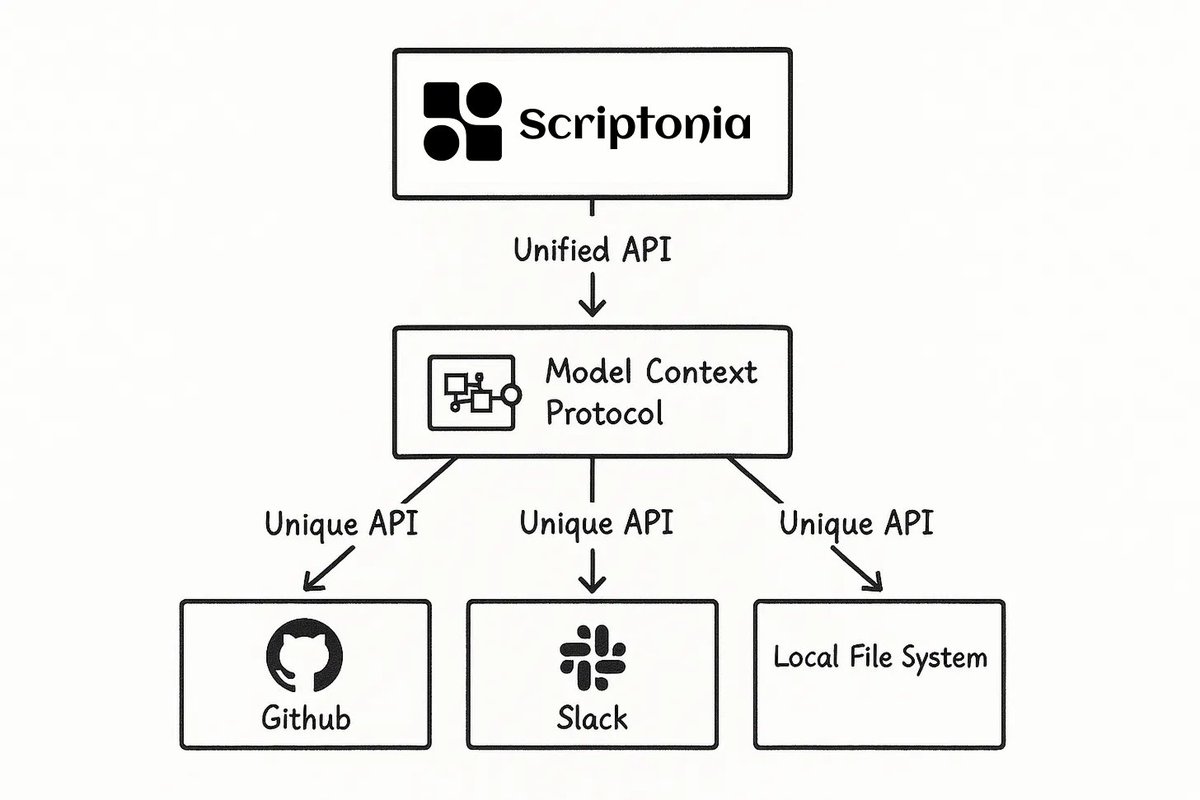
Every model has its own API.
Every tool speaks its own language.
That’s the problem.
Builders shouldn’t have to translate context between GitHub, Slack, or local files — it should just connect.
That’s why we built Scriptonia.
A Unified Context Layer that connects every source of intelligence — code, conversation, or memory — through one Model Context Protocol.
So instead of switching between APIs, prompts, or dashboards…
You build once.
Context flows everywhere. ⚡
The next generation internet won’t be built with endpoints.
It’ll be built with context.
#Scriptonia #AI #Solana #ContextEngineering
Most Popular Users

Elon Musk 
@elonmusk
240M followers

Barack Obama
@barackobama
118.6M followers

Cristiano Ronaldo
@cristiano
114.4M followers

Donald J. Trump
@realdonaldtrump
111.7M followers

Narendra Modi
@narendramodi
106.9M followers

Rihanna
@rihanna
98.6M followers

NASA
@nasa
92.1M followers

Justin Bieber
@justinbieber
91.7M followers

KATY PERRY
@katyperry
89.9M followers

Taylor Swift
@taylorswift13
83.9M followers

Lady Gaga
@ladygaga
75.4M followers

Virat Kohli
@imvkohli
73.3M followers

Kim Kardashian
@kimkardashian
70.8M followers

YouTube
@youtube
68.6M followers

Neymar Jr
@neymarjr
66.3M followers

Bill Gates
@billgates
65.2M followers

Selena Gomez
@selenagomez
63M followers

The Ellen Show
@theellenshow
62.1M followers

CNN
@cnn
61.7M followers

X
@x
60.6M followers