

Top Tweets for #DeaneHistory

This is the 10th instalment of #deanehistory. We made it to double figures!
Today we take a look at Napoleon. But not the one you’re thinking about.
#deanehistory 221.
Having played for his country in the World Cup in 2006, Jamie Carragher was omitted by Fabio Capello from the initial selection for the England World Cup squad in 2010.
Such things are a terrible blow, especially when you have represented your nation before and think you will be on the team sheet this time.
But - despite the inevitable press interest in the issue, the English press famously being rather probing by nature, and despite any inclination he might have to complain - Carragher kept his own counsel.
And it turned out that another centre-back, who would have gone to the World Cup in his place, was injured in the penultimate Premier League game prior to the tournament. Carragher joined the side after all.
The lesson, even for players yet more established and better regarded than Carragher, is obvious. Press pause on your fury… especially when there’s still a chance that someone else’s bad break might bring you good fortune.

I’ve just completed a treadmill workout across the Brooklyn Bridge, and I was instantly transported back to this #Deanehistory, an absolute favourite of mine
This is the 48th instalment of #deanehistory.
John Roebling was a noted engineer who left his native Prussia, which valued militarism above all things, to seek advancement in the New World. He found it.
#Deanehistory 220: newest story yet.
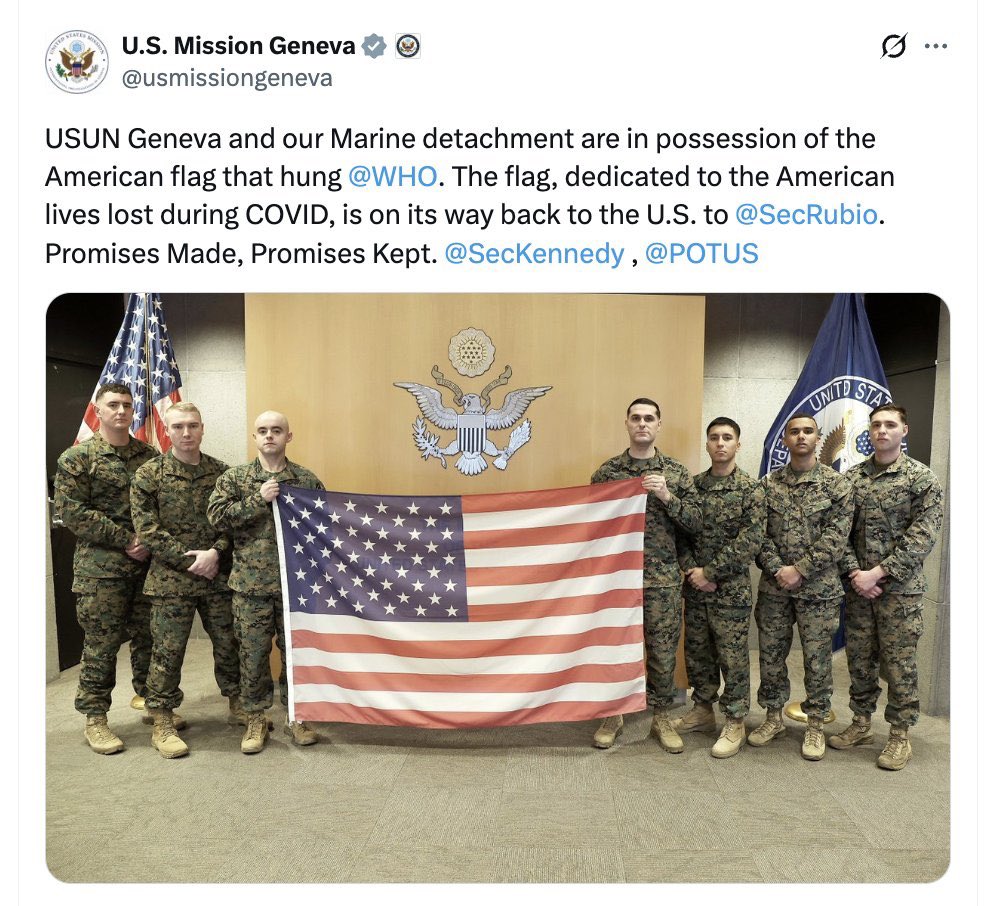
Yesterday, the USA left the WHO.
The WHO claimed the USA had outstanding debts & until paid it would keep the U.S. flag.
The Marine detachment at the U.S. Mission to Geneva went in and got it.
#Deanehistory 217. Miss Miriam Melbourne’s Great Goat Getaway.
It is well known that the Channel Islands were the only part of the British Isles to be occupied by the enemy in the Second World War.
Occupation came after significant - but not majority - evacuation of the islands, and it progressed from relatively benign unpleasantness at the outset to appalling circumstances in the war’s closing stages when all those left on the islands - islanders, occupiers, forced workers brought to build elements of the Operation Todt sea defences - endured severe food shortages to the point of starvation. Between the two, and the liberation that ultimately came, the gamut of resistance, passive and active), of suffering and collaboration leaves a wartime legacy still keenly felt in the islands to this day.
Rather less well known is the quiet achievement of Miriam Melbourne. Suitably alliteratively named, Miss Melbourne had dedicated herself in the 1930s to the revival of the Golden Guernsey Goat, a lovely animal enjoying something of a heyday today as trendy households seek suitably cute and placid pets that can also help them to be seen doing their bit for the environment. But, whilst first recorded in the early 1800s, the GGG was wobbling at near-invisibility in the years between the great wars of the twentieth century, until Miss Melbourne threw herself into their recovery.
Then of course the Nazis came, and most of the islanders had many other things to worry about. Miss Melbourne remained focused. Even in 1944-1945 as livestock across the Channel Islands were being slaughtered en masse for food, she sheltered her herd in caves on Guernsey.
One spares a thought for her fellow islanders. It could hardly have been completely unknown that their eccentric cave-visiting friend had a clutch of tasty goats at her disposal and, well, they were bloody hungry. But the proof of their stoic silence is in the non-eating, as surely if they’d self-interestedly grassed her up or undertaken butchery themselves the GGG wouldn’t have survived the occupation.
So it is to the collective credit of the Gurnseymen and women of the war years as well as Miss Melbourne individually that they survived - as, today, all of the world’s stock of Golden Guernsey Goats are descended from Miriam Melbourne’s herd.
In July 2024, the King visited Guernsey and bestowed the title “Royal” upon the breed. The first livestock animal ever to enjoy this title, the Royal Golden Guernsey Goats would not be with us without the stubborn Miss Melbourne.
#Deanehistory 216.
In this time of amber heat alerts, which in the ignorant olden days might have been called “summer,” the thoughts of some amongst us turn to the soothing bliss of ice cream.
So it was with Howard Hughes, the late multimillionaire of Spruce Goose plane fame.
In his later years, Hughes became a recluse, relying on a small inner circle to interact with the rest of the world, taking up the penthouse floor of a hotel in Las Vegas and, when the thought occurred to the hotelier that Hughes might move on, buying the hotel.
He installed internal screens so his room couldn’t be seen even by the guards taking up posts at the door. He had doorknobs removed to prevent others going where he didn’t want them to. He compulsively washed himself in alcohol rub, which dripped onto paper towels on the floor, which then had to be shredded – and then burnt, with a member of staff tasked to watch until certain that nothing but ashes remained.
All in all he was an odd one. And this manifested itself in having the same meal every day, which ended in this period with Baskin Robbins banana nut ice cream.
The problem was that said company switches out its flavours from time to time, and one day a junior flunkey returned from the shops to tell a more senior flunkey that there was no more banana nut to be had.
This caused enormous ructions in the ranks of the Hughes praetorian guard. Heaven knows that the boss couldn’t be told that what he wasn’t was not to be had, and there was only a tub or two left in the supplies.
Thus it was that a Hughes executive called the leadership at Baskin Robbins and asked them to run a discontinued flavour for them. The answer was what you’d get from most businesses – sure, it can be done: but it’s going to cost you, and you have to buy in bulk.
Do it, the instruction came. Do it. And at very significant expense to the Hughes empire, Baskin Robbins obediently pumped 350 gallons of banana nut ice cream into a freezer truck, which was driven overnight from Las Angeles to Las Vegas.
Thank the good lord, our flunkeys no doubt said. For this is just in time. We are down to the last scoop of the old stuff. Now we have enough to last Howard for a lifetime!
That night, Hughes – having had no meaningful contact with the outside world for a very long time, and certainly no line of sight on the ice cream crisis that had been averted at the last moment – put down his spoon contently and said
“That’s great ice cream, but it’s time for a change. From now on I want vanilla.”
From that time forward, anyone meeting with Hughes executives – or sometimes even came into contact with them in the Las Vegas streets – bemusedly found themselves pressed to take the gift of a tub of banana nut ice cream.
Stay safe in the heat!
Did I mention that there are two #deanehistory books connected to the podcast?
Kept it pretty quiet I suppose
https://t.co/rqXrpN2DrM
#Deanehistory 215.
Paul Linebarger received his PhD from John Hopkins aged 23, spoke three – or six, depending upon your source – languages by adulthood and was sufficiently senior at the US Army’s Operation Planning and Intelligence Board, sufficiently full of chutzpah and sufficiently brave that when he wrote the job description for the operative who would be sent to China to liaise on military intelligence matters during the Second World War, his requirements were so bespoke that they could only be satisfied by… him. Thus, despite being blind in one eye and not the most robust of physical specimens he saw much of the war in service alongside Chiang Kai-Shek (he was, inter alia, Sun Yat-sen’s godson, following his father’s time as his adviser).
Oh, and he literally wrote the book on psychological warfare. Like all the best authors, he was profoundly unimaginative in the titles department so it’s called… Psychological Warfare, and it’s the foundational text in modern propaganda.
During his time as a professor he developed a handy sideline in pseudonymous fiction, best known as Cordwainer Smith – a leading Golden Age science fiction writer who was discovered, at least for a larger audience, by Frederik Pohl, no mean author himself but also a sort of John Peel influencer figure of the era. On any view his story “Scanners Live in Vain” is a 20th Century classic.
All in all, then, not an undercredentialed man. But when asked what gave him most pride, this was his answer.
Whilst advising the US Eighth Army during the Korean War, it was apparent to Linebarger that although they were frequently absurdly outgunned by UN Forces, it was culturally ingrained Chinese soldiers not to surrender. And certainly not to say that they were surrendering. Our master of both language and tricksiness therefore had leaflets widely distributed which told soldiers to shout the words “love,” “duty,” “humanity” and “virtue” in their own language. Taken at a clip and said in that order, it was apparently a fair approximation to the English ear of the words… “I surrender.”
The fog of war renders precision impossible, but historian JJ Pierce puts the number of lives thereby saved, not in the hundreds, but in the thousands.
Obviously I thought you needed a cheery story for NYE!
That’s it for #Deanehistory in 2024. I’ll be back with more stories in 2025 and as ever I welcome your suggestions.
And we will be back with @HistoryHrPod stories on the podcast in a new season.
Happy New Year!
#Deanehistory 214. Hat tip @BlueEarthMngmnt.
Robert Liston was a leading surgeon in the first half of the 19th century. He saved many lives. There are lots of positive stories about him. This isn’t one of them.
Practising largely in the era before the availability of anaesthetics, and before modern standards of medical hygiene in operations, one essential quality in a surgeon in Liston’s day was speed. Liston was fast. His record for - forgive the bluntness, but it’s apt - removing a leg was under thirty seconds. Liston had taken to crying out “time me, gentlemen!” before commencing an amputation. And you thought that catchphrases were just for game shows.
In sum… Super sharp knives. Speed at a premium if the patient was to live. Playing to an audience which, in a society rather more accustomed to gore than the present day, bunched in close to see the great man at work. This is the setting.
Thus it was that Liston performed a leg amputation in under two and a half minutes which… resulted in a 300% mortality rate.
Despite Liston’s unquestionable speed, the patient died of post operative infection; his young surgical assistant, whose fingers Liston accidentally amputated as he worked, likewise died of gangrene; and a witness to whom the flashing knife came too close died of shock.
Despite his many surgical achievements, I’m afraid that it is for this record - one operation, one patient, three deaths - that Liston is likely best remembered today.
Greene is one of my favourite authors of all time
This #Deanehistory is a reminder that his gift for writing well, was every bit as good as his gift for living well.
Standing up for his lover when he was nudging 80, led to a crime syndicate dying out
#Deanehistory 213. This is the story of the unlikely downfall of a French crime family.
Jacques Médecin was Mayor of Nice. Had been, in fact, for 24 years. His father had been Mayor before him, from 1928 until 1965 with a brief break during the war. Together they’d held the mayoralty of Nice for over sixty years.
Under Médecin’s control, organised crime on the French Riviera enjoyed the protection of both the courts and the police. Everything was sewn up. Nobody could challenge them. Everyone feared them. They controlled everything... What could go wrong?
The answer to the rhetorical question, as usual, lay in the unforeseen, which manifested itself in this case in the mildly absurd. A minor hoodlum in their network got divorced, and he didn’t play nice and respect the terms of the settlement. When his ex-Father-in-Law took him to task, he assaulted him. When in turn (this is, France, remember) his ex-Mother-in-Law’s lover asked him to, he shook his fist in his face and promised him the same if he didn’t desist.
Unluckily for said hoodlum, one Daniel Guy by name, his ex-wife’s mother’s lover was Graham Greene.
Never heard of you, said two bit hoodlum might have said. An author? So what! What are you going to do about it, old man?
The answer was… well, I’ll do what I do best. Albeit nudging eighty at this point, nothing fired Greene up like an argument. He swiftly wrote and published J’Accuse – the title in homage to Zola’s famous defence of Drefus – setting out the multitudinous faults of the regime on the Côte d'Azur, helpfully in both English and French so as to reach a wider audience.
But a wider audience wasn’t really a problem as such, because when Graham Greene published something, the world read it.
Wave your fist at me, eh? Turns out… You brought a knife to an atomic bomb fight.
To bolster his case, Greene returned his Légion d'honneur lapel pin to the Legion’s Chancellor, explaining why – and copying the French Justice Minister in on his letter just to make sure that his message got through.
French laws on defamation and privacy were and are robust, and a court duly ordered the cessation of sales of J’Accuse and the destruction of any remaining copies. Censorship always works of course, as demonstrated by the fact that thousands of copies of the pamphlet are extant to this day, including one treasured copy in the hot little hands of your humble author.
Anyway… it worked. The story went around the world. A team of detectives was dedicated to the Côte d'Azur / Côte d'Ordure affair by Alain Peyrefitte, the Minister of Justice who just happened to be an author himself. Médecin fled to Uruguay, from which he was eventually extradicted back to France, tried, and imprisoned for embezzlement and fraud.
In sum, Greene burned their entire world to the ground. But if some forgotten thug had been nicer to his ex, the Medicins might still be running Nice today.
#Deanehistory 213. This is the story of the unlikely downfall of a French crime family.
Jacques Médecin was Mayor of Nice. Had been, in fact, for 24 years. His father had been Mayor before him, from 1928 until 1965 with a brief break during the war. Together they’d held the mayoralty of Nice for over sixty years.
Under Médecin’s control, organised crime on the French Riviera enjoyed the protection of both the courts and the police. Everything was sewn up. Nobody could challenge them. Everyone feared them. They controlled everything... What could go wrong?
The answer to the rhetorical question, as usual, lay in the unforeseen, which manifested itself in this case in the mildly absurd. A minor hoodlum in their network got divorced, and he didn’t play nice and respect the terms of the settlement. When his ex-Father-in-Law took him to task, he assaulted him. When in turn (this is, France, remember) his ex-Mother-in-Law’s lover asked him to, he shook his fist in his face and promised him the same if he didn’t desist.
Unluckily for said hoodlum, one Daniel Guy by name, his ex-wife’s mother’s lover was Graham Greene.
Never heard of you, said two bit hoodlum might have said. An author? So what! What are you going to do about it, old man?
The answer was… well, I’ll do what I do best. Albeit nudging eighty at this point, nothing fired Greene up like an argument. He swiftly wrote and published J’Accuse – the title in homage to Zola’s famous defence of Drefus – setting out the multitudinous faults of the regime on the Côte d'Azur, helpfully in both English and French so as to reach a wider audience.
But a wider audience wasn’t really a problem as such, because when Graham Greene published something, the world read it.
Wave your fist at me, eh? Turns out… You brought a knife to an atomic bomb fight.
To bolster his case, Greene returned his Légion d'honneur lapel pin to the Legion’s Chancellor, explaining why – and copying the French Justice Minister in on his letter just to make sure that his message got through.
French laws on defamation and privacy were and are robust, and a court duly ordered the cessation of sales of J’Accuse and the destruction of any remaining copies. Censorship always works of course, as demonstrated by the fact that thousands of copies of the pamphlet are extant to this day, including one treasured copy in the hot little hands of your humble author.
Anyway… it worked. The story went around the world. A team of detectives was dedicated to the Côte d'Azur / Côte d'Ordure affair by Alain Peyrefitte, the Minister of Justice who just happened to be an author himself. Médecin fled to Uruguay, from which he was eventually extradicted back to France, tried, and imprisoned for embezzlement and fraud.
In sum, Greene burned their entire world to the ground. But if some forgotten thug had been nicer to his ex, the Medicins might still be running Nice today.
#Deanehistory 212. All in one post as I can now do that; let me know if you prefer this to threads.
Richard Hilton was a Military Attaché at the British Embassy in Moscow shortly after the Second World War. Watched closely by the authorities like all those posted there, Hilton kept a diary in code, and published memoirs of his time upon his return home. He records the following anecdote.
Followed by the MVD (Soviet Internal Affairs) none too subtly every time he left the Embassy, Hilton took to taking long excursions into the countryside, amused by the perpetually failing efforts of his tails to disguise their efforts - especially, in a downtrodden economy, when they were often the only two cars on the road.
One day in April, when the snows around the capital were still deep upon the ground, Hilton and a friend headed northeast towards Krasnoarmeisk. Lorries had driven tyre ruts deep into the snow on the road, leaving a rock hard ridge of ice in its centre, which was a challenge for his car to navigate. Taking a corner too quickly, they broke down in a drift.
The not very secret police tailing them found themselves suddenly on top of the immobilised British car. Backing up in a panic, they reversed into a ditch. They were stuck too.
Thus it was that the British struggled unsuccessfully to dig their car out of the snow, and the Russians did similarly a few feet away, each pretending not to notice the another.
But neither party was successful - and, taken together, their cars were now blocking the road. As queues of lorries backed up both before and behind them - albeit doing so politely, unlike the probable case in western countries with truckers faced with such an obstacle, as in the USSR good manners towards the MVD were at a premium - the British broke the willing suspension of disbelief.
How about you help us dig ourselves out, and then we will help you? And given your powers, couldn’t you make some of these sturdy truckers just sitting in their warm cabs watching this little episode help too?
The Soviet officers were naturally affronted by being addressed by those who were supposed to have no clue as to their existence, but reality bites, especially on a cold winter road. Soon enough, men were ordered from their lorries, each car was rocked and pushed and freed, and the flow of traffic was restored.
Then, despite the international rapprochement in the face of winter strife (during which the Brits had happily volunteered to let the Russians know where they were going in future, to make life easier on such excursions), the respective parties duly returned to their separate vehicles and the secret surveillance began once again.
You can take many lessons from such an episode but in an ever more rules driven, computer says no world I choose this one.
The po faced jobsworth telling you no is powerless, the destruction of individual autonomy being a design feature of both the Soviet system and the modern computerised world. It’s not really their fault - they’re just “doing their job” (even if stymying any action in the course of their stolid and implacable repetition of their given “no” seems the opposite of a productive job.).
But this doesn’t mean that wry amusement in such situations is unavailable to you, and - who knows? - occasionally the human side can break through, against all odds, temporarily, in the snow.
If you like stories like that, the books are here: https://t.co/iIROcUOgWA
And the podcast is here: https://t.co/JQzFiPMu8I
@MarkinDowgate Perhaps they could be remembered in a #Deanehistory told by @ajcdeane on his podcast. Perhaps not right now though
@timallen100 @TimesRadio @edvaizey The question now, having tested the @TimesRadio compliance department’s limits with the LBJ story, is if during the next show I can get the _really_ fruity Gough Whitlam #deanehistory anecdotes in 🤔
I'll be telling some #DeaneHistory election themed stories with @edvaizey on @TimesRadio at c. 7.50pm tonight.
A few fan favourites are in the lineup, and one that comes with a trigger warning.
I’ll be talking #deanehistory on @TimesRadio with @edvaizey at 7.50pm this evening. Couple of cracking stories for you. Hope you can join us!
I’ll be telling some stories from history on @TimesRadio at c. 7.50pm with @edvaizey - hope you can join us!
#deanehistory
Last Seen Hashtags on Sotwe
Trends for you
Most Popular Users

Elon Musk 
@elonmusk
241.5M followers

Barack Obama
@barackobama
118.9M followers

Cristiano Ronaldo
@cristiano
114.6M followers

Donald J. Trump
@realdonaldtrump
111.8M followers

Narendra Modi
@narendramodi
107.1M followers

Rihanna
@rihanna
98.7M followers

NASA
@nasa
92.3M followers

Justin Bieber
@justinbieber
91.8M followers

KATY PERRY
@katyperry
90.1M followers

Taylor Swift
@taylorswift13
84M followers

Lady Gaga
@ladygaga
75.5M followers

Virat Kohli
@imvkohli
73.5M followers

Kim Kardashian
@kimkardashian
70.9M followers

YouTube
@youtube
68.8M followers

Neymar Jr
@neymarjr
66.5M followers

Bill Gates
@billgates
65.3M followers

Selena Gomez
@selenagomez
63.1M followers

The Ellen Show
@theellenshow
62.2M followers

CNN
@cnn
61.7M followers

X
@x
60.7M followers