

Top Tweets for #Digitalization

Good morning, I’m conducting a survey on Supply Chain Practices and Digitalization of Firms in Nigeria. Business owners and professionals familiar with SMEs are invited to participate.
It takes just 15 minutes. Your participation is highly appreciated
forms.gle/MucEheYwtKLBi9c99
Good morning, I’m conducting a survey on Supply Chain Practices and Digitalization of Firms in Nigeria. Business owners and professionals familiar with SMEs are invited to participate.
It takes just 15 minutes. Your participation is highly appreciated
forms.gle/MucEheYwtKLBi9c99

exciting lore with a decent strong community while been on the come up has shown what memes should be all about
600 million Spanish people already called the future of digitalization as $IA
Hispanic heritage tokenized on chain


What do you think of this crypto markets and economy backed by blockchains and digitalization and tokenization of Real world Assets?
Transparency
On chain Record
Privacy and many more probably

Come join us this Monday, September 28, at The HUB @ Office Logic. FREE TICKETS
We’ll be gathering for Madrid Connects Two Coasts of Innovation, welcoming Miguel López-Valverde, Minister of Digitalization of the Community of Madrid, alongside entrepreneurs, technology leaders, innovators, and members of Miami’s business community. (Luma)
It’s a great opportunity to connect the Miami and Madrid innovation ecosystems, build new relationships, and have real conversations around technology, entrepreneurship, and international collaboration.
📍 The HUB @ Office Logic
1501 Biscayne Blvd, Miami, FL 33132 (Luma)
🎟️ Tickets are FREE — register here:
luma.com/thehub-wwfx
If you’re building, investing, innovating, or looking to connect with the South Florida technology community, I’d love to see you there.
#Miami #Technology #Innovation #Entrepreneurship #AI #MiamiTech #Madrid #InternationalBusiness #Networking


Digitalization and financial services sector

Digitalization and decarbonization are shaping them, and now they're accessible onchain.

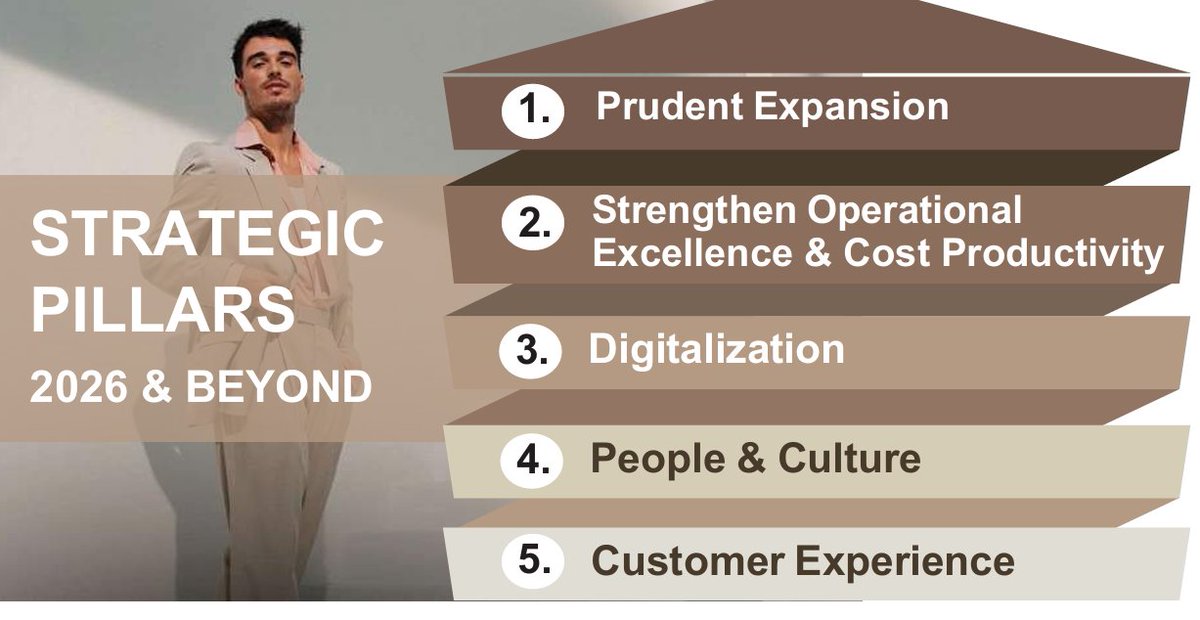
Untuk menopang ekspansi masifnya (termasuk segmen baru), MAPI memegang 5 pilar utama:
Prudent Expansion
Membuka gerai baru secara selektif & terukur.
Operational Excellence
Optimalisasi SG&A dan rasionalisasi gerai.
Digitalization
Penguatan ekosistem e-commerce & omnichannel.
People & Culture
Pengembangan SDM via MAP Retail Academy.
Customer Experience
Fokus pendalaman aplikasi MAPCLUB.

Sony stated they are going to 'cautiously move forward' with their all-digitalization.
'Cautiously'? Killing off physical games within 1.5 years time is 'cautious'? What would it look like if they 'recklessly' moved forward instead?
They further stated that they acknowledged the backlash and that their focus is to 'keep gamers interested' in PlayStation games once it goes all-digital, which is PR-speak for 'Go phoque yourselves'.

Platform Shift & Ecosystem Monetization 💿
Sony CFO Lin Tao addressed physical disc backlash during Q1 earnings, maintaining that PlayStation’s pivot to an all-digital distribution model is proceeding cautiously despite community pushback.
✅ Digitalization progression driving platform strategy
✅ Retail codes in physical packaging planned for 2028
✅ Console affordability cited over disc drive differentiation
I don't like the way PlayStation is treating the ponies. They gave them loyalty and they took their games away.
Will digital-only architecture impact your day-one software purchases?
#PlayStation #PS5 #DigitalMedia #GamingNews


Problem with excessive digitalization

WTF
AI companies are purchasing large quantities of used and rare books. Scanning their contents to train models. Then turning the originals to pulp.
The sum of human thought, digitized and shredded.
Every book that gets scanned disappears from the physical world permanently. The knowledge survives only as training data inside a system no one can hold, browse, or resell.
What used to sit on a shelf for centuries now exists as weights in a model that might get deprecated next quarter.

Digitalization is fast spreading,do you often read and listen to digital book copies?

Demonetization 2016: A Costly Experiment That Failed to Eliminate Black Money
On November 8, 2016, Prime Minister Narendra Modi announced the demonetization of ₹500 and ₹1,000 notes, which accounted for nearly 86% of the currency value in circulation. The government presented the move as a bold step to curb black money, eliminate counterfeit currency, stop terror financing, and encourage digital payments.
The primary objective, however, was widely understood to be the fight against black money. The assumption was that people holding large amounts of unaccounted cash would be unable to deposit it into banks, causing a significant portion of illegal wealth to become worthless.
But the data told a different story.
According to the Reserve Bank of India's (RBI) 2016–17 Annual Report, demonetized currency worth about ₹15.41 lakh crore was in circulation when the policy was announced. Of this, approximately ₹15.31 lakh crore—or 99.3%—was returned to the banking system. Only around ₹10,720 crore, or 0.7%, did not come back.
These figures raised serious questions about whether demonetization actually succeeded in eliminating black money. If nearly all the currency returned to banks, it suggested that most holders of unaccounted cash found ways to deposit or convert their money.
Economists had long argued that black wealth is rarely stored mainly as cash. Much of it exists in the form of real estate, gold, benami properties, shell companies, foreign accounts, and other investments. This meant that even a successful currency recall would affect only a small portion of total black wealth.
While the policy's intended targets adapted, ordinary citizens faced immediate hardship. India's economy in 2016 was heavily dependent on cash, particularly in rural areas and the informal sector. Long queues formed outside banks and ATMs, while small businesses, farmers, street vendors, and daily wage workers struggled with severe cash shortages.
The economic impact was significant. Several studies estimated that GDP growth slowed in the short term, with growth falling to 5.7% in the first quarter of 2017–18, then a three-year low. The informal sector, which relies heavily on cash transactions, was among the worst affected. Estimates also suggested substantial job losses during the months following demonetization.
Supporters often point to the rise of digital payments as a major success. Indeed, mobile wallets, online banking, and later UPI transactions saw rapid growth. However, critics note that digitalization was not the primary justification given when demonetization was announced. Moreover, India's transition toward digital payments had already begun through technological advancements and government initiatives.
Nearly a decade later, demonetization remains one of India's most debated economic policies. While it may have accelerated digital payment adoption and improved financial tracking in some areas, the evidence suggests that it largely failed to achieve its central objective of eliminating black money.
As a result, many economists view demonetization as a costly experiment that imposed significant economic and social costs while delivering limited success against the problem it was primarily designed to solve.
#NoteBandi #Demonetisation #BlackMoney #RBI #DemonetizationFailure #EconomicReality
#CashlessIndia
#IndiaEconomy
#RBI
#Modi
#EconomicFailure #BJP

Demonetization 2016: A Costly Experiment That Failed to Eliminate Black Money
On November 8, 2016, Prime Minister Narendra Modi announced the demonetization of ₹500 and ₹1,000 notes, which accounted for nearly 86% of the currency value in circulation. The government presented the move as a bold step to curb black money, eliminate counterfeit currency, stop terror financing, and encourage digital payments.
The primary objective, however, was widely understood to be the fight against black money. The assumption was that people holding large amounts of unaccounted cash would be unable to deposit it into banks, causing a significant portion of illegal wealth to become worthless.
But the data told a different story.
According to the Reserve Bank of India's (RBI) 2016–17 Annual Report, demonetized currency worth about ₹15.41 lakh crore was in circulation when the policy was announced. Of this, approximately ₹15.31 lakh crore—or 99.3%—was returned to the banking system. Only around ₹10,720 crore, or 0.7%, did not come back.
These figures raised serious questions about whether demonetization actually succeeded in eliminating black money. If nearly all the currency returned to banks, it suggested that most holders of unaccounted cash found ways to deposit or convert their money.
Economists had long argued that black wealth is rarely stored mainly as cash. Much of it exists in the form of real estate, gold, benami properties, shell companies, foreign accounts, and other investments. This meant that even a successful currency recall would affect only a small portion of total black wealth.
While the policy's intended targets adapted, ordinary citizens faced immediate hardship. India's economy in 2016 was heavily dependent on cash, particularly in rural areas and the informal sector. Long queues formed outside banks and ATMs, while small businesses, farmers, street vendors, and daily wage workers struggled with severe cash shortages.
The economic impact was significant. Several studies estimated that GDP growth slowed in the short term, with growth falling to 5.7% in the first quarter of 2017–18, then a three-year low. The informal sector, which relies heavily on cash transactions, was among the worst affected. Estimates also suggested substantial job losses during the months following demonetization.
Supporters often point to the rise of digital payments as a major success. Indeed, mobile wallets, online banking, and later UPI transactions saw rapid growth. However, critics note that digitalization was not the primary justification given when demonetization was announced. Moreover, India's transition toward digital payments had already begun through technological advancements and government initiatives.
Nearly a decade later, demonetization remains one of India's most debated economic policies. While it may have accelerated digital payment adoption and improved financial tracking in some areas, the evidence suggests that it largely failed to achieve its central objective of eliminating black money.
As a result, many economists view demonetization as a costly experiment that imposed significant economic and social costs while delivering limited success against the problem it was primarily designed to solve.
#NoteBandi #Demonetisation #BlackMoney #RBI #DemonetizationFailure #EconomicReality
#CashlessIndia
#IndiaEconomy
#RBI
#Modi
#EconomicFailure #BJP


$DIGITALIFY is a memecoin riding the cultural wave of everything going digital, tapping into the nostalgia and resistance around physical media becoming obsolete—particularly sparked by PlayStation's move away from physical game copies, which resonates with millennials and boomers who grew up collecting cartridges and discs.
• The narrative connects to a massive cultural moment with viral reach, as the PlayStation digital-only announcement generated tens of millions of views and widespread debate about ownership and the death of physical media.
• The token launched on a universally relatable trend that transcends crypto, making it accessible to normies who feel strongly about losing tangible ownership of games, movies, and music.
• With a fresh contract and low market cap, the token is positioned at the ground floor of a narrative that could expand beyond gaming into broader digitalization debates across entertainment and consumer goods.

OG $DIGITALIFY
mc $3.83k
Ee47G2qEubwd8h2n3mYVQHUfpAXQ7X38XzKyPZ23pump
#DIGITALIZATION #DIGITALIFY #Digitalification #digital


Digitalization and asset fragmentation make investing accessible to everyone

I told Grok to read the encyclical on AI, “Magnifica Humanitas” and this is the summary:
Summary of Pope Leo XIV’s Encyclical Magnifica Humanitas (15 May 2026)
This encyclical, titled “Magnificent Humanity,” addresses the challenges of safeguarding the dignity of the human person amid rapid advances in artificial intelligence (AI), digitalization, and technological power. It continues the tradition of Catholic Social Doctrine, invoking the 135th anniversary of Leo XIII’s Rerum Novarum, while applying its principles to contemporary “new things” (res novae).
Core Theme and Biblical Framing
The Pope frames the current technological era as a pivotal choice between two biblical models:
• The Tower of Babel (Genesis 11): A symbol of human pride, uniformity over communion, self-sufficiency without God, and technological power that leads to confusion, dispersion, and dehumanization. It warns against idolatry of profit, homogenization, and reducing persons to data or efficiency.
• The Rebuilding of Jerusalem’s Walls (Nehemiah): A model of shared responsibility, prayerful discernment, inclusive participation (involving all people across roles), listening, and building with God at the center. This fosters true communion amid diversity.
The encyclical urges choosing the latter path: technology as a tool for good, not dominance, oriented toward integral human development and the common good.
Key Foundations (Chapter 2)
It reaffirms core principles of Social Doctrine:
• The human person as image of the Triune God, with inherent equal dignity and rights.
• Common good, universal destination of goods, subsidiarity, solidarity, and social justice.
• Integral human development: Growth encompassing all dimensions (spiritual, cultural, moral, relational, economic) while respecting creation and future generations.
These serve as criteria for evaluating technology. The Church itself must apply these principles internally through synodality, transparency, and accountability.
Technology, AI, and Human Grandeur (Chapter 3)
• Technology is inherently human and ambiguous—not evil in itself, but shaped by its users. AI offers great potential (healing, connecting, educating) but requires vigilance due to its power.
• Concerns: Technocratic paradigm, private/transnational dominance (often exceeding state control), risks of dehumanization, transhumanism/posthumanism (which seek to overcome human limits in ways that may erode the “heart” and grandeur of embodied humanity).
• Christian response: Authentic “more than human” comes through grace and Christian humanism, not technological transcendence. It emphasizes limits, vulnerability, relationship with God, and the Incarnation as the true revelation of human dignity.
Safeguarding Humanity: Truth, Work, Freedom (Chapter 4)
• Truth as common good: Defends democracy, combats misinformation, promotes an “ecology of communication,” digital literacy, and education (especially schools) to shape a healthy collective imagination.
• Dignity of work: Addresses digital transition’s impact on employment, unemployment, and the need for economies that prioritize human dignity, family support, and hope for youth.
• Freedom: Protects against new dependencies, commercialization, and manipulation by algorithms or data.
Culture of Power vs. Civilization of Love (Chapter 5)
• Critiques the “culture of power”: Normalization of war, unlimited force, AI in weapons, cyberattacks, crisis of multilateralism, and false realism.
• Calls for a “civilization of love” in the digital age: Disarming words, justice-based peace, perspective of victims, dialogue, diplomacy, and multilateral reform. All individuals have a role; prayer sustains hope.
Conclusion

▫️With Asseto, we’re going beyond infrastructure because RWA is so much more. It’s about the ecosystem from origination, digitalization and distribution. At Asseto, we are building the next-generation RWA platform that not only bridges but also integrates a TradFi layer with the decentralized economy. The Asseto yield market is not only a marketplace in the form of a one-stop shop portal, but also a distribution and composable network that is integrated into various venues with liquidity.
▫️The era of institutional adoption has come and Asseto is speeding things up. The Asseto solution covers origination, digitalization and commercialization – at Asseto, we offer RWA as a service. Asseto tokens will be generated for each unique financial strategy or product powered by reputable asset managers or issuers and deeply embedded into the decentralized world towards a path of product-market fit

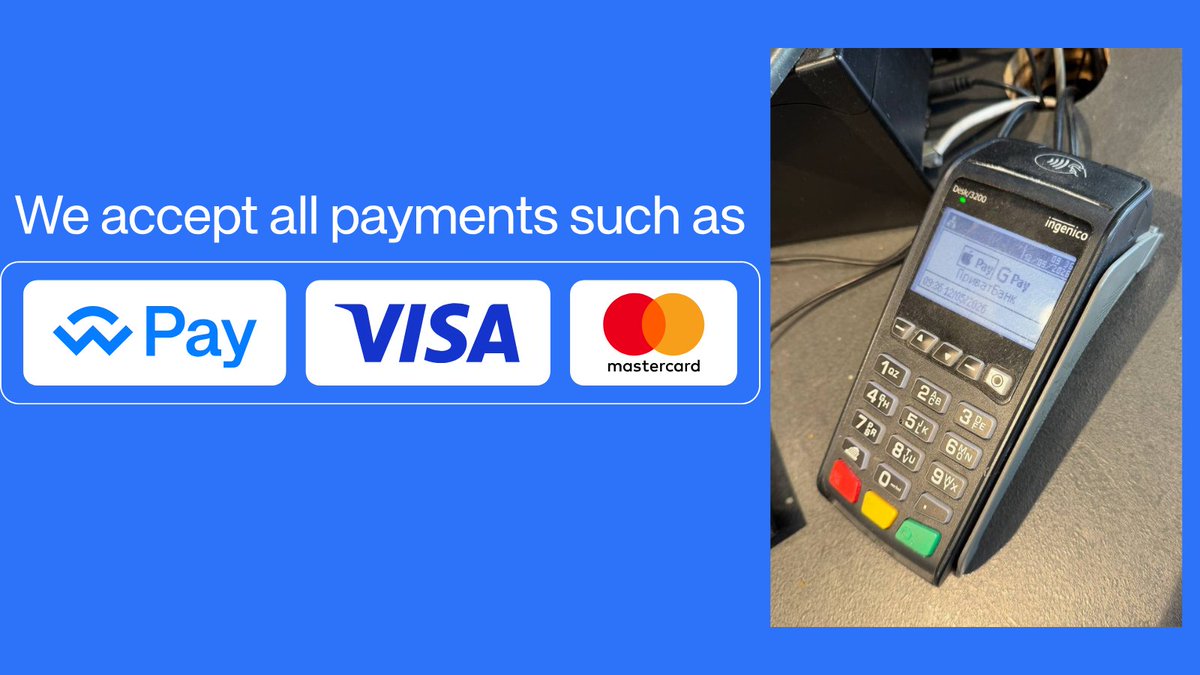
.@WalletConnect Pay is wanted in Ukraine 🇺🇦
I popped into the cafe around the corner to grab a
coffee and recharge a bit before work. Ukraine has
long been at the top in terms of digitalization, so even
in a small local spot I'm used to paying only with my
smartphone.
I asked the barista which payment terminal they use.
As you can see in the photo, they have an Ingenico
installed. Right now it accepts:
- bank cards
- Apple Pay / Google Pay
Then I wondered aloud: ''What if I could pay for my
latte directly with crypto through this same terminal?''
The barista said it sounded really interesting and
they'd gladly try such an option if it were legally
available.
In Ukraine, there's real demand for crypto payments
even in everyday scenarios like buying coffee. It would
be a fantastic step forward for technology!
I'm completing a quest from @wctclub and believe that
WalletConnect Pay will soon connect our digital
wallets with millions of such terminals worldwide.

5/7 🇮🇳 India may have the biggest long-term upside.
Strengths:
👨💻 tech workforce
📱 digitalization
👶 young population
🏗️ infrastructure growth
🌏 geopolitical flexibility
Challenges:
🚧 inequality
🏙️ urban pressure
💧 water/environment stress
📚 uneven education quality.

2. Solana (SOL): Focus on Speed and Efficiency
Solana is a performance beast capable of performing thousands of operations per second in milliseconds. It aims to make the user experience "instant". • Connection with Qorechain: Qorechain embraces Solana's vision of low cost and high speed in the digitalization of real-world assets (real estate, stocks, etc.). However, Qorechain combines this speed with corporate compliance and regulations, taking Solana's pure performance to a more specific area.

GM Everyone,
As I delved deeper into the topic of Real World Assets (RWA) on Rialo, I realized it's not just about "putting assets on the blockchain," but about how blockchain can truly connect with and reflect real-world value more flexibly.
First, in essence, RWA is the process of digitizing real-world assets such as real estate, loans, commodities, or financial instruments. In many current projects, this tokenization is often representative, meaning the asset is "packaged" into a token, but the actual data and status remain external, dependent on an intermediary for updates. This sometimes causes RWA to remain merely "digitalization," not truly reflecting the full nature of the asset.
Rialo, as I understand it, approaches RWA by closely linking assets with real-world data over time. Thanks to its API integration, native webcalls, and off-chain data processing capabilities, assets on Rialo are not just static tokens, but can continuously update their status, such as value, conditions, cash flow, or related events. This makes assets "dynamic," rather than just a fixed record on the blockchain.
One point I find quite important is automation. When real-world data can go directly into smart contracts, many processes related to RWAs can be automatically executed: payments, profit distribution, contract condition checks, etc., without much manual intervention. This not only reduces operating costs but also increases transparency and reliability.
From my perspective, the difference of Rialo RWAs also lies in their direct connection to the Web2 system and real-world data, instead of relying entirely on intermediary layers. This helps reduce latency, minimize the risk of data inaccuracies, and makes blockchain a true part of the digital infrastructure, not just an add-on layer.
However, I also believe that for this model to work effectively, Rialo needs to address issues such as the reliability of input data, security, and privacy, because when it comes to real assets, the requirements for safety and legal compliance are much higher.
In short, for me, RWA in Rialo is not just about "tokenizing assets," but a step towards bringing the entire lifecycle and value of real assets onto the blockchain environment in a dynamic and automated way. If done well, this could be one of the key factors helping Web3 create sustainable value and connect it to the real economy.
@RialoHQ

Hello Everyone,
Today I want to discuss a topic with everyone: "2FA Authentication in the Web3 Environment & Its Benefits." I find Rialo's integration of 2FA authentication in the Web3 environment quite practical and necessary.
In traditional Web3, security often relies almost entirely on the private key. This means that if a user leaks or loses their key, there is almost no way to recover it. This is a very "strong" security mechanism, but it lacks flexibility and is quite risky for the average user.
Rialo, as I understand it, introduces 2FA (two-factor authentication) as an additional layer of protection, similar to how Web2 services are currently implementing it. This could include email verification, OTP codes, or other authentication methods before performing important actions.
From my perspective, the benefit of 2FA lies in adding an extra layer of security while maintaining a familiar user experience. Users don't need to rely entirely on a single factor like a private key, but instead have additional control over logins and transactions.
More importantly, 2FA creates a sense of security and makes it more accessible for new users. When security is designed to closely resemble how Web2 operates, users will be more trusting and willing to use it.
In short, integrating 2FA into Rialo shows the project is trying to balance security and user experience. In my opinion, this is a logical step if Web3 wants to become more user-friendly and suitable for the general public.
@RialoHQ

Greetings everyone from the @SeismicSys family!
Today I will be talking about Neobank systems that collaborate with Seismic. What is Neobank?
The question “What is a neobank?” has been on the minds of many people interested in the world of finance in recent years. Neobanks are next-generation financial institutions that operate entirely digitally, without physical branches, and offer all banking services through mobile apps or the internet. Users can open accounts, transfer money, make payments, and track their spending within minutes. This structure provides a much faster and more practical experience compared to traditional banking.
One of the biggest advantages of neobanks is their low cost. Since they have minimal branch and operational expenses, the fees passed on to users are generally lower. In addition, 24/7 access allows users to perform financial transactions whenever they want. Fast account setup and user-friendly interfaces are also major benefits. Features such as spending analytics, instant notifications, and budget management make it easier for users to stay in control of their finances.
However, neobanks also come with certain disadvantages. The lack of physical branches can be a drawback for users who prefer face-to-face service. Cash deposit or withdrawal options may be limited in some cases. Additionally, because they operate entirely digitally, some users may have concerns about security. Technical issues or internet access problems can also impact the overall experience.
So why do users choose Seismic? Because it brings together speed, transparency, and a user-centric experience. It offers solutions tailored to modern financial needs while providing a simple and intuitive interface that anyone can easily use. With real-time transaction tracking, low costs, and a strong digital infrastructure, users can manage their finances more efficiently. This makes it not just a neobank, but a next-generation financial solution.
As digitalization accelerates, interest in neobanks continues to grow. Younger users, in particular, prefer these platforms because they offer fast and practical solutions. Instead of the long processing times and complex procedures often encountered in traditional banking, neobanks provide a simpler and more streamlined experience. This plays a significant role in increasing user satisfaction.
At the same time, neobanks also contribute to financial literacy. Users can analyze their spending and manage their budgets more consciously. This helps prevent unnecessary expenses and encourages better saving habits. When all these features come together, neobanks become an essential part of the modern financial ecosystem. Seismic positions itself at the center of this transformation, aiming to deliver a reliable, fast, and innovative experience. As a result, financial transactions evolve from being a necessity into an easy and even enjoyable part of daily life. This approach makes a meaningful difference for users and offers them the opportunity to experience the future of banking today.
So, in financial transactions, do you prioritize speed or security? Which one? 🥳
@xealistt @NoxxW3 @heathcliff_eth


Make needy people currently base digitalization and we'll education system in the @WorldAndScience

Hi everyone, I'm Timileyin Akinyele. Timmy works just fine.
I'm currently pursuing my MSc at Åbo Akademi, studying the Governance of Digitalization. Which is a fancy way of saying I spend a lot of time thinking about one of the most important questions of our time: who gets to decide how AI is built, who it serves, and what happens when it goes wrong? How do organizations adapt to the differences that come with digitalization?
As a creator, I write about AI and its responsible usage. I test AI products obsessively and write about them. I work with AI startups, helping them think through not just the tech but the responsibility side of what they're building. And I keep writing, keep building, keep exploring, testing, keep showing up online.
So that's what I do as a creator, briefly. And I'm excited to be in this community.


If you’re new here, introduce yourself and tell us what you do!

While most blockchains still operate in isolation from the physical world @RialoHQ is emerging as a revolutionary infrastructure specifically designed to bridge technology with tangible reality
Its greatest advantage lies in the total elimination of oracles or complex middleware the system provides native web access coupled with event driven execution and absolute on chain privacy
♦️ Beyond TPS Upgrading Entire Industries
While others compete for the highest Transactions Per Second TPS Rialo focuses on upgrading entire economic sectors through
→ Real world Credit Markets Powered by immutable high fidelity data
→ Tokenized Loans & RWAs Enabling the digitalization of tangible assets and private credit
→ Automated Financial Workflows Removing human bottlenecks in financial management
→ Action Oriented AI Agents Agents that don't just compute they execute real world tasks
♦️ A Giant Backed Infrastructure
Behind this technology is an elite team of former engineers from Meta Google and Netflix explaining the project superior technical caliber
With $20M already secured and strong backing Rialo proves it is not just DeFi 2.0 but a total reinvention of global financial infrastructure
The digital evolution is clear if Bitcoin is money and Ethereum is contracts then Rialo is Programmable Reality
We are entering a new era where blockchain becomes a practical tool for major enterprises a shift most will only realize when it already mainstream.

Last Seen Hashtags on Sotwe
Most Popular Users

Elon Musk 
@elonmusk
240.2M followers

Barack Obama
@barackobama
118.6M followers

Cristiano Ronaldo
@cristiano
114.4M followers

Donald J. Trump
@realdonaldtrump
111.8M followers

Narendra Modi
@narendramodi
106.9M followers

Rihanna
@rihanna
98.6M followers

NASA
@nasa
92.2M followers

Justin Bieber
@justinbieber
91.7M followers

KATY PERRY
@katyperry
89.9M followers

Taylor Swift
@taylorswift13
83.9M followers

Lady Gaga
@ladygaga
75.4M followers

Virat Kohli
@imvkohli
73.3M followers

Kim Kardashian
@kimkardashian
70.8M followers

YouTube
@youtube
68.6M followers

Neymar Jr
@neymarjr
66.3M followers

Bill Gates
@billgates
65.2M followers

Selena Gomez
@selenagomez
63M followers

The Ellen Show
@theellenshow
62.1M followers

CNN
@cnn
61.7M followers

X
@x
60.6M followers