

Top Tweets for #EYAScience

To get our most up to date content about the history of information technology, follow us on our Linked In page 👇
https://t.co/N8kVAazdcX
Photo of the Ferranti Pegasus computer 1956 @sciencemuseum 👩💻
#IAW2024 #CyberArchives #EYAScience
@ICArchiv @explorearchives


Scientific developments led to early 20th-century treatments for certain medical conditions using ultra violet rays - shown here in this historic image of the treatment room at the Royal Baths, #Harrogate #EYAScience


Evening science classes at the Staveley Works Boys’ School Room in 1880 included Applied Mechanics and Machine Construction and Drawing.
#EYAScience

Join renowned botanist Sir Joseph Banks as he is about to set off with Captain Cook on HMS Endeavour in 1768! See the transcript of his letter in our latest blog post: https://t.co/VUU9bQetXJ
#EYAScience #HBAHFame

A botany certificate awarded to Owen D Jones on 30th May 1895.
🍀
Tystysgrif botaneg a roddwyd i Owen D Jones ar 30 Mai 1895.
📄HDX/1201/1
#EYAScience #OTD #onthisday #Pembrokeshire @explorearchives


Explore the newly released Mary Mulvihill Collection at DCU Library. Mulvihill was an Irish scientist, author, educator, and founder of WITS (Women in Technology and Science) 👩🔬https://t.co/4Zw7ite28Q #EYAScience #CuardaighDoChartlann #ExploreYourArchive


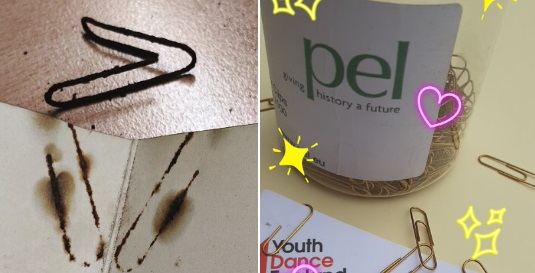
😱Just look at the damage your average #paperclip can do! Using an #EYAScience approach, archives choose brass: a zinc and copper alloy + strong & corrosion-resistant = it cannot rust! 🤓#PaperclipDay
@librarydmu @explorearchives @ArchiveHashtag #archives


In 1897 inventor of the incandescent lightbulb, Joseph Swan, wrote this letter to John Worsnop about the introduction to Cragside (@NTCragside) of his invention, the first house to use the lamps, saying 'the effect was spendid and never to be forgotten'.
[MSA/2/54] #EYAscience
![ncllibspeccoll's tweet photo. In 1897 inventor of the incandescent lightbulb, Joseph Swan, wrote this letter to John Worsnop about the introduction to Cragside (@NTCragside) of his invention, the first house to use the lamps, saying 'the effect was spendid and never to be forgotten'.
[MSA/2/54] #EYAscience https://t.co/B9tBOAOXik](https://pbs.twimg.com/media/GOqgJJSWsAA67MB.jpg)
![ncllibspeccoll's tweet photo. In 1897 inventor of the incandescent lightbulb, Joseph Swan, wrote this letter to John Worsnop about the introduction to Cragside (@NTCragside) of his invention, the first house to use the lamps, saying 'the effect was spendid and never to be forgotten'.
[MSA/2/54] #EYAscience https://t.co/B9tBOAOXik](https://pbs.twimg.com/media/GOqeGurXYAAoAU0.jpg)
![ncllibspeccoll's tweet photo. In 1897 inventor of the incandescent lightbulb, Joseph Swan, wrote this letter to John Worsnop about the introduction to Cragside (@NTCragside) of his invention, the first house to use the lamps, saying 'the effect was spendid and never to be forgotten'.
[MSA/2/54] #EYAscience https://t.co/B9tBOAOXik](https://pbs.twimg.com/media/GOqeGupWcAA7h4S.jpg)
![ncllibspeccoll's tweet photo. In 1897 inventor of the incandescent lightbulb, Joseph Swan, wrote this letter to John Worsnop about the introduction to Cragside (@NTCragside) of his invention, the first house to use the lamps, saying 'the effect was spendid and never to be forgotten'.
[MSA/2/54] #EYAscience https://t.co/B9tBOAOXik](https://pbs.twimg.com/media/GOqeGuhXkAEHmGa.jpg)
In August 1889, William Richard Thomas visited Dowlais Iron & Steel Works.
He produced a journal which explained the science behind it all and included sketches of the layout and of the apparatus.
🧪D/WW/3a/135
#EYAScience

Ym mis Awst 1889, ymwelodd William Richard Thomas â Gwaith Haearn a Dur Dowlais.
Cynhyrchodd ddyddlyfr a oedd yn esbonio'r wyddoniaeth y tu ôl i'r cyfan ac yn cynnwys brasluniau o'r cynllun a'r cyfarpar.
🧪D/WW/3a/135
#EYAScience


The Hudson Transparencies (by Charles Thomas Hudson, 1828-1903), are large paintings on paper screens, used as visual aids to teach about microscopic organisms.
Find out more in our online exhibit ➡️https://t.co/4t23VltsO0
📷 EUL MS 442
#TinyTuesday #MicroOrganisms #EYAScience


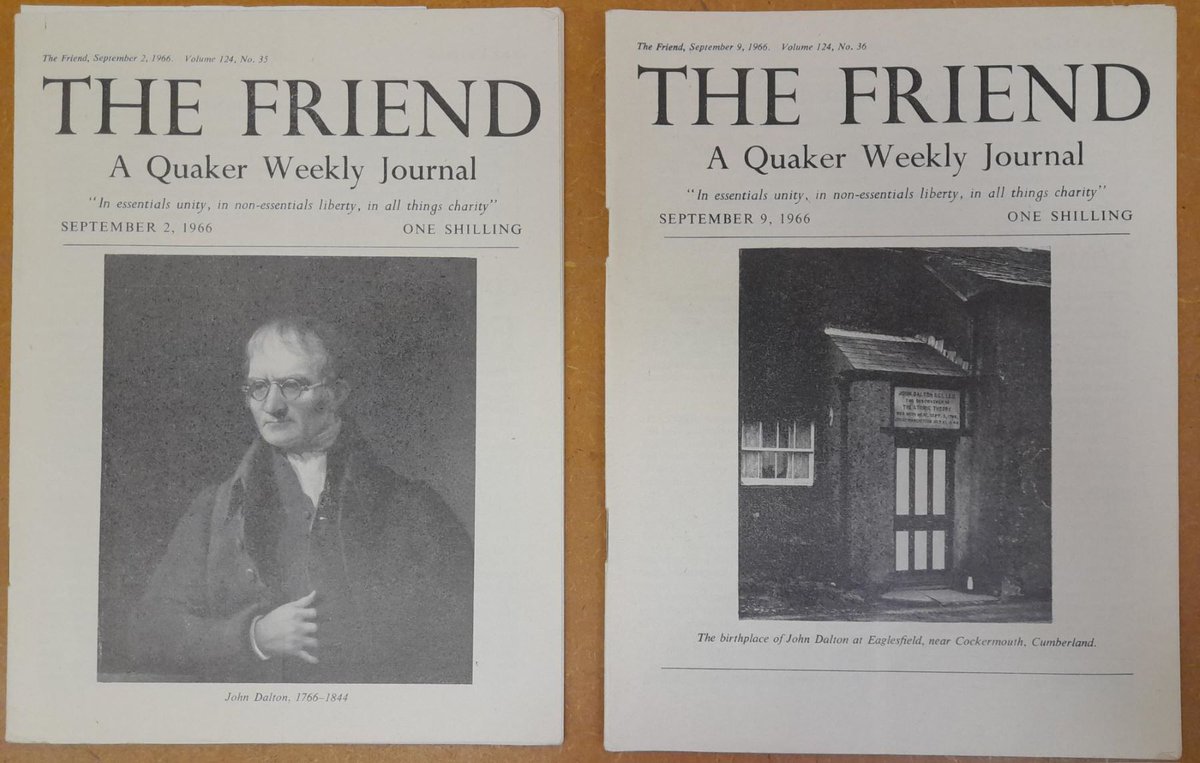
The father of atomic theory, John Dalton, hailed from Eaglesfield in Cumbria. #WhitehavenArchives hold the records of the Dalton family including the funeral papers for John who was buried in Ardwick, Manchester in 1844 #EYAScience @explorearchives



Sir Goldsworthy Gurney was a surgeon, chemist, architect, builder, lecturer and consultant and was born in St Merryn in 1793. One of his most innovative ideas was the Bude Light. It used an injection of a stream of oxygen into an oil flame to create an intense light.
#EYAscience


This tract on medicine and magic is written in Bugis or Buginese, a Malayo-Polynesian language spoken mainly in Sulawesi, Indonesia. This is one of the 140 languages in our collections! #EYAScience


Biochemist Sir Hans Adolf Krebs arrived to work at the Uni of Sheffield as a lecturer in 1935, after fleeing Nazi Germany. In 1953 he was jointly awarded the Nobel Prize, with Franz Lipmann, for Physiology and Medicine for scientific discoveries he made in Sheffield🧪
#EYAScience


#EYAScience @explorearchives Children’s health was a key concern when the Foundling Hospital was first opened. It was one of the first institutions in the UK to offer protection against smallpox, one of the leading causes of death in the 18th century, for young children.
(1/4)


From the Archives...
Ever wondered what a 1950s chemistry lecture looked like? Check out this image of one of Keele’s founding academics, Harold Springall, in his element!
A Chemistry prize was established in his name following his retirement in 1975. #EYAScience #Keele75

With exam season underway, how about trying some of the questions for the science exams in May 1874? Subjects include Building Construction, Mathematics, Acoustics, Magnetism and Electricity, Geology, Animal Physiology, Vegetable Morphology, Navigation and more.
#EYAScience


Trends for you
Most Popular Users

Elon Musk 
@elonmusk
240.1M followers

Barack Obama
@barackobama
119.3M followers

Donald J. Trump
@realdonaldtrump
111.6M followers

Cristiano Ronaldo
@cristiano
108.9M followers

Narendra Modi
@narendramodi
107M followers

Rihanna
@rihanna
97.3M followers

NASA
@nasa
92.1M followers

Justin Bieber
@justinbieber
90.6M followers

KATY PERRY
@katyperry
86.8M followers

Taylor Swift
@taylorswift13
80.6M followers

Lady Gaga
@ladygaga
72.1M followers

Kim Kardashian
@kimkardashian
69.4M followers

YouTube
@youtube
68.6M followers

Virat Kohli
@imvkohli
68.5M followers

Bill Gates
@billgates
63.4M followers

The Ellen Show
@theellenshow
62.5M followers

CNN
@cnn
61.9M followers

Neymar Jr
@neymarjr
61M followers

X
@x
60.9M followers

CNN Breaking News
@cnnbrk
59.9M followers