

Top Tweets for #Elefact

Surprise! Aardvarks are distant relatives of elephants 🐘 Both are part of Afrotheria, a group of African-origin species that also includes manatees & hyraxes. Their shared traits remind us how unexpectedly connected animals can be. #EleFact 🌍🔗 https://t.co/7cSsiS8QiB

Today's #Elefact is about a special pouch located in elephant mouths that allow them to store water for later use.
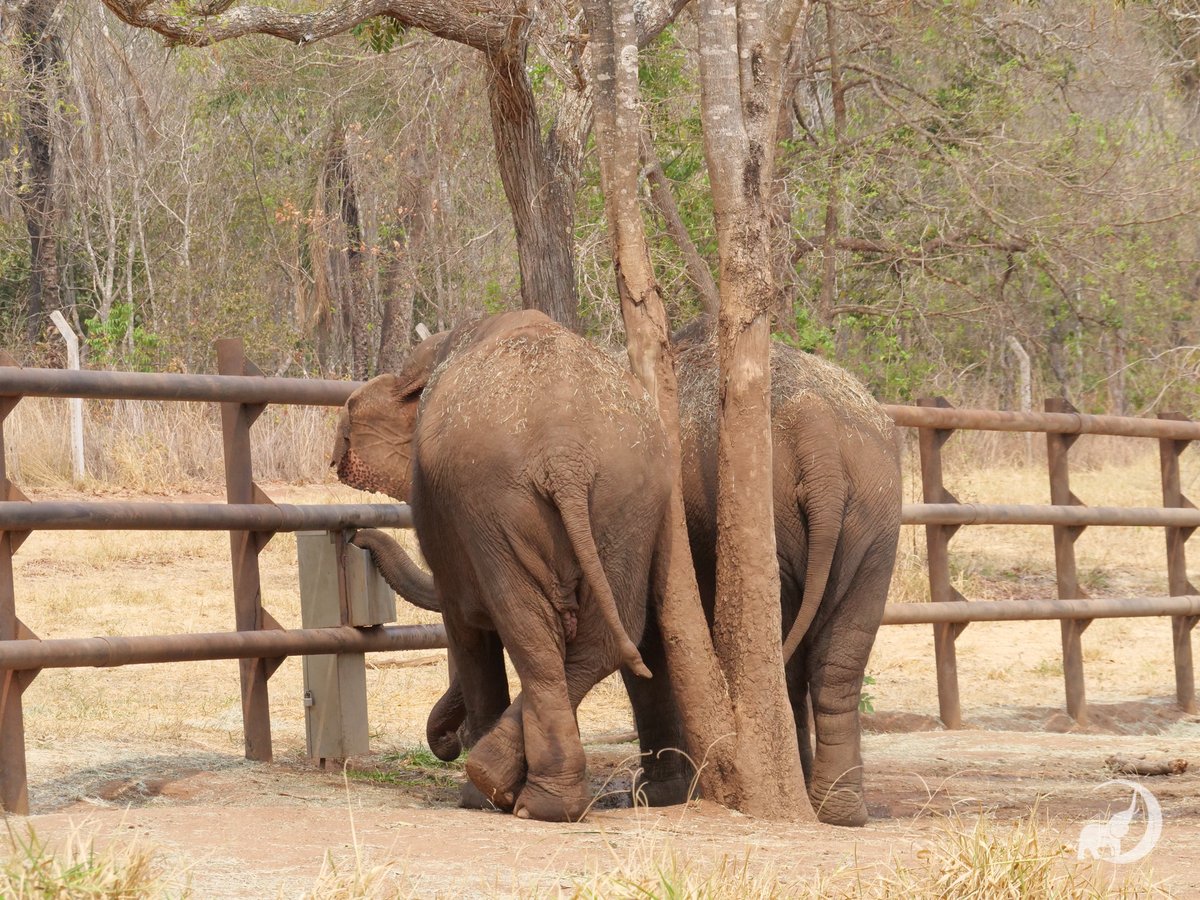
In this photo, Guille is standing next to Bambi who is standing with her legs crossed while she drinks from a water trough.
Read more: https://t.co/R8Vg9wOWin
Today's #Elefact Friday is all about brains. Elephants have the largest brains of any land mammal living or extinct. Learn more about their impressive cognitive abilities and emotional depth here: https://t.co/1PyNH49voO
Photo of Maia with expressive eyes, which tell us so much

This #EleFact Friday is all about elephant teeth, which are remarkably different from those of many other animals. In fact, elephants don’t have tooth sockets. As molars are formed and worn down over time, the tooth will pass through the jaw from back to front, sort of like a conveyor belt. As their teeth continue to wear down, sections fall off in wafer-like sheets, piece by piece. There are four molars in an elephant’s mouth at one time, but they may go through six sets of molars in their lifetime. The final set usually emerges in the animal’s early 40s and should last for the rest of the elephant’s life.
In our history with elephants, we have worked with more than one who had entire teeth fall out almost immediately after arriving at sanctuary. It’s a sign of improper diet in captivity and irregular tooth wear over the years from the smaller, concentrated meals they are offered versus being able to graze 15-20 hours a day, as they are meant to. Should a sanctuary elephant ever lose all of her teeth, they would need to be fed cooked, chopped, or soft food. It’s less likely for elephants in the wild to have irregular tooth wear like what we see in captive individuals, but they would be unlikely to survive if they lost all of their teeth. We’ve never worked directly with an elephant without teeth in our combined 50 years of experience, but should that ever happen, there’s a plan in place for care.
Photo of Maia's mouth during a dental exam and one of Bambi's teeth that had fallen out after she got to sanctuary


It’s once again #EleFact Friday and this week we’re revisiting gorgeous elephant eyelashes. #Elephant lashes serve many of the same purposes as human eyelashes, but they are longer and therefore more protective of the eye.
Not only do elephants hold the record for largest land mammal, but they also have the title of animal with the longest lashes, which can grow up to 5 inches. Eyelashes that grow that length help protect the animals from dust and debris, or from sand getting in the eyes.
In addition to the upper and lower eyelids, elephants have a third eyelid (like those of cats and dogs) which moves vertically across the eye; it acts as protection when feeding and foraging, dusting, and bathing. Elephants in the wild or in natural habitats need this additional protection, since they are constantly wandering in search of food and covering themselves with dust and dirt – one thing we humans rarely need to do (but perhaps we should, just for fun).
Photo of Guille's lovely lashes

This week's #Elefact is all about how elephants detect smells. An elephant's sense of smell is incredibly sensitive -- detecting water sources up to 12 miles away!
Photo of Bambi who will be relying on this sense more with her poor vision
Read more here: https://t.co/p1mfFb6isC

We’ve spoken in the past about elephant mothers and babies, but what about grandmothers and elephant calves? This week’s #EleFact will focus on the role that grandmothers play in the survival of calves and the breeding success of their daughters.
Researchers have found that wild Asian #elephant mothers under the age of 20 have a maternal mortality rate eight times lower if the grandmother lives in the same place as the mother and calf than if she does not. Having grandmothers nearby also decreases the intervals between births by a year, so the mothers are having calves more frequently when grandmothers are around. It’s theorized that elephant mothers who are older than 20 don’t benefit from the grandmother’s presence as much, possibly because they have enough calf rearing experience to succeed without the help of their mother. Additionally, the more calves the grandmother reared herself before her “grandcalf” was born, the better the chances of survival the new elephant has. In other words, experienced grandmothers can potentially be life changing for newborn elephants with young mothers.
In the wild, elephants can live up to approximately 80 years and experience multiple generations of females and their babies. In zoos, it is rare to see multi-generational families, and calf mortality can be as high as 50% in their first year of life. This again suggests that having an experienced grandmother around could possibly have an impact on the survival of newborn elephants.
The study also highlights the importance of preventing poaching, especially when the target is an older, larger female. Their presence could be critical for the survival of a younger generation of elephants and their removal could pose critical threats to an already deeply endangered species.
If you’d like to read more about the study, you can do so here:
https://t.co/yMFP9nbjcc
Photo of sweet Rana

We know that elephants have multiple ways of communicating, from loud trumpets to vibrations in their feet. But, as part of this way of “talking”, have elephants given each other names? On this #EleFact Friday we will look at a study that asks if elephants address each other using distinctive rumbles that could be some form of name, title, or nickname.
Based on personal experience, we know that trumpets can mean many things, depending on the situation. So, researchers decided to look for details about what’s going on with their low-frequency rumbles.
Rumbles have lots of variations in their acoustic structure and elephants rumble in many contexts – many of which we’ve seen: greetings, comforting one another, or communicating over long distances. Researchers recorded over 400 rumbling calls and for every call they were able to determine which elephant was vocalizing and which elephant was being addressed, based on context. The research team used machine learning to see if some sort of identifying information might be embedded into the rumbles they’d recorded.
It was important to find a situation where an elephant was alone, or at least not with the elephant whose recording was being played. The elephant would be played a recorded rumble that was believed to be addressed to her, or a rumble intended for someone else. The elephants generally seemed to know when a message was for them, which suggests that there might be some sort of name included.
Researcher Karl Berg said, “I have no doubt that they’re addressing them with these, you know, unique labels. Now, are they nicknames? Are they names? Where do they come from?”
But, so far, the researchers aren’t able to determine exactly what acoustic features in those low-frequency rumbles might equate to a name. That answer might also give us an idea as to whether elephants talk about each other in the third person.
Do they talk about others when they’re not around?
And do they use “names” for the same reasons that humans, dolphins, and parrots (all of whom also use name-like sounds) do?
We look forward to reading more information as researchers delve deeper into this line of study.
Photo of Maia

In today's #Elefact Friday, we talk about studies on elephant longevity and age-related illnesses, and how learning from elephant physiology has the potential to help us understand more about our own aging.
Learn more: https://t.co/vgemfcOgpS
Maia with Bambi following👇️
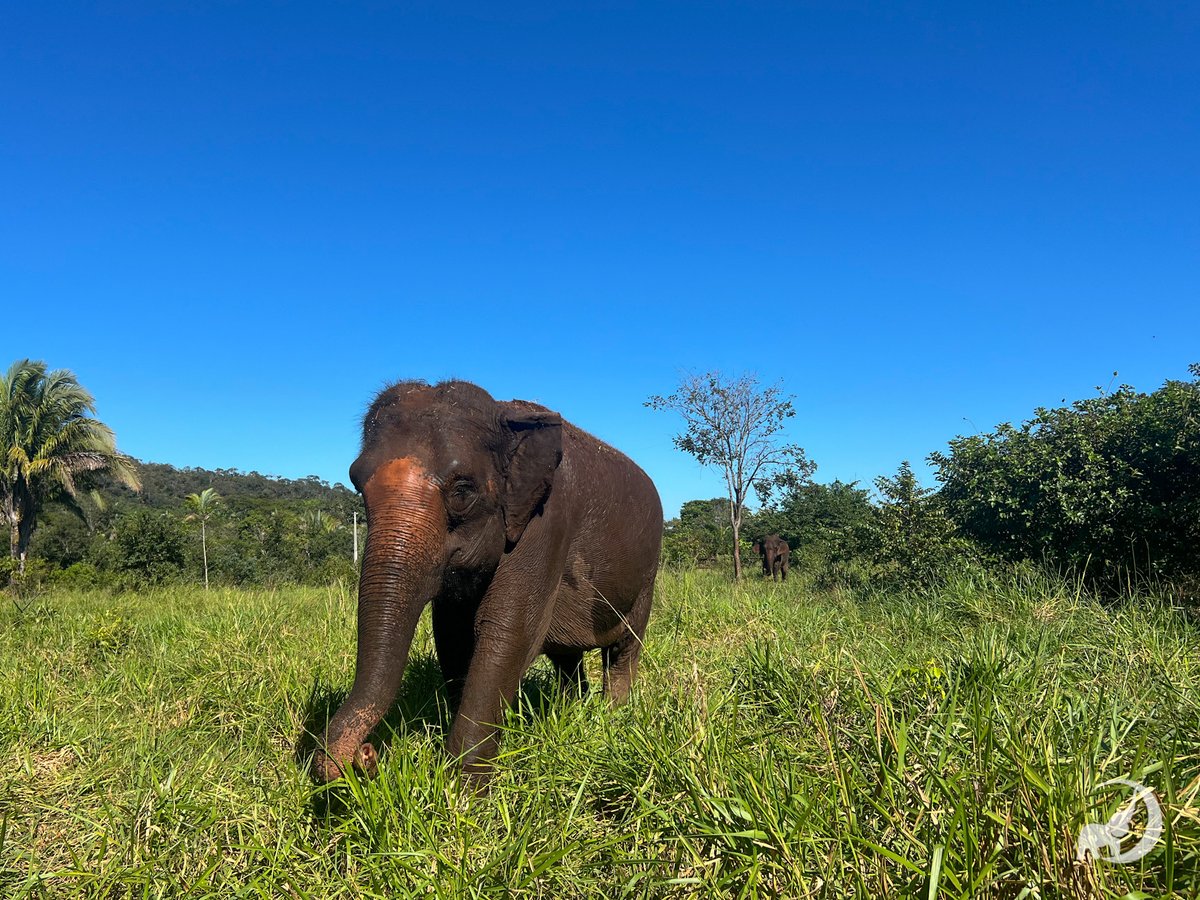
In today's #Elefact, we talk about old wounds on elephants and why they are so persistent.
Photo of Rana with the spot on her elbow that we talked about two days ago, and the "blowout" above her nail.
Read the full Elefact here: https://t.co/dSMOC6MQUl

We've talked before about how elephants can communicate through vibrations in the earth. In today's #EleFact Friday, we breakdown how these seismic waves can be used to track elephants.
Read: https://t.co/tlFAt9Q0J9
Photo of Rana enjoying some hay with Mara in the background

In today's #Elefact Friday, we examine the way trunks can extend to reach far-away objects -- becoming up to 20% longer!
Read the full post: https://t.co/taaKwJxKfB
Action photo of Lady as she walks toward a watermelon

Today's #Elefact Friday post is a collection of questions that we've received lately, like this one: How much does an elephant's trunk weigh?
Turns out, it's heavier than you might think -- around 300 pounds!
Read the rest of the Q&A: https://t.co/Ms9JtdtyQk
Mara and Rana 👇️

Today's #Elefact Friday is all about an elephant's sense of smell! 👃
It's one of their most important tools -- they can use it to avoid predators, find herdmates, locate food and water, and more!
Read it here: https://t.co/Jkg08m8ECy
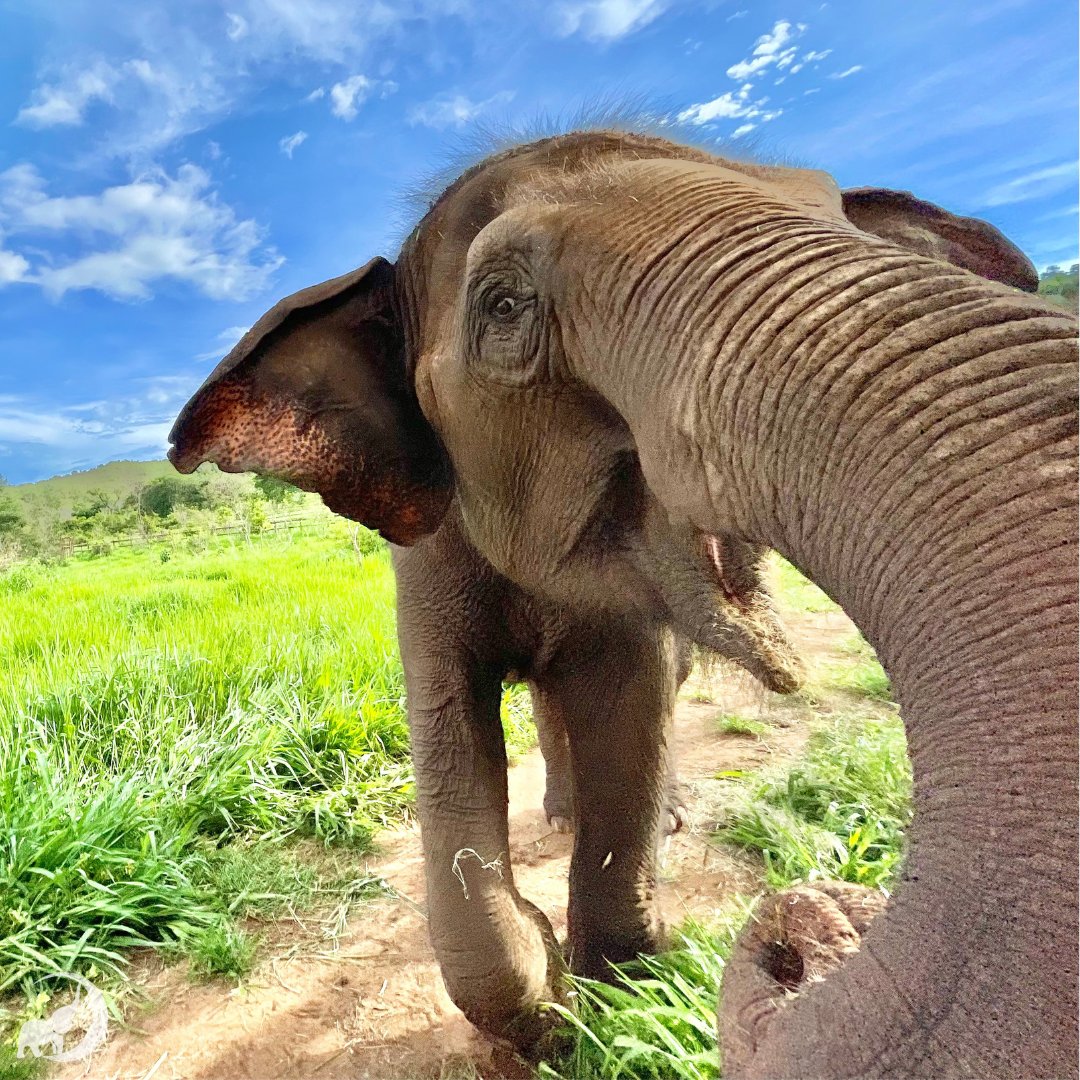
Photo of Guille looking a little cheeky

We get a lot of questions about Lady's condition, so for #Elefact Friday we decided to talk about osteomyelitis. It's a condition caused by her poor care before she was rescued. It will likely continue to get worse, and it is not curable. 💜
Read More: https://t.co/1HIcLjYhoT

In this week's #elefact, we dive deeper into captive breeding and it's long-term negative effects that impact everything from fetal development to mortality rates.
Read the blog here: https://t.co/KTClxXVjnY
To see our stance on captive breeding, see the link in the comments.
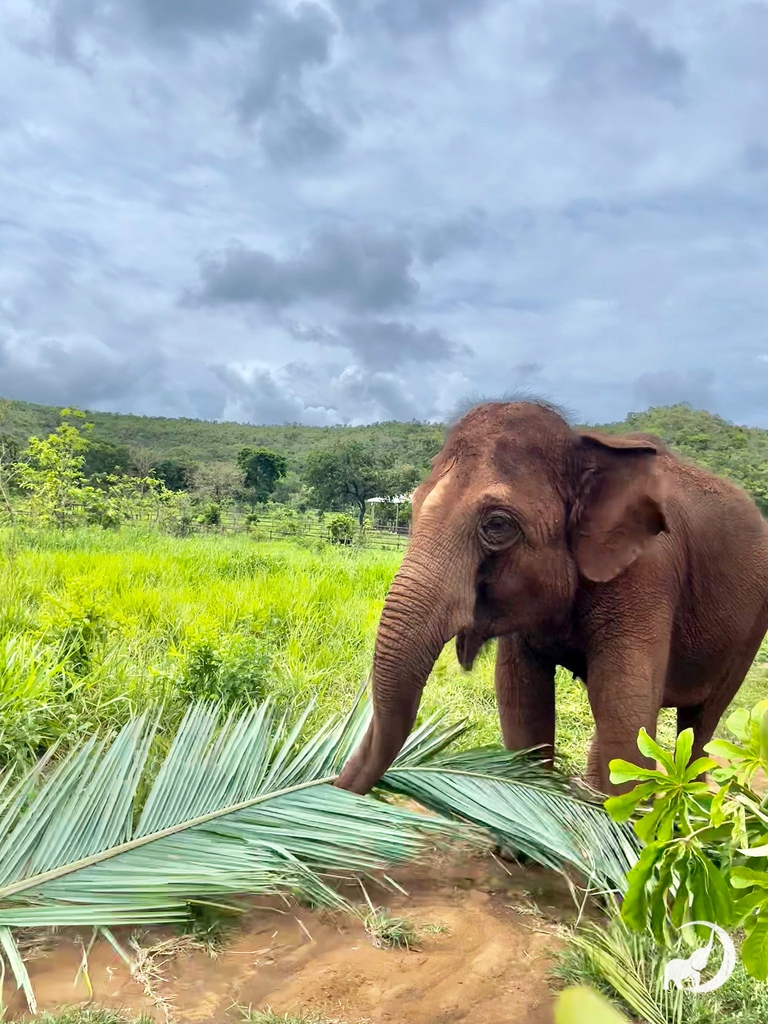
In a recent #EleFACT, we shared that particular plants have adapted to keep elephants away, preserving the plant species. This article is about a similar subject, as researchers are using "smell information" to protect native plant species in the wild. https://t.co/QH3zwnKhsW
Recently, we’ve received some questions about enrichment. For instance, why do other sanctuaries provide their elephants (or other animals) with ‘toys’ or other activities and we don’t? Let's take a look for today's #EleFACT - https://t.co/4g5MHicumk
Last Seen Hashtags on Sotwe
darkzadie(******)
Seen from United States
yengeens
اكتشاف_المواهب
Seen from Colombia
colmek
Seen from Indonesia
MakiZenin
Seen from Venezuela
cosplay
omegle videos
xlii() or exny() or momson() or nolimit() +filter:native_video
Seen from Malaysia
青空ひかり
Seen from Thailand
न्यूब्रेकिंग
Seen from Colombia
Trends for you
Most Popular Users

Elon Musk 
@elonmusk
241.3M followers

Barack Obama
@barackobama
119.1M followers

Cristiano Ronaldo
@cristiano
113.1M followers

Donald J. Trump
@realdonaldtrump
111.8M followers

Narendra Modi
@narendramodi
107.1M followers

Rihanna
@rihanna
98.3M followers

NASA
@nasa
92.3M followers

Justin Bieber
@justinbieber
91.5M followers

KATY PERRY
@katyperry
89.2M followers

Taylor Swift
@taylorswift13
83.1M followers

Lady Gaga
@ladygaga
74.6M followers

Virat Kohli
@imvkohli
72.1M followers

Kim Kardashian
@kimkardashian
70.5M followers

YouTube
@youtube
68.8M followers

Neymar Jr
@neymarjr
65.1M followers

Bill Gates
@billgates
64.7M followers

The Ellen Show
@theellenshow
62.4M followers

Selena Gomez
@selenagomez
62.2M followers

CNN
@cnn
61.8M followers

X
@x
60.8M followers