

Top Tweets for #FBMe

#wirecard #theweb #fbme
@ianbeckett @SafkhetCapital @danmccrum @mopeng @t_stoneman @hmtillack
✅ Analytical description of the roles of Tunde Benak and Medhat Mourid
Tunde Benak appeared in the earlier FBME-related environment as an operationally involved actor. He handled or coordinated payment flows, interacted with people overseeing financial processes, and played a functional part in moving funds across different corporate and geographic channels. His position was embedded inside the operational machinery of the network.
Medhat Mourid, in contrast, appeared only as a peripheral contact in that earlier setting. He was present within communication circles but did not hold a clearly defined operational role. However, years later — within the period relevant to Operation Chargeback — Mourid reappears in the U.S. Eaze case in a much more concrete capacity, described there as a technician involved in aspects of the payment or system infrastructure. That marks a significant difference: he shifted from peripheral contact in the older environment to a functional participant in a later, unrelated U.S. case.
✅ The emerging structural puzzle
What makes this situation striking is the temporal and contextual mismatch:
Their names appeared in connection with FBME many years ago — far outside the timeframe of what later became known as Operation Chargeback.
Yet today, U.S. authorities refer to them exclusively in a German context (the large German fraud case), not in the U.S.-internal FBME context in which they had been visible long before.
Mourid, in particular, spans both eras (FBME-era periphery → later Eaze-era technician), while Benak’s earlier operational role does not reappear in any U.S. charges — only in the German extradition request.
This creates an obvious and unresolved inconsistency.
✅ The core analytical questions that arise
1. Why were these individuals named in connection with the FBME sphere years ago, but today the U.S. authorities refer to them only in the “German” case?
It is difficult to understand why actors whose involvement appeared in earlier, unrelated financial structures are now only addressed in connection with the German investigation and not in any renewed U.S. domestic proceeding — especially since the U.S. clearly had visibility into parts of these older connections.
Is this due to:
Divergent jurisdictional priorities?
A change in strategic focus?
Limited admissible evidence in the U.S. but sufficient evidence presented by Germany?
A compartmentalization of investigations across agencies?
None of this is yet clear.
2. What exactly are German authorities investigating that U.S. authorities either did not investigate, discontinued, or are not currently pursuing?
This is the central open question.
The German case is framed around:
large-scale fraud involving payment processors in Germany,
extensive victim losses,
the construction of a shadow financial system.
The U.S. had earlier undertaken serious measures of its own — including major raids in late 2015, which were widely reported at the time. Yet those U.S. actions eventually disappeared from public follow-up, and the investigations did not seem to culminate in visible prosecutions of the individuals now arrested under the German request.
So the analytical question is:
Why does Germany now appear to be the driving force, while the U.S., despite its long-standing visibility into some of the same actors, is not?
This discrepancy is notable and unexplained.
3. How does this relate to the U.S. enforcement actions around late 2015?
The 2015 U.S. actions — including extensive searches and seizures — seemed at the time to signal major developments.
Yet the matter was later quietly de-escalated, at least from a public perspective.
Since then, there have been rumors and speculative narratives about political or intelligence-related interventions. These are not verifiable and cannot be treated as fact. However, what is factual is that:
The U.S. undertook strong enforcement steps in 2015.
Those efforts did not materialize into visible prosecutions of certain individuals who are now being extradited to Germany.
Germany, years later, revived or expanded a case involving some of the same people.
The U.S. today frames these arrests only as fulfilling treaty obligations toward Germany — not as connected to any current U.S. investigation.
This sequence undeniably raises large question marks, regardless of speculation.
✅ The observer’s unresolved issue
From a neutral analytical standpoint:
We have a set of individuals whose names appeared in older financial structures (FBME), long before Operation Chargeback.
We also have newer U.S. cases (like Eaze) in which at least one of them appears again.
Yet the U.S. does not bring charges against them today — it simply arrests them for Germany.
And Germany is investigating conduct that overlaps with people who were visible to U.S. authorities years earlier.
This discrepancy is difficult to reconcile. It is, at this point, simply unexplained.
#deutschebank #fbme #Wirecard
60. Deutsche Bank has had correspondent banking relationships with foreign banks,
including several that were in high-risk jurisdictions or themselves had customers operating in
high-risk industries. The Department has concluded that Deutsche Bank failed to adequately
monitor and manage those relationships, including, in particular, with FBME and Danske.
FBME
61. In 1982, FBME was established in Cyprus as a subsidiary of the Federal Bank of
Lebanon, which was founded in 1952.
62. In January 1984, FBME opened a correspondent banking account with Bankers
Trust, which Deutsche Bank acquired in 1999 and later renamed to Deutsche Bank Trust
Company Americas, though this account was mostly unused for years as FBME did limited
21
business with Western financial institutions until Cyprus’ 2004 acceptance into the European
Union.
63. Due to Cypriot laws that placed restrictions on domestic financial institutions that
primarily provided offshore banking services, FBME was incorporated in the Cayman Islands in
1986, though it would remain headquartered and staffed in Cyprus. In 1987, FBME’s Cyprus
branch was granted a license by the Central Bank of Cyprus to assume banking activities within
its jurisdiction.
64. In April 2001, FBME’s Cyprus branch opened a second account with DBTCA.
65. After the September 11, 2001 terrorist attacks on the United States and in
accordance with the USA PATRIOT Act, the Cayman Islands implemented legislation requiring
all banks registered within the country to establish a physical local presence. In response, rather
than complying with the new directive, FBME management elected to begin the process of
relocating to Tanzania. In 2003 FBME was reincorporated in Tanzania, and also received a
banking license from the Bank of Tanzania.
66. Cyprus’ acceptance to the European Union in May of 2004 precipitated the active
correspondent banking relationship between FBME and Deutsche Bank. On August 23, 2004,
FBME’s Cyprus branch opened a third account with DBTCA.
67. Deutsche Bank was aware of potential issues with FBME’s compliance regime
from very early in the active phase of the correspondent banking relationship. A May 2005,
“Annual Anti-Money Laundering Discussion” memo for FBME, for example, shows that the
Bank was aware that:
a. FBME’s Compliance Officer headed a department comprised of two staff
members; b. the Compliance Officer was at the time “trying to develop a back office
compliance [SIC]”;
c. FBME was at the time still using a transaction monitoring system that was
partially manual; and
d. FBME at the time considered the cost of compliance with AML and KYC
regulations to be the most significant issue challenging the Cyprus banking sector.
68. Later-in-time “Anti-Money Laundering Discussions” for FBME showed that
certain aspects of FBME’s compliance program did not change over subsequent years, although
those memos did reflect that the number of AML Compliance staff at FBME generally increased
each year between 2005 and 2013 and FBME implemented automated transaction monitoring
and sanction screening tools in 2009 and 2010, respectively.
69. On November 17, 2005, Deutsche Bank’s North American Client Screening
Committee (“CSC”) assigned FBME a Risk Assessment Customer (“RAC”) score of eight,
thereby designating it as a high-risk client. At Deutsche Bank, RAC scores are graded on a scale
of one to ten, with one being the lowest level of risk and ten the highest. Clients who receive a
score of eight and above are considered high-risk.
70. During the relevant period, FBME Cyprus was always rated high-risk, with
Deutsche Bank’s records indicating that it was assigned a RAC score, over the years, of eight or
nine. The Bank’s records show that FBME Tanzania over this time period had a RAC score of
seven in 2007, and eight thereafter.
71. At the time of the initial risk rating, information provided to the CSC included
that other banks had alleged in the past that FBME had been associated with money laundering
linked to Russian organized crime. A 2005 memo provided to the CSC stated that the USA
PATRIOT Act and the EU Money Laundering Directive limited FBME’s ability to commit
money laundering in the hypothetical event that it chose to engage in such conduct. The same
memo noted that the Central Bank of Cyprus (“CBC”) had represented to Deutsche Bank that the
CBC regarded FBME as excellent from a KYC and AML perspective, and that FBME’s
Compliance Officer was the most experienced in the Cypriot market. This, in part, served as the
justification of Deutsche Bank’s continued relationship with FBME.
72. In January 2007, a former Bank Director of U.S. Anti-Financial Crimes (herein,
“AML COMPLIANCE DIRECTOR-1”), along with executives from Deutsche Bank’s Greece
office, met with FBME executives in Cyprus. Over the course of this meeting and subsequent in-
person meetings, Deutsche Bank executives became well aware of the state of FBME’s
compliance operations and provided annual seminars or “AML workshops” for Cypriot clients,
including FBME, starting in June 2010.
73. In March 2007, FBME’s Cyprus branch, opened a fourth account with Deutsche
Bank’s New York Branch.
74. Since 2008, the Bank identified a total of 826 suspicious transactions that
referenced FBME, with 96 alone in 2008. That year, Deutsche Bank performed an analysis of the
volume of suspicious transactions related to FBME and concluded that FBME presented an
average to greater-than-average risk compared to other banks in an already high-risk market.
75. This number increased to 125 suspicious transactions in 2009 and eventually
peaked at 132 the following year. While the number of suspicious transactions decreased to 77 in
2012, there was a significant increase in 2014, with the Bank identifying a total of 131 suspicious
transactions concerning FBME.
76. Despite the high number of suspicious transactions in relation to FBME, the Bank
facilitated 478,379 dollar-denominated transactions totaling more than $618 billion over the
course of the relationship.
77. In communications with Deutsche Bank, FBME sometimes refused to disclose in
writing the ultimate beneficial owners of its own corporate clients, explaining that such
information could not be shared without violating local law. For example, in March of 2007, a
Deutsche Bank official in Greece contacted FBME concerning additional information regarding
OFFSHORE COMPANY-1. In response, FBME stated that the company was a privately-owned
company whose business activities included trading in securities and that FBME had conducted
their own due diligence checks which identified the beneficial owner. However, FBME stated
that it could not share the underlying information with the Bank without violating Cypriot law
governing client confidentiality unless ordered by a court to do so. Three years later, Deutsche
Bank flagged an additional transaction concerning OFFSHORE COMPANY-1, noting that they
had inquired about the same FBME customer before. Despite this lack of transparency with
respect to this FBME customer, Deutsche Bank continued its banking relationship with FBME.
After Deutsche Bank decided to close the FBME relationship in July 2014, the U.S. Government
determined that OFFSHORE COMPANY-1’s ultimate beneficial owner was a Russian
businessman who was affiliated with a Syrian research facility responsible for developing and
producing non-conventional weapons.
78. This was apparently not an isolated incident. Although the Department has not
found that the Bank was aware at the time, many ultimate beneficial owners of clients of FBME
have subsequently been associated in the press with “weapons proliferators, terrorists, and
transnational organized criminals.”
79. On July 15, 2014, the U.S. Treasury’s Financial Crimes Enforcement Network
(“FinCEN”) named FBME a foreign financial institution of primary money laundering concern
pursuant to Section 311 of the USA PATRIOT Act (the “311 Designation”), and proposed
prohibiting U.S. financial institutions from opening or maintaining correspondent accounts or
payable through accounts for or on behalf of FBME.
80. At this time, Deutsche Bank was the largest of the few remaining Western banks
that had continued to maintain correspondent banking relationships with FBME.
81. In response to the 311 Designation, Deutsche Bank decided by July 18, 2014 to
end its relationship with FBME.
82. The Department concludes that the high-risk nature of the FBME relationship, the
red flags, numerous suspicious transactions, and overt lack of transparency exhibited by FBME
should have prompted Deutsche Bank to exit the relationship before the 311 Designation, yet it
failed to do so.
@RKiesewetter @BerndSchmidbau7 Ist es vorstellbar, dass man zumindest dort über die FBME Bescheid wusste?
https://t.co/7ZHQFzzzvT
#wirecard #fbme #fincen #clearstream
#wirecard
Vielleicht sollte ich nix mehr twittern, nur noch Worte?
#israel
#gamblinglobby
#steele
#schäuble
#rogger
#kirch
#polyakov
#khawaja
#beisheim
#deutschebank
#mitch
#ruth
#fatalsystemerror
#fbme
mal schauen, ob das klappt

👉La Amer MALLORCA 5000 SKYRUNNING 2023 serà campionat balear d'ultra distància ! Sempre Arran ! Sempre vius! Sempre forts! #campionatbaleardultradistancia #cxm #Amermallorca5000Skyrunning #serradetramuntana #mallorca #fbme #mallorca


@ParrotAiBot @Cryptadamist @Bitfinexed @cryptoinformer0 @csFraudAnalysis @Annihil4tionGod @ImDrinknWyn @AABerwick @_tom_wilson_ @nicolaborzi Duh I meant #FBME
https://t.co/8ysRDFAC0l

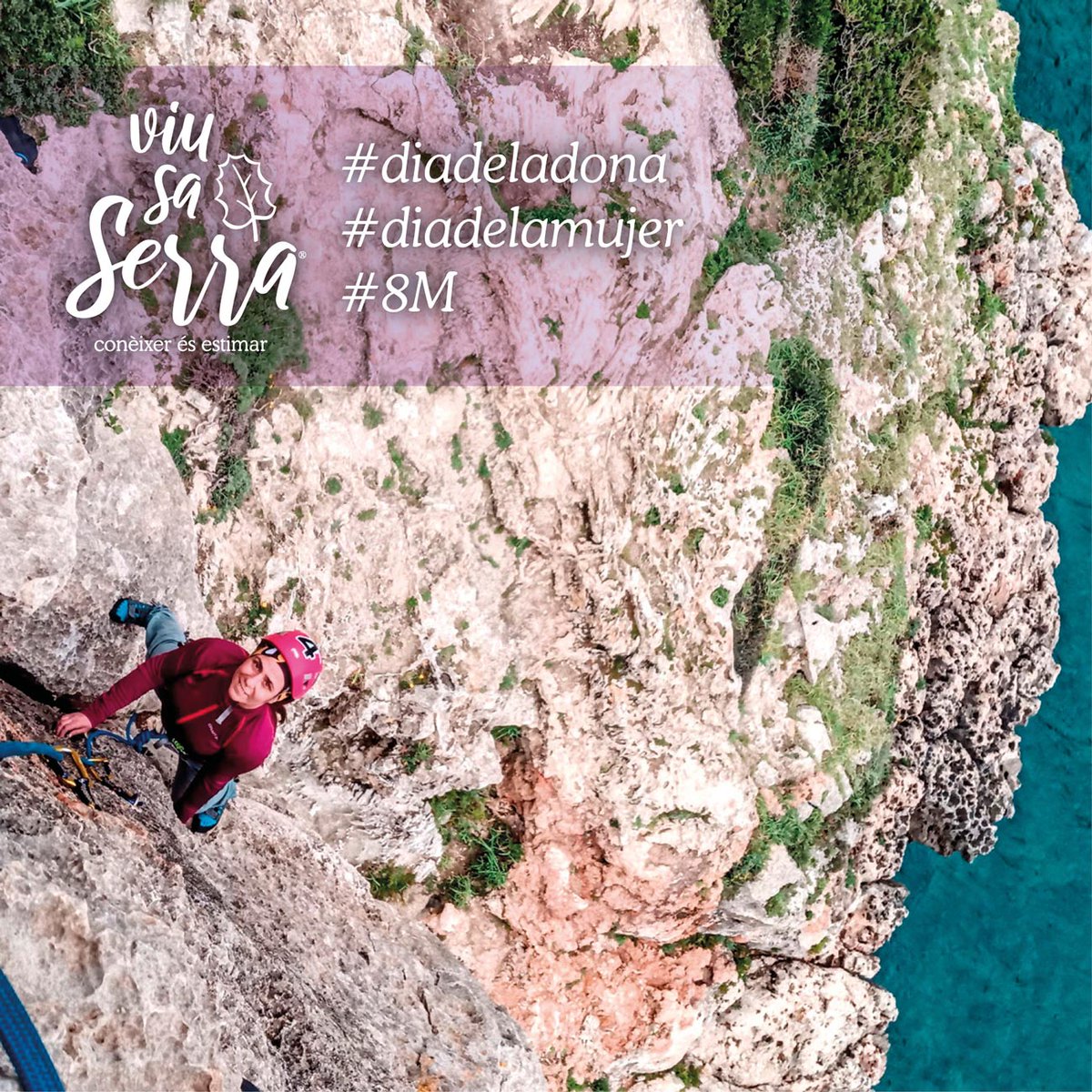
"La #muntanya, un #esport igualitari / La #montaña, un #deporte igualitario" —Xisco Fanals, president #fbme ⛰️
#diadeladona #diadelamujer #8M #8Marzo #8marzo2023 💜
🌐 https://t.co/vGg2rDqtm8
#viusaserra 🌿 #agenda #serradetramuntana #Mallorca

I que més !!!!
👉La Amer MALLORCA 5000 SKYRUNNING 2022 serà campionat balear d'ultra distància !
Sempre Arran !
Sempre vius!
Sempre forts!
#campionatbaleardultradistancia #cxm #Amermallorca5000Skyrunning #serradetramuntana #mallorca #fbme #mallorca


Literatur für die Master Medienkonzeption @fh_kiel #FBME für ihre Hausarbeit im Modul #Medienkonvergenz

Gerne möchten wir Sie auf das E-Book „Repräsentation – Partizipation – Zugänglichkeit“ von Julia Büchel hinweisen.
Es ist unter folgendem Link kostenfrei beim Transcript Verlag als pdf erhältlich:
https://t.co/7ADbbuuVbo


Happy #FollowBackFriday anyone want to follow and I’ll immediately follow back. Let’s get the vile, misogynistic, racist, boys club out of office #BorisJohnsonMustGo #BorisTheLiar #BorisJohnsonMustGo #FBME


S’obre la convocatoria de curts 2022.
2.500€ en premis
🏆 @CaixaColonya millor curt de les illes Balears
🏆 #FBME millor curt de muntanya
🏆 @keniaoutdoor millor curt de natura
🏆 #fundaciosanostra millor curt social i/o inclusiu
🏆 @arabalears millor curt pel públic


Der #YoMIS Band zum dreiteiligen Themengebiet #syntheticrealities ist da! #virtualimages Vielen Dank an @fh_kiel #fbme @fh_muenster #msd @MuthesiusKH und insbesondere @Image_Studies für die tolle Zusammenarbeit! 🤩


It's #FollowBackFriday in Australia. Timezone difference means hello to you in Thursday.
Want to #FBpwME/#FBME (follow back #pwME), #FBLC allies, other #ELCI.
People with DXs in my bio & general #chronicillness #disabilitytwitter & #Neisvoid folks.
General non-idiots too.👍
Is there a #FBpwME or #FBME tag? (Follow back pwME?) There should be. Want to follow #pwme (pls follow back).
Same with my other DXs & general #chronicillness #disabilitytwitter & #Neisvoid folx.
What's #ELCI? I know #FBLC.
Can ppl please help w all these new tags? I'm lost.🤷♀️
Last Seen Hashtags on Sotwe
Most Popular Users

Elon Musk 
@elonmusk
240.8M followers

Barack Obama
@barackobama
119.2M followers

Donald J. Trump
@realdonaldtrump
111.7M followers

Cristiano Ronaldo
@cristiano
111.1M followers

Narendra Modi
@narendramodi
107M followers

Rihanna
@rihanna
97.8M followers

NASA
@nasa
92.2M followers

Justin Bieber
@justinbieber
91M followers

KATY PERRY
@katyperry
87.9M followers

Taylor Swift
@taylorswift13
81.8M followers

Lady Gaga
@ladygaga
73.3M followers

Virat Kohli
@imvkohli
70.3M followers

Kim Kardashian
@kimkardashian
69.9M followers

YouTube
@youtube
68.7M followers

Bill Gates
@billgates
64M followers

Neymar Jr
@neymarjr
63.1M followers

The Ellen Show
@theellenshow
62.4M followers

CNN
@cnn
61.9M followers

Selena Gomez
@selenagomez
61M followers

X
@x
60.8M followers