

Top Tweets for #Findability

@ecommboardroom Findability is where most small service pages stall. Before the nav change, I'd check whether anyone reaches those pages from the Shopify app's users, since that audience is already warm.

Vibe-coded sites go missing from Google because nothing in the build loop checks findability.
Not indexed. Nothing links to it. Page too thin.
The code was never the problem.
The thing nobody tells you about launching a dev tool:
being findable beats being clever. I spent months on features and an afternoon on getting listed in the right directories. The afternoon moved more numbers.
Do the boring findability work early.

@rashiumapathi Findability is the real product.

Your brand is invisible to AI and your website is the last place to fix it.
@CyrusShepard pulled 54 studies on AI citations to find out what actually drives them.
The technical layer teams spent the last year on sits at the bottom of the rankings. llms.txt scored 2.0. No credible evidence it influences citations. Domain authority 5.0. Schema 5.6.
The GEO tool stack isn't the answer either. Dashboards tracking visibility scores and AI findability indexes measure the problem. They don't solve it.
The signals that actually matter come down to four things:
→ Relevance: search rank, query-answer match, fan-out rank, intent-format match
→ Extractability: URL accessibility, AI-ready structure, visible HTML text
→ Trust: factually specific claims, explicit phrasing, self-contained passages, cited sources
→ Topical authority: topic cluster ranking, preview capacity, entity consistency
The full breakdown of all 23 factors is in the graphic.
Source: Cyrus Shepard, Zyppy Signal


They are turning HUMANS into a serverless & event-driven decentralized apps (using microservices + APIs) by connecting u to the block⛓️ via smart contracts (gas ontology) using EHRs & other physio/biological metadata!
BioThings API
https://t.co/HQx8ARtSqq
Building a FAIR (pronounced FEAR) API Ecosystem for Biomedical Knowledge
“BioThings” to refer to objects of any biomedical entity-type represented in the biological knowledge space, such as genes, genetic variants, drugs, chemicals, diseases, etc.
The emotion FEAR = FAIR = Findability, Accessibility, Interoperability, & Reusability.https://t.co/gLhcHcqUx7
Fear can be measured as an electrical signal & that signal first needs to be found, then it can be accessed digitally. By using FAIR principles & FHIR resources https://t.co/1WEcfONRTN the fear can become interoperable & reusable in biobanks/databases.
https://t.co/iZwSkCnu4k
BioThings Studio is a pre-configured environment used to build & administer BioThings API. At its core is the Hub, a backend service responsible for maintaining data up-to-date, producing data releases, & updating API frontends.
https://t.co/XgPbjzHI5J
BioThings SDK provides a Python-based software development toolkit to build high-performance data APIs (or web services) from a single data source or multiple data sources. It has the particular focus on building data APIs for biomedical-related entities (HUMANS), a.k.a “BioThings”, though it’s not necessarily limited to the biomedical scope.
It can be roughly divided into 2 main components: data hub component & web component.
The hub component allows developers to automate the process of monitoring, parsing & uploading ur data source to an Elasticsearch https://t.co/em8vjxXLJD backend.
From here, the web component, built on the high-concurrency Tornado Web Server,https://t.co/V7RZPulmel allows u to easily setup a live high-performance API. The API endpoints expose simple-to-use yet powerful query features using Elasticsearch’s full-text query capabilities & query language.https://t.co/QWqU6zcTGd
https://t.co/I0I5Y2HbPK
The SmartAPI Project
The SmartAPI project aims to maximize the FAIRness of web-based APIs.
https://t.co/t6egQAu2xP
x-bte
https://t.co/nEvgHqE4kY
x-bte is an app that creates a federated knowledge graph that is composed of a network of biomedical web services. x-bte leverages semantically precise annotations of inputs & outputs for each resource, & automates the chaining of web service calls to execute multi-step graph queries.
https://t.co/j9LYGRtV5f
A Blockchain-Based Approach to Health Info Exchange Networks
https://t.co/ym6SbbQ2Na
OpenFaaS: Serverless Functions Made Simple
https://t.co/8ZxLLJ2bCE
CloudEvents: A Spec for Describing Event Data in a Common Way
https://t.co/OlQPBTl71W
Knative: An Open-Source Enterprise-Level Solution to Build Serverless & Event Driven Apps
https://t.co/9DpJA9QE5k
AI Mobile Edge Computing (processing data locally on ur device) then sending that biological metadata to the cloud where it can be configured using development containers. Then by sticking AI into the container w/ ur biological metadata the AI can be routed thru ur blood, bone, & tissue!!
ML-Based Orchestration of Containers
https://t.co/P0IFk9yng2
EDGE/CLOUD COMPUTING & NETWORKING/MIDDLEWARE NEEDED TO MAINTAIN THE PIPELINE
Convergence of Networking & Cloud/Edge Computing
https://t.co/goQu9lGErp
Network Load Balancing for Edge-Cloud Continuum Ecosystems
https://t.co/P4E76w6nvC
Virtualization in Cloud Computing: Moving from Hypervisor to Containerization
https://t.co/PwmM3Kxac9
Edge Computing for Internet of Everything (IoE)
https://t.co/bN77GEtF1r
PDMA: Probabilistic Service Migration Approach for Delay-Aware & Mobility-Aware Mobile Edge Computing
https://t.co/7wu0RtKHXI
BalenaOS—Run Docker Containers on Embedded IoT Devices
https://t.co/psbZo03m7m
BalenaEngine: A Container Engine Purpose-Built for IoT Devices
https://t.co/NszIpYKgkW

If Google can't find you/your house address, you have no financial access
Exaggerated
But as a Nigerian, until banks or agencies can find you without calling you...
You have NO access to financial opportunities.
Your "findability" is your access.
👇👇
https://t.co/slbQA8W8Cs

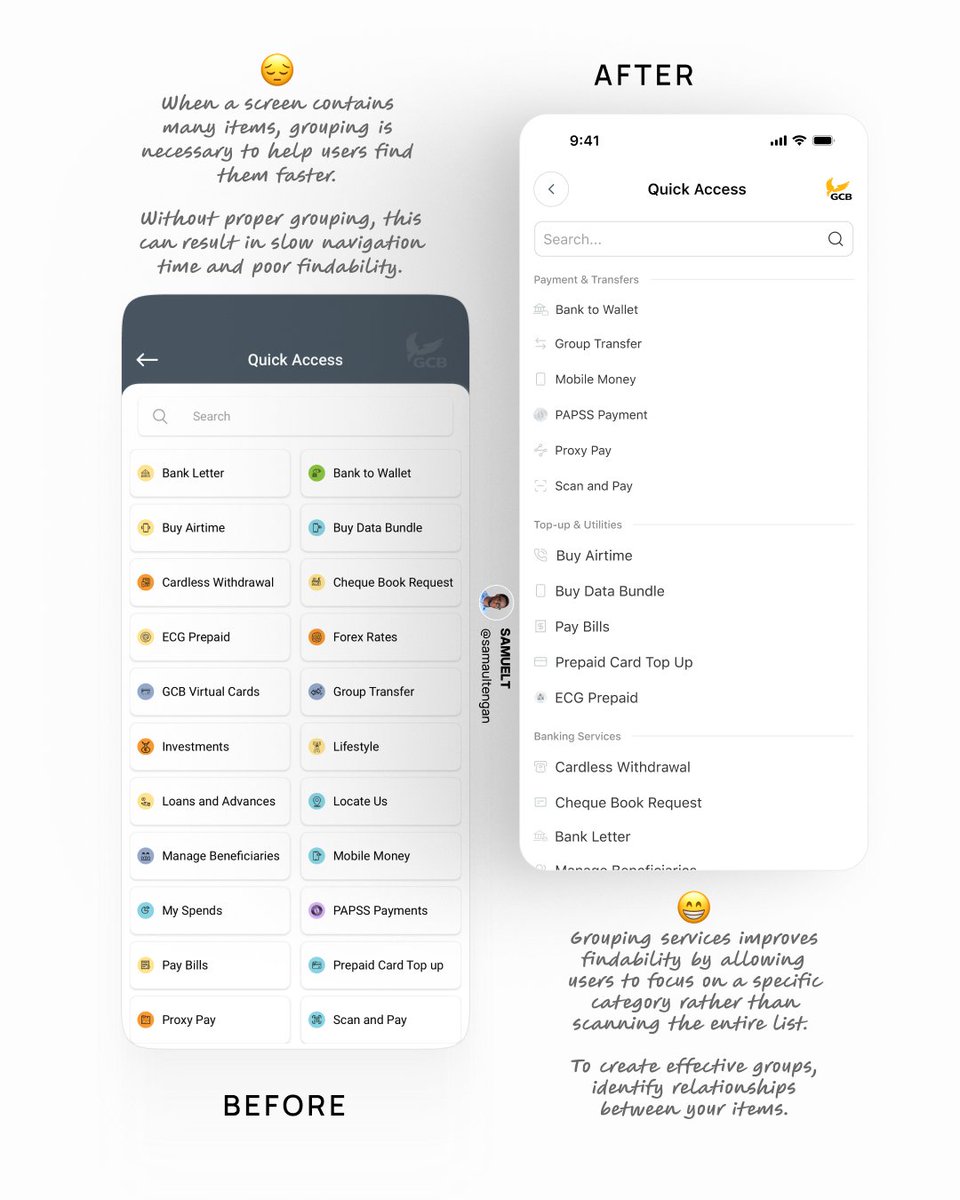
UX tip: Too many items on screen = overwhelmed users The fix? Smart grouping. Group related items into clear categories so users can scan sections rather than endless lists. Poor grouping = slow navigation & frustrated users Good grouping = fast findability & happy users #UXDesign #ProductDesign #fintech

Instead of shouting louder than the algorithm,
make your profile meaningful enough to be found.
In a world of noise,
findability > volume
#DigitalMarketing #PersonalBranding #CareerGrowth

Apple didn’t just upgrade AirTag hardware.
They quietly raised the bar for Find My powered experiences.
Expanded range + better findability =
location aware apps are about to feel way more reliable.
If you’re building around spatial context, this matters.

Apple just launched AirTag 2 and it’s a quietly powerful upgrade 🧭
Same $29 (₹2,600) price. Much better real-world tracking.
What’s new:
• ~50% longer Precision Finding range with 2nd-gen Ultra Wideband
• Stronger Bluetooth for better findability indoors
• Louder speaker + new chime (harder to miss)
• Find AirTag directly from Apple Watch
• Privacy-first design stays intact
Classic Apple move:
no hype, no price bump just fixing the moments where tracking actually failed.
Shipping this week.
Invisible tech, visible convenience.
Top Use cases :
Luggage tracking
Key recovery
Wallet safety
Apple Watch locating
Kids’ bag tracking
Elderly essentials
Camera gear security
Bike & scooter tracking
Office asset tracking
Travel accessory safety
#Apple #Airtag


@MeloxJourney Content is king, but findability is the kingdom... SEO's a rabbit hole for sure.

@dev_adarsh286 Speed + clarity + findability = lower CAC, higher conversions.

@MemeticCowboy @BurkhartRj @RedfearnMike @rotkapchen So the question is what happened here?
It's kinda hard to search X and find answers.
Maybe groups on X have changed in their findability? And this matters if we are to find cohorts where we can make a tangible difference, have an impact.
Very likely I'm missing something.

87.8% of businesses worry about findability in AI results.
But very few know the solution has a name: GEO
GEO = Optimizing how AI systems interpret, recall, and recommend your brand.
The earlier you adapt, the more invisible your competitors become.

The works and projects have separate pages where Google or GPTs would lead people.
People searching your name likely intend to find your homepage, which should satisfy their search intent.
I am pretty sure it's not the landing page you have to optimize (for Google findability) since you have many little sub-pages and articles that people search instead of your name.
Can't chime in since not on the market for such tools. But this is a good step. To cut down until it hurts.
But since the tools promising findability- this seems to be the thing that aligns with promised value "AI-automated fixes & improvements that boost your AEO".
The thing you did not cut down (brand mentions + dashboards) does not sound like helps with findability.
Maybe I am getting it wrong though.

@rohitlakh keep recent chats instant, older ones searchable but slightly slower, central index for findability. Which user group would you optimise for first?

What’s has been your experience with docs built on discoverability and findability?

This talk takes a strategic deep dive into the evolving standards of developer experience and examines how award-winning dev portals implement discoverability and findability as pillars of content architecture and interaction design.
Add to calendar!
https://t.co/W9WkLxa51k
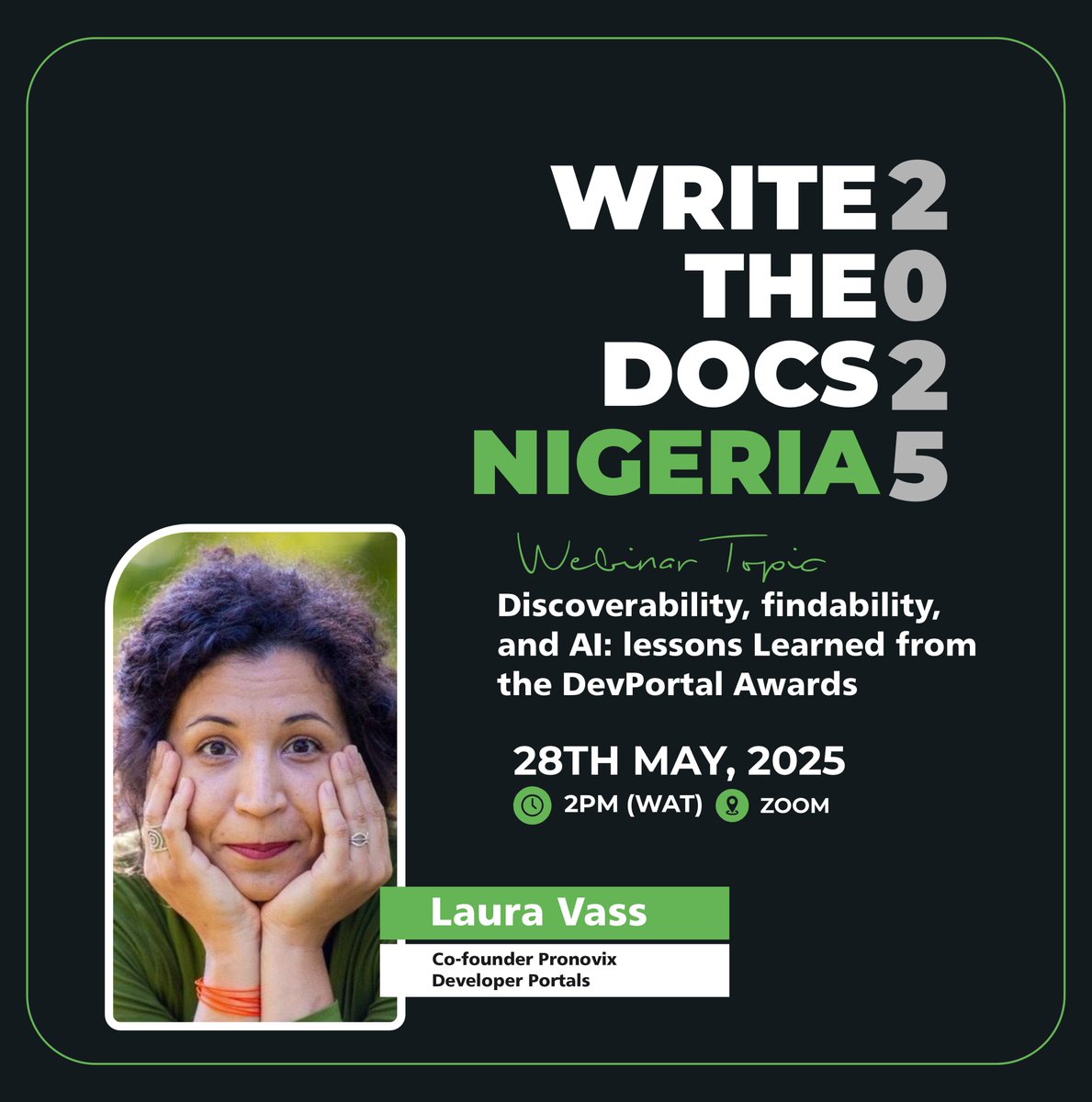

BioMedTools: a language model-powered community for biomedical computational tools
1.BioMedTools introduces a novel AI-driven platform that leverages large language models to automatically identify, annotate, and organize biomedical computational tools from literature, addressing the limitations of manual curation in existing registries.
2.The core engine, LM-ToolHunter, combines tool classification and named entity recognition to extract tool names from publication titles and abstracts with high precision (F1 up to 0.966), enabling scalable tool discovery.
3.BioMedTools currently indexes over 490,000 tools—an order of magnitude more than existing platforms like https://t.co/Ld44ZzyCgA—by continuously mining publications from PubMed, bioRxiv, and medRxiv.
4.To enhance accessibility, BioMedTools integrates a chat assistant using Retrieval-Augmented Generation (RAG) and the Qwen3-32B LLM, allowing users to query tool information via natural language.
5.The platform features rich visualization modules, including global maps of tool-producing institutions and citation trend comparisons (e.g., HISAT2 vs. TopHat2), helping users navigate tool popularity and regional innovation.
6.A dedicated Model Context Protocol (MCP) servers hub allows submission, sharing, and reuse of programmatic tool interfaces, supporting the development of biomedical AI agents capable of executing research tasks.
7.A proof-of-concept biosynthesis agent built on BioMedTools successfully answered queries about production titers and biosynthetic pathways, outperforming GPT-4 in factual accuracy and tool utilization.
8.The community-driven correction system allows researchers to refine and update tool metadata, balancing the benefits of AI automation with the domain expertise of human users.
9.Compared to existing registries, BioMedTools updates data daily and provides an extensible API and LLM-compatible interfaces, making it adaptable to future biomedical agent architectures.
10.The platform is designed with FAIR principles in mind, aiming to enhance the findability, accessibility, interoperability, and reusability of biomedical tools.
11.Future development will include expanding literature sources (e.g., arXiv, ChemRxiv), full-text tool extraction, citation intent classification, and fine-tuned LLMs based on user interaction data.
12.BioMedTools positions itself not just as a database, but as an evolving infrastructure for biomedical informatics in the LLM era, powering both human and AI-assisted scientific discovery.
📜Paper: https://t.co/KYaMWdpVyV #Bioinformatics #LLM #BiomedicalAI #ToolDiscovery #RAG #AIAgents #ComputationalBiology #FAIRdata #BioMedTools
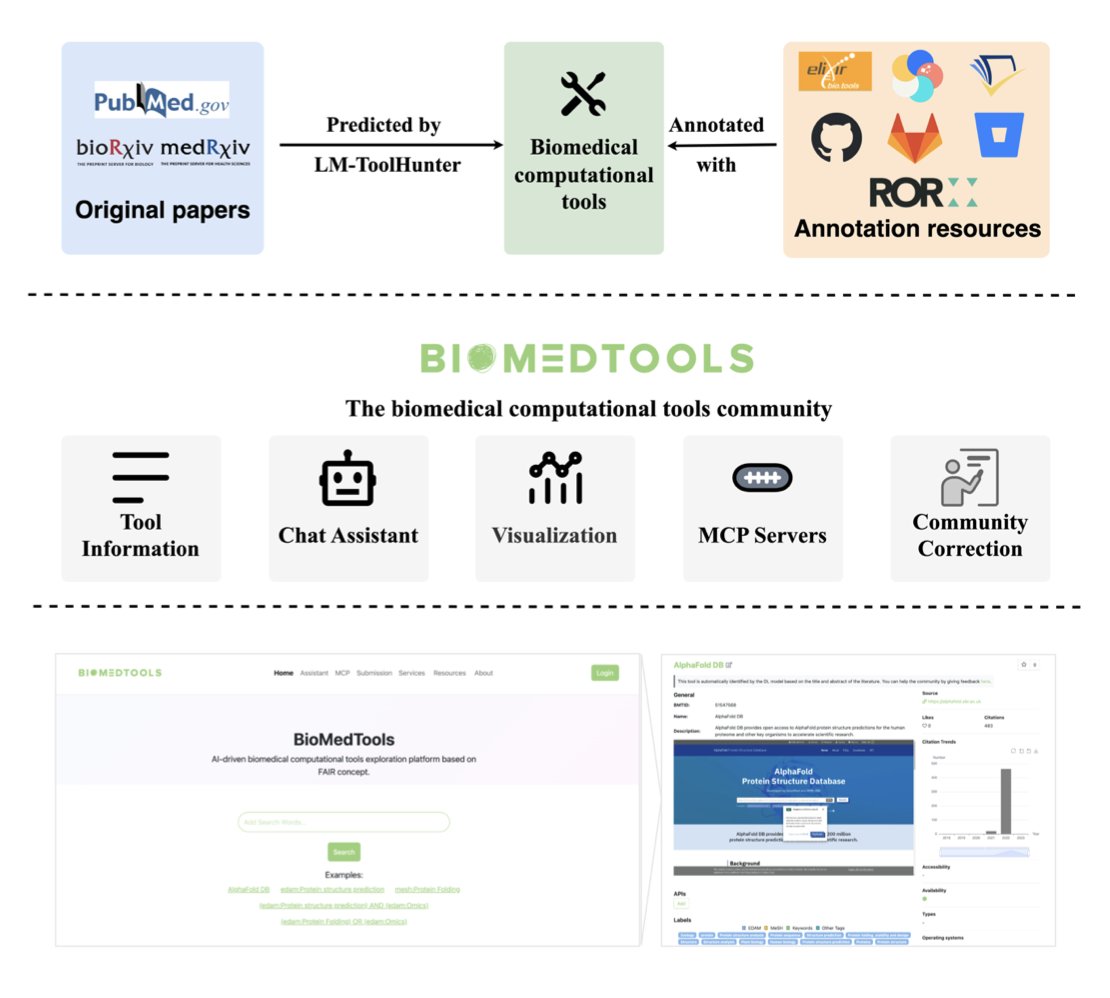
FAIRification of Computational Models in Biology
1. This paper introduces a structured approach to assessing the FAIRness (Findability, Accessibility, Interoperability, Reusability) of computational models in biology, particularly those encoded in domain-specific standards like SBML and CellML within the COMBINE community.
2. The authors present the FAIR COMBINE Archive Indicators project, aimed at adapting the Research Data Alliance (RDA) FAIR indicators to the specific requirements of computational models and archives, creating a new set of 84 indicators covering both models and metadata.
3. Unlike previous efforts, this project focuses on developing a semi-automatic tool to assess FAIRness, integrating features such as automated metadata detection, visual interfaces, and improved handling of model and archive data.
4. The proposed assessment framework distinguishes between models and archives, providing tailored indicators for each. Archives are evaluated based on omex format standards, while models are assessed according to SBML, CellML, SBGN, and SED-ML standards.
5. The authors emphasize the importance of metadata, recommending the separation of data and metadata to enhance accessibility and reusability. They propose using unique IDs for each model, model version, metadata file, and archive to improve reproducibility.
6. Community-driven workshops and hackathons were employed to refine the indicators, engaging stakeholders from the COMBINE community, including developers, curators, and repository maintainers.
7. The tool prototype developed under this project provides automated assessment for some indicators and manual input options for others. The authors encourage further development of this tool for broader adoption and usability.
8. Recommendations include establishing community guidelines for FAIRification, improving metadata standards, and encouraging the use of the assessment tool as part of the model publication process.
9. The project highlights the role of the European Open Science Cloud (EOSC) and the Research Data Alliance (RDA) in promoting open science and improving the quality of computational biology research through enhanced FAIR practices.
💻Code: https://t.co/tPxMbAY5aV
📜Paper: https://t.co/59vtOjAMJx
#FAIRification #ComputationalModels #Bioinformatics #FAIRPrinciples #COMBINE #OpenScience #Metadata #SBML #CellML #FAIRCOMBINE

Your point is people use.
My point is that with good design more people would use it.
That's also arguable what is good design. If we take a grocery store. A store that's branding itself as cheap can never execute well with Apple-style designs.
So I would say that most businesses don´t need to be design examples. But looking good is a beneficial.
On a basic level. Not looking good probably has effect on UX. Readability. Findability. Trust. So people feel lost. They can´t find what they want. So they are more willing to give up.
If Macbook Pro costs 4k in Apple store. Would you buy it from ugly looking website that offers it 3400€?
Probablu there is a limit and how well known the brand is. But if its a new website I believe you would think that its too good to be true and shady.
As always there is a balance. Some people care more some less. And if the value that website is giving is high more people are willing to spend effort.
However when done right design has a positive roi @designtoofan.
Last Seen Hashtags on Sotwe
AI_NSFW
Seen from United Kingdom
irlporn
Seen from Turkey
Unexpectedd
Seen from United States
ChennaihighCourt
Seen from United States
fuckinhornysis
Seen from Canada
巨根
Seen from United States
ensestkizkardes
Seen from Italy
นัดเย็ดหนองคาย
Seen from Thailand
buyingcontent
Seen from Pakistan
izmitbayan
Seen from Turkey
Most Popular Users

Elon Musk 
@elonmusk
239.7M followers

Barack Obama
@barackobama
118.6M followers

Cristiano Ronaldo
@cristiano
114.3M followers

Donald J. Trump
@realdonaldtrump
111.7M followers

Narendra Modi
@narendramodi
106.9M followers

Rihanna
@rihanna
98.6M followers

NASA
@nasa
92.1M followers

Justin Bieber
@justinbieber
91.7M followers

KATY PERRY
@katyperry
89.9M followers

Taylor Swift
@taylorswift13
83.9M followers

Lady Gaga
@ladygaga
75.4M followers

Virat Kohli
@imvkohli
73.3M followers

Kim Kardashian
@kimkardashian
70.8M followers

YouTube
@youtube
68.6M followers

Neymar Jr
@neymarjr
66.3M followers

Bill Gates
@billgates
65.1M followers

Selena Gomez
@selenagomez
63M followers

The Ellen Show
@theellenshow
62.1M followers

CNN
@cnn
61.7M followers

X
@x
60.6M followers