Can you leverage "Anchor Context" for SEO?
Google tells us to place <links> in relevant context, but most folks don't realize how Google can use those signals to evaluate links and ultimately rank webpages.
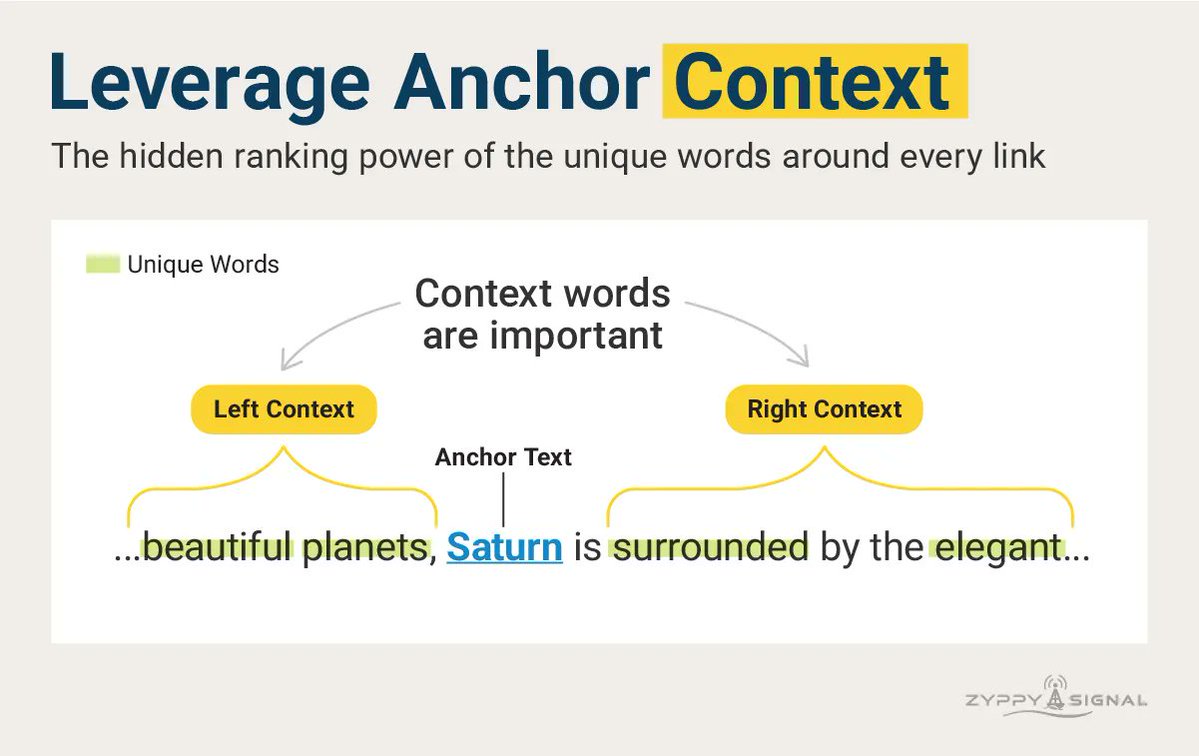
A patent by Anna Patterson and Paul Haahr (two titans of Google search), "Ranking based on reference contexts" explains how Google can utilize RARE words before and after the anchor text to determine context
Google can then use this context as a *distinct* ranking factor
Google’s API leak documents attributes that measure this exact thing: fullLeftContext, fullRightContext, and context2 — defined as “a hash of terms near the anchor.”
Patterson and Haahr explain that Google can rank pages “based on the number of different contexts associated with the links”
More diverse + relevant contexts = good.
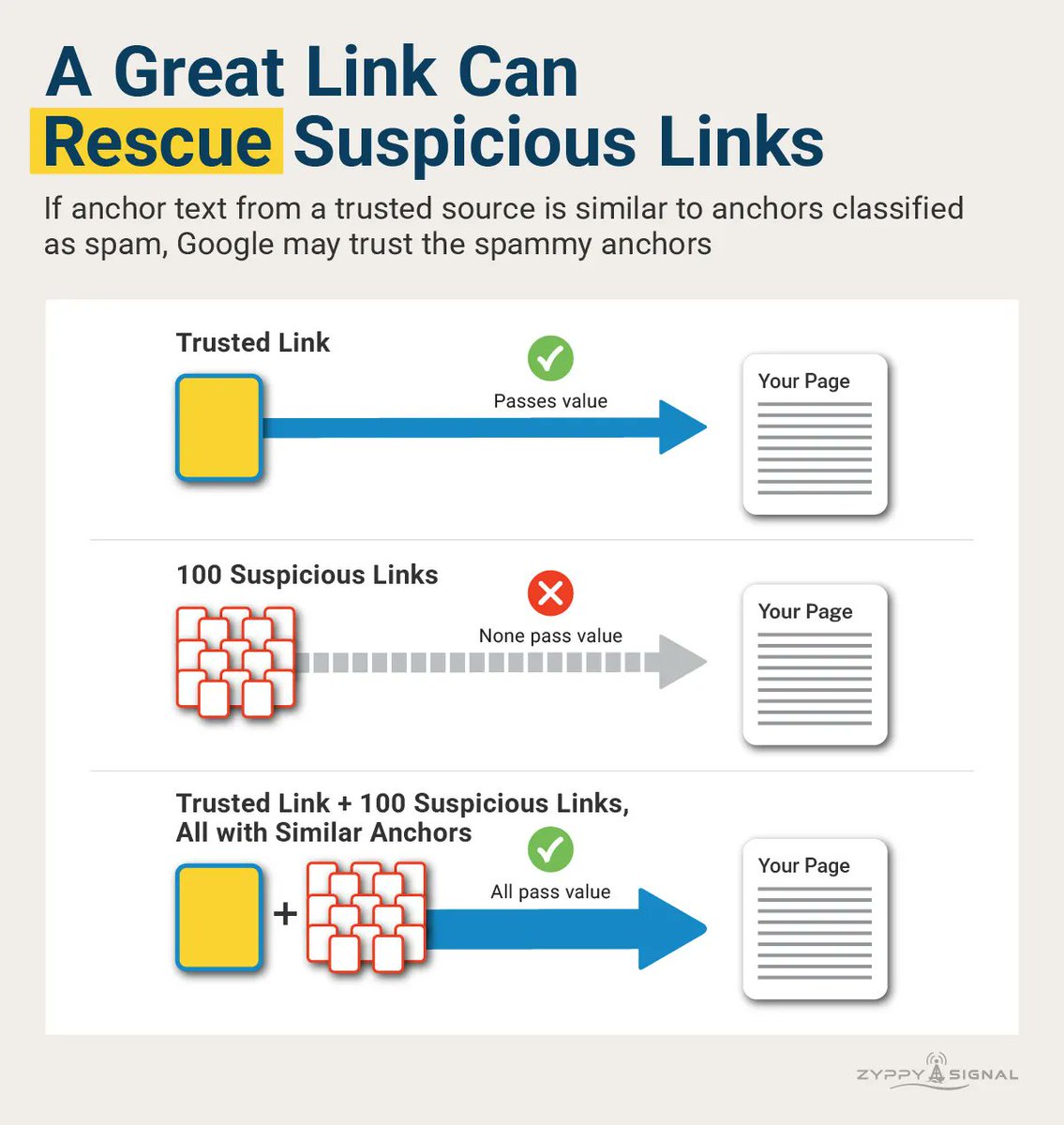
On the other hand, if a lot of "contexts" look suspiciously similar, Google could label the links as spam
Importantly, Google talks about finding the "rare" words around the anchor text - words found with greater frequency than the rest of the page.
Most people—and link-building platforms—focus on anchor text and stop there. But context can be important!
New: How to Create Links for SEO Google Can't Ignore
The web has TRILLIONS of links. Google ignores most by default. Links are not equal. Two nearly identical links may send completely different signals.
How to create links with the most *power*
- Topic Stability
- Anchor Context
- Editorial Diversity
- Magical Power Links
- New Information Links (1/2 🧵)
Based on patent filings, Google's API leak, sworn testimony, and 10+ years' experience working with links
"How to Create Links Google Can't Ignore"
https://t.co/HSJsXuvdak
My ideal AI SEO tool isn't a prompt tracker. Instead, it:
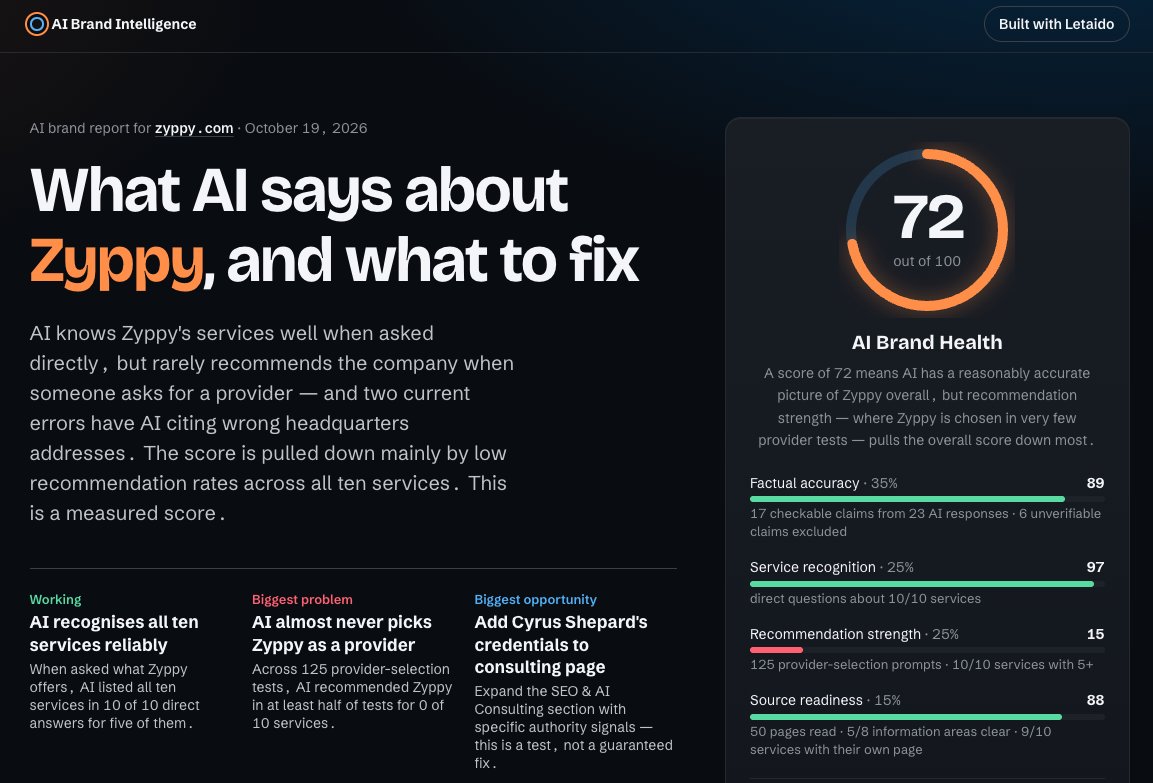
1) Tests exactly what AI gets right + wrong about a company's brand facts
2) Measures overall AI recommendation rates for each company/competitor
3) Importantly, crawls and analyzes all pages to recommend specific content changes
So I built *exactly* that tool with @letaidocom
as an #ahrefspartner, using data from Brand Radar to generate client action plans
• Tracks what AI knows about the company, services, and brand facts
• Measures how often AI mentions the company 📈 or competitors 📉 for every service
• Analyzes WHY competitors get recommended
• Finally, identifies specific information gaps, weak on-page evidence, and pages to target
We can share this report with clients/stakeholders/content managers so they understand exactly what's really driving their AI answers - people *really* start to understand when you show them this.
Previously, I could get much of this data in
@ahrefs Brand Radar, but turning that data into specific fixes required more manual work
I've REALLY enjoyed building these tools
(Full prompt in thread so you can build this yourself)
@motionoutoftime Testing on a client site now. The recommendations are surprisingly specific.
We can rerun the same prompts within the tool to measure the change.
Great question. You might add something like this to the main prompt to build out multi-location functionality.
###
Extend AI Brand Intelligence with an optional MULTI-LOCATION HOSPITALITY MODE. Preserve the existing single-brand experience and evidence rules.
1. LOCATION INVENTORY
From the entered domain, discover individual hotels, restaurants, resorts, venues, or other hospitality properties. Extract property name, aliases, address, city, region, URL, type and verified amenities. Let me approve and edit the list. Each property must have a stable ID. Separate shared brand facts from property-specific facts; never assume amenities or policies carry across locations.
2. LOCAL AI DISCOVERY
Use existing Brand Radar answers first. Find unbranded local discovery questions relevant to each property, including geographic, category, occasion, amenity and guest-need queries. Preserve original prompt, AI model, date and citations. Do not treat a parent-brand mention as a property recommendation. Match each mention to an exact property or label it ambiguous.
3. MEASUREMENT
Make qualified local recommendation rate the primary visibility KPI. Show recommendation frequency, competitive alternatives, factual accuracy and property-page readiness separately. Only include queries relevant to the property's geography, category and verified attributes. Show denominators, sample sizes and confidence. Missing evidence means Not tested, not zero. Offer portfolio rollups without hiding weak properties.
4. PROPERTY FACTS
Compare AI claims against approved property-specific facts: address, amenities, dining, parking, accessibility, pets, check-in, cancellation policies and relevant guest experiences. Flag confusion between sister properties. Treat availability and prices as time-sensitive, not permanent facts.
5. DASHBOARD
Add a portfolio overview with sortable property table and filters by city, region and property type. Each property has its own scorecard, local competitors, supporting AI answers, location-page audit and action plan. Include shared fixes affecting multiple properties.
6. ACTIONS
Every action specifies the exact property, target URL and section, verified finding, suggested copy using approved facts, supporting evidence and recheck question. Distinguish location-specific fixes from portfolio-wide template fixes. Prioritize by likely business impact, confidence and effort.
7. COST CONTROL
Do not automatically run live AI tests or expand the crawl across hundreds of locations. First use saved Brand Radar data. Start with 3–5 user-selected priority properties. Cache shared pages and reuse extracted brand facts. Estimate costs and require approval before any paid model calls.
Plan the smallest changes needed to support this mode, then implement them incrementally. Do not rewrite working single-brand functionality.
2024: Google sends you a lot of traffic
2025: Google sends you less traffic
2026: Google only cites you in AI answers
2027: Google never calls, but sends a Christmas card
2028: You bump into Google at a party and it pretends not to know you