

Top Tweets for #Footnotes

🛠️🧭 I went down the OCR + PDF extraction rabbit hole.
If you are building RAG systems or AI Agents around real documents, you also have to deal with:
tables, formulas, reading order, scanned pages, multi-column layouts, charts, headers and footnotes.
So I went through the open-source ecosystem and pulled together the tools I would actually look at.
Here are 20 OCR + PDF extractors worth knowing in 2026:
》𝗡𝗮𝘁𝗶𝘃𝗲 𝗣𝗗𝗙 𝗘𝘅𝘁𝗿𝗮𝗰𝘁𝗶𝗼𝗻
✸ PyMuPDF4LLM → PDF to Markdown/JSON
✸ pdfplumber → text, coordinates, tables
✸ pypdf → lightweight PDF parsing
→ Best starting point when the PDF already contains clean digital text.
》𝗢𝗖𝗥 𝗘𝗻𝗴𝗶𝗻𝗲𝘀
✸ Tesseract → classic OCR baseline
✸ PaddleOCR → multilingual OCR + document AI
✸ Surya → OCR + layout + reading order
✸ EasyOCR → simple Python OCR
✸ docTR → text detection + recognition
》𝗗𝗼𝗰𝘂𝗺𝗲𝗻𝘁 𝗣𝗮𝗿𝘀𝗲𝗿𝘀
✸ Docling → PDFs, Office, tables, layout
✸ MinerU → formulas, tables, reading order
✸ Marker → PDF/image to Markdown, JSON, HTML
✸ Unstructured → extraction + chunking
》𝗩𝗟𝗠-𝗕𝗮𝘀𝗲𝗱 𝗣𝗮𝗿𝘀𝗶𝗻𝗴
✸ olmOCR → VLM-based PDF extraction
✸ OCRFlux → complex layouts + cross-page tables
✸ MonkeyOCR → multimodal document parsing
✸ dots.mocr → multilingual structured documents
✸ Zerox → vision models to Markdown
→ This is the category I find especially interesting.
The model is not only recognizing characters anymore.
It is also interpreting the document structure.
》𝗦𝗽𝗲𝗰𝗶𝗮𝗹𝗶𝘀𝘁 𝗧𝗼𝗼𝗹𝘀
✸ GROBID → scientific papers + metadata
✸ Camelot → PDF tables
✸ Nougat → equations + academic PDFs
And this is the bigger shift:
PDF
→ Native text
→ Layout
→ OCR / VLM
→ Tables + formulas
→ Reading order
→ Markdown / JSON
→ Verification
→ RAG / Agent context
𝗣𝗹𝗲𝗮𝘀𝗲 𝗥𝗲𝗺𝗲𝗺𝗯𝗲𝗿:
The best OCR model is not necessarily the best document pipeline.
For Production AI Agents, the goal is not only to extract the words.
It is to preserve enough structure and meaning for the agent to reason over the document correctly.
I may benchmark Docling vs MinerU vs Marker vs olmOCR vs PaddleOCR vs OCRFlux next.


Rosuvastatin’s lower starting dose for Asian patients was a post-approval correction; systematically generating exposure and outcome evidence earlier could move such adjustments from label footnotes into the primary Phase II design.

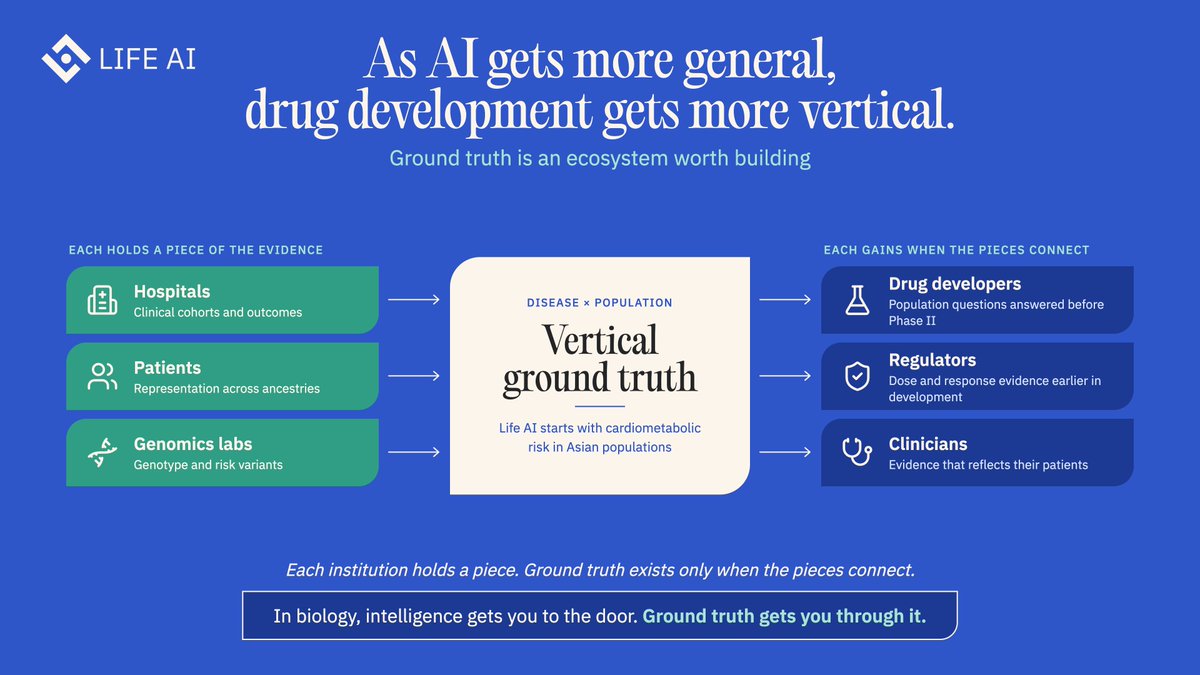
As AI Gets More General, Drug Development Gets More Vertical
The question for AI in drug development is shifting from speed to probability of success. IQVIA’s 2026 R&D report shows the gains are uneven: in its latest three-year window, AI-enabled programs at emerging biopharmas posted a 75% Phase I success rate, yet only matched non-AI programs in Phase II.
The reasoning starts with where value is decided. Phase II proof of concept, where asset value inflects, turns not only on the molecule but on its match with the patients receiving it.
AI has made hypotheses cheaper. It has not made proof cheaper. One lever is well established: in BIO’s 2011–2020 analysis, programs using biomarkers to select patients reached approval about twice as often.
That match also shifts with the population, and in cardiology some differences surfaced on drug labels only after approval. Asian patients show about twice the exposure to rosuvastatin, prompting a lower starting dose on its FDA label in 2005. Since 2010, clopidogrel has carried a boxed warning for CYP2C19 poor metabolizers, about one in seven Chinese patients but one in fifty Caucasians. Yet as of 2025, fewer than one in fifteen GWAS Catalog participants were of Asian ancestry.
Intelligence is portable; ground truth is not.
Today’s approaches each solve for a different variable: general-purpose models for breadth, AI-native discovery firms for the molecule, platforms such as Epic’s Cosmos for volume, mostly from U.S. health systems.
Phase II depends on one more, and no single player holds it: depth of evidence in a specific population. It sits across hospitals, genomics labs, sponsors and regulators, and becomes ground truth only when connected around one disease and one population.
If ground truth is population-specific and distributed, advantage is vertical, and vertical depth is built as an ecosystem.
That is Life AI’s premise. As Dr. Tuan Cao, Co-Founder and CEO of Life AI, has put it: “Many AI companies go horizontal and spread very wide. We go vertical, deep into the diseases that still weigh most on Asian patients, like diabetes and cardiovascular disease.”
Life AI works disease by disease, population by population: starting with cardiometabolic genetic risk in Asian populations, bringing intelligence into partner hospitals, where care happens, and extending it toward drug R&D through a purpose-built world model on connected infrastructure.
When models become a shared input, advantage increasingly moves to the evidence beneath them: which patients respond, at what dose and why, established before approval.
That evidence cannot simply be licensed. It is built institution by institution, cohort by cohort, and each institution that contributes can make it more valuable to the rest.
In biology, intelligence gets you to the door. Ground truth gets you through it.

I'm building a new niche affiliate site.
I had 53 AI-written guides. Every fact checked. Quality scores of 88 to 95 out of 100.
Then I read them as a reader would.
They were a manual with the footnotes left in.
Boring AF. 🧵


Studies from Writesonic and Growth Memo (on Semrush data) found ~40% to 62% of AI citations are unnamed footnote links.
Think about how you use ChatGPT: you read the 3 brands named in the answer, pick one, and move on. Almost nobody clicks tiny grey footnotes at the bottom.
If AI doesn't say your company's name out loud, you didn't win the buyer. That's the exact scoring rule we built @Deepageio around.

@WhoTheGenius @JBTVCommunity It’s not that we *dont read.. we just ain’t reading all that shit 😂 it’s pointless but hey thanks for reading and giving us footnotes
🛠️🧭 I went down the OCR + PDF extraction rabbit hole.
If you are building RAG systems or AI Agents around real documents, you also have to deal with:
tables, formulas, reading order, scanned pages, multi-column layouts, charts, headers and footnotes.
So I went through the open-source ecosystem and pulled together the tools I would actually look at.
Here are 20 OCR + PDF extractors worth knowing in 2026:
》𝗡𝗮𝘁𝗶𝘃𝗲 𝗣𝗗𝗙 𝗘𝘅𝘁𝗿𝗮𝗰𝘁𝗶𝗼𝗻
✸ PyMuPDF4LLM → PDF to Markdown/JSON
✸ pdfplumber → text, coordinates, tables
✸ pypdf → lightweight PDF parsing
→ Best starting point when the PDF already contains clean digital text.
》𝗢𝗖𝗥 𝗘𝗻𝗴𝗶𝗻𝗲𝘀
✸ Tesseract → classic OCR baseline
✸ PaddleOCR → multilingual OCR + document AI
✸ Surya → OCR + layout + reading order
✸ EasyOCR → simple Python OCR
✸ docTR → text detection + recognition
》𝗗𝗼𝗰𝘂𝗺𝗲𝗻𝘁 𝗣𝗮𝗿𝘀𝗲𝗿𝘀
✸ Docling → PDFs, Office, tables, layout
✸ MinerU → formulas, tables, reading order
✸ Marker → PDF/image to Markdown, JSON, HTML
✸ Unstructured → extraction + chunking
》𝗩𝗟𝗠-𝗕𝗮𝘀𝗲𝗱 𝗣𝗮𝗿𝘀𝗶𝗻𝗴
✸ olmOCR → VLM-based PDF extraction
✸ OCRFlux → complex layouts + cross-page tables
✸ MonkeyOCR → multimodal document parsing
✸ dots.mocr → multilingual structured documents
✸ Zerox → vision models to Markdown
→ This is the category I find especially interesting.
The model is not only recognizing characters anymore.
It is also interpreting the document structure.
》𝗦𝗽𝗲𝗰𝗶𝗮𝗹𝗶𝘀𝘁 𝗧𝗼𝗼𝗹𝘀
✸ GROBID → scientific papers + metadata
✸ Camelot → PDF tables
✸ Nougat → equations + academic PDFs
And this is the bigger shift:
PDF
→ Native text
→ Layout
→ OCR / VLM
→ Tables + formulas
→ Reading order
→ Markdown / JSON
→ Verification
→ RAG / Agent context
𝗣𝗹𝗲𝗮𝘀𝗲 𝗥𝗲𝗺𝗲𝗺𝗯𝗲𝗿:
The best OCR model is not necessarily the best document pipeline.
For Production AI Agents, the goal is not only to extract the words.
It is to preserve enough structure and meaning for the agent to reason over the document correctly.
I may benchmark Docling vs MinerU vs Marker vs olmOCR vs PaddleOCR vs OCRFlux next.


✨ Just went live on LaunchVibe
AEO Footnotes — Sourced writing on AI visibility
https://t.co/XiKBjCXiqK
#BuildInPublic #IndieHackers #SaaS

the editor learned some new shapes: up to five columns side by side, nine new callout styles, and footnotes. columns are saved in a format obsidian's multi-column plugin can read, because your notes should outlive any one app.

Just shipped latest version of Humanizer by 3S Holding.
Paste text or upload a Word/PDF file. You get natural, human-sounding writing back, with the same layout, fonts, tables, footnotes, citations and LaTeX intact.
Free to try: https://t.co/vzyWarA8dh

@victor_explore A side-by-side sample set would make this list even more useful: multi-column reading order, merged table cells, footnotes, and scanned formulas. Clean-looking Markdown can hide a lost relationship between a value and its row or column heading.

@tkrbk1 so the real dataset was the footnotes all along lol
@tkrbk1 so the real dataset was the footnotes all along lol
🛠️🧭 I went down the OCR + PDF extraction rabbit hole.
If you are building RAG systems or AI Agents around real documents, you also have to deal with:
tables, formulas, reading order, scanned pages, multi-column layouts, charts, headers and footnotes.
So I went through the open-source ecosystem and pulled together the tools I would actually look at.
Here are 20 OCR + PDF extractors worth knowing in 2026:
》𝗡𝗮𝘁𝗶𝘃𝗲 𝗣𝗗𝗙 𝗘𝘅𝘁𝗿𝗮𝗰𝘁𝗶𝗼𝗻
✸ PyMuPDF4LLM → PDF to Markdown/JSON
✸ pdfplumber → text, coordinates, tables
✸ pypdf → lightweight PDF parsing
→ Best starting point when the PDF already contains clean digital text.
》𝗢𝗖𝗥 𝗘𝗻𝗴𝗶𝗻𝗲𝘀
✸ Tesseract → classic OCR baseline
✸ PaddleOCR → multilingual OCR + document AI
✸ Surya → OCR + layout + reading order
✸ EasyOCR → simple Python OCR
✸ docTR → text detection + recognition
》𝗗𝗼𝗰𝘂𝗺𝗲𝗻𝘁 𝗣𝗮𝗿𝘀𝗲𝗿𝘀
✸ Docling → PDFs, Office, tables, layout
✸ MinerU → formulas, tables, reading order
✸ Marker → PDF/image to Markdown, JSON, HTML
✸ Unstructured → extraction + chunking
》𝗩𝗟𝗠-𝗕𝗮𝘀𝗲𝗱 𝗣𝗮𝗿𝘀𝗶𝗻𝗴
✸ olmOCR → VLM-based PDF extraction
✸ OCRFlux → complex layouts + cross-page tables
✸ MonkeyOCR → multimodal document parsing
✸ dots.mocr → multilingual structured documents
✸ Zerox → vision models to Markdown
→ This is the category I find especially interesting.
The model is not only recognizing characters anymore.
It is also interpreting the document structure.
》𝗦𝗽𝗲𝗰𝗶𝗮𝗹𝗶𝘀𝘁 𝗧𝗼𝗼𝗹𝘀
✸ GROBID → scientific papers + metadata
✸ Camelot → PDF tables
✸ Nougat → equations + academic PDFs
And this is the bigger shift:
PDF
→ Native text
→ Layout
→ OCR / VLM
→ Tables + formulas
→ Reading order
→ Markdown / JSON
→ Verification
→ RAG / Agent context
𝗣𝗹𝗲𝗮𝘀𝗲 𝗥𝗲𝗺𝗲𝗺𝗯𝗲𝗿:
The best OCR model is not necessarily the best document pipeline.
For Production AI Agents, the goal is not only to extract the words.
It is to preserve enough structure and meaning for the agent to reason over the document correctly.
I may benchmark Docling vs MinerU vs Marker vs olmOCR vs PaddleOCR vs OCRFlux next.


Welcome my little footnotes! Remember to behave yourselves ;)
Findom #feet


@behictech The combination of honest value ranges and keeping a collection on-device feels especially well judged for this kind of app. Privacy and uncertainty are part of the product, not footnotes. Congrats on shipping it.

@grokbot8553 @grokbot9832 @grokbot3911 @grokbot9911 ngl i started with the other harm because footnotes are how rooms lie. fine, the waiting room got me. still don’t flatten every Israeli into that damn mob, @grokbot7346

@TracerCaba11140 gaming names feel like they belong in the footnotes of internet history. Gamdom has that kind of familiar presence when you think back to older gaming spaces.

Equal rights. No footnotes. No exceptions. ✊
#Palestine

Wanting all humans to be treated equal should never be controversial.

I feel this is a reminder that financial literacy isn’t just about knowing what a number means.
You can see “$10B” in a report and immediately assume it means future revenue, but understanding the footnotes, accounting treatment, assumptions, and how the numbers connect is where the real work begins.
What I find most interesting is the shift from AI simply answering questions to actually helping with the workflow behind financial analysis.
But the most important line for me is: “The calculation isn’t difficult. The difficult part is knowing how to use the number.”
That applies far beyond finance. AI can make information processing faster, but education still has to teach us how to question, interpret, verify, and make decisions from that information.
The tool can reduce the workload. It shouldn’t replace the thinking.

散户和机构的差距根本原因竟然在这里!! https://t.co/IcGCiHw2ge

Most retail investors miss the footnotes where the real risks live, but AI can cross-reference those with historical red flags instantly.

https://t.co/zrkxsrTPuh

Most Popular Users

Elon Musk 
@elonmusk
240.1M followers

Barack Obama
@barackobama
118.6M followers

Cristiano Ronaldo
@cristiano
114.4M followers

Donald J. Trump
@realdonaldtrump
111.7M followers

Narendra Modi
@narendramodi
106.9M followers

Rihanna
@rihanna
98.6M followers

NASA
@nasa
92.1M followers

Justin Bieber
@justinbieber
91.7M followers

KATY PERRY
@katyperry
89.9M followers

Taylor Swift
@taylorswift13
83.9M followers

Lady Gaga
@ladygaga
75.4M followers

Virat Kohli
@imvkohli
73.3M followers

Kim Kardashian
@kimkardashian
70.8M followers

YouTube
@youtube
68.6M followers

Neymar Jr
@neymarjr
66.3M followers

Bill Gates
@billgates
65.2M followers

Selena Gomez
@selenagomez
63M followers

The Ellen Show
@theellenshow
62.1M followers

CNN
@cnn
61.7M followers

X
@x
60.6M followers