

Top Tweets for #GST_Refund

Refund can't be denied because tax is mostly paid via ITC instead of cash. Rule 86B allows using over 90% ITC.
Delhi High Court in Phoenix Impex vs Sales Tax Officer Class II AVATO [W. P. (C) 12424/2025; 06-Dec-2025]
#gstupdate #gst_Litigation #ITC #GST_Refund
Rule 31: Residual method
If any of the above rules cannot determine value, → Apply “best judgment” using reasonable means consistent with principles of Section 15 and Chapter IV
#gstupdate #gst_Litigation #ITC #GST_Refund #GST_Scrutiny
#GST_Valuation

Dear Friends,
This series is all about Key GST Compliance in Brief.: A Thread you can save/bookmark and revisit.
#gstupdate #gst_Litigation #ITC #GST_Refund #GST_Scrutiny
CA/CS/Advocate/CMA Family
Scrutiny of Returns (Section 61) read with Rule 99:
Section 61 of the Goods and Services Tax (GST) Act grants the proper officer the authority to scrutinise returns submitted by registered persons.
This process involves a meticulous examination of tax and financial records to ensure adherence to tax laws, identify errors, and prevent tax evasion.
The primary objective is to verify the accuracy of information reported on returns and safeguard government revenue.
✅Types of Scrutiny:
1) Random Scrutiny: Returns are selected for examination on a random basis.
2) Risk-Based Scrutiny: Returns are chosen based on identified risk factors, such as industry, business size, or past compliance history.
3) Compulsory Scrutiny: Similar to risk-based scrutiny, selection is based on specific risk factors like industry, size, or compliance history.
✅Process:
➡️PO scrutinizes returns u/s 61 r/w Rule 99
➡️Issues ASMT-10; 30 days to reply (extendable)
➡️Taxpayer replies via ASMT-11/rectifies
➡️If satisfied, ASMT-12 closes scrutiny
➡️If not/no reply: actions u/s 65, 66, 67, 73, 74
#gstupdate #gst_Litigation #ITC #GST_Refund #GST_Valuation


Dear Friends,
This series is all about Key GST Compliance in Brief.: A Thread you can save/bookmark and revisit.
#gstupdate #gst_Litigation #ITC #GST_Refund #GST_Scrutiny
Tax Twitter
Scrutiny of Returns (Section 61) read with Rule 99:
Section 61 of the Goods and Services Tax (GST) Act grants the proper officer the authority to scrutinise returns submitted by registered persons.
This process involves a meticulous examination of tax and financial records to ensure adherence to tax laws, identify errors, and prevent tax evasion.
The primary objective is to verify the accuracy of information reported on returns and safeguard government revenue.
✅Types of Scrutiny:
1) Random Scrutiny: Returns are selected for examination on a random basis.
2) Risk-Based Scrutiny: Returns are chosen based on identified risk factors, such as industry, business size, or past compliance history.
3) Compulsory Scrutiny: Similar to risk-based scrutiny, selection is based on specific risk factors like industry, size, or compliance history.
✅Process:
➡️PO scrutinizes returns u/s 61 r/w Rule 99
➡️Issues ASMT-10; 30 days to reply (extendable)
➡️Taxpayer replies via ASMT-11/rectifies
➡️If satisfied, ASMT-12 closes scrutiny
➡️If not/no reply: actions u/s 65, 66, 67, 73, 74
#gstupdate #gst_Litigation #ITC #GST_Refund #GST_Valuation
Dear Friends,
This series is all about Key GST Compliance in Brief.: A Thread you can save/bookmark and revisit.
#gstupdate #gst_Litigation #ITC #GST_Refund #GST_Scrutiny
Scrutiny of Returns (Section 61) read with Rule 99:
Section 61 of the Goods and Services Tax (GST) Act grants the proper officer the authority to scrutinise returns submitted by registered persons.
This process involves a meticulous examination of tax and financial records to ensure adherence to tax laws, identify errors, and prevent tax evasion.
The primary objective is to verify the accuracy of information reported on returns and safeguard government revenue.
✅Types of Scrutiny:
1) Random Scrutiny: Returns are selected for examination on a random basis.
2) Risk-Based Scrutiny: Returns are chosen based on identified risk factors, such as industry, business size, or past compliance history.
3) Compulsory Scrutiny: Similar to risk-based scrutiny, selection is based on specific risk factors like industry, size, or compliance history.
✅Process:
➡️PO scrutinizes returns u/s 61 r/w Rule 99
➡️Issues ASMT-10; 30 days to reply (extendable)
➡️Taxpayer replies via ASMT-11/rectifies
➡️If satisfied, ASMT-12 closes scrutiny
➡️If not/no reply: actions u/s 65, 66, 67, 73, 74
#gstupdate #gst_Litigation #ITC #GST_Refund #GST_Valuation
Dear Friends,
This series is all about Key GST Compliance in Brief.: A Thread you can save/bookmark and revisit.
#gstupdate #gst_Litigation #ITC #GST_Refund #GST_Scrutiny
Scrutiny of Returns (Section 61) read with Rule 99:
Section 61 of the Goods and Services Tax (GST) Act grants the proper officer the authority to scrutinise returns submitted by registered persons.
This process involves a meticulous examination of tax and financial records to ensure adherence to tax laws, identify errors, and prevent tax evasion.
The primary objective is to verify the accuracy of information reported on returns and safeguard government revenue.
✅Types of Scrutiny:
1) Random Scrutiny: Returns are selected for examination on a random basis.
2) Risk-Based Scrutiny: Returns are chosen based on identified risk factors, such as industry, business size, or past compliance history.
3) Compulsory Scrutiny: Similar to risk-based scrutiny, selection is based on specific risk factors like industry, size, or compliance history.
✅Process:
➡️PO scrutinizes returns u/s 61 r/w Rule 99
➡️Issues ASMT-10; 30 days to reply (extendable)
➡️Taxpayer replies via ASMT-11/rectifies
➡️If satisfied, ASMT-12 closes scrutiny
➡️If not/no reply: actions u/s 65, 66, 67, 73, 74
#gstupdate #gst_Litigation #ITC #GST_Refund #GST_Valuation
Dear Friends,
This series is all about Key GST Compliance in Brief.: A Thread you can save/bookmark and revisit.
#gstupdate #gst_Litigation #ITC #GST_Refund #GST_Scrutiny
Scrutiny of Returns (Section 61) read with Rule 99:
Section 61 of the Goods and Services Tax (GST) Act grants the proper officer the authority to scrutinise returns submitted by registered persons.
This process involves a meticulous examination of tax and financial records to ensure adherence to tax laws, identify errors, and prevent tax evasion.
The primary objective is to verify the accuracy of information reported on returns and safeguard government revenue.
✅Types of Scrutiny:
1) Random Scrutiny: Returns are selected for examination on a random basis.
2) Risk-Based Scrutiny: Returns are chosen based on identified risk factors, such as industry, business size, or past compliance history.
3) Compulsory Scrutiny: Similar to risk-based scrutiny, selection is based on specific risk factors like industry, size, or compliance history.
✅Process:
➡️PO scrutinizes returns u/s 61 r/w Rule 99
➡️Issues ASMT-10; 30 days to reply (extendable)
➡️Taxpayer replies via ASMT-11/rectifies
➡️If satisfied, ASMT-12 closes scrutiny
➡️If not/no reply: actions u/s 65, 66, 67, 73, 74
#gstupdate #gst_Litigation #ITC #GST_Refund #GST_Valuation
Dear Friends,
This series is all about Key GST Compliance in Brief.: A Thread you can save/bookmark and revisit.
#gstupdate #gst_Litigation #ITC #GST_Refund #GST_Scrutiny
Scrutiny of Returns (Section 61) read with Rule 99:
Section 61 of the Goods and Services Tax (GST) Act grants the proper officer the authority to scrutinise returns submitted by registered persons.
This process involves a meticulous examination of tax and financial records to ensure adherence to tax laws, identify errors, and prevent tax evasion.
The primary objective is to verify the accuracy of information reported on returns and safeguard government revenue.
✅Types of Scrutiny:
1) Random Scrutiny: Returns are selected for examination on a random basis.
2) Risk-Based Scrutiny: Returns are chosen based on identified risk factors, such as industry, business size, or past compliance history.
3) Compulsory Scrutiny: Similar to risk-based scrutiny, selection is based on specific risk factors like industry, size, or compliance history.
✅Process:
➡️PO scrutinizes returns u/s 61 r/w Rule 99
➡️Issues ASMT-10; 30 days to reply (extendable)
➡️Taxpayer replies via ASMT-11/rectifies
➡️If satisfied, ASMT-12 closes scrutiny
➡️If not/no reply: actions u/s 65, 66, 67, 73, 74
#gstupdate #gst_Litigation #ITC #GST_Refund #GST_Valuation
Dear Friends,
This series is all about Key GST Compliance in Brief.: A Thread you can save/bookmark and revisit.
#gstupdate #gst_Litigation #ITC #GST_Refund #GST_Scrutiny
Scrutiny of Returns (Section 61) read with Rule 99:
Section 61 of the Goods and Services Tax (GST) Act grants the proper officer the authority to scrutinise returns submitted by registered persons.
This process involves a meticulous examination of tax and financial records to ensure adherence to tax laws, identify errors, and prevent tax evasion.
The primary objective is to verify the accuracy of information reported on returns and safeguard government revenue.
✅Types of Scrutiny:
1) Random Scrutiny: Returns are selected for examination on a random basis.
2) Risk-Based Scrutiny: Returns are chosen based on identified risk factors, such as industry, business size, or past compliance history.
3) Compulsory Scrutiny: Similar to risk-based scrutiny, selection is based on specific risk factors like industry, size, or compliance history.
✅Process:
➡️PO scrutinizes returns u/s 61 r/w Rule 99
➡️Issues ASMT-10; 30 days to reply (extendable)
➡️Taxpayer replies via ASMT-11/rectifies
➡️If satisfied, ASMT-12 closes scrutiny
➡️If not/no reply: actions u/s 65, 66, 67, 73, 74
#gstupdate #gst_Litigation #ITC #GST_Refund #GST_Valuation
Dear Friends,
This series is all about Key GST Compliance in Brief.: A Thread you can save/bookmark and revisit.
How to grow CA CS CMA Practice
#gstupdate #gst_Litigation #ITC #GST_Refund #GST_Scrutiny
Scrutiny of Returns (Section 61) read with Rule 99:
Section 61 of the Goods and Services Tax (GST) Act grants the proper officer the authority to scrutinise returns submitted by registered persons.
This process involves a meticulous examination of tax and financial records to ensure adherence to tax laws, identify errors, and prevent tax evasion.
The primary objective is to verify the accuracy of information reported on returns and safeguard government revenue.
✅Types of Scrutiny:
1) Random Scrutiny: Returns are selected for examination on a random basis.
2) Risk-Based Scrutiny: Returns are chosen based on identified risk factors, such as industry, business size, or past compliance history.
3) Compulsory Scrutiny: Similar to risk-based scrutiny, selection is based on specific risk factors like industry, size, or compliance history.
✅Process:
➡️PO scrutinizes returns u/s 61 r/w Rule 99
➡️Issues ASMT-10; 30 days to reply (extendable)
➡️Taxpayer replies via ASMT-11/rectifies
➡️If satisfied, ASMT-12 closes scrutiny
➡️If not/no reply: actions u/s 65, 66, 67, 73, 74
#gstupdate #gst_Litigation #ITC #GST_Refund #GST_Valuation
Dear Friends,
This series is all about Key GST Compliance in Brief.: A Thread you can save/bookmark and revisit.
#gstupdate #gst_Litigation #ITC #GST_Refund #GST_Scrutiny
The GST Point
Scrutiny of Returns (Section 61) read with Rule 99:
Section 61 of the Goods and Services Tax (GST) Act grants the proper officer the authority to scrutinise returns submitted by registered persons.
This process involves a meticulous examination of tax and financial records to ensure adherence to tax laws, identify errors, and prevent tax evasion.
The primary objective is to verify the accuracy of information reported on returns and safeguard government revenue.
✅Types of Scrutiny:
1) Random Scrutiny: Returns are selected for examination on a random basis.
2) Risk-Based Scrutiny: Returns are chosen based on identified risk factors, such as industry, business size, or past compliance history.
3) Compulsory Scrutiny: Similar to risk-based scrutiny, selection is based on specific risk factors like industry, size, or compliance history.
✅Process:
➡️PO scrutinizes returns u/s 61 r/w Rule 99
➡️Issues ASMT-10; 30 days to reply (extendable)
➡️Taxpayer replies via ASMT-11/rectifies
➡️If satisfied, ASMT-12 closes scrutiny
➡️If not/no reply: actions u/s 65, 66, 67, 73, 74
#gstupdate #gst_Litigation #ITC #GST_Refund #GST_Valuation
Dear Friends,
This series is all about Key GST Compliance in Brief.: A Thread you can save/bookmark and revisit.
#gstupdate #gst_Litigation #ITC #GST_Refund #GST_Scrutiny
Scrutiny of Returns (Section 61) read with Rule 99:
Section 61 of the Goods and Services Tax (GST) Act grants the proper officer the authority to scrutinise returns submitted by registered persons.
This process involves a meticulous examination of tax and financial records to ensure adherence to tax laws, identify errors, and prevent tax evasion.
The primary objective is to verify the accuracy of information reported on returns and safeguard government revenue.
✅Types of Scrutiny:
1) Random Scrutiny: Returns are selected for examination on a random basis.
2) Risk-Based Scrutiny: Returns are chosen based on identified risk factors, such as industry, business size, or past compliance history.
3) Compulsory Scrutiny: Similar to risk-based scrutiny, selection is based on specific risk factors like industry, size, or compliance history.
✅Process:
➡️PO scrutinizes returns u/s 61 r/w Rule 99
➡️Issues ASMT-10; 30 days to reply (extendable)
➡️Taxpayer replies via ASMT-11/rectifies
➡️If satisfied, ASMT-12 closes scrutiny
➡️If not/no reply: actions u/s 65, 66, 67, 73, 74
#gstupdate #gst_Litigation #ITC #GST_Refund #GST_Valuation
Determination of Valuation Under GST Rules.
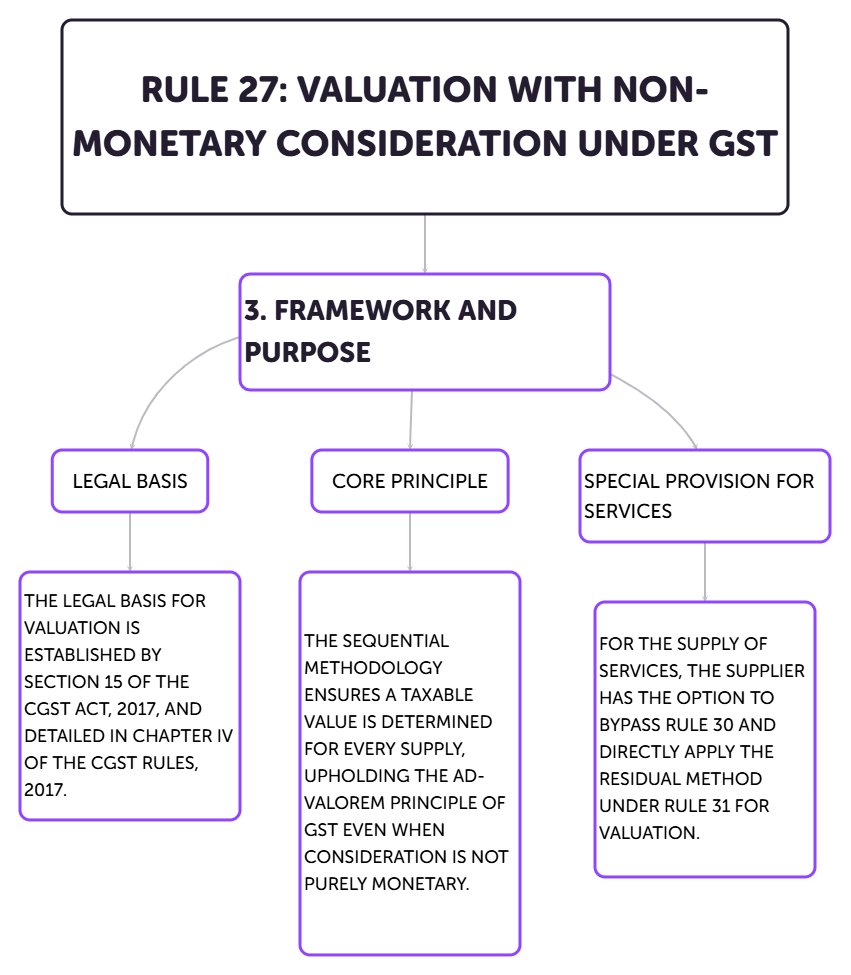
Rule 27: Value of supply of goods or services where consideration is not wholly in money
Key Points / Method of Valuation:
➡️Value = Open market value (OMV)
➡️If OMV not available → Value of supply of like kind and quality
➡️If not determinable → Rule 30 or Rule 31 (cost-based or residual method)


Determination of Valuation Under GST Rules.
Rule 27: Value of supply of goods or services where consideration is not wholly in money
Key Points / Method of Valuation:
➡️Value = Open market value (OMV)
➡️If OMV not available → Value of supply of like kind and quality
➡️If not determinable → Rule 30 or Rule 31 (cost-based or residual method)
Determination of Valuation Under GST Rules.
Rule 27: Value of supply of goods or services where consideration is not wholly in money
Key Points / Method of Valuation:
➡️Value = Open market value (OMV)
➡️If OMV not available → Value of supply of like kind and quality
➡️If not determinable → Rule 30 or Rule 31 (cost-based or residual method)
Determination of Valuation Under GST Rules.
Rule 27: Value of supply of goods or services where consideration is not wholly in money
Key Points / Method of Valuation:
➡️Value = Open market value (OMV)
➡️If OMV not available → Value of supply of like kind and quality
➡️If not determinable → Rule 30 or Rule 31 (cost-based or residual method)
Determination of Valuation Under GST Rules.
Rule 27: Value of supply of goods or services where consideration is not wholly in money
Key Points / Method of Valuation:
➡️Value = Open market value (OMV)
➡️If OMV not available → Value of supply of like kind and quality
➡️If not determinable → Rule 30 or Rule 31 (cost-based or residual method)
Defence and Arguments can be taken when the Department tries to reverse the ITC in case of the Supplier's Retrospective Cancellation.
Image Designed by Abhishek Raja Ram; 9810638155, using Google Nano Banana.

Defence and Arguments can be taken when the Department tries to reverse the ITC in case of the Supplier's Retrospective Cancellation.
Image Designed by Abhishek Raja Ram; 9810638155, using Google Nano Banana.
Defence and Arguments can be taken when the Department tries to reverse the ITC in case of the Supplier's Retrospective Cancellation.
Image Designed by Abhishek Raja Ram; 9810638155, using Google Nano Banana.
Last Seen Hashtags on Sotwe
bloodfuck
Seen from Pakistan
momson(*)****** filter:videos
Seen from Brazil
hospitalsex
Seen from Malaysia
八波會
Seen from United Kingdom
xlii() or #exny() or #momson() or #nolimit() +video
Seen from Brazil
monkeyappwinsFull
Seen from United States
打屁股
Seen from Germany
omegle
Seen from United Kingdom
เย็ดเมียเพื่อน
Seen from Thailand
伪娘
Seen from United Kingdom
Trends for you
Most Popular Users

Elon Musk 
@elonmusk
241.2M followers

Barack Obama
@barackobama
119.1M followers

Cristiano Ronaldo
@cristiano
112.6M followers

Donald J. Trump
@realdonaldtrump
111.8M followers

Narendra Modi
@narendramodi
107.1M followers

Rihanna
@rihanna
98.2M followers

NASA
@nasa
92.2M followers

Justin Bieber
@justinbieber
91.4M followers

KATY PERRY
@katyperry
88.9M followers

Taylor Swift
@taylorswift13
82.8M followers

Lady Gaga
@ladygaga
74.2M followers

Virat Kohli
@imvkohli
71.7M followers

Kim Kardashian
@kimkardashian
70.4M followers

YouTube
@youtube
68.8M followers

Neymar Jr
@neymarjr
64.6M followers

Bill Gates
@billgates
64.5M followers

The Ellen Show
@theellenshow
62.4M followers

Selena Gomez
@selenagomez
61.9M followers

CNN
@cnn
61.8M followers

X
@x
60.8M followers