

Top Tweets for #HENRYVI


OTD in 1430 Alice Chaucer married #HenryVI’s favourite William de la Pole, later Duke of Suffolk. Alice is remarkable for her reinvention from Lancastrian intimate to Yorkist matriarch, demonstrating how to survive & thrive during the #WarsoftheRoses.
Alice was the granddaughter of the poet Geoffrey Chaucer. Geoffrey began life as the son of a London merchant, but rose in prominence as a royal official & especially through his service & connections to John of Gaunt, Duke of Lancaster. Gaunt became Geoffrey’s brother-in-law when he married his long-term mistress Katherine Swynford in 1396. Katherine was the sister of Geoffrey’s wife Philippa de Roet. Geoffrey’s son (& Alice’s father) Thomas Chaucer served as Speaker of the Commons in five Parliaments.
From her own beginnings as a knight’s daughter Alice’s rise was dramatic. Aged 11 she was married to Sir John Phelp, a close friend of #HenryV. Phelp died one year later in September 1415 after the capture of Honfleur. However, her period as Phelp’s wife had introduced Alice to the King’s circle & her next husband in the early 1420s was Thomas Montagu, 4th Earl of Salisbury, one of the foremost English commanders in the Hundred Years War. Salisbury died in 1428 of battle wounds suffered at the Siege of Orleans. His heir was Alice’s stepdaughter, Alice Montagu, who became Alice, Countess of Salisbury & her husband Richard Neville, Earl of Salisbury. They became prominent Yorkists during the Wars of the Roses & were the parents of Richard Neville, Earl of Warwick (the Kingmaker.)
Alice Chaucer’s rise continued after Salisbury’s death facilitated by her choice of third husband, William de la Pole, principal minister & favourite of Henry VI. As de la Pole’s wife Alice became a senior lady in waiting to Henry’s Queen Margaret of Anjou & was made a Lady of the Garter. In 1448 de la Pole & Alice were made Duke & Duchess of Suffolk. They had one child together (Alice’s only offspring from her three marriages) John de la Pole, later 2nd Duke of Suffolk.
De la Pole’s impeachment by the Commons in 1450 & murder soon afterwards were not fatal for Alice. She protected the family’s title & estates by loaning the King money. Longer term she preserved her position by allying with the King’s dynastic rival, Richard, 3rd Duke of York & his son Edward, Earl of March (later #EdwardIV.) She continued to serve as custodian of the royal castle of Wallingford. In this role she was the gaoler of the prominent Lancastrian Henry Holland. Duke of Exeter in 1455 & then in 1472 of the former Queen Margaret of Anjou. Alice herself died in 1475 & is buried in an elaborate tomb in Ewelme, Oxfordshire (see image) ; a manor which had once belonged to her father.
Alice’s son John de la Pole was originally married as a child bridegroom by his father to the Lancastrian heiress Margaret Beaufort in 1450. Their marriage was never consummated & was annulled in 1453, paving the way for Margaret to be remarried to Edmund Tudor. John married Elizabeth of York in 1458 cementing the family’s allegiance to the House of York. Through his wife he was brother-in-law to the two Yorkist Kings Edward IV & #RichardIII. John & Elizabeth’s heir John de la Pole, Earl of Lincoln would later lead the 1487 Yorkist rebellion against #HenryVII.

#HenryVI had attempted to end the #WarsoftheRoses with a Loveday ritual, where the adversaries paraded through the streets of London holding hands in March 1458. But none of them shared his enthusiasm for peace & reconciliation.
OTD in 1458 - the peace was shattered when the King’s own household men (likely encouraged by his wife Margaret of Anjou & the Dukes of Somerset & Exeter) attempted to assassinate Richard Neville, Earl of Warwick (the Kingmaker.) Warwick was a key ally of Henry’s dynastic rival Richard, 3rd Duke of York. He was also the initiator of the First Battle of St Albans which had killed Somerset’s father in May 1455.
According to the English Chronicle on the 9th November: ‘the King & Queen being at Westminster, there occurred a great quarrel between Richard Eatl of Warwick & men of the King's household, so much so that they would have slain the earl had he not escaped to his barge & went soon after to Calais, of which he had been made Captain shortly before by authority of Parliament. Soon afterwards the young Duke of Somerset, by canvassing those who hated the Earl of Warwick, became captain of Calais, & a privy seal was directed to the earl in discharge to him of the captainship; however the earl, for as much as he had been made captain by authority of Parliament, would not obey the privy seal but continued exercising the office for many years after...’
Warwick had first been appointed Captain of Calais following his victory at St Albans in 1455 & he used the position to great effect.
Calais provided Warwick with an overseas safe haven where he could retreat following downturns in his fortunes in England. His role ‘keeping the seas’ in the Channel brought him great popularity with London & South Coast merchants for protecting them from enemy shipping & pirate attacks. Capturing these rival vessels was also a lucrative source of additional income for Warwick, especially important at times when his estates in England were forfeit. But above all, due to its geographic position Calais was a perfect launching point for invasion & therefore a much greater danger to the Lancastrians than the Duke of York’s more distant outpost in Ireland.
In September 1459 Warwick crossed over to England with part of the Calais garrison to rendezvous with the Duke of York & the Earl of Salisbury at Ludlow. This expedition ended in failure when the Calais men under Andrew Trollope refused to fight against Henry VI at Ludford Bridge, forcing York to flee to Ireland & Warwick, Salisbury & York’s son March (later #EdwardIV) to flee back to Calais.
Another Yorkist invasion of England followed, with Warwick, Salisbury & March landing at Sandwich from Calais on 26 June 1460. This one was an impressive success, with Warwick & March winning the Battle of Northampton on 10 July 1460 & capturing Henry VI & Salisbury successfully besieging the Tower of London.

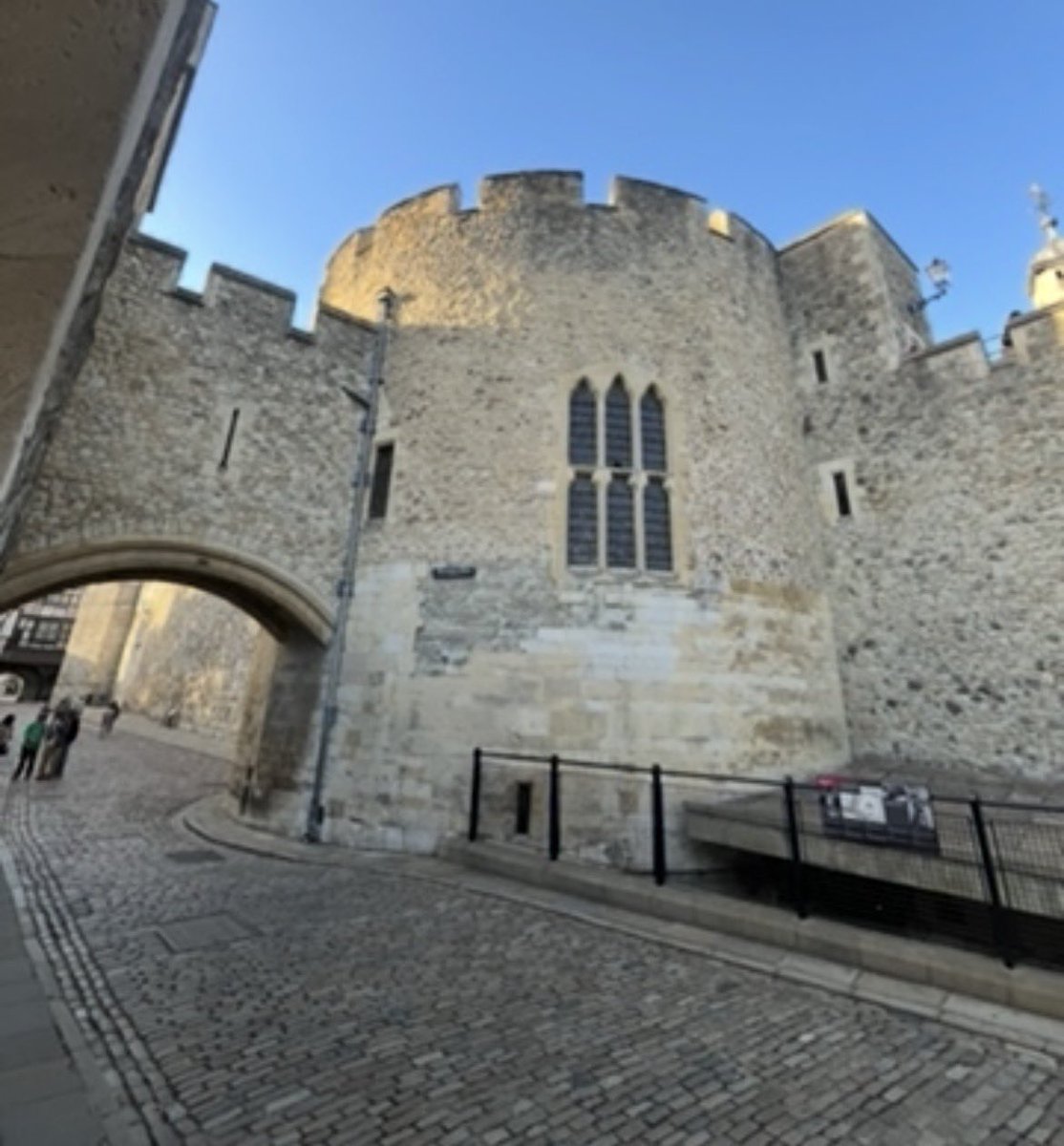
Hello from the Tower of London. What a difference two days make. Today the light in the Wakefield Tower, where the Lancastrian King #HenryVI died, has a golden glow (image one) unlike on Thursday when it had a more sinister quality (image three.) On Thursday I also spotted a pigeon resting on the exterior of Henry’s window (image four.)

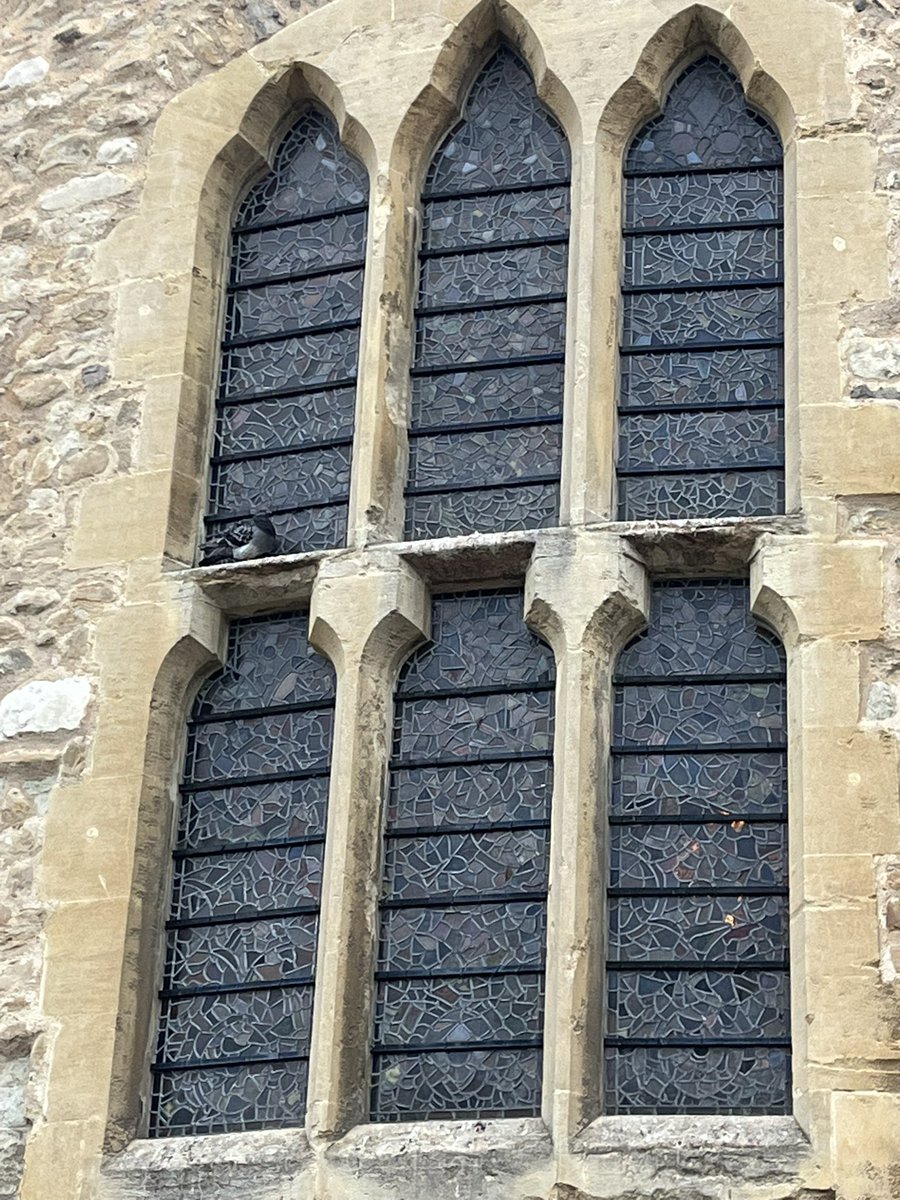


#WarsoftheRoses
This is the spot where the Lancastrian King #HenryVI is said to have died of ‘pure displeasure & melancholy’ on 21 May 1471. In reality, he was likely helped on his way to God (i.e. put to death) - see linked post below.
I was the opposite of displeased yesterday. The light quality was much better than on my last visit to the Wakefield Tower enabling me to refresh my photos 😄

#WarsoftheRoses
OTD in 1461 - Parliament attainted Margaret of Anjou, wife of the deposed Lancastrian King #HenryVI. Margaret had become the main opponent of the Yorkists after Somerset’s death at the First Battle of St Albans in 1455, & it is striking it took them so long to begin legal proceedings against her.
In 1459 the Lancastrian Parliament of Devils had attainted the Yorkist lords. However, they invaded England & returned to power following the victory of the Earls of Warwick & March (later #EdwardIV) at the Battle of Northampton in July 1460. The Parliament which followed in October 1460 passed the Act of Accord, which attempted to end the Wars of the Roses by transforming Henry VI’s dynastic rival Richard, 3rd Duke of York into his heir. This diplomatic masterstroke could have worked, if Margaret hadn’t remained at large & determined to resist the disinheritance of her son Edward of Westminster.
The 1460 Parliament had attempted to ignore Margaret’s role in the conflict due to contemporary reluctance to condemn royalty directly as opposed to the established custom of blaming discord & misgovernment on ‘evil advisors.’ She was after all the wife of the King & an anointed Queen. However, not attempting to deal with her in October 1460 soon proved to be a mistake.
Within two months the Lancastrians launched a further military campaign, which led to York’s death & that of Warwick’s father the Earl of Salisbury & York’s second son the Earl of Rutland, when they were ambushed & killed at Wakefield. Margaret’s army had then swept south & retaken possession of Henry VI following the Lancastrian victory at the Second Battle of St Albans in February 1461.
Warwick & March responded to this nadir by declaring March king as Edward IV on the grounds that the Lancastrians had breached the terms of the Act of Accord by killing York & resuming the war. The Yorkist victory at the Battle of Towton on 29 March 1461 confirmed Edward’s kingship in fact as well as name.
This was the context of the November 1461 Parliament which condemned Margaret for her ‘transgressions and offences’ & had her ‘convicted & attainted of high treason.’ This meant ‘the same Margaret & also the said Edward her son shall be legally unable, & taken, held, deemed & considered unable & unworthy, to have, occupy, hold, inherit or enjoy any estate, name of dignity, pre-eminence or possessions ... the same Margaret & Edward her son shall forfeit to our said liege lord King Edward IV all the castles, manors, lordships, honours, lands & tenements.’
The attainder against Margaret was more than Yorkist revenge for her role in the deaths of York & Salisbury. It was a necessary part of the formal deposition of her husband Henry VI & of combatting her remaining support in the north of England. Crucial when she herself was in Scotland preparing for another invasion.

Seems unlikely that #HenryVI really prophesied that Henry Tudor (later #HenryVII) would succeed him. in October 1470 HenryVI’s heir, Edward of Westminster, had reached manhood & was about to wed Warwick’s daughter, Anne Neville. Both Henry VI & Warwick would have been expecting that Edward would succeed Henry, & then be followed by the grandsons they hoped Edward & Anne would produce for them. But of course post 1485, few people would have pointed out these inconvenient truths.

#OnThisDay in 1470, the 13-year-old Henry Tudor had an audience with Henry VI, who had recently been restored to the throne by the Earl of Warwick. It was later claimed that the king prophesied his nephew would one day rule England.
📸 Getty
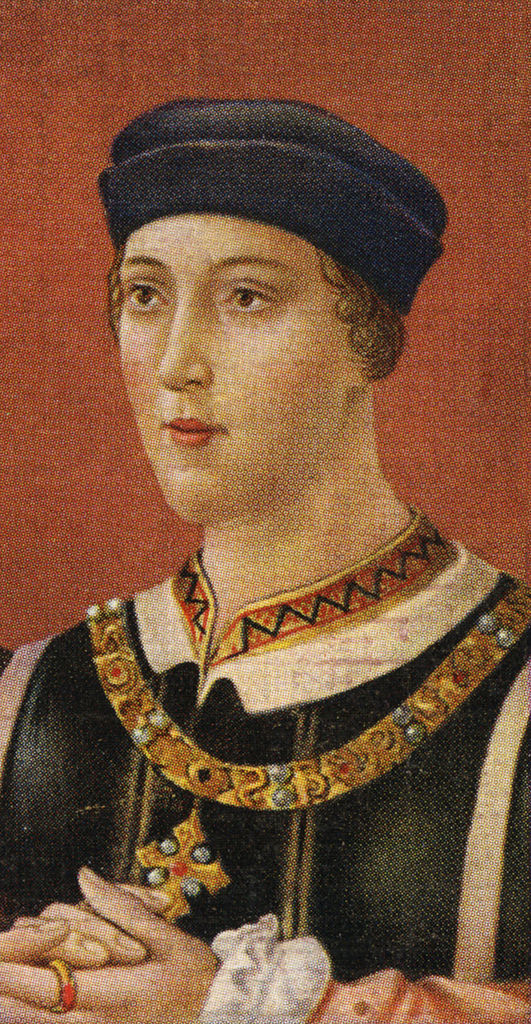
#WarsoftheRoses
The Lancastrian King #HenryVI was more popular in death than in life & this worried the Yorkist authorities.
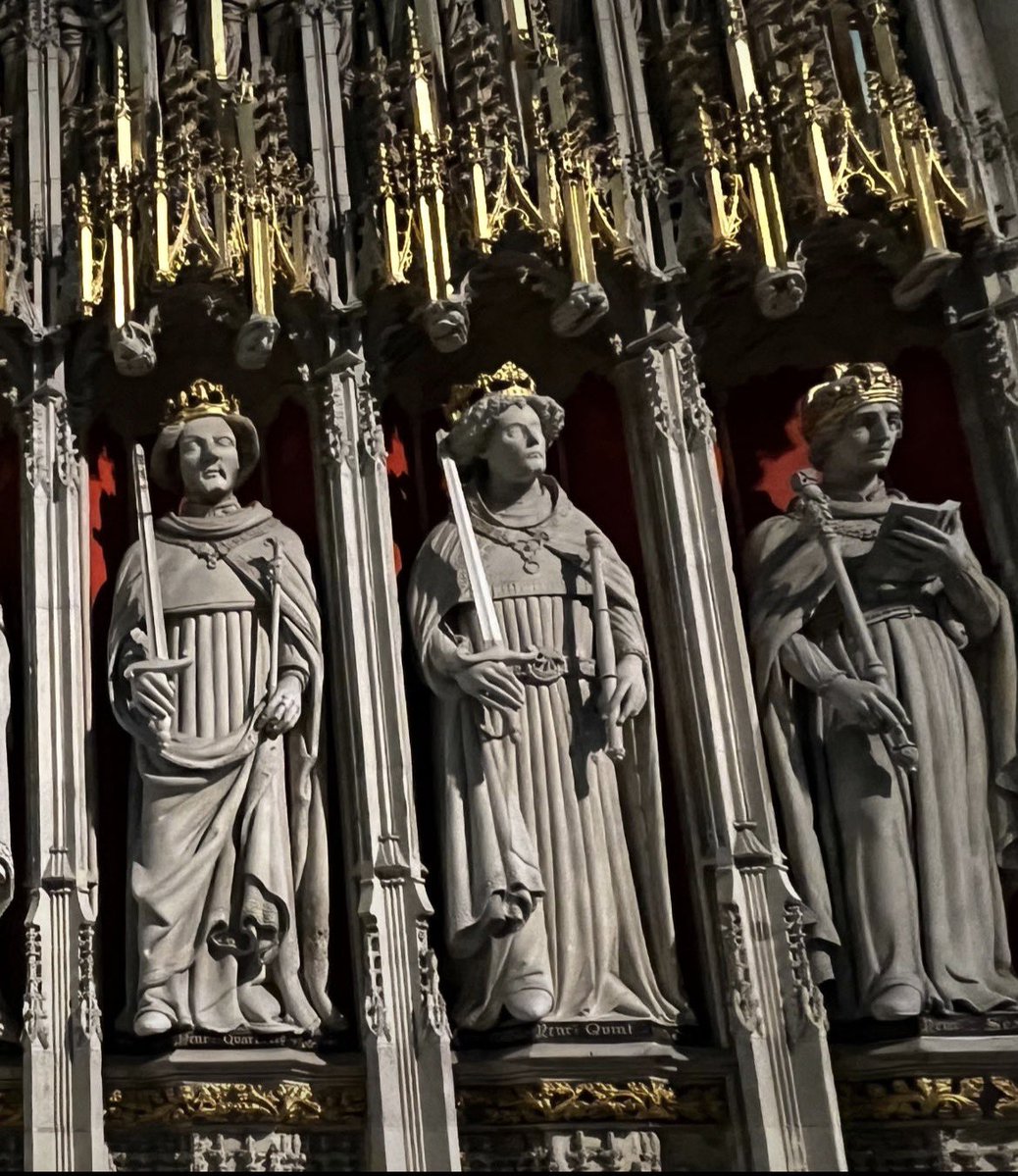
OTD in 1479 - Archbishop Booth ordered an end to the late King’s veneration at York. Henry’s statue was removed from the screen of kings & destroyed to deter pilgrims & prevent the incitement of unrest.
This is why the statue of Henry we see in York today (right) looks so different from those of the other kings on the screen. It dates from 1810 & was made by a sculptor who wanted to capture the King’s likeness. This contrasts to the fifteenth century sculptors, who had produced 15 generic statues of kings to represent the monarchs from William I to Henry VI in a generic Biblical style.
A cult developed around Henry’s perceived holiness in the years following his murder/ death from ‘pure displeasure and melancholy’ (the official story) in 1471. By 1479 the cult had become second only in popularity to that of St Thomas Becket. Interestingly, Archbishop Booth drew on technicalities to forbid ongoing veneration of Henry at York, namely that the cult had not been authorised by the Pope & that York Minster was not Henry’s burial site, therefore venerating the late King in this location was inappropriate.
Pilgrims continued to flock to Henry’s tomb in Chertsey Abbey. After he became King, #RichardIII ordered Henry’s re-internment in St George’s Chapel, Windsor, a more suitable resting place than the original modest tomb in Chertsey Abbey. This was likely motivated by a desire to show respect to a deceased fellow monarch & potentially an act of atonement for Henry’s death. Removing the late King from Chertsey also helped to reduce the cult’s popularity.
How corrupt was England in the lead up to the #WarsoftheRoses? One of the main complaints of the Duke of York & his allies was that the Lancastrian King #HenryVI had been captured by a small clique who were making fortunes at the country’s expense. Were they right?
OTD in 1440 - Henry VI made a series of grants with only the Duke of Suffolk & Bishop Moleyns, the Lord Privy Seal present. This happened again on 2 & 3 November & this time only Suffolk himself was in the room. This was contrary to the established norm where proposals for awards were made in Royal Council meetings & the King would then approve or reject them in line with the majority view.
There were also accounts of petitions being heard & resolved in private. This was instead of the customary public process where the King appointed triars of petitions, who examined the merits of the claims. If the triars believed the claims had substance the petition would then be referred to Parliament for consideration.
Moleyns was lynched in Portsmouth in January 1450 by soldiers who had served in France in the Hundred Years War. They objected to the King’s peace policy & their own unpaid wages. Suffolk himself was captured & executed in the Channel on 2 May 1450 by the same rebel elements after the King had sent him into overseas exile in response to popular & political pressure.
However, the removal of Suffolk & Bishop Moleyns did not end Henry’s reliance on or domination by a small clique. They were simply replaced by a new favourite Edmund Beaufort, Duke of Somerset & Henry’s government continued to operate in the same way. Henry’s own weakness & ineptitude were becoming increasingly clear, as was the reality that power & rewards depended on close proximity to the King & the exclusion of rivals. This was a key motivation for the first Battle of St Albans on 22 May 1455, which eliminated Somerset & restored York & his allies to power.

How unruly was England in the lead up to the #WarsoftheRoses? Some historians
argue that the violence & disorder depicted in the Paston letters was atypical & confined to East Anglia. I disagree.
OTD in 1451 - thousands of
armed men confronted each other in the South West. The cause was a dispute between the Earl of Devon & Sir William Bonville, long term rivals for territory, offices & control in the region.
According to Benet’s Chronicle: ‘On 17th September the Earl of Devon, Lord Moleyns & Lord Cobham on one side, the Earl of Wiltshire & Lord Bonville on the other, with many men, threatened to do battle. The Duke of York, however, despatched 2000 men to prevent hostilities & harm. The King, nevertheless, much angered by these disturbances, sent for the participants, imprisoned the Earl of Wiltshire & Lord Bonville in Berkhamstead Castle, & Lords Moleyns & Cobham in Wallingford Castle, even if only for a month. York & Devon, despite several summonses, failed to respond…’
#HenryVI’s inability to provide effective arbitration & royal justice in disputes such as this one (with two key participants Devon & York feeling able to ignore his writs with limited consequences) was further evidence of his failure as King. It is no wonder that in this power vacuum other nobles felt empowered or forced (or perhaps both) to take matters into their own hands in other disputes.
For example, in the summer of 1453 the Earl of Warwick (the Kingmaker) was fighting armed skirmishes against men allied to the Duke of Somerset in an inheritance dispute over lands in Glamorgan. Similarly, in October 1453 the feuding Nevilles & Percies fought one another at Topcliffe in Yorkshire. A further decisive armed confrontation between them followed in October 1454 near Stamford Bridge, resulting in victory for the Nevilles & the capture & imprisonment of Lord Egremont.
Given the geographic disruption of these examples (South West, Wales, Yorkshire) it is sadly hard to conclude that what the Pastons were enduring in East Anglia was in any way unusual. Perhaps they were simply atypical in their record keeping, which helpfully gives us a blow by blow account of the action in their disputes.
#WarsoftheRoses
OTD in 1445- #HenryVI’s cousin (& later dynastic rival) Richard, 3rd Duke of York returned from France, ending his term as Lieutenant. He expected to be reappointed, but his opposition to Henry’s conciliation policy towards the French combined with the King’s longstanding personal suspicion of him, ensured his rival Edmund, Duke of Somerset was chosen in his place. This proved to be a decision Henry would likely later regret.
York was widely viewed as having done a good job as Lieutenant. With constrained resources he had safeguarded Normandy & provided stability & effective government. The Royal Council (likely on the Duke of Suffolk’s suggestion) had also proposed that York open negotiations to marry his heir Edward, Earl of March (later #EdwardIV) to the daughter of the French King Charles VII. Although welcomed by York this proposal came to nothing & became one of the many fascinating what ifs about the women the first Yorkist King could have married.
York’s disapproval of Henry’s peace policy (he had opposed the surrender of Maine in exchange for an extended truce & the royal marriage to Margaret of Anjou) prompted the King to look elsewhere for a replacement lieutenant. Henry’s decision to appoint Edmund Beaufort, Duke of Somerset, the younger brother & heir of the previous Duke whose disastrous 1443 campaign in Gascony had undermined both York’s position as Lieutenant & Normandy’s security, added insult to injury.
York was appointed Lieutenant of Ireland for ten years on 30 July 1447. A logical appointment given his status as the primary English landowner in the province, but it was also undeniably one intended to limit his political influence in both England & France.
Somerset’s own failure in France was swift. He surrendered Normandy’s capital Rouen to the French without even a token siege. The rest of Normandy fell in the summer of 1450 after the loss of the Battle of Formigny & Siege of Caen.
We will never know whether York would have fared any better in Normandy if he had remained as Lieutenant instead of Somerset. Both men suffered from the same lack of resources. However, it seems reasonable to assume that under York England’s defeat may at least have taken longer (given his superior prior record) if indeed it happened at all.
As it was York’s status as the last Lieutenant of France not implicated in the humiliating defeats in Normandy in 1449-50 boosted his credibility as the primary figurehead of opposition to the failings of Henry VI’s government. Failings which Henry himself compounded by effectively making Somerset his chief minister after his return to England & the murder of the previous royal favourite the Duke of Suffolk.
The stage was being set for the outbreak of the Wars of the Roses, & Henry through his own ineptitude would be the conflict’s primary architect.

OTD in 1470 - execution of the Yorkist John Tiptoft, Earl of Worcester in the name of the restored Lancastrian King #HenryVI. Tiptoft is described in sources written after the 1485 Tudor invasion as ‘the Butcher of England.’ But was this an over-simplification?
Let’s start with the origins of Tiptoft’s bloodthirsty reputation. The first Yorkist King #EdwardIV appointed Tiptoft as Constable of England in February 1462 during a period when he was seeking to impose his authority on England & deal with defeated Lancastrian opponents. The role of Constable involved trying treason cases with no jury; simply an examination of the evidence followed by a decision on guilt or innocence & then sentencing (likely to death if the accused was found guilty.)
Soon after his appointment Tiptoft convicted John de Vere, 12th Earl of Oxford, Oxford’s heir Aubrey de Vere & Sir Thomas Tuddenham of high treason & they were beheaded on Tower Hill. However, Oxford’s second son John de Vere was allowed to succeed his father, which would later prove to be a mistake when he established himself as one of the most able Lancastrian commanders, playing prominent roles in the 1470 restoration of Henry VI & Henry Tudor’s victory at Bosworth in 1485.
Tiptoft was present in the North East as the Neville brothers, John Neville (later Earl of Northumberland & Marquess of Montagu) & Richard Neville, Earl of Warwick (the Kingmaker) crushed the remaining Lancastrian resistance in the early 1460s. He tried prisoners captured after the Battle of Hexham & the taking of Bamburgh Castle.
In 1467 Edward sent Tiptoft to Ireland to deal with the troublesome deputy governor, Thomas Fitzgerald, who he removed from office, tried for treason & had executed alongside the Earl of Desmond.
But there was more to Tiptoft than sentencing prominent men to death on Edward IV’s behalf. He was a brilliant scholar renowned for his Latin expertise & had studied at University College, Oxford between the ages of 13 & 16. He was created Earl of Worcester in July 1449 around the time of his marriage to Warwick’s widowed sister (& possible twin) Cecily Neville, Dowager Duchess of Warwick.
Even though Cecily herself died in July 1450 (likely of pregnancy complications) their marriage ensured Tiptoft became a prominent member of the party forming around Henry VI’s dynastic rival Richard, 3rd Duke of York & his Neville relatives. He served first as Lord High Treasurer followed by Lord Deputy of Ireland.
Tiptoft undertook a pilgrimage to the Holy Land in 1458 & on his way home spent two years studying at the University of Padua. Perhaps a wise decision as it provided a safe haven during the turbulent years when control of England swung between the Lancastrian Queen Margaret of Anjou & the Yorkist lords.
Tiptoft returned to England following Edward claiming the crown in 1461. As well as his appointment as Constable he was elevated to the Order of the Garter.
In 1470 Tiptoft was captured & prevented from fleeing to Burgundian held Flanders with Edward IV. His execution is usually presented as a moment of karma for the Lancastrians, which no doubt it was, but I’d like to suggest to you that there was another element which is often overlooked.
Tiptoft was Warwic:k’s brother-in-law & owed his rise to that connection. Therefore Warwick might have expected Tiptoft would take his side rather than Edward’s in 1469-70 & was likely incensed at Tiptoft’s ‘betrayal’, not least because Tiptoft oversaw the capture, execution & impaling of sailors from Warwick’s fleet. With Warwick ruling England on behalf of the restored Henry VI this sealed Tiptoft’s fate & he knew it. He faced death bravely & reportedly requested to be killed with three blows of the axe to honour the Trinity.

#WarsoftheRoses
OTD in 1470 - one of the most dramatic events in English history took place. A deposed King, the Lancastrian #HenryVI (left) was released from the Tower & restored in a grand ceremony at St Paul’s. This event was the culmination of his old enemy & now principal ally Richard Neville, Earl of Warwick’s (the Kingmaker) successful invasion of England, which had forced the Yorkist King #EdwardIV to flee for his life to Burgundian held Flanders.
The Great Chronicle of London described the occasion in detail:
"On 15th October 1470 the Duke of Clarence accompanied by the Earls of Warwick, Derby & Shrewsbury, Lord Stanley, & many other noble men, rode to the Tower & fetched thence King Henry, & conveyed him through the streets of the city, riding in a long gown of blue velvet to St. Paul's... Thus was this ghostly & virtuous prince King Henry VI, after long imprisonment & many injuries, derisions & scorns sustained by him patiently of many of his subjects, restored to his right & regality...’
Edward IV’s prospects looked bleak. Few would have predicted that he would fight his way back to the throne in an impressive campaign in March-May 1471. Even his own brother George, Duke of Clarence (right) was with his enemies. Pending the birth of Queen Elizabeth’s latest child (her first son with Edward) Clarence remained his brother’s closest male heir & it is therefore no coincidence that the chronicler listed him first, such was his importance.
Clarence had rebelled because Warwick’s original plan had been to make him King of England in Edward’s place. This failed due to lack of support. Playing third fiddle to a restored Henry VI & the Lancastrian Prince of Wales can never have been George’s ambition. We can only guess at his mood as he led the procession on the 15th October. And it was this dissatisfaction which proved fertile ground for his sisters Anne & Margaret to turn his allegiance back to York. A critical element of Edward IV’s route back to the throne in 1471.

#WarsoftheRoses
OTD in 1470 - Richard Neville, Earl of Warwick (the Kingmaker) & George, Duke of Clarence landed in Plymouth. Their invasion of England to restore the Lancastrian King #HenryVI following their agreement with Queen Margaret of Anjou at Angers had began.
It is remarkable how quickly Yorkist resistance fell away. John Neville abandoned #EdwardIV to join up with his brother Warwick, who had soon gathered a force of over 30,000 men. Edward narrowly avoided capture & was force to flee for his life to Burgundian held Flanders, leaving his pregnant wife Queen Elizabeth to take refuge in the sanctuary at Westminster.
Warwick’s skills as a master propagandist enabled him to capture the public mood & harness Edward’s unpopularity. He & Clarence issued a proclamation declaring that ‘we intend, by the grace of God, and the help of every well disposed man, in right short time, to the uttermost of our powers, to suppress & put under falsehood & oppression; chastise & punish the said covetous persons in perpetual example to all others; & to set right & justice to their places, to see them equally ministered indifferently, as ought to be, & to reduce & redeem forever the said realm from serfdom to all other nations, and make it as free within it self as evar it was before.’
The reference to freeing the country from the serfdom of foreigners has a particular delicious irony, when Warwick & Clarence’s own invasion was French backed. Yet, the widespread support the invasion attracted shows that people of all social classes were prepared to swallow & accept the lie. Perhaps because of the unpopularity of Edward’s wife Elizabeth Woodville & her relatives, who did have Burgundian connections.
Edward would fight his way back to the throne in March-May 1471, but his success was by no means assured. In the autumn of 1470 his prospects looked bleak, rendering his later victories all the more impressive.

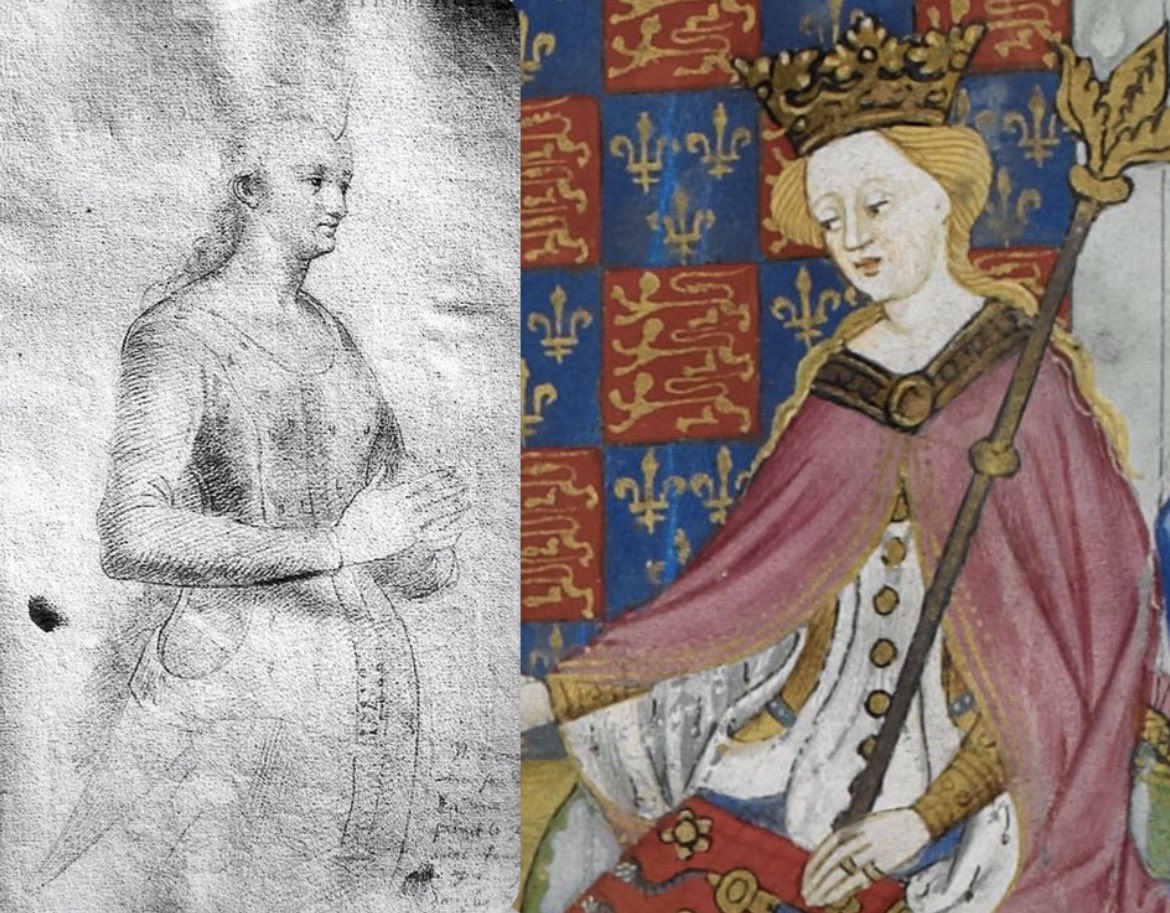
OTD in 1404 - birth of Marie of Anjou, later Queen of France (left) whose strength & political role inspired her niece Margaret of Anjou (right) wife of #HenryVI of England during the #WarsoftheRoses.
Marie was the eldest daughter of Louis II Duke of Anjou & Yolande of Aragon. Her younger brother Rene born in 1409 & later Duke of Anjou & King of Naples was the father of Margaret of Anjou.
She married the French Dauphin (later Charles VII) in 1422. Charles had been disinherited by the 1420 Treaty of Troyes, which made #HenryV of England Regent & heir to France in his place. Charles fought to regain his throne from the English & the support of his wife’s family was crucial to his success.
Marie served as Regent of France several times in Charles’s absence & made acts citing her authority as ‘Lieutenant of the King.’ Her niece Margaret likely drew on this example when she made her own bid to become Regent of England in autumn 1453 after her husband’s mental collapse. But she was destined to be disappointed. Her proposal appalled the Royal Council & Parliament who appointed Henry’s cousin & dynastic rival, Richard 3rd Duke of York to serve as Lord Protector instead.
Marie was also the mother of Louis XI known variously as ‘the Prudent’ or ‘the Universal Spider’ who succeeded as King of France in 1461. Louis took an active interest in English politics & played a critical role in shaping the course of the Wars of the Roses. He brokered the Angers Agreement in July 1470 which created the unlikely alliance between his cousin Margaret of Anjou & her old adversary & his friend Richard Neville, Earl of Warwick (the Kingmaker.) This led to the restoration of Margaret’s husband Henry VI & forced the Yorkist King #EdwardIV to have to fight his way back to the throne in March-May 1471.
#WarsoftheRoses
OTD in 1453 - Birth of Edward of Westminster, only child of #HenryVI & Margaret of Anjou. Edward was born after his parents had been married for 8 years. His birth should have been an occasion for rejoicing, instead it highlighted England’s turmoil.
The King remained in a catatonic state. He was unable to speak, let alone acknowledge Edward as his son, prompting rumours about the Prince’s legitimacy which would persist throughout his life.
The birth of her son inspired Queen Margaret to want to assume a greater political role to protect his inheritance. She made a bid to be appointed Regent while her husband was incapacitated (following the example of her mother in Anjou.) This proposal appalled the Royal Council & Parliament who appointed Henry’s cousin & dynastic rival, Richard 3rd Duke of York to serve as Lord Protector instead.
Edward was made Prince of Wales in the summer of 1454 before his first birthday to bolster his legitimacy. Margaret’s own focus shifted towards the young Prince. The Lancastrian followers she recruited in her Midlands heartlands were retained in his name & given livery badges depicting his black ostrich feathers & the De Bohun chained swan in preference to her husband’s antelope emblem.
The October 1460 Act of Accord negotiated by the Lords in Parliament following York’s bid for the throne preserved Henry as King, but made York his heir, disinheriting Prince Edward. Margaret could never accept this & her retribution was swift. An invading Lancastrian army killed York, his son Rutland & his close ally & brother-in-law Salisbury at Wakefield in December 1460. Whether this was in a battle or an ambush remains the subject of debate, with recently discovered evidence strengthening the ambush theory.
Born into a life of adversity Prince Edward was being moulded into a warlike individual who promised to be the antithesis of his inept father. After the Lancastrian victory at the Second Battle of St Albans in February 1461 he is alleged aged only 7 to have passed the death sentence on captured Yorkist knights.
After #EdwardIV seized the crown in 1461 regaining her son’s inheritance became an obsession for Margaret. She was even willing to accept the alliance which Louis XI of France brokered with her old enemy Richard Neville, Earl of Warwick (the Kingmaker) agreeing to the Treaty of Angers in July 1470. Through the terms of this agreement 16 year old Prince Edward wed Warwick’s youngest daughter Anne & Warwick invaded England to restore Margaret’s husband Henry VI & Prince Edward’s place in the succession.
Warwick’s invasion & collapsing support for his own cause forced Edward IV to flee for his life to Burgundian held Flanders in autmn 1470. He would return to fight his way back to the throne between March-May 1471.
Aged 17 Prince Edward played an important role at the Battle of Tewkesbury on 4 May 1471. He was in nominal command of the Lancastrian centre. How many of the decisions were his as opposed to his experienced lieutenants is disputed. But this is largely academic as the course of the battle was determined by the victory of the Yorkist vanguard over their Lancastrian counterparts. In one of the ironies of history the commander of the Yorkist vanguard was Edward IV’s younger brother, 18 year old Richard Duke of Gloucester (later #RichardIII) who would become the second husband of Prince Edward’s widow, Anne Neville.
Prince Edward died at Tewkesbury ending the senior Lancastrian line & his mother’s hopes. Accounts vary about whether he was cut down during the fighting or was killed afterwards by the Yorkists. The historian Paul Murray Kendall suggested those sources which allege Prince Edward was killed by men commanded by Edward IV’s other brother, George Duke of Clarence, could well be correct. This is because of their positions on the battlefield, Clarence was with Edward IV in the Yorkist centre which would have come face to face with the Prince & his men.
#WarsoftheRoses
OTD in 1459 - #HenryVI entered Ludlow in triumph after the flight of the Yorkist lords overnight. Waiting for him was York’s wife, Duchess Cecily, & their youngest children - 13 year old Margaret of York (later Duchess of Burgundy); 9 year old George (later Duke of Clarence) & 7 year old Richard (later Duke of Gloucester & #RichardIII.)
According to legend Cecily stood at the market cross clutching her children’s hands as the Lancastrian soldiers pillaged the town. This story is unproven, & it is possible that Cecily made her submission to the King inside the castle. Either way, we do know the Duchess & her children were unharmed, even though the town & castle sustained considerable damage.
Why had Cecily not fled with her husband? It seems likely that she hoped to further her family’s interests by remaining & was also confident in her own safety, knowing that the King’s principal lieutenant at Ludlow was her brother-in-law Humphrey Stafford, 1st Duke of Buckingham. Buckingham was married to Cecily’s elder sister Anne Neville. After her submission at Ludlow, Cecily & her youngest children were sent to live in Anne’s household. Also under the protection of the Buckinghams at this time was their 4 year old grandson Henry Stafford (later Duke of Buckingham & a key player in the events of 1483.)
In 1459 Cecily’s youngest sons George & Richard were of little dynastic importance, having two older brothers. This & their status as non-combatants also helped to protect them.
This changed after the deaths (likely by assassination rather than battle) of Richard, 3rd Duke of York & the second York brother, Edmund, Earl of Rutland at Wakefield in December 1460, & then the first York brother Edward, Earl of March claiming the throne as #EdwardIV in 1461. George & Richard were now Edward’s heirs. Cecily sent them away to the continent for their own protection in early 1461, not recalling them until after Edward’s victory at Towton once his grip on the crown was secure.

#WarsoftheRoses
OTD in 1459 - Lancastrian & Yorkist armies faced each other at Ludford Bridge.
The Yorkists were attempting to prevent the Lancastrians from crossing the river to Richard, 3rd Duke of York’s stronghold of Ludlow. They had built defensive ditches on their chosen ground complete with a makeshift artillery barrage. Tactics which one of their commanders Richard Neville, Earl of Warwick (the Kingmaker) would repeat in subsequent battles.
But this encounter would not be a repeat of Warwick’s father the Earl of Salisbury’s triumph at the Battle of Blore a few weeks earlier. Not only did the Lancastrian army outnumber the Yorkists by a ratio of two to one they also had a trump card more potent than Warwick’s cannons. King #HenryVI himself was present, attired in full armour & mounted beneath the royal standard, forcing those in the Yorkist ranks to confront the reality of fighting against the King himself rather than simply seeking to remove ‘evil counsellors’ as their leaders alleged. The King also offered pardons to all who submitted & chose not fight against him.
This prompted the overnight defection of Anthony Trollope & his contingent of 600 seasoned troops from the Calais garrison, who had accompanied Warwick to England.
As dawn broke on 13 October it became clear that the Yorkist lords - Richard, 3rd Duke of York; Richard Neville, Earl of Salisbury; Richard Neville, Earl of Warwick; Edward, Earl of March (later #EdwardIV) & Edmund, Earl of Rutland - had all fled into exile leaving Henry to enter Ludlow unopposed. More on that in tomorrow’s post.
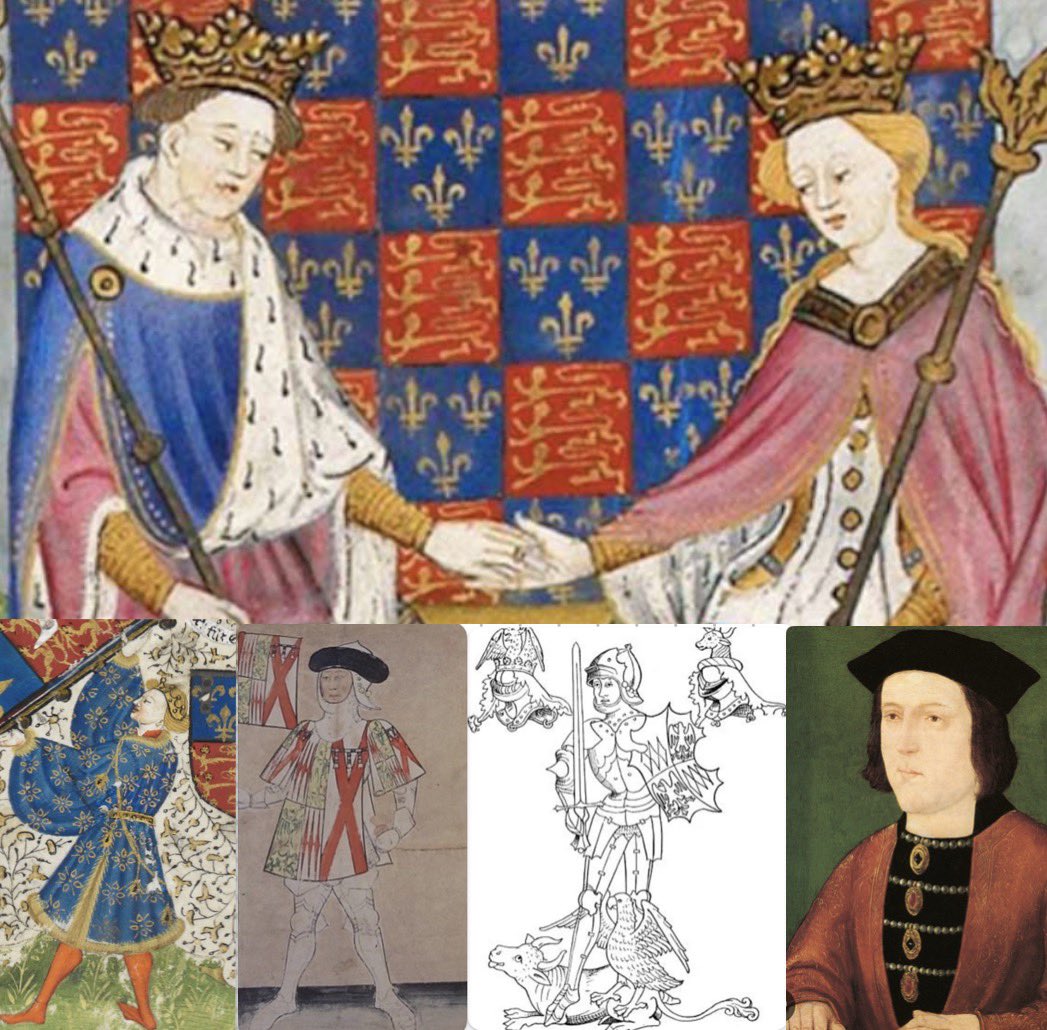
#WarsoftheRoses
OTD in 1460 - Richard, 3rd Duke of York entered Parliament & laid his hand on the throne. He was seeking to use Parliament to depose #HenryVI & make himself King, but was surprised by the lack of support for his bid, even from his allies.
In 1399 Parliament had deposed #RichardII & elected his cousin Henry of Bolingbroke as #HenryIV the first Lancastrian King. Presumably, York expected a similar outcome from the 1460 Parliament. Not least because through his mother, Anne Mortimer, a great-granddaughter of #EdwardIII’s second surviving son, Lionel, Duke of Clarence, York had a superior claim to the throne compared to the Lancastrian Kings #HenryIV, #HenryV & Henry VI, who were descended from John, Duke of Lancaster, the third surviving son of Edward III.
York’s allies, his brother-in-law the Earl of Salisbury, his nephew the Earl of Warwick (the Kingmaker) & his son the Earl of March (later #EdwardIV) had invaded England from Calais in June 1460. Warwick & March had won a crushing victory at the Battle of Northampton on 10 July 1460, taking possession of Henry VI & killing prominent Lancastrians. Salisbury had laid siege to the Tower of London & forced its surrender.
York, however, made a serious misjudgment in taking so long to return from Ireland & allowing three months to elapse between the Yorkist victory at Northampton & his own arrival in London. His absence had allowed his allies to become comfortable ruling England through Henry VI, hence even York’s own son March reportedly did not see the need to force Henry’s deposition.
The resulting deadlock led to the October 1460 Act of Accord, which recognised York as the heir to Henry VI (disinheriting the King’s son Edward of Westminster) but crucially left the King himself in place.
York’s sons Edward IV & #RichardIII would learn from their father’s mistakes & act far more decisively. Edward & Warwick rendezvoused at Burford in February 1461 after the Yorkist nadir which was Warwick’s defeat at the second Battle of St Albans & within days were marching on the capital & having Edward declared King on 4 March 1461.
Henry IV, Edward IV & Richard III had other advantages over York too. They were all widely seen as ‘upgrades’ on the Kings they replaced & thus were able to accumulate the support needed to secure the throne. Henry IV was a renowned tournament champion & crusader, had four sons & was seen as embodying all the qualities which Richard II lacked. Edward IV was the young victor of multiple battles & presented a stark contrast to the enfeebled Henry VI. Richard III was an adult male of proven ability & experience whose leadership most of the three estates viewed as preferable to that of an adolescent king of dubious legitimacy who would be in hock to the Woodvilles.
York was undoubtedly more capable than Henry VI, but he also wasn’t outstanding enough. He was older than Henry & had an indifferent record during the Wars of the Roses with the Yorkist victories largely being won by Salisbury, Warwick & March, & not by him.
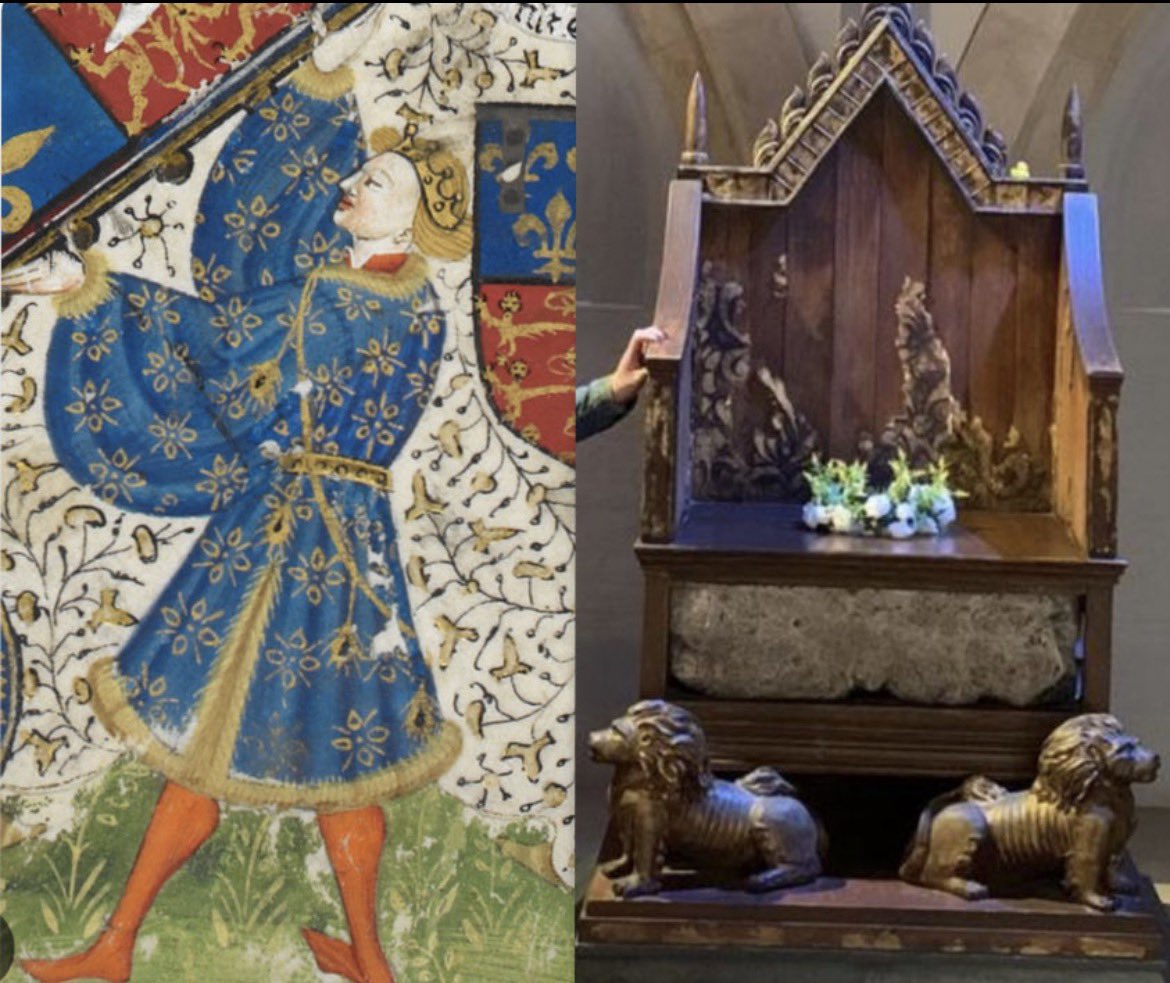
#WarsoftheRoses
OTD in 1460 - Parliament formalised the victory of the Earls of Warwick (the Kingmaker) & March (later #EdwardIV) at the Battle of Northampton by reversing the attainders against the Yorkist lords passed at the Lancastrian Parliament of Devils in 1459. Since Northampton political power & possession of King #HenryVI had been in Warwick’s hands.
Margaret of Anjou was in the Midlands with her son Prince Edward, her own power & ability to shape events rapidly diminishing. For now she remained Queen consort so the Commons dare not accuse her directly, even if everyone knew the primary ‘seditious person’ Parliament had been assembled to condemn was the Queen herself.
But worse was to come for Margaret & her son. Within three days Henry VI’s dynastic rival & her greatest enemy Richard, 3rd Duke of York would launch his own bid for the throne.

#WarsoftheRoses
OTD in 1459 - writs were issued in #HenryVI’s name for a Parliament to meet in Coventry in late November. A Parliament where two women would feature prominently, one well-known would be the victor & the other now forgotten among the accused.
York & his allies were not invited. This assembly dominated by Queen Margaret of Anjou & the Lancastrians would become known as the Parliament of Devils.
In their absence the Yorkist lords were attainted for treason & their lands confiscated. Those condemned included Henry VI’s cousin, dynastic rival & Margaret’s greatest enemy, Richard, 3rd Duke of York. York’s brother-in-law Richard Neville, Earl of Salisbury, who had won the Battle of Blore Heath against Margaret’s allies Lords Audley & Dudley on 23 September 1459. Salisbury’s son Richard Neville, Earl of Warwick (the Kingmaker) who had started the First Battle of St Albans in May 1455 causing the death of Henry & Margaret’s favourite Edmund Beaufort, 2nd Duke of Somerset. And most strikingly of all, Salisbury’s wife, Alice Montacute.
Alice was the only woman to be attainted by the Parliament of Devils. She seems to have been considered a foe equal to her menfolk by the Lancastrians. Neither York’s wife, Cecily Neville or Warwick wife’s Anne Beauchamp were attainted, which begs the question as to why Alice was singled out?
Perhaps it was because Salisbury held
his earldom through her, but then again this was also the case with Warwick & his wife. Potentially Warwick’s wife may have been excluded from the attainder because of her childhood history as a close companion of Henry VI (her father had been the King’s guardian.) But equally it seems likely the Lancastrians viewed Alice herself as a genuine threat.
York, Salisbury & Warwick had gathered at Alice’s manor of Ware ahead of the first Battle of Saint Albans in May 1455. It was likely at Ware they planned their tactics - if indeed they planned at all. There are indications that Warwick’s surprise advance up through the gardens of Holywell Street, which started the battle & entire Wars of the Roses may have been his own initiative & not pre-agreed with York & Salisbury.
In a sign of political activism Alice had fled to Ireland with York & his son Edmund, Earl of Rutland after the rout at Ludford Bridge in 1459. Warwick would then bring her by sea to Calais after he travelled to Ireland to confer with the Duke of York. This hints at a potential role for Alice as a Yorkist go between & perhaps this was the cause of the Lancastrian hostility towards her.

#WarsoftheRoses
OTD in 1453 - The Royal Council commanded the Earls of Salisbury & Northumberland to cease their feuding in Yorkshire in the King’s name. An order both earls ignored, knowing there would be no consequence from disobeying, with #HenryVI incapacitated & his authority in tatters.
In May 1453 the Earl of Northumberland’s second son, Thomas Percy, Lord Egremont was recruiting heavily in Yorkshire & distributing his livery. He, his father Northumberland & elder brother Henry Percy, Lord Poynings, had previously been involved in a violent dispute with the Archbishop of York, which they had ultimately lost due to royal intervention.
In August 1453 Egremont started a new feud with the Nevilles. He was angered by the marriage between Salisbury’s second son Thomas Neville & Maud Stanhope, which would see Wressle Castle (a property the Percies believed should be theirs) pass to the Nevilles. He launched an attack on the wedding party at Heworth near York with over 700 men. No-one was killed, but the audacity of the ambush ensured that reprisals would follow.
The bridegroom’s younger brother John led the Neville retaliation. He raided Egremont’s house at Catton & caused severe damage to the furniture, windows & roof.
John & Thomas Neville were joined at Topcliffe where the Nevilles & Percies fought one another in October 1453 by their father, the Earl of Salisbury, & their older brother the Earl of Warwick (the Kingmaker.) Egremont was likewise reinforced by his father Northumberland & his brother Poynings.
In May 1454 Egremont & his men broke into Salisbury’s house in York & attacked his tenants. A further decisive armed confrontation followed in October 1454 near Stamford Bridge, resulting in victory for the Nevilles & the capture & imprisonment of Lord Egremont.
The escalating feud demonstrated the collapse in royal authority, with Henry VI unable to fulfill even the most basic function of a medieval King of England,
keeping the peace between his subjects.
It was also a factor in helping persuade the Nevilles Earls of Warwick & Salisbury to support the Duke of York against the King. York imprisoned Egremont in 1454 & the Yorkists would then kill his father the 2nd Earl of Northumberland at the first Battle of St Albans on 22 May 1455.
Egremont was killed fighting for the Lancastrians at the Battle of Northampton in July 1460. His elder brother by then 3rd Earl of Northumberland met the same fate at the Battle of Towton in March 1461.
Thomas Neville died alongside his father the Earl of Salisbury & the Duke of York at the Battle of Wakefield in December 1460.
John Neville became his brother Warwick’s key lieutenant during the reign of #EdwardIV. He played a lead role in subduing Lancastrian resistance in the north & was elevated to the peerage as Earl of Northumberland in place of the Percies. He was incensed by Edward’s decision to restore the earldom to the Percies in 1470 & dissatisfied with his consolation title of ‘Marquess of Montagu’ & newly granted estates in the south west which he referred to as ‘a magpie’s nest’.’ He died fighting at Warwick’s side against Edward at the Battle of Barnet in April 1471.
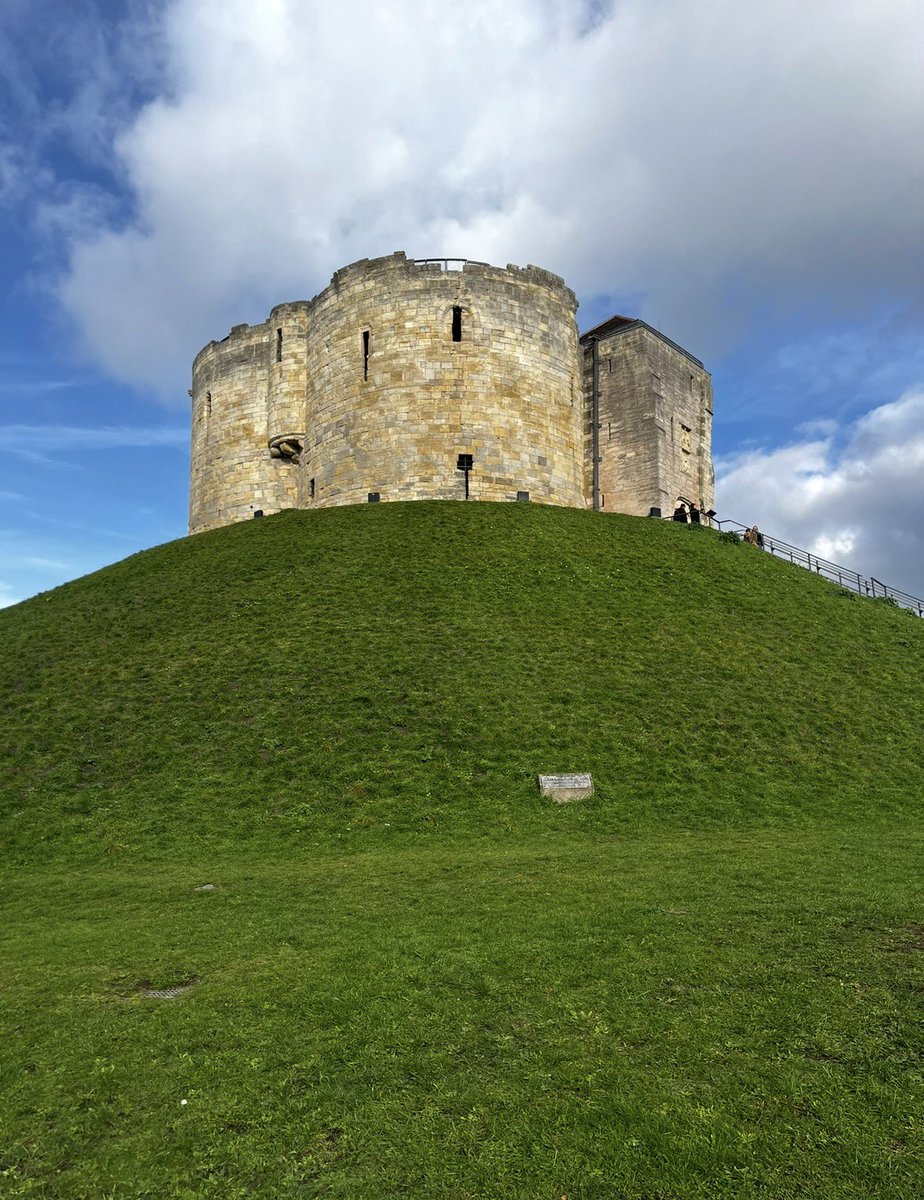
#WarsoftheRoses
Around this date in 1453 - #HenryVI was at Clarendon & suffered a mental collapse, leaving him unable to speak or otherwise communicate until Christmas 1454.
Henry’s breakdown is often said to have been triggered by the news of England’s catastrophic defeat at the Battle of Castillon (see linked post) & the death of the veteran military commander John Talbot, Earl of Shrewsbury.
Whatever the cause, Henry’s incapacity had immediate consequences for the balance of power in England. It blunted the power of his latest favourite & chief minster Edmund Beaufort, Duke of Somerset.
Somerset & Henry had been travelling west with an army to confront Richard Neville, Earl of Warwick (the Kingmaker) & William Herbert (later Earl of Pembroke) who had been engaged in a series of armed skirmishes with Somerset’s men in south Wales over land disputes relating to the Warwick inheritance. Henry’s collapse brought an abrupt halt to the westward journey, handing victory in Wales to Warwick. Somerset was now too preoccupied with his own declining position to care about his wife’s claims to lands in Wales.
After the birth of her son Edward of Westminster in October 1453, Queen Margaret of Anjou wanted to become regent & rule England in her husband’s place while he remained unwell. But this proposal proved unacceptable to the majority of England’s ruling class who supported the appointment of Henry’s cousin & Somerset’s enemy Richard, 3rd Duke of York as Lord Protector instead.

The Tower of London has one of the best job descriptions I’ve read for the ideal medieval King of England. Made all the most poignant because it is displayed in the Wakefield Tower. Metres from where #HenryVI the King who failed to meet nearly all these criteria met his death.
What made a good medieval king?
- He should be a warrior, defending his lands & people;
- Preserving the peace & providing justice;
- Open to good counsel but strong-willed & independent;
- Hugely ambitious but pragmatic & wise;
- Charismatic & generous but without favourites;
- Kind to the poor, but ruthless to enemies;
- Deeply religious & a friend to the Church;
- He must marry well & have many children.
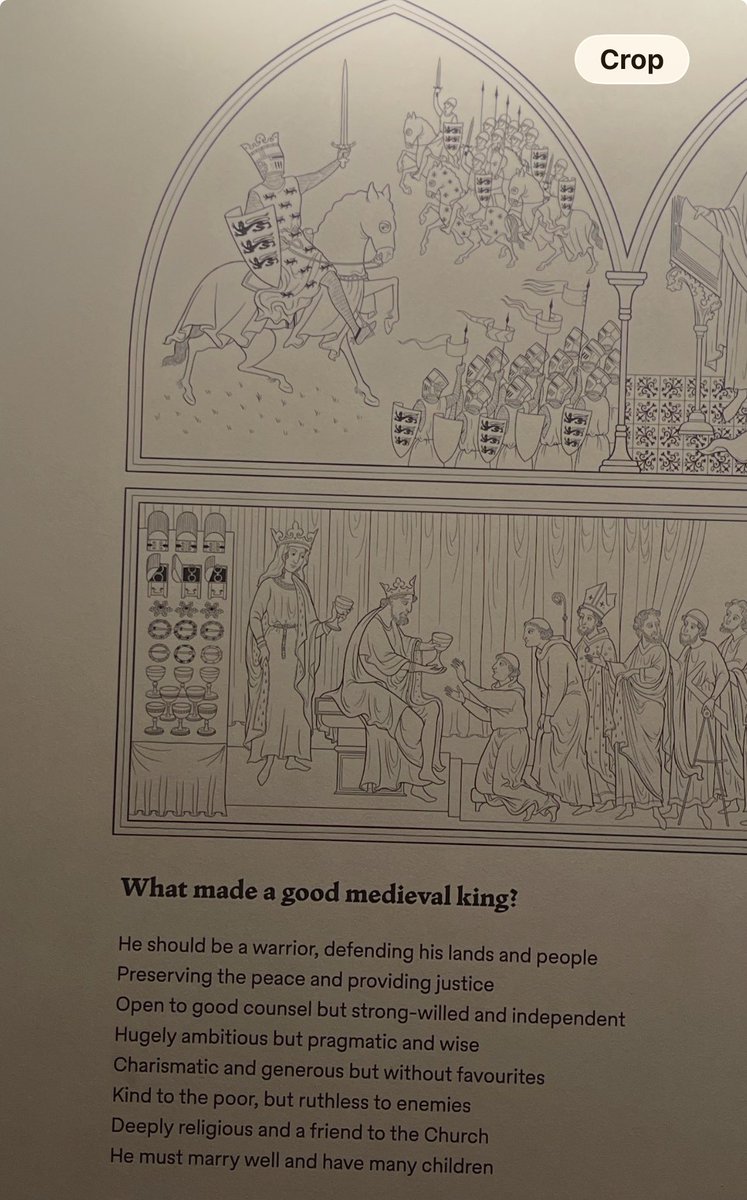

#WarsoftheRoses
This is the spot where the Lancastrian King #HenryVI is said to have died of ‘pure displeasure & melancholy’ on 21 May 1471. In reality, he was likely helped on his way to God (i.e. put to death) - see linked post below.
I was the opposite of displeased yesterday. The light quality was much better than on my last visit to the Wakefield Tower enabling me to refresh my photos 😄
#WarsoftheRoses
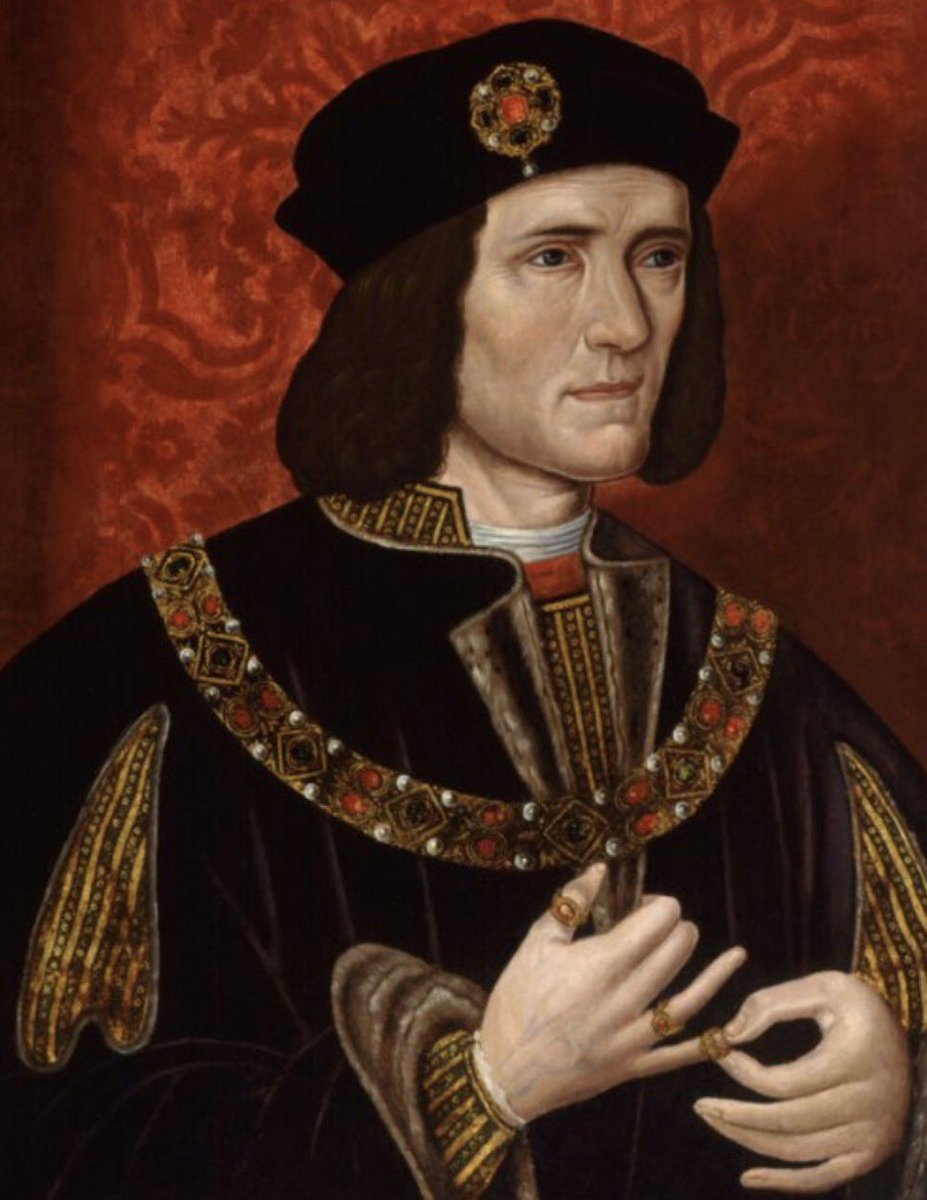
OTD in 1452 - Birth of #RichardIII. The youngest son of #HenryVI’s dynastic rival the Duke of York, Richard was never expected to become King. His achievements are all the more remarkable as a disabled man in an intolerant age.
Vilified by Shakespeare, Richard’s disability became a critical part of his ‘black legend’ after his death as much as the crimes his enemies alleged he committed.
Richard was the eleventh child of Richard, 3rd Duke of York & Cecily Neville. We only know his birth date because he recorded it for us himself in his prayer book.
Writing after Richard’s death John Rous claimed he had been born with teeth & shoulder length hair after a two year gestation in his mother’s womb! (The latter a biological impossibility & further disproved by the short gap between the birth of elder sibling Thomas who died in infancy & Richard’s own birth.) Rous also referenced Richard’s physical deformity as an adult, his twisted spine & uneven shoulders; details which we know to be true following the discovery of Richard’s remains at Leicester.
Examination of Richard’s skeleton confirmed he had scoliosis, a deformity of the spine which caused him to have uneven shoulders & experience physical pain. It is impressive that he managed to lead a highly active life (including demonstrating proficiency in physical combat) in an era when no treatment was available.
Richard was born into a turbulent world. He never knew anything other than the Wars of the Roses. Earlier in 1452 his father had assembled armed men to challenge King Henry VI at Dartford & been forced into a humiliating surrender. Before Richard’s third birthday his father, uncle the Earl of Salisbury & cousin the Earl of Warwick (the Kingmaker) won the first Battle of St Albans in May 1455. He was left behind with his mother & brother George when the Yorkist lords fled after the rout of Ludford Bridge in 1459. He was sent away with George to safety overseas after their father’s death at Wakefield in December 1460 & only returned to England in 1461 once his brother #EdwardIV seized the throne & secured his position as the first Yorkist King.
Aged only 18 Richard was his brother’s primary lieutenant in his successful campaign to regain the crown of England in March-May 1471 after the Lancastrian restoration of 1470-71. He commanded the vanguards in the Yorkist victories at Barnet & Tewkesbury. At Barnet heavy fog was the main determinant of the outcome, whereas at Tewkesbury Richard’s response to an attempted counter-attack by the Duke of Somerset proved crucial.
Richard married the heiress Anne Neville (daughter of the Earl of Warwick) & through a talent for estate management built on her inheritance & his own holdings to amass the most extensive property portfolio of any contemporary magnate. He endowed more chantry chapels & colleges than any contemporary noble.
He wanted to restart the Hundred Years War to regain England’s lost possessions in France & unlike other English nobles refused to accept a French pension as part of the 1475 Treaty of Picquigny. He led the English invasion of Scotland in 1482 which captured Berwick & established the border line which has remained unchanged to this day.
Richard was invited to become King by the three estates on 25 June 1483 after the revelation that his brother already had a wife at the time of his marriage to Elizabeth Woodville, rendering their children illegitimate. There was broad support for his accession including from later enemies,Thomas Stanley, Margaret Beaufort & the Duke of Buckingham, who all played prominent roles at his coronation. His Parliament of 1484 passed 33 reforming acts which delivered a fairer justice system by outlawing the practice of packed juries, introducing bail for the accused & preventing their goods being seized before a conviction, Corrupt officials were dismissed & clerks were ordered to pursue payment of unpaid dues to prevent the need for additional taxation.
#WarsoftheRoses
OTD in 1411 - Birth of Richard, 3rd Duke of York, dynastic rival to #HenryVI & father of #EdwardIV & #RichardIII. This is part two of two.
A power struggle ensued between Henry’s Queen, Margaret of Anjou, & the Yorkist lords led by Richard, Duke of York for control of England. This culminated in the attainder of the Yorkist lords at the 1459 Parliament of Devils.
York’s allies, his brother-in-law the Earl of Salisbury, his nephew the Earl of Warwick (the Kingmaker) & his son the Earl of March (later Edward IV) invaded England from Calais in June 1460. Warwick & March won a crushing victory at the Battle of Northampton on 10 July 1460, taking possession of Henry VI & killing prominent Lancastrians. Salisbury laid siege to the Tower of London & forced its surrender.
York himself however did not return to England until September 1460. He made a slow triumphal progress towards the capital, which culminated in him placing his hand on the throne & claiming the crown in October 1460. He was surprised not to receive more support for his suit, even from his closest allies. The resulting deadlock led to the October 1460 Act of Accord, which recognised York as the heir to Henry VI (disinheriting Edward of Westminster) but crucially left the King himself in place.
York had made a serious misjudgment in taking so long to return & allowing three months to elapse between the Yorkist victory at Northampton & his own arrival in London. His absence had allowed his allies to become comfortable ruling England through Henry VI, hence even York’s own son March reportedly did not see the need to force Henry’s deposition.
York’s sons Edward IV would learn from his father’s mistakes & act far more decisively when he claimed the crown. Edward & Warwick rendezvoused at Burford in February 1461 after the Yorkist nadir, which was Warwick’s defeat at the second Battle of St Albans & within days were marching on the capital & having Edward declared King on 4 March 1461.
York himself died along with his son Edmund, Earl of Rutland & brother-in-law Salisbury at the Battle of Wakefield in December 1460. Traditionally, this was believed to be as a result of York making an uncharacteristically reckless sally out of Sandal Castle. ( This always struck me as extremely odd after a long career of cautious calculation.) New evidence has recently emerged, however, that Wakefield may not have been a battle at all & that York, Rutland & Salisbury may have been ambushed & murdered, which to my mind at least makes far more sense.
York’s body was moved to a grand tomb at his former seat of Fotheringhay Castle in 1476. It is another oddity that it took Edward IV so long (sixteen years) to move & commemorate his father, especially when York was the source of his claim to the throne. The Neville brothers were much quicker in moving their father Salisbury, who had been killed at the same time as York, to Bisham & constructing an elaborate monument in his memory.
Richard, Duke of Gloucester (later Richard III) acted as the chief mourner for his father, York in 1476. It is possible that the reburial was his initiative. Especially given his high level of spending on chantry chapels & colleges, which his biographer Hicks has proved was unmatched by any of his contemporaries.
2/2

#WarsoftheRoses
OTD in 1411 - Birth of Richard, 3rd Duke of York, dynastic rival to #HenryVI & father of #EdwardIV & #RichardIII. This is part one of two.
Through his mother, Anne Mortimer, a great-granddaughter of #EdwardIII’s second surviving son, Lionel, Duke of Clarence, Richard had a superior claim to the throne compared to the Lancastrian Kings #HenryIV, #HenryV & Henry VI, who were descended from John, Duke of Lancaster, the third surviving son of Edward III. This should never have mattered.
Henry IV was elected King by Parliament to replace #RichardII in 1399. Both he & his son Henry V were popular & successful monarchs. York’s claim only started to become relevant in the 1450s once Henry VI had lost the Hundred Years War & with it all of England’s possessions in France apart from Calais, & revealed himself to be an abject failure as King of England.
Richard had a tragic early life. His mother died within hours of giving birth to him. His father Richard, Earl of Cambridge, was executed in August 1415 for plotting to remove Henry V & replace him with his brother-in-law Edmund Mortimer, Earl of March. Richard himself became a ward of the crown & did not inherit his father’s attainder, likely because his paternal uncle Edward, 2nd Duke of York, had no heirs & died loyally fighting for Henry V at Agincourt in October 1415. Richard therefore became the best endowed heir in England inheriting the titles & estates of both his York & Mortimer relatives. His wardship was granted to Henry V’s half-aunt Joan Beaufort & her husband Ralph Neville, Earl of Westmorland, & they married Richard to their youngest daughter Cecily Neville.
Richard & Cecily had 12 children- not all of whom survived infancy. Those who reached adulthood were all formidable characters in their own right. In birth order:
1) Anne of York, Duchess of Exeter, who overcame a notoriously unhappy marriage & divorced her husband.
2) Edward, Earl of March & later Edward IV. The first Yorkist King. A formidable warrior & politician, who began winning military victories from only 18 years old.
3) Edmund, Earl of Rutland, killed alongside his father at Wakefield in 1460.
4) Elizabeth of York, Duchess of Suffolk & mother of the post 1485 Yorkist champion John de la Pole, Earl of Lincoln.
5) Margaret of York, Duchess of Burgundy, a prominent European power player & #HenryVII’s great nemesis after 1485.
6) George, Duke of Clarence, who attempted to become King in his brother Edward’s place & was a bitter enemy of Edward’s wife, Elizabeth Woodville.
7) Richard, Duke of Gloucester, later Richard III. A distinguished warrior & politician, who overcame a serious physical disability. Last Yorkist King, who died at Bosworth in 1485.
Richard, Duke of York, served as Henry VI’s lieutenant in France & then in Ireland from 1447. He returned to England in the aftermath of Cade’s rebellion in 1450
& was the leading aristocratic voice calling for reform. Strikingly, Henry VI & his favourite, York’s great rival the Duke of Somerset attempted unsuccessfully to prevent York making landfall - suggesting that even at this point they viewed him as a threat.
At first, York lacked support. He came armed against the King to Dartford in 1452, but was forced into a humiliating surrender when even his Neville in-laws the Earls of Salisbury & Warwick didn’t support him. His fortunes changed following Henry’s mental collapse in the summer of 1453. As the senior royal relative, York rather than Somerset was the obvious choice to serve as Lord Protector.
When Henry recovered his wits & restored Somerset to power in early 1455, the dynamics were dramatically different. York now had Salisbury & Warwick on his side, due to their own disputes with Somerset & the Percies. Together they won the First Battle of St Albans in May 1455 & eliminated Somerset.
1/2 - York’s story continues in the next post.

Last Seen Hashtags on Sotwe
hijabi
Seen from Belgium
nourguiga
minichat video,,,,,,,,,,,,,,,,,,,,,,,,,,,,,,,,,,,,,,,,,,,,,,,,,,,,,,,,,,
Seen from Pakistan
amma"#incest"
Seen from New Zealand
brosis
Seen from Netherlands
minichattt((((*))))** filter:videos()
Seen from United States
miraculousseason6
Seen from Puerto Rico
Violedi15N
Seen from Spain
التعذيب
amateur #homemade
Seen from United Kingdom
Most Popular Users

Elon Musk 
@elonmusk
240.8M followers

Barack Obama
@barackobama
118.7M followers

Cristiano Ronaldo
@cristiano
114.5M followers

Donald J. Trump
@realdonaldtrump
111.9M followers

Narendra Modi
@narendramodi
107M followers

Rihanna
@rihanna
98.7M followers

NASA
@nasa
92.2M followers

Justin Bieber
@justinbieber
91.8M followers

KATY PERRY
@katyperry
90M followers

Taylor Swift
@taylorswift13
84M followers

Lady Gaga
@ladygaga
75.5M followers

Virat Kohli
@imvkohli
73.4M followers

Kim Kardashian
@kimkardashian
70.8M followers

YouTube
@youtube
68.7M followers

Neymar Jr
@neymarjr
66.4M followers

Bill Gates
@billgates
65.2M followers

Selena Gomez
@selenagomez
63.1M followers

The Ellen Show
@theellenshow
62.2M followers

CNN
@cnn
61.7M followers

X
@x
60.6M followers