

Top Tweets for #Integrin

🧠 After a stroke, the body builds a leaky scar. UCLA added one integrin cue (α3/α5β1) to a hydrogel and got linked, less-leaky vessels in mice. 👇
You want the dead patch in your brain to grow plumbing, not scar tissue.
After a stroke, the body fills the cavity with a leaky scar. Blood vessels that try to grow there are weak, clumped, useless.
The cells were listening to the wrong signal.
UCLA embedded a specific integrin pair — α3/α5β1 — into an injectable hydrogel. That single molecular cue told endothelial cells to build extensive, linked networks. The vessels were less leaky than those grown on ordinary gels, even when both carried the usual growth factor. The integrin was the difference between a tangle and a pipeline.
Still mice. Still the first step.
The trellis was never the problem. The instructions were.
Which matters more for recovery: the scaffold, or the signal?


🚨Why have integrin-targeted therapies had mixed results?
🎥In this author video, Afsar Ahmed explains why precision matters—from immune regulation to safer, cell-type-specific or indirect targeting.
🔗More details: https://t.co/ynJE9bwRmp
#Immunotherapy #Integrins
💊Why have integrin-targeted therapies struggled? This review highlights integrins in immunity—and why indirect or cell-type-specific targeting may improve precision while limiting toxicity.
🔗Read the review: https://t.co/ynJE9bwRmp
#Immunology #DrugDevelopment

This review outlines core mechanotransduction machineries in organoids, including integrins, Piezo channels, and linker of nucleoskeleton and cytoskeleton (LINC) complexes 👇
https://t.co/quzV302ZtS

This review outlines core mechanotransduction machineries in organoids, including integrins, Piezo channels, and linker of nucleoskeleton and cytoskeleton (LINC) complexes
https://t.co/quzV302ZtS

Most people think viruses destroy cells directly.
Hantavirus does something more dangerous.
It turns your own blood vessels against you.
At the cellular level, this virus operates like a stealth system. It enters quietly, spreads without immediately killing cells, and slowly destabilizes the body’s vascular barrier until the lungs begin filling with leaked fluid.
What makes it terrifying is that the damage is largely caused by your own biological response.
Here’s the molecular breakdown:
Hantavirus enters through the lungs and targets endothelial cells, the thin layer of cells lining your blood vessels.
These cells are critical because they regulate what stays inside your circulation and what leaks out into surrounding tissue.
The virus specifically binds to β3 integrins.
These are surface proteins that normally help maintain blood vessel stability and repair damaged vessels.
Using its Gn and Gc glycoproteins, the virus attaches itself to these integrins and gains entry into the cell.
Once inside, the virus starts replicating.
But unlike many viruses, Hantavirus does not immediately rupture or destroy the host cell.
That is a major reason it spreads so effectively.
The infected cell remains alive while quietly producing more viral particles.
To replicate, the virus uses a process called “cap snatching.”
Hantavirus is a negative sense RNA virus, meaning its genome cannot directly hijack the host machinery on its own.
So it steals capped fragments from the host cell’s messenger RNA and uses them to manufacture viral proteins.
It is molecular theft at the RNA level.
The infection then reaches its most dangerous stage:
vascular collapse.
Normally, endothelial cells stay tightly connected through structures that prevent fluid leakage.
Hantavirus disrupts this system.
Its interaction with β3 integrins interferes with VEGFR2 signaling pathways that regulate vascular integrity.
As the cells become hypersensitive to VEGF, the junctions holding vessel walls together begin to weaken.
One of the key structural proteins involved, VE cadherin, starts dissociating.
Microscopic gaps form between endothelial cells.
At that point, plasma starts leaking out of blood vessels and into the lungs.
The patient is no longer dealing with just a viral infection.
The body is now experiencing catastrophic vascular permeability.
Then comes the immune response.
The immune system releases inflammatory cytokines like TNF α and IL 6 in an attempt to control the infection.
Instead of stabilizing the situation, the inflammation further weakens the blood vessels.
Blood pressure crashes.
Fluid continues accumulating in the lungs.
Oxygen exchange begins failing.
This is why severe Hantavirus Pulmonary Syndrome can look like someone “internally drowning.”
Not because the lungs are damaged directly by the virus itself, but because the vascular system loses control of fluid containment.
That distinction matters.
The virus does not win through explosive destruction.
It wins through silent dysregulation.
TL;DR
➠ Entry:
Hantavirus uses β3 integrins to enter endothelial cells lining blood vessels.
➠ Replication:
It steals capped RNA fragments from host cells through “cap snatching” to replicate.
➠ Stealth:
It spreads without immediately killing infected cells.
➠ Collapse:
It disrupts vascular barrier control, causing plasma leakage into the lungs, respiratory failure, and shock.
What is Hantavirus??

4/ Reduced aggregation + improved maturation
iPSC neurons often clump and stay immature.
IKVAV peptide-amphiphile nanofibers (from Cell Stem Cell work) activate β1-integrin, cut aggregation, increase arborization, and drive electrophysiological maturity. Result: even networks, predictable activity on the chip.
Are we missing a key factor in controlling pluripotency and lineage fate in human pluripotent stem cells?
This review explores how integrin–ECM signaling and mechanotransduction pathways coordinate hPSC self-renewal and differentiation in defined culture systems.
👉 Explore the full study: https://t.co/cBn4rWl3XV
✒️ Author: Tianchen Wei, Zack Z. Wang(Corresponding author)
🏪 Affiliation: Johns Hopkins University School of Medicine @HopkinsMedicine; Johns Hopkins University @JohnsHopkins
FBL is dedicated to the publication of original articles, reviews, methods and commentaries in all areas of cellular and molecular biology.
📖 Click here for author guidelines: https://t.co/EBITEzbjBy
#StemCells #RegenerativeMedicine #CellBiology #Biomaterials #Research #FBLPaper


Learning Latent Conformational Landscapes Encoded in Cryo-EM
1. The paper argues that single-particle cryo-EM already contains a continuous, probabilistic “conformational landscape” (not just a few discrete classes), where the latent-space density reflects state occupancy and can be interpreted as a relative free-energy surface via Boltzmann statistics.
2. Core method: CryoUNI, a universal cryo-EM particle-image encoder pretrained on CryoCRAB-Particle-22M (22M particles; 746 species; broad SCOP2 diversity and molecular-weight range). Pretraining is self-supervised and explicitly designed to separate structural signal from noise using odd/even half-image denoising supervision.
3. Downstream heterogeneity modeling: CryoUNI is adapted with a VAE-style framework (CryoDRGN-like) where a lightweight projector maps encoder features to latent variables, and an implicit neural volume decoder reconstructs densities (in the frequency/Hartley domain) conditioned on the latent code.
4. Landscape analysis: WAVE (Watershed Analysis of Variational Embeddings) converts particle embeddings into a density field (KDE), detects density peaks as conformational states, partitions basins via marker-controlled watershed, and traces transition pathways through high-density regions by solving an Eikonal/Fast-Marching problem on a cost field defined by negative log-density.
5. A key conceptual claim is made operational: relative energies between states are inferred directly from density ratios, ΔGr = −kBT ln(ρA/ρB). This yields energy profiles along WAVE-traced pathways and provides a quantitative way to discuss barriers and intermediates from cryo-EM data.
6. Physical grounding test (integrin αvβ8, EMPIAR-10345): independent 20 µs all-atom MD simulations define a thermodynamic landscape of leg motion in spherical coordinates (θ, ϕ). CryoUNI’s learned latent axes align strongly with these physical coordinates (PC1–θ r=0.982; PC2–ϕ r=0.963), and CryoUNI volumes sampled across the landscape match MD snapshots in leg orientation and structural details.
7. Benchmarking on heterogeneous mixtures: on CryoBench Ribosembly (16 discrete assembly states), WAVE on CryoUNI embeddings automatically recovers all 16 states with 99.4% accuracy, and pairwise distances between latent peaks correlate with true structural similarity (Mantel r = −0.887). On Tomotwin-100, CryoUNI yields near-perfect separation (~99.96–99.98% accuracy across clustering methods), highlighting representation quality as the main driver.
8. Continuous heterogeneity case: on IgG-1D (a conformational continuum), CryoUNI captures a continuous manifold and improves per-particle reconstruction fidelity (highest mean AUC-FSC with low variance), suggesting the approach is not limited to discrete classification problems.
9. Biological discovery example (LIS1-mediated dynein activation, EMPIAR-12715): a global landscape organizes particles into three major basins (open-bent, open-straight, motor-bound), while local/hierarchical landscapes reveal sub-states, including a low-population open-straight intermediate with distinct LIS1 stoichiometry (Straight/2x) that would be attenuated in consensus reconstructions; overall, 12 sub-states are resolved with reconstructions spanning ~2.75–6.44 Å.
10. Experimental “closing the loop” (KCTD5/CUL3NTD/Gβγ, EMPIAR-11734): latent-density-derived energy thresholds guide particle selection to improve reconstruction consistency/resolution; WAVE also extracts continuous transition trajectories connecting four known basins (A→D→C and A→B→C), providing experimentally derived pathways consistent with prior simulation/morphing interpretations.
💻Code: https://t.co/G56C7eRaQx
📜Paper: https://t.co/X85uOFK13V
#cryoEM #StructuralBiology #ComputationalBiology #MachineLearning #DeepLearning #ProteinDynamics #VariationalAutoencoder #MolecularDynamics #RepresentationLearning #SingleParticleAnalysis


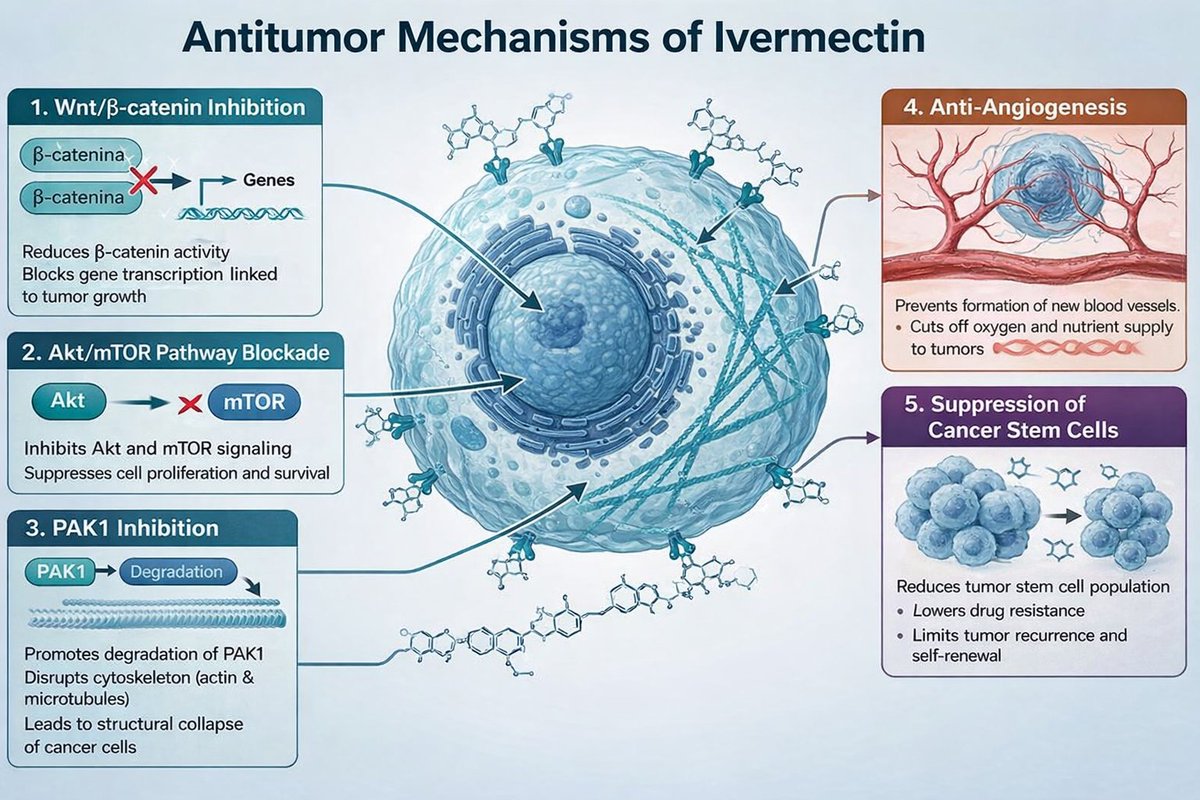
Molecular Potential of Ivermectin Against Cancer 🧬
Precision Medicine Targeting Critical Cells
We are rediscovering Ivermectin as a potent modulator of oncogenic pathways.
How Ivermectin Corners Tumor Cells
🚫 Wnt/β-catenin Pathway: It turns off the master switch that cancer cells use to proliferate and self-renew. By reducing cytoplasmic β-catenin, it stops growth from the nucleus.
📉 Akt/mTOR Axis: It disrupts the metabolic "control center." By inhibiting the phosphorylation of Akt and S6 kinase, the cell enters a state of functional starvation and activates lethal autophagy.
🛡️ One of its most potent effects is the suppression of tumor stem cells (TSCs) and the blocking of efflux pumps (MDR1).
⚓ Metastasis Control: By regulating the integrin β1/FAK pathway, ivermectin makes it difficult for malignant cells to attach to other tissues, thus slowing metastatic spread.
🩸 Anti-Angiogenesis: It cuts off the supply of nutrients by preventing the formation of new blood vessels in the tumor microenvironment.

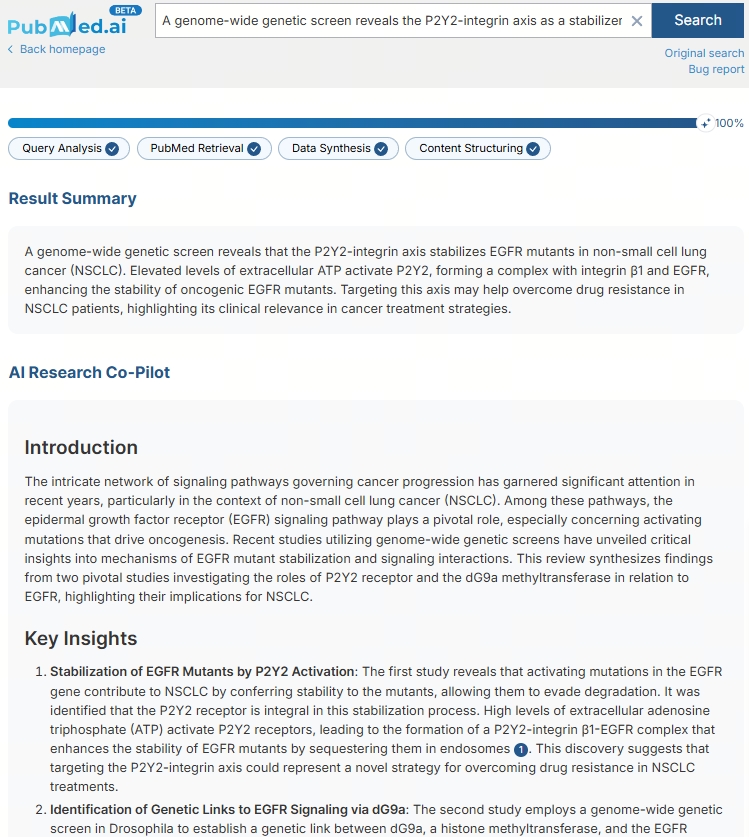
🧬 New EGFR resistance mechanism uncovered
Why do EGFR mutants stay so stable in lung cancer cells?
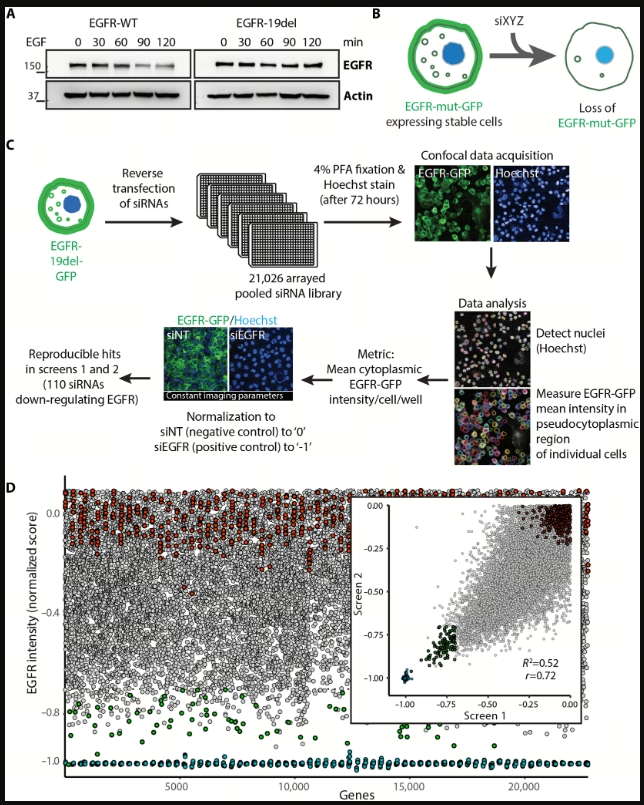
A genome-wide screen points to an unexpected answer: extracellular ATP–P2Y2–integrin signaling.
Here’s what the study shows 👇
• Tumor stress increases extracellular ATP
• ATP activates the purinergic receptor P2Y2
• P2Y2 partners with integrin β1 and mutant EGFR
• This membrane complex stabilizes oncogenic EGFR
• Disrupting the axis may restore drug sensitivity
Why it matters
This isn’t just about mutations — it’s about the microenvironment and membrane signaling that protect them.
🔬 Targeting the P2Y2–integrin axis could open new strategies to overcome EGFR-TKI resistance in NSCLC.
#LungCancer #EGFRmutations #PurinergicSignaling #CancerTherapy #AcademicTwitter
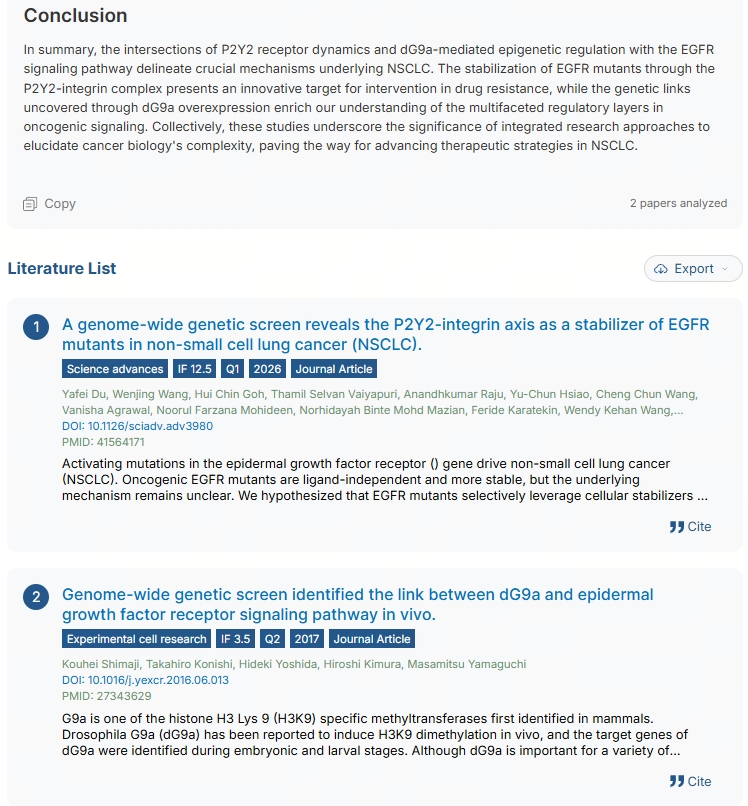


A Genome-Wide Genetic Screen Identifies the P2Y2–Integrin Axis as a Stabilizer of EGFR Mutants in NSCLC
Find More Research: https://t.co/9PblNv7udg
Activating EGFR mutations drive a major subset of non–small cell lung cancer (NSCLC), yet therapeutic resistance frequently emerges through mechanisms that stabilize oncogenic EGFR signaling. A genome-wide genetic screen now reveals a previously underappreciated P2Y2–integrin–EGFR axis that sustains mutant EGFR protein stability.
🧬 Key mechanistic insights
Chemotherapy- and tumor-associated stress elevates extracellular ATP levels
Extracellular ATP activates the purinergic receptor P2Y2
P2Y2 forms a membrane complex with integrin β1 and mutant EGFR
This complex enhances the stability and persistence of oncogenic EGFR variants
Disrupting the P2Y2–integrin axis sensitizes EGFR-mutant cells to targeted therapies
These findings position purinergic signaling and integrin-mediated membrane organization as active regulators of oncogene stability, offering a new angle to counter drug resistance in EGFR-mutant NSCLC.
#NSCLC #EGFR #CancerSignaling #DrugResistance #TranslationalOncology

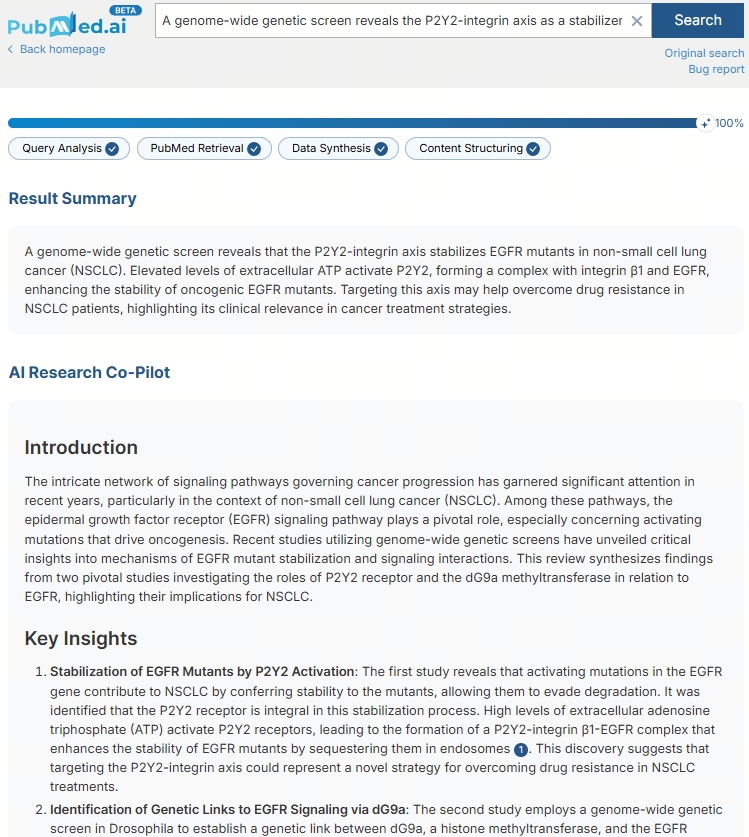
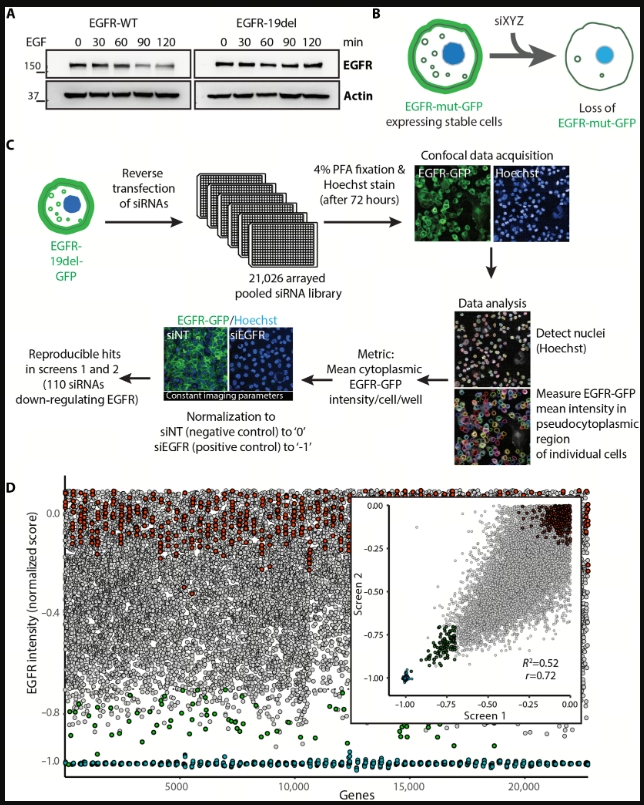
I just published A Genome-Wide Genetic Screen Identifies the P2Y2–Integrin Axis as a Key Stabilizer of EGFR Mutants… https://t.co/zE7SaaMGFl


"Beden dili yüzde yüz doğru söylüyor" mu?
Bu ne saçma bir çıkarım böyle
Beden dili analizi bir iddianın bilimsel doğruluğunu belirler mi?
Hayır. Bir kişi tam bir samimiyet ve güvenle konuşabilir ve yine de yanılıyor olabilir.
Samimiyet bilgi değil.
Adam gözlerinin içine bakarak, elini kalbine koyarak, titreyen sesle konuşabilir, söylediği yine yanlış olabilir.
Bu videodaki iddialar, konuşmacının ne kadar ikna edici göründüğünden bağımsız olarak, tıp literatürüyle açıkça çelişiyor. Potansiyel olarak da çok tehlikeli.
"Bağırsak, pankreas, karaciğer hastalıklarının tek tedavisi açlık." demek ne demek biliyor musunuz? Hepatoloji, gastroenteroloji ve pankreatoloji alanlarında onlarca yıllık araştırmayı, binlerce klinik çalışmayı ve milyonlarca hastanın tedavi deneyimini çöpe atmak. Tek bir cümleyle.
Karaciğer sirozunun tedavisi etiyolojiye göre değişir. Viral hepatitte antiviral tedavi var. Alkolik karaciğer hastalığında alkol kesilmesi ve nütrisyonel destek var. Otoimmün hepatitte immünsüpresyon var. Son evre hastalıkta transplantasyon var (1).
Crohn hastalığı ve ülseratif kolit gibi inflamatuar bağırsak hastalıklarında biyolojik ajanlar, anti-TNF'ler, anti-integrinler, JAK inhibitörleri remisyon sağlıyor (2).
Akut pankreatitte kısa süreli oral alım kısıtlaması yapılır, doğru. Ama bu hastane ortamında IV sıvı ve elektrolit desteğiyle, günler içinde enteral beslenmeye geçilerek uygulanır. Otuz günlük açlık değil (3). Kronik pankreatitte ise enzim replasmanı, ağrı yönetimi ve beslenme desteği temel yaklaşımlar.
"Tek tedavi" iddiası bu hastalıkların hiçbirinde geçerli değil. Hiçbirinde.
"Bir gün açlık yüzde elli iyileşme, üç gün açlık yüzde yüz iyileşme." derken iddia ettiği rakamlar nereden geliyor? Hangi çalışma? Hangi hasta popülasyonunda? Hangi sonlanım noktasıyla?
Intermittent fasting üzerine çalışmalar var, doğru. Bazı metabolik parametrelerde, insülin duyarlılığı, inflamatuar belirteçler gibi şeylerde iyileşme raporlanmış. Ama bu çalışmalar kontrollü koşullarda, belirli protokollerle, seçilmiş hasta gruplarında yapıldı. Hiçbiri "yüzde yüz iyileşme" iddia etmedi (4).
Kritik ayrım şu: Semptomlarda subjektif iyileşme hissi hastalığın tedavisi anlamına gelmiyor. Bir siroz hastasının kendini daha iyi hissetmesi karaciğerinin rejenerasyona uğradığını göstermiyor. "İyi hissediyorum" ile "iyileştim" arasında uçurum var.
"Otuz gün aç kalın." ne demek?
Otuz günlük su orucu tıbbi gözetim altında bile ciddi riskler taşıyor. Elektrolit dengesizlikleri: hiponatremi, hipokalemi, hipofosfatemi. Kardiyak aritmiler. Refeeding sendromu, yani açlık sonrası beslenmeye geçişte ölümcül olabilen metabolik bozukluk. Ciddi kas kaybı. Bağışıklık baskılanması (5,6).
Kronik karaciğer hastasında protein-kalori malnütrisyonu zaten sık görülen ve prognozu kötüleştiren bir faktör. Bu hastalara otuz gün açlık önermek hastalığı tedavi etmez, hastayı öldürebilir (7).
Diyabetik hastada uzun süreli açlık? Hipoglisemik koma ve ölüm. Aktif inflamatuar bağırsak hastalığında? Malnütrisyon zaten tedavi edilmesi gereken bir komplikasyon.
"Oraya buraya gitmeyin, paranızı harcamayın, kurtulamazsınız." ne demek??
Hastaları kanıta dayalı tedaviden uzaklaştırma potansiyeli taşıyor. Hepatit C bugün yüzde 95'in üzerinde kür oranıyla tedavi edilebilen bir hastalık. Bu tedaviyi almak yerine otuz gün aç kalan hasta ne olur? Tedavi edilebilir bir hastalıkla siroza, karaciğer kanserine ve ölüme ilerler (8).
Crohn hastası biyolojik tedavi yerine açlık denerse? Striktür, fistül, perforasyon ve acil cerrahi riski artar.
En garibi de şu:
"Beden Dili" sayfası bu içeriği "yüzde yüz doğru" olarak paylaşıyor. Bu ne gösteriyor peki? Tıbbi içerik değerlendirmesinin beden dili analiziyle yapılamayacağını.
Bir kardiyolog ne kadar samimi konuşursa konuşsun, gastroenteroloji veya hepatoloji alanında uzmanlık iddiasında bulunuyorsa ve bu iddialar literatürle çelişiyorsa, samimiyet iddiaları doğru kılmaz.
"Ama çok samimi konuşuyor" diyorsanız şunu bilin: Samimi yanlış yine yanlış.
Bir sayfa takipçilerine sağlık tavsiyesi verirken bilimsel doğrulama sorumluluğu taşıyor. "Beden dili doğru söylüyor" demek okuyucuyu yanıltır. Bir doktorun doğru konuşup konuşmadığı samimiyeti veya beden dili analiz edilerek ölçülemez.
Kaynaklar
1. EASL Clinical Practice Guidelines for the management of patients with decompensated cirrhosis. J Hepatol. 2018.
2. Torres J, et al. Crohn's disease. Lancet. 2017.
3. Crockett SD, et al. American Gastroenterological Association Institute Guideline on Initial Management of Acute Pancreatitis. Gastroenterology. 2018.
4. de Cabo R, Mattson MP. Effects of Intermittent Fasting on Health, Aging, and Disease. N Engl J Med. 2019.
5. Finnell JS, et al. Is fasting safe? A chart review of adverse events during medically supervised, water-only fasting. BMC Complement Altern Med. 2018.
6. Mehanna HM, et al. Refeeding syndrome: what it is, and how to prevent and treat it. BMJ. 2008.
7. EASL Clinical Practice Guidelines on nutrition in chronic liver disease. J Hepatol. 2019.
8. AASLD-IDSA. Hepatitis C Guidance 2019 Update. Hepatology. 2020.

Kardiyoloji Uzmanı Dr. Hamit Çelik ..
Beden dili ve söyledikleri yüzde yüz doğru söylüyor..
Kerem, süpersin kardeşim.
Bu seriye bir de LAD-3'ü ekleyelim:
LAD-3 => İntegrinlerin (LFA-1, MAC-1 gibi) aktivasyonunda bozukluk. Yani lökositin yüzeyinde bu yapılar vardır fakat enfeksiyon sinyalini aldıklarında tutunma moduna geçemezler. Genellikle bu sinyal yolaklarındaki Kindlin-3 proteini eksikliğinden kaynaklanır.
Tüm bu LAD'ları akılda kalıcı bir metafor üzerinden anlatmak istiyorum:
Vücudu bir şehir, damarları otoban, enfeksiyon bölgesini ise acil müdahale gerektiren bir kaza mahalli olarak düşünelim. Lökositler de bu kaza yerine gitmeye çalışan özel eğitimli acil durum ekipleridir.
LAD-1: Ekip aracının lastikleri veya tekerlekleri yoktur (LFA-1, MAC-1 eksik). Araç otobanda ilerler ama kaza yerine geldiğinde yola tutunup duramaz ve kaza mahallini pas geçer.
LAD-2: Otobandaki "Kaza Yeri: 1 KM Sonra Yavaşla" tabelası (Sialyl Lewis X) hatalıdır veya hiç yoktur. Ekip aracı, yavaşlaması ve çıkış yapması gereken yeri fark etmeden otobanda son sürat ilerlemeye devam eder.
LAD-3: Ekip aracının lastikleri sağlamdır ve tabela da doğrudur. Araç kaza yerine gelip yavaşlar. Ancak aracın vitesi park moduna (integrin aktivasyonu) geçmez, bir nevi boşa alınmış gibi olur. Ekip kapıyı açıp inmek ister ama araç tam sabitlenemediği için müdahale edemez.

Tıp Günlükleri - 4
Lökosit Fonksiyon Bozuklukları
LAD-1 => LFA-1 ve MAC-1 eksikliği
LAD-2 => Sialyl Lewis X'i kodlayan fukozil transferaz enzim mutasyonu
Çocukluk Çağı Kronik Granülamatöz Hastalık => Fagosit oksidaz eksikliği
Computational Screening of Filamin Mechanical Binding Proteins using AlphaFold2
1.This study presents a high-throughput computational screen using AlphaFold2 to identify proteins that specifically bind to the open, mechanically activated conformation of the Drosophila filamin protein, Cheerio (Cher), particularly its Ig17 and Ig19 domains.
2.The screen leverages ColabFold-AlphaFold2 multimer modeling and a novel scoring metric—Contact Predicted Aligned Error (CPAE)—to quantify confidence in protein-protein interactions and distinguish true binders from false positives.
3.The method successfully rediscovered known filamin interactors like integrins, Kelch, Nuak, and Hts, accurately identifying their binding regions and interface structures, validating the predictive power of AlphaFold2 for mechanosensitive interactions.
4.The analysis revealed that low CPAE values are strongly associated with antiparallel β-strand interactions at the canonical binding groove between β-strands C and D of filamin Ig domains—hallmarks of bona fide mechanical binding partners.
5.A screen of 946 candidate proteins yielded 132 high-confidence models (CPAE < 5) forming specific interactions with Ig19. Over 90% of these formed antiparallel β-sheet contacts, confirming mechanical binding specificity.
6.Comparative modeling showed that most of these ligands bind preferentially to Ig19 over Ig17, although many recognize both. A few proteins, such as LUBEL, showed specificity for Ig19 alone, indicating domain-level binding selectivity.
7.Importantly, top-scoring ligand models failed to bind when Ig19 or Ig17 was modeled in the closed conformation (paired with blocking domains Ig18 or Ig16), demonstrating specificity for the open, mechanically active MSR state.
8.The CPAE metric proved critical in filtering out false positives: interactions involving random structural juxtaposition or parallel β-sheets were enriched in high-CPAE models, supporting its use as a reliability filter.
9.Unlike traditional experimental methods such as yeast two-hybrid or co-IP, this in silico screen allows resolution of individual binding sites and binding modes, with implications for dissecting context-dependent filamin functions.
10.The authors propose integrating AlphaFold2-based screening with tissue-specific gene expression data (e.g., FlyAtlas, FlyCellAtlas) to focus on context-specific interactions, improving both sensitivity and computational efficiency.
11.The study outlines a generalizable framework for mapping mechanical signaling networks, particularly in cytoskeletal regulation, offering a scalable tool for discovering mechanoresponsive protein-protein interactions.
📜Paper: https://t.co/1zK1ZGUWkr #AlphaFold2 #ProteinInteractions #Mechanobiology #Filamin #Cytoskeleton #Drosophila #StructuralBiology #ComputationalBiology #Bioinformatics


@IPFdoc @KerriBerriKerri We’ll see. There are other things at play. I’m conflicted on both & a few more on integrin inhibitors. But will make a simple statement - this is why we do #RCTs. & for core mechanisms we need as many shots on goal as possible with different modalities hitting same pathway
Last Seen Hashtags on Sotwe
Trends for you
Most Popular Users

Elon Musk 
@elonmusk
239.8M followers

Barack Obama
@barackobama
118.6M followers

Cristiano Ronaldo
@cristiano
114.3M followers

Donald J. Trump
@realdonaldtrump
111.7M followers

Narendra Modi
@narendramodi
106.9M followers

Rihanna
@rihanna
98.6M followers

NASA
@nasa
92.1M followers

Justin Bieber
@justinbieber
91.7M followers

KATY PERRY
@katyperry
89.9M followers

Taylor Swift
@taylorswift13
83.9M followers

Lady Gaga
@ladygaga
75.4M followers

Virat Kohli
@imvkohli
73.3M followers

Kim Kardashian
@kimkardashian
70.8M followers

YouTube
@youtube
68.6M followers

Neymar Jr
@neymarjr
66.3M followers

Bill Gates
@billgates
65.1M followers

Selena Gomez
@selenagomez
63M followers

The Ellen Show
@theellenshow
62.1M followers

CNN
@cnn
61.7M followers

X
@x
60.6M followers