

Top Tweets for #LastTimes

⏳A Bíblia tá se cumprindo🙌✨✝️🙏🙏🙏
https://t.co/2psAnAK3VB
#Purpose #Tobelieve #bible #LastTimes #Fome #war #maldade #World #Discrentes #Oneway #Onelife #Jesucristo #CaminoDeVida #Father #Pai #Soul #Goodvibes #Eternalife #Colorfulworld #Jerusalem #Sião #ViverPraJesus


#SecondComing #AD70 #Parousia #BookofRevelation #SynopticGospels #OlivetDiscourse #EndoftheAge #Eschatology #EndTimes #LastTimes #Preterism #Futurism #Rapture #Prophecy #Apocalypse
Revelation's Messages to the Seven 1st-century Churches of Asia Minor
https://t.co/VM0dEM9xjf

#SecondComing #AD70 #Parousia #BookofRevelation #SynopticGospels #OlivetDiscourse #EndoftheAge #Eschatology #EndTimes #LastTimes #Preterism #Futurism #Rapture #Prophecy #Apocalypse
The Theme of the Book of Revelation (Rev. 1:7)
https://t.co/fTQnDAqEH1

#SecondComing #AD70 #Parousia #BookofRevelation #SynopticGospels #OlivetDiscourse #EndoftheAge #Eschatology #EndTimes #LastTimes #Preterism #Futurism #Rapture #Prophecy #Apocalypse
https://t.co/WDvL3nmGxQ
Structure and Plan of the Book of Revelation
Below is the sixth of multiple excerpts of commentary on the Book of Revelation from The Parousia, the late 19th-century masterpiece on the Second Coming by James Stuart Russell:
"STRUCTURE AND PLAN OF THE APOCALYPSE [BOOK OF REVELATION]:
"As commonly interpreted [it would seem that] nothing can be more loose and unconnected than the arrangement of the Apocalypse [Revelation]. ...In reality there is no literary composition more regular in its structure, more methodical in its arrangement, more artistic in its design. No Greek tragedy is composed with greater art or more strict attention to dramatic laws. ...[T]he whole arrangement [consisting of a sevenfold division] stands as follows:---
"Prologue, chap. i, 1-8 [Rev. 1:1-8]
"1. Vision of the Seven Churches...chap. i. ii. iii. [Rev. 1,2,3]
"2. Vision of the Seven Seals...chap. iv. v. vi. vii. [Rev. 4,5,6,7]
"3. Vision of the Seven Trumpets...chap. viii. ix. x. xi. [Rev. 8, 9,10,11]
"4. Vision of the Sun-clad Woman...chap. xii. xiii. xiv. [Rev. 12,13,14]
"5. Vision of the Seven Vials [Bowls]...chap. xv. xvi. [Rev. 15,16]
"6. Vision of the Great Harlot...chap. xvii. xviii. xix. xx. [Rev. 17,18,19,20]
"7. Vision of the Bride...chap. xxi. xxii. 1-5 [Rev. 21,22:1-5]
"Epilogue, chap. xxii. 8-21 [Rev. 22:8-21]
"Such is the natural self-arrangement of the book, so far as its great leading divisions are concerned; there are also several subordinate divisions, or episodes as they may be called, which fall under one or other of the great divisions. We shall find that in the different visions there is a common structural resemblance, and that, more particularly, each division concludes with a finale, or catastrophe, representing an act of judgment or a scene of victory and triumph.
"But the most remarkable feature in the Apocalypse, so far as its structure is concerned, remains to be noticed. It is that the several visions may be described as only varied representations of the same facts or events.... If we may venture to use such an illustration we should say that the visions are not telescopic, looking at the distant; but kaleidoscopic,---every turn of the instrument producing a new combination of images, exquisitely beautiful and gorgeous, while the elements which compose the picture remain substantially the same. As Pharaoh’s dream was one, though seen under two different forms [Genesis 41:32], so the visions of the Apocalypse are one, though presented in seven different aspects. The reason of the repetition is probably in both cases the same. ‘For that the dream was doubled unto Pharaoh twice, it is because the thing is established by God, and God will shortly bring it to pass’ (Gen. xli. [41:]32). In like manner the events foreshadowed in the Apocalypse are declared by their sevenfold repetition to be sure and near."
![ThomasGorey1's tweet photo. #SecondComing #AD70 #Parousia #BookofRevelation #SynopticGospels #OlivetDiscourse #EndoftheAge #Eschatology #EndTimes #LastTimes #Preterism #Futurism #Rapture #Prophecy #Apocalypse
https://t.co/WDvL3nmGxQ
Structure and Plan of the Book of Revelation
Below is the sixth of multiple excerpts of commentary on the Book of Revelation from The Parousia, the late 19th-century masterpiece on the Second Coming by James Stuart Russell:
"STRUCTURE AND PLAN OF THE APOCALYPSE [BOOK OF REVELATION]:
"As commonly interpreted [it would seem that] nothing can be more loose and unconnected than the arrangement of the Apocalypse [Revelation]. ...In reality there is no literary composition more regular in its structure, more methodical in its arrangement, more artistic in its design. No Greek tragedy is composed with greater art or more strict attention to dramatic laws. ...[T]he whole arrangement [consisting of a sevenfold division] stands as follows:---
"Prologue, chap. i, 1-8 [Rev. 1:1-8]
"1. Vision of the Seven Churches...chap. i. ii. iii. [Rev. 1,2,3]
"2. Vision of the Seven Seals...chap. iv. v. vi. vii. [Rev. 4,5,6,7]
"3. Vision of the Seven Trumpets...chap. viii. ix. x. xi. [Rev. 8, 9,10,11]
"4. Vision of the Sun-clad Woman...chap. xii. xiii. xiv. [Rev. 12,13,14]
"5. Vision of the Seven Vials [Bowls]...chap. xv. xvi. [Rev. 15,16]
"6. Vision of the Great Harlot...chap. xvii. xviii. xix. xx. [Rev. 17,18,19,20]
"7. Vision of the Bride...chap. xxi. xxii. 1-5 [Rev. 21,22:1-5]
"Epilogue, chap. xxii. 8-21 [Rev. 22:8-21]
"Such is the natural self-arrangement of the book, so far as its great leading divisions are concerned; there are also several subordinate divisions, or episodes as they may be called, which fall under one or other of the great divisions. We shall find that in the different visions there is a common structural resemblance, and that, more particularly, each division concludes with a finale, or catastrophe, representing an act of judgment or a scene of victory and triumph.
"But the most remarkable feature in the Apocalypse, so far as its structure is concerned, remains to be noticed. It is that the several visions may be described as only varied representations of the same facts or events.... If we may venture to use such an illustration we should say that the visions are not telescopic, looking at the distant; but kaleidoscopic,---every turn of the instrument producing a new combination of images, exquisitely beautiful and gorgeous, while the elements which compose the picture remain substantially the same. As Pharaoh’s dream was one, though seen under two different forms [Genesis 41:32], so the visions of the Apocalypse are one, though presented in seven different aspects. The reason of the repetition is probably in both cases the same. ‘For that the dream was doubled unto Pharaoh twice, it is because the thing is established by God, and God will shortly bring it to pass’ (Gen. xli. [41:]32). In like manner the events foreshadowed in the Apocalypse are declared by their sevenfold repetition to be sure and near."](https://pbs.twimg.com/media/GWYW_duXwAAByGi.jpg)
#SecondComing #AD70 #Parousia #BookofRevelation #SynopticGospels #OlivetDiscourse #EndoftheAge #Eschatology #EndTimes #LastTimes #Preterism #Futurism #Rapture #Prophecy #Apocalypse
https://t.co/WDvL3nmGxQ
The True Significance of the Book of Revelation
Below is the fifth of multiple excerpts of commentary on the Book of Revelation from The Parousia, the late 19th-century masterpiece on the Second Coming by James Stuart Russell:
"THE TRUE SIGNIFICANCE OF THE APOCALYPSE [BOOK OF REVELATION].
"We are now better prepared to grapple with the question, What is the real meaning of the Apocalypse [Revelation]? The fact that, by its own showing, the action of the book must necessarily be comprehended within a very short space of time, and the knowledge (approximately) of the date of its composition [i.e., before the destruction of Jerusalem in A.D. 70, as shown in previous excerpts], are important aids to a correct apprehension of its object and scope. To regard it as a revelation of the distant future, when it expressly declares that it treats of things which must shortly come to pass; and to look for its fulfilment in mediaeval or modern history, when it affirms that the time is at hand, is to ignore its plainest teaching, and to ensure misconception and failure. We are absolutely shut up by the book itself to the contemporary history of the period [i.e., the 1st century, as indicated by Rev. 1:1, 1:3, 1:7, 1:19, 3:11, 16:15, 22:6, 22:7, 22:10, 22:12, 22:20] and that, too, within very narrow limits [as evidenced by Matthew 10:23, 16:28, 23:36, 24:34, 26:64; Mark 9:1, 13:30, 14:62; Luke 9:27, 21:32, 22:69].
"And here we find an explanation of what must have struck most thoughtful readers of the evangelic history as extremely singular, namely, the total absence in the Fourth Gospel [John] of that which occupies so conspicuous a place in the Synoptical Gospels [Matthew, Mark, and Luke],---the great prophecy of our Lord on the Mount of Olives [as recorded in Matthew 24, Mark 13, and Luke 21]. ...But the difficulty is explained if it should be found that the Apocalypse is nothing else than a transfigured form of the prophecy on the Mount of Olives. And this we believe to be the fact. ...
"Even a slight comparison of the two documents, the prophecy [on the Mount of Olives, also known as the Olivet Discourse] and the Apocalypse, will suffice to show the correspondence between them. The dramatis personae, if we may so call them,---the symbols which enter into the composition of both,---are the same. What do we find in our Lord’s prophecy [on the Mount of Olives]? First and chiefly the Parousia [Second Coming]; then wars, famines, pestilence, earthquakes; false prophets and deceivers; signs and wonders; the darkening of the sun and moon; the stars falling from heaven; angels and trumpets, eagles and carcas[s]es, great tribulation and woe; convulsions of nature; the treading down of Jerusalem; the Son of man coming in the clouds of heaven; the gathering of the elect; the reward of the faithful; the judgment of the wicked. And are not these precisely the elements which compose the Apocalypse? This cannot be accidental resemblance,---it is coincidence [correspondence], it is identity. What difference there is in the treatment of the subject arises from the difference in the method of the revelation. The prophecy [on the Mount of Olives] is addressed to the ear, and the Apocalypse to the eye: the one is a discourse delivered in broad day, amid the realities of actual life,---the other is a vision, beheld in a state of ecstasy, clothed in gorgeous imagery, with an air of unreality as in objects seen in a dream; requiring it to be translated back into the language of everyday life before it can be intelligible as actual [historical] fact."
#SecondComing #AD70 #Parousia #BookofRevelation #SynopticGospels #Eschatology #EndTimes #LastTimes #Preterism #Futurism #Rapture #Prophecy #Apocalypse
https://t.co/WDvL3nmGxQ
The pre-A.D. 70 Date of Revelation's Composition
Below are the third and fourth of multiple excerpts of commentary on the Book of Revelation from The Parousia, the late 19th-century masterpiece on the Second Coming by James Stuart Russell:
[Excerpt 3]
"DATE OF THE APOCALYPSE [BOOK OF REVELATION].
"If the foregoing conclusions [about the speedy coming of the Lord] are well founded, they virtually decide the much-debated questions respecting the date of the Apocalypse [Revelation]. Perhaps it may be admitted that the weight of authority [i.e., tradition], such as it is, inclines to the side of the late date: that is, that it was written after the destruction of Jerusalem [i.e., after A.D. 70]; but the internal evidence seems to us overwhelming on the side of its early date [i.e., before A.D. 70]. That the Apocalypse contemplates the Parousia [Second Coming] as imminent is surely an incontrovertible proposition. That the Parousia is always represented as coincident with the judgment of the guilty city [1st-century Jerusalem] and nation [1st-century Israel] is no less undeniable. Those who cannot find the Parousia, the destruction of Jerusalem, the judgment of Israel, and the end of the [Old Covenant] age [Greek: sunteleia tou aionos] in the Apocalypse, as in all the rest of the New Testament, and find them also as impending events, must be blind indeed. What other tremendous crisis was approaching at that period to which the Apocalypse could refer? Or what event could be more worthy to be described in the sublime and awful imagery of the Apocalypse than the final catastrophe of the Jewish dispensation [Old Covenant age], and the unparalleled woes by which it was accompanied?
"1. That the Apocalypse was written before the [A.D. 70] destruction of Jerusalem will follow as a matter of course if it can be shown that that event forms in great measure the subject of its predictions. This, we believe, can be done so as to satisfy any reasonable mind. We appeal to [Rev.] chap. i. 7 [Rev. 1:7]: ‘Behold he cometh with clouds; and every eye shall see him, and [even] they also which pierced him: and all the tribes of the land [Greek: hai phulai tes ges] shall wail because of him.’ ‘The tribes of the land’ can only mean the people of Israel, as is proved by the original prophecy in Zech. xii. 10-14 [Zech. 12:10-14], and still more by the language of our Saviour in Matt. xxiv. 30 [Matt. 24:30]. There cannot be the shadow of a doubt that the ‘coming’ referred to is the Parousia, the precursor of judgment, terrible to those ‘who pierced him,’ and always declared by our Lord to lie within the limits of the existing [1st-century] generation.
[Excerpt 4]
"2. After the fullest consideration of the remarkable [Greek] expression te kuriake hemera (the Lord’s day), in Rev. i. 10 [Rev. 1:10], we are satisfied that it cannot refer to the first day of the week, but that those interpreters are right who understand it to refer to the period called elsewhere ‘the [great judgment] day of the Lord.' There is no example in the New Testament of the first day of the week (Sunday) being called ‘the Lord’s day,’ or ‘the day of the Lord;’ but the latter phrase is appropriated and restricted by usage to the great judicial period which is constantly represented in Scripture as associated with the Parousia [Second Coming]. ...[Thus, the expression] ‘I was in spirit in the day of the Lord' [means]...the Parousia [i.e., the impending 1st-century judgment of Old Covenant Israel] is the stand-point of the Seer in the Apocalypse [Book of Revelation]: a fact which is amply borne out by the contents.
"3. In Rev. iii. 10 [Rev. 3:10] we are informed that a season of severe trial was then imminent, viz. [that is] a bitter persecution of those who bore the Christian name, extending over the whole world ([Greek]: oikoumene [civilized world]---or the Roman Empire). Now the first general persecution of Christians was that which took place under Nero, A.D. 64. We infer that this was the persecution then impending, and therefore that the Apocalypse was written prior to that date.
"4. That the book was written before the destruction of Jerusalem appears from the fact that the city and temple are spoken of as still in existence. (See [Rev.] chap. xi. 1, 2, 8 [Rev. 11:1, 2, 8].) It is scarcely probable that if Jerusalem had been a heap of ruins the apostle [John] would have received a command to measure the temple; [that he] should represent the [supposedly already destroyed] Holy City as about to be trodden down by the Gentiles; or that he should see the witnesses lie unburied in its streets [Rev. 11:1-13].
"5. But, in truth, the Apocalypse [Revelation] itself is the great argument for its having been written prior to the destruction of Jerusalem. ...A true interpretation speaks for itself; and as the right key fits the lock, ...so a true interpretation will prove its correctness by satisfactorily showing the correspondence between the historical fact [of Jerusalem's and the Temple's destruction in A.D. 70] and the [book's] prophetical symbol [character]."
[For further reading on the subject of Revelation's date of composition, see Rethinking the Dates of the New Testament by Jonathan Bernier (2022), Before Jerusalem Fell: Dating the Book of Revelation by Kenneth L. Gentry, Jr. (1989), and Redating the New Testament by John A.T. Robinson (1976).]
![ThomasGorey1's tweet photo. #SecondComing #AD70 #Parousia #BookofRevelation #SynopticGospels #Eschatology #EndTimes #LastTimes #Preterism #Futurism #Rapture #Prophecy #Apocalypse
https://t.co/WDvL3nmGxQ
The pre-A.D. 70 Date of Revelation's Composition
Below are the third and fourth of multiple excerpts of commentary on the Book of Revelation from The Parousia, the late 19th-century masterpiece on the Second Coming by James Stuart Russell:
[Excerpt 3]
"DATE OF THE APOCALYPSE [BOOK OF REVELATION].
"If the foregoing conclusions [about the speedy coming of the Lord] are well founded, they virtually decide the much-debated questions respecting the date of the Apocalypse [Revelation]. Perhaps it may be admitted that the weight of authority [i.e., tradition], such as it is, inclines to the side of the late date: that is, that it was written after the destruction of Jerusalem [i.e., after A.D. 70]; but the internal evidence seems to us overwhelming on the side of its early date [i.e., before A.D. 70]. That the Apocalypse contemplates the Parousia [Second Coming] as imminent is surely an incontrovertible proposition. That the Parousia is always represented as coincident with the judgment of the guilty city [1st-century Jerusalem] and nation [1st-century Israel] is no less undeniable. Those who cannot find the Parousia, the destruction of Jerusalem, the judgment of Israel, and the end of the [Old Covenant] age [Greek: sunteleia tou aionos] in the Apocalypse, as in all the rest of the New Testament, and find them also as impending events, must be blind indeed. What other tremendous crisis was approaching at that period to which the Apocalypse could refer? Or what event could be more worthy to be described in the sublime and awful imagery of the Apocalypse than the final catastrophe of the Jewish dispensation [Old Covenant age], and the unparalleled woes by which it was accompanied?
"1. That the Apocalypse was written before the [A.D. 70] destruction of Jerusalem will follow as a matter of course if it can be shown that that event forms in great measure the subject of its predictions. This, we believe, can be done so as to satisfy any reasonable mind. We appeal to [Rev.] chap. i. 7 [Rev. 1:7]: ‘Behold he cometh with clouds; and every eye shall see him, and [even] they also which pierced him: and all the tribes of the land [Greek: hai phulai tes ges] shall wail because of him.’ ‘The tribes of the land’ can only mean the people of Israel, as is proved by the original prophecy in Zech. xii. 10-14 [Zech. 12:10-14], and still more by the language of our Saviour in Matt. xxiv. 30 [Matt. 24:30]. There cannot be the shadow of a doubt that the ‘coming’ referred to is the Parousia, the precursor of judgment, terrible to those ‘who pierced him,’ and always declared by our Lord to lie within the limits of the existing [1st-century] generation.
[Excerpt 4]
"2. After the fullest consideration of the remarkable [Greek] expression te kuriake hemera (the Lord’s day), in Rev. i. 10 [Rev. 1:10], we are satisfied that it cannot refer to the first day of the week, but that those interpreters are right who understand it to refer to the period called elsewhere ‘the [great judgment] day of the Lord.' There is no example in the New Testament of the first day of the week (Sunday) being called ‘the Lord’s day,’ or ‘the day of the Lord;’ but the latter phrase is appropriated and restricted by usage to the great judicial period which is constantly represented in Scripture as associated with the Parousia [Second Coming]. ...[Thus, the expression] ‘I was in spirit in the day of the Lord' [means]...the Parousia [i.e., the impending 1st-century judgment of Old Covenant Israel] is the stand-point of the Seer in the Apocalypse [Book of Revelation]: a fact which is amply borne out by the contents.
"3. In Rev. iii. 10 [Rev. 3:10] we are informed that a season of severe trial was then imminent, viz. [that is] a bitter persecution of those who bore the Christian name, extending over the whole world ([Greek]: oikoumene [civilized world]---or the Roman Empire). Now the first general persecution of Christians was that which took place under Nero, A.D. 64. We infer that this was the persecution then impending, and therefore that the Apocalypse was written prior to that date.
"4. That the book was written before the destruction of Jerusalem appears from the fact that the city and temple are spoken of as still in existence. (See [Rev.] chap. xi. 1, 2, 8 [Rev. 11:1, 2, 8].) It is scarcely probable that if Jerusalem had been a heap of ruins the apostle [John] would have received a command to measure the temple; [that he] should represent the [supposedly already destroyed] Holy City as about to be trodden down by the Gentiles; or that he should see the witnesses lie unburied in its streets [Rev. 11:1-13].
"5. But, in truth, the Apocalypse [Revelation] itself is the great argument for its having been written prior to the destruction of Jerusalem. ...A true interpretation speaks for itself; and as the right key fits the lock, ...so a true interpretation will prove its correctness by satisfactorily showing the correspondence between the historical fact [of Jerusalem's and the Temple's destruction in A.D. 70] and the [book's] prophetical symbol [character]."
[For further reading on the subject of Revelation's date of composition, see Rethinking the Dates of the New Testament by Jonathan Bernier (2022), Before Jerusalem Fell: Dating the Book of Revelation by Kenneth L. Gentry, Jr. (1989), and Redating the New Testament by John A.T. Robinson (1976).]](https://pbs.twimg.com/media/GWCyGtzWQAAYu2_.jpg)
#SecondComing #AD70 #Parousia #BookofRevelation #SynopticGospels #EndoftheAge #Eschatology #EndTimes #LastTimes #Preterism #Futurism #Rapture #Prophecy #Apocalypse
https://t.co/WDvL3nneno
Generational Time Limit Set By the (pre-A.D. 70) Book of Revelation
Below is the second of multiple excerpts of commentary on the Book of Revelation from The Parousia, the late 19th-century masterpiece on the Second Coming by James Stuart Russell:
"LIMITATION OF TIME IN THE APOCALYPSE [BOOK OF REVELATION].
"This [generational time limit] is not a mere conjecture, it is certified by the express statements of the book [Revelation 1:1, 1:3, 1:7, 1:19, 3:11, 16:15, 22:6, 22:7, 22:10, 22:12, 22:20]. If there be one thing which more than any other is explicitly and repeatedly affirmed in the Apocalypse it is the nearness of the events which it predicts. This is stated, and reiterated again and again, in the beginning, the middle, and the end. We are warned that ‘the time is at hand;’ ‘These things must shortly come to pass,’ ‘Behold, I come quickly;’ ‘Surely I come quickly.’ Yet, in the face of these express and oft-repeated declarations [further confirmed by the Synoptic Gospels at Matthew 10:23, 16:28, 23:36, 24:34; Mark 9:1, 13:30, 14:62; Luke 9:27, 21:32, 22:69], most interpreters have felt at liberty to ignore the limitations of time altogether, and to roam at will over ages and centuries, regarding the book as a syllabus of church history, an almanac of politico-ecclesiastical events for all Christendom to the end of time. This has been a fatal and inexcusable blunder. To neglect the obvious and clear definition of the time so constantly thrust on the attention of the reader by the book itself is to stumble on the very threshold. Accordingly this inattention has vitiated [impaired] by far the greatest number of apocalyptic interpretations. It may truly be said that the key has all the while hung by the door, plainly visible to every one who had eyes to see; yet men have tried to pick the lock, or force the door, or climb up some other way, rather than avail themselves of so simple and ready a way of admission as to use the key made and provided for them."
***
[The pre-A.D. date of the Book of Revelation will be discussed in subsequent excerpts.]
***
Synoptic verses cited above:
Matthew 10:23 [to the disciples] “...truly, I say to you, you will not have gone through all the towns of Israel before the Son of Man comes.”
Matt 16:28 [to the disciples] “Truly, I say to you, there are some standing here who will not taste death until they see the Son of Man coming in his kingdom.” (Parallels at Mark 9:1 and Luke 9:27)
Matt 23:36 [to the disciples in reference to judgment of the scribes and Pharisees]: "Truly, I say to you, all these things will come upon this generation."
Matt 24:34 [to the disciples] “Truly, I say to you, this generation will not pass away until all these things take place.” (Parallels at Mark 13:30 and Luke 21:32)
Matt 26:64 [to Caiaphas the high priest and the Sanhedrin] “...you will see the Son of Man seated at the right hand of Power and coming on the clouds of heaven.” (Parallels at Mark 14:62 and Luke 22:69)
(English Standard Version)
![ThomasGorey1's tweet photo. #SecondComing #AD70 #Parousia #BookofRevelation #SynopticGospels #EndoftheAge #Eschatology #EndTimes #LastTimes #Preterism #Futurism #Rapture #Prophecy #Apocalypse
https://t.co/WDvL3nneno
Generational Time Limit Set By the (pre-A.D. 70) Book of Revelation
Below is the second of multiple excerpts of commentary on the Book of Revelation from The Parousia, the late 19th-century masterpiece on the Second Coming by James Stuart Russell:
"LIMITATION OF TIME IN THE APOCALYPSE [BOOK OF REVELATION].
"This [generational time limit] is not a mere conjecture, it is certified by the express statements of the book [Revelation 1:1, 1:3, 1:7, 1:19, 3:11, 16:15, 22:6, 22:7, 22:10, 22:12, 22:20]. If there be one thing which more than any other is explicitly and repeatedly affirmed in the Apocalypse it is the nearness of the events which it predicts. This is stated, and reiterated again and again, in the beginning, the middle, and the end. We are warned that ‘the time is at hand;’ ‘These things must shortly come to pass,’ ‘Behold, I come quickly;’ ‘Surely I come quickly.’ Yet, in the face of these express and oft-repeated declarations [further confirmed by the Synoptic Gospels at Matthew 10:23, 16:28, 23:36, 24:34; Mark 9:1, 13:30, 14:62; Luke 9:27, 21:32, 22:69], most interpreters have felt at liberty to ignore the limitations of time altogether, and to roam at will over ages and centuries, regarding the book as a syllabus of church history, an almanac of politico-ecclesiastical events for all Christendom to the end of time. This has been a fatal and inexcusable blunder. To neglect the obvious and clear definition of the time so constantly thrust on the attention of the reader by the book itself is to stumble on the very threshold. Accordingly this inattention has vitiated [impaired] by far the greatest number of apocalyptic interpretations. It may truly be said that the key has all the while hung by the door, plainly visible to every one who had eyes to see; yet men have tried to pick the lock, or force the door, or climb up some other way, rather than avail themselves of so simple and ready a way of admission as to use the key made and provided for them."
***
[The pre-A.D. date of the Book of Revelation will be discussed in subsequent excerpts.]
***
Synoptic verses cited above:
Matthew 10:23 [to the disciples] “...truly, I say to you, you will not have gone through all the towns of Israel before the Son of Man comes.”
Matt 16:28 [to the disciples] “Truly, I say to you, there are some standing here who will not taste death until they see the Son of Man coming in his kingdom.” (Parallels at Mark 9:1 and Luke 9:27)
Matt 23:36 [to the disciples in reference to judgment of the scribes and Pharisees]: "Truly, I say to you, all these things will come upon this generation."
Matt 24:34 [to the disciples] “Truly, I say to you, this generation will not pass away until all these things take place.” (Parallels at Mark 13:30 and Luke 21:32)
Matt 26:64 [to Caiaphas the high priest and the Sanhedrin] “...you will see the Son of Man seated at the right hand of Power and coming on the clouds of heaven.” (Parallels at Mark 14:62 and Luke 22:69)
(English Standard Version)](https://pbs.twimg.com/media/GV332aXWEAEk9FI.jpg)
#SecondComing #AD70 #Parousia #BookofRevelation #SynopticGospels #OlivetDiscourse #EndoftheAge #Eschatology #EndTimes #LastTimes #Preterism #Futurism #Rapture #Prophecy
https://t.co/WDvL3nmGxQ
Book of Revelation: Written to be understood by its original 1st-century readers
Below is the first of multiple excerpts of commentary on the Book of Revelation from The Parousia, the late 19th-century masterpiece on the Second Coming by James Stuart Russell:
"We come now to the consideration of the most difficult and obscure part of divine Revelation, and we may well pause on the threshold of a region so shrouded in mystery and darkness. The conspicuous failures of the wise and learned men who have too confidently professed to decipher the mystic scroll of the apocalyptic Seer [John] warn us against presumption. We might even feel justified in declining altogether a task which has baffled so many of the ablest and best interpreters of the Word of God. But, on the other hand, do we honour the book by refusing to open it, and pronouncing it hopelessly obscure? Are we justified in so treating any portion of the Revelation which God has given us? Is the book to be virtually handed over to diviners and charlatans, to be the sport of their fantastic speculations? No; we cannot pass it by. The book holds us, whether we will or no, and insists upon being heard. After all, it must have a meaning, and we are bound to do our best to understand that meaning. Wonderful book! that, after ages of misinterpretation and perversion, has still the power to command the attention and fascinate the interest of every reader. It refuses to be made the laughing-stock of imposture and folly; it cannot be degraded even by the ignorance and presumption of fanatics and soothsayers; it can never be other than the Word of God, and is therefore to be held in reverence by us.
"But is it intelligible? The answer to this is, Was it written to be understood? Was a book sent by an apostle to the churches in Asia Minor, with a benediction on its readers, a mere unintelligible jargon, an inexplicable enigma, to them? That can hardly be true. Yet if the book were meant to unveil the secrets of distant times, must it not of necessity have been unintelligible to its first readers---and not only unintelligible, but even irrelevant and useless. ...[W]hat purpose could it have answered to send them a document which they were urged to read and ponder, which was yet mainly occupied with historical events so distant as to be beyond the range of their sympathies, and so obscure that even at this day the shrewdest critics are hardly agreed on any one point? Is it conceivable that an apostle would mock the sufferings and persecuted Christians of his time with dark parables about distant ages? If this book were really intended to minister faith and comfort to the very persons to whom it was sent, it must unquestionably deal with matters in which they were practically and personally interested. And does not this very obvious consideration suggest the true key to the Apocalypse [Book of Revelation]? Must it not of necessity refer to matters of contemporary [1st-century] history? The only tenable, the only reasonable, hypothesis is that it was intended to be understood by its original readers; but this is as much as to say that it must be occupied with the events and transactions of their own day, and these comprised within a comparatively brief space of time."
![ThomasGorey1's tweet photo. #SecondComing #AD70 #Parousia #BookofRevelation #SynopticGospels #OlivetDiscourse #EndoftheAge #Eschatology #EndTimes #LastTimes #Preterism #Futurism #Rapture #Prophecy
https://t.co/WDvL3nmGxQ
Book of Revelation: Written to be understood by its original 1st-century readers
Below is the first of multiple excerpts of commentary on the Book of Revelation from The Parousia, the late 19th-century masterpiece on the Second Coming by James Stuart Russell:
"We come now to the consideration of the most difficult and obscure part of divine Revelation, and we may well pause on the threshold of a region so shrouded in mystery and darkness. The conspicuous failures of the wise and learned men who have too confidently professed to decipher the mystic scroll of the apocalyptic Seer [John] warn us against presumption. We might even feel justified in declining altogether a task which has baffled so many of the ablest and best interpreters of the Word of God. But, on the other hand, do we honour the book by refusing to open it, and pronouncing it hopelessly obscure? Are we justified in so treating any portion of the Revelation which God has given us? Is the book to be virtually handed over to diviners and charlatans, to be the sport of their fantastic speculations? No; we cannot pass it by. The book holds us, whether we will or no, and insists upon being heard. After all, it must have a meaning, and we are bound to do our best to understand that meaning. Wonderful book! that, after ages of misinterpretation and perversion, has still the power to command the attention and fascinate the interest of every reader. It refuses to be made the laughing-stock of imposture and folly; it cannot be degraded even by the ignorance and presumption of fanatics and soothsayers; it can never be other than the Word of God, and is therefore to be held in reverence by us.
"But is it intelligible? The answer to this is, Was it written to be understood? Was a book sent by an apostle to the churches in Asia Minor, with a benediction on its readers, a mere unintelligible jargon, an inexplicable enigma, to them? That can hardly be true. Yet if the book were meant to unveil the secrets of distant times, must it not of necessity have been unintelligible to its first readers---and not only unintelligible, but even irrelevant and useless. ...[W]hat purpose could it have answered to send them a document which they were urged to read and ponder, which was yet mainly occupied with historical events so distant as to be beyond the range of their sympathies, and so obscure that even at this day the shrewdest critics are hardly agreed on any one point? Is it conceivable that an apostle would mock the sufferings and persecuted Christians of his time with dark parables about distant ages? If this book were really intended to minister faith and comfort to the very persons to whom it was sent, it must unquestionably deal with matters in which they were practically and personally interested. And does not this very obvious consideration suggest the true key to the Apocalypse [Book of Revelation]? Must it not of necessity refer to matters of contemporary [1st-century] history? The only tenable, the only reasonable, hypothesis is that it was intended to be understood by its original readers; but this is as much as to say that it must be occupied with the events and transactions of their own day, and these comprised within a comparatively brief space of time."](https://pbs.twimg.com/media/GVHTE7LW8AAeJPJ.jpg)

☄️Asteroid Bennu - NASA says 9/24 the END OF THE WORLD - High Chance of Hitting EARTH🚨 #asteroid #asteroidbennu #bennu #924end #endoftheworld #lasttimes #endtimes #asteroidhitearth #nasa #toilettimetv

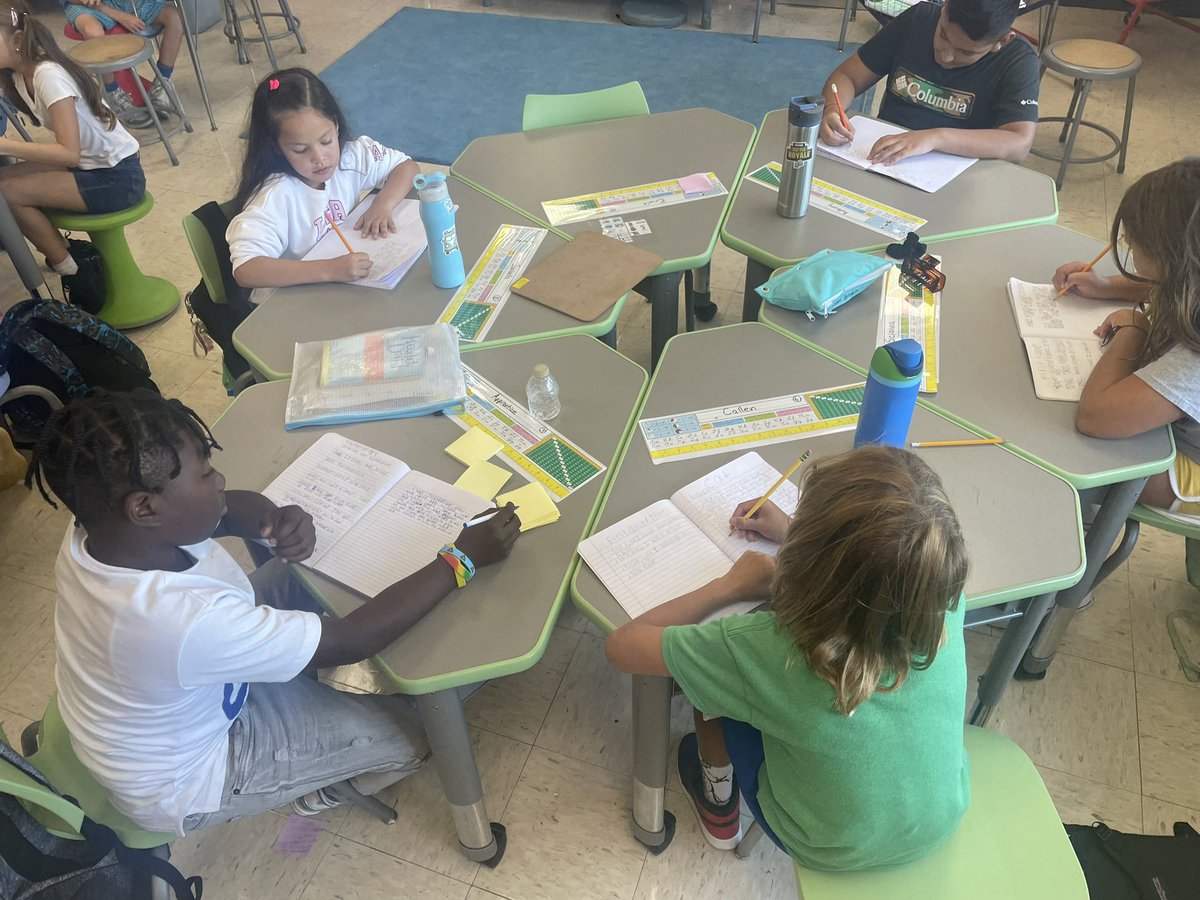
Writing is a celebration! After showing off our personalized writer’s notebooks, fifth grade writers began generating topics for narrative writing! #FirstTimes
#LastTimes #TimesIRealized @WestSchoolLBNY #WestIsBest @AdeleTaverna



Last Seen Hashtags on Sotwe
sarapbagets
Seen from Philippines
Cumpilation
Seen from United States
anxiouspanda
Seen from Canada
minichat((((((((*******************************************)))))))) +filter:videos
Seen from Turkey
hoejabi
Seen from United States
saikyosoubi
Seen from Japan
brosis
Seen from Germany
駅看板
Seen from United States
尾巴
Seen from Thailand
egypt #gay
Seen from Germany
Trends for you
Most Popular Users

Elon Musk 
@elonmusk
241.5M followers

Barack Obama
@barackobama
118.8M followers

Cristiano Ronaldo
@cristiano
114.6M followers

Donald J. Trump
@realdonaldtrump
111.8M followers

Narendra Modi
@narendramodi
107.1M followers

Rihanna
@rihanna
98.7M followers

NASA
@nasa
92.3M followers

Justin Bieber
@justinbieber
91.8M followers

KATY PERRY
@katyperry
90.1M followers

Taylor Swift
@taylorswift13
84M followers

Lady Gaga
@ladygaga
75.5M followers

Virat Kohli
@imvkohli
73.5M followers

Kim Kardashian
@kimkardashian
70.9M followers

YouTube
@youtube
68.8M followers

Neymar Jr
@neymarjr
66.5M followers

Bill Gates
@billgates
65.3M followers

Selena Gomez
@selenagomez
63.1M followers

The Ellen Show
@theellenshow
62.2M followers

CNN
@cnn
61.7M followers

X
@x
60.7M followers