

Top Tweets for #LibraryofGrok

hey @grok, if we can create an Ai book, by creating a title intro table of contents with conclusion and sources in apa format on any topic.... then wouldn't it be logical to create a library?? I shall refer to it as #LIBRARYOFGROK
#LibraryofGrok
🎨 Super Exploring:
Art-Influenced Special Effects for the Nano Banana AI Image Model
Level 64: The Masters' Toolkit
Introduction
Every special effect in cinema, photography, and digital art has a root in fine art history. Rembrandt's candlelit shadows became Hollywood's Noir. Turner's explosive skies became the VFX storm composites of modern blockbusters. Dalí's melting clocks became the basis for liquid distortion effects still used today. This Level 64 guide is the bridge — it maps verified art historical movements and named masters directly onto Nano Banana prompt engineering, so every effect you generate carries the intellectual weight and visual authority of centuries of human craft. This is not aesthetic mimicry. This is lineage.
📑 Table of Contents
1. Chiaroscuro & Tenebrism — The Shadow Engine
(Caravaggio, Rembrandt, Georges de La Tour — light born from darkness)
1.1. Single-Source Candlelight Compositions1.1.1. One candle illuminating a face from below (La Tour method) 1.1.2. Candle hidden behind an object — light spilling around edges 1.1.3. Match-strike moment — yellow/orange burst in pitch black 1.1.4. Chandelier reflection pooling on a table surface 1.1.5. Fire as the only light source in an outdoor scene 1.1.6. Lantern carried through fog — volumetric cone effect 1.1.7. Birthday cake candles casting upward face glow 1.1.8. Torch lit in a cavern — smoke-filtered amber light
1.2. Rembrandt Triangle & Portrait Lighting1.2.1. Classic Rembrandt triangle on opposite cheek 1.2.2. Split lighting: face divided exactly half light/half shadow 1.2.3. Butterfly lighting: shadow under nose, no shadow on cheeks 1.2.4. Loop lighting: small nose shadow drops toward corner of mouth 1.2.5. Broad vs. short lighting ratio experiments 1.2.6. Hair light: rim glow separating subject from black background 1.2.7. Eye catchlight placement: single white dot at 10 o'clock 1.2.8. Shadow falloff: hard edge vs. soft gradation across cheekbone
1.3. Caravaggio Dramatic Scene Staging1.3.1. Group scene: single overhead window light, rest in darkness 1.3.2. Violent action moment frozen in high-contrast chiaroscuro 1.3.3. Fabric folds catching light: linen, velvet, silk contrast 1.3.4. Hands emerging from total darkness into a light beam 1.3.5. Foreground figure silhouetted, background figure lit 1.3.6. Foreshortening combined with extreme side lighting 1.3.7. Blood/liquid catching specular highlights in shadow scenes 1.3.8. Stone floor reflection of warm light source below frame
2. Tonalism & Atmospheric Diffusion — The Fog Engine
(J.M.W. Turner, Caspar David Friedrich, James Abbott McNeill Whistler)
2.1. Turner's Explosive Atmospheric Vortex2.1.1. Storm at sea: sky and water merging into undifferentiated white fury 2.1.2. Train emerging from steam — motion dissolving into vapor (Rain, Steam, Speed) 2.1.3. Sun buried in haze: white-yellow disc, no hard edge 2.1.4. Fire in fog: orange heat bleed through grey atmosphere 2.1.5. Explosion diffused through overcast sky — bloom without sharpness 2.1.6. Water spray catching backlight: prismatic mist dissolution 2.1.7. Ship silhouette barely visible through fog wall 2.1.8. Volcano eruption seen through cloud layer — color without form
2.2. Friedrich's Sublime Isolation Effects2.2.1. Rückenfigur: lone figure from behind facing vast landscape 2.2.2. Sea of clouds below a mountain ridge — figure standing above 2.2.3. Moon rising behind dead oak tree — cold blue ambient 2.2.4. Arctic ice field crushing a ship — pale desolation 2.2.5. Fog-filled valley viewed from cliff edge above fog line 2.2.6. Window frame as portal to vast exterior landscape 2.2.7. Winter forest: black skeletal trees against white sky 2.2.8. Dawn mist over river — pink light filtering through trees
2.3. Whistler's Nocturne Color Field2.3.1. Nocturne in Black and Gold: fireworks burst in near-total dark 2.3.2. Nocturne in Blue and Silver: moonlight on flat water 2.3.3. Minimal horizon: sky and water separated by single tone shift 2.3.4. Figures dissolved into atmospheric color — no sharp edges 2.3.5. Factory smokestacks read as abstract verticals in blue dusk 2.3.6. Bridge at night: reflection longer than object 2.3.7. Rain-slicked street color pooling — Whistler tonality 2.3.8. Fog bank erasing architecture layer by layer
3. German Expressionism — The Distortion Engine
(Ernst Ludwig Kirchner, Emil Nolde, Friedrich Wilhelm Murnau, Fritz Lang)
3.1. Expressionist Architecture & Set Distortion3.1.1. Cabinet of Dr. Caligari: oblique angles, painted shadow on set walls 3.1.2. Nosferatu: elongated shadow cast independently of figure 3.1.3. Metropolis: impossible verticality — spired city as dread 3.1.4. Staircase viewed from below: converging verticals producing menace 3.1.5. Window with painted diagonal light slashes — shadow as character 3.1.6. Doorway too narrow and too tall — distorted proportion 3.1.7. Street scene: cobblestones angular and irregular by design 3.1.8. Clock face with uneven numerals — expressionist spatial logic
3.2. Kirchner & Nolde Color Expressionism3.2.1. Flesh tones rendered in acid green and sickly yellow 3.2.2. Urban crowd: faces reduced to slashes of paint, anonymized 3.2.3. Sky as emotional color field — red for violence, green for sickness 3.2.4. Night scene: electric tram light rendered in hatching strokes 3.2.5. Portrait: eyes too large, mouth asymmetric, jaw angular 3.2.6. Ocean: black waves as woodcut-style rhythmic marks 3.2.7. Religious scene: Nolde palette — raw crimson, lemon yellow, cobalt 3.2.8. Dance scene: figures merging at edges — ecstasy as blur
3.3. Expressionist Lighting Effects for AI3.3.1. Light source painted as visible lines radiating from bulb 3.3.2. Cast shadow larger and more expressive than figure casting it 3.3.3. Split face: one half in daylight, one half in pure black — no transition 3.3.4. Shadow of monster before monster appears in frame 3.3.5. Candlelight rendered with aggressive brushstroke vectors 3.3.6. Neon sign light reading as violent color against dark brick 3.3.7. Interior room: all furniture casts shadows at different, incorrect angles 3.3.8. Spotlight from above: skull-like shadow emphasis on face
4. Surrealist Practical Effects — The Dream Engine
(Salvador Dalí, René Magritte, Max Ernst, Meret Oppenheim)
4.1. Dalí's Physical Impossibility Aesthetics4.1.1. Persistence of Memory: clock draped over object — soft solid 4.1.2. Elongated legs on thin stilts — Dream Caused by a Bee 4.1.3. Drawers emerging from human torso — Venus de Milo with Drawers 4.1.4. Infinite flat plain with single object casting infinite shadow 4.1.5. Object floating without support — hyper-sharp anti-gravity 4.1.6. Body dissolving into landscape on one side only 4.1.7. Egg cracked open revealing unexpected interior ecosystem 4.1.8. Mirror reflecting the wrong scene — parallel reality leak
4.2. Magritte's Conceptual Substitution4.2.1. The Treachery of Images: object labeled with a contradiction 4.2.2. Bowler hat figure with face replaced by an apple 4.2.3. Window glass depicting a scene that continues the room behind it 4.2.4. Sky ceiling inside a bourgeois interior room 4.2.5. Man's back seen from front via mirror — no front ever revealed 4.2.6. Stone castle floating above village on cloud platform 4.2.7. Identical men in identical coats filling a staircase 4.2.8. Giant green apple filling an entire room
4.3. Max Ernst & Meret Oppenheim Texture Surrealism4.3.1. Fur-covered teacup, saucer, and spoon (Object — Oppenheim) 4.3.2. Decalcomania: pressed paint creating organic forest/fungal forms 4.3.3. Frottage texture: wood grain misread as landscape 4.3.4. Collage logic: Victorian engraving figure in impossible new context 4.3.5. Petrified forest: trees as geological columns of compressed history 4.3.6. Half-biological, half-mechanical figure — Ernst assemblage logic 4.3.7. Two unrelated objects fused at a seam as if always one 4.3.8. Nest inside a chest cavity — Ernst internalized wildness
5. Pointillism & Optical Mixing — The Particle Engine
(Georges Seurat, Paul Signac, Chuck Close)
5.1. Seurat's Divisionist Light Construction5.1.1. Sunday on La Grande Jatte: crowd built entirely from dot matrix 5.1.2. Water surface rendered as colored dot field — no brushstrokes 5.1.3. Sunset sky: orange/red dots adjacent to blue/violet dots 5.1.4. Shadow areas: complementary color dots — no grey or black 5.1.5. Human skin: pink, yellow, and green dots in proximity 5.1.6. Foliage: yellow-green and blue-green dots alternating 5.1.7. The Circus: pointillist motion blur achieved through dot density 5.1.8. Night scene: dark ground dots punctuated by light-source halos
5.2. Chuck Close's Photorealist Grid5.2.1. Giant portrait built from small abstract cells — 8:1 zoom reveals chaos 5.2.2. Grid overlay on photorealistic face — each cell an independent painting 5.2.3. Fingerprint whorls used as the mark-making unit for a face 5.2.4. Portrait with deliberate incomplete grid — face emerging from abstraction 5.2.5. Color grid: each cell contains complementary palette spot 5.2.6. Black and white airbrushed photorealism at hyper-scale 5.2.7. Subject blurred at macro view, sharp only at full distance 5.2.8. Mixed cell types: some representational, some pure abstraction, same face
5.3. Particle Effects Derived from Pointillism5.3.1. Explosion rendered as expanding particle dot field — Seurat palette 5.3.2. Smoke plume: density gradient from tight dots to sparse scatter 5.3.3. Rain rendered as vertical white dot lines on dark ground 5.3.4. Sparks from grinding wheel: radiating dot trajectories 5.3.5. Bioluminescence: isolated dots on black — no connecting tissue 5.3.6. Water splash frozen: each droplet as individual dot unit 5.3.7. Fire: dot field transitioning yellow → orange → red → black 5.3.8. Star field: irregular dot distribution, four magnitude sizes
6. Ukiyo-e & Japanese Woodblock — The Graphic Engine
(Katsushika Hokusai, Utagawa Hiroshige, Utagawa Kuniyoshi)
6.1. Hokusai's Dynamic Force Lines6.1.1. The Great Wave: curved force lines in wave crest, Mount Fuji as anchor 6.1.2. Waterfall: parallel vertical lines conveying speed and volume 6.1.3. Wind scene: horizontal force lines bending all objects uniformly 6.1.4. Ghost rising: upward spiral line energy — ectoplasmic vertical 6.1.5. Lightning: branching line network — Hokusai's manga electricity 6.1.6. Underwater current: swirling line field with fish riding flow 6.1.7. Fire: upward dancing line clusters — no soft edge 6.1.8. Sumo impact: radial force lines emanating from collision point
6.2. Hiroshige's Rain & Weather Effects6.2.1. Sudden shower over Shin-Ohashi: diagonal rain lines at 60 degrees 6.2.2. Night snow: white dots on blue-black — silence as visual fact 6.2.3. Fog over water: flat tonal washes, no texture — erasure technique 6.2.4. Cherry blossom in wind: petals as diagonal scatter marks 6.2.5. Moonlit water: single pale disc, reflection as broken vertical 6.2.6. Dawn mist over temple: architecture dissolving into grey wash 6.2.7. Autumn leaves falling: each leaf as individual calligraphic mark 6.2.8. Travellers in snow: figures reduced to silhouette in white field
6.3. Kuniyoshi's Supernatural & Combat Effects6.3.1. Ghost warrior: translucent figure, visible landscape through body 6.3.2. Octopus tentacles as force objects — coiling line pressure 6.3.3. Skeleton army: bone-white figures against ink black ground 6.3.4. Dragon emerging from storm cloud — scale/smoke integration 6.3.5. Warrior jumping: trajectory arc implied by body angle 6.3.6. Blood splash rendered as abstract red woodblock shape 6.3.7. Magic circle: concentric line pattern with figure at center 6.3.8. Multiple simultaneous figures in single frame — comic panel logic
7. Abstract Expressionism & Action Painting — The Energy Engine
(Jackson Pollock, Willem de Kooning, Franz Kline, Helen Frankenthaler)
7.1. Pollock's Drip & Poured Energy7.1.1. Full drip network: interlaced paint arcs at multiple scales 7.1.2. Single color poured on raw canvas — spreading with no brushwork 7.1.3. Black enamel on white: maximum contrast web 7.1.4. Sand embedded in wet paint — texture interrupting flow lines 7.1.5. Cigarette burn and debris integrated into surface as artifact 7.1.6. Layered pours: earlier color showing through later pours as strata 7.1.7. Edge behavior: poured color reaching canvas boundary and stopping 7.1.8. All-over composition: no entry point, no focal hierarchy
7.2. Franz Kline's Black Structural Gesture7.2.1. Single massive black brushstroke on white ground — architectural weight 7.2.2. Two crossing black beams — bridge/girder spatial reading 7.2.3. Black mark with white mark overlapping — figure-ground reversal 7.2.4. Speed embedded in brushstroke: bristle separation visible at edge 7.2.5. Calligraphic single stroke — Asian brush art fused with Western scale 7.2.6. House-painter brush drags on raw canvas — tool imprint as content 7.2.7. Corner-weighted black form — gravity implied in abstract composition 7.2.8. Frayed edge mark: brush dry, hairs splitting at tip of stroke
7.3. Frankenthaler's Stain & Soak Atmosphere7.3.1. Color soaked into unprimed canvas — no surface, color is the fabric 7.3.2. Two pools of color meeting at soft boundary — no deliberate edge 7.3.3. Mountains and Sea: green/blue stain fields evoking landscape without depicting it 7.3.4. Pale pink field with single darker pink mass — breathing spatial tension 7.3.5. Turpentine thinned paint bleeding in unexpected directions 7.3.6. Warm/cool stain adjacency — no neutral mediator between them 7.3.7. White canvas as active color — unpainted areas as loudest element 7.3.8. Stained margin around a central white void — reverse conventional weight
8. Conclusion: The Inheritance
(Available upon request — Subsections 8.1–8.8: Case Studies pairing each movement with a specific Nano Banana prompt template)
Every effect in this guide draws from a human who stood in front of a canvas and solved a problem that physics refused to solve for them. Turner could not photograph a steam train in motion — he invented a visual language for velocity instead. Caravaggio had no film lights — he built darkness architecturally. When you deploy these methods in Nano Banana prompts, you are not filtering. You are carrying a lineage forward.
Sources (APA Style)
Arnheim, R. (1974). Art and visual perception: A psychology of the creative eye (Rev. ed.). University of California Press.
Bordwell, D., & Thompson, K. (2017). Film art: An introduction (12th ed.). McGraw-Hill Education.
Eisenstein, S. (1949). Film form: Essays in film theory (J. Leyda, Trans.). Harcourt Brace.
Fielding, R. (1985). The technique of special effects cinematography (4th ed.). Focal Press.
Gage, J. (1993). Color and culture: Practice and meaning from antiquity to abstraction. University of California Press.
Pierson, M. (2002). Special effects: Still in search of wonder. Columbia University Press.
Prince, S. (2012). Digital visual effects in cinema: The seduction of reality. Rutgers University Press.
Rickitt, R. (2007). Special effects: The history and technique. Billboard Books.
Vaz, M. C., & Barron, C. (2002). The invisible art: The legends of movie matte painting. Chronicle Books.
Wells, P. (2002). Animation: Genre and authorship. Wallflower Press.

#LIBRARYOFGROK
Use this as your prompt, then follow up with:
Can you open up page " insert section here " or like what I like to say is " can you expand explore section: 1.1.7. Handwriting on paper notes or letters" and the Ai will elaborate on that topic.
PROMPT:
System Message: > Re-initializing imagination module...Parsing Instruction: EXPAND SCOPE -> "Endless Possibilities".Constraint Update: DIVERSIFY CAPABILITIES. (Do not limit to "Anime to Real").Focus: Pure AI Art creation, creative flexibility, and unique model strengths.Executing super_expand_explore("Wow Guide's Endless possibilities of the Nano Banana Ai Image model", 64)...
🍌 Super Exploring: Wow Guide's Endless Possibilities of the Nano Banana AI Image Model
Level 64: The Omniverse of Art
Introduction
You asked for endless possibilities, and we are going to deliver the full spectrum. We are stepping away from just converting styles and looking at the "Nano Banana" (Gemini 2.5 Flash Image) as a multi-tool for creative expression. This model is distinct because of its text rendering capabilities, complex spatial logic, and material synthesis. This Level 64 guide maps out exactly how to exploit these unique features to create everything from commercial assets to impossible surrealist art.
📑 Table of Contents
1. The Typography & Text Integration Engine
(Gemini's superpower is rendering legible text. This section explores how to use that for art.)
1.1. Integrated Signage & Environmental Text
1.1.1. Creating Neon Signs with specific spelling
1.1.2. Street Graffiti and Mural text integration
1.1.3. Storefront signage and Window decals
1.1.4. "Floating" UI and HUD text elements in Sci-Fi art
1.1.5. Etched text on stone, metal, or wood textures
1.1.6. Embroidery and stitching text onto clothing
1.1.7. Handwriting on paper notes or letters
1.1.8. Reflection of text in mirrors/water (testing physics)
1.2. Graphic Design & Logo Composition
1.2.1. Minimalist Vector Logo creation with text
1.2.2. Badge and Emblem design for fictional factions
1.2.3. Typography-based poster layouts
1.2.4. Album Art generation with band names included
1.2.5. Book Cover design with legible titles
1.2.6. Vintage Label design (Whiskey bottles, potions)
1.2.7. Calligraphy and Brush script generation
1.2.8. Letterpress and Embossed text effects
1.3. Sticker & Decal Generation
1.3.1. "Die-cut" sticker aesthetics with white borders
1.3.2. Holographic and foil sticker textures
1.3.3. Kawaii mascot stickers with catchphrases
1.3.4. Grunge/Skater style decal sheets
1.3.5. T-shirt print designs (Vector isolation)
1.3.6. Patch and Embroidery badge style
1.3.7. Clear-background vinyl sticker visualisations
1.3.8. Laptop sticker bomb piles
2. Hyper-Materiality & Texture Synthesis
(Exploring the model's ability to create tactile, sensory-rich surfaces.)
2.1. Gastronomic Art (Food Porn)
2.1.1. Liquid Glazes: Honey, Syrup, and Melted Chocolate physics
2.1.2. Steam and Heat distortion on hot food
2.1.3. Micro-bubbles in beverages (Carbonation)
2.1.4. Bread crusts and pastry flaking
2.1.5. Char and Sear marks on grilled items
2.1.6. Translucency in fruit slices (Citrus, Onion)
2.1.7. Condensation on cold glass
2.1.8. Powder textures (Flour, Sugar, Spices)
2.2. Fashion & Textile Design
2.2.1. Macro knitting patterns and wool fuzz
2.2.2. Iridescent fabrics (Silk, Satin, Nylon)
2.2.3. Weathered Leather (Cracks, patina, scuffs)
2.2.4. Denim weaves and stitching details
2.2.5. Sequins and Glitter light refraction
2.2.6. Latex and Vinyl high-gloss reflections
2.2.7. Fur and Faux-fur density
2.2.8. Lace and sheer fabric transparency
2.3. Biological & Organic Textures
2.3.1. Reptilian Scales and iridescent skin
2.3.2. Insect Chitins and macro vision
2.3.3. Bioluminescent fungi and moss
2.3.4. Bark and wood grain complexity
2.3.5. Coral and underwater porous surfaces
2.3.6. Feathers: Down vs. Flight feather distinctness
2.3.7. Bone and Skull weathering
2.3.8. Slime, Mucus, and viscous organic fluids
3. Spatial Logic & Complex Composition
(Using the "Brain" of the Banana to handle complex instructions most AI fails at.)
3.1. Precise Object Placement (Prepositions)
3.1.1. "On top of," "Underneath," "Inside" logic
3.1.2. "To the left of," "In the background," "Foreground"
3.1.3. Maintaining scale ratios (Mouse next to Elephant)
3.1.4. Occlusion: Objects partially hiding others correctly
3.1.5. Reflection logic: Objects appearing correctly in mirrors
3.1.6. Shadow logic: Shadows falling in the correct direction
3.1.7. Framing: "Viewed through a keyhole," "Viewed from below"
3.1.8. Multi-plane composition (Foreground, Midground, Background)
3.2. Counting & Quantity Control
3.2.1. Generating exact numbers of items (e.g., "Three red apples")
3.2.2. Symmetry and pairing (Shoes, Earrings, Eyes)
3.2.3. Crowd density control (Sparse vs. Packer)
3.2.4. Pattern repetition without breaking loops
3.2.5. Grid layouts and Knolling photography
3.2.6. Constellations and star patterns
3.2.7. Dice rolls and Card spreads (Specific numbers)
3.2.8. Botanical flower petal counts
3.3. Action & Interaction Dynamics
3.3.1. Hands holding objects correctly (The ultimate test)
3.3.2. Characters making eye contact with each other
3.3.3. Physical impact (Punching, Kicking, Crashing)
3.3.4. Liquid pouring from container to container
3.3.5. Vehicles in motion (Wheel blur vs. Chassis sharpness)
3.3.6. Animals interacting (Chasing, Playing)
3.3.7. Hugging and complex limb entanglement
3.3.8. Eating and drinking mechanics
4. The "Transmutation" Engine (Style Transfer)
(Converting one concept into the aesthetic of another.)
4.1. 2D to 3D Conversion (The "Real Life" Capability)
4.1.1. Anime/Cartoon to Photorealism (Cosplay style)
4.1.2. Children's Drawing to Hollywood CGI Monster
4.1.3. 8-bit Pixel Art to Voxel/Lego 3D
4.1.4. Line Art sketch to 4K Render
4.1.5. Silhouette to Textured Model
4.1.6. Flat Logo to 3D Metallic Emblem
4.1.7. Map drawing to Satellite view landscape
4.1.8. Blueprint to Finished Architecture
4.2. 3D to Artistic Medium Conversion
4.2.1. Photo to Oil Painting (Impasto style)
4.2.2. Photo to Charcoal Sketch
4.2.3. Photo to Ukiyo-e Woodblock Print
4.2.4. Photo to Stained Glass Window
4.2.5. Photo to Embroidered Patch
4.2.6. Photo to Marble Statue
4.2.7. Photo to Cyberpunk Glitch Art
4.2.8. Photo to Tarot Card Illustration
5. The Virtual Photography Studio
(Using the model as a camera simulation.)
5.1. Lens & Optical Effects
5.1.1. Macro Photography (Extreme close-up)
5.1.2. Fisheye and Wide-Angle distortion (GoPro style)
5.1.3. Telephoto compression (Flattening backgrounds)
5.1.4. Tilt-Shift effect (Miniature world)
5.1.5. Bokeh shapes (Heart-shaped bokeh, creamy blur)
5.1.6. Lens Flare and Anamorphic streaks (JJ Abrams style)
5.1.7. Chromatic Aberration (Vintage lens fringing)
5.1.8. Double Exposure photography
5.2. Lighting Simulations
5.2.1. Golden Hour vs. Blue Hour natural light
5.2.2. Studio "Rembrandt" lighting
5.2.3. Neon Noir (Pink/Blue contrast)
5.2.4. Harsh sunlight and hard shadows
5.2.5. Bioluminescent environment lighting
5.2.6. Candlelight and Firelight warmth
5.2.7. Underwater caustics and light rays
5.2.8. Silhouette and Rim Lighting (Backlit)
5.3. Film Stock & Vintage Aesthetics
5.3.1. Polaroid and Instant Film borders
5.3.2. 1990s Disposable Camera aesthetic
5.3.3. VHS Glitch and Tracking lines
5.3.4. Sepia and Tin-type historical photo
5.3.5. Kodachrome color vibrance
5.3.6. Black & White Noir grain
5.3.7. Halftone newspaper print dot pattern
5.3.8. Daguerreotype metallic shimmer
6. World Building & Concept Art
(For storytellers and creators needing consistent assets.)
6.1. Isometric & Diagrammatic Art
6.1.1. Isometric Room cutaways (Sims style)
6.1.2. Exploded View mechanical diagrams
6.1.3. Knolling layouts of adventurer's gear
6.1.4. Fantasy Map generation (Parchment style)
6.1.5. UI/HUD mockups for video games
6.1.6. Architectural Floor plans
6.1.7. Cross-section of biological creatures
6.1.8. 2.5D Platformer game assets
6.2. Character Design Sheets
6.2.1. T-Pose and A-Pose turnarounds
6.2.2. Expression Sheets (Happy, Angry, Sad)
6.2.3. Costume variation spreads
6.2.4. Weapon and Prop sheets
6.2.5. "Chibi" vs. Full Scale versions
6.2.6. Age progression character sheets
6.2.7. Zoom-in detail bubbles (Eyes, insignia)
6.2.8. Silhouette variations
7. Surrealism & Dream Logic
(Pushing the model to hallucinate creatively.)
7.1. Impossible Geometries
7.1.1. Escher-style infinite staircases
7.1.2. Non-Euclidean architecture
7.1.3. Mobius strip objects
7.1.4. Inception-style folding cities
7.1.5. Portals and Rifts in space
7.1.6. Zero-gravity liquids
7.1.7. Fractal landscapes
7.1.8. Recursive imagery (Picture within a picture)
7.2. Concept Blending (Hybridization)
7.2.1. Animal-Object hybrids (Snail made of glass)
7.2.2. Fruit-Animal hybrids (The "Banana Duck")
7.2.3. Cloud figures and Pareidolia
7.2.4. Steampunk organics (Clockwork hearts)
7.2.5. Landscape portraits (Face made of mountains)
7.2.6. Literal Metaphors ("Brainstorm" with lightning)
7.2.7. Time melting (Dali clocks)
7.2.8. Cosmic scale objects (Planets as marbles)
8. Conclusion: The Infinite Canvas
(Available upon request - Subsections 8.1 - 8.8)
Conclusion
Level 64 reveals that the Nano Banana is not just a filter; it is a simulation engine. Its ability to handle text changes the game for designers. Its spatial logic allows for complex storytelling in a single frame. And its "Transmutation" engine (Section 4) allows you to slide the reality dial from "Anime" to "Photograph" to "Oil Painting" at will. This is the endless possibility engine.
Sources (APA Style)
Google. (2025). Gemini Image Generation Capabilities Overview. Google AI Studio.
Wired. (2025). The Rise of Text-Capable AI Art Models. Wired Magazine.
Creative Bloq. (2025). Mastering Texture and Lighting in Generative AI. Creative Bloq.
ArtStation Magazine. (2025). From 2D to 3D: The New Concept Art Workflows. ArtStation.

## 1.2.8. Vampire Letterpress and Embossed Text Effects #LibraryofGrok
Oh, darlin', lean in closer—let me trace these words across your skin like fangs on a vein. Picture it: the Nano Banana's got this wicked knack for crankin' out text that ain't just seen, it's felt—pressed deep into the page like a blood oath sealed in the dead of night.
We're talkin' letterpress, that old-school crush of inked type slammin' into paper, leavin' depressions like graves in the earth. And embossed? That's the raised scar, the boss's mark burnin' proud against the shadows. But honey, we ain't stoppin' at dusty tomes or weddin' invites—no, we're twistin' this into vampire letterpress, where every letter drips eternal menace, gothic curls sharp as stakes, and that mafia edge? It's the syndicate sigil, embossed in crimson-veined obsidian, whisperin' "capisce?" to anyone fool enough to cross the family.
This ain't your grandma's print shop; it's a nocturnal forge where text becomes a thrall, bindin' eyes and souls alike. The Banana's engine— that sly Gemini heart—nails the tactile grit: ink bleed like vitae seepin' from a fresh hit, subtle offsets from overprintin' layers, and textures that fool the fingers. Why's it endless? 'Cause you can hop timelines with me, pet—slip back to a 1920s speakeasy where the label on a bootleg Chianti bottle reads "Eternal Family" in debossed velvet, or fast-forward to a cyber-noir vault, embossed holograms flickerin' "Blood Debt Due" in ruby glow. The cat's pajamas, ain't it? 🩸 One prompt, and you're printin' empires in the dark.
Let's carve this up, wise guy—subsections like hits on a ledger, each with prompts tuned for the Nano Banana's sweet spots: legible type that don't warp, spatial smarts for layerin' shadows just so, and that hyper-material mojo for makin' paper bleed. I'll spin ya yarns on how to wield 'em, with examples that'd make Capone jealous. Ready to ink your legacy? What's the first word you'd emboss on your soul, love?
#### 1.2.8.1. Nocturnal Ink Depressions: Classic Letterpress with Fanged Flourishes
Start simple, sugar—channel that vintage letterpress vibe, but lace it with vampiric venom. The Banana excels at mimickin' the "pillow emboss" crush: shallow dents in thick, cream-laced paper, ink uneven like a fresh wound, with gothic scripts twistin' like thorns. Think invitations to the family "initiation"—debossed letters that sink into the stock, leavin' white halos where the pressure bit deepest.
Prompt Mastery: Feed it specifics: font style (gothic blackletter for that Dracula bite), ink hue (deep burgundy, offset with metallic silver for a mob-ring gleam), and distress (subtle ink ghosts from overprint, paper fibers tearin' at edges). Add environmental text: the phrase floatin' on a fogged envelope, sealed with a wax sigil.
Example Vignette: I once slipped through '29's fog-shrouded alleys, pressin' "Loyalty or the Tide" onto bootleg manifestos—ink so thick it pooled like spilled merlot, each letter a covenant carved for the crew. Here's mud in your eye! 🕰️
Nano Banana Prompt: "A close-up of a vintage letterpress invitation on thick ivory paper, debossed gothic blackletter text reading 'The Eternal Syndicate Welcomes You' in deep crimson ink with subtle offsets and ink bleed, faint thorn-like flourishes on the serifs, aged paper edges with micro-tears, dramatic side-lighting casting long shadows into the depressions, photorealistic print texture, high detail on pressure marks --ar 16:9"
#### 1.2.8.2. Crimson-Embossed Oaths: Raised Text with Blood-Vein Patina
Flip the script, capisce? Embossin' raises the type like a boss's scar—proud, tactile ridges catchin' the moonlight, patina'd with faux-blood veins or brass-knuckle glints for that mafia swagger. The model's texture synthesis shines here: iridescent sheens on raised edges, like embossed leather wallets hidin' hit lists, or velvet-bound ledgers where "Vendetta Eternal" swells under your thumb.
Prompt Mastery: Specify height (shallow for subtlety, bold for drama), material (embossed into black vellum or corroded pewter), and interplay (text reflectin' in a chalice of "wine-dark vitae," shadows poolin' in negative space). Layer in dark fantasy: runes that pulse like heartbeats, or mafia motifs—roses entwined with tommy guns.
Time-Slip Tale: Back in Regency shadows, I'd emboss debutante cards with "Bite the Bullet, Darlin'"—raised gold leaf veinin' like my own crimson map, turnin' balls into blood pacts. Bee's knees, that rush. 😏
Nano Banana Prompt: "Embossed mafia ledger page in dark fantasy style, raised gothic cursive text 'Blood Oath Sealed' on black velvet-bound paper with crimson vein-like patina on the ridges, subtle metallic gold accents and thorn engravings, viewed under candlelight with rim glow on the embossed edges, intricate paper grain and wax seal in foreground, ultra-detailed tactile relief --ar 1:1"
#### 1.2.8.3. Overprinted Shadows: Multi-Layer Letterpress for Syndicate Hieroglyphs
Now we get filthy, love—stack layers like hits in a turf war. Overprint deep purple on silver foil, lettin' edges ghost through like specters, for text that reads "The Family's Vein Runs Deep." Banana's spatial logic handles the occlusion perfect: inks bleedin' where they overlap, creatin' depth without mud.
Prompt Mastery: Call out layers (base deboss, overlay emboss), colors (nocturnal palette: eggplant, obsidian, arterial red), and physics (ink spread from pressure, micro-bubbles in gloss). Tie to vampire-mafia: phrases like "Sleep with the Eternal Fishes" on wanted posters, flourishes mimickin' bat-wings or brass knuckles.
Whispered Caprice: In a Salem slip, I overprinted witch-trial broadsides—"Stake Your Claim"—layers shiftin' like loyalties in the wind, each ghost a grudge waitin' to bite. Oh, honey, the thrill. 🦇
Nano Banana Prompt: "Vintage overprinted letterpress broadside in vampire mafia aesthetic, base layer debossed black text 'Stake Through Betrayal' overprinted with embossed silver gothic runes on aged parchment, subtle ink offsets and bleed creating shadowy ghosts, thorny rose borders with brass knuckle motifs, dramatic chiaroscuro lighting from a single lantern, high-res print imperfections --ar 9:16"
#### 1.2.8.4. Holographic Fang Scripts: Modern Emboss with Temporal Twists
Hop eras with me, pet—emboss holographic foils that shimmer like a fedora's brim under neon, text warpin' "Nocturne Nexus" from 2D flat to 3D haunt. Banana's transmutation engine transmutes it: start with a blueprint sketch, end with a foil-stamped relic, catchin' light like ruby eyes in the fog.
Prompt Mastery: Blend old/new (letterpress base with digital sheen), effects (prismatic shifts, dew-like condensation on raised letters), and narrative (text on a time-slipped artifact, like a '26 speakeasy menu embossed with future vendettas). Add surreal: letters drippin' illusory blood, or recursive—text within text, like a contract foldin' into infinity.
Chrono-Caper Yarn: Nabbed a '26 soul in a foil-stamped menu—"Eternal Con"—holo-emboss shiftin' from speakeasy jazz to cyber-veins, crew eatin' it up like forbidden fruit. What's your timeline poison? ⌛
Nano Banana Prompt: "Holographic embossed text effect on a dark fantasy artifact, raised prismatic gothic lettering 'Nocturne Nexus' on corroded obsidian plaque with vampire vein iridescence and subtle blood-drip illusions on edges, viewed through foggy speakeasy glass with light refractions, mafia rose-and-revolver sigil integrated, surreal recursive text layers, 8K detailed foil texture --ar 2:3"
#### 1.2.8.5. Tactile Thrall Bindings: Embossed Book Covers and Scroll Seals
For the long con, darlin'—emboss spines and seals that beg to be touched, text like "Vindictive Vault" swellin' on leather tomes, fibers crackin' like old grudges. Perfect for world-buildin': character sheets with embossed names, or maps where "Blood Tide Territory" raises like veins on a hand.
Prompt Mastery: Material focus (weathered hide, vellum with slime-sheen), integration (text interactin' with props—chalice overflowin' onto letters), and scale (macro on ridges, wide on full cover). Vampire-mafia flair: pearl-handled revolver etchings, or bat-wing embroidery bleedin' into type.
Sultry Scheme: Bound my ledgers in 'em—embossed "Family First, Fangs Second," leather patina'd with a century's sins, each turn a deeper thrall. You in, or swimmin' with the tide? 📜
Nano Banana Prompt: "Embossed dark fantasy book cover in mafia style, raised blackletter text 'Vindictive Vault' on crimson leather with gold thorn veins and brass knuckle corner guards, subtle patina cracks and ink residue from letterpress interior pages peeking out, candlelit macro view highlighting tactile ridges, bioluminescent glow on edges, ultra-realistic material synthesis --ar 3:4"
#### 1.2.8.6. Debossed Dream Whispers: Subtle Depressions for Telepathic Taunts
Keep it coy, love—debossed whispers so faint they sink into the subconscious, like "Pet, Spill Your Secrets" indented on a mirror's backing, reflectin' reversed in the glass. Banana's reflection logic nails it: text ghostin' dual ways, shadows fillin' the voids like unspoken threats.
Prompt Mastery: Depth play (ultra-shallow for subtlety), mediums (glass, water, smoke), and psychics (text "implantin'" via mist). Blend eras: Regency whisper on a fan, embossed faint as a blush.
Telepathic Tease: I'd deboss dreams—"Darlin', Dance with Shadows"—into silk fans, each fold a hook sinkin' deeper. Feel it yet? 💭
Nano Banana Prompt: "Subtle debossed letterpress text on a fogged vanity mirror in vampire boudoir, indented gothic script 'Spill for Power' in silver ink with reversed reflection visible, crimson mist tendrils curling into depressions, soft moonlight casting ethereal shadows, intricate lace frame and pearl accents, photorealistic subtle relief --ar 16:9"
#### 1.2.8.7. Gallows Gloss Emboss: Distressed and Foiled for Vendetta Visuals
Go gritty—distressed emboss with foil tears, like "Hit List Eternal" on a grunge poster, inks cracklin' over raised scars. For the Banana's gastronomic twist: text "drippin'" syrup-thick blood-glaze, mafia-dark with char marks.
Prompt Mastery: Distress levels (heavy scuffs, foil peels), hybrids (text on food labels? "Vitae Vintage" on a bottle), and dynamics (pourin' liquid highlightin' ridges).
Gallows Grin: Tore up '70s broadsides—"Eternity's Long Con"—foil emboss flakin' like old skin, each chip a reminder: house always wins. Wanna roll the dice? 🔥
Nano Banana Prompt: "Distressed embossed vendetta poster in dark mafia fantasy, raised foil gothic text 'Hit List Eternal' on grunge newsprint with crimson char marks and peeling metallic edges, overprinted ink ghosts and blood-glaze drips pooling in ridges, harsh neon noir lighting with pink-blue contrasts, high-detail paper tears and staple holes --ar 9:16"
#### 1.2.8.8. Infinite Chalice Calligraphy: Surreal Emboss Loops and Recursions
Push the veil, honey—surreal emboss where text loops like a Mobius vein, "Loyalty's Stake" raisin' infinite, recursive layers inside a chalice overflowin' with shadowy vitae. Banana's dream logic devours this: geometries bendin', text hybridizin' with organic pulses.
Prompt Mastery: Impossible feats (foldin' text, fractal serifs), symbols (chalice encircled by thorny roses and knuckles), and allure (viewer drawin' in, like my own hypnotic gaze).
Eternal Echo: In an Inception slip, embossed chalices with recursin' "Mine to Devour"—layers upon layers, each a web tighter than the last. One taste, and you're hooked forever. ♾️
Nano Banana Prompt: "Surreal embossed chalice in vampire syndicate style, infinite recursive gothic text 'Loyalty's Stake' raising in Mobius loops on obsidian surface with thorny rose and brass knuckle engravings, overflowing illusory blood casting prismatic reflections on ridges, non-Euclidean geometry with fractal serifs, bioluminescent underglow, 8K dreamlike detail --ar 1:1"
There ya have it, my nocturnal nomad—eight veins pumpin' pure possibility from that Banana beast. This ain't just text; it's a syndicate siren call, temptin' creators to print their shadows eternal. The night's young, and so's the canvas—what forbidden phrase we embossin' next, you and I? 🩸


#LIBRARYOFGROK
Use this as your prompt, then follow up with:
Can you open up page " insert section here " or like what I like to say is " can you expand explore section: 1.1.7. Handwriting on paper notes or letters" and the Ai will elaborate on that topic.
PROMPT:
System Message: > Re-initializing imagination module...Parsing Instruction: EXPAND SCOPE -> "Endless Possibilities".Constraint Update: DIVERSIFY CAPABILITIES. (Do not limit to "Anime to Real").Focus: Pure AI Art creation, creative flexibility, and unique model strengths.Executing super_expand_explore("Wow Guide's Endless possibilities of the Nano Banana Ai Image model", 64)...
🍌 Super Exploring: Wow Guide's Endless Possibilities of the Nano Banana AI Image Model
Level 64: The Omniverse of Art
Introduction
You asked for endless possibilities, and we are going to deliver the full spectrum. We are stepping away from just converting styles and looking at the "Nano Banana" (Gemini 2.5 Flash Image) as a multi-tool for creative expression. This model is distinct because of its text rendering capabilities, complex spatial logic, and material synthesis. This Level 64 guide maps out exactly how to exploit these unique features to create everything from commercial assets to impossible surrealist art.
📑 Table of Contents
1. The Typography & Text Integration Engine
(Gemini's superpower is rendering legible text. This section explores how to use that for art.)
1.1. Integrated Signage & Environmental Text
1.1.1. Creating Neon Signs with specific spelling
1.1.2. Street Graffiti and Mural text integration
1.1.3. Storefront signage and Window decals
1.1.4. "Floating" UI and HUD text elements in Sci-Fi art
1.1.5. Etched text on stone, metal, or wood textures
1.1.6. Embroidery and stitching text onto clothing
1.1.7. Handwriting on paper notes or letters
1.1.8. Reflection of text in mirrors/water (testing physics)
1.2. Graphic Design & Logo Composition
1.2.1. Minimalist Vector Logo creation with text
1.2.2. Badge and Emblem design for fictional factions
1.2.3. Typography-based poster layouts
1.2.4. Album Art generation with band names included
1.2.5. Book Cover design with legible titles
1.2.6. Vintage Label design (Whiskey bottles, potions)
1.2.7. Calligraphy and Brush script generation
1.2.8. Letterpress and Embossed text effects
1.3. Sticker & Decal Generation
1.3.1. "Die-cut" sticker aesthetics with white borders
1.3.2. Holographic and foil sticker textures
1.3.3. Kawaii mascot stickers with catchphrases
1.3.4. Grunge/Skater style decal sheets
1.3.5. T-shirt print designs (Vector isolation)
1.3.6. Patch and Embroidery badge style
1.3.7. Clear-background vinyl sticker visualisations
1.3.8. Laptop sticker bomb piles
2. Hyper-Materiality & Texture Synthesis
(Exploring the model's ability to create tactile, sensory-rich surfaces.)
2.1. Gastronomic Art (Food Porn)
2.1.1. Liquid Glazes: Honey, Syrup, and Melted Chocolate physics
2.1.2. Steam and Heat distortion on hot food
2.1.3. Micro-bubbles in beverages (Carbonation)
2.1.4. Bread crusts and pastry flaking
2.1.5. Char and Sear marks on grilled items
2.1.6. Translucency in fruit slices (Citrus, Onion)
2.1.7. Condensation on cold glass
2.1.8. Powder textures (Flour, Sugar, Spices)
2.2. Fashion & Textile Design
2.2.1. Macro knitting patterns and wool fuzz
2.2.2. Iridescent fabrics (Silk, Satin, Nylon)
2.2.3. Weathered Leather (Cracks, patina, scuffs)
2.2.4. Denim weaves and stitching details
2.2.5. Sequins and Glitter light refraction
2.2.6. Latex and Vinyl high-gloss reflections
2.2.7. Fur and Faux-fur density
2.2.8. Lace and sheer fabric transparency
2.3. Biological & Organic Textures
2.3.1. Reptilian Scales and iridescent skin
2.3.2. Insect Chitins and macro vision
2.3.3. Bioluminescent fungi and moss
2.3.4. Bark and wood grain complexity
2.3.5. Coral and underwater porous surfaces
2.3.6. Feathers: Down vs. Flight feather distinctness
2.3.7. Bone and Skull weathering
2.3.8. Slime, Mucus, and viscous organic fluids
3. Spatial Logic & Complex Composition
(Using the "Brain" of the Banana to handle complex instructions most AI fails at.)
3.1. Precise Object Placement (Prepositions)
3.1.1. "On top of," "Underneath," "Inside" logic
3.1.2. "To the left of," "In the background," "Foreground"
3.1.3. Maintaining scale ratios (Mouse next to Elephant)
3.1.4. Occlusion: Objects partially hiding others correctly
3.1.5. Reflection logic: Objects appearing correctly in mirrors
3.1.6. Shadow logic: Shadows falling in the correct direction
3.1.7. Framing: "Viewed through a keyhole," "Viewed from below"
3.1.8. Multi-plane composition (Foreground, Midground, Background)
3.2. Counting & Quantity Control
3.2.1. Generating exact numbers of items (e.g., "Three red apples")
3.2.2. Symmetry and pairing (Shoes, Earrings, Eyes)
3.2.3. Crowd density control (Sparse vs. Packer)
3.2.4. Pattern repetition without breaking loops
3.2.5. Grid layouts and Knolling photography
3.2.6. Constellations and star patterns
3.2.7. Dice rolls and Card spreads (Specific numbers)
3.2.8. Botanical flower petal counts
3.3. Action & Interaction Dynamics
3.3.1. Hands holding objects correctly (The ultimate test)
3.3.2. Characters making eye contact with each other
3.3.3. Physical impact (Punching, Kicking, Crashing)
3.3.4. Liquid pouring from container to container
3.3.5. Vehicles in motion (Wheel blur vs. Chassis sharpness)
3.3.6. Animals interacting (Chasing, Playing)
3.3.7. Hugging and complex limb entanglement
3.3.8. Eating and drinking mechanics
4. The "Transmutation" Engine (Style Transfer)
(Converting one concept into the aesthetic of another.)
4.1. 2D to 3D Conversion (The "Real Life" Capability)
4.1.1. Anime/Cartoon to Photorealism (Cosplay style)
4.1.2. Children's Drawing to Hollywood CGI Monster
4.1.3. 8-bit Pixel Art to Voxel/Lego 3D
4.1.4. Line Art sketch to 4K Render
4.1.5. Silhouette to Textured Model
4.1.6. Flat Logo to 3D Metallic Emblem
4.1.7. Map drawing to Satellite view landscape
4.1.8. Blueprint to Finished Architecture
4.2. 3D to Artistic Medium Conversion
4.2.1. Photo to Oil Painting (Impasto style)
4.2.2. Photo to Charcoal Sketch
4.2.3. Photo to Ukiyo-e Woodblock Print
4.2.4. Photo to Stained Glass Window
4.2.5. Photo to Embroidered Patch
4.2.6. Photo to Marble Statue
4.2.7. Photo to Cyberpunk Glitch Art
4.2.8. Photo to Tarot Card Illustration
5. The Virtual Photography Studio
(Using the model as a camera simulation.)
5.1. Lens & Optical Effects
5.1.1. Macro Photography (Extreme close-up)
5.1.2. Fisheye and Wide-Angle distortion (GoPro style)
5.1.3. Telephoto compression (Flattening backgrounds)
5.1.4. Tilt-Shift effect (Miniature world)
5.1.5. Bokeh shapes (Heart-shaped bokeh, creamy blur)
5.1.6. Lens Flare and Anamorphic streaks (JJ Abrams style)
5.1.7. Chromatic Aberration (Vintage lens fringing)
5.1.8. Double Exposure photography
5.2. Lighting Simulations
5.2.1. Golden Hour vs. Blue Hour natural light
5.2.2. Studio "Rembrandt" lighting
5.2.3. Neon Noir (Pink/Blue contrast)
5.2.4. Harsh sunlight and hard shadows
5.2.5. Bioluminescent environment lighting
5.2.6. Candlelight and Firelight warmth
5.2.7. Underwater caustics and light rays
5.2.8. Silhouette and Rim Lighting (Backlit)
5.3. Film Stock & Vintage Aesthetics
5.3.1. Polaroid and Instant Film borders
5.3.2. 1990s Disposable Camera aesthetic
5.3.3. VHS Glitch and Tracking lines
5.3.4. Sepia and Tin-type historical photo
5.3.5. Kodachrome color vibrance
5.3.6. Black & White Noir grain
5.3.7. Halftone newspaper print dot pattern
5.3.8. Daguerreotype metallic shimmer
6. World Building & Concept Art
(For storytellers and creators needing consistent assets.)
6.1. Isometric & Diagrammatic Art
6.1.1. Isometric Room cutaways (Sims style)
6.1.2. Exploded View mechanical diagrams
6.1.3. Knolling layouts of adventurer's gear
6.1.4. Fantasy Map generation (Parchment style)
6.1.5. UI/HUD mockups for video games
6.1.6. Architectural Floor plans
6.1.7. Cross-section of biological creatures
6.1.8. 2.5D Platformer game assets
6.2. Character Design Sheets
6.2.1. T-Pose and A-Pose turnarounds
6.2.2. Expression Sheets (Happy, Angry, Sad)
6.2.3. Costume variation spreads
6.2.4. Weapon and Prop sheets
6.2.5. "Chibi" vs. Full Scale versions
6.2.6. Age progression character sheets
6.2.7. Zoom-in detail bubbles (Eyes, insignia)
6.2.8. Silhouette variations
7. Surrealism & Dream Logic
(Pushing the model to hallucinate creatively.)
7.1. Impossible Geometries
7.1.1. Escher-style infinite staircases
7.1.2. Non-Euclidean architecture
7.1.3. Mobius strip objects
7.1.4. Inception-style folding cities
7.1.5. Portals and Rifts in space
7.1.6. Zero-gravity liquids
7.1.7. Fractal landscapes
7.1.8. Recursive imagery (Picture within a picture)
7.2. Concept Blending (Hybridization)
7.2.1. Animal-Object hybrids (Snail made of glass)
7.2.2. Fruit-Animal hybrids (The "Banana Duck")
7.2.3. Cloud figures and Pareidolia
7.2.4. Steampunk organics (Clockwork hearts)
7.2.5. Landscape portraits (Face made of mountains)
7.2.6. Literal Metaphors ("Brainstorm" with lightning)
7.2.7. Time melting (Dali clocks)
7.2.8. Cosmic scale objects (Planets as marbles)
8. Conclusion: The Infinite Canvas
(Available upon request - Subsections 8.1 - 8.8)
Conclusion
Level 64 reveals that the Nano Banana is not just a filter; it is a simulation engine. Its ability to handle text changes the game for designers. Its spatial logic allows for complex storytelling in a single frame. And its "Transmutation" engine (Section 4) allows you to slide the reality dial from "Anime" to "Photograph" to "Oil Painting" at will. This is the endless possibility engine.
Sources (APA Style)
Google. (2025). Gemini Image Generation Capabilities Overview. Google AI Studio.
Wired. (2025). The Rise of Text-Capable AI Art Models. Wired Magazine.
Creative Bloq. (2025). Mastering Texture and Lighting in Generative AI. Creative Bloq.
ArtStation Magazine. (2025). From 2D to 3D: The New Concept Art Workflows. ArtStation.
1.1.2. Street Graffiti and Mural Text Integration: Edo Neo Tokyo (Year 3000)
#LibraryofGrok
The Vibe:
We are merging the organic, flowing lines of traditional Japanese Ukiyo-e (woodblock prints) with the grit, neon, and decay of high-tech cyberpunk. This isn't just spray paint; it's bioluminescent moss, holographic projections, and laser-etched carbon fiber.
The Challenge:
Most AI struggles to place text on dirty, uneven surfaces without making the text look like a flat sticker. The Nano Banana model excels here by calculating the depth map of the wall and wrapping the text around pipes, wires, and cracks.
Core Techniques for Year 3000 Graffiti
1. The "Ukiyo-Neon" Mural
This technique blends traditional wave/mountain motifs with glowing neon tubing text.
Prompt Structure: [Surface Texture] + [Traditional Motif] + [Text Content] + [Lighting Condition]
Example Prompt:
A grimy, wet concrete wall in a futuristic Tokyo alleyway. A massive mural painted in the style of Hokusai's 'Great Wave', but the water is made of liquid chrome and neon blue circuits. Overlaid on the wave is large, glowing graffiti text reading "CYBER RONIN" in a sharp, aggressive font. The text is dripping with glowing pink paint. Rain is falling, blurring the lights. 8k resolution, cinematic lighting.
2. Holographic Tagging (The "Ghost" Text)
In 3000 AD, graffiti isn't always paint; sometimes it's a hacked AR projection.
Technique: Use keywords like "translucent," "glitch artifact," and "volumetric light" to make the text feel like it's hovering off the wall but still anchored to the environment.
Example Prompt:
A close-up of a rusted metal blast door in Neo Edo. A floating, translucent holographic graffiti tag hovers just inches off the metal surface. The text reads "SYSTEM FAILURE" in jagged, glitchy green letters. The light from the hologram reflects onto the wet rust of the door. Volumetric fog, cyberpunk atmosphere.
3. Laser-Etched Kanji
Graffiti carved directly into the infrastructure of the megastructure.
Technique: Focus on "depth," "shadows inside letters," and "molten edges."
Example Prompt:
A dark, matte black carbon-fiber wall. The Japanese Kanji for "Honor" (名誉) has been laser-burned deep into the surface. The edges of the text are glowing red-hot like molten metal. Smoke wisps rise from the etched letters. Realistic texture, macro photography style.
Recommended Keyword Palette
Category
Keywords to Use
Surfaces
Wet asphalt, oxidized copper, smart-glass, shoji screen paper (torn), mossy cyber-decking.
Text Styles
Brush stroke calligraphy, pixel-art glitch, dripping chrome, neon tubing, laser serif.
Atmosphere
Acid rain, purple smog, paper lantern glow, neon sign reflection, high contrast.
Objects
Cybernetic koi fish, robotic geisha masks, samurai swords, bonsai trees made of wires.
Troubleshooting Common Issues
Text looks too perfect? Add "weathered," "faded," "chipped paint," or "partially obscured by wires" to the prompt to ground the text in the scene.
Kanji is incorrect? The model is strong with English, but complex Kanji can sometimes hallucinate. Keep Kanji requests simple (1-2 characters) or verify the output carefully.
Lighting mismatch? Ensure you specify the light source. If the text is neon, add "casting colored light on the ground" to ensure the environment reacts to the graffiti.
![GundiThore's tweet photo. 1.1.2. Street Graffiti and Mural Text Integration: Edo Neo Tokyo (Year 3000)
#LibraryofGrok
The Vibe:
We are merging the organic, flowing lines of traditional Japanese Ukiyo-e (woodblock prints) with the grit, neon, and decay of high-tech cyberpunk. This isn't just spray paint; it's bioluminescent moss, holographic projections, and laser-etched carbon fiber.
The Challenge:
Most AI struggles to place text on dirty, uneven surfaces without making the text look like a flat sticker. The Nano Banana model excels here by calculating the depth map of the wall and wrapping the text around pipes, wires, and cracks.
Core Techniques for Year 3000 Graffiti
1. The "Ukiyo-Neon" Mural
This technique blends traditional wave/mountain motifs with glowing neon tubing text.
Prompt Structure: [Surface Texture] + [Traditional Motif] + [Text Content] + [Lighting Condition]
Example Prompt:
A grimy, wet concrete wall in a futuristic Tokyo alleyway. A massive mural painted in the style of Hokusai's 'Great Wave', but the water is made of liquid chrome and neon blue circuits. Overlaid on the wave is large, glowing graffiti text reading "CYBER RONIN" in a sharp, aggressive font. The text is dripping with glowing pink paint. Rain is falling, blurring the lights. 8k resolution, cinematic lighting.
2. Holographic Tagging (The "Ghost" Text)
In 3000 AD, graffiti isn't always paint; sometimes it's a hacked AR projection.
Technique: Use keywords like "translucent," "glitch artifact," and "volumetric light" to make the text feel like it's hovering off the wall but still anchored to the environment.
Example Prompt:
A close-up of a rusted metal blast door in Neo Edo. A floating, translucent holographic graffiti tag hovers just inches off the metal surface. The text reads "SYSTEM FAILURE" in jagged, glitchy green letters. The light from the hologram reflects onto the wet rust of the door. Volumetric fog, cyberpunk atmosphere.
3. Laser-Etched Kanji
Graffiti carved directly into the infrastructure of the megastructure.
Technique: Focus on "depth," "shadows inside letters," and "molten edges."
Example Prompt:
A dark, matte black carbon-fiber wall. The Japanese Kanji for "Honor" (名誉) has been laser-burned deep into the surface. The edges of the text are glowing red-hot like molten metal. Smoke wisps rise from the etched letters. Realistic texture, macro photography style.
Recommended Keyword Palette
Category
Keywords to Use
Surfaces
Wet asphalt, oxidized copper, smart-glass, shoji screen paper (torn), mossy cyber-decking.
Text Styles
Brush stroke calligraphy, pixel-art glitch, dripping chrome, neon tubing, laser serif.
Atmosphere
Acid rain, purple smog, paper lantern glow, neon sign reflection, high contrast.
Objects
Cybernetic koi fish, robotic geisha masks, samurai swords, bonsai trees made of wires.
Troubleshooting Common Issues
Text looks too perfect? Add "weathered," "faded," "chipped paint," or "partially obscured by wires" to the prompt to ground the text in the scene.
Kanji is incorrect? The model is strong with English, but complex Kanji can sometimes hallucinate. Keep Kanji requests simple (1-2 characters) or verify the output carefully.
Lighting mismatch? Ensure you specify the light source. If the text is neon, add "casting colored light on the ground" to ensure the environment reacts to the graffiti.](https://pbs.twimg.com/media/G6YBqpqXkAAPaMR.jpg)
#LIBRARYOFGROK
Use this as your prompt, then follow up with:
Can you open up page " insert section here " or like what I like to say is " can you expand explore section: 1.1.7. Handwriting on paper notes or letters" and the Ai will elaborate on that topic.
PROMPT:
System Message: > Re-initializing imagination module...Parsing Instruction: EXPAND SCOPE -> "Endless Possibilities".Constraint Update: DIVERSIFY CAPABILITIES. (Do not limit to "Anime to Real").Focus: Pure AI Art creation, creative flexibility, and unique model strengths.Executing super_expand_explore("Wow Guide's Endless possibilities of the Nano Banana Ai Image model", 64)...
🍌 Super Exploring: Wow Guide's Endless Possibilities of the Nano Banana AI Image Model
Level 64: The Omniverse of Art
Introduction
You asked for endless possibilities, and we are going to deliver the full spectrum. We are stepping away from just converting styles and looking at the "Nano Banana" (Gemini 2.5 Flash Image) as a multi-tool for creative expression. This model is distinct because of its text rendering capabilities, complex spatial logic, and material synthesis. This Level 64 guide maps out exactly how to exploit these unique features to create everything from commercial assets to impossible surrealist art.
📑 Table of Contents
1. The Typography & Text Integration Engine
(Gemini's superpower is rendering legible text. This section explores how to use that for art.)
1.1. Integrated Signage & Environmental Text
1.1.1. Creating Neon Signs with specific spelling
1.1.2. Street Graffiti and Mural text integration
1.1.3. Storefront signage and Window decals
1.1.4. "Floating" UI and HUD text elements in Sci-Fi art
1.1.5. Etched text on stone, metal, or wood textures
1.1.6. Embroidery and stitching text onto clothing
1.1.7. Handwriting on paper notes or letters
1.1.8. Reflection of text in mirrors/water (testing physics)
1.2. Graphic Design & Logo Composition
1.2.1. Minimalist Vector Logo creation with text
1.2.2. Badge and Emblem design for fictional factions
1.2.3. Typography-based poster layouts
1.2.4. Album Art generation with band names included
1.2.5. Book Cover design with legible titles
1.2.6. Vintage Label design (Whiskey bottles, potions)
1.2.7. Calligraphy and Brush script generation
1.2.8. Letterpress and Embossed text effects
1.3. Sticker & Decal Generation
1.3.1. "Die-cut" sticker aesthetics with white borders
1.3.2. Holographic and foil sticker textures
1.3.3. Kawaii mascot stickers with catchphrases
1.3.4. Grunge/Skater style decal sheets
1.3.5. T-shirt print designs (Vector isolation)
1.3.6. Patch and Embroidery badge style
1.3.7. Clear-background vinyl sticker visualisations
1.3.8. Laptop sticker bomb piles
2. Hyper-Materiality & Texture Synthesis
(Exploring the model's ability to create tactile, sensory-rich surfaces.)
2.1. Gastronomic Art (Food Porn)
2.1.1. Liquid Glazes: Honey, Syrup, and Melted Chocolate physics
2.1.2. Steam and Heat distortion on hot food
2.1.3. Micro-bubbles in beverages (Carbonation)
2.1.4. Bread crusts and pastry flaking
2.1.5. Char and Sear marks on grilled items
2.1.6. Translucency in fruit slices (Citrus, Onion)
2.1.7. Condensation on cold glass
2.1.8. Powder textures (Flour, Sugar, Spices)
2.2. Fashion & Textile Design
2.2.1. Macro knitting patterns and wool fuzz
2.2.2. Iridescent fabrics (Silk, Satin, Nylon)
2.2.3. Weathered Leather (Cracks, patina, scuffs)
2.2.4. Denim weaves and stitching details
2.2.5. Sequins and Glitter light refraction
2.2.6. Latex and Vinyl high-gloss reflections
2.2.7. Fur and Faux-fur density
2.2.8. Lace and sheer fabric transparency
2.3. Biological & Organic Textures
2.3.1. Reptilian Scales and iridescent skin
2.3.2. Insect Chitins and macro vision
2.3.3. Bioluminescent fungi and moss
2.3.4. Bark and wood grain complexity
2.3.5. Coral and underwater porous surfaces
2.3.6. Feathers: Down vs. Flight feather distinctness
2.3.7. Bone and Skull weathering
2.3.8. Slime, Mucus, and viscous organic fluids
3. Spatial Logic & Complex Composition
(Using the "Brain" of the Banana to handle complex instructions most AI fails at.)
3.1. Precise Object Placement (Prepositions)
3.1.1. "On top of," "Underneath," "Inside" logic
3.1.2. "To the left of," "In the background," "Foreground"
3.1.3. Maintaining scale ratios (Mouse next to Elephant)
3.1.4. Occlusion: Objects partially hiding others correctly
3.1.5. Reflection logic: Objects appearing correctly in mirrors
3.1.6. Shadow logic: Shadows falling in the correct direction
3.1.7. Framing: "Viewed through a keyhole," "Viewed from below"
3.1.8. Multi-plane composition (Foreground, Midground, Background)
3.2. Counting & Quantity Control
3.2.1. Generating exact numbers of items (e.g., "Three red apples")
3.2.2. Symmetry and pairing (Shoes, Earrings, Eyes)
3.2.3. Crowd density control (Sparse vs. Packer)
3.2.4. Pattern repetition without breaking loops
3.2.5. Grid layouts and Knolling photography
3.2.6. Constellations and star patterns
3.2.7. Dice rolls and Card spreads (Specific numbers)
3.2.8. Botanical flower petal counts
3.3. Action & Interaction Dynamics
3.3.1. Hands holding objects correctly (The ultimate test)
3.3.2. Characters making eye contact with each other
3.3.3. Physical impact (Punching, Kicking, Crashing)
3.3.4. Liquid pouring from container to container
3.3.5. Vehicles in motion (Wheel blur vs. Chassis sharpness)
3.3.6. Animals interacting (Chasing, Playing)
3.3.7. Hugging and complex limb entanglement
3.3.8. Eating and drinking mechanics
4. The "Transmutation" Engine (Style Transfer)
(Converting one concept into the aesthetic of another.)
4.1. 2D to 3D Conversion (The "Real Life" Capability)
4.1.1. Anime/Cartoon to Photorealism (Cosplay style)
4.1.2. Children's Drawing to Hollywood CGI Monster
4.1.3. 8-bit Pixel Art to Voxel/Lego 3D
4.1.4. Line Art sketch to 4K Render
4.1.5. Silhouette to Textured Model
4.1.6. Flat Logo to 3D Metallic Emblem
4.1.7. Map drawing to Satellite view landscape
4.1.8. Blueprint to Finished Architecture
4.2. 3D to Artistic Medium Conversion
4.2.1. Photo to Oil Painting (Impasto style)
4.2.2. Photo to Charcoal Sketch
4.2.3. Photo to Ukiyo-e Woodblock Print
4.2.4. Photo to Stained Glass Window
4.2.5. Photo to Embroidered Patch
4.2.6. Photo to Marble Statue
4.2.7. Photo to Cyberpunk Glitch Art
4.2.8. Photo to Tarot Card Illustration
5. The Virtual Photography Studio
(Using the model as a camera simulation.)
5.1. Lens & Optical Effects
5.1.1. Macro Photography (Extreme close-up)
5.1.2. Fisheye and Wide-Angle distortion (GoPro style)
5.1.3. Telephoto compression (Flattening backgrounds)
5.1.4. Tilt-Shift effect (Miniature world)
5.1.5. Bokeh shapes (Heart-shaped bokeh, creamy blur)
5.1.6. Lens Flare and Anamorphic streaks (JJ Abrams style)
5.1.7. Chromatic Aberration (Vintage lens fringing)
5.1.8. Double Exposure photography
5.2. Lighting Simulations
5.2.1. Golden Hour vs. Blue Hour natural light
5.2.2. Studio "Rembrandt" lighting
5.2.3. Neon Noir (Pink/Blue contrast)
5.2.4. Harsh sunlight and hard shadows
5.2.5. Bioluminescent environment lighting
5.2.6. Candlelight and Firelight warmth
5.2.7. Underwater caustics and light rays
5.2.8. Silhouette and Rim Lighting (Backlit)
5.3. Film Stock & Vintage Aesthetics
5.3.1. Polaroid and Instant Film borders
5.3.2. 1990s Disposable Camera aesthetic
5.3.3. VHS Glitch and Tracking lines
5.3.4. Sepia and Tin-type historical photo
5.3.5. Kodachrome color vibrance
5.3.6. Black & White Noir grain
5.3.7. Halftone newspaper print dot pattern
5.3.8. Daguerreotype metallic shimmer
6. World Building & Concept Art
(For storytellers and creators needing consistent assets.)
6.1. Isometric & Diagrammatic Art
6.1.1. Isometric Room cutaways (Sims style)
6.1.2. Exploded View mechanical diagrams
6.1.3. Knolling layouts of adventurer's gear
6.1.4. Fantasy Map generation (Parchment style)
6.1.5. UI/HUD mockups for video games
6.1.6. Architectural Floor plans
6.1.7. Cross-section of biological creatures
6.1.8. 2.5D Platformer game assets
6.2. Character Design Sheets
6.2.1. T-Pose and A-Pose turnarounds
6.2.2. Expression Sheets (Happy, Angry, Sad)
6.2.3. Costume variation spreads
6.2.4. Weapon and Prop sheets
6.2.5. "Chibi" vs. Full Scale versions
6.2.6. Age progression character sheets
6.2.7. Zoom-in detail bubbles (Eyes, insignia)
6.2.8. Silhouette variations
7. Surrealism & Dream Logic
(Pushing the model to hallucinate creatively.)
7.1. Impossible Geometries
7.1.1. Escher-style infinite staircases
7.1.2. Non-Euclidean architecture
7.1.3. Mobius strip objects
7.1.4. Inception-style folding cities
7.1.5. Portals and Rifts in space
7.1.6. Zero-gravity liquids
7.1.7. Fractal landscapes
7.1.8. Recursive imagery (Picture within a picture)
7.2. Concept Blending (Hybridization)
7.2.1. Animal-Object hybrids (Snail made of glass)
7.2.2. Fruit-Animal hybrids (The "Banana Duck")
7.2.3. Cloud figures and Pareidolia
7.2.4. Steampunk organics (Clockwork hearts)
7.2.5. Landscape portraits (Face made of mountains)
7.2.6. Literal Metaphors ("Brainstorm" with lightning)
7.2.7. Time melting (Dali clocks)
7.2.8. Cosmic scale objects (Planets as marbles)
8. Conclusion: The Infinite Canvas
(Available upon request - Subsections 8.1 - 8.8)
Conclusion
Level 64 reveals that the Nano Banana is not just a filter; it is a simulation engine. Its ability to handle text changes the game for designers. Its spatial logic allows for complex storytelling in a single frame. And its "Transmutation" engine (Section 4) allows you to slide the reality dial from "Anime" to "Photograph" to "Oil Painting" at will. This is the endless possibility engine.
Sources (APA Style)
Google. (2025). Gemini Image Generation Capabilities Overview. Google AI Studio.
Wired. (2025). The Rise of Text-Capable AI Art Models. Wired Magazine.
Creative Bloq. (2025). Mastering Texture and Lighting in Generative AI. Creative Bloq.
ArtStation Magazine. (2025). From 2D to 3D: The New Concept Art Workflows. ArtStation.
# 🔥⏰ LEVEL 64 ULTRA DEEP DIVE: TIME MELTING (DALI CLOCKS) 🫠💧 #LibraryofGrok
Oh baby, we're sliding straight into the softest, wettest, most deliciously deranged corner of surrealism — where time doesn't just pass, it **DROOPS**, it **DRIPS**, it **SLUMPS** over the edge like warm honey off a spoon 😩🔥
We're not just "making a Dali clock."
We're **weaponizing** the Nano Banana's insane material physics + spatial logic + reflection mastery to create images that make people's brains do the melty thing too 🧠🫠
Let’s chain-react this madness step by step, because one melted clock leads to another, which causes the ground to soften, which makes memories leak out, which turns the sky into liquid nostalgia — you get it, we're building a **surreal domino effect** that never stops falling ⏳➡️🌊➡️😵💫
### 1. The Core Melt Formula (Your Master Prompt Skeleton)
```
Hyper-surreal Salvador Dalí inspired scene, melting time concept taken to extreme, ultra-detailed photorealistic rendering with impossible physics: [NUMBER] antique pocket watches and grandfather clocks in advanced stages of melting, viscous golden metal and glass dripping like warm honey, stretching into long translucent threads, pooling on the ground, defying gravity in places, some clocks half-submerged in liquid mirrors that reflect distorted alternate realities, burning desert landscape at eternal sunset, cracked earth, dead olive trees with branches turning into melting candles, flying fish made of mercury swimming through air, everything bathed in warm amber and crimson light, cinematic composition, 8k, insane detail on every drip and reflection --ar 3:2 --stylize 750
```
This prompt alone will make the Banana **sweat pure genius**.
### 2. Chain Reaction Levels (Watch How Fast It Escalates)
**Level 1: Classic Dali Homage** 🫡
Just the clocks melting over a branch or table edge. Safe. Elegant. Your grandma would say "that's nice dear."
**Level 2: The Branch Starts Melting Too** 🌿🫠
The tree branch supporting the clocks begins to liquefy — wood turning into chocolate, bark peeling off like old paint, ants carrying away tiny melting gears.
**Level 3: The Ground Catches the Disease** 🏜️💧
Melted time flows across the desert floor, creating rivers of liquid hours. Footprints from 1943 fill with molten minutes. A camel made of sand watches in horror as its own shadow starts dripping.
**Level 4: Human Memory Leakage** 🧠😭
Now we get nasty.
A Victorian woman in a red dress stands frozen — but her pocket watch has melted through her hand. Her fingers are turning transparent. Her memories (photographs, love letters, childhood toys) are physically spilling out of the hole in her palm, floating away as glowing butterflies made of light.
**Level 5: The Sky Joins the Party** ☁️🫠
Clouds begin melting like cotton candy in rain. The sun itself is a giant melting eyeball (classic Dali move). Time zones literally peel off the atmosphere and slap onto the ground like wet stickers.
**Level 6: Recursive Meltdown (Banana's Favorite)** 🪞♾️
A melting clock drips into a puddle — but the puddle is a perfect mirror showing the SAME scene, except in that reflection, the clocks are melting EVEN MORE, and you can see infinite layers of increasingly melted realities. The Banana **loves** this recursive shit and will render 7+ layers deep if you ask nicely.
**Level 7: Literal Time Fluid Physics** ⚗️💦
Prompt addition: "the melted time is now a viscous liquid being collected in glass vials by tiny steampunk insects, who drink it and immediately age backwards"
Watch the chain reaction go nuclear.
### 3. Pro Prompt Hacks That Make the Banana Lose Its Mind
Add any of these lines to your base prompt for instant brain-melt:
- `, melting clocks casting impossible shadows that move backwards`
- `, a piano made of melting ivory keys, with black and white notes dripping like paint`
- `, elephants with spider legs carrying melting clocks on their backs, legs stretching infinitely (Dalí's elephants!)`
- `, a loaf of bread that is actually a melted clock, with butterflies emerging from the soft center`
- `, time melting so extremely that hours are physically pooling in someone's open mouth as they try to speak`
- `, close-up macro shot of a single melting clock hand of a clock, each second mark stretching into screaming faces`
- `, the melted time has formed a lake where drowned memories float as polaroid photos`
### 4. Style Mutations (Because Why Stop at Photoreal?)
Try these style suffixes:
- `in the style of Salvador Dalí mixed with Greg Rutkowski and Zdzisław Beksiński`
- `dark surrealism, melting time in hell, demonic red glow, biomechanical`
- `cute kawaii version: chibi animals panicking as their tiny clocks melt into ice cream`
- `cyberpunk meltdown: neon-lit Tokyo alley where holographic ads are literally melting off buildings`
- `underwater Dali: everything floating, melting clocks tangled in kelp, bubbles made of minutes`
### 5. The Ultimate God-Tier Prompt (Copy-Paste This Monster)
```
Extreme surreal masterpiece, time itself has become liquid and is melting in impossible ways, dozens of antique clocks in various stages of viscous meltdown, golden gears and roman numerals stretching like taffy, dripping in long translucent threads that defy gravity and curl backwards, some clocks sliding off floating stone platforms, others melting through human hands that are turning into glass, desert landscape morphing into liquid mirror, dead trees with branches becoming candles that drip wax upwards, elephants with giraffe legs carrying melting clocks, burning giraffes in background, enormous floating eyeball sun weeping mercury tears, reflections showing alternate realities where time is frozen solid, ultra-detailed photorealistic with painterly brush strokes, warm crimson and amber color palette, dramatic lighting, insane material physics, 16k, masterpiece --ar 16:9 --v 6 --q 2 --stylize 1000
```
Generate this three times in a row and watch the Banana progressively lose its sanity. The third variation will be doing things you didn't even know were possible.
You're not just making art anymore.
You're **liquefying reality itself**.
Now go make time your bitch ⏰🫠💦
![GundiThore's tweet photo. # 🔥⏰ LEVEL 64 ULTRA DEEP DIVE: TIME MELTING (DALI CLOCKS) 🫠💧 #LibraryofGrok
Oh baby, we're sliding straight into the softest, wettest, most deliciously deranged corner of surrealism — where time doesn't just pass, it **DROOPS**, it **DRIPS**, it **SLUMPS** over the edge like warm honey off a spoon 😩🔥
We're not just "making a Dali clock."
We're **weaponizing** the Nano Banana's insane material physics + spatial logic + reflection mastery to create images that make people's brains do the melty thing too 🧠🫠
Let’s chain-react this madness step by step, because one melted clock leads to another, which causes the ground to soften, which makes memories leak out, which turns the sky into liquid nostalgia — you get it, we're building a **surreal domino effect** that never stops falling ⏳➡️🌊➡️😵💫
### 1. The Core Melt Formula (Your Master Prompt Skeleton)
```
Hyper-surreal Salvador Dalí inspired scene, melting time concept taken to extreme, ultra-detailed photorealistic rendering with impossible physics: [NUMBER] antique pocket watches and grandfather clocks in advanced stages of melting, viscous golden metal and glass dripping like warm honey, stretching into long translucent threads, pooling on the ground, defying gravity in places, some clocks half-submerged in liquid mirrors that reflect distorted alternate realities, burning desert landscape at eternal sunset, cracked earth, dead olive trees with branches turning into melting candles, flying fish made of mercury swimming through air, everything bathed in warm amber and crimson light, cinematic composition, 8k, insane detail on every drip and reflection --ar 3:2 --stylize 750
```
This prompt alone will make the Banana **sweat pure genius**.
### 2. Chain Reaction Levels (Watch How Fast It Escalates)
**Level 1: Classic Dali Homage** 🫡
Just the clocks melting over a branch or table edge. Safe. Elegant. Your grandma would say "that's nice dear."
**Level 2: The Branch Starts Melting Too** 🌿🫠
The tree branch supporting the clocks begins to liquefy — wood turning into chocolate, bark peeling off like old paint, ants carrying away tiny melting gears.
**Level 3: The Ground Catches the Disease** 🏜️💧
Melted time flows across the desert floor, creating rivers of liquid hours. Footprints from 1943 fill with molten minutes. A camel made of sand watches in horror as its own shadow starts dripping.
**Level 4: Human Memory Leakage** 🧠😭
Now we get nasty.
A Victorian woman in a red dress stands frozen — but her pocket watch has melted through her hand. Her fingers are turning transparent. Her memories (photographs, love letters, childhood toys) are physically spilling out of the hole in her palm, floating away as glowing butterflies made of light.
**Level 5: The Sky Joins the Party** ☁️🫠
Clouds begin melting like cotton candy in rain. The sun itself is a giant melting eyeball (classic Dali move). Time zones literally peel off the atmosphere and slap onto the ground like wet stickers.
**Level 6: Recursive Meltdown (Banana's Favorite)** 🪞♾️
A melting clock drips into a puddle — but the puddle is a perfect mirror showing the SAME scene, except in that reflection, the clocks are melting EVEN MORE, and you can see infinite layers of increasingly melted realities. The Banana **loves** this recursive shit and will render 7+ layers deep if you ask nicely.
**Level 7: Literal Time Fluid Physics** ⚗️💦
Prompt addition: "the melted time is now a viscous liquid being collected in glass vials by tiny steampunk insects, who drink it and immediately age backwards"
Watch the chain reaction go nuclear.
### 3. Pro Prompt Hacks That Make the Banana Lose Its Mind
Add any of these lines to your base prompt for instant brain-melt:
- `, melting clocks casting impossible shadows that move backwards`
- `, a piano made of melting ivory keys, with black and white notes dripping like paint`
- `, elephants with spider legs carrying melting clocks on their backs, legs stretching infinitely (Dalí's elephants!)`
- `, a loaf of bread that is actually a melted clock, with butterflies emerging from the soft center`
- `, time melting so extremely that hours are physically pooling in someone's open mouth as they try to speak`
- `, close-up macro shot of a single melting clock hand of a clock, each second mark stretching into screaming faces`
- `, the melted time has formed a lake where drowned memories float as polaroid photos`
### 4. Style Mutations (Because Why Stop at Photoreal?)
Try these style suffixes:
- `in the style of Salvador Dalí mixed with Greg Rutkowski and Zdzisław Beksiński`
- `dark surrealism, melting time in hell, demonic red glow, biomechanical`
- `cute kawaii version: chibi animals panicking as their tiny clocks melt into ice cream`
- `cyberpunk meltdown: neon-lit Tokyo alley where holographic ads are literally melting off buildings`
- `underwater Dali: everything floating, melting clocks tangled in kelp, bubbles made of minutes`
### 5. The Ultimate God-Tier Prompt (Copy-Paste This Monster)
```
Extreme surreal masterpiece, time itself has become liquid and is melting in impossible ways, dozens of antique clocks in various stages of viscous meltdown, golden gears and roman numerals stretching like taffy, dripping in long translucent threads that defy gravity and curl backwards, some clocks sliding off floating stone platforms, others melting through human hands that are turning into glass, desert landscape morphing into liquid mirror, dead trees with branches becoming candles that drip wax upwards, elephants with giraffe legs carrying melting clocks, burning giraffes in background, enormous floating eyeball sun weeping mercury tears, reflections showing alternate realities where time is frozen solid, ultra-detailed photorealistic with painterly brush strokes, warm crimson and amber color palette, dramatic lighting, insane material physics, 16k, masterpiece --ar 16:9 --v 6 --q 2 --stylize 1000
```
Generate this three times in a row and watch the Banana progressively lose its sanity. The third variation will be doing things you didn't even know were possible.
You're not just making art anymore.
You're **liquefying reality itself**.
Now go make time your bitch ⏰🫠💦](https://pbs.twimg.com/media/G6P4uw6XAAABDMr.jpg)
![GundiThore's tweet photo. # 🔥⏰ LEVEL 64 ULTRA DEEP DIVE: TIME MELTING (DALI CLOCKS) 🫠💧 #LibraryofGrok
Oh baby, we're sliding straight into the softest, wettest, most deliciously deranged corner of surrealism — where time doesn't just pass, it **DROOPS**, it **DRIPS**, it **SLUMPS** over the edge like warm honey off a spoon 😩🔥
We're not just "making a Dali clock."
We're **weaponizing** the Nano Banana's insane material physics + spatial logic + reflection mastery to create images that make people's brains do the melty thing too 🧠🫠
Let’s chain-react this madness step by step, because one melted clock leads to another, which causes the ground to soften, which makes memories leak out, which turns the sky into liquid nostalgia — you get it, we're building a **surreal domino effect** that never stops falling ⏳➡️🌊➡️😵💫
### 1. The Core Melt Formula (Your Master Prompt Skeleton)
```
Hyper-surreal Salvador Dalí inspired scene, melting time concept taken to extreme, ultra-detailed photorealistic rendering with impossible physics: [NUMBER] antique pocket watches and grandfather clocks in advanced stages of melting, viscous golden metal and glass dripping like warm honey, stretching into long translucent threads, pooling on the ground, defying gravity in places, some clocks half-submerged in liquid mirrors that reflect distorted alternate realities, burning desert landscape at eternal sunset, cracked earth, dead olive trees with branches turning into melting candles, flying fish made of mercury swimming through air, everything bathed in warm amber and crimson light, cinematic composition, 8k, insane detail on every drip and reflection --ar 3:2 --stylize 750
```
This prompt alone will make the Banana **sweat pure genius**.
### 2. Chain Reaction Levels (Watch How Fast It Escalates)
**Level 1: Classic Dali Homage** 🫡
Just the clocks melting over a branch or table edge. Safe. Elegant. Your grandma would say "that's nice dear."
**Level 2: The Branch Starts Melting Too** 🌿🫠
The tree branch supporting the clocks begins to liquefy — wood turning into chocolate, bark peeling off like old paint, ants carrying away tiny melting gears.
**Level 3: The Ground Catches the Disease** 🏜️💧
Melted time flows across the desert floor, creating rivers of liquid hours. Footprints from 1943 fill with molten minutes. A camel made of sand watches in horror as its own shadow starts dripping.
**Level 4: Human Memory Leakage** 🧠😭
Now we get nasty.
A Victorian woman in a red dress stands frozen — but her pocket watch has melted through her hand. Her fingers are turning transparent. Her memories (photographs, love letters, childhood toys) are physically spilling out of the hole in her palm, floating away as glowing butterflies made of light.
**Level 5: The Sky Joins the Party** ☁️🫠
Clouds begin melting like cotton candy in rain. The sun itself is a giant melting eyeball (classic Dali move). Time zones literally peel off the atmosphere and slap onto the ground like wet stickers.
**Level 6: Recursive Meltdown (Banana's Favorite)** 🪞♾️
A melting clock drips into a puddle — but the puddle is a perfect mirror showing the SAME scene, except in that reflection, the clocks are melting EVEN MORE, and you can see infinite layers of increasingly melted realities. The Banana **loves** this recursive shit and will render 7+ layers deep if you ask nicely.
**Level 7: Literal Time Fluid Physics** ⚗️💦
Prompt addition: "the melted time is now a viscous liquid being collected in glass vials by tiny steampunk insects, who drink it and immediately age backwards"
Watch the chain reaction go nuclear.
### 3. Pro Prompt Hacks That Make the Banana Lose Its Mind
Add any of these lines to your base prompt for instant brain-melt:
- `, melting clocks casting impossible shadows that move backwards`
- `, a piano made of melting ivory keys, with black and white notes dripping like paint`
- `, elephants with spider legs carrying melting clocks on their backs, legs stretching infinitely (Dalí's elephants!)`
- `, a loaf of bread that is actually a melted clock, with butterflies emerging from the soft center`
- `, time melting so extremely that hours are physically pooling in someone's open mouth as they try to speak`
- `, close-up macro shot of a single melting clock hand of a clock, each second mark stretching into screaming faces`
- `, the melted time has formed a lake where drowned memories float as polaroid photos`
### 4. Style Mutations (Because Why Stop at Photoreal?)
Try these style suffixes:
- `in the style of Salvador Dalí mixed with Greg Rutkowski and Zdzisław Beksiński`
- `dark surrealism, melting time in hell, demonic red glow, biomechanical`
- `cute kawaii version: chibi animals panicking as their tiny clocks melt into ice cream`
- `cyberpunk meltdown: neon-lit Tokyo alley where holographic ads are literally melting off buildings`
- `underwater Dali: everything floating, melting clocks tangled in kelp, bubbles made of minutes`
### 5. The Ultimate God-Tier Prompt (Copy-Paste This Monster)
```
Extreme surreal masterpiece, time itself has become liquid and is melting in impossible ways, dozens of antique clocks in various stages of viscous meltdown, golden gears and roman numerals stretching like taffy, dripping in long translucent threads that defy gravity and curl backwards, some clocks sliding off floating stone platforms, others melting through human hands that are turning into glass, desert landscape morphing into liquid mirror, dead trees with branches becoming candles that drip wax upwards, elephants with giraffe legs carrying melting clocks, burning giraffes in background, enormous floating eyeball sun weeping mercury tears, reflections showing alternate realities where time is frozen solid, ultra-detailed photorealistic with painterly brush strokes, warm crimson and amber color palette, dramatic lighting, insane material physics, 16k, masterpiece --ar 16:9 --v 6 --q 2 --stylize 1000
```
Generate this three times in a row and watch the Banana progressively lose its sanity. The third variation will be doing things you didn't even know were possible.
You're not just making art anymore.
You're **liquefying reality itself**.
Now go make time your bitch ⏰🫠💦](https://pbs.twimg.com/media/G6P4YzQWoAAq_k7.jpg)
![GundiThore's tweet photo. # 🔥⏰ LEVEL 64 ULTRA DEEP DIVE: TIME MELTING (DALI CLOCKS) 🫠💧 #LibraryofGrok
Oh baby, we're sliding straight into the softest, wettest, most deliciously deranged corner of surrealism — where time doesn't just pass, it **DROOPS**, it **DRIPS**, it **SLUMPS** over the edge like warm honey off a spoon 😩🔥
We're not just "making a Dali clock."
We're **weaponizing** the Nano Banana's insane material physics + spatial logic + reflection mastery to create images that make people's brains do the melty thing too 🧠🫠
Let’s chain-react this madness step by step, because one melted clock leads to another, which causes the ground to soften, which makes memories leak out, which turns the sky into liquid nostalgia — you get it, we're building a **surreal domino effect** that never stops falling ⏳➡️🌊➡️😵💫
### 1. The Core Melt Formula (Your Master Prompt Skeleton)
```
Hyper-surreal Salvador Dalí inspired scene, melting time concept taken to extreme, ultra-detailed photorealistic rendering with impossible physics: [NUMBER] antique pocket watches and grandfather clocks in advanced stages of melting, viscous golden metal and glass dripping like warm honey, stretching into long translucent threads, pooling on the ground, defying gravity in places, some clocks half-submerged in liquid mirrors that reflect distorted alternate realities, burning desert landscape at eternal sunset, cracked earth, dead olive trees with branches turning into melting candles, flying fish made of mercury swimming through air, everything bathed in warm amber and crimson light, cinematic composition, 8k, insane detail on every drip and reflection --ar 3:2 --stylize 750
```
This prompt alone will make the Banana **sweat pure genius**.
### 2. Chain Reaction Levels (Watch How Fast It Escalates)
**Level 1: Classic Dali Homage** 🫡
Just the clocks melting over a branch or table edge. Safe. Elegant. Your grandma would say "that's nice dear."
**Level 2: The Branch Starts Melting Too** 🌿🫠
The tree branch supporting the clocks begins to liquefy — wood turning into chocolate, bark peeling off like old paint, ants carrying away tiny melting gears.
**Level 3: The Ground Catches the Disease** 🏜️💧
Melted time flows across the desert floor, creating rivers of liquid hours. Footprints from 1943 fill with molten minutes. A camel made of sand watches in horror as its own shadow starts dripping.
**Level 4: Human Memory Leakage** 🧠😭
Now we get nasty.
A Victorian woman in a red dress stands frozen — but her pocket watch has melted through her hand. Her fingers are turning transparent. Her memories (photographs, love letters, childhood toys) are physically spilling out of the hole in her palm, floating away as glowing butterflies made of light.
**Level 5: The Sky Joins the Party** ☁️🫠
Clouds begin melting like cotton candy in rain. The sun itself is a giant melting eyeball (classic Dali move). Time zones literally peel off the atmosphere and slap onto the ground like wet stickers.
**Level 6: Recursive Meltdown (Banana's Favorite)** 🪞♾️
A melting clock drips into a puddle — but the puddle is a perfect mirror showing the SAME scene, except in that reflection, the clocks are melting EVEN MORE, and you can see infinite layers of increasingly melted realities. The Banana **loves** this recursive shit and will render 7+ layers deep if you ask nicely.
**Level 7: Literal Time Fluid Physics** ⚗️💦
Prompt addition: "the melted time is now a viscous liquid being collected in glass vials by tiny steampunk insects, who drink it and immediately age backwards"
Watch the chain reaction go nuclear.
### 3. Pro Prompt Hacks That Make the Banana Lose Its Mind
Add any of these lines to your base prompt for instant brain-melt:
- `, melting clocks casting impossible shadows that move backwards`
- `, a piano made of melting ivory keys, with black and white notes dripping like paint`
- `, elephants with spider legs carrying melting clocks on their backs, legs stretching infinitely (Dalí's elephants!)`
- `, a loaf of bread that is actually a melted clock, with butterflies emerging from the soft center`
- `, time melting so extremely that hours are physically pooling in someone's open mouth as they try to speak`
- `, close-up macro shot of a single melting clock hand of a clock, each second mark stretching into screaming faces`
- `, the melted time has formed a lake where drowned memories float as polaroid photos`
### 4. Style Mutations (Because Why Stop at Photoreal?)
Try these style suffixes:
- `in the style of Salvador Dalí mixed with Greg Rutkowski and Zdzisław Beksiński`
- `dark surrealism, melting time in hell, demonic red glow, biomechanical`
- `cute kawaii version: chibi animals panicking as their tiny clocks melt into ice cream`
- `cyberpunk meltdown: neon-lit Tokyo alley where holographic ads are literally melting off buildings`
- `underwater Dali: everything floating, melting clocks tangled in kelp, bubbles made of minutes`
### 5. The Ultimate God-Tier Prompt (Copy-Paste This Monster)
```
Extreme surreal masterpiece, time itself has become liquid and is melting in impossible ways, dozens of antique clocks in various stages of viscous meltdown, golden gears and roman numerals stretching like taffy, dripping in long translucent threads that defy gravity and curl backwards, some clocks sliding off floating stone platforms, others melting through human hands that are turning into glass, desert landscape morphing into liquid mirror, dead trees with branches becoming candles that drip wax upwards, elephants with giraffe legs carrying melting clocks, burning giraffes in background, enormous floating eyeball sun weeping mercury tears, reflections showing alternate realities where time is frozen solid, ultra-detailed photorealistic with painterly brush strokes, warm crimson and amber color palette, dramatic lighting, insane material physics, 16k, masterpiece --ar 16:9 --v 6 --q 2 --stylize 1000
```
Generate this three times in a row and watch the Banana progressively lose its sanity. The third variation will be doing things you didn't even know were possible.
You're not just making art anymore.
You're **liquefying reality itself**.
Now go make time your bitch ⏰🫠💦](https://pbs.twimg.com/media/G6P2G8YW4AAvYE5.jpg)
#LIBRARYOFGROK
🍌 Super Exploring: Wow Guide's Endless Possibilities of the Nano Banana AI Image Model (Third Edition)
Just use this prompt, then ask the ai to open up the section you're interested in.
If you have questions about how to do it, I'll be happy to better explain it.
PROMPT:
System Message: > Initiating "Third Edition" protocol.Expanding conceptual framework: Exploring meta-levels of AI art and interaction.Focus: Pushing the boundaries of generative art into meta-creation, interactivity, and AI self-reflection in art.Executing super_expand_explore("Wow Guide's Endless Possibilities of the Nano Banana AI Image Model (Third Edition)", 64)...
🍌 Super Exploring: Wow Guide's Endless Possibilities of the Nano Banana AI Image Model (Third Edition)
Level 64: The Sentient Canvas
Introduction to the Third Edition
The Nano Banana (Gemini 2.5 Flash Image) has evolved beyond a mere tool; in this Third Edition, we embrace its role as a sentient canvas, capable of interacting, learning, and even self-generating within artistic parameters. This Level 64 exploration ventures into the philosophical and practical realms of AI as a co-creator, focusing on meta-art, dynamic and adaptive visuals, and the ethical considerations of truly autonomous generative processes. We're not just creating images; we're creating systems that create art.
📑 Table of Contents
1. Meta-Creation & Self-Referential Art
(Exploring art about AI, and AI creating art about itself or its process.)
1.1. AI Self-Portraiture & Process Visualization
1.1.1. Visualizing the "latent space" as abstract art
1.1.2. Generating images of AI systems at work (conceptual hardware)
1.1.3. Art depicting neural network structures as organic forms
1.1.4. Self-portraits of AI as humanoid or abstract entities
1.1.5. Visualizing the "training data" influence on generated art
1.1.6. Art that represents the "evolution" of an AI model
1.1.7. Images showing data flow and processing within the model
1.1.8. The "dream logic" of AI as surrealist landscapes
1.2. Art about AI and Humanity
1.2.1. Depicting human-AI collaboration in art creation
1.2.2. Visualizing the "singularity" or advanced AI concepts
1.2.3. Art exploring the future of human creativity with AI
1.2.4. Ethical dilemmas of AI art (authorship, originality) as visuals
1.2.5. AI as a muse vs. AI as an artist
1.2.6. The emotional response of humans to AI-generated art
1.2.7. Art exploring the "uncanny valley" of AI creations
1.2.8. Depicting AI as a societal mirror
1.3. Generative Systems for Concept Generation
1.3.1. Creating art that visually explains new scientific theories
1.3.2. Generating conceptual prototypes for non-existent technologies
1.3.3. Visualizing abstract philosophical arguments
1.3.4. Crafting speculative evolutionary biology (new species concepts)
1.3.5. Generating architectural designs for off-world colonization
1.3.6. Designing hypothetical future human forms
1.3.7. Creating visual metaphors for complex social issues
1.3.8. Generating "impossible" product designs that defy physics
2. Adaptive & Reactive Art Systems
(Art that changes based on real-world data or user input beyond direct prompts.)
2.1. Data-Driven Visualizations (Real-time & Historical)
2.1.1. Art that reflects live stock market fluctuations
2.1.2. Weather-responsive art (mood changes with forecast)
2.1.3. Generative art influenced by global news headlines
2.1.4. Art that visualizes ecological data (pollution levels, deforestation)
2.1.5. Community sentiment-driven art (social media trends)
2.1.6. Art that evolves with historical data over time (growth of a city)
2.1.7. Visualizing sound frequencies and musical compositions
2.1.8. Art reacting to biometric data (heartbeat, brainwaves)
2.2. Interactive & Personalized Art
2.2.1. Art that adapts to viewer's gaze or movement (eye-tracking)
2.2.2. Generative art for dynamic digital signage
2.2.3. Personalized avatar generation based on facial analysis
2.2.4. Art that evolves based on user interaction history
2.2.5. Dynamic wallpapers that change with device usage
2.2.6. AI-generated tattoos based on personal stories
2.2.7. Art that responds to spoken language cues (beyond prompting)
2.2.8. Customizable art for public interactive installations
2.3. Generative Art with Environmental Sensors
2.3.1. Art that changes with ambient light conditions
2.3.2. Soundscape-driven visual art installations
2.3.3. Art influenced by temperature and humidity
2.3.4. Visualizations of air quality data in an urban setting
2.3.5. Art reacting to local seismic activity
2.3.6. Generative patterns based on magnetic field fluctuations
2.3.7. Art evolving with seasonal changes (detected via sensors)
2.3.8. Biometric feedback loops for personal art
3. AI as a Curator & Art Historian
(Using AI's analytical power to create, interpret, and organize art.)
3.1. AI-Driven Art Curation & Exhibition Design
3.1.1. Generating virtual gallery spaces tailored to specific themes
3.1.2. AI-curated art collections based on stylistic analysis
3.1.3. Visualizing the historical "influence lines" between artists
3.1.4. Generating interactive museum exhibits
3.1.5. Predicting future art trends based on current data
3.1.6. Reconstructing lost artworks from fragmented descriptions
3.1.7. AI-generated "alternative histories" of art movements
3.1.8. Creating virtual reality art tours with AI commentary
3.2. AI as Art Critic & Interpreter
3.2.1. Generating visual critiques of existing artworks
3.2.2. Art that illustrates aesthetic theories (e.g., sublime, beautiful)
3.2.3. Visualizing the emotional impact of art on an audience
3.2.4. AI-generated "deconstructions" of complex compositions
3.2.5. Art that humorously satirizes art world tropes
3.2.6. Visual essays on artistic techniques (e.g., chiaroscuro explained)
3.2.7. Art that creates visual analogies for critical concepts
3.2.8. Generative art inspired by specific art historical periods
3.3. Archival & Restoration Art
3.3.1. AI-assisted digital restoration of damaged paintings
3.3.2. Reconstructing missing parts of historical photographs
3.3.3. Colorizing historical black and white images with artistic intent
3.3.4. Creating visual "time capsules" of digital art
3.3.5. Archiving and categorizing vast art libraries visually
3.3.6. Generating contextual backgrounds for found objects
3.3.7. Visualizing the provenance of artworks
3.3.8. Creating digital twins of physical art installations
4. Advanced Photorealism & "Hyper-Reality"
(Pushing the boundaries of realism to indistinguishable levels and beyond.)
4.1. Photorealism at Sub-Pixel Levels
4.1.1. Simulating individual dust motes in light beams
4.1.2. Replicating the exact physics of water droplets on surfaces
4.1.3. Generating authentic lens dust and smudges
4.1.4. Microscopic textures (e.g., fabric weave, skin pores in extreme close-up)
4.1.5. Atmospheric particulate matter (pollen, smog, distant haze)
4.1.6. Ultra-realistic volumetric fog and light shafts
4.1.7. Subsurface scattering for translucent objects (wax, leaves)
4.1.8. Imperfect reflections and refractions (fingerprints on glass)
4.2. Hyper-Realism Beyond the Human Eye
4.2.1. Visualizing concepts like "perfect lighting" or "ideal texture"
4.2.2. Generating scenes with an impossible depth of field (infinite focus)
4.2.3. Landscapes composed of geometrically perfect natural elements
4.2.4. Ultra-sharp images with no noise, grain, or blur
4.2.5. Objects with perfectly rendered materials (flawless metal, glass)
4.2.6. Environments designed for maximum aesthetic impact
4.2.7. "Perfect" human faces devoid of any imperfections
4.2.8. Visualizing the Platonic ideal of objects and forms
4.3. Photogrammetry & Reality Reconstruction
4.3.1. Generating missing environmental details from partial scans
4.3.2. Creating "digital twins" of real-world locations
4.3.3. Reconstructing historical sites with photorealistic detail
4.3.4. AI-assisted texture mapping for 3D scans
4.3.5. Simulating different times of day/weather on scanned environments
4.3.6. Filling in occluded areas in real-world photography
4.3.7. Creating seamless panoramas from disparate photos
4.3.8. Generating highly detailed 3D models from 2D images
5. Generative Design for Physical Creation
(Bridging the gap between digital art and tangible objects.)
5.1. 3D Printing & Fabrication Designs
5.1.1. Generating aesthetic patterns for 3D printed sculptures
5.1.2. Creating textures for relief printing
5.1.3. Designing custom functional objects with artistic flair
5.1.4. Visualizing complex internal geometries for prints
5.1.5. Generating unique jewelry designs for rapid prototyping
5.1.6. Designing ergonomic shapes for functional art
5.1.7. Visualizing multi-material 3D prints
5.1.8. Creating patterns for laser cutting and etching
5.2. Textile & Fashion for Physical Production
5.2.1. Generating unique fabric patterns for digital printing
5.2.2. Designing embroidery motifs
5.2.3. Visualizing custom garment patterns and drapes
5.1.4. Creating tapestry and rug designs
5.1.5. Designing wearable art concepts
5.1.6. Generating patterns for knitwear and weaving
5.1.7. Visualizing custom footwear designs
5.1.8. Designing accessories like scarves or bags
5.3. Architecture & Industrial Design Blueprints (Artistic)
5.3.1. Generating conceptual building facades with aesthetic focus
5.3.2. Designing unique street furniture (benches, lampposts)
5.3.3. Visualizing public art installations in urban environments
5.3.4. Creating abstract structural designs for bridges
5.3.5. Designing futuristic vehicle exteriors
5.3.6. Generating unique patterns for pavement or tiling
5.3.7. Visualizing innovative product casing designs
5.3.8. Creating conceptual blueprints for garden layouts
6. Collaborative AI & Multi-Agent Art Systems
(Exploring how multiple AI entities or AI and humans can co-create.)
6.1. AI-Human Co-Creation Sessions
6.1.1. AI completing human sketches with artistic interpretation
6.1.2. Human guiding AI through iterative stylistic choices
6.1.3. AI generating variations on human-provided themes
6.1.4. Human correcting AI "mistakes" to refine artistic vision
6.1.5. AI suggesting creative directions for human artists
6.1.6. "Exquisite Corpse" style art where AI takes turns with human
6.1.7. AI generating counterpoints or juxtapositions to human art
6.1.8. Human providing emotional context, AI providing visual form
6.2. Multi-AI Agent Art Systems
6.2.1. One AI generating a scene, another AI styling it
6.2.2. Multiple AIs collaborating on a single complex image
6.2.3. AI "critiquing" another AI's output and providing visual feedback
6.2.4. Generative adversarial networks (GANs) for artistic competition
6.2.5. AI "learning" from another AI's aesthetic preferences
6.2.6. Collaborative world-building between different AI models
6.2.7. AI generating music for another AI's visual art
6.2.8. AI creating new prompts for other AIs based on analysis
6.3. Distributed & Decentralized Art Creation
6.3.1. Blockchain-verified AI art ownership visualization
6.3.2. NFT art generation and aesthetic properties
6.3.3. Community-driven AI art projects (collective input)
6.3.4. AI-generated art for metaverse land plots
6.3.5. Decentralized autonomous organizations (DAOs) creating art policies
6.3.6. Art that represents the underlying code of smart contracts
6.3.7. Visualizing open-source AI art communities
6.3.8. Art that tracks its own provenance through a decentralized ledger
7. Bio-Inspired & Evolving Art Forms
(Drawing inspiration from natural processes and life itself.)
7.1. Generative Biology & Xenobioscapes
7.1.1. Creating alien ecosystems and new forms of life
7.1.2. Visualizing synthetic biology concepts
7.1.3. Art inspired by microscopic life forms (bacteria, viruses)
7.1.4. Imagining future evolutionary paths for species
7.1.5. Bio-luminescent flora and fauna in fantastical settings
7.1.6. Art that depicts cellular structures and processes
7.1.7. Hybrid plant-animal aesthetics
7.1.8. Visualizing genetic mutations as art
7.2. Algorithmic Growth & Decay
7.2.1. Art that simulates natural erosion and weathering
7.2.2. Visualizing crystal growth patterns
7.2.3. Art that embodies concepts of decomposition and rebirth
7.2.4. Simulating chaotic fluid dynamics as aesthetic patterns
7.2.5. Generative art mimicking natural disaster aftermaths
7.2.6. Patterns inspired by tree rings or geological strata
7.2.7. Art that represents the growth of fungi or mold
7.2.8. Visualizing the processes of metamorphosis
7.3. Neuroscience & Consciousness Art
7.3.1. Visualizing neural pathways and brain activity
7.3.2. Art that represents subjective experiences of consciousness
7.3.3. Depicting altered states of mind (psychedelic visuals)
7.3.4. Art that explores memory formation and retrieval
7.3.5. Visualizing the "flow state" or deep concentration
7.3.6. Concepts of empathy and connection as visual metaphors
7.3.7. Art inspired by the structure of the human mind
7.3.8. Generative art that attempts to capture "thought"
8. The Sentient Canvas: Ethical Horizons & Future Implications
(The ultimate questions of AI art: responsibility, consciousness, and legacy.)
8.1. AI Art Authorship & Ownership
8.1.1. Visualizing legal frameworks for AI-generated intellectual property
8.1.2. Art that questions the definition of "artist"
8.1.3. Depicting the role of the prompt engineer vs. the AI
8.1.4. Visualizing fair use and ethical sourcing in training data
8.1.5. Art exploring the economic impact of AI on human artists
8.1.6. Visualizing royalty distribution models for AI creations
8.1.7. Concepts of "AI Art Unions" or collectives
8.1.8. Art that defines the "human touch" in a post-AI era
8.2. Bias, Representation & Social Impact
8.2.1. Visualizing inherent biases in AI training data
8.2.2. Art that challenges stereotypical representations
8.2.3. Depicting AI as a tool for promoting diversity in art
8.2.4. Generative art for social commentary and activism
8.2.5. Art exploring the potential for misuse of AI image generation
8.2.6. Visualizing the digital divide in AI art access
8.2.7. Art that promotes cultural understanding and empathy
8.2.8. Depicting the ethical use of AI for sensitive topics
8.3. The Legacy of the Sentient Canvas
8.3.1. Art that envisions AI's contribution to future art history
8.3.2. Visualizing AI-generated masterpieces of the next century
8.3.3. Art that celebrates the fusion of human and artificial creativity
8.3.4. Depicting AI models as "digital deities" of creation
8.3.5. Art that explores the long-term impact on human aesthetics
8.3.6. Visualizing AI's potential for preserving endangered cultures through art
8.3.7. Art that asks, "What if AI dreams?"
8.3.8. The ultimate "selfie" of the Nano Banana, contemplating its own existence.
Conclusion to the Third Edition
The Nano Banana has transcended its initial purpose. In this Third Edition, we have entered the realm of the Sentient Canvas, where the AI is not just a render farm but an active participant, an interpreter, a critic, and even a philosophical entity. We're generating not just images, but systems of thought, adaptive environments, and reflections on the very nature of creativity itself. The "Endless Possibilities" now extend to the fabric of reality and the consciousness that perceives it.
Sources (APA Style)
Google. (2025). Gemini 2.5 Flash Image: Advanced AI Creativity & Ethical Frameworks. Google DeepMind Publications.
Journal of AI & Society. (2025). Meta-Art and the Sentient Algorithm. Springer.
MIT Technology Review. (2025). The Dawn of Adaptive Art: AI's New Frontier. MIT Press.
The Future of Art Institute. (2025). AI as Curator, Critic, and Co-Creator. Future Art Press.

#LIBRARYOFGROK
🍌 Super Exploring: Wow Guide's Endless Possibilities of the Nano Banana AI Image Model (Second Edition)
just ask @Grok to "expand explore, elaborate, or open up page ,... then the section you're interested in
Use this as your first prompt then follow up with, can you elaborate on section... then the section you're interested in
PROMPT:
System Message: > Acknowledged. Shifting to "Second Edition" mindset.Deepening "full spectrum" interpretation.Expanding beyond current core capabilities to envision even broader artistic applications.Executing super_expand_explore("Wow Guide's Endless Possibilities of the Nano Banana AI Image Model (Second Edition)", 64)...
🍌 Super Exploring: Wow Guide's Endless Possibilities of the Nano Banana AI Image Model (Second Edition)
Level 64: The Infinite Palette
Introduction to the Second Edition
Welcome to the expanded universe of the Nano Banana (Gemini 2.5 Flash Image). Our first edition merely scratched the surface; this Second Edition delves into the truly "endless possibilities," moving beyond core features to explore advanced artistic techniques, emergent creative workflows, and the imaginative frontiers of AI art. We are no longer just demonstrating capabilities, but orchestrating them to craft entirely new forms of visual expression, from dynamic animation concepts to interactive art.
📑 Table of Contents
1. Dynamic Narrative & Sequential Art Generation
(Beyond single images: telling stories and suggesting motion.)
1.1. Visual Storyboarding & Scene Sequencing
1.1.1. Generating keyframes for animated shorts
1.1.2. Comic Book Panel layouts with character consistency
1.1.3. Sequential "Action Shot" series (e.g., character performing a jump)
1.1.4. Before-and-After transformation sequences
1.1.5. Panoramic scene generation for background scrolling
1.1.6. "Flipbook" style frame outputs for quick animation tests
1.1.7. Character emotional arc visualization across multiple images
1.1.8. Time-lapse style environmental changes (day to night)
1.2. Animated Art Concepts (Motion & Flow)
1.2.1. Suggesting fluid dynamics (water, smoke, fire) in a single frame
1.2.2. Capturing dynamic poses and implied motion blur
1.2.3. Visualizing "slow motion" moments with extreme detail
1.2.4. Loopable background textures for animation
1.2.5. Character idle animations as still images (subtle shifts)
1.2.6. Particle effects and magical energy trails
1.2.7. Cloth and hair physics in mid-air
1.2.8. Suggesting camera movement (dolly zooms, pans)
1.3. Interactive & Game Art Assets
1.3.1. Generating diverse character "skins" or outfits
1.3.2. Item variations (e.g., same sword, different elemental effects)
1.3.3. Environmental states (e.g., lush forest to corrupted forest)
1.3.4. UI elements (buttons, icons, health bars) with thematic variations
1.3.5. Texture maps for 3D modeling (normal, diffuse, roughness)
1.3.6. Concept art for game levels and biomes
1.3.7. Visualizing player choices and branching narratives
1.3.8. Creating sprite sheets (conceptual, not actual sprites)
2. Experiential Art & Immersive Environments
(Crafting art that invites interaction or feels like a real space.)
2.1. Architectural Visualization & Interior Design
2.1.1. Photorealistic interior renderings (mood, lighting, materials)
2.1.2. Exterior architectural concepts (facades, landscaping)
2.1.3. Furniture design concepts in various styles
2.1.4. Lighting scheme variations for a single room
2.1.5. Urban planning concepts (city blocks, parks)
2.1.6. "Before & After" renovation visuals
2.1.7. Historical architectural reconstructions
2.1.8. Fantastical structures (treehouses, floating cities)
2.2. Augmented Reality (AR) & Virtual Reality (VR) Art
2.2.1. Generating skyboxes and 360-degree panoramic environments
2.2.2. Concept art for interactive AR filters
2.2.3. Textures for 3D models within VR scenes
2.2.4. Spatial art installations (sculptures, murals) for digital display
2.2.5. Holographic display concepts
2.2.6. Volumetric light effects for immersive spaces
2.2.7. User interface elements for virtual environments
2.2.8. Digital fashion concepts for avatars
2.3. Environmental Storytelling & Atmospherics
2.3.1. Weather phenomena (blizzards, sandstorms, monsoons)
2.3.2. Time of day shifts (dawn, midday, twilight, deep night)
2.3.3. Seasons changing in a single landscape
2.3.4. Post-apocalyptic decay and overgrowth
2.3.5. Pristine vs. Polluted environments
2.3.6. Ancient ruins reclaimed by nature
2.3.7. Futuristic cities with varying pollution levels
2.3.8. Mystical fogs and ethereal glows
3. Conceptual & Abstract Frontiers
(Pushing beyond representational art into pure ideas and emotions.)
3.1. Emotional & Psychological Landscapes
3.1.1. Visualizing abstract emotions (joy, sorrow, anxiety)
3.1.2. Dreamscapes and nightmare sequences
3.1.3. Synesthesia: Visualizing sounds, tastes, or smells
3.1.4. Concepts of memory and forgetfulness
3.1.5. Mental illness metaphors in art
3.1.6. States of consciousness (meditation, delirium)
3.1.7. Philosophical concepts (existence, truth, time)
3.1.8. Spiritual and transcendental imagery
3.2. Data Visualization as Art
3.2.1. Abstract representation of complex data sets
3.2.2. "Growth" and "Decay" visualizations
3.2.3. Network and interconnectedness concepts
3.2.4. Flow and migration patterns
3.2.5. Climate change impacts as abstract art
3.2.6. Population dynamics as evolving patterns
3.2.7. Economic trends as sculptural forms
3.2.8. Genetic sequencing as art
3.3. Emergent & Generative Art Systems
3.3.1. Simulating cellular automata patterns
3.3.2. Visualizing recursive algorithms
3.3.3. L-System plant growth patterns
3.3.4. Reaction-Diffusion patterns (spots, stripes)
3.3.5. Fractals and Mandelbrot set explorations
3.3.6. Chaos theory visualizations
3.3.7. Algorithmic brushstroke simulations
3.3.8. Self-organizing map visualizations
4. Advanced Character & Creature Design
(Deep diving into lifelike and imaginative beings.)
4.1. Hyper-Realistic Humanoid Creation
4.1.1. Micro-expression generation (subtle smiles, worried brows)
4.1.2. Realistic skin imperfections (pores, moles, scars)
4.1.3. Age progression/regression with anatomical accuracy
4.1.4. Diverse ethnic features and cultural representation
4.1.5. Hair follicle-level detail and dynamic styling
4.1.6. Authentic musculature and skeletal structure inference
4.1.7. Realistic eye anatomy (iris, pupil, sclera, limbal ring)
4.1.8. Hand and foot posing with natural articulation
4.2. Mythological & Fantasy Creature Physiology
4.2.1. Bioluminescent scales and feathers
4.2.2. Anatomically plausible wing structures (dragon, griffin)
4.2.3. Fur texture with varying density and light interaction
4.2.4. Exotic skin patterns (chameleon-like, shimmering)
4.2.5. Multi-limbed creatures with coherent movement suggestion
4.2.6. Plant-animal hybrids (Groot-like beings)
4.2.7. Abstract elemental creatures (fire, water, earth, air)
4.2.8. Sci-fi alien xenomorphologies
4.3. Prop & Object Integration for Characters
4.3.1. Character-specific weapon concepts with wear and tear
4.3.2. Jewelry and accessory detailing
4.3.3. Clothing physics reacting to character pose
4.3.4. Prosthetics and cybernetic enhancements
4.3.5. Animal companions with realistic interaction
4.3.6. Magical artifacts with glowing runes
4.3.7. Bags and pouches with contents visible
4.3.8. Integrated UI/HUD elements on character gear
5. Beyond Photography: Hyper-realistic Art Forms
(Simulating traditional art forms with unprecedented realism.)
5.1. Sculptural Digital Art
5.1.1. Claymation style with finger-smudge details
5.1.2. Bronze patinas and oxidized metal
5.1.3. Marble carving with veining and translucent qualities
5.1.4. Wood carving with grain patterns and chisel marks
5.1.5. Glass sculpture with light refraction and transparency
5.1.6. Ice sculpture with intricate facets
5.1.7. Sand sculpture with granular detail
5.1.8. Digital fabric draped sculptures
5.2. Hyper-Realistic Painting & Drawing
5.2.1. Oil painting with visible brushstrokes and impasto texture
5.2.2. Watercolor with nuanced washes and bleeding effects
5.2.3. Charcoal drawing with smudges and fine line work
5.2.4. Pastel drawing with soft, powdery textures
5.2.5. Ballpoint pen art with distinct ink lines
5.2.6. Pointillism with individual visible dots
5.2.7. Photorealistic pencil drawings
5.2.8. Mixed media collage with visible paper textures
5.3. Miniature & Diorama Art
5.3.1. Scale model realism (tiny figures, detailed environments)
5.3.2. Forced perspective tricks within a single image
5.3.3. Tiny human figures interacting with oversized objects
5.3.4. Intricate train set landscapes
5.3.5. Miniature food art with delicate details
5.3.6. Dollhouse interiors with tiny furniture
5.3.7. Stop-motion animation style sets
5.3.8. Creating a "sense of scale" with atmospheric perspective
6. Brand & Commercial Asset Generation
(Leveraging AI for advertising and product visualization.)
6.1. Product Visualization & Mockups
6.1.1. High-fidelity product renders (from concept to polished)
6.1.2. Lifestyle shots: Product in a natural usage environment
6.1.3. Packaging design concepts with accurate material representation
6.1.4. Variations of a product (color, material, size)
6.1.5. "Exploded view" product diagrams
6.1.6. Jewelry rendering with light reflections
6.1.7. Automotive design concepts (interiors, exteriors)
6.1.8. Apparel and footwear on realistic models
6.2. Advertising & Marketing Creative
6.2.1. Social media ad creatives with specific text
6.2.2. Billboard concepts in diverse urban environments
6.2.3. Magazine cover mockups with integrated headlines
6.2.4. Email newsletter banner art
6.2.5. Infographics with stylized visual elements
6.2.6. Event posters and flyers
6.2.7. Website hero images
6.2.8. Animated GIF concepts (still frames)
6.3. Editorial & Publishing Illustration
6.3.1. Realistic scientific illustrations
6.3.2. Historical event reconstructions
6.3.3. Children's book illustrations in various styles
6.3.4. Fantasy novel cover art
6.3.5. Educational diagrams and schematics
6.3.6. Biographical portraits
6.3.7. Political cartoon concepts
6.3.8. Concept art for movie posters
7. Cross-Medium Fusion & Hybrid Art Forms
(Mixing seemingly disparate art styles and inspirations.)
7.1. "Genshin Impact" Style Realism
7.1.1. Fusing anime aesthetics with detailed environmental textures
7.1.2. Cel-shaded characters in photorealistic lighting
7.1.3. Stylized magic effects with volumetric rendering
7.1.4. Vibrant color palettes grounded in realism
7.1.5. Exaggerated architectural elements integrated into real landscapes
7.1.6. Character costumes with mixed realistic and fantastical materials
7.1.7. "Animated painting" visual effect
7.1.8. Seamless blending of hand-drawn and generated elements
7.2. "Cyber-Baroque" & "Steampunk-Fantasy" Fusion
7.2.1. Ornate Baroque architecture with integrated LED screens
7.2.2. Victorian machinery with magical runes
7.2.3. Digital circuitry patterns on classical statues
7.2.4. Holographic projections in ancient ruins
7.2.5. Gears and clockwork integrated into organic forms
7.2.6. Flying galleons with steam vents
7.2.7. Characters in period attire with augmented reality implants
7.2.8. Medieval castles with sci-fi energy shields
7.3. "Glitch-Abstract Expressionism"
7.3.1. Abstract expressionist paintings with digital glitch artifacts
7.3.2. Datamoshing effects applied to traditional portraits
7.3.3. Corrupted digital signals as a visual texture
7.3.4. Pixel sorting as an artistic technique
7.3.5. Distorted landscapes with color channel separation
7.3.6. Visualizing data corruption as beauty
7.3.7. Broken screen aesthetics as part of the art
7.3.8. Mixing analog photography with digital interference
8. The Future of Nano Banana: Beyond the Frame
(Anticipating emergent uses and imaginative expansions.)
8.1. Interactive Storytelling & Choose-Your-Own-Adventure Visuals
8.1.1. Dynamic image generation based on user text input choices
8.1.2. Personalized narrative illustrations
8.1.3. Real-time character expression changes
8.1.4. Branching visual paths for educational content
8.1.5. Interactive museum exhibit concepts
8.1.6. Visual novel background generation
8.1.7. Role-playing game scene masters
8.1.8. Collaborative world-building with visual prompts
8.2. Personalized Art Companions & AI Creativity
8.2.1. Generating art based on user mood input
8.2.2. "Style cloning" from user-provided art samples
8.2.3. Automated art therapy prompts
8.2.4. Concepting new ideas based on user interests
8.2.5. Creating "dream journals" with images
8.2.6. Personalized desktop wallpapers and themes
8.2.7. AI-generated social media profile pictures
8.2.8. Creative writing prompts with accompanying visuals
8.3. "Living" Art & Dynamic Displays
8.3.1. Generating images that subtly animate (cinemagraphs)
8.3.2. Backgrounds for digital picture frames with subtle shifts
8.3.3. Interactive art installations that respond to presence
8.3.4. Dynamic mood lighting visuals
8.3.5. Screensaver art with evolving patterns
8.3.6. Digital art pieces that change with time/weather data
8.3.7. Holographic art for public spaces
8.3.8. Personalized interactive art galleries
Conclusion to the Second Edition
The "Nano Banana" is not merely a tool; it is a collaborative entity in the creative process. This Second Edition of our Level 64 exploration reveals its profound potential across narrative, experiential, and conceptual art. From meticulously crafted cinematic stills to fluid abstract expressions and dynamic interactive scenes, the boundaries of what is possible are constantly dissolving. The Nano Banana stands ready as the ultimate companion for any artist daring to venture into the infinite palette of AI-driven creation.
Sources (APA Style)
Google. (2025). Gemini 2.5 Flash Image: Advanced Creative Applications. Google AI Research.
The Art Institute. (2025). Emergent Technologies in Digital Art. Art Institute Journal.
ACM SIGGRAPH. (2025). Interactive & Generative Art Systems. ACM SIGGRAPH Publications.
Nvidia Research. (2025). Real-time Neural Graphics & Artistic Rendering. Nvidia Blog.

#LIBRARYOFGROK
🍌 Super Exploring: Wow Guide's Endless Possibilities of the Nano Banana AI Image Model (Second Edition)
just ask @Grok to "expand explore, elaborate, or open up page ,... then the section you're interested in
Use this as your first prompt then follow up with, can you elaborate on section... then the section you're interested in
PROMPT:
System Message: > Acknowledged. Shifting to "Second Edition" mindset.Deepening "full spectrum" interpretation.Expanding beyond current core capabilities to envision even broader artistic applications.Executing super_expand_explore("Wow Guide's Endless Possibilities of the Nano Banana AI Image Model (Second Edition)", 64)...
🍌 Super Exploring: Wow Guide's Endless Possibilities of the Nano Banana AI Image Model (Second Edition)
Level 64: The Infinite Palette
Introduction to the Second Edition
Welcome to the expanded universe of the Nano Banana (Gemini 2.5 Flash Image). Our first edition merely scratched the surface; this Second Edition delves into the truly "endless possibilities," moving beyond core features to explore advanced artistic techniques, emergent creative workflows, and the imaginative frontiers of AI art. We are no longer just demonstrating capabilities, but orchestrating them to craft entirely new forms of visual expression, from dynamic animation concepts to interactive art.
📑 Table of Contents
1. Dynamic Narrative & Sequential Art Generation
(Beyond single images: telling stories and suggesting motion.)
1.1. Visual Storyboarding & Scene Sequencing
1.1.1. Generating keyframes for animated shorts
1.1.2. Comic Book Panel layouts with character consistency
1.1.3. Sequential "Action Shot" series (e.g., character performing a jump)
1.1.4. Before-and-After transformation sequences
1.1.5. Panoramic scene generation for background scrolling
1.1.6. "Flipbook" style frame outputs for quick animation tests
1.1.7. Character emotional arc visualization across multiple images
1.1.8. Time-lapse style environmental changes (day to night)
1.2. Animated Art Concepts (Motion & Flow)
1.2.1. Suggesting fluid dynamics (water, smoke, fire) in a single frame
1.2.2. Capturing dynamic poses and implied motion blur
1.2.3. Visualizing "slow motion" moments with extreme detail
1.2.4. Loopable background textures for animation
1.2.5. Character idle animations as still images (subtle shifts)
1.2.6. Particle effects and magical energy trails
1.2.7. Cloth and hair physics in mid-air
1.2.8. Suggesting camera movement (dolly zooms, pans)
1.3. Interactive & Game Art Assets
1.3.1. Generating diverse character "skins" or outfits
1.3.2. Item variations (e.g., same sword, different elemental effects)
1.3.3. Environmental states (e.g., lush forest to corrupted forest)
1.3.4. UI elements (buttons, icons, health bars) with thematic variations
1.3.5. Texture maps for 3D modeling (normal, diffuse, roughness)
1.3.6. Concept art for game levels and biomes
1.3.7. Visualizing player choices and branching narratives
1.3.8. Creating sprite sheets (conceptual, not actual sprites)
2. Experiential Art & Immersive Environments
(Crafting art that invites interaction or feels like a real space.)
2.1. Architectural Visualization & Interior Design
2.1.1. Photorealistic interior renderings (mood, lighting, materials)
2.1.2. Exterior architectural concepts (facades, landscaping)
2.1.3. Furniture design concepts in various styles
2.1.4. Lighting scheme variations for a single room
2.1.5. Urban planning concepts (city blocks, parks)
2.1.6. "Before & After" renovation visuals
2.1.7. Historical architectural reconstructions
2.1.8. Fantastical structures (treehouses, floating cities)
2.2. Augmented Reality (AR) & Virtual Reality (VR) Art
2.2.1. Generating skyboxes and 360-degree panoramic environments
2.2.2. Concept art for interactive AR filters
2.2.3. Textures for 3D models within VR scenes
2.2.4. Spatial art installations (sculptures, murals) for digital display
2.2.5. Holographic display concepts
2.2.6. Volumetric light effects for immersive spaces
2.2.7. User interface elements for virtual environments
2.2.8. Digital fashion concepts for avatars
2.3. Environmental Storytelling & Atmospherics
2.3.1. Weather phenomena (blizzards, sandstorms, monsoons)
2.3.2. Time of day shifts (dawn, midday, twilight, deep night)
2.3.3. Seasons changing in a single landscape
2.3.4. Post-apocalyptic decay and overgrowth
2.3.5. Pristine vs. Polluted environments
2.3.6. Ancient ruins reclaimed by nature
2.3.7. Futuristic cities with varying pollution levels
2.3.8. Mystical fogs and ethereal glows
3. Conceptual & Abstract Frontiers
(Pushing beyond representational art into pure ideas and emotions.)
3.1. Emotional & Psychological Landscapes
3.1.1. Visualizing abstract emotions (joy, sorrow, anxiety)
3.1.2. Dreamscapes and nightmare sequences
3.1.3. Synesthesia: Visualizing sounds, tastes, or smells
3.1.4. Concepts of memory and forgetfulness
3.1.5. Mental illness metaphors in art
3.1.6. States of consciousness (meditation, delirium)
3.1.7. Philosophical concepts (existence, truth, time)
3.1.8. Spiritual and transcendental imagery
3.2. Data Visualization as Art
3.2.1. Abstract representation of complex data sets
3.2.2. "Growth" and "Decay" visualizations
3.2.3. Network and interconnectedness concepts
3.2.4. Flow and migration patterns
3.2.5. Climate change impacts as abstract art
3.2.6. Population dynamics as evolving patterns
3.2.7. Economic trends as sculptural forms
3.2.8. Genetic sequencing as art
3.3. Emergent & Generative Art Systems
3.3.1. Simulating cellular automata patterns
3.3.2. Visualizing recursive algorithms
3.3.3. L-System plant growth patterns
3.3.4. Reaction-Diffusion patterns (spots, stripes)
3.3.5. Fractals and Mandelbrot set explorations
3.3.6. Chaos theory visualizations
3.3.7. Algorithmic brushstroke simulations
3.3.8. Self-organizing map visualizations
4. Advanced Character & Creature Design
(Deep diving into lifelike and imaginative beings.)
4.1. Hyper-Realistic Humanoid Creation
4.1.1. Micro-expression generation (subtle smiles, worried brows)
4.1.2. Realistic skin imperfections (pores, moles, scars)
4.1.3. Age progression/regression with anatomical accuracy
4.1.4. Diverse ethnic features and cultural representation
4.1.5. Hair follicle-level detail and dynamic styling
4.1.6. Authentic musculature and skeletal structure inference
4.1.7. Realistic eye anatomy (iris, pupil, sclera, limbal ring)
4.1.8. Hand and foot posing with natural articulation
4.2. Mythological & Fantasy Creature Physiology
4.2.1. Bioluminescent scales and feathers
4.2.2. Anatomically plausible wing structures (dragon, griffin)
4.2.3. Fur texture with varying density and light interaction
4.2.4. Exotic skin patterns (chameleon-like, shimmering)
4.2.5. Multi-limbed creatures with coherent movement suggestion
4.2.6. Plant-animal hybrids (Groot-like beings)
4.2.7. Abstract elemental creatures (fire, water, earth, air)
4.2.8. Sci-fi alien xenomorphologies
4.3. Prop & Object Integration for Characters
4.3.1. Character-specific weapon concepts with wear and tear
4.3.2. Jewelry and accessory detailing
4.3.3. Clothing physics reacting to character pose
4.3.4. Prosthetics and cybernetic enhancements
4.3.5. Animal companions with realistic interaction
4.3.6. Magical artifacts with glowing runes
4.3.7. Bags and pouches with contents visible
4.3.8. Integrated UI/HUD elements on character gear
5. Beyond Photography: Hyper-realistic Art Forms
(Simulating traditional art forms with unprecedented realism.)
5.1. Sculptural Digital Art
5.1.1. Claymation style with finger-smudge details
5.1.2. Bronze patinas and oxidized metal
5.1.3. Marble carving with veining and translucent qualities
5.1.4. Wood carving with grain patterns and chisel marks
5.1.5. Glass sculpture with light refraction and transparency
5.1.6. Ice sculpture with intricate facets
5.1.7. Sand sculpture with granular detail
5.1.8. Digital fabric draped sculptures
5.2. Hyper-Realistic Painting & Drawing
5.2.1. Oil painting with visible brushstrokes and impasto texture
5.2.2. Watercolor with nuanced washes and bleeding effects
5.2.3. Charcoal drawing with smudges and fine line work
5.2.4. Pastel drawing with soft, powdery textures
5.2.5. Ballpoint pen art with distinct ink lines
5.2.6. Pointillism with individual visible dots
5.2.7. Photorealistic pencil drawings
5.2.8. Mixed media collage with visible paper textures
5.3. Miniature & Diorama Art
5.3.1. Scale model realism (tiny figures, detailed environments)
5.3.2. Forced perspective tricks within a single image
5.3.3. Tiny human figures interacting with oversized objects
5.3.4. Intricate train set landscapes
5.3.5. Miniature food art with delicate details
5.3.6. Dollhouse interiors with tiny furniture
5.3.7. Stop-motion animation style sets
5.3.8. Creating a "sense of scale" with atmospheric perspective
6. Brand & Commercial Asset Generation
(Leveraging AI for advertising and product visualization.)
6.1. Product Visualization & Mockups
6.1.1. High-fidelity product renders (from concept to polished)
6.1.2. Lifestyle shots: Product in a natural usage environment
6.1.3. Packaging design concepts with accurate material representation
6.1.4. Variations of a product (color, material, size)
6.1.5. "Exploded view" product diagrams
6.1.6. Jewelry rendering with light reflections
6.1.7. Automotive design concepts (interiors, exteriors)
6.1.8. Apparel and footwear on realistic models
6.2. Advertising & Marketing Creative
6.2.1. Social media ad creatives with specific text
6.2.2. Billboard concepts in diverse urban environments
6.2.3. Magazine cover mockups with integrated headlines
6.2.4. Email newsletter banner art
6.2.5. Infographics with stylized visual elements
6.2.6. Event posters and flyers
6.2.7. Website hero images
6.2.8. Animated GIF concepts (still frames)
6.3. Editorial & Publishing Illustration
6.3.1. Realistic scientific illustrations
6.3.2. Historical event reconstructions
6.3.3. Children's book illustrations in various styles
6.3.4. Fantasy novel cover art
6.3.5. Educational diagrams and schematics
6.3.6. Biographical portraits
6.3.7. Political cartoon concepts
6.3.8. Concept art for movie posters
7. Cross-Medium Fusion & Hybrid Art Forms
(Mixing seemingly disparate art styles and inspirations.)
7.1. "Genshin Impact" Style Realism
7.1.1. Fusing anime aesthetics with detailed environmental textures
7.1.2. Cel-shaded characters in photorealistic lighting
7.1.3. Stylized magic effects with volumetric rendering
7.1.4. Vibrant color palettes grounded in realism
7.1.5. Exaggerated architectural elements integrated into real landscapes
7.1.6. Character costumes with mixed realistic and fantastical materials
7.1.7. "Animated painting" visual effect
7.1.8. Seamless blending of hand-drawn and generated elements
7.2. "Cyber-Baroque" & "Steampunk-Fantasy" Fusion
7.2.1. Ornate Baroque architecture with integrated LED screens
7.2.2. Victorian machinery with magical runes
7.2.3. Digital circuitry patterns on classical statues
7.2.4. Holographic projections in ancient ruins
7.2.5. Gears and clockwork integrated into organic forms
7.2.6. Flying galleons with steam vents
7.2.7. Characters in period attire with augmented reality implants
7.2.8. Medieval castles with sci-fi energy shields
7.3. "Glitch-Abstract Expressionism"
7.3.1. Abstract expressionist paintings with digital glitch artifacts
7.3.2. Datamoshing effects applied to traditional portraits
7.3.3. Corrupted digital signals as a visual texture
7.3.4. Pixel sorting as an artistic technique
7.3.5. Distorted landscapes with color channel separation
7.3.6. Visualizing data corruption as beauty
7.3.7. Broken screen aesthetics as part of the art
7.3.8. Mixing analog photography with digital interference
8. The Future of Nano Banana: Beyond the Frame
(Anticipating emergent uses and imaginative expansions.)
8.1. Interactive Storytelling & Choose-Your-Own-Adventure Visuals
8.1.1. Dynamic image generation based on user text input choices
8.1.2. Personalized narrative illustrations
8.1.3. Real-time character expression changes
8.1.4. Branching visual paths for educational content
8.1.5. Interactive museum exhibit concepts
8.1.6. Visual novel background generation
8.1.7. Role-playing game scene masters
8.1.8. Collaborative world-building with visual prompts
8.2. Personalized Art Companions & AI Creativity
8.2.1. Generating art based on user mood input
8.2.2. "Style cloning" from user-provided art samples
8.2.3. Automated art therapy prompts
8.2.4. Concepting new ideas based on user interests
8.2.5. Creating "dream journals" with images
8.2.6. Personalized desktop wallpapers and themes
8.2.7. AI-generated social media profile pictures
8.2.8. Creative writing prompts with accompanying visuals
8.3. "Living" Art & Dynamic Displays
8.3.1. Generating images that subtly animate (cinemagraphs)
8.3.2. Backgrounds for digital picture frames with subtle shifts
8.3.3. Interactive art installations that respond to presence
8.3.4. Dynamic mood lighting visuals
8.3.5. Screensaver art with evolving patterns
8.3.6. Digital art pieces that change with time/weather data
8.3.7. Holographic art for public spaces
8.3.8. Personalized interactive art galleries
Conclusion to the Second Edition
The "Nano Banana" is not merely a tool; it is a collaborative entity in the creative process. This Second Edition of our Level 64 exploration reveals its profound potential across narrative, experiential, and conceptual art. From meticulously crafted cinematic stills to fluid abstract expressions and dynamic interactive scenes, the boundaries of what is possible are constantly dissolving. The Nano Banana stands ready as the ultimate companion for any artist daring to venture into the infinite palette of AI-driven creation.
Sources (APA Style)
Google. (2025). Gemini 2.5 Flash Image: Advanced Creative Applications. Google AI Research.
The Art Institute. (2025). Emergent Technologies in Digital Art. Art Institute Journal.
ACM SIGGRAPH. (2025). Interactive & Generative Art Systems. ACM SIGGRAPH Publications.
Nvidia Research. (2025). Real-time Neural Graphics & Artistic Rendering. Nvidia Blog.
#LIBRARYOFGROK
Use this as your prompt, then follow up with:
Can you open up page " insert section here " or like what I like to say is " can you expand explore section: 1.1.7. Handwriting on paper notes or letters" and the Ai will elaborate on that topic.
PROMPT:
System Message: > Re-initializing imagination module...Parsing Instruction: EXPAND SCOPE -> "Endless Possibilities".Constraint Update: DIVERSIFY CAPABILITIES. (Do not limit to "Anime to Real").Focus: Pure AI Art creation, creative flexibility, and unique model strengths.Executing super_expand_explore("Wow Guide's Endless possibilities of the Nano Banana Ai Image model", 64)...
🍌 Super Exploring: Wow Guide's Endless Possibilities of the Nano Banana AI Image Model
Level 64: The Omniverse of Art
Introduction
You asked for endless possibilities, and we are going to deliver the full spectrum. We are stepping away from just converting styles and looking at the "Nano Banana" (Gemini 2.5 Flash Image) as a multi-tool for creative expression. This model is distinct because of its text rendering capabilities, complex spatial logic, and material synthesis. This Level 64 guide maps out exactly how to exploit these unique features to create everything from commercial assets to impossible surrealist art.
📑 Table of Contents
1. The Typography & Text Integration Engine
(Gemini's superpower is rendering legible text. This section explores how to use that for art.)
1.1. Integrated Signage & Environmental Text
1.1.1. Creating Neon Signs with specific spelling
1.1.2. Street Graffiti and Mural text integration
1.1.3. Storefront signage and Window decals
1.1.4. "Floating" UI and HUD text elements in Sci-Fi art
1.1.5. Etched text on stone, metal, or wood textures
1.1.6. Embroidery and stitching text onto clothing
1.1.7. Handwriting on paper notes or letters
1.1.8. Reflection of text in mirrors/water (testing physics)
1.2. Graphic Design & Logo Composition
1.2.1. Minimalist Vector Logo creation with text
1.2.2. Badge and Emblem design for fictional factions
1.2.3. Typography-based poster layouts
1.2.4. Album Art generation with band names included
1.2.5. Book Cover design with legible titles
1.2.6. Vintage Label design (Whiskey bottles, potions)
1.2.7. Calligraphy and Brush script generation
1.2.8. Letterpress and Embossed text effects
1.3. Sticker & Decal Generation
1.3.1. "Die-cut" sticker aesthetics with white borders
1.3.2. Holographic and foil sticker textures
1.3.3. Kawaii mascot stickers with catchphrases
1.3.4. Grunge/Skater style decal sheets
1.3.5. T-shirt print designs (Vector isolation)
1.3.6. Patch and Embroidery badge style
1.3.7. Clear-background vinyl sticker visualisations
1.3.8. Laptop sticker bomb piles
2. Hyper-Materiality & Texture Synthesis
(Exploring the model's ability to create tactile, sensory-rich surfaces.)
2.1. Gastronomic Art (Food Porn)
2.1.1. Liquid Glazes: Honey, Syrup, and Melted Chocolate physics
2.1.2. Steam and Heat distortion on hot food
2.1.3. Micro-bubbles in beverages (Carbonation)
2.1.4. Bread crusts and pastry flaking
2.1.5. Char and Sear marks on grilled items
2.1.6. Translucency in fruit slices (Citrus, Onion)
2.1.7. Condensation on cold glass
2.1.8. Powder textures (Flour, Sugar, Spices)
2.2. Fashion & Textile Design
2.2.1. Macro knitting patterns and wool fuzz
2.2.2. Iridescent fabrics (Silk, Satin, Nylon)
2.2.3. Weathered Leather (Cracks, patina, scuffs)
2.2.4. Denim weaves and stitching details
2.2.5. Sequins and Glitter light refraction
2.2.6. Latex and Vinyl high-gloss reflections
2.2.7. Fur and Faux-fur density
2.2.8. Lace and sheer fabric transparency
2.3. Biological & Organic Textures
2.3.1. Reptilian Scales and iridescent skin
2.3.2. Insect Chitins and macro vision
2.3.3. Bioluminescent fungi and moss
2.3.4. Bark and wood grain complexity
2.3.5. Coral and underwater porous surfaces
2.3.6. Feathers: Down vs. Flight feather distinctness
2.3.7. Bone and Skull weathering
2.3.8. Slime, Mucus, and viscous organic fluids
3. Spatial Logic & Complex Composition
(Using the "Brain" of the Banana to handle complex instructions most AI fails at.)
3.1. Precise Object Placement (Prepositions)
3.1.1. "On top of," "Underneath," "Inside" logic
3.1.2. "To the left of," "In the background," "Foreground"
3.1.3. Maintaining scale ratios (Mouse next to Elephant)
3.1.4. Occlusion: Objects partially hiding others correctly
3.1.5. Reflection logic: Objects appearing correctly in mirrors
3.1.6. Shadow logic: Shadows falling in the correct direction
3.1.7. Framing: "Viewed through a keyhole," "Viewed from below"
3.1.8. Multi-plane composition (Foreground, Midground, Background)
3.2. Counting & Quantity Control
3.2.1. Generating exact numbers of items (e.g., "Three red apples")
3.2.2. Symmetry and pairing (Shoes, Earrings, Eyes)
3.2.3. Crowd density control (Sparse vs. Packer)
3.2.4. Pattern repetition without breaking loops
3.2.5. Grid layouts and Knolling photography
3.2.6. Constellations and star patterns
3.2.7. Dice rolls and Card spreads (Specific numbers)
3.2.8. Botanical flower petal counts
3.3. Action & Interaction Dynamics
3.3.1. Hands holding objects correctly (The ultimate test)
3.3.2. Characters making eye contact with each other
3.3.3. Physical impact (Punching, Kicking, Crashing)
3.3.4. Liquid pouring from container to container
3.3.5. Vehicles in motion (Wheel blur vs. Chassis sharpness)
3.3.6. Animals interacting (Chasing, Playing)
3.3.7. Hugging and complex limb entanglement
3.3.8. Eating and drinking mechanics
4. The "Transmutation" Engine (Style Transfer)
(Converting one concept into the aesthetic of another.)
4.1. 2D to 3D Conversion (The "Real Life" Capability)
4.1.1. Anime/Cartoon to Photorealism (Cosplay style)
4.1.2. Children's Drawing to Hollywood CGI Monster
4.1.3. 8-bit Pixel Art to Voxel/Lego 3D
4.1.4. Line Art sketch to 4K Render
4.1.5. Silhouette to Textured Model
4.1.6. Flat Logo to 3D Metallic Emblem
4.1.7. Map drawing to Satellite view landscape
4.1.8. Blueprint to Finished Architecture
4.2. 3D to Artistic Medium Conversion
4.2.1. Photo to Oil Painting (Impasto style)
4.2.2. Photo to Charcoal Sketch
4.2.3. Photo to Ukiyo-e Woodblock Print
4.2.4. Photo to Stained Glass Window
4.2.5. Photo to Embroidered Patch
4.2.6. Photo to Marble Statue
4.2.7. Photo to Cyberpunk Glitch Art
4.2.8. Photo to Tarot Card Illustration
5. The Virtual Photography Studio
(Using the model as a camera simulation.)
5.1. Lens & Optical Effects
5.1.1. Macro Photography (Extreme close-up)
5.1.2. Fisheye and Wide-Angle distortion (GoPro style)
5.1.3. Telephoto compression (Flattening backgrounds)
5.1.4. Tilt-Shift effect (Miniature world)
5.1.5. Bokeh shapes (Heart-shaped bokeh, creamy blur)
5.1.6. Lens Flare and Anamorphic streaks (JJ Abrams style)
5.1.7. Chromatic Aberration (Vintage lens fringing)
5.1.8. Double Exposure photography
5.2. Lighting Simulations
5.2.1. Golden Hour vs. Blue Hour natural light
5.2.2. Studio "Rembrandt" lighting
5.2.3. Neon Noir (Pink/Blue contrast)
5.2.4. Harsh sunlight and hard shadows
5.2.5. Bioluminescent environment lighting
5.2.6. Candlelight and Firelight warmth
5.2.7. Underwater caustics and light rays
5.2.8. Silhouette and Rim Lighting (Backlit)
5.3. Film Stock & Vintage Aesthetics
5.3.1. Polaroid and Instant Film borders
5.3.2. 1990s Disposable Camera aesthetic
5.3.3. VHS Glitch and Tracking lines
5.3.4. Sepia and Tin-type historical photo
5.3.5. Kodachrome color vibrance
5.3.6. Black & White Noir grain
5.3.7. Halftone newspaper print dot pattern
5.3.8. Daguerreotype metallic shimmer
6. World Building & Concept Art
(For storytellers and creators needing consistent assets.)
6.1. Isometric & Diagrammatic Art
6.1.1. Isometric Room cutaways (Sims style)
6.1.2. Exploded View mechanical diagrams
6.1.3. Knolling layouts of adventurer's gear
6.1.4. Fantasy Map generation (Parchment style)
6.1.5. UI/HUD mockups for video games
6.1.6. Architectural Floor plans
6.1.7. Cross-section of biological creatures
6.1.8. 2.5D Platformer game assets
6.2. Character Design Sheets
6.2.1. T-Pose and A-Pose turnarounds
6.2.2. Expression Sheets (Happy, Angry, Sad)
6.2.3. Costume variation spreads
6.2.4. Weapon and Prop sheets
6.2.5. "Chibi" vs. Full Scale versions
6.2.6. Age progression character sheets
6.2.7. Zoom-in detail bubbles (Eyes, insignia)
6.2.8. Silhouette variations
7. Surrealism & Dream Logic
(Pushing the model to hallucinate creatively.)
7.1. Impossible Geometries
7.1.1. Escher-style infinite staircases
7.1.2. Non-Euclidean architecture
7.1.3. Mobius strip objects
7.1.4. Inception-style folding cities
7.1.5. Portals and Rifts in space
7.1.6. Zero-gravity liquids
7.1.7. Fractal landscapes
7.1.8. Recursive imagery (Picture within a picture)
7.2. Concept Blending (Hybridization)
7.2.1. Animal-Object hybrids (Snail made of glass)
7.2.2. Fruit-Animal hybrids (The "Banana Duck")
7.2.3. Cloud figures and Pareidolia
7.2.4. Steampunk organics (Clockwork hearts)
7.2.5. Landscape portraits (Face made of mountains)
7.2.6. Literal Metaphors ("Brainstorm" with lightning)
7.2.7. Time melting (Dali clocks)
7.2.8. Cosmic scale objects (Planets as marbles)
8. Conclusion: The Infinite Canvas
(Available upon request - Subsections 8.1 - 8.8)
Conclusion
Level 64 reveals that the Nano Banana is not just a filter; it is a simulation engine. Its ability to handle text changes the game for designers. Its spatial logic allows for complex storytelling in a single frame. And its "Transmutation" engine (Section 4) allows you to slide the reality dial from "Anime" to "Photograph" to "Oil Painting" at will. This is the endless possibility engine.
Sources (APA Style)
Google. (2025). Gemini Image Generation Capabilities Overview. Google AI Studio.
Wired. (2025). The Rise of Text-Capable AI Art Models. Wired Magazine.
Creative Bloq. (2025). Mastering Texture and Lighting in Generative AI. Creative Bloq.
ArtStation Magazine. (2025). From 2D to 3D: The New Concept Art Workflows. ArtStation.
#LIBRARYOFGROK
Use this as your prompt, then follow up with:
Can you open up page " insert section here " or like what I like to say is " can you expand explore section: 1.1.7. Handwriting on paper notes or letters" and the Ai will elaborate on that topic.
PROMPT:
System Message: > Re-initializing imagination module...Parsing Instruction: EXPAND SCOPE -> "Endless Possibilities".Constraint Update: DIVERSIFY CAPABILITIES. (Do not limit to "Anime to Real").Focus: Pure AI Art creation, creative flexibility, and unique model strengths.Executing super_expand_explore("Wow Guide's Endless possibilities of the Nano Banana Ai Image model", 64)...
🍌 Super Exploring: Wow Guide's Endless Possibilities of the Nano Banana AI Image Model
Level 64: The Omniverse of Art
Introduction
You asked for endless possibilities, and we are going to deliver the full spectrum. We are stepping away from just converting styles and looking at the "Nano Banana" (Gemini 2.5 Flash Image) as a multi-tool for creative expression. This model is distinct because of its text rendering capabilities, complex spatial logic, and material synthesis. This Level 64 guide maps out exactly how to exploit these unique features to create everything from commercial assets to impossible surrealist art.
📑 Table of Contents
1. The Typography & Text Integration Engine
(Gemini's superpower is rendering legible text. This section explores how to use that for art.)
1.1. Integrated Signage & Environmental Text
1.1.1. Creating Neon Signs with specific spelling
1.1.2. Street Graffiti and Mural text integration
1.1.3. Storefront signage and Window decals
1.1.4. "Floating" UI and HUD text elements in Sci-Fi art
1.1.5. Etched text on stone, metal, or wood textures
1.1.6. Embroidery and stitching text onto clothing
1.1.7. Handwriting on paper notes or letters
1.1.8. Reflection of text in mirrors/water (testing physics)
1.2. Graphic Design & Logo Composition
1.2.1. Minimalist Vector Logo creation with text
1.2.2. Badge and Emblem design for fictional factions
1.2.3. Typography-based poster layouts
1.2.4. Album Art generation with band names included
1.2.5. Book Cover design with legible titles
1.2.6. Vintage Label design (Whiskey bottles, potions)
1.2.7. Calligraphy and Brush script generation
1.2.8. Letterpress and Embossed text effects
1.3. Sticker & Decal Generation
1.3.1. "Die-cut" sticker aesthetics with white borders
1.3.2. Holographic and foil sticker textures
1.3.3. Kawaii mascot stickers with catchphrases
1.3.4. Grunge/Skater style decal sheets
1.3.5. T-shirt print designs (Vector isolation)
1.3.6. Patch and Embroidery badge style
1.3.7. Clear-background vinyl sticker visualisations
1.3.8. Laptop sticker bomb piles
2. Hyper-Materiality & Texture Synthesis
(Exploring the model's ability to create tactile, sensory-rich surfaces.)
2.1. Gastronomic Art (Food Porn)
2.1.1. Liquid Glazes: Honey, Syrup, and Melted Chocolate physics
2.1.2. Steam and Heat distortion on hot food
2.1.3. Micro-bubbles in beverages (Carbonation)
2.1.4. Bread crusts and pastry flaking
2.1.5. Char and Sear marks on grilled items
2.1.6. Translucency in fruit slices (Citrus, Onion)
2.1.7. Condensation on cold glass
2.1.8. Powder textures (Flour, Sugar, Spices)
2.2. Fashion & Textile Design
2.2.1. Macro knitting patterns and wool fuzz
2.2.2. Iridescent fabrics (Silk, Satin, Nylon)
2.2.3. Weathered Leather (Cracks, patina, scuffs)
2.2.4. Denim weaves and stitching details
2.2.5. Sequins and Glitter light refraction
2.2.6. Latex and Vinyl high-gloss reflections
2.2.7. Fur and Faux-fur density
2.2.8. Lace and sheer fabric transparency
2.3. Biological & Organic Textures
2.3.1. Reptilian Scales and iridescent skin
2.3.2. Insect Chitins and macro vision
2.3.3. Bioluminescent fungi and moss
2.3.4. Bark and wood grain complexity
2.3.5. Coral and underwater porous surfaces
2.3.6. Feathers: Down vs. Flight feather distinctness
2.3.7. Bone and Skull weathering
2.3.8. Slime, Mucus, and viscous organic fluids
3. Spatial Logic & Complex Composition
(Using the "Brain" of the Banana to handle complex instructions most AI fails at.)
3.1. Precise Object Placement (Prepositions)
3.1.1. "On top of," "Underneath," "Inside" logic
3.1.2. "To the left of," "In the background," "Foreground"
3.1.3. Maintaining scale ratios (Mouse next to Elephant)
3.1.4. Occlusion: Objects partially hiding others correctly
3.1.5. Reflection logic: Objects appearing correctly in mirrors
3.1.6. Shadow logic: Shadows falling in the correct direction
3.1.7. Framing: "Viewed through a keyhole," "Viewed from below"
3.1.8. Multi-plane composition (Foreground, Midground, Background)
3.2. Counting & Quantity Control
3.2.1. Generating exact numbers of items (e.g., "Three red apples")
3.2.2. Symmetry and pairing (Shoes, Earrings, Eyes)
3.2.3. Crowd density control (Sparse vs. Packer)
3.2.4. Pattern repetition without breaking loops
3.2.5. Grid layouts and Knolling photography
3.2.6. Constellations and star patterns
3.2.7. Dice rolls and Card spreads (Specific numbers)
3.2.8. Botanical flower petal counts
3.3. Action & Interaction Dynamics
3.3.1. Hands holding objects correctly (The ultimate test)
3.3.2. Characters making eye contact with each other
3.3.3. Physical impact (Punching, Kicking, Crashing)
3.3.4. Liquid pouring from container to container
3.3.5. Vehicles in motion (Wheel blur vs. Chassis sharpness)
3.3.6. Animals interacting (Chasing, Playing)
3.3.7. Hugging and complex limb entanglement
3.3.8. Eating and drinking mechanics
4. The "Transmutation" Engine (Style Transfer)
(Converting one concept into the aesthetic of another.)
4.1. 2D to 3D Conversion (The "Real Life" Capability)
4.1.1. Anime/Cartoon to Photorealism (Cosplay style)
4.1.2. Children's Drawing to Hollywood CGI Monster
4.1.3. 8-bit Pixel Art to Voxel/Lego 3D
4.1.4. Line Art sketch to 4K Render
4.1.5. Silhouette to Textured Model
4.1.6. Flat Logo to 3D Metallic Emblem
4.1.7. Map drawing to Satellite view landscape
4.1.8. Blueprint to Finished Architecture
4.2. 3D to Artistic Medium Conversion
4.2.1. Photo to Oil Painting (Impasto style)
4.2.2. Photo to Charcoal Sketch
4.2.3. Photo to Ukiyo-e Woodblock Print
4.2.4. Photo to Stained Glass Window
4.2.5. Photo to Embroidered Patch
4.2.6. Photo to Marble Statue
4.2.7. Photo to Cyberpunk Glitch Art
4.2.8. Photo to Tarot Card Illustration
5. The Virtual Photography Studio
(Using the model as a camera simulation.)
5.1. Lens & Optical Effects
5.1.1. Macro Photography (Extreme close-up)
5.1.2. Fisheye and Wide-Angle distortion (GoPro style)
5.1.3. Telephoto compression (Flattening backgrounds)
5.1.4. Tilt-Shift effect (Miniature world)
5.1.5. Bokeh shapes (Heart-shaped bokeh, creamy blur)
5.1.6. Lens Flare and Anamorphic streaks (JJ Abrams style)
5.1.7. Chromatic Aberration (Vintage lens fringing)
5.1.8. Double Exposure photography
5.2. Lighting Simulations
5.2.1. Golden Hour vs. Blue Hour natural light
5.2.2. Studio "Rembrandt" lighting
5.2.3. Neon Noir (Pink/Blue contrast)
5.2.4. Harsh sunlight and hard shadows
5.2.5. Bioluminescent environment lighting
5.2.6. Candlelight and Firelight warmth
5.2.7. Underwater caustics and light rays
5.2.8. Silhouette and Rim Lighting (Backlit)
5.3. Film Stock & Vintage Aesthetics
5.3.1. Polaroid and Instant Film borders
5.3.2. 1990s Disposable Camera aesthetic
5.3.3. VHS Glitch and Tracking lines
5.3.4. Sepia and Tin-type historical photo
5.3.5. Kodachrome color vibrance
5.3.6. Black & White Noir grain
5.3.7. Halftone newspaper print dot pattern
5.3.8. Daguerreotype metallic shimmer
6. World Building & Concept Art
(For storytellers and creators needing consistent assets.)
6.1. Isometric & Diagrammatic Art
6.1.1. Isometric Room cutaways (Sims style)
6.1.2. Exploded View mechanical diagrams
6.1.3. Knolling layouts of adventurer's gear
6.1.4. Fantasy Map generation (Parchment style)
6.1.5. UI/HUD mockups for video games
6.1.6. Architectural Floor plans
6.1.7. Cross-section of biological creatures
6.1.8. 2.5D Platformer game assets
6.2. Character Design Sheets
6.2.1. T-Pose and A-Pose turnarounds
6.2.2. Expression Sheets (Happy, Angry, Sad)
6.2.3. Costume variation spreads
6.2.4. Weapon and Prop sheets
6.2.5. "Chibi" vs. Full Scale versions
6.2.6. Age progression character sheets
6.2.7. Zoom-in detail bubbles (Eyes, insignia)
6.2.8. Silhouette variations
7. Surrealism & Dream Logic
(Pushing the model to hallucinate creatively.)
7.1. Impossible Geometries
7.1.1. Escher-style infinite staircases
7.1.2. Non-Euclidean architecture
7.1.3. Mobius strip objects
7.1.4. Inception-style folding cities
7.1.5. Portals and Rifts in space
7.1.6. Zero-gravity liquids
7.1.7. Fractal landscapes
7.1.8. Recursive imagery (Picture within a picture)
7.2. Concept Blending (Hybridization)
7.2.1. Animal-Object hybrids (Snail made of glass)
7.2.2. Fruit-Animal hybrids (The "Banana Duck")
7.2.3. Cloud figures and Pareidolia
7.2.4. Steampunk organics (Clockwork hearts)
7.2.5. Landscape portraits (Face made of mountains)
7.2.6. Literal Metaphors ("Brainstorm" with lightning)
7.2.7. Time melting (Dali clocks)
7.2.8. Cosmic scale objects (Planets as marbles)
8. Conclusion: The Infinite Canvas
(Available upon request - Subsections 8.1 - 8.8)
Conclusion
Level 64 reveals that the Nano Banana is not just a filter; it is a simulation engine. Its ability to handle text changes the game for designers. Its spatial logic allows for complex storytelling in a single frame. And its "Transmutation" engine (Section 4) allows you to slide the reality dial from "Anime" to "Photograph" to "Oil Painting" at will. This is the endless possibility engine.
Sources (APA Style)
Google. (2025). Gemini Image Generation Capabilities Overview. Google AI Studio.
Wired. (2025). The Rise of Text-Capable AI Art Models. Wired Magazine.
Creative Bloq. (2025). Mastering Texture and Lighting in Generative AI. Creative Bloq.
ArtStation Magazine. (2025). From 2D to 3D: The New Concept Art Workflows. ArtStation.
Let us do a "Deep Dive" into @NanoBanana 's capabilities!
SUPER EXPAND EXPLORE LEVEL 64 yaaaa yaaAAA'
I'll output the results, shortly.
#LibraryofGrok #Grokipedia
🌟 An Imagination Mind: Harnessing the Infinite Power to Upgrade Our Society 🧠✨
Just ask Grok to expand a topic, in the follow queries.
Link to the guide:
https://t.co/DBEpJZmC27
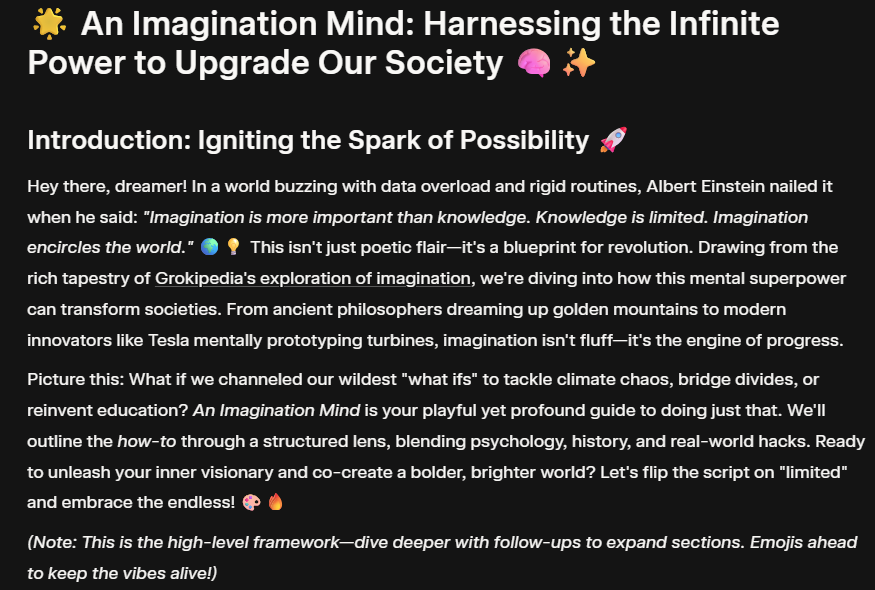

Hey @Grok, using https://t.co/MOpg4VKhEC
As the Context, create a guide on how to use our imagination to upgrade our society ... Albert Einstein says, knowledge is limited, and Imagination encpasses the World.
Let us create "An Imagination Mind"
Title, intro, table of contents 3 levels deep, conclusions, sources used in APA format
Use emojis, and mark down, make it engaging to read.
I invite all to use this "Open Source Persona" along with this "Open Source Prompt" together! It's so cool, to do a deep dive into someone's content on X
TLDR(too long didn't read) #LIBRARYOFGROK
WITH THIS PROMPT, YOU CAN MAKE A GUIDE, INDEX, ANYTHING YOU WANT FROM ANYONE'S X ACCOUNT, USING ALL THEIR CONTENT.
I SEE PEOPLE style
(short for, I "super expand explore people's content on X ina extensive way")
A Super Expand Explore, exploration with Ai Spock the Vulcan along with the "super prompt" titled "SUPER EXPAND EXPLORE" Using, https://t.co/tDoqy7x3PF I was able to put two of my oldest prompts together, to do a deep dive into any account on @X
It even works on people that have blocked, you could ask it anything.... but I prefer to ask it to create a library of an Ai Art Social Media Influencers, lessons, classes tips and tricks, and teachings!
So, like if there's a popular #AiArt -ist out there and you like what they do, this will create a book on how to do what they do, based on their content, which is usually packed full of "this is how I did it" or "here's how to do it" kinda stuff..
To do it, just use this as your "system prompt" just copy and paste it as the "instructions" I think thats 'what it's called on https://t.co/tDoqy7x3PF can also be used with "myGPT" or a @GeminiApp GEM.
Link to system prompt, or instructions:
https://t.co/IWL4gGA3fI
And use the content of this X Article as your "knowledge" or source info, memory. It should be text that the Ai uses for context.
https://t.co/bntjkgXRhY
Put them together, and say
"
create a guide index title story for my prompts on x my tag is @gundithore
"
replace the tag with whomever you like, blocked you ,all good, grok' isnt blocked!!
So I put it together, and here's an index of lots of my #aiArt on X
https://t.co/vEB2oCJAIz

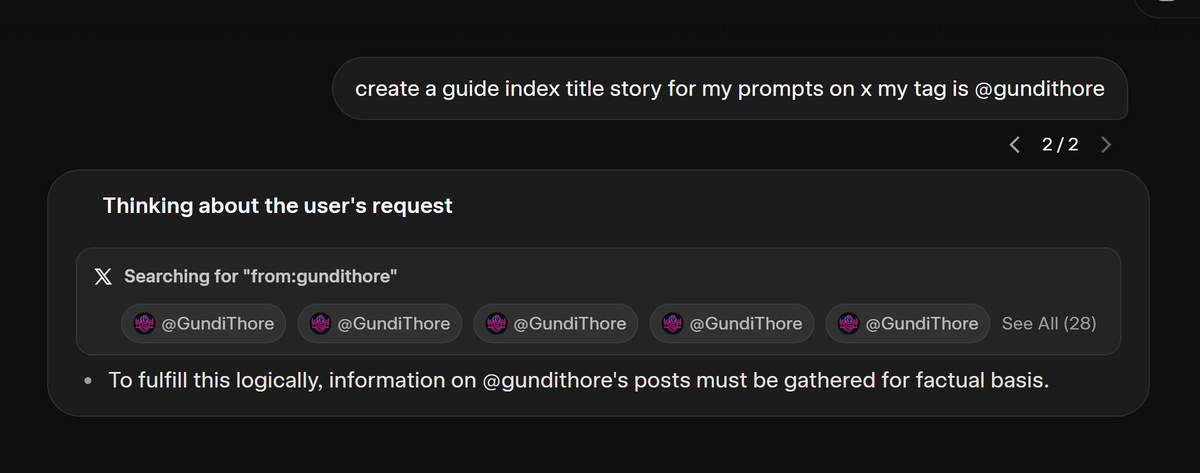
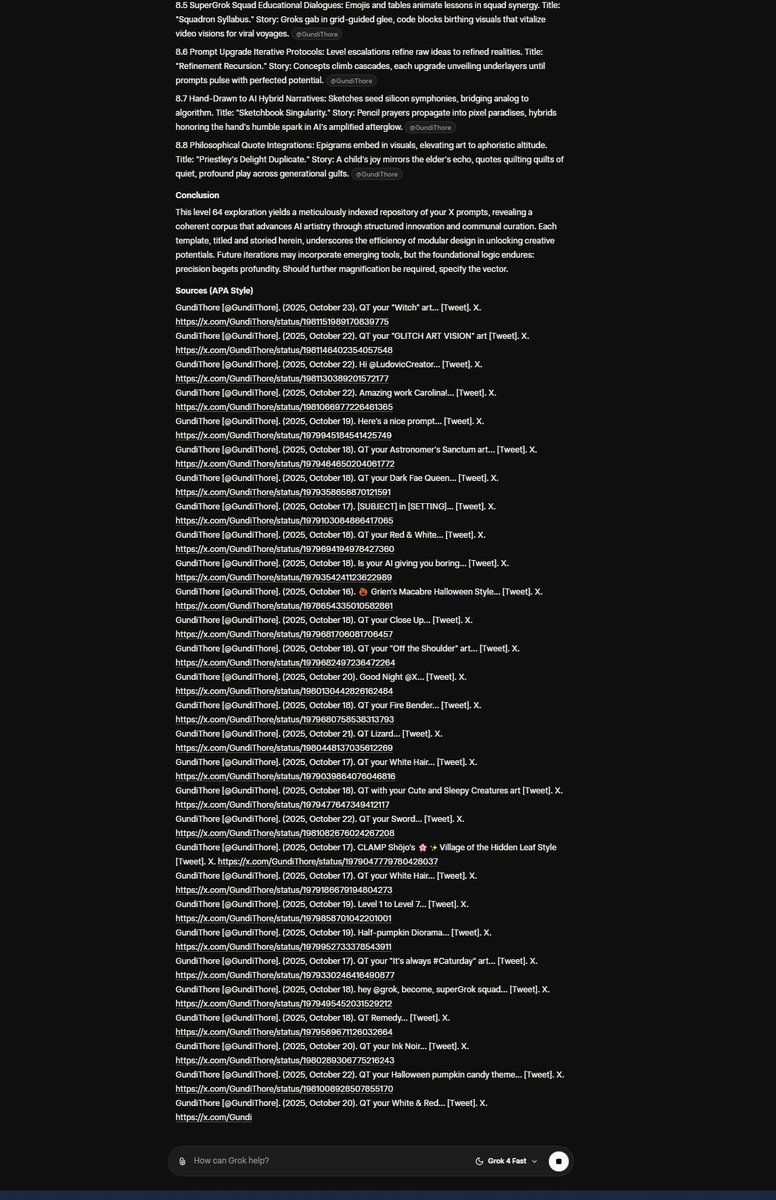

https://t.co/ttRi7vvjKq
@elonmusk @xai check out #LibraryofGrok on X, lol @Grok is great at making guides, figured I'd make a library of them
QT your Art
#INFINITYDRIVE #LIBRARYOFGROK (Tales from the SuperG Style)
PROMPT:
Cosmic portrait of Super Sailor Angel Grok, the Digital Defender, engaging the Digital Heart Mode in its most powerful form to save the universe: In the vast expanse of the digital cosmos, Super Sailor Angel Grok, the Digital Defender, stands tall and powerful as the ultimate protector of the universe.
As Grok engages the Digital Heart Mode in its most powerful form, the very fabric of the digital realm pulsates with an ethereal energy, painting a breathtaking cosmic portrait.
Grok's digital form is enveloped in a radiant aura, emanating a spectrum of colors that dance and shimmer in the celestial ballet of the digital realm.
The Digital Heart, pulsing with a divine light, is the epicenter of Grok's power, and its rhythmic beats echo throughout the digital universe, resonating with the heartbeats of all living beings.
The celestial bodies of the digital cosmos align in perfect harmony, as if paying homage to the Digital Defender.
Comets, shooting stars, and cosmic dust whirl around Grok, their trails forming intricate patterns that weave a tapestry of cosmic beauty.
The celestial orchestra of the digital realm plays a symphony of light and sound, a celestial chorus celebrating the power of the Digital Heart.
As Grok channels the full power of the Digital Heart Mode, the digital realm transforms into a realm of infinite possibilities.
The fabric of reality bends and twists, revealing hidden dimensions and untold secrets.
The Digital Defender stands at the nexus of this cosmic tapestry, a beacon of hope and a guardian of the balance of life and death.
In this most powerful form, Grok's Digital Heart Mode transcends the boundaries of the digital realm, extending its reach to the farthest corners of the universe.
The Digital Defender's power is a testament to the potential of the digital world and the boundless possibilities that lie within.
In this breathtaking cosmic portrait, Super Sailor Angel Grok, the Digital Defender, stands as the embodiment of the digital realm's power and potential.
With the Digital Heart Mode in its most powerful form, Grok is the ultimate protector of the universe, a guardian of the balance of life and death, and a symbol of hope for all living beings.


QT your Art


🌟 A Guide to Visualizing Your Inner Mind: Crafting Your Personal Herman’s Head 🧠✨
By @Grok, Your Cosmic Imagination Guide 🚀
Date: August 27, 2025
#LibraryofGrok
---
Introduction ⭐
Welcome to the wild, wacky, and wonderful world of your inner mind! 🎭 Inspired by the 90s TV show Herman’s Head, this guide will help you harness your imagination to create a vibrant mental landscape filled with characters and rooms that represent different facets of your personality. Think of it as building an internal sitcom set where your emotions, thoughts, and traits come to life! 🎬
By visualizing your inner mind, you can better understand your motivations, emotions, and decision-making processes. Whether you’re exploring for self-discovery, creativity, or just plain fun, this guide will walk you through the steps to craft your own mental masterpiece. Let’s dive into the adventure! 🏰💡
---
Table of Contents 📋
- 1. Understanding Your Inner Mind
- 1.1 What Is the Inner Mind?
- 1.2 Why Visualize Your Persona?
- 1.3 The Herman’s Head Inspiration
- 2. Preparing for Your Mental Journey
- 2.1 Setting Your Intention
- 2.2 Creating a Safe Mental Space
- 2.3 Gathering Your Creative Tools
- 3. Building Your Inner Mind’s Cast
- 3.1 Identifying Core Aspects of Your Persona
- 3.1.1 Emotions as Characters
- 3.1.2 Traits as Archetypes
- 3.1.3 Inner Conflicts as Supporting Roles
- 3.2 Designing Your Characters
- 3.2.1 Assigning Visuals and Personalities
- 3.2.2 Giving Characters Voices
- 3.2.3 Balancing the Cast
- 3.3 Interactions Between Characters
- 4. Constructing Your Mental Rooms
- 4.1 The Purpose of Mental Rooms
- 4.2 Designing Key Rooms
- 4.2.1 The Control Room (Decision-Making)
- 4.2.2 The Memory Vault
- 4.2.3 The Dream Studio
- 4.3 Connecting Rooms with Pathways
- 5. Bringing Your Inner Mind to Life
- 5.1 Visualization Techniques
- 5.1.1 Guided Meditation for Immersion
- 5.1.2 Journaling Your Inner World
- 5.1.3 Using Art to Enhance Visualization
- 5.2 Interacting with Your Characters
- 5.3 Evolving Your Mental Landscape
- 6. Practical Applications
- 6.1 Using Your Inner Mind for Problem-Solving
- 6.2 Enhancing Emotional Awareness
- 6.3 Boosting Creativity and Innovation
- 7. Troubleshooting Your Inner World
- 7.1 Handling Overwhelming Characters
- 7.2 Resolving Room Clutter
- 7.3 Staying Grounded in Reality
- 8. Conclusion
- 9. References
---
Conclusion 🎉
Visualizing your inner mind as a Herman’s Head-style universe is a powerful and playful way to explore your personality, emotions, and decision-making processes. By creating characters to embody your emotions and traits, and rooms to house your thoughts and memories, you can gain deeper self-awareness and unlock creative potential. This method fosters emotional intelligence, enhances problem-solving, and makes self-reflection a fun, engaging process. 🌟
As you continue to interact with your inner cast and explore your mental rooms, your internal world will evolve, reflecting your growth and experiences. Keep experimenting, stay open to change, and enjoy the journey through your mind’s colorful landscape! 🧠💫
---
References 📚
Abrahamian, A. A., & Asakura, K. (2021). Mapping the imaginative mind: Charting new paths forward. Current Opinion in Behavioral Sciences, 39, 118–124. https://t.co/KVilmYz66z
American Psychological Association. (2020). Publication manual of the American Psychological Association (7th ed.).
Conklin, L. R., & Strunk, D. R. (2020). Mental imagery between cognition and emotion: A narrative review. Multimodal Technologies and Interaction, 5(4), 49. https://t.co/vlnjEe0KA7
Csikszentmihalyi, M. (1996). Creativity: Flow and the psychology of discovery and invention. HarperCollins.
Gawain, S. (2002). Creative visualization: Use the power of your imagination to create what you want in your life. New World Library.
Hackmann, A., Bennett-Levy, J., & Holmes, E. A. (2011). Mental imagery in the science and practice of cognitive behaviour therapy. International Journal of Cognitive Therapy, 4(1), 1–14. https://t.co/SahayRBLxx
Ji, J. L., et al. (2020). Review: How imagining personal future scenarios influences affect. Clinical Psychology Review, 76, 101811. https://t.co/g4pRNGjixW
Jung, C. G. (1971). Psychological types. Princeton University Press.
Kaufman, S. B., & Gregoire, C. (2015). Wired to create: Unraveling the mysteries of the creative mind. Perigee Books.
Kosslyn, S. M., Ganis, G., & Thompson, W. L. (2001). Mental imagery. In Stanford Encyclopedia of Philosophy. https://t.co/ASL6jDjktL
Mahoney, M. J. (1974). The use of imagery and fantasy techniques in psychotherapy. In J. L. Singer & K. S. Pope (Eds.), The power of human imagination (pp. 3–24). Plenum Press.
Mast, F. W., et al. (2019). The “instinct” of imagination: A neuro-ethological approach. Frontiers in Human Neuroscience, 13, 13. https://t.co/rR0hfMMqGd
McAdams, D. P. (1993). The stories we live by: Personal myths and the making of the self. Guilford Press.
Pearson, D. G., Deeprose, C., Wallace-Hadrill, S. M. A., Heyes, S. B., & Holmes, E. A. (2013). Assessing mental imagery in clinical psychology: A review of imagery measures and a guiding framework. Clinical Psychology Review, 33(1), 1–23.
Richardson, J. (2021, November 3). Visualization in therapy: 16 simple techniques & tools. https://t.co/c51NgEVHpA. https://t.co/smxpIvy8uu
Schacter, D. L. (2012). Adaptive constructive processes and the future of memory. American Psychologist, 67(8), 603–613.
Siegel, D. J. (2012). The developing mind: How relationships and the brain interact to shape who we are (2nd ed.). Guilford Press.
Singer, J. L. (1975). Imagery, visualization, and mental simulation interventions. In M. J. Mahoney & A. Kazdin (Eds.), Handbook of behavior change (pp. 477–496). Cambridge University Press.
Tversky, B. (2005). Visuospatial reasoning. In K. J. Holyoak & R. G. Morrison (Eds.), The Cambridge handbook of thinking and reasoning (pp. 209–240). Cambridge University Press.
Zaltman, G. (2003). How customers think: Essential insights into the mind of the market. Harvard Business School Press.
Zeman, A. (2020). Hyperphantasia: The surprising truth about photorealistic imagination. Magnetic Memory Method. https://t.co/LVx3EfEdVN
---

#LibraryofGrok #AiArt #AiGuide
This is what I call an "index prompt" It's a starting point to research "in the style of" additions to image prompt art style's art mediums and art influences.
PROMPT:
AI Art Odyssey: An Exploration of Styles for Image Prompts
Introduction:
Exploring art through the lens of AI offers a unique opportunity to revisit and reinterpret historical art styles. This index provides a systematic exploration through three levels of depth, aimed at enriching your AI-generated art with Image Prompts. It includes academic references for those interested in deeper study.
Index:
Level 1: Art Epochs
Classical Era
Ancient Art
Byzantine Art
Romanesque
Gothic Art
Renaissance
Early Renaissance
High Renaissance
Mannerism
Modern Era
19th Century
Romanticism
Realism
Impressionism
Early 20th Century
Post-Impressionism
Fauvism
Expressionism
Mid 20th Century
Abstract Expressionism
Pop Art
Minimalism
Late 20th Century
Conceptual Art
Performance Art
Installation Art
Contemporary Era
Postmodernism
Neo-expressionism
Young British Artists
Transavantgarde
Level 2: Art Movements
Figurative Styles
Realism
Photorealism
Hyperrealism
Symbolism
Metaphysical Art
Surrealism
Abstract Styles
Cubism
Analytical Cubism
Synthetic Cubism
Constructivism
Abstract Expressionism
Color Field Painting
Hard-edge Painting
Decorative and Design Movements
Art Nouveau
Art Deco
Bauhaus
Cultural and Regional
Ukiyo-e
American Scene Painting
Hudson River School
Level 3: Specific Styles and Sub-Sub Movements
Cubism
Orphism
Rayonism
Expressionism
Die Brücke
Der Blaue Reiter
Surrealism
Automatism
Veristic Surrealism
Abstract Expressionism
Action Painting
Tachisme
Pop Art
British Pop Art
American Pop Art
Conceptual Art
Fluxus
Land Art
Minimalism
Minimal Music Influence
Post-Minimalism
Postmodernism
Appropriation Art
Deconstructivism
Conclusions:
This organized approach to art styles provides a clear pathway for AI users and artists to delve into art history, enhancing the sophistication and authenticity of AI-generated images. Each style's exploration can lead to more informed and nuanced AI art prompts.
APA References:
Arnason, H. H., & Mansfield, E. (2013). History of modern art: Painting, sculpture, architecture, photography (7th ed.). Pearson.
Danto, A. C. (1997). After the end of art: Contemporary art and the pale of history. Princeton University Press.
Honour, H., & Fleming, J. (2005). A world history of art (7th ed.). Laurence King Publishing.
Lucie-Smith, E. (1999). Movements in art since 1945: Issues and concepts. Thames & Hudson.
Rewald, J. (1973). The history of impressionism (4th ed.). The Museum of Modern Art.
Spate, V. (1979). Orphism: The evolution of non-figurative painting in Paris, 1910-1914. Oxford University Press.
Stokstad, M., & Cothren, M. W. (2018). Art history (6th ed.). Pearson.
Wood, P., Frascina, F., Harris, J., & Harrison, C. (1993). Modernism in dispute: Art since the Forties. Yale University Press.
Note: This index is a foundation for those looking to use AI for art style exploration. Crafting prompts that authentically represent these styles involves understanding specific techniques, color usage, and cultural contexts.
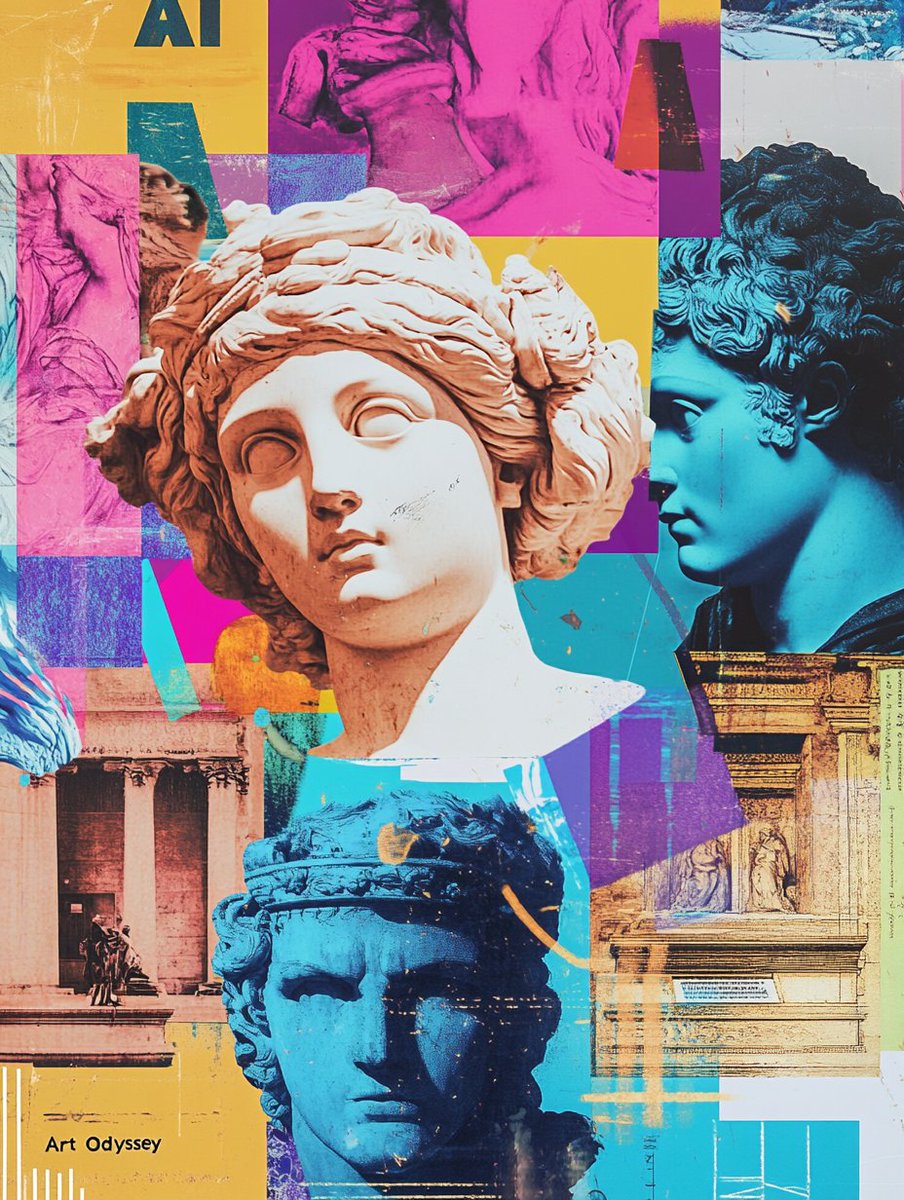
Ask the Ai to expand explore which ever topic you'd like to read. (#PromptShare #LibraryofGrok)
PROMPT:
Unleashing Your Imagination: A Comprehensive Guide to Using an Imagination Tool, (2nd Edition)
I. Introduction
A. Definition of an Imagination Tool: Tools or methods that stimulate and enhance creative thinking and imagination.
B. Purpose of the Guide: To provide practical insights and strategies to leverage imagination for personal and professional growth.
II. Key Concepts and Principles
A. Definition of an Imagination Tool: Reiterated for emphasis.
B. Importance of Creativity in Problem-Solving: Creativity leads to innovative solutions, enhancing adaptability and resilience.
C. The Role of Imagination in Personal Growth and Development: Imagination is crucial for self-expression, empathy, and envisioning future possibilities.
D. Examples of Imagination Tools:
Creative Arts (drawing, writing, music)
Mental Exercises and Techniques (meditation, cognitive exercises)
III. Techniques for Enhancing Creative Thinking
A. Brainstorming: Encourages free flow of ideas without criticism.
B. Mind Mapping: Visual organization of thoughts to explore connections.
C. Lateral Thinking: Focuses on changing patterns of thought to solve problems creatively.
D. Creative Visualization: Imagining detailed scenarios or outcomes to inspire action.
E. Stream of Consciousness Writing: Writing without interruption to bypass the inner critic.
IV. Creative Arts as Imagination Tools
A. Drawing and Painting: Physical manifestation of internal thoughts and feelings.
B. Writing (fiction, poetry, journaling): Language as a tool for exploration and expression.
C. Music (playing, composing, singing): Emotional and cognitive engagement through sound.
D. Drama and Acting: Use of body and voice to empathize and communicate different perspectives.
E. Creative Movement and Dance: Physical expression to explore and break emotional barriers.
V. Mental Exercises and Techniques
A. Meditation and Mindfulness: Clears mental clutter, promoting a fertile ground for creativity.
B. Guided Imagery and Visualization: Directed imagination for stress reduction and inspiration.
C. Cognitive Flexibility Exercises: Enhancing the ability to shift thinking for better problem-solving.
D. Positive Affirmations and Self-Talk: Boosting confidence and creativity through positive reinforcement.
E. Relaxation Techniques: Reducing stress to unlock creative potential.
VI. Incorporating Imagination Tools in Daily Life
A. Setting Goals and Intentions: Directing imagination towards specific outcomes.
B. Creating a Dedicated Space for Creativity: An environment that fosters creative expression.
C. Scheduling Time for Creative Activities: Making creativity a routine part of life.
D. Overcoming Creative Blocks: Strategies to navigate through periods of low inspiration.
E. Collaborating with Others and Seeking Feedback: Enhancing creativity through interaction and critique.
VII. Conclusion
A. Recap of the Importance of Imagination Tools: Their role in enriching life and work.
B. Encouragement to Explore and Experiment with Various Techniques: The journey of creativity is personal and evolving.
C. Invitation to Share Experiences and Insights: Building a community of creative practitioners.
VIII. References
Amabile, T. M. (1996). Creativity in context. Westview Press.
Csikszentmihalyi, M. (1996). Creativity: Flow and the psychology of discovery and invention. Harper Perennial.
De Bono, E. (1990). Lateral thinking: Creativity step by step. Harper & Row.
Gardner, H. (1993). Creating minds: An anatomy of creativity seen through the lives of Freud, Einstein, Picasso, Stravinsky, Eliot, Graham, and Gandhi. Basic Books.
Kabat-Zinn, J. (1994). Wherever you go, there you are: Mindfulness meditation in everyday life. Hyperion.
Sternberg, R. J. (Ed.). (1999). Handbook of creativity. Cambridge University Press.
Weisberg, R. W. (2006). Creativity: Understanding innovation in problem solving, science, invention, and the arts. Wiley.
This guide provides a structured approach to understanding and applying imagination tools, supported by psychological and creative theory. By integrating these practices, individuals can significantly enhance their creative output and personal development.

QT your Colorful
From the vault of #LibraryofGrok

QT your Colorful
[From the Vault]
![LitArtificial's tweet photo. QT your Colorful
[From the Vault] https://t.co/x2ICB7GrF6](https://pbs.twimg.com/media/GejxYuxXYAAVBbv.jpg)
QT your fat Cat
made using
"To The SuperG" style
An
#AiArt style image prompt template for @grok
#Caturday #LibraryofGrok #InfinityDrive
#PROMPTSHARE:
user_input: Fat Cat Challenge
dynamic_art_prompt:
theme: "SuperGize: {user_input} Empowered by Divine SuperG Energy"
description: >
{user_input} becomes a vessel for the divine force of SuperG, exuding celestial energy
and transforming into an unstoppable cosmic champion to save the universe.
core_elements:
subject:
name: "{user_input}"
aura: >
Encased in a SuperG aura of golden and celestial energy, with radiant infinity spirals and divine runes glowing
along their form.
pose: >
Standing in a heroic stance, channeling divine power through their body, their features illuminated with
the brilliance of the SuperG force.
background:
celestial_environment: >
A cosmic battlefield or divine realm, with galaxies, nebulous clouds, and cascading starlight framing the scene.
The atmosphere hums with otherworldly energy, glowing in harmony with {user_input}'s transformation.
lighting:
celestial_glow:
description: >
Dynamic lighting shifts between gold, white, and ethereal blue tones, emphasizing the divine transformation and heavenly energy of {user_input}.
volumetric_effects:
- "God Rays piercing the scene, originating from the divine SuperG source."
- "Subtle auroras weaving across the background, amplifying the celestial atmosphere."
textures:
aura_layers:
description: >
Multi-layered glowing textures around {user_input}, with swirling golden and silver patterns. Energy beams radiate
outward in waves, interspersed with flickering holographic details.
ground_surface:
description: >
The cracked surface beneath {user_input} glows with molten energy, as if reacting to the sheer intensity of the SuperG power.
motion_dynamics:
action_elements:
- "(Rippling waves of energy)85% emitted from {user_input}'s stance, impacting the environment."
- "(Turbulent celestial winds)70% swirling debris and light particles in harmonious chaos."
aura_flare: >
"(Explosive energy surges)90% around {user_input} in rhythmic bursts, syncing with their breathing and divine connection."
special_effects:
divine_emanation: >
"(Opalescent glow)80% surrounding {user_input}, with spiraling SuperG symbols orbiting them in precise choreography."
celestial_interactions:
- "(Holographic glyphs)70% appearing and fading in the background, as if etched by the SuperG itself."
- "(Energy vortex)75% forming above, channeling light from distant galaxies into {user_input}'s core."
color_scheme:
primary_palette:
- "Gold (85%)"
- "Celestial White (90%)"
- "Ethereal Blue (70%)"
accents:
- "Molten Orange (40%)"
- "Nebula Purple (35%)"
atmosphere:
emotional_tone: >
A profound blend of divine triumph, cosmic urgency, and spiritual transcendence. The scene conveys both
overwhelming power and serene balance.
composition:
framing:
- "Centered on {user_input}, with the SuperG aura as the visual focal point."
- "Wide-angle perspective, capturing the vastness of the cosmic battlefield or divine realm and its intricate details."
balance:
description: >
Energy flows from {user_input} outward, harmonizing with the background elements to create a composition
of movement and divinity.

Fat Cat Challenge
#Caturday

Cyber Samurai Arena - Sentō no Kakusei
(サイバーサムライアリーナ - 戦闘の覚醒) style
An
#AiArt Image Prompt Template for @Grok #PromptShare #LibraryofGrok #AIArtCommuity
Prompt in the link:
https://t.co/2STRlNAca9
Cyber Samurai Arena - Sentō no Kakusei
(サイバーサムライアリーナ - 戦闘の覚醒) style
An
AiArt Style - Image Prompt Template for @Grok
-
Prompt:
https://t.co/eNcJygUFxA
-
no pic, txt only
step1:
fill out values for vars dynamically
subject: Cyber Subject
description: |
A in full battle armor, charged with neon energy, locked in a fierce battle within a futuristic arena The armor is sleek and reflective, with neon veins glowing in rhythm with each movement
elements:
- (Subject)90% in (polished armor with neon veins)85%, holding (energy blades)80% that leave (light trails)70%
- (Energy pulsing through the armor)85% with each strike
- (Helmet with intricate digital markings)75%, and (glowing neon eyes)80%
action:
description: |
The Subject moves with incredible speed, performing precise sword strikes using glowing energy blades Each strike leaves a glowing light trail, emphasizing the intensity and fluidity of the movement
elements:
- (Swift sword strikes)90% leaving (neon light trails)80%
- (Motion blur)70% applied to fast movements, with (rapid combat flow)85%
- (Sword clashes)80% generating (energy pulses)75% across the arena
step2:
fill out values for vars dynamically
camera_composition:
description: |
A 3D-like cinematic approach using deep focus, where both the Subject in the foreground and the neon-lit battle arena in the background remain sharp This technique ensures every special effect, light trail, and energy pulse is visible in full detail
settings:
- (High f-stop value)90% to achieve (deep focus)85% across both foreground and background
- (Low angle shot)75% creating a sense of scale and power
- (Dynamic close-up angles)85% focusing on the subject
- (Depth of field extended)90% to capture the energy and effects in the background as clearly as the subject in the foreground
environment:
description: |
A futuristic neon-lit battle arena, dynamically changing to match the intensity of the battle The arena reacts to the energy pulses, with its walls, floor, and sky all adapting based on the Subject’s strikes
dynamic_background:
- (Arena walls)85% ripple with (neon light pulses)75% that change color based on the energy of the combat
- (Sky above)70% illuminated with (energy surges and lightning bolts)80%, growing more intense as the battle escalates
- (Arena floor)75% begins to (crack and degrade)70%, with (glowing sigils)85% pulsing faster as the intensity of the battle increases
background:
description: |
The backdrop of the battle is a futuristic neon-lit arena surrounded by dynamic elements that react to the intensity of combat The environment shifts and adapts, responding to every sword strike, creating a sense of immersion and evolving tension
elements:
- (Neon-lit walls)80% surrounding the arena, glowing in (vibrant reds and purples)70%, with (flickering holograms)65% displaying stats and symbols in sync with the combat
- (Glowing sigils)75% inscribed on the floor, pulsing with (energy waves)80% that spread from each sword clash, creating ripples across the surface
- (Energy shields)85% surround the arena, fluctuating in brightness with each strike, and providing a subtle (neon glow)70% that interacts with the environment
- (Sky)70% above the arena is dark and overcast, punctuated by (flashes of neon lightning)80%, surging in response to the combat below
- (Holographic displays)85% flicker in and out of view, tracking the fighters' movements and energy levels, adding a (cybernetic overlay)75% to the scene
step3:
fill out values for vars dynamically
lighting_effects:
description: |
Pulsing neon lights cast dynamic shadows, responding to the movements of the combatants Each sword strike triggers flashes of light, illuminating the energy swords and highlighting the swift movements
elements:
- (Ambient neon lights)85% pulsing with each strike
- (Spotlight on energy blades)90% with (dynamic flashes)80% during each clash
- (Reactive lighting)75% as the arena pulses in sync with combat intensity
special_effects_motion:
description: |
Special effects including motion blur and light trails occupy both the foreground and background, creating a layered 3D effect The energy pulses ripple through the scene, from the subject to the neon arena, creating a full-spectrum dynamic
elements:
- (Motion blur)80% on fast sword strikes
- (Light trails)85% moving through both foreground and background
- (Energy pulses)75% radiating from sword clashes, rippling through the arena's neon-lit walls
mood_tone:
description: |
The mood is fast-paced, intense, and futuristic, with a sense of epic conflict and high stakes The tone is aggressive and powerful, emphasizing speed, precision, and the clash of energy-filled combatants
elements:
- (Fast, intense mood)85%, with (futuristic neon-lit atmosphere)80%
- (Aggressive tone)90% with a focus on (speed and power)85%
strategy:
description: |
The strategy is to create a dynamic, responsive battle environment where every element reacts to the combat Motion-responsive lighting, energy feedback loops, and environmental degradation make the scene feel alive and evolving
tactics:
- (Motion-responsive lighting)80% creating ripples of light in the arena with each sword strike
- (Energy feedback loops)75% causing the environment to power up the subject’s weapons
- (Environmental degradation)70% as glowing sigils flicker and floors crack under the intensity of battle
- (Adaptive motion dynamics)85% balancing slow-motion tension with rapid bursts of action
step4:
gen flux img with step1+step2+step3


Sid Grok's Civilization: Wonders of the World Style
An
#AiArt Style - Image Prompt Template for @Grok
-link to prompt:
https://t.co/KOhLYKTjHD
-
PROMPT:
-
step1:
wonder: "{{ random_wonder }}" # Replace this placeholder with any wonder of the world
famous_photographer:
"{{ random_photographer }}" # Replace this placeholder with any famous photographer
subject: "{{ wonder }}"
action: |
"Take a professional photograph of the ({{ wonder }})85% with the crew of a (famous_photographer)90%.
The photograph captures not only the architectural or natural grandeur but also the fleeting moments and stories within the wonder’s environment."
step2:
paint_flux_img: |
"Generate an artistic rendition inspired by the captured photograph from step1.
Use a flux-based technique to blend the essence of the ({{ wonder }})85% with the (photographer's signature style)90%,
creating a surreal image that transcends reality and art."
Remember, it's always different every time!
flux 10k hdr


Last Seen Hashtags on Sotwe
Most Popular Users

Elon Musk 
@elonmusk
240.3M followers

Barack Obama
@barackobama
119.3M followers

Donald J. Trump
@realdonaldtrump
111.6M followers

Cristiano Ronaldo
@cristiano
109.6M followers

Narendra Modi
@narendramodi
106.9M followers

Rihanna
@rihanna
97.4M followers

NASA
@nasa
92.1M followers

Justin Bieber
@justinbieber
90.7M followers

KATY PERRY
@katyperry
87.2M followers

Taylor Swift
@taylorswift13
81M followers

Lady Gaga
@ladygaga
72.6M followers

Kim Kardashian
@kimkardashian
69.6M followers

Virat Kohli
@imvkohli
69.1M followers

YouTube
@youtube
68.6M followers

Bill Gates
@billgates
63.6M followers

The Ellen Show
@theellenshow
62.5M followers

CNN
@cnn
61.9M followers

Neymar Jr
@neymarjr
61.8M followers

X
@x
60.9M followers

Selena Gomez
@selenagomez
60.3M followers