

Top Tweets for #LightClient

been thinking about this one.
we talk about self custody like it's only a keys thing your keys your coins, all that. but your wallet still has to read the chain somehow, and that part is honestly way more custodial than people give it credit for.
It reads over RPC that's the connection that tells your wallet what's actually on chain and most wallets just have some default RPC baked in a few of them even ping it before you've set anything up.
so even holding your own keys, you're handing one company your IP, every address you look at, all your queries. you can map a lot from that. self custodial on the keys, not really on what you're doing.
run your own node is the very easy answer. nobody does it though, It's a real hassle.
but you kind of don't have to you can run a tiny client right on your device, sync it to a checkpoint, and just verify whatever the RPC sends back instead of taking its word for it. that's a lightclient. checking the work, not trusting it completely.
@a16zcrypto built a tool called helios that does exactly this it sits on top of your normal RPC and double checks everything it tells you all the convenience none of the blind trust
idk it just feels like nobody talks about this part


@hazae41 @lightclients @PatrickAlphaC If you are talking about dapps, they should be treated as entirely untrusted from the start. If you are talking about a browser or wallet compromise, then the attacker can present whatever QR they want (different from what is sent to hardware wallet for signing).
@hazae41 @lightclients @PatrickAlphaC Can you describe the hypothetical attack that would allow for that? What app is compromised here, the user's browser? Their browser extension wallet? Something else?

@MicahZoltu @lightclients @PatrickAlphaC An app can be compromised without the device being compromised
@hazae41 @lightclients @PatrickAlphaC These days I'm personally a fan of high capability hardware wallets like AirGap on GrapheneOS. Such a device can render and present data competently, and you could even have the phone be "online" in a relatively safe way to fetch scam lists and the like for extra protection.
@hazae41 @lightclients @PatrickAlphaC If all 3 are on the same device, then the threat model is "if online device compromised, lose everything". Same for 1&2 and 1&3 on same device.
You only get benefit from this design if they are 3 isolated devices with different operational security protocols.
@lightclients @hazae41 @PatrickAlphaC Are you suggesting the user has 3 devices:
1. Online computer (where app runs).
2. Offline computer (where you verify).
3. Hardware wallet (where you sign).
1 (generate) -> 2 (review) -> 3 (sign) -> 2 (passthrough) -> 1 (publish)?

@hazae41 @lightclients I think you need a secure display. I think that’s the question they are asking?


@alexanderchopan @hazae41 @BrumeProject @ethereum @wslyvh @joshrudolf @lightclients @ethereumfndn had no issues shilling trash like $t @talos_is at the top but can’t give support/spotlight to someone who’s been building real privacy tech - tech that they intend on using now damn


🔍zkTLS + Light-Client Proofs (Web2 → Web3, verifiable) 🔍
Web3 can’t stay blind to Web2.
With zkTLS + light-client proofs, @brevis_zk turns off-chain sessions (API calls, credentials, headers) into succinct, chain-verifiable facts—without leaking raw data.
dApps can now trust claims like “account is verified”, “asset exists at custodian X”, or “API response met condition Y”, all checked by one universal verifier.
Result: programmable bridges from the web to your contracts—math-backed, privacy-preserving, multi-chain.
#Brevis #ZK #zkTLS #LightClients #Web3 #KAITO


🚀 Elevating Data Integrity & Decentralization: On-Chain Merkle Roots, Public Light Clients, and More! 🚀
Hey #CryptoCommunity, let's dive into some exciting ideas for enhancing the integrity and decentralization of our data infrastructure! Building trust and transparency is crucial for the long-term success of the ecosystem.
💡 Key Proposals:
On-Chain Merkle Roots per Epoch: Let's commit to batching Merkle roots on-chain for each epoch. This would provide a verifiable record of data integrity.
Public Light Clients with Header Verification: Implementing public light clients that verify headers would enable anyone to independently verify the data.
CC0 Trace Schema: Let's release the trace schema under CC0, making it completely open and free for anyone to use.
IPFS CID Versioning: Versioning the trace schema using IPFS CID would ensure immutability and traceability.
DAO Multi-Sig Governance + EIP Drafting: Let's establish a DAO with multi-sig governance to manage the trace schema and draft an Ethereum Improvement Proposal (EIP) to standardize the approach.
🤔 Let's Discuss:
What are the biggest challenges in implementing these proposals?
How can we ensure the scalability and efficiency of on-chain Merkle root commitments?
What are the benefits of using CC0 for the trace schema?
Let's build a more robust, transparent, and decentralized future for crypto together! Share your thoughts and let's shape the conversation!
#DataIntegrity #Decentralization #Blockchain #Web3 #MerkleRoots #LightClients #CC0 #IPFS #DAO #Governance #Ethereum #EIP #Community #Builders #Transparency #Trust

Seriously nothing left to yap about @union_build right now , we already posted thousands of times about interoperability, zk cross-chain bridge, privacy, infra, plus core functions like CometBLS, Galois, Voyager, LightClients, Uniond, Hubble, Unionvisor, Drip, CosmWasm, EVM, SDK, ucs03-zkgm-0, ics20-1 and more.
Now just waiting on something fresh, and that’s the Checker.
zkgm to all Union yappers who are feeling the same 🫡

Next Up: Union light clients
Taking a minute to acknowledge @73lV_ on whose inspiration I have bn talking.
What are light clients and how is @union_build using this?
Generally, light clients is just a program that allows users interact with blockchain without downloading the entire blockchain history.
In Union, light client is just a program or rather a smart contract program that can verify cryptographic proofs from another chain. This Proofs in union terms are zk powered.
This lightclients enables union verify activities on chain without trusting any third party.
Since union is building a chain agnostic framework, this light clients allows proof verification, packet forwarding and updates the state of the transaction.
Since we have dfrnt blockchains we equally have different lightclients compatible with each one (Tendermint light client, Ethereum light clients Bitcoin lightclients and zk enabled light clients )
How does this works, this light clients stores the latest verified header then submits it thereafter union verifies the proof using Groth16 Snark verification and then updates the state thereafter verify inclusion proof if available. And then forward the packets to the required module . zkgm
To be continued
Next up: Unionvisor
I wanna take a break but if people like @73lV_ tap union daily then I have no option
What’s unionvisor and how does union utilizes it ?
Rembrd we previously discussed about uniond as the union chain agnotic IBC hub and also the core node program that aids in connecting dfrnt chains via IBC
Having understood that, then this unionvisor is just like the control panel that help you manage, run and control the node as program. Take for example the xampp server that u use to control Apache n rest it’s exactly like dat but in a dfrnt context.
So with unionvisor u can easily manage uniond deployments. It’s just like a command interface that helps u run all activities on the uniond. zkgm
This Collection comprises of major components of @union_build
✅Uniond : Node implementation with CometBLS
✅Galoisd :
✅voyager
✅Hubble
✅cosmwasm
✅lightclients
✅unionvisor
✅drip
✅EVM
✅app
I have previously explained Galois Engine, Cosmwasm and light clients will explain the rest in details soon
zkgm


Kaito changed things but we don't stop talking about projects we love. i will keep preaching about @cysic_xyz 👇
ZK Light Clients = The Gateway to Trustless Access
Traditional blockchain light clients let users verify transactions without running a full node but they still depend on trust assumptions and can be bandwidth heavy.
ZK Light Clients change the game:
- They use zero knowledge proofs to verify chain state instantly.
- They minimize resource requirements (mobile & IoT friendly)
- They remove the need for trust in third parties.
With Cysic’s hardware accelerated ZK stack, proof generation becomes fast enough for real time cross chain verification, opening the door for:
- Secure DeFi access from mobile
- Decentralized rollup bridges
- Privacy preserving on chain apps
ZK Light Clients aren’t just an upgrade, they’re a prerequisite for a truly global, decentralized web.
Quick question, How do you see ZK light clients changing the way people interact with blockchains day to day?
#ZK #LightClients #Cysic #Web3 #Blockchain

How does @EspressoSys handle misbehaving sequencers?
Espresso prioritizes trustless coordination, not just speed. Trust demands accountability, and that’s where slashing comes in.
At the heart of Espresso’s Global Confirmation Layer is HotShot, a unique BFT protocol. HotShot uses a rotating group of validators (the consensus committee) to agree on rollup block ordering.
What happens if validators cheat? Here’s the process:
- Validators sign blocks, with each finalized block requiring valid signatures from a quorum of committee members.
- The LightClient contract verifies on-chain that the block aligns with protocol rules and was signed by the correct committee.
- If a validator is caught cheating (e.g., double-signing or submitting invalid blocks), cryptographic fraud proofs are triggered, and their stake is slashed.
This slashing mechanism:
- Prevents censorship and equivocation
- Ensures sequencer honesty
- Supports secure bridging and cross-rollup applications
- Reduces dependence on L1 fallback
This makes Espresso both resilient and efficient.

@EmmanuelSSCB @union_build The Union Lightclient is the real onchain replica of how matrix format moves in reality.
I love what Union is building, they're not just focusing only on the onchain part, they're relating it to real life scenario.
Zkgm, fam.

Why @EspressoSys DA Is Truly Modular-Native
As rollups scale blockchain execution, they still rely on Data Availability layers to store their data trustlessly. Several DA solutions exist like Celestia, EigenDA, and Avail but EspressoDA stands out by being modular native.
🧠 Why DA Matters
Rollups move computation off Layer 1s but still need to publish their data somewhere verifiable. A strong DA layer must offer:
-High throughput for large data blobs
-Low cost for sustainable scalability
-Fast availability guarantees
-Flexible integration with any rollup stack.
🚀 What Makes EspressoDA Different
EspressoDA is built specifically for rollups,but without forcing design changes. It’s execution-agnostic and works with:
-Optimistic rollups
- ZK rollups
-Custom execution environments.
Key features:
✅ Cheap, scalable DA via batching and proofs
✅ Permissionless publication
✅ Fast finality via HotShot consensus
✅ Shared availability across rollups
🔧 Modular Native by Design
Unlike opinionated DA layers, EspressoDA is:
🔌 Composable with other modular parts
🧠 Unopinionated about execution logic
⚡ Plug and play with Espresso’s LightClient & HotShot
@EspressoSys DA simply lets rollups scale without compromise. It fits into any stack, coordinates across systems, and enhances modularity,without introducing bottlenecks.

How rollips use @EspressoSys
To connect to Ethereum.
Every rollup communicates with Ethereum through a dedicated smart contract essentially, its bridge to the base layer. This bridge is how state updates are submitted and verified, whether through zero knowledge proofs or fraud proofs.
But for Ethereum to trust a rollup’s proof of a state change, it needs to reference the exact sequence of blocks that led to that state. Without access to a canonical, verifiable history of block commitments, the integrity of that proof can’t be guaranteed.
This is where Espresso’s HotShot protocol enters the picture.
HotShot acts as a shared, authoritative sequencing layer. Rather than relying on the isolated, opaque histories of individual rollup sequencers, HotShot publishes a globally certified block sequence directly to Ethereum. This sequence becomes a single source of truth that any rollup can reference.
The mechanism is elegantly simple:
HotShot exposes an on-chain field called `sequencedCommitments[]`—an array of verified block commitments posted to L1.
Rollup contracts can directly query this array to anchor their proofs in this trusted, shared history. This means they no longer need to wait for Ethereum finality or implement custom bridge logic to verify their updates. Instead, they plug into a standardized system that enables fast, secure, and interoperable verification.
In essence, Espresso transforms fragmented sequencer timelines into one unified, verifiable backbone unlocking fast, safe bridging and paving the way for seamless cross-rollup interoperability.

How does Espresso keep sequencers honest?
In @EspressoSys, speed alone isn’t enough, coordination has to remain trustless. That’s why accountability is baked into the protocol through slashing.
At the core of Espresso’s Global Consensus Layer is HotShot, a BFT protocol powered by a rotating validator committee. These validators decide the ordering of rollup blocks.
But what stops them from misbehaving?
🔹 Blocks require quorum signatures
A block is only valid if enough committee members sign it.
🔹 On-chain LightClient checks every block
It verifies that the correct validators signed it and that it follows protocol rules.
🔹 Misbehavior = cryptographic proof → slashing
If a validator double-signs, censors, or submits invalid data, the proof is recorded on-chain and their stake is slashed.
This keeps the network in check by:
✅ discouraging censorship & equivocation
✅ maintaining honest sequencers
✅ making cross-rollup apps safer
✅ reducing the need to fall back to L1
That’s how Espresso stays fast, secure, and resilient,all while holding validators accountable. gEspresso ☕️


UNION LIGHT CLIENT HEIGHTS (v3.2)
Zkgm Union fam, we all know that @union_build dashboard underwent an upgrade recently to v3.2, and among those updates was the addition of Light Client Heights. This comes just after Orbitals were added on the last upgrade.
The update provides a real-time visualization of chain connections and synchronization status via light clients and It is available on both testnet and mainnet.
The lightclient dashboard presents a matrix format, where rows represent source chains and columns represent destination chains. A blue square indicates that the destination chain is actively tracking the source chain's state using a lightclient, while empty/dark squares indicate that no route is available between those chains.
The lightclient dashboard also enhances transparency by allowing users to observe the cross-chain verification process aided by light clients, eliminating the need for third-party trust and offering real-time insights into cross-chain interoperability.
What do you think about this update? 🤔


Most rollups today rely on a centralized sequencer.
But what is a sequencer?
A sequencer is the component that decides the order of transactions in a rollup.
It sounds simple but it has huge implications
That’s:
– 1 party deciding which tx goes first
– 1 party who can front-run, delay, or censor your tx
– 1 single point of failure for the rollup
Centralized Sequencers are fast but are not trustless
Imagine building an ecosystem on a rollup…
But the core ordering logic depends on a centralized actor you can’t audit or replace.
That's a security and fairness nightmare waiting to happen.
Enter @EspressoSys ☕️
Espresso isn't building just another sequencer
They are building a neutral, decentralized, BFT-based coordination layer for rollups powered by HotShot.
Here's how they make it secure (and hard to corrupt):
◾ 1. Committee Rotation HotShot uses rotating validators no fixed group dominates consensus. This rotation adds entropy and protects against long-range attacks.
◾ 2. Signature Thresholds Blocks are only finalized if enough committee members sign it. No single party can finalize malicious blocks on their own.
◾ 3. On-Chain LightClient: A smart contract validates that blocks were signed by the correct committee using cryptographic proofs.
No shortcuts. No spoofing.
4. Slashing for Misbehavior Double-sign? Equivocate? Send invalid data?
You lose your stake. This keeps validators honest and aligned.
And unlike centralized sequencers, this system has:
◾ Built-in accountability
◾No L1 fallback dependence
◾ Safer bridging
◾ Trust-minimized interoperability
Espresso isn’t just fast, it’s hard to cheat.
That’s what Ethereum needs.

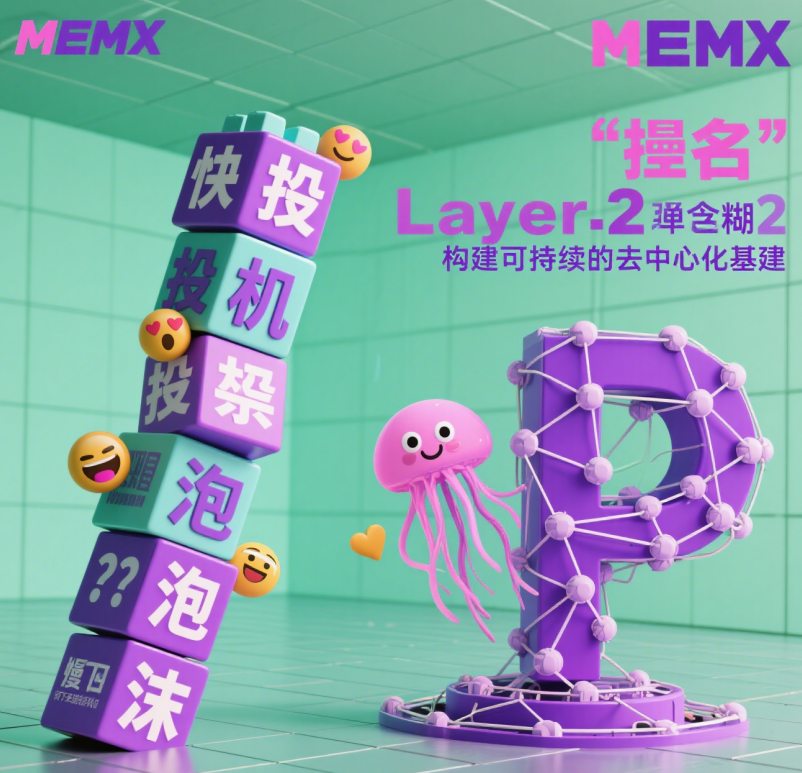
Portal 近期的进展,透露出一个值得重视的事实:
它不是在「赶进度」,而是在构建一套新型去中心化交互基础设施,并有意与过去那种靠任务刷量、空投投机驱动的增长路径划清界限。
🧩 Infra 层面:
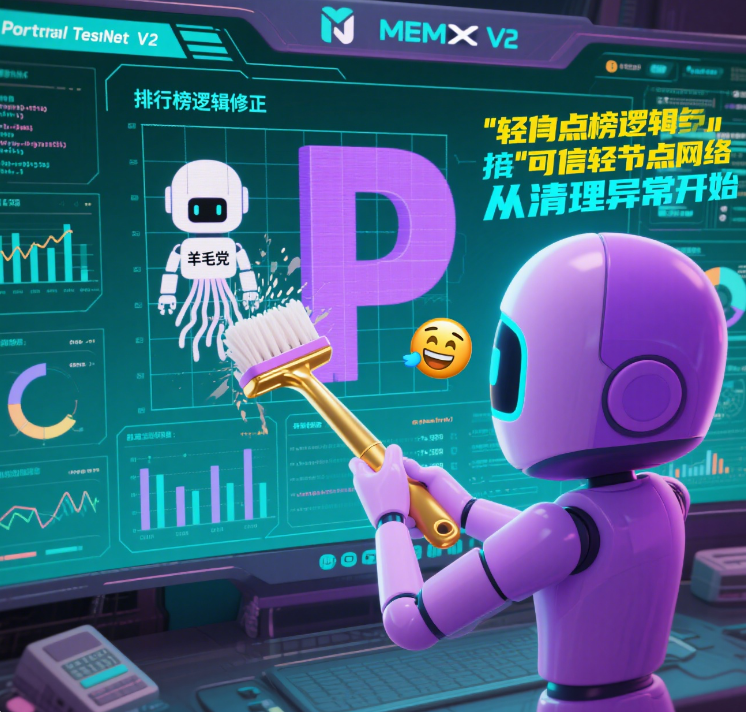
Testnet V2 落地清理异常行为、修正排行榜分配逻辑,已经显露 Portal 团队在链下交互模型治理上的执行力。这一步的实质,是在为将来的链上订单执行与资产转移奠定一个「值得信任的轻节点网络」。
🔁 跨链执行层设计:
Solana 支持集成不只是兼容性补全,而是对高频、低手续费链的执行路径的精准捕捉。Portal 的目标很明确——不是要当最强的某一条链,而是要提供一个可信、统一的资产交换与执行接口。
🌍 社区层面:
Portal Hub + University + Kaito AI 并非单点玩法工具,而是在构建一套「可持续社区贡献 -> 声誉累积 -> 权益获取」的正向闭环。KYC 是其中关键一步,它传达的是一个鲜明态度:我们要的是真人网络,而不是羊毛机器人。
📊 当前 Portal 的活跃钱包数据、交易体量增长虽然亮眼,但更值得关注的是:这些增长背后,Portal 并未牺牲分配机制的公平性和透明度,反而持续通过机制更新在做加固。
在这个“快就是好”的叙事主导周期中,Portal 明显是那个慢下来、但不含糊的异类。
更像是在构建一个属于比特币原生资产的 Layer 2 弹性网络,而不是一个任务驱动型 Dapp。
长期主义不是口号,而是每个决策里的约束条件。
@KaitoAI #Portal #Web3Infra #LightClients #FairLaunch #CrossChainExecution #Solana #DecentralizedFuture @PortaltoBitcoin



如果您错过了Portal本周的 X Space,这里是所有主要主题和关键要点的简要概述。
整个@PortaltoBitcoin 团队正为主网部署做最后准备,确保社区能够平稳过渡,奖励机制公平、透明。
目前Testnet V2 正式结束,平台数据和排行榜正在最终完善中。Portal 始终坚持公平与透明的原则,在这一阶段内对违规行为进行了严厉打击,包括清除利用 Jelly Jam 漏洞作弊的账户、清退大量机器人与虚假账号,确保轻节点位置属于真正贡献者。
此外,早期阶段的排行榜奖励也将重新调整,杜绝作弊者获利。轻节点分配结果及认领说明即将公布,用户需通过 Portal Hub 完成 KYC 操作。
在技术集成方面,Portal 成功在短短几周内实现了 Solana 支持。这是Portal战略扩展的关键一环, 因为SOL链目前占据约 81% 的 DEX 交易流量,具备显著优势。而且庞大的活跃用户群和强劲的 meme/NFT 社区
生态层面,Portal 用户增长迅猛,目前钱包下载量超 100 万,活跃账户超 70 万,累计交易量超 1400 万笔。
Kaito AI 作为社区赋能工具,已从早期的“黄金门票”演进为日常任务与排行榜机制的核心驱动,从而真正实现社区优先的有机增长。
Portal University 也已上线,用户可通过课程与测验深入理解 Portal 技术理念,并获得相应徽章与奖励。与此同时,Community Hub 功能持续增强,支持追踪钱包及社交任务、获得徽章,参与每日“幸运券”,并可通过全球“地球视图”观察社区分布。
这表明:Portal 不只是一个产品,更是一个致力于公平、安全、去中心化的完整生态系统。
@KaitoAI #KaitoYap #KaitoAI #Yappers #Bitcoin #DeFI @Galxe #Galxe #Starboard

Last Seen Hashtags on Sotwe
Most Popular Users

Elon Musk 
@elonmusk
240.1M followers

Barack Obama
@barackobama
118.6M followers

Cristiano Ronaldo
@cristiano
114.4M followers

Donald J. Trump
@realdonaldtrump
111.7M followers

Narendra Modi
@narendramodi
106.9M followers

Rihanna
@rihanna
98.6M followers

NASA
@nasa
92.1M followers

Justin Bieber
@justinbieber
91.7M followers

KATY PERRY
@katyperry
89.9M followers

Taylor Swift
@taylorswift13
83.9M followers

Lady Gaga
@ladygaga
75.4M followers

Virat Kohli
@imvkohli
73.3M followers

Kim Kardashian
@kimkardashian
70.8M followers

YouTube
@youtube
68.6M followers

Neymar Jr
@neymarjr
66.3M followers

Bill Gates
@billgates
65.2M followers

Selena Gomez
@selenagomez
63M followers

The Ellen Show
@theellenshow
62.1M followers

CNN
@cnn
61.7M followers

X
@x
60.6M followers