

Top Tweets for #LyricsofBTS

#LyricsofBTS 134340 (Album: Love yourself: Tear)
Today, 134340 was played (my heartbreak is still strong), so what better time to revisit one of BTS’s most ridiculously clever pieces of lyricism?
Because beneath the heartbreak, the entire song is built around one astronomical fact that Pluto was stripped of its status as a planet and reduced to the designation 134340.
And BTS turn that into a story about being stripped of your place in someone’s universe.
어떤 이름도 없이 여전히 널 맴도네
Without a name to myself, I still orbit you.
This is such a devastating opening to the metaphor. Pluto was stripped of its planetary status in 2006 and assigned the designation 134340. So “without a name” isn't simply emotional language — it is literally built into Pluto's history.
BTS take that astronomical fact and turn it into heartbreak: the narrator has lost not only the person, but the identity they had within that person's world.
And despite that, they still orbit them.
The verb 맴돌다 means to linger/circle around something. It gives the breakup a physical shape: the relationship has ended, but the speaker's trajectory hasn't.
작별이 무색해 그 변함없는 색채
Our goodbye became meaningless; that unchanging color.
The word 무색해 is doing double duty here. Literally, it evokes something becoming colorless, but 무색하다 can also mean something is rendered meaningless or insignificant.
So the lyric can be read simultaneously as a color metaphor and as a statement about the meaninglessness of the farewell. The goodbye is “colorless” because nothing has really changed for the speaker. They are still orbiting.
나도 너의 별이었는데
I, too, used to be your star.
This is where the astronomical metaphor becomes relational.
A star isn't merely something beautiful in the sky. In this song, being someone's star means having a place in their universe and the devastating implication is that the speaker once had that place. Now they don't.
무너진 왕성에 남은 명이 뭔 의미가 있어
The brilliance of this line is almost impossible to capture in translation.
Pluto's Korean name is 명왕성 (冥王星). The lyric breaks apart that name through the repeated sound 명 (myeong), which can correspond to different Chinese characters and meanings: darkness, name, and life.
So when the lyric asks what meaning the remaining 명 has after the “king star” has collapsed, it simultaneously invokes name, darkness and life.
Pluto has lost its status. It has lost its name.
And the speaker is asking what remains of a life after losing the identity that gave it meaning.
That isn't just a clever reference. The wordplay makes Pluto's astronomical demotion into an emotional demotion.
난 맴돌고만 있어 / 난 헛돌고만 있어
I'm just orbiting / I'm just going in circles.
The distinction between 맴돌다 and 헛돌다 is important.
The first suggests continuously circling around someone; the second carries the sense of turning without getting anywhere.
So the repetition isn't redundant. The speaker is physically moving, but emotionally going nowhere.
And that is the genius of 134340:
Pluto's orbit becomes the architecture of heartbreak.
The speaker doesn't simply feel abandoned. They become a celestial body that has been demoted, renamed and pushed to the edge of the system—yet still follows the same gravitational pull.
The relationship ended. The orbit didn't.


You guys, I can't stand people sleeping on BTS' lyricism and songwriting. Rain is a masterpiece. This is just a glimpse of their immaculate discography.
@BTS_twt, you are the music excellency
#LyricsofBTS
#LyricsofBTS Rain (Album: dark & wild)
비가 오는 짙은 색 서울 그 위에
Above Seoul of a deep color in the rain
The song doesn’t begin by telling us how the narrator feels. It makes the city feel that way first. Seoul becomes 짙은 색—a deep/dark colour—so the rain isn’t merely weather; it alters the visual world around him.
회색 시의 회색 빌딩, 회색 길 위의 회색 비
A gray city’s gray buildings, gray rain on gray roads
The repetition of 회색 (gray) is almost suffocating. City, buildings, roads, rain—everything collapses into the same colour. The lyric doesn’t say “I’m depressed.” Instead, the outside world becomes a projection of the narrator’s internal state.
이 세상 모든 게 느려
Everything in this world is slow.
And suddenly the grayness becomes temporal too. It’s not only that the world looks dull; time itself feels sluggish. The mundane details that follow—the unfinished song, the refrigerator being opened and closed, the younger sibling mumbling—make the feeling painfully ordinary.
Nothing catastrophic has happened.
That’s precisely why it works.
이처럼 난 너에게 비처럼 흔적을 새긴 사람일까
Would I be someone who left a mark on you like the rain?
This is where the song’s central metaphor quietly reveals itself.
Rain touches everything, leaves traces on windows and shoes, makes its presence impossible to ignore—but eventually disappears.
So the question isn’t simply “Am I important to you?”
It’s “Will I leave anything behind?”
And then the lyric immediately questions its own metaphor:
그저 왔다가는 존재는 아닐까
Or am I simply someone who comes and goes?
The rain can be a mark or a passing shower. The same image contains both permanence and impermanence.
the weather never stops being weather, but it simultaneously becomes a language for loneliness, memory, artistic anxiety and the fear of being insignificant.
And that final image is devastating because the rain eventually stops—but the narrator is still there, unchanged.
The weather clears. The reflection doesn’t.


#LyricsofBTS Rain (Album: dark & wild)
비가 오는 짙은 색 서울 그 위에
Above Seoul of a deep color in the rain
The song doesn’t begin by telling us how the narrator feels. It makes the city feel that way first. Seoul becomes 짙은 색—a deep/dark colour—so the rain isn’t merely weather; it alters the visual world around him.
회색 시의 회색 빌딩, 회색 길 위의 회색 비
A gray city’s gray buildings, gray rain on gray roads
The repetition of 회색 (gray) is almost suffocating. City, buildings, roads, rain—everything collapses into the same colour. The lyric doesn’t say “I’m depressed.” Instead, the outside world becomes a projection of the narrator’s internal state.
이 세상 모든 게 느려
Everything in this world is slow.
And suddenly the grayness becomes temporal too. It’s not only that the world looks dull; time itself feels sluggish. The mundane details that follow—the unfinished song, the refrigerator being opened and closed, the younger sibling mumbling—make the feeling painfully ordinary.
Nothing catastrophic has happened.
That’s precisely why it works.
이처럼 난 너에게 비처럼 흔적을 새긴 사람일까
Would I be someone who left a mark on you like the rain?
This is where the song’s central metaphor quietly reveals itself.
Rain touches everything, leaves traces on windows and shoes, makes its presence impossible to ignore—but eventually disappears.
So the question isn’t simply “Am I important to you?”
It’s “Will I leave anything behind?”
And then the lyric immediately questions its own metaphor:
그저 왔다가는 존재는 아닐까
Or am I simply someone who comes and goes?
The rain can be a mark or a passing shower. The same image contains both permanence and impermanence.
the weather never stops being weather, but it simultaneously becomes a language for loneliness, memory, artistic anxiety and the fear of being insignificant.
And that final image is devastating because the rain eventually stops—but the narrator is still there, unchanged.
The weather clears. The reflection doesn’t.

BrotherKupa on bars or trash ? ‼️💔 #lyricalgrammys #sahiphop #brotherkupa #mcyghost #bars #LyricsofBTS #YılSer #GranHermanoGeneraciónDorada #EskisiGibi

Sea has the most beautiful lyrics in their whole discography. When you listen to it, you really dive into poetry
#LyricsofBTS
#LyricsofBTS - Sea (Hidden Track Love yourself: Her)
“Sea” is one of BTS’s most beautifully constructed songs because its central metaphor never stays still. The desert and the sea keep changing what they mean as the song progresses.
어찌어찌 걸어 바다에 왔네
I walked and somehow managed to reach the sea
The very first word, 어찌어찌, is interesting. It carries the feeling of somehow, by one means or another—not triumphantly arriving, but barely making it through. Even before the metaphor begins, the wording makes the journey feel difficult and uncertain.
여전히 나는 사막을 봐
I still see the desert.
And this is where the lyricism becomes interesting. He has reached the sea, but he still sees the desert. The two aren’t simply opposites anymore. The past hasn’t disappeared just because the circumstances have changed.
Then comes one of the song’s cleverest images:
아니면 푸른 사막인가
Or is it a blue desert?
A sea is, visually, almost the complete opposite of a desert. Yet BTS combine them into “a blue desert.”
That single image destabilizes the entire metaphor. If the sea can be a desert, then perhaps success and struggle aren’t opposites either.
This is where the science of the metaphor becomes the point. Seawater doesn’t quench thirst — its salinity pulls water out of the body, so drinking more of it accelerates dehydration rather than relieving it. Applied to the song’s emotional logic: hope isn’t dangerous in itself, but the obsessive, greedy consumption of it is. The more desperately you try to swallow it whole, the faster it dries you out from the inside. You don’t get closer to satisfaction — you drown in the process of trying to have all of it at once.
That reframes the entire song’s central question. It’s not simply “success didn’t satisfy me.” It’s a warning about how you reach for the thing you want: taken in moderation, hope sustains; taken in desperation, it consumes you first.
The metaphor isn’t saying “we reached success and it wasn’t enough.” It’s asking something more complicated:
What happens when the thing you spent your entire life searching for still leaves you searching?
That is what makes Sea such extraordinary lyricism. BTS don’t simply use the desert and sea as symbols—they keep turning the symbols against each other, forcing us to question which one we’re actually looking at.
And the further we get into the song, the distinction becomes harder to make.

#LyricsofBTS - Sea (Hidden Track Love yourself: Her)
“Sea” is one of BTS’s most beautifully constructed songs because its central metaphor never stays still. The desert and the sea keep changing what they mean as the song progresses.
어찌어찌 걸어 바다에 왔네
I walked and somehow managed to reach the sea
The very first word, 어찌어찌, is interesting. It carries the feeling of somehow, by one means or another—not triumphantly arriving, but barely making it through. Even before the metaphor begins, the wording makes the journey feel difficult and uncertain.
여전히 나는 사막을 봐
I still see the desert.
And this is where the lyricism becomes interesting. He has reached the sea, but he still sees the desert. The two aren’t simply opposites anymore. The past hasn’t disappeared just because the circumstances have changed.
Then comes one of the song’s cleverest images:
아니면 푸른 사막인가
Or is it a blue desert?
A sea is, visually, almost the complete opposite of a desert. Yet BTS combine them into “a blue desert.”
That single image destabilizes the entire metaphor. If the sea can be a desert, then perhaps success and struggle aren’t opposites either.
This is where the science of the metaphor becomes the point. Seawater doesn’t quench thirst — its salinity pulls water out of the body, so drinking more of it accelerates dehydration rather than relieving it. Applied to the song’s emotional logic: hope isn’t dangerous in itself, but the obsessive, greedy consumption of it is. The more desperately you try to swallow it whole, the faster it dries you out from the inside. You don’t get closer to satisfaction — you drown in the process of trying to have all of it at once.
That reframes the entire song’s central question. It’s not simply “success didn’t satisfy me.” It’s a warning about how you reach for the thing you want: taken in moderation, hope sustains; taken in desperation, it consumes you first.
The metaphor isn’t saying “we reached success and it wasn’t enough.” It’s asking something more complicated:
What happens when the thing you spent your entire life searching for still leaves you searching?
That is what makes Sea such extraordinary lyricism. BTS don’t simply use the desert and sea as symbols—they keep turning the symbols against each other, forcing us to question which one we’re actually looking at.
And the further we get into the song, the distinction becomes harder to make.
Day 6 #LyricsOfBTS
Some songs don't end when they're over. They continue years later.
We Are Bulletproof: Eternal was released, BTS reflected on everything they had endured together. The line, "We are not seven," became more than a statement about the members—it acknowledged that BTS had grown into something bigger, a story written alongside ARMY.
Three years later, Take Two quietly picks up where that story left off. The lyrics don't dwell on the past or the uncertainty that once surrounded them.
Instead, they're filled with quiet reassurance and promises of tomorrow. If The Eternal is a love letter written in the middle of uncertainty, Take Two is the promise made after choosing to keep walking together.
The progression is beautiful.
WABE says, "We are not seven."
Take Two answers with, "We'll always be together."
One song reminds us that BTS was never just seven people.
The other reminds us that their story was never meant to end with Chapter 1. It was simply the beginning of Take Two.


Day 5 #LyricsOfBTS
In Spring Day, hope feels distant. The song is rooted in longing—the ache of missing someone and believing that, eventually, winter will end. The repeated image of waiting "until the spring day comes" suggests that healing arrives with time. Spring isn't something the narrator can control; it's something they patiently endure the winter for.
Jumping in present time, Into the Sun revisits that same longing, but with a quiet shift in perspective. Instead of waiting for the seasons to change, BTS choose movement. The title itself is powerful: not waiting for the sun, but walking into it. Hope is no longer something that happens to you—it's something you actively move toward.
The evolution is subtle but profound. Spring Day teaches us that winter won't last forever. Into the Sun reminds us that once we've survived the winter, we still have to choose the light.
BTS didn't abandon hope as a theme.
They changed our role within it.
From waiting for spring...
to walking into the sun.


#LyricsofBTS - A master Thread 🧵
Day 4 #LyricsofBTS
What if SWIM and Normal are connected by more than just water?
In SWIM, BTS speak to us. They remind us that life isn't about escaping the waves—it's about learning to move through them. The water isn't something to fear; it's something to trust.
But Normal feels different.
This time, the water stays with them. They're soaked, exhausted, carrying the weight of the night before. Instead of telling us how to survive, they're asking themselves what it means to feel "normal" after everything they've experienced.
It's almost as if the perspective shifts.
SWIM: "You'll make it through."
Normal: "We're still figuring it out too."
Maybe that's why water appears in both songs. In SWIM, it's a place of resilience. In Normal, it's the evidence that some journeys leave traces long after you've reached the shore.
BTS have always written songs that comfort us, but they've never stopped writing songs that reveal themselves. Perhaps that's the bridge between these two tracks: one reaches outward to ARMY, while the other quietly turns inward.


Day 3 #LyricsofBTS
In Black Swan, BTS confront one of the greatest fears an artist can face: the "first death"—not physical death, but the moment music no longer moves you. The song is consumed by the anxiety of losing the very thing that gives life meaning. If passion disappears, what remains of the person who once lived through art?
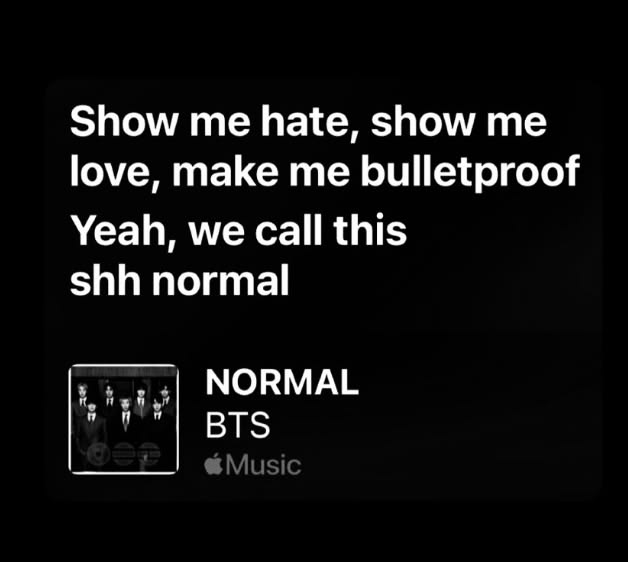
Years later, NORMAL quietly returns to that same conversation, but with a different perspective. Instead of asking what happens if they lose their passion, BTS ask what it even means to be normal after living an extraordinary life. The question is no longer about art—it's about identity beyond it.
The evolution is subtle but profound. Black Swan fears losing the artist within, while NORMAL searches for the person beneath the artist. One is terrified of the end of creativity; the other wonders what life looks like once you've spent years being defined by it.
BTS don't answer the questions they once asked. They revisit them with more experience, allowing the meaning to evolve alongside them. And perhaps that's one of the most remarkable things about their songwriting—not that they always find the answers, but that they keep asking better questions.

Day 2 of #LyricsofBTS
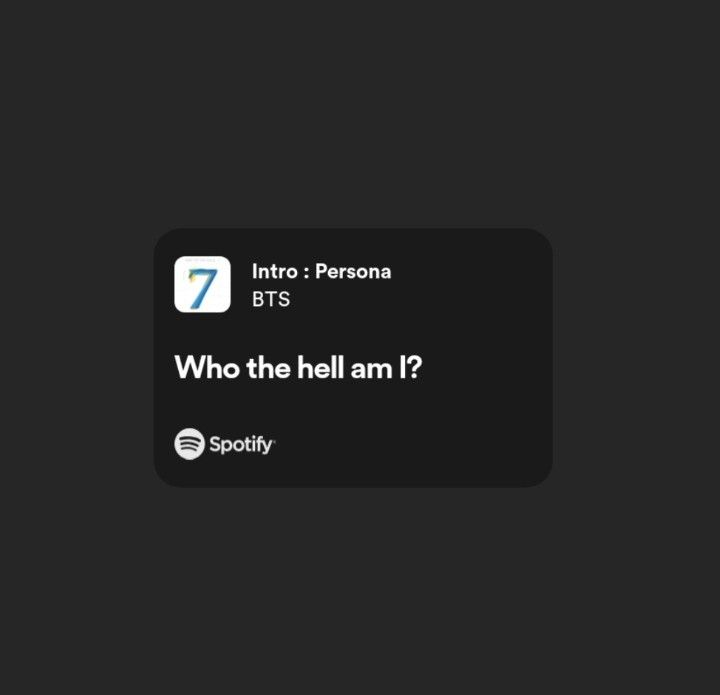
In Persona, RM opens with one of the most defining questions in BTS's discography: "Who the hell am I?" The song explores the tension between the identity we perform for the world and the person we are underneath it. Rather than offering answers, Persona embraces uncertainty, suggesting that identity is something constantly questioned.
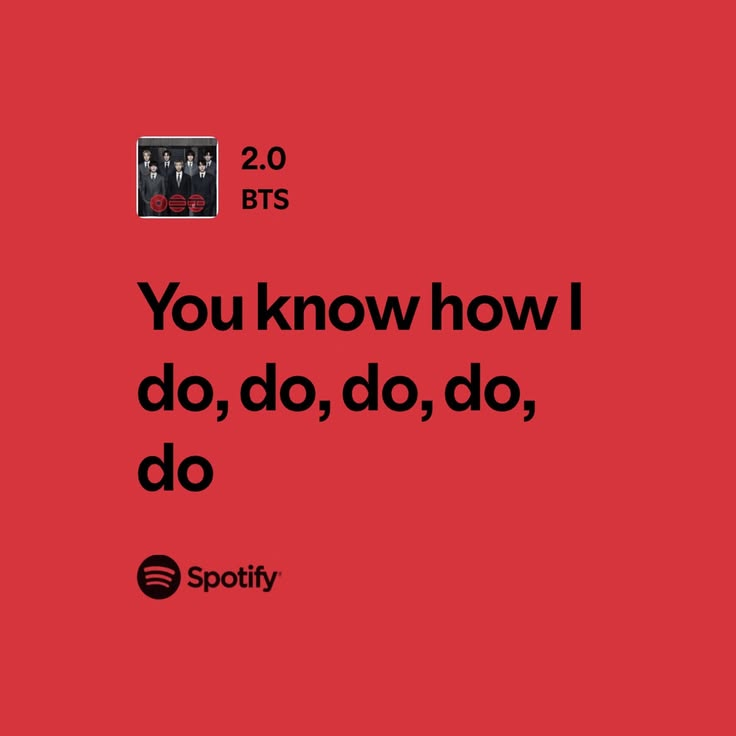
Years later, 2.0 returns to that same conversation but from an entirely different perspective.
Instead of asking who they are, BTS embrace the idea that identity isn't meant to be singular or fixed. Even the title, 2.0, suggests that growth isn't about finding your "true self," but becoming a newer version of yourself over time.
What's fascinating is how the anxiety surrounding identity disappears.
In Persona, not knowing who you are feels unsettling.
In 2.0, change itself becomes something to celebrate.
BTS don't answer the question they asked in 2019. They outgrow the need for an answer.
They weren't meant to discover one definitive version of ourselves—we're meant to keep evolving.
Day 1 #LyricsofBTS
In Whalien 52, the narrator compares himself to the world’s loneliest whale, singing a song that no one can hear. The repeated image of an “unheard song” captures a fear of existing without ever truly being understood.
The ocean becomes a metaphor for isolation. It’s vast, beautiful, and impossibly lonely.
Years later, SWIM returns to that same body of water. But the philosophy has changed. The goal is no longer for someone to hear your voice.
It’s no longer to be rescued. It’s to keep swimming.
That’s what makes SWIM feel like the emotional successor to Whalien 52. The ocean itself hasn’t become kinder, the narrator has. What once represented loneliness now becomes movement, resilience, and acceptance.
BTS didn’t abandon the metaphor. They let it grow with them.
And I think that’s one of the most beautiful aspects of their songwriting.
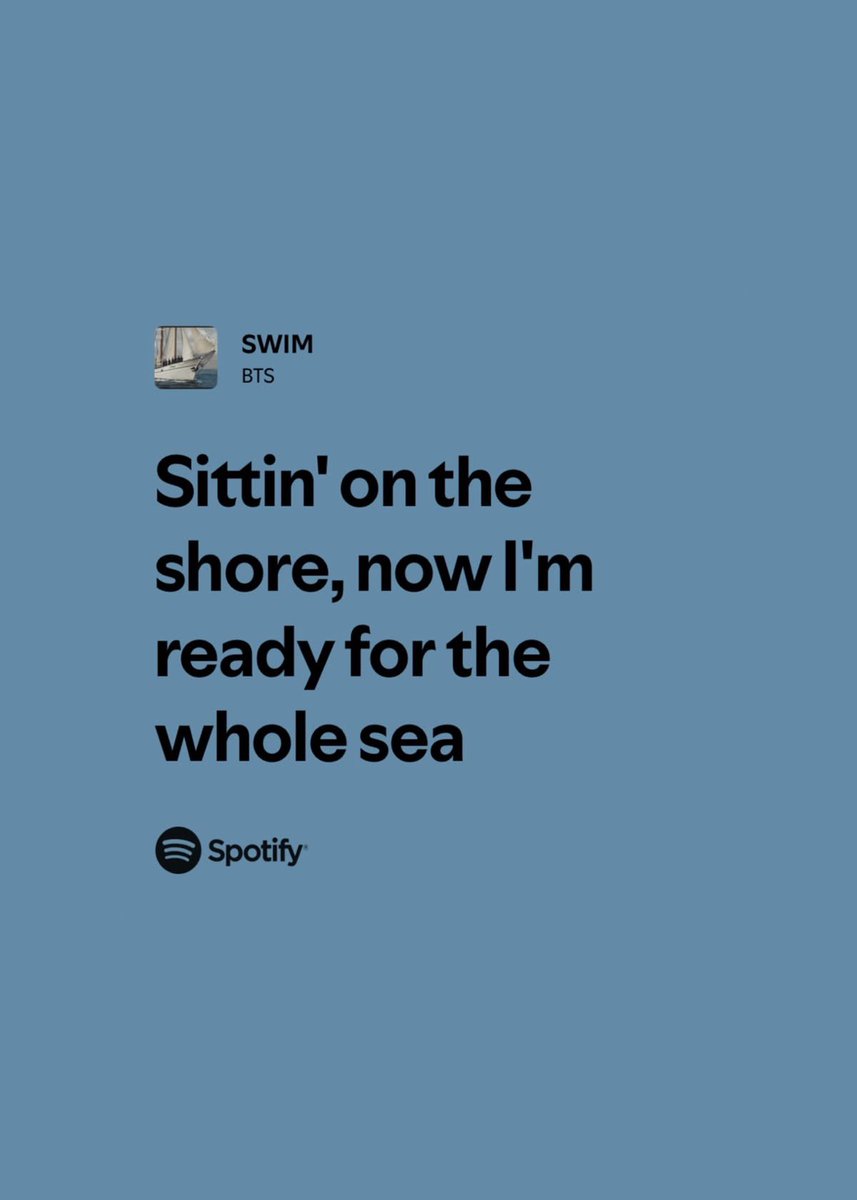

I don’t think BTS’s songs exist in isolation.
Their lyrics speak to each other across albums. A metaphor introduced years ago returns with a new meaning. A question asked in one era becomes the answer in another.
So I’m starting a series. #LyricsofBTS
Each day, I’ll explore one lyrical motif, recurring symbol, or narrative thread across their discography and how their songwriting has evolved over the past 13 years.
I don’t think BTS’s songs exist in isolation.
Their lyrics speak to each other across albums. A metaphor introduced years ago returns with a new meaning. A question asked in one era becomes the answer in another.
So I’m starting a series. #LyricsofBTS
Each day, I’ll explore one lyrical motif, recurring symbol, or narrative thread across their discography and how their songwriting has evolved over the past 13 years.


one fascinating thing about I'm Fine is that joon literally reversed his Save ME verse. his verse is in reverse order, with the exact reverse meaning of his Save ME verse. truly embodying their message of loving yourself first in order to love someone else.
#LyricsOfBTS @BTS_twt


“Forever we are young”
#LyricsOfBTS
“Young” for me does not imply any particular age but a state of active curiosity, unbridled emotions, the joy of socialisation & intentional self-growth.
It’s a reminder that life will welcome me back if I get stuck. It’s onwards & upwards.

"I wish I could love myself."
In my opinion, "Reflection" has some of the saddest lyrics Joon has ever written, but I take comfort in knowing that they became the catalyst for the "Love Yourself" era. I hope you can now, Joon. 💜
https://t.co/bsz7IcE9BT
#LyricsOfBTS
@BTS_twt


Most Popular Users

Elon Musk 
@elonmusk
241.5M followers

Barack Obama
@barackobama
119M followers

Cristiano Ronaldo
@cristiano
113.8M followers

Donald J. Trump
@realdonaldtrump
111.8M followers

Narendra Modi
@narendramodi
107.2M followers

Rihanna
@rihanna
98.6M followers

NASA
@nasa
92.4M followers

Justin Bieber
@justinbieber
91.7M followers

KATY PERRY
@katyperry
89.7M followers

Taylor Swift
@taylorswift13
83.6M followers

Lady Gaga
@ladygaga
75.1M followers

Virat Kohli
@imvkohli
72.8M followers

Kim Kardashian
@kimkardashian
70.7M followers

YouTube
@youtube
68.8M followers

Neymar Jr
@neymarjr
65.8M followers

Bill Gates
@billgates
64.9M followers

Selena Gomez
@selenagomez
62.7M followers

The Ellen Show
@theellenshow
62.3M followers

CNN
@cnn
61.8M followers

X
@x
60.7M followers