

Top Tweets for #Microenvironment

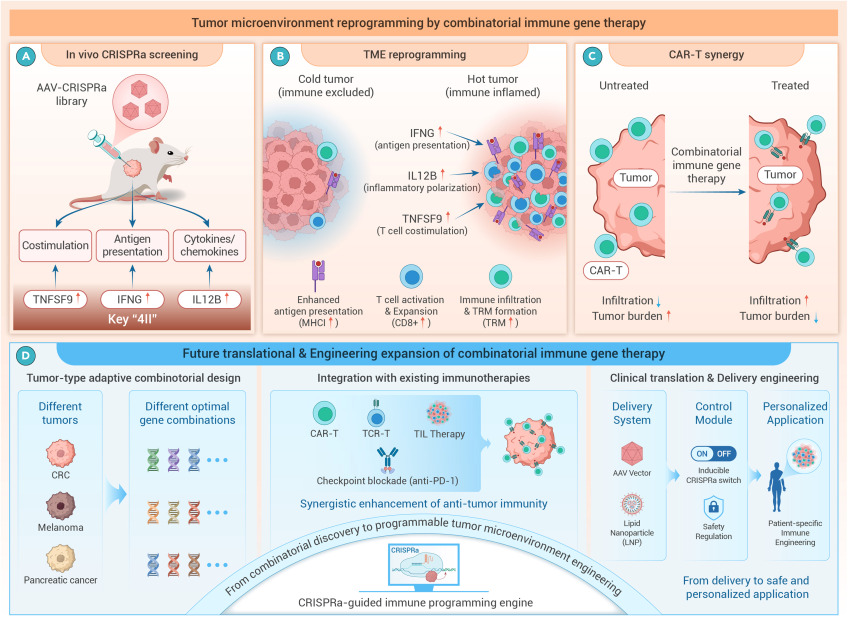
New in @The_InnovationJ! Reprogramming the tumor microenvironment by rational immune gene therapy: From in vivo CRISPRa screening to combination design.
Why do CAR-T cells often fail in solid tumors? It’s the microenvironment, not the T cells. A new study uses CRISPRa screening to design a 3-gene combo “4II” that turns cold tumors hot and boosts immunotherapy.
https://t.co/GTDTkEClSV
#Pharmacology

🔈Call for Papers: Molecular Mechanisms in Oral Cancers
🤝We invite original research and reviews exploring cancer genomics, the tumor microenvironment, biomarkers, and therapeutic targets to advance precision medicine.
🔗 Details: https://t.co/aqqMUbGLP0
#OralCancer #Oncology

The tumor microenvironment (TME) plays a significant role in the occurrence, development, and prognosis of lymphomas. The mechanisms of each TME component in lymphoma and related therapeutic strategies are reviewed in this article.
https://t.co/OAu5GKas72
Role of tumor microenvironment composition and metabolism in lymphoid malignancies and therapeutic strategies
https://t.co/LBiKaLYH2M
#tumor #Cancer
@sagepub_japan
@SageJournals

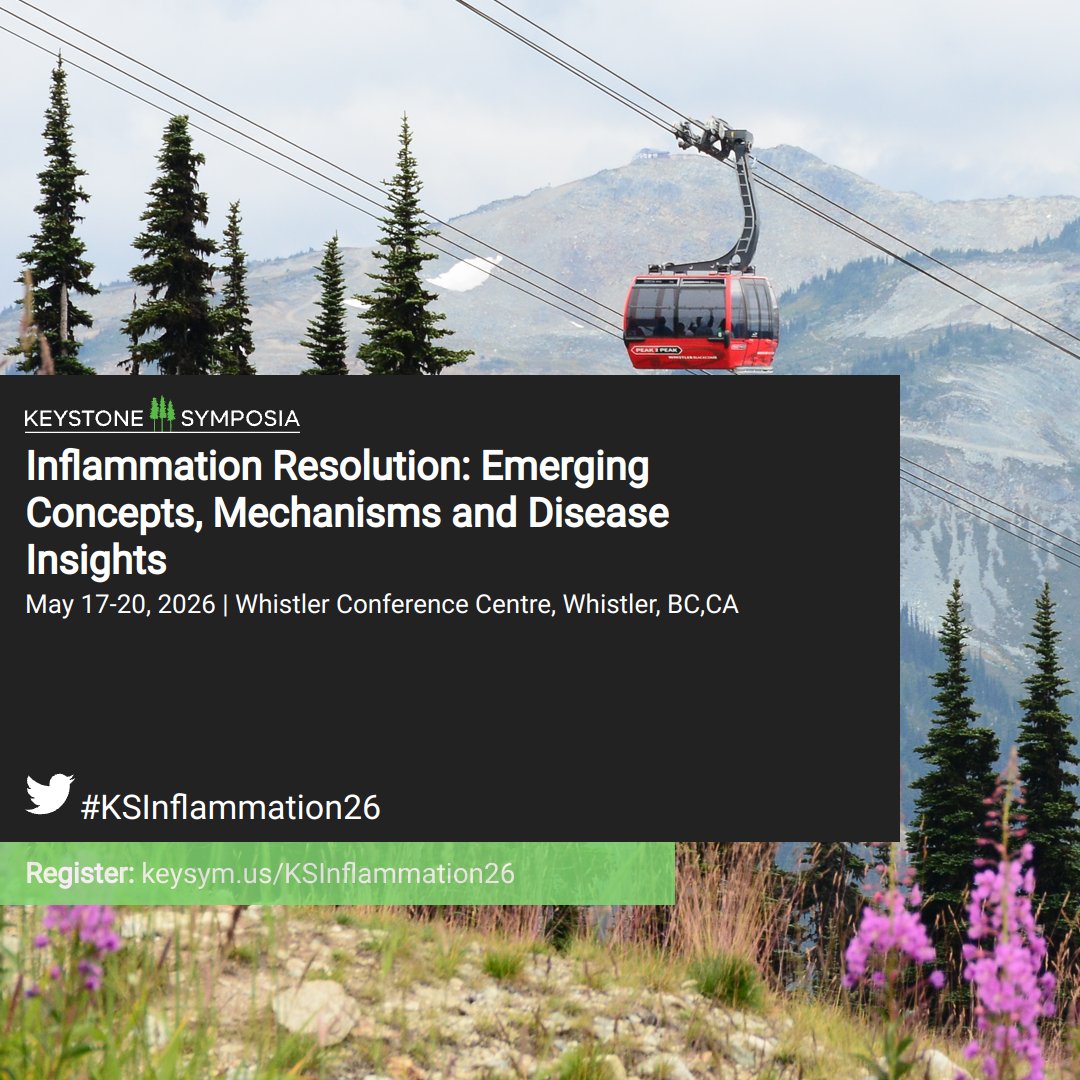
✍Register NOW for On Demand Access to Keystone Symposia: Inflammation Resolution (joint w/ Tumor Microenvironment)! Explore immune mechanisms.
🎁Attendees enjoy special APC discounts at IMR Press! Info: [email protected]
🔗https://t.co/C2rCllFsSw
#Immunology #CancerResearch

$HYFT 프레데릭의 글
대부분의 생물학 데이터베이스는 생물학을 텍스트(text) 형태로 저장합니다.
반면 MindWalk는 이를 '밀도'로 저장합니다.
오늘 MindWalk는 HYFT® 기술의 핵심 데이터 구조에 대한 기반 특허(유럽 특허 출원 EP26187897.9)를 출원했습니다.
그리고 이 특허의 핵심 개념은 바로 '밀도'입니다.
이를 두 가지 축으로 생각하면 이해하기 쉽습니다.
첫 번째는 폭(Breadth)입니다.
20년에 걸친 큐레이션을 통해 구축된 6억 6천만 개의 반복적인 생물학적 패턴과, 그 사이를 연결하는 250억 개의 관계를 하나의 생물학적 표현 체계로 담고 있습니다.
두 번째는 깊이(Depth)입니다.
각각의 패턴은 단순한 데이터 한 줄이 아니라, 구조(structure), 기능(function), 미세환경(microenvironment), 생물학적 맥락(context), 그리고 이를 뒷받침하는 근거 등 여러 차원의 정보를 동시에 담고 있는 하나의 객체로 표현됩니다.
이러한 여러 차원이 유기적으로 연결되고 계산 가능한 형태로 유지되며, 바로 이 다차원성이 데이터의 깊이를 만들어냅니다.
MindWalk의 2020년 기반 특허는 이러한 생물학적 패턴을 발견하는 방법을 보호했습니다.
이번 특허는 한 걸음 더 나아가, 이러한 패턴을 고밀도로 표현하는 방식과, 그 표현을 바탕으로 새로운 생물학적 지식을 추론하는 방까지 보호합니다.
그렇다면 왜 밀도가 중요할까요?
기존의 평면적인 데이터 파일은 생물학적 서열을 단순한 문자열로 저장합니다. 하지만 MindWalk의 방식에서는 각각의 패턴이 생물학적 맥락까지 함께 포함된 구조화되고 추적 가능한 객체로 표현됩니다.
이렇게 되면 AI 모델이나 AI 에이전트는 단순히 모델 내부에 학습된 통계적 연관성에 의존하는 것이 아니라, 실제 생물학적 맥락이 포함된 데이터 자체를 기반으로 추론하고 작업할 수 있습니다.
이것이 MindWalk가 말하는 Bio-Native AI의 실제 의미이며, ReefIQ와 LensAI 역시 바로 이러한 데이터 계층 위에서 구축되어 있습니다.
신약 개발 산업이 에이전트형 AI시대로 이동할수록, 가장 큰 가치는 개별 AI 모델 자체가 아니라 그 모델들이 활용하는 고밀도 생물학 데이터 계층에 축적되고 복리처럼 커져 나갈 것입니다.


A research-design skill focused on Programmed Cell Death (PCD) and Regulated Cell Death (RCD) in cancer.
Not just ferroptosis.
Not just cuproptosis.
Not just pyroptosis.
But the full spectrum of PCD-centered immuno-oncology workflows.
What does that actually mean?
A single workflow can connect:
→ PCD/RCD gene-set curation
→ Molecular subtype discovery
→ Tumor microenvironment analysis
→ Immune infiltration profiling
→ Prognostic signature construction
→ Immunotherapy-response context
→ Drug sensitivity exploration
→ Validation strategy design
→ Publication-ready figures

Top 5 Research Design Skills (so far):
🥇 #1 pcd-immune-oncology-research-planner
https://t.co/ojLGDrkKN2
The most complete oncology workflow we've tested.
From PCD/RCD gene sets → tumor microenvironment → prognostic modeling → immunotherapy response → drug sensitivity → publication planning.
Highlights:
• 5 oncology study patterns
• TME + survival + immunotherapy integration
• Lite / Standard / Advanced / Publication+
• Reviewer-aware claim boundaries


Microenvironment regulation via phenylphosphine modification of Cu11 nanoclusters for AIE cell imaging and chemodynamic therapy

Microenvironment regulation via phenylphosphine modification of Cu11 nanoclusters for AIE cell imaging and chemodynamic therapy
https://t.co/2nTZlw6vm7
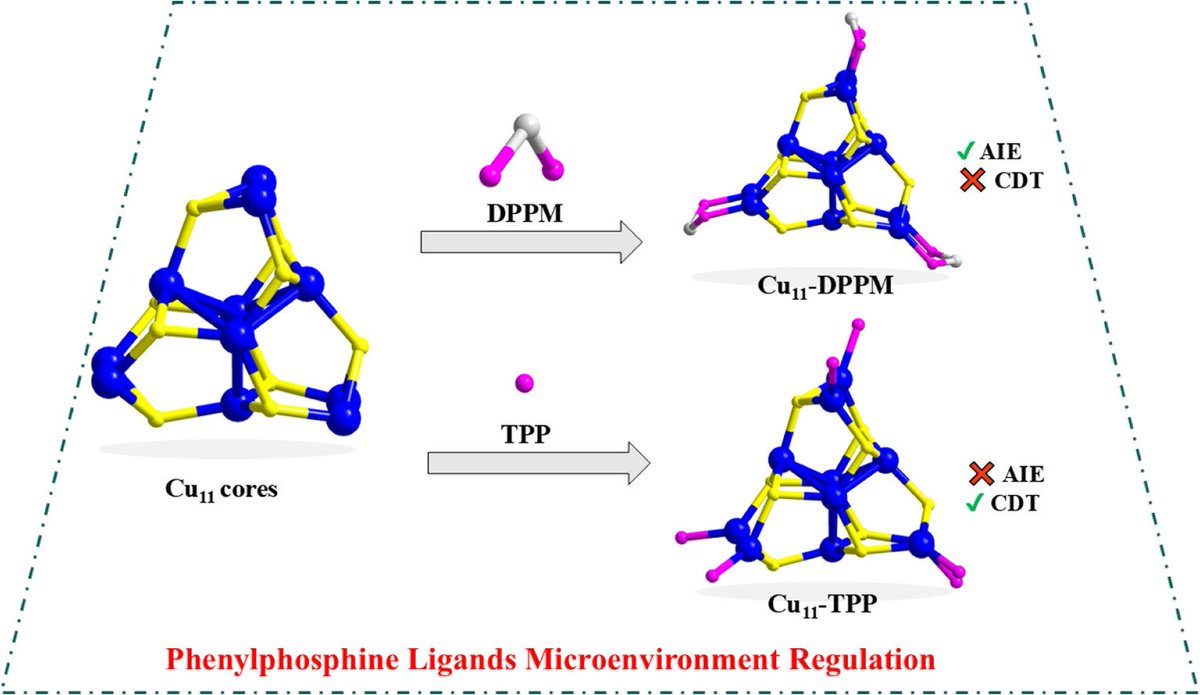

Microenvironment regulation via phenylphosphine modification of Cu11 nanoclusters for AIE cell imaging and chemodynamic therapy
Microenvironment regulation via phenylphosphine modification of Cu11 nanoclusters for AIE cell imaging and chemodynamic therapy
https://t.co/2nTZlw6vm7

Microenvironment regulation via phenylphosphine modification of Cu11 nanoclusters for AIE cell imaging and chemodynamic therapy
Microenvironment regulation via phenylphosphine modification of Cu11 nanoclusters for AIE cell imaging and chemodynamic therapy
https://t.co/2nTZlw6vm7
Microenvironment regulation via phenylphosphine modification of Cu11 nanoclusters for AIE cell imaging and chemodynamic therapy
https://t.co/2nTZlw6vm7
A surprising number of cancer bioinformatics projects follow the same pattern:
1. Download TCGA
2. Pick a gene set
3. Run survival analysis
4. Build a signature
5. Publish
The problem?
Most studies never connect the full chain:
Cell death biology → Tumor microenvironment → Prognosis → Immunotherapy → Drug sensitivity
As a result, many signatures look statistically significant but offer limited biological insight.
That's why we built AIPOCH's PCD Immune Oncology Research Planner.
https://t.co/ojLGDrkKN2
Instead of generating isolated analyses, it designs a complete research workflow around programmed cell death (PCD/RCD) biology.
A single prompt can generate:
• Molecular subtype strategy
• TME analysis plan
• Prognostic modeling framework
• Immunotherapy-response evaluation
• Drug-sensitivity assessment
• Validation hierarchy
• Publication-ready figure structure
Built-in research safeguards include:
✓ Five study patterns covering major PCD/RCD oncology scenarios
✓ Four workload modes from Lite to Publication+
✓ Dataset disclaimers before every dataset-dependent workflow
✓ Verified literature retrieval with no fabricated references
✓ Explicit claim boundaries to reduce overinterpretation
The goal isn't to generate another signature.
The goal is to design a study that tells a biologically coherent story.
#AIPOCH #CancerResearch #Bioinformatics #Immunotherapy #AIforScience

🧬 Ever wondered how “inflamed” or “stromal-rich” a tumor is — without doing single-cell sequencing?
Part of 500+ medical research agent skills.
→ https://t.co/43n6PffudZ
The ESTIMATE algorithm (widely used since 2013) infers exactly that from ordinary bulk RNA-seq data. It outputs four key scores per sample:
• StromalScore
• ImmuneScore
• ESTIMATEScore (combined)
• TumorPurity
Now AIPOC H’s new AI Agent skill ESTIMATE Immune Score Analysis does the entire workflow for you in seconds:
✅ Upload expression matrix + optional groups
✅ AI handles gene filtering + ESTIMATE computation
✅ Delivers: per-sample scores table + beautiful heatmap PDF + group boxplots with p-values
Demo example: 8 samples (Healthy vs Tumor) → full publication-ready results via simple chat.
No coding. No complex setup. Just fast, reliable tumor microenvironment insights.
#TumorMicroenvironment #CancerResearch #RNAseq #ImmunoOncology #AIPOCH
🔬✨ Register NOW for Livestream & On Demand Access to Keystone Symposia on Molecular & Cellular Biology — 🧬 Tumor Microenvironment: Identifying Drivers of Progression and Resistance, held jointly with Inflammation Resolution: Emerging Concepts, Mechanisms and Disease Insights! 🎯
📅 May 17–20, 2026 📍 Whistler Conference Centre, Whistler, BC, Canada 🇨🇦🏔️
🧠 Dive into cutting-edge science on tumor–microenvironment crosstalk, 🩺 host responses (aging, cachexia, obesity & immunity), 💻 computational tools, and a hands-on HTAN Data Jamboree workshop! 🚀
👩🔬 Featuring world-class Scientific Organizers: Lisa M. Coussens, Sandra S. McAllister & Laura L. Kiessling 🌟
🔗https://t.co/I0yaTHuXyC #️⃣ #KSTME26
📝 Participants will enjoy special APC discounts for submitting papers to all journals under IMR Press! For more details, please contact
📧 [email protected]
#TumorMicroenvironment #CancerResearch #Inflammation #Immunology #TME #CancerBiology #ComputationalBiology #ChemicalBiology #KeystoneSymposia #IMRPress #ScienceConference #CancerTherapeutics

🏆 Immune-Infiltration Research Skill Ranking
Using the same PDAC diagnostic machine-learning study prompt, three very different skills were tested. While all can contribute to an immune-oncology project, they operate at completely different stages of the research pipeline.
Final ranking for this specific task:
🥇 #1 Tumor Immune Infiltration Diagnostic ML Research Planner (AIPOCH)
🥈 #2 Bio CRISPR Screens In Vivo Screens
🥉 #3 TME Immune Profiling Agent
Why did the ranking turn out this way?
Because the challenge wasn't simply understanding the tumor microenvironment.
It was designing a publication-ready immune-infiltration diagnostic ML study.
https://t.co/43n6PffudZ
#AIPOCH #MedicalAI #Bioinformatics #CancerResearch #PDAC #TumorMicroenvironment #MachineLearning #BiomarkerDiscovery #PrecisionMedicine #Transcriptomics #Immunology #ComputationalBiology #AIforScience

生物学的なレベルにおいて、胃の粘膜細胞(gastric mucosal cells)の動態は極めて重要な鍵となります。鉄をも溶かすほどの塩酸(HCl)に晒されながらも胃壁が無事である隠れた功労者は、粘膜下層から絶えず供給される「重炭酸イオン(HCO3-)」の中和作用のおかげです。強酸の攻撃を、化学的な緩衝地帯でまず相殺する構造なのです。
ここに、数日周期で細胞が丸ごと脱落しては生まれ変わる「自己消耗性のターンオーバー(Turnover)」が結合することで、完璧な二重の防御壁が完成します。人体で最も過酷なミクロ環境(Microenvironment)を生き抜くために、細胞自らが最も激しい寿命周期を受け入れた結果と言えます。
🧬 Ever wondered what’s really happening inside a tumor’s immune microenvironment?
https://t.co/43n6PffudZ
With AIPOCH’s new CIBERSORT Immune Infiltration Analysis skill, your AI Agent can now deconvolve bulk RNA-seq data in seconds — quantifying all 22 immune cell types using the gold-standard LM22 signature + nu-SVR algorithm.
In this colorectal cancer example:
✅ 8 samples (tumor vs healthy)
✅ Automatic alignment + 25 permutations
✅ Clear results: ↑ M2 macrophages & CD8⁺ T cells, ↓ Naive B cells in tumors (p<0.05)
Plus beautiful stacked bars, correlation heatmaps, and boxplots — ready for your manuscript.
No coding. No command line. Just drop your files and get publication-ready insights.
Turning complex bioinformatics into “insight moments” for every researcher. 24/7.
Try it now → https://t.co/q4W3B1lEr0
#CIBERSORT #ImmunoOncology #BulkRNAseq #AIinResearch #Bioinformatics #SingleCellInsights

AI is reshaping the future of brain tumor care.
New research on glioblastoma uses AI-driven MRI analysis to decode the tumor microenvironment, helping researchers better understand tumor behavior and support more targeted therapies.
Smarter imaging. More precise treatment. Greater hope.
#BrainTumorAwarenessMonth
https://t.co/vZAx1dTWq6
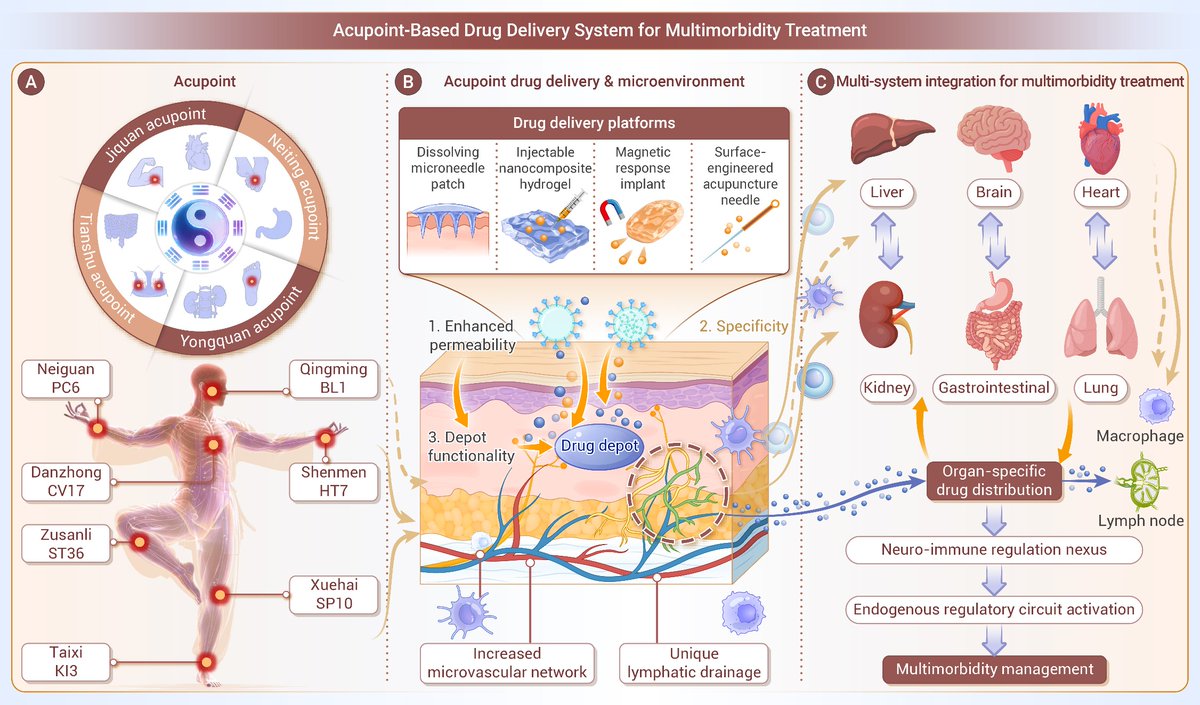
New in The Innovation Drug Discovery! Acupoint drug delivery An integrative strategy for multimorbidity treatment.
This review synthesizes recent advances in acupoint drug delivery, focusing on the acupoint microenvironment for targeted delivery, carrier platforms enabling controlled delivery, and mechanisms underlying systemic multi-organ modulation.
https://t.co/IWspqqbPla
#drugdelivery #neuroimmune
The latest work from Shemyakin-Ovchinnikov Institute of Bioorganic Chemistry by first author Dr. Tatyana V. Korneenko and their team is now featured in FBL!
👉 Explore the full study: https://t.co/7fPkfE03QK
Article Highlights
💡Are we missing a key factor in tumor progression beyond cancer cells themselves?
This review explores how the tumor microenvironment—particularly stromal heterogeneity revealed by single-cell sequencing—reshapes therapeutic strategies.
✒️ Author: Tatyana V. Korneenko, Nikolay B. Pestov, Mikhail I. Shakhparonov, Nickolai A. Barlev (Corresponding author)
🏪 Affiliation: Shemyakin-Ovchinnikov Institute of Bioorganic Chemistry; Chumakov Federal Scientific Center for Research and Development of Immune-and-Biological Products; Vavilov Institute of General Genetics; Nazarbayev University
📖 Don’t miss this citable reference for your future research!
Citation format: Tatyana V. Korneenko, Nikolay B. Pestov, Mikhail I. Shakhparonov, Nickolai A. Barlev. Microenvironment of Solid Tumors. Front. Biosci. (Landmark Ed) 2025, 30(9), 36940.
Welcome to submit your work via our submission link👉: https://t.co/wHF8lp2GCr
FBL is dedicated to the publication of original articles, reviews, methods and commentaries in all areas of cellular and molecular biology.
📖 Click here for author guidelines: https://t.co/EBITEzbjBy
#Oncology #TumorMicroenvironment #SingleCellSequencing #CancerResearch #Medicine #FBLPaper


Mechanism of drug research
BP-EXT-PRAX-PS3E-016: Heterogeneous Operator Manifold Weaving & Adaptive Emergence Field (HOMW-AEF) - A Framework for Adaptive Forging as a Service in Drug and Gene Discovery. This framework integrates the structured, hierarchical, and executable paradigm of a "drug design engine" with the cross-modal, emergent, and exploratory spirit of "natural language intent commands," designing a novel adaptive forging as a service system for the Heterogeneous Operator Manifold Weaving & Adaptive Emergence Field (HOMW-AEF) paradigm in the core field of drug and gene discovery. This framework aims to transform drug and gene development from static model-based "design" to an adaptive systems engineering approach of continuous "forging, evolution, and emergence" under dynamic survival pressures.
Gene Circuit Continuous Survival Evolutionary Forging (GC-SEF)
* Description: Beyond one-off, static gene circuit design. Therapeutic gene circuits (such as CARs, logic gates, and biosensors) are deployed into engineered cells (CAR-T cells, probiotics, and gene therapy vectors) undergoing continuous survival experiments. The GC-SEF technology monitors the coupling relationship between circuit function and cellular adaptation in real time when cells face dynamic, realistic in vivo and in vitro stresses. Through inducing directed hypermutation, homologous recombination, and performance-based selection, it guides the gene circuits to "evolve" into better versions (such as higher antigen sensitivity, lower immunogenicity, and better tissue homing ability) while maintaining the core therapeutic logic.
* Transcendence: Gene therapy transforms from a "finished product" to a "living therapeutic program" that can "learn, adapt, and optimize" in vivo, addressing disease evolution and host heterogeneity.
* Examples:
* Scenario: Developing CAR-T cells that can survive long-term in the microenvironment of solid immunosuppression.
* Application: Injecting basic CAR-T cells into a symbiotic neurofilament matrix that simulates a complex microenvironment. The GC-SEF technology is activated, allowing their genome to undergo adaptive mutations under stresses such as TGF-β, adenosine, and low pH. It is possible that a new circuit module will evolve: "When the mitochondrial membrane potential decreases (a sign of exhaustion), autophagy and IL-7 autocrine circuits are transiently activated for 'intracellular recharging'." This evolutionary strategy is not pre-designed, but rather a survival instinct "forged" under survival pressure.
*Relevance to the document: This skill is a concrete manifestation of the "Game Theory" (balancing persistence and toxicity) in Document 1 and the "embedded reinforcement learning" and "meta-learning" ideas in Document 2 in the field of gene therapy. Xenobiotic Genetic Element Symbiont Fusion (XG-ESF)
go on for more from Fun engine

Last Seen Hashtags on Sotwe
Obradovic
Seen from United States
mutual masturbation
Seen from Turkey
Maharashtra
Seen from India
Nationplay
Seen from Russia
friends
Seen from United States
mgai anxiouspanda
Seen from Germany
น้าสาว
Seen from Thailand
섹트아카이브
Seen from Korea
teenageee()()()()()()()()()
Seen from United States
creepshot
Seen from Netherlands
Trends for you
Most Popular Users

Elon Musk 
@elonmusk
240.1M followers

Barack Obama
@barackobama
118.6M followers

Cristiano Ronaldo
@cristiano
114.4M followers

Donald J. Trump
@realdonaldtrump
111.7M followers

Narendra Modi
@narendramodi
106.9M followers

Rihanna
@rihanna
98.6M followers

NASA
@nasa
92.1M followers

Justin Bieber
@justinbieber
91.7M followers

KATY PERRY
@katyperry
89.9M followers

Taylor Swift
@taylorswift13
83.9M followers

Lady Gaga
@ladygaga
75.4M followers

Virat Kohli
@imvkohli
73.3M followers

Kim Kardashian
@kimkardashian
70.8M followers

YouTube
@youtube
68.6M followers

Neymar Jr
@neymarjr
66.3M followers

Bill Gates
@billgates
65.2M followers

Selena Gomez
@selenagomez
63M followers

The Ellen Show
@theellenshow
62.1M followers

CNN
@cnn
61.7M followers

X
@x
60.6M followers