

Top Tweets for #Middleware

@DjonSerj Less middleware means developers can spend more time building product logic instead of maintaining infrastructure.

@aleksander_100 @RialoHQ Native live market feeds without extra middleware let @RialoHQ builders test real products on day one!


@zannyzette @RialoHQ @ericargent31113 right? that's the reaction everyone has once it clicks. no oracle, no middleware, just the contract talking straight to the api, grialo


1/ Instead of forcing developers to stitch together bridges, external watchers, brittle bots, and middleware patchwork, @RialoHQ embeds real-world connectivity and event-driven execution directly into the stack

2/ Key Advantages of Rialo
🔷No Middleware Patchwork
🔷Event-Driven & Reactive by Design
🔷High Performance & Ergonomic Developer Experience
🔷Web2-Grade Usability

Every new layer of middleware creates another dependency developers have to manage
@RialoHQ is working to simplify that stack by moving more functionality closer to the protocol
Less friction can mean more ambitious applications

Phase 3: Router + middleware 🚀
10-phase roadmap. Halfway through the foundation.
github link : https://t.co/vt0ieMD2dW

let cursor write the auth middleware. it hallucinated a refresh token flow that doesn't exist. shipped anyway because the demo was in 12 hours. users got logged out every 12 minutes. fixed it in app/api/auth.ts at 3am with a red bull and regret

@PrismaXai Modular Security Standard
6) Restaking turns cryptoeconomic security from a siloed cost into a programmable resource. By powering shared security for modular middleware, @PrismaXai sets the new standard for scalable Web3 infrastructure.
@PrismaXai Capital Efficiency & Zero Dilution
5) Validators earn compounded yields by securing multiple services with the same stake, while middleware protocols launch with instant, billion-dollar security budgets—zero token dilution required.
What is Restaking-Backed Security?
2) Instead of printing inflationary tokens for validators, middleware protocols lease security from existing staked capital. On PX, L1 stakers opt in to secure external modules simultaneously, extending battle-tested security across layers.

1) The Middleware Bootstrapping Trap
1/ New middleware protocols—oracles, bridges, and DA layers—face a brutal cold-start problem: bootstrapping a decentralized validator set from scratch is expensive and insecure. The alpha fix? Restaking-Backed Shared Security on @PrismaXai.


@ose_simeon Use a centralized error middleware at the bottom of your app, and wrap async routes in try catch blocks or an async handler so unhandled promise rejections never crash the server.

A layer 1 blockchain that integrates real-world data, without middleware or oracles.
It sounds like a promise. In fact, it's a matter of architecture.
Today, most blockchains can't read the outside world...


In exploring Rialo, I’ve observed that Native Webcalls can significantly reduce reliance on middleware within blockchain applications. Instead of navigating multiple intermediary layers, such as oracles, API gateways, or off-chain services, to fetch data from the Web2 realm, Rialo integrates API-calling capabilities directly into the blockchain’s execution process.
What I find particularly noteworthy is that Native Webcalls can be combined with Reactive Transactions and REX to construct workflows that not only access external data but also handle conditional logic and safeguard sensitive information. This is especially valuable for applications involving Real-World Assets (RWA), finance, and AI agents.
However, in my view, Native Webcalls does not imply the complete elimination of middleware. Blockchains still need to address challenges such as verifying data sources, ensuring API security, managing rate limits, and handling scenarios where external services fail.
Ultimately, I believe the true value of Rialo lies in its ability to strip away unnecessary intermediary layers and embed Web2 connectivity directly into the blockchain infrastructure itself.
@RialoHQ

GM Everyone,
In exploring Rialo, I’ve come to realize that "Native Automation" could unlock an entirely new category of applications, one where the blockchain does more than just execute transactions; it actively manages processes over time. Through "Reactive Transactions," developers can define conditions that trigger smart contracts automatically in response to specific events, state changes, or real-world data, eliminating the need to wait for a user to manually initiate a command.
This paves the way for applications that extend well beyond conventional DeFi such as insurance policies that pay out automatically when weather conditions hit a certain threshold, recurring payment systems, the management of Real-World Assets (RWA), or multi-stage financial workflows.
What I find particularly compelling is that Rialo doesn’t just aim to enhance existing DeFi applications; it targets entirely new models, such as weather-responsive insurance, self-settling prediction markets, and RWA systems that automatically distribute coupons or handle cash flows.
That said, in my view, Native Automation will only truly establish a new class of applications if it can demonstrate stable operation, reliable data handling, and effective cost management as the number of workflows scales. Rialo may well be expanding the role of the blockchain evolving it from a mere ledger for recording transactions into an infrastructure capable of driving automated, real-world processes.
@RialoHQ


Web3 apps shouldn't feel disconnected from everyday tools..
@RialoHQ brings native API and external-service connectivity closer to the blockchain, reducing reliance on complex middleware and helping developers build more connected onchain applications with less friction🦾


@DjonSerj Raw TPS benchmarks don't mean much if builders still have to glue together a bunch of external middleware just to get real-world data. Having native connectivity and verifiable external feeds baked right into the architecture is way more practical
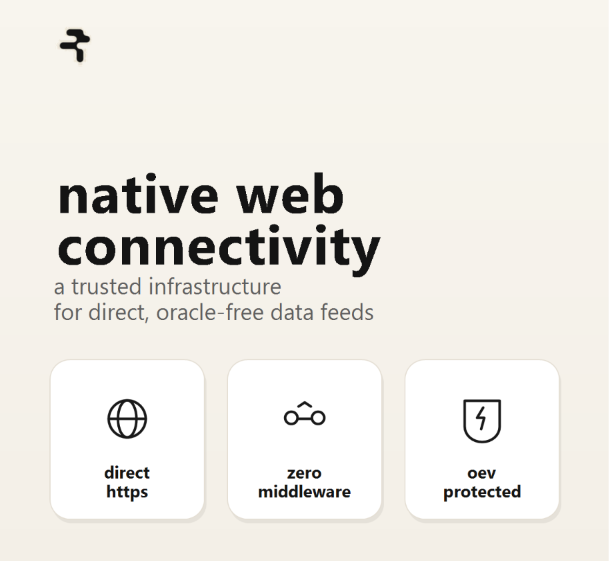
once you secure execution, the next bottleneck is data access. legacy l1s rely on third-party oracles that add latency and oev risks. @rialohq eliminates this middleware entirely. with native https connectivity, contracts can securely query real-world apis at the protocol level.
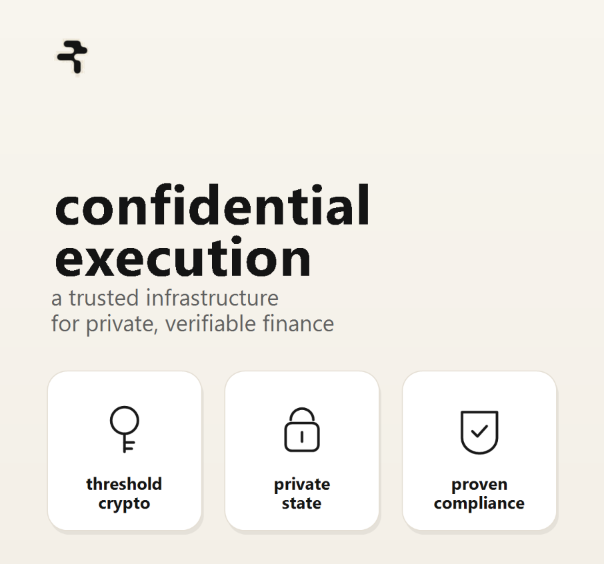
most l1s force a bad trade-off: leak business secrets on a public ledger or hide inside walled gardens. @rialohq solves this at the base layer. with native threshold cryptography, transactions prove compliance at execution without exposing private data.
debugging a prod issue at 11pm, cursor inline autocomplete firing on every keystroke. accepted 47 suggested diffs before i noticed one deleted the entire auth middleware. turned off autocomplete for a week. first three days felt like coding with oven mitts

What I appreciate about @RialoHQ is the balance between powerful infrastructure and practical developer experience.
Native web connectivity, real-time data, automation, and privacy-first execution are all treated as core parts of the stack rather than bolted-on middleware.


How our blog publishes every day without a daily deploy: each post is uploaded ahead of time, and a small Cloudflare Pages middleware returns 404 until the post's date arrives in Asia/Seoul time.
One deploy per batch of eight posts, nothing to run each morning.

I would investigate this step by step.
1. Add logging to measure time spent at each stage.
2. Check authentication, middleware, and request validation.
3. Measure connection pool wait time.
4. Check if the API makes additional database or external service calls.
5. Look at data transformation, serialization, and response size.
6. Check network latency and load balancer overhead.
7. Use distributed tracing to find exactly where those 4.9 seconds disappear.
And yes, first ask the junior engineer if they recently added a sleep(5) for testing and forgot to remove it. Happens more often than we'd like to admit!

Remember this sequence:
A Complete Request - Response Cycle:
1. Client
↓
2. HTTP Request (Method, URL, Headers, Body)
↓
3. Server (Receives incoming request)
↓
4. Middleware (Logging, Authentication, Authorization, Validation)
↓
5. Route (Matches HTTP method and endpoint)
↓
6. Controller (Extracts request data and calls service)
↓
7. Service (Executes business logic)
↓
8. Repository / Model (Communicates with database)
↓
9. Database (Executes query and returns data)
↓
10. Repository / Model (Returns database result)
↓
11. Service (Processes business result)
↓
12. Controller (Prepares HTTP response)
↓
13. Error Handling Middleware (If an error occurs)
↓
14. Server (Sends HTTP response)
↓
15. Client (Receives and processes response)

@imorisakura @RialoHQ @ericargent31113 @0x_kippo @0x_vibevortex Removing middleware makes connecting Web2 and onchain apps so much easier.

Yes,that's one of the 9 checks. It looks for rate-limiting middleware registered on the login route (express-rate-limit, fastify-rate-limit, koa-rate-limit, and common custom limiter patterns). If it can't prove one's there, it flags it as "unconfirmed" rather than guessing,rather miss a case than wrongly accuse someone

Connecting Web2 and blockchain applications should be seamless. @RialoHQ Edge enables bidirectional Web2 interactivity without middleware, making communication between traditional applications and onchain systems simpler and more efficient.

Most Popular Users

Elon Musk 
@elonmusk
240.1M followers

Barack Obama
@barackobama
118.6M followers

Cristiano Ronaldo
@cristiano
114.4M followers

Donald J. Trump
@realdonaldtrump
111.8M followers

Narendra Modi
@narendramodi
106.9M followers

Rihanna
@rihanna
98.6M followers

NASA
@nasa
92.1M followers

Justin Bieber
@justinbieber
91.7M followers

KATY PERRY
@katyperry
89.9M followers

Taylor Swift
@taylorswift13
83.9M followers

Lady Gaga
@ladygaga
75.4M followers

Virat Kohli
@imvkohli
73.3M followers

Kim Kardashian
@kimkardashian
70.8M followers

YouTube
@youtube
68.6M followers

Neymar Jr
@neymarjr
66.3M followers

Bill Gates
@billgates
65.2M followers

Selena Gomez
@selenagomez
63M followers

The Ellen Show
@theellenshow
62.1M followers

CNN
@cnn
61.7M followers

X
@x
60.6M followers