Started learning Go 3 weeks ago by building an HTTP/1.1 server from scratch over raw TCP. No frameworks, just protocol specs and goroutines.
Phase 1: Concurrent TCP ✅
Phase 2: HTTP parsing, keep-alive, request smuggling detection ✅
Whats ur goal for today mine is
1. read couple of chapter from byte byte go system design series.
2. work on frontend and backend side of this https://t.co/gERKiy3YCk make it more good and fit for the use case
3. Find soln of Team shiksha project issues and review 1 pr
Part 2 of this
➡️learned Langgraph
LangGraph is a powerful library built on top of LangChain that focuses on creating stateful, multi-agent workflows using a graph structure. Let's start with the fundamental structure of LangGraph.
🧵🧵🧵
past few days i am learning how to build ai agent till now i have learnt these concepts
➡️Ai agents are smart systems , often powered by (LLLMs) like GPT-5 that take your goal , figure out the steps , and then use tools to get things done with little to no supervision . 🧵
past few days i am learning how to build ai agent till now i have learnt these concepts
➡️Ai agents are smart systems , often powered by (LLLMs) like GPT-5 that take your goal , figure out the steps , and then use tools to get things done with little to no supervision . 🧵
Let's go deep in promises ....
A Promise is an object that embodies the eventual result (or error) of an asynchronous operation
we say that a Promise is pending when the asynchronous operation is not yet complete,
❓ EventEmitter vs callbacks when to use them ..
💡 The general differentiating rule is semantic: callbacks should be used when a result must be returned in an asynchronous way, while events should be used when there is a need to communicate that something has happened.
Another important and fundamental pattern used in Node.js is the Observer pattern. Together with the Reactor pattern and callbacks, the Observer pattern is an absolute requirement for mastering the asynchronous world of Node.js.
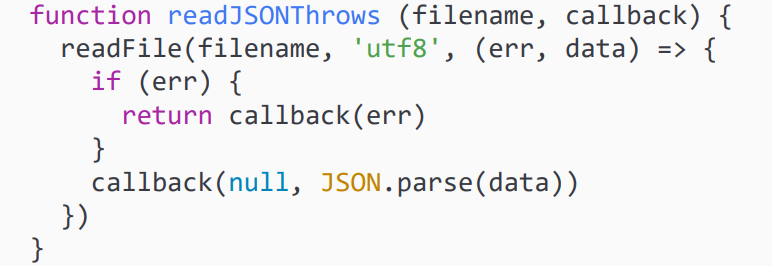
In Node.js, errors thrown inside asynchronous callbacks behave differently from synchronous ones. When an error occurs in synchronous code, a try...catch block can handle it because it runs in the same call stack.
📚 Started reading Node.js Design Patterns today.
Finished first 2 chapters.
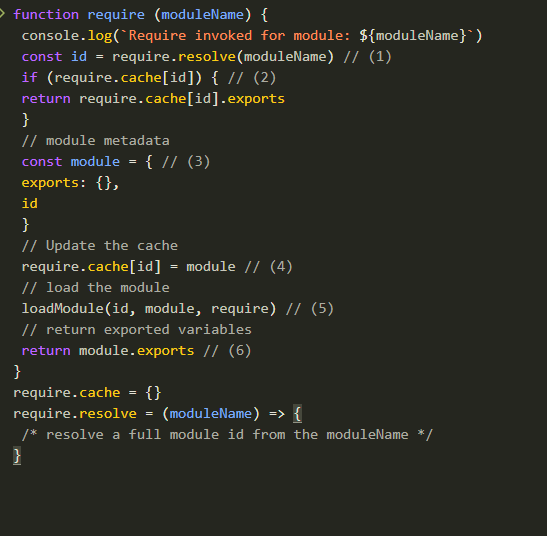
• Node follows a small modules philosophy — simple, reusable packages.
• Node handles massive concurrency using non-blocking I/O + event loop, even with a single🧵
Full link:https://t.co/oWH4NqVERE
Os contribution Paswrd Reset Security Fix: https://t.co/3Jjg7d5B5E
Fixed a small but important issue where users could reset their password to the same as their old password.
Added a check that compares the new password with the stored hash and blocks reuse to improve security.