

Top Tweets for #NativeBoundUnbound

We invite you to explore Native Bound Unbound: Archive of Indigenous Slavery - a living digital platform connecting people, places, events, and stories across the Americas.
Visit https://t.co/CpZL9BU1Ud and come back often. This is only the beginning.
#NativeBoundUnbound #IndigenousHistory

🎞️ Want to change the narrative?
Join us.
#NativeBoundUnbound #IndigenousSlavery #DecolonizeHollywood #ComancheHistory #HistoricalTruth #ScriptTheFuture

𝐎𝐭𝐫𝐨𝐬 𝐂𝐮𝐞𝐫𝐩𝐨𝐬 – 𝐒𝐢𝐧 𝐍𝐨𝐦𝐛𝐫𝐞𝐬
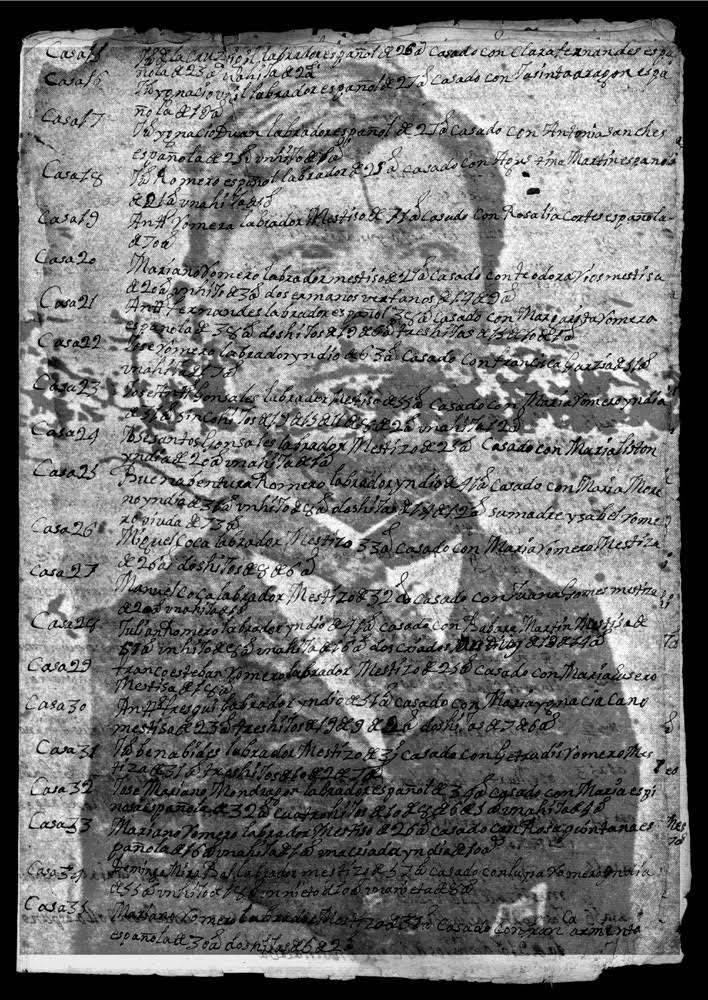
The sacramental records from the Americas are filled with the entries of the enslaved: baptisms, marriages, and burials. In a book of burials recorded in the church of Santa Cruz de la Cañada, New Mexico, there is a curious entry made in June 1733. Although he represented them as “others” and perhaps meant to cast aspersions post-mortem, Fray José Manuel de Eguía y Lumbre, reveals in his notation how these particular enslaved once resisted language, indoctrination and even where they are finally laid to rest. He writes:
“Other bodies of Indian servants are in Santa Clara, buried against my wishes, Indian servants to Diego Martín [and] Jerónimo Martín. Another [body] of a female Indian of Juan Tafoya [is buried] in this cemetery [Villa Nueva de Santa Cruz]. There are other [bodies] of Indians, servants to Antonio Martín and Cisneros; and to others. They do not even know how to speak [Spanish], nor do I know them, nor have they offered me anything, nor do they accept advice, nor do they listen to doctrine, nor is there anyone who can guide them. Their entries are not duly recorded.”
The entry is also notable for various reasons, a reflection of a network of kin-based enslavers, the permeable boundaries of Indigenous communities like Santa Clara Pueblo and Spanish settlements like Santa Cruz and how geography and communities functioned in the colonial period to demarcate what may be resistance or alliance.
Surrounding this entry, in these two pages, alone, are the recordings of the enslavers and the enslaved, including the following deceased, released only in death from their bondage: Ignacio (Apache-adult); Felipa (Apache-adult); Antonio (Comanche-adult); Rosa (Apache); Teresa (Apache, 14); Antonio (Apache, 14); Rosa (Apache, 20); Rosa (Apache, 30); Rosa (Apache, 30); Juan Ventura (Apache, 14); Antonio (Apache, 27).
While these eleven names will be included in the project, we are also deeply committed to locating the names of those othered by Fray Eguía, and the many unnamed, or to at least point to their burial, so many obscured in the colonial archive.
![NatBoundUnbound's tweet photo. 𝐎𝐭𝐫𝐨𝐬 𝐂𝐮𝐞𝐫𝐩𝐨𝐬 – 𝐒𝐢𝐧 𝐍𝐨𝐦𝐛𝐫𝐞𝐬
The sacramental records from the Americas are filled with the entries of the enslaved: baptisms, marriages, and burials. In a book of burials recorded in the church of Santa Cruz de la Cañada, New Mexico, there is a curious entry made in June 1733. Although he represented them as “others” and perhaps meant to cast aspersions post-mortem, Fray José Manuel de Eguía y Lumbre, reveals in his notation how these particular enslaved once resisted language, indoctrination and even where they are finally laid to rest. He writes:
“Other bodies of Indian servants are in Santa Clara, buried against my wishes, Indian servants to Diego Martín [and] Jerónimo Martín. Another [body] of a female Indian of Juan Tafoya [is buried] in this cemetery [Villa Nueva de Santa Cruz]. There are other [bodies] of Indians, servants to Antonio Martín and Cisneros; and to others. They do not even know how to speak [Spanish], nor do I know them, nor have they offered me anything, nor do they accept advice, nor do they listen to doctrine, nor is there anyone who can guide them. Their entries are not duly recorded.”
The entry is also notable for various reasons, a reflection of a network of kin-based enslavers, the permeable boundaries of Indigenous communities like Santa Clara Pueblo and Spanish settlements like Santa Cruz and how geography and communities functioned in the colonial period to demarcate what may be resistance or alliance.
Surrounding this entry, in these two pages, alone, are the recordings of the enslavers and the enslaved, including the following deceased, released only in death from their bondage: Ignacio (Apache-adult); Felipa (Apache-adult); Antonio (Comanche-adult); Rosa (Apache); Teresa (Apache, 14); Antonio (Apache, 14); Rosa (Apache, 20); Rosa (Apache, 30); Rosa (Apache, 30); Juan Ventura (Apache, 14); Antonio (Apache, 27).
While these eleven names will be included in the project, we are also deeply committed to locating the names of those othered by Fray Eguía, and the many unnamed, or to at least point to their burial, so many obscured in the colonial archive.](https://pbs.twimg.com/media/F7XkrO_aoAACYLh.jpg)
![NatBoundUnbound's tweet photo. 𝐎𝐭𝐫𝐨𝐬 𝐂𝐮𝐞𝐫𝐩𝐨𝐬 – 𝐒𝐢𝐧 𝐍𝐨𝐦𝐛𝐫𝐞𝐬
The sacramental records from the Americas are filled with the entries of the enslaved: baptisms, marriages, and burials. In a book of burials recorded in the church of Santa Cruz de la Cañada, New Mexico, there is a curious entry made in June 1733. Although he represented them as “others” and perhaps meant to cast aspersions post-mortem, Fray José Manuel de Eguía y Lumbre, reveals in his notation how these particular enslaved once resisted language, indoctrination and even where they are finally laid to rest. He writes:
“Other bodies of Indian servants are in Santa Clara, buried against my wishes, Indian servants to Diego Martín [and] Jerónimo Martín. Another [body] of a female Indian of Juan Tafoya [is buried] in this cemetery [Villa Nueva de Santa Cruz]. There are other [bodies] of Indians, servants to Antonio Martín and Cisneros; and to others. They do not even know how to speak [Spanish], nor do I know them, nor have they offered me anything, nor do they accept advice, nor do they listen to doctrine, nor is there anyone who can guide them. Their entries are not duly recorded.”
The entry is also notable for various reasons, a reflection of a network of kin-based enslavers, the permeable boundaries of Indigenous communities like Santa Clara Pueblo and Spanish settlements like Santa Cruz and how geography and communities functioned in the colonial period to demarcate what may be resistance or alliance.
Surrounding this entry, in these two pages, alone, are the recordings of the enslavers and the enslaved, including the following deceased, released only in death from their bondage: Ignacio (Apache-adult); Felipa (Apache-adult); Antonio (Comanche-adult); Rosa (Apache); Teresa (Apache, 14); Antonio (Apache, 14); Rosa (Apache, 20); Rosa (Apache, 30); Rosa (Apache, 30); Juan Ventura (Apache, 14); Antonio (Apache, 27).
While these eleven names will be included in the project, we are also deeply committed to locating the names of those othered by Fray Eguía, and the many unnamed, or to at least point to their burial, so many obscured in the colonial archive.](https://pbs.twimg.com/media/F7XkmUca8AARsSq.jpg)
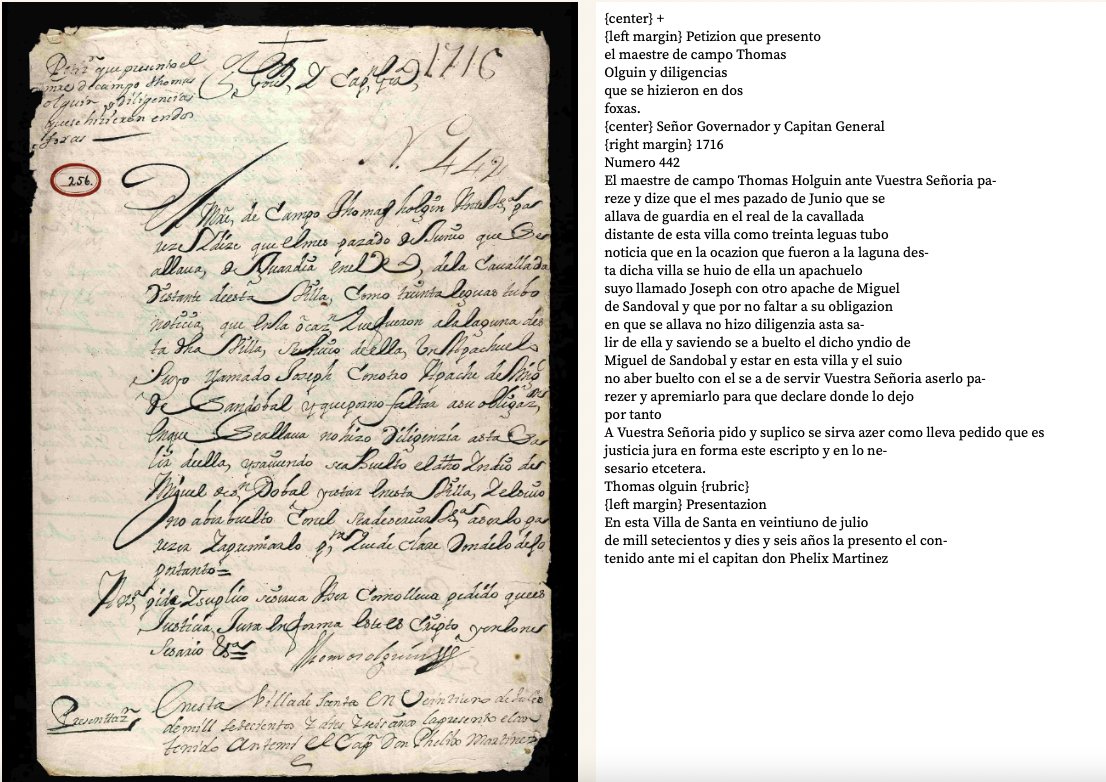
(1/7) Join Our Team in Deciphering the Disappeared
We would love to invite people who have an interest in paleography and transcription to join our project.
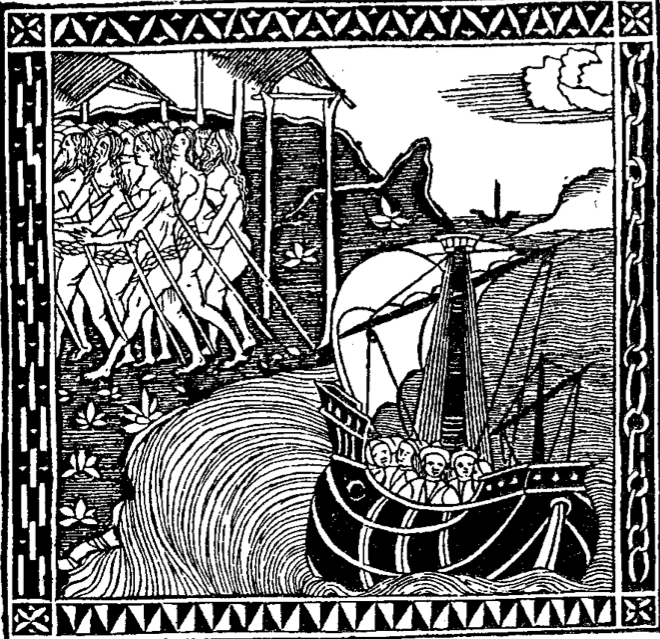
Of the first people documented to have been captured and enslaved.
This 1495 woodcut is from “Lettera delle isole novamente trovata” by Giuliano Dati, an Italian translation of the letter Columbus sent to the Spanish court after his first voyage.
#nativeboundunbound #Caribbean
(1/9) The enslaved appear in the first known document commemorating Christopher Columbus' first voyage in 1492, a significant moment in global history.
We are looking for a Social Media Coordinator to help us build an online presence. Experience and Knowledge of Native American/Chican@ culture a plus. Shorttrm,partime contract. Apply: [email protected]
#INDIGENOUS #NativeBoundUnbound #SocialMediaCoordinator
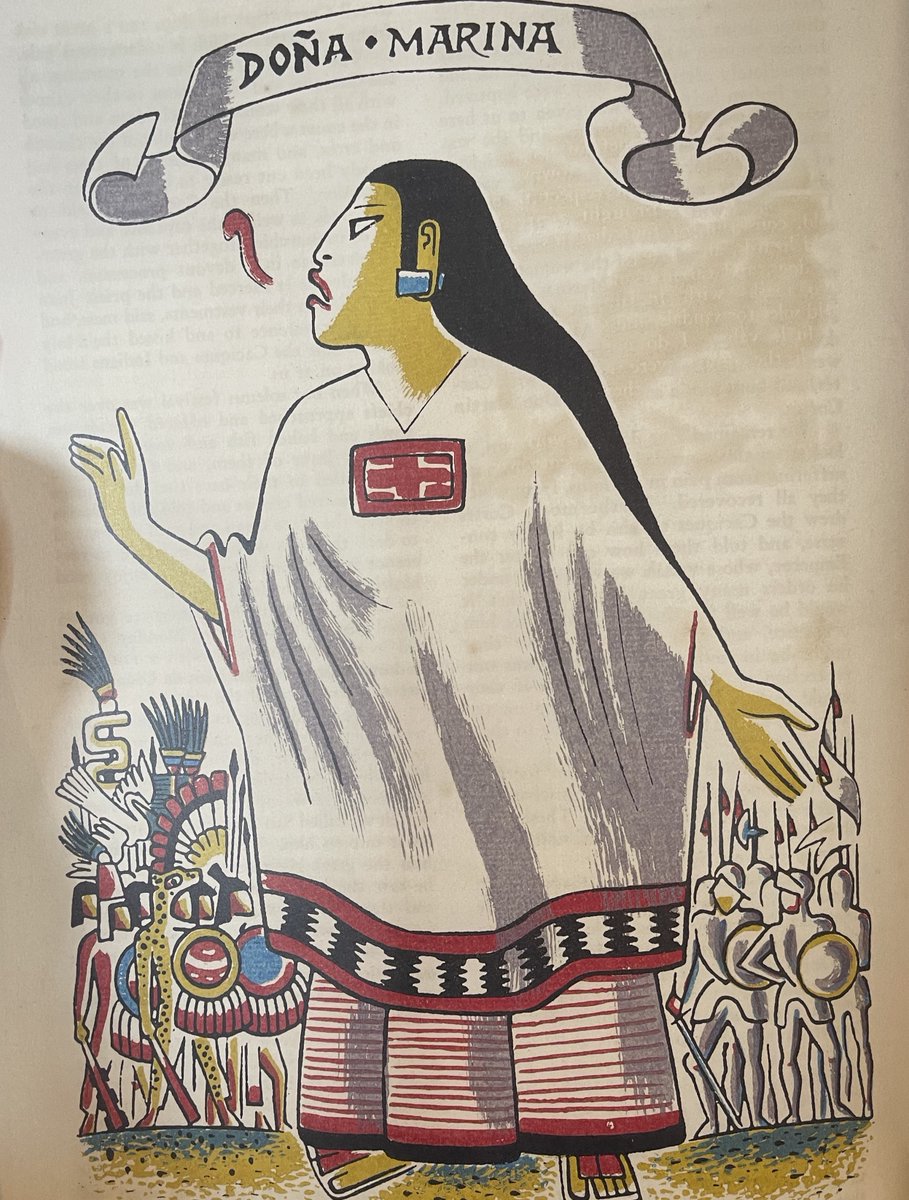
The Legacy of La Malinche ~ It is a soul-shaking exhibition and a reflection of an icon of our community - thank you Dr. Victoria Lyall, the curator of Traitor, Survivor, Icon: The Legacy of La Malinche
#nativeboundunbound #denverartmuseum @vdevicicleta
“Indian Will”sued for his freedom in 1747 because it “is intirly against free born Indians to be made slaves.” Thank you @brettrushforth #NativeBoundUnbound
As we begin exploring frameworks for #NativeBoundUnbound, I am reminiscing about projects past https://t.co/43dwACC6Sr
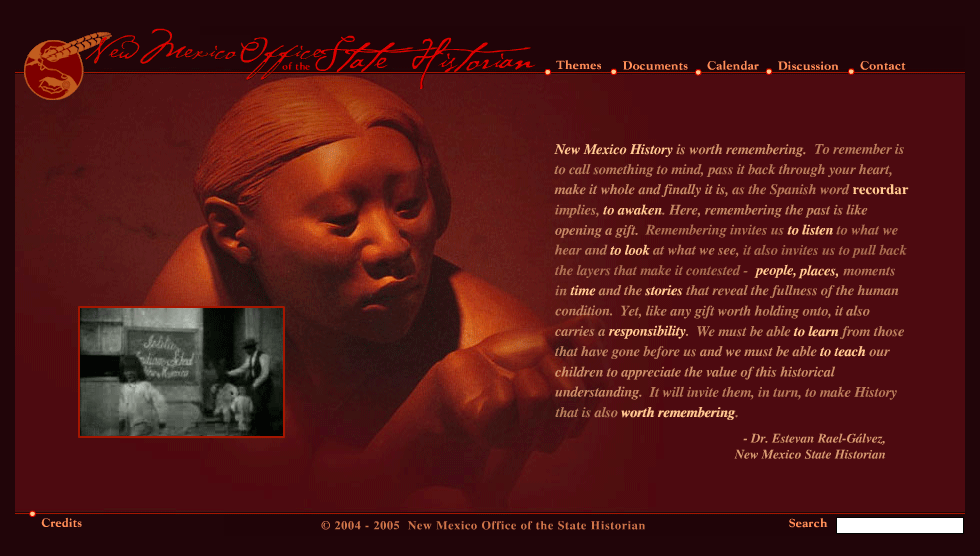

Big news! SAR board member @ERaelGalvez Estevan Rael-Gálvez has received a major grant from the Mellon Foundation for his digital repository project, Native Bound-Unbound. Read about it on the SAR blog.
#nativeboundunbound
@MellonFdn
https://t.co/EyDVd9wUuS


“Recovering these stories is especially imperative for descendants endeavoring to see themselves reflected in history & to recover a sense of self & heal from the past.”—@ERaelGalvez on the importance of #NativeBoundUnbound https://t.co/7KdrEfZ7N4 (via @schadvresearch)
Last Seen Hashtags on Sotwe
Most Popular Users

Elon Musk 
@elonmusk
241.7M followers

Barack Obama
@barackobama
119M followers

Cristiano Ronaldo
@cristiano
114.5M followers

Donald J. Trump
@realdonaldtrump
111.9M followers

Narendra Modi
@narendramodi
107.2M followers

Rihanna
@rihanna
98.7M followers

NASA
@nasa
92.4M followers

Justin Bieber
@justinbieber
91.8M followers

KATY PERRY
@katyperry
90M followers

Taylor Swift
@taylorswift13
84M followers

Lady Gaga
@ladygaga
75.4M followers

Virat Kohli
@imvkohli
73.4M followers

Kim Kardashian
@kimkardashian
70.9M followers

YouTube
@youtube
68.8M followers

Neymar Jr
@neymarjr
66.4M followers

Bill Gates
@billgates
65.2M followers

Selena Gomez
@selenagomez
63.1M followers

The Ellen Show
@theellenshow
62.3M followers

CNN
@cnn
61.8M followers

X
@x
60.7M followers