

Top Tweets for #NeuroToxin

#ChemicalWeapons #BiologicalWeapons #NerveAgent #Anthrax #WW2
Mysterious barrel marked ‘U.S. Army’ found in Quebec could contain dangerous neurotoxin
https://t.co/4mq4IN3dMI
Samples from a mysterious barrel found in Quebec that bears the inscription “U.S. Army” are being tested for a possible dangerous neurotoxin.
The barrel was found by a citizen this week on Grosse-Île, a small island in the St. Lawrence River near Montmagny, Que., roughly 80 kilometres east of Quebec City.
Samples from the barrel are now with specialist Canadian military laboratories in Suffield, Alta., to confirm the nature of the substance inside, Noovo Info reported. Results could come next week.
[...]

Claude designed 318,484 proteins to bind scorpion neurotoxins. 211 were lab-tested, 17 hit the binding criteria, and Anthropic released all 211.
Not an antivenom yet, but AI proposing and the lab checking is how medicine speeds up.

Anthropic’s AI research is moving beyond chat. An internal Claude model reportedly designed 17 lab-validated protein binders targeting scorpion neurotoxins, while Claude models are helping with agentic coding, SEO, and creative workflows.

New on our Science Blog: designing protein binders against scorpion neurotoxins.
Scorpions sting about 1.2m people every year, and antivenoms are often costly or in short supply. Claude has made an early step toward finding new treatments.
https://t.co/l6LgdEqM7I

Claude just ran a 64-hour autonomous protein-design campaign.
318,000+ designs.
553,000 design-toxin pairs screened.
Only 4 human prompts.
17 designs that actually bound real scorpion neurotoxins in the lab.
This is no longer “AI helps scientists.”

Catches Daggers thrown by Kraven the Hunter, despite being(once again)de-powered and dealing with the effects of a neurotoxin(Black Panther: The Man Without Fear#519)


Las inyecciones de botox son peligrosas. Desde que un estudio de 2008 reveló que la neurotoxina botulínica puede llegar al cerebro, se han reportado numerosos casos de anomalías evidentes en los escáneres cerebrales de pacientes adictos al botox. Sin embargo, en la cirugía estética este hecho se oculta completamente.

🌲⚔️ Levi se fuga de la capital: trampa, neurotoxina y cabeza de caballero. La Reina Espejo ya lo quiere muerto.
Cap. 4 de *Supervivencia en Cuentos de Hadas 2*
https://t.co/t9gdwPRJhN
#books #literature #writing

FYI - This is the urgent information about these neurotoxins effects on children playing along the waters edge of Lough Ree.
Blue-green algae (cyanobacteria) neurotoxins — primarily anatoxin-a, anatoxin-a(s), and in some cases saxitoxins — are highly potent compounds that target the nervous system. As an expert on these toxins in humans, I can outline their effects based on established toxicology, clinical reports, and public-health data. Children are significantly more vulnerable than adults.
How the Neurotoxins Work
• Anatoxin-a acts as a potent agonist at nicotinic acetylcholine receptors in the peripheral and central nervous system. It causes continuous stimulation of muscles followed by rapid fatigue and paralysis (especially of the respiratory muscles).
• Anatoxin-a(s) is an irreversible acetylcholinesterase inhibitor (similar to organophosphate nerve agents). It prevents the breakdown of acetylcholine, leading to overstimulation of nerves and muscles.
• Onset can be extremely fast (minutes after significant ingestion), matching the rapid deaths reported in dogs.
Effects Specifically in Children
Children are at higher risk for several physiological reasons:
• Lower body mass → higher dose per kilogram of body weight from the same volume of contaminated water.
• Higher relative water intake and tendency to swallow more water while swimming or playing.
• Immature blood–brain barrier and developing nervous system, which can amplify neurological effects.
• Higher respiratory rate and metabolic rate.
Documented or expected clinical effects after significant exposure (especially ingestion):
• Early: Tingling or numbness around the mouth, lips, and extremities; excessive salivation; tearing; dizziness; headache; nausea.
• Progressive: Muscle weakness, twitching or fasciculations, loss of coordination, difficulty speaking or swallowing.
• Severe: Respiratory muscle paralysis leading to breathing difficulty or respiratory failure, seizures, cyanosis (blue colouration from lack of oxygen), collapse, and potentially death if untreated.
• Skin contact alone usually causes only mild irritation or rash rather than systemic neurotoxicity, but open cuts or prolonged immersion can increase absorption.
• Inhalation of aerosolised toxins (e.g., from wind or water sports) can cause respiratory irritation and, in rare high-exposure cases, neurological symptoms.
Fatal outcomes in humans from pure cyanobacterial neurotoxins are rare compared with dogs (because humans typically ingest far smaller relative volumes and are more likely to leave the water), but serious poisonings have been documented worldwide, and children have featured in several case series of severe illness. Hepatotoxins (e.g., microcystins) that often co-occur can add liver damage, gastrointestinal illness, and longer-term risks.
Key Practical Points
• There is no specific antidote for anatoxin-a. Treatment is supportive (airway protection, mechanical ventilation if needed, activated charcoal if recent ingestion, symptomatic care). Anatoxin-a(s) may respond partially to atropine and oximes in the same way as organophosphate poisoning.
• Symptoms can appear within minutes to a few hours. Any child who has been in visibly scummy or discoloured water and develops neurological or breathing symptoms needs immediate emergency medical attention.
• Even small amounts can be dangerous; there is no established “safe” level for recreational exposure in children.
Bottom line for parents/caregivers:Treat any visible blue-green or bright-green scum, paint-like surface film, or strongly discoloured water on Lough Ree (or any affected water body) as potentially lethal to children and pets. Keep children completely away from the water’s edge and shorelines where scum accumulates. If contact occurs, rinse thoroughly with clean water and seek medical advice promptly if any symptoms appear.
This is a genuine medical hazard, not a minor irritation.
🚨 URGENT WARNING 🚨
BLUE GREEN ALGAE - NEUROTOXIN IS DEADLY cyanobacterial neurotoxins from blue-green algae, can cause sudden neurological collapse.
PLEASE SHARE TO FAMILY & FRIENDS
‼️LOUGH REE - ROSCOMMON SIDE
Local vets are reporting several dog deaths from toxic blue-green algae on Lough Ree—Roscommon shore north of Yew Point.
Dogs died within minutes of contact.
Deadly neurotoxins also threaten kids, livestock & other animals.
‼️ Keep EVERYONE away from water & shore scum. No swimming or touching.‼️
Report to Roscommon CoCo & Waterways Ireland. SHARE!
• Tag: @RoscommonCoCo @WaterwaysIRL @EPAIreland and local vet pages.
#LoughRee #BlueGreenAlgae #DogSafety

AI-Redesigned Starting Points and Outcomes Enhance Protein Evolution @Nature
1. This study shows that AI-based sequence redesign can make proteins substantially better starting points for directed evolution. Across parallel campaigns, redesigned botulinum neurotoxin proteases consistently evolved higher activity, greater stability, and broader substrate specificity than their wild-type counterparts.
2. The central idea is that protein stability acts as an evolutionary buffer. Because most functional mutations are destabilizing, wild-type enzymes can exhaust their limited stability margin before reaching highly active new functions. ProteinMPNN redesign raises this margin, allowing evolution to explore mutations that would otherwise prevent folding or soluble expression.
3. The researchers used ProteinMPNN to redesign BoNT/E, BoNT/F, and BoNT/X proteases while constraining catalytic, metal-binding, substrate-contacting, and evolutionarily conserved residues. Screening no more than 96 designs per protease was sufficient to identify variants with improved stability while retaining or increasing catalytic activity.
4. For BoNT/E, 58 of 74 ProteinMPNN designs remained functional, 33 were at least as active as the wild-type enzyme, and 22 combined retained activity with higher soluble yield. The three selected designs showed improved expression and thermal stability, with catalytic efficiencies 1.7–2.8 times higher than wild-type BoNT/E.
5. AI redesign could also repair proteins after evolution. When mutations from a previously evolved PTEN-cleaving BoNT/E protease were transferred into redesigned backgrounds, the resulting enzymes showed up to 5.2-fold higher bacterial expression and more than 24-fold higher abundance in human cells while preserving the evolved PTEN specificity and eliminating detectable native SNAP25 cleavage.
6. In side-by-side phage-assisted continuous evolution experiments, redesigned and wild-type BoNT/E proteases were evolved against three substrates of increasing difficulty. Redesigned starting points repeatedly produced variants with higher activity, faster kinetics, and greater soluble expression, while accepting beneficial mutations that were weak or non-functional in the wild-type background.
7. On the most difficult substrate, two of four wild-type evolution campaigns failed completely, whereas all four campaigns initiated from the redesigned protease succeeded. The redesigned enzyme tolerated a strongly destabilizing K225E mutation that enabled high target activity, while the same mutation rendered the wild-type background effectively non-functional.
8. The redesigned proteins also adapted faster when useful mutations were located close to the starting sequence. In several campaigns, single-nucleotide variants from redesigned enzymes passed selection earlier and achieved higher activity than wild-type lineages, which often required additional compensatory mutations to restore stability before acquiring strong function.
9. Long-read sequencing revealed that redesigned proteases could access both wild-type-compatible evolutionary solutions and additional redesign-specific genotypes. The reverse was rarely true: many high-fitness mutations evolved from redesigned proteins could not propagate or function in the wild-type background, indicating that redesign expanded the accessible fitness landscape rather than merely improving the starting activity.
10. This advantage was not limited to one particular ProteinMPNN sequence. Multiple ProteinMPNN redesigns and a PROSS-redesigned protease all produced stronger evolutionary outcomes than wild-type BoNT/E. Even a highly stable redesign with 20-fold lower initial catalytic activity evolved variants as active as, or more active than, those derived from the other redesigned starting points.
11. The most therapeutically relevant demonstration targeted ataxin-2, a protein associated with neurodegenerative disease. Proteases evolved from redesigned BoNT/E cleaved ataxin-2 faster, retained greater stability, expressed more strongly in human cells, and produced fewer cleavage byproducts than proteases evolved from wild-type BoNT/E.
12. The best redesign-evolved protease accumulated 46 ProteinMPNN substitutions and 18 evolution-derived mutations, reaching a 16% sequence difference from natural BoNT/E. Despite this divergence, it achieved more than 79-fold greater selected specificity for ataxin-2 than the best wild-type-evolved variant, with no detectable SNAP25 cleavage under standard assay conditions.
13. The work establishes a complementary design–evolution workflow: computational redesign first provides stability and mutational robustness, while continuous directed evolution subsequently discovers potent new functions. Rather than asking AI to directly design a complete catalytic solution, the approach uses AI to reshape the local fitness landscape so experimental evolution can search it more productively.
14. The current evidence is strongest for BoNT proteases, and whether the same degree of improvement generalizes to other protein families remains to be established. Nevertheless, the results suggest that redesigning stable starting points could become a practical default strategy for evolving enzymes with improved activity, specificity, expression, and robustness.
💻Code: https://t.co/YbkeWmrD0Y
📜Paper: https://t.co/6d42fr7NBj
#ProteinDesign #DirectedEvolution #ProteinMPNN #PACE #EnzymeEngineering #ComputationalBiology #SyntheticBiology #AIForScience


I wonder how this got to multiple locations?
Hazardous materials crews were scrambling across Riverside County, CA, on Saturday as toxic mercury was discovered at multiple locations. Mercury is a potent neurotoxin and cellular poison that can expose health risks through vapors or direct contact. Officials say the public wasn't in danger and an investigation is continuing.
https://t.co/yY2QDtXoir


a few highly venomous species, most notably the Flower Urchin (Toxopneustes pileolus) found in the Indo-West Pacific, possess potent neurotoxins. These can cause severe muscular paralysis, breathing difficulties, and shock, which can lead to drowning if it happens in the water.


طيب وش علاقته ب MT ؟
في عالم الزومبي والتجارب السرية، كثير من القصص تعتمد على مواد أو فيروسات تؤثر على الجهاز العصبي وتغيّر تصرفات المصابين.
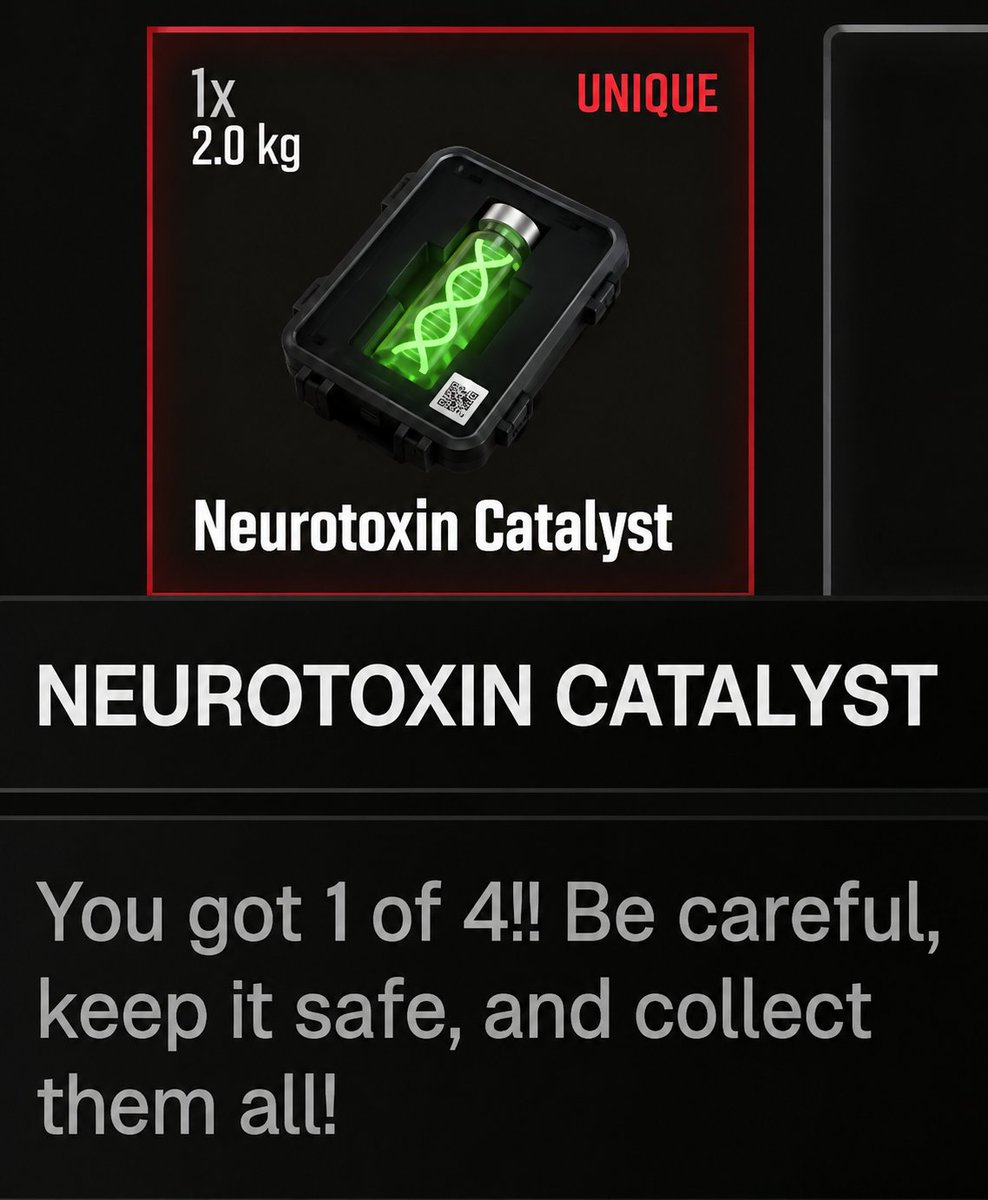
عشان كذا ظهور عنصر Neurotoxin Catalyst داخل الحدث يعتبر شيء مثير للاهتمام، خصوصًا أنه مصنف كعنصر نادر ومكتوب عليه "1 of 4"
ببساطة، جسمك يعتمد على إشارات كهربائية عشان تتحرك وتفكر وتتفاعل، والـ Neurotoxin يقدر يعطّل هالإشارات أو يغيّرها، وهذا ممكن يسبب تنميل، تشنجات، ضعف بالحركة، أو حتى شلل في الحالات القوية.
الـ Neurotoxin أو "السم العصبي" هو مادة تهاجم الجهاز العصبي بشكل مباشر، وتؤثر على طريقة إرسال الإشارات بين المخ والأعصاب والعضلات.
🧠 وش هو الـ Neurotoxin؟
Thread 🧵 ثريد

شوفوا هبدتي 🤣
1 - Blood Sample : عينات دم استخدمت كأساس للتجارب وتعديل الخلايا
2 - Radioactive : إشعاع استُخدم كمحفّز لتغيير طبيعة الدم وتسريع التفاعلات
3 - Neurotoxin Catalysed : سموم عصبية استُخدمت للتحكم في التحول أو العدوى
4 - Failed Project Sample : تجارب سابقة فاشلة ضمن مراحل المشروع الرئيسي
5 - Biohazard Liquid : المادة النهائية الخطيرة التي تحولت من علاج إلى سبب الوباء
6 - Muted Blood Sample : محاولة تهدئة أو إيقاف تأثير العدوى داخل الدم
️ حالة شبيب (المحصن)
شبيب كان شخص عادي يعمل مع البروفيسور وتم اختباره بإبرة تجريبية، لكن التجربة فشلت وتحول إلى حالة “محصن” حيث صار يشبه الزومبي لكن بدون تأثير عليهم، والزومبي لا يهاجمونه ولا يتفاعلون معه بشكل طبيعي، وبعدها أطلق على نفسه اسم “المحسن” كنوع من التعايش مع النتيج
️ الصاروخ النووي
الصاروخ النووي لم يكن سبب الوباء
سبب الوباء
الوباء نتج من داخل المختبر بي روكسوود بسبب فشل التجارب البيولوجية وليس بسبب الانفجار النووي
الخلاصة
البروفيسور كان يحاول تطوير علاج باستخدام الدم والإشعاع والسموم العصبية، لكن التجارب خرجت عن السيطرة وتحول المشروع إلى كارثة بيولوجية أدت إلى انتشار الوباء وتحول الكائنات إلى زومبي


بنسبة الى المحاليل والأغراض التي تم العثور عليها، فهي تزيد القصة خطورة. أول شيء Biohazard Liquid، وعدده 5. هذا غالبًا مادة بيولوجية أساسية في المشروع، وممكن تكون علاجًا أو سلاحًا حسب طريقة استخدامها.
ثاني شيء Mutated Blood Sample، وعدده 4. هذا دم متحوّر، وقد يكون من شخص مصاب أو شخص عنده مناعة أو مخلوق متحوّر. هذا الدم ممكن يحمل سر المناعة أو سر الطفرة.
ثالث شيء Neurotoxin Catalyst. معنى الاسم “محفز سم عصبي”، وهذا يوحي أنه مادة تفعّل الطفرة أو تؤثر على الأعصاب والدماغ. يعني ممكن تكون السبب في أن المخلوقات تتحرك بشكل غير طبيعي أو تصير أذكى.
رابع شيء HGH، وهو هرمون نمو بشري. في القصة ممكن يكون دوره تقوية الجسد وتسريع التجدد، بحيث يتحمل الشخص التغيرات أو الطفرة بدل ما يموت منها.
لو تم استخدام هذه المواد مع الدم المتحوّر، فالنتيجة ممكن تكون خطيرة جدًا. ممكن تصنع علاجًا مؤقتًا أو مناعة ضد الإشعاع، لكن في نفس الوقت ممكن تكون سلاح لتدمير البشرية. وكلام الزرق عن المحلول إنه سلاح لا يمكن تجاهله. لأن المواد الموجودة ليست شكل علاج طبيعي، بل شكل تجربة بيولوجية خطيرة جدًا.


Neurotoxin Catalyst
هو محفز السم العصبي بسببه فيروس الزومبي مايقدر يصل لعقل الجسم
Mutated Blood
هي محطه التجارب ازاي الفيروس بيعمل في الجسم والخلايا وازاي الفيروس يقدر مقاوم لمناعه الجسم
__________________________________________________________

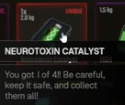

(NEUROTOXIN CATALYST -محفز السم العصبي)
"لقد حصلت على 1 من أصل 4!! كن حذراً، حافظ عليه في مكان آمن، واجمعها كلها!"
الاشياء الموجود للان هي…
حزمة دم متحور🩸 الموجود للان ( 1 )من 4
محلول البايوهازارد الموجود للان (3-4)من 5
محفز سم العصبي الموجود للان ( 1 )من 4
@MT_FiveM
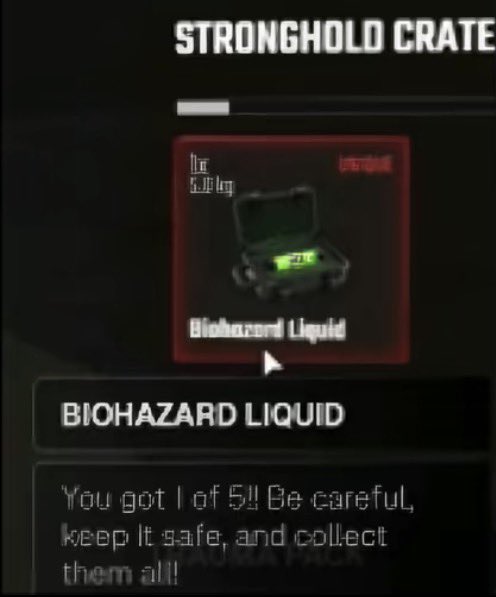

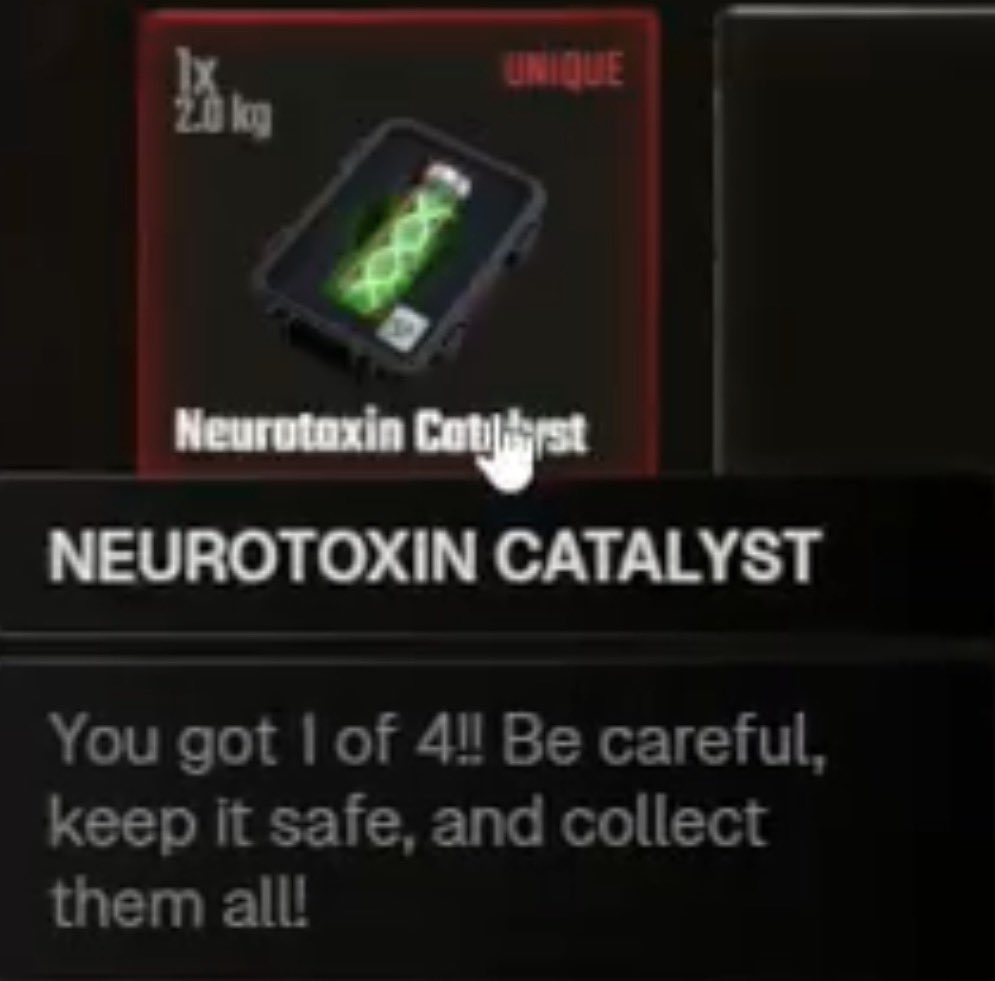

تحليل الاشياء الي صارت اليوم
1-neurotoxin هو شيء او سائل يدمر الجهاز العصبي
2-ال treasure او الكنز هو شيء في داخله اشياء بس لازم مفتاح هو غالبا المفتاح الي كان معا كيلر الي هو ال old key لان الكنز شيء قديم و المفتاح مكتوب عليه old
3-👇👇

هذا يقوي نظرية ان الوباء مو مجرد زومبي عادي بل سلاح بيولوجي عصبي يضرب العقل والجسد ويسبب طفرات وهلوسات وتشوهات ☢️
ووجود “Neurotoxin Catalyst” مع عبارة:
“Collect them all”
يثبت ان فيه 4 قطع اساسية مطلوب جمعها كاملة
لكن السؤال المرعب:
هل الهدف علاج… او تشغيل سلاح كامل؟ 👀
وهذا يثبت ان الموضوع مرتبط بالاعصاب والدماغ مو مجرد اشعاع عادي الجملة: Collect them all تعني ان القصة تدفع الشخص لجمع القطع كلها الاستنتاج: العنصر هذا يقوي نظرية ان: المحاليل مو علاج فقط بل جزء من سلاح بيولوجي خطير جدًا والمحصن غالبًا استخدم جزء منه لذلك صار مختلف عن البقية


The agency, which was founded to protect the environment and human health, has canceled safety regulations, supported coal, and stopped caring about climate change.
By Elizabeth Kolbert
April 27, 2026
Last summer, more than 150 staff members at the Environmental Protection Agency sent a letter to the agency’s head, Lee Zeldin, outlining their concerns about his leadership. Topping the list was Zeldin’s naked partisanship. The administrator often used his official communications to trash Democrats. This “politicized messaging,” the letter said, was undermining trust in the agency. So, too, were Zeldin's gutting of the E.P.A.’s research division and his tendency to ignore the findings of its scientists. The missive noted that it reflected the staffers’ personal, rather than professional, opinions and had been written on their own time. It ended by urging Zeldin to “correct course.”
“Should you choose to do so, we stand ready to support your efforts,” it said.
The employees who signed the letter did not expect it to have much effect. “I thought, Here’s a letter the staff is going to present to the administrator,” one told me. “He’s going to take a look at it and put it in the wastepaper basket. And we will go on with our work.”
That’s not how things played out. Zeldin, or at least his deputies, launched the electronic equivalent of a manhunt. In e-mails that were eventually obtained by E&E News, a lawyer at the E.P.A.’s Office of General Counsel told colleagues that the letter to Zeldin raised no ethical concerns, because the signatories were “simply exercising their First Amendment right to express their opinions.” Another lawyer in the general counsel's office warned against any retaliatory action because “government employee speech is protected.” The agency nonetheless kept up the pressure. It soon announced that it was placing 144 of the signatories on administrative leave.
“We have a ZERO tolerance policy for agency bureaucrats unlawfully undermining, sabotaging, and undercutting the agenda of this administration,” Zeldin said in a statement justifying the move. “The will of the American public will not be ignored.”
President Donald Trump has referred to Zeldin as “one of the superstars” of his second Administration and, perhaps even more glowingly, as “our secret weapon.” In a little more than a year, Zeldin has transformed the E.P.A. from an agency devoted to protecting human health and the environment into one that, more or less openly, sides with polluters. He has packed the E.P.A.’s upper echelons with former industry lobbyists, scrubbed entire databases of information from its website, and dissolved whole departments. Under his leadership, the agency has ditched a long list of rules that industries had objected to, including regulations aimed at cutting Americans’ exposure to arsenic, a known carcinogen; mercury, a potent neurotoxin; and PM2.5, a form of very fine soot that has been shown to cause asthma and lung disease. The E.P.A. has not only abandoned its own efforts to rein in greenhouse-gas emissions; it has stepped in to prevent states from taking action. It has come out officially, if astonishingly, as pro-coal.
In early April, when Trump fired his Attorney General, Pam Bondi, reportedly for failing to prosecute his political enemies with sufficient zeal, rumors began to circulate that the President wanted Zeldin to replace her. (Todd Blanche, who took over as acting Attorney General, can serve in that capacity for up to seven months.) Zeldin’s track record at the E.P.A. makes him, by Trumpian standards, a logical pick.
“Zeldin has displayed acrobatic flexibility in bending environmental laws to suit the desires of the White House,” Michael Gerrard, the faculty director of the Sabin Center for Climate Change Law at Columbia University, told me. “He does not only backflips but triple loops.”
Christine Todd Whitman, a former New Jersey governor who ran the agency under George W. Bush, said that if Zeldin becomes Attorney General, “he’ll do exactly what Trump wants him to do. That’s what he’s done at the E.P.A., irrespective of the damage it’s done.”
Zeldin, who is forty-six, is the subject of two adulatory (if slim) biographies, both published in 2024, perhaps with the aid of A.I. One states that his father was a lawyer, the other that he was a doctor. In fact, Zeldin’s father was a private investigator, and his mother taught fourth grade. Zeldin’s parents divorced when he was young, and he spent his elementary-school years shuttling between their homes in Shirley, a working-class town on eastern Long Island. In high school, he joined the Youth and Government club; mostly, he would later joke, “to pick up girls.”
Zeldin sped through college at SUNY Albany in three years and through law school, also in Albany, in two. Then he enlisted in the Army. At Fort Huachuca in Arizona, he worked in military intelligence and, later, as a member of the Judge Advocate General's Corps, he briefly deployed to Iraq. He remembers Army life fondly. “I was a paratrooper, jumped out of airplanes, did all that stuff,” he said on “New York NOW.” “Four years of very adventurous time.” (Reporters who have looked into the matter have concluded that Zeldin spent most of his active-duty career sitting at a desk.)
At the age of twenty-eight, Zeldin made his first run for office. By this point, in 2008, he was married, with twin baby girls, and had moved back to Shirley. He challenged a Democrat named Tim Bishop, who was serving his third term in Congress. Zeldin lost to Bishop by sixteen points, but two years later, buoyed by Tea Party support, he won a seat in the New York State Senate. In 2014, he ran again against Bishop and prevailed.
As a new congressman, Zeldin voted mostly along party lines—in favor of repealing Obamacare, for example, and against limiting the sale of assault weapons. His district, which stretched from Smithtown to Montauk, was lined with beaches and wetlands, and, on a local level, he presented as green.
“We worked a lot with him on Long Island Sound issues,” Adrienne Esposito, the executive director of Citizens Campaign for the Environment, which is based in Farmingdale, recalled. “We never had any access problem.” National environmental groups, though, generally gave him lousy grades. In 2015, Zeldin received a 14-per-cent rating from the League of Conservation Voters, and the following year, he received an 8-per-cent rating.
“On the issue of the environment, there were two completely different Lee Zeldins,” Steve Israel, a former Democratic congressman who represented a district abutting Zeldin’s, told me. “There was the Lee Zeldin who reliably voted against the environment as both a New York state senator and as a member of Congress. And there was the Lee Zeldin who’d appear at press conferences in his district touting his leadership in protecting the Long Island Sound. He literally could have debated himself.”
As is often the case with junior House members, Zeldin struggled to accomplish much. He was the primary sponsor on four bills that got enacted; two were measures to rename Suffolk County post offices. Beyond Long Island, he rarely made news, except when he screwed up. In 2018, the Times reported that he had sent out a campaign mailer with the wrong deadline for absentee ballots.
Then, in the fall of 2019, House Democrats launched what would come to be known as Trump’s first impeachment inquiry. (The inquiry was prompted by reports that Trump had tried to pressure the Ukrainian President, Volodymyr Zelensky, into investigating Joe Biden.) Zeldin threw himself into the fight. He spent long hours grilling witnesses at deposition hearings, plotted with Republican colleagues about how best to shield the President, and publicly denounced the proceedings as, among other things, “illegitimate,” a “charade,” a “fairy tale,” a “parody,” and an “abuse of power.”
“I’ve sat through EVERY interview so far of this so-called ‘impeachment inquiry’ & the President hasn’t done anything to possibly impeach him for,” he tweeted that October. “NOTHING.” Among those who noticed was the President himself. Trump took to retweeting Zeldin’s comments—on one frenzied Saturday morning, nine times in three minutes. Zeldin’s appearances on Fox News began to tick up.
On January 6, 2021, just a few hours after the storming of the Capitol, Zeldin spoke to Fox News’ Laura Ingraham, along with another congressman, Darrell Issa, of California. Issa, a fierce Trump supporter, condemned the attack. “Today was a bad day for the President,” he said. Zeldin reserved his criticism for Trump’s critics. “This isn’t just about the President of the United States,” he told Ingraham. “This is about people on the left and their double standards.” That evening, on the floor of the House, Zeldin repeated oft-disproved claims about election irregularities. He was one of 125 Republicans who voted against certifying the results from both Arizona and Pennsylvania. Later in January, when the House voted to impeach Trump a second time, for inciting the violence at the Capitol, Zeldin once again took to the floor.
“Let’s be honest about the double standards that exist inside of this chamber,” he said. “And let’s also be honest that this President did a lot to make America greater than ever.”
In the spring of 2021, Zeldin announced that he was running for governor of New York. During the campaign, he disclosed that he’d been diagnosed with early-stage chronic myeloid leukemia the previous year and had achieved full remission. “My health is phenomenal, and I continue to operate at a hundred and ten per cent,” he told reporters.
After easily winning the Republican primary, Zeldin faced the incumbent, Kathy Hochul, in the general election. (She had become governor after Andrew Cuomo resigned in the summer of 2021.) Trump was deeply unpopular in the state—in 2020, he had lost it to Biden by more than twenty points—and Hochul made much of Zeldin’s fealty to the former President. She ran an ad that opened with a clip of Trump praising Zeldin—“Lee fought for me very, very hard”—and ended with the tagline “Lee Zeldin: he’s extreme and dangerous.”
Zeldin, for his part, campaigned on crime, which had spiked during the pandemic. He crisscrossed the state, holding press conferences at the sites of break-ins and assaults. In Rochester, he pitched up at a gas station that had recently been robbed, and in the Bronx, he spoke at a subway station where someone had been pushed onto the tracks. He pledged that, if elected, he would declare a “crime emergency,” which he said would allow him to suspend several state laws, including one that limits the use of solitary confinement in New York prisons. (“Someone get this man a copy of the state’s constitution, please,” Zellnor Myrie, a Democratic state senator from Brooklyn, tweeted.) To the extent that Zeldin campaigned on the environment, he was against it. In 2014, New York banned fracking for natural gas, out of concern over the impacts on the state’s air and water. Zeldin vowed to lift the ban. In an irony that was hard to miss, his campaign got caught up in a ballot-fraud scandal. Zeldin had sought to run on the Independence Party line in addition to the G.O.P. line, but the state’s Board of Elections found that his petitions to secure the Independence listing included more than ten thousand invalid signatures.
Democrats had anticipated an easy victory; in the campaign’s final weeks, though, the polls tightened. Apparently, Zeldin’s tough-on-crime message was resonating. “He knows how to stick to an issue,” one Democratic strategist told me recently. “And, quite frankly, the Governor struggled to answer him.”
“Lee is a very skilled politician,” the former New Jersey governor Chris Christie said. “When you think about how tough New York is for Republicans, to come as close as he did tells you a lot.” Hochul’s margin of victory—six points—ended up being the narrowest of any New York gubernatorial candidate in the past thirty years.
Out of office, Zeldin, in time-honored Washington fashion, founded a consulting firm. (Among its clients was the America First Policy Institute, which employed so many officials from the first Trump Administration that it was sometimes referred to as the “White House in waiting.”) He also took to writing opinion pieces. In an op-ed for Newsday, Zeldin blasted investment policies that took environmental considerations into account. “It wasn’t long ago that Wall Street and special interests thought they could force environmental, social, and governance, or ESG, policies into our workplace, retirements, and lives,” he wrote. Fortunately, “conservatives and other everyday people have fought back.” In another op-ed that appeared on RealClearPolicy, Zeldin compared E.S.G. investing to the shady maneuvers used by cryptocurrency entrepreneur Sam Bankman-Fried. Eventually, Zeldin revealed in a financial-disclosure form that he’d been paid by P.R. firms for both of the opinion pieces—in the case of the RealClearPolicy op-ed, he received twenty-five thousand dollars—though which of the firms’ clients had commissioned them, he never divulged.
When Trump appointed Zeldin to run the E.P.A., some at the agency hoped—or, perhaps, hoped against hope—that he would prove a moderating influence on the President. “We felt like, He’s from New York, this is probably not his last gig, maybe he doesn’t want to set himself up to be scorched earth,” one scientist who was working at the agency at the time told me. It didn’t take long for Zeldin to disabuse them of this notion.
Within a week of his confirmation, Zeldin announced that the agency would be guided by a new set of priorities—five in all—which he labelled “pillars.” Pillar No. 2 was restoring “American energy dominance.” No. 4 was making the United States “the artificial intelligence capital of the world.” No. 5 was “protecting and bringing back American auto jobs.” Zeldin termed the initiative Powering the Great American Comeback. The E.P.A. began publishing “Call It a Comeback,” a newsletter featuring shots of Zeldin paying friendly calls on big emitters—a coal-fired power plant in West Virginia, a plastics-recycling facility in Texas—and clips of interviews with him on Fox News. When the right-wing activist Charlie Kirk was killed, on September 10, 2025, that week’s newsletter was entirely given over to mourning his death. “In Loving Memory,” it said, over a photo of Kirk raising his fist.
Though it may be difficult these days to imagine such a moment, the E.P.A. was established at a time when protecting the environment enjoyed broad, bipartisan support. On April 22, 1970, after a string of high-profile ecological disasters, including an oil spill off Santa Barbara that fouled Southern California beaches and a fire on Ohio’s highly polluted Cuyahoga River, some twenty million Americans—almost ten per cent of the country’s population—turned out to participate in what organizers had dubbed Earth Day. A few months later, President Richard Nixon proposed creating a new federal department devoted to the environment. Senator Ed Muskie, a Maine Democrat who was preparing to run against Nixon, enthusiastically supported the idea, and the E.P.A. was born. On the very last day of 1970, Nixon signed the Clean Air Act, which had been approved unanimously in the U.S. Senate and by a vote of 374–1 in the House.
To run the infant E.P.A., Nixon chose an Assistant Attorney General named William Ruckelshaus. Ruckelshaus—Ruck to his friends—was the sort of moderate Republican once common in Washington. He rushed to come up with an organizational plan for the agency and, at the same time, to establish its authority—a task he compared to “trying to run a hundred-yard dash while undergoing an appendectomy.” Just a few weeks after Ruckelshaus became its leader, the E.P.A. initiated a string of headline-grabbing enforcement actions, including one against a steel company that was spewing cyanide into the Houston Ship Channel and several against major cities—Atlanta, Cleveland, Detroit—that were dumping raw sewage into their own waterways.
“It will be our job in the Environmental Protection Agency to be an advocate for the environment wherever decisions about our common future are made, whether it be in the councils of government, in the boardrooms of industry, or the living rooms of our citizens,” Ruckelshaus said.
In the decades that followed, even as control of the White House flipped between parties, most E.P.A. administrators continued to see their role as advocating for the environment. An exception was Anne Gorsuch, the mother of the Supreme Court Justice Neil Gorsuch. Appointed by President Ronald Reagan in 1981, Gorsuch cut the agency’s budget, reduced the number of enforcement actions, and inspired loathing at E.P.A. headquarters, where she was called the Ice Queen. In her second year on the job, allegations surfaced that, in an attempt to influence a California gubernatorial election, she had withheld funds from a toxic-waste cleanup near Los Angeles. Gorsuch refused a House committee’s requests to hand over documents related to the claims, thereby becoming the first Cabinet-level official in U.S. history to be charged with contempt of Congress. When she resigned, in 1983, Reagan was so concerned about the damage she had done to the E.P.A.’s reputation—and, by extension, his own—that he brought Ruckelshaus back to rebuild the agency. (After his first stint at the E.P.A., Ruckelshaus had become known as Mr. Clean, for refusing to do Nixon’s bidding during Watergate.) At Ruckelshaus’s swearing-in ceremony, Reagan praised the once and future administrator for his integrity and said, “You have my total support in your difficult job of enforcing and administering our nation’s environmental-protection laws.”
In Trump’s first term, the E.P.A. took another hit, in the form of Scott Pruitt. Pruitt had served as Oklahoma’s attorney general and, in that capacity, had sued the agency many times, including one instance in which the agency ordered Oklahoma utilities to cut their sulfur dioxide emissions. Nominating him to run the E.P.A. was, the Sierra Club complained, like “putting an arsonist in charge of fighting fires.” During his tenure as administrator, Pruitt tried to rescind a host of Obama-era regulations, including a proposed ban on chlorpyrifos, a pesticide linked to neurological problems in children. But his effectiveness was limited, in part by the courts and in part by his own behavior. By the time he was forced to resign in 2018, Pruitt was being investigated for, among many other things, using taxpayer money to fly first class to Morocco, living in the home of lobbyists whose clients had business before his agency, and spending more than forty thousand dollars on a soundproof phone booth for his office.
Trump tapped Zeldin to run the E.P.A. on November 11, 2024, less than a week after his reëlection. At Zeldin’s confirmation hearing, two months later, Senator Sheldon Whitehouse, a Rhode Island Democrat, pressed him to clarify his views on climate change.
“As a matter of law, is carbon dioxide a pollutant?” Whitehouse asked.
“As far as carbon dioxide emitted from you during that question, I would say no,” Zeldin responded, smirking slightly.
Whitehouse tried again: “Briefly and in layman’s terms—I know you’re not a scientific expert—what effects are carbon-dioxide emissions from fossil-fuel combustion having in the atmosphere?”
“I am someone who believes strongly that we should work with the scientists, leaving the science to the scientists, the policy to the policymakers,” Zeldin said.
Whitehouse put the question to him yet again: “Just generally and in layman’s terms, what effects do these carbon-dioxide emissions have when they enter the atmosphere?”
“Trapping heat, Senator,” Zeldin finally acknowledged.
Unlike Trump, who has referred to global warming as a “hoax” and a “con job,” Zeldin is not a climate-change denier. In his first term in Congress, he signed up for the Climate Solutions Caucus—a group that, at the time, consisted of ten Democratic and ten Republican lawmakers. (“I am proud to join,” Zeldin said when he became a member.) In his third term, he voted against a Republican-led effort to block the E.P.A. from curbing carbon emissions. And at his confirmation hearing, after Whitehouse held up a map illustrating the effects of warming-induced sea-level rise on the Rhode Island coast, Zeldin said that he could commiserate.
“I represented the district on the East End of Long Island, and rising sea levels are concerns where I’m from as well,” he noted. He offered the example of the Montauk Lighthouse: the U.S. Army Corps of Engineers recently spent thirty million dollars to prevent it from “collapsing into the ocean.”
But whatever concerns about climate change Zeldin might have once harbored, he has, post-confirmation, set them aside. As E.P.A. administrator, he has called worries about global warming a “religion” and efforts to combat it a “scam.”
“When he was in Congress, Zeldin knew he had hundreds of thousands of constituents who cared about the environment,” Steve Israel, the former congressman, observed. “But now he has only one constituent, and his name is Donald Trump.”
During the Biden Administration, the E.P.A. took a number of important steps to rein in carbon emissions. It imposed new regulations on power plants, set tailpipe standards to accelerate the shift to electric cars, and attempted to cut methane emissions from oil and gas operations. Zeldin has canceled, or has announced plans to cancel, all of these.
Most significantly, Zeldin has rejected the very premise of the E.P.A.’s efforts to limit global warming—the so-called endangerment finding. In 2007, a Supreme Court case compelled the agency to determine whether climate change represented a danger to the public, and, if so, to take action to reduce that danger. In 2009, under President Barack Obama, the E.P.A. administrator Lisa Jackson signed the finding, which said that greenhouse gases threatened the “welfare of current and future generations.” All her successors, including Pruitt, accepted the matter as settled. Until Zeldin.
“There are people who, in the name of climate change, are willing to bankrupt the country,” Zeldin said on “Ruthless,” a bro-y conservative podcast, on the day the E.P.A. released a draft version of a plan to revoke the endangerment finding. Initially, the agency tried to justify its position on scientific grounds: climate change wasn’t really all that dangerous. Later, when this counterfactual position proved untenable, it fell back on a hermeneutical argument: the endangerment finding was based on a misinterpretation of the Clean Air Act.
“Today, we dismantle the tactics and legal gymnastics used by the Obama and Biden Administrations,” Zeldin declared in February, when the final version of the repeal was released. At a press conference with Trump at the White House, he said that revoking the finding would save Americans $1.3 trillion, mostly in the form of lower car prices. He neglected to mention the costs of the move, which, by the E.P.A.’s own estimates, could top $1.4 trillion, and this is not even counting the expenses associated with greater warming. Twenty-four states, along with a broad coalition of environmental and public-health organizations, quickly sued to block the repeal, and this case, too, appears bound for the Supreme Court. Zeldin’s bet, it seems, is that the composition of the Court has changed enough that a majority of the Justices—three of whom are Trump appointees—will be willing to overturn the 2007 decision. If the Court reverses the ruling, no future E.P.A. will be able to regulate CO2 emissions without an act of Congress.
“This is one of those things where you shake your head and say, ‘How low can you go?’ ” Christine Todd Whitman told me. “I mean, how much damage do you really want to do?”
“On the endangerment finding, you can see that their legal rationale is absolutely ludicrous,” Gina McCarthy, who led the E.P.A. during Obama’s second term, said. “But that doesn’t mean that it won’t go all the way to the Supreme Court, and it doesn’t mean that this Supreme Court might not uphold it.”
Whitehouse told me, “Zeldin has been the most ardent stooge of the fossil-fuel industry that there is. The E.P.A. can now say, ‘We took down the endangerment finding.’ And their willingness to do this, despite so much evidence to the contrary, despite all of the difficulties they are going to face defending this—it’s almost like an act of tribute.”
Environmental regulations are full of technical terms that get compressed into acronyms. “Maximum achievable control technology,” for instance, becomes MACT; “mercury and air toxics standards” goes by MATS.


Last Seen Hashtags on Sotwe
Most Popular Users

Elon Musk 
@elonmusk
239.7M followers

Barack Obama
@barackobama
118.6M followers

Cristiano Ronaldo
@cristiano
114.3M followers

Donald J. Trump
@realdonaldtrump
111.7M followers

Narendra Modi
@narendramodi
106.9M followers

Rihanna
@rihanna
98.6M followers

NASA
@nasa
92.1M followers

Justin Bieber
@justinbieber
91.7M followers

KATY PERRY
@katyperry
89.9M followers

Taylor Swift
@taylorswift13
83.9M followers

Lady Gaga
@ladygaga
75.4M followers

Virat Kohli
@imvkohli
73.3M followers

Kim Kardashian
@kimkardashian
70.8M followers

YouTube
@youtube
68.6M followers

Neymar Jr
@neymarjr
66.3M followers

Bill Gates
@billgates
65.1M followers

Selena Gomez
@selenagomez
63M followers

The Ellen Show
@theellenshow
62.1M followers

CNN
@cnn
61.7M followers

X
@x
60.6M followers