

Top Tweets for #OPDIVO

Opdivo (nivolumab) | Relatórios de avaliação de financiamento público disponíveis na Infomed | Deferimento dos pedidos de avaliação prévia
https://t.co/M0Ec86hxQZ
#infarmed #medicamentos #financiamentopublico #opdivo #nivolumab


Bristol Myers sues Amgen over proposed Opdivo biosimilar
#Opdivo I #Nivolumab I #Cancer I #PD_1 I #US_Patent I #Injunction I #Biosimilar I @bmsnews I @Amgen
Read more:
https://t.co/rhk40hdL1X
Dr Reddy’s launches cancer blockbuster nivolumab biosimilar in India
#Nivolumab I #Opdivo I #Biosimilar I #India I #Launch I @bmsnews I @drreddys
Read more:
https://t.co/3q5jS4RZvE

The #FDA granted accelerated approval to @Replimune’s #Tudriqev ➕ @BMSNews’ #Opdivo for patients with advanced melanoma.
Data from the phase 1/2 IGNYTE trial showed:
✅ 24% objective response rate
✅ 14.1 month duration of response https://t.co/FwaTQktIcb

🌟 This week's #OncFive 🌟:
☀️ Accelerated approval for RP1 (#Tudriqev) + nivolumab (#Opdivo) in advanced melanoma
🎗️ NCCN adds gedatolisib regimens in PIK3CA WT breast cancer
🟡 Breakthrough designation for olomorasib in KRAS G12C+ pancreatic cancer
🌸 Fast track for BI-1808 + pembro in ovarian cancer
🩸 FDA approves rituximab biosimilar (#Reditux)
Learn more 🔗: https://t.co/gXoeOn5ZZ9
❗The #FDA granted accelerated approval to @Replimune’s #Tudriqev ➕ @BMSNews’ #Opdivo for patients with advanced melanoma.
👀 The approval comes after two prior rejections for the agent in the past 13 months.
https://t.co/gizev9kc1z

In 2014 Because Of One Miracle Drug #Opdivo , I Am Still Standing Here, Before You Today
- #MamtaMohandas
#BasavatarakamCancerHospital #NandamuriBalakrishna

In 2014 Because Of One Miracle Drug #Opdivo , I Am Still Standing Here, Before You Today
- #MamtaMohandas
#BasavatarakamCancerHospital #NandamuriBalakrishna

🧠 DCVax Is the Base Layer: Why the GBM Immunity Cycle Is Not Broken, but Rerouted by Failed Combination Architecture
$NWBO #DCVax (ATL-DC), #Hiltonol poly-ICLC, $MRK #Keytruda pembrolizumab, $BMY #Opdivo nivolumab, $BMY #Yervoy ipilimumab, $BMY #Opdualag nivolumab + relatlimab, $AZN #Imfinzi durvalumab, $AZN #Imjudo tremelimumab, $RHHBY #Tecentriq atezolizumab, $RHHBY #Avastin bevacizumab, $RHHBY #Actemra tocilizumab, $REGN #Kevzara sarilumab, $SNY #Mozobil plerixafor, $BLRX #Aphexda motixafortide, $DSNKY #Turalio pexidartinib, $PFE #Celebrex celecoxib, $GSK #Selzentry maraviroc, $EIKN EIK1001, $LLY #Cialis tadalafil.
⸻
💡 DC priming initiates the cycle and PD-1 blockade amplifies it, but without systemic restoration, myeloid gating, trafficking geometry control, checkpoint redundancy, and recurrence-state control, glioblastoma reroutes amplified immunity into a macrophage-dominant suppressive attractor state, so durable control requires a sequenced architecture with biomarker gates, not a single agent.
⸻
🧩 What this figure really says
This diagram isn’t one failure. It’s four.
1. Priming failure (Steps 1–3)
2. Trafficking and infiltration failure (Steps 4–5)
3. Effector maintenance and state stability failure (Steps A–C and 7)
4. Systemic immune collapse (an upstream precondition the diagram implies but does not draw)
Glioblastoma does not primarily fail at Step 1.
It does not primarily fail at Step 6.
It fails at state conversion after success.
That is why “more checkpoint” keeps failing.
It is being amplified into the wrong compartment.
There is also a fifth dimension the classic cycle does not depict: neuroimmune veto circuits. A macrophage stress-to-sensory neuron-to–tumour-draining lymph node suppression circuit has been defined in another solid tumour context. Its operation in GBM is plausible given macrophage dominance, but it remains to be directly demonstrated in brain tumours. The architectural implication still stands: ex vivo DC manufacturing can bypass upstream lymph-node sabotage.
⸻
🏗️ Module 0: Systemic immune restoration
✅ The precondition for any cycle to execute
Before priming, the host must be capable of responding.
Steroid dependence is the silent architecture killer. Glioblastoma also enforces systemic vetoes including T-cell sequestration, sympathetic overdrive, and treatment-related lymphopenia. Temozolomide-linked lymphopenia can be destructive or exploitable depending on timing.
This module is the foundation that makes Module 1 executable.
⸻
🧬 Module 1: Instruction and priming
✅ Fix Steps 1–3 deliberately
The left side of the cycle is green for a reason. You need an instructional backbone that forces antigen presentation and T-cell priming.
What DCVax is doing in the cycle: it supplies dendritic cells, the immune system’s professional antigen-presenting cells, pre-loaded with the patient’s tumour antigen library. Priming does not depend on the tumour behaving well in vivo.
$NWBO #DCVax is therefore the clearest instruction module: breadth-first antigen presentation plus repeatable engagement.
🔥 The TGF-β problem is solved at the manufacturing layer
TGF-β is a master suppressor axis in GBM, and systemic TGF-β drugs have not delivered decisive GBM efficacy. The highest-leverage solution is not systemic blockade. It is intrinsic resistance built into the dendritic cell product before infusion.
The Kalinski “endogenous TGF-β inhibited dendritic cells” IP (WO2025096694A1), licensed by NWBO from Roswell Park, directly enables DC maturation with endogenous TGF-β signal blocked during ex vivo culture, so the mature DC retains high-output type 1 programming, including IL-12p70 competence and chemokine output, even when re-exposed to TGF-β in vivo. This converts Module 1 from a TGF-β-naïve instruction platform into a TGF-β-shielded instruction platform.
🧪 αDC1 clinical proof belongs here
The αDC1 clinical track record in recurrent malignant glioma shows that Type 1 polarization is not a stylistic choice. It is a clinical variable. In the αDC1 platform paired with polyinosinic-polycytidylic acid stabilized by lysine and carboxymethylcellulose, IL-12p70 output by the manufactured DC product correlated with time to progression, and durable disease control was observed in a subset of patients. This is direct human evidence that Type 1 polarization strength, measured by IL-12p70 competence, tracks with clinical durability rather than simply immune activation. (Source 6)
⸻
⚡ Module 2: Innate ignition and traction
✅ Fix Step 2 and Step 4
Instruction must be paired with danger signalling that matures DCs and creates chemokine traction.
#Hiltonol poly-ICLC is the archetype: a double-stranded RNA mimic that activates TLR3 and MDA5, generating type I interferon programming and chemokines that drive CXCR3-directed trafficking.
The randomized UCLA platform data show that TLR3-targeted adjuvant logic (poly-ICLC) can outperform TLR7 agonism in the DC-vaccine setting, with corresponding interferon program readouts. (Source 7)
Where $EIKN EIK1001 fits: systemic innate ignition via TLR7/8. In this architecture it can function as a systemic “hold the tone” rail, but it must be paired with myeloid-gate control from day one, because uncontrolled TLR7/8 signalling can accelerate Step A/B conversion biology.
STING ignition belongs here too: STING agonism is another innate ignition axis, and in GBM it is most coherent as a local delivery strategy when possible.
Oncolytic virus ignition belongs here too: oncolytic virotherapy creates in vivo antigen plus danger signalling, strongly engaging innate sensors and myeloid reprogramming.
⸻
🚫 The trap: PD-1 blockade too early amplifies Step B instead of Step C
🧨 This is conversion biology, not checkpoint resistance.
The red boxes at Step A and B define the tumour conversion engine:
IL-6 (inflammatory cytokine), TGF-β (master immunosuppressive cytokine), CCL2 (monocyte recruitment chemokine), CXCL12 (stromal retention chemokine), CAFs (cancer-associated fibroblasts), NETs (neutrophil extracellular traps), MDSCs (myeloid-derived suppressor cells), M2 macrophages (immunosuppressive macrophage state), TREM2 and VSIG4 (macrophage inhibitory receptors), ROS/RNS (reactive oxygen and nitrogen species), and PGE2 (prostaglandin E2, a tolerance-promoting lipid mediator).
Apply PD-1 blockade before priming is consolidated and you amplify IFN-γ and TNF without a stabilised antigen-specific effector architecture. The amplified energy is captured by stromal and myeloid programmes. The cycle flips from maintained effector state into accumulation and paralysis.
This is now confirmed at single-cell resolution in human GBM tissue. In the SITC 2024 ATL-DC platform abstract, scRNA-seq analysis of tumour-infiltrating immune cells across pre- and post-treatment recurrent GBM samples demonstrates that neoadjuvant anti–PD-1 reduced early effector T cells (P < 0.005) while increasing intermediate exhausted T cells (P = 0.05). In macrophages, neoadjuvant anti–PD-1 upregulated interferon-inducible and T-cell–recruiting chemotactic factors, but subsequent ATL-DC therapy significantly upregulated M2-like immunosuppressive markers (CD163, CD206), pro-inflammatory cytokines (TNF, IL-8, CXCL10), and T-cell suppressive ligands (Gal-3, Gal-9, HVEM), which bind LAG-3, TIM-3, and BTLA respectively. The combination amplified IFN-γ, triggering macrophage checkpoint engagement, cytokine release, and additional macrophage recruitment, forming a self-reinforcing suppressive loop. (Source 4)
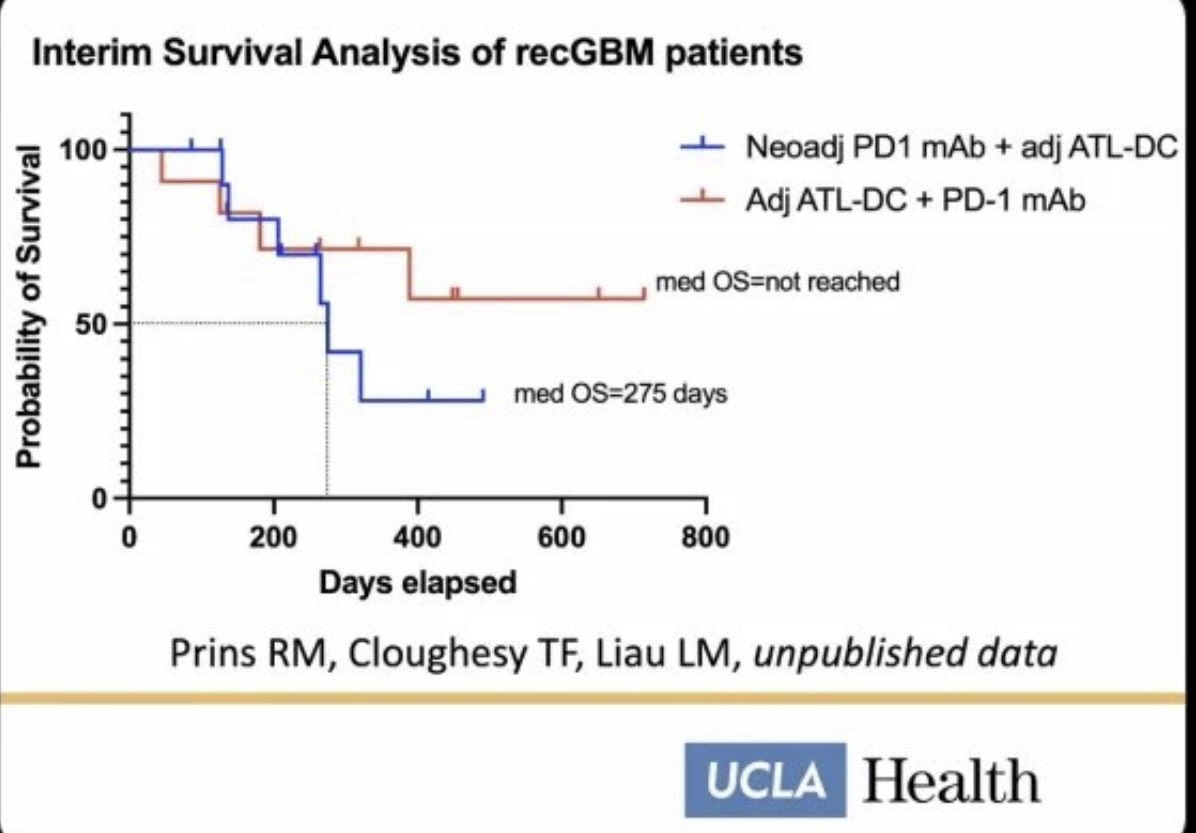
Preliminary clinical readouts from the same trial design indicate inferior survival when anti–PD-1 precedes vaccination compared with the vaccine-first sequence, consistent with the conversion model. (Source 11)
The same drug. The same disease. The order was decisive.
This is the myeloid gate.
⸻
🧱 Module 3: Myeloid gate control
✅ Block the wall-building programme
🧯 IL-6 surge control
• $RHHBY #Actemra tocilizumab
• $REGN #Kevzara sarilumab
These are not anti-tumour by themselves. They prevent immune activation from becoming oedema-dominant derailment.
🌫️ IL-8 and NET control
IL-8 is a recruitment amplifier. When it is on, the wall recruits itself. NETs physically exclude cytotoxic cells and reinforce myeloid dominance. A practical NET-disruption tool that exists today is dornase alfa #Pulmozyme (DNase), and a practical CXCR1/2 axis tool is reparixin (investigational), both of which map directly onto the IL-8→neutrophil→NET gate.
🧲 CCL2 recruitment highways
CCL2 is the suppressor on-ramp.
• $GSK #Selzentry maraviroc
🪓 Macrophage state remodelling
• $DSNKY #Turalio pexidartinib
🔥 PGE2 suppression
• $PFE #Celebrex celecoxib
🧪 MDSC functional control
• $LLY #Cialis tadalafil
🧬 Adenosine axis control
Adenosine is the ATP-to-tolerance pathway (CD39/CD73→A2A receptor signalling). Named agents that explicitly map here include oleclumab (anti-CD73) and ciforadenant (A2A receptor antagonist), as direct levers on the adenosine gate.
🧬 Kynurenine/AhR axis control
IDO/TDO→kynurenine→AhR signalling is a metabolic immunosuppression loop. IDO-only inhibition is structurally fragile because compensation exists.
🧬 TGF-β control
This axis still affects the wall, but the highest-leverage move is upstream: make the instruction layer intrinsically resistant, so the DC arrives TGF-β-shielded rather than being degraded into a low-output state in vivo.
⸻
🛰️ Module 4: Trafficking and infiltration geometry
✅ Prime perfectly, still miss the core
The figure explicitly flags CXCL12-linked stromal retention.
• $SNY #Mozobil plerixafor
• $BLRX #Aphexda motixafortide
The vascular barrier is not optional in GBM.
• $RHHBY #Avastin bevacizumab
Bevacizumab functions as geometry control: oedema reduction, vascular normalisation, and altered infiltration conditions.
⸻
🔒 Module 5: Exhaustion rerouting beyond PD-1
✅ Step 7 is not one checkpoint
Step 7 includes multiple inhibitory axes. When PD-1 is blocked, suppression reroutes unless redundancy exists.
• $BMY #Opdualag nivolumab + relatlimab
• $AZN #Imfinzi durvalumab
• $AZN #Imjudo tremelimumab
You deploy by reroute signature, not by guesswork. But the module must exist.
⸻
🎛️ Module 6: Recurrence-state control
✅ AP-1 is the routing valve
Once immune pressure exists, recurrence becomes selection pressure.
AP-1 sits at the convergence of Step A/B conversion biology and mesenchymal recurrence. AP-1 clamping is therefore both:
1. a recurrence-state clamp
2. a state-routing valve that reduces backward leakage into the wall
This remains an engineered module. The mechanistic basis is strong, but a DC vaccine plus AP-1 clamp GBM outcomes dataset has not yet been reported.
⸻
🛰️ Module 7: Durability
✅ TRM residency, not just infiltration
Durable control requires immune infrastructure: tissue-resident memory and organised local engagement. This is compelling in other tumour systems, but its direct demonstration in human GBM remains incomplete. In GBM terms, this stays an architectural goal until proven.
⸻
📈 Module 8: Response monitoring
✅ How you know the architecture is working
Minimum practical readouts:
• DC product competence, including type 1 programming and IL-12 competence where applicable
• peripheral ignition confirmation, including CXCL10 and interferon tone
• intratumoural gate clearance, including CD8 to suppressor ratio shifts, and specifically monitoring macrophage M2 polarisation markers (CD163, CD206) and T-cell suppressive ligands (Gal-9, HVEM) that indicate myeloid capture
• repertoire durability, including TCR convergence as a stability signal
• immune infrastructure signals when tissue is available
• recall responsiveness as immune fitness readout, not as a therapeutic claim
If these signals are absent after priming consolidation, intensify ignition and gate control before escalating PD-1.
⸻
🧭 Decision tree
✅ Operationalising deploy by signature
After priming consolidation:
• If ignition and gate clearance signals are present, proceed to timed sustainment.
• If absent, intensify ignition and trafficking geometry first.
After the first sustainment cycle:
• If reroute markers rise, deploy redundancy.
• If no reroute but no response, interrogate the wall: IL-6, PGE2, adenosine, kynurenine, and NET signatures.
At recurrence:
• If mesenchymal/AP-1 programs rise, deploy recurrence-state clamp and re-prime rather than simply re-dose checkpoint.
⸻
✅ Minimum necessary architecture
Systemic restoration → instruction → ignition/traction → timed sustainment → myeloid gate control → trafficking geometry → reroute redundancy → recurrence-state clamp → durability → response monitoring.
If any core module is missing, GBM does what the figure predicts: conversion into oedema, exhaustion, and relapse.
⸻
Plausible Mechanism Pathway
The FDA’s emerging emphasis on plausible-mechanism reasoning supports platform-grade approval logic in settings where randomized trials are not feasible, placing weight on mechanistic causality, well-characterized natural history, objective evidence of target engagement where feasible, and clinically meaningful improvement, including frameworks where patients can function as their own controls. This pathway was articulated in the context of ultra-rare, bespoke interventions, but the underlying principles are directly usable for platform-grade immunotherapy architectures when the mechanism is proximate, measurable, and reproducible.  
⸻
Disclaimer
For education and scientific discussion only. Not medical advice, not a treatment recommendation, and not intended for individual clinical decision-making.
⸻
Sources
1. Chen DS, Mellman I. Oncology meets immunology: the cancer-immunity cycle. Immunity. 2013;39:1–10.
2. Cloughesy TF, Mochizuki AY, Orpilla JR, et al. Neoadjuvant anti–PD-1 immunotherapy in recurrent glioblastoma. Nat Med. 2019;25:477–486.
3. Lee AH, Sun L, Mochizuki AY, et al. Neoadjuvant PD-1 blockade induces T cell and cDC1 activation but fails to overcome immunosuppressive TAMs in recurrent GBM. Nat Commun. 2021;12:6938.
4. Herrera GJ, Sun L, Lee AH, Everson RG, Cloughesy TF, Hugo W, Liau LM, Prins RM. Temporal influence of PD-1 blockade after vaccination on macrophage-driven CD8+ T cell exhaustion within the glioblastoma microenvironment. J Immunother Cancer. 2024;12(Suppl 2):A1–A1683, abstract 819, p A927. DOI: 10.1136/jitc-2024-SITC2024.0819.
5. Miller TE, El Farran CA, Couturier CP, et al. Programs, origins and immunomodulatory functions of myeloid cells in glioma. Nature. 2025;640(8060):1072–1082.
6. Okada H, Kalinski P, Ueda R, et al. Induction of CD8+ T-cell responses against novel glioma-associated antigen peptides and clinical activity by vaccinations with α-type 1 polarized dendritic cells and polyinosinic-polycytidylic acid stabilized by lysine and carboxymethylcellulose in patients with recurrent malignant glioma. J Clin Oncol. 2011;29(3):330–336.
7. Everson RG, Hugo W, Sun L, et al. TLR agonists polarize interferon responses in conjunction with dendritic cell vaccination in malignant glioma: a randomized phase II trial. Nat Commun. 2024;15:3882.
8. Kalinski P, Kichina J. Endogenous TGF-beta inhibited dendritic cells. WO2025096694A1. Published 2025.
9. Northwest Biotherapeutics. Exclusive in-license of portfolio of dendritic cell technology and intellectual property from Roswell Park Comprehensive Cancer Center. Press release, June 12, 2024.
10. Hu X, Deng Q, Ma L, et al. Meningeal lymphatic vessels regulate brain tumor drainage and immunity. Cell Res. 2020;30:229–243.
11. NCT04201873 interim survival analysis, ATL-DC plus poly-ICLC with timed anti–PD-1 sequencing in surgically accessible recurrent glioblastoma, as presented in trial updates and scientific presentations.
12. Prasad V, Makary MA. FDA’s new plausible mechanism pathway. N Engl J Med. 2025 Dec 11;393(23):2365–2367 (published online Nov 12, 2025). 

Perspective: From $NWBO #DCVax Immune Activation to Immune Control in #Glioblastoma
The Central $MRK #Keytruda Failure Mode: Immune Conversion, Not Immune Absence
Glioblastoma is not defined by an absent immune system. It is defined by an immune system that can be activated, can enter the tumour, and can still be converted into a state that cannot finish the job. That conversion is the central problem. It explains why checkpoint blockade has repeatedly failed as monotherapy, why dendritic cell vaccination can generate compelling immune signals yet still leave relapse intact, and why timing, rather than drug selection alone, becomes the governing variable in immunotherapy design for glioblastoma.
The most important lesson from the dendritic cell vaccine plus PD-1 blockade platform is now clear: the same PD-1 inhibitor can produce opposite outcomes depending on whether it is given before or after antigen priming. When PD-1 blockade is applied neoadjuvantly, before dendritic-cell priming is consolidated, the clinical phenotype can worsen despite immune entry. This is not classic tumour progression masquerading as pseudoprogression. It is an immune state error.
Timing as a Control Variable, Not a Scheduling Detail
Interim survival analysis in the recurrent glioblastoma ATL-DC platform diverges by sequence, favouring the regimen in which dendritic-cell vaccination precedes checkpoint sustainment. Single-cell immune profiling explains this divergence. Early PD-1 blockade shifts CD8 tumour-infiltrating lymphocytes away from early effector state and toward exhaustion, while tumour-associated macrophages upregulate a hybrid programme that is simultaneously inflammatory and suppressive. This includes IL-8 induction and checkpoint-ligand engagement mapping onto LAG-3, TIM-3, and BTLA pathways.
The system becomes loud enough to swell the brain and quiet enough to disable cytotoxic control. Immune cells are present. The immune response is not productive.
This establishes a critical principle: in glioblastoma, timing is not a logistical parameter. It is a biological control variable.
The Myeloid Gate as the Dominant Determinant of Outcome
The failure mode observed is best understood as myeloid gating. Glioblastoma does not primarily defeat immunity by exclusion. It defeats immunity by rapid recruitment and programming of suppressive myeloid populations that convert inflammatory signals into functional shutdown.
Activated T cells and interferon gamma do not act in isolation. In susceptible tumours, they serve as feedforward inputs into macrophage recruitment, cytokine amplification, and alternative checkpoint engagement. The result is a self-reinforcing loop of inflammation and dysfunction. This is why neoadjuvant PD-1 blockade can worsen outcomes in a vaccine-primed context. It accelerates immune signalling before the system is structured to withstand myeloid counter-regulation.
When Immune Pressure Becomes Selection Pressure
Even when antigen-specific immune pressure is successfully established and the myeloid gate is partially controlled, a second constraint emerges. Durable immune instruction becomes a selection force. If the tumour retains enhancer-state plasticity within a recurrence-competent progenitor compartment, immune pressure selects for adaptation rather than eradication.
This explains why immune-active tumours can still relapse. They are not escaping recognition. They are reprogramming identity.
AP-1 Clamping as Recurrence-State Control
Convergent evidence identifies AP-1 (JUN/FOS), particularly c-JUN-centred enhancer output, as a recurrence and mesenchymal control node in glioblastoma. AP-1 integrates stress signalling, inflammatory cues, and transcriptional plasticity. SOX21-associated biology demonstrates that disabling AP-1-dependent enhancer programmes collapses progenitor identity and slows established tumour progression.
This defines the missing second lever.
The AP-1 clamp is not a cytotoxin. It is a state-control intervention. It is applied as a short pulse during immune selection windows to prevent the recurrence compartment from using immune pressure as a signal to reboot itself. Because AP-1 is shared machinery between tumour and immune systems, this clamp must be sequenced after priming and early effector expansion and constrained by immune preservation metrics. A clamp that suppresses tumour AP-1 programmes while impairing dendritic-cell priming or T-cell cytotoxic modules is a failed clamp.
A Control-System Architecture for Glioblastoma Immunotherapy
Together, these insights define a control-system architecture rather than a drug-centric solution.
First, immune instruction must be established through dendritic-cell vaccination and innate support.
Second, myeloid gating must be actively controlled so immune activation is not converted into oedema-dominant suppression.
Third, checkpoint blockade must be deployed as sustainment, not as an early trigger.
Fourth, recurrence-state plasticity must be constrained through a pulsed AP-1 clamp applied during immune selection windows.
Fifth, durability must be supported so immune repertoire breadth and CD4/CD8 function are preserved long enough for surveillance and minimal residual disease clearance.
This sequence reflects biological reality. It treats glioblastoma as a system that converts signals unless constrained at multiple levels.
Implications for Trial Design and Translational Strategy
The correct trial design is not “add checkpoint to vaccine.” It is a sequenced architecture with measurable engagement.
Priming must come first. DC vaccination plus poly-ICLC establishes antigen-specific instruction and immune entry. Sustained PD-1 blockade comes after priming, not before, because neoadjuvant PD-1 shifts CD8 states toward exhaustion and primes macrophage programmes that combine M2 suppression with IL-8-driven recruitment and multi-checkpoint ligand engagement.
Myeloid interventions are not optional add-ons. They are gate controllers. IL-8-axis targeting, CCR2/CCR5 recruitment blockade, and macrophage remodelling must be pre-specified and biomarker-triggered. Fc-quiet checkpoint design should be considered an architectural default in myeloid-high tumours, not a preference.
Finally, recurrence-state control must be built in. Once immune pressure exists, AP-1-driven enhancer-state reprogramming becomes the relapse route. A pulsed AP-1 clamp, guided by programme-level readouts, prevents immune pressure from selecting a mesenchymal recurrence reboot.
Closing Perspective
The core lesson of this platform is not that glioblastoma is immune cold. It is that glioblastoma is immune convertible. It can admit immune traffic and still win by turning immune activation into a suppressive myeloid wall that produces oedema and disables cytotoxic control. The timing-dependent pembrolizumab signal demonstrates this in humans, and the single-cell evidence identifies the machinery responsible.
Once immune instruction is durable, immune pressure becomes selection pressure. If recurrence-state plasticity remains intact, the tumour reboots through AP-1-dependent enhancer programmes. That is why the second lever matters.
Myeloid gating prevents immune activation from becoming suppression.
AP-1 clamping prevents immune pressure from becoming recurrence.
This is the integrated architecture: instruction first, gate control second, sustainment third, recurrence-state clamping during selection windows, durability support for repertoire preservation, and minimal residual disease cleanup only as needed. It is no longer a drug story. It is a control system.


@SellasLife $SLS
GPS has shown preliminary activity in:
WT1-positive platinum-resistant ovarian cancer in combination with pembrolizumab ( #Keytruda).
Malignant pleural mesothelioma in combination with nivolumab ( #Opdivo), with OS and PFS signals above historical controls.

$SLS https://t.co/Uy2wZrw9ih

@SellasLife GPS has shown preliminary activity in:
WT1-positive platinum-resistant ovarian cancer in combination with pembrolizumab (Keytruda). $SLS
Malignant pleural mesothelioma in combination with nivolumab ( #Opdivo), with OS and PFS signals above historical controls.


Bristol Myers Squibb’s Opdivo-Plus-Chemotherapy Regimen for Classical Hodgkin Lymphoma Receives FDA Priority Review
@bmsnews @US_FDA
https://t.co/VnQ9ZYK35C
#OncoDaily #Oncology #Cancer #Health #Medicine #MedTwitter #MedEd #MedOnc #MedNews #BMS #Opdivo #Nivolumab #Chemotherapy #HodgkinLymphoma #cHL #FDA

Yeni video. SGK'nın ödemediği ilaçlar için izlenmesi gereken hukuki süreç ve güncel sorunlar.
#AkciğerKanseri, #immünoterapi, #opdivo, #keytruda
https://t.co/RT3mgKikF6
💊 Updated data from #CheckMate274 at #ESMO2025 showed patients with advanced #UrothelalCancer continued to derive benefit from adjuvant #Opdivo @bmsnews after 5 years.
🗨️ “The benefit was rock stable,” Dr. Matthew D. Galsky @TischCancer told Healio.
https://t.co/9sbdpBOZHQ

$CRDL is deep into Ph-3 trial for acute pericarditis!
Immune checkpoint inhibitors (ICIs) like #Keytruda and #Opdivo have transformed cancer treatment.
However, a rare but serious immune-related adverse event (irAE) is #pericarditis, a cardiotoxic condition involving inflammation of the pericardium, the sac surrounding the heart. This can lead to life-threatening complications like cardiac tamponade.

ICI cancer medications save lives, but approximately 10,000 people annually may face a life-threatening side effect: ICI-associated myocarditis.
#Myocarditis is the #1 cause of sudden cardiac death in people under 35.
At @CardiolRx, we recognise innovative treatments must be developed to address this critical unmet need.

💉 ¡Riesgo en tratamiento oncológico! ⚠️
La @FGRMexico investiga 👮🏻♂️🔎 falsificación de Opdivo, 💊 el inmunoterapéutico que combate: 🦠 melanoma metastásico, cáncer de pulmón, riñón y más. 😷👇
#Opdivo #Cáncer #México #FGR #Inmunoterapia
https://t.co/6O9BJvBycl

YouTube video on Pharma Patent Cliff
#Intelsense
#Pharma
#Opdivo
#Keytruda
#Symbicort
#Prolia
#Victoza

Exploring the huge market opportunity opening up in Pharma due to the impending patent cliff.
https://t.co/BI50QEVU1Y

لا مستحيل! بـالعلم نقترب من كسر شوكة السرطان، وإعادة البسمة والراحة للـكثير من المرضى.
في أبريل/نيسان 2025، أعلنت هيئة الخدمات الصحية الوطنية في #إنجلترا (NHS England) عن اعتماد نسخة جديدة من العلاج المناعي "#نيفولوماب" (#Nivolumab)، المعروف تجاريًا بـاسم "أوبديفو" (#Opdivo)، على شكل حقنة تحت الجلد تستغرق من 3 إلى 5 دقائق فقط للإعطاء، بدلاً من التسريب الوريدي التقليدي الذي قد يستغرق حتى ساعة.
هذا التطور يمثل خطوة كبيرة في علاج السرطان، حيث تم اعتماد هذا العلاج لـ15 نوعًا من السرطان، بما في ذلك:
سرطان الرئة.
سرطان القولون.
سرطان الكلى.
سرطان المثانة.
سرطان الجلد.
سرطان المريء.
سرطان الرأس والرقبة.
يُتوقع أن يستفيد حوالي 1,200 مريض شهريًا في إنجلترا من هذا العلاج الجديد، مما سـيوفر وقتًا كبيرًا للـمرضى والطاقم الطبي، ويزيد من قدرة المستشفيات على تقديم الرعاية.
تمت الموافقة على هذا العلاج من قبل وكالة تنظيم الأدوية ومنتجات الرعاية الصحية (MHRA) في #المملكة_المتحدة، ولن يتحمل NHS أي تكاليف إضافية نتيجة لاتفاقية مع الشركة المصنعة "بريستول مايرز سكويب" (Bristol Myers Squibb).
العلاج المناعي نيفولوماب (Nivolumab) لا يُعتبر علاجًا #كيماويًا ولا #إشعاعيًا، بل هو من فئة العلاجات المناعية (Immunotherapy) التي تعتمد على تنشيط الجهاز المناعي للـجسم لـيتمكن من التعرف على الخلايا السرطانية ومهاجمتها.
لا يسبب الأعراض الجانبية الشديدة للـعلاج الكيماوي (مثل تساقط الشعر، الغثيان الحاد... إلخ).
آثاره الجانبية موجودة، لكنها من طبيعة مناعية (مثل التهابات الجلد أو القولون أحيانًا)، ويمكن إدارتها طبيًا.
هذا الإنجاز يُعد تقدمًا مهمًا في مجال علاج السرطان، حيث يُحسن من راحة المرضى ويُعزز من كفاءة النظام الصحي.


.@NICEComms has reversed previous draft guidance that did not recommend the combined immunotherapies #nivolumab (#Opdivo) and #ipilimumab (#Yervoy) for advanced bowel cancer
#cancer #bowelcancer #NHS
https://t.co/peF1v6e8hQ


Last Seen Hashtags on Sotwe
stallion
Seen from Nigeria
phantomintense
Seen from United States
blowjob teen
Seen from Netherlands
LaInvestigacióneslaEsperanzaenEERR
Seen from United States
ometv()*+*+filter:native_video
Seen from Algeria
DeViaje
Seen from United States
pussy
Seen from Italy
cuckoldçiftler
Seen from Canada
BigDick
Seen from United States
momsonn
Seen from Netherlands
Most Popular Users

Elon Musk 
@elonmusk
241.7M followers

Barack Obama
@barackobama
119M followers

Cristiano Ronaldo
@cristiano
114.3M followers

Donald J. Trump
@realdonaldtrump
111.8M followers

Narendra Modi
@narendramodi
107.2M followers

Rihanna
@rihanna
98.7M followers

NASA
@nasa
92.4M followers

Justin Bieber
@justinbieber
91.8M followers

KATY PERRY
@katyperry
89.9M followers

Taylor Swift
@taylorswift13
83.9M followers

Lady Gaga
@ladygaga
75.4M followers

Virat Kohli
@imvkohli
73.3M followers

Kim Kardashian
@kimkardashian
70.9M followers

YouTube
@youtube
68.8M followers

Neymar Jr
@neymarjr
66.3M followers

Bill Gates
@billgates
65.1M followers

Selena Gomez
@selenagomez
63M followers

The Ellen Show
@theellenshow
62.3M followers

CNN
@cnn
61.8M followers

X
@x
60.7M followers