

Top Tweets for #PKEE


📰 PKEE Regulatory Monitoring 13–19 July 2026
The European Commission's proposals to revise the EU ETS and accelerate electrification, alongside discussions on the future of the Modernisation Fund, industrial competitiveness and energy security, shaped the European regulatory agenda over the past week.
In this edition, you will find updates on:
⚡ The European Commission's proposal to revise the EU ETS, including changes to the LRF, MSR, free allocation and new financial instruments
🔌 The Electrification Action Plan and the proposed measures to accelerate electrification across industry, transport and buildings
💶 PKEE's Policy Brief calling for the continuation of the Modernisation Fund beyond 2030
🇪🇺 The PKEE & PGE Energy Summer Reception in Brussels, bringing together representatives of EU institutions and the energy sector
🛒 The EPP's call for greater clarity on the "Made in Europe" initiative under the Industrial Accelerator Act
🌱 The European Commission's draft guidance on the application of the "Do No Significant Harm" (DNSH) principle under the next EU budget
⚙️ The new Director-General of DG ENER's priorities for the EU's post-2030 energy policy
☀️ Ember's analysis showing that solar power became the EU's largest source of electricity for the second consecutive month
⛏️ The IEA's latest assessment of Europe's continued dependence on imports of critical minerals
🛡️ European industry organisations' support for NATO investment in strengthening the resilience of critical infrastructure
Read the full overview below ⬇️
#energy #EUETS #EU #energytransition #decarbonisation #energypolicy #regulation #PKEE #climatepolicy #energymarket #electricity #ModernisationFund #electrification #criticalminerals #energysecurity


The newest edition of #PKEE Regulatory Monitoring has just landed - your weekly roundup of key regulatory developments across the Brussels energy bubble. 👍💪 Enjoy! ⤵️🙂
📰 PKEE Regulatory Monitoring 06–12 July 2026
The upcoming EU ETS review, the EU Electrification Action Plan, negotiations on the next EU budget and energy security were at the heart of the European regulatory debate over the past week.
In this edition, you will find updates on:
⚡ The planned revision of the EU ETS, including greater flexibility for industry and the extension of the system to additional sectors
💶 The use of EU ETS revenues for industrial decarbonisation and recommendations to increase related spending
🔌 The draft EU Electrification Action Plan and the proposed 2040 electrification target
🛒 New public procurement rules placing greater emphasis on quality, innovation and environmental objectives
🌱 Discussions on easing the application of the "Do No Significant Harm" (DNSH) principle under the next EU budget
💰 Negotiations on the 2028–2034 EU Multiannual Financial Framework (MFF) and the financing of the energy transition
☢️ The Nuclear Alliance's call for a technology-neutral post-2030 energy and climate policy framework
🛡️ The updated EU assessment of energy security threats
Read the full overview below ⬇️

A tu jeszcze, dla przypomnienia, Policy Brief #PKEE nt. „Ocena Pakietu o Europejskich Sieciach Energetycznych” - zapraszam do lektury!👍🙂 https://t.co/JyRRzBvfK8
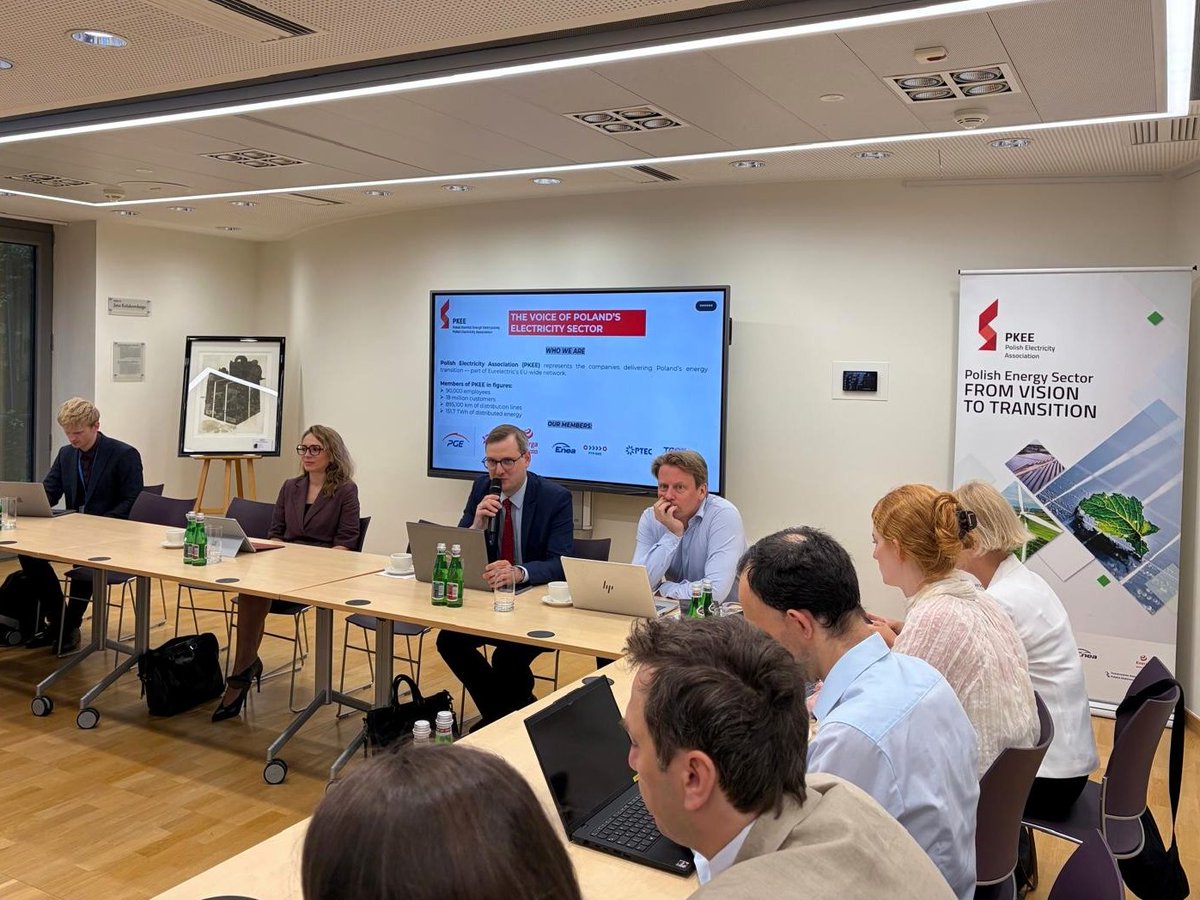
⚡ The future of the Modernisation Fund should be built on the experience gained through its implementation. Together with the Permanent Representation of Poland to the EU (@PLintheEU), #PKEE hosted a discussion with climate attachés from EU Member States, representatives of the electricity sector and industry associations on the Fund's role in financing the energy transition ahead of the upcoming revision of the EU ETS. The discussion brought together representatives not only from the 13 beneficiary Member States, but also from other EU countries. Among them was Ireland, which has just taken over the Presidency of the Council of the EU and will lead the Council's work on the ETS revision.

⚡ Już jutro – kolejny ważny krok w pracach nad Pakietem o Europejskich Sieciach Energetycznych w Brukseli.
🗳️ Komisja #ITRE Parlamentu Europejskiego zagłosuje nad poprawkami kompromisowymi do dyrektywy dotyczącej przyspieszenia procedur wydawania zezwoleń. Europosłowie dostrzegają potrzebę uwzględnienia kwestii bezpieczeństwa systemu elektroenergetycznego – jednocześnie część proponowanych rozwiązań wymaga dalszych dyskusji i prac.
✅Istotnym punktem odniesienia jest tu również stanowisko Rady #UE. 26 czerwca państwa członkowskie uzgodniły stanowisko negocjacyjne, które uwzględnia większość postulatów zgłaszanych https://t.co/jvVEyDjzf0. przez #PKEE w ramach prac nad Pakietem. Rada:
⚡urealniła maksymalne terminy przyłączeń do sieci elektroenergetycznej,
⚡odrzuciła proponowane przez Komisję Europejską stosowanie tzw. „milczącej zgody” w procedurach przyłączeniowych,
⚡dodała zapisy zwiększające obserwowalność i bezpieczeństwo małych instalacji fotowoltaicznych.
🤝 Jest to spójne także z apelem dotyczącym dyrektywy o przyspieszeniu procedur wydawania zezwoleń dla infrastruktury energetycznej, podpisanego przez wiodące organizacje sektora elektroenergetycznego z całej Europy: https://t.co/yPdC2pTsMx Jednym z jego sygnatariuszy jest #PKEE, który aktywnie uczestniczy w europejskiej debacie nad kształtem nowych regulacji.
📘 Nasze rekomendacje dotyczące tych przepisów przedstawiliśmy również w Policy Brief „Ocena Pakietu o Europejskich Sieciach Energetycznych”, wskazując https://t.co/jvVEyDjzf0. na potrzebę:
🔹zachowania bezpieczeństwa pracy systemu elektroenergetycznego,
🔹usprawnienia i urealnienia procedur przyłączeniowych,
🔹 rozwoju inteligentnych i cyfrowych sieci,
🔹zapewnienia odpowiednich ram dla inwestycji sieciowych – w tym na poziomie dystrybucji.
👩💻Zachęcamy do zapoznania się z Policy Brief PKEE: https://t.co/1ih1K12kGl
#PKEE #EuropeanEnergyNetworks #EnergyTransition #DistributionGrids #EnergySecurity #GridModernisation #EnergyInfrastructure #EU
📰 PKEE Regulatory Monitoring 22–28 June 2026
The upcoming EU ETS revision, the future of the Modernisation Fund, electricity grid development, energy storage and preparations for new EU legislative initiatives were at the centre of the European policy debate over the past week.
In the latest edition, you will find updates on:
💶 Poland establishes coalition to strengthen the Modernisation Fund beyond 2030
At Poland’s initiative, 12 EU Member States – Bulgaria, Croatia, Czechia, Estonia, Greece, Hungary, Latvia, Lithuania, Poland, Romania, Slovakia and Slovenia – sent a joint letter to the European Commission calling for the strengthening of the Modernisation Fund beyond 2030 as part of the forthcoming ETS reform. The letter calls for increasing the resources available under the Modernisation Fund in response to the growing investment needs associated with the energy transition. Poland is the largest beneficiary of the Fund, having received PLN 53.5 billion since 2020 to support investments in electricity grid modernisation, renewable energy, energy storage, biogas and electromobility infrastructure.
🤝 EU Member States coordinate their position ahead of the ETS Directive review
Ahead of the Environment Council meeting on 25 June, representatives of 13 EU Member States met at Poland’s initiative to discuss the planned ETS reform. According to Deputy Minister of Climate Krzysztof Bolesta, the objective was to develop a common position before the European Commission presents its proposal. According to Contexte, representatives of Austria, Bulgaria, Croatia, Czechia, Estonia, Greece, Hungary, Italy, Malta, Romania, Slovakia, Slovenia and Poland participated in the meeting. Poland identified the extension of the Modernisation Fund beyond 2030, the retention of free allowances and the transformation of the Market Stability Reserve (MSR) into a mechanism limiting the volatility of emission allowance prices as its key priorities. Krzysztof Bolesta also confirmed that Poland is seeking a further postponement of the launch of ETS2.
📜 European People's Party position on the EU ETS review
The European People's Party (EPP), the largest political group in the European Parliament, has developed its position ahead of the forthcoming ETS reform. The document proposes a number of changes to the functioning of the system, including reform of the Market Stability Reserve (MSR), ending the automatic cancellation of allowances, a slower reduction of the emissions cap and strengthening the Modernisation Fund beyond 2030. The EPP also calls for a slower phase-out of free allowances, linking further changes to technological progress and infrastructure development, allowing the use of international carbon credits, and allocating a larger share of ETS revenues to investments in decarbonisation, electrification, industrial modernisation and economic competitiveness.
⚡ Eurelectric position on the design of capacity mechanisms
In its latest position paper, Eurelectric underlines that capacity mechanisms are playing an increasingly important role in ensuring security of electricity supply. It argues that such mechanisms should be based on competitive auctions, remain technology-neutral and be open to all resources capable of contributing to system adequacy. Eurelectric also points to the potential for better coordination and harmonisation of capacity mechanisms across Europe, while stressing the need to take into account the specific characteristics of national electricity systems.
🔌 Council adopts its position on the electricity grids package
EU energy ministers agreed on the Council’s position on the legislative package concerning electricity grids. The compromise, developed under the Cypriot Presidency, provides, among other things, for the voluntary application of tacit approval procedures, the removal of automatic approval of grid connection requests and a stronger role for Member States in developing the EU-wide grid planning scenario. The rules governing the use of congestion revenues were also revised, introducing a gradual increase in the mandatory share allocated to cross-border projects from 10% to 25% and allowing unused funds to be redirected to other grid investments after eight years. On the eve of the Council meeting, several leading EU electricity sector organisations – including PKEE – also published a joint position on the proposed directive on accelerating permitting procedures. The key recommendations include rejecting the tacit approval mechanism and maintaining the existing grid connection procedure and the obligation for DSOs to be notified of small-scale installations.
⚖️ EU Member States call for clearer guidance on the CSDDD
The Netherlands, Germany and Sweden have called on the European Commission to clarify the implementation of the Corporate Sustainability Due Diligence Directive (CSDDD). These Member States are seeking guidance on the application of the rules in third countries where governments hinder the due diligence process, citing restrictions in China as an example. The request follows the adoption of the first Omnibus Package, which postponed the application of part of the Directive’s obligations and committed the Commission to publish guidance before July 2027. At the same time, a French court ordered TotalEnergies to provide, within six months, additional information on the climate impact of indirect emissions linked to its activities and on the measures planned to mitigate those impacts.
💶 Dispute over the criteria for transition funds in the EU
EU ambassadors are expected to approve the Council’s position on the review of the Sustainable Finance Disclosure Regulation (SFDR), which includes a new category of transition funds. The objective of the reform is to reduce greenwashing by introducing three categories of investment funds with different levels of sustainability. The main controversy concerns the criteria proposed by Member States for transition funds, which would allow investments in companies developing new fossil fuel projects provided that at least 20% of their capital expenditure is allocated to environmentally sustainable activities. Critics argue that this could undermine the credibility of the new categories and increase the risk of greenwashing.
🏛️ European Commission delays public procurement reform
The European Commission has postponed the presentation of the reform of the EU public procurement rules until 9 September. The proposal is intended to simplify and harmonise the existing public procurement framework and introduce mechanisms favouring European suppliers through non-price award criteria. The delay reflects ongoing discussions within the Commission regarding the scope of the European preference and the definition of products and services considered "Made in Europe". According to Contexte, the final provisions on preferences for European suppliers may ultimately be more flexible and non-binding.
🔋 First EU tripartite agreement on energy storage launched
The European Commission, together with 22 EU Member States, representatives of the energy storage and renewable energy sectors, energy-intensive industries and financial institutions, signed the first EU tripartite agreement on energy storage. The signatories committed to supporting the deployment of 30–35 GW of new energy storage capacity over the next two years by removing regulatory barriers, introducing cost-reflective network tariffs and, where appropriate, providing financial support through national schemes and EU instruments, including the Clean Industrial State Aid Framework (CISAF).
🏭 Cypriot Presidency leaves the most sensitive issues in the Industrial Accelerator Act unresolved
The Cypriot Presidency presented a partial compromise text of the proposed Industrial Accelerator Act (IAA), leaving unresolved the most controversial issues relating to the "Made in EU" preference and foreign direct investment screening rules. The text, dated 23 June, proposes a more flexible and less centralised approach to permitting procedures than the European Commission’s original proposal. It omits chapters on rules of origin and foreign direct investment, which have raised concerns among the EU’s trading partners, particularly in relation to China. The proposal aims to direct public procurement towards European suppliers of low-carbon technologies and energy-intensive industries. It also extends the deadline for Member States to designate at least one industrial acceleration area from 12 to 24 months and softens the proposed environmental requirements. The Irish Presidency, which assumes the Council Presidency on 1 July, intends to reach a compromise on the IAA in the autumn, with the aim of concluding negotiations on the Regulation by the end of 2026.
📅 Irish Presidency publishes provisional Council work programme for the second half of 2026
The Irish Presidency has published the provisional schedule of the Council’s work for the second half of 2026, outlining the planned timetable for key legislative initiatives. In the field of energy, discussions are planned on the Energy Security Framework and the Network Charges proposal, as well as a debate on the post-2030 energy policy framework covering renewable energy, energy efficiency and Energy Union governance. In the climate area, work is scheduled on the revisions of the EU ETS, the CO₂ emission standards for passenger cars and vans, the post-2030 climate package and the Circular Economy Act. The programme also includes further work on, among others, the Industrial Accelerator Act, the Public Procurement Package and the European Competitiveness Fund.
🌍 The European Union joins the global electrification coalition
The European Commission announced that it has joined the new global "Electrify Now" initiative, which aims to accelerate the deployment of clean electrification in sectors that have so far relied on fossil fuels, including transport, industry and heating. The coalition also includes Canada, the Philippines, South Korea, the United Kingdom, the International Energy Agency (IEA), the International Renewable Energy Agency (IRENA), as well as the COP30–COP32 Presidencies: Brazil, Türkiye, Australia and Ethiopia. Participants committed to working together to remove regulatory, investment and infrastructure barriers related to electrification, electricity grids, energy storage and renewable energy deployment, while supporting developing countries in strengthening their energy resilience.
🤖 UN Secretary-General calls for AI data centres to be powered by renewable energy
UN Secretary-General António Guterres called on companies developing artificial intelligence to disclose the environmental impact of their operations and to power all data centres with renewable energy by 2030. Speaking during London Climate Action Week, he also urged governments to strengthen methane regulations, introduce windfall taxes on oil and gas companies, increase investment in electricity grid expansion and pursue regulatory reforms. The initiative announced by the UN envisages voluntary reporting by companies on their use of energy, water and land in connection with AI development. According to the UN report cited, data centres could account for around 3% of global electricity demand by 2030.
☀️ Growth of solar power deployment in the EU slows significantly
According to the latest SolarPower Europe report, the EU added 67.2 GW of new solar PV capacity in 2025, representing an increase of only 1.4% compared with 2024 and a significant slowdown compared with the period of rapid expansion during the energy crisis following 2022. Thirteen EU Member States recorded a decline in new installations, while Germany, Europe’s largest solar market, maintained a level similar to the previous year amid weakening demand in the residential segment. The report indicates that the main challenge is no longer the deployment of additional solar capacity, but the integration of growing renewable electricity generation into the power system. Grid congestion, curtailment and periods of negative electricity prices are becoming increasingly frequent. SolarPower Europe forecasts that new PV installations in the EU will decline to 64.6 GW in 2026 and to 61.1 GW in 2027.

The question is no longer whether #EU will decarbonise, but how it can stay competitive while doing so. This was the focus of today’s #ETS discussion in Brussels, where #PKEE brought together the energy sector and energy-intensive industries⤵️ Thanks to @k_bolesta for joining us!
🚨 Ahead of the European Commission’s long-awaited proposal for the revision of the EU ETS Directive, PKEE brought together representatives of the energy sector and industry to discuss the key challenges and expectations related to the future shape of the system. The Polish perspective on the upcoming EU ETS revision was presented by Krzysztof Bolesta, Secretary of State at the Polish Ministry of Climate and Environment.
🤝 PKEE has been actively engaging the energy sector, industry and policymakers to help build a broad coalition around the future of the EU ETS. With the European Commission expected to publish its proposal on 15 July, attention is increasingly turning to the solutions that should be reflected in the upcoming revision.
⚖️ The debate on the future of the EU ETS is ultimately about finding the right balance between climate ambition and economic realities. Delivering on the EU’s climate objectives must go hand in hand with maintaining competitiveness, ensuring energy security, keeping energy affordable and ensuring access to financing for the transition.
📌 Among the key PKEE recommendations presented during the meeting were:
⚡ ensuring carbon price stability and a predictable EUA market to support long-term investment decisions,
🏗️ extending the Modernisation Fund beyond 2030 and increasing its budget as a proven instrument for supporting the energy transition in Member States,
🔥 ensuring the availability of emission allowances through to 2050, while introducing targeted derogations for peak generation units that are critical for maintaining power system security,
🏘️ maintaining free allocation for the district heating sector beyond 2030 to support the transformation of heating systems,
🌍 integrating international carbon credits into the EU ETS as an important element of achieving the EU’s 2040 climate target.
📢 Building a shared perspective across the energy sector and industry will be essential as work on the EU ETS revision moves forward. We appreciate the engagement of all participants who contributed to today's discussion.
#EUETS #ETSRevision #EUClimatePolicy #EnergyTransition #Decarbonisation #ModernisationFund #EnergyPolicy #Competitiveness #EnergySecurity #PKEE


📰 PKEE Regulatory Monitoring | 08–14 June 2026
The future of the EU ETS, the European Commission’s upcoming Energy Package, electrification, grid modernisation and the financing of Europe’s energy transition dominated the EU policy agenda this week.
In the latest edition, we cover:
🌱 PKEE participates in European Commission consultations on renewables and energy efficiency
PKEE participated in the European Commission’s consultations on the post-2030 EU regulatory framework for renewable energy sources (RES) and energy efficiency. The Committee stressed that establishing a new binding RES target for 2040 is not necessary to stimulate the deployment of renewable energy, as the current EU legislative framework already provides strong incentives for its development. PKEE also identified the main barriers to RES deployment, including grid constraints, the availability of dispatchable capacity and investment gaps. The Committee further emphasised that EU policy should prioritise infrastructure development, increased system flexibility and investment support. With regard to energy efficiency, PKEE advocated maintaining the current targets under the Energy Efficiency Directive (EED), while providing Member States with greater flexibility in defining realistic pathways for the decarbonisation of district heating systems. The consultation response also highlighted the need to adapt regulations that are critical for the transformation of heating systems.
🏭 ETS reform aims to increase support for industry
According to a leaked European Commission document outlining the direction of discussions on the revision of the EU Emissions Trading System (EU ETS), the Commission intends to combine the preservation of the CO₂ price signal with increased investment support for industry. The Commission plans to maintain the Modernisation Fund and the mechanism redistributing 10% of allowances to lower-income Member States, while extending free allocation of allowances subject to the implementation of decarbonisation investments in Europe. Plans also include the establishment of a €100 billion Industrial Decarbonisation Bank and the launch of the ETS Investment Booster instrument before 2030. In addition, the review is expected to open a discussion on the use of high-quality carbon credits and permanent CO₂ removals in achieving the EU’s 2040 climate target. The possible extension of the ETS to extra-European flights and waste incineration facilities is also being considered.
🔌 Accelerated publication of the Energy Package
According to the latest draft agenda of the European Commission, the Energy Package is scheduled to be presented on 15 July 2026. The package will include the Electrification Action Plan and the initiative on network charges.
📊 European Commission plans reform of electricity bills
According to a draft regulation on the design of electricity bills published by POLITICO, the European Commission intends to introduce the first binding targets for the deployment of smart electricity meters, requiring installation for at least 50% of consumers by 2030 and 65% by 2033. The proposal also includes a reform of network charges aimed at encouraging consumers to shift electricity consumption away from peak demand periods and promoting more efficient use of grid infrastructure. The Commission further proposes more favourable taxation of electricity compared with natural gas, including the possibility of reduced or zero tax rates for energy-intensive industries. The document also foresees the development of smart grids, wider use of energy data and digital tools, and highlights the need for increased investment in electricity networks to support electrification and reduce the EU’s dependence on imported fossil fuels.
🇪🇺 European Council to discuss the 2028–2034 MFF, competitiveness and energy prices
At the European Council summit scheduled for 18–19 June, EU leaders will discuss the EU’s Multiannual Financial Framework (MFF) for 2028–2034, the competitiveness of the European economy and the geopolitical situation. One of the topics will be the first draft negotiating compromise on the future MFF, which is expected to serve as the basis for further work under the Irish Presidency. Leaders will also discuss developments in the Middle East, including the impact of tensions surrounding Iran on energy prices, as well as progress in strengthening defence preparedness and infrastructure protection. The agenda also includes Ukraine, EU enlargement, migration and challenges related to the global competitiveness of the European Union’s economy.
💡 New DG ENER Director-General: financing remains the main challenge for EU electrification
The European Commission’s new Director-General for Energy, Céline Gauer, announced that accelerating the electrification of the EU economy will be one of her key priorities. Speaking at the European Sustainable Energy Summit in Brussels on 11 June 2026, she stressed that the European Union needs an “electricity revolution” to achieve its energy transition objectives. Gauer noted that the EU’s electrification rate has remained at approximately 22% for the past decade and that access to financing remains one of the main barriers. According to the Commission, achieving the EU’s energy objectives will require investments of approximately €660 billion annually until 2030 and nearly €700 billion annually thereafter. This will only be possible through a combination of public and private financing for renewable energy, grid infrastructure and energy storage.
🛡️ New EU Presidency Trio prioritises energy security and competitiveness
The draft programme of the joint Presidency Trio of Ireland, Lithuania and Greece for the period from 1 July 2026 to 31 December 2027 indicates that strengthening energy security and economic competitiveness will be among the European Union’s key priorities. The Trio intends to advance the implementation of REPowerEU, reduce strategic dependencies, protect critical infrastructure and ensure affordable energy prices for both energy-intensive industries and households. Priority will be given to investments in renewable energy, energy storage, grid modernisation and interconnectors, as well as further integration of the energy market towards a fully-fledged Energy Union. The document also highlights the need to enhance power system flexibility, strengthen security of supply and develop energy infrastructure, including connections for peripheral regions and islands, while maintaining the EU’s decarbonisation objectives.
🇮🇪 Ireland seeks to accelerate work on the EU ETS and the Grids Package
Ireland’s Minister for Energy and Transport, Darragh O’Brien, announced that the Irish Presidency of the Council of the EU, beginning on 1 July 2026, will seek to advance work on the revision of the EU ETS and the package concerning electricity grids. O’Brien stated that a key milestone will be the publication of the Commission’s ETS reform proposal on 15 July, with technical discussions potentially beginning as early as August. He also underlined the importance of the Grids Package for energy security and the integration of renewable energy sources, while expressing readiness to facilitate compromises among Member States. At the same time, he supported the Commission’s efforts to increase the electrification of the economy, identifying it as one of the most important elements of the EU’s energy transition.
📈 European Union strengthens ETS2 price stability mechanisms
The Council of the EU and the European Parliament have reached a provisional agreement on amendments to the Market Stability Reserve (MSR) for ETS2, which will cover the buildings and road transport sectors from 2028. The agreed measures include extending the operation of the reserve beyond 2030 and strengthening mechanisms aimed at limiting excessive increases in allowance prices. When the carbon price exceeds €45 per tonne of CO₂ (in 2020 prices), the volume of allowances released onto the market will increase from 20 million to 40 million. The changes are intended to improve market predictability ahead of the full launch of ETS2 and still require formal approval by both institutions.
💶 Dispute over the EU’s long-term budget may affect financing of the transition
Negotiations on the EU’s 2028–2034 budget are entering a decisive phase, with an increasingly visible divide emerging between countries calling for deeper spending cuts and those defending current funding levels. Germany, the Netherlands, Sweden, Austria and Denmark have criticised the proposal of the Cypriot Presidency, which would reduce the European Commission’s draft budget by approximately 2% (€32.8 billion), arguing that significantly larger savings are required. The main cuts would affect the European Competitiveness Fund, whose budget would be reduced from €450 billion to €434 billion, including a reduction in Horizon Europe from €175 billion to €167 billion, as well as funding for resilience, security and defence. At the same time, the Cypriot proposal largely protects cohesion funding and the Common Agricultural Policy and even foresees an additional €5 billion for Member States whose GDP per capita remains below 90% of the EU average. The dispute reflects a broader debate over the allocation of resources between traditional EU policies and new priorities such as competitiveness, innovation, industrial transformation and energy security. Further discussions are expected at the European Council summit on 18–19 June.
🏦 EU countries sceptical about easing fiscal rules for energy investments
Several EU Member States, including France, Estonia, Finland and the Netherlands, have expressed concerns about the European Commission’s proposal to temporarily exempt certain green energy investments from EU fiscal rules. The mechanism presented by the Commission in early June is intended to allow countries to increase spending on measures aimed at reducing dependence on fossil fuels in response to higher energy prices linked to tensions surrounding Iran. The exemption, covering expenditures of up to 0.6% of GDP between 2026 and 2028, would apply to investments such as heat pumps, energy storage facilities and other technologies supporting the energy transition. However, some countries fear that further relaxation of fiscal rules could undermine the credibility of the EU’s fiscal framework, particularly given the high levels of public debt in many Member States.
🇮🇹 European Commission approves €23 billion support scheme for renewables in Italy
The European Commission has approved a €23 billion Italian state aid scheme aimed at supporting the deployment of renewable energy sources. The funding will support wind, solar, hydropower and biogas projects, enabling the addition of 37.15 GW of new capacity. This would increase Italy’s renewable energy capacity by nearly 50%. The support will be provided through two-way Contracts for Difference (CfDs), guaranteeing investors a minimum level of revenue in the event of lower electricity prices. The Commission concluded that the scheme is compatible with EU state aid rules and supports the objectives of the Clean Industrial Deal and the European Union’s energy transition.
🌍 COP31 to promote a global electrification target
Turkey and Australia, co-hosts of the COP31 climate summit, have proposed the adoption of a global target under which electricity would account for 35% of global energy demand by 2035. The initiative is expected to be presented within the framework of the Action Agenda, comprising voluntary commitments accompanying the UN climate negotiations. According to the organisers, the target is intended to mirror previous commitments adopted at COP28 to triple renewable energy capacity and double the rate of energy efficiency improvements. Australian Climate Minister Chris Bowen emphasised that electrification will also feature in the formal negotiations at COP31, while the International Energy Agency (IEA) has been tasked with preparing a dedicated report supporting the initiative by November 2026.
🌬️ PKEE at PSEW 2026 in Świnoujście
PKEE representatives participated in PSEW 2026, the largest wind energy conference in Poland and Central and Eastern Europe, held in Świnoujście on 8–10 June. PKEE Managing Director Paweł Wróbel took part in the panel discussion “Baltic Sea Pact – Integration of the European Offshore Industry”, while Ryszard Pawlik, Head of PKEE’s Brussels Office, participated in the discussion “Energy Impact: How Geopolitics Is Shaping the Energy Transition Today”.

🇪🇺 EU ETS i koszty energii w centrum dyskusji o przyszłości sektora energetycznego
📰 Zachęcamy do przeczytania relacji #EURACTIV z dyskusji zorganizowanej we współpracy z #PKEE poświęconej roli systemu EU ETS w zmieniających się realiach geopolitycznych i gospodarczych. Artykuł podsumowuje najważniejsze wątki rozmowy – w tym wpływ cen uprawnień do emisji CO₂ na koszty energii oraz znaczenie ETS dla konkurencyjności i transformacji.
🔍Dowiedz się więcej ⤵️
📰 Artykuł Euractiv https://t.co/0GzSiist38
📖 Informacja prasowa PKEE: https://t.co/e4r2wLwBGP
🎥 Nagranie debaty: https://t.co/8J9jmIOoh3

The long weekend is over, and here is the traditional @_PKEE_ @PKEE_Brussels regulatory summary of the slightly shorter week that preceded it - along with the crucial developments in the energy and climate field⤵️👍💪 #PKEE
📰 PKEE Regulatory Monitoring 27.04–03.05.2026
Debate on the future EU budget and energy financing is gaining momentum, while the European Commission is rolling out new crisis tools and stepping up efforts on electrification and energy security. In this edition of the monitoring:
💰 European Parliament calls for an increase in the EU’s Multiannual Financial Framework
On 28 April 2026, the European Parliament adopted its negotiating position on the EU’s Multiannual Financial Framework for 2028–2034. It called for increasing the budget to 1.27% of EU GNI and raising it by around 10% (€197 billion) compared to the European Commission’s proposal, bringing the total to €2.01 trillion. MEPs supported the introduction of new own resources to finance the MFF and repay NextGenerationEU debt, stressing the need to boost funding for key programmes, including the Connecting Europe Facility (CEF), which is important, among others, for energy infrastructure. The Parliament also rejected the governance model based on one national plan per Member State, pointing to the risk of renationalisation and reduced transparency.
🔌 MEPs seek to broaden the scope of EU energy funding
A debate is beginning in the European Parliament on the future shape of energy funding under the Connecting Europe Facility (CEF) for 2028-2034, with more than 1,200 amendments tabled - including proposals aligned with PKEE’s position, such as stronger support for distribution system operators, simplified application procedures, and enhanced funding for grid resilience and protection. The key dispute concerns expanding support beyond renewable energy and introducing broader categories such as low-carbon or climate-neutral energy, which would enable funding for nuclear energy, hydrogen and carbon capture technologies. The European Parliament now has until mid-July to reach a compromise.
🚨 New temporary state aid framework (METSAF) in response to the crisis
The European Commission has presented a new temporary state aid framework in response to the economic impact of the crisis caused by the conflict involving Iran, increasing flexibility for EU countries to support the most affected sectors, including transport and energy-intensive industries. The mechanism allows for covering up to 70% of additional costs resulting from higher fuel and fertiliser prices, as well as increasing aid intensity for energy-intensive companies to up to 70% of electricity costs under existing schemes, with the possibility of combining support with ETS-related state aid up to a certain level. A simplified support scheme of up to €50,000 per beneficiary and a fast-track approval process for national measures have also been introduced. At the same time, the Commission allows for additional interventions on a case-by-case basis, including support for gas-fired electricity generation. As highlighted by Executive Vice-President Teresa Ribera, METSAF is a temporary measure while maintaining the energy transition as a key EU policy direction. The framework will apply until 31 December 2026.
👥 Commission presents citizens energy package
The European Commission has presented a package aimed at supporting households in the energy transition, focusing on protecting vulnerable consumers, improving the functioning of retail markets and strengthening the position of energy consumers. The package includes four recommendations on protecting households from disconnections, facilitating the comparison of energy offers, reducing risks linked to supplier bankruptcies, and supporting energy communities and self-consumption. The Commission also outlines actions for Member States to address energy poverty, including early identification of at-risk households, targeted financial support and structural measures such as improving energy efficiency and access to renewable energy sources. In parallel, a report on market-based electricity pricing and flexibility was published, aiming to encourage consumers to shift consumption to lower-price periods and to strengthen demand-side participation.
⚡ European Union accelerates efforts to electrify the economy
The EU is strengthening efforts to reduce dependence on fossil fuels through electrification, as underlined by Commission President Ursula von der Leyen during a speech in the European Parliament, highlighting its importance for energy security and competitiveness. She announced that an Electrification Action Plan with a new ambitious target will be presented by the summer of this year, and that it will also cover heating and cooling. At the same time, the Commission is calling on the European Parliament and the Council to accelerate work on the electricity grids package, stressing that infrastructure development is essential to adapt the system to the growing role of electricity. The Commission is also expected to finalise work on the Environmental Omnibus by the end of 2026.
📜 Commission presents plan to simplify EU lawmaking
The European Commission has presented a plan to modernise the lawmaking process, aimed at simplifying rules, improving their clarity and enforceability. The initiative includes designing simpler legislation, strengthening evidence-based policymaking, removing outdated or overlapping rules and limiting excessive national gold-plating. A key element is the “Regulatory Deep Cleaning” plan for 2026–2027, covering, among others, the energy sector, where efforts will focus on simplifying Energy Union governance, reducing reporting obligations and streamlining rules on renewables and energy efficiency. In the area of security of supply, a revision of the legislative framework is planned, focusing on simpler procedures and improved cross-border cooperation, based on a whole-system approach. In climate policy, actions will include simplifying ETS monitoring and assessing the potential merger of LULUCF and ESR rules. A dedicated Simplification Platform will also be established to involve stakeholders.
🔗 New call for proposals under the Connecting Europe Facility (CEF Energy)
The European Commission has launched a new €600 million call for proposals to support cross-border energy infrastructure projects under the Connecting Europe Facility. This is the first call open to projects listed under the second list of Projects of Common Interest and Projects of Mutual Interest (PCI and PMI), covering both preparatory studies and construction works. The deadline for applications is 30 September 2026, with results expected in early 2027.
🛢️ Austria calls for increased fossil fuel extraction and refining capacity in the EU
Austria is calling on the EU to develop plans to increase oil and gas extraction in Europe and rebuild refining capacity, as stressed by Economy and Energy Minister Wolfgang Hattmannsdorfer. He pointed to the need for greater energy independence and the use of domestic resources, arguing that the EU should reduce its reliance on imports. Austria is also maintaining its call to suspend the EU ETS for gas-fired power generation, arguing that the CO2 price artificially increases electricity costs.
📊 European Parliament backs changes to ETS2 reserve
On 29 April 2026, the European Parliament supported most of the European Commission’s proposals to amend the Market Stability Reserve for ETS2, paving the way for negotiations with EU countries. MEPs adopted the position drafted by Danuše Nerudová (EPP) with 433 votes in favour, 120 against and 91 abstentions. The proposal concerns the mechanism regulating the supply of allowances under the system covering emissions from road transport and buildings from 2028, including the possibility to release additional allowances if prices exceed a certain threshold in order to limit increases.
🌍 Ireland and Tuvalu to host next conference on phasing out fossil fuels
Representatives of nearly 60 countries met in Colombia at a summit on phasing out fossil fuels and agreed to continue the initiative, with Ireland and Tuvalu set to host the next edition. The discussions highlighted the urgency of the energy transition, and identified priorities including developing national phase-out plans, reducing subsidies and supporting clean energy investment by easing debt burdens. Organisers also announced that the initiative will be linked to the UN process, including COP31 in Turkey.
⚠️ ACER approves ERAA 2025 while flagging methodological concerns
The Agency for the Cooperation of Energy Regulators (ACER) has approved the European Resource Adequacy Assessment (ERAA) for 2025 prepared by ENTSO-E, while highlighting significant methodological shortcomings and last-minute changes introduced without sufficient stakeholder consultation. ACER removed a supplementary modelling approach related to investment behaviour, raising concerns about the robustness of the results. The agency warned that inconsistencies in modelling could overstate adequacy risks and lead to unjustified market interventions. It also stressed the need to move towards a revenue-based investment model and to increase transparency in the development process.
🏛️ Commission announces senior reshuffle, including in DG ENER
The European Commission has announced changes at senior management level, which will take effect on 1 June 2026. Ditte Juul Jørgensen, currently Director-General of DG ENER, will become Director-General of DG TRADE; she will be succeeded by Céline Gauer, a long-standing Commission official and currently Director-General of the Recovery and Resilience Task Force (RECOVER).

📰 In PKEE’s latest Euractiv article, we make a clear case: well-designed energy funding can become a cornerstone of Europe’s economic strength in the years ahead.
📝 The EU budget and energy investments will be crucial for the future of Europe’s economy - find out why ⤵️
https://t.co/2cFWtRPesJ
#EU #energy #competitiveness #energytransition
As usual, a good way to start the new week is to review a summary of the previous one - in the form of the @PKEE_Brussels Regulatory Monitoring⤵️
Enjoy the read!👍😉 #PKEE
📰 PKEE Regulatory Monitoring 20–26.04.2026
The past week was shaped by the EU’s response to the energy crisis, ongoing debates on the future of the EU ETS, and the growing importance of energy security and electrification in European policy.
In this edition, we cover:
💰 Energy funding as a cornerstone of EU competitiveness – PKEE opinion in Euractiv
In an opinion published in Euractiv, Marcin Laskowski, Vice-President of PKEE, underlines that the EU’s next Multiannual Financial Framework should place stronger emphasis on funding the energy sector, given its direct impact on energy costs, security of supply and industrial competitiveness. He also points out that without a significant increase in investment in the energy transition and infrastructure, energy prices in the EU will remain high, weakening its competitive position. https://t.co/2cFWtRPesJ
🗓️ European Commission agenda – key energy initiatives ahead
The European Commission published an updated tentative agenda for College meetings, outlining a number of key legislative and strategic initiatives in the coming months, including those relevant to the energy sector. A roadmap for digitalisation and AI in energy is scheduled for May 27 as part of the tech sovereignty package, while an energy package covering electrification and energy security is planned for June 10. On June 24, the Commission is set to present changes to energy taxation and energy product legislation, followed by a review of the EU ETS on July 15. In parallel, an orientation debate on the Public Procurement Act is scheduled for June 3, with adoption planned for July 1, as part of broader efforts to strengthen EU industry and “Made in EU” preferences.
⚡ AccelerateEU package – Commission response to the energy crisis
On April 23, the European Commission presented the “AccelerateEU” communication in response to the deepening energy crisis triggered by the war in Iran. The package relies mainly on coordination and non-binding recommendations for member states, focusing on supply security measures such as coordinated gas storage filling, oil stock releases and ensuring the availability of fuels, particularly jet fuel and diesel, within existing state aid frameworks. The document highlights the EU’s 57% dependence on imported fossil fuels and estimates additional import costs of around €24 billion in the first 52 days of the conflict. It also outlines structural measures including accelerated electrification, grid investment, development of nuclear energy including SMRs, increasing electricity’s share in final energy consumption to 32% by 2030 and expanding energy storage capacity to 200 GW, alongside mobilising funding through instruments such as ETS revenues. Commissioner Teresa Ribera added that windfall taxes on energy companies may be applied at national level but will not form part of a common EU approach due to the lack of unanimity.
♻️ Commission recognizes role of waste-to-energy in the energy system
The waste-to-energy sector welcomed the European Commission’s position acknowledging the contribution of district heating, including energy from waste incineration and waste heat recovery, to EU energy resilience as part of its response to the crisis triggered by the war in Iran. Industry representatives stressed that such installations provide a stable energy source based on a continuous stream of non-recyclable waste, supporting Europe’s energy security.
🏛️ Informal European Council meeting in Cyprus
Geopolitical developments – particularly the ongoing war in Ukraine and the conflict in the Middle East – as well as the EU’s Multiannual Financial Framework for 2028–2034 were the main topics of the informal European Council meeting on April 23–24. Leaders discussed, among others, the “AccelerateEU” communication, with European Council President António Costa stressing the importance of coordination, accelerating the energy transition and developing domestic clean energy sources to ensure energy security. Short-term crisis response measures are to be further addressed by EU finance ministers in May. On the post-2027 EU budget, leaders highlighted the need to align ambitions with adequate funding levels, with a preliminary compromise proposal by the Cypriot Presidency to be discussed at the European Council meeting on June 18–19, aiming for agreement by the end of 2026.
🌍 Santa Marta conference highlights growing role of energy security
The first global conference on transitioning away from fossil fuels opened in Santa Marta, Colombia on April 24, bringing together around 50 countries, including both energy transition frontrunners and fossil fuel producers. The event took place amid rising prices and supply disruptions linked to the war in Iran over the previous six weeks. EU Climate Commissioner Wopke Hoekstra told POLITICO that participants are united by the need to find alternatives to fossil fuels, with geopolitical developments reinforcing this direction. He warned that the worst impacts of the fuel shock may still lie ahead and pointed to rapid electrification, expansion of wind and solar, deployment of heat pumps and grid investments as the key response, alongside strengthening EU-based manufacturing. He also suggested linking free ETS allowances to investment in Europe and stressed that both nuclear and renewable energy will be needed to meet climate goals.
⛽ Higher risks and costs for EU gas storage refill
According to an ACER report published on April 23, gas storage refill in the EU will be more difficult and costly in 2026, as reduced imports from Russia have increased reliance on volatile LNG markets and geopolitical risks. The conflict around Iran has disrupted around 20% of global LNG flows through the Strait of Hormuz, and prolonged disruptions could create a supply gap of around 26 bcm, forcing the EU to compete for cargoes, including with higher-paying Asian buyers. After winter, EU storage levels fell below 30%, increasing refill needs, while reaching the 90% target by November will be more challenging than the 80% level suggested by the Commission in late March. ACER estimates refill costs at €10–15 billion at prices around €50/MWh.
🇩🇪 Germany pushes to strengthen electrification at COP31
Germany will seek to make electrification a central topic at COP31, Climate Minister Carsten Schneider said at the opening of the Petersburg Dialogue in Berlin. He stressed that expanding wind and solar increases independence from geopolitical risks, a view echoed by COP31 president Murat Kurum and Australia’s chief negotiator Chris Bowen, who argued that continued reliance on fossil fuels increases instability. Co-hosts Australia and Turkey indicated that COP31 will focus on implementing existing commitments and delivering concrete results, while maintaining transparency in negotiations.
📑 Commission recommends measures to boost PPAs
On April 22, the European Commission issued recommendations aimed at removing barriers to the development of power purchase agreements and other energy contracts, highlighting the need to improve access for smaller buyers, develop risk mitigation tools, adjust accounting rules and improve the functioning of guarantees of origin. While focused on electricity PPAs, the recommendations also cover other energy carriers such as heat, biogas and hydrogen, supporting market stability and clean energy investment.
📉 Italy calls to freeze ETS benchmarks
Italy has called on the European Commission to pause the update of ETS benchmarks for 2026–2030, according to a letter from ministers Adolfo Urso and Gilberto Pichetto Fratin, citing the need to preserve regulatory stability ahead of the planned July review. The new benchmarks, determining free allowance allocation based on the performance of the top 10% most efficient installations, were expected to be released some time ago but have still not been published. According to POLITICO, internal disagreements within the Commission and growing political pressure linked to ETS costs during the energy crisis are behind the delay. Italy is calling for current benchmark levels to be maintained and for intervention in the CSCF mechanism, warning that changes could harm industrial competitiveness and increase regulatory uncertainty, particularly if introduced ahead of the full ETS review.
🌬️ Wind sector calls for faster renewables rollout and grids
At the WindEurope conference in Madrid, Spanish Prime Minister Pedro Sánchez and Energy Commissioner Dan Jørgensen stressed that the response to the energy crisis should be faster deployment of renewables and grid infrastructure. Sánchez highlighted Europe’s exposure to fossil fuel shocks, while Jørgensen pointed to system fragmentation as a key barrier, emphasizing the importance of the grids package. The debate also raised concerns about EU competitiveness and the risk of weakening its competitive position vis-à-vis China.
☀️ IEA: solar drives global energy demand growth
Solar power accounted for 25% of global energy demand growth in 2025, becoming the largest contributor for the first time, according to the IEA’s Global Energy Review 2026. Electricity consumption grew at twice the pace of overall energy demand, reflecting accelerating electrification. Fossil fuels remain significant, with gas accounting for 17% of demand growth, while oil and coal use also increased, albeit more slowly. The report also shows global CO2 emissions rising by 0.4%, while emissions declined in China.
🤝 PKEE engagement in energy transition debates
Between April 20–24, Ryszard Pawlik, Head of the PKEE Brussels Office, participated in industry events in Katowice, promoting the organisation’s positions on energy transition. During the “Green Energy for Local Governments – from strategy to independence” conference and the “Just transition” session at the 18th European Economic Congress, he highlighted the need to maintain funding for just transition in the EU’s post-2027 budget. He stressed the importance of dedicated support for energy companies undergoing business transformation linked to the transition of coal regions, noting that this is essential for energy security and economic competitiveness in the context of further electrification in the EU.

📰 #PKEE Regulatory Monitoring 30.03–05.04.2026
🏛️Proposed changes by the European Commission to the #EU #ETS system
On April 1, the #EC presented a proposal to revise the ETS♻️system to reduce the risk of excessive increases in emission allowance prices📈amid persistently high energy costs⚡. Key elements include revising emission benchmarks that determine the level of free allowances for energy-intensive industries, as well as modifying the Market Stability Reserve (#MSR) by removing the automatic cancellation mechanism for surplus allowances above a certain threshold. These changes are intended to increase allowance supply and improve system flexibility, providing greater predictability for investors. The proposal is part of an ongoing EU debate on the impact of ETS on energy costs and competitiveness—some Member States see it as a necessary market adjustment, while others view it as a concession to countries critical of the system. A broader ETS reform is expected before August this year.
🌍Energy-saving measures in the #EU – response to the deepening energy crisis
Energy Commissioner @DanJoergensen has called on Member States to implement measures to reduce energy consumption 🔌 in response to the growing fuel market crisis—including promoting remote work 💻, speed limits 🚗, increased use of public transport 🚆, and car-sharing. While non-binding, these recommendations align with broader EU efforts to curb fuel demand—especially diesel and aviation fuel✈️. At the same time, the EC is urging coordinated action to ensure supply security, including refilling gas storage🛢️ ahead of winter and stabilising petroleum product markets, while also pointing to the possible use of crisis instruments from 2022—such as demand reduction or price interventions💶. However, the Commission stresses that the current crisis is broader in scope, affecting multiple fuels and global markets, limiting the effectiveness of past tools. Moreover, it may be long-lasting⏳—a return to previous market conditions is not expected in the short term. The extraordinary Energy Council on March 31 did not result in concrete regulatory decisions, but the EC announced a forthcoming package to support industry🏭 and households🏠.
📉Bruegel: demand reduction and electrification key to addressing the gas shock
A Bruegel analysis highlights that the EU’s ability to diversify gas supplies is limited, and internal measures to strengthen energy system resilience⚡ should be prioritised. High gas prices continue to impact electricity prices via marginal pricing mechanisms, particularly in countries reliant on gas-based generation—underscoring the importance of renewables🌱 and grid integration. Bruegel warns against interventions distorting price signals⚠️, such as gas price caps or broad subsidies, arguing they may harm market efficiency and investment. Instead, it recommends reducing gas demand, maintaining adequate storage levels, coordinating LNG purchases, and accelerating electrification—while targeting financial support to avoid weakening incentives for energy savings.
🔌Grid constraints are slowing down renewable deployment in Europe
Over 120 GW of planned renewable capacity🌱 in Europe may not materialise due to grid constraints, according to Ember. Around half of system operators lack sufficient connection capacity for new wind and solar projects, increasing the risk of delays⏳ or cancellations of investments planned through 2030. While operational solutions may partially unlock capacity, insufficient infrastructure remains a key barrier to the energy transition.
⚛️EC launches investigation into state aid for nuclear energy in France 🇫🇷
The European Commission has opened an in-depth investigation into France’s €72.8 billion💶 support scheme for the construction of six nuclear reactors, including state-backed financing, contracts for difference, and risk-sharing mechanisms. The EC aims to assess the proportionality of the aid, its impact on competition, and its compliance with EU energy market rules⚖️—while acknowledging the project’s role in developing low-emission energy sources. The outcome will be significant for future energy investments in the EU, particularly in nuclear power.
🏭Industrial Accelerator Act (IAA) faces criticism from Member States
The IAA proposal—aimed at promoting green public procurement🌱, introducing a European preference 🇪🇺, and limiting external investments by dominant players—has been met with criticism from most EU countries⚠️. Concerns include excessive regulatory complexity📑, risks of inconsistency with existing legislation, and administrative burdens for businesses and public institutions. Member States also raised concerns about the Commission's broad discretion in applying the “Made in EU” mechanism, potential conflicts with international obligations, and the risk of trade retaliation. The critical response highlights major challenges in shaping EU industrial policy in the context of energy transition and supply chains.
⚖️#ACER calls for stronger enforcement of electricity market rules
The Agency for the Cooperation of Energy Regulators (ACER) has called on the EC to strengthen monitoring and enforcement of electricity market rules⚡, noting that delays in implementing key regulations negatively affect market functioning and consumer costs. ACER finds that the implementation of technical rules—such as balancing, system operation, and capacity allocation—is often delayed⏳, creating system-wide impacts. The agency identifies issues with unclear timelines, limited enforcement in cases of non-compliance, and insufficient mechanisms to address systemic problems. It recommends clearer deadlines, stronger reporting obligations, and enhanced enforcement powers—particularly regarding #ENTSO-E and regional coordination centres.
🔥Potential for gas demand reduction under the EU’s 2040 climate target
Achieving the EU’s 2040 climate target could reduce natural gas consumption by around 47%📉—from 304 to 160 bcm—according to a Guidehouse analysis commissioned by Rockwool. The largest reduction potential lies in the buildings sector🏠, though significant cuts are also expected in power generation⚡ and industry🏭. Total gas savings by 2040 could exceed 1,000 bcm, but stable regulatory frameworks📜 will be crucial to drive demand reduction and support low-emission investments.
📰 Monitoring regulacyjny #PKEE 30.03.–05.04.2026
🏛️Propozycja zmian Komisji Europejskiej w systemie #EU #ETS
#KE przedstawiła 1 kwietnia br. propozycję zmian w systemie ETS♻️, mającą ograniczyć ryzyko nadmiernych wzrostów cen uprawnień do emisji📈w obliczu utrzymujących się wysokich kosztów energii⚡. Kluczowe elementy propozycji to rewizja benchmarków emisyjnych, które determinują poziom bezpłatnych uprawnień dla przemysłów energochłonnych oraz modyfikacja funkcjonowania rezerwy stabilizacyjnej rynku (#MSR), usuwająca mechanizm automatycznego kasowania nadwyżek uprawnień powyżej określonego progu. Zmiany te mają zwiększyć podaż uprawnień i poprawić elastyczność systemu, zapewniając większą przewidywalność dla inwestorów. Propozycja wpisuje się w trwającą w Unii debatę wokół wpływu ETS na koszty energii i konkurencyjność – część państw postrzega ją jako konieczne dostosowanie do warunków rynkowych, a inni – jako ustępstwo wobec krajów krytycznych wobec systemu. Szersza reforma funkcjonowania ETS spodziewana jest przed sierpniem br.
🌍Działania oszczędnościowe w #UE – odpowiedź na pogłębiający się kryzys energetyczny
Komisarz ds. Energii – @DanJoergensen – wezwał państwa Unii do wdrażania, w odpowiedzi na narastający kryzys na rynkach paliw, środków ograniczających zużycie energii🔌– m. in. promowanie pracy zdalnej💻, ograniczenia prędkości🚗, zwiększenie wykorzystania transportu publicznego🚆i współdzielenie samochodów. Zalecenia mają charakter niewiążący, ale wpisują się w szersze działania UE, by ograniczyć popyt na paliwa - w szczególności olej napędowy i paliwo lotnicze✈️. Równolegle KE apeluje o skoordynowane działania na rzecz bezpieczeństwa dostaw, w tym uzupełniania magazynów gazu🛢️przed zimą oraz stabilizacji rynku produktów ropopochodnych, jak również wskazuje na możliwość wykorzystania instrumentów kryzysowych znanych z 2022 r. – m. in. ograniczenia popytu czy interwencje cenowe💶. Komisja podkreśla jednak, iż obecny kryzys ma szerszy charakter, obejmując wiele paliw i globalne rynki, co ogranicza skuteczność dotychczasowych narzędzi. Co więcej, może on mieć długotrwały charakter⏳– powrót do wcześniejszych warunków rynkowych nie jest, według KE, przewidywany w krótkim okresie. Nadzwyczajne posiedzenie ministrów energii 31 marca br. nie przyniosło konkretnych decyzji regulacyjnych, ale KE zapowiedziała przygotowanie pakietu instrumentów wspierających przemysł🏭i gospodarstwa domowe🏠
📉Bruegel: redukcja popytu i elektryfikacja kluczowymi odpowiedziami na szok gazowy
Analiza think tanku Bruegel wskazuje, że możliwości dywersyfikacji dostaw gazu przez Unię są ograniczone, a priorytetem powinny być działania wewnętrzne zwiększające odporność systemu energetycznego⚡. Podkreślono, że wysokie ceny gazu nadal przekładają się na ceny energii elektrycznej poprzez mechanizm cen krańcowych, szczególnie w państwach silniej uzależnionych od generacji gazowej, co tylko podkreśla znaczenie rozwoju OZE🌱i integracji sieci. Bruegel przestrzega przed interwencjami zaburzającymi sygnały cenowe⚠️, takimi jak pułapy cen gazu czy szerokie subsydia argumentując, że mogą one negatywnie wpływać na efektywność rynku i inwestycje. Zamiast tego zaleca ograniczanie popytu na gaz, utrzymanie odpowiedniego poziomu zapełnienia magazynów, koordynację zakupów LNG i przyspieszenie elektryfikacji, przy jednoczesnym kierowaniu wsparcia finansowego w sposób punktowy, by nie osłabiać bodźców do redukcji zużycia energii.
🔌Ograniczenia sieciowe hamują rozwój OZE w Europie
Ponad 120 GW planowanych mocy odnawialnych 🌱 w Europie może zostać niezrealizowanych z powodu ograniczeń sieciowych – wynika z raportu think tanku Ember. Około połowa operatorów systemów nie ma odpowiednich możliwości przyłączeniowych dla nowych projektów wiatrowych i słonecznych, co już przekłada się na ryzyko opóźnień⏳lub anulowania inwestycji planowanych do 2030 r. Choć rozwiązania operacyjne mogą częściowo zwiększyć dostępne moce, problem niewystarczającej infrastruktury pozostaje kluczową barierą dla transformacji energetycznej.
⚛️KE wszczyna postępowanie ws. wsparcia publicznego dla atomu we Francji 🇫🇷
Komisja Europejska wszczęła szczegółowe postępowanie wyjaśniające w sprawie francuskiego programu wsparcia budowy 6 reaktorów jądrowych o wartości 72,8 mld euro💶, obejmującego m. in. gwarantowane przez państwo finansowanie znacznej części kosztów inwestycyjnych, kontrakty różnicowe i mechanizmy podziału ryzyka. Celem KE jest ocena proporcjonalności wsparcia, jego wpływu na konkurencję i zgodności z zasadami unijnego rynku energii⚖️, przy jednoczesnym uznaniu roli projektu w rozwoju niskoemisyjnych źródeł energii. Rozstrzygnięcie KE będzie istotne dla przyszłych inwestycji w sektorze energetycznym UE, zwłaszcza – w energetykę jądrową.
🏭Industrial Accelerator Act (IAA) spotyka się z krytyką krajów członkowskich
Propozycja IAA, mająca wspierać rozwój zielonych zamówień publicznych🌱, wprowadzać preferencję europejską 🇪🇺 i ograniczać inwestycje zewnętrzne dominujących podmiotów, spotkała się z krytyczną oceną większości państw unijnych⚠️, które przekazały swoje uwagi. Wskazywano na nadmierną złożoność regulacji📑, ryzyko niespójności z istniejącym prawodawstwem i potencjalne obciążenia administracyjne dla firm i instytucji publicznych. Kraje UE podnosiły też kwestie szerokiej uznaniowości Komisji w stosowaniu mechanizmu „Made in EU”, możliwych konfliktów z zobowiązaniami międzynarodowymi Unii oraz ryzyka działań odwetowych w handlu. Krytyczna reakcja wskazuje na istotne wyzwania dla dalszego kształtowania polityki przemysłowej Unii Europejskiej w obszarze transformacji energetycznej i łańcuchów dostaw.
⚖️#ACER wzywa do wzmocnienia egzekwowania zasad rynku energii elektrycznej
Agencja ds. Współpracy Organów Regulacji Energetyki (ACER) wezwał KE do wzmocnienia monitorowania i egzekwowania zasad rynku energii elektrycznej⚡ wskazując, że opóźnienia we wdrażaniu kluczowych regulacji negatywnie wpływają na funkcjonowanie rynku i koszty dla odbiorców. Z oceny ACER wynika, że implementacja przepisów technicznych dotyczących https://t.co/jvVEyDjzf0. bilansowania, pracy systemu i alokacji zdolności przesyłowych jest często opóźniona⏳, co generuje skutki rozprzestrzeniające się na cały system. Agencja identyfikuje problemy związane z nieprecyzyjnymi harmonogramami, ograniczoną egzekucją w przypadku niezgodności oraz brakiem skutecznych mechanizmów reagowania na problemy o charakterze systemowym, rekomendując wprowadzenie bardziej jednoznacznych terminów, obowiązków raportowania i wzmocnienie uprawnień egzekucyjnych – w szczególności wobec #ENTSO-E i regionalnych centrów koordynacyjnych.
🔥Potencjał redukcji zużycia gazu dzięki celowi klimatycznemu Unii na 2040 r.
Realizacja celu klimatycznego UE na 2040 r. może obniżyć zużycie gazu ziemnego o ok. 47%📉- z 304 do 160 mld m³, wynika z analizy Guidehouse przygotowanej na zlecenie Rockwool. Największy potencjał redukcji przypada na sektor budynków🏠, choć istotne ograniczenia obejmują także energetykę⚡i przemysł🏭. Łączne oszczędności gazu do 2040 r. mogą przekroczyć 1 000 mld m³ - kluczowe są jednak stabilne ramy regulacyjne📜, stymulujące ograniczanie popytu i wspierające inwestycje niskoemisyjne.
📰 PKEE Regulatory Monitoring 23–29.03.2026
A lot is happening in Brussels - and on multiple fronts at once. On the one hand, rapid short-term response measures and rising price pressure; on the other, increasing uncertainty around key elements of EU climate policy. In this week’s edition, we cover:
⚡ Pressure to adjust the ETS and its role in responding to the energy crisis
The European Commission is assessing changes to the ETS, including the suspension of the automatic cancellation of surplus allowances in the Market Stability Reserve, in order to increase system flexibility amid growing carbon price volatility. The proposals, expected before Easter, respond to pressure from several member states facing high energy prices in the context of current geopolitical tensions. The broader context is rising price pressure despite stable physical energy supply, which – as Energy Commissioner Dan Jørgensen highlighted during the European Parliament plenary debate – once again exposes the EU’s structural dependence on fossil fuels. In response, the EU is considering both ETS adjustments and short-term measures such as more flexible state aid and consumer protection tools. At the same time, an institutional debate is ongoing over the legal basis for such actions, including the potential use of Article 122 of the Treaty, reflecting tensions between the need for rapid response and maintaining institutional balance.
🌱 Germany signals the need for greater flexibility in EU climate targets
Germany’s Minister for Economic Affairs and Energy, Katherina Reiche, has called for greater flexibility in achieving the EU’s 2050 climate neutrality target, suggesting that a limited deviation from full net-zero emissions should be acceptable. She argued that overly rigid climate targets may negatively affect industrial competitiveness, particularly for energy-intensive sectors. The minister also pointed to the need for increased use of domestic energy resources and a review of certain renewable support policies in light of costs and security of supply. At the same time, German Chancellor Friedrich Merz indicated that, should the energy crisis persist, extending the operation of existing coal-fired power plants cannot be ruled out. These statements feed into a broader EU debate on balancing the energy transition with economic growth.
🏛️ Preliminary agreement on ETS2 in the European Parliament
MEPs from the main centrist political groups have reached a preliminary agreement on changes to the Market Stability Reserve under ETS2, covering buildings and transport, largely supporting the European Commission’s proposal. The key modification is the reinstatement of a sunset clause, providing for the gradual cancellation of unused allowances in the reserve after 2031 to limit long-term oversupply. In the non-binding part of the text, MEPs call for strengthening the price containment mechanism, including extending it beyond 2029, aligning it with more recent price levels and ensuring a faster response when thresholds are exceeded. They also point to the possibility of temporary exemptions for residential buildings under certain conditions. A vote in the Parliament’s Environment Committee (ENVI) is scheduled for mid-April.
🏭 ITRE committee debate on industrial policy and energy costs
During the structured dialogue in the European Parliament’s ITRE committee on 24 March, Commission Executive Vice-President Stéphane Séjourné stressed that rising energy costs, geopolitical tensions and competitive pressure require accelerated action to strengthen the EU’s industrial base. The proposed Industrial Accelerator Act aims to combine decarbonisation, competitiveness and security, including through boosting EU-based production, simplifying investment procedures and strengthening rules on foreign investment. The role of the ETS was also highlighted, with the Commission indicating it should better support investment in industrial modernisation and decarbonisation. MEPs pointed to high energy prices as a key challenge for industry and called for faster support to energy-intensive sectors, while maintaining a balance between openness and strengthening EU production.
🔌 European Grids package – joint industry position
Industry associations including EURELECTRIC, DSO Entity, E.DSO, EDEC and GEODE welcomed the European Grids package presented in December 2025, highlighting its importance for planning, permitting and grid connections. They positively assessed proposals to accelerate administrative procedures, revise TEN-E rules and support anticipatory investments. At the same time, they raised concerns about insufficient recognition of bottom-up planning, the lack of dedicated funding for distribution system operators and challenges related to the implementation of certain measures.
🇪🇺🇬🇧 EU-UK negotiations on electricity market integration
EU member states have authorised the European Commission to open negotiations on reintegrating the United Kingdom into the EU’s electricity market, as part of a broader post-Brexit reset. The mandate also includes discussions on a UK financial contribution to EU cohesion funds as a condition for access to the single market. Market reintegration is expected to contribute to lower electricity prices, greater system stability and increased renewable investment, particularly in the North Sea region. However, negotiations may prove complex due to the political sensitivity of financial contributions on the UK side.
📉 Decline in EU energy imports with shifting supply structure
According to Eurostat data, the EU recorded a further decline in energy imports in 2025, both in value and volume, continuing a trend observed since 2022. Total import value reached €336.7 billion and volume 723.3 million tonnes, with a particularly notable decrease in petroleum products. At the same time, LNG imports increased significantly in both value and volume, while pipeline gas imports declined in volume terms. The supply structure remains concentrated, with the United States dominating LNG and petroleum product imports and Norway remaining the main supplier of pipeline gas, indicating continued dependence on a limited number of external partners despite the overall decline in imports.
🔋 Progress on the revision of the Critical Raw Materials Act (CRMA)
Work on the CRMA revision is advancing with the publication of a draft report prepared by rapporteur Mohammed Chahim (S&D). The proposed changes, part of the RESourceEU plan, focus on strengthening supply security for critical raw materials and reducing reliance on imports, particularly from China. The draft includes simplified procedures for strategic projects, higher recycling targets and the development of secondary raw materials markets, alongside expanded recyclability rules. It also strengthens the Commission’s role in monitoring supply chain risks and overseeing company actions. The initiative aims to improve investment conditions and regulatory predictability. A vote in the ITRE committee is planned for June, followed by a plenary vote in July.
🔌 Debate on the Grids package and infrastructure investment barriers
On 24 March, a debate on the European Grids package was held at the European Economic and Social Committee in Brussels, organised by ZPP. The discussion, with participation from MEP Andrea Wechsler and a representative of the European Commission, focused on barriers to investment, particularly permitting procedures and grid connections that continue to delay infrastructure development. Ryszard Pawlik, Head of the Brussels Office of PKEE and one of the panelists, highlighted the need to properly reflect the role and challenges of distribution system operators within the package.

📰 PKEE Regulatory Monitoring 16-22.03.2026
🔎 What’s shaping EU energy and climate policy right now? Here are the key developments from the past week 👇
🏛️ Polish Electricity Association on the revision of Energy Union governance
In its position on the revision of Energy Union governance, PKEE highlights the need for greater regulatory stability and flexibility in EU climate and energy policy, stressing that the main barriers to the transition are implementation conditions and financing rather than the level of ambition. The association also emphasises the importance of security of supply, the role of dispatchable generation and infrastructure, and underlines that NECPs should not restrict access to EU funding.
🔌 Article summarising the PKEE–Euractiv debate on the Connecting Europe Facility (CEF)
During the PKEE–Euractiv debate held on 4 March in Brussels, participants highlighted that electricity grids - particularly at the distribution level - are becoming a bottleneck for the energy transition. This supports the case for extending CEF funding to projects located within Member States but with clear relevance for the EU internal market. We encourage you to read the Euractiv article summarising the discussion https://t.co/97QYQc8n1W
⚡ European Council: need to mitigate the impact of ETS on electricity prices
At the 19 March summit, the European Council reaffirmed the central role of the EU ETS in the energy transition, while pointing to the urgent need to mitigate its impact on electricity prices. Leaders announced actions to strengthen price-stabilisation mechanisms, including a possible reinforcement of the Market Stability Reserve, and to accelerate work on the ETS review. They also announced the creation of a €30 billion investment instrument, financed from 400 million ETS allowances, to support decarbonisation, particularly in lower-income Member States. The Commission was asked to present a toolbox of targeted measures to reduce electricity prices, while preserving the functioning of the internal energy market and taking into account national specificities. The conclusions do not specify concrete solutions, but discussions referenced instruments such as state aid, tax measures and potential market interventions. At the same time, leaders stressed that there is no need to change the fundamental design of the electricity market, including the merit order mechanism, and expressed caution about extensive use of state aid due to risks of market distortion.
📊 Commissioner Hoekstra: MSR reform to come before full ETS review
Wopke Hoekstra, Commissioner for Climate, Net Zero and Clean Growth, announced that the European Commission will propose a reform of the ETS Market Stability Reserve ahead of the full system revision planned for July. The changes are intended to reduce price volatility and strengthen market-stabilising mechanisms, in line with earlier signals from Commission President Ursula von der Leyen on increasing the “firepower” of the reserve. Hoekstra noted that reforming the MSR is less complex than a full ETS review, which makes an earlier proposal more feasible.
🇵🇱 Polish power sector at the centre of the ETS debate in Brussels
During the PowerConnect conference in Gdańsk, the growing role of the Polish power sector in the EU ETS debate was highlighted. On 18 March, Ryszard Pawlik, Head of PKEE’s Brussels Office, took part in a session on EU climate and energy regulations, where he outlined key industry priorities ahead of the ETS revision alongside government and European Parliament representatives. On 19 March, he also moderated a debate on cooperation between local authorities and lighting companies in modernising public lighting, organised by Energa.
🔗 Energy Council discusses EU Grids Package ahead of June agreement
On 16 March, the Energy Council discussed the EU Grids Package, confirming broad support for accelerating the development of grids, interconnectors and storage as a prerequisite for competitiveness, security of supply and the energy transition. The European Commission advocated for stronger EU-level coordination of planning, including a common infrastructure scenario, faster permitting procedures and fairer cost-sharing for projects of European relevance. Key divisions concern the level of centralisation, the use of congestion revenues and the balance between permitting simplification and respect for environmental law and subsidiarity. Poland supported further integration of the EU energy market and strengthening infrastructure security, while stressing the need to preserve flexibility for Member States and ensure close cooperation with transmission system operators. The Cypriot Presidency announced that work on the package will continue with the aim of reaching a general approach in June.
🌍 Environment Council: CO₂ standards, electrification and EU climate diplomacy
On 17 March, environment ministers discussed changes to CO₂ standards for cars, highlighting their relevance for electrification and energy demand in the EU. Commissioner Hoekstra emphasised a technologically neutral approach, while noting that the future lies in electrification, with the proposal aiming to reduce dependence on fossil fuels while providing flexibility for industry. The discussion revealed divisions among Member States on the level of ambition, alongside a shared emphasis on the need for investment certainty, infrastructure development and the availability of low-carbon technologies. Ministers also discussed strengthening the EU’s climate diplomacy strategy following the experience of COP30, pointing to the need for broader coalitions, stronger clean-tech partnerships and linking financial support to tangible climate action by partner countries, and initiated discussions on the post-2030 climate policy framework, including the ETS revision.
💶 EU reviews sustainable finance framework
The EU is working on simplifying sustainable finance rules, including the revision of the SFDR and updates to the EU Taxonomy. Discussions on SFDR focus on new fund categories, including a transition category, and the criteria for qualifying investments, with Member States divided on whether to exclude companies expanding fossil fuel production. There is broad support for maintaining the requirement that at least 70% of investments meet sustainability criteria. In parallel, the Commission is proposing updates to the taxonomy, including clarifications for low-carbon energy activities, to improve clarity and usability, while part of the financial sector calls for reducing reporting obligations.
⚖️ Debate over permitting reform divides Member States
A growing dispute is emerging in the EU over the reform of permitting procedures, amid pressure to accelerate energy and industrial investments. Some countries advocate for bringing a broader set of regulations under a single simplification framework to reduce fragmentation, while others emphasise the need to preserve national flexibility and favour directive-based solutions. The Commission supports keeping recently adopted legislation unchanged to ensure regulatory stability. The debate reflects broader tensions between speeding up procedures and maintaining environmental protection, particularly regarding the Habitats and Birds Directives.
⚛️ New push for nuclear and fusion energy in the EU
The European Commission has launched the Euratom programme for 2026–2027, with a budget of €330 million to support nuclear energy and fusion research. Most of the funding will go to fusion technologies, including the development of a European supply chain and support for startups working on commercialisation, while the remaining funds will support conventional nuclear energy, including reactor safety, waste management, SMR development and medical applications. The programme aims to strengthen EU energy independence, develop skills and maintain technological leadership in the context of rising energy demand.
☀️ EU solar sector calls to reduce reliance on China
In a letter to Ursula von der Leyen, seen by Politico, the European solar industry calls for reducing dependence on Chinese suppliers, arguing that existing and developing production capacities in the EU and partner countries are sufficient to meet demand, including for key components such as inverters. The sector stresses that inverters are critical infrastructure, as they manage grid integration, data flows and system control, raising cybersecurity concerns, and warns against supply concentration while calling for stronger technological sovereignty in the EU.
📈 Eurostat: renewables account for nearly half of EU electricity generation
According to Eurostat data, renewable energy sources accounted for 47.3% of electricity generation in the EU in 2025, marking a slight increase compared to 2024. Wind had the largest share, followed by solar and hydropower, with solar being the fastest-growing source while hydropower generation declined.

🔌Energy grids are becoming one of the defining issues for Europe’s future
📝 This was one of the key messages from the #PKEE & #Euractiv debate in Brussels.
💡 As electrification accelerates and investment needs continue to grow, the role of electricity networks - especially distribution grids - is becoming increasingly critical. At the same time, EU instruments such as the Connecting Europe Facility (CEF) will need to evolve to support this transformation.
👉 What does this mean in practice?
👉 How should Europe approach financing its energy infrastructure?
📰 Read our summary https://t.co/oVUXfGlgoA
🎥 Watch the debate https://t.co/ReF37DZNdv

🔌Europa potrzebuje inwestycji w sieci energetyczne
🎙️ W Brukseli, podczas debaty #PKEE i #Euractiv, jasno wybrzmiało jedno: bez nowoczesnych, odpornych i elastycznych sieci elektroenergetycznych nie będzie ani skutecznej transformacji energetycznej, ani konkurencyjnej gospodarki.
🗣️ Rosnąca skala inwestycji, rola sieci dystrybucyjnych oraz potrzeba dostosowania instrumentów takich jak CEF do nowych realiów - to tylko część kluczowych wniosków z dyskusji.
👉 Jakie konkretne rekomendacje padły?
👉 Jak powinna wyglądać przyszłość finansowania infrastruktury energetycznej w UE?
Zachęcamy do:
📰 zapoznania się z podsumowaniem dyskusji https://t.co/hTQzHn0BnR
🎥obejrzenia wideo z debaty https://t.co/KmL7sBcnog
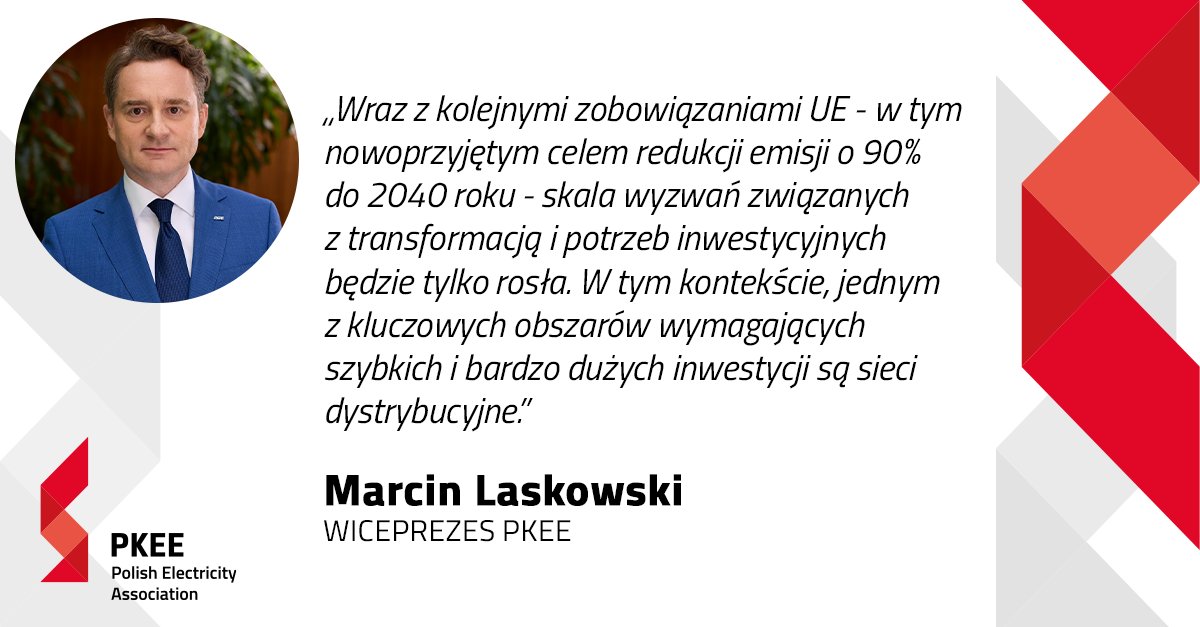
🎙️ Rozmowa o przyszłej reformie systemu ETS w Brukseli
3 marca w Brukseli #PKEE zorganizowało spotkanie poświęcone – zapowiadanej na III kwartał 2026 r.- rewizji systemu EU ETS. Wzięli w nim udział przedstawiciele firm i organizacji branżowych, reprezentujących unijny sektor energetyczny i przemysł.
🎯Celem spotkania było zidentyfikowanie najważniejszych priorytetów i wyzwań związanych z rewizją systemu ETSoraz lepsze zrozumienie, jak różne grupy interesariuszy oceniają funkcjonowanie systemu – od stabilności rynku i sygnałów inwestycyjnych przez dostępność uprawnień i długoterminową ambicję klimatyczną aż po instrumenty wspierające transformację, takie jak bezpłatne uprawnienia dla ciepłownictwa czy Fundusz Modernizacyjny.
🗣️W trakcie dyskusji podkreślano, że polityka klimatyczna UE musi uwzględniać nowe realia ekonomiczne i geopolityczne. Sprawiedliwa transformacja energetyczna powinna iść w parze z bezpieczeństwem energetycznym, konkurencyjnością europejskiej gospodarki oraz stabilnością rynku energii. EU ETS pozostaje jednym z najważniejszych narzędzi realizacji celów klimatycznych Unii, jednak jego funkcjonowanie musi odpowiadać na dynamicznie zmieniające się uwarunkowania gospodarcze i energetyczne. I to należy zapewnić w trakcie nadchodzących prac nad przeglądem systemu ETS.
🤝Dziękujemy wszystkim uczestnikom za merytoryczną i otwartą dyskusję! Widać, że jest na nią w Brukseli ogromne zapotrzebowanie, więc – jako PKEE – już pracujemy nad jej kontynuacją💪
#EUETS #EnergyPolicy #EnergyTransition #ClimatePolicy #Brussels #EUClimatePolicy #EnergySector #Decarbonisation #PKEE
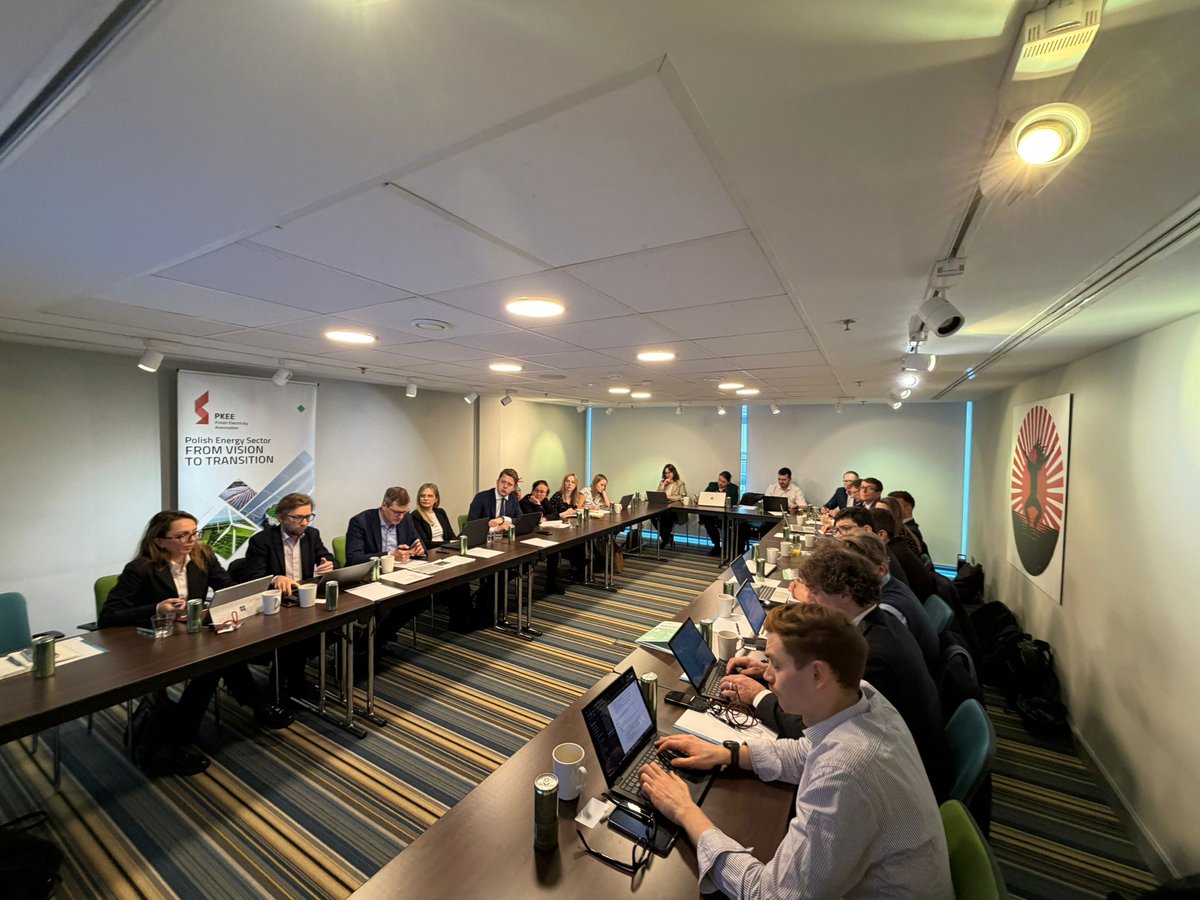
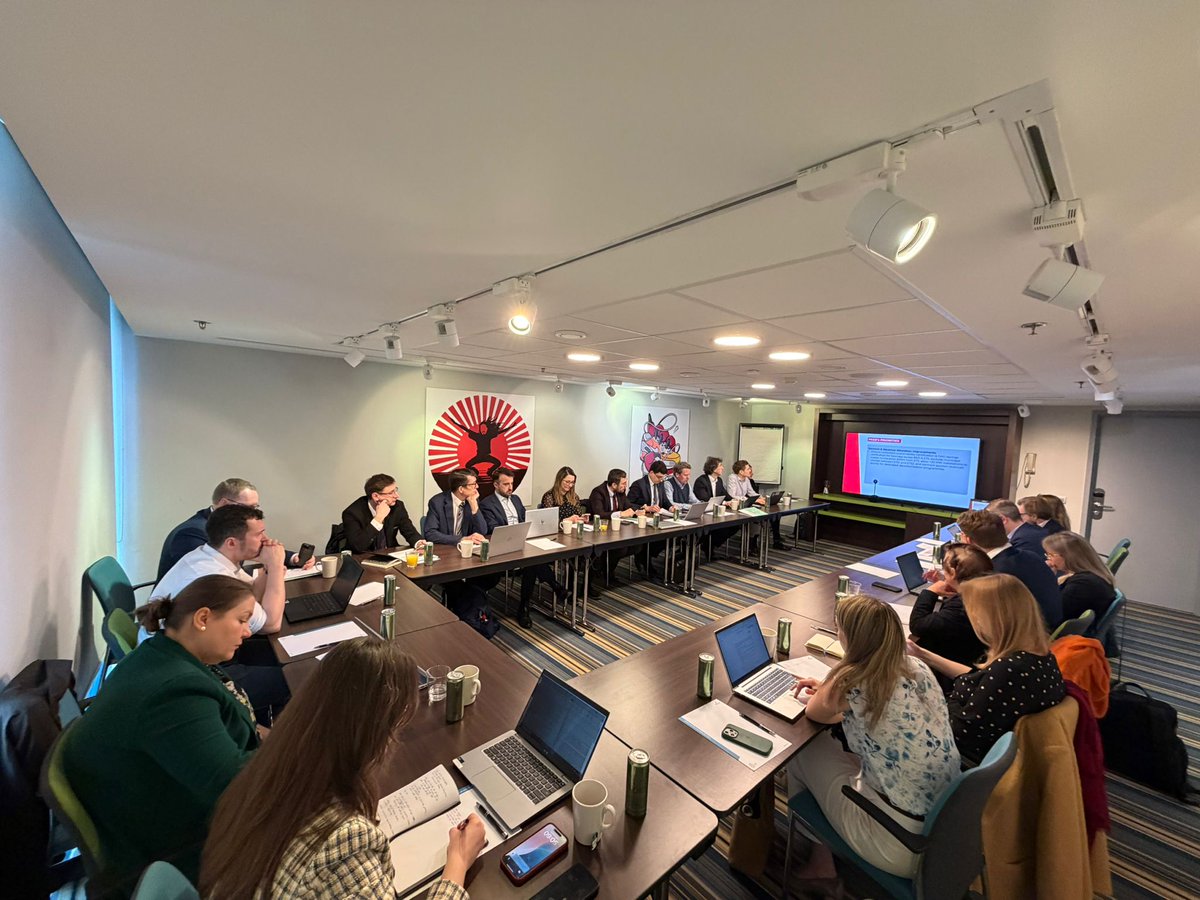

Last Seen Hashtags on Sotwe
momson((())) filter:videos
Seen from Thailand
木村彩花
Seen from United States
bruises
Seen from Turkey
momson filter:native_video
Seen from India
alanyapasif
Seen from Turkey
نيج_عراقية
Seen from Jordan
まちみー
Seen from Japan
momson
Seen from Netherlands
flatsfetish
Seen from United States
3DaysToMohenjoDaro
Seen from United States
Most Popular Users

Elon Musk 
@elonmusk
241M followers

Barack Obama
@barackobama
119.2M followers

Cristiano Ronaldo
@cristiano
111.8M followers

Donald J. Trump
@realdonaldtrump
111.8M followers

Narendra Modi
@narendramodi
107M followers

Rihanna
@rihanna
98M followers

NASA
@nasa
92.2M followers

Justin Bieber
@justinbieber
91.2M followers

KATY PERRY
@katyperry
88.3M followers

Taylor Swift
@taylorswift13
82.2M followers

Lady Gaga
@ladygaga
73.7M followers

Virat Kohli
@imvkohli
71M followers

Kim Kardashian
@kimkardashian
70.1M followers

YouTube
@youtube
68.7M followers

Bill Gates
@billgates
64.3M followers

Neymar Jr
@neymarjr
63.8M followers

The Ellen Show
@theellenshow
62.4M followers

CNN
@cnn
61.8M followers

Selena Gomez
@selenagomez
61.4M followers

X
@x
60.8M followers