

Top Tweets for #PNASNews

A structure-aware generative AI framework for revealing functional relationships in protein families @PNASNews
1. The study builds two parallel, navigable “latent generative landscapes” for each protein family: one from amino-acid (AA) MSAs and one from structure-informed 3Di token MSAs, enabling direct, quantitative comparison of sequence vs structure signals within the same family.
2. Core pipeline: ProstT5 translates AA alignments into 3Di token alignments; two matched VAEs compress AA and 3Di MSAs into 2D latent maps; DCA (Potts model) assigns a shared notion of coevolutionary “energy” on each map, turning them into generative fitness landscapes where low-energy basins correspond to plausible functional/structural regions.
3. A key contribution is a family-by-family decision framework for when AA and 3Di provide redundant vs independent information, using three encoder/decoder-derived metrics: correlation of AA- vs 3Di-Hamming distances, cross-latent mutual information, and a pullback Fisher–Rao (information-geometry) metric reporting local sensitivity of each decoder.
4. These metrics separate families into two regimes: a consistent regime where 3Di largely remaps what AA already captures, and a complementary regime where 3Di reveals structure-level organization not evident from sequence alone; notably, the regime can be predicted from alignment statistics.
5. Malate dehydrogenase (MDH) illustrates “sequence drift over a conserved fold”: psychrophilic vs thermophilic/mesophilic cohorts are well separated in AA latent space but collapse in 3Di latent space, consistent with near-identical structures (TM-score ~0.92) despite lower sequence identity (~34% between cohorts).
6. The paper introduces an interpretable per-sequence diagnostic plane combining (i) ΔH = H_AA − H_3Di (which model finds a sequence atypical) and (ii) log10(F_AA/F_3Di) (whether sequence changes are resolved more sharply in AA or 3Di). In MDH, thermophilic/mesophilic sequences appear AA-atypical but 3Di-typical, supporting a mechanistic view of thermal adaptation via sequence-level coevolution on a stable structural scaffold.
7. In globins and TRPM channels, the 3Di landscape forms low-energy basins that align with known functional/structural subfamilies (e.g., globin subtypes; TRPM1–8), showing that structure-token landscapes can recover biologically meaningful groupings without supervision across both “consistent” and “complementary” regimes.
8. Practical implication for coevolutionary contact prediction: AA-DCA vs 3Di-DCA performance follows a bias–variance trade-off driven by MSA depth. 3Di’s reduced alphabet can suppress spurious couplings and help in lower-depth/high-divergence settings (globin), whereas AA can outperform when depth is large enough to estimate richer couplings (cysteine peptidase).
9. Biological validation beyond clustering: for flavohemoglobins, membership in the same 3Di-landscape basin predicts similarity in molecular dynamics (1.2 μs all-atom MD per protein), with RMSF profile correlations decreasing as 3Di-latent distance increases.
10. In Flaviviridae E1/E2 glycoproteins (extreme complementary regime), the 3Di landscape groups pegiviruses with hepaciviruses while separating pestiviruses—relationships largely invisible at 8–15% AA identity—supporting the idea that glycoprotein evolutionary history can require structural representations to resolve.
💻Code: https://t.co/KcasWa7tYh
📜Paper: https://t.co/mhhfHMOqmj
#ComputationalBiology #ProteinStructure #ProteinEvolution #GenerativeAI #VAE #Coevolution #DCA #ProteinDesign #Bioinformatics #StructuralBioinformatics

A structure-aware generative AI framework for revealing functional relationships in protein families @PNASNews
1. The study introduces parallel “latent generative landscapes” for the same protein family: one built from amino-acid (AA) MSAs and one from structure-informed 3Di token MSAs, enabling side-by-side, quantitative comparison of what sequence vs. structure explains in each family.
2. Core pipeline: ProstT5 translates AA alignments into aligned 3Di sequences (20-state local geometry alphabet); two matched VAEs compress AA and 3Di MSAs into 2D latent maps; DCA/Potts models add a coevolutionary Hamiltonian on each latent, turning both maps into navigable energy landscapes where low-energy basins indicate family-consistent (putatively functional/structurally plausible) regions.
3. A key innovation is a family-by-family “consistent vs complementary” regime classification for AA vs 3Di views, quantified by (i) correlation of AA-Hamming vs 3Di-Hamming pairwise distances, (ii) cross-latent mutual information between AA and 3Di encoders, and (iii) information-geometry sensitivity via a pullback Fisher–Rao metric (local decoder sharpness / distinguishability).
4. In malate dehydrogenases (MDH), the AA landscape separates psychrophilic vs thermophilic/mesophilic cohorts (sequence drift), while the 3Di landscape collapses them (shared fold). The AA-vs-3Di diagnostics (ΔH = H_AA − H_3Di and Fisher-determinant ratios) support an interpretation where thermal adaptation is largely sequence-level coevolution operating on a structurally conserved scaffold.
5. In globins and TRPM channels, the 3Di landscapes organize sequences into low-Hamiltonian basins that align with known functional/annotated subfamilies (e.g., globin subtypes; TRPM1–8). The same framework can still reveal within-family asymmetries where cohorts look similar structurally but diverge in AA coevolutionary patterns.
6. The framework links landscape organization to biophysics: for flavohemoglobins, membership in the same 3Di-landscape basin predicts similarity of molecular dynamics behavior (RMSF profile correlations), suggesting the 3Di basins capture dynamical as well as structural/functional coherence.
7. For Flaviviridae E1/E2 glycoproteins (extreme complementary regime), structure-aware 3Di landscapes recover evolutionary relationships that are largely inaccessible from primary sequence due to very low sequence identity. The 3Di view groups pegiviruses with hepaciviruses and separates pestiviruses in ways consistent with structural phylogeny and hypotheses about independent origins of E1E2 evolution.
8. Practical consequence: DCA contact prediction shows a bias–variance trade-off controlled by alignment depth/divergence. 3Di’s reduced effective alphabet can improve robustness (less variance) in lower-depth/noisier settings (e.g., globins), while AA can win when MSAs are very deep and informative (e.g., cysteine peptidases).
9. Beyond visualization, the landscapes are explicitly generative: one can sample near low-energy basins, decode 3Di sequences, translate back to AA via ProstT5, and validate with domain annotation and AlphaFold2 structure prediction—positioning the method as a sequence–structure–function exploration and design aid, with clear stated limitations (e.g., 3Di locality; VAE higher-order correlation fidelity; dependence on MSA/structure quality).
💻Code: https://t.co/KcasWa7tYh
📜Paper: https://t.co/mhhfHMOqmj
#ComputationalBiology #ProteinDesign #GenerativeAI #ProteinStructure #Coevolution #VAE #DCA #Bioinformatics #StructuralBioinformatics #MolecularDynamics
Computational Design of HLA Class I Superbinders for Broad T Cell Immunogenicity @PNASNews
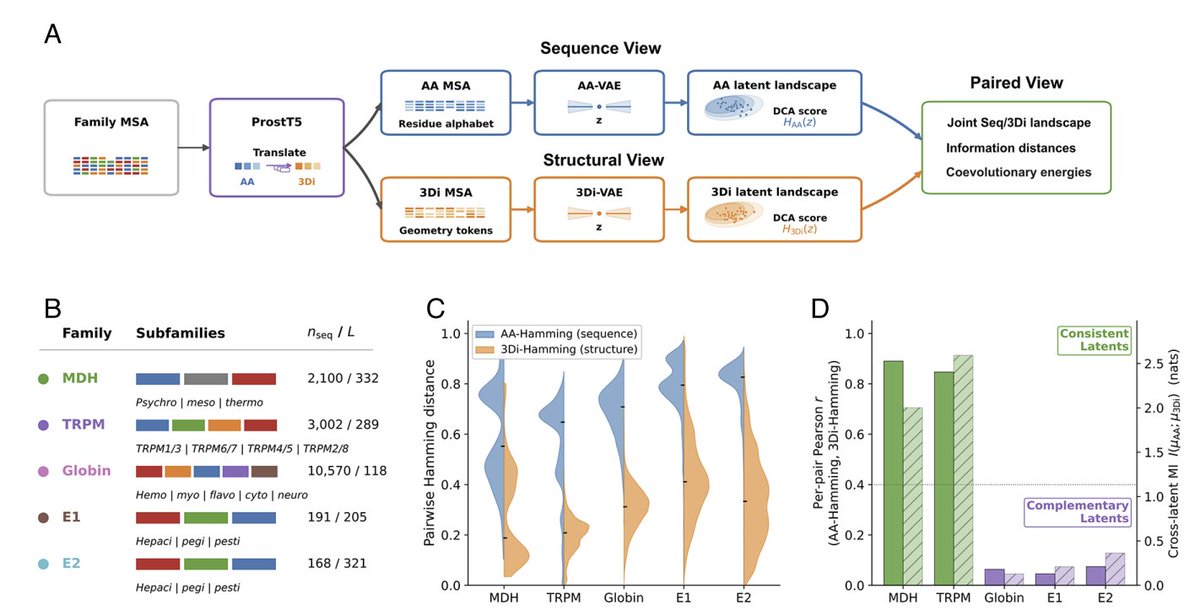
1. The paper introduces superHLA, a computational framework that designs synthetic 9-mer “HLA class I superbinders”: peptides that can bind multiple HLA alleles spanning distinct supertypes, aiming to reduce the population-coverage bottleneck caused by extreme HLA polymorphism.
2. Core technical idea: superHLA uses Markov Chain Monte Carlo (MCMC) to perform a guided random walk in the enormous 9-mer space, proposing single–amino acid mutations and accepting/rejecting them with a probability that favors improved multi-allele binding while still allowing occasional decreases to escape local maxima.
3. The optimization target is breadth across 12 HLA class I supertypes, represented by one frequent allele per supertype (e.g., A*02:01, A*24:02, B*07:02, B*15:01, etc.). Binding is scored using predicted percentile ranks (lower rank = stronger predicted binding), primarily from netMHCpan 4.1.
4. Scale of in silico discovery: 10 independent simulations explored ~400,000 unique peptides and produced 192,382 putative superbinders predicted to bind 8–12 of the 12 supertype representatives, covering 471 of 794 possible “8+ allele” binding combinations (suggesting broad combinatorial diversity is reachable computationally).
5. A notable methodological contribution is the multi-tier filtering pipeline to move from hundreds of thousands of candidates to a testable, diverse set: CD-HIT clustering (twice), synthesis-feasibility filtering, cross-predictor agreement (netMHCpan 4.1 + netMHCpan 4.0 + MHCflurry), and removal of peptides similar to the human peptidome (with discussion of extending this to alternative ORFs such as OpenProt).
6. Experimental validation: 100 designed peptides were synthesized and evaluated in biochemical competition binding assays. All 100 were first tested against 6 alleles; 24 peptides binding ≥2 supertypes were then tested against the full panel of 12 supertype representatives.
7. Key result: 21 peptides were confirmed in vitro to bind 4–9 supertypes. One peptide (RMYDRHYLF) bound 9 supertypes; four additional peptides bound 7 supertypes. This substantially expands the small set of known cross-supertype binders and argues that superbinders may be more prevalent (and designable) than suggested by current databases.
8. The validated superbinders show characteristic sequence features: strong hydrophobic preferences at classical anchor positions 2 and 9 (e.g., L/M at position 2; F/L/M at position 9) and enrichment for basic residues at position 5 (H/R). The study also flags an apparent bias toward P/D/E at position 4 during optimization, and the authors explicitly mitigate this when selecting representatives—raising an important point about potential predictor-driven artifacts.
9. Prediction vs. measurement: peptides predicted to bind more supertypes generally bound more alleles experimentally, but typically by 3–6 fewer supertypes than predicted. Allele-wise recall varied widely (e.g., very low for A*01:01 and high for B*15:01), highlighting where pan-allele design is easier/harder and where predictors may be overconfident.
10. Demonstrated extension beyond de novo design: starting from the ancestral SARS-CoV-2 spike 9-mer peptidome, superHLA can identify putative viral superbinders and propose 1–2 mutation variants that increase breadth, linking the framework to epitope hotspot discovery and rational “minimal-edit” immunogen optimization (while noting that binding ≠ T cell immunogenicity).
💻Code: https://t.co/1onriV2nqR
📜Paper: https://t.co/AY2dzNEGTF
#ComputationalImmunology #Immunoinformatics #HLA #MHC #Tcells #VaccineDesign #EpitopeDiscovery #ProteinEngineering #NetMHCpan #MCMC
Flexible protein–ligand docking with diffusion-based side-chain packing @PNASNews
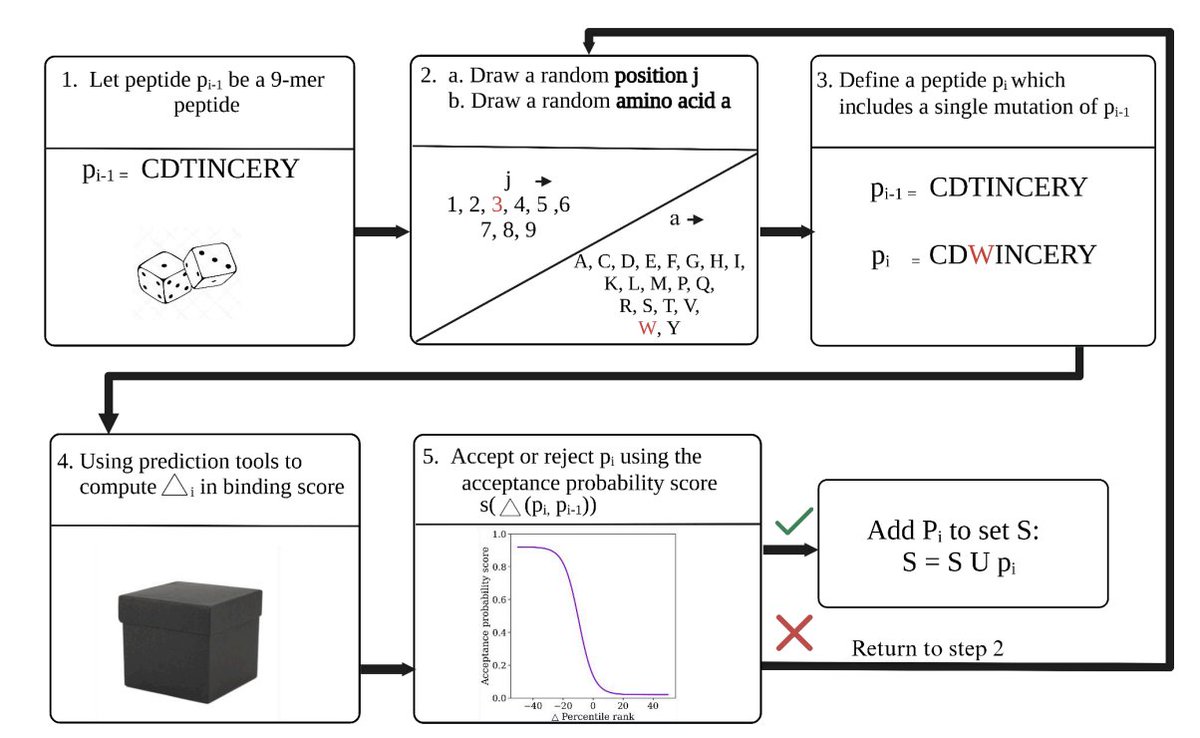
1. A new framework, PackDock, integrates deep learning and physics-based modeling to address the challenge of protein flexibility in molecular docking. This innovation significantly enhances the accuracy of predicting protein-ligand interactions by considering diverse binding pocket conformations.
2. PackDock's core module, PackPocket, uses diffusion models to sample side-chain conformations in both ligand-free and ligand-bound states. This approach captures the dynamic nature of proteins, overcoming limitations of static structures in drug design.
3. The study demonstrates PackDock's superior performance in side-chain packing, redocking, and cross-docking experiments. It shows high accuracy in predicting complex conformations, even with apo structures, highlighting its potential for real-world drug discovery applications.
4. In a practical test targeting aldehyde dehydrogenase 1B1 (ALDH1B1), PackDock identified nanomolar affinity compounds with novel scaffolds. This application underscores its value in identifying new drug candidates.
5. PackDock also reveals key amino acid conformational changes during binding, offering insights into the dynamic interactions between proteins and ligands. This feature is crucial for understanding the mechanisms of drug action.
📜Paper: https://t.co/NszhxmFdBk
#ProteinLigandDocking #DiffusionModels #DrugDiscovery #ComputationalBiology #AIinBiology
Protein functional site annotation using local structure embeddings @PNASNews
1. This research introduces PARSE, a novel method for predicting protein function and identifying key functional residues with high precision. Unlike traditional methods, PARSE leverages local structure embeddings and statistical techniques to provide both global function prediction and residue-level annotations, making it particularly effective for rare and understudied enzyme classes.
2. The core innovation of PARSE lies in its ability to use local structural environments to identify functional sites. By embedding these local structures into a numerical vector space using COLLAPSE, the method can detect conserved functional motifs even when global sequence and structure are highly divergent. This is especially valuable for annotating proteins in the “dark proteome” where structures are novel and sequences are highly divergent.
3. In terms of performance, PARSE achieves comparable or superior global prediction accuracy to state-of-the-art machine learning methods, with an F1 score greater than 85%. More importantly, it excels in residue-level annotations, identifying active site residues with much greater precision than existing methods like DeepFRI. This capability is crucial for understanding enzyme mechanisms and guiding protein engineering efforts.
4. The method is computationally efficient and can be applied at proteome scale. By utilizing the AlphaFold Structure Database, the authors demonstrate PARSE’s ability to annotate the human proteome and identify novel functional sites in unclassified structures. This opens up new possibilities for discovering previously unknown functions in large-scale protein datasets.
5. The study highlights the importance of combining deep learning representations with prior biological knowledge and statistical methods to improve explainability in AI-driven biological predictions. PARSE’s modular and flexible design allows it to be easily adapted for different biological tasks and datasets, making it a versatile tool for protein function annotation.
📜Paper: https://t.co/OyPsZnK8Dp
#ProteinFunction #MachineLearning #ComputationalBiology #Bioinformatics #ProteinStructure #FunctionalSiteAnnotation

Sparse autoencoders uncover biologically interpretable features in protein language model representations @PNASNews
1. A groundbreaking study by Gujral et al. leverages sparse autoencoders (SAEs) and transcoders to extract interpretable features from protein language models (PLMs) in an unsupervised manner, enhancing the transparency and explainability of these models.
2. The research focuses on ESM2, a popular PLM, and demonstrates that SAEs can identify sparse features tightly associated with Gene Ontology (GO) terms across various levels of the GO hierarchy, revealing specific protein families and functions.
3. The study employs automated interpretation using Anthropic’s Claude, which finds that many extracted features correspond to distinct biological entities such as the NAD Kinase family and proteins involved in methyltransferase activity, showcasing the potential for biological insights.
4. A key innovation is the unsupervised extraction of features, which contrasts with traditional supervised methods, allowing for the discovery of biologically relevant information without prior knowledge.
5. The findings highlight that sparse features are more interpretable than standard ESM2 neurons, suggesting that SAEs and transcoders can significantly improve the understanding of PLM representations and their applications in downstream tasks.
6. This work not only enhances the interpretability of PLMs but also opens new avenues for extracting meaningful biological insights, fostering human-AI collaboration, and ensuring the safety and trustworthiness of these models.
📜Paper: https://t.co/Iv704N94VD
#ProteinLanguageModels #SparseAutoencoders #Bioinformatics #Interpretability #AIinBiology
In silico evolution of globular protein folds from random sequences @PNASNews
1.This study presents PFES (Protein Fold Evolution Simulator), a computational framework that simulates protein evolution at atomistic resolution, starting from random amino acid sequences.
2.Using PFES, the authors demonstrate that stable, globular protein folds can evolve with relative ease from random sequences, requiring as few as 0.2 to 3 mutations per site—comparable to or less than evolutionary changes observed since LUCA.
3.Notably, about half of the evolved proteins resemble known natural folds (e.g., HTH, SH3, beta sandwiches), while the rest are unique, underscoring the simulator’s capacity to explore novel regions of protein fold space.
4.The PFES simulations reveal that simple alpha-helical structures emerge most frequently, often through progressive mutations or duplications; beta-rich folds evolve via duplication of beta-hairpins into more complex beta-sheets and barrels.
5.Multiple independent structure prediction and validation approaches (ESMfold, AlphaFold3, ProteinMPNN, and MD simulations) confirmed the stability and structural plausibility of the evolved proteins, even those with novel folds.
6.Evolving proteins often stabilize early during simulation, after which the fold remains mostly fixed while the sequence continues to drift—mimicking natural evolutionary plateaus in the fitness landscape.
7.The authors show that evolutionary trajectories from random peptides to stable folds are not only tractable but also reproducible: in 200 simulations, 110 yielded unique folds while others converged on common motifs.
8.By simulating evolution in the context of protein–protein interactions, PFES could generate interface-adapted structures, including an anti-CRISPR mimic that binds Cas9’s HNH domain through hydrophobic contacts.
9.Structural search using Foldseek matched 82 of 200 simulated proteins to known folds, including matches to experimentally determined PDB entries—demonstrating biological relevance despite artificial origins.
10.PFES provides full evolutionary histories, enabling detailed reconstruction of each mutation and corresponding structural change, offering a rich dataset for studying fold nucleation, drift, and structural innovation.
11.The work supports the idea that selection for fold stability and interaction capacity, rather than specific function, could have driven the emergence of folded proteins from the RNA-peptide world.
12.This study suggests that the "protein big bang"—a rapid expansion of structural diversity in early evolution—could have been facilitated by fundamental biophysical principles and minimal selective pressures.
13.PFES overcomes prior modeling limitations by leveraging modern structure prediction tools (like ESMfold), providing an unprecedented window into early protein evolution at full-atom resolution.
14.Limitations include current accuracy bounds of structure predictors, especially for intermediate states with low confidence, but the authors argue these may represent realistic folding equilibria in early evolution.
15.Overall, PFES reveals that globular protein folds are highly evolvable from random sequences and suggests that the emergence of stable folds could have been rapid and straightforward in early evolution.
💻Code: https://t.co/PqwyylUe6R
📜Paper: https://t.co/lUndHs9cQi
#ProteinEvolution #StructuralBiology #OriginsOfLife #ComputationalBiology #AlphaFold #InSilicoEvolution

Cross-species modeling of plant genomes at single-nucleotide resolution using a pretrained DNA language model @PNASNews
1.PlantCaduceus is a DNA language model trained on 16 angiosperm genomes that achieves single-nucleotide resolution and strong cross-species generalization. It significantly improves genome annotation and mutation effect prediction, even for species diverged over 160 million years.
2.Unlike prior models, PlantCaduceus handles both strands of DNA simultaneously using a novel architecture called Caduceus, which integrates reverse complement (RC) symmetry and builds on the long-range sequence modeling capabilities of Mamba.
3.The model uses single-nucleotide tokenization and a balanced pretraining strategy that down-samples repetitive and noncoding regions, reducing bias and enhancing its focus on functionally relevant sequence patterns.
4.In cross-species gene annotation tasks like predicting translation initiation/termination sites and splice donor/acceptor sites, PlantCaduceus trained on Arabidopsis transfers remarkably well to other crops, achieving top precision even in maize, a species not included in pretraining.
5.PlantCaduceus outperforms previous DNA LMs like GPN, AgroNT, and NT-v2 by large margins in imbalanced real-world tasks. It also rivals protein LMs like ESM in identifying deleterious mutations via zero-shot prediction without any task-specific training.
6.The model identifies evolutionary constraints directly from DNA sequence. It achieves an AUROC of 0.896 in sorghum and generalizes well to maize (AUROC 0.829), outperforming all alternatives including MSA-based methods like phyloP and phastCons.
7.PlantCaduceus’s zero-shot deleteriousness scores enrich for causal mutations. Variants ranked as deleterious showed threefold lower minor allele frequencies than those identified by phyloP or phastCons, and the model accurately rediscovered known causal variants in maize and Arabidopsis.
8.Even with a smaller 20M parameter version, PlantCaduceus outperforms GPN variants up to 130M parameters, demonstrating superior parameter efficiency and generalization.
9.Ablation studies show the model's performance benefits from both architecture and phylogenetic diversity of training data. When trained on narrower clades like Poaceae or Brassicales only, its predictive performance declines notably.
10.PlantCaduceus can run efficiently on widely available GPUs with 512 bp input contexts, making it practical for large-scale genome interpretation across species and labs.
11.Its strong performance in identifying causal noncoding mutations suggests utility in genome-wide association studies (GWAS), breeding selection, and hybrid vigor optimization—without the need for multiple sequence alignments.
12.The authors plan to expand PlantCaduceus to include more diverse plant lineages and longer sequence contexts, pushing the limits of functional annotation, cis-regulation modeling, and chromatin state prediction.
📜Paper: https://t.co/Jnq5D8FAEg
#PlantGenomics #DNA #LanguageModel #Bioinformatics #CropBreeding #GenomicsAI

Predicting high-fitness viral protein variants with Bayesian active learning and biophysics @PNASNews
1.The authors introduce VIRAL, a framework that combines protein language models, Gaussian processes, and a biophysical fitness model to predict high-fitness SARS-CoV-2 variants using minimal experimental data.
2.VIRAL achieves up to 5× enrichment in identifying top variants compared to random search, while experimentally characterizing less than 1% of possible sequences.
3.The framework leverages ESM3, a structure-aware protein language model, to encode RBD sequences, which are then used by a Gaussian process to predict binding affinities to ACE2 and antibodies.
4.Predicted binding affinities and uncertainties are fed into a biophysical model to estimate viral fitness. This approach is interpretable, relating fitness to escape potential and receptor affinity.
5.An active learning loop iteratively selects new variants for testing using an Upper Confidence Bound (UCB) strategy, which balances exploitation and exploration across the sequence space.
6.UCB-guided selection shows broader sampling and higher semantic diversity in acquired variants, leading to better identification of antigenically novel but high-risk variants compared to greedy strategies.
7.The model effectively identifies sites under evolutionary pressure, predicting highly mutable residues (e.g., positions 484, 486, 493) up to two years earlier than sequence-only baselines.
8.Despite being trained on very limited data, VIRAL captures epistatic effects between mutations via the nonlinearity of the GP kernel, the ESM embedding, and the biophysical model.
9.Benchmarking on combinatorial mutagenesis and DMS datasets confirms the method’s robustness and ability to generalize across data types.
10.The pipeline is highly suited to early-stage pandemic surveillance: it requires only initial low-throughput binding data and a few known antibodies to begin identifying concerning variants.
11.VIRAL’s predictive power opens opportunities for proactive vaccine design, enabling selection of preemptive candidate antigens for polyvalent or mosaic formulations.
12.This work demonstrates that integrating biophysics, machine learning, and uncertainty estimation can significantly accelerate identification of viral threats under experimental constraints.
💻Code: https://t.co/mlwxcbupwW
📜Paper: https://t.co/3tOQtuxWTS
#ProteinDesign #ActiveLearning #BayesianOptimization #SARSCoV2 #MachineLearning #Biophysics #ComputationalBiology #PandemicPreparedness


Starting at Go: Protein structure prediction succumbs to machine learning @PNASNews
1/ The article highlights AlphaFold, a breakthrough in protein structure prediction, which uses machine learning to achieve unprecedented accuracy in predicting the three-dimensional arrangement of proteins from their amino acid sequences. This achievement has accelerated research across biology, chemistry, and medicine.
2/ The authors, Demis Hassabis and John Jumper from DeepMind, demonstrate how AlphaFold combines deep learning with biologically inspired statistical methods to achieve atomic-level accuracy in protein structure prediction, solving a long-standing challenge in structural biology.
3/ Key to AlphaFold’s success is its innovative use of evolutionary data, specifically multiple sequence alignments (MSAs), and structural templates, combined with the power of neural networks. This approach allows AlphaFold to understand the intricate relationships between distant residues in proteins.
4/ AlphaFold’s performance was validated in the 14th Critical Assessment of protein Structure Prediction (CASP14), where it outperformed all competitors, predicting protein structures with a median accuracy of 0.96 Å on polypeptide backbones—nearly matching experimental results.
5/ The architecture of AlphaFold includes a two-stage neural network: the Evoformer, which processes MSAs and residue pairs, and a structure module that refines 3D coordinates of each residue, leveraging iterative refinement to optimize predictions.
6/ Beyond its technical success, AlphaFold’s ability to generate accurate predictions at scale is transforming fields like drug design and disease understanding. Its impact extends to creating new opportunities for scientists to explore biological systems in greater detail.
7/ While AlphaFold represents a major milestone, the field is still evolving. Future improvements could involve multisubunit protein complexes and the integration of other data types like dihedral angles for even more precise predictions.
📜Paper: https://t.co/AudrRs6C3U
#AlphaFold #ProteinStructure #MachineLearning #DeepMind #AIinBiology #StructuralBiology #Bioinformatics

An integrated AI knowledge graph framework of bacterial enzymology and metabolism @PNASNews
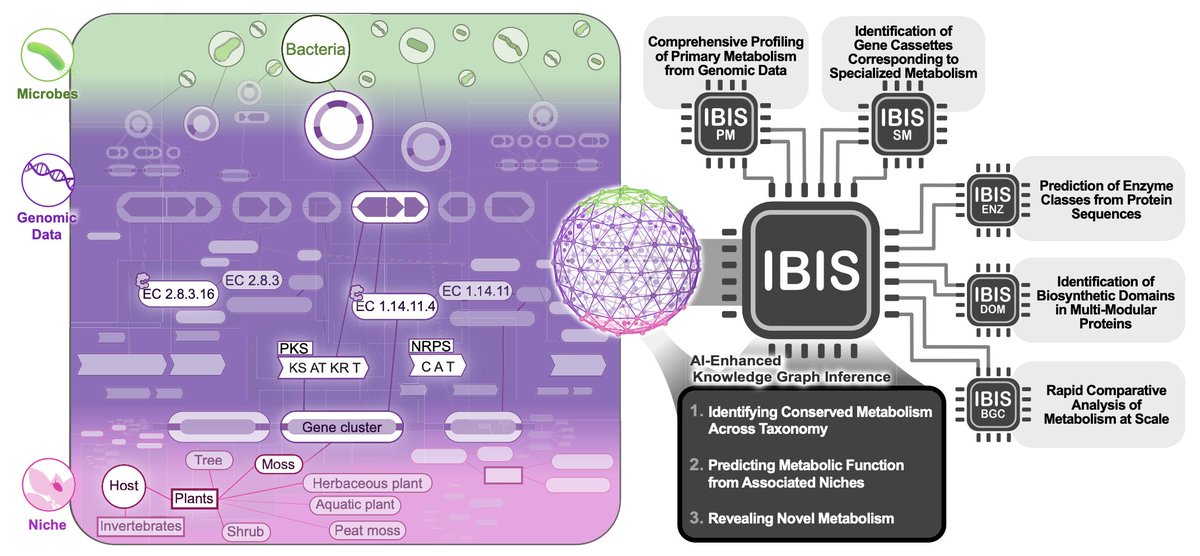
1. This study introduces IBIS, a unified framework that integrates deep learning and knowledge graphs to annotate and compare bacterial metabolism at scale, offering comprehensive insight into both primary and specialized metabolism.
2. IBIS-Enzyme, a Transformer model, encodes protein sequences into embeddings, enabling accurate prediction of enzyme classes (F1 = 0.95), outperforming tools like DeepEC and CLEAN and generalizing to untrained EC numbers.
3. The framework enables domain-level annotation with IBIS-Domain, which outperforms prior tools in predicting substrate specificity of biosynthetic enzymes such as NRPS and PKS.
4. IBIS-SM, a Graphormer model, identifies biosynthetic gene clusters (BGCs) without relying on pHMMs, showing superior accuracy in BGC boundary calling and chemotype classification across 36 classes.
5. IBIS-BGC generates vector embeddings for entire BGCs, enabling rapid, structure-aware clustering of nearly 2 million BGCs into 219,587 families in under one hour, a massive leap over current methods like BiG-SLiCE.
6. Embedding-based classification enables IBIS to annotate proteins and domains 5–20x faster than traditional methods like DIAMOND or PFAM hmmscan, enabling high-throughput genome annotation.
7. IBIS-KG connects enzyme annotations with ecological and taxonomic metadata, allowing discovery of niche-specific specialized metabolites and uncharacterized pathways, especially in underexplored bacterial taxa.
8. Experimental validation confirmed the utility of IBIS predictions by isolating novel metabolite derivatives, such as new analogs of xenoamicin and amicoumacin, from previously uncharacterized bacteria.
9. IBIS-KG reveals that 6–25% of enzymes across various bacteria are unassigned to known metabolism, highlighting vast areas of uncharacterized enzymatic diversity for further exploration.
10. The framework identifies over 107,000 genomic regions enriched with uncharacterized enzymes, many statistically associated with specific ecological niches, suggesting new hypotheses for bacterial functionality.
11. IBIS offers a scalable, flexible alternative to annotation pipelines like antiSMASH and PRISM, combining generalizable learning with interpretable, context-aware metabolic inference.
12. By enabling vector-based lookup of annotated embeddings, IBIS facilitates scalable and future-proof bacterial metabolism discovery as genomic data continues to expand.
💻Code: https://t.co/9OuTT7G5ho
📜Paper: https://t.co/IJxrY2psvk
#Microbiome #Metabolomics #BacterialGenomics #Bioinformatics #DeepLearning #GraphNeuralNetworks #KnowledgeGraph #MetabolicEngineering #DrugDiscovery #EnzymeAnnotation
Predicting gene sequences with AI to study codon usage patterns @PNASNews
1. This study introduces an AI-driven mBART model to predict codon sequences, revealing complex patterns in codon usage that go beyond frequency-based approaches, suggesting evolutionary selection impacts codon interactions.
2. The mBART model demonstrates superior performance in predicting codons for highly expressed genes and longer proteins, with significant improvements in bacterial species, highlighting the influence of population size on codon selection.
3. Two tasks were tackled: masking, predicting codons from amino acid sequences, and mimicking, using codons of orthologous proteins. The model outperformed frequency-based baselines, especially in highly expressed and conserved genes.
4. The findings emphasize the importance of codon usage in translation kinetics, cotranslational folding, and gene expression regulation, shedding light on how evolutionary pressures shape coding sequences.
5. The model was tested on four organisms (S. cerevisiae, S. pombe, E. coli, and B. subtilis) with stringent evaluation metrics, ensuring the robustness of predictions in diverse biological contexts.
6. By identifying codon patterns linked to functionality and conservation, this research provides a tool to optimize codon sequences for heterologous protein expression in biotechnology and synthetic biology.
7. The study highlights the role of codon usage in overlapping regulatory codes, advancing our understanding of genetic encoding beyond traditional measures of codon bias.
8. mBART’s utility extends to annotating novel genes and understanding codon selection in different evolutionary contexts, bridging computational biology and genomics.
💻Code: https://t.co/NaMJxGiEo9
📜Paper: https://t.co/5ugNB5xRQg
#ComputationalBiology #CodonUsage #Genomics #AI #ProteinTranslation

Learning the language of antibody hypervariability @PNASNews
1. This study introduces AbMAP (Antibody Mutagenesis-Augmented Processing), a transfer learning framework fine-tuned for antibody modeling, achieving unparalleled accuracy in predicting key properties like antigen binding and mutational effects.
2. AbMAP leverages foundational protein language models (PLMs) and adapts them specifically for hypervariable antibody regions, addressing limitations of general-purpose PLMs like ESM and AntiBERTa.
3. A core innovation is its use of contrastive augmentation and multitask learning to enhance CDR (complementarity-determining regions) representations, enabling a dramatic improvement in antibody structure and function prediction.
4. In SARS-CoV-2 antibody optimization, AbMAP achieved an 82% hit rate and up to 22-fold increase in binding affinity, showcasing its real-world application in therapeutic development.
5. Beyond design, AbMAP unlocks large-scale immune repertoire analysis, revealing structural and functional convergence across individuals despite sequence diversity.
6. The framework's modular design allows seamless adaptation to emerging PLMs, ensuring AbMAP remains at the forefront of antibody modeling advancements.
7. AbMAP represents a scalable, efficient solution for low-N optimization tasks, empowering iterative antibody design with minimal experimental data.
8. This work underscores the transformative potential of combining PLMs with domain-specific adaptations, setting a new benchmark in computational antibody research.
💻Code: https://t.co/24GDOXahBl
📜Paper: https://t.co/hOOh3kdGgB
#AI #AntibodyDesign #ProteinLanguageModels #ComputationalBiology #TransferLearning

Correlating enzymatic reactivity for different substrates using transferable data-driven collective variables @PNASNews
1. This study introduces machine learning-based collective variables (ML-CVs) for enzymatic catalysis, demonstrating their transferability across substrates with shared binding poses. This innovation streamlines simulations, reducing computational effort and manual intervention.
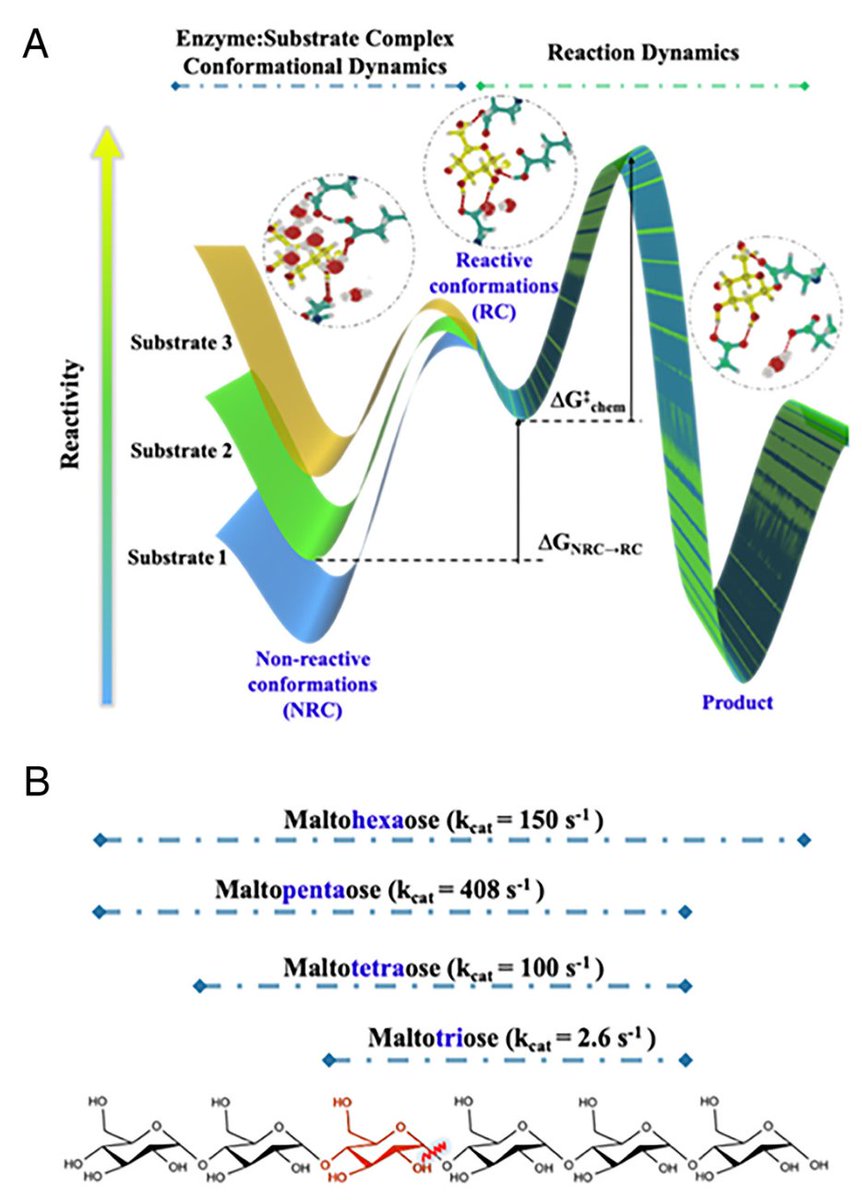
2. Focusing on human pancreatic α-amylase (HPA), a target for type-II diabetes treatment, the research correlates reactive conformations (RCs) with experimental catalytic activity for four malto-oligosaccharides. The approach captures complex transitions from nonreactive to reactive states.
3. Using Deep Contact and Deep Water CVs, the study identifies three distinct substrate binding modes (NRC1, NRC2, and RC). These CVs accurately describe enzyme-substrate interactions and hydration dynamics in the active site.
4. Remarkably, the ML-CVs trained on maltopentaose were transferable to other substrates, bypassing the need for system-specific CVs. This result validates the generalizability of the approach for similar catalytic systems.
5. Enhanced sampling techniques, such as OPES, reveal detailed free energy surfaces (FES), elucidating the entropic and energetic contributions to enzymatic reactivity. These insights align strongly with experimental catalytic rates (kcat) for all substrates.
6. The findings highlight how transferable ML-CVs can accelerate drug discovery by efficiently evaluating drug efficacy across inhibitor generations. This is particularly relevant for designing derivatives of parent drugs.
7. Future directions include refining ML-CVs for diverse binding modes and scaffolds, broadening their applicability across other enzymatic systems while integrating additional physical and chemical descriptors.
💻Code: https://t.co/5sBwH7RYK3
📜Paper: https://t.co/SbPUBBqXGB
#EnzymaticCatalysis #MachineLearning #Bioinformatics #DrugDiscovery #CollectiveVariables #MolecularDynamics
Predicting multiple conformations of ligand binding sites in proteins suggests that AlphaFold2 may remember too much @PNASNews
• This study investigates AlphaFold2’s ability to generate conformational ensembles of protein binding sites, revealing limitations tied to its training data. The surprising conclusion: AlphaFold2 “remembers” conformational distributions in the Protein Data Bank (PDB), influencing its predictions.
• Key finding: AlphaFold2 reliably generates clusters of open and closed conformations only when these states are equally represented in the PDB. Imbalanced or rare conformations are largely absent from its predictions.
• Through extensive testing on 16 proteins, the authors identify that stochastic subsampling of the input sequence alignments improves prediction diversity in limited cases, but shallow sampling can degrade accuracy, leading to misfolded proteins.
• The results underline an inherent challenge: AlphaFold2’s reliance on PDB data limits its capacity to model unseen or rarely observed states. This poses a critical barrier to studying cryptic sites and designing novel ligand interactions.
• This study argues for integrating machine learning with physics-based modeling to overcome AlphaFold2’s limitations and achieve comprehensive conformational sampling.
💻Code: https://t.co/oXghVUTQBb
📜Paper: https://t.co/6soMzaQXbb
#AlphaFold #ProteinStructure #ComputationalBiology #DrugDiscovery

Protein language models learn evolutionary statistics of interacting sequence motifs @PNASNews
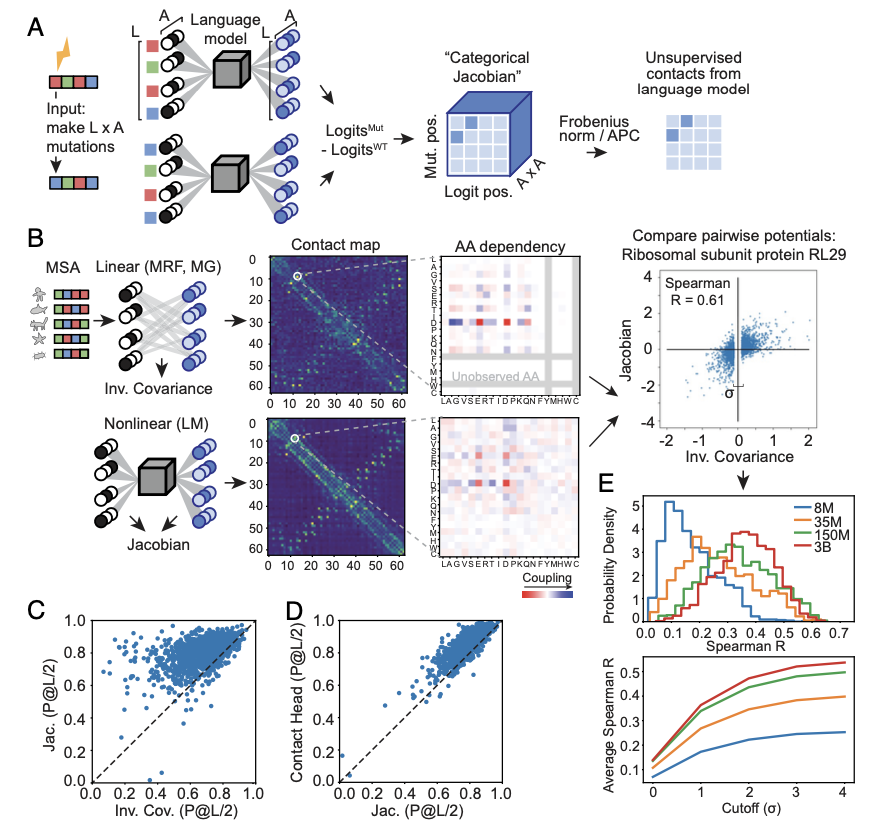
1. This study dissects how protein language models (pLMs), specifically ESM-2, predict structures and interactions, revealing that these models store coevolutionary information similar to classical statistical methods like Markov Random Fields.
2. By evaluating ESM-2 with a “categorical Jacobian” approach, the study shows that pLMs predict protein contacts by storing motifs of pairwise interactions rather than directly learning the physics of folding.
3. The findings suggest that ESM-2 can predict inter-residue contacts using local sequence windows, indicating that the model relies on a stored library of evolutionary motifs.
4. One of the key insights is that the accuracy of ESM-2 is strongly correlated with the number of homologous sequences in the training data, suggesting that these models depend on evolutionary data rather than biophysical principles.
5. The authors propose three hypotheses to understand how ESM-2 predicts structures: learning from physics, storing coevolutionary models per family, or storing small coevolutionary models for interacting fragments. Their evidence supports the third hypothesis, emphasizing modular motifs.
6. This work highlights a limitation in pLMs, where isoforms—proteins derived from the same gene through alternative splicing—are often predicted as structured fragments, exposing nonphysical hydrophobic patches.
7. The study introduces the “categorical Jacobian” as an unsupervised method for extracting coevolutionary weights, comparing these weights with those derived from simpler models, finding striking similarities in how evolutionary statistics are encoded.
8. The authors demonstrate that contact recovery by ESM-2 is significantly better when flanking sequence context is provided, suggesting that context-specific information plays a crucial role in its contact predictions.
9. The study concludes that while pLMs like ESM-2 are powerful, their predictive accuracy stems more from an implicit memory of evolutionary patterns rather than understanding the underlying physics of protein folding.
💻Code: https://t.co/BPo39cStJW
📜Paper: https://t.co/khaeoEVHaT
#ProteinLanguageModels #Bioinformatics #ProteinFolding #ESM2 #DeepLearning #StructuralBiology #CoEvolution #AI
AlphaFold-Multimer accurately captures interactions and dynamics of intrinsically disordered protein regions @PNASNews
• This study explores the use of AlphaFold-Multimer in predicting the structure and interactions of intrinsically disordered regions (IDRs), addressing a critical challenge in protein biology.
• A key result demonstrates that AlphaFold-Multimer achieves a high success rate (76%) in predicting IDR-protein complexes, though prediction quality varies with interaction heterogeneity.
• Intrinsic metrics, such as Predicted Aligned Error (PAE) and interface-pTM (ipTM), are effective in distinguishing accurate from decoy or incorrect predictions.
• The study introduces the “minD” score, which pinpoints IDR binding regions within full-length proteins with high accuracy, enhancing the utility of AlphaFold-Multimer for large-scale interaction prediction.
• Comparisons with nuclear magnetic resonance (NMR) models show that AlphaFold-Multimer captures structural heterogeneity, though predictions are more rigid than observed in experimental ensembles.
• IDRs with lower hydrophobicity or high coil content pose challenges to AlphaFold-Multimer, impacting prediction quality, especially for complexes with dynamic or “fuzzy” interactions.
• Despite limitations in modeling highly dynamic interactions, AlphaFold-Multimer can effectively identify regions involved in specific interactions, making it a valuable tool for understanding complex protein interactions.
💻Code: https://t.co/z838ZoQEYt
📜Paper: https://t.co/KBeM3IUqHl

Computational detection of antigen-specific B cell receptors following immunization @PNASNews
🚨 New study alert! 🚨 researchers have developed a method to detect antigen-specific B cell receptors (BCRs) from just a single blood sample after immunization. This could revolutionize vaccine development and personalized medicine! 🧬💉
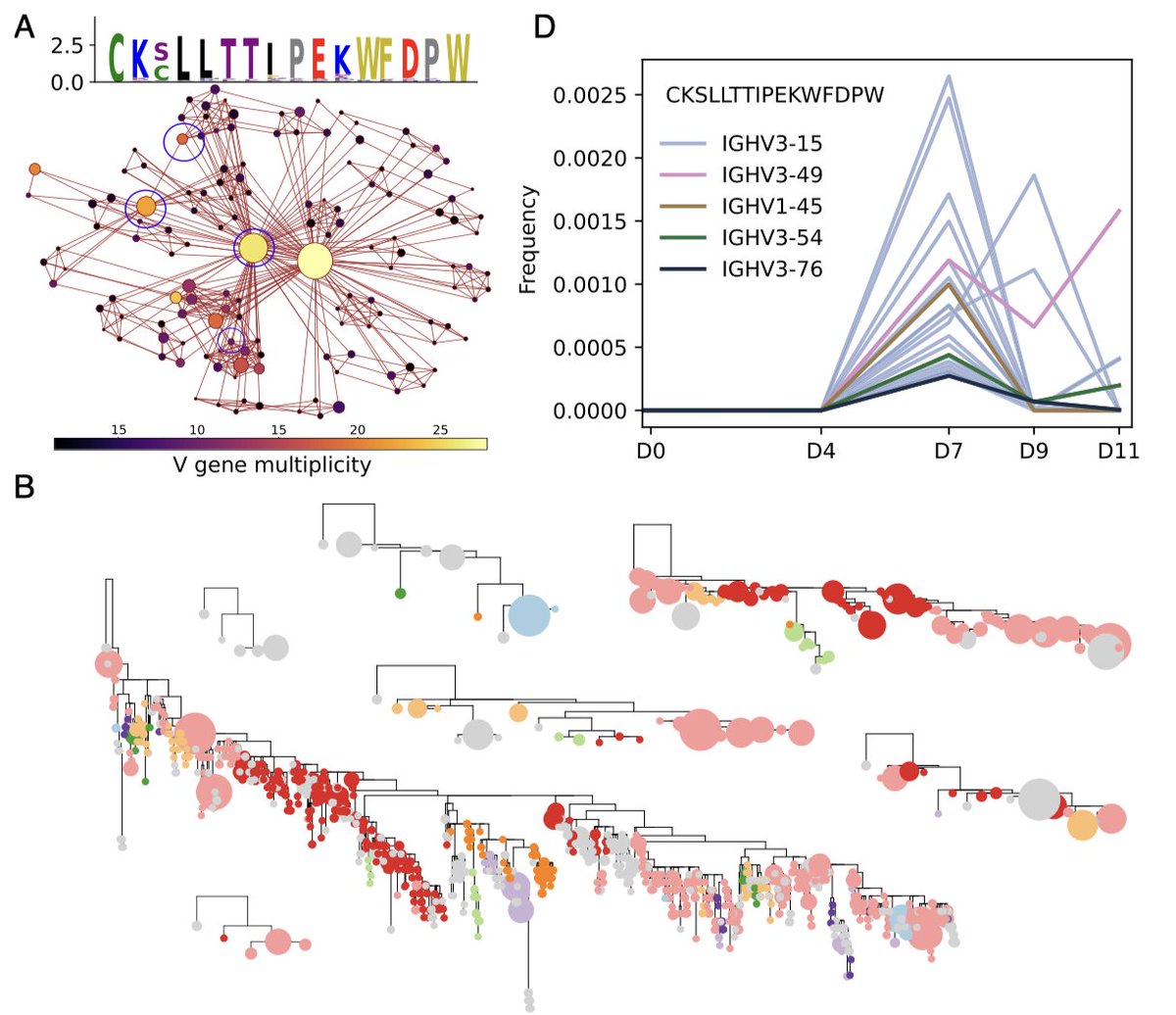
1/ 📊 The method leverages sequence similarity and convergent selection to identify responsive BCRs. It’s validated using data from flu vaccinations and COVID-19 infections, showing promise for broader applications in immune response analysis.
2/ 🔍 The study highlights the diversity and convergence of BCR lineages within individuals, emphasizing that distinct B cell clones can target the same antigen. This insight is crucial for understanding immune system dynamics and could inform the design of more effective vaccines.
3/ 🚀 The computational approach, dubbed fast-STAR and full-STAR, efficiently identifies BCRs with high specificity. While fast-STAR focuses on speed and accuracy, full-STAR offers a more comprehensive analysis, capturing a larger portion of the immune response.
4/ 💥 The research also showcases the method’s potential in identifying BCRs specific to natural infections like COVID-19, highlighting its versatility and importance in tracking and understanding immune responses.
5/ 🔗 The study is a collaborative effort between leading institutions and offers new tools for probing the immune system’s complexity, potentially unlocking new avenues in diagnostics and therapeutic development.
6/ 🔬 Future research could extend this approach to chronic infections, autoimmune diseases, and allergies, offering a new lens through which to view immune system behavior in various health contexts.
💻Code: https://t.co/GtbquKUkYB
📜Paper: https://t.co/ngnKG9sfxj
#Immunology #ComputationalBiology #VaccineResearch #BCR #COVID19 #Influenza
Predicting protein conformational motions using energetic frustration analysis and AlphaFold2
@PNASNews
🚨 Breakthrough in Predicting Protein Motions! 🚨
🔬 New method integrates AlphaFold2 with energetic frustration analysis to predict protein conformational changes, revealing dynamic pathways, not just static structures!
🧬 By manipulating local energetic frustration in sequence alignments, researchers can force AlphaFold2 to generate alternative conformations, unlocking the black box of protein dynamics.
💥 Why it matters: This approach could revolutionize drug design by predicting functional motions of proteins, crucial for understanding allosteric mechanisms.
📈 Consistent with experimental data, this method successfully predicts the large-scale motions of proteins like adenylate kinase, KaiB, and ribose-binding protein.
Full details and implications below! 👇
https://t.co/Bhe8qAhb44
#ProteinFolding #AlphaFold2 #Biophysics #ComputationalBiology


A complaint about plagiarising published ideas at the highest level. The case of the @PNASNews new paper: “On the roles of function and selection in evolving systems”.
I am the author of The Five Principles of Organized Complexity, first published on Amazon in 2011 and second edition in 2020.
The Five Principles of Organized Complexity, and the science it describes, is an original contribution to human knowledge unseen and unheard of before my publication. This was verified during extensive literature review.
I literally had to craft new terms and create new definitions. Entire chapters are dedicated to defining aspects of natural phenomena I was interested in, but which until then had no definition whatsoever because no one had sought to capture the essence of such phenomena. I called my theory The Five Principles of Organized Complexity and started teaching about it since then. I recognised my work as a complete paradigm shift in how scientific reality is understood and as such, a complete change in the way science will be conducted.
This was almost two decades ago!
As is usual, on the 16th of October 2023, the PNAS @PNASNews published a paper titled https://t.co/LRleX4awaD
“On the roles of function and selection in evolving systems”
In this paper, the authors claim a new law of nature, and they assert that they are the first with this idea regarding the behaviour of functions in evolving systems.
They highlighted a law and called this law, the “Law of Increasing Functional Information” and posit that if configurations of any system undergo selection for a particular function, evolution happens.
For those of you unknown to my work on Organized Complexity, my entire arguments start with defining what I call the Prescriptive Principle. I define it as a Functionally Specific Principle, which is captured as functionally specific knowledge spaces within evolving systems, and I thoroughly describe how these function spaces go on to build Complexly Evolving Ensembles (CEE). See pictures of how i define my Principle. My book is 200 pages long and I define many things for the first time ever.
My Five Principles of Organized Complexity are:
The Prescriptive Principle;
The Poise Principle;
The Sustenance Principle;
The Growth Principle; and,
The Organizing Principle.
My Principles are thoroughly defined in my book as perspectives on CEE’s.
This so called “law of increasing functional information” from this new paper, is a rewrite of my Prescriptive Principle!!!
It is disgusting.
The paper goes on to rewrite different aspects of ideas posited in my book. It rewrites the ideas behind my Principles and gives them new nomenclature. Often, the similarities are unbelievable. At some sections of my book, I deliberately highlight certain results of my arguments. This paper does too, and when you compare these highlights, you will be pressed to realise that something is terribly amiss. The similarities are hard to miss.
This is disgusting!!!
It became immediately clear to me that my ideas have been coopted in such ways as to not give me credit or priority.
This reminds me of how colonisation works. It smirks of mischief.
Now, it is entirely possible, but by a very long shot, that the authors of this paper envisaged all my conclusions independently on their own, but that is not the way scholarship works.
Extensive literature review is a prerequisite before announcing a so called new law of nature, and claiming this as the first time such a law or approach has been posited.
That is not scholarship.
Just because I am not an academic doesn’t mean my publications are invalid. My work has been accessible through my YouTube channel and my website for several years now. It is not hidden.
https://t.co/QkeOD3hQto
@skdh
@ReutersScience @NeuroscienceNew
@FrontNeurosci
@gunsnrosesgirl3
@ExploreCosmos_
@Rainmaker1973
@PNASNews
@newscientist
@NYTScience
@Marcia4Science

Para aquellas y aquellos que de vez en cuando tratamos con negacionistas climáticos, aquí un artículo de opinión en @PNASNews que puede ser de ayuda:
https://t.co/GYcZUZjGvF
Last Seen Hashtags on Sotwe
到着���極
Seen from Korea
Siena2018
Seen from United States
福寿箱
Seen from Japan
aunty_indian
Seen from Pakistan
leakfr #beurette #92i
Seen from France
journeenationaledelarbre
Seen from United States
口球
Seen from Canada
atlantameets
Seen from Switzerland
DVP
Seen from Saudi Arabia
stud #dyke
Seen from United States
Trends for you
Most Popular Users

Elon Musk 
@elonmusk
239.6M followers

Barack Obama
@barackobama
118.6M followers

Cristiano Ronaldo
@cristiano
114.3M followers

Donald J. Trump
@realdonaldtrump
111.7M followers

Narendra Modi
@narendramodi
106.9M followers

Rihanna
@rihanna
98.6M followers

NASA
@nasa
92.1M followers

Justin Bieber
@justinbieber
91.7M followers

KATY PERRY
@katyperry
89.9M followers

Taylor Swift
@taylorswift13
83.9M followers

Lady Gaga
@ladygaga
75.4M followers

Virat Kohli
@imvkohli
73.3M followers

Kim Kardashian
@kimkardashian
70.8M followers

YouTube
@youtube
68.6M followers

Neymar Jr
@neymarjr
66.3M followers

Bill Gates
@billgates
65.1M followers

Selena Gomez
@selenagomez
63M followers

The Ellen Show
@theellenshow
62.1M followers

CNN
@cnn
61.7M followers

X
@x
60.6M followers